Latest mountain bike news

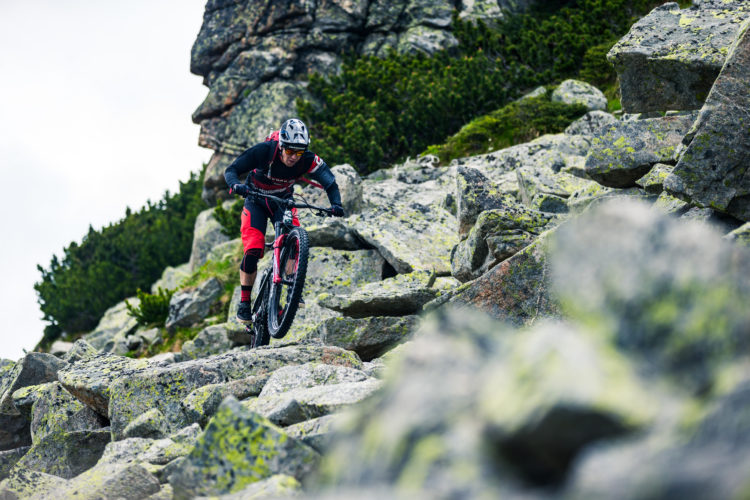
A vibrant red mountain bike is positioned on a rocky outcrop, surrounded by greenery and natural scenery. In the background, a scenic landscape extends into the distance under a partly cloudy sky. A wooden trail sign is partially visible on the left.
  5
A black and yellow mountain bike is positioned on lush green grass, surrounded by trees. The bike features thick, knobby tires and a modern design, showcasing its capabilities for off-road cycling.
  1
Close-up of a mountain bike's drivetrain and rear wheel, highlighting the chain, sprocket, and pedals. The bike is positioned on a mossy forest floor, with a blurred green background of trees, suggesting an outdoor adventure setting.
  9
  1
A performer stands on a wooden stage beside a banjo and microphone, with music equipment in the background. The text overlay reads "Music for Free on the Great Divide MTB Route," featuring a bicycle graphic. A pint of beer can also be seen on the stage.
Close-up view of a mountain bike suspension system, featuring a metallic bike frame with an advanced shock absorber. The frame is designed for durability and performance, showcasing the connection points and the shock's adjustment mechanisms. The background is dark, highlighting the bike's sleek design and intricate components.
A blue fat bike with large, rugged tires displayed on a stand, positioned in front of a neutral background. The bike features a lightweight frame, a suspension fork, and a contemporary design suitable for off-road cycling.
  6
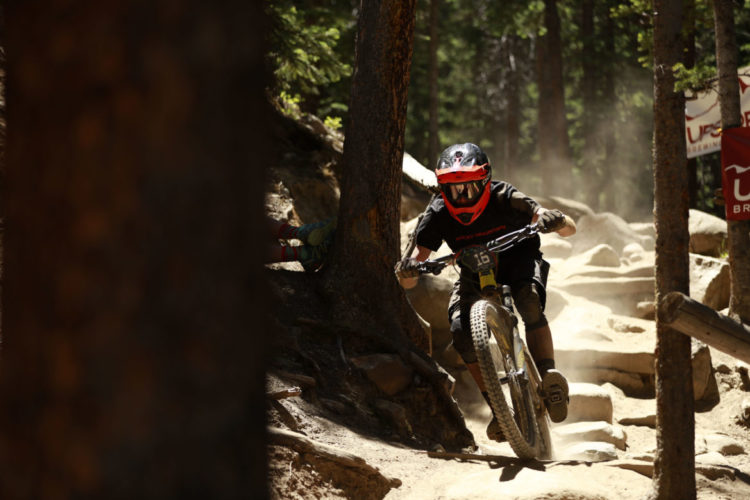
A mountain biker navigates a rocky trail in a forest during a competitive race, with dust kicking up around the bike. Spectators are visible in the background, cheering on the riders. The scene captures the intensity and excitement of the event, surrounded by tall trees and a clear banner indicating the location.
  5
A mountain biker standing at the edge of a rocky cliff, holding their bike above their head. In the background, steam and smoke rise from the geothermal landscape, creating a dramatic and adventurous scene.
A mountain biker navigating a curving dirt trail through a green hillside, wearing a helmet and cycling gear, with an emphasis on the natural landscape and vegetation surrounding the path.
A mountain biker navigates a rocky trail surrounded by greenery, wearing a helmet and gloves, and focused on the path ahead. An icon representing sound or live broadcasting is overlaid in the center of the image.
  6
A mountain biker navigates through a rocky, wooded trail covered in fallen leaves, wearing an orange helmet and a black shirt with a logo. The cyclist is focused, leaning forward on their orange bike, with motion blur suggesting speed. Trees and stones can be seen in the background, showcasing a natural outdoor environment.
  5
A scenic view of a forest with tall trees displaying vibrant yellow foliage under a bright sky, featuring the text "Chequamegon-Nicolet National Forest" along with the establishment year "EST. 1933."
  4
Alt tag: Close-up of a PrestaCycle Torqrachet tool, showing a red handle with a torque measurement scale from 2 to 10 Nm, alongside several interchangeable bits, positioned on a textured surface with a blurred natural background.
10 Best Kids Mountain Bikes
  4
A group of mountain bikers navigating a dirt track during a cycling event titled "Hump or Jump." The riders, wearing colorful helmets and jerseys, are seen executing jumps on the course with spectators observing in the background. A banner overhead promotes a water solutions company. Trees and a street are visible in the surroundings.
<!-- wp:image {"align":"none","id":241093,"className":"size-large wp-image-241093"} -->
<figure class="wp-block-image alignnone size-large wp-image-241093"><img src="https://images.singletracks.com/blog/wp-content/uploads/2018/06/transition-scout-in-action-1170x608.jpg" alt="" class="wp-image-241093"/><figcaption class="wp-element-caption">Trail bikes like the Transition Scout can get after it. Photo: Transition Bikes</figcaption></figure>
<!-- /wp:image -->

<!-- wp:paragraph -->
<p>If you’re thinking about buying a <a href="https://www.singletracks.com/gear/mountain-bikes/trail-bikes/">trail bike</a> and aren’t sure where to start, you’re in luck. While I can’t pick your new bike for you, I can walk you through some of the factors you’ll need to weigh to narrow down the somewhat intimidating field of options.</p>
<!-- /wp:paragraph -->

<!-- wp:paragraph -->
<p>While I’m not willing to draw specific, hard-and-fast parameters for what constitutes a trail bike, I’ll point out that the class generally occupies the space between more XC-oriented machines and those all-mountain or enduro rigs that specialize in putzing around the woods with the occasional interruption of a screaming downhill.</p>
<!-- /wp:paragraph -->

<!-- wp:paragraph -->
<p>In other words, if you’re somewhere between full Lycra and full-face, trail bikes are for you. They’re also great if you can only afford one bike in your stable and aren’t willing to specialize. Yes, you can ride a cross-country bike down some rowdy hills or take a 180mm-travel enduro beast on an all-day epic, but that doesn’t mean these situations are ideal. If you’re looking at trail bikes you’re looking at an intelligent balance of efficient and extreme, and – if I may be so bold – you’re on the right track.</p>
<!-- /wp:paragraph -->

<!-- wp:heading -->
<h2 class="wp-block-heading" id="h-frame-material">Frame Material</h2>
<!-- /wp:heading -->

<!-- wp:paragraph -->
<p>The frame is the foundation of any trail bike, so comparing materials is a great place to start. With the exception of a few brands residing on the more “boutique” end of the spectrum, most manufacturers opt for traditional aluminum and carbon offerings.</p>
<!-- /wp:paragraph -->

<!-- wp:image {"align":"none","id":241095,"className":"wp-image-241095 size-large"} -->
<figure class="wp-block-image alignnone wp-image-241095 size-large"><img src="https://images.singletracks.com/blog/wp-content/uploads/2018/06/yeti-sb5.5-1170x658.jpg" alt="" class="wp-image-241095"/><figcaption class="wp-element-caption">With a Yeti SB5.5, buyers can choose between carbon and nicer carbon. Photo: SRAM</figcaption></figure>
<!-- /wp:image -->

<!-- wp:paragraph -->
<p>Since someone will end this article upset no matter what, I’ll make the seemingly safe claim that carbon is the more desirable material. It’s stronger, lighter and stiffer but nevertheless has a few downsides. Besides the huge bank account hit, carbon won’t dent. Given the right impact in the right place from the right rock, it can crack. Repairs are possible, but they’ll probably void the warranty and they aren’t exactly bulletproof. A quick search of YouTube will demonstrate that carbon is also prone to more catastrophic failures. Although it takes less stress, aluminum tends to bend instead of breaking. Hopefully, stressed aluminum will be noticed in the parking lot instead of in the landing zone.</p>
<!-- /wp:paragraph -->

<!-- wp:paragraph -->
<p>Aluminum is better suited for taking impacts from kicked-up rocks so riders won’t find themselves wincing as much with every ding on the downtube. The downside? It’s the heavier choice. Whether riding up a gravel road or using lots of body English on the way down, an identical aluminum bike will take more energy to maneuver.</p>
<!-- /wp:paragraph -->

<!-- wp:paragraph -->
<p>For those buying a first trail bike or planning to upgrade in the near future, I would recommend saving money by going with an aluminum frame. This allows time to get some experience and learn preferences before throwing down upward of $5,000.</p>
<!-- /wp:paragraph -->

<!-- wp:paragraph -->
<p>On the other hand, if a certain frame is your absolute favorite and you plan to keep it until your fifth grader graduates college, a carbon model will be a more appropriate platform for upgrading to whatever new innovation the bike industry throws at us next.</p>
<!-- /wp:paragraph -->

<!-- wp:heading -->
<h2 class="wp-block-heading" id="h-geometry">Geometry</h2>
<!-- /wp:heading -->

<!-- wp:paragraph -->
<p>I’ll keep this section brief, but if you need an overview of the terms most commonly used to describe bike geometry,&nbsp;<a href="https://www.singletracks.com/blog/mtb-gear/is-there-a-consensus-on-ideal-trail-bike-geometry-top-brands-compared/">check out Aaron’s article here</a>. Most trail bikes will have a head tube angle between 66 and 67 degrees, and if we remove two major outliers in Aaron’s test group, the effective top tube length will fall between 615 and 630mm. Just 1.5cm is a pretty narrow range for a field of 16 bikes.</p>
<!-- /wp:paragraph -->

<!-- wp:paragraph -->
<p>The picture is the same for measurements such as bottom bracket height and reach, both of which show less than 2cm of variation. Aaron’s findings illustrate that, with few exceptions, bike manufacturers seem to be finding a geometric sweet spot for trail bikes. For information on how trail geometry differs from enduro geometry, look into <a href="https://www.singletracks.com/blog/mtb-gear/whats-difference-trail-bike-enduro-bike-geometry/">another article from Aaron</a>.</p>
<!-- /wp:paragraph -->

<!-- wp:paragraph -->
<p>If a bike falls far outside the average on any of these measurements, take note. This could be a sign that the bike is designed for an edge use case within the trail riding spectrum that fits a particular style of riding. Or, it could be an indication of a unbalanced bike design that should be avoided.</p>
<!-- /wp:paragraph -->

<!-- wp:image {"align":"none","id":241103,"className":"size-large wp-image-241103"} -->
<figure class="wp-block-image alignnone size-large wp-image-241103"><img src="https://images.singletracks.com/blog/wp-content/uploads/2018/06/santa_cruz_bronson-1170x708.jpg" alt="" class="wp-image-241103"/><figcaption class="wp-element-caption">The Santa Cruz Bronson has a slack 66 degree head tube angle and 150mm of travel front and rear. In other words, it's a burly trail bike.</figcaption></figure>
<!-- /wp:image -->

<!-- wp:heading -->
<h2 class="wp-block-heading" id="h-wheel-size">Wheel Size</h2>
<!-- /wp:heading -->

<!-- wp:paragraph -->
<p>One of the most polarizing subjects in mountain biking today is wheel size. If it’s been a while since your last bike purchase, you’ve probably been riding 26” wheels. At some point, someone decided bigger wheels would roll over obstacles better. They were right. 29ers entered the picture, and the people rejoiced. Then some folks decided 29” wheels were a bit large, especially when airborne, and the industry reached a classic, split-the-difference compromise with 27.5” rims.</p>
<!-- /wp:paragraph -->

<!-- wp:paragraph -->
<p>The 29” wheel was adopted most passionately by cross-country riders who found monster-trucking over obstacles improved their race times. At the other end of the spectrum, downhill racers were slower to adopt the new size. These days, however, certain companies are experimenting with downhill 29ers with rather positive results.</p>
<!-- /wp:paragraph -->

<!-- wp:paragraph -->
<p>In my opinion, wheel size is mostly a personal preference, and I don’t feel qualified to recommend which is the best. Rider size is definitely a factor, since someone who is 5’1” and rides an XS frame is going to have some Martian geometry trying to rock 29” wheels. At the same time, a rider who’s 6’4” on an XL bike will probably benefit from the improved rollover and geometry. And those in between? You’re catching on. Unless you have a strong preference for a particular size, a 27.5” wheel is pretty well suited for your new trail bike.</p>
<!-- /wp:paragraph -->

<!-- wp:heading -->
<h2 class="wp-block-heading" id="h-tire-size">Tire Size</h2>
<!-- /wp:heading -->

<!-- wp:image {"align":"none","id":224084,"className":"size-large wp-image-224084"} -->
<figure class="wp-block-image alignnone size-large wp-image-224084"><img src="https://images.singletracks.com/blog/wp-content/uploads/2017/08/IMG_1197-1200x900-1200x900.jpg" alt="" class="wp-image-224084"/><figcaption class="wp-element-caption">photo: Chris Daniels</figcaption></figure>
<!-- /wp:image -->

<!-- wp:paragraph -->
<p>Like everything else, mountain bike tire width is a compromise. The good news is that tires are easy to change, and most riders end up replacing tires earlier than they had hoped. However, when shopping for a trail bike, pay attention to tire widths.</p>
<!-- /wp:paragraph -->

<!-- wp:paragraph -->
<p>The recent emergence of the “plus” bike -- tires roughly 2.7-3.0” wide -- initially caused quite a stir. These bikes have components designed specifically to accommodate the increased size, such as wider rims and seat stays, so know that it's not possible to simply throw plus tires on any bike. Tires in this class have grip for days due to the additional rubber contacting the ground. The higher volume also enables lower air pressures without putting rims in harm’s way, which adds even more grip.</p>
<!-- /wp:paragraph -->

<!-- wp:paragraph -->
<p>Now for the downsides: all that grip adds additional rolling resistance and the extra rotational weight of a heavier tire tends to slow riders down. Plus tires also have taller sidewalls that don’t support hard cornering as well, especially when running lower pressures. Aggressive riders may find they tend to squirm.</p>
<!-- /wp:paragraph -->

<!-- wp:paragraph -->
<p>A trail bike with standard-size tires will probably be spec’d with 2.1-2.3” wide tires. Most bike frames will accommodate up to about 2.6” tires and still offer a little bit of clearance for mud buildup, though check the recommended rim width from the tire manufacturer. Like most every aspect of a trail bike, tire size will come down to personal preference, so make sure to try before buying.</p>
<!-- /wp:paragraph -->

<!-- wp:heading -->
<h2 class="wp-block-heading" id="h-travel">Travel</h2>
<!-- /wp:heading -->

<!-- wp:image {"align":"none","id":241146,"className":"wp-image-241146 size-large"} -->
<figure class="wp-block-image alignnone wp-image-241146 size-large"><img src="https://images.singletracks.com/blog/wp-content/uploads/2018/06/trance-advanced-1170x780.jpg" alt="" class="wp-image-241146"/><figcaption class="wp-element-caption">The author's Trance Advanced build, sporting a 160mm fork mated to a 140mm rear shock.</figcaption></figure>
<!-- /wp:image -->

<!-- wp:paragraph -->
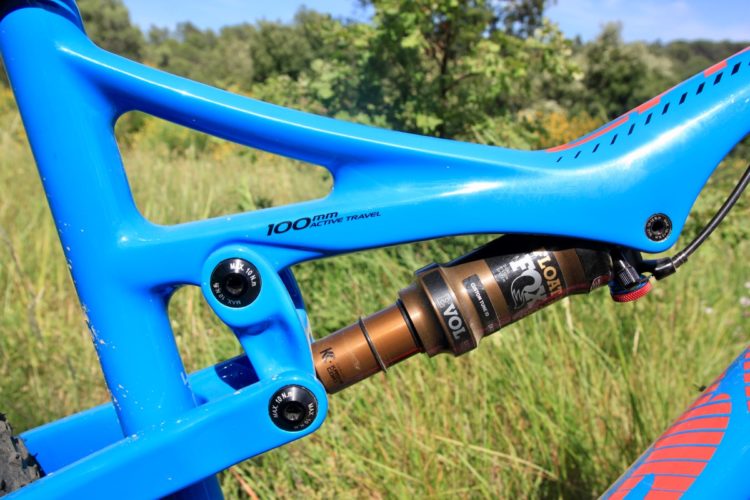
<p>The trail bike is a do-it-all category and there’s a huge range in the amount of cush in this class. That being said, most rides will be somewhere in the ballpark of 120-150mm in the front and rear. Since the trail bike is largely meant to be a quiver-killer, choose the amount of squish based on your skill level, riding style, and most-often encountered terrain.</p>
<!-- /wp:paragraph -->

<!-- wp:paragraph -->
<p>Suspension performance has been steadily improving, and many longer-travel rigs are now surprisingly capable climbers. True to theme, however, everything is a trade-off. As travel increases, climbing performance tends to decline.</p>
<!-- /wp:paragraph -->

<!-- wp:paragraph -->
<p>A trend that’s becoming more and more common in the trail bike arena is a fork with slightly more travel than the rear shock. Combinations such are 150/140 (front/rear) are aimed at downhill shredding with the acknowledgment that all good things must come to an end. If your lift- or shuttle-assisted days are few and far between, this split is created with you in mind.</p>
<!-- /wp:paragraph -->

<!-- wp:paragraph -->
<p>If your ideal trail bike is also well-suited to an endur<em>ance</em> race instead of the enduro variety, look at travel in the neighborhood of 120mm. These steeds will still shred the downhills, but they’re aimed at a crowd looking for efficiency. If you’re planning some truly long days in the saddle or you shoot for the KOMs when you’re fighting gravity instead of using it, shorter travel trail bikes will be light, nimble, and fun to rip.</p>
<!-- /wp:paragraph -->

<!-- wp:paragraph -->
<p>Of course, it’s only fair to acknowledge that other perennially popular steed, the hardtail. Not all trail bikes have rear squish, because frankly, not all trail riders want it. The simplicity and efficiency of a hardtail paired with modern geometry seems to keep fans endlessly entertained. However, in my completely anecdotal experience, I see far more full-suspension bikes at my favorite local trailhead these days.</p>
<!-- /wp:paragraph -->

<!-- wp:heading -->
<h2 class="wp-block-heading" id="h-suspension-system">Suspension system</h2>
<!-- /wp:heading -->

<!-- wp:paragraph -->
<p>Cheaper full-suspension trail bikes are likely to have a single pivot suspension design due to the simplicity of manufacturing. Single pivots will generally go through their travel at the same rate from beginning to end, so they don’t resist bottoming out as well as some of the other multi-pivot designs out there.</p>
<!-- /wp:paragraph -->

<!-- wp:image {"align":"none","id":241098,"className":"size-full wp-image-241098"} -->
<figure class="wp-block-image alignnone size-full wp-image-241098"><img src="https://images.singletracks.com/blog/wp-content/uploads/2018/06/pivot-mach-5.5.jpg" alt="" class="wp-image-241098"/><figcaption class="wp-element-caption">The Mach 5.5 from Pivot boasts the dw-link rear suspension system. Photo: Pivot Cycles</figcaption></figure>
<!-- /wp:image -->

<!-- wp:paragraph -->
<p>Designs with more complicated linkages can have a plusher initial feel and a firmer middle or end of the stroke, depending on what the manufacturer is trying to accomplish. I won’t get into the weeds here because tons of manufacturers have their own systems, such as Giant’s Maestro, Yeti’s Switch Infinity, and Trek’s ABP. They all make various claims about how effective they are, typically involving terms like “anti-squat,” “pedal bob,” something “floating” and “small-bump sensitivity.” Frankly, I have no clue if any of these claims are legit. I don’t think manufacturers do either, and you can go down that rabbit hole at your own risk. Personally, I ride a Giant. I like my bike. Your experience may vary.</p>
<!-- /wp:paragraph -->

<!-- wp:heading -->
<h2 class="wp-block-heading" id="h-drivetrain">Drivetrain</h2>
<!-- /wp:heading -->

<!-- wp:image {"align":"none","id":228137,"className":"size-large wp-image-228137"} -->
<figure class="wp-block-image alignnone size-large wp-image-228137"><img src="https://images.singletracks.com/blog/wp-content/uploads/2017/11/SRAM-GX-Eagle-9-1200x803.jpg" alt="" class="wp-image-228137"/><figcaption class="wp-element-caption">photo: Aaron Chamberlain</figcaption></figure>
<!-- /wp:image -->

<!-- wp:paragraph -->
<p>Depending on your point of view (and chances are, you’re pretty passionate about it) you’re either holding onto your two front chainrings or pedaling away on your 1x and never looking back. It comes down to personal preference, but I’ve found the gearing offered by SRAM’s 1x11&nbsp;(and now 1x12) systems provide enough range for all but the steepest climbs. And I probably couldn’t ride up those anyway.</p>
<!-- /wp:paragraph -->

<!-- wp:paragraph -->
<p>With the advent of Eagle (or other options such as <a href="https://www.singletracks.com/blog/mtb-news/new-ethirteen-cassette-flies-higher-eagle/">e13’s 9-46 11-speed cassette</a>), a 500% gear range means riders can opt for larger front chainrings without sacrificing their easier gears. This setup is useful for pedaling through mellower, sustained downhills or riding on the road to the trails.</p>
<!-- /wp:paragraph -->

<!-- wp:heading -->
<h2 class="wp-block-heading" id="h-brakes">Brakes</h2>
<!-- /wp:heading -->

<!-- wp:image {"align":"none","id":227059,"className":"size-large wp-image-227059"} -->
<figure class="wp-block-image alignnone size-large wp-image-227059"><img src="https://images.singletracks.com/blog/wp-content/uploads/2017/11/Orange-Detail-Shots-11-1200x803.jpg" alt="" class="wp-image-227059"/><figcaption class="wp-element-caption">photo: Aaron Chamberlain</figcaption></figure>
<!-- /wp:image -->

<!-- wp:paragraph -->
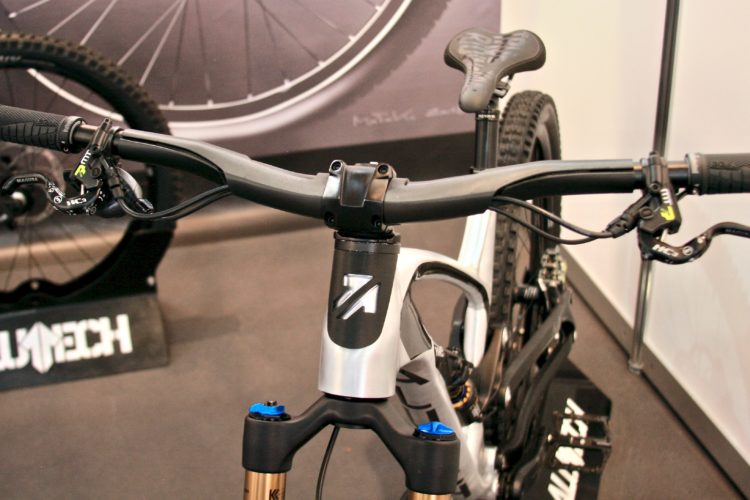
<p>We spend plenty of time thinking about how to go faster, but it's arguably even more important to think about slowing down. Even the most entry-level trail bikes should come equipped with hydraulic disk brakes, and for the most part, they'll be pretty effective.</p>
<!-- /wp:paragraph -->

<!-- wp:paragraph -->
<p>Trail bike brakes will generally have calipers with either two or four pistons. The pistons are the things that squeeze the brake pads to apply friction and slow the bike down. Four calipers will be more effective and require less pressure at the lever. The trade-off is increased weight, but in my own humble opinion, it's worth it.</p>
<!-- /wp:paragraph -->

<!-- wp:paragraph -->
<p>Another consideration is rotor size. Larger rotors will increase breaking power and also improve heat dissipation for those extended downhills. A typical trail bike will likely have a 180mm front rotor paired with a 160mm rear. A 180mm rear rotor can be a cheap upgrade, just be prepared to get an adapter to fit the 20mm increase.</p>
<!-- /wp:paragraph -->

<!-- wp:heading -->
<h2 class="wp-block-heading" id="h-handlebars">Handlebars</h2>
<!-- /wp:heading -->

<!-- wp:paragraph -->
<p>If it's been a while since your last bike purchase or you come from a cross-country background, you'll need to spend some time adjusting to wider handlebars. Once you do, I doubt you'll look back. Wider bars increase control and stability when going downhill without many downsides other than a minimal weight penalty and some additional clearance requirements for zooming between trees.</p>
<!-- /wp:paragraph -->

<!-- wp:paragraph -->
<p>Trail bikes generally have bars that are either 760mm or 780mm in length, although some will come with bars that are 800mm wide. I know many riders who won't settle for anything less.</p>
<!-- /wp:paragraph -->

<!-- wp:image {"align":"none","id":228434,"className":"size-large wp-image-228434"} -->
<figure class="wp-block-image alignnone size-large wp-image-228434"><img src="https://images.singletracks.com/blog/wp-content/uploads/2017/11/specialized_stumpjumper-1-1200x800.jpg" alt="" class="wp-image-228434"/><figcaption class="wp-element-caption">The Specialized Stumpjumper is spec'd with 780mm bars, while the company's Enduro model has an 800mm bar.</figcaption></figure>
<!-- /wp:image -->

<!-- wp:heading -->
<h2 class="wp-block-heading" id="h-dropper-post">Dropper post</h2>
<!-- /wp:heading -->

<!-- wp:paragraph -->
<p>When considering specific features, remember that pretty much everything is a compromise one way or another. Except for <a href="https://www.singletracks.com/mtb-gear/best-dropper-posts/">dropper posts</a>. Definitely choose a trail bike with a dropper post, or at least plan to buy one separately.</p>
<!-- /wp:paragraph -->

<!-- wp:paragraph -->
<p>How much drop you rock will largely depend on the size of your frame and the shape of your seat tube. Ideally, your dropper post should be at the proper riding height when fully extended with room to drop as close to the frame as possible. Since some seat tubes have a bend in them, that limits how far a post can be inserted. Some bikes might be limited to a 125mm dropper instead of 150-170mm.</p>
<!-- /wp:paragraph -->

<!-- wp:image {"align":"none","id":241092,"className":"size-large wp-image-241092"} -->
<figure class="wp-block-image alignnone size-large wp-image-241092"><img src="https://images.singletracks.com/blog/wp-content/uploads/2018/06/fuel-ex-8-1170x878.jpg" alt="" class="wp-image-241092"/><figcaption class="wp-element-caption">The bend in the Trek Fuel's seat tube might not allow for as much drop in your post. Photo: Trek Bikes</figcaption></figure>
<!-- /wp:image -->

<!-- wp:paragraph -->
<p>One final bit of advice: when you do settle on a trail bike, ride it extensively before you start chasing after “upgrades.” You’ll learn a lot about what you like and don’t like, and will be more informed when it comes time to go from a stock machine to something more customized.</p>
<!-- /wp:paragraph -->

<!-- wp:paragraph -->
<p>Finally, as you buy new parts it's a good idea to start with the major contact points. The right grips, pedals, and seat will make things much safer and more comfortable, but shouldn't be a deal breaker when choosing among bikes initially.</p>
<!-- /wp:paragraph -->

<!-- wp:paragraph -->
<p>You can also read our latest <a href="https://www.singletracks.com/mountain-bike-reviews/">mountain bike reviews</a> and news to help find a bike that suits your riding style and budget.</p>
<!-- /wp:paragraph -->
  4
A group of people gathered around a large bonfire at night, with flames and sparks illuminating the scene. Some individuals are actively adding branches to the fire, while others are seen in motion, creating a lively atmosphere. The dark surroundings contrast with the bright firelight, enhancing the warmth and energy of the gathering.
  1
A mountain biker riding along a winding dirt path through a lush green landscape, with stunning mountain ranges and a blue sky in the background.
  2
A hand holding a multi-tool with an orange center section and various screwdriver tips, placed next to a bicycle's handlebar. The background features a textured rock surface and a bicycle tire, indicating an outdoor setting.
  2
Four hardtail mountain bikes displayed in a grid layout, featuring two black bikes, one red bike, and one silver bike. The text "10 MORE HARDCORE HARDTAILS" is prominently displayed below the images, highlighting a selection of rugged off-road bicycles.
  10
A scenic mountain landscape featuring a dirt path winding through a field of wildflowers, surrounded by lush green hills and towering trees under a partly cloudy sky.
A person in a blue shirt is pointing towards a scenic mountain view while standing next to another person in a ranger uniform and a hat. They are surrounded by a grassy field and tall trees under a clear blue sky.
  1
A black electric mountain bike parked on a dirt pathway surrounded by tall green grass and wildflowers. The bike features wide tires, a visible battery, and a sleek design, suitable for off-road biking.
  7
A mountain biker navigating a winding dirt trail surrounded by sparse vegetation, captured in black and white. The biker is wearing a helmet and cycling gear, leaning into the turn as they ride through the scenic landscape.
Two young cyclists race on a dirt track surrounded by lush green forest. One rider, wearing a white helmet and a black jacket with orange accents, is positioned slightly ahead and focuses intently on the trail. The other rider sports a green helmet and red and black racing gear, both preparing to navigate the challenging course. Their bikes have colorful wheels, and they are mid-action, showcasing their competitive spirit.
Two cyclists riding on a rocky terrain with a backdrop of snow-capped mountains. The image features text highlighting a challenging journey: "Over 17,000 Feet, Across 330 Kilometers, All in 4 Days." The overall tone conveys a sense of adventure and exploration.
<!-- wp:image {"align":"none","id":241093,"className":"size-large wp-image-241093"} -->
<figure class="wp-block-image alignnone size-large wp-image-241093"><img src="https://images.singletracks.com/blog/wp-content/uploads/2018/06/transition-scout-in-action-1170x608.jpg" alt="" class="wp-image-241093"/><figcaption class="wp-element-caption">Trail bikes like the Transition Scout can get after it. Photo: Transition Bikes</figcaption></figure>
<!-- /wp:image -->

<!-- wp:paragraph -->
<p>If you’re thinking about buying a <a href="https://www.singletracks.com/gear/mountain-bikes/trail-bikes/">trail bike</a> and aren’t sure where to start, you’re in luck. While I can’t pick your new bike for you, I can walk you through some of the factors you’ll need to weigh to narrow down the somewhat intimidating field of options.</p>
<!-- /wp:paragraph -->

<!-- wp:paragraph -->
<p>While I’m not willing to draw specific, hard-and-fast parameters for what constitutes a trail bike, I’ll point out that the class generally occupies the space between more XC-oriented machines and those all-mountain or enduro rigs that specialize in putzing around the woods with the occasional interruption of a screaming downhill.</p>
<!-- /wp:paragraph -->

<!-- wp:paragraph -->
<p>In other words, if you’re somewhere between full Lycra and full-face, trail bikes are for you. They’re also great if you can only afford one bike in your stable and aren’t willing to specialize. Yes, you can ride a cross-country bike down some rowdy hills or take a 180mm-travel enduro beast on an all-day epic, but that doesn’t mean these situations are ideal. If you’re looking at trail bikes you’re looking at an intelligent balance of efficient and extreme, and – if I may be so bold – you’re on the right track.</p>
<!-- /wp:paragraph -->

<!-- wp:heading -->
<h2 class="wp-block-heading" id="h-frame-material">Frame Material</h2>
<!-- /wp:heading -->

<!-- wp:paragraph -->
<p>The frame is the foundation of any trail bike, so comparing materials is a great place to start. With the exception of a few brands residing on the more “boutique” end of the spectrum, most manufacturers opt for traditional aluminum and carbon offerings.</p>
<!-- /wp:paragraph -->

<!-- wp:image {"align":"none","id":241095,"className":"wp-image-241095 size-large"} -->
<figure class="wp-block-image alignnone wp-image-241095 size-large"><img src="https://images.singletracks.com/blog/wp-content/uploads/2018/06/yeti-sb5.5-1170x658.jpg" alt="" class="wp-image-241095"/><figcaption class="wp-element-caption">With a Yeti SB5.5, buyers can choose between carbon and nicer carbon. Photo: SRAM</figcaption></figure>
<!-- /wp:image -->

<!-- wp:paragraph -->
<p>Since someone will end this article upset no matter what, I’ll make the seemingly safe claim that carbon is the more desirable material. It’s stronger, lighter and stiffer but nevertheless has a few downsides. Besides the huge bank account hit, carbon won’t dent. Given the right impact in the right place from the right rock, it can crack. Repairs are possible, but they’ll probably void the warranty and they aren’t exactly bulletproof. A quick search of YouTube will demonstrate that carbon is also prone to more catastrophic failures. Although it takes less stress, aluminum tends to bend instead of breaking. Hopefully, stressed aluminum will be noticed in the parking lot instead of in the landing zone.</p>
<!-- /wp:paragraph -->

<!-- wp:paragraph -->
<p>Aluminum is better suited for taking impacts from kicked-up rocks so riders won’t find themselves wincing as much with every ding on the downtube. The downside? It’s the heavier choice. Whether riding up a gravel road or using lots of body English on the way down, an identical aluminum bike will take more energy to maneuver.</p>
<!-- /wp:paragraph -->

<!-- wp:paragraph -->
<p>For those buying a first trail bike or planning to upgrade in the near future, I would recommend saving money by going with an aluminum frame. This allows time to get some experience and learn preferences before throwing down upward of $5,000.</p>
<!-- /wp:paragraph -->

<!-- wp:paragraph -->
<p>On the other hand, if a certain frame is your absolute favorite and you plan to keep it until your fifth grader graduates college, a carbon model will be a more appropriate platform for upgrading to whatever new innovation the bike industry throws at us next.</p>
<!-- /wp:paragraph -->

<!-- wp:heading -->
<h2 class="wp-block-heading" id="h-geometry">Geometry</h2>
<!-- /wp:heading -->

<!-- wp:paragraph -->
<p>I’ll keep this section brief, but if you need an overview of the terms most commonly used to describe bike geometry,&nbsp;<a href="https://www.singletracks.com/blog/mtb-gear/is-there-a-consensus-on-ideal-trail-bike-geometry-top-brands-compared/">check out Aaron’s article here</a>. Most trail bikes will have a head tube angle between 66 and 67 degrees, and if we remove two major outliers in Aaron’s test group, the effective top tube length will fall between 615 and 630mm. Just 1.5cm is a pretty narrow range for a field of 16 bikes.</p>
<!-- /wp:paragraph -->

<!-- wp:paragraph -->
<p>The picture is the same for measurements such as bottom bracket height and reach, both of which show less than 2cm of variation. Aaron’s findings illustrate that, with few exceptions, bike manufacturers seem to be finding a geometric sweet spot for trail bikes. For information on how trail geometry differs from enduro geometry, look into <a href="https://www.singletracks.com/blog/mtb-gear/whats-difference-trail-bike-enduro-bike-geometry/">another article from Aaron</a>.</p>
<!-- /wp:paragraph -->

<!-- wp:paragraph -->
<p>If a bike falls far outside the average on any of these measurements, take note. This could be a sign that the bike is designed for an edge use case within the trail riding spectrum that fits a particular style of riding. Or, it could be an indication of a unbalanced bike design that should be avoided.</p>
<!-- /wp:paragraph -->

<!-- wp:image {"align":"none","id":241103,"className":"size-large wp-image-241103"} -->
<figure class="wp-block-image alignnone size-large wp-image-241103"><img src="https://images.singletracks.com/blog/wp-content/uploads/2018/06/santa_cruz_bronson-1170x708.jpg" alt="" class="wp-image-241103"/><figcaption class="wp-element-caption">The Santa Cruz Bronson has a slack 66 degree head tube angle and 150mm of travel front and rear. In other words, it's a burly trail bike.</figcaption></figure>
<!-- /wp:image -->

<!-- wp:heading -->
<h2 class="wp-block-heading" id="h-wheel-size">Wheel Size</h2>
<!-- /wp:heading -->

<!-- wp:paragraph -->
<p>One of the most polarizing subjects in mountain biking today is wheel size. If it’s been a while since your last bike purchase, you’ve probably been riding 26” wheels. At some point, someone decided bigger wheels would roll over obstacles better. They were right. 29ers entered the picture, and the people rejoiced. Then some folks decided 29” wheels were a bit large, especially when airborne, and the industry reached a classic, split-the-difference compromise with 27.5” rims.</p>
<!-- /wp:paragraph -->

<!-- wp:paragraph -->
<p>The 29” wheel was adopted most passionately by cross-country riders who found monster-trucking over obstacles improved their race times. At the other end of the spectrum, downhill racers were slower to adopt the new size. These days, however, certain companies are experimenting with downhill 29ers with rather positive results.</p>
<!-- /wp:paragraph -->

<!-- wp:paragraph -->
<p>In my opinion, wheel size is mostly a personal preference, and I don’t feel qualified to recommend which is the best. Rider size is definitely a factor, since someone who is 5’1” and rides an XS frame is going to have some Martian geometry trying to rock 29” wheels. At the same time, a rider who’s 6’4” on an XL bike will probably benefit from the improved rollover and geometry. And those in between? You’re catching on. Unless you have a strong preference for a particular size, a 27.5” wheel is pretty well suited for your new trail bike.</p>
<!-- /wp:paragraph -->

<!-- wp:heading -->
<h2 class="wp-block-heading" id="h-tire-size">Tire Size</h2>
<!-- /wp:heading -->

<!-- wp:image {"align":"none","id":224084,"className":"size-large wp-image-224084"} -->
<figure class="wp-block-image alignnone size-large wp-image-224084"><img src="https://images.singletracks.com/blog/wp-content/uploads/2017/08/IMG_1197-1200x900-1200x900.jpg" alt="" class="wp-image-224084"/><figcaption class="wp-element-caption">photo: Chris Daniels</figcaption></figure>
<!-- /wp:image -->

<!-- wp:paragraph -->
<p>Like everything else, mountain bike tire width is a compromise. The good news is that tires are easy to change, and most riders end up replacing tires earlier than they had hoped. However, when shopping for a trail bike, pay attention to tire widths.</p>
<!-- /wp:paragraph -->

<!-- wp:paragraph -->
<p>The recent emergence of the “plus” bike -- tires roughly 2.7-3.0” wide -- initially caused quite a stir. These bikes have components designed specifically to accommodate the increased size, such as wider rims and seat stays, so know that it's not possible to simply throw plus tires on any bike. Tires in this class have grip for days due to the additional rubber contacting the ground. The higher volume also enables lower air pressures without putting rims in harm’s way, which adds even more grip.</p>
<!-- /wp:paragraph -->

<!-- wp:paragraph -->
<p>Now for the downsides: all that grip adds additional rolling resistance and the extra rotational weight of a heavier tire tends to slow riders down. Plus tires also have taller sidewalls that don’t support hard cornering as well, especially when running lower pressures. Aggressive riders may find they tend to squirm.</p>
<!-- /wp:paragraph -->

<!-- wp:paragraph -->
<p>A trail bike with standard-size tires will probably be spec’d with 2.1-2.3” wide tires. Most bike frames will accommodate up to about 2.6” tires and still offer a little bit of clearance for mud buildup, though check the recommended rim width from the tire manufacturer. Like most every aspect of a trail bike, tire size will come down to personal preference, so make sure to try before buying.</p>
<!-- /wp:paragraph -->

<!-- wp:heading -->
<h2 class="wp-block-heading" id="h-travel">Travel</h2>
<!-- /wp:heading -->

<!-- wp:image {"align":"none","id":241146,"className":"wp-image-241146 size-large"} -->
<figure class="wp-block-image alignnone wp-image-241146 size-large"><img src="https://images.singletracks.com/blog/wp-content/uploads/2018/06/trance-advanced-1170x780.jpg" alt="" class="wp-image-241146"/><figcaption class="wp-element-caption">The author's Trance Advanced build, sporting a 160mm fork mated to a 140mm rear shock.</figcaption></figure>
<!-- /wp:image -->

<!-- wp:paragraph -->
<p>The trail bike is a do-it-all category and there’s a huge range in the amount of cush in this class. That being said, most rides will be somewhere in the ballpark of 120-150mm in the front and rear. Since the trail bike is largely meant to be a quiver-killer, choose the amount of squish based on your skill level, riding style, and most-often encountered terrain.</p>
<!-- /wp:paragraph -->

<!-- wp:paragraph -->
<p>Suspension performance has been steadily improving, and many longer-travel rigs are now surprisingly capable climbers. True to theme, however, everything is a trade-off. As travel increases, climbing performance tends to decline.</p>
<!-- /wp:paragraph -->

<!-- wp:paragraph -->
<p>A trend that’s becoming more and more common in the trail bike arena is a fork with slightly more travel than the rear shock. Combinations such are 150/140 (front/rear) are aimed at downhill shredding with the acknowledgment that all good things must come to an end. If your lift- or shuttle-assisted days are few and far between, this split is created with you in mind.</p>
<!-- /wp:paragraph -->

<!-- wp:paragraph -->
<p>If your ideal trail bike is also well-suited to an endur<em>ance</em> race instead of the enduro variety, look at travel in the neighborhood of 120mm. These steeds will still shred the downhills, but they’re aimed at a crowd looking for efficiency. If you’re planning some truly long days in the saddle or you shoot for the KOMs when you’re fighting gravity instead of using it, shorter travel trail bikes will be light, nimble, and fun to rip.</p>
<!-- /wp:paragraph -->

<!-- wp:paragraph -->
<p>Of course, it’s only fair to acknowledge that other perennially popular steed, the hardtail. Not all trail bikes have rear squish, because frankly, not all trail riders want it. The simplicity and efficiency of a hardtail paired with modern geometry seems to keep fans endlessly entertained. However, in my completely anecdotal experience, I see far more full-suspension bikes at my favorite local trailhead these days.</p>
<!-- /wp:paragraph -->

<!-- wp:heading -->
<h2 class="wp-block-heading" id="h-suspension-system">Suspension system</h2>
<!-- /wp:heading -->

<!-- wp:paragraph -->
<p>Cheaper full-suspension trail bikes are likely to have a single pivot suspension design due to the simplicity of manufacturing. Single pivots will generally go through their travel at the same rate from beginning to end, so they don’t resist bottoming out as well as some of the other multi-pivot designs out there.</p>
<!-- /wp:paragraph -->

<!-- wp:image {"align":"none","id":241098,"className":"size-full wp-image-241098"} -->
<figure class="wp-block-image alignnone size-full wp-image-241098"><img src="https://images.singletracks.com/blog/wp-content/uploads/2018/06/pivot-mach-5.5.jpg" alt="" class="wp-image-241098"/><figcaption class="wp-element-caption">The Mach 5.5 from Pivot boasts the dw-link rear suspension system. Photo: Pivot Cycles</figcaption></figure>
<!-- /wp:image -->

<!-- wp:paragraph -->
<p>Designs with more complicated linkages can have a plusher initial feel and a firmer middle or end of the stroke, depending on what the manufacturer is trying to accomplish. I won’t get into the weeds here because tons of manufacturers have their own systems, such as Giant’s Maestro, Yeti’s Switch Infinity, and Trek’s ABP. They all make various claims about how effective they are, typically involving terms like “anti-squat,” “pedal bob,” something “floating” and “small-bump sensitivity.” Frankly, I have no clue if any of these claims are legit. I don’t think manufacturers do either, and you can go down that rabbit hole at your own risk. Personally, I ride a Giant. I like my bike. Your experience may vary.</p>
<!-- /wp:paragraph -->

<!-- wp:heading -->
<h2 class="wp-block-heading" id="h-drivetrain">Drivetrain</h2>
<!-- /wp:heading -->

<!-- wp:image {"align":"none","id":228137,"className":"size-large wp-image-228137"} -->
<figure class="wp-block-image alignnone size-large wp-image-228137"><img src="https://images.singletracks.com/blog/wp-content/uploads/2017/11/SRAM-GX-Eagle-9-1200x803.jpg" alt="" class="wp-image-228137"/><figcaption class="wp-element-caption">photo: Aaron Chamberlain</figcaption></figure>
<!-- /wp:image -->

<!-- wp:paragraph -->
<p>Depending on your point of view (and chances are, you’re pretty passionate about it) you’re either holding onto your two front chainrings or pedaling away on your 1x and never looking back. It comes down to personal preference, but I’ve found the gearing offered by SRAM’s 1x11&nbsp;(and now 1x12) systems provide enough range for all but the steepest climbs. And I probably couldn’t ride up those anyway.</p>
<!-- /wp:paragraph -->

<!-- wp:paragraph -->
<p>With the advent of Eagle (or other options such as <a href="https://www.singletracks.com/blog/mtb-news/new-ethirteen-cassette-flies-higher-eagle/">e13’s 9-46 11-speed cassette</a>), a 500% gear range means riders can opt for larger front chainrings without sacrificing their easier gears. This setup is useful for pedaling through mellower, sustained downhills or riding on the road to the trails.</p>
<!-- /wp:paragraph -->

<!-- wp:heading -->
<h2 class="wp-block-heading" id="h-brakes">Brakes</h2>
<!-- /wp:heading -->

<!-- wp:image {"align":"none","id":227059,"className":"size-large wp-image-227059"} -->
<figure class="wp-block-image alignnone size-large wp-image-227059"><img src="https://images.singletracks.com/blog/wp-content/uploads/2017/11/Orange-Detail-Shots-11-1200x803.jpg" alt="" class="wp-image-227059"/><figcaption class="wp-element-caption">photo: Aaron Chamberlain</figcaption></figure>
<!-- /wp:image -->

<!-- wp:paragraph -->
<p>We spend plenty of time thinking about how to go faster, but it's arguably even more important to think about slowing down. Even the most entry-level trail bikes should come equipped with hydraulic disk brakes, and for the most part, they'll be pretty effective.</p>
<!-- /wp:paragraph -->

<!-- wp:paragraph -->
<p>Trail bike brakes will generally have calipers with either two or four pistons. The pistons are the things that squeeze the brake pads to apply friction and slow the bike down. Four calipers will be more effective and require less pressure at the lever. The trade-off is increased weight, but in my own humble opinion, it's worth it.</p>
<!-- /wp:paragraph -->

<!-- wp:paragraph -->
<p>Another consideration is rotor size. Larger rotors will increase breaking power and also improve heat dissipation for those extended downhills. A typical trail bike will likely have a 180mm front rotor paired with a 160mm rear. A 180mm rear rotor can be a cheap upgrade, just be prepared to get an adapter to fit the 20mm increase.</p>
<!-- /wp:paragraph -->

<!-- wp:heading -->
<h2 class="wp-block-heading" id="h-handlebars">Handlebars</h2>
<!-- /wp:heading -->

<!-- wp:paragraph -->
<p>If it's been a while since your last bike purchase or you come from a cross-country background, you'll need to spend some time adjusting to wider handlebars. Once you do, I doubt you'll look back. Wider bars increase control and stability when going downhill without many downsides other than a minimal weight penalty and some additional clearance requirements for zooming between trees.</p>
<!-- /wp:paragraph -->

<!-- wp:paragraph -->
<p>Trail bikes generally have bars that are either 760mm or 780mm in length, although some will come with bars that are 800mm wide. I know many riders who won't settle for anything less.</p>
<!-- /wp:paragraph -->

<!-- wp:image {"align":"none","id":228434,"className":"size-large wp-image-228434"} -->
<figure class="wp-block-image alignnone size-large wp-image-228434"><img src="https://images.singletracks.com/blog/wp-content/uploads/2017/11/specialized_stumpjumper-1-1200x800.jpg" alt="" class="wp-image-228434"/><figcaption class="wp-element-caption">The Specialized Stumpjumper is spec'd with 780mm bars, while the company's Enduro model has an 800mm bar.</figcaption></figure>
<!-- /wp:image -->

<!-- wp:heading -->
<h2 class="wp-block-heading" id="h-dropper-post">Dropper post</h2>
<!-- /wp:heading -->

<!-- wp:paragraph -->
<p>When considering specific features, remember that pretty much everything is a compromise one way or another. Except for <a href="https://www.singletracks.com/mtb-gear/best-dropper-posts/">dropper posts</a>. Definitely choose a trail bike with a dropper post, or at least plan to buy one separately.</p>
<!-- /wp:paragraph -->

<!-- wp:paragraph -->
<p>How much drop you rock will largely depend on the size of your frame and the shape of your seat tube. Ideally, your dropper post should be at the proper riding height when fully extended with room to drop as close to the frame as possible. Since some seat tubes have a bend in them, that limits how far a post can be inserted. Some bikes might be limited to a 125mm dropper instead of 150-170mm.</p>
<!-- /wp:paragraph -->

<!-- wp:image {"align":"none","id":241092,"className":"size-large wp-image-241092"} -->
<figure class="wp-block-image alignnone size-large wp-image-241092"><img src="https://images.singletracks.com/blog/wp-content/uploads/2018/06/fuel-ex-8-1170x878.jpg" alt="" class="wp-image-241092"/><figcaption class="wp-element-caption">The bend in the Trek Fuel's seat tube might not allow for as much drop in your post. Photo: Trek Bikes</figcaption></figure>
<!-- /wp:image -->

<!-- wp:paragraph -->
<p>One final bit of advice: when you do settle on a trail bike, ride it extensively before you start chasing after “upgrades.” You’ll learn a lot about what you like and don’t like, and will be more informed when it comes time to go from a stock machine to something more customized.</p>
<!-- /wp:paragraph -->

<!-- wp:paragraph -->
<p>Finally, as you buy new parts it's a good idea to start with the major contact points. The right grips, pedals, and seat will make things much safer and more comfortable, but shouldn't be a deal breaker when choosing among bikes initially.</p>
<!-- /wp:paragraph -->

<!-- wp:paragraph -->
<p>You can also read our latest <a href="https://www.singletracks.com/mountain-bike-reviews/">mountain bike reviews</a> and news to help find a bike that suits your riding style and budget.</p>
<!-- /wp:paragraph -->
  2
Close-up view of a bicycle handlebar featuring a textured black grip and a blue hydraulic brake lever. The handlebar also shows additional components, including a gear shifter with a marked scale. The background is softly blurred, highlighting the details of the bike's controls.
  4
A person in a black helmet and athletic clothing is bending down next to a mountain bike on a dirt path surrounded by tall grass, with a body of water visible in the background. The scene suggests an outdoor cycling activity.
Various bicycle components arranged artistically, including a chain, cassette, crankset, disc brake rotors, derailleur, and hubs, all set against a dark background. The parts display sleek designs and are representative of high-performance cycling gear.
  5
A close-up of a brown and white sign indicating that bicycles are not allowed on the path. The sign features a bicycle icon crossed out with a red line. In the background, a wooded area with fallen leaves can be seen, along with another sign on a post further down the trail.
  3
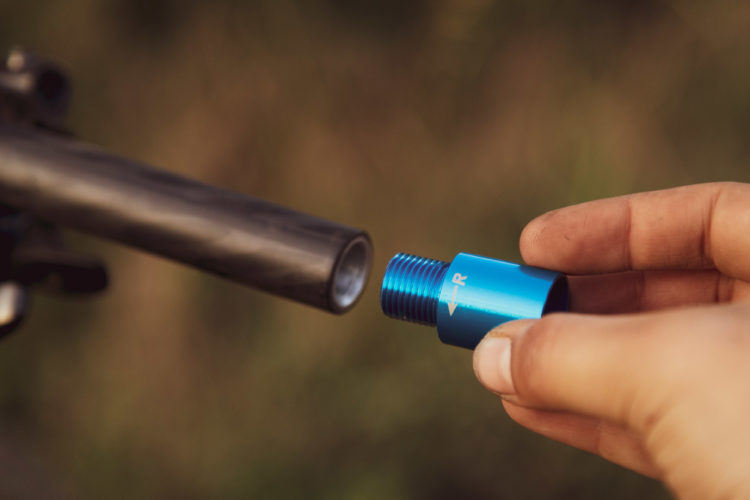
A close-up view of a black mechanical component with a central lever and colored plastic elements (yellow and blue) visible inside. The component is mounted on a flat, light-colored surface, likely a workbench.
  8
Two hikers standing on a rocky outcrop surrounded by trees. One hiker is wearing an orange jacket and shorts, while the other is dressed in a dark shirt and shorts. The scene captures a mountainous landscape on a sunny day with scattered clouds.
  3
A close-up image of a black bicycle frame bag, labeled "Rock Bar," securely attached to the front fork of a mountain bike. The bag is designed to hold items like snacks or tools and features adjustable straps for a snug fit. The background includes visible bike components, such as the disc brake and tire.
  3
A close-up of a person wearing green biking gloves gripping the handlebar of a mountain bike, with a blurred background showing another cyclist. The scene is set in a natural outdoor landscape, highlighting the excitement of mountain biking.
  5
A close-up of a mountain lion resting among branches, partially covered in snow, with a tag on its ear. The animal's face is partially obscured by twigs and lichen, showcasing its keen eyes and distinctive features.
  7
A mountain biker in a black jacket and bright green shorts rides swiftly along a narrow wooden bridge on a forest trail. The background features tall trees, creating a natural, rugged environment. The motion blur emphasizes the speed and excitement of the ride.
A mountain biker falls to the ground, creating a cloud of dust, while navigating a steep dirt slope. The bike is partially upside down, and the rider is in a crouched position, wearing a blue helmet and white riding gear. The surrounding terrain is rocky and dusty, characteristic of a mountain biking trail.
A metal mold with a cylindrical black core positioned on a wooden workbench. It features side handles for lifting and several mounting holes along its surface. In the background, a red machine and a blue cloth are visible. The floor has a textured finish.
Scenic view of a calm lake surrounded by green and autumn-colored hills under a pastel pink and blue sky, reflecting in the water. A partially visible tree branch with leaves frames the top of the image.
Close-up image of a foot pump designed for bicycles, with a foot resting on the pump. The background features part of a bicycle tire. The image includes a brand logo and the tagline "Footpump - Compact and Efficient."
A sleek black mountain bike with a lightweight frame, featuring thick tires designed for off-road terrain. The bike is positioned at an angle against a neutral gray background, showcasing its modern design, handlebar, gears, and detailed tire tread.
  2
A red mountain bike positioned on a rocky surface, showcasing its sleek frame and components against a backdrop of natural scenery with trees and a soft-focus landscape.
  1
A portable electronic device on a stone surface, accompanied by two lithium rechargeable batteries and a remote control, with green grass and foliage in the background.
A mountain biker in an orange and black outfit aggressively corners on a dusty track, creating a plume of dust. The scene is set against a backdrop of mountains and a blue sky, with yellow tape marking the course.
A camouflage trail camera mounted on a tree trunk in a wooded area with fallen leaves and underbrush in the background.
  6
A group of mountain bikers on a dirt trail, with some participants sitting on rocks while others prepare to ride. One rider is in motion, descending a slope. The scene is set in a sunny outdoor environment with dry grass and sparse vegetation in the background.
  1