Latest mountain bike news

A mountain biker navigates a rocky trail in a forest during a competitive race, with dust kicking up around the bike. Spectators are visible in the background, cheering on the riders. The scene captures the intensity and excitement of the event, surrounded by tall trees and a clear banner indicating the location.
  5
A mountain biker standing at the edge of a rocky cliff, holding their bike above their head. In the background, steam and smoke rise from the geothermal landscape, creating a dramatic and adventurous scene.
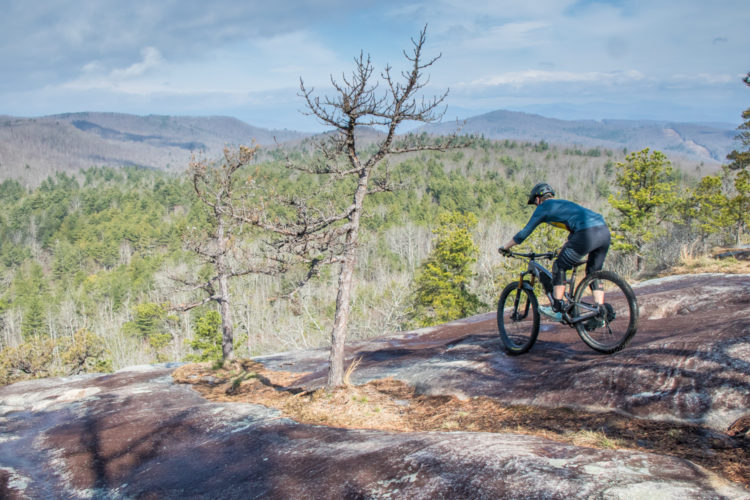
A mountain biker navigating a curving dirt trail through a green hillside, wearing a helmet and cycling gear, with an emphasis on the natural landscape and vegetation surrounding the path.
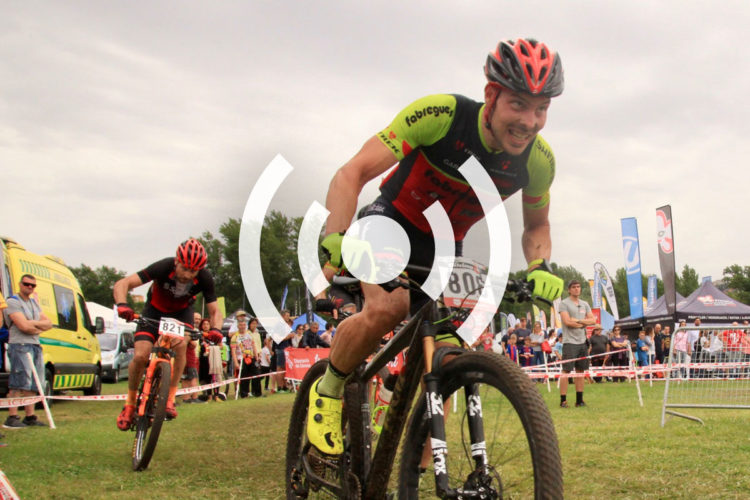
A mountain biker navigates a rocky trail surrounded by greenery, wearing a helmet and gloves, and focused on the path ahead. An icon representing sound or live broadcasting is overlaid in the center of the image.
  6
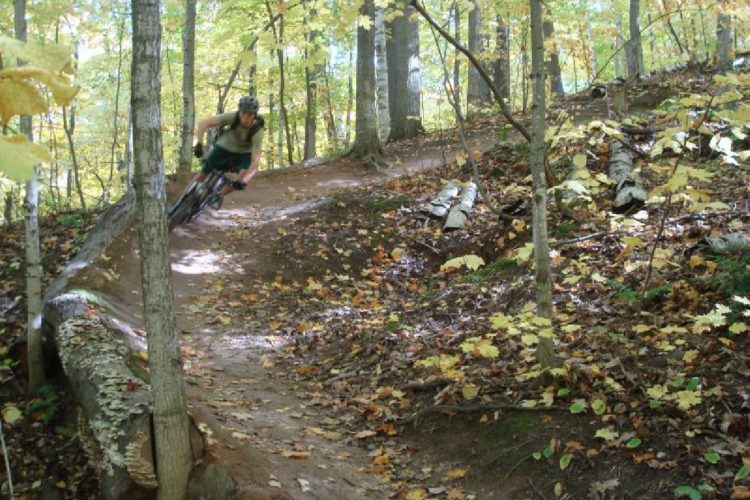
A mountain biker navigates through a rocky, wooded trail covered in fallen leaves, wearing an orange helmet and a black shirt with a logo. The cyclist is focused, leaning forward on their orange bike, with motion blur suggesting speed. Trees and stones can be seen in the background, showcasing a natural outdoor environment.
  5
A scenic view of a forest with tall trees displaying vibrant yellow foliage under a bright sky, featuring the text "Chequamegon-Nicolet National Forest" along with the establishment year "EST. 1933."
  4
Alt tag: Close-up of a PrestaCycle Torqrachet tool, showing a red handle with a torque measurement scale from 2 to 10 Nm, alongside several interchangeable bits, positioned on a textured surface with a blurred natural background.
10 Best Kids Mountain Bikes
  4
A group of mountain bikers navigating a dirt track during a cycling event titled "Hump or Jump." The riders, wearing colorful helmets and jerseys, are seen executing jumps on the course with spectators observing in the background. A banner overhead promotes a water solutions company. Trees and a street are visible in the surroundings.
[feature]

[caption id="attachment_241699" align="alignnone" width="1170"]<img class="size-large wp-image-241699" src="https://images.singletracks.com/blog/wp-content/uploads/2018/06/SCOTT-Sram_2018_WCStellenbosch_byJochenHaar_1600JHA_9017-1170x780.jpg" alt="" width="1170" height="780"> World Cup Stellenbosch in South Africa. photo: Jochen Haar, Scott / SRAM[/caption]

[/feature]

The two highest levels of UCI World Cup mountain biking are easily distinguishable.

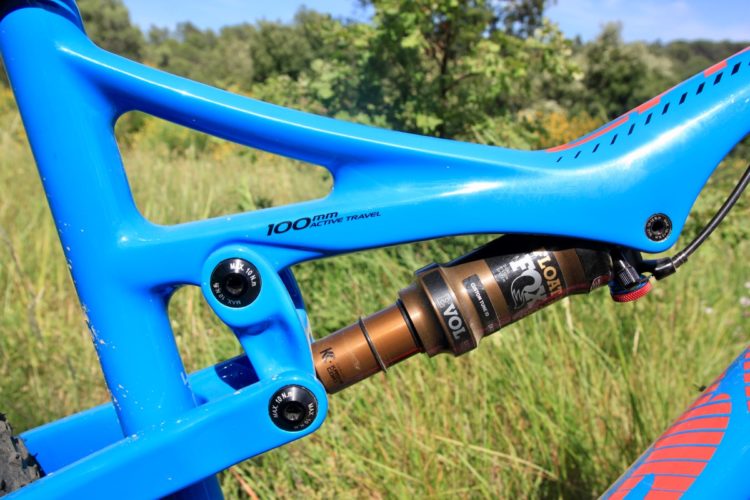
Cross-country racers push their limits up and down grueling courses meant to test their mental and cardiovascular abilities alike. An entire pro field is on the course at once, battling, usually aboard a 100mm travel full-suspension mountain bike or a hardtail.

In contrast, UCI World Cup downhill racers are on the track one at a time. Downhill bikes are usually fitted with 200mm of suspension travel and racers push the limits of physics while they compete against each other's times down steep, rocky, and technical tracks.

Both formats will remain the same and there's no sign of the two merging to form a UCI sanctioned enduro series. And yet, XC courses seem to feature more technical features than ever.

At the season opener in Stellenbosch, South Africa in March, XC racers fought for the fastest line down sections of the track that were littered with toppled trees and boulders.

"I loved it," said Chloe Woodruff (Pivot/Stan's No Tubes).

Woodruff has been racing since her high school days in Boulder, CO. She raced two World Cups as a junior and raced the first U23 women's championship race in Rotorua, New Zealand in 2006. Now she races in the pro women's field in national and World Cup cross-country races.

"I'm now fighting for a top-ten finish on my best days," Woodruff told Singletracks. This season she finished 12th in the pro women's field at Stellenbosch, 27th in Albstadt, Germany, and 13th in Nove Mesto na Morave, Czech Republic.

[caption id="attachment_241498" align="alignnone" width="1170"]<a href="https://images.singletracks.com/blog/wp-content/uploads/2018/06/mdelorme_03102018-00571-1.jpg"><img class="size-large wp-image-241498" src="https://images.singletracks.com/blog/wp-content/uploads/2018/06/mdelorme_03102018-00571-1-1170x780.jpg" alt="" width="1170" height="780"></a> Chloe Woodruff picks her way down the 'Pick up Sticks,' section on the Stellenbosch, South Africa World Cup Course. Photo by Matthew Delorme, courtesy of Stan's-Pivot Pro Team.[/caption]

Woodruff says World Cup XC courses are undoubtedly more technical than they used to be. As a result, she was an early adopter of dropper posts on XC courses. Even though they are heaver than a traditional seat post, she doesn't mind the weight penalty because it means a smoother transition from lung-burning climbs to an anxiety-inducing descents.

"Now, it's not just one section of the course," she says. "Most of the descents are pretty technical."

Outside of spending time in the saddle to build endurance, Woodruff participates in skills camps to improve her bike handling and jumping, and she also cross-trains in the gym regularly.

And Woodruff isn't the only one training to handle the rough downhills on XC courses. These days, most of the top pros aren't deterred by messy, log-strewn descents either.

“You have to be able to be technically proficient to be competitive. That wasn’t the case a decade ago," says Woodruff.

Geoff Kabush (Yeti Cycles) has seen this change first hand. Kabush has been racing professionally for over 20 years. He says that individual features in UCI courses are more technical to a point since they're manmade, but since everyone is riding them at the same speed these days, it doesn't allow very technically proficient riders to gain much time.

[caption id="attachment_241499" align="alignnone" width="1170"]<a href="https://images.singletracks.com/blog/wp-content/uploads/2018/06/geoff-kabush-2.jpg"><img class="size-large wp-image-241499" src="https://images.singletracks.com/blog/wp-content/uploads/2018/06/geoff-kabush-2-1170x780.jpg" alt="" width="1170" height="780"></a> Geoff Kabush takes flight on the Nove Mesto na Morave, Czech Republic course in 2015. Photo: www.mtbcrosscountry.com[/caption]

"For the most part, you either pass or fail these sections," he says. "Some of them are steep, but they're quite short. The technical riders can make up time where it’s a more subtle, technical flowing descent where you can use your skill to maintain momentum.”

Kabush cited the Stellenbosch course as an example of how XC World Cup courses have changed over time.

"There were a couple of really technical sections, but in between it was a very smooth course," says Kabush.
<h2>Spectator-friendly courses</h2>
The courses have become shorter and more manufactured over the years so that they can stand up to wet weather and be televised more easily. Course builders were asked to keep courses within a certain distance from the start and finish line, so they beefed up shorter technical sections as much as the UCI allowed.

"It almost became a competition between events, who could have the best rock garden, or the biggest drop-off," says UCI's Deputy Mountain Bike Coordinator, Simon Burney. "If anything, we had to start to reel the course builders in as they were becoming a little bit too extreme for the range of ability we have at a major race."

Burney says the major way World Cup courses have changed over the years is that they are a shorter distance and duration, and are actually built up. In the 90s, the courses may have been simply a dirt road between race tape without any built-up features.

"It depends how far you go back in World Cup history, but we have had World Cups on 10-12km circuits with race durations for the winner of over 3hrs," says Burney. Now the courses are around 4km in length with an average time of 80-90 minutes.

New Zealand's Anton Cooper (Trek Factory Racing), says that the time and distance is good for racers and spectators.

“It’s a length of race that makes it exciting and it’s a good mix of endurance and speed at that time frame,” he said in an interview.

Cooper lost to the reigning World Champ Nino Schurter in a frenzied sprint by the width of a tire at the last World Cup stop. It would have been near impossible to tell the winner without a frame-by-frame replay.

With 16-18 cameras on the course for Red Bull TV alone, an exciting and televisable sports event is a priority.

Cooper, now 23, has been racing for 12 years. He believes the courses are more technical than they ever have been, but with a caveat. With the addition of 29-inch wheels and new suspension technology, the courses have had to step up to the bikes, and the cameras have had to adapt also.

[caption id="attachment_241544" align="alignnone" width="1170"]<a href="https://images.singletracks.com/blog/wp-content/uploads/2018/06/AP-1VSVZPFTD2111_hires_jpeg_24bit_rgb.jpg"><img class="size-large wp-image-241544" src="https://images.singletracks.com/blog/wp-content/uploads/2018/06/AP-1VSVZPFTD2111_hires_jpeg_24bit_rgb-1170x780.jpg" alt="" width="1170" height="780"></a> Anton Cooper blasts down the Nove Mesto Na Morave, Czech Republic course. Photo: Bartek Wolinski, Red Bull Content Pool.[/caption]

“They focus on these sections which look visually imposing, but in reality, there’s one line that everyone’s taking, or there's a fast line and an easy line.”

Cooper doesn't believe it's a bad thing, but it's how racing has evolved over time.

“I know a lot of riders don’t agree with the manmade stuff, but it’s a part of our modern racing and it has to appeal to a TV audience," he said regarding some of the jumps and manmade technical sections on today's courses. "Sometimes there’s courses that are more fun for the riders, but don’t look great on TV.”

World Cup XC racing will continue to evolve. If mountain bikes are eggs and the courses are chickens, it doesn't matter which came first, because each will continue to catch up to the other. It's up to the athletes to show the public how fast it can happen.
  4
A group of people gathered around a large bonfire at night, with flames and sparks illuminating the scene. Some individuals are actively adding branches to the fire, while others are seen in motion, creating a lively atmosphere. The dark surroundings contrast with the bright firelight, enhancing the warmth and energy of the gathering.
  1
A mountain biker riding along a winding dirt path through a lush green landscape, with stunning mountain ranges and a blue sky in the background.
  2
A hand holding a multi-tool with an orange center section and various screwdriver tips, placed next to a bicycle's handlebar. The background features a textured rock surface and a bicycle tire, indicating an outdoor setting.
  2
Four hardtail mountain bikes displayed in a grid layout, featuring two black bikes, one red bike, and one silver bike. The text "10 MORE HARDCORE HARDTAILS" is prominently displayed below the images, highlighting a selection of rugged off-road bicycles.
  10
A scenic mountain landscape featuring a dirt path winding through a field of wildflowers, surrounded by lush green hills and towering trees under a partly cloudy sky.
A person in a blue shirt is pointing towards a scenic mountain view while standing next to another person in a ranger uniform and a hat. They are surrounded by a grassy field and tall trees under a clear blue sky.
  1
A black electric mountain bike parked on a dirt pathway surrounded by tall green grass and wildflowers. The bike features wide tires, a visible battery, and a sleek design, suitable for off-road biking.
  7
A mountain biker navigating a winding dirt trail surrounded by sparse vegetation, captured in black and white. The biker is wearing a helmet and cycling gear, leaning into the turn as they ride through the scenic landscape.
Two young cyclists race on a dirt track surrounded by lush green forest. One rider, wearing a white helmet and a black jacket with orange accents, is positioned slightly ahead and focuses intently on the trail. The other rider sports a green helmet and red and black racing gear, both preparing to navigate the challenging course. Their bikes have colorful wheels, and they are mid-action, showcasing their competitive spirit.
Two cyclists riding on a rocky terrain with a backdrop of snow-capped mountains. The image features text highlighting a challenging journey: "Over 17,000 Feet, Across 330 Kilometers, All in 4 Days." The overall tone conveys a sense of adventure and exploration.
[feature]

[caption id="attachment_241699" align="alignnone" width="1170"]<img class="size-large wp-image-241699" src="https://images.singletracks.com/blog/wp-content/uploads/2018/06/SCOTT-Sram_2018_WCStellenbosch_byJochenHaar_1600JHA_9017-1170x780.jpg" alt="" width="1170" height="780"> World Cup Stellenbosch in South Africa. photo: Jochen Haar, Scott / SRAM[/caption]

[/feature]

The two highest levels of UCI World Cup mountain biking are easily distinguishable.

Cross-country racers push their limits up and down grueling courses meant to test their mental and cardiovascular abilities alike. An entire pro field is on the course at once, battling, usually aboard a 100mm travel full-suspension mountain bike or a hardtail.

In contrast, UCI World Cup downhill racers are on the track one at a time. Downhill bikes are usually fitted with 200mm of suspension travel and racers push the limits of physics while they compete against each other's times down steep, rocky, and technical tracks.

Both formats will remain the same and there's no sign of the two merging to form a UCI sanctioned enduro series. And yet, XC courses seem to feature more technical features than ever.

At the season opener in Stellenbosch, South Africa in March, XC racers fought for the fastest line down sections of the track that were littered with toppled trees and boulders.

"I loved it," said Chloe Woodruff (Pivot/Stan's No Tubes).

Woodruff has been racing since her high school days in Boulder, CO. She raced two World Cups as a junior and raced the first U23 women's championship race in Rotorua, New Zealand in 2006. Now she races in the pro women's field in national and World Cup cross-country races.

"I'm now fighting for a top-ten finish on my best days," Woodruff told Singletracks. This season she finished 12th in the pro women's field at Stellenbosch, 27th in Albstadt, Germany, and 13th in Nove Mesto na Morave, Czech Republic.

[caption id="attachment_241498" align="alignnone" width="1170"]<a href="https://images.singletracks.com/blog/wp-content/uploads/2018/06/mdelorme_03102018-00571-1.jpg"><img class="size-large wp-image-241498" src="https://images.singletracks.com/blog/wp-content/uploads/2018/06/mdelorme_03102018-00571-1-1170x780.jpg" alt="" width="1170" height="780"></a> Chloe Woodruff picks her way down the 'Pick up Sticks,' section on the Stellenbosch, South Africa World Cup Course. Photo by Matthew Delorme, courtesy of Stan's-Pivot Pro Team.[/caption]

Woodruff says World Cup XC courses are undoubtedly more technical than they used to be. As a result, she was an early adopter of dropper posts on XC courses. Even though they are heaver than a traditional seat post, she doesn't mind the weight penalty because it means a smoother transition from lung-burning climbs to an anxiety-inducing descents.

"Now, it's not just one section of the course," she says. "Most of the descents are pretty technical."

Outside of spending time in the saddle to build endurance, Woodruff participates in skills camps to improve her bike handling and jumping, and she also cross-trains in the gym regularly.

And Woodruff isn't the only one training to handle the rough downhills on XC courses. These days, most of the top pros aren't deterred by messy, log-strewn descents either.

“You have to be able to be technically proficient to be competitive. That wasn’t the case a decade ago," says Woodruff.

Geoff Kabush (Yeti Cycles) has seen this change first hand. Kabush has been racing professionally for over 20 years. He says that individual features in UCI courses are more technical to a point since they're manmade, but since everyone is riding them at the same speed these days, it doesn't allow very technically proficient riders to gain much time.

[caption id="attachment_241499" align="alignnone" width="1170"]<a href="https://images.singletracks.com/blog/wp-content/uploads/2018/06/geoff-kabush-2.jpg"><img class="size-large wp-image-241499" src="https://images.singletracks.com/blog/wp-content/uploads/2018/06/geoff-kabush-2-1170x780.jpg" alt="" width="1170" height="780"></a> Geoff Kabush takes flight on the Nove Mesto na Morave, Czech Republic course in 2015. Photo: www.mtbcrosscountry.com[/caption]

"For the most part, you either pass or fail these sections," he says. "Some of them are steep, but they're quite short. The technical riders can make up time where it’s a more subtle, technical flowing descent where you can use your skill to maintain momentum.”

Kabush cited the Stellenbosch course as an example of how XC World Cup courses have changed over time.

"There were a couple of really technical sections, but in between it was a very smooth course," says Kabush.
<h2>Spectator-friendly courses</h2>
The courses have become shorter and more manufactured over the years so that they can stand up to wet weather and be televised more easily. Course builders were asked to keep courses within a certain distance from the start and finish line, so they beefed up shorter technical sections as much as the UCI allowed.

"It almost became a competition between events, who could have the best rock garden, or the biggest drop-off," says UCI's Deputy Mountain Bike Coordinator, Simon Burney. "If anything, we had to start to reel the course builders in as they were becoming a little bit too extreme for the range of ability we have at a major race."

Burney says the major way World Cup courses have changed over the years is that they are a shorter distance and duration, and are actually built up. In the 90s, the courses may have been simply a dirt road between race tape without any built-up features.

"It depends how far you go back in World Cup history, but we have had World Cups on 10-12km circuits with race durations for the winner of over 3hrs," says Burney. Now the courses are around 4km in length with an average time of 80-90 minutes.

New Zealand's Anton Cooper (Trek Factory Racing), says that the time and distance is good for racers and spectators.

“It’s a length of race that makes it exciting and it’s a good mix of endurance and speed at that time frame,” he said in an interview.

Cooper lost to the reigning World Champ Nino Schurter in a frenzied sprint by the width of a tire at the last World Cup stop. It would have been near impossible to tell the winner without a frame-by-frame replay.

With 16-18 cameras on the course for Red Bull TV alone, an exciting and televisable sports event is a priority.

Cooper, now 23, has been racing for 12 years. He believes the courses are more technical than they ever have been, but with a caveat. With the addition of 29-inch wheels and new suspension technology, the courses have had to step up to the bikes, and the cameras have had to adapt also.

[caption id="attachment_241544" align="alignnone" width="1170"]<a href="https://images.singletracks.com/blog/wp-content/uploads/2018/06/AP-1VSVZPFTD2111_hires_jpeg_24bit_rgb.jpg"><img class="size-large wp-image-241544" src="https://images.singletracks.com/blog/wp-content/uploads/2018/06/AP-1VSVZPFTD2111_hires_jpeg_24bit_rgb-1170x780.jpg" alt="" width="1170" height="780"></a> Anton Cooper blasts down the Nove Mesto Na Morave, Czech Republic course. Photo: Bartek Wolinski, Red Bull Content Pool.[/caption]

“They focus on these sections which look visually imposing, but in reality, there’s one line that everyone’s taking, or there's a fast line and an easy line.”

Cooper doesn't believe it's a bad thing, but it's how racing has evolved over time.

“I know a lot of riders don’t agree with the manmade stuff, but it’s a part of our modern racing and it has to appeal to a TV audience," he said regarding some of the jumps and manmade technical sections on today's courses. "Sometimes there’s courses that are more fun for the riders, but don’t look great on TV.”

World Cup XC racing will continue to evolve. If mountain bikes are eggs and the courses are chickens, it doesn't matter which came first, because each will continue to catch up to the other. It's up to the athletes to show the public how fast it can happen.
  2
Close-up view of a bicycle handlebar featuring a textured black grip and a blue hydraulic brake lever. The handlebar also shows additional components, including a gear shifter with a marked scale. The background is softly blurred, highlighting the details of the bike's controls.
  4
A person in a black helmet and athletic clothing is bending down next to a mountain bike on a dirt path surrounded by tall grass, with a body of water visible in the background. The scene suggests an outdoor cycling activity.
Various bicycle components arranged artistically, including a chain, cassette, crankset, disc brake rotors, derailleur, and hubs, all set against a dark background. The parts display sleek designs and are representative of high-performance cycling gear.
  5
A close-up of a brown and white sign indicating that bicycles are not allowed on the path. The sign features a bicycle icon crossed out with a red line. In the background, a wooded area with fallen leaves can be seen, along with another sign on a post further down the trail.
  3
A close-up view of a black mechanical component with a central lever and colored plastic elements (yellow and blue) visible inside. The component is mounted on a flat, light-colored surface, likely a workbench.
  8
Two hikers standing on a rocky outcrop surrounded by trees. One hiker is wearing an orange jacket and shorts, while the other is dressed in a dark shirt and shorts. The scene captures a mountainous landscape on a sunny day with scattered clouds.
  3
A close-up image of a black bicycle frame bag, labeled "Rock Bar," securely attached to the front fork of a mountain bike. The bag is designed to hold items like snacks or tools and features adjustable straps for a snug fit. The background includes visible bike components, such as the disc brake and tire.
  3
A close-up of a person wearing green biking gloves gripping the handlebar of a mountain bike, with a blurred background showing another cyclist. The scene is set in a natural outdoor landscape, highlighting the excitement of mountain biking.
  5
A close-up of a mountain lion resting among branches, partially covered in snow, with a tag on its ear. The animal's face is partially obscured by twigs and lichen, showcasing its keen eyes and distinctive features.
  7
A mountain biker in a black jacket and bright green shorts rides swiftly along a narrow wooden bridge on a forest trail. The background features tall trees, creating a natural, rugged environment. The motion blur emphasizes the speed and excitement of the ride.
A mountain biker falls to the ground, creating a cloud of dust, while navigating a steep dirt slope. The bike is partially upside down, and the rider is in a crouched position, wearing a blue helmet and white riding gear. The surrounding terrain is rocky and dusty, characteristic of a mountain biking trail.
A metal mold with a cylindrical black core positioned on a wooden workbench. It features side handles for lifting and several mounting holes along its surface. In the background, a red machine and a blue cloth are visible. The floor has a textured finish.
Scenic view of a calm lake surrounded by green and autumn-colored hills under a pastel pink and blue sky, reflecting in the water. A partially visible tree branch with leaves frames the top of the image.
Close-up image of a foot pump designed for bicycles, with a foot resting on the pump. The background features part of a bicycle tire. The image includes a brand logo and the tagline "Footpump - Compact and Efficient."
A sleek black mountain bike with a lightweight frame, featuring thick tires designed for off-road terrain. The bike is positioned at an angle against a neutral gray background, showcasing its modern design, handlebar, gears, and detailed tire tread.
  2
A red mountain bike positioned on a rocky surface, showcasing its sleek frame and components against a backdrop of natural scenery with trees and a soft-focus landscape.
  1
A portable electronic device on a stone surface, accompanied by two lithium rechargeable batteries and a remote control, with green grass and foliage in the background.
A mountain biker in an orange and black outfit aggressively corners on a dusty track, creating a plume of dust. The scene is set against a backdrop of mountains and a blue sky, with yellow tape marking the course.
A camouflage trail camera mounted on a tree trunk in a wooded area with fallen leaves and underbrush in the background.
  6
A group of mountain bikers on a dirt trail, with some participants sitting on rocks while others prepare to ride. One rider is in motion, descending a slope. The scene is set in a sunny outdoor environment with dry grass and sparse vegetation in the background.
  1
A scenic desert landscape at sunset, featuring a cholla cactus and other desert vegetation in the foreground, with a mountain bike leaning on the ground. The sky showcases vibrant hues of orange, pink, and purple as the sun sets behind distant mountains.
  4
A wooden bridge leading over a small creek, accompanied by two signs on a nearby tree. The top sign indicates "FLOW TRACK" with an arrow pointing right, while the bottom sign reads "GUESTS ONLY." The surrounding area features leaf-covered ground and lush foliage, suggesting a natural outdoor setting.
  5
A bright red mountain bike positioned on a dirt trail surrounded by lush green foliage, with sunlit trees in the background.
  1
A mountain biker jumps off a rocky ledge while descending a dirt track. In the background, a group of spectators sits atop a large rock, watching the action. The scene is set against a backdrop of rolling hills and a cloudy sky. Orange markers line the track, indicating the course.
  10
Signpost in a wooded area displaying various trail regulations, including prohibited activities for bicycles and ATVs, along with directional and difficulty information. Surrounding trees are bare, indicating a cooler season.
  29
A mountain biker navigating a rocky trail surrounded by lush greenery and mountains, with fog rolling through the landscape. The cyclist is wearing a helmet and gear, visible from behind as they ride along the rugged path.
  1
A variety of outdoor bags arranged on a rock, including a black waist pack, a camo-patterned bag, a blue Dakine bag, a black CamelBak bag, and a red Evoc hip pack. Each bag features different colors and styles, with water bottles visible in some. The background includes trees, suggesting an outdoor setting.
  3