Jeff Barber

Jeff co-founded Singletracks with his wife Leah in 1998 and has been dedicated to sharing the mountain bike information that inspires others to take epic adventures ever since. He started mountain biking in high school and served in the US Air Force before devoting himself full time to Singletracks in 2007.

Though formally educated as an engineer, Jeff began writing stories at an early stage, inspired by his mother who is a longtime accomplished author. He enjoys covering the world of mountain biking from every possible angle, whether it's trails or gear or skills. His goal for every story: that readers learn at least one new thing.

Author snapshot

MTB Background and expertise

  • Riding experience: Trail, XC, and bikepacking.
  • Mountain biking since: 1992
  • Number of products reviewed: ?. I think my first product review for the site was this one for a plastic wallet.
  • Current stable: Canyon Neuron, Orange P7 hardtail, and Scott Fun XC

Education and writing experience

  • Bachelors of Science in Engineering, Duke University
  • Masters of Business Administration, Duke University
  • Other publications: Panther Press (Lakeside High School - Augusta, GA), CitySearch.com
 
A red and silver bicycle helmet with aerodynamic design and multiple ventilation slots. The helmet features the brand name "Giro" prominently displayed.
  1
Alt tag: "A map showing a trail outline in red, located near Lake Lafayette and Tom Brown Park, with surrounding geographical features labeled."
  1
Image of a bike computer device showing dimensions and labeled features, including an aerodynamic pressure port, barometric pressure vent, and internal X-Y accelerometer. The display screen features data like altitude, calories burned, time, bike speed, and various average and maximum values. The device includes a one-touch control ring for easy navigation.
  3
The Bike Noob posed an age-old question <a href="http://bikenoob.wordpress.com/2008/04/03/while-were-on-the-subject-of-helmets/">on his blog yesterday</a>: What's the difference between a mountain bike helmet and a road helmet? Well, obviously one often has a visor while the other doesn't but there may be a bit more (or less) to it, depending on what you believe.

First off, let's choose two comparable helmets to compare: I picked the Giro Pneumo Road helmet and the Giro E2 MTB helmet. Both are high end helmets from Giro with retail prices of $145 and $130, respectively. Right off the bat, you'll notice the MTB helmet, visor and all, actually costs a bit less so it's not as if Giro is attempting to overcharge mountain bikers for a "special" helmet. In fact, the E2 has more vents (24) versus the Pneumo (19) so in terms of features the E2 appears an better value at a lower price. Weight: 295g for the E2 and 290g for the Pneumo (what's 5 grams, eh?).
<div style="text-align: center"><img id="image783" src="https://www.singletracks.com/wp-content/uploads/2008/04/giro-e2.jpg" alt="giro-e2.jpg" /> <img id="image782" src="https://www.singletracks.com/wp-content/uploads/2008/04/giro-pneumo.jpg" alt="giro-pneumo.jpg" /></div>
Oddly enough, in doing my research on the Giro helmets I found that the 2008 Pneumo (classified as a road helmet by Giro and retailers) actually DOES come with a visor. I'm not sure if this is a new development but I can tell you that I purchased a Pneumo a few years back and it did not come with a visor. In any event, most roadies will probably rip the visor off right out of the box because visors can severely limit your field of vision when you're on the road (due to riding position, among other things). Visors are also huge wind sails on the road and any extra resistance is a big waste for pavement pounders.

So, it seems pretty clear why a road biker <em>wouldn't</em> want a visor - but why do mountain bikers need 'em? Others may disagree but I think the main reason may have to do with fashion. Helmets with visors tend to look less like fat, round ladybugs and more like oversized baseball caps - a major selling point to "rebellious" mountain bikers who aren't always keen to protecting their noggins. Over time we've tried to develop our own sense of two wheel fashion - ditching spandex for baggy shorts for example - and helmets seem to have followed this progression as well.

I've also heard it argued that helmet visors are actually useful for keeping the sun out of your eyes but I honestly don't buy it. For one, I haven't seen this in my own experience but I also don't think mountain bikers are ever in a single position long enough for a visor to make a difference. Look at it this way: baseball players have bills on their caps to keep the sun out of their eyes when they're in the outfield facing the same sun for long periods of time. When you're on the bike you're constantly moving your head and you're often under tree cover. Perhaps a visor helps ease the transition on your eyes as you move from bright, open areas to darker, forested spots but for me, I'm not sure a visor is necessary.

Finally, there is some question as to the overall strength and durability of a road versus mountain helmet and unfortunately I don't have a good answer here. As far as I can tell both styles of helmets are constructed to the same safety standards but road helmets just feel less bulky and therefore <em>perhaps</em> a bit less impact resistant. I can say that I ride with a road helmet on the trails and I trust that it will protect me just as well as a mountain helmet - plus I get the added benefit of a sleeker, lighter lid.

If you ask me there doesn't seem to be a big conspiracy by helmet manufacturers to fleece unsuspecting mountain bikers by selling overpriced, repackaged gear - in fact, it seems like we're getting the better deal. Just keep in mind that you don't need two different helmets if you ride on the road and the trail - just pick the one you like and make sure you wear it!
  1
A black and white historical photograph depicting a group of soldiers riding bicycles across a grassy landscape, with mountains in the background. Each soldier is carrying a roll or pack on their bike, suggesting a military expedition or training exercise.
  3
The Bike Noob posed an age-old question <a href="http://bikenoob.wordpress.com/2008/04/03/while-were-on-the-subject-of-helmets/">on his blog yesterday</a>: What's the difference between a mountain bike helmet and a road helmet? Well, obviously one often has a visor while the other doesn't but there may be a bit more (or less) to it, depending on what you believe.

First off, let's choose two comparable helmets to compare: I picked the Giro Pneumo Road helmet and the Giro E2 MTB helmet. Both are high end helmets from Giro with retail prices of $145 and $130, respectively. Right off the bat, you'll notice the MTB helmet, visor and all, actually costs a bit less so it's not as if Giro is attempting to overcharge mountain bikers for a "special" helmet. In fact, the E2 has more vents (24) versus the Pneumo (19) so in terms of features the E2 appears an better value at a lower price. Weight: 295g for the E2 and 290g for the Pneumo (what's 5 grams, eh?).
<div style="text-align: center"><img id="image783" src="https://www.singletracks.com/wp-content/uploads/2008/04/giro-e2.jpg" alt="giro-e2.jpg" /> <img id="image782" src="https://www.singletracks.com/wp-content/uploads/2008/04/giro-pneumo.jpg" alt="giro-pneumo.jpg" /></div>
Oddly enough, in doing my research on the Giro helmets I found that the 2008 Pneumo (classified as a road helmet by Giro and retailers) actually DOES come with a visor. I'm not sure if this is a new development but I can tell you that I purchased a Pneumo a few years back and it did not come with a visor. In any event, most roadies will probably rip the visor off right out of the box because visors can severely limit your field of vision when you're on the road (due to riding position, among other things). Visors are also huge wind sails on the road and any extra resistance is a big waste for pavement pounders.

So, it seems pretty clear why a road biker <em>wouldn't</em> want a visor - but why do mountain bikers need 'em? Others may disagree but I think the main reason may have to do with fashion. Helmets with visors tend to look less like fat, round ladybugs and more like oversized baseball caps - a major selling point to "rebellious" mountain bikers who aren't always keen to protecting their noggins. Over time we've tried to develop our own sense of two wheel fashion - ditching spandex for baggy shorts for example - and helmets seem to have followed this progression as well.

I've also heard it argued that helmet visors are actually useful for keeping the sun out of your eyes but I honestly don't buy it. For one, I haven't seen this in my own experience but I also don't think mountain bikers are ever in a single position long enough for a visor to make a difference. Look at it this way: baseball players have bills on their caps to keep the sun out of their eyes when they're in the outfield facing the same sun for long periods of time. When you're on the bike you're constantly moving your head and you're often under tree cover. Perhaps a visor helps ease the transition on your eyes as you move from bright, open areas to darker, forested spots but for me, I'm not sure a visor is necessary.

Finally, there is some question as to the overall strength and durability of a road versus mountain helmet and unfortunately I don't have a good answer here. As far as I can tell both styles of helmets are constructed to the same safety standards but road helmets just feel less bulky and therefore <em>perhaps</em> a bit less impact resistant. I can say that I ride with a road helmet on the trails and I trust that it will protect me just as well as a mountain helmet - plus I get the added benefit of a sleeker, lighter lid.

If you ask me there doesn't seem to be a big conspiracy by helmet manufacturers to fleece unsuspecting mountain bikers by selling overpriced, repackaged gear - in fact, it seems like we're getting the better deal. Just keep in mind that you don't need two different helmets if you ride on the road and the trail - just pick the one you like and make sure you wear it!
  1
A mountain biker in a red outfit jumps off a steep dirt ramp, suspended mid-air against a backdrop of blue skies and fluffy clouds. Trees and rocky terrain are visible in the surrounding landscape.
  1
The Bike Noob posed an age-old question <a href="http://bikenoob.wordpress.com/2008/04/03/while-were-on-the-subject-of-helmets/">on his blog yesterday</a>: What's the difference between a mountain bike helmet and a road helmet? Well, obviously one often has a visor while the other doesn't but there may be a bit more (or less) to it, depending on what you believe.

First off, let's choose two comparable helmets to compare: I picked the Giro Pneumo Road helmet and the Giro E2 MTB helmet. Both are high end helmets from Giro with retail prices of $145 and $130, respectively. Right off the bat, you'll notice the MTB helmet, visor and all, actually costs a bit less so it's not as if Giro is attempting to overcharge mountain bikers for a "special" helmet. In fact, the E2 has more vents (24) versus the Pneumo (19) so in terms of features the E2 appears an better value at a lower price. Weight: 295g for the E2 and 290g for the Pneumo (what's 5 grams, eh?).
<div style="text-align: center"><img id="image783" src="https://www.singletracks.com/wp-content/uploads/2008/04/giro-e2.jpg" alt="giro-e2.jpg" /> <img id="image782" src="https://www.singletracks.com/wp-content/uploads/2008/04/giro-pneumo.jpg" alt="giro-pneumo.jpg" /></div>
Oddly enough, in doing my research on the Giro helmets I found that the 2008 Pneumo (classified as a road helmet by Giro and retailers) actually DOES come with a visor. I'm not sure if this is a new development but I can tell you that I purchased a Pneumo a few years back and it did not come with a visor. In any event, most roadies will probably rip the visor off right out of the box because visors can severely limit your field of vision when you're on the road (due to riding position, among other things). Visors are also huge wind sails on the road and any extra resistance is a big waste for pavement pounders.

So, it seems pretty clear why a road biker <em>wouldn't</em> want a visor - but why do mountain bikers need 'em? Others may disagree but I think the main reason may have to do with fashion. Helmets with visors tend to look less like fat, round ladybugs and more like oversized baseball caps - a major selling point to "rebellious" mountain bikers who aren't always keen to protecting their noggins. Over time we've tried to develop our own sense of two wheel fashion - ditching spandex for baggy shorts for example - and helmets seem to have followed this progression as well.

I've also heard it argued that helmet visors are actually useful for keeping the sun out of your eyes but I honestly don't buy it. For one, I haven't seen this in my own experience but I also don't think mountain bikers are ever in a single position long enough for a visor to make a difference. Look at it this way: baseball players have bills on their caps to keep the sun out of their eyes when they're in the outfield facing the same sun for long periods of time. When you're on the bike you're constantly moving your head and you're often under tree cover. Perhaps a visor helps ease the transition on your eyes as you move from bright, open areas to darker, forested spots but for me, I'm not sure a visor is necessary.

Finally, there is some question as to the overall strength and durability of a road versus mountain helmet and unfortunately I don't have a good answer here. As far as I can tell both styles of helmets are constructed to the same safety standards but road helmets just feel less bulky and therefore <em>perhaps</em> a bit less impact resistant. I can say that I ride with a road helmet on the trails and I trust that it will protect me just as well as a mountain helmet - plus I get the added benefit of a sleeker, lighter lid.

If you ask me there doesn't seem to be a big conspiracy by helmet manufacturers to fleece unsuspecting mountain bikers by selling overpriced, repackaged gear - in fact, it seems like we're getting the better deal. Just keep in mind that you don't need two different helmets if you ride on the road and the trail - just pick the one you like and make sure you wear it!
A mountain bike resting on a rock, overlooking a scenic view of rolling hills and a cloudy sky. The foreground features tall grass and foliage, while the background shows layers of blue mountains fading into the distance.
A Garmin Forerunner 205 GPS running watch features a rectangular display with a graph and various buttons on the side. The watch has a black and purple design and a durable strap suitable for athletic use.
Graphic advertisement for the Mountain Bike Summit held from May 7-9, 2008, at Stowe Mountain Resort in Vermont. The image includes workshop topics such as program development, sustainable trail construction, and community trail development. Registration details are included along with logos of the presenting organizations.
  1
A winding dirt path through a sparse, wooded area. The landscape features dry grass and small bushes, with scattered trees in the background under a cloudy sky.
A close-up image of a green bicycle frame with the word "7000" and the logo for "singletracks." In the background, a camping tent is visible, suggesting an outdoor setting. A water bottle can also be seen near the bicycle.
  2
The Bike Noob posed an age-old question <a href="http://bikenoob.wordpress.com/2008/04/03/while-were-on-the-subject-of-helmets/">on his blog yesterday</a>: What's the difference between a mountain bike helmet and a road helmet? Well, obviously one often has a visor while the other doesn't but there may be a bit more (or less) to it, depending on what you believe.

First off, let's choose two comparable helmets to compare: I picked the Giro Pneumo Road helmet and the Giro E2 MTB helmet. Both are high end helmets from Giro with retail prices of $145 and $130, respectively. Right off the bat, you'll notice the MTB helmet, visor and all, actually costs a bit less so it's not as if Giro is attempting to overcharge mountain bikers for a "special" helmet. In fact, the E2 has more vents (24) versus the Pneumo (19) so in terms of features the E2 appears an better value at a lower price. Weight: 295g for the E2 and 290g for the Pneumo (what's 5 grams, eh?).
<div style="text-align: center"><img id="image783" src="https://www.singletracks.com/wp-content/uploads/2008/04/giro-e2.jpg" alt="giro-e2.jpg" /> <img id="image782" src="https://www.singletracks.com/wp-content/uploads/2008/04/giro-pneumo.jpg" alt="giro-pneumo.jpg" /></div>
Oddly enough, in doing my research on the Giro helmets I found that the 2008 Pneumo (classified as a road helmet by Giro and retailers) actually DOES come with a visor. I'm not sure if this is a new development but I can tell you that I purchased a Pneumo a few years back and it did not come with a visor. In any event, most roadies will probably rip the visor off right out of the box because visors can severely limit your field of vision when you're on the road (due to riding position, among other things). Visors are also huge wind sails on the road and any extra resistance is a big waste for pavement pounders.

So, it seems pretty clear why a road biker <em>wouldn't</em> want a visor - but why do mountain bikers need 'em? Others may disagree but I think the main reason may have to do with fashion. Helmets with visors tend to look less like fat, round ladybugs and more like oversized baseball caps - a major selling point to "rebellious" mountain bikers who aren't always keen to protecting their noggins. Over time we've tried to develop our own sense of two wheel fashion - ditching spandex for baggy shorts for example - and helmets seem to have followed this progression as well.

I've also heard it argued that helmet visors are actually useful for keeping the sun out of your eyes but I honestly don't buy it. For one, I haven't seen this in my own experience but I also don't think mountain bikers are ever in a single position long enough for a visor to make a difference. Look at it this way: baseball players have bills on their caps to keep the sun out of their eyes when they're in the outfield facing the same sun for long periods of time. When you're on the bike you're constantly moving your head and you're often under tree cover. Perhaps a visor helps ease the transition on your eyes as you move from bright, open areas to darker, forested spots but for me, I'm not sure a visor is necessary.

Finally, there is some question as to the overall strength and durability of a road versus mountain helmet and unfortunately I don't have a good answer here. As far as I can tell both styles of helmets are constructed to the same safety standards but road helmets just feel less bulky and therefore <em>perhaps</em> a bit less impact resistant. I can say that I ride with a road helmet on the trails and I trust that it will protect me just as well as a mountain helmet - plus I get the added benefit of a sleeker, lighter lid.

If you ask me there doesn't seem to be a big conspiracy by helmet manufacturers to fleece unsuspecting mountain bikers by selling overpriced, repackaged gear - in fact, it seems like we're getting the better deal. Just keep in mind that you don't need two different helmets if you ride on the road and the trail - just pick the one you like and make sure you wear it!
The Bike Noob posed an age-old question <a href="http://bikenoob.wordpress.com/2008/04/03/while-were-on-the-subject-of-helmets/">on his blog yesterday</a>: What's the difference between a mountain bike helmet and a road helmet? Well, obviously one often has a visor while the other doesn't but there may be a bit more (or less) to it, depending on what you believe.

First off, let's choose two comparable helmets to compare: I picked the Giro Pneumo Road helmet and the Giro E2 MTB helmet. Both are high end helmets from Giro with retail prices of $145 and $130, respectively. Right off the bat, you'll notice the MTB helmet, visor and all, actually costs a bit less so it's not as if Giro is attempting to overcharge mountain bikers for a "special" helmet. In fact, the E2 has more vents (24) versus the Pneumo (19) so in terms of features the E2 appears an better value at a lower price. Weight: 295g for the E2 and 290g for the Pneumo (what's 5 grams, eh?).
<div style="text-align: center"><img id="image783" src="https://www.singletracks.com/wp-content/uploads/2008/04/giro-e2.jpg" alt="giro-e2.jpg" /> <img id="image782" src="https://www.singletracks.com/wp-content/uploads/2008/04/giro-pneumo.jpg" alt="giro-pneumo.jpg" /></div>
Oddly enough, in doing my research on the Giro helmets I found that the 2008 Pneumo (classified as a road helmet by Giro and retailers) actually DOES come with a visor. I'm not sure if this is a new development but I can tell you that I purchased a Pneumo a few years back and it did not come with a visor. In any event, most roadies will probably rip the visor off right out of the box because visors can severely limit your field of vision when you're on the road (due to riding position, among other things). Visors are also huge wind sails on the road and any extra resistance is a big waste for pavement pounders.

So, it seems pretty clear why a road biker <em>wouldn't</em> want a visor - but why do mountain bikers need 'em? Others may disagree but I think the main reason may have to do with fashion. Helmets with visors tend to look less like fat, round ladybugs and more like oversized baseball caps - a major selling point to "rebellious" mountain bikers who aren't always keen to protecting their noggins. Over time we've tried to develop our own sense of two wheel fashion - ditching spandex for baggy shorts for example - and helmets seem to have followed this progression as well.

I've also heard it argued that helmet visors are actually useful for keeping the sun out of your eyes but I honestly don't buy it. For one, I haven't seen this in my own experience but I also don't think mountain bikers are ever in a single position long enough for a visor to make a difference. Look at it this way: baseball players have bills on their caps to keep the sun out of their eyes when they're in the outfield facing the same sun for long periods of time. When you're on the bike you're constantly moving your head and you're often under tree cover. Perhaps a visor helps ease the transition on your eyes as you move from bright, open areas to darker, forested spots but for me, I'm not sure a visor is necessary.

Finally, there is some question as to the overall strength and durability of a road versus mountain helmet and unfortunately I don't have a good answer here. As far as I can tell both styles of helmets are constructed to the same safety standards but road helmets just feel less bulky and therefore <em>perhaps</em> a bit less impact resistant. I can say that I ride with a road helmet on the trails and I trust that it will protect me just as well as a mountain helmet - plus I get the added benefit of a sleeker, lighter lid.

If you ask me there doesn't seem to be a big conspiracy by helmet manufacturers to fleece unsuspecting mountain bikers by selling overpriced, repackaged gear - in fact, it seems like we're getting the better deal. Just keep in mind that you don't need two different helmets if you ride on the road and the trail - just pick the one you like and make sure you wear it!
The Bike Noob posed an age-old question <a href="http://bikenoob.wordpress.com/2008/04/03/while-were-on-the-subject-of-helmets/">on his blog yesterday</a>: What's the difference between a mountain bike helmet and a road helmet? Well, obviously one often has a visor while the other doesn't but there may be a bit more (or less) to it, depending on what you believe.

First off, let's choose two comparable helmets to compare: I picked the Giro Pneumo Road helmet and the Giro E2 MTB helmet. Both are high end helmets from Giro with retail prices of $145 and $130, respectively. Right off the bat, you'll notice the MTB helmet, visor and all, actually costs a bit less so it's not as if Giro is attempting to overcharge mountain bikers for a "special" helmet. In fact, the E2 has more vents (24) versus the Pneumo (19) so in terms of features the E2 appears an better value at a lower price. Weight: 295g for the E2 and 290g for the Pneumo (what's 5 grams, eh?).
<div style="text-align: center"><img id="image783" src="https://www.singletracks.com/wp-content/uploads/2008/04/giro-e2.jpg" alt="giro-e2.jpg" /> <img id="image782" src="https://www.singletracks.com/wp-content/uploads/2008/04/giro-pneumo.jpg" alt="giro-pneumo.jpg" /></div>
Oddly enough, in doing my research on the Giro helmets I found that the 2008 Pneumo (classified as a road helmet by Giro and retailers) actually DOES come with a visor. I'm not sure if this is a new development but I can tell you that I purchased a Pneumo a few years back and it did not come with a visor. In any event, most roadies will probably rip the visor off right out of the box because visors can severely limit your field of vision when you're on the road (due to riding position, among other things). Visors are also huge wind sails on the road and any extra resistance is a big waste for pavement pounders.

So, it seems pretty clear why a road biker <em>wouldn't</em> want a visor - but why do mountain bikers need 'em? Others may disagree but I think the main reason may have to do with fashion. Helmets with visors tend to look less like fat, round ladybugs and more like oversized baseball caps - a major selling point to "rebellious" mountain bikers who aren't always keen to protecting their noggins. Over time we've tried to develop our own sense of two wheel fashion - ditching spandex for baggy shorts for example - and helmets seem to have followed this progression as well.

I've also heard it argued that helmet visors are actually useful for keeping the sun out of your eyes but I honestly don't buy it. For one, I haven't seen this in my own experience but I also don't think mountain bikers are ever in a single position long enough for a visor to make a difference. Look at it this way: baseball players have bills on their caps to keep the sun out of their eyes when they're in the outfield facing the same sun for long periods of time. When you're on the bike you're constantly moving your head and you're often under tree cover. Perhaps a visor helps ease the transition on your eyes as you move from bright, open areas to darker, forested spots but for me, I'm not sure a visor is necessary.

Finally, there is some question as to the overall strength and durability of a road versus mountain helmet and unfortunately I don't have a good answer here. As far as I can tell both styles of helmets are constructed to the same safety standards but road helmets just feel less bulky and therefore <em>perhaps</em> a bit less impact resistant. I can say that I ride with a road helmet on the trails and I trust that it will protect me just as well as a mountain helmet - plus I get the added benefit of a sleeker, lighter lid.

If you ask me there doesn't seem to be a big conspiracy by helmet manufacturers to fleece unsuspecting mountain bikers by selling overpriced, repackaged gear - in fact, it seems like we're getting the better deal. Just keep in mind that you don't need two different helmets if you ride on the road and the trail - just pick the one you like and make sure you wear it!
The Bike Noob posed an age-old question <a href="http://bikenoob.wordpress.com/2008/04/03/while-were-on-the-subject-of-helmets/">on his blog yesterday</a>: What's the difference between a mountain bike helmet and a road helmet? Well, obviously one often has a visor while the other doesn't but there may be a bit more (or less) to it, depending on what you believe.

First off, let's choose two comparable helmets to compare: I picked the Giro Pneumo Road helmet and the Giro E2 MTB helmet. Both are high end helmets from Giro with retail prices of $145 and $130, respectively. Right off the bat, you'll notice the MTB helmet, visor and all, actually costs a bit less so it's not as if Giro is attempting to overcharge mountain bikers for a "special" helmet. In fact, the E2 has more vents (24) versus the Pneumo (19) so in terms of features the E2 appears an better value at a lower price. Weight: 295g for the E2 and 290g for the Pneumo (what's 5 grams, eh?).
<div style="text-align: center"><img id="image783" src="https://www.singletracks.com/wp-content/uploads/2008/04/giro-e2.jpg" alt="giro-e2.jpg" /> <img id="image782" src="https://www.singletracks.com/wp-content/uploads/2008/04/giro-pneumo.jpg" alt="giro-pneumo.jpg" /></div>
Oddly enough, in doing my research on the Giro helmets I found that the 2008 Pneumo (classified as a road helmet by Giro and retailers) actually DOES come with a visor. I'm not sure if this is a new development but I can tell you that I purchased a Pneumo a few years back and it did not come with a visor. In any event, most roadies will probably rip the visor off right out of the box because visors can severely limit your field of vision when you're on the road (due to riding position, among other things). Visors are also huge wind sails on the road and any extra resistance is a big waste for pavement pounders.

So, it seems pretty clear why a road biker <em>wouldn't</em> want a visor - but why do mountain bikers need 'em? Others may disagree but I think the main reason may have to do with fashion. Helmets with visors tend to look less like fat, round ladybugs and more like oversized baseball caps - a major selling point to "rebellious" mountain bikers who aren't always keen to protecting their noggins. Over time we've tried to develop our own sense of two wheel fashion - ditching spandex for baggy shorts for example - and helmets seem to have followed this progression as well.

I've also heard it argued that helmet visors are actually useful for keeping the sun out of your eyes but I honestly don't buy it. For one, I haven't seen this in my own experience but I also don't think mountain bikers are ever in a single position long enough for a visor to make a difference. Look at it this way: baseball players have bills on their caps to keep the sun out of their eyes when they're in the outfield facing the same sun for long periods of time. When you're on the bike you're constantly moving your head and you're often under tree cover. Perhaps a visor helps ease the transition on your eyes as you move from bright, open areas to darker, forested spots but for me, I'm not sure a visor is necessary.

Finally, there is some question as to the overall strength and durability of a road versus mountain helmet and unfortunately I don't have a good answer here. As far as I can tell both styles of helmets are constructed to the same safety standards but road helmets just feel less bulky and therefore <em>perhaps</em> a bit less impact resistant. I can say that I ride with a road helmet on the trails and I trust that it will protect me just as well as a mountain helmet - plus I get the added benefit of a sleeker, lighter lid.

If you ask me there doesn't seem to be a big conspiracy by helmet manufacturers to fleece unsuspecting mountain bikers by selling overpriced, repackaged gear - in fact, it seems like we're getting the better deal. Just keep in mind that you don't need two different helmets if you ride on the road and the trail - just pick the one you like and make sure you wear it!
An online webpage featuring the logo of singletracks.com, displaying a blue silhouette map of the southeastern United States, specifically highlighting areas of South Carolina and surrounding states. The layout includes navigation links on the left in a yellow sidebar.
The Bike Noob posed an age-old question <a href="http://bikenoob.wordpress.com/2008/04/03/while-were-on-the-subject-of-helmets/">on his blog yesterday</a>: What's the difference between a mountain bike helmet and a road helmet? Well, obviously one often has a visor while the other doesn't but there may be a bit more (or less) to it, depending on what you believe.

First off, let's choose two comparable helmets to compare: I picked the Giro Pneumo Road helmet and the Giro E2 MTB helmet. Both are high end helmets from Giro with retail prices of $145 and $130, respectively. Right off the bat, you'll notice the MTB helmet, visor and all, actually costs a bit less so it's not as if Giro is attempting to overcharge mountain bikers for a "special" helmet. In fact, the E2 has more vents (24) versus the Pneumo (19) so in terms of features the E2 appears an better value at a lower price. Weight: 295g for the E2 and 290g for the Pneumo (what's 5 grams, eh?).
<div style="text-align: center"><img id="image783" src="https://www.singletracks.com/wp-content/uploads/2008/04/giro-e2.jpg" alt="giro-e2.jpg" /> <img id="image782" src="https://www.singletracks.com/wp-content/uploads/2008/04/giro-pneumo.jpg" alt="giro-pneumo.jpg" /></div>
Oddly enough, in doing my research on the Giro helmets I found that the 2008 Pneumo (classified as a road helmet by Giro and retailers) actually DOES come with a visor. I'm not sure if this is a new development but I can tell you that I purchased a Pneumo a few years back and it did not come with a visor. In any event, most roadies will probably rip the visor off right out of the box because visors can severely limit your field of vision when you're on the road (due to riding position, among other things). Visors are also huge wind sails on the road and any extra resistance is a big waste for pavement pounders.

So, it seems pretty clear why a road biker <em>wouldn't</em> want a visor - but why do mountain bikers need 'em? Others may disagree but I think the main reason may have to do with fashion. Helmets with visors tend to look less like fat, round ladybugs and more like oversized baseball caps - a major selling point to "rebellious" mountain bikers who aren't always keen to protecting their noggins. Over time we've tried to develop our own sense of two wheel fashion - ditching spandex for baggy shorts for example - and helmets seem to have followed this progression as well.

I've also heard it argued that helmet visors are actually useful for keeping the sun out of your eyes but I honestly don't buy it. For one, I haven't seen this in my own experience but I also don't think mountain bikers are ever in a single position long enough for a visor to make a difference. Look at it this way: baseball players have bills on their caps to keep the sun out of their eyes when they're in the outfield facing the same sun for long periods of time. When you're on the bike you're constantly moving your head and you're often under tree cover. Perhaps a visor helps ease the transition on your eyes as you move from bright, open areas to darker, forested spots but for me, I'm not sure a visor is necessary.

Finally, there is some question as to the overall strength and durability of a road versus mountain helmet and unfortunately I don't have a good answer here. As far as I can tell both styles of helmets are constructed to the same safety standards but road helmets just feel less bulky and therefore <em>perhaps</em> a bit less impact resistant. I can say that I ride with a road helmet on the trails and I trust that it will protect me just as well as a mountain helmet - plus I get the added benefit of a sleeker, lighter lid.

If you ask me there doesn't seem to be a big conspiracy by helmet manufacturers to fleece unsuspecting mountain bikers by selling overpriced, repackaged gear - in fact, it seems like we're getting the better deal. Just keep in mind that you don't need two different helmets if you ride on the road and the trail - just pick the one you like and make sure you wear it!
The Bike Noob posed an age-old question <a href="http://bikenoob.wordpress.com/2008/04/03/while-were-on-the-subject-of-helmets/">on his blog yesterday</a>: What's the difference between a mountain bike helmet and a road helmet? Well, obviously one often has a visor while the other doesn't but there may be a bit more (or less) to it, depending on what you believe.

First off, let's choose two comparable helmets to compare: I picked the Giro Pneumo Road helmet and the Giro E2 MTB helmet. Both are high end helmets from Giro with retail prices of $145 and $130, respectively. Right off the bat, you'll notice the MTB helmet, visor and all, actually costs a bit less so it's not as if Giro is attempting to overcharge mountain bikers for a "special" helmet. In fact, the E2 has more vents (24) versus the Pneumo (19) so in terms of features the E2 appears an better value at a lower price. Weight: 295g for the E2 and 290g for the Pneumo (what's 5 grams, eh?).
<div style="text-align: center"><img id="image783" src="https://www.singletracks.com/wp-content/uploads/2008/04/giro-e2.jpg" alt="giro-e2.jpg" /> <img id="image782" src="https://www.singletracks.com/wp-content/uploads/2008/04/giro-pneumo.jpg" alt="giro-pneumo.jpg" /></div>
Oddly enough, in doing my research on the Giro helmets I found that the 2008 Pneumo (classified as a road helmet by Giro and retailers) actually DOES come with a visor. I'm not sure if this is a new development but I can tell you that I purchased a Pneumo a few years back and it did not come with a visor. In any event, most roadies will probably rip the visor off right out of the box because visors can severely limit your field of vision when you're on the road (due to riding position, among other things). Visors are also huge wind sails on the road and any extra resistance is a big waste for pavement pounders.

So, it seems pretty clear why a road biker <em>wouldn't</em> want a visor - but why do mountain bikers need 'em? Others may disagree but I think the main reason may have to do with fashion. Helmets with visors tend to look less like fat, round ladybugs and more like oversized baseball caps - a major selling point to "rebellious" mountain bikers who aren't always keen to protecting their noggins. Over time we've tried to develop our own sense of two wheel fashion - ditching spandex for baggy shorts for example - and helmets seem to have followed this progression as well.

I've also heard it argued that helmet visors are actually useful for keeping the sun out of your eyes but I honestly don't buy it. For one, I haven't seen this in my own experience but I also don't think mountain bikers are ever in a single position long enough for a visor to make a difference. Look at it this way: baseball players have bills on their caps to keep the sun out of their eyes when they're in the outfield facing the same sun for long periods of time. When you're on the bike you're constantly moving your head and you're often under tree cover. Perhaps a visor helps ease the transition on your eyes as you move from bright, open areas to darker, forested spots but for me, I'm not sure a visor is necessary.

Finally, there is some question as to the overall strength and durability of a road versus mountain helmet and unfortunately I don't have a good answer here. As far as I can tell both styles of helmets are constructed to the same safety standards but road helmets just feel less bulky and therefore <em>perhaps</em> a bit less impact resistant. I can say that I ride with a road helmet on the trails and I trust that it will protect me just as well as a mountain helmet - plus I get the added benefit of a sleeker, lighter lid.

If you ask me there doesn't seem to be a big conspiracy by helmet manufacturers to fleece unsuspecting mountain bikers by selling overpriced, repackaged gear - in fact, it seems like we're getting the better deal. Just keep in mind that you don't need two different helmets if you ride on the road and the trail - just pick the one you like and make sure you wear it!
The Bike Noob posed an age-old question <a href="http://bikenoob.wordpress.com/2008/04/03/while-were-on-the-subject-of-helmets/">on his blog yesterday</a>: What's the difference between a mountain bike helmet and a road helmet? Well, obviously one often has a visor while the other doesn't but there may be a bit more (or less) to it, depending on what you believe.

First off, let's choose two comparable helmets to compare: I picked the Giro Pneumo Road helmet and the Giro E2 MTB helmet. Both are high end helmets from Giro with retail prices of $145 and $130, respectively. Right off the bat, you'll notice the MTB helmet, visor and all, actually costs a bit less so it's not as if Giro is attempting to overcharge mountain bikers for a "special" helmet. In fact, the E2 has more vents (24) versus the Pneumo (19) so in terms of features the E2 appears an better value at a lower price. Weight: 295g for the E2 and 290g for the Pneumo (what's 5 grams, eh?).
<div style="text-align: center"><img id="image783" src="https://www.singletracks.com/wp-content/uploads/2008/04/giro-e2.jpg" alt="giro-e2.jpg" /> <img id="image782" src="https://www.singletracks.com/wp-content/uploads/2008/04/giro-pneumo.jpg" alt="giro-pneumo.jpg" /></div>
Oddly enough, in doing my research on the Giro helmets I found that the 2008 Pneumo (classified as a road helmet by Giro and retailers) actually DOES come with a visor. I'm not sure if this is a new development but I can tell you that I purchased a Pneumo a few years back and it did not come with a visor. In any event, most roadies will probably rip the visor off right out of the box because visors can severely limit your field of vision when you're on the road (due to riding position, among other things). Visors are also huge wind sails on the road and any extra resistance is a big waste for pavement pounders.

So, it seems pretty clear why a road biker <em>wouldn't</em> want a visor - but why do mountain bikers need 'em? Others may disagree but I think the main reason may have to do with fashion. Helmets with visors tend to look less like fat, round ladybugs and more like oversized baseball caps - a major selling point to "rebellious" mountain bikers who aren't always keen to protecting their noggins. Over time we've tried to develop our own sense of two wheel fashion - ditching spandex for baggy shorts for example - and helmets seem to have followed this progression as well.

I've also heard it argued that helmet visors are actually useful for keeping the sun out of your eyes but I honestly don't buy it. For one, I haven't seen this in my own experience but I also don't think mountain bikers are ever in a single position long enough for a visor to make a difference. Look at it this way: baseball players have bills on their caps to keep the sun out of their eyes when they're in the outfield facing the same sun for long periods of time. When you're on the bike you're constantly moving your head and you're often under tree cover. Perhaps a visor helps ease the transition on your eyes as you move from bright, open areas to darker, forested spots but for me, I'm not sure a visor is necessary.

Finally, there is some question as to the overall strength and durability of a road versus mountain helmet and unfortunately I don't have a good answer here. As far as I can tell both styles of helmets are constructed to the same safety standards but road helmets just feel less bulky and therefore <em>perhaps</em> a bit less impact resistant. I can say that I ride with a road helmet on the trails and I trust that it will protect me just as well as a mountain helmet - plus I get the added benefit of a sleeker, lighter lid.

If you ask me there doesn't seem to be a big conspiracy by helmet manufacturers to fleece unsuspecting mountain bikers by selling overpriced, repackaged gear - in fact, it seems like we're getting the better deal. Just keep in mind that you don't need two different helmets if you ride on the road and the trail - just pick the one you like and make sure you wear it!
A red and silver mountain bike with a sturdy frame, front suspension, and wide tires, positioned on a plain white background.
  1
A circular logo featuring a laurel wreath, with the number "10" prominently displayed in the center. Below, the word "singletracks" is written in a bold, modern font. The color scheme is a muted blue, giving the design a clean and contemporary look.
  1
The Bike Noob posed an age-old question <a href="http://bikenoob.wordpress.com/2008/04/03/while-were-on-the-subject-of-helmets/">on his blog yesterday</a>: What's the difference between a mountain bike helmet and a road helmet? Well, obviously one often has a visor while the other doesn't but there may be a bit more (or less) to it, depending on what you believe.

First off, let's choose two comparable helmets to compare: I picked the Giro Pneumo Road helmet and the Giro E2 MTB helmet. Both are high end helmets from Giro with retail prices of $145 and $130, respectively. Right off the bat, you'll notice the MTB helmet, visor and all, actually costs a bit less so it's not as if Giro is attempting to overcharge mountain bikers for a "special" helmet. In fact, the E2 has more vents (24) versus the Pneumo (19) so in terms of features the E2 appears an better value at a lower price. Weight: 295g for the E2 and 290g for the Pneumo (what's 5 grams, eh?).
<div style="text-align: center"><img id="image783" src="https://www.singletracks.com/wp-content/uploads/2008/04/giro-e2.jpg" alt="giro-e2.jpg" /> <img id="image782" src="https://www.singletracks.com/wp-content/uploads/2008/04/giro-pneumo.jpg" alt="giro-pneumo.jpg" /></div>
Oddly enough, in doing my research on the Giro helmets I found that the 2008 Pneumo (classified as a road helmet by Giro and retailers) actually DOES come with a visor. I'm not sure if this is a new development but I can tell you that I purchased a Pneumo a few years back and it did not come with a visor. In any event, most roadies will probably rip the visor off right out of the box because visors can severely limit your field of vision when you're on the road (due to riding position, among other things). Visors are also huge wind sails on the road and any extra resistance is a big waste for pavement pounders.

So, it seems pretty clear why a road biker <em>wouldn't</em> want a visor - but why do mountain bikers need 'em? Others may disagree but I think the main reason may have to do with fashion. Helmets with visors tend to look less like fat, round ladybugs and more like oversized baseball caps - a major selling point to "rebellious" mountain bikers who aren't always keen to protecting their noggins. Over time we've tried to develop our own sense of two wheel fashion - ditching spandex for baggy shorts for example - and helmets seem to have followed this progression as well.

I've also heard it argued that helmet visors are actually useful for keeping the sun out of your eyes but I honestly don't buy it. For one, I haven't seen this in my own experience but I also don't think mountain bikers are ever in a single position long enough for a visor to make a difference. Look at it this way: baseball players have bills on their caps to keep the sun out of their eyes when they're in the outfield facing the same sun for long periods of time. When you're on the bike you're constantly moving your head and you're often under tree cover. Perhaps a visor helps ease the transition on your eyes as you move from bright, open areas to darker, forested spots but for me, I'm not sure a visor is necessary.

Finally, there is some question as to the overall strength and durability of a road versus mountain helmet and unfortunately I don't have a good answer here. As far as I can tell both styles of helmets are constructed to the same safety standards but road helmets just feel less bulky and therefore <em>perhaps</em> a bit less impact resistant. I can say that I ride with a road helmet on the trails and I trust that it will protect me just as well as a mountain helmet - plus I get the added benefit of a sleeker, lighter lid.

If you ask me there doesn't seem to be a big conspiracy by helmet manufacturers to fleece unsuspecting mountain bikers by selling overpriced, repackaged gear - in fact, it seems like we're getting the better deal. Just keep in mind that you don't need two different helmets if you ride on the road and the trail - just pick the one you like and make sure you wear it!
Kona logo featuring the word "KONA" in bold blue letters, set against a black paint splatter background.
The Bike Noob posed an age-old question <a href="http://bikenoob.wordpress.com/2008/04/03/while-were-on-the-subject-of-helmets/">on his blog yesterday</a>: What's the difference between a mountain bike helmet and a road helmet? Well, obviously one often has a visor while the other doesn't but there may be a bit more (or less) to it, depending on what you believe.

First off, let's choose two comparable helmets to compare: I picked the Giro Pneumo Road helmet and the Giro E2 MTB helmet. Both are high end helmets from Giro with retail prices of $145 and $130, respectively. Right off the bat, you'll notice the MTB helmet, visor and all, actually costs a bit less so it's not as if Giro is attempting to overcharge mountain bikers for a "special" helmet. In fact, the E2 has more vents (24) versus the Pneumo (19) so in terms of features the E2 appears an better value at a lower price. Weight: 295g for the E2 and 290g for the Pneumo (what's 5 grams, eh?).
<div style="text-align: center"><img id="image783" src="https://www.singletracks.com/wp-content/uploads/2008/04/giro-e2.jpg" alt="giro-e2.jpg" /> <img id="image782" src="https://www.singletracks.com/wp-content/uploads/2008/04/giro-pneumo.jpg" alt="giro-pneumo.jpg" /></div>
Oddly enough, in doing my research on the Giro helmets I found that the 2008 Pneumo (classified as a road helmet by Giro and retailers) actually DOES come with a visor. I'm not sure if this is a new development but I can tell you that I purchased a Pneumo a few years back and it did not come with a visor. In any event, most roadies will probably rip the visor off right out of the box because visors can severely limit your field of vision when you're on the road (due to riding position, among other things). Visors are also huge wind sails on the road and any extra resistance is a big waste for pavement pounders.

So, it seems pretty clear why a road biker <em>wouldn't</em> want a visor - but why do mountain bikers need 'em? Others may disagree but I think the main reason may have to do with fashion. Helmets with visors tend to look less like fat, round ladybugs and more like oversized baseball caps - a major selling point to "rebellious" mountain bikers who aren't always keen to protecting their noggins. Over time we've tried to develop our own sense of two wheel fashion - ditching spandex for baggy shorts for example - and helmets seem to have followed this progression as well.

I've also heard it argued that helmet visors are actually useful for keeping the sun out of your eyes but I honestly don't buy it. For one, I haven't seen this in my own experience but I also don't think mountain bikers are ever in a single position long enough for a visor to make a difference. Look at it this way: baseball players have bills on their caps to keep the sun out of their eyes when they're in the outfield facing the same sun for long periods of time. When you're on the bike you're constantly moving your head and you're often under tree cover. Perhaps a visor helps ease the transition on your eyes as you move from bright, open areas to darker, forested spots but for me, I'm not sure a visor is necessary.

Finally, there is some question as to the overall strength and durability of a road versus mountain helmet and unfortunately I don't have a good answer here. As far as I can tell both styles of helmets are constructed to the same safety standards but road helmets just feel less bulky and therefore <em>perhaps</em> a bit less impact resistant. I can say that I ride with a road helmet on the trails and I trust that it will protect me just as well as a mountain helmet - plus I get the added benefit of a sleeker, lighter lid.

If you ask me there doesn't seem to be a big conspiracy by helmet manufacturers to fleece unsuspecting mountain bikers by selling overpriced, repackaged gear - in fact, it seems like we're getting the better deal. Just keep in mind that you don't need two different helmets if you ride on the road and the trail - just pick the one you like and make sure you wear it!
The Bike Noob posed an age-old question <a href="http://bikenoob.wordpress.com/2008/04/03/while-were-on-the-subject-of-helmets/">on his blog yesterday</a>: What's the difference between a mountain bike helmet and a road helmet? Well, obviously one often has a visor while the other doesn't but there may be a bit more (or less) to it, depending on what you believe.

First off, let's choose two comparable helmets to compare: I picked the Giro Pneumo Road helmet and the Giro E2 MTB helmet. Both are high end helmets from Giro with retail prices of $145 and $130, respectively. Right off the bat, you'll notice the MTB helmet, visor and all, actually costs a bit less so it's not as if Giro is attempting to overcharge mountain bikers for a "special" helmet. In fact, the E2 has more vents (24) versus the Pneumo (19) so in terms of features the E2 appears an better value at a lower price. Weight: 295g for the E2 and 290g for the Pneumo (what's 5 grams, eh?).
<div style="text-align: center"><img id="image783" src="https://www.singletracks.com/wp-content/uploads/2008/04/giro-e2.jpg" alt="giro-e2.jpg" /> <img id="image782" src="https://www.singletracks.com/wp-content/uploads/2008/04/giro-pneumo.jpg" alt="giro-pneumo.jpg" /></div>
Oddly enough, in doing my research on the Giro helmets I found that the 2008 Pneumo (classified as a road helmet by Giro and retailers) actually DOES come with a visor. I'm not sure if this is a new development but I can tell you that I purchased a Pneumo a few years back and it did not come with a visor. In any event, most roadies will probably rip the visor off right out of the box because visors can severely limit your field of vision when you're on the road (due to riding position, among other things). Visors are also huge wind sails on the road and any extra resistance is a big waste for pavement pounders.

So, it seems pretty clear why a road biker <em>wouldn't</em> want a visor - but why do mountain bikers need 'em? Others may disagree but I think the main reason may have to do with fashion. Helmets with visors tend to look less like fat, round ladybugs and more like oversized baseball caps - a major selling point to "rebellious" mountain bikers who aren't always keen to protecting their noggins. Over time we've tried to develop our own sense of two wheel fashion - ditching spandex for baggy shorts for example - and helmets seem to have followed this progression as well.

I've also heard it argued that helmet visors are actually useful for keeping the sun out of your eyes but I honestly don't buy it. For one, I haven't seen this in my own experience but I also don't think mountain bikers are ever in a single position long enough for a visor to make a difference. Look at it this way: baseball players have bills on their caps to keep the sun out of their eyes when they're in the outfield facing the same sun for long periods of time. When you're on the bike you're constantly moving your head and you're often under tree cover. Perhaps a visor helps ease the transition on your eyes as you move from bright, open areas to darker, forested spots but for me, I'm not sure a visor is necessary.

Finally, there is some question as to the overall strength and durability of a road versus mountain helmet and unfortunately I don't have a good answer here. As far as I can tell both styles of helmets are constructed to the same safety standards but road helmets just feel less bulky and therefore <em>perhaps</em> a bit less impact resistant. I can say that I ride with a road helmet on the trails and I trust that it will protect me just as well as a mountain helmet - plus I get the added benefit of a sleeker, lighter lid.

If you ask me there doesn't seem to be a big conspiracy by helmet manufacturers to fleece unsuspecting mountain bikers by selling overpriced, repackaged gear - in fact, it seems like we're getting the better deal. Just keep in mind that you don't need two different helmets if you ride on the road and the trail - just pick the one you like and make sure you wear it!
Logo of Shimano, a brand known for cycling components and fishing tackle, featuring the brand name in bold, uppercase letters against a plain background.
The Bike Noob posed an age-old question <a href="http://bikenoob.wordpress.com/2008/04/03/while-were-on-the-subject-of-helmets/">on his blog yesterday</a>: What's the difference between a mountain bike helmet and a road helmet? Well, obviously one often has a visor while the other doesn't but there may be a bit more (or less) to it, depending on what you believe.

First off, let's choose two comparable helmets to compare: I picked the Giro Pneumo Road helmet and the Giro E2 MTB helmet. Both are high end helmets from Giro with retail prices of $145 and $130, respectively. Right off the bat, you'll notice the MTB helmet, visor and all, actually costs a bit less so it's not as if Giro is attempting to overcharge mountain bikers for a "special" helmet. In fact, the E2 has more vents (24) versus the Pneumo (19) so in terms of features the E2 appears an better value at a lower price. Weight: 295g for the E2 and 290g for the Pneumo (what's 5 grams, eh?).
<div style="text-align: center"><img id="image783" src="https://www.singletracks.com/wp-content/uploads/2008/04/giro-e2.jpg" alt="giro-e2.jpg" /> <img id="image782" src="https://www.singletracks.com/wp-content/uploads/2008/04/giro-pneumo.jpg" alt="giro-pneumo.jpg" /></div>
Oddly enough, in doing my research on the Giro helmets I found that the 2008 Pneumo (classified as a road helmet by Giro and retailers) actually DOES come with a visor. I'm not sure if this is a new development but I can tell you that I purchased a Pneumo a few years back and it did not come with a visor. In any event, most roadies will probably rip the visor off right out of the box because visors can severely limit your field of vision when you're on the road (due to riding position, among other things). Visors are also huge wind sails on the road and any extra resistance is a big waste for pavement pounders.

So, it seems pretty clear why a road biker <em>wouldn't</em> want a visor - but why do mountain bikers need 'em? Others may disagree but I think the main reason may have to do with fashion. Helmets with visors tend to look less like fat, round ladybugs and more like oversized baseball caps - a major selling point to "rebellious" mountain bikers who aren't always keen to protecting their noggins. Over time we've tried to develop our own sense of two wheel fashion - ditching spandex for baggy shorts for example - and helmets seem to have followed this progression as well.

I've also heard it argued that helmet visors are actually useful for keeping the sun out of your eyes but I honestly don't buy it. For one, I haven't seen this in my own experience but I also don't think mountain bikers are ever in a single position long enough for a visor to make a difference. Look at it this way: baseball players have bills on their caps to keep the sun out of their eyes when they're in the outfield facing the same sun for long periods of time. When you're on the bike you're constantly moving your head and you're often under tree cover. Perhaps a visor helps ease the transition on your eyes as you move from bright, open areas to darker, forested spots but for me, I'm not sure a visor is necessary.

Finally, there is some question as to the overall strength and durability of a road versus mountain helmet and unfortunately I don't have a good answer here. As far as I can tell both styles of helmets are constructed to the same safety standards but road helmets just feel less bulky and therefore <em>perhaps</em> a bit less impact resistant. I can say that I ride with a road helmet on the trails and I trust that it will protect me just as well as a mountain helmet - plus I get the added benefit of a sleeker, lighter lid.

If you ask me there doesn't seem to be a big conspiracy by helmet manufacturers to fleece unsuspecting mountain bikers by selling overpriced, repackaged gear - in fact, it seems like we're getting the better deal. Just keep in mind that you don't need two different helmets if you ride on the road and the trail - just pick the one you like and make sure you wear it!
A black mountain bike with wide tires, a sturdy frame, and front suspension. The bike features disc brakes and a comfortable seat, positioned for off-road riding.
The Bike Noob posed an age-old question <a href="http://bikenoob.wordpress.com/2008/04/03/while-were-on-the-subject-of-helmets/">on his blog yesterday</a>: What's the difference between a mountain bike helmet and a road helmet? Well, obviously one often has a visor while the other doesn't but there may be a bit more (or less) to it, depending on what you believe.

First off, let's choose two comparable helmets to compare: I picked the Giro Pneumo Road helmet and the Giro E2 MTB helmet. Both are high end helmets from Giro with retail prices of $145 and $130, respectively. Right off the bat, you'll notice the MTB helmet, visor and all, actually costs a bit less so it's not as if Giro is attempting to overcharge mountain bikers for a "special" helmet. In fact, the E2 has more vents (24) versus the Pneumo (19) so in terms of features the E2 appears an better value at a lower price. Weight: 295g for the E2 and 290g for the Pneumo (what's 5 grams, eh?).
<div style="text-align: center"><img id="image783" src="https://www.singletracks.com/wp-content/uploads/2008/04/giro-e2.jpg" alt="giro-e2.jpg" /> <img id="image782" src="https://www.singletracks.com/wp-content/uploads/2008/04/giro-pneumo.jpg" alt="giro-pneumo.jpg" /></div>
Oddly enough, in doing my research on the Giro helmets I found that the 2008 Pneumo (classified as a road helmet by Giro and retailers) actually DOES come with a visor. I'm not sure if this is a new development but I can tell you that I purchased a Pneumo a few years back and it did not come with a visor. In any event, most roadies will probably rip the visor off right out of the box because visors can severely limit your field of vision when you're on the road (due to riding position, among other things). Visors are also huge wind sails on the road and any extra resistance is a big waste for pavement pounders.

So, it seems pretty clear why a road biker <em>wouldn't</em> want a visor - but why do mountain bikers need 'em? Others may disagree but I think the main reason may have to do with fashion. Helmets with visors tend to look less like fat, round ladybugs and more like oversized baseball caps - a major selling point to "rebellious" mountain bikers who aren't always keen to protecting their noggins. Over time we've tried to develop our own sense of two wheel fashion - ditching spandex for baggy shorts for example - and helmets seem to have followed this progression as well.

I've also heard it argued that helmet visors are actually useful for keeping the sun out of your eyes but I honestly don't buy it. For one, I haven't seen this in my own experience but I also don't think mountain bikers are ever in a single position long enough for a visor to make a difference. Look at it this way: baseball players have bills on their caps to keep the sun out of their eyes when they're in the outfield facing the same sun for long periods of time. When you're on the bike you're constantly moving your head and you're often under tree cover. Perhaps a visor helps ease the transition on your eyes as you move from bright, open areas to darker, forested spots but for me, I'm not sure a visor is necessary.

Finally, there is some question as to the overall strength and durability of a road versus mountain helmet and unfortunately I don't have a good answer here. As far as I can tell both styles of helmets are constructed to the same safety standards but road helmets just feel less bulky and therefore <em>perhaps</em> a bit less impact resistant. I can say that I ride with a road helmet on the trails and I trust that it will protect me just as well as a mountain helmet - plus I get the added benefit of a sleeker, lighter lid.

If you ask me there doesn't seem to be a big conspiracy by helmet manufacturers to fleece unsuspecting mountain bikers by selling overpriced, repackaged gear - in fact, it seems like we're getting the better deal. Just keep in mind that you don't need two different helmets if you ride on the road and the trail - just pick the one you like and make sure you wear it!
  3
A scenic view of a winding dirt path through a grassy landscape, surrounded by sparse trees and mountains in the distance. The sky is blue with scattered white clouds. A signpost is visible near the path, indicating a trail or point of interest.
  3
A narrow dirt path winding through a dense forest with lush greenery and scattered trees, inviting exploration into the serene, natural surroundings.
  1
The Bike Noob posed an age-old question <a href="http://bikenoob.wordpress.com/2008/04/03/while-were-on-the-subject-of-helmets/">on his blog yesterday</a>: What's the difference between a mountain bike helmet and a road helmet? Well, obviously one often has a visor while the other doesn't but there may be a bit more (or less) to it, depending on what you believe.

First off, let's choose two comparable helmets to compare: I picked the Giro Pneumo Road helmet and the Giro E2 MTB helmet. Both are high end helmets from Giro with retail prices of $145 and $130, respectively. Right off the bat, you'll notice the MTB helmet, visor and all, actually costs a bit less so it's not as if Giro is attempting to overcharge mountain bikers for a "special" helmet. In fact, the E2 has more vents (24) versus the Pneumo (19) so in terms of features the E2 appears an better value at a lower price. Weight: 295g for the E2 and 290g for the Pneumo (what's 5 grams, eh?).
<div style="text-align: center"><img id="image783" src="https://www.singletracks.com/wp-content/uploads/2008/04/giro-e2.jpg" alt="giro-e2.jpg" /> <img id="image782" src="https://www.singletracks.com/wp-content/uploads/2008/04/giro-pneumo.jpg" alt="giro-pneumo.jpg" /></div>
Oddly enough, in doing my research on the Giro helmets I found that the 2008 Pneumo (classified as a road helmet by Giro and retailers) actually DOES come with a visor. I'm not sure if this is a new development but I can tell you that I purchased a Pneumo a few years back and it did not come with a visor. In any event, most roadies will probably rip the visor off right out of the box because visors can severely limit your field of vision when you're on the road (due to riding position, among other things). Visors are also huge wind sails on the road and any extra resistance is a big waste for pavement pounders.

So, it seems pretty clear why a road biker <em>wouldn't</em> want a visor - but why do mountain bikers need 'em? Others may disagree but I think the main reason may have to do with fashion. Helmets with visors tend to look less like fat, round ladybugs and more like oversized baseball caps - a major selling point to "rebellious" mountain bikers who aren't always keen to protecting their noggins. Over time we've tried to develop our own sense of two wheel fashion - ditching spandex for baggy shorts for example - and helmets seem to have followed this progression as well.

I've also heard it argued that helmet visors are actually useful for keeping the sun out of your eyes but I honestly don't buy it. For one, I haven't seen this in my own experience but I also don't think mountain bikers are ever in a single position long enough for a visor to make a difference. Look at it this way: baseball players have bills on their caps to keep the sun out of their eyes when they're in the outfield facing the same sun for long periods of time. When you're on the bike you're constantly moving your head and you're often under tree cover. Perhaps a visor helps ease the transition on your eyes as you move from bright, open areas to darker, forested spots but for me, I'm not sure a visor is necessary.

Finally, there is some question as to the overall strength and durability of a road versus mountain helmet and unfortunately I don't have a good answer here. As far as I can tell both styles of helmets are constructed to the same safety standards but road helmets just feel less bulky and therefore <em>perhaps</em> a bit less impact resistant. I can say that I ride with a road helmet on the trails and I trust that it will protect me just as well as a mountain helmet - plus I get the added benefit of a sleeker, lighter lid.

If you ask me there doesn't seem to be a big conspiracy by helmet manufacturers to fleece unsuspecting mountain bikers by selling overpriced, repackaged gear - in fact, it seems like we're getting the better deal. Just keep in mind that you don't need two different helmets if you ride on the road and the trail - just pick the one you like and make sure you wear it!
A nighttime scene at the Kona 24 Hours in Old Pueblo event in Tucson, Arizona, featuring a blue tent with tables and bikes in the foreground. Dynamic light trails suggest movement, while the logo and event title are displayed prominently.
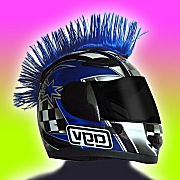
A motorcycle helmet decorated with a blue mohawk design, featuring a sleek black and silver exterior with checkered accents. The background is a vibrant gradient of pink and green.
Five interlocking rings in blue, yellow, black, green, and red on a white background, representing the Olympic Games.
The Bike Noob posed an age-old question <a href="http://bikenoob.wordpress.com/2008/04/03/while-were-on-the-subject-of-helmets/">on his blog yesterday</a>: What's the difference between a mountain bike helmet and a road helmet? Well, obviously one often has a visor while the other doesn't but there may be a bit more (or less) to it, depending on what you believe.

First off, let's choose two comparable helmets to compare: I picked the Giro Pneumo Road helmet and the Giro E2 MTB helmet. Both are high end helmets from Giro with retail prices of $145 and $130, respectively. Right off the bat, you'll notice the MTB helmet, visor and all, actually costs a bit less so it's not as if Giro is attempting to overcharge mountain bikers for a "special" helmet. In fact, the E2 has more vents (24) versus the Pneumo (19) so in terms of features the E2 appears an better value at a lower price. Weight: 295g for the E2 and 290g for the Pneumo (what's 5 grams, eh?).
<div style="text-align: center"><img id="image783" src="https://www.singletracks.com/wp-content/uploads/2008/04/giro-e2.jpg" alt="giro-e2.jpg" /> <img id="image782" src="https://www.singletracks.com/wp-content/uploads/2008/04/giro-pneumo.jpg" alt="giro-pneumo.jpg" /></div>
Oddly enough, in doing my research on the Giro helmets I found that the 2008 Pneumo (classified as a road helmet by Giro and retailers) actually DOES come with a visor. I'm not sure if this is a new development but I can tell you that I purchased a Pneumo a few years back and it did not come with a visor. In any event, most roadies will probably rip the visor off right out of the box because visors can severely limit your field of vision when you're on the road (due to riding position, among other things). Visors are also huge wind sails on the road and any extra resistance is a big waste for pavement pounders.

So, it seems pretty clear why a road biker <em>wouldn't</em> want a visor - but why do mountain bikers need 'em? Others may disagree but I think the main reason may have to do with fashion. Helmets with visors tend to look less like fat, round ladybugs and more like oversized baseball caps - a major selling point to "rebellious" mountain bikers who aren't always keen to protecting their noggins. Over time we've tried to develop our own sense of two wheel fashion - ditching spandex for baggy shorts for example - and helmets seem to have followed this progression as well.

I've also heard it argued that helmet visors are actually useful for keeping the sun out of your eyes but I honestly don't buy it. For one, I haven't seen this in my own experience but I also don't think mountain bikers are ever in a single position long enough for a visor to make a difference. Look at it this way: baseball players have bills on their caps to keep the sun out of their eyes when they're in the outfield facing the same sun for long periods of time. When you're on the bike you're constantly moving your head and you're often under tree cover. Perhaps a visor helps ease the transition on your eyes as you move from bright, open areas to darker, forested spots but for me, I'm not sure a visor is necessary.

Finally, there is some question as to the overall strength and durability of a road versus mountain helmet and unfortunately I don't have a good answer here. As far as I can tell both styles of helmets are constructed to the same safety standards but road helmets just feel less bulky and therefore <em>perhaps</em> a bit less impact resistant. I can say that I ride with a road helmet on the trails and I trust that it will protect me just as well as a mountain helmet - plus I get the added benefit of a sleeker, lighter lid.

If you ask me there doesn't seem to be a big conspiracy by helmet manufacturers to fleece unsuspecting mountain bikers by selling overpriced, repackaged gear - in fact, it seems like we're getting the better deal. Just keep in mind that you don't need two different helmets if you ride on the road and the trail - just pick the one you like and make sure you wear it!
Top-down view of a bicycle handlebar with a gloved hand gripping the left side. Two GPS devices are mounted on the handlebars, with one styled for biking and the other for outdoor navigation. The background features a forest trail covered in brown leaves.
  1
Abstract image featuring a 3D graph overlaying a terrain model with a bicycle, possibly indicating data analysis or mapping in an outdoor or cycling context. The letters "IBP" are prominently displayed in the foreground.
  1
The Bike Noob posed an age-old question <a href="http://bikenoob.wordpress.com/2008/04/03/while-were-on-the-subject-of-helmets/">on his blog yesterday</a>: What's the difference between a mountain bike helmet and a road helmet? Well, obviously one often has a visor while the other doesn't but there may be a bit more (or less) to it, depending on what you believe.

First off, let's choose two comparable helmets to compare: I picked the Giro Pneumo Road helmet and the Giro E2 MTB helmet. Both are high end helmets from Giro with retail prices of $145 and $130, respectively. Right off the bat, you'll notice the MTB helmet, visor and all, actually costs a bit less so it's not as if Giro is attempting to overcharge mountain bikers for a "special" helmet. In fact, the E2 has more vents (24) versus the Pneumo (19) so in terms of features the E2 appears an better value at a lower price. Weight: 295g for the E2 and 290g for the Pneumo (what's 5 grams, eh?).
<div style="text-align: center"><img id="image783" src="https://www.singletracks.com/wp-content/uploads/2008/04/giro-e2.jpg" alt="giro-e2.jpg" /> <img id="image782" src="https://www.singletracks.com/wp-content/uploads/2008/04/giro-pneumo.jpg" alt="giro-pneumo.jpg" /></div>
Oddly enough, in doing my research on the Giro helmets I found that the 2008 Pneumo (classified as a road helmet by Giro and retailers) actually DOES come with a visor. I'm not sure if this is a new development but I can tell you that I purchased a Pneumo a few years back and it did not come with a visor. In any event, most roadies will probably rip the visor off right out of the box because visors can severely limit your field of vision when you're on the road (due to riding position, among other things). Visors are also huge wind sails on the road and any extra resistance is a big waste for pavement pounders.

So, it seems pretty clear why a road biker <em>wouldn't</em> want a visor - but why do mountain bikers need 'em? Others may disagree but I think the main reason may have to do with fashion. Helmets with visors tend to look less like fat, round ladybugs and more like oversized baseball caps - a major selling point to "rebellious" mountain bikers who aren't always keen to protecting their noggins. Over time we've tried to develop our own sense of two wheel fashion - ditching spandex for baggy shorts for example - and helmets seem to have followed this progression as well.

I've also heard it argued that helmet visors are actually useful for keeping the sun out of your eyes but I honestly don't buy it. For one, I haven't seen this in my own experience but I also don't think mountain bikers are ever in a single position long enough for a visor to make a difference. Look at it this way: baseball players have bills on their caps to keep the sun out of their eyes when they're in the outfield facing the same sun for long periods of time. When you're on the bike you're constantly moving your head and you're often under tree cover. Perhaps a visor helps ease the transition on your eyes as you move from bright, open areas to darker, forested spots but for me, I'm not sure a visor is necessary.

Finally, there is some question as to the overall strength and durability of a road versus mountain helmet and unfortunately I don't have a good answer here. As far as I can tell both styles of helmets are constructed to the same safety standards but road helmets just feel less bulky and therefore <em>perhaps</em> a bit less impact resistant. I can say that I ride with a road helmet on the trails and I trust that it will protect me just as well as a mountain helmet - plus I get the added benefit of a sleeker, lighter lid.

If you ask me there doesn't seem to be a big conspiracy by helmet manufacturers to fleece unsuspecting mountain bikers by selling overpriced, repackaged gear - in fact, it seems like we're getting the better deal. Just keep in mind that you don't need two different helmets if you ride on the road and the trail - just pick the one you like and make sure you wear it!
Map displaying a topographic view with plotted hiking routes highlighted in yellow. The left panel lists various active logs with dates and points, while the map features terrain contours, trail markers, and landmarks, including "Captain Jack" and "Stonewall Fall."
A mountain biker performing a jump on a trail surrounded by bare trees in a forest setting. The ground is covered with leaves, and the scene depicts a sunny day with clear skies.
Two mountain bikers are seen in mid-air, jumping over a barrier with a logo in the foreground. A grassy hillside and spectators in the background suggest an outdoor biking event, with rolling hills and a cloudy sky visible.
A DVD cover featuring a woman in cycling apparel, smiling and positioned on an exercise bike. The title reads "Cycle - All Terrain with Brooke Hayward," and the logo for Softride is displayed at the bottom. The background is a gradient, enhancing the focus on the cyclist.
  1
The Bike Noob posed an age-old question <a href="http://bikenoob.wordpress.com/2008/04/03/while-were-on-the-subject-of-helmets/">on his blog yesterday</a>: What's the difference between a mountain bike helmet and a road helmet? Well, obviously one often has a visor while the other doesn't but there may be a bit more (or less) to it, depending on what you believe.

First off, let's choose two comparable helmets to compare: I picked the Giro Pneumo Road helmet and the Giro E2 MTB helmet. Both are high end helmets from Giro with retail prices of $145 and $130, respectively. Right off the bat, you'll notice the MTB helmet, visor and all, actually costs a bit less so it's not as if Giro is attempting to overcharge mountain bikers for a "special" helmet. In fact, the E2 has more vents (24) versus the Pneumo (19) so in terms of features the E2 appears an better value at a lower price. Weight: 295g for the E2 and 290g for the Pneumo (what's 5 grams, eh?).
<div style="text-align: center"><img id="image783" src="https://www.singletracks.com/wp-content/uploads/2008/04/giro-e2.jpg" alt="giro-e2.jpg" /> <img id="image782" src="https://www.singletracks.com/wp-content/uploads/2008/04/giro-pneumo.jpg" alt="giro-pneumo.jpg" /></div>
Oddly enough, in doing my research on the Giro helmets I found that the 2008 Pneumo (classified as a road helmet by Giro and retailers) actually DOES come with a visor. I'm not sure if this is a new development but I can tell you that I purchased a Pneumo a few years back and it did not come with a visor. In any event, most roadies will probably rip the visor off right out of the box because visors can severely limit your field of vision when you're on the road (due to riding position, among other things). Visors are also huge wind sails on the road and any extra resistance is a big waste for pavement pounders.

So, it seems pretty clear why a road biker <em>wouldn't</em> want a visor - but why do mountain bikers need 'em? Others may disagree but I think the main reason may have to do with fashion. Helmets with visors tend to look less like fat, round ladybugs and more like oversized baseball caps - a major selling point to "rebellious" mountain bikers who aren't always keen to protecting their noggins. Over time we've tried to develop our own sense of two wheel fashion - ditching spandex for baggy shorts for example - and helmets seem to have followed this progression as well.

I've also heard it argued that helmet visors are actually useful for keeping the sun out of your eyes but I honestly don't buy it. For one, I haven't seen this in my own experience but I also don't think mountain bikers are ever in a single position long enough for a visor to make a difference. Look at it this way: baseball players have bills on their caps to keep the sun out of their eyes when they're in the outfield facing the same sun for long periods of time. When you're on the bike you're constantly moving your head and you're often under tree cover. Perhaps a visor helps ease the transition on your eyes as you move from bright, open areas to darker, forested spots but for me, I'm not sure a visor is necessary.

Finally, there is some question as to the overall strength and durability of a road versus mountain helmet and unfortunately I don't have a good answer here. As far as I can tell both styles of helmets are constructed to the same safety standards but road helmets just feel less bulky and therefore <em>perhaps</em> a bit less impact resistant. I can say that I ride with a road helmet on the trails and I trust that it will protect me just as well as a mountain helmet - plus I get the added benefit of a sleeker, lighter lid.

If you ask me there doesn't seem to be a big conspiracy by helmet manufacturers to fleece unsuspecting mountain bikers by selling overpriced, repackaged gear - in fact, it seems like we're getting the better deal. Just keep in mind that you don't need two different helmets if you ride on the road and the trail - just pick the one you like and make sure you wear it!
  1