Sign In | Create Your Account | Site Map  

Hayes Prime MTB Brake Secrets Revealed

Thursday, March 4th, 2010

hayes1
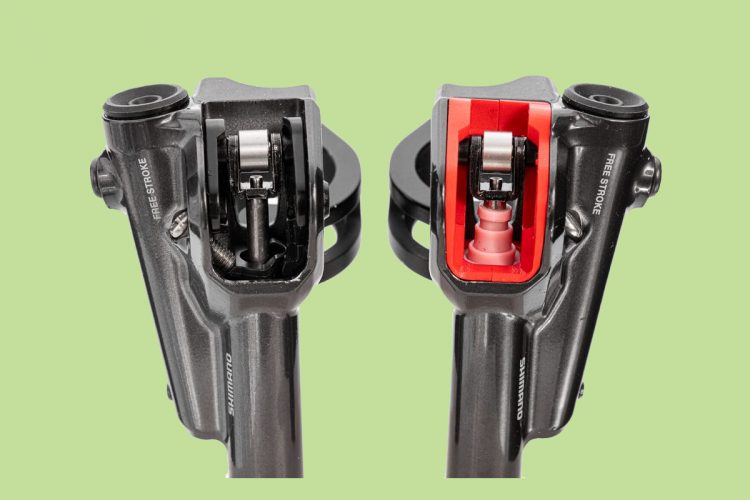
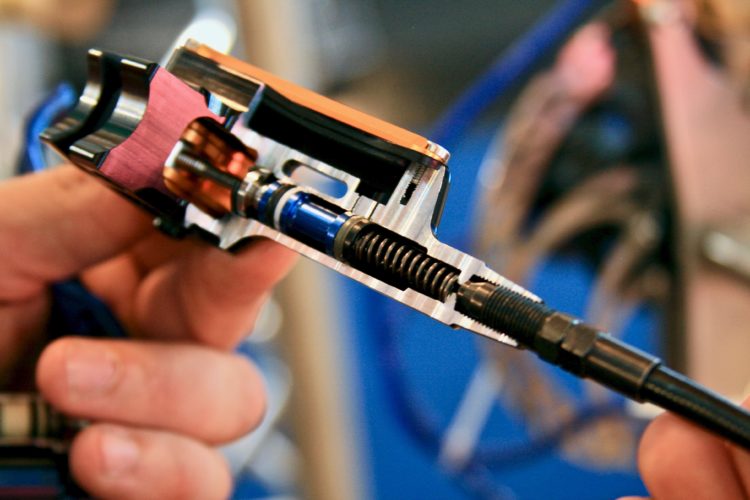
The cat is outta the bag so to speak now that Hayes has revealed the internals of the new Prime MTB brake system. If you recall my previous article, I mentioned that some of the technology was borrowed from motorsports and as you can see, this unit features a high tech moving master cylinder that can change its position relative to the cam (brown). This allows the rider to adjust pad position without loosing stroke. Below is a video with the Prime cam in action showing you the movement of the unit.

As you can see there is a lot going on in that small master cylinder. The video below includes a good explanation about how the master cylinder works and talks about some of the features of the Prime braking system.

One of the big innovations with the new master cylinder design is the improved flow of fluids within the system. For those who like to ride fast and hit the brakes hard, the improved flow keeps the brake fluid cycling regularly, preventing it from heating up too quickly and reducing the chance of expansion. Brake fluid expansion causes the pistons to move towards the rotor which in turn causes the pads to drag. Dragging pads slows you down slightly and builds up heat in the system (making the problem worse). Bottom line: the Hayes Prime “brakes” the hot fluid cycle.

Prime brakes also do away with the traditional port timing hole which is used to allow fluid to return to the reservoir and compensate for pad wear. The new design, due to the absence of the timing holes, increase seal life. On most brakes, the delicate seals on the timing holes wear over time - basically every time you squeeze the brake lever. With the holes gone there is a smooth bore, thus a longer seal life.

You’ll also notice that the master cylinder piston is hollow - this is what enables increased brake fluid flow. To top it all off, the good folks at Hayes even included an updated and redesigned titanium push rod to further reduce side loads on the piston (increasing piston life).

Well folks that’s all I got for now. As always, if there’s anything new and exciting I will keep you posted - cheers!

Hayes Brakes Are At Their Prime!

Saturday, February 20th, 2010

prime_mc1prime_caliper2

prime_rotor2

It’s that time of year when I get to call up my good friends in the industry and see what’s up and coming and possibly squeeze out some interesting tidbits about new products. I recently got a chance to talk with with Joel Richardson, Production Manager at Hayes Disc Brakes, which is always super fun and exciting. I enjoy talking with Joel because we speak the same language - “Techish” - and he’s a person who is super stoked to talk about new products in development.

Joel managed a bike shop in Wisconsin from 1994-1998 and as things go in this kind of business he ended helping Len Cabaltera (the original Hayes guy) with development of the Hayes Mag brake back in 1996.

“Len would come into my shop and ask for design and feature feedback on the prototypes.  We had no idea what it would lead to. He hired me straight out of College in 1998 and I started in tech, hand bleeding brakes and answering phones.”

Joel moved around the company a few times before landing in his current position as the brake Product Manager.

Our conversation started out with a bit of small talk, chatting about the usual challenges riders have with disc brakes and set-up. It’s during conversations like these that new ideas are introduced and Joel and I actually came up with a few good ones - perhaps you may even see one or two in the near future, you never know. Anyhow getting into it, we talked a bit about technology and key product characteristics Hayes will carry forward and improve upon and even touched on some of the new stuff under development.

bling-rotor

Above: a Hayes design that never went into production but got some serious consideration. Back in 2002 Hayes came up with a two piece rotor for Shimano’s centerlock hub design.

One of the most exciting new products at Hayes this year is the Prime braking system. Prime is the name of the eventual replacement for the Stroker brake line-up and the Prime Pro and Expert take all that is great about the Stroker - forged calipers, compact master cylinder design, and tool free reach adjustment - and make it even better. Prime brakes feature a new caliper design that can withstand a set of bigger pistons and allow you to change up the pads without removing the caliper thanks to a top-loading design. The new brakes also throw in a floating two-piece rotor for the icing on the cake.

The new Prime master cylinder design was put under heavy scrutiny during the design phase. Keeping the basic Stroker design, Hayes tilted the cylinder 10 degrees to maximize finger positioning and changed up the master cylinder internals to allow for easy position adjustments and pad placement. As if that weren’t enough, Prime brakes features a new hose design that minimizes expansion and improves feel while sporting a plethora of exotic materials to reduce weight - now that’s Prime!

hayes-factory-004

A good bit of motorsports technology was put into the Prime brake design. These brakes will outperform all of the present systems that Hayes produces thanks in part to the largest pistons they have ever produced @ 26mm. Many hundreds of hours were needed to develop a brake that would feel consistent under the tremendous forces generated in the caliper. Early in the product development Hayes decided that the calipers needed to be forged to achieve performance expectations (just like the previous model Strokers).

hayes-factory-009

Hayes takes product testing very seriously and one of the tools they use is a Dynamometer capable of testing real world situations such as high speed/high input and wet conditions, shock, and vibration, while monitoring hydraulic pressure, force, speed, torque and temperature. After the dyno test, Hayes slaps the brakes on real bikes rigged with data capturing tools for actual testing on the dirt.

Here’s more from my conversation with Joel.

So when can we expect the Prime for sale to the public?
Everything is pointing to a June 2010 release date.

How powerful is the Prime and where does it fit in the line-up?
It surpasses the power of the Stroker Ace 4 piston brake by 23% on average.

There are two versions here, are we going to see another model or two in the future?
You bet, we are investigating the possibilities for a carbon version.

Are you planning on matching the finish on the brakes to other components produced by Hayes group of companies?
Maybe you can find the ANSWER.

I noticed there are no weights listed yet, any clue as to how light these units will be?
You’re looking at about 385 grams for the Pro and approximately 415 grams for the Expert, give or take a few grams.

On the new Prime brakes I noticed Hayes is going with a two-piece rotor. How long has that been in the making? I recall there were rumors that you were thinking about that…
Back in 2002 there was consideration and work on a two-piece rotor but for various reasons it never made production.

Along with Prime, what other things are changed up for 2010?
The Stroker Gram now comes in all white with a white brake hose. The Stroker Ace has a revision on the friction material making it easier to burnish the brake pads while the caliper and brake lever now come in black. We also started selling the Stroker Ace tool kit as well as the Feel’r gauge to set up your brakes. In 2010 the familiar HAYES logo is back on our brakes as well.

Well folks, stay tuned for a product review or two of the new 2010 Hayes brake offerings. I’m not sure about you but I’m stoked to give the new Prime brakes a run for their money!

Hayes Company History

1972 –  Schwinn 200E Series bicycle disc brake
1993 –  Production of DiaCompe Speed Check Disk Brake
1997 –  HFX Mag
1999 -  Cable Actuated Hydraulic
2000 -  Redesigned flip-flop Mag MC 2 piece clamp, G1 Caliper 74mm post mount
2001 -  HMX-1 Mechanical
2002 -  HFX-Comp, HML Mechanical Levers
2003 -  HFX Mag Plus, HFX Nine MC, G2 Caliper
2004 -  HFX Nine Carbon, MX-1 Mechanical, MX-2 Mechanical, Wave Rotors
2005 -  El Camino, Sole, , BFL Levers, V-Series 6 & 8″ Rotors
2006 -  MX 3, V7(180mm) Rotor, SRL Lever
2007 - Stroker Trail / Ryde, Stroker Carbon/ V9 (224mm) rotor
2008 - Stroker Ace / Stroker Gram/ V5 (140mm) rotor
2010 - Now the PRIME

Hayes firsts

Flip/Flop universal lever design with 2-piece clamp master cylinder body

Three layer hose construction

Tool-free brake pad change

Magnesium master cylinder bodies

Bladder/cartridge master cylinder design

Ball socket caliper pistons

Flip/Flop radial master cylinder

Hayes industry standards

74 mm post mount calipers with slotted mount feet

203 mm rotor size

10 mm quick release hub rotor offset

15 mm 20mm thru and rear hub rotor offset

.070” thick rotors

Forward arcing rotor splines for thermal capabilities and strength

T25 low profile disc screws

Formula TheONE MY10 MTB Brakeset Preview

Tuesday, February 2nd, 2010

theone2theone3

Hi folks, not too long back I wrote about the Formula RX brake set and since then I have really been enjoying the great modulation and awesome power. I recently installed a set of sintered pads in place of the stock organic ones and the performance has been pretty amazing. But wait, this little article isn’t about the RX brakes but the new 2010 THE ONE brake set. If you thought the RX brakes were impressive wait until you take a look at these!

THE ONE brakes utilize a patented forged caliper that encases huge 24mm caliper pistons to generate über amounts of stopping force. I am sure that those of you who follow what’s new and hot on the the slopes and World Cup events have heard about THE ONE. For those of you who haven’t, these are Formula’s top dog, no-holds-barred brakes for DH racing. At just 308g these are lightweight - very lightweight to be exact. In fact, with some brands it’s tough to find XC brakes this light! With rotor sizes of 160mm, 180mm, 203mm, 220mm, you’re sure to find the size you need.

Once I get these on my test bike I will have a chance to see how well they perform on the mountain. Formula claims THE ONE brakes modulate extremely well and if the RX is any indication I’m pretty sure these brakes will blow me away.

theone1

Taking a peek at the construction I have to comment on how small and tight the overall package is. Talk about really shaving weight where you can - the forging process allows these brakes to achieve a small form factor without loosing any strength. Compared to other brakes, THE ONE’s forging process results in tightly squeezed metal molecules, resulting in a more dense, stronger, and uniform material to start the machining process. The only drawback to this is the higher cost of manufacturing and thus final retail cost. Once the weather gets better I will give everyone the skinny on THE ONE’s.

Here are some of the highlights:

MASTER CYLINDER

  • Forged radial master cylinder (M/C)
  • Patent-pending high capacity, integrated reservoir
  • Removable handlebar clamp
  • Flip-flop master cylinder assembly
  • Dual M/C bleed ports for easy-on-the-bike-bleeds
  • Forged aluminum lever blade (optional carbon)
  • Laser etched logos
  • MiXmaster available

CALIPER

  • Patent-pending forged one-piece post mount caliper
  • Huge 24 mm caliper pistons for amazing power
  • Top vented caliper allows for wheel on pad changes and eliminates overheating effects
  • Bottom vented caliper pistons provide additional cooling
  • Laser etched logos
  • Top loading pads simplify pad changes

Thanks to the folks at Formula brakes for providing these brakes for the article.

Formula MTB Brakes: The New 2010 RX Reviewed

Tuesday, November 17th, 2009

picture-53picture-52

Formula started producing motorcycle brakes and wheels in 1987. By 1993 they were the first to produce and distribute a disc braking systems for mountain bikes and they’ve been refining their MTB products ever since. The Formula RX brake set is the perfect example of that commitment.

Borrowing technology from Formula’s top dog THE ONE and R1 brake sets, the RX is a pared down, less expensive alternative(MSRP from about $189.00 each). The first thing you’ll notice is the RX calipers are not forged like THE ONE and R1 calipers and the RX features a master cylinder with a single bleed port (the other brakes feature two). While those features are nice to have, the tradeoff is a higher price for the high end brakes. Fortunately these differences don’t make the RX brakes any less capable for the XC to light freeride mountain biker.

Formula RX brakes have some really cool features that should pique any rider’s interest. For starters, the brake caliper is a one piece design which makes it relatively lightweight and stiff. The one piece design also supports the perfect alignment of both cylinder bores which ensures even pad contact and rotor wear.

Stopping force is generated by two 22mm pistons. With the RX brakes you can change up the pads without removing the caliper from the bike which is actually my favorite feature. The caliper is equally advanced in design, using a radial cylinder and integrated high capacity reservoir (more fluid = longer fluid life). The caliper can also be used on either side of the bike thanks to its flip-flop design. The weight of each unit including a 160mm rotor is 351g which is a decent weight considering the R1 tips the scales at 270 grams - not too far off.

Installation and Configuration

When ordering these brakes, be sure to get the correct hose length and adapter for your intended application. Because the RX brakes can be used in a wide variety of conditions, follow this simple guideline: XC riders will do well with 160mm rotors front and rear; trail riders should use 180mm front and 160mm rear; and all-mountain (enduro) or light freeride folks may want to consider the 203mm up front and the 180mm rear. On my AM bike I went with a 203mm disk on the front and 180mm disk on the rear and the installation only took a few minutes - nothing too strenuous.

When installing items like brakes, be sure to follow all safety precautions as well as all the included instructions. Most importantly, use a torque wrench when installing any brake set. If you’re using carbon components like a carbon frame or carbon bar, do not even consider installing these (or any other) brakes without a torque wrench. All the proper torque values can be found in the instructions. The last thing you want to do is crush your tubes by over-torquing. I also recommend turning your handlebars to their limits carefully after installing the brake levers. Make sure that the lever blades don’t strike your top tube.

On the trail

Out at Kelso and a “secret” spot about 40 minutes from my place (my new favorite place for testing), I did the usual routine of breaking in the pads. This involves stopping with medium force about 20 - 30 times on straight, level ground followed by riding with a finger on the brake to generate some friction. Once the pads are burnished in and seated nicely, I really hit the trails hard.

The first thing I noticed during my test was the nice, crisp feeling of the brake lever. Even using one finger on the lever I got decent force along with a comfortable feel to the brake. The lever action is silky smooth with no hang-up whatsoever and there’s no excessive lever travel with the RX. On a full squeeze the lever blade was just about parallel with my handlebar, right where it should be, and felt rock solid - not spongy at all. Lever position is adjustable with a 2mm allen key.

picture-32

On the rougher side of the trails with steeper descents and rocky, rooted areas I got a good measure of how well the RX brakes perform. On steep descents I found these brakes brought me back to sane speeds quickly, but the stock organic pads needed to heat up a touch. Unlike some other braking systems, these brakes didn’t pop my eyes out of their sockets on short stops but their performance was pretty damn close.  The RX brakes offer more than enough braking force for your AM bike or Trail bike.

I also really enjoyed the modulation on the Formula RX brakes. These babies came on gradually with consistent braking force and released pretty quickly without a hint of pad drag. Running these brakes with sintered pads rather than the stock organic pads should increase stopping power even more. In low temperatures and dry conditions the brakes didn’t make a sound.

Overall the Formula RX is a decent MTB brake set with good power and excellent modulation. For those who plan to shuttle these brakes I say switch up the pads to  sintered but for those who will be riding technical trails the RX brakes are good to go. The performance chart below is based on using the stock organic compound pads; sintered pads would add another point on braking levels.

capture

Technical data from FORMULA:

  • Radial master cylinder
  • High capacity, integrated reservoir
  • Removable handlebar clamp
  • Flip-flop design
  • 1-piece caliper design with 22mm pistons
  • Post mount
  • Top loading pads
  • Matte black / Gloss White
  • Organic pads
  • 351g complete with 160mm rotor and hardware

Thanks to the folks at Formula for providing the RX brakes for review.

New Toys From Hayes for Your Stroker Brakes

Thursday, November 12th, 2009

picture-62picture-63

Holidays are just around the corner and Hayes has introduced some new products for use with their MTB braking systems. Check these out: the new Pro Bleed kit, the Stroker tool kit, and my personal favorite, the brake pad spacer called the Feel ‘r Gage. Each item is sold individually and certainly won’t break the bank. In fact, these tools can help you save in the long run by avoiding costly repairs due to poor maintenance. I have personally used and found each of these items very useful, particularly the Feel ‘r Gage. I cannot say how much time that tool alone has saved me since I started using it.

The Pro-Bleed kit (PN # 98-23572, $30 MSRP) is the most comprehensive kit out there that is made for Hayes brakes. It covers all models that Hayes has made over the years and all the adapters and hoses are included. Once assembled all you need to do is select the correct fitting for your brake lever and you’re good to go. Brake fluid is included along with two bottles which allow you to do the job drip free.

Next up is the Stroker tool kit (PN# 98-23971, $39 MSRP). This kit is only for the Stroker Aces, but will make the job of rebuilding the brakes a non-issue. All the tools as well as instructions are included in this pouched kit. The kit contains the piston bore tools as well as the multi-function piston alignment tool plus spare seals.

Finally, check out the pad/rotor alignment tool called the Feel ‘r Gage (PN# 98-23972, $15 MSRP) which is super easy to use and gives you perfect alignment every time. The Feel ‘r Gage is designed so that you can insert the steel shims on either side of the disk to get the correct pad spacing as well as make sure the caliper is parallel with the rotor. The Feel ‘r Gage also can be used as a pad spreader.

Coming up shortly, a video on rebuilding a Stroker Ace caliper using all these tools.

Thanks to the folks at Hayes for providing these products for review.

2010 Formula Brake Offerings

Saturday, September 26th, 2009

picture-370

While walking around Interbike I had to swing by Formula Brake and chat with Christoph Vogl about this year’s line up. It looks like they did so well on improving the line last year that there are no major changes this year other the introduction of the new RX series brake which is great for all types of riding (except DH). At about 351 grams the RX brakes are nothing to sneeze at and with 22mm pistons these will generate some serious force.

picture-371I was especially interested in learning more about THE ONE, a brake set designed for everything from enduro to DH. As far as the Formula line is concerned these are just awesome brakes - super powerful with 24mm pistons and a low weight to performance ratio. (just 308 grams, lighter than many XC brakes you may be familiar with). What makes these brakes special is that both the master cylinder body and the caliper are forged, allowing the engineers to remove unwanted material while creating a stronger brake.

picture-372

If all goes well I’ll be performing a full review on one or two of these brake sets in the near future. In the meantime, check out formula-brake.com for more info and details on other great brake sets.

Cheers.

Hydraulic Disc Brake Service

Friday, April 17th, 2009

picture-32

Hydraulic disc brakes have many of the same components as mechanical disc systems with some minor but important differences. For one thing hydraulic disc brakes rely on fluid to push the pistons while mechanical brakes use a cable under tension pulling a lever to activate a cam device with a piston attached. Second, hydraulic brake lines have fluid in them under pressure when activated and cannot be damaged in any way (kinks, bulges, or leaks can render them ineffective).

Most hydraulic systems that are on the market today are dual piston (more powerful systems can have up to eight pistons), though a few entry level brakes operate similar to mechanical brakes with one piston that moves and one that is stationary. For systems that utilize two or more pistons, you will get more braking force, better modulation, and little or no drag and both pads will retract from your rotor after you apply the brakes. By using hydraulic fluid instead of a cable, there is less total drag on the brake system which gives a more crisp braking experience. With hydraulic disc brakes you are less likely to encounter problems in the long run compared to mechanical discs.

In this article we will follow the steps necessary to successfully service your hydraulic disc brakes:

Tools and equipment needed

Brake caliper inspection

Brake lever inspection

Brake hose inspection

Brake bleeding procedure

Brake pad replacement

Cleaning, assembly, torque, and adjustments

Tools and Equipment

Before we get started servicing hydraulic brakes it is necessary to have all the tools and supplies needed. When inspecting your brakes, make sure you have all the right tools like these bellow.

* Bleed kit specific to your brake which usually contains clear hoses, fittings to your caliper and lever, and squeeze bottles or syringes.
* Fresh brake fluid. Note: I highly recommend a good quality DOT 5.1 for Avid, Formula, Hayes, and Hope brakes. DO not use DOT 5. Use the mineral-based factory fluid for Shimano/Magura brakes. Do not use the mineral oil that’s sold from a drug store.
* Brake line wrenches, 8mm.
* Torque wrench.
* Allen sockets usually 4,5,6mm.
* Wrenches for bleed screws, usually a 6mm or 8mm.
* Torx wrenches (for bleed screws on brake lever usually T7,T8,T10).
* Torx wrench for rotor, T25.
* Alcohol used for cleaning up spills on the rotor surfaces.
* A lint-free cloth to wipe down your parts.
* Your brake manufacturer’s instructions (Avid, Magura, Hayes, they all have instructions which are available for free online).
* Bicycle repair stand that swivels.
* Spare parts as required for your service: Brake pads, stripped worn hardware, hoses, hose fittings…etc.

picture-212

Brake Caliper Inspection

The first thing you need to do when servicing your hydraulic brakes it to remove the wheels and clean dirt and grime off the brake caliper. I use a worn out toothbrush, which does an excellent job. After you have cleaned the caliper, remove the brake pads.

picture-200

picture-202

Remember that your brake pads may have a return spring (placed between the pads), a cotter pin or a bolt that holds the pads in place. Sometimes there is not enough room to remove the pads and it may be necessary to carefully press/ pry the pads into the brake caliper using the pad separator that came with your brake set ( if you don’t have one just visit your LBS - they usually have dozens kicking around). A wide screwdriver may work here in a pinch.

picture-6picture-201

Once the pads are in all the way you can carefully remove the pads one at a time by pulling them out with a pair of pliers. Once the pads are removed inspect the caliper for leaks around the pistons which now can been seen clearly. If the caliper pistons are not all the way in use a 10mm or 11mm wrench and pry the pistons all the way in, carefully avoiding the center post that usually resides in the middle of the piston. Prevent any oil from getting on the surface of the rotor or brake pads - the oil can ruin your brake pads permanently.

picture-214picutre-15

With the pads removed squeeze the brake lever 2 – 3 times and make sure the piston extends and retracts; this also helps lubricate the seals. After making sure your pistons move and both move the same amount, make sure that you retract them all the way in again using the 10mm wrench as before. If the pistons don’t move it’s time to get a rebuild kit (Avid, Hayes, Shimano) or a new caliper (Magura). Rebuilding a caliper is a bit involved and beyond many home mechanics’ skill set so I am excluding this procedure from this article.

Brake Lever Inspection

At this time you will now inspect your brake lever. First thing to do especially if you were involved in a accident is to check the lever and body for cracks or damage of any kind. If the lever feels loose it may be that the pivots are worn and need replacement; most manufacturers sell a pivot pin kit. Visually check and feel for leaks where the push rod meets the piston assembly. If it leaks it’s a good time to get the rebuild kit, or have your LBS take it from there. To finish the inspection get the torque wrench and check the torque of the bolts that hold the brake lever in place, and more importantly look to see that your bar has not cracked in that area (especially important for those riders who had a bad fall or own a carbon bar).

picture215picture-217

Brake Hose Inspection

Now is a great time to inspect your brake hose. Look along the entire length for any bulges, wet spots, or abrasions. If any of these signs show, it is time to replace your hose. Check the connection that goes between the hose and the caliper / lever; an 8mm wrench will usually help you tighten the hose in place.

Some manufacturers use a banjo fitting on the brake caliper. Take hold of the banjo fitting and see if it is tight by trying to move it by hand. If it moves it is loose and needs to be torqued once again. Finally, bikes with full suspension go through a lot of movement so visually inspect the hose to make sure the hose has not become worn in those areas.

picture-218picture-219picture-220

Bleeding Brakes for Hydraulic Systems

At this point you may be wondering how air gets trapped in a hydraulic brake system anyway. If you open your system or shorten a hose, air can get introduced and must be removed. When this happens, the air is removed using a process called bleeding.

Hydraulic braking systems use a non-compressible fluid (such as DOT 3, 4, 5.1 or Mineral oil) to transmit force that squeezes the brake pads against the rotor. There must be no air trapped  in that system for the fluid to work properly. If air is in the line, considerable energy will be lost to compressing the air instead of operating the brakes.

I will use a hybrid method that Avid and Hayes recommend which is a sure shot way to remove air and eliminate future leaks.

Fill a syringe halfway with brake fluid and add your hose and all fittings required to attach it to the caliper. Tap the syringe and slowly squeeze it to remove the excess air (you know, like the surgeons do on ER). Once that is done, attach the syringe to the bleeder screw (on Hayes you need to place your bleeder wrench 6mm first). On Hayes brakes you can leave the bleeder closed for the next step; for Avid brakes you’ll need to clamp the hose with the red clamp provided. Slightly pull back on the syringe plunger to create a small vacuum then tap the side of the syringe. This step will de-gas the brake fluid, removing the absorbed air in the brake fluid (a great trick).

picture-222apicture-206

Now to the caliper lever. Attach the fitting provided from your manufacturer using a partially filled syringe (or bottle as shown) of brake fluid. Remove the bleeder port and then attach it to the bleeder port with the necessary fittings and hoses. If it’s a system like Magura/Shimano you will need to open the reservoir at this point. It may also be necessary to rotate the bike on your stand or rotate the brake lever to get the proper position to remove all the air. For Shimano and Magura you need to have the brake levers parallel to the ground.

picture-205picture-204

To prevent the pistons from extending out of your caliper, use either a folded piece of cardboard or a specific tool from your manufacturer to prevent the pads from extending. Now squeeze the syringe (or bottle) at the caliper and crack open the bleeder screw using the correct wrench. Wait for fluid to flow into the brake lever. Look for bubbles at the syringe / bottle near the brake lever and tap the brake hose, caliper, and lever to shake free the air bubbles that may stick to the inside of your brake system (Magura is notorious for that). Once the fluid is entering the syringe is free of air bubbles (syringe at the brake lever), close the brake bleeder screw (brake caliper) and squeeze the brake lever a few times.

picture-222picture-2071

The lever should travel about halfway through its stroke. If it’s OK, close the bleeder screw port on the brake lever ( Magura / Shimano - cover the brake cap and reset the brake lever). Clean up any small spills and use some alcohol to clean off any spills on the brake lever and caliper.

picture-18picture-203

Brake Pad Inspection

With the pads removed, inspect their thickness, looking for a minimum of 1mm of friction material or a total pad minimum thickness of 3mm ( Hayes/ Avid), or 2.5mm for Magura. While you are at it, inspect the spring and clips to ensure they have enough spring strength to retract the pads.

picture-230picture-231picture-7
Brake pads that have friction material thicker than 1mm may not need replacing but should be cleaned and deglazed. Lay medium close coat sandpaper flat on a table and with a circular motion lightly rub the brake pad on the sand paper until the pad surface is flat and uniform. Before you reinstall the pads quickly check that the thickness is still greater than 3mm. If your brake pads are less than 3mm thick, install new pads.

Remember that your brake pad may have a return spring (placed between the pads), a cotter pin, or a bolt that holds the pads in place. Otherwise your system has a retaining spring on the back of your pad so make sure it clicks firmly into place and your pads are flush to the pistons.

picture-232picture-209

Inspecting and Cleaning Rotors

The next task is to recondition the rotors by removing any glaze that may have accumulated on them. Remove the rotor if it is attached with T25 torx bolts or a Shimano centre lock. You can service the rotor while still attached to the wheel if you don’t have the tools to remove the rotor from the hub - just be careful to keep your fingers clear!

Fold medium sandpaper around a straight block to create a flat sanding surface. Rub the sand paper tangentially on both sides of the rotor’s braking surfaces. Now the rotor looks new and has cross hatching marks, or scratches at 33 degree angles from one another.

picture-223picture-8picture-224

If necessary, reinstall the rotor and make sure you torque the bolts back at 55 – 60 inch pounds. When applying torque to the bolts, it should be done evenly and not in a circular pattern. Finally, clean the rotor off with a clean cloth and alcohol to remove any oil or fine metal particles. Replace your wheel and check the operation of the brakes.

Torque Inspection

Once you have the pads adjusted, the rotors and pads cleaned, and your cables lubricated, apply the correct amount of torque on your entire braking system, caliper bolts, caliper adapters, and the brake levers using a torque wrench and adjust if needed. Always follow your specific brake manufacturer’s recommended torque settings.

picture-208picture-12b

I hope this guide helps you with checking your brakes. This information will be great as a guide for those who already have a decent working knowledge of their bicycle and for those who are getting into repairing their own bike. Please have your owner’s manual handy for specific information regarding your brakes.

I would like to thank Gino Sena the owner of Cyclepath North York for the use of his shop and a few of his bikes for some of the photos in my article and also the good folks at Opus bikes, Hayes and Avid for some of the products that were featured here.

Hayes Stroker Gram Disc Brake Review

Tuesday, March 31st, 2009

riding the stakh1

For those of you who are weight weenies, (you know who you are) here’s something for you.

Using titanium bolts, aluminum-backed brake pads, and carbon levers, Hayes has the perfect brake for gram counters everywhere. Hayes stripped away all the unnecessary fat from the levers and calipers using finite element analysis - basically high powered computers that can simulate forces - to see where the redundant material could be removed from their workhorse brake system, the Hayes Stroker.

I have used the Stroker Trails for quite some time and was curious how well these new Stroker Grams would perform and if they are worth the extra coin for the weight reduction (nearly 100 grams). Let’s face it - if you’re racing and every gram counts then cost isn’t a big issue. At an MSRP of $273 each these are not cheap by any means but they look oh so good.

picture-100d

These kits come with everything you need minus the adapter for your axle type, so remember to order the adapter at the same time. In the kit you get the caliper, hose and lever all ready to go and you also get the rotor and all the hardware in titanium. The kits are available in 5″(rear only), 6″, 7″, and 8″ with 900mm and 1500mm hoses (front and rear, respectively).

Out of the box it took about 30 minutes per wheel to install these brakes. Just make sure you follow the installation instructions on these brakes - titanium does not like to be over torqued, nor do the carbon bars that you may have (after all they look so nice together). Be sure that you set the brake calipers so that the pads are parallel with the rotor (I have seen people mess this up one too many times) to prevent any possible vibration and noise.

picture-100b

Barreling down the trails with the Stroker Grams you will instantly feel the brakes working for you, with great modulation and instant “on” torque, as well as a quick release of torque without any residual drag. I did notice that the pads do generate a touch more noise that the Stroker Trails, but nowhere near the amount that the Stroker Aces that I reviewed last month. The Stroker Grams get good initial bite with no real growth of torque, and they do not fade until you release the lever again.  Overall these brakes performed very nearly as well as the Stroker Trail brakes - but with 3/4 the weight.

I did notice there is a bit more flex in the brake levers themselves, perhaps due to the lightweight design of the carbon lever. I don’t think the flex will pose to much of an issue - most likely the levers will snap in a big fall rather than bend like the aluminum levers do. Of course that’s total speculation since I haven’t fallen on them … yet.

chart-2

picture-100a

Final verdict on the Hayes Stroker Grams: If you can afford them and are looking to loose some fat off your bike, these brakes are a great choice - they will not let you down. The Stroker Grams will be right at home on any XC racer or long legged trail bike and you won’t have to worry that they’ll fail to deliver the power. These are not the lightest nor the prettiest of the lightweights but overall a very good buy with no worries of finding replacement parts.

Cheers!

How to service mechanical MTB disc brakes

Wednesday, March 4th, 2009

Disc brakes are now found on mountain bikes of nearly every price point and they are quickly becoming the standard. Of the multitude of types and brands, disc brakes fall simply into one of two categories: hydraulic or mechanical disc brakes. Mechanical disc brakes are generally cheaper (cost-wise), but not necessarily cheaper in quality. Both systems, as wonderful as they are, do need periodic inspections much like the brakes on your car. Seeing that a fraction of riders use a computer on their bike, I personally recommend inspecting your brakes in number of rides. I propose that you thoroughly inspect your brakes every 25th ride at the very least, or if you feel a loss in braking performance.

Here I will cover adjusting and servicing mechanical disc brakes including exchanging brake pads, servicing rotors, checking and servicing cables, and ensuring the proper functionality of the braking system. Note: the following photos may not be the same as your brake set-up but they will represent most of the systems out there.

Before your get started you need to have the correct tools for the job. The list below are the typical tools required for inspecting and servicing your mechanical disc brakes.

  • 3, 4, 5mm Allen sockets
  • T25 socket
  • Brake cable housing cutters
  • 120gt sand paper
  • Needle nose pliers
  • Alcohol wipes to clean rotor of finger prints
  • Torque wrench

Brake lever inspection

One of the first things to inspect when you are servicing your mechanical disc brakes is the function of the brake lever and the calipers actuation lever. Apply and release the brake looking at the actuation arm (what the brake cable attaches to at the caliper). Check to see that it swings freely and does not hang up, that is, the arm returns to fully released position. If the arm does hang up, look for corrosion or possible obstructions. Usually some cleaning with penetrating oil followed by a thicker lubricant will loosen the arm.  Now, check the movement of the brake lever itself. Apply and release the lever, it should be loose. Put a bit of lube on the pivot pin to ensure proper operation of the lever. Finally, torque the cable anchor bolt to 55 in-lbs +/- 5 in-lbs.

Cable routing inspection

Next, inspect the brake cable and the routing of the cable. Look for any fraying (loose strands of the cable) or kinking of the cable or housing. Consider replacing the cables and housing if there are frays or kinks found, otherwise you will risk poor braking performance on your next ride.  Or, if the current brake cables have been on your bike for 2-3 years, it’s a good idea to replace them now.  I recommend a quality sealed cable system like those available from Gore, Jagwire, or Avid.

Removal and replacement of brake cables

When replacing the brake cables, measure the lengths of the old cable and housings to determine the proper cable routing and new lengths. Err on the long side when cutting cables as the cable length should not be too short. If the cables are too short they will limit the full range of steering. Be cautious by replacing one cable at a time since the lengths of the front and rear brake cables are very different. When cutting cables use proper cable cutters that leaves a nice flush finish to the cable ends. Always use new cable ferrules (the steel ends) to finish your job, even these little steel ends wear out.

To remove the old cable, first loosen the bolt that holds the cable in place on the brake caliper, and then pull the cable out from the housing. Loosen the adjustment barrels on the brake lever and squeeze the brake lever so that the cable is exposed enough to remove it from the slotted hinge in the brake lever.

Tighten the cable adjustment barrel about two threads from all the way in and insert the new cable. Route the cable in the same way the old cable was routed. Try lubing the housing with a small amount of synthetic oil to get the cables through the housing if needed (do not add oil if you are using Gore or Avid Flak Jackets). Finally, attach the cable to the brake caliper and torque the cable anchor bolt to 55 in-lbs +/-5 in-lbs.

Removal and inspection of brake pads

Before you get started on inspecting the brake pads, remove the wheel from the bike so you can better access the pads. Then remove the brake pads from the caliper to inspect their thickness and condition.  Look for a minimum thickness of 1mm and check the condition of the pad making sure they are not galled or contaminated with grease or oil.

There are various methods of removing your brake pads and some brake pads are removed by unscrewing a pin out of the caliper allowing the pads to drop out. Other brakes may have a small clip that holds the pad to the pistons, and still others are held in place with a magnetic piston. If you are unsure how to remove the pads, check your brake manufacturer’s owners manual or website for details. Usually the device that holds the pads in place is opposite the way the pads come out of the caliper.

Brake pads that are thicker than 1mm may not need to be replaced but should be cleaned and sanded. Lay medium close coat sand paper on a flat surface, and with a circular motion lightly rub the brake pad on the sand paper for a few seconds at a time or until the pad surface is flat and uniform. Before you reinstall the pads quickly check that the thickness is still greater than 1mm. If your brake pads are less than 1mm thick, install new pads.

Remember that your brake pad may have a return spring (placed between the pads), a cotter pin or a bolt that holds the pads in place. Otherwise, your system has a retaining spring on the back of your pad. Once you have finished servicing your pads or decided to replace them, you can install them into the caliper. One at a time, slide the pad back into the caliper paying attention to the alignment clips or holes that hold the retaining pin/clips. Then put in the retaining device in place (if you have a cotter pin remember to spread it out so the pin doesn’t work its way free). Finally, give the pads a tug to make sure they do not fall out.

Rotor inspection and cleaning

The next task is to recondition the rotors by removing any glaze that may have accumulated on them. Remove the rotor if it is attached with T25 torx bolts or a Shimano centre lock. You can service the rotor while still attached to the wheel if you don’t have the tools to remove the rotor from the hub, just be careful to keep your fingers clear.

Fold medium sandpaper around a straight block to create a flat sanding surface. Rub the sand paper tangentially on both sides of the rotor’s braking surfaces. Now the rotor should look new with cross hatching marks (small scratches) at 33 degree angles from one another.

If you removed the rotor from the wheel, reinstall the rotor and torque the bolts back at 55 – 60 inch-pounds. When applying torque to the bolts, it should be done evenly and not in a circular pattern. Last, clean the rotor off with a clean cloth and alcohol to remove any oil or fine metal particles. Replace your wheel and check the operation of the brakes.

Brake pad adjustment

Ideally the brake pad position should be set so that when the brake lever is depressed half way, the wheel should lock up. There should be very little space between the brake pads and rotor; this space should be about the thickness of a business card. This spacing can be adjusted on all mechanical disc brake systems using a dial or Allen key for the outboard pad (above, left) and adjusting cable tension for the inside pad. Some manufactures like Avid (above, right) have an inboard pad adjustment as well, again adjust the pad so that you have the space of a business card between them.

Get the proper spacing on the outboard brake pad by making adjustments with the dial or Allen key. If the spacing is too wide on the inboard brake pad, use the adjustment barrel either on the caliper or the brake lever to take up the slack. A small turn of the adjustment barrel surprisingly changes the brake lever travel a lot.

Torque inspection

Once you have the pads adjusted, the rotors and pads cleaned, and your cables lubricated, check the amount of torque on your entire braking system, particularly the caliper bolts, caliper adapters, and the brake levers. Remember to always follow your specific brake manufacturer’s recommended torque settings. Use a torque wrench to make any needed adjustments.

Typical torque values:
International standard (I.S.) caliper mount bolts are 110 in-lbs +/- 10 in-lbs (M6 x 18.5mm);
Post mount caliper mount bolts  are 80 - 90 in-lbs (Avid)

I hope this guide helps you with checking your brakes. This information will be great as a guide for those who already have a decent working knowledge of their bicycle and for those who are getting into repairing your own bike. Please have your owners manual handy for specific information regarding your brakes.

I would like to thank Gino Sena the owner of Cyclepath Northyork for the use of his shop and a few of his bikes for some of the photos in this article, also the folks at Hayes for some of the products that were featured here. Check back here and in the forums for more how to articles. Next up: brake servicing tips for hydraulic MTB brakes.

Building a 1-handed mountain bike

Tuesday, February 24th, 2009

Joe Auck was willing to do anything to get out and ride his mountain bike. The 40-year old, who lost his right hand as a teenager, wanted to get back into cycling with his kids but needed to modify his 50-pound Huffy mountain bike. After asking around at the local bike shops around Sherwood, Arkansas, Auck finally found someone willing to help him set up a one-handed rig. The Arkansas Democrat Gazette brings us the full story about Joe and his quest to build a one-handed mountain bike.

First, Dan Lysk at Arkansas Cycling installed a distributive braking system that pulls both brake calipers with a single lever. I had never heard of such a system for mountain bikes but apparently distributive braking systems can even be set to apply different amounts of pressure to the front and rear brakes so you don’t wind up going endo on a fast stop. Then, after upgrading the Huffy to a Specialized Hardrock, Auck had both shifters mounted on the left side (one upside down) and now he’s able to brake and shift through all his gears with one hand.

It’s always inspirational to read stories like this about mountain bikers doing whatever it takes to get out and ride. Organizations like the Wounded Warrior Project help disabled service veterans get involved in mountain biking and groups like the Charlotte Trailblazers are building mountain bike trails specifically for disabled riders. What’s your excuse for not riding this weekend?

Hayes Stroker Ace Disc Brakes Review

Friday, February 20th, 2009


For those who like to ride fast down a steep downhill or if you live life on the edge waiting to hit your brakes at the last possible minute, Hayes Stroker Ace brakes may be perfect for you. Hayes has upped the ante once again with the Stroker Ace brakes; these babies have a slightly larger and thicker brake lever than the otherwise identical master cylinder of the original Hayes Strokers and an all new mono-bloc forged 4 piston caliper (like a F1 brake caliper). I just finished testing the Hayes Stroker Ace brakes and these new features plus the larger brake pads have delivered an eye popping experience.

The Stroker Aces advertised brake system weights of 440g (6” rotors) and 520g (8″ rotors) are slightly less than my measurements of 452g (for my 6” rear rotor) and 552g (for my 8” front rotor). Installing the new brakes was pretty straight forward and there was even enough hose for long travel bikes. I have tried riding with a 7” rear disc and found the braking was too powerful back there for my riding style. The 6” rear disc works well for me and it even saves some weight!

Now on to how well the Stroker Aces actually performed on the trails. It took a few runs to break in the pads and two caliper adjustments to finally get the Aces set up just right.  During my testing, I evaluated several aspects of the brakes performance including noise level, rotor and pad durability, brake modulation and release, biting force, torque, and fade.  The following chart is a summary of my observations.

I was really impressed with the modulation of these brakes and gave it a high rating of 9 out of 10.  The Stroker Aces really had a lot of control despite the large pad size and four pistons.  There was moderate braking torque when first applying the brakes.  After subsequent applications of the brake, the forces built up and I gradually had to back off the amount of braking required.  Usually when you keep applying brakes they tend to fade or need more force, but these do the opposite.  After changing the brake fluid to DOT 5.1, I found the brake actuation to be a little better.

I rated the silence of these brakes a six out of ten. It was a very wet day when I noticed the rotors and pads generating some noise that was difficult to remove.  The noise was at slow speeds and did not occur at high speed application of the brakes.  Last, the rotors and pads held up well to my testing, there was hardly any sign of wear on either part.  I’ll be keeping the Stroker Aces on my rig to see how they do in the long run though.

Overall, these brakes work extremely well and if you have a long legged all mountain, black diamond or DH mountain bike, get yourself a set of Hayes Stroker Aces and you won’t be disappointed!

MTB hydraulic disc brakes head-to-head: Avid vs. Hayes

Tuesday, January 20th, 2009

Whenever my friends ask about brakes there are always two that are mentioned: Hayes and Avid. Today I am going to run a head-to-head comparison of  the Hayes Stroker Trail and the Avid Juicy 7, each considered the “do-all” model for their brand. Depending on who you ask you will get different opinions about these disc brakes, some based on fact, others based on hearsay and it can be difficult at times to differentiate between the two. I’ll do my best to give facts and skip the hearsay.

Out of the box both kits come with everything you need to install your brakes: mounting brackets, bolts, a complete caliper hose lever assembly, and of course a rotor. Both kits give you ample hose length to fit all bikes out there - just remember they are sold as a front and rear brake sets.

Hayes Stroker Trail Avid Juicy 7
Pad area bigger smaller
Weight 406 gm 160mm 395 gm 160mm post
Dot 4 yes no
Dot 5.1 no (compatible) yes
203mm yes yes
180mm yes yes
160mm yes yes
Tri align no yes
Pad adjustments no yes
No tool lever adjust yes no (allen key)
Sintered pads yes yes
Organic pads yes (option) yes (option)
Recommended for XC/ All mountain /Light Freeride XC/ All mountain
Colors Grey/ White Black
Attributes High stopping power Moderate stopping
More on off like Good modulation
Release quickly Release quickly
Easy to set up A bit of fiddling
Quiet operation Not as quiet
Quick pad change Not as quick need tool
Can take a hit Levers bend easily
Tough hoses Hoses tend to kink
Ease of getting parts Ease of getting parts
No hassle customer support Keep your receipt
Upgrades Titanium bolts Titanium bolts
Change to DOT 5.1 improves modulation and increases
boil point
Changing pads can change aggressiveness Same as Hayes
Different brand rotors Different brand rotors
Carbon levers Carbon levers
Stroker Grams Juicy Ultimate

In the photo above you can see the Hayes Stroker master cylinder is integrated within the body and makes for a sleek design. The Juicy, on the other hand, has its master cylinder jutting out a bit and the overall size of the Juicy Seven is a bit larger as well.

Both braking systems work well and stop well out of the box , however you can always make them better. For example, one thing you can do that will make the Hayes Stroker modulate just as well as the Avid is to change the brake fluid in it - I recommend a good quality DOT 5.1. Just visit any motorcycle shop and look for Motul 5.1 or a similar DOT 5.1 with a high boiling point. Another upgrade that can shave some weight is changing the bolts over to titanium which can save close to 60g per set. The photo above shows a Stroker Trail that has had its fluid changed over to a DOT 5.1 as well as the bolts changed over to titanium. On the Stroker caliper there are 6 M6 bolts and installing or replacing these bolts is pretty easy - just follow the instructions carefully.

There a few things you can do to improve the performance of the Juicy Seven as well but the biggest thing is to make sure your installation is correct. Make sure you slowly tighten the bolts that hold the caliper to the frame/fork and pay attention to the CPS hardware during installation. If you’re replacing the brake pads it’s a good idea to replaces the spring at the same time. Upgrading the 8 caliper bolts on the Avid Juicy Seven to titanium you will save about 70gm per wheel - pretty big savings for such a minor tweak!

With both braking systems it’s important you torque all bolts properly and check them regularly. Over time you may decide to upgrade your rotors and both brake sets are compatible with rotors from various manufacturers. The Hayes set-up pictured above is using a Magura Venti rotor.

As you can see, both the Avid and Hayes hydraulic brake systems have their pros and cons and depending on your needs or riding style you may find one better than the other. Don’t just settle when it comes to choosing a braking system for your mountain bike - keep experimenting until you find the best set-up for you!


Site Map | Advertise | Partners | Contact Us | Terms | Privacy
Camping | Hiking | Trail Running | Mapping | Mountain Biking
Copyright 2010 Blue Spruce Ventures LLC | Atlanta, GA
singletracks.com is yet another slick Review App