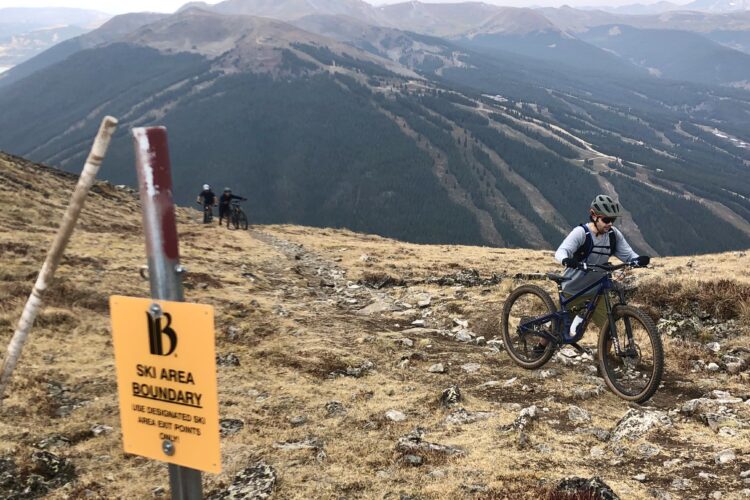
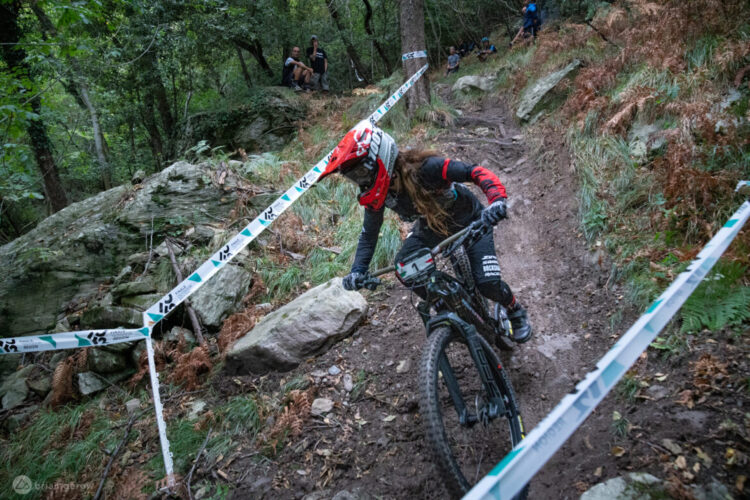
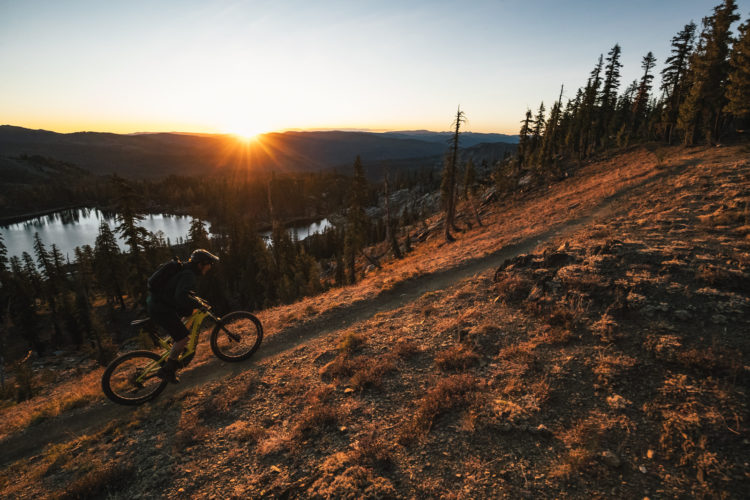
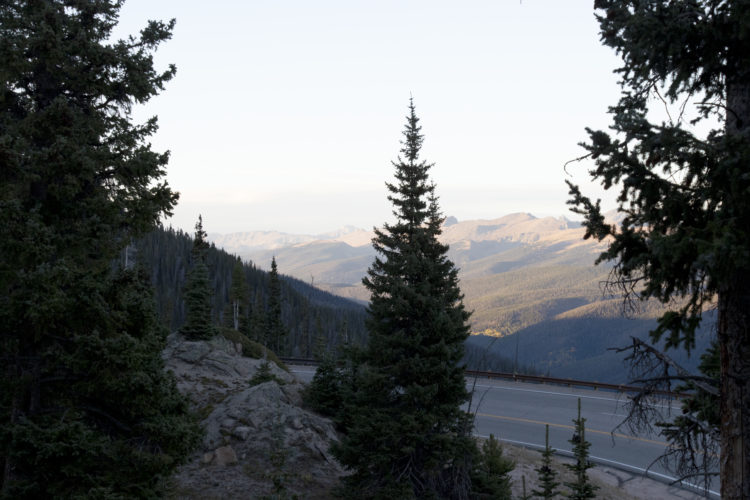
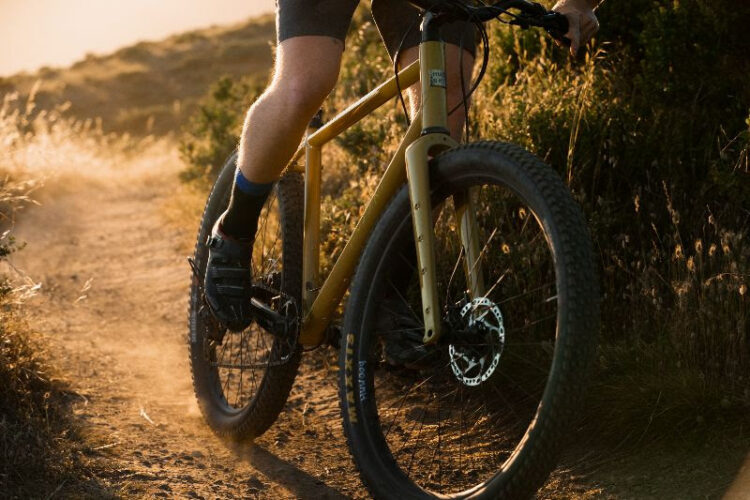
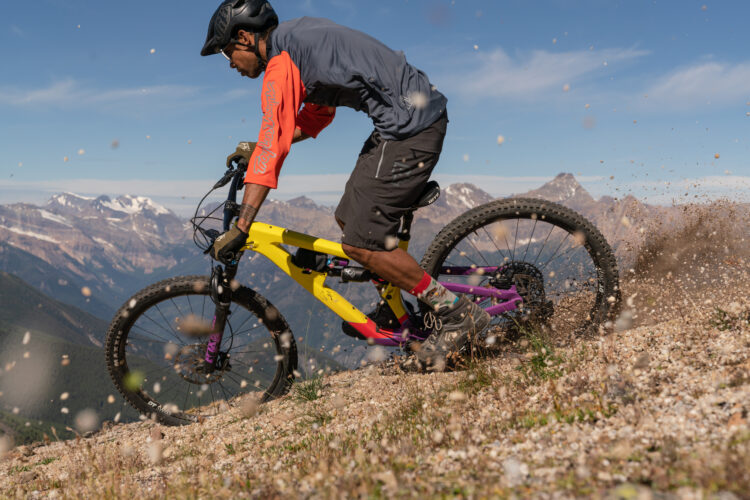
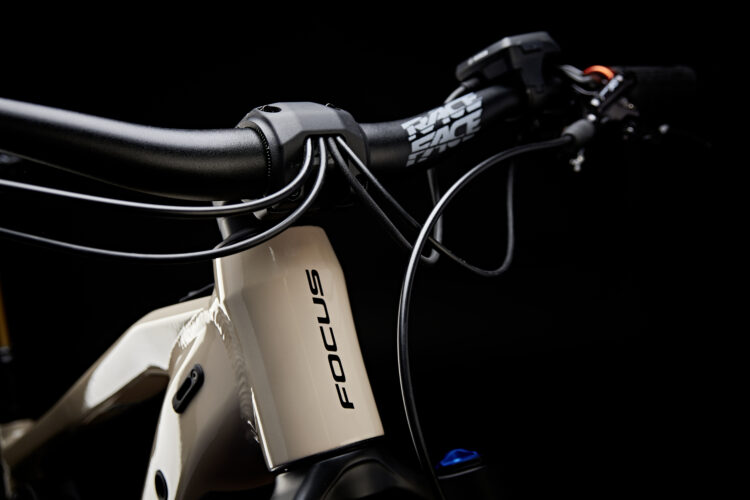
We’re kicking off a new contest next week so start brushing up on your MTB trail photo knowledge! For those who missed the last name-that-trail contest, here’s how it works: each day we’ll present 3 mountain bike trail photos that are posted somewhere on singletracks and we’ll ask you to ID each trail. Correct responses earn 1 point each and the members with the most points at the end will win prizes.
What are these prizes we speak of? How about $150 in HuckNRoll gift cards, Crankskins frame protection gear, Answer gloves, a Kore direct mount stem, and more.
The contest will run from Monday, August 1 through Monday, August 8 Wednesday, August 10 so don’t go anywhere!
Warm up: first comment on this blog post that correctly IDs the trail pictured above gets a set of singletracks stickers in the mail.
I believe this is the first narrative book review we’ve posted on the singletracks blog and it’s long overdue! I love reading adventure travel books but it seems like the genre is dominated by climbing, sailing, and hiking narratives – which is a shame because bikes are a great way to cover a lot of ground and access remote areas. Clearly 24-year-old Mark Beaumont understood this when planning his around-the-world epic and delivers an entertaining and enlightening story in The Man Who Cycled the World.
Mark, who lives in Scotland, had enjoyed progressively longer cycling tours through high school and college and after graduation he set his sights on cycling around the world. In his research he found the world record for biking around the globe was an impressive 276 days – 65 miles a day for nine months. Mark figured he might be able to break the record and approached sponsors with the idea of doing the trip in 210 days (though secretly he hoped to average closer to 100 miles a day and complete the loop in fewer than 200 days).
After a ton of planning, kit building, and grubbing for sponsors, Mark set out from Paris alone on his bike heading east in 2007. To break the Guinness World Record he’d need to keep meticulous logs and his journey would need to be at least 18,000 miles long. His route would also have to start and end at the same point (natch) and pass through two points on opposite sides of the globe. His route would eventually take him through Europe, the middle east (including Iran and Pakistan), Asia, Australia, and the US on the way to breaking the world record.
Mark shares his journey in great detail, discussing everything from mechanical problems to what he ate and where he slept each night. I didn’t keep a count but I’m pretty sure every day of the journey is documented in this book! I also got the sense Mark was being honest about his emotions and thoughts during such a difficult ride and he doesn’t seem to sugar coat any part of it. There are a few interesting characters along the way but at the end of the day, Mark’s focus was on grinding out mile after mile in pursuit of the record and the end of his journey.
I loved reading about the portion of the trip through Iran, Pakistan and India because these areas seem so foreign, especially as seen by a westerner on the seat of a bike. Thailand and Malaysia sounded surprisingly cycle-friendly while Australia seemed un-inspiring and more difficult than I would have imagined.
As an American I really enjoyed hearing about my country from Mark’s perspective as a European. From the road it appeared to Mark that between California and Florida most Americans live in mobile home parks (!), no doubt because he encountered so many snow birds wintering in the southern states. And I literally laughed out loud reading Mark’s description of American fast food restaurants and his first meal at Hooters – how strange the US must seem to outsiders!
The Man Who Cycled the World is a fast-paced, entertaining look at what it takes to ride a bike for six months straight – from the planning to the execution to the resulting mental toll along the way. More than that, this highly recommended book provides a window into cultures around the world and will inspire even cycle-phobes to saddle up and explore! Add this one to your summer reading list now.
Available at RandomHouse.com and other online bookstores including Amazon.com.
Life has been stressful lately. Between work, family, taking care of the house, and my wife getting ready to go back to school for her masters, it’s just all been wearing me down over the last few weeks. I needed to decompresses, hit the ‘reset’ button if you will. Everyone has their own way of doing this. Some people curl up on the couch and read a book, others get drunk and start a bar fight. I go for a bike ride. The longer the ride, the better. This weekend I was finally able to dedicate a big chunk of the day to doing just that – and it was glorious.
Rollin’ Out
Four of us met up at the West Dam Recreation Area just after 7am. I was planning on doing a 51-mile ride known as the Bartram/Keg Lollipop. Of that, half a mile is paved, two miles is double track, and the rest is singletrack. No one else seemed to be sure of just how far they were going to ride. The Bartram trail is a fast and fairly flat 21-mile long out and back trail that rolls and winds through the woods along the shore of Lake Thurmond. Keg Creek is a 9-mile loop full of roots bigger than your thighs and several challenging creek crossings, though sadly most were dry.
I had stashed two gallons of water at the end of the Bartram trail - I would pass that spot twice during the ride. Since I would have access to water every 1-2.5hrs I decided to ride without my Camelbak and just used a pair of 24oz water bottles instead – something I’ve never done on a big ride. This turned out to be a great decision. I never ran out of water and didn’t have a hot and heavy pack on my back all day.
Bartram. This low lying area stays wet all winter long, hence the boardwalk. But during the summer it’s beautiful.
There had been a light rain earlier in the morning, so everything was wet. Everything. It was ridiculously humid, at least 85%, so the water had nowhere to go. Less than a mile into the ride all four of us were soaked head to toe from a combination of sweat and water on the leaves we’d brush against while winding through the woods. But ride on we did.
We picked up two more people, including fellow singletracks member BrianW, and worked our way west toward the Keg Creek loop. We set a decent pace; quick, but sustainable and not quite race pace. We stopped occasionally to eat a bite, chat, and let everyone in the group catch up. When we got to the end of Bartram most of the guys turned around and headed back, but BrianW and I continued on. BrianW decided he was done after we finished Keg, and I set off solo for the last 21 miles. At this point the temperature had climbed pretty high but at least everything was finally starting to dry out.
Keg Creek. Most of the morning felt like we were riding in a rainforest due to the humidity.
Shells and Scales
It’s turtle season here in the South. Not to hunt them, but they’re out laying eggs. We saw a few on Bartram and then a bunch more on Keg. Not sure how many we saw, I lost count, but I know it was more than a dozen. There were probably a bunch more we didn’t see since they blend in pretty well. About half of the ones we saw were in the process of laying eggs. Apparently they like laying their eggs in the trail, I suppose because it’s easy for them to dig the hole the eggs are laid in. The problem with that is it’s easy for predators to find them – we passed several holes that looked like nests that had been discovered and ransacked. BrianW and I also ran up on a big 4ft long king snake. He was pretty cool.
This little lady was bashful.
Boom!
While I was happily spinning my way back to the car there was a thunderstorm sneaking up on me. I couldn’t really see the sky through all the trees, so I couldn’t see it coming, and it didn’t start thundering till it was right on top of me. Just all of a sudden it started thundering constantly right over my head. Not the low rumble kind of thunder, but the booming and cracking kind that sounds like the sky is splitting open - the kind that comes with lightening.
I decided to shorten my ride a little by skipping an alternate loop on Bartram – I did NOT want to get caught out there in lightning and high winds. I had 45 miles of riding behind me and only 3.5 ahead of me. I dropped the hammer and went all out in an attempt to outrun the storm. Of course I was pretty tired at this point so all-out wasn’t really all that fast. I made it about two miles and then the bottom dropped out. No point in killing myself now, so I slowed up the pace a little and rode the last mile and a half in a downpour.
Instead of stopping for a picture I should have been stomping on the pedals going towards the car.
About six hours after I left it I finally got back to my car. I was completely drenched, and the rain was still coming down hard. Did I have a towel, or somewhere to get in out of the rain to change? Nope. It was going to be a wet ride home. But it wasn’t all bad, I had a great ride. I covered a lot of ground on fun trails with good company and felt great the whole time. I loaded the bike onto the rack, took of my helmet, gloves, and jersey and stood there in the parking lot for a minute. The rain felt good, really good in fact. It was nice and cool. I closed my eyes and turned my face up to the sky to let the rain rinse off all the sweat, salt, and mud that had built up throughout the day. That’s not a bad way to end a ride at all.
Final stats for the ride:
Distance: 48.44 miles
Ride Time: 4 hours and 54 minutes
Total Time: 6 hours and 12 minutes
Gatorade Consumed: about 125oz
Climbing: Not much
Fun: A bunch
Have you had a good stress-relieving ride recently? Tell us about it in the comments section below!
Hardtail or full suspension? This question comes up all the time on the Singletracks Forums so hopefully this quick list of the pros and cons of each of mountain bike style will help you decide which one will work better for you.
My Perspective
I will be 40 this year, and although I’ve ridden bikes all my life, I’ve been a serious mountain biker since I moved to Colorado in 2004. I started out on a Specialized Rockhopper hardtail which I rode for 4 years. Then I got a Giant Trance full suspension bike and rode it for 3 years. Now I’m riding a hardtail again, but this time on a 29-inch wheels.
What is the difference?
Those of us who have been riding for a while take this for granted, but for those who are new to the sport the differences may be a little hazy. Here’s the quick and dirty info:
A hardtail is a bike with a solid frame and it usually has a suspension fork on the front. Here is a typical hardtail model:
A full suspension (FS) bike has the same fork out front, but it has a frame that consists of two pieces, a front triangle and rear triangle, that are joined by pivots. This allows the two sections of the frame to move independently, and the rate of that movement is controlled by a shock absorber. Here is a typical full suspension model:
Okay, so which is better?
The answer is: it depends. It comes down to personal preference, riding style, average terrain encountered, and other factors. With that being said, however, we’ll go over what each model excels at, as well as some limitations of each. This should help you decide which model better fits your riding style, or perhaps it will convince you to buy one of each! Here goes…
Climbing
Hardtail bikes transfer pedaling power to the rear wheel more efficiently. On non-technical surfaces, this results in better acceleration and makes it easier to sustain higher speeds over a long time. Once the terrain turns technical, rear suspension allows more of the available rear wheel power to actually reach the ground by allowing the wheel to better articulate over obstacles. This helps to maintain traction and mitigates “spinning out.” Also, with FS it is generally easier to stay seated while climbing.
Downhill
On bumpy, technical downhill trails, FS bikes have a clear advantage – but don’t count the hardtail out just yet. I’ve ridden plenty of technical stuff on a hardtail and it handles just fine. The difference is that the “suspension” is your legs. The net result is getting tired faster, but if you’re conditioned to it, it’s not a big deal. In my opinion, technical downhill on a hardtail also makes you choose a better line, and in the long run can make you a better overall rider.
Maintenance
There is no disputing that hardtails require less long term maintenance. All of those pivots and linkages on the FS will need periodic servicing, and the rear shock will need new seals every season or two. Frame articulation causes cables to rub on the frame, and the chain has to work harder to keep up with everything. If you enjoy simplicity and want to keep your maintenance costs low, a hardtail is a good choice. (Or a rigid singlespeed for that matter, but that’s a topic for another post.)
Weight
Advancements in modern frame design are constantly shifting the meaning of “lightweight” in mountain biking. In general a hardtail can be built lighter than the average FS bike, but there are also some seriously lightweight FS bikes now too. Whichever type you’re considering, as long as the weight is reasonable, I wouldn’t worry too much about it. How well it fits and the overall ride quality are more important.
Price
The basic hardtail bike design has existed for over 100 years. FS design is a hotbed of innovation and various patents have been granted, resulting in license agreements between some of the bike manufacturers. Guess who ultimately pays those R&D and licensing costs… you do! The point is that if you are on a strict budget, you can probably get more bike for your buck with a hardtail.
Comfort (These Old Bones)
As I mentioned, I’m almost 40. It didn’t used to bother me to bomb down miles of rough downhill, holding my rear off the saddle all the way. The older I get, the nicer it is to be able to sit down on all but the roughest stuff. I also find that I can go faster over rough stuff with the FS. On the other hand, the hardtail 29er that I’m currently riding has a much smoother ride than my old 26er hardtail. It’s like a magic trick!
The Bottom Line
If you’re just starting out, on a really tight budget, or just enjoy simplicity, you should definitely consider one of the great hardtails on the market today. It can get you out there riding without costing a lot of coin up front and saves on maintenance costs down the line.
If you know you want to huck drops or ride rough, technical trails most of the time or if you’re an older rider and just want a smoother ride, then you’ll likely be happier on a full suspension bike. As I’ve outlined, each type of bike excels in different areas, and it really does come down to your preference and the type of riding you like to do.
So what do you think – hardtail or full-suspension?
One of the reasons we decided to travel to Portland this summer was because the city is billed as one of the most bike-friendly places in the country. Among cities large enough to support an NBA team, Portland is easily #1 when it comes to big city biking. Here are eight observations we made during our week-long trip.
1. You can ride your bike to the airport. Not only are there safe bike paths and bike lanes leading all to way to the terminal, there’s even a “bike assembly” area within the terminal itself. No need for a rental car when you fly to Portland – just bring your bike on the plane! (though I don’t recommend carrying a lot of luggage)
2. Bike infrastructure is important. Aside from the obvious stuff like bike lanes and sidewalk racks, Portland has special bike traffic signals, dozens of “bubbler” drinking fountains, signage, and even a dedicated drawbridge path that raises and lowers for river traffic.
3. You’re never far from a bike shop. Clearly a lot of bikes and bike parts are sold in Portland but it isn’t like there’s a big bike superstore where everyone gets their stuff. Instead, neighborhood bike shops are practically on every corner which supports commuters who need to pick up a tube or borrow a tool. We even saw this well-stocked (and free) bike repair stand near the city center.
4. Bike parking can come at a premium. At night the bike racks outside popular bars were completely filled with dozens of bikes – so much so that people would be circling around, looking for a place to lock their ride. As a cyclist it felt good to see people biking to do errands, to hang out with friends, and to get to work in addition to pure recreation.
5. We saw zero bike-on-car conflicts. I was a little nervous about driving a rental car around Portland at first because of all the cyclists on the road – frankly we (cyclists) can be hard to see sometimes. In fact it took no time at all to get used to checking the curb lane when making right turns and allowing groups of riders to clear intersections before proceeding. Back home I found myself looking for cyclists when driving familiar roads, even though I rarely (if ever) see bikers on certain stretches. Just goes to show that drivers CAN learn to deal with cyclists but it’s a lot easier when there are more opportunities for interaction.
Along the same lines, most of the bikers we saw obeyed the traffic laws to a tee. By obeying the rules, cyclists become more predictable on the road which helps drivers make better decisions.
6. Bike art is everywhere. There’s a reason people talk about a “bike culture” in Portland rather than just saying a lot of people ride bikes there.
7. Mountain biking in Portland is a bit of an afterthought. Sadly for all the bikes in Portland, very few of them are ridden off road. We did manage to find a MTB-specific bike shop (Fat Tire Farm) which had a great selection of bikes and parts plus rentals but other than that, most shops are focused on the larger commuter / road markets.
Unfortunately the city parks aren’t really friendly toward mountain bikes either. Forest Park, the largest forested city park in the US, prohibits bikes on the dozens of miles of singletrack trails through the woods. Instead, bikes are relegated to smooth, wide Leif Erikson drive (though at least it’s dirt!). Mountain bikers in town have been known to poach the trails around the Oregon Zoo area but the threat of stiff fines keeps this activity strictly on the DL.
8. The term “biker bar” has a totally different meaning in Portland. Enough said.
The Portland bike culture is unique among US cities and to me it’s a great model for how bikes and cars can coexist in a big city. Now if the city could just get behind mountain biking off road as much as they support biking on the road this could be my nirvana.
Mountain biking the Bookcliffs area near Fruita, CO.
“I’m just glad to be out here instead of sitting at home on the couch eating ice cream and watching TV.” This is what a 60+ year old told me on the Left Loop at the Tsali bike trail in Western North Carolina. Made sense to me. So we all have a choice as we age. Work to stay active and in good health or develop an inactive lifestyle that leads to poor health. What if you could find an activity that is more fun than a video game on steroids, smell the fresh air, see nature in all its natural beauty while getting the best cardio exercise any gym could ever offer? At age 65 I discovered mountain biking and immediately became hooked.
My wife, Bonnie and I were driving back from an extended snow ski vacation out west and the thought occurred to me that I really needed to find a new exercise activity since I had given up jogging due to knee cartilage problems. A friend who had started mountain biking some years earlier had previously recommended it as a great sport. So my wife and I discussed the pros and cons and decided to buy entry level bikes and give it a try.
I had ridden bikes as a kid – living in a rural area, the bike was my main mode of transportation to a friend’s house or to the ball field. So in my mind bikes were for kids and besides, those guys I saw on the side of the street on bicycles in sissy tight pants, Chinese fireworks shirts, and Star Wars helmets definitely did not seem to fit my style. But we got the bikes and helmets anyway – that’s all I could stomach in the beginning.
We rode the paved trail at the Flatwoods Park in Tampa, FL as a starter. Bonnie wanted to stay with the paved and hardpacked surface trails, but I wanted to try the singletrack trails to see what it was like. As it turned out my first experience on a true mountain bike trail was at Panther Town Valley near Cashiers, North Carolina. We were visiting the area with some friends and I had brought our bikes along for the trip. So a friend and I bought a trail map at the local outdoor store, drove to the trailhead and headed out like any pro biker would. I remember going downhill leaving the trailhead, going faster and faster, the adrenaline rushing and thinking “man oh man this is really a lot of fun!” We proceeded to get totally lost on the trail (no markings), ended up going in a big circle and amazingly found ourselves back at the trailhead start. But the big story was – I was totally hooked on mountain biking after this.
So 2 years later and lots of bike trail rides I can recommend to any senior looking for a great sport – give mountain biking a try. You can choose your own pace and trail difficulty and advance at your own leisure.
The vast majority of mountain biking videos shot with point-of-view cameras really aren’t worth the time it takes to watch them. Despite the access to excellent equipment, there are 2 main reasons for this poor video quality:
1) Unimaginative camera angles.
2) Poor editing.
Hopefully in my last post I was able to provide you with enough camera mounting ideas to get your creative juices flowing, helping you leave behind the same old overused camera mounts.
In this post, I will address the second point, “poor editing,” and will hopefully help you add a little zest to your trail videos.
Software
Whenever I mention to people that I just uploaded a new video or I’m in the process of making a new video, the first question is always: “What program did you use to edit it?” The thing of it is, I just use Windows Movie Maker to edit my videos, and it comes standard on most Windows computers. Even with this basic program I am able to produce decent mountain bike videos that I think are actually enjoyable to watch. iMovie works even better.
Sure, a fancy video editing package has more options and might be able to do a slightly better job. But as Jeremy Hazard, pro-level photographer and accomplished videographer, commented on the last post: “I think some people miss the point a bit – POV cams are for just that – they’re not intended to capture high quality footage for use in major motion pictures ” This is all about having fun and creating entertaining videos, and that can definitely be done with an inexpensive editing program.
Purpose
As with any production that borders on the artistic, you must first identify your purpose before you begin. Are you trying to showcase the trail? Are you trying to showcase the rider’s abilities? Or are you just attempting to create an entertaining bike video that’s sort of original? Your purpose will determine how you cut the video.
In my opinion, the major editing error that most helmet cam vids make is the absolute lack of editing. Those long, continuous 10 minute shots bore me to death! The only time one really long shot for the entire length of the video works is if your sole purpose is to showcase the trail. Even then, if the trail is boring and has some climbs in it, that might still be a bad idea!
Here is a video where I used one long clip, and my purpose was to just show how sweet this entire downhill is:
Cut the Climbing
As a general rule of thumb, when I’m editing, I begin by cutting out all of the climbing. People only want to watch the really interesting parts of your ride, and if you’re grinding uphill for 10 minutes (or even 15 seconds), they are going to get bored. Clip out the climbing.
Since the whole shot (above) is downhill and it’s pretty fast-paced and only a couple of minutes long, I think it still works pretty well. However, bear in mind that if you create a video showcasing a single section of a trail like this, the number of people that will want to watch the video is probably less than if you created a vid featuring cool riding and shooting, unless the trail is truly outstanding.
Camera Angles
Yes, I know that I’ve already spent about a thousand words talking about camera angles. Now’s the time to take what you’ve learned, and apply it. Take all of those different camera angles and incorporate at least 2 or 3 different ones into your next video. And don’t just use one, switch to the second, and then switch to the third at the end. Try varying them throughout the video, utilizing multiple short clips instead of just a few long ones.
Check out this video for a little idea of what the finished product could look like:
Transitions
One thing that annoys the heck out of me when I am watching a mountain bike vid is a large number of cheesy, overdone transitions. A few key transition effects can really make a video pop, but when someone tries to incorporate every single feature that their software package has into one 3 minute video…. it looks cheesy, and distracts from the riding.
Personally, I generally stick with fade in/fade out transitions (black and white), and a simple dissolve. Sometimes, I even incorporate hard cuts from one clip to another. Break the thinking that you need a different transition whenever there’s a new video clip, and you will be well on your way to editing success.
Music
Nothing spells “boring” like a music-less sports video. Music should almost be considered mandatory, unless you’re just posting a raw 30-60 second clip. Music keeps the viewer entertained and engaged, and can add real life to your movie!
When selecting the song that you want to use, trying to choose music that you think your target audience will enjoy may help boost the popularity of your video. However, in my personal experience, there is no way that you can ever satisfy everyone. So instead, I suggest that you choose something that you enjoy. As long as you like your video and are proud of your work, that’s mission accomplished in my book!
Your Turn:
What editing tactics do you think really make a mountain bike video come to life?
Where else are you going to meet people like these?
“What do you do?” It’s that stereotypically American question. Does what we do define us? Hell no! But aren’t we conditioned from the earliest age to identify our hopes, dreams and aspirations with a vocation? Mom told me I could be an astronaut or a fireman or the President of the United States if I wanted to. “What do you want to be when you grow up?” Well, you’re grown up. What are you?
Whatever your occupation is, it is the thing to which you dedicate over 50% of the waking hours of adulthood. Many of us have gone to school and spent scads of borrowed dollars on studying whatever subject got us that first job. It’s the thing we decided to do, or fell into, or lucked upon, but it’s a big chunk of our lives that can satisfy or torment. Don’t we know that guy? The one who loves or hates his job with such passion, such earnestness that it inspires us to find true happiness in our own pursuits. Alas, I was the sad guy once. But that’s the past – I saw the writing on the wall and made a leap to the other side. It’s not all roses, but man it has its perks.
Sharing a brew with the man behind the movie Klunkerz: Billy Savage. If you haven’t seen it yet, get thee to Netflix post-haste.
Engineering pays well. Even so, the engineering I did made me want to drive the subcompact rental car I was forced to drive weekly into a ditch at high speed. So I made the best of it: I bought cool bikes and gear, spent my free time (and time I should have been working) reading forums, reviews, and other fine internet publications about bikes. When 5:00 came I was out like a shot to ride, wrench, and do anything but freakin’ engineering. But as I said at the beginning of the post our culture places emphasis on who you are by what you do. So I wanted to make a change. I loved bikes, why not get paid (much less) to make a career from them?
It don’t pay too well, but the view sure is nice
As told in an earlier true confession I lucked into my first job in the bike industry. What I didn’t mention is the pain. I took a substantial pay cut when I moved into the bike business. My favorite saying about that goes: “Do you know how to make a small fortune in the bike industry? Start with a large one.” Unfortunately it can be very true. Bike companies know us too well. We chafe at the 9 to 5 grind, the Dockers, the cube neighbor droning on about their cat’s adorable shenanigans. Dangle a no-dress-code-ever office environment and cheap bike parts in front of us and we go all to jelly in the salary negotiations. Now my boss’s boss wears shants and flip flops daily and lunchtime is spent shredding trails that are tended by a full time employee dedicated to keeping the berms sculpted.
So at the risk of laying out an epic brag, here’s what I love about working in the bike industry:
1. Exotic travel and a company card for karaoke nights in Taichung City
2. Employee pricing on everything
3. Vendors insisting that I try their latest and greatest carbon fiber doodads
4. An office with shower facilities
5. Desk-side bike storage
6. Fully equipped bike shop at your disposal
7. A cafeteria with subsidized healthy meal options
8. The opportunity to ride all over the world
9. Access to trade shows, those orgies of bad behavior and bike-overload
10. Most important: sharing my days with people who share my passions, made their own sacrifices, and consider themselves lucky every day to be doing something they truly love.
Are you ready to trade in your paycheck for the bike industry lifestyle? Tell us about your dream job in the comments section below!
Taproot Films is working on an interesting documentary called Type1Rider about diabetic Tony Cervati and his quest to compete in this year’s Great Divide Race. Tony has been training for 3 years now and wanted to do something big to raise awareness for Type 1 diabetes beyond his existing blog of the same name (type1rider.org). So he decided to sign up for one of the toughest and longest unsupported mountain bike races on the planet.
Like many grassroots documentary projects, Type1Rider is trying to raise funds to finish up the project and they’ve posted a donation page over at KickStarter where you can make a pledge. The cost of filming the 2,800 mile race from Canada to Mexico across the Rockies is obviously huge so they can use any help you can offer. Fortunately Tony has already garnered the support of some big name sponsors like Trek and Crankbrothers.
Good luck to the producers for getting the film financed but most of all to Tony in his race. We can’t wait to watch this unfold on the screen!
In case you missed it, we’re taking pre-orders for another round of singletracks jerseys through tomorrow, Friday, April 22. For just $55 you get a full-zip, 3-pocket jersey with the singletracks logo and original artwork by our own element22. Order today to make sure we get your size!
We also just got a fresh batch of singletracks t-shirts in this week and those are still just $10. All t-shirt and jersey proceeds will go to IMBA to support trail building and MTB advocacy.
Thanks to everyone who participated in the Sacred Rides trail review contest last month. With more than 140 participants, this has been one of our biggest contests yet thanks to the amazing prizes offered by our sponsors Sacred Rides and HuckNRoll.com. Singletracks members added 1,681 trail photos and 385 reviews and embedded 2,457 new trail videos in just 16 days!
In the end, theUfan walks away with the BC Bike Trip for Two after earning 2,064 points. Goo earned 1,713 points for second and will take home the GPS watch and mount while joetutt scored 1,450 points and the $100 HuckNRoll.com gift card.
Nine members scored at least 50 points which earned them free singletracks t-shirts and everyone else (all 129 of you) gets free singletracks stickers. We had a blast moderating the contest and finding new mountain bike trails across the world. Now it’s time to hit the trail and ride!
For everyone who made the leaderboard, look for an email this week confirming your prize and requesting shipping details.
Note: this is an April Fools joke that was originally posted April 1, 2011.
So I got a bit of bad news from my health insurance company today: I’m officially banned from riding my mountain bike. Apparently all the claims mudhunny and I have made over the past few years – stitches, broken bones, pulled muscles – have cost the company a fortune. They raised our rates twice in 2010 and at this point they can’t legally charge us any more so it’s either drop us or make us sign a statement saying we won’t ride mountain bikes anymore.
My first reaction was to say screw it – we don’t need health insurance – but then I started adding up the medical bills in my head and realized going without would cost us an arm and a leg (pun intended). Then I thought we’ll just sign the statement and be super careful whenever we ride. Sure, that takes some of the fun out of mountain biking but I suppose that’s the price we have to pay.
So I signed the form and just before putting it into the envelope I glanced at some of the fine print and read this:
[name redacted] reserves the right to monitor the actions of the covered party through any legal means including, but not limited to, covert observation, social network data collection, and/or third party interviews. (emphasis mine)
WTF! Seriously? Apparently these guys aren’t messing around. Unfortunately we really need this coverage so there’s not much I can do about it (we’ve shopped around and other insurers have similar policies, especially given our past mountain bike injuries).
So, from this point on I won’t be able to write about mountain biking, post photos or videos on singletracks, or even attend MTB-related events for fear the insurance investigators will cancel my policy. I guess I can’t complain – it’s been a fun 17 years on the bike and running singletracks.com for the last 12 years has been amazing. I’ll still continue to work on the site but I won’t be able to blog or ride trails anymore. As such, we’ve also come up with a new slogan for the site: for mountain bikers, by a (former) mountain biker. I think it’s sorta catchy (and way better than my first idea – for mountain bikers, by a couch potato).
Hopefully this is just a temporary setback and after two years of good behavior we can find a new health insurance provider. I’m already stoked for April 1, 2013!