Latest mountain bike news

Five interlocking rings in blue, yellow, black, green, and red on a white background, representing the Olympic Games.
min
<img width="136" height="91" align="left" title="olympics.gif" id="image706" alt="olympics.gif" src="https://images.singletracks.com/blog/wp-content/uploads/2008/02/olympics.gif" />Apparently there is some <a href="http://www.usatoday.com/sports/olympics/2008-02-11-mountain-bike-london_N.htm">concern over the selection</a> of the 2012 London Olympic mountain bike course since the proposed site in Essex, England has very little elevation change - less than 300 feet for the course. It's not clear if this means 300 feet of total climbing over the entire course or if the high elevation minus the low elevation is 300 feet. If it's the latter I'd say that's not too shabby - after all the <a href="http://www.singletracks.com/php/trail.php?id=580">1996 Olympic course in Conyers, GA</a> has about that (though each lap had 1000+ feet of climbing).

The USA Today article actually starts by asking a rather silly question: "is it possible to have a mountain bike race without mountains?" Any mountain bike rider who lives in <a href="http://www.singletracks.com/php/database.php?terms=name&amp;state_id=9">Florida</a> can tell you there are plenty of challenging mountain bike trails in a state without a single mountain. Maybe things <em>were</em> better when <a href="http://www.singletracks.com/blog/?p=682">mountain biking was called "all terrain cycling."</a> Why'd the Library of Congress have to go and change things ;)
min
Top-down view of a bicycle handlebar with a gloved hand gripping the left side. Two GPS devices are mounted on the handlebars, with one styled for biking and the other for outdoor navigation. The background features a forest trail covered in brown leaves.
min
Abstract image featuring a 3D graph overlaying a terrain model with a bicycle, possibly indicating data analysis or mapping in an outdoor or cycling context. The letters "IBP" are prominently displayed in the foreground.
min
<img width="136" height="91" align="left" title="olympics.gif" id="image706" alt="olympics.gif" src="https://images.singletracks.com/blog/wp-content/uploads/2008/02/olympics.gif" />Apparently there is some <a href="http://www.usatoday.com/sports/olympics/2008-02-11-mountain-bike-london_N.htm">concern over the selection</a> of the 2012 London Olympic mountain bike course since the proposed site in Essex, England has very little elevation change - less than 300 feet for the course. It's not clear if this means 300 feet of total climbing over the entire course or if the high elevation minus the low elevation is 300 feet. If it's the latter I'd say that's not too shabby - after all the <a href="http://www.singletracks.com/php/trail.php?id=580">1996 Olympic course in Conyers, GA</a> has about that (though each lap had 1000+ feet of climbing).

The USA Today article actually starts by asking a rather silly question: "is it possible to have a mountain bike race without mountains?" Any mountain bike rider who lives in <a href="http://www.singletracks.com/php/database.php?terms=name&amp;state_id=9">Florida</a> can tell you there are plenty of challenging mountain bike trails in a state without a single mountain. Maybe things <em>were</em> better when <a href="http://www.singletracks.com/blog/?p=682">mountain biking was called "all terrain cycling."</a> Why'd the Library of Congress have to go and change things ;)
min
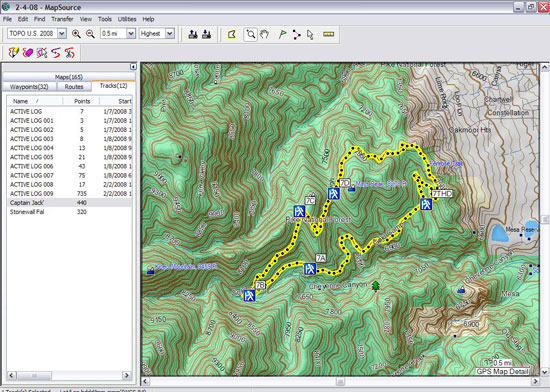
Map displaying a topographic view with plotted hiking routes highlighted in yellow. The left panel lists various active logs with dates and points, while the map features terrain contours, trail markers, and landmarks, including "Captain Jack" and "Stonewall Fall."
min
A mountain biker performing a jump on a trail surrounded by bare trees in a forest setting. The ground is covered with leaves, and the scene depicts a sunny day with clear skies.
min
<img width="136" height="91" align="left" title="olympics.gif" id="image706" alt="olympics.gif" src="https://images.singletracks.com/blog/wp-content/uploads/2008/02/olympics.gif" />Apparently there is some <a href="http://www.usatoday.com/sports/olympics/2008-02-11-mountain-bike-london_N.htm">concern over the selection</a> of the 2012 London Olympic mountain bike course since the proposed site in Essex, England has very little elevation change - less than 300 feet for the course. It's not clear if this means 300 feet of total climbing over the entire course or if the high elevation minus the low elevation is 300 feet. If it's the latter I'd say that's not too shabby - after all the <a href="http://www.singletracks.com/php/trail.php?id=580">1996 Olympic course in Conyers, GA</a> has about that (though each lap had 1000+ feet of climbing).

The USA Today article actually starts by asking a rather silly question: "is it possible to have a mountain bike race without mountains?" Any mountain bike rider who lives in <a href="http://www.singletracks.com/php/database.php?terms=name&amp;state_id=9">Florida</a> can tell you there are plenty of challenging mountain bike trails in a state without a single mountain. Maybe things <em>were</em> better when <a href="http://www.singletracks.com/blog/?p=682">mountain biking was called "all terrain cycling."</a> Why'd the Library of Congress have to go and change things ;)
3 min
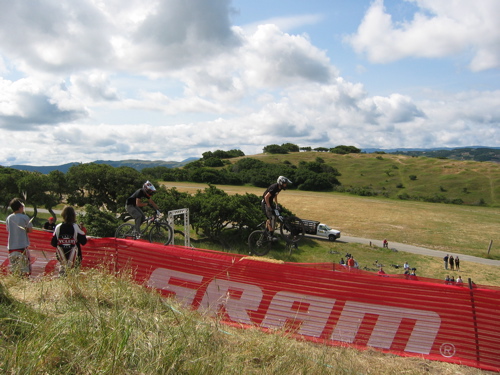
Two mountain bikers are seen in mid-air, jumping over a barrier with a logo in the foreground. A grassy hillside and spectators in the background suggest an outdoor biking event, with rolling hills and a cloudy sky visible.
min
A DVD cover featuring a woman in cycling apparel, smiling and positioned on an exercise bike. The title reads "Cycle - All Terrain with Brooke Hayward," and the logo for Softride is displayed at the bottom. The background is a gradient, enhancing the focus on the cyclist.
min
<img width="136" height="91" align="left" title="olympics.gif" id="image706" alt="olympics.gif" src="https://images.singletracks.com/blog/wp-content/uploads/2008/02/olympics.gif" />Apparently there is some <a href="http://www.usatoday.com/sports/olympics/2008-02-11-mountain-bike-london_N.htm">concern over the selection</a> of the 2012 London Olympic mountain bike course since the proposed site in Essex, England has very little elevation change - less than 300 feet for the course. It's not clear if this means 300 feet of total climbing over the entire course or if the high elevation minus the low elevation is 300 feet. If it's the latter I'd say that's not too shabby - after all the <a href="http://www.singletracks.com/php/trail.php?id=580">1996 Olympic course in Conyers, GA</a> has about that (though each lap had 1000+ feet of climbing).

The USA Today article actually starts by asking a rather silly question: "is it possible to have a mountain bike race without mountains?" Any mountain bike rider who lives in <a href="http://www.singletracks.com/php/database.php?terms=name&amp;state_id=9">Florida</a> can tell you there are plenty of challenging mountain bike trails in a state without a single mountain. Maybe things <em>were</em> better when <a href="http://www.singletracks.com/blog/?p=682">mountain biking was called "all terrain cycling."</a> Why'd the Library of Congress have to go and change things ;)
min
A black bicycle helmet displayed on a mannequin head, featuring built-in blue LED lights for enhanced visibility. The helmet has mesh ventilation and adjustable straps.
min
<img width="136" height="91" align="left" title="olympics.gif" id="image706" alt="olympics.gif" src="https://images.singletracks.com/blog/wp-content/uploads/2008/02/olympics.gif" />Apparently there is some <a href="http://www.usatoday.com/sports/olympics/2008-02-11-mountain-bike-london_N.htm">concern over the selection</a> of the 2012 London Olympic mountain bike course since the proposed site in Essex, England has very little elevation change - less than 300 feet for the course. It's not clear if this means 300 feet of total climbing over the entire course or if the high elevation minus the low elevation is 300 feet. If it's the latter I'd say that's not too shabby - after all the <a href="http://www.singletracks.com/php/trail.php?id=580">1996 Olympic course in Conyers, GA</a> has about that (though each lap had 1000+ feet of climbing).

The USA Today article actually starts by asking a rather silly question: "is it possible to have a mountain bike race without mountains?" Any mountain bike rider who lives in <a href="http://www.singletracks.com/php/database.php?terms=name&amp;state_id=9">Florida</a> can tell you there are plenty of challenging mountain bike trails in a state without a single mountain. Maybe things <em>were</em> better when <a href="http://www.singletracks.com/blog/?p=682">mountain biking was called "all terrain cycling."</a> Why'd the Library of Congress have to go and change things ;)
min
A folding handsaw with a serrated blade and a red rubber grip handle. The blade features text indicating "RAZOR SHARP TEETH."
min
Close-up of a newspaper article titled "Money &amp;," featuring a vintage style and sepia tones. The text suggests a focus on financial news and market trends.
min
<img width="136" height="91" align="left" title="olympics.gif" id="image706" alt="olympics.gif" src="https://images.singletracks.com/blog/wp-content/uploads/2008/02/olympics.gif" />Apparently there is some <a href="http://www.usatoday.com/sports/olympics/2008-02-11-mountain-bike-london_N.htm">concern over the selection</a> of the 2012 London Olympic mountain bike course since the proposed site in Essex, England has very little elevation change - less than 300 feet for the course. It's not clear if this means 300 feet of total climbing over the entire course or if the high elevation minus the low elevation is 300 feet. If it's the latter I'd say that's not too shabby - after all the <a href="http://www.singletracks.com/php/trail.php?id=580">1996 Olympic course in Conyers, GA</a> has about that (though each lap had 1000+ feet of climbing).

The USA Today article actually starts by asking a rather silly question: "is it possible to have a mountain bike race without mountains?" Any mountain bike rider who lives in <a href="http://www.singletracks.com/php/database.php?terms=name&amp;state_id=9">Florida</a> can tell you there are plenty of challenging mountain bike trails in a state without a single mountain. Maybe things <em>were</em> better when <a href="http://www.singletracks.com/blog/?p=682">mountain biking was called "all terrain cycling."</a> Why'd the Library of Congress have to go and change things ;)
min
Image of a mountain bike with highlighted components featuring Thomson seatpost and stem. The text at the bottom reads "State of the Art Seatposts &amp; Stems."
min
<img width="136" height="91" align="left" title="olympics.gif" id="image706" alt="olympics.gif" src="https://images.singletracks.com/blog/wp-content/uploads/2008/02/olympics.gif" />Apparently there is some <a href="http://www.usatoday.com/sports/olympics/2008-02-11-mountain-bike-london_N.htm">concern over the selection</a> of the 2012 London Olympic mountain bike course since the proposed site in Essex, England has very little elevation change - less than 300 feet for the course. It's not clear if this means 300 feet of total climbing over the entire course or if the high elevation minus the low elevation is 300 feet. If it's the latter I'd say that's not too shabby - after all the <a href="http://www.singletracks.com/php/trail.php?id=580">1996 Olympic course in Conyers, GA</a> has about that (though each lap had 1000+ feet of climbing).

The USA Today article actually starts by asking a rather silly question: "is it possible to have a mountain bike race without mountains?" Any mountain bike rider who lives in <a href="http://www.singletracks.com/php/database.php?terms=name&amp;state_id=9">Florida</a> can tell you there are plenty of challenging mountain bike trails in a state without a single mountain. Maybe things <em>were</em> better when <a href="http://www.singletracks.com/blog/?p=682">mountain biking was called "all terrain cycling."</a> Why'd the Library of Congress have to go and change things ;)
min
An image of the flag of the United States, featuring 13 alternating horizontal stripes of red and white, with a blue canton containing 50 white stars arranged in nine rows.
min
A black cylindrical device with a sleek design, featuring the text "VidiR" on its surface. It has two horizontal slots and an orange indicator. The device is likely a type of camera accessory or mount.
min
<img width="136" height="91" align="left" title="olympics.gif" id="image706" alt="olympics.gif" src="https://images.singletracks.com/blog/wp-content/uploads/2008/02/olympics.gif" />Apparently there is some <a href="http://www.usatoday.com/sports/olympics/2008-02-11-mountain-bike-london_N.htm">concern over the selection</a> of the 2012 London Olympic mountain bike course since the proposed site in Essex, England has very little elevation change - less than 300 feet for the course. It's not clear if this means 300 feet of total climbing over the entire course or if the high elevation minus the low elevation is 300 feet. If it's the latter I'd say that's not too shabby - after all the <a href="http://www.singletracks.com/php/trail.php?id=580">1996 Olympic course in Conyers, GA</a> has about that (though each lap had 1000+ feet of climbing).

The USA Today article actually starts by asking a rather silly question: "is it possible to have a mountain bike race without mountains?" Any mountain bike rider who lives in <a href="http://www.singletracks.com/php/database.php?terms=name&amp;state_id=9">Florida</a> can tell you there are plenty of challenging mountain bike trails in a state without a single mountain. Maybe things <em>were</em> better when <a href="http://www.singletracks.com/blog/?p=682">mountain biking was called "all terrain cycling."</a> Why'd the Library of Congress have to go and change things ;)
min
<img width="136" height="91" align="left" title="olympics.gif" id="image706" alt="olympics.gif" src="https://images.singletracks.com/blog/wp-content/uploads/2008/02/olympics.gif" />Apparently there is some <a href="http://www.usatoday.com/sports/olympics/2008-02-11-mountain-bike-london_N.htm">concern over the selection</a> of the 2012 London Olympic mountain bike course since the proposed site in Essex, England has very little elevation change - less than 300 feet for the course. It's not clear if this means 300 feet of total climbing over the entire course or if the high elevation minus the low elevation is 300 feet. If it's the latter I'd say that's not too shabby - after all the <a href="http://www.singletracks.com/php/trail.php?id=580">1996 Olympic course in Conyers, GA</a> has about that (though each lap had 1000+ feet of climbing).

The USA Today article actually starts by asking a rather silly question: "is it possible to have a mountain bike race without mountains?" Any mountain bike rider who lives in <a href="http://www.singletracks.com/php/database.php?terms=name&amp;state_id=9">Florida</a> can tell you there are plenty of challenging mountain bike trails in a state without a single mountain. Maybe things <em>were</em> better when <a href="http://www.singletracks.com/blog/?p=682">mountain biking was called "all terrain cycling."</a> Why'd the Library of Congress have to go and change things ;)
  4
<img width="136" height="91" align="left" title="olympics.gif" id="image706" alt="olympics.gif" src="https://images.singletracks.com/blog/wp-content/uploads/2008/02/olympics.gif" />Apparently there is some <a href="http://www.usatoday.com/sports/olympics/2008-02-11-mountain-bike-london_N.htm">concern over the selection</a> of the 2012 London Olympic mountain bike course since the proposed site in Essex, England has very little elevation change - less than 300 feet for the course. It's not clear if this means 300 feet of total climbing over the entire course or if the high elevation minus the low elevation is 300 feet. If it's the latter I'd say that's not too shabby - after all the <a href="http://www.singletracks.com/php/trail.php?id=580">1996 Olympic course in Conyers, GA</a> has about that (though each lap had 1000+ feet of climbing).

The USA Today article actually starts by asking a rather silly question: "is it possible to have a mountain bike race without mountains?" Any mountain bike rider who lives in <a href="http://www.singletracks.com/php/database.php?terms=name&amp;state_id=9">Florida</a> can tell you there are plenty of challenging mountain bike trails in a state without a single mountain. Maybe things <em>were</em> better when <a href="http://www.singletracks.com/blog/?p=682">mountain biking was called "all terrain cycling."</a> Why'd the Library of Congress have to go and change things ;)
min
<img width="136" height="91" align="left" title="olympics.gif" id="image706" alt="olympics.gif" src="https://images.singletracks.com/blog/wp-content/uploads/2008/02/olympics.gif" />Apparently there is some <a href="http://www.usatoday.com/sports/olympics/2008-02-11-mountain-bike-london_N.htm">concern over the selection</a> of the 2012 London Olympic mountain bike course since the proposed site in Essex, England has very little elevation change - less than 300 feet for the course. It's not clear if this means 300 feet of total climbing over the entire course or if the high elevation minus the low elevation is 300 feet. If it's the latter I'd say that's not too shabby - after all the <a href="http://www.singletracks.com/php/trail.php?id=580">1996 Olympic course in Conyers, GA</a> has about that (though each lap had 1000+ feet of climbing).

The USA Today article actually starts by asking a rather silly question: "is it possible to have a mountain bike race without mountains?" Any mountain bike rider who lives in <a href="http://www.singletracks.com/php/database.php?terms=name&amp;state_id=9">Florida</a> can tell you there are plenty of challenging mountain bike trails in a state without a single mountain. Maybe things <em>were</em> better when <a href="http://www.singletracks.com/blog/?p=682">mountain biking was called "all terrain cycling."</a> Why'd the Library of Congress have to go and change things ;)
  2
<img width="136" height="91" align="left" title="olympics.gif" id="image706" alt="olympics.gif" src="https://images.singletracks.com/blog/wp-content/uploads/2008/02/olympics.gif" />Apparently there is some <a href="http://www.usatoday.com/sports/olympics/2008-02-11-mountain-bike-london_N.htm">concern over the selection</a> of the 2012 London Olympic mountain bike course since the proposed site in Essex, England has very little elevation change - less than 300 feet for the course. It's not clear if this means 300 feet of total climbing over the entire course or if the high elevation minus the low elevation is 300 feet. If it's the latter I'd say that's not too shabby - after all the <a href="http://www.singletracks.com/php/trail.php?id=580">1996 Olympic course in Conyers, GA</a> has about that (though each lap had 1000+ feet of climbing).

The USA Today article actually starts by asking a rather silly question: "is it possible to have a mountain bike race without mountains?" Any mountain bike rider who lives in <a href="http://www.singletracks.com/php/database.php?terms=name&amp;state_id=9">Florida</a> can tell you there are plenty of challenging mountain bike trails in a state without a single mountain. Maybe things <em>were</em> better when <a href="http://www.singletracks.com/blog/?p=682">mountain biking was called "all terrain cycling."</a> Why'd the Library of Congress have to go and change things ;)
min
Retro mobile phone graphic beside the word "GO" in bold, stylized font, conveying a sense of action or movement.
min
A winding dirt path through a forest, surrounded by trees and dense foliage. The ground is covered with fallen leaves, and sunlight filters through the branches, casting shadows along the trail. The path leads into the distance, inviting exploration.
  2
<img width="136" height="91" align="left" title="olympics.gif" id="image706" alt="olympics.gif" src="https://images.singletracks.com/blog/wp-content/uploads/2008/02/olympics.gif" />Apparently there is some <a href="http://www.usatoday.com/sports/olympics/2008-02-11-mountain-bike-london_N.htm">concern over the selection</a> of the 2012 London Olympic mountain bike course since the proposed site in Essex, England has very little elevation change - less than 300 feet for the course. It's not clear if this means 300 feet of total climbing over the entire course or if the high elevation minus the low elevation is 300 feet. If it's the latter I'd say that's not too shabby - after all the <a href="http://www.singletracks.com/php/trail.php?id=580">1996 Olympic course in Conyers, GA</a> has about that (though each lap had 1000+ feet of climbing).

The USA Today article actually starts by asking a rather silly question: "is it possible to have a mountain bike race without mountains?" Any mountain bike rider who lives in <a href="http://www.singletracks.com/php/database.php?terms=name&amp;state_id=9">Florida</a> can tell you there are plenty of challenging mountain bike trails in a state without a single mountain. Maybe things <em>were</em> better when <a href="http://www.singletracks.com/blog/?p=682">mountain biking was called "all terrain cycling."</a> Why'd the Library of Congress have to go and change things ;)
min
A magazine advertisement showcasing the Bridgestone Almost Custom MB-4 bicycle. The image features a cyclist wearing a red shirt and helmet, riding on a wooded path. The ad includes text promoting the bike’s quality and affordability, alongside the Bridgestone logo.
  2
<img width="136" height="91" align="left" title="olympics.gif" id="image706" alt="olympics.gif" src="https://images.singletracks.com/blog/wp-content/uploads/2008/02/olympics.gif" />Apparently there is some <a href="http://www.usatoday.com/sports/olympics/2008-02-11-mountain-bike-london_N.htm">concern over the selection</a> of the 2012 London Olympic mountain bike course since the proposed site in Essex, England has very little elevation change - less than 300 feet for the course. It's not clear if this means 300 feet of total climbing over the entire course or if the high elevation minus the low elevation is 300 feet. If it's the latter I'd say that's not too shabby - after all the <a href="http://www.singletracks.com/php/trail.php?id=580">1996 Olympic course in Conyers, GA</a> has about that (though each lap had 1000+ feet of climbing).

The USA Today article actually starts by asking a rather silly question: "is it possible to have a mountain bike race without mountains?" Any mountain bike rider who lives in <a href="http://www.singletracks.com/php/database.php?terms=name&amp;state_id=9">Florida</a> can tell you there are plenty of challenging mountain bike trails in a state without a single mountain. Maybe things <em>were</em> better when <a href="http://www.singletracks.com/blog/?p=682">mountain biking was called "all terrain cycling."</a> Why'd the Library of Congress have to go and change things ;)
min
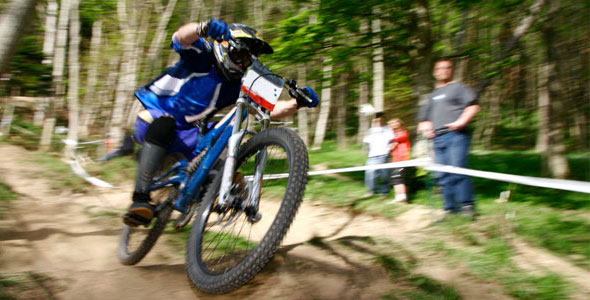
A mountain biker in a blue outfit leans into a turn on a dirt trail, showcasing dynamic movement on a rocky path. In the background, spectators watch from the sidelines amidst a forested setting.
min
min
Image alt text: Promotional poster for the Baja Epic Mountain Bike Race, scheduled for November 5-8, 2008, in Baja California, Mexico. The poster features an athlete on a bicycle with the number 608 displayed on the bike.
min
Close-up view of a bicycle handlebar with a digital cycling computer mounted on it, displaying speed and distance metrics on a screen. The device is secured with rubber straps and features a sleek design.
min
Two mountain bikers riding along a dirt path surrounded by greenery. One rider is wearing a blue jersey and white shorts, while the other is further up the path in a black shirt. There are signs and foliage lining the trail.
min
<img width="136" height="91" align="left" title="olympics.gif" id="image706" alt="olympics.gif" src="https://images.singletracks.com/blog/wp-content/uploads/2008/02/olympics.gif" />Apparently there is some <a href="http://www.usatoday.com/sports/olympics/2008-02-11-mountain-bike-london_N.htm">concern over the selection</a> of the 2012 London Olympic mountain bike course since the proposed site in Essex, England has very little elevation change - less than 300 feet for the course. It's not clear if this means 300 feet of total climbing over the entire course or if the high elevation minus the low elevation is 300 feet. If it's the latter I'd say that's not too shabby - after all the <a href="http://www.singletracks.com/php/trail.php?id=580">1996 Olympic course in Conyers, GA</a> has about that (though each lap had 1000+ feet of climbing).

The USA Today article actually starts by asking a rather silly question: "is it possible to have a mountain bike race without mountains?" Any mountain bike rider who lives in <a href="http://www.singletracks.com/php/database.php?terms=name&amp;state_id=9">Florida</a> can tell you there are plenty of challenging mountain bike trails in a state without a single mountain. Maybe things <em>were</em> better when <a href="http://www.singletracks.com/blog/?p=682">mountain biking was called "all terrain cycling."</a> Why'd the Library of Congress have to go and change things ;)
min
Close-up view of a damaged computer motherboard showing burn marks and melted components. Wires appear singed, and blackened residue is present around the area of damage.
min
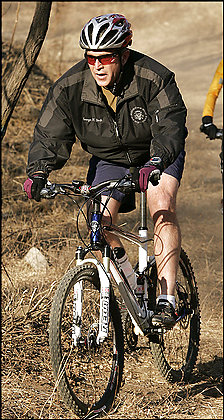
A person riding a mountain bike on a dirt trail. They are wearing a helmet, sunglasses, and a dark jacket, with shorts and gloves. The background features dry grass and trees, indicating an outdoor setting.
min
<img width="136" height="91" align="left" title="olympics.gif" id="image706" alt="olympics.gif" src="https://images.singletracks.com/blog/wp-content/uploads/2008/02/olympics.gif" />Apparently there is some <a href="http://www.usatoday.com/sports/olympics/2008-02-11-mountain-bike-london_N.htm">concern over the selection</a> of the 2012 London Olympic mountain bike course since the proposed site in Essex, England has very little elevation change - less than 300 feet for the course. It's not clear if this means 300 feet of total climbing over the entire course or if the high elevation minus the low elevation is 300 feet. If it's the latter I'd say that's not too shabby - after all the <a href="http://www.singletracks.com/php/trail.php?id=580">1996 Olympic course in Conyers, GA</a> has about that (though each lap had 1000+ feet of climbing).

The USA Today article actually starts by asking a rather silly question: "is it possible to have a mountain bike race without mountains?" Any mountain bike rider who lives in <a href="http://www.singletracks.com/php/database.php?terms=name&amp;state_id=9">Florida</a> can tell you there are plenty of challenging mountain bike trails in a state without a single mountain. Maybe things <em>were</em> better when <a href="http://www.singletracks.com/blog/?p=682">mountain biking was called "all terrain cycling."</a> Why'd the Library of Congress have to go and change things ;)
min
A large hillside with the letters "LU" prominently displayed in white and burgundy, surrounded by lush green trees under a bright sky.
min
<img width="136" height="91" align="left" title="olympics.gif" id="image706" alt="olympics.gif" src="https://images.singletracks.com/blog/wp-content/uploads/2008/02/olympics.gif" />Apparently there is some <a href="http://www.usatoday.com/sports/olympics/2008-02-11-mountain-bike-london_N.htm">concern over the selection</a> of the 2012 London Olympic mountain bike course since the proposed site in Essex, England has very little elevation change - less than 300 feet for the course. It's not clear if this means 300 feet of total climbing over the entire course or if the high elevation minus the low elevation is 300 feet. If it's the latter I'd say that's not too shabby - after all the <a href="http://www.singletracks.com/php/trail.php?id=580">1996 Olympic course in Conyers, GA</a> has about that (though each lap had 1000+ feet of climbing).

The USA Today article actually starts by asking a rather silly question: "is it possible to have a mountain bike race without mountains?" Any mountain bike rider who lives in <a href="http://www.singletracks.com/php/database.php?terms=name&amp;state_id=9">Florida</a> can tell you there are plenty of challenging mountain bike trails in a state without a single mountain. Maybe things <em>were</em> better when <a href="http://www.singletracks.com/blog/?p=682">mountain biking was called "all terrain cycling."</a> Why'd the Library of Congress have to go and change things ;)
min
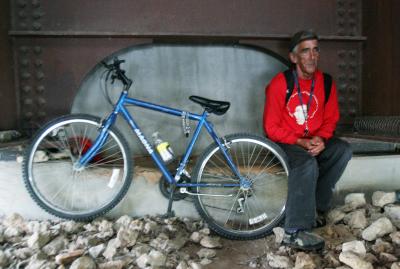
A man sitting on a rocky surface under a bridge, wearing a red sweatshirt and gray pants, with a blue bicycle leaning against a wall beside him.
min
<img width="136" height="91" align="left" title="olympics.gif" id="image706" alt="olympics.gif" src="https://images.singletracks.com/blog/wp-content/uploads/2008/02/olympics.gif" />Apparently there is some <a href="http://www.usatoday.com/sports/olympics/2008-02-11-mountain-bike-london_N.htm">concern over the selection</a> of the 2012 London Olympic mountain bike course since the proposed site in Essex, England has very little elevation change - less than 300 feet for the course. It's not clear if this means 300 feet of total climbing over the entire course or if the high elevation minus the low elevation is 300 feet. If it's the latter I'd say that's not too shabby - after all the <a href="http://www.singletracks.com/php/trail.php?id=580">1996 Olympic course in Conyers, GA</a> has about that (though each lap had 1000+ feet of climbing).

The USA Today article actually starts by asking a rather silly question: "is it possible to have a mountain bike race without mountains?" Any mountain bike rider who lives in <a href="http://www.singletracks.com/php/database.php?terms=name&amp;state_id=9">Florida</a> can tell you there are plenty of challenging mountain bike trails in a state without a single mountain. Maybe things <em>were</em> better when <a href="http://www.singletracks.com/blog/?p=682">mountain biking was called "all terrain cycling."</a> Why'd the Library of Congress have to go and change things ;)
  2