Latest mountain bike news

A black and blue CamelBak backpack designed for outdoor activities, featuring a hydration reservoir and a drinking tube, padded shoulder straps, and multiple compartments for gear storage.
  1
<img width="225" height="225" border="0" align="left" alt="camelbak.jpg" id="image375" title="camelbak.jpg" style="padding-right: 10px" src="https://images.singletracks.com/blog/wp-content/uploads/2007/08/camelbak.jpg" /><a href="http://blog.terrypearson.com/2007/08/04/mountain-biking-and-heat-stroke/">Terry Pearson posted</a> a few days ago about cycling induced heat stroke and with record heat across the country this week it's a great time to remind people about the dangers of dehydration and exhaustion.

While mountain biking with some friends back in high school one of my buddies suffered from a bad case of heat exhaustion and ended up in the hospital. He had run out of water on a fairly short ride on an unusually warm February afternoon and we found him, delirious, on the trail, barely able to walk. It doesn't have to be hot for you to get overheated but when temperatures hover around the 90s the risk increases dramatically.

I'm personally not very good at drinking fluids while I ride (some of my friends call me the camel) but I always bring two full bottles whenever I go out (and usually return with one and a half full bottles). I tell myself at least I have water for an emergency but survival experts don't usually recommend rationing water. I've heard that people have been found in the desert, dead from dehydration, with water still in their canteens because they wanted to make their water last. Drink often in hot conditions, even if you don't think you're thirsty.

Another thing to consider when mountain biking in the heat is that you'll stay cooler if you keep moving. When you get hot you may feel like stopping to take a break but if you're able to coast a bit the wind in your face will keep you cooler than if you stop moving completely. I remember road biking a few times last summer and feeling comfortable while riding but each time I would stop at an intersection the sweat would instantly start pouring down my face. Take a cool down lap after your ride to let your body temperature slowly return to normal.

This summer Mudhunny and I were introduced to yet another tip to staying cool after a mountain bike ride: cold washcloths. Stick a few of these in your iced down drink cooler and when you get back to the car, wipe down your face and neck. One washcloth was enough for me to stop sweating almost instantly after a humid 90-degree ride. Maybe it's psychological but the washcloth did the trick and I felt refreshed immediately.

Finally, this should be common sense but it's worth mentioning: don't ride in the middle of the day if you can avoid it. Early morning and late evening rides can help you beat the heat but in many areas the humidity at these times is still dangerous, so be prepared. If you do take a late evening ride, bring a light just in case you don't make it back before dark.

Mountain biking is an extreme sport and combined with extreme heat it's even more dangerous. Stay hydrated and cool this summer, there's amazing fall riding just around the corner!
<img width="225" height="225" border="0" align="left" alt="camelbak.jpg" id="image375" title="camelbak.jpg" style="padding-right: 10px" src="https://images.singletracks.com/blog/wp-content/uploads/2007/08/camelbak.jpg" /><a href="http://blog.terrypearson.com/2007/08/04/mountain-biking-and-heat-stroke/">Terry Pearson posted</a> a few days ago about cycling induced heat stroke and with record heat across the country this week it's a great time to remind people about the dangers of dehydration and exhaustion.

While mountain biking with some friends back in high school one of my buddies suffered from a bad case of heat exhaustion and ended up in the hospital. He had run out of water on a fairly short ride on an unusually warm February afternoon and we found him, delirious, on the trail, barely able to walk. It doesn't have to be hot for you to get overheated but when temperatures hover around the 90s the risk increases dramatically.

I'm personally not very good at drinking fluids while I ride (some of my friends call me the camel) but I always bring two full bottles whenever I go out (and usually return with one and a half full bottles). I tell myself at least I have water for an emergency but survival experts don't usually recommend rationing water. I've heard that people have been found in the desert, dead from dehydration, with water still in their canteens because they wanted to make their water last. Drink often in hot conditions, even if you don't think you're thirsty.

Another thing to consider when mountain biking in the heat is that you'll stay cooler if you keep moving. When you get hot you may feel like stopping to take a break but if you're able to coast a bit the wind in your face will keep you cooler than if you stop moving completely. I remember road biking a few times last summer and feeling comfortable while riding but each time I would stop at an intersection the sweat would instantly start pouring down my face. Take a cool down lap after your ride to let your body temperature slowly return to normal.

This summer Mudhunny and I were introduced to yet another tip to staying cool after a mountain bike ride: cold washcloths. Stick a few of these in your iced down drink cooler and when you get back to the car, wipe down your face and neck. One washcloth was enough for me to stop sweating almost instantly after a humid 90-degree ride. Maybe it's psychological but the washcloth did the trick and I felt refreshed immediately.

Finally, this should be common sense but it's worth mentioning: don't ride in the middle of the day if you can avoid it. Early morning and late evening rides can help you beat the heat but in many areas the humidity at these times is still dangerous, so be prepared. If you do take a late evening ride, bring a light just in case you don't make it back before dark.

Mountain biking is an extreme sport and combined with extreme heat it's even more dangerous. Stay hydrated and cool this summer, there's amazing fall riding just around the corner!
  4
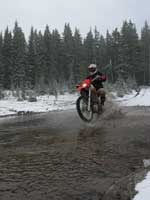
A motorcyclist performing a jump over a muddy water puddle in a snowy forest setting, surrounded by tall pine trees.
  1
A smiling man wearing a colorful floral shirt and a blue bucket hat stands with his arms crossed on a dirt path. He is surrounded by a scenic landscape with rolling hills and clear blue skies in the background.
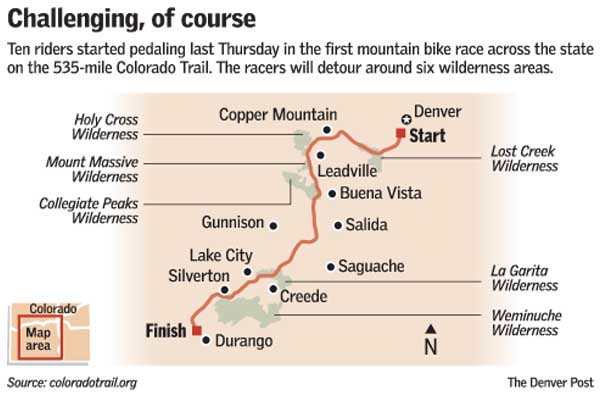
Map of the Colorado Trail highlighting the route of the first mountain bike race, starting in Denver and finishing in Durango. The map indicates several wilderness areas along the 535-mile route, including the Holy Cross, Mount Massive, Collegiate Peaks, Lost Creek, La Garita, and Weminuche Wilderness.
  1
<img width="225" height="225" border="0" align="left" alt="camelbak.jpg" id="image375" title="camelbak.jpg" style="padding-right: 10px" src="https://images.singletracks.com/blog/wp-content/uploads/2007/08/camelbak.jpg" /><a href="http://blog.terrypearson.com/2007/08/04/mountain-biking-and-heat-stroke/">Terry Pearson posted</a> a few days ago about cycling induced heat stroke and with record heat across the country this week it's a great time to remind people about the dangers of dehydration and exhaustion.

While mountain biking with some friends back in high school one of my buddies suffered from a bad case of heat exhaustion and ended up in the hospital. He had run out of water on a fairly short ride on an unusually warm February afternoon and we found him, delirious, on the trail, barely able to walk. It doesn't have to be hot for you to get overheated but when temperatures hover around the 90s the risk increases dramatically.

I'm personally not very good at drinking fluids while I ride (some of my friends call me the camel) but I always bring two full bottles whenever I go out (and usually return with one and a half full bottles). I tell myself at least I have water for an emergency but survival experts don't usually recommend rationing water. I've heard that people have been found in the desert, dead from dehydration, with water still in their canteens because they wanted to make their water last. Drink often in hot conditions, even if you don't think you're thirsty.

Another thing to consider when mountain biking in the heat is that you'll stay cooler if you keep moving. When you get hot you may feel like stopping to take a break but if you're able to coast a bit the wind in your face will keep you cooler than if you stop moving completely. I remember road biking a few times last summer and feeling comfortable while riding but each time I would stop at an intersection the sweat would instantly start pouring down my face. Take a cool down lap after your ride to let your body temperature slowly return to normal.

This summer Mudhunny and I were introduced to yet another tip to staying cool after a mountain bike ride: cold washcloths. Stick a few of these in your iced down drink cooler and when you get back to the car, wipe down your face and neck. One washcloth was enough for me to stop sweating almost instantly after a humid 90-degree ride. Maybe it's psychological but the washcloth did the trick and I felt refreshed immediately.

Finally, this should be common sense but it's worth mentioning: don't ride in the middle of the day if you can avoid it. Early morning and late evening rides can help you beat the heat but in many areas the humidity at these times is still dangerous, so be prepared. If you do take a late evening ride, bring a light just in case you don't make it back before dark.

Mountain biking is an extreme sport and combined with extreme heat it's even more dangerous. Stay hydrated and cool this summer, there's amazing fall riding just around the corner!
<img width="225" height="225" border="0" align="left" alt="camelbak.jpg" id="image375" title="camelbak.jpg" style="padding-right: 10px" src="https://images.singletracks.com/blog/wp-content/uploads/2007/08/camelbak.jpg" /><a href="http://blog.terrypearson.com/2007/08/04/mountain-biking-and-heat-stroke/">Terry Pearson posted</a> a few days ago about cycling induced heat stroke and with record heat across the country this week it's a great time to remind people about the dangers of dehydration and exhaustion.

While mountain biking with some friends back in high school one of my buddies suffered from a bad case of heat exhaustion and ended up in the hospital. He had run out of water on a fairly short ride on an unusually warm February afternoon and we found him, delirious, on the trail, barely able to walk. It doesn't have to be hot for you to get overheated but when temperatures hover around the 90s the risk increases dramatically.

I'm personally not very good at drinking fluids while I ride (some of my friends call me the camel) but I always bring two full bottles whenever I go out (and usually return with one and a half full bottles). I tell myself at least I have water for an emergency but survival experts don't usually recommend rationing water. I've heard that people have been found in the desert, dead from dehydration, with water still in their canteens because they wanted to make their water last. Drink often in hot conditions, even if you don't think you're thirsty.

Another thing to consider when mountain biking in the heat is that you'll stay cooler if you keep moving. When you get hot you may feel like stopping to take a break but if you're able to coast a bit the wind in your face will keep you cooler than if you stop moving completely. I remember road biking a few times last summer and feeling comfortable while riding but each time I would stop at an intersection the sweat would instantly start pouring down my face. Take a cool down lap after your ride to let your body temperature slowly return to normal.

This summer Mudhunny and I were introduced to yet another tip to staying cool after a mountain bike ride: cold washcloths. Stick a few of these in your iced down drink cooler and when you get back to the car, wipe down your face and neck. One washcloth was enough for me to stop sweating almost instantly after a humid 90-degree ride. Maybe it's psychological but the washcloth did the trick and I felt refreshed immediately.

Finally, this should be common sense but it's worth mentioning: don't ride in the middle of the day if you can avoid it. Early morning and late evening rides can help you beat the heat but in many areas the humidity at these times is still dangerous, so be prepared. If you do take a late evening ride, bring a light just in case you don't make it back before dark.

Mountain biking is an extreme sport and combined with extreme heat it's even more dangerous. Stay hydrated and cool this summer, there's amazing fall riding just around the corner!
A group of cyclists racing along a roadside, with onlookers in the background taking photos. The cyclists are wearing colorful racing jerseys and helmets, and there are cars parked alongside the road. The backdrop features a rocky hillside and trees.
  1
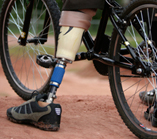
A close-up view of a bicycle with a focus on the leg of a cyclist wearing a prosthetic limb, highlighting the adaptive equipment and footwear. The background features a dirt path, indicating an outdoor cycling environment.
<img width="225" height="225" border="0" align="left" alt="camelbak.jpg" id="image375" title="camelbak.jpg" style="padding-right: 10px" src="https://images.singletracks.com/blog/wp-content/uploads/2007/08/camelbak.jpg" /><a href="http://blog.terrypearson.com/2007/08/04/mountain-biking-and-heat-stroke/">Terry Pearson posted</a> a few days ago about cycling induced heat stroke and with record heat across the country this week it's a great time to remind people about the dangers of dehydration and exhaustion.

While mountain biking with some friends back in high school one of my buddies suffered from a bad case of heat exhaustion and ended up in the hospital. He had run out of water on a fairly short ride on an unusually warm February afternoon and we found him, delirious, on the trail, barely able to walk. It doesn't have to be hot for you to get overheated but when temperatures hover around the 90s the risk increases dramatically.

I'm personally not very good at drinking fluids while I ride (some of my friends call me the camel) but I always bring two full bottles whenever I go out (and usually return with one and a half full bottles). I tell myself at least I have water for an emergency but survival experts don't usually recommend rationing water. I've heard that people have been found in the desert, dead from dehydration, with water still in their canteens because they wanted to make their water last. Drink often in hot conditions, even if you don't think you're thirsty.

Another thing to consider when mountain biking in the heat is that you'll stay cooler if you keep moving. When you get hot you may feel like stopping to take a break but if you're able to coast a bit the wind in your face will keep you cooler than if you stop moving completely. I remember road biking a few times last summer and feeling comfortable while riding but each time I would stop at an intersection the sweat would instantly start pouring down my face. Take a cool down lap after your ride to let your body temperature slowly return to normal.

This summer Mudhunny and I were introduced to yet another tip to staying cool after a mountain bike ride: cold washcloths. Stick a few of these in your iced down drink cooler and when you get back to the car, wipe down your face and neck. One washcloth was enough for me to stop sweating almost instantly after a humid 90-degree ride. Maybe it's psychological but the washcloth did the trick and I felt refreshed immediately.

Finally, this should be common sense but it's worth mentioning: don't ride in the middle of the day if you can avoid it. Early morning and late evening rides can help you beat the heat but in many areas the humidity at these times is still dangerous, so be prepared. If you do take a late evening ride, bring a light just in case you don't make it back before dark.

Mountain biking is an extreme sport and combined with extreme heat it's even more dangerous. Stay hydrated and cool this summer, there's amazing fall riding just around the corner!
<img width="225" height="225" border="0" align="left" alt="camelbak.jpg" id="image375" title="camelbak.jpg" style="padding-right: 10px" src="https://images.singletracks.com/blog/wp-content/uploads/2007/08/camelbak.jpg" /><a href="http://blog.terrypearson.com/2007/08/04/mountain-biking-and-heat-stroke/">Terry Pearson posted</a> a few days ago about cycling induced heat stroke and with record heat across the country this week it's a great time to remind people about the dangers of dehydration and exhaustion.

While mountain biking with some friends back in high school one of my buddies suffered from a bad case of heat exhaustion and ended up in the hospital. He had run out of water on a fairly short ride on an unusually warm February afternoon and we found him, delirious, on the trail, barely able to walk. It doesn't have to be hot for you to get overheated but when temperatures hover around the 90s the risk increases dramatically.

I'm personally not very good at drinking fluids while I ride (some of my friends call me the camel) but I always bring two full bottles whenever I go out (and usually return with one and a half full bottles). I tell myself at least I have water for an emergency but survival experts don't usually recommend rationing water. I've heard that people have been found in the desert, dead from dehydration, with water still in their canteens because they wanted to make their water last. Drink often in hot conditions, even if you don't think you're thirsty.

Another thing to consider when mountain biking in the heat is that you'll stay cooler if you keep moving. When you get hot you may feel like stopping to take a break but if you're able to coast a bit the wind in your face will keep you cooler than if you stop moving completely. I remember road biking a few times last summer and feeling comfortable while riding but each time I would stop at an intersection the sweat would instantly start pouring down my face. Take a cool down lap after your ride to let your body temperature slowly return to normal.

This summer Mudhunny and I were introduced to yet another tip to staying cool after a mountain bike ride: cold washcloths. Stick a few of these in your iced down drink cooler and when you get back to the car, wipe down your face and neck. One washcloth was enough for me to stop sweating almost instantly after a humid 90-degree ride. Maybe it's psychological but the washcloth did the trick and I felt refreshed immediately.

Finally, this should be common sense but it's worth mentioning: don't ride in the middle of the day if you can avoid it. Early morning and late evening rides can help you beat the heat but in many areas the humidity at these times is still dangerous, so be prepared. If you do take a late evening ride, bring a light just in case you don't make it back before dark.

Mountain biking is an extreme sport and combined with extreme heat it's even more dangerous. Stay hydrated and cool this summer, there's amazing fall riding just around the corner!
<img width="225" height="225" border="0" align="left" alt="camelbak.jpg" id="image375" title="camelbak.jpg" style="padding-right: 10px" src="https://images.singletracks.com/blog/wp-content/uploads/2007/08/camelbak.jpg" /><a href="http://blog.terrypearson.com/2007/08/04/mountain-biking-and-heat-stroke/">Terry Pearson posted</a> a few days ago about cycling induced heat stroke and with record heat across the country this week it's a great time to remind people about the dangers of dehydration and exhaustion.

While mountain biking with some friends back in high school one of my buddies suffered from a bad case of heat exhaustion and ended up in the hospital. He had run out of water on a fairly short ride on an unusually warm February afternoon and we found him, delirious, on the trail, barely able to walk. It doesn't have to be hot for you to get overheated but when temperatures hover around the 90s the risk increases dramatically.

I'm personally not very good at drinking fluids while I ride (some of my friends call me the camel) but I always bring two full bottles whenever I go out (and usually return with one and a half full bottles). I tell myself at least I have water for an emergency but survival experts don't usually recommend rationing water. I've heard that people have been found in the desert, dead from dehydration, with water still in their canteens because they wanted to make their water last. Drink often in hot conditions, even if you don't think you're thirsty.

Another thing to consider when mountain biking in the heat is that you'll stay cooler if you keep moving. When you get hot you may feel like stopping to take a break but if you're able to coast a bit the wind in your face will keep you cooler than if you stop moving completely. I remember road biking a few times last summer and feeling comfortable while riding but each time I would stop at an intersection the sweat would instantly start pouring down my face. Take a cool down lap after your ride to let your body temperature slowly return to normal.

This summer Mudhunny and I were introduced to yet another tip to staying cool after a mountain bike ride: cold washcloths. Stick a few of these in your iced down drink cooler and when you get back to the car, wipe down your face and neck. One washcloth was enough for me to stop sweating almost instantly after a humid 90-degree ride. Maybe it's psychological but the washcloth did the trick and I felt refreshed immediately.

Finally, this should be common sense but it's worth mentioning: don't ride in the middle of the day if you can avoid it. Early morning and late evening rides can help you beat the heat but in many areas the humidity at these times is still dangerous, so be prepared. If you do take a late evening ride, bring a light just in case you don't make it back before dark.

Mountain biking is an extreme sport and combined with extreme heat it's even more dangerous. Stay hydrated and cool this summer, there's amazing fall riding just around the corner!
<img width="225" height="225" border="0" align="left" alt="camelbak.jpg" id="image375" title="camelbak.jpg" style="padding-right: 10px" src="https://images.singletracks.com/blog/wp-content/uploads/2007/08/camelbak.jpg" /><a href="http://blog.terrypearson.com/2007/08/04/mountain-biking-and-heat-stroke/">Terry Pearson posted</a> a few days ago about cycling induced heat stroke and with record heat across the country this week it's a great time to remind people about the dangers of dehydration and exhaustion.

While mountain biking with some friends back in high school one of my buddies suffered from a bad case of heat exhaustion and ended up in the hospital. He had run out of water on a fairly short ride on an unusually warm February afternoon and we found him, delirious, on the trail, barely able to walk. It doesn't have to be hot for you to get overheated but when temperatures hover around the 90s the risk increases dramatically.

I'm personally not very good at drinking fluids while I ride (some of my friends call me the camel) but I always bring two full bottles whenever I go out (and usually return with one and a half full bottles). I tell myself at least I have water for an emergency but survival experts don't usually recommend rationing water. I've heard that people have been found in the desert, dead from dehydration, with water still in their canteens because they wanted to make their water last. Drink often in hot conditions, even if you don't think you're thirsty.

Another thing to consider when mountain biking in the heat is that you'll stay cooler if you keep moving. When you get hot you may feel like stopping to take a break but if you're able to coast a bit the wind in your face will keep you cooler than if you stop moving completely. I remember road biking a few times last summer and feeling comfortable while riding but each time I would stop at an intersection the sweat would instantly start pouring down my face. Take a cool down lap after your ride to let your body temperature slowly return to normal.

This summer Mudhunny and I were introduced to yet another tip to staying cool after a mountain bike ride: cold washcloths. Stick a few of these in your iced down drink cooler and when you get back to the car, wipe down your face and neck. One washcloth was enough for me to stop sweating almost instantly after a humid 90-degree ride. Maybe it's psychological but the washcloth did the trick and I felt refreshed immediately.

Finally, this should be common sense but it's worth mentioning: don't ride in the middle of the day if you can avoid it. Early morning and late evening rides can help you beat the heat but in many areas the humidity at these times is still dangerous, so be prepared. If you do take a late evening ride, bring a light just in case you don't make it back before dark.

Mountain biking is an extreme sport and combined with extreme heat it's even more dangerous. Stay hydrated and cool this summer, there's amazing fall riding just around the corner!
A green mountain bike with yellow suspension forks leaning against a white wooden wall, surrounded by fallen leaves and green ivy.
  1
A winding dirt path through a lush green meadow, surrounded by mountains under a bright blue sky with scattered clouds.
  2
<img width="225" height="225" border="0" align="left" alt="camelbak.jpg" id="image375" title="camelbak.jpg" style="padding-right: 10px" src="https://images.singletracks.com/blog/wp-content/uploads/2007/08/camelbak.jpg" /><a href="http://blog.terrypearson.com/2007/08/04/mountain-biking-and-heat-stroke/">Terry Pearson posted</a> a few days ago about cycling induced heat stroke and with record heat across the country this week it's a great time to remind people about the dangers of dehydration and exhaustion.

While mountain biking with some friends back in high school one of my buddies suffered from a bad case of heat exhaustion and ended up in the hospital. He had run out of water on a fairly short ride on an unusually warm February afternoon and we found him, delirious, on the trail, barely able to walk. It doesn't have to be hot for you to get overheated but when temperatures hover around the 90s the risk increases dramatically.

I'm personally not very good at drinking fluids while I ride (some of my friends call me the camel) but I always bring two full bottles whenever I go out (and usually return with one and a half full bottles). I tell myself at least I have water for an emergency but survival experts don't usually recommend rationing water. I've heard that people have been found in the desert, dead from dehydration, with water still in their canteens because they wanted to make their water last. Drink often in hot conditions, even if you don't think you're thirsty.

Another thing to consider when mountain biking in the heat is that you'll stay cooler if you keep moving. When you get hot you may feel like stopping to take a break but if you're able to coast a bit the wind in your face will keep you cooler than if you stop moving completely. I remember road biking a few times last summer and feeling comfortable while riding but each time I would stop at an intersection the sweat would instantly start pouring down my face. Take a cool down lap after your ride to let your body temperature slowly return to normal.

This summer Mudhunny and I were introduced to yet another tip to staying cool after a mountain bike ride: cold washcloths. Stick a few of these in your iced down drink cooler and when you get back to the car, wipe down your face and neck. One washcloth was enough for me to stop sweating almost instantly after a humid 90-degree ride. Maybe it's psychological but the washcloth did the trick and I felt refreshed immediately.

Finally, this should be common sense but it's worth mentioning: don't ride in the middle of the day if you can avoid it. Early morning and late evening rides can help you beat the heat but in many areas the humidity at these times is still dangerous, so be prepared. If you do take a late evening ride, bring a light just in case you don't make it back before dark.

Mountain biking is an extreme sport and combined with extreme heat it's even more dangerous. Stay hydrated and cool this summer, there's amazing fall riding just around the corner!
  1
<img width="225" height="225" border="0" align="left" alt="camelbak.jpg" id="image375" title="camelbak.jpg" style="padding-right: 10px" src="https://images.singletracks.com/blog/wp-content/uploads/2007/08/camelbak.jpg" /><a href="http://blog.terrypearson.com/2007/08/04/mountain-biking-and-heat-stroke/">Terry Pearson posted</a> a few days ago about cycling induced heat stroke and with record heat across the country this week it's a great time to remind people about the dangers of dehydration and exhaustion.

While mountain biking with some friends back in high school one of my buddies suffered from a bad case of heat exhaustion and ended up in the hospital. He had run out of water on a fairly short ride on an unusually warm February afternoon and we found him, delirious, on the trail, barely able to walk. It doesn't have to be hot for you to get overheated but when temperatures hover around the 90s the risk increases dramatically.

I'm personally not very good at drinking fluids while I ride (some of my friends call me the camel) but I always bring two full bottles whenever I go out (and usually return with one and a half full bottles). I tell myself at least I have water for an emergency but survival experts don't usually recommend rationing water. I've heard that people have been found in the desert, dead from dehydration, with water still in their canteens because they wanted to make their water last. Drink often in hot conditions, even if you don't think you're thirsty.

Another thing to consider when mountain biking in the heat is that you'll stay cooler if you keep moving. When you get hot you may feel like stopping to take a break but if you're able to coast a bit the wind in your face will keep you cooler than if you stop moving completely. I remember road biking a few times last summer and feeling comfortable while riding but each time I would stop at an intersection the sweat would instantly start pouring down my face. Take a cool down lap after your ride to let your body temperature slowly return to normal.

This summer Mudhunny and I were introduced to yet another tip to staying cool after a mountain bike ride: cold washcloths. Stick a few of these in your iced down drink cooler and when you get back to the car, wipe down your face and neck. One washcloth was enough for me to stop sweating almost instantly after a humid 90-degree ride. Maybe it's psychological but the washcloth did the trick and I felt refreshed immediately.

Finally, this should be common sense but it's worth mentioning: don't ride in the middle of the day if you can avoid it. Early morning and late evening rides can help you beat the heat but in many areas the humidity at these times is still dangerous, so be prepared. If you do take a late evening ride, bring a light just in case you don't make it back before dark.

Mountain biking is an extreme sport and combined with extreme heat it's even more dangerous. Stay hydrated and cool this summer, there's amazing fall riding just around the corner!
  2
A narrow dirt path surrounded by lush green trees, leading through a wooded area. The sunlight filters through the foliage, creating a serene and tranquil atmosphere.
  4
<img width="225" height="225" border="0" align="left" alt="camelbak.jpg" id="image375" title="camelbak.jpg" style="padding-right: 10px" src="https://images.singletracks.com/blog/wp-content/uploads/2007/08/camelbak.jpg" /><a href="http://blog.terrypearson.com/2007/08/04/mountain-biking-and-heat-stroke/">Terry Pearson posted</a> a few days ago about cycling induced heat stroke and with record heat across the country this week it's a great time to remind people about the dangers of dehydration and exhaustion.

While mountain biking with some friends back in high school one of my buddies suffered from a bad case of heat exhaustion and ended up in the hospital. He had run out of water on a fairly short ride on an unusually warm February afternoon and we found him, delirious, on the trail, barely able to walk. It doesn't have to be hot for you to get overheated but when temperatures hover around the 90s the risk increases dramatically.

I'm personally not very good at drinking fluids while I ride (some of my friends call me the camel) but I always bring two full bottles whenever I go out (and usually return with one and a half full bottles). I tell myself at least I have water for an emergency but survival experts don't usually recommend rationing water. I've heard that people have been found in the desert, dead from dehydration, with water still in their canteens because they wanted to make their water last. Drink often in hot conditions, even if you don't think you're thirsty.

Another thing to consider when mountain biking in the heat is that you'll stay cooler if you keep moving. When you get hot you may feel like stopping to take a break but if you're able to coast a bit the wind in your face will keep you cooler than if you stop moving completely. I remember road biking a few times last summer and feeling comfortable while riding but each time I would stop at an intersection the sweat would instantly start pouring down my face. Take a cool down lap after your ride to let your body temperature slowly return to normal.

This summer Mudhunny and I were introduced to yet another tip to staying cool after a mountain bike ride: cold washcloths. Stick a few of these in your iced down drink cooler and when you get back to the car, wipe down your face and neck. One washcloth was enough for me to stop sweating almost instantly after a humid 90-degree ride. Maybe it's psychological but the washcloth did the trick and I felt refreshed immediately.

Finally, this should be common sense but it's worth mentioning: don't ride in the middle of the day if you can avoid it. Early morning and late evening rides can help you beat the heat but in many areas the humidity at these times is still dangerous, so be prepared. If you do take a late evening ride, bring a light just in case you don't make it back before dark.

Mountain biking is an extreme sport and combined with extreme heat it's even more dangerous. Stay hydrated and cool this summer, there's amazing fall riding just around the corner!
  2
A narrow dirt path winding through a lush green forest, surrounded by tall trees and dappled sunlight filtering through the leaves. The ground is covered with fallen leaves and small rocks, creating a natural, serene atmosphere.
  1
<img width="225" height="225" border="0" align="left" alt="camelbak.jpg" id="image375" title="camelbak.jpg" style="padding-right: 10px" src="https://images.singletracks.com/blog/wp-content/uploads/2007/08/camelbak.jpg" /><a href="http://blog.terrypearson.com/2007/08/04/mountain-biking-and-heat-stroke/">Terry Pearson posted</a> a few days ago about cycling induced heat stroke and with record heat across the country this week it's a great time to remind people about the dangers of dehydration and exhaustion.

While mountain biking with some friends back in high school one of my buddies suffered from a bad case of heat exhaustion and ended up in the hospital. He had run out of water on a fairly short ride on an unusually warm February afternoon and we found him, delirious, on the trail, barely able to walk. It doesn't have to be hot for you to get overheated but when temperatures hover around the 90s the risk increases dramatically.

I'm personally not very good at drinking fluids while I ride (some of my friends call me the camel) but I always bring two full bottles whenever I go out (and usually return with one and a half full bottles). I tell myself at least I have water for an emergency but survival experts don't usually recommend rationing water. I've heard that people have been found in the desert, dead from dehydration, with water still in their canteens because they wanted to make their water last. Drink often in hot conditions, even if you don't think you're thirsty.

Another thing to consider when mountain biking in the heat is that you'll stay cooler if you keep moving. When you get hot you may feel like stopping to take a break but if you're able to coast a bit the wind in your face will keep you cooler than if you stop moving completely. I remember road biking a few times last summer and feeling comfortable while riding but each time I would stop at an intersection the sweat would instantly start pouring down my face. Take a cool down lap after your ride to let your body temperature slowly return to normal.

This summer Mudhunny and I were introduced to yet another tip to staying cool after a mountain bike ride: cold washcloths. Stick a few of these in your iced down drink cooler and when you get back to the car, wipe down your face and neck. One washcloth was enough for me to stop sweating almost instantly after a humid 90-degree ride. Maybe it's psychological but the washcloth did the trick and I felt refreshed immediately.

Finally, this should be common sense but it's worth mentioning: don't ride in the middle of the day if you can avoid it. Early morning and late evening rides can help you beat the heat but in many areas the humidity at these times is still dangerous, so be prepared. If you do take a late evening ride, bring a light just in case you don't make it back before dark.

Mountain biking is an extreme sport and combined with extreme heat it's even more dangerous. Stay hydrated and cool this summer, there's amazing fall riding just around the corner!
  1
<img width="225" height="225" border="0" align="left" alt="camelbak.jpg" id="image375" title="camelbak.jpg" style="padding-right: 10px" src="https://images.singletracks.com/blog/wp-content/uploads/2007/08/camelbak.jpg" /><a href="http://blog.terrypearson.com/2007/08/04/mountain-biking-and-heat-stroke/">Terry Pearson posted</a> a few days ago about cycling induced heat stroke and with record heat across the country this week it's a great time to remind people about the dangers of dehydration and exhaustion.

While mountain biking with some friends back in high school one of my buddies suffered from a bad case of heat exhaustion and ended up in the hospital. He had run out of water on a fairly short ride on an unusually warm February afternoon and we found him, delirious, on the trail, barely able to walk. It doesn't have to be hot for you to get overheated but when temperatures hover around the 90s the risk increases dramatically.

I'm personally not very good at drinking fluids while I ride (some of my friends call me the camel) but I always bring two full bottles whenever I go out (and usually return with one and a half full bottles). I tell myself at least I have water for an emergency but survival experts don't usually recommend rationing water. I've heard that people have been found in the desert, dead from dehydration, with water still in their canteens because they wanted to make their water last. Drink often in hot conditions, even if you don't think you're thirsty.

Another thing to consider when mountain biking in the heat is that you'll stay cooler if you keep moving. When you get hot you may feel like stopping to take a break but if you're able to coast a bit the wind in your face will keep you cooler than if you stop moving completely. I remember road biking a few times last summer and feeling comfortable while riding but each time I would stop at an intersection the sweat would instantly start pouring down my face. Take a cool down lap after your ride to let your body temperature slowly return to normal.

This summer Mudhunny and I were introduced to yet another tip to staying cool after a mountain bike ride: cold washcloths. Stick a few of these in your iced down drink cooler and when you get back to the car, wipe down your face and neck. One washcloth was enough for me to stop sweating almost instantly after a humid 90-degree ride. Maybe it's psychological but the washcloth did the trick and I felt refreshed immediately.

Finally, this should be common sense but it's worth mentioning: don't ride in the middle of the day if you can avoid it. Early morning and late evening rides can help you beat the heat but in many areas the humidity at these times is still dangerous, so be prepared. If you do take a late evening ride, bring a light just in case you don't make it back before dark.

Mountain biking is an extreme sport and combined with extreme heat it's even more dangerous. Stay hydrated and cool this summer, there's amazing fall riding just around the corner!
<img width="225" height="225" border="0" align="left" alt="camelbak.jpg" id="image375" title="camelbak.jpg" style="padding-right: 10px" src="https://images.singletracks.com/blog/wp-content/uploads/2007/08/camelbak.jpg" /><a href="http://blog.terrypearson.com/2007/08/04/mountain-biking-and-heat-stroke/">Terry Pearson posted</a> a few days ago about cycling induced heat stroke and with record heat across the country this week it's a great time to remind people about the dangers of dehydration and exhaustion.

While mountain biking with some friends back in high school one of my buddies suffered from a bad case of heat exhaustion and ended up in the hospital. He had run out of water on a fairly short ride on an unusually warm February afternoon and we found him, delirious, on the trail, barely able to walk. It doesn't have to be hot for you to get overheated but when temperatures hover around the 90s the risk increases dramatically.

I'm personally not very good at drinking fluids while I ride (some of my friends call me the camel) but I always bring two full bottles whenever I go out (and usually return with one and a half full bottles). I tell myself at least I have water for an emergency but survival experts don't usually recommend rationing water. I've heard that people have been found in the desert, dead from dehydration, with water still in their canteens because they wanted to make their water last. Drink often in hot conditions, even if you don't think you're thirsty.

Another thing to consider when mountain biking in the heat is that you'll stay cooler if you keep moving. When you get hot you may feel like stopping to take a break but if you're able to coast a bit the wind in your face will keep you cooler than if you stop moving completely. I remember road biking a few times last summer and feeling comfortable while riding but each time I would stop at an intersection the sweat would instantly start pouring down my face. Take a cool down lap after your ride to let your body temperature slowly return to normal.

This summer Mudhunny and I were introduced to yet another tip to staying cool after a mountain bike ride: cold washcloths. Stick a few of these in your iced down drink cooler and when you get back to the car, wipe down your face and neck. One washcloth was enough for me to stop sweating almost instantly after a humid 90-degree ride. Maybe it's psychological but the washcloth did the trick and I felt refreshed immediately.

Finally, this should be common sense but it's worth mentioning: don't ride in the middle of the day if you can avoid it. Early morning and late evening rides can help you beat the heat but in many areas the humidity at these times is still dangerous, so be prepared. If you do take a late evening ride, bring a light just in case you don't make it back before dark.

Mountain biking is an extreme sport and combined with extreme heat it's even more dangerous. Stay hydrated and cool this summer, there's amazing fall riding just around the corner!
  1
<img width="225" height="225" border="0" align="left" alt="camelbak.jpg" id="image375" title="camelbak.jpg" style="padding-right: 10px" src="https://images.singletracks.com/blog/wp-content/uploads/2007/08/camelbak.jpg" /><a href="http://blog.terrypearson.com/2007/08/04/mountain-biking-and-heat-stroke/">Terry Pearson posted</a> a few days ago about cycling induced heat stroke and with record heat across the country this week it's a great time to remind people about the dangers of dehydration and exhaustion.

While mountain biking with some friends back in high school one of my buddies suffered from a bad case of heat exhaustion and ended up in the hospital. He had run out of water on a fairly short ride on an unusually warm February afternoon and we found him, delirious, on the trail, barely able to walk. It doesn't have to be hot for you to get overheated but when temperatures hover around the 90s the risk increases dramatically.

I'm personally not very good at drinking fluids while I ride (some of my friends call me the camel) but I always bring two full bottles whenever I go out (and usually return with one and a half full bottles). I tell myself at least I have water for an emergency but survival experts don't usually recommend rationing water. I've heard that people have been found in the desert, dead from dehydration, with water still in their canteens because they wanted to make their water last. Drink often in hot conditions, even if you don't think you're thirsty.

Another thing to consider when mountain biking in the heat is that you'll stay cooler if you keep moving. When you get hot you may feel like stopping to take a break but if you're able to coast a bit the wind in your face will keep you cooler than if you stop moving completely. I remember road biking a few times last summer and feeling comfortable while riding but each time I would stop at an intersection the sweat would instantly start pouring down my face. Take a cool down lap after your ride to let your body temperature slowly return to normal.

This summer Mudhunny and I were introduced to yet another tip to staying cool after a mountain bike ride: cold washcloths. Stick a few of these in your iced down drink cooler and when you get back to the car, wipe down your face and neck. One washcloth was enough for me to stop sweating almost instantly after a humid 90-degree ride. Maybe it's psychological but the washcloth did the trick and I felt refreshed immediately.

Finally, this should be common sense but it's worth mentioning: don't ride in the middle of the day if you can avoid it. Early morning and late evening rides can help you beat the heat but in many areas the humidity at these times is still dangerous, so be prepared. If you do take a late evening ride, bring a light just in case you don't make it back before dark.

Mountain biking is an extreme sport and combined with extreme heat it's even more dangerous. Stay hydrated and cool this summer, there's amazing fall riding just around the corner!
<img width="225" height="225" border="0" align="left" alt="camelbak.jpg" id="image375" title="camelbak.jpg" style="padding-right: 10px" src="https://images.singletracks.com/blog/wp-content/uploads/2007/08/camelbak.jpg" /><a href="http://blog.terrypearson.com/2007/08/04/mountain-biking-and-heat-stroke/">Terry Pearson posted</a> a few days ago about cycling induced heat stroke and with record heat across the country this week it's a great time to remind people about the dangers of dehydration and exhaustion.

While mountain biking with some friends back in high school one of my buddies suffered from a bad case of heat exhaustion and ended up in the hospital. He had run out of water on a fairly short ride on an unusually warm February afternoon and we found him, delirious, on the trail, barely able to walk. It doesn't have to be hot for you to get overheated but when temperatures hover around the 90s the risk increases dramatically.

I'm personally not very good at drinking fluids while I ride (some of my friends call me the camel) but I always bring two full bottles whenever I go out (and usually return with one and a half full bottles). I tell myself at least I have water for an emergency but survival experts don't usually recommend rationing water. I've heard that people have been found in the desert, dead from dehydration, with water still in their canteens because they wanted to make their water last. Drink often in hot conditions, even if you don't think you're thirsty.

Another thing to consider when mountain biking in the heat is that you'll stay cooler if you keep moving. When you get hot you may feel like stopping to take a break but if you're able to coast a bit the wind in your face will keep you cooler than if you stop moving completely. I remember road biking a few times last summer and feeling comfortable while riding but each time I would stop at an intersection the sweat would instantly start pouring down my face. Take a cool down lap after your ride to let your body temperature slowly return to normal.

This summer Mudhunny and I were introduced to yet another tip to staying cool after a mountain bike ride: cold washcloths. Stick a few of these in your iced down drink cooler and when you get back to the car, wipe down your face and neck. One washcloth was enough for me to stop sweating almost instantly after a humid 90-degree ride. Maybe it's psychological but the washcloth did the trick and I felt refreshed immediately.

Finally, this should be common sense but it's worth mentioning: don't ride in the middle of the day if you can avoid it. Early morning and late evening rides can help you beat the heat but in many areas the humidity at these times is still dangerous, so be prepared. If you do take a late evening ride, bring a light just in case you don't make it back before dark.

Mountain biking is an extreme sport and combined with extreme heat it's even more dangerous. Stay hydrated and cool this summer, there's amazing fall riding just around the corner!
<img width="225" height="225" border="0" align="left" alt="camelbak.jpg" id="image375" title="camelbak.jpg" style="padding-right: 10px" src="https://images.singletracks.com/blog/wp-content/uploads/2007/08/camelbak.jpg" /><a href="http://blog.terrypearson.com/2007/08/04/mountain-biking-and-heat-stroke/">Terry Pearson posted</a> a few days ago about cycling induced heat stroke and with record heat across the country this week it's a great time to remind people about the dangers of dehydration and exhaustion.

While mountain biking with some friends back in high school one of my buddies suffered from a bad case of heat exhaustion and ended up in the hospital. He had run out of water on a fairly short ride on an unusually warm February afternoon and we found him, delirious, on the trail, barely able to walk. It doesn't have to be hot for you to get overheated but when temperatures hover around the 90s the risk increases dramatically.

I'm personally not very good at drinking fluids while I ride (some of my friends call me the camel) but I always bring two full bottles whenever I go out (and usually return with one and a half full bottles). I tell myself at least I have water for an emergency but survival experts don't usually recommend rationing water. I've heard that people have been found in the desert, dead from dehydration, with water still in their canteens because they wanted to make their water last. Drink often in hot conditions, even if you don't think you're thirsty.

Another thing to consider when mountain biking in the heat is that you'll stay cooler if you keep moving. When you get hot you may feel like stopping to take a break but if you're able to coast a bit the wind in your face will keep you cooler than if you stop moving completely. I remember road biking a few times last summer and feeling comfortable while riding but each time I would stop at an intersection the sweat would instantly start pouring down my face. Take a cool down lap after your ride to let your body temperature slowly return to normal.

This summer Mudhunny and I were introduced to yet another tip to staying cool after a mountain bike ride: cold washcloths. Stick a few of these in your iced down drink cooler and when you get back to the car, wipe down your face and neck. One washcloth was enough for me to stop sweating almost instantly after a humid 90-degree ride. Maybe it's psychological but the washcloth did the trick and I felt refreshed immediately.

Finally, this should be common sense but it's worth mentioning: don't ride in the middle of the day if you can avoid it. Early morning and late evening rides can help you beat the heat but in many areas the humidity at these times is still dangerous, so be prepared. If you do take a late evening ride, bring a light just in case you don't make it back before dark.

Mountain biking is an extreme sport and combined with extreme heat it's even more dangerous. Stay hydrated and cool this summer, there's amazing fall riding just around the corner!
  1
A winding dirt path surrounded by green grass and forested hills under a blue sky with scattered clouds. A person is biking along the trail, which forks in the distance.
<img width="225" height="225" border="0" align="left" alt="camelbak.jpg" id="image375" title="camelbak.jpg" style="padding-right: 10px" src="https://images.singletracks.com/blog/wp-content/uploads/2007/08/camelbak.jpg" /><a href="http://blog.terrypearson.com/2007/08/04/mountain-biking-and-heat-stroke/">Terry Pearson posted</a> a few days ago about cycling induced heat stroke and with record heat across the country this week it's a great time to remind people about the dangers of dehydration and exhaustion.

While mountain biking with some friends back in high school one of my buddies suffered from a bad case of heat exhaustion and ended up in the hospital. He had run out of water on a fairly short ride on an unusually warm February afternoon and we found him, delirious, on the trail, barely able to walk. It doesn't have to be hot for you to get overheated but when temperatures hover around the 90s the risk increases dramatically.

I'm personally not very good at drinking fluids while I ride (some of my friends call me the camel) but I always bring two full bottles whenever I go out (and usually return with one and a half full bottles). I tell myself at least I have water for an emergency but survival experts don't usually recommend rationing water. I've heard that people have been found in the desert, dead from dehydration, with water still in their canteens because they wanted to make their water last. Drink often in hot conditions, even if you don't think you're thirsty.

Another thing to consider when mountain biking in the heat is that you'll stay cooler if you keep moving. When you get hot you may feel like stopping to take a break but if you're able to coast a bit the wind in your face will keep you cooler than if you stop moving completely. I remember road biking a few times last summer and feeling comfortable while riding but each time I would stop at an intersection the sweat would instantly start pouring down my face. Take a cool down lap after your ride to let your body temperature slowly return to normal.

This summer Mudhunny and I were introduced to yet another tip to staying cool after a mountain bike ride: cold washcloths. Stick a few of these in your iced down drink cooler and when you get back to the car, wipe down your face and neck. One washcloth was enough for me to stop sweating almost instantly after a humid 90-degree ride. Maybe it's psychological but the washcloth did the trick and I felt refreshed immediately.

Finally, this should be common sense but it's worth mentioning: don't ride in the middle of the day if you can avoid it. Early morning and late evening rides can help you beat the heat but in many areas the humidity at these times is still dangerous, so be prepared. If you do take a late evening ride, bring a light just in case you don't make it back before dark.

Mountain biking is an extreme sport and combined with extreme heat it's even more dangerous. Stay hydrated and cool this summer, there's amazing fall riding just around the corner!
<img width="225" height="225" border="0" align="left" alt="camelbak.jpg" id="image375" title="camelbak.jpg" style="padding-right: 10px" src="https://images.singletracks.com/blog/wp-content/uploads/2007/08/camelbak.jpg" /><a href="http://blog.terrypearson.com/2007/08/04/mountain-biking-and-heat-stroke/">Terry Pearson posted</a> a few days ago about cycling induced heat stroke and with record heat across the country this week it's a great time to remind people about the dangers of dehydration and exhaustion.

While mountain biking with some friends back in high school one of my buddies suffered from a bad case of heat exhaustion and ended up in the hospital. He had run out of water on a fairly short ride on an unusually warm February afternoon and we found him, delirious, on the trail, barely able to walk. It doesn't have to be hot for you to get overheated but when temperatures hover around the 90s the risk increases dramatically.

I'm personally not very good at drinking fluids while I ride (some of my friends call me the camel) but I always bring two full bottles whenever I go out (and usually return with one and a half full bottles). I tell myself at least I have water for an emergency but survival experts don't usually recommend rationing water. I've heard that people have been found in the desert, dead from dehydration, with water still in their canteens because they wanted to make their water last. Drink often in hot conditions, even if you don't think you're thirsty.

Another thing to consider when mountain biking in the heat is that you'll stay cooler if you keep moving. When you get hot you may feel like stopping to take a break but if you're able to coast a bit the wind in your face will keep you cooler than if you stop moving completely. I remember road biking a few times last summer and feeling comfortable while riding but each time I would stop at an intersection the sweat would instantly start pouring down my face. Take a cool down lap after your ride to let your body temperature slowly return to normal.

This summer Mudhunny and I were introduced to yet another tip to staying cool after a mountain bike ride: cold washcloths. Stick a few of these in your iced down drink cooler and when you get back to the car, wipe down your face and neck. One washcloth was enough for me to stop sweating almost instantly after a humid 90-degree ride. Maybe it's psychological but the washcloth did the trick and I felt refreshed immediately.

Finally, this should be common sense but it's worth mentioning: don't ride in the middle of the day if you can avoid it. Early morning and late evening rides can help you beat the heat but in many areas the humidity at these times is still dangerous, so be prepared. If you do take a late evening ride, bring a light just in case you don't make it back before dark.

Mountain biking is an extreme sport and combined with extreme heat it's even more dangerous. Stay hydrated and cool this summer, there's amazing fall riding just around the corner!
A modern bicycle featuring a unique bamboo frame design with a sleek, minimalist aesthetic. The bike has two black wheels, white spokes, and is equipped with green handles. It is positioned on a reflective surface, emphasizing its contemporary style.
<img width="225" height="225" border="0" align="left" alt="camelbak.jpg" id="image375" title="camelbak.jpg" style="padding-right: 10px" src="https://images.singletracks.com/blog/wp-content/uploads/2007/08/camelbak.jpg" /><a href="http://blog.terrypearson.com/2007/08/04/mountain-biking-and-heat-stroke/">Terry Pearson posted</a> a few days ago about cycling induced heat stroke and with record heat across the country this week it's a great time to remind people about the dangers of dehydration and exhaustion.

While mountain biking with some friends back in high school one of my buddies suffered from a bad case of heat exhaustion and ended up in the hospital. He had run out of water on a fairly short ride on an unusually warm February afternoon and we found him, delirious, on the trail, barely able to walk. It doesn't have to be hot for you to get overheated but when temperatures hover around the 90s the risk increases dramatically.

I'm personally not very good at drinking fluids while I ride (some of my friends call me the camel) but I always bring two full bottles whenever I go out (and usually return with one and a half full bottles). I tell myself at least I have water for an emergency but survival experts don't usually recommend rationing water. I've heard that people have been found in the desert, dead from dehydration, with water still in their canteens because they wanted to make their water last. Drink often in hot conditions, even if you don't think you're thirsty.

Another thing to consider when mountain biking in the heat is that you'll stay cooler if you keep moving. When you get hot you may feel like stopping to take a break but if you're able to coast a bit the wind in your face will keep you cooler than if you stop moving completely. I remember road biking a few times last summer and feeling comfortable while riding but each time I would stop at an intersection the sweat would instantly start pouring down my face. Take a cool down lap after your ride to let your body temperature slowly return to normal.

This summer Mudhunny and I were introduced to yet another tip to staying cool after a mountain bike ride: cold washcloths. Stick a few of these in your iced down drink cooler and when you get back to the car, wipe down your face and neck. One washcloth was enough for me to stop sweating almost instantly after a humid 90-degree ride. Maybe it's psychological but the washcloth did the trick and I felt refreshed immediately.

Finally, this should be common sense but it's worth mentioning: don't ride in the middle of the day if you can avoid it. Early morning and late evening rides can help you beat the heat but in many areas the humidity at these times is still dangerous, so be prepared. If you do take a late evening ride, bring a light just in case you don't make it back before dark.

Mountain biking is an extreme sport and combined with extreme heat it's even more dangerous. Stay hydrated and cool this summer, there's amazing fall riding just around the corner!
  6
<img width="225" height="225" border="0" align="left" alt="camelbak.jpg" id="image375" title="camelbak.jpg" style="padding-right: 10px" src="https://images.singletracks.com/blog/wp-content/uploads/2007/08/camelbak.jpg" /><a href="http://blog.terrypearson.com/2007/08/04/mountain-biking-and-heat-stroke/">Terry Pearson posted</a> a few days ago about cycling induced heat stroke and with record heat across the country this week it's a great time to remind people about the dangers of dehydration and exhaustion.

While mountain biking with some friends back in high school one of my buddies suffered from a bad case of heat exhaustion and ended up in the hospital. He had run out of water on a fairly short ride on an unusually warm February afternoon and we found him, delirious, on the trail, barely able to walk. It doesn't have to be hot for you to get overheated but when temperatures hover around the 90s the risk increases dramatically.

I'm personally not very good at drinking fluids while I ride (some of my friends call me the camel) but I always bring two full bottles whenever I go out (and usually return with one and a half full bottles). I tell myself at least I have water for an emergency but survival experts don't usually recommend rationing water. I've heard that people have been found in the desert, dead from dehydration, with water still in their canteens because they wanted to make their water last. Drink often in hot conditions, even if you don't think you're thirsty.

Another thing to consider when mountain biking in the heat is that you'll stay cooler if you keep moving. When you get hot you may feel like stopping to take a break but if you're able to coast a bit the wind in your face will keep you cooler than if you stop moving completely. I remember road biking a few times last summer and feeling comfortable while riding but each time I would stop at an intersection the sweat would instantly start pouring down my face. Take a cool down lap after your ride to let your body temperature slowly return to normal.

This summer Mudhunny and I were introduced to yet another tip to staying cool after a mountain bike ride: cold washcloths. Stick a few of these in your iced down drink cooler and when you get back to the car, wipe down your face and neck. One washcloth was enough for me to stop sweating almost instantly after a humid 90-degree ride. Maybe it's psychological but the washcloth did the trick and I felt refreshed immediately.

Finally, this should be common sense but it's worth mentioning: don't ride in the middle of the day if you can avoid it. Early morning and late evening rides can help you beat the heat but in many areas the humidity at these times is still dangerous, so be prepared. If you do take a late evening ride, bring a light just in case you don't make it back before dark.

Mountain biking is an extreme sport and combined with extreme heat it's even more dangerous. Stay hydrated and cool this summer, there's amazing fall riding just around the corner!
  1
<img width="225" height="225" border="0" align="left" alt="camelbak.jpg" id="image375" title="camelbak.jpg" style="padding-right: 10px" src="https://images.singletracks.com/blog/wp-content/uploads/2007/08/camelbak.jpg" /><a href="http://blog.terrypearson.com/2007/08/04/mountain-biking-and-heat-stroke/">Terry Pearson posted</a> a few days ago about cycling induced heat stroke and with record heat across the country this week it's a great time to remind people about the dangers of dehydration and exhaustion.

While mountain biking with some friends back in high school one of my buddies suffered from a bad case of heat exhaustion and ended up in the hospital. He had run out of water on a fairly short ride on an unusually warm February afternoon and we found him, delirious, on the trail, barely able to walk. It doesn't have to be hot for you to get overheated but when temperatures hover around the 90s the risk increases dramatically.

I'm personally not very good at drinking fluids while I ride (some of my friends call me the camel) but I always bring two full bottles whenever I go out (and usually return with one and a half full bottles). I tell myself at least I have water for an emergency but survival experts don't usually recommend rationing water. I've heard that people have been found in the desert, dead from dehydration, with water still in their canteens because they wanted to make their water last. Drink often in hot conditions, even if you don't think you're thirsty.

Another thing to consider when mountain biking in the heat is that you'll stay cooler if you keep moving. When you get hot you may feel like stopping to take a break but if you're able to coast a bit the wind in your face will keep you cooler than if you stop moving completely. I remember road biking a few times last summer and feeling comfortable while riding but each time I would stop at an intersection the sweat would instantly start pouring down my face. Take a cool down lap after your ride to let your body temperature slowly return to normal.

This summer Mudhunny and I were introduced to yet another tip to staying cool after a mountain bike ride: cold washcloths. Stick a few of these in your iced down drink cooler and when you get back to the car, wipe down your face and neck. One washcloth was enough for me to stop sweating almost instantly after a humid 90-degree ride. Maybe it's psychological but the washcloth did the trick and I felt refreshed immediately.

Finally, this should be common sense but it's worth mentioning: don't ride in the middle of the day if you can avoid it. Early morning and late evening rides can help you beat the heat but in many areas the humidity at these times is still dangerous, so be prepared. If you do take a late evening ride, bring a light just in case you don't make it back before dark.

Mountain biking is an extreme sport and combined with extreme heat it's even more dangerous. Stay hydrated and cool this summer, there's amazing fall riding just around the corner!
  1
<img width="225" height="225" border="0" align="left" alt="camelbak.jpg" id="image375" title="camelbak.jpg" style="padding-right: 10px" src="https://images.singletracks.com/blog/wp-content/uploads/2007/08/camelbak.jpg" /><a href="http://blog.terrypearson.com/2007/08/04/mountain-biking-and-heat-stroke/">Terry Pearson posted</a> a few days ago about cycling induced heat stroke and with record heat across the country this week it's a great time to remind people about the dangers of dehydration and exhaustion.

While mountain biking with some friends back in high school one of my buddies suffered from a bad case of heat exhaustion and ended up in the hospital. He had run out of water on a fairly short ride on an unusually warm February afternoon and we found him, delirious, on the trail, barely able to walk. It doesn't have to be hot for you to get overheated but when temperatures hover around the 90s the risk increases dramatically.

I'm personally not very good at drinking fluids while I ride (some of my friends call me the camel) but I always bring two full bottles whenever I go out (and usually return with one and a half full bottles). I tell myself at least I have water for an emergency but survival experts don't usually recommend rationing water. I've heard that people have been found in the desert, dead from dehydration, with water still in their canteens because they wanted to make their water last. Drink often in hot conditions, even if you don't think you're thirsty.

Another thing to consider when mountain biking in the heat is that you'll stay cooler if you keep moving. When you get hot you may feel like stopping to take a break but if you're able to coast a bit the wind in your face will keep you cooler than if you stop moving completely. I remember road biking a few times last summer and feeling comfortable while riding but each time I would stop at an intersection the sweat would instantly start pouring down my face. Take a cool down lap after your ride to let your body temperature slowly return to normal.

This summer Mudhunny and I were introduced to yet another tip to staying cool after a mountain bike ride: cold washcloths. Stick a few of these in your iced down drink cooler and when you get back to the car, wipe down your face and neck. One washcloth was enough for me to stop sweating almost instantly after a humid 90-degree ride. Maybe it's psychological but the washcloth did the trick and I felt refreshed immediately.

Finally, this should be common sense but it's worth mentioning: don't ride in the middle of the day if you can avoid it. Early morning and late evening rides can help you beat the heat but in many areas the humidity at these times is still dangerous, so be prepared. If you do take a late evening ride, bring a light just in case you don't make it back before dark.

Mountain biking is an extreme sport and combined with extreme heat it's even more dangerous. Stay hydrated and cool this summer, there's amazing fall riding just around the corner!
<img width="225" height="225" border="0" align="left" alt="camelbak.jpg" id="image375" title="camelbak.jpg" style="padding-right: 10px" src="https://images.singletracks.com/blog/wp-content/uploads/2007/08/camelbak.jpg" /><a href="http://blog.terrypearson.com/2007/08/04/mountain-biking-and-heat-stroke/">Terry Pearson posted</a> a few days ago about cycling induced heat stroke and with record heat across the country this week it's a great time to remind people about the dangers of dehydration and exhaustion.

While mountain biking with some friends back in high school one of my buddies suffered from a bad case of heat exhaustion and ended up in the hospital. He had run out of water on a fairly short ride on an unusually warm February afternoon and we found him, delirious, on the trail, barely able to walk. It doesn't have to be hot for you to get overheated but when temperatures hover around the 90s the risk increases dramatically.

I'm personally not very good at drinking fluids while I ride (some of my friends call me the camel) but I always bring two full bottles whenever I go out (and usually return with one and a half full bottles). I tell myself at least I have water for an emergency but survival experts don't usually recommend rationing water. I've heard that people have been found in the desert, dead from dehydration, with water still in their canteens because they wanted to make their water last. Drink often in hot conditions, even if you don't think you're thirsty.

Another thing to consider when mountain biking in the heat is that you'll stay cooler if you keep moving. When you get hot you may feel like stopping to take a break but if you're able to coast a bit the wind in your face will keep you cooler than if you stop moving completely. I remember road biking a few times last summer and feeling comfortable while riding but each time I would stop at an intersection the sweat would instantly start pouring down my face. Take a cool down lap after your ride to let your body temperature slowly return to normal.

This summer Mudhunny and I were introduced to yet another tip to staying cool after a mountain bike ride: cold washcloths. Stick a few of these in your iced down drink cooler and when you get back to the car, wipe down your face and neck. One washcloth was enough for me to stop sweating almost instantly after a humid 90-degree ride. Maybe it's psychological but the washcloth did the trick and I felt refreshed immediately.

Finally, this should be common sense but it's worth mentioning: don't ride in the middle of the day if you can avoid it. Early morning and late evening rides can help you beat the heat but in many areas the humidity at these times is still dangerous, so be prepared. If you do take a late evening ride, bring a light just in case you don't make it back before dark.

Mountain biking is an extreme sport and combined with extreme heat it's even more dangerous. Stay hydrated and cool this summer, there's amazing fall riding just around the corner!
<img width="225" height="225" border="0" align="left" alt="camelbak.jpg" id="image375" title="camelbak.jpg" style="padding-right: 10px" src="https://images.singletracks.com/blog/wp-content/uploads/2007/08/camelbak.jpg" /><a href="http://blog.terrypearson.com/2007/08/04/mountain-biking-and-heat-stroke/">Terry Pearson posted</a> a few days ago about cycling induced heat stroke and with record heat across the country this week it's a great time to remind people about the dangers of dehydration and exhaustion.

While mountain biking with some friends back in high school one of my buddies suffered from a bad case of heat exhaustion and ended up in the hospital. He had run out of water on a fairly short ride on an unusually warm February afternoon and we found him, delirious, on the trail, barely able to walk. It doesn't have to be hot for you to get overheated but when temperatures hover around the 90s the risk increases dramatically.

I'm personally not very good at drinking fluids while I ride (some of my friends call me the camel) but I always bring two full bottles whenever I go out (and usually return with one and a half full bottles). I tell myself at least I have water for an emergency but survival experts don't usually recommend rationing water. I've heard that people have been found in the desert, dead from dehydration, with water still in their canteens because they wanted to make their water last. Drink often in hot conditions, even if you don't think you're thirsty.

Another thing to consider when mountain biking in the heat is that you'll stay cooler if you keep moving. When you get hot you may feel like stopping to take a break but if you're able to coast a bit the wind in your face will keep you cooler than if you stop moving completely. I remember road biking a few times last summer and feeling comfortable while riding but each time I would stop at an intersection the sweat would instantly start pouring down my face. Take a cool down lap after your ride to let your body temperature slowly return to normal.

This summer Mudhunny and I were introduced to yet another tip to staying cool after a mountain bike ride: cold washcloths. Stick a few of these in your iced down drink cooler and when you get back to the car, wipe down your face and neck. One washcloth was enough for me to stop sweating almost instantly after a humid 90-degree ride. Maybe it's psychological but the washcloth did the trick and I felt refreshed immediately.

Finally, this should be common sense but it's worth mentioning: don't ride in the middle of the day if you can avoid it. Early morning and late evening rides can help you beat the heat but in many areas the humidity at these times is still dangerous, so be prepared. If you do take a late evening ride, bring a light just in case you don't make it back before dark.

Mountain biking is an extreme sport and combined with extreme heat it's even more dangerous. Stay hydrated and cool this summer, there's amazing fall riding just around the corner!
<img width="225" height="225" border="0" align="left" alt="camelbak.jpg" id="image375" title="camelbak.jpg" style="padding-right: 10px" src="https://images.singletracks.com/blog/wp-content/uploads/2007/08/camelbak.jpg" /><a href="http://blog.terrypearson.com/2007/08/04/mountain-biking-and-heat-stroke/">Terry Pearson posted</a> a few days ago about cycling induced heat stroke and with record heat across the country this week it's a great time to remind people about the dangers of dehydration and exhaustion.

While mountain biking with some friends back in high school one of my buddies suffered from a bad case of heat exhaustion and ended up in the hospital. He had run out of water on a fairly short ride on an unusually warm February afternoon and we found him, delirious, on the trail, barely able to walk. It doesn't have to be hot for you to get overheated but when temperatures hover around the 90s the risk increases dramatically.

I'm personally not very good at drinking fluids while I ride (some of my friends call me the camel) but I always bring two full bottles whenever I go out (and usually return with one and a half full bottles). I tell myself at least I have water for an emergency but survival experts don't usually recommend rationing water. I've heard that people have been found in the desert, dead from dehydration, with water still in their canteens because they wanted to make their water last. Drink often in hot conditions, even if you don't think you're thirsty.

Another thing to consider when mountain biking in the heat is that you'll stay cooler if you keep moving. When you get hot you may feel like stopping to take a break but if you're able to coast a bit the wind in your face will keep you cooler than if you stop moving completely. I remember road biking a few times last summer and feeling comfortable while riding but each time I would stop at an intersection the sweat would instantly start pouring down my face. Take a cool down lap after your ride to let your body temperature slowly return to normal.

This summer Mudhunny and I were introduced to yet another tip to staying cool after a mountain bike ride: cold washcloths. Stick a few of these in your iced down drink cooler and when you get back to the car, wipe down your face and neck. One washcloth was enough for me to stop sweating almost instantly after a humid 90-degree ride. Maybe it's psychological but the washcloth did the trick and I felt refreshed immediately.

Finally, this should be common sense but it's worth mentioning: don't ride in the middle of the day if you can avoid it. Early morning and late evening rides can help you beat the heat but in many areas the humidity at these times is still dangerous, so be prepared. If you do take a late evening ride, bring a light just in case you don't make it back before dark.

Mountain biking is an extreme sport and combined with extreme heat it's even more dangerous. Stay hydrated and cool this summer, there's amazing fall riding just around the corner!
  2
<img width="225" height="225" border="0" align="left" alt="camelbak.jpg" id="image375" title="camelbak.jpg" style="padding-right: 10px" src="https://images.singletracks.com/blog/wp-content/uploads/2007/08/camelbak.jpg" /><a href="http://blog.terrypearson.com/2007/08/04/mountain-biking-and-heat-stroke/">Terry Pearson posted</a> a few days ago about cycling induced heat stroke and with record heat across the country this week it's a great time to remind people about the dangers of dehydration and exhaustion.

While mountain biking with some friends back in high school one of my buddies suffered from a bad case of heat exhaustion and ended up in the hospital. He had run out of water on a fairly short ride on an unusually warm February afternoon and we found him, delirious, on the trail, barely able to walk. It doesn't have to be hot for you to get overheated but when temperatures hover around the 90s the risk increases dramatically.

I'm personally not very good at drinking fluids while I ride (some of my friends call me the camel) but I always bring two full bottles whenever I go out (and usually return with one and a half full bottles). I tell myself at least I have water for an emergency but survival experts don't usually recommend rationing water. I've heard that people have been found in the desert, dead from dehydration, with water still in their canteens because they wanted to make their water last. Drink often in hot conditions, even if you don't think you're thirsty.

Another thing to consider when mountain biking in the heat is that you'll stay cooler if you keep moving. When you get hot you may feel like stopping to take a break but if you're able to coast a bit the wind in your face will keep you cooler than if you stop moving completely. I remember road biking a few times last summer and feeling comfortable while riding but each time I would stop at an intersection the sweat would instantly start pouring down my face. Take a cool down lap after your ride to let your body temperature slowly return to normal.

This summer Mudhunny and I were introduced to yet another tip to staying cool after a mountain bike ride: cold washcloths. Stick a few of these in your iced down drink cooler and when you get back to the car, wipe down your face and neck. One washcloth was enough for me to stop sweating almost instantly after a humid 90-degree ride. Maybe it's psychological but the washcloth did the trick and I felt refreshed immediately.

Finally, this should be common sense but it's worth mentioning: don't ride in the middle of the day if you can avoid it. Early morning and late evening rides can help you beat the heat but in many areas the humidity at these times is still dangerous, so be prepared. If you do take a late evening ride, bring a light just in case you don't make it back before dark.

Mountain biking is an extreme sport and combined with extreme heat it's even more dangerous. Stay hydrated and cool this summer, there's amazing fall riding just around the corner!
<img width="225" height="225" border="0" align="left" alt="camelbak.jpg" id="image375" title="camelbak.jpg" style="padding-right: 10px" src="https://images.singletracks.com/blog/wp-content/uploads/2007/08/camelbak.jpg" /><a href="http://blog.terrypearson.com/2007/08/04/mountain-biking-and-heat-stroke/">Terry Pearson posted</a> a few days ago about cycling induced heat stroke and with record heat across the country this week it's a great time to remind people about the dangers of dehydration and exhaustion.

While mountain biking with some friends back in high school one of my buddies suffered from a bad case of heat exhaustion and ended up in the hospital. He had run out of water on a fairly short ride on an unusually warm February afternoon and we found him, delirious, on the trail, barely able to walk. It doesn't have to be hot for you to get overheated but when temperatures hover around the 90s the risk increases dramatically.

I'm personally not very good at drinking fluids while I ride (some of my friends call me the camel) but I always bring two full bottles whenever I go out (and usually return with one and a half full bottles). I tell myself at least I have water for an emergency but survival experts don't usually recommend rationing water. I've heard that people have been found in the desert, dead from dehydration, with water still in their canteens because they wanted to make their water last. Drink often in hot conditions, even if you don't think you're thirsty.

Another thing to consider when mountain biking in the heat is that you'll stay cooler if you keep moving. When you get hot you may feel like stopping to take a break but if you're able to coast a bit the wind in your face will keep you cooler than if you stop moving completely. I remember road biking a few times last summer and feeling comfortable while riding but each time I would stop at an intersection the sweat would instantly start pouring down my face. Take a cool down lap after your ride to let your body temperature slowly return to normal.

This summer Mudhunny and I were introduced to yet another tip to staying cool after a mountain bike ride: cold washcloths. Stick a few of these in your iced down drink cooler and when you get back to the car, wipe down your face and neck. One washcloth was enough for me to stop sweating almost instantly after a humid 90-degree ride. Maybe it's psychological but the washcloth did the trick and I felt refreshed immediately.

Finally, this should be common sense but it's worth mentioning: don't ride in the middle of the day if you can avoid it. Early morning and late evening rides can help you beat the heat but in many areas the humidity at these times is still dangerous, so be prepared. If you do take a late evening ride, bring a light just in case you don't make it back before dark.

Mountain biking is an extreme sport and combined with extreme heat it's even more dangerous. Stay hydrated and cool this summer, there's amazing fall riding just around the corner!
  1
A scenic view of rolling green hills leading to a mountain range under a blue sky with fluffy white clouds. A narrow winding trail cuts through the grassy landscape, surrounded by clusters of trees and wildflowers.
  4
A CD case for Magellan's MapSend Topo 3D software, featuring a colorful design with a map preview in the bottom right corner, and text indicating compatibility with various Magellan GPS receivers. The top section includes the Magellan logo and the title "MapSend Topo 3D."
A promotional poster for "On the Road to Athens," featuring a cyclist wearing a helmet and focused on riding, with a background of an American flag. The design includes text highlighting the event and sponsors.
A close-up view of a speedometer displaying speed in miles per hour (MPH) and kilometers per hour (km/h), with a red and white illuminated design.
  3
Logo for Singletracks, featuring a stylized mountain graphic above the word "singletracks" with the tagline "bike the net" below.
<img width="225" height="225" border="0" align="left" alt="camelbak.jpg" id="image375" title="camelbak.jpg" style="padding-right: 10px" src="https://images.singletracks.com/blog/wp-content/uploads/2007/08/camelbak.jpg" /><a href="http://blog.terrypearson.com/2007/08/04/mountain-biking-and-heat-stroke/">Terry Pearson posted</a> a few days ago about cycling induced heat stroke and with record heat across the country this week it's a great time to remind people about the dangers of dehydration and exhaustion.

While mountain biking with some friends back in high school one of my buddies suffered from a bad case of heat exhaustion and ended up in the hospital. He had run out of water on a fairly short ride on an unusually warm February afternoon and we found him, delirious, on the trail, barely able to walk. It doesn't have to be hot for you to get overheated but when temperatures hover around the 90s the risk increases dramatically.

I'm personally not very good at drinking fluids while I ride (some of my friends call me the camel) but I always bring two full bottles whenever I go out (and usually return with one and a half full bottles). I tell myself at least I have water for an emergency but survival experts don't usually recommend rationing water. I've heard that people have been found in the desert, dead from dehydration, with water still in their canteens because they wanted to make their water last. Drink often in hot conditions, even if you don't think you're thirsty.

Another thing to consider when mountain biking in the heat is that you'll stay cooler if you keep moving. When you get hot you may feel like stopping to take a break but if you're able to coast a bit the wind in your face will keep you cooler than if you stop moving completely. I remember road biking a few times last summer and feeling comfortable while riding but each time I would stop at an intersection the sweat would instantly start pouring down my face. Take a cool down lap after your ride to let your body temperature slowly return to normal.

This summer Mudhunny and I were introduced to yet another tip to staying cool after a mountain bike ride: cold washcloths. Stick a few of these in your iced down drink cooler and when you get back to the car, wipe down your face and neck. One washcloth was enough for me to stop sweating almost instantly after a humid 90-degree ride. Maybe it's psychological but the washcloth did the trick and I felt refreshed immediately.

Finally, this should be common sense but it's worth mentioning: don't ride in the middle of the day if you can avoid it. Early morning and late evening rides can help you beat the heat but in many areas the humidity at these times is still dangerous, so be prepared. If you do take a late evening ride, bring a light just in case you don't make it back before dark.

Mountain biking is an extreme sport and combined with extreme heat it's even more dangerous. Stay hydrated and cool this summer, there's amazing fall riding just around the corner!
  1
Book cover titled "Mountain Biking Georgia" by Alex Nutt, featuring a scenic trail with two mountain bikers riding through a wooded area. The design includes bold text and is likely aimed at outdoor enthusiasts.
  1