singletracks is mountain biking
Sign In | Create Your Account | Site Map | Help  


2012 Fox 40 FIT RC2 Review

Friday, February 3rd, 2012

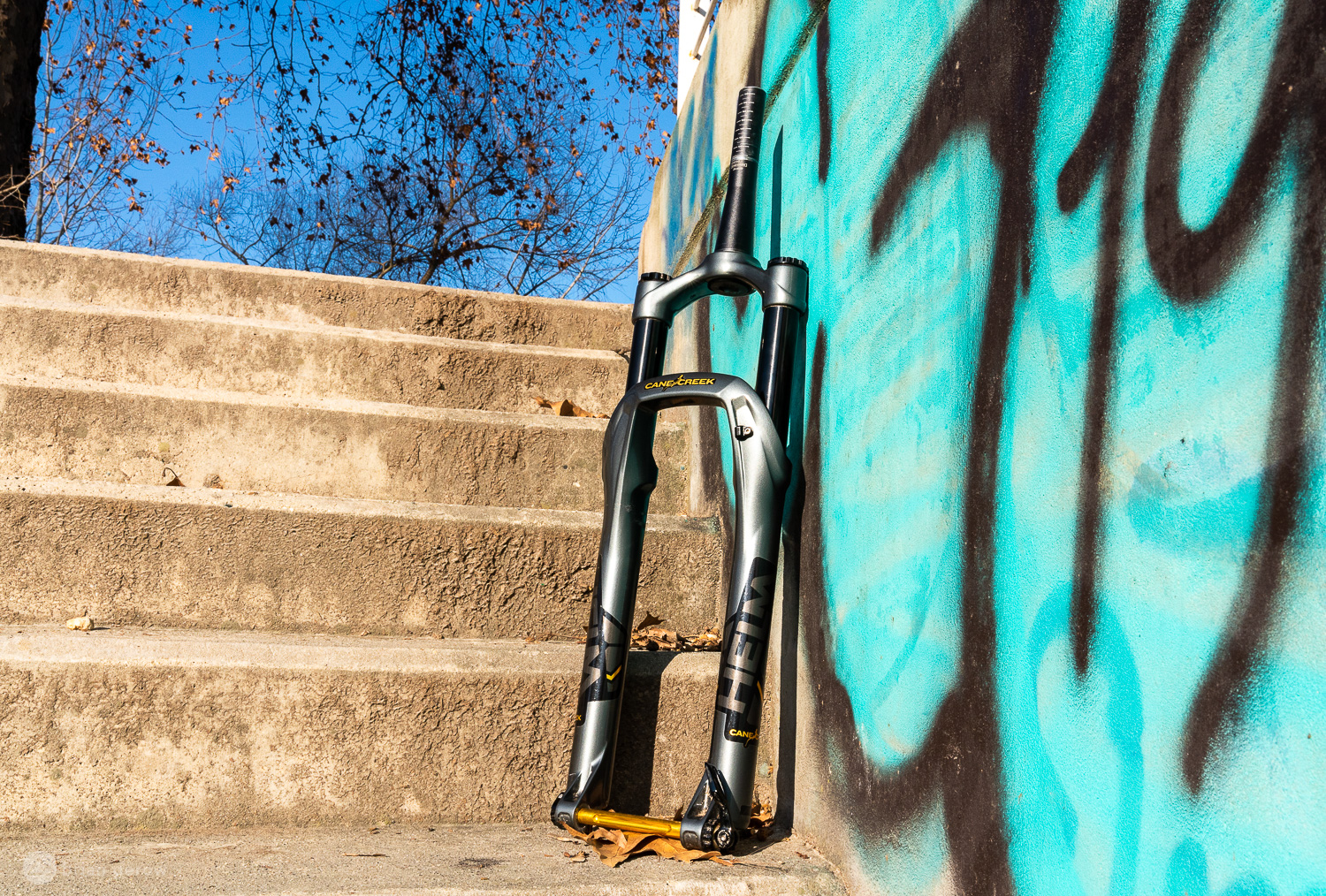
I recently worked with my buddy Chris to pimp out his 2010 Fox 40 to 2012 specs and it was a big success. Well, Fox decided to send down a brand new 2012 Fox 40 FIT RC2 for us to compare and review as well.

I was pretty stoked to give the 2012 Fox 40 a thrashing after fixing up the 2010. The new 40 incorporates all of the prior knowledge that Fox has gleaned from their other forks into a beautiful 6.81 pound package.

Intended for serious downhill service, the 40 is not for the budget-minded rider. Rather, the 40 is intended for the person who puts a premium on performance. With riders like Aaron Gwin running the 40 and winning world championships on it, I am sure we can all agree that it is definitely race-proven.

Specs

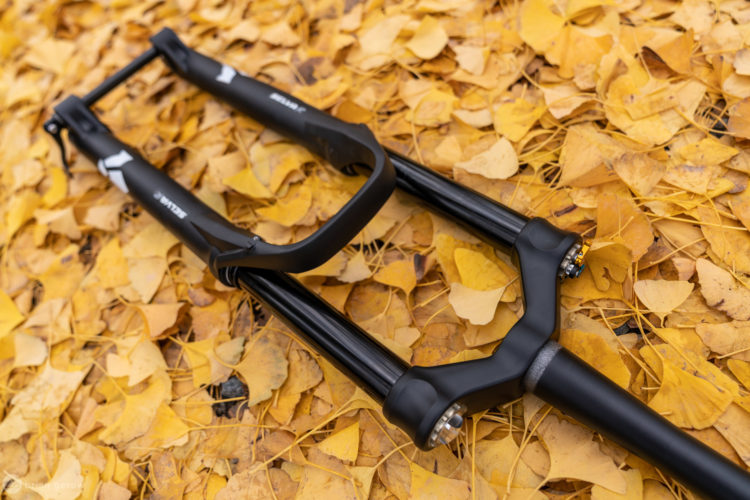
The 2012 Fox 40 comes in either white or black diamond (a slightly metallic black), with a 1 1/8 steering tube and a full 8″ (203mm) of travel. The fork travel can be reduced by changing up the shim height on the coil side in 1/2 inch (12mm) increments, potentially dropping it all the way down to 6.5″ (165mm) of travel.

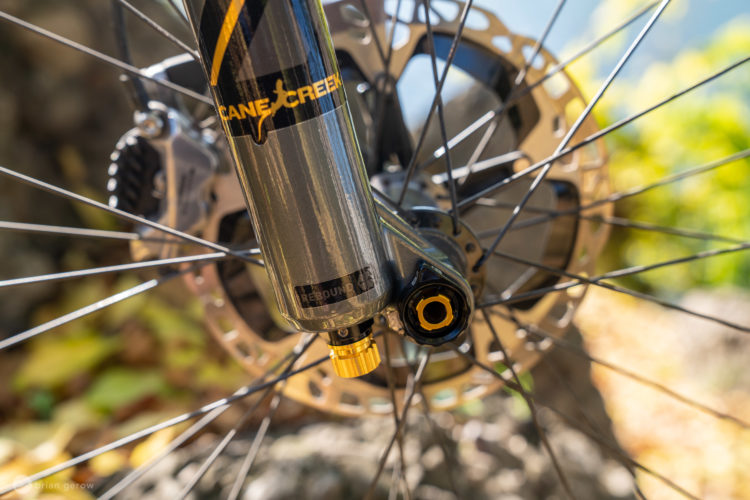
As I previously mentioned on the Pimp My 40 article, this 40 comes with all the goodies: Kashima coated stanchions and low friction SKF seals are standard. On the spring side of things, a standard titanium coil (blue for 150-180lb) comes installed, and two extra steel coils (purple and green) are provided if you’re on the lighter or heavier end of the scale.

Dampening is handled by the new inverted FIT damper, which I have already had experience with. The damper takes care of high and low speed compression (up top) and rebound (down at the axle), which makes it easier for a rider to tune the bike. The FIT damper has been in existence since 2005, but this time around Fox re-engineered it by inverting it and changing up the controls, which effectively kills two birds with one stone.

For starters, the inverted damper removes un-sprung mass from around the axle, so that it is now supported by the spring. The second advantage is the improved placement of the compression dials. Previous versions had the compression dials at the axle, which made changing settings on the fly impossible. One would have to stop completely, dismount, and remove the protective cover in order to access the controls.

With the new damper there is also a reduction in internal friction, which further improves damper sensitivity. This is accomplished by low friction seals and a new bladder design.

Installation

Installing the Fox 40 requires a few tools:

  • Saw guide
  • Hacksaw
  • Measuring tape
  • Headset press (if this is a new installation)
  • Star nut tool
  • 4, 5, and 6mm hex keys
  • Torque wrench

Installation of a dual-crown fork requires good measuring skills, correct tools, and a strong mechanical background. If you do not have all of these skills then just leave this job to a bike shop… there’s no shame in that. If you do have all of the aforementioned skills and want to do it on your own, here’s how:

Start off by installing the bearing cups in the frame with the headset press.

Follow that by installing the lower race on the fork (be careful not to damage the steering tube in any way).

Once the race and cups are installed, remove the upper crown from the fork using the 5mm hex tool.

Measure the head tube, and add the stack height of the headset. On the Fox 40 you must have a minimum stack height of 105mm and no greater than 166.8mm. If you fall on the short side, you’re adding spacers between the upper crown and headset. If you’re on the tall side, you need a shorter headset.

Install the fork, complete with bearings and spacers. Some people who run a direct-mount stem have the steering tube cut flush, as is the case in my situation. If you’re of like mind, place a mark on the steering tube where the top of the crown meets the steering tube. Remove the fork and then cut the steering tube 3mm shorter. It is critical that you get this right: anything greater than that gap, and you’re replacing the steering tube (measure twice, cut once).

Use a saw guide to cut the steering tube, making sure that you remove all the burs on the inside and outside of the tube. Install the star nut using the correct tool at a depth of 4-10mm.

Install the fork with all the spacers as you had it when you set it up the first time. Adjust the star nut tension to about 1.6Nm.

Once the fork is attached to the bike, installation is pretty much the same as all other forks. Installation of the stem, bars, and brakes is covered in this article. For more information, check out the Fox owner’s manual.

Setting up the fork does take a bit of time, but it is well-worth the trouble. You can check out our previous Pimp My 40 article for more information, but the procedure is essentially the same.

Start by setting up the sag, dialing it a turn or two on the left hand dial until you have 25-30% sag. After that, set your high speed compression, low speed compression, and rebound. We used the settings from our previous tests as a starting point (11 HSC, 12LSC, 10R clicks) and found them to be bang-on. In my case, I added +4 HSC and +2 Rebound and it worked great.

Review

The performance of the Fox 40 is tough to beat: the small bump sensitivity is right on par with other excellent forks such as the Dorado Pro. Like the Dorado, I found that the new 40 tracks wonderfully, even if the ground is full of ruts and roots.

The overall reduction in stiction is noticeable when doing back-to-back runs, compared to 2011 or older models without the Kashima coating and SKF seals. I felt that the wheel spent more time tracking the terrain than clipping objects.

On the rougher end of things like the bigger hits and gnarly square-edged rocks, the 40 exceeded my expectations. The 40mm stanchions really made sure that everything stayed straight. There was no hint of flex in the system, even glancing off rocks and roots.

The mastery over the front wheel that the 40 provides will be very hard to beat. Once the fork was tuned correctly, I didn’t notice any negative effects from either the compression or rebound controls. I loved the control layout with the compression dial up top and the rebound below. I also like how the dials on the Fox 40 have a very positive “click” to them, which didn’t leave me wondering if I had actually made a change or not.

Throughout the entire testing period the 40 worked flawlessly without a single issue.

To make this the ultimate fork, I would like to see independent rebound controls for both high and low-speed rebound.  At this level, it would be nice to have the ability to further tune the fork rather than compromise. I felt that shredding stuff like rock gardens with intermittent roller sections taxed the single rebound setting.

Being a bit of a weight weenie, I would also love to see a bit of weight removed, bringing the fork closer to 6.0 lbs. I’m not sure if that would mean a compromise in stiffness (which I love), or the removal of a coil spring replaced with air (which might change the feel of the spring).

Bottom Line

This fork, complete with the new FIT RC2 damper, works flawlessly and will be hard to beat.

MSRP: $1,600.

I would like to thank the folks at Fox for sending down the 40 for a review.

2012 DH Bike Build: Installing the Headset and Fork

Monday, December 19th, 2011

This is the first in a series of how-to articles based on my 2012 DH bike build, the Santa Cruz V-10.

Headset Installation

When it came time to select a headset, I decided to go with an AngleSet unit from Cane Creek to slacken the V-10 headtube angle by half a degree. Fortunately Cane Creek has great instructional videos on their website which made the process fairly simple. Before getting started, make sure to clean and inspect your frame and parts to verify that everything is ready to go. Use a proper headset press and line up the headset markings so the unit is centered on your frame; otherwise you’ll end up with wonky steering. Also pay attention to the direction of your AngleSet install: with the thick wall pointing forward you’ll decrease your headtube angle, while pointing the thin wall forward will increase your angle. Either way is acceptable, it just depends on your goal.

Seeing that this is somewhat difficult and requires tools you may not have, take it to a pro to do it for you (this should be an inexpensive procedure at most shops).

Installing a Fork

Fork installation is next. Again, if you’re not comfortable cutting a steering tube, or if you just don’t have the gear, be sure to visit a bike shop. For those of you who do have the gear (steering tube guide, lower race installation tool, hack saw, files and deburring tools), the procedure is pretty straightforward. Start off by installing the lower race with something like the Park CRS#1 setting tool. Once that is in place, the bearing and headset gimbal goes next.

Carefully feed the fork through the head tube (you have have the upper fork crown off for the moment). Then place the upper gimbal, bearing, and compression ring in, followed by the top bearing cover. Some people want a bit higher positioned bar, so follow the manufacturer’s recommendations as to how far you can space your upper and lower crowns (found in the installation guide of all forks). Install the upper crown, and place a mark indicating the top of the crown or where you want to cut – a minimum of 2mm above the top of the upper crown is usually recommended. Once you do choose to cut the steerer, use either a pipe cutter or a tool like the Park SG-6 saw guide and hack saw. Finish the cut by deburring it and then installing the star nut with a setting tool.

Now, reassemble the front end with spacers. Double check the work and check the steering once again. Make sure there is enough tension that the fork has no play, but doesn’t feel tight. Once you have the right tension on the bearings, tighten the upper crown down followed by each of the stanchion bolts. Cane Creek has specific instructions found on their website showing how to correctly install the AngleSet races and gimbals, so if you’re planing on using an Angleset headset, I highly advise that you watch that video before getting started.

Next up: Installing the drivetrain.

2012 Fox 32 Talas 150 FIT RLC Review

Wednesday, November 9th, 2011

Fox has revamped their entire lineup for the 2012 production year. As a part of this revamp Fox has delineated the lines between their products so that you and I can understand them a bit better. The top-tier Factory line is where you can find the Talas 150 FIT RLC and all the latest and greatest technology by FOX. The mid-level gear is under the Performance category, using conventional coatings on the components and a slightly simplified damper. Finally, the Evolution line features high-quality entry-level forks that are priced for people looking for true quality at a real bargain.

Features

The 2012 Talas is truly something else… “revamp” doesn’t even begin to cover the advancements! For starters, the Talas features the new Kashima coating on the stanchions. To assure you that you got the real deal, the stanchions are now printed with a genuine Kashima coat logo, so that you and all of your friends know it! Kashima is a very low friction hard coating on the stanchions that is designed to extend the service life as well as provide a super low friction surface for the seals and bushings to ride on.

After my 1 1/8″ steering tube was cut to size (7 7/8″ or 200 mm  in length), the Talas weighed in at 3.8lb – pretty respectable for a fork with 5.9″ (150 mm) of travel when extended. The Talas is offered in both 9mm and 15mm QR configurations, but truthfully a fork with this much travel should really be run with the 15QR. If you’re still sitting on the fence thinking about going to 15QR, just stop thinking and go for it.

The last Fox 32 fork I reviewed was the 2010 32 Float 150. At that time it had the non-FIT damper, but this time around the Talas 32 runs a FIT damper cartridge. That in itself is a great feature to have on a fork. The FIT (Fox Isolated Technology) essentially runs a damper inverted with the single walled bladder holding all the suspension fluid. This prevents aeration (the production of tiny air bubbles) and improves the overall performance of the fork. First introduced back in 2005 on the 36 and 40 models in the RC2 dampers, the 32 FIT has benefited from all that development to now provide a 32 version with as little internal friction as possible.

Another big benefit that comes from inverting the damper is the location of the dials. Up top on the damper cartridge you have the low speed compression control, the lock-out adjust, and the lock-out lever. The rebound knob is located down below on the bottom of the fork leg, which makes more sense as the rebound setting is something that is changed less frequently, primarily only when tuning. The TALAS 2-step lever is located on the left leg, and in the middle of the lever is the rather stealthy air valve.

Installation

Installation of the Talas 32 150 RLC should only be attempted if you have the proper tools. With a price of about $880-$895 (depending on steering tube), you don’t want to screw things up and cut the steering tube too short. For this job you will need:

  • Threadless saw guide
  • Hacksaw
  • Vise or stable bike stand
  • Tape measure
  • Lower race tool (length of aluminum pipe which fits over the lower race)
  • Star nut tool
  • Torque wrench
  • Hex Keys

Begin the installation by removing your existing fork, being careful not to damage the brakes, shifters, or anything else you need to reuse. Once the old fork is off the bike, carefully remove the lower race and then measure the steering tube length. The measurement is taken from the face of the fork where the race fits to the end of the tube (be sure to check out our fork installation guide).

Once everything is installed it literally takes 5 minutes to set up the fork. I started setting sag by placing the fork at its 150 mm length and then playing with the pressure until I got 20% sag using 90 psi in the air spring. I ended up setting the fork with 4 clicks from soft on rebound, 10 clicks on the lock out, and 7 from soft for compression. I found that this combo worked great for the majority of terrain that I have ridden around Southern Ontario.

The Test

So what does Ontario offer? Well, depending on where you ride, there is soft, loamy terrain, slate, and some really rocky areas. It is definitely a great mixed-bag of terrain that is perfect for testing out any suspension.

I used the Talas on my 5.5″ Opus Crate, which is my go fast(ish) trail bike, so I use it for a variety of conditions. I have used the fork on step down drops of 6ft ± with smooth transitions, fast rolling terrain, and technical rocky sections. The Talas hasn’t let me down in any of those conditions.

I found that once I had tuned the fork it was almost a set-and-forget situation. Once the settings for compression and rebound were dialed in, the damper was so effective at keeping me in a good riding position that, aside from a few long climbs, I almost never used the lock-out. In spite of that, the lock-out is easy to get to with or without gloves.

On the technical climbs (usually the rocky ones) the Talas adjustments come into play nicely. Dropping the travel down from 150 mm to 120 mm steepens the head angle and lowers the center of gravity a bit more, allowing for a better position while climbing. Once the climb is over, the control knob on the Talas’s side is, again, easy to get to with or without gloves. Just remember to lean back a bit or cycle the fork to get the bike back into full travel.

The inverted FIT damper with the compression knobs up top, like its bigger cousin the 36 FIT, makes a lot of sense. I find that I tend to play around with the compression much more than rebound, so having the controls up top allows me to access it easily if I have to.

Based on my experience riding with the Talas, and having tested many forks in the past, I think that the 2012 Fox 32 Talas 150 FIT RLC provides superior performance! The fork offered good control over both the small bumps as well as the bigger hits… just what a fork like this is designed to do. The Kashima and low friction seals make a huge difference over older, non-Kashima coated forks. And the 15QR makes for hair-splitting precision steering, even when glancing off rocks. “Control over the wheel” should be the mantra here.

The buttery feeling of zero stiction, the precision tracking from the improved stiffness in the fork lowers due to the 15QR, and the positive click feel to the controls all enhance the performance and repeatability of this fork. But most importantly, take all the tech away, and what you have is a tool to enhance your ride that makes itself known to the rider.

The 32 Talas 150 FIT RLC is listed at $895 MSRP, though some places may sell them a little bit less. Check out Fox for more information and stay tuned for a write up on the RP23–coming soon!

I would like to thank Fox for sending down the Talas for review.

Fox 40 “Pimp my Fork”: How to Upgrade Your MTB Ride

Tuesday, September 20th, 2011

Not everyone can afford the latest and greatest all the time. But if you find that you’re in need of a rebuild on your older 2005-2008 or 2009-2011 Fox 40 and want the best Fox has to offer, have I got news for you!  Fox was cool enough to contact me to see if I wanted to pimp someone’s 40 for them. One of my good riding buddies happened to have popped the diaphragm on his 2010 fork after one too many flat landings, making him the perfect candidate for an upgrade.

After considerable riding time, all Fox 40 forks start to lose plushness and exhibit increased stiction which affects sensitivity and increases harshness. This can be due to contamination of the fluids and minor loss of lube over time, not to mention the wear associated with thousands of cycles of compression and rebound. Needless to say, my buddy Chris was super stoked for the pimped out parts!

With an upgraded inverted cartridge, Chris is getting a host of improvements, the most obvious of which is the repositioning of the compression knobs (now on top). Internally the cartridge is more reliable which reduces the chance of bladder cap bending and bladder blow outs.

Performance-wise the new cartridge puts the weight of the oil and cartridge body on the top of the fork which reduces sprung weight. Because of the new placement of these parts, the bump force does not need to overcome that weight to start absorbing the actual bump. This improves fork sensitivity.

For this task the following FOX parts must be ordered:

2005-2008 40′s: 820-08-126-kit  Service Set: Inverted 40 RC2 05-08 Retro Cartridge Assy Complete
2009-2012 40′s: 820-08-092-kit Service Set: 2011 40 RC2 Cartridge Assy Complete ($450)
SKF 40 seals part# 803-00-616 Info to pass on below. ($35.00)
2005-2008 40′s: 208-03-056 Kashima Stanchion tubes x2 ($300 for a set of two)
2009-2012 4o’s:  208-03-056 Kashima Stanchion tubes x2 ($300 for a set of two)
Fox Float fluid

And here’s the tool list you’ll need for the job:

32mm 6pt socket
1.5,2,3,4,5,6,7,8,10mm Hex key set.
10mm deep socket
15mm open socket
7,12,15,16mm wrench
10-18mm cone wrenches (thin)
13,14mm crowfoot
Pick
Plastic hammer
Screwdriver
Torque wrench
Extensions
Graduated liquid container
20cc syringe
Cleaning solution
Micro towel

I would also highly recommend a flashlight and a repair stand to do the work on.

Start off the job by clearing out a work area and have all your supplies with you. Safety glasses would be a good idea, especially when dealing with fluids and cleaners.

First, remove the front wheel and brake. Carefully remove the 4 pinch bolts on the axle using a 5mm hex key. The caliper follows next with the same 5mm hex key; remove the cable guide using a 2.5mm hex key and re-mount the guide (it’s small and can easily be misplaced).

At this point there should be nothing attached to the lower assembly so it is safe to remove the stanchions from the upper and lower crowns. Loosen the six bolts that hold the upper and lower crown assembly to the stanchions using a 5mm hex key. Once they are all loose, slide the stanchions from the upper and lower crown. If you find them to be a bit snug, use a brake tool (those little plastic spacers that people usually discard) and tap them in the pinch space (trust me it works great). The stanchions should slide out very easily. Just remember to catch the two bumpers and more importantly, remember to put them back.

Now that the fork is removed, it needs a good cleaning before you go any further. You don’t want any contamination to enter the fork when working so a good cleaning product like Bike Super Wash from Finishline should do the trick. Use an old tooth brush and get into the hard-to-reach spots around the lower assembly to get all the grime that may have collected. After drying everything with a lint-free cloth, release any spring tension on the coil side by backing out the the pre-load.

Place the spring stanchion in your bike stand and make sure you’re not scratching anything (wrap the stanchion once with a cloth). Since you’re replacing both stanchions and the damper cartridge you only need the guts out of the spring side. Using the 32mm 6pt socket, remove the top cap (counter clockwise). Note how many spacers were placed directly under the top cap and use a pick to pull out the damper spring.

On the bottom of the fork use a 6pt 1omm socket and loosen the bolt that holds the plunger shaft about 3 threads, then give it a tap or two with a soft face hammer to loosen it up. Get ready to catch the 40ml of oil that will drain out from the fork lowers.

After the fluid drains, set the lowers aside and wipe down the bottom half of the spring side.Using a pick and small screwdriver (or second pick), carefully remove the spring clip that holds the plunger shaft assembly in place. I use the second screwdriver to pry the spring out of the groove while the pick rotates around moving the spring clip. Once it is off, save the plunger assembly and spring clip.

Place the new stanchion in the stand carefully (again wrapped with cloth or the packaging material that it came in) groove side up first. Install the plunger assembly and spring clip. The clip should go in easily – just carefully work it in with a circular motion using the pick as a guide. Turn the stanchion thread side up and install the spring and spacers (remembering the order in which they were removed). Then install the top adjuster assembly. Us a bit of Fox Float fluid on the O-ring to prevent it from binding. Torque down the top cap to 24 Nm and set aside for final assembly.

With the remainder of the fork (old damper cartridge and lowers), you now can place the damper side of the stanchion in the repair stand.

Remove the protective cover from the compression tuning knobs and remove them using a 2.5mm hex key. After that, use a 15mm deep socket to loosen the bottom nut.

With the nut loosened about 3 threads, reinstall the cover and tap that with a soft face hammer until the damper shaft comes loose (get ready to catch the fluid). There will be about 40ml of fluid in that space that will need to be caught before you can separate everything. Remove the nut fully and you’re done with the damper unit.

Clean up the fork lowers using a bike cleaning spray and remove any residue. Once clean you can now proceed by removing the seals and foam O-rings. I use a pry bar (basically a wide screwdriver) covered in cloth to protect the finish of the fork.

After a bit more cleaning I soak the O-rings in Float fluid and carefully place them in the fork, followed by the new low-friction seal. To install the seal I use a bottom bracket tool that happens to fit snugly around the seal without damaging the seal itself. The most important thing is to avoid bending or physically touching the seal lip and spring. You could even use a PVC tube of close diameter here. Whichever method you use, be sure the seals go in as straight as possible.

With the new damper cartridge, remove the top screw that holds the two compression adjusters, and set it aside temporarily (do not tip it over or that small detent ball in the photo above will drop out). Remove the lower cap and the red rebound knob using a 2.5mm hex key. Then apply a light coating of Fox Float fluid to the damper cartridge O-ring. Thread the cartridge into the new Kashima-coated stanchion all the way down (don’t worry about torque yet). Place the assembled unit in a bike stand (protecting the coating with a rag or packaging material), and use the 32mm 6pt socket to torque the cap to 24 Nm. Install the adjusters and single tapered bolt. The adjusters are indexed so be careful to match things up – the single tapered bolt uses 1.5 Nm max, so use caution.

At this point you should have two complete stanchions and a lower crown assembly with new seals. Install the damper cartridge on the right side (the arch of the fork is forward) and the spring side stanchion on the left. With both ends it is critical to carefully install each stanchion with a twisting motion, so that you do not fold the lip of the seal. A bit of Fox Float fluid on the seal itself and the stanchion will work great at eliminating any chance of the seal grabbing.

Once each one is in I temporarily place the bottom nuts in place until I can fix the whole unit on the bike. With a friend and those plastic brake shims installed, carefully reinstall the stanchions back into the fork crowns. Now remember to slide the frame bumpers on before sliding the stanchion into the upper fork crown. At this point you can also feed your cabling as well. Once you have the stanchions in place, remove the shims and line up the stanchions.

This is a good time to use a quality measuring tool to get both sides in place at the right heights. By adjusting the height you can also slightly adjust the steering angle. With a near-flush stanchion to the top crown you have a slightly shallower head angle for more stability at higher speeds. With 10mm of stanchions over the deck of the upper crown you have a steeper head angle which is better for tighter situations. Torque the bolts to 7.28 Nm and while you’re there, set the bumpers and double check the torque on the adjuster caps.

Turn the bike and fork upside down and fill each leg with 50ml of 10wt Fox green suspension fluid or equivalent. Then place the new washers supplied with the seals and torque the bottom nuts to 5.6Nm. Lastly, install the red rebound knob using a 2.5mm hex key.

With the bike upright, install your wheel and front brake. Remember to torque all the bolts and do a once-around check to make sure you didn’t miss anything.

Was all this work worth it? From the very first time we compressed the chamber we noticed a massive change in the fork. Talk about buttery. I personally hate using food as an analogy for bike performance but.. buttery smooth it is. My good buddy Chris ended up taking his bike literally from my shop at home to a Pennsylvania bike park within 24 hours.

Here’s what Chris has to say about the upgrades:

The test venue for the fork upgrade was Seven Springs Bike Park located just outside of Sommerset, Pennsylvannia.  (The park) has a diverse selection of trails from the ever so fun “Aline” type trail aka “007″ to faster rocky tech trails such as “EC” designed by top rider Eric Carter, to some pretty gnar trails such as “Frankenstein” which was littered with huge rock gardens and decent sized rock drops.

Before the first ride, the high and low speed compression knobs were set in the middle positions at 11 of 22 and 13 of 26 clicks respectively. I normally run with only two to three clicks of preload which is just enough to make sure the spring is not loose. Rebound to me is the hardest setting to get “dialed” as it should be fast for bashing through rocks without pack-up but slow enough to cushion big hits without bucking you off of your bike like a wild horse after landing something big.  The best starting point for rebound is in the center position (10 out of 20 clicks).

The first trail I rode was a perfect test for the fork which was a flowy trail called 007 with tons of jumps and big berms and even a few rock sections.   This trail was great for getting a feel for all aspects of the fork set-up.

During the first run of the day I totally forgot about the new fork by the end of the trail.  It felt so good that I got lost in the moment and joy of riding.  Once the utter awe of amazement wore off I took a few more runs down 007 paying more attention to the fork settings and honestly the fork was set up pretty bang on for the most part and there (were) only a few things to slightly adjust.

The high speed compression was set a bit soft with the bike slightly diving into the front travel a bit too much on rougher landings and drops. After a few more test runs I was confident (in) my observations and I cranked the high speed dampening up maybe 4-5 clicks which now was set at (14 out of 22). After getting the high speed compression set, adjusted, and tested out for a few runs I felt as if I could use an ever so slight increase in response from the rebound. 3 clicks faster seemed to do the trick (so now 13 out of 20 clicks towards fast rebound).  The low speed compression was pretty bang on in the center position. I tried adding a few clicks of dampening from the center, as well as taking a few clicks off but I really liked the feel of the fork with it set exactly in the center position (13 out of 26 clicks)

One thing I really liked about the 2012 fork parts compared with the 2010 (is) the revised damper cartridge. I find that I like to adjust my high and low speed compression far more often than my rebound. Riding at different places often times requires slightly different compression settings  depending upon the terrain.  On this version of the fork the high and low speed knobs are located right at the top of the stanchion which makes adjustment an ease.  The knobs are buttery smooth to turn and the clicks are very pronounced.

Thanks to the folks at FOX for sending up the parts for the modifications.

Upgrading Your MTB Suspension Fork

Tuesday, August 23rd, 2011

People frequently come to the Singletracks forums looking for guidance on mountain bike fork upgrades.

Will it fit my bike? Tapered headset? How much travel? Disc or V-brake compatible? QR, 15mm, 20mm thru-axle? How much should I spend? What brand? What on earth is a Terralogic?

These are all variables that can come up when selecting a replacement fork and this guide will attempt to make sense of it all.

Starting with what will fit on your bike is a great way to quickly narrow down the field. Here are several key measurements to consider.

Headset: there are basically three headsets commonly found on mountain bikes. Older bike models have what’s call a threaded headset with a ‘quill‘ type stem. A bike this old is not a good candidate for a fork upgrade, and a new bike would be a better investment. Among modern threadless headsets, there is the more common 1 1/8″ model, and the newer 1 1/2″ to 1 1/8″ tapered version. If you have a standard 1 1/8″ you cannot use a fork with a tapered steerer. If you have a tapered headset, you can use a fork with a standard steerer, via an adapter, but you will lose the extra stiffness for which the tapered setup was created.

Steerer length: Different bikes have different head tube lengths. If you get a fork that has had the steerer tube cut too short for your head tube, you are screwed. You can measure the outside length of your head tube as a shopping guide, or remove your current fork for a precise measurement. It’s ok to get one with a longer or even uncut steerer, as it is pretty easy to get it cut down to the right length.

Travel: Many people consider a fork upgrade because they want to increase their front travel. This is a very good idea, within reason. Bikes are designed with an overall geometry that takes the fork length and travel into account. Going too tall, say from 80mm to 140mm, will result in a bike that wanders while climbing, corners poorly, and just feels wrong overall. A good rule of thumb is to stick within 20-25 millimeters of what your bike came with. For example, I upgraded my Specialized Rockhopper from a stock 80mm fork to a 100mm replacement. I also upgraded my Giant Trance from 100mm to 120mm. In both cases the bikes continued to handle as designed, and I got the extra travel I wanted for my riding style. Whatever you do, just make sure it doesn’t end up looking like this:

Now that you’re looking at a bunch of forks that will fit your steed, it’s time to think about options.

Coil or Air: Once you get out of the entry level stuff, most modern forks are either coil sprung or have air chambers that act as a spring. Coils springs compress with a linear response, which makes them ideal for extremely long travel downhill forks. On the downside, coil forks are typically heavier, and they are more difficult to tune for individual rider weight. Air springs are generally lighter, and they are easily adjusted for different rider weights by changing the air pressure. But unlike a coil spring, air does not exhibit linear compression. When air is compressed, the spring rate increases and the fork essentially feels stiffer. A LOT of research and design has gone into mitigating this effect and modern air forks deal with it pretty well.

Rebound, Lockout, Compression, and Travel Adjustment: Rebound is an adjustment of how quickly the fork returns after it has been compressed. Rebound that is too fast can make the fork feel bouncy and harsh. If it is too slow, repeated bumps will make the fork “pack down” and eventually bottom out altogether. Adjustable rebound is a must-have feature.

A lockout adjustment allows the suspension fork to be set to a nearly rigid setting. This can be handy for long fireroad or paved sections. The adjuster for this is typically on the top of the fork leg or attached to a remote on the handlebars. This is also a pretty basic feature and if you’re upgrading, you should look for it (I have a remote lockout and I love it).

Forks that have a compression adjustment allow you to set a different spring rate for slow speed vs. high speed bumps. It can be a pain to get dialed in, but it makes for the ultimate in smooth riding when set up properly.

On some high end models the travel amount can be quickly changed with an external adjuster. This can help create the ultimate do-it-all bike by allowing you to drop the travel for XC and climbing, bring it up a bit for all day riding, or max it out for sustained downhill. This feature is awesome, but it comes with a high price tag.

Brakes: If you have, or intend to get, disc brakes, your new fork must have tabs for mounting the caliper. If you have and want to keep your V-brakes, you will need the posts for attaching those. For a while now forks have been shipping with both, but lately many models have dropped the V-brake posts altogether and are disc only.

Wheel Compatibility: This is fairly straightforward, but does bear keeping in mind while fork shopping. If you plan to keep your front wheel, make sure to get a fork with the matching axle configuration. If you’re upgrading the wheels and fork together, just pay attention to the specs of each.

Cost: A lot of research has gone into modern suspension forks, and it is reflected in the prices. It’s not hard to drop around $1,000 on a decent fork with the options mentioned above. If that is out of your price range, take a look at what you really need for options and then focus on the middle of the product lines from the major brands. A decent fork with air springs, rebound and lockout can be had in the $250 – $500 price range. These will be a bit heavier, and won’t have the coolest features like low-speed compression adjustment, remote lockout or adjustable travel, but they will work well and hopefully make a nice upgrade over the original you’re replacing. Another trick is to look on eBay or even at your LBS for a “new take-off” model. This is essentially a brand new fork that for whatever reason was swapped off of a new bike when the buyer took delivery. For example, my Fox F32 120 RL Remote retailed for about $900, but I got it as a new take-off for $300 from a bike shop!

Major Brands: Suspension fork manufacturers have  come and gone over the years. The major brands these days are Fox, Rockshox, Marzocchi, Manitou and Magura. Fox and Rockshox own most of the market due to the innovation of their designs and their build quality. Marzocchi builds excellent long travel models for downhill and freeride, but lately their low end models tend to be, well, low end. They also have a somewhat confusing model line-up where the same model name can have wildly different features and pricing. Manitou revamped their product line several years ago in order to simplify the available choices and incorporate updated designs and materials. They still don’t have the market share of Fox or Rockshox, but they’re a respectable brand that’s worth checking out. Magura manufactures XC, racing, and all mountain forks and is somewhat of a niche brand. They are well regarded among those who own them, and you can occasionally score a really good deal on a used one due to lack of brand recognition.

Terralogic: This is a suspension design originally developed jointly by Fox and Specialized that uses a special valve to detect what the trail surface is like and automatically lock out or open up as needed. Dgaddis recently tested one and you can read more about it here.

Hopefully this has given you some solid guidelines to help you decide what you need in an upgraded fork so you can zero in on the one that has the features you want at a price that fits your budget. Happy shopping!

Syncros FL Carbon 29er Mountain Bike Fork Review

Wednesday, July 20th, 2011

Hey gram counters: how’d you like to shave a couple pounds off your 29er mountain bike with a single upgrade? After putting the Syncros FL Carbon 29er fork through its paces on the trail I’m ready to fill you in on the details, talk about performance, and award style points.

The Deets

The Syncros FL Carbon mountain bike fork weighs just 1.25 pounds (580 grams) compared to 3.5+ pounds for the lightest 29er suspension forks available. Heck, this fork still weighs about half what you’d expect from a rigid steel version! It’s not the lightest carbon 29er fork available but it’s pretty dang close (we’re talking grams).

Unlike other rigid carbon forks, the Syncros FL Carbon is full-on carbon fiber from the steerer to the crown to the drop outs and brake tabs. The crown and steerer assembly is a full monocoque which means it’s essentially built up as a single piece for exceptional strength and durability. In fact Syncros says there’s no rider weight limit for this fork – how’s that for strength confidence?

To some a rigid mountain bike fork might seem like a throwback but this fork features a completely modern design. Aside from the carbon construction, the Syncros Carbon FL fork plays nicely with fat tires (2.4+) and only works with disc brakes (truly old-school V-brake aficionados will need to look elsewhere). The brake mounts are International Standard (IS) so if you’re upgrading you may need to pick up the appropriate adapter. We’ve also heard there’s no maximum rotor size on the FL Carbon which would make it unique among rigid carbon 29er forks.

Another thing that makes the FL Carbon design unique is the offset (or rake): just 38mm. The offset is basically the distance between the center of the dropouts and the steering axis and is one of three factors that determine a bike’s “trail.” So, holding a bike’s head angle and tire diameter constant, a shorter offset increases trail which improves stability on the bike (but decreases handling precision). By comparison, Niner’s carbon fork has a 45mm offset while the XRR470 from DT Swiss has a 41mm offset.

On the Trail

It’s been a long time since I’ve put in serious saddle time on a rigid mountain bike – like 12 years. It’s hard to imagine a time when even the most entry level bike didn’t come with a squishy fork but believe it or not, it’s still possible to get rad on a rigid mountain bike! Though to be honest I was a little worried at first…

Ok, so here’s where the specs meet the trail and it all starts to make sense. The cool thing about carbon fiber is that designers can influence characteristics like stiffness and compliance based on the way the fibers are laid out. The upshot: I found the FL Carbon is tuned so it’s not overly harsh on the trail yet it’s still strong enough to stand up to serious abuse. Still, make no mistake – this is a stiff, rigid fork. After just a few rides I needed to re-tighten most of the bolts on my stem and bar attachments to eliminate all the chatter.

To the uninitiated, the thought of riding rigid sounds like torture but this is where this fork’s light weight saves the day. See, instead of plowing right over rocks and roots using a heavy suspension fork, I found the FL Carbon allowed me to finesse the trail more easily – speed hops and wheelies were nearly effortless. Granted, this takes more concentration and I was definitely slower than usual on the really techy stuff but I didn’t run into anything (stairs, rocks, etc.) I couldn’t handle.

Speaking of lower weight, as you can imagine this fork climbs like a dream. Not to state the obvious here but the FL Carbon is lightweight and doesn’t dive even a millimeter when I mash the pedals – seated or standing. This is where the rigid rider makes up time after picking slowly through the tech stuff!

My biggest gripe about the FL Carbon is the 9mm QR wheel mount option. Maybe I’m just spoiled after switching over to through-axle forks and wheels but the slight lateral flex on this fork feels a little strange. During the first few rides I was constantly stopping to make sure my QR skewer wasn’t loose because the front end felt like it had a minor quiver (for those who are still riding a traditional fork with standard QR mounts you won’t notice a thing.) Of course I can’t fault Syncros for this design decision – try to find a rigid 29er fork with a through-axle today and you’ll come up empty handed.

Still, the FL Carbon handles well, especially since there aren’t any springs getting in between the force you put into the handlebars and the reaction you get from the wheel. My MTB trackstands were never more crisp!

Style Points

The photos should really speak for themselves but what I like about the FL Carbon is that it looks like a mountain bike fork. Sure, there are rigid MTB forks out there that are more aerodynamic and shiny but to me those look more road than trail. By contrast the black matte finish on the FL Carbon looks like it belongs on a stealth fighter and on the trail this fork is my secret weapon.

The Verdict

If you’re looking for a way to save a lot of weight on your 29er without sacrificing nearly as much performance (or style!) as you might think, the Syncros FL Carbon is the way to go. At $499 MSRP the cost is comparable to a decent suspension fork and a good value for such a highly engineered component. Are you ready to get rigid?

Thanks to the folks at Syncros for providing the FL Carbon fork for review.

2011 Fox 36 Talas 180 FIT RC2 Review

Monday, June 13th, 2011

FOX is one of those companies that doesn’t stop tinkering. Every year for the past few years I have seen improvement upon improvement and this year is no exemption. The shiny new 2011 36 TALAS FIT RC2 180 is exactly what I am talking about, with a host of improvements and brand new features. In fact, this is the first year FOX has produced a much needed 180mm version of the fork.

Tech and Features

First, the most obvious features: a new lower leg assembly and Kashima coated stanchions. The upper crown and hidden longer stanchions aren’t as obvious but they’re equally important. FOX wanted to make sure the TALAS was as bullet-proof as possible so they added extensions below the axle in the lower housing to allow room for the stanchions under full compression. The thinking is they wanted to spread the bushings as far apart as possible to better manage twisting and torsional forces.

Each model in the RC2 lineup features an all-new FIT RC2 inverted damper for consistent damping performance and reliability. The new FIT RC2 damper lowers un-sprung weight which essentially allows the fork to react more quickly for better steering control. The internal single-wall bladder has been engineered to hold all the fluid and provides consistent, fade-free damping by preventing the fluid from aerating. The inverted design offers the same range of adjustability as standard but the compression adjusters have been moved to the top of the stanchion for convenience. The rebound control, which is a set-and-forget kind of item, is now located on the bottom of the fork.

The TALAS 36 180mm has an incredibly large amount of bushing overlap. A look at the new below-axle tube design give you a hint of what had to be done to create this extremely stiff chassis. The upshot is Fox offers the lowest axle-to-crown distance available in a 180 mm fork. The RC2 model pictured comes with Kashima coated stanchions which provides nearly stiction-free performance for quicker suspension response and improved durability (longer life). The two step adjustable travel on the new 36 TALAS, with its ergonomically-pleasing TALAS lever, makes it super easy (even with gloves on) to toggle between 180mm to 140mm of travel.

Installation

Installing the TALAS is pretty much like any other fork – just remember to measure twice and cut once. The tapered head tube can be cut with either a pipe cutter (with a fresh blade) or with a Park SG-6 Threadless Saw Guide and saw (my method of choice). Install the star nut and lower race and you’re pretty much good to go (always torque the bolts to the manufacturer’s recommendations).

Dialing it in

After the fork is installed on the bike it’s time to get things dialed in. As I mentioned before, the controls on the new TALAS are not the same as older units which speeds up the entire process. Remove the center dust cap on the left leg, making sure you’re at full travel, and set the pressure so you have 25-30% sag and that’s about it for the air spring. If for whatever reason the o-ring is missing, place a tie wrap to get your reference point. There should be about 45mm of sag. After dialing the sag I started working on compression and rebound settings. Keep in mind I am 200lb with gear, armor, and shoes so my pressure was set at 74 psi.

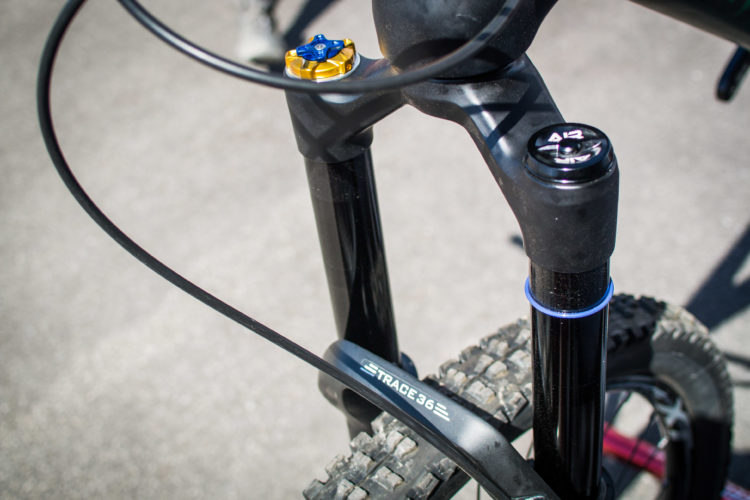
Low speed compression is set using the smaller inside blue knob on the right fork leg. When setting the low speed compression you’re looking for the balance point where you can hit the brakes or accelerate without having the front of your bike dive or excessively move. Ride hard and hit the brakes, noting how much the bike pitches forward. You don’t want the bike to blow through the travel but at the same time you don’t want the fork to stay rigid. Ultimately you need the fork to follow the trail as closely as possible. I ended up setting the LSC to 9 clicks from full (+).

For me the high speed compression (top outer blue knob) took more work to get just right and I ended up sessioning a few jumps to get it dialed in. Most riders will probably only need to set this once after finding a satisfactory amount of control. Adjust your high speed compression setting so the fork doesn’t blow through its entire travel too quickly when taking a big hit (active word here is BIG). Keep adding damping until you have a controlled fork compression without the fork eating up all its travel and bottoming out (stopping abruptly in its internal bump stop). You will know you have too much high speed compression when you feel your wrists compress and an uncomfortable amount of force travels through your body on impact. I ended up with 9 clicks from full (+) to get the HSC where I wanted it.

Rebound is the next setting to manipulate and you can also do this one on the trail. Here you’re looking for a controlled return to ride height after the fork compresses. You don’t want the fork to feel like it’s a bucking bronco, tossing you off the bike on return (too much rebound) nor do you want the fork to come up so slow that it feels like the fork is losing travel over multiple bumps (too little rebound). My rebound setting was smack in the middle at 9 clicks from full (+).

Performance on the trail

So how did the FOX TALAS 36 perform? For a 180mm fork I noticed the initial bit of travel is very plush and then ramps up a bit mid stroke to end stroke. This actually works great because it absorbs a lot of the small trail chatter and unevenness that could cause the wheels to slip. Speaking of slip, the huge stanchion and bushing overlap really keeps this fork stiff and tracking where you want it.

Tracking through rock gardens is cruise-missile-like – even those hard-to-traverse round rocks that are sometimes tossed in the trail “just for fun. Height adjustment also works flawlessly. At Blue Mountain I ran the fork on my Nelson back to back with my other DH rig and found I actually gained a second on some runs, probably due to the greater control I found in the corners. Compared to last year’s TALAS the controls are easier to use and the 40mm drop on the front for most bikes is just about right to make you want to tackle that climb rather than hike-a-bike.

Now if you’re looking to lose some weight with a buttery smooth outta-the-box kinda fork with adjustable travel from 180mm – 140mm of travel, then test ride the FOX TALAS today. And if you’re a female rider who wants a truly kick butt setup, the TALAS gives you a lightweight front end and 180mm of travel yet still turns very well. The great thing is that the TALAS comes in 4 flavors that just might fit the bill if you’re in the need of a fork that’s 160mm+ for your AM-DH bike. At $1090 MSRP this is not the cheapest option out there but it’s a solid purchase for sure.

Overall ratings (out of 10)

Tracking and steering 9.0
Rebound control 9.5
Compression control 8.5
Construction and quality 8.0
Trail worthy 1 For light XC, 10 For extreme FR/DH 9.5
Overall performance quality out of 10 9.0

I would like to thank FOX for sending out the TALAS for a review.

Syncros FL Carbon Mountain Bike Fork Preview

Monday, June 6th, 2011

We don’t post a lot of product review teasers here on singletracks but the Syncros FL Carbon Fork is particularly drool-worthy and we just couldn’t resist. The FL Carbon is an all-carbon 29er mountain bike fork that weighs 1 lb, 5 oz. according to our postage scale. And that’s before cutting the steerer to size!

I had the fork mounted on my Redline d660 just a few days ago and haven’t had a chance to ride it yet but I can tell you this: my 29er mountain bike now weighs just 2 lbs. more than my carbon fiber road bike. Ridic.

This is one of those forks you take into the bike shop and a crowd of customers and employees starts to gather around to gawk. The FL Carbon is a fork that looks like it belongs on a mountain bike unlike some of the other rigid carbon forks out there. Let’s just hope it doesn’t completely harsh the ride on the trail.

Stay tuned for the full review within a few weeks!

Rockshox Revelation RLT Ti Review

Friday, May 6th, 2011

It may come as a Revelation to some that RockShox has a solid line of trail forks for mountain bikes this year. While the company has always been well known for sleek XC-oriented forks, the trail-ready Revelation models are well positioned in today’s trail fork market. I’ll be reviewing the mid-level RLT Ti fork which sits just below the XX and World Cup models since, unfortunately for me, my bike doesn’t have a fancy tapered steering tube.  No need to worry though – the RLT Ti is a solid performer!

Specs and Configuration

The RLT is offered in a vast array of configurations: three travel options, a dual position option, axle choices (QR9, Maxle Lite 15, and Maxle Lite 20), and steering tube options. The axle choices in particular are great since it means you won’t need to get new wheels when you upgrade to this fork. For my trail bike I decided to go with the Maxle Lite 15 with the improved quick release for 2011. The latest version is a few grams lighter and offers an even stiffer, more solid feel on the bike. Add that to an already great steering platform and you’re ready for some real technical fun.

My RLT is the 150mm version with spacers for 110mm and 130mm travel set-ups. It’s also the Dual Air version which weighed in at less than 1700 grams once the steering tube was cut to the correct length. All told I shaved 170 grams off my previous set-up – not too shabby for a long-legged trail fork.

RockShox is able to keep weight low thanks to a hollow-forged 6061 T-6 aluminum crown, super stiff 32mm 7000 series stanchion tubes with low friction anodizing, and of course the power bulge built into the magnesium lowers. The best part: none of these weight savings come at the expense of overall strength or stiffness. The Dual Air system deserves a lot of credit for keeping things light and simple; for now Rockshox can claim to have the lightest dual air system available.

Installation

Installing and setting up the Revelation is really simple and if you have the tools to do the job, it should take about 30 minutes or less. If you don’t have the tools, have your LBS do this for you. To do the install correctly you will need:

Star nut installation tool
Park Threadless saw guide (or similar device)
Hack saw (use a new blade) and file
Crown race setting tool (piece of tubing that is slightly bigger than steerer)
Tape measure
Hammer and pry tool
Felt marker
4, 5, and 6mm allen wrenches
Torque wrench

The procedure is pretty simple: start by removing the old fork and slipping the lower crown race off the old fork carefully. Measure the extension on the steering tube and measure off the same amount on the new fork. Mark it using the saw guide and workbench vise; cut the excess steering tube off. Clean the sharp edges carefully with a file and install the star nut; then install the lower race. Follow that by installing the fork on the bike using the torque specs from RockShox and your brake manufacturer. As always, use a proper torque wrench to ensure you do not cause any damage to your fork or bike.

Set-up

Setting up the Revelation is a piece of cake. I used the air pressure guide on the fork leg as a baseline for setting the sag. I found I needed about 10psi more than indicated to get the correct amount of sag I wanted (20%) for my application with full gear on. The Revelation ships with BlackBox Motion control and Dual Flow Rebound. That being said,  there are external beginning stroke rebound, low speed compression, external floodgate, and lockout controls on this Revelation.

Before configuring other settings I like to bounce around for a while on a short easy ride to get things moving and broken in. Once I’ve done that I set the low speed compression by starting at full soft (about 4-5 clicks in) before adding clicks until I’m satisfied the front of the bike doesn’t dive excessively when I’m on the pedals or hitting the front brakes hard.

Once I have that down it’s time to get the rebound set up. At this point my only concern is with how the suspension reacts coming back from a hit. I start off nearly open (towards the rabbit) and add more resistance until the suspension comes back without feeling like the bike wants to toss me off. I know when I’ve gone too far if the fork “packs down” after multiple hits.

Finally, it’s time to get the Floodgate set. This setting is pretty easy to configure and it’s used mostly during climbing. The goal is to avoid the threshold point when seated and climbing (giving you a more stable platform for pedaling). The right setting will also balance out potential hits on the way up.

On the trail

I tested the Revelation through various types of terrain – everything from flat hardpack to rock gardens – and I found that the fork works very well. After setting everything up carefully, the Revelation uses the 150mm travel nicely with a bit of a progressive feel to it (I played with both air chambers to get what I wanted as a spring rate).

Running over rooted trails and rocks, the fork soaks up the harshness of all that but still offers up a ton of traction. A good running indicator of fork performance is that the fork should absorbs the harsh hits while tracking well around the terrain. The Revelation definitely delivers here. Even when there is a mix of inputs to the fork it manages to follow the terrain and react to braking and pedaling forces all at the same time. I guess all that engineering at RockShox paid off!

Now when the trails do get gnarly (drops of 2 – 5ft) the high-speed circuit does its job well. The fork goes through its full travel without feeling like it’s bottomed out and returns quickly to ride height. Now there are a few options available like a remote, but I found that the on trails I ride I rarely needed to use the lock out anyway. A big part of this is getting compression and rebound set-up correctly to maximize performance.

Here’s how I rate this fork on a 10 point scale (10 is best).

Tracking and steering 9.0
Rebound control 9.0
Compression control 9.0
Construction and quality 9.0
Trail-worthiness (1 for light XC, 10 for extreme FR/DH) 6.5
Overall performance quality 9.0

If you’re in the market for a long travel fork and love the idea of options (color, axle, remote or not, steering tube) then check out the new Revelation RLT Ti ($800 MSRP) . I’m sure once you get it set, you too will feel the benefits of a good quality fork on your trail ride.

I’d like to thank the crew at Rockshox for sending down the Revelation for review.

On Test: Fox F29 Terralogic Fork and WTB LaserDisc Trail 29

Friday, March 4th, 2011

I just received two very cool products to test and review: the 2011 Fox F29 Terralogic fork and a WTB LaserDisc Trail 29 wheelset.  In this post I’ll go over the technical nitty gritty of the products and what they promise to do.  There is a lot of technology and engineering in both the wheels and fork, so I’m just going to cover the basics.  After I have some time to thrash ride them, I’ll let you know if they deliver on those promises or not.  Okay, let’s get on with it!

Fox Racing Shox F29 Terralogic Fork

SPECS
Travel: 100mm (also available in an 80mm)
Dropout: 15QR (standard 9mm option also available; only the 100mm version has the 15QR option)
Steerer: Straight 1-1/8″
Weight: 1.88kg (uncut steerer, includes axle, brake hose guide, and star nut)
Damper: FIT
Other: Terralogic option; Kashima coated stanchions; adjustable rebound
MSRP: About $850-$910 depending on options

What does all that mean?  Let’s start with the FIT damper.  FIT is an acronym for Fox Isolated Technology.  It’s a cartridge style damper, meaning the oil is sealed inside a bladder, not free to move around inside the fork leg like an open bath damper.  The FIT damper uses less oil and is lighter and eliminates aeration (air bubbles in the oil).  All of this should mean a fork that works consistently even when it gets hot toward the bottom of a long gnarly downhill.

That gold Kashima coating on the stanchions is about a lot more than pretty looks.  It’s a Fox-exclusive coating that, compared to standard hard-anodized stanchions, is not only harder for more durability and scratch resistance, but also much smoother, for less friction.  There is some variation to the color of the coating, so any two forks may have different looks, and in fact the color can vary from one fork leg to another.  This coating is only available on aftermarket forks.

The 15QR thru-axle has been improved for 2011 over previous versions.  It’s now 21g lighter with no decrease in stiffness.  Compared to the standard 9mm QR axle, the 15QR thru-axle gives a much stiffer connection between fork legs, minimizing flex and improving steering precision.  Of course a thru-axle hub is required and these days many hub manufacturers sell thru-axle conversion kits so getting a new fork doesn’t necessarily mean needing a new front hub.  This will be my first experience with a thru-axle and I’m looking forward to seeing the difference for myself.

Now, lets talk about the main reason I’m excited about trying this fork: Terralogic.  Terralogic promises to give you the best qualities of both a rigid and suspension fork.  It allows you to set the fork so it stays rigid when subject to slow, or small, forces, but when the force exceeds a certain threshold the fork acts like a normal suspension fork, soaking up the bumps to let you ride faster and maintain traction.  That threshold is adjustable, with 15 different settings to choose from, and is intended to be a set-it-and-forget-it affair.

How does that translate to trail riding?  In theory, I should be able to get out of the saddle on climbs and hammer uphill while the fork stays locked out to give me maximum efficiency.  And when I start down the hill the fork will soak up whatever the trail throws at it.  And best of all – I won’t have to flip any levers or turn any dials while riding.  Just pedal and steer.

Once I put some miles on the fork I’ll let you know if it actually works as advertised and is worth the lofty price tag.  In the meantime, head over to the Fox website if you want more details on the fork.

WTB LaserDisc Trail 29 Wheels

SPECS
Front Hub: LaserDisc Lite, 15QR (9mm QR also available)
Rear Hub: LaserDisc Lite (single speed specific also available)
Rims: LaserDisc Trail 29er
Spokes: Butted 14/15 Gauge, Black
Rims: Alloy, Black
Weight: Front – 970g; Rear – 1130g* (including quick release)
MSRP: Front – $280; Rear – $400

The LaserDisc Trail 29 wheelset is WTB’s all around trail bike 29er wheelset.  WTB positions this wheelset as light enough for cross country racing but strong enough to stand up to aggressive trail riding. To me the build seems to focus a little more on strength and stiffness than it does low weight. The wheels have a very nice all black color scheme (other than the sticker pictured above); nice and low key, which I like.

The hubs are WTB’s own design and they keep the weight down with an aluminum shell, freehub body, and axles.  The bearings are stainless steel and the freehub features six dual-sided pawls for 12 points of engagement.  A singlespeed-specific rear wheel/hub is available, as is a standard quick release front wheel/hub.  The wheels are not designed for tubeless use.

The rims are WTB’s popular LaserDisc Trail 29er rims.  The 27mm width is on the wide side for typical XC use, and should work nicely with wider tires.  The rims are 32 hole, and do have eyelets.  The eyelets add some weight but should allow for higher spoke tension and a stiffer wheel build.  The rims also feature WTB’s patented I-Beam and Unbendium Bulge shapes, both of which increase strength and stiffness without adding excessive weight.

The spokes are, surprise, also WTB’s own design.  They are double butted to keep weight down, but are a little different from most spokes.  Most double butted spokes are 2.0mm at the J-bend and nipple where strength is needed most, and only 1.8mm in the middle.  But WTB’s spokes are 2.5mm at the J-bend to increase strength over a standard spoke.  The nipples are an aluminum alloy instead of brass to keep weight down.

I’m looking forward to trying these wheels since they’re pretty different from the wheelset I’ve been riding for the last year.  The WTB’s are heavier, but they have a wider rim and should be much stronger and stiffer.  But they are not tubeless ready, which is already a strike against them in my opinion.  I’ll ride them with tubes, and will probably try and convert them to tubeless as well.  I’ll let you know how it works!

Check out WTB’s website for more details.

*Note – On the WTB website the rear wheel weight is listed as 970g, which I think must by a typo, accidentally carried over from the front wheel specs.  The weight listed above (1130g) is what my wheel weighed on my Feedback Sports Alpine Digital Scale.  The front wheel matched the claimed weight exactly.

I would like to thank Fox and WTB for providing these products for review.

RockShox BoXXer World Cup Review

Friday, December 10th, 2010

Pssst – hey you on that DH bike – wanna drop some weight and increase performance on your rig? I though so. At 5.98lbs, the BoXXer WC is probably the lightest 200mm DH fork on the market today – the next closest contender I know of is the 6.4lb Manitou Dorado MRD – so you’re looking at a good half pound off that front end of yours. The weight savings alone are huge but there are many more refinements to be had with the Rock Shox World Cup BoXXer.

Let’s start with the outside of the fork and work our way in. The BoXXer is available in 4 colors this year: red, white, and black plus the new super cool Keronite finish. Keronite is basically a very hard ceramic finish that can be applied to aluminum, magnesium, and titanium. The process is similar to that of a plasma coating except it’s far more advanced and precise. The process actually works at a molecular level, changing the base material to a ceramic surface, resulting in a super hard surface with enhanced base material properties. Having had a few of my projects treated with Keronite, I can say it is simply amazing.

Other external changes include re-tooled knobs to save weight and new graphics with the World Cup championship colors. The familiar etched graphics on the stanchions and pressure chart on the fork leg are nice touches and help with sag set up on the go. The BoXXer features post mounts to increases the stiffness of the brake assembly over older IS standards; many of the newer brakes being produced are post mount compatible.

Internally the BoXXer has a host of new features over last year’s 2010 model. For one thing, RockShox put the fork under a microscope to reduce friction (something of a bother from last year’s model). The engineers looked at everything from seals to bushings and re-designed the damper cartridge and the Solo air spring assembly to eliminate friction points. RockShox kept the 35mm 7000 series aluminum stanchions, which are hard anodized for long life and lower friction (stiction), the lower magnesium legs with the power bulge, and of course the high performance Maxle Lite DH 20mm axle.

The re-worked Dual Flow adjustment (high – low speed rebound) and the tuned Mission Control DH valving (high-low speed compression) really perk up this fork for 2011. Although it takes a bit of time to set everything just right, the effort really pays off in the end. The re-worked valving truly changes how the fork behaves over fast, rough terrain and absorbs the larger features that you’ll find anywhere. The internals sport a totally upgraded Solo unit (which can be retro-fitted into the 2010 model, though not the Race version), but unfortunately the new damper won’t fit – sorry. I checked simply because I have a few friends who own the 2010 WC and they were interested in upgrading after riding my 2011 version.

Installing the BoXXer WC (1-1/8″ aluminum steering tube) was pretty easy – it’s just a matter of measuring twice and cutting once. As always, read the manual and torque the bolts in place with a quality torque wrench. Remember spacing between crowns must be 156mm ±2mm. The minimum the stanchion length is exposed on the top crown is 2mm so before cutting the steering tube (if you’re going with a direct mount stem) it must extend 2mm from the top of the upper crown. Other than that business, all is good.

Dialing it in

Setting up the BoXXer WC took a good solid day of riding plus a break-in period. I found the fork needed a little time to get everything seated and felling creamy smooth. With the BoXXer it’s important to follow the RockShox tuning recommendations to get the fork set up right – that is, unless you have your own world-cup tech on speed dial. Get the air spring pressure set first (sag) by jouncing the fork a few times to equalize the pressures in the positive and negative chambers. I found the BoXXer-specific pump to be great – the large air volume this pump delivers is helpful – otherwise you might be there all day with a standard shock pump.

Once the sag is set it’s time to configure the beginning stroke rebound dampening (first 25% of travel). This really should be done on the trail and not on the streets. Find a familiar section of trail and session it. Add one or two clicks at a time to the small knob on the bottom (hold the larger knob to keep it from turning). You want the fork to return fast, but not so fast that it stings the hands or feels like it’s going to toss you off the bike. Next, set the end stroke rebound (for coming off bigger hits) where the travel range goes from 25% to 100%. Again, you’re looking to avoid getting bucked off the bike. Too much of either the high or low speed rebound and you get what’s called packing down – basically losing more and more travel with every hit.

Now, set up the low and high speed compression. Low speed compression allows you to to balance trail sensitivity and fork dive – basically changing how the fork feels. Too much compression and the fork tends to skip over some of the bumps and feels very harsh; too little and the fork dives when hitting the brakes and cornering. Once you get the low speed set, dial in the high speed setting for big drops, rock gardens at speed, etc. The goal here is to get maximum control over the wheel. You don’t want the fork to blow though the travel on the big hits so add more compression until you get a controlled compression. Too much snaps the wrists back and stings; too little and it feels like the bike bogs down and gets wallowy.

The final setting is the end stroke adjuster which changes the volume of the air chamber during the fork’s last 20% of travel. Reducing the volume will ramp up the spring rate, yielding a more progressive feel. This is one of those settings that is totally subjective, depending on the rider. If I was going from a drop to flat I would add more end stroke (for my 200lb. weight I’d add about 4 turns).

Ok, even though some of this might sound more complicated than a NASA checklist, don’t worry. The tuning guide that RockShox includes is easy to follow and understand and Rockshox encourages you to play with the settings. I ended up downloading the guide and printing out a few of the “My Favorite Setting” charts to remember what I liked best during testing. All the controls were easy to use except the bottom out dial – I recommend having a 2.5mm allen key handy and being prepared to remove the air from the air spring to adjust it. I did take the knob off and added a tiny touch of synthetic lube to the seal before replacing it to see if that would help. This gave me marginal improvement and was really the only small issue I found with this fork.

Hitting the Trail

I installed the BoXXer WC on my Banshee Legend II and it definitely stepped up the Legend’s game. Once the fork was broken in I spent a bit of time re-setting the dials and had a really good time. The lightness of the fork really made it easy to control the bike and on low speed, technical rock gardens and general gnar I felt consistent control over my front wheel.

Taping the powerful 2011 Code brakes would cause almost any bike to dive like a submarine but I found with the compression set midway at 6 clicks and the low speed at 4 clicks, the fork struck a good balance between traction and control. Even on taxing rock gardens where the suspension travel got a real workout I still maintained perfect control over the bike without having it pack down underneath me. On rock gardens there’s always the chance of a glance causing the bike to slip sideways; some forks will twist in this situation. On the BoXXer I didn’t notice any flex – the bike always tracked where I wanted it to go.

Big hits with the BoXXer were just too fun. The lighter weight allowed me to move the bike a bit more without a lot of extra body effort. The lighter weight also seemed to increase performance of the bike as well. A lighter fork reduces sprung mass to a degree, particularly if the reduction in mass is on the fork lowers.

Overall the BoXXer WC works very well and any racer should be happy with this unit with little worry about maintenance. So my last two cents? Try 0ne out for yourself,  I’m sure you will be impressed. If you have a 2010 model and don’t want to fork out the cash for a new one, get yourself the air cartridge (fits WC and Team models only) for a nice performance boost.

Ok, so how much does this wonder of modern mountain bike technology cost? Well as far as world class forks are concerned, I can say the BoXXer is right in line at $1,700 MSRP. Now if that is a bit more than you can afford, test out the Team or Race versions. These forks are a bit heavier and feature a coil spring which can be more difficult to tune but are definitely worth a look.

A big thanks to Tyler Morland from RockShox for setting sending up the BoXXer WC for a review. Another thanks to my good friend Michael Chan for taking those snowy shots. Stay tuned for a write up on a few other exciting products from Rockshox as well as SRAM. Next up: the Rockshox Vivid Air.

Manitou Minute 29er Fork Review

Monday, November 22nd, 2010

As 29ers move beyond the world of XC and into all-mountain territory, the need for burlier, high performance suspension forks has quickly become apparent. While many manufacturers work just to get their XC forks down to fighting weight, Manitou has found a way to produce a lightweight, high performance fork that is just as comfortable zooming over rocks as it is flowing over hardpack. The Manitou Minute 29er suspension fork promises to take minutes off your regular course times because it’s lighter, more responsive, and more adjustable than other forks we’ve ridden. Plus, since it’s also designed for AM riding, the Minute 29er is as rugged and durable as it is good looking.

Lightweight

Manitou markets this fork as 50% XC, 50% AM so this portion of the review will mostly speak to the XC weight weenies out there (though who doesn’t want a lighter bike?). On paper the Minute 29er fork weighs in at 1740 grams (the 100mm version), about 100 grams lighter than the Reba SL that came with my bike.  The weight savings alone are significant but even more so when you consider the performance gains over a more XC-oriented fork like the Reba SL.

Weight savings come through a variety of design and manufacturing innovations, most notably Manitou’s proprietary MARS Air and Hollow Crown technologies. MARS Air essentially places a coil spring in series with an air chamber to provide creamy, “bottomless” travel while still taking advantage of lower weights and the adjustability of an air spring. Hollow Crown is exactly what it sounds like: Manitou has developed a process to remove unnecessary material from the Minute 29er crown while maintaining strength and durability. The crown is integrated into the one-piece casting and is made from lightweight magnesium for maximum durability and minimal weight.

Responsive

During my initial testing I have to admit I was a little frustrated with the 20mm Hex Lock through axle configuration, especially compared to the easygoing QR axle on my old fork. The extra time to remove the wheel and the hassle of tightening bolts seemed like a big step backward – that is, until I really started riding hard.  The Manitou Hex Lock through-axle stiffens the entire front end which felt great through fast turns (no wobble) and allowed me to pick through technical lines with predictable, pinpoint accuracy.

20mm hex Lock through axle. Blue rebound control knob, no tools required.

Aside from the stiffness produced by the through axle, the Minute 29er also features a unique reverse arch design that effectively shortens the distance from the dropouts to the arch. This gives the fork even more torsional stiffness and makes Manitou forks unique from others on the market. The upshot: every bit of force you put into turning the handlebars goes right to your front wheel.

Adjustable

One of the things that sets the Minute 29er fork apart from many strictly XC-oriented forks is the ability to fine tune preload, platform, and rebound.

Setting pre-load on the Minute 29er fork is easy – just consult the included sag chart to get a good baseline pressure setting (the air valve is conveniently located on top of the right stanchion). I found the recommended pressure gave me just the right amount of sag but you’ll want to double-check because every bike set-up is different.

The Absolute+ platform damper on the Minute 29er fork is, in a word, amazing. The selector allows you to choose from one of 6 settings on the easy-to-access dial atop the left stanchion and as element22 likes to say, it’s nice and “clicky.”  In the full open position you get plush, responsive suspension which is perfect for high speeds over everything from small bumps to medium drops. At the other end of the dial, with the damper locked out, you get efficient pedaling out of the saddle with zero braking dive, yet you still have insurance against unexpected abrupt hits.

During my hut-to-hut trip over the summer the Absolute damper came in super handy since the route was constantly changing from fire road descents to technical singletrack to punishing climbs. And since I was carrying a gear bag on my handlebars I was able to dial the travel precisely to avoid the buzz of my bag contacting the front tire.

Setting the rebound on the Minute 29er fork is a cinch and to be honest I haven’t had to fiddle with it too much. For fast, washboard trail riding it’s possible to set the rebound to return the fork more quickly; for lower speed steps and drops you can set the rebound to offer a more controlled return.

Durable


One of the big considerations I had when gearing up for my hut-to-hut trip this summer was durability and dependability on the trail. I ended up putting the Minute 29er on my bike about a month before the trip, not because it was lightweight (though it did save me a few grams) but because I felt like it could better withstand the increased weight and rocky, unforgiving terrain between Durango and Moab. So I wasn’t surprised at all that the fork held up flawlessly and didn’t need a single adjustment along the way.

At home I feel confident tackling technical trails at higher speeds because I know the Minute 29er is designed to mate with more aggressive all-mountain rigs. In fact, as I contemplate building up my first FS rig (shock!), the Minute 29er fork is at the top of my list thanks to its responsiveness and durability at high speeds on pockmarked trails.

Bottom Line

Manitou has managed to adapt the high performance Minute platform to work flawlessly with 29er geometry in a brilliant marriage of light weight and high quality. The Minute 29er fork ($599 MSRP, 30% off at JensonUSA right now) is a great choice for riders who enjoy aggressive cross-country and even all-mountain riding but don’t want to pay a weight penalty for the privilege. If you’re looking to take minutes off your best lap times on the race course or just the after-work-loop, upgrade your fork to the Minute. 29er.

Thanks to the folks at Manitou for providing the Minute 29er fork for review.


Site Map | Advertise | Partners | Contact Us | Terms | Privacy
Campground Reviews | Hiking Trails | Trail Running | Skiing / Snow Sports | Mountain Biking
Copyright 2012 Blue Spruce Ventures LLC | Atlanta, GA
singletracks.com is yet another slick Review App