singletracks is mountain biking
Sign In | Create Your Account | Site Map | Help  


WTB Bronson 2.3″ AM Tire Review

Friday, April 29th, 2011

The WTB Bronson 2.3″ AM tires are ready for action in a variety of terrain.  Weighing in at 810 grams, these tires feature a large number of relatively small, low-profile knobs along the center of the tire with prominent knobs along the edges for aggressive cornering. The Bronsons are also UST compatible for an easy tubeless setup if that’s your thing.

WTB Bronson

Photos taken shortly after installation.

Installation

My wheels aren’t set up for tubeless tires so I needed to run these as regular tires with tubes in them. As a result, I can’t speak on the ease or difficulty of tubeless installation. However, for a regular rim, these tires were pretty difficult to get on as they are UST tires. UST tires generally feature a heavier, tighter bead than your standard tire, making them more difficult to install on a regular rim.  Changing a flat with these is really a pain, but I suppose if I was running tubeless I wouldn’t have that problem! With a little perseverance and a couple of tire wrenches, though, you’ll do just fine.

My Experience With the Bronsons

Product reviews can certainly give you a better understanding of bike products and they can also aid in your decision making before a purchase. I read bike and product reviews online and in magazines all the time and in my experience reviews are more helpful for some product categories than for others.

In particular, bike tire reviews can be influenced by personal preference and are often fairly subjective compared to other bike part reviews. Part of the reason is that it’s difficult to separate raw tire performance from one of many other variables including trail conditions, bike set-up, and rider skills. Despite the subjective nature of MTB tire reviews there are definitely a few larger-scale topics that can be addressed so I’ll attempt to hit all of the prominent points.

Bronson

Where the Rubber Meets the Trail

For my riding style, 2.3″ tires are where it’s at. I’m not a big racer, so I don’t really care if I make it up the climbs a few seconds faster. I would rather sacrifice the climbing speed gained from a narrower tire and trade it for turn-gripping traction and additional control at speed through the rough. If you are of this same persuasion, the 2.3″ AM rendition of the Bronsons is a good choice.

When reading up on these tires I got the impression that they weren’t designed for any specific function, but rather to be an excellent all-around tire in almost every condition. Based on my experiences that’s actually pretty accurate. The Bronsons perform well on just about everything including hardpack, loam, leaves, roots, rocks, and even in wet conditions.

Due to the high number of knobs I thought that wet conditions would be the Bronsons’ downfall and that they would pack up with wet clay after just a few revolutions. While any tire will get coated in sticky red Georgia clay, I was very surprised to find that the Bronsons shed muck quickly and maintain traction well in the nast. I believe these mud-shedding properties are a result of the sloping sides and angled design of all the knobs; you won’t find a square-shaped knob anywhere on these tires. The sloped edges keep the tires running clean and tracking well.

Tires

The relatively low-profile knobs on the Bronsons allow them to feel very fast-rolling and yet they still provide excellent traction. The tires hooked up well in the corners and generally railed singletrack like a champ! As I mentioned above, they shone in almost all conditions including wet ones, but I personally thought they excelled the most on hardpack.

The only place I really thought the Bronsons didn’t shine was in really loose, rocky conditions. Despite the 2.3″ width they don’t have the same gnar-gobbling goodness provided by a larger-knobbed tire.  But as an all-rounder, the Bronsons ($65 MSRP) are definitely a worthy candidate for your next tire purchase!

Thanks to WTB for providing these tires for review.

Sun Ringle Charger Pro MTB Wheelset Review

Monday, May 3rd, 2010

charger2

Not too long ago I did a write up about Sun Ringle and spoke with product manager Scott Boyd. Well I recently got a call from Scott and was stoked to hear that he was sending me a set of the new Charger Pro wheels to take for a spin.

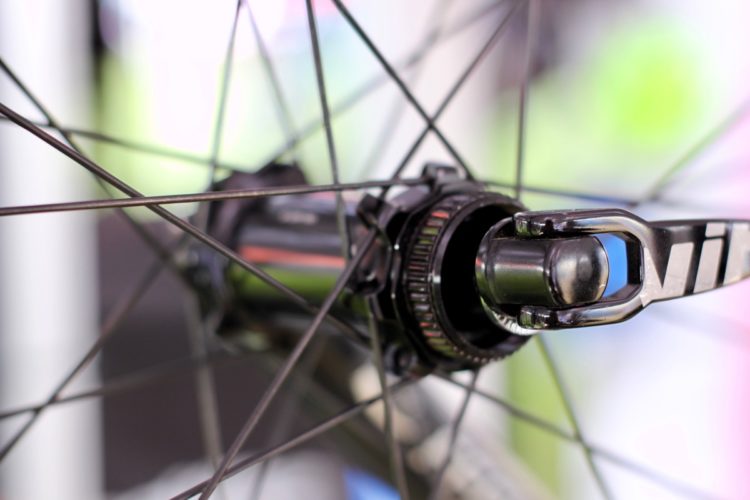
The Sun Ringle Charger Pro wheels will be available for about $650 MSRP and should include just about every adapter you can think of (more on that later). The Charger Pro wheels are a total redesign from last year’s wheels starting with the Stan’s Notube rim profile which comes complete with rim strips, valves, and sealant so you can run these wheels tubeless if you want. The front wheel also comes with all the adapters that you will need: 20mm through axle, QR 15mm, and the QR 9mm. If that’s not enough you can also find the adapters and installation tools (sold seperately) to run 135 x 12mm or the new 142 x 12mm rear axle for just $20 each.

charger3

The new Charger Pro sports a beefy 28mm wide rim with a 22.8mm inner bead which is the perfect balance between high strength and low weight. With the new Stan’s licensed bead lock incorporated into the rim profile and the deep 23.5mm section width you’re looking at one very strong wheel that will take it all season after season. (My wheels have already spent a lot of time on my FR rig). The drop center rim with safety ridges aid in both tire installation and in keeping the tires in position when riding.

Red anodized aluminum spoke nipples from wheelsmith, forged from 7000 series aluminum, keep overall wheel weight low without loosing strength. Compared to other spoke nipples, these babies have been hammered into shape (others tend to be cut) which adds to the durability of the spoke nipple.

Of course the shining star here is the all new, 24 hole hub design that ensures no two spokes will ever come in contact with each other. The Charger Pro hub also features large bearings to support the wheel and can take any abuse you’re willing to give them. The bottom line is these hubs make the wheels stronger, smoother spinning, and longer lasting.

Swapping between axle sizes is a painless experience that nearly anyone can handle themselves. For the rear wheel adapter you’ll need to use the included tool to hold the axle as necessary for removal of the adapters.

Installing a set of ITS 909 DH tires was a piece of cake. I decided to try these tires with the Stan’s fluid and no tubes to see how well the Charger Pro would perform with a non-specific tubeless tire. Using an air compressor I had no problem inflating the tires to the proper pressure; if you don’t have an air compressor, a good quality floor pump will also do the trick (just takes a little extra work).

The great thing about these wheels other than the cool graphics, blood red hubs, and bone white rims is the support that comes along with the wheel. Everything you need is there for you: the Stan’s rim strips and valves, Stan’s fluid, and all the front axle adapters you might need. And for those who have a larger rear axle, the 12 x 135mm or 12 x 142mm axle adapters go for just 20 bucks including the tool!

Performance on the trail

On the trail I found the Charger Pro wheels to be stiff but not overly so. Some wheels that are on the market (particularly those that are mass produced) have a period of adjustment where you can hear the spokes creaking and settling in but I didn’t get that with the Charger Pros. From the second they were on the bike I didn’t hear a thing from them.

Taking the bikes into corners I got a good feel for the trail without a hint of wandering or wobble from the wheel. The wheel mass is low enough that it’s a cinch to change lines quickly but thanks to the strength of these wheels in combination with a larger volume tire you can blast over just about anything. The sturdiness of the rim took rock gardens like a champ without complaints and I was impressed with how straight the rim remained after repeated blows. The overall strength reminds me of a much heavier wheelset that I used not too long ago. The Charger Pro gets high marks for cool looks, decent weight, and toughness all in once package. Nice.

charger4

Although the Charger is marketed as an AM wheel, you could easily consider this for your freeriding days as well. Even if you’re not a freerider, these wheels should also fit the bill perfectly for fairly technical trail riding. The 24 spoke two-cross configuration is the perfect set-up for a wheel that will be changing direction frequently (read: high speed). Now if you’re a straight-line hucker that hits monster gaps (25 foot or larger) you may want to consider something a bit beefier like the ADD wheels from Sun Ringlé. But if you’re someone like myself that does hit the FR trails while keeping it to a sane level (drops 15′ foot or less with smooth transitions) then these should be right up there on your short list of high performance wheels.

Specs from Sun Ringlé:

  • Stan’s No Tubes BST™ Tubeless Technology >>
  • Premium Direct Pull Hubs with Japanese Precision Bearings
  • Wheelsmith Double Butted Spokes
  • Lightweight AM Wheel – 1699g / Pair
  • Available in 29er
  • Hubs are easily convertible to today’s axle standards – 20mm, 15mm and QR end caps included*
  • Wheels include Stan’s No Tubes Yellow Sealing Tape, Sealant, and Valves*

I would like to thank the folks at Sun Ringlé for providing these wheels for testing and review.

The “Answer” to Controlling Your Mountain Bike

Thursday, March 25th, 2010

answer

Since 1987 I’ve owned mountain bikes from Yeti, Rocky Mountain, Cannondale, Giant, and Opus – and Answer bars have graced the cockpit on every one of them at one time or another. I still remember when MTB bars were measured against the performance of the Answer Taperlite and Hyperlite models.  Just recently I came across an old Answer mountain bike circa 1993 at my buddy’s shop (pics below – yes those are slicks… don’t ask).

answer4answer2

I got a chance to chat with Tom Porter, Product Manager for Answer Products, and we discussed some downright sexy new products the company is introducing to the Gravity / 4X / DJ scene. It turns out he and I share many of the same interests and hobbies as well a passion for mountain bikes and the surrounding technology. Tom shared a bit of his background and how he came to where he is at today at Hayes Bicycle Group, home of Answer Products, Manitou Suspension, Hayes Disc Brakes, Sun Rims, Sun Ringle’ Wheels, and Wheelsmith Spokes.

Coming from a family where Dad raced vintage sports cars and even a Can-Am car, Tom felt the need for speed at an early age. Being handy with a wrench, Tom started working at a bike shop around the same time mountain biking was taking off as a sport. Moving around in the industry with a stint at Waterford Precision Cycles (formally the Schwinn Paramount Factory), Tom then went to work for the Motorsports Composites Company making carbon fiber and kevlar body work for prestigious racing teams like Pratt & Miller and TWR for applications in 12-24 hour endurance racing. Then in 1999, Tom moved to Hayes with a role in Technical Support. Quickly adapting to the new corporate model and with a firm understanding of the bicycle industry, he began managing and overseeing various aspects of “MAG” brake production which is highly regarded as one of the best hydraulic bike brakes ever made.

As Hayes continued to grow, Tom’s next opportunity was in the acquisition and integration of all the new brands and products that are now part of the Hayes Bicycle Group. Once this job was complete and feeling a connection with the Answer brand, Tom has returned back to the product side of the business in his current position as product manager for Answer Products.  Just 15 months in, there are super cool components available and more great things coming!

Here’s what Tom had to say during our conversation.

How does Answer investigate and prioritize what has to be done to improve specific products?

We identify technology advances through the following process.

  1. Benchmark program of key competitor’s products and market trends.
  2. Internal FEA testing of models and extensive lab testing.
  3. Utilization of HTP (Hayes Test Program) Riders for the Research & Development of new components.

What kind of new products and other stuff are in the works for Answer?

We have a list of new components that we are launching throughout the year, starting off with the PRO Taper® Alloy Bars.

Pro Taper alloy bars (are made from a) new 7050 alloy material (using the) same proven (4×8 degree geometry). Rise was lowered and width increased based on market trends and rider feedback. Goal: Lower mass/quicker steering input & comfortable riding position in a bar that looks hot and has a reasonable cost.

answer12

Pro Taper Carbon bars: geometry same as the 720AM bars but 33% lighter! By using Pro Taper technology we can put the material in the bars where it is needed most: the clamp and the rise areas. Goal: Lightweight, strong, comfortable bar for all-mountain use that looks the part.

I noticed that the bars pictured above are more geared towards the trial / DH rider – do you have plans to produce a flat XC version?

Yes we have a Pro Taper XC straight bar in the works. 660mm carbon flat bar with 3 degree back sweep. This will be available in early summer.

Along with the bars I noticed that you also release a few stems.

We have two at present, the first one, the Rove DH is made from 7075 alloy material with multi-position 45-50-55mm offset (reach) which allows the rider to adjust the position of the bar. (The) short position allows the rider to get weight over the rear wheel for steep trails and the long offset allows the rider to get weight more forward over the front wheel and suspension to increase front end grip. It also has a 62mm wide face plate which creates a stiff stem & bar interface. At 150 grams it’s one of the lightest DH stems on the market. With a 30mm x 50mm bolt spacing, this allows you to fit the stem on all 2005 Boxxer standard forks as well.

306-24133_1000n_6

FEA screen shot depicting the loads on the stem.

The second stem in our lineup is the Rove DJ / 4-cross stem. Made from 7075 material with 35mm and 50mm offsets (reach) available. This stem can also be used on DH bikes as well with 1 1/8 steer tubes. 62mm wide face plate and a 10mm stainless steel star nut thru bolt for hydro hose routing for bar spins. Our goal with this stem was to create a tough, versatile stem carrying the Answer DNA.

We have a third stem in the works, our Rove all-mountain stem. Samples will be released soon. Check out the web site for more info.

A while back I had a few pedals sent my way did you want to mention them?

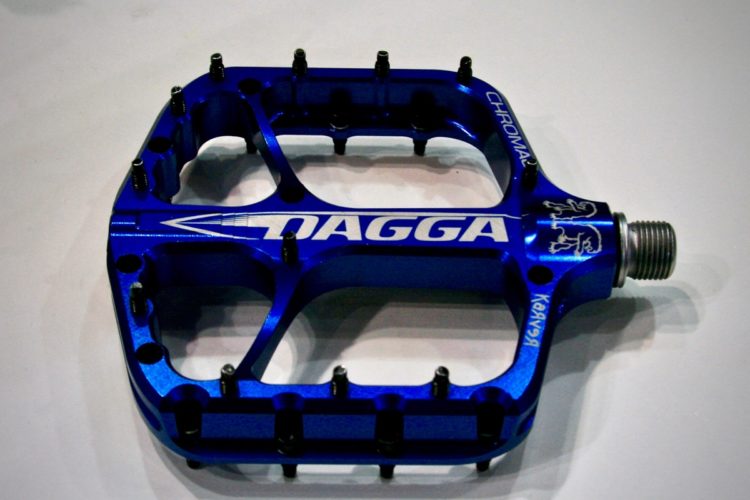
We have our Rove FR pedals – 16mm 6061 deck with concave shape.  That allows great shoe interface on the platform deck. A 105mm x 110mm deck creates nice platform space for all shoe options. 10×10 pin deck with alloy pins are great for grip. Hex head pins allow for easy service and replacement with a metric socket wrench. Our goal was to create a durable, easily serviceable pedal with lots of rock clearance.

You also sent over a pair of grips that I personally liked very much, did you want to elaborate on the grips?

Yeah. We worked with ODI on development of 2 new sets of grips. The cross section on the Fall Line XC has a profile from thin to thick to thin (an ODI first) that reduces hand fatigue dramatically.

The DH grip features thin material and allows for easy hand position changes. Goal: consistent feel / sticky grips / with proven lock-on mechanism.

What other products are in the works. Will you have a seat post or something along those lines?

We have a seat post patent from many years ago that we have been reviewing. Once the above process (#1 above) is completed we will move forward with development of a new Answer seat post.

Are you planing on any other colors in the up and coming year?

Yeah. White is now available in the alloy bars and you might see a new gold bar that looks like the Hayes Prime Brake set to launch this June.

Wrapping up

Keep your eyes peeled for these and other cool products from Answer in the very near future. Not only have they come back, but from what I have seen I feel that there are going to be a few folks out there stepping up their game as well.

I would like to thank Tom Porter for his time and insight.

Easton All-Mountain Products: Bar, Stem, and Seatpost

Tuesday, December 8th, 2009

4

Interbike is basically like a strip-club where you aren’t allowed to touch any of the dancers. This year I got all worked up seeing the latest from Easton but left the show feeling pretty unsatisfied. After flipping through the catalog hundreds of times and burning up the Easton website I finally got a chance to test the goods for myself.

Easton hooked me up with a component trifecta that’s geared toward all-mountain / freeride / DH rigs. Most of us don’t realize it but handlebars, stems, and seat posts need updating and/or replacing every few years, particularly if they’re abused day in and day out (guilty). Fortunately Easton has just the ticket: the Monkeylite DH bar (now in 750mm width), the 65mm Havoc stem, and the Havoc two bolt seat post. These products alone or together offer the perfect complement to your long travel mountain bike.

First on the block is the MonkeyLite DH bar (MSRP $150). The first thing you’ll notice about the 2010 MonkeyLite DH is the new graphics and flat white center.  More importantly you also now have a choice of either 750mm or a slightly narrower 711mm version. The DH bar weighs around 230 grams which means it’s still lighter than most bars and incredibly strong. You get a very comfortable 9° back sweep which keeps your wrists fairly straight rather than twisted.

You also get a 5° upsweep which I noticed reduces fatigue when turning (that little amount of rise rotated my wrists slightly towards the center of the bike and made me use more triceps). The 40mm rise placed my body in just about the right spot for hitting the slopes, reducing that unsettling “over the wheel” feeling. Since this is a carbon bar you’ll notice reduced sting from taking hits. Carbon allows the bar to flex without transmitting the full force of rocks, logs and drops through the bar.

5The Havoc DH stem (MSRP $85) comes in white or black this year and has new graphics as well. There are three lengths to choose from (50mm, 65mm, or 80mm) and each sports a 10°rise. The Havoc stem is made from 6061 aluminum making it durable enough for the demanding rider without worrying about it breaking. I chose the 65mm stem (203 grams) which is not the lightest I’ve seen but I’m definitely willing to trade off a little extra weight for improved durability. The four bolt front cap was made as wide as possible to evenly distribute clamping forces, making it safe for carbon bars as well. The double pinch bolt at the steering tube is really a must for the all-mountain / freerider crowd. This is a very stiff unit that’s a great addition to any front end overhaul.

NOTE: whenever installing stems or bars, always refer to manufacturer info for torque specifications and sequences. Failure to do so may permanently damage the stem and bar.

The double bolt Havoc seat post (MSRP $80) is the third piece of the all-mountain pie. At about 285 grams for the 350mm unit you’re getting an Easton EA70 aluminum tapered wall unit that can take a ton of abuse. Available in four sizes (27.2, 30.0, 30.9, or 31.6mm), the post will fit almost any MTB seat tube out there.  The killer feature here is that you can switch between either 7mm or 8mm rails by orienting the clamp plates. Perfect for those saddles with beefier rails!

6The double bolt design allows you to easily set up your seat angle and provides a strong clamping area to prevent saddle movement. I did find the angle of the bolts a little annoying because I couldn’t use a tee-handle Allen key and ended up using a slower L-shaped tool.  On the bike and hitting trails the seat post held up great with no creaking and no slipping of the saddle position – a definite plus.

Overall the fresh new graphics, solid construction, and trouble-free installation of all these components make them a great choice for updating your all-mountain rig. Bring all three into the champagne room with you the next time you’re out!

Thanks to the folks at Easton for providing the components for review.

WTB Stout 2.3 Tire Review

Monday, September 14th, 2009

picture-277

The next tire in the WTB series that I’ll be testing is the ground-ripping Stout 2.3. This tire is meant for nasty, gnarly terrain! With its wide offset spacing center tread pattern and aggressive corner knobs, this tire performs best on loose trail surfaces. The Stout ($50 MSRP, on sale for $41.97 @ HuckNRoll) makes use of the same Super Track rubber compound and lightweight casing as the Prowler but with a different tread pattern. The Stout sports a very open, staggered center tread design which allow the tire to efficiently roll through adverse trail conditions. The side transition knobs allow for good cornering grip and leaning characteristics.

picture-291I decided to mount these tires onto a set of Sun-Ringlé STR8 Track wheels that I tested previously to give me a good indication of how the tires themselves would perform. I only needed a single tire iron to place the bead of the tire over the rim. As usual I added a bit of talcum powder before inserting a heavy duty tube to reduce friction inside the tire. I chose to inflate the Stouts to 40psi in front and back and I was off.

Hitting the trails for the first few times was a bit of a dull ride. The trails were very dry and hard and I found that on hardpack and dry clay the tires slipped a bit in the turns, slowing me down on an otherwise fast ride. I found that the Stouts just didn’t bite enough on those very hard surfaces. Fortunately with the varying weather that we have up here in Ontario (rain, sun, wind, overcast, rain again, sun), the next few days the very same trails were soft enough to walk and leave prints, but not soft enough to be considered muddy. In the softer terrain, the Stout performed amazingly well. I found that on loamy, softer trails these tires really hugged the ground.

Cornering with the Stouts was fun – I could lean with the tires without that gut feeling of tanking the bike. The tires did not squirm at all; rather they were very responsive and predictable when entering and exiting corners. With the lower center knobs and increasingly deeper side knobs, the tire did transition well from one knob to the next, especially compared to other tires I’ve tried.

Climbing and braking with the Stouts I did slip from time to time when the trail got very dry. However, when the trails were a bit softer these tires did very well without any slip when the power was put down. Braking with the Stouts was great – very little slippage and tons of control. The tread pattern allowed the wheel to stay pointed in whatever direction I wanted and didn’t slip side to side.

picture-313

Overall I would say if the terrain you’re running in is mostly on the softer side of things or very rocky, the WTB Stout is the tire for you. The Stout tread pattern can get you to the trail head and promises to be a stable and comfortable tire even on a skinny!

My overall impressions:

7 out of 10 for climbing
8 out of 10 for rolling and efficiency
9 out of 10 for loose conditions
7 out of 10 for hardpack
8 out of 10 for stopping in a straight line

Specs from WTB:

Usage: All Mountain
Conditions: Wet to dry / Loose to Rough
Size: 2.3″
GMS: 55/60
Durometer: 53a DNA rubber
Weight: 863 grams

WTB Prowler MX Tire Review

Friday, August 28th, 2009

picture-276

If you’re in the hunt for a great All Mountain bike tire at a decent price, look no further than the Prowler MX from WTB ($50 MSRP). Aggressive, talon-like knobs will help you navigate the trail like a jungle cat so you can catch even the fastest prey!

picture-290Installing these tires on my Easton Havoc wheels was a snap and required just a few minutes. I did myself a favor and used heavy duty tubes along with some talcum powder to improve performance and reduce friction in the tire. I inflated the tires to 40 psi and was off to the trails!

I wanted to hit as much varied terrain as I could since WTB says this tire can handle wet to dry terrain as well as loose to rough. Fortunately Kelso and Blue Mountain have plenty of both.

On hard packed surfaces the Prowler MX tires did fairly well and didn’t vibrate too much. Both tires had decent traction and didn’t feel squirmy like other aggressively patterned tires I’ve ridden. Rolling efficiency seemed decent and I didn’t feel like I had to labor too much to maintain my speed.

Under climbing and braking the Prowlers were great and did not lock up or slip unexpectedly. Even when braking on very hard surfaces such as rock and hard roots the tires did a good job stopping without sliding. At times when the tires did lock up, they tended to remain in line – no wandering – thanks to the pronounced transition knobs. On climbs the ramped knobs kept the tread firm on the ground without slipping. Extra siping (small grooves) on the knobs adds even more edges for an overall higher level of grip.

picture-314

I guess the shining point on the Prowler MX tire is its ability to take corners in a variety of conditions. I loved the way these tires gripped in softer, dusty trails. When the terrain got technical, tight, and twisty – these tires just kept hanging on and worked exceedingly well. I also loved this tire’s ability to bite down on the fallen log runs without slipping (that is a big plus for me at least). The corner knobs on Prowler MX tires have almost double the number of blocks and are also siped to increase gripping.

Overall, the Prowler MX is a great tire that will really boost your riding performance and enjoyment. If you haven’t tried a set now may be the time!

My overall impressions:

8 out of 10 for climbing
8 out of 10 for rolling and efficiency
9 out of 10 for loose conditions
8 out of 10 for hardpack
9 out of 10 for stopping in a straight line

Specs from WTB:

Durometer 53a  DNA rubber
GMA 54/60
Usage: All Mountain / Freeride
Conditions: Wet to dry / Loose to Rough
Size: 2.3″
Weight: 869grams


Site Map | Advertise | Partners | Contact Us | Terms | Privacy
Campground Reviews | Hiking Trails | Trail Running | Skiing / Snow Sports | Mountain Biking
Copyright 2012 Blue Spruce Ventures LLC | Atlanta, GA
singletracks.com is yet another slick Review App