
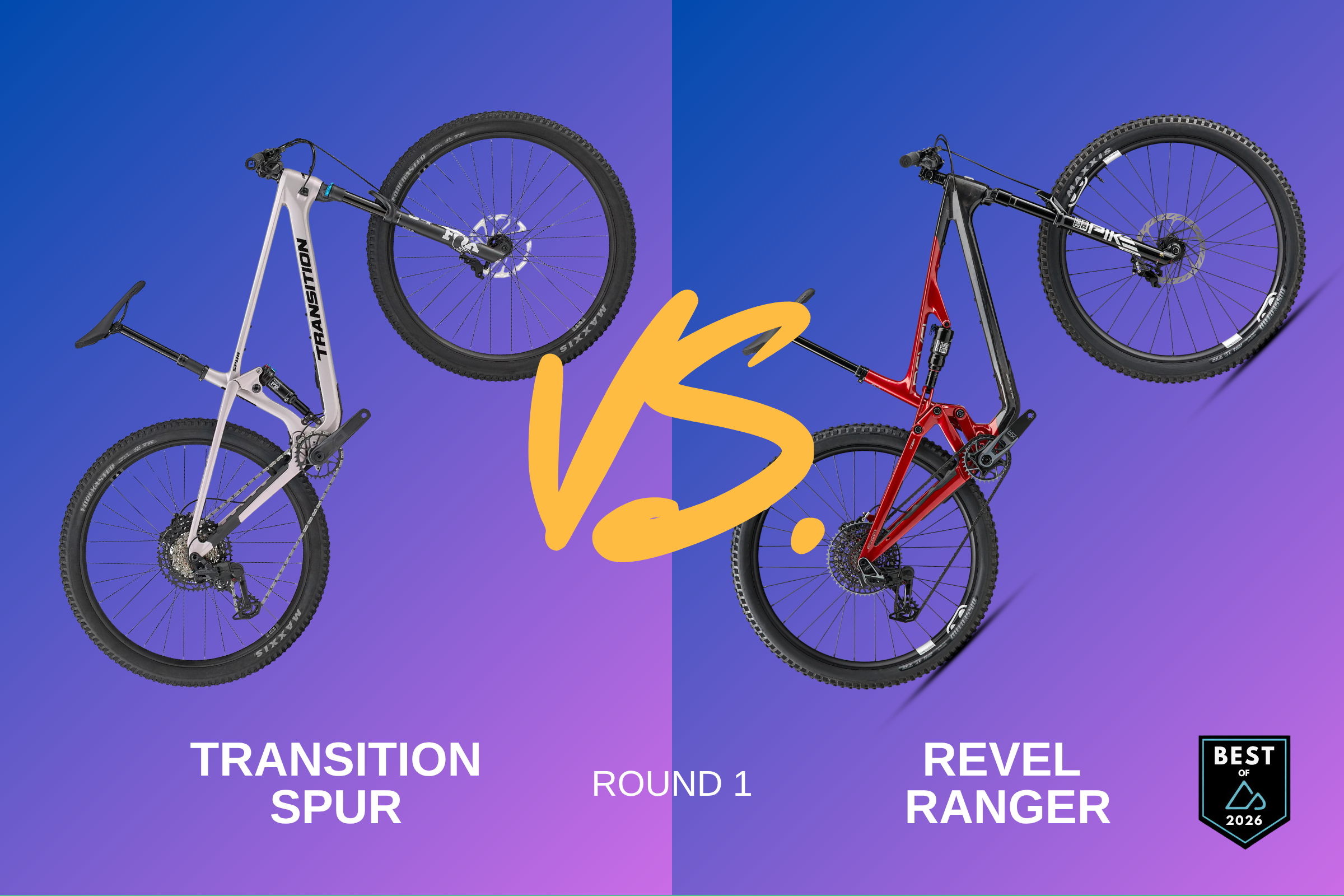
Put the Transition Spur and Revel Ranger geometry charts side by side, and you might not be able to tell the bikes apart. Both short-travel trail bikes pair 120mm of rear travel with a 130mm fork, both use the same 190x45mm shock size, and in a size large, the reach is an identical 485mm*. Head angles, chainstays, and wheelbases are all within a few millimeters or fractions of a degree of each other.
Both bikes are also freshly redesigned this year. Transition calls this the V2 Spur, while Revel says the third-generation Ranger was rebuilt from scratch. So what separates them? We’ll lay it out for you right here.
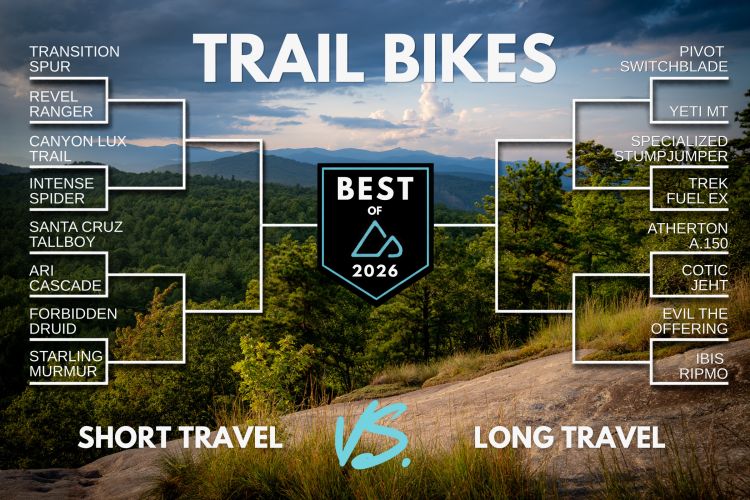
This matchup is part of the 2026 trail bike of the year tournament. For each head-to-head, we’re focusing on travel, geometry, suspension, and frame features. We’ll also look at build and price differences, generally selecting the SRAM Eagle 90 build or equivalent for each bike.
| Transition Spur Carbon Eagle 90 | Revel Ranger SRAM Eagle 90 | |
|---|---|---|
| Suspension travel front/rear | 130/120mm | 130/120mm |
| Drivetrain | SRAM Eagle 90 | SRAM Eagle 90 |
| Suspension | Fox Float 34 SL Performance Elite fork, Fox Float SL Performance Elite shock | RockShox Pike Ultimate fork, RockShox Deluxe Ultimate shock |
| Geometry* | HTA**: 66.0° / 65.5° STA: 76.4° / 75.9° Reach: 485mm / 480mm Chainstay: 439mm / 441mm | HTA: 65.7° STA: 77° Reach: 485mm Chainstay: 437mm |
| Weight | 27.1lb (medium) | |
| Price | $6,499 | $5,799 |
Travel and category positioning
With matching 130/120mm travel numbers, these two bikes land squarely in downcountry territory, though each takes a different path to get there.
Transition describes the Spur as “our cross-country bike that refuses to be confined by labels,” adding that it’s “fast enough to race, tough enough for downcountry, and versatile enough to pull trail duty after hours.” For V2, the fork grew to 130mm while rear travel stayed at 120mm.
Revel, on the other hand, calls the new Ranger “a true downcountry tool,” one that “pedals like a dedicated cross-country bike [and] descends like something with much more travel.” The previous Ranger had 115mm of rear travel and a 120mm fork, so V3 grew a bit on both ends.
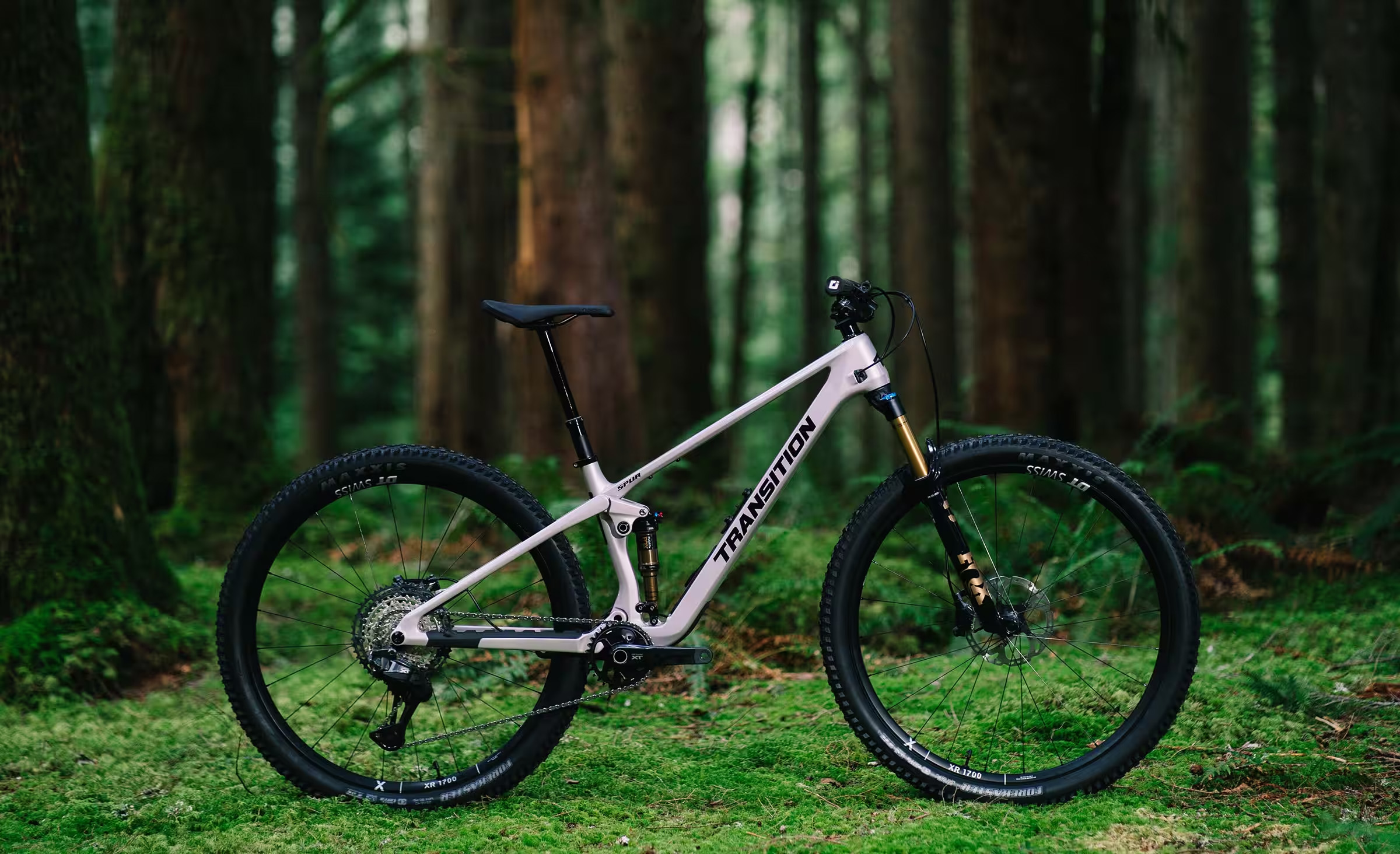
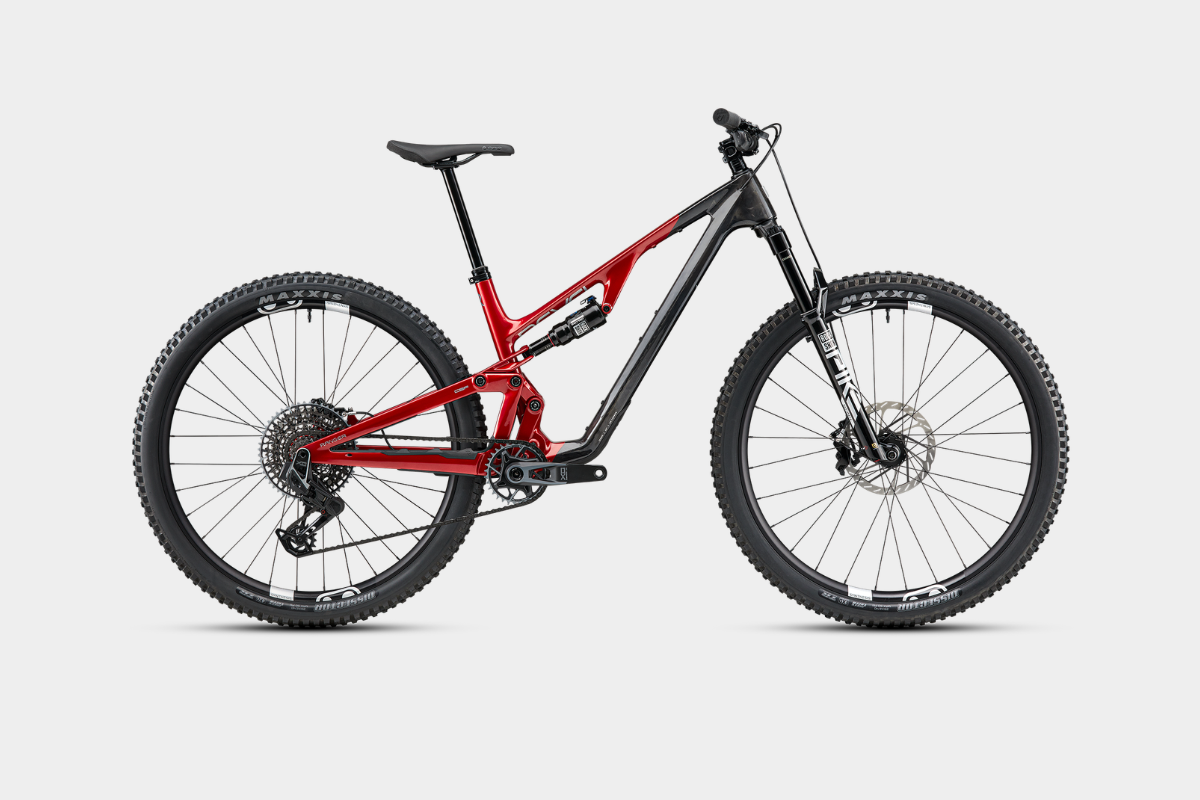
Though both bikes are offered in an Eagle 90 build, their suspension and tire choices reflect different approaches. The Spur gets a lightweight Fox 34 SL fork, faster-rolling Maxxis Forekaster tires, DT Swiss XR 1700 wheels, and 180mm rotors front and rear. The Ranger gets a RockShox Pike with beefier 35mm stanchions, Maxxis Dissector tires, Crank Brothers Synthesis Enduro alloy wheels, and a 200mm front rotor with a 180mm rear. In short, the Spur build leans XC while the Ranger build leans trail.
The geometry is separated by millimeters
In a size large, the Spur and Ranger are about as close as two bikes from different brands get. Beyond the matching 485mm reach, the Spur’s stack is 626mm (high) compared to 625mm for the Ranger, and the wheelbases are 1,231mm and 1,234mm respectively. Both bikes even share the same 541mm fork axle-to-crown measurement and 44mm fork offset.
The Revel Ranger has a slightly steeper 77° effective seat tube angle, while the Spur’s is 76.4° in the high setting. Bottom bracket heights are close too, with the Spur at 335mm (high) and the Ranger at 337mm.
Both brands scale chainstay length with frame size. The Spur uses 434mm stays on sizes small and medium and 439mm stays on sizes large and XL. The Ranger’s chainstays are 435mm on the small and medium, 437mm on the large, and 439mm on the XL.
Size ranges differ a bit at the edges. The small Ranger has a 440mm reach compared to 430mm for the small Spur, while the XL Ranger stretches to 515mm versus 510mm for the Spur. For that reason, the shortest riders may find a better fit with the Spur, while the tallest riders may want to consider the Ranger.
The Ranger’s seat tubes are also notably shorter on the bigger sizes (425mm on the XL compared to 460mm for the Spur), which helps explain why the XL Ranger build ships with a 240mm dropper while the XL Spur gets a 210mm post.
The Spur boasts a flip chip
The Spur V2 adds a geo-adjust feature at the lower shock mount, which changes the head tube angle by half a degree and the bottom bracket height by 7mm. In the low setting, the Spur’s head angle slackens to 65.5°, and the BB drops to 328mm, making it a touch slacker and lower than the Ranger.
Suspension design: Flex stays vs. CBF
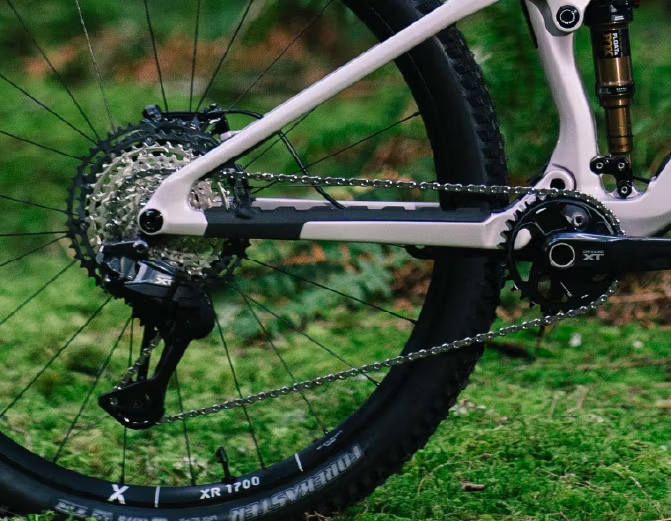
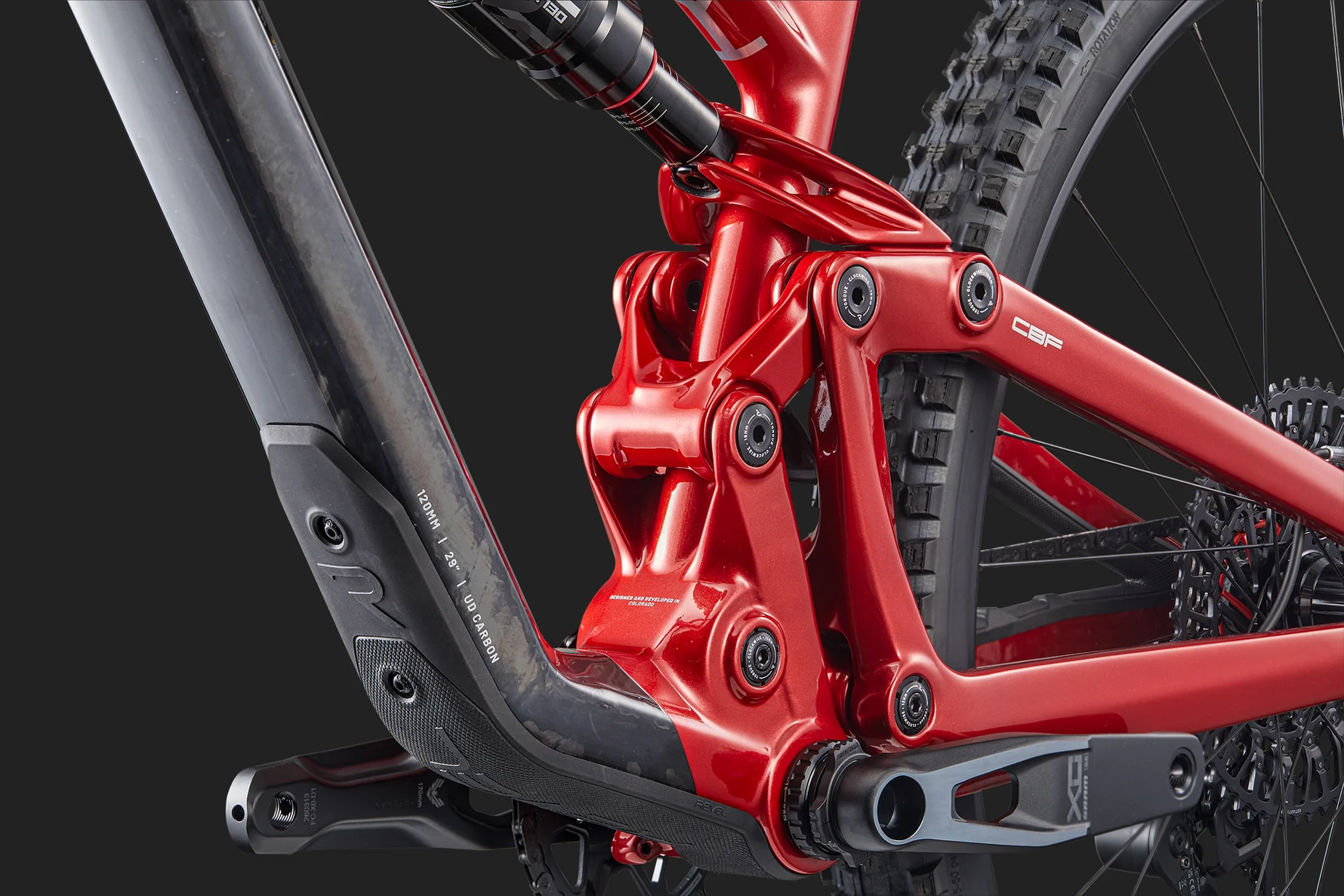
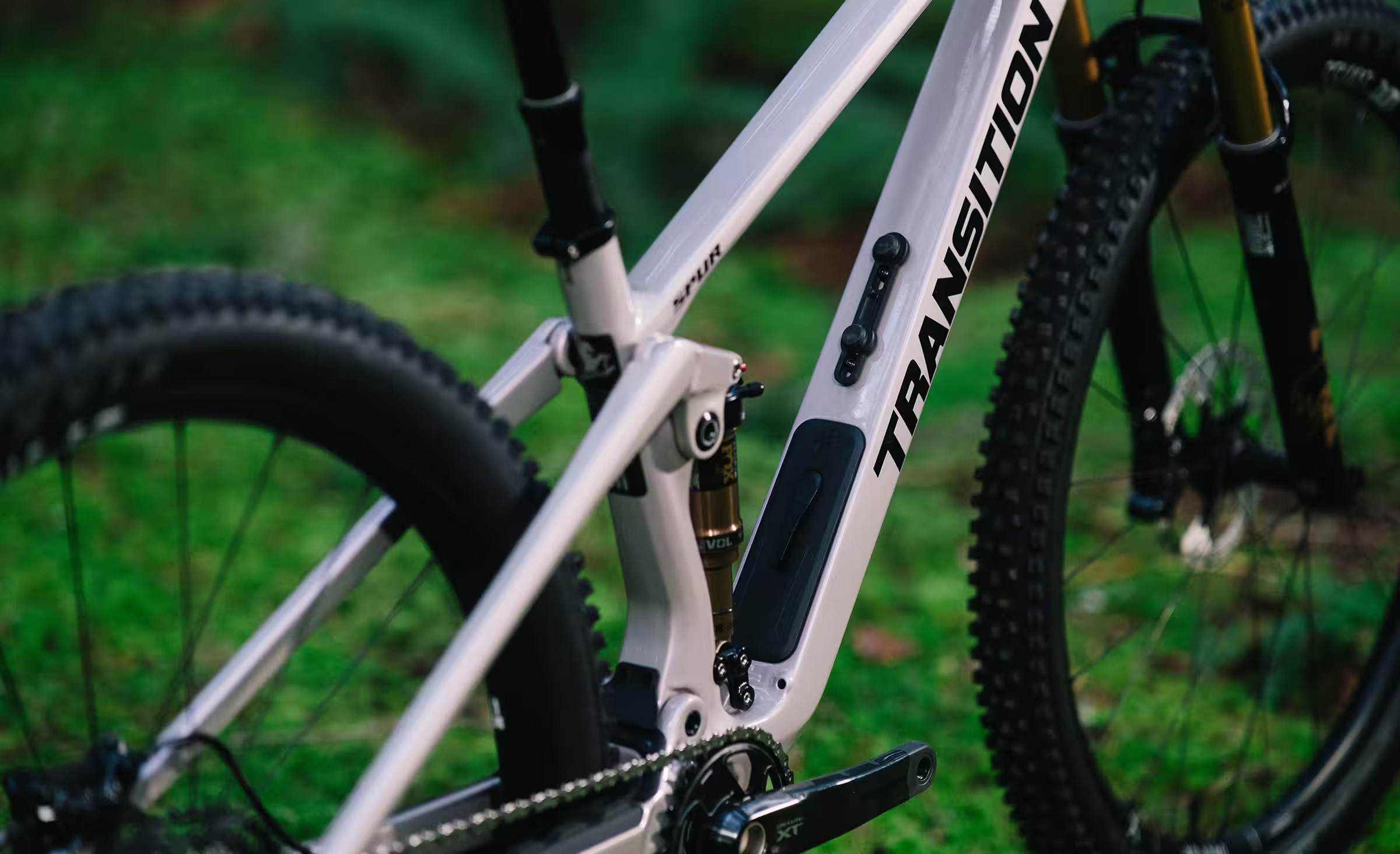
The biggest difference between these bikes is the suspension design. The Spur uses a flex-stay rear end, meaning there’s no pivot near the rear axle. Instead, the seatstays flex slightly as the suspension moves, which saves weight and eliminates a set of bearings. Transition says it chose the design for the original Spur because “the rear end delivered a lively, responsive feel, with just the right amount of flex to enhance traction and control,” and the brand says preserving that ride quality was a top priority for the V2.
The Ranger uses Revel’s CBF (Canfield Balance Formula) suspension, a dual-link design. For the V3, Revel says the kinematics were refined specifically for short travel, and the suspension is more progressive than either of the previous Ranger versions. The brand describes the ride feel as “air pillow on top, supportive platform in the middle, bottomless at the end.” The lower link now sits inside the frame.
Both brands emphasize progressive leverage curves that resist bottoming out, so on paper at least, each should feel deeper than 120mm suggests. Riders who prefer a simpler frame with fewer pivots to maintain may lean toward the Spur, while the Ranger’s multi-link design will appeal to those who have ridden and liked CBF on other bikes.
Frame features
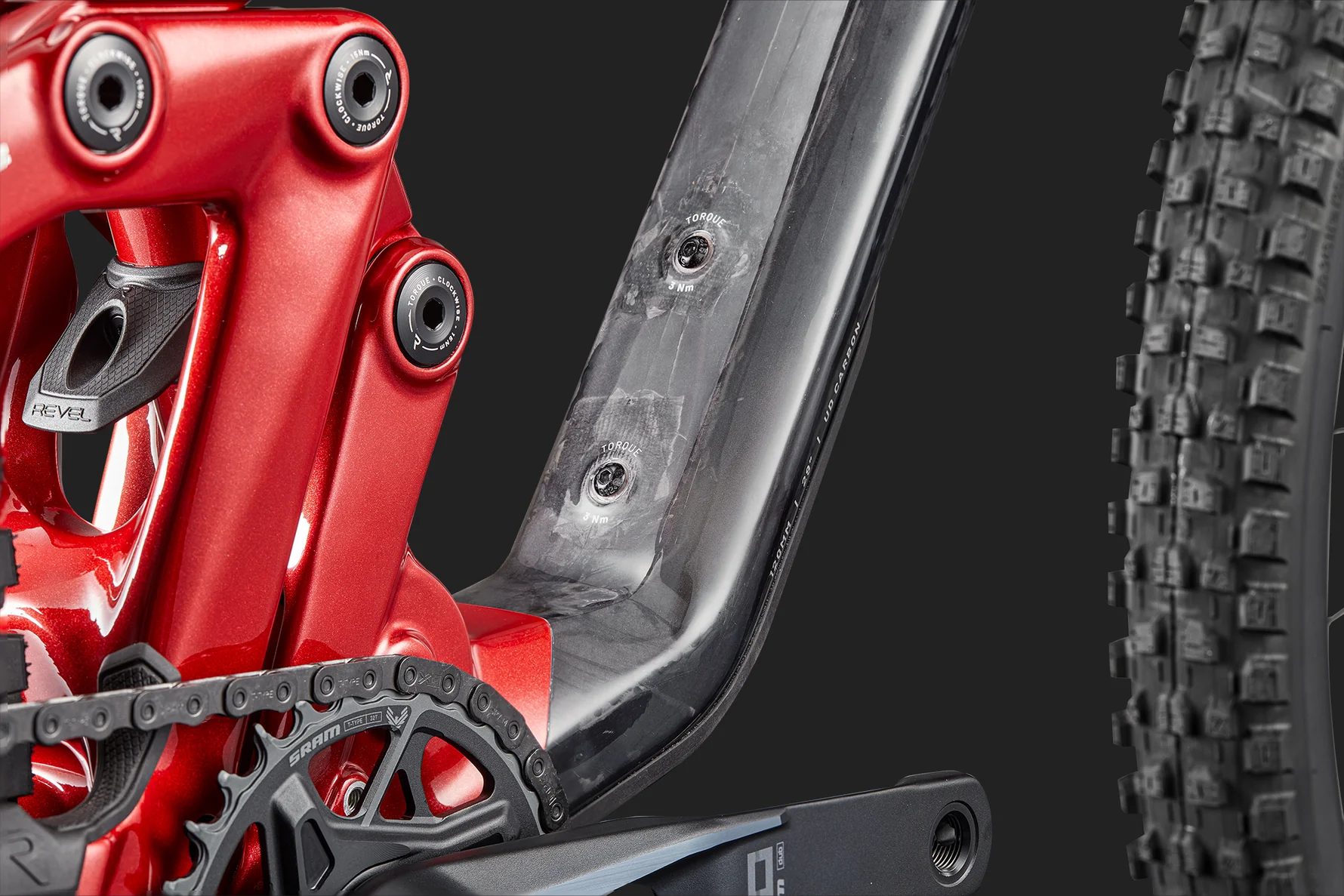
Both bikes are carbon-only, with 73mm threaded bottom brackets, SRAM UDH compatibility, 31.6mm dropper posts, and internal cable routing. Both also add fenders to keep debris out of the linkage.
The Spur V2 adds Transition’s B.O.O.M. Box in-frame storage, which the brand says is designed to “hold your burrito, or other munchies.” The Ranger skips in-frame storage, but it has three bottle mounts, including two inside the front triangle, plus a utility mount under the top tube, for a total of four sets of mounts.
The Ranger clears 29×2.6″ tires compared to 2.4″ for the Spur, and its 180mm post mount takes rear rotors up to 223mm, while the Spur maxes out at 200mm.
The bottom line
In terms of geometry, the Spur and Ranger are practically twins, so the choice comes down to suspension feel, frame features, and how each bike is built up.
The Spur is the lighter, more XC-minded option, with a claimed weight of 27.1lb for a medium Eagle 90 build. Its flex-stay rear end means fewer pivots to maintain, and riders get in-frame storage plus a geo-adjust feature for tweaking the handling. It’s the bike for riders who might pin on a number now and then but still want something fun on technical trails.
The Ranger leans more toward trail riding, with a burlier Eagle 90 build, room for 2.6″ tires, and bigger brake rotor capacity. Its CBF suspension has been retuned specifically for short travel, and at $5,799, the Eagle 90 build costs $700 less than the comparable Spur.
Which bike do you think should advance to the next round?
We’ll reveal which bike moves on to round two on November 10, when the winner takes on either the Canyon Lux Trail or the Intense Spider.
The news stinks. Why not follow Singletracks on Google News to bring more joy to your day?


0 Comments