singletracks is mountain biking
Sign In | Create Your Account | Site Map | Help  


Trail Tuesday: Alps 2 Ocean Cycle Trail, New Zealand

Tuesday, December 13th, 2011

Winter is officially just a few weeks away for us here in the US and Canada but in New Zealand, the summer is right around the corner. And just in time for the start of the mountain biking season, the Alps 2 Ocean Cycling Trail is opening several new sections to riders. When it’s fully completed in November, 2012, the Alps 2 Ocean trail will span 312km (about 200 miles) from the base of Mt. Cook (highest peak in New Zealand) in the southern Alps to the coast at Oamaru.

The Alps 2 Ocean trail is a part of the New Zealand Cycle Trail and is funded by the New Zealand Ministry of Economic Development. The idea is to develop and promote 18 great rides that showcase the natural beauty of New Zealand and each ride is rated easy, intermediate, or advanced. Most of the rides are designed as multi-day routes and there’s at least one ride in each region of the country.

Rated as an easy ride, the Alps 2 Ocean trail can be conveniently ridden as a 6 day trip with stops in various villages offering places to stay and eat. The trail starts 780m (2,500ft) above sea level which means you’re riding mostly downhill all the way to the coast. Still, because this is rated as an easy trail I’m guessing it’s all about the scenery, not the adrenaline. It’s also not clear how much of the final trail will be off-road, though nearly all of the photos show natural surface tracks.

Alps 2 Ocean Trail (photo: nzcycletrail.com)

Fortunately, other parts of the New Zealand Cycle Trail, like the Waikato River Trail, St. James Cycle Trail, and the Old Ghost Road on the West Coast are rated advanced and the photos seem to back up the rating. All three trails can be ridden as multi-day epics from 1-4 days long, depending on your ability – and the number of times you stop to take in the incredible scenery!

St. James Trail (photo: nzcycletrail.com)

Old Ghost Road (photo: nzcycletrail.com)

Old Ghost Road (photo: nzcycletrail.com)

The New Zealand Cycle Trail website has photos and information about each trail, making it easy to plan your own off-road, multi-day bikepacking trip in God’s own country. The best part: mountain biking in New Zealand gets you on the bike in January when the rest of us are still shivering in our thermal tights!

MTB Euro Trip: Mountain Biking the Dolomites

Wednesday, July 13th, 2011

Editor’s note: Andrew and Matt are two Americans who recently left their jobs and headed to Europe to tour around on their mountain bikes for a few months.  Their plans include seeing a stage or two of the Tour de France, taking in some beautiful scenery, riding some trails, and finishing up at Oktoberfest in Munich, Germany.  Some guys have the life, eh?  Look for occasional trip updates and ride reports from the wandering duo here on the Singletracks blog.

After camping for a couple of days at the edge of the Dolomites, we decided to leave Lago di Santa Croce (Italy) behind and set out for Cortina. Cortina is a well known ski town that is situated right in the heart of the Dolomites, and we were able to find a trail map online that showed a network of 15 different mountain bike routes running through the mountains surrounding town.

Our route that day was only about 70 km, but we knew that our final destination was 800 meters higher in elevation so we were prepared for a day filled with climbing. Surprisingly, the road that we were riding avoided the steep rocky peaks that fill the region and followed a relatively flat river valley for the majority of the day. After making great time during the morning, we stopped in Pieve di Cadore to get a couple of sandwiches and figure out where the next turn was. A few locals walking by stopped to admire our loaded down bikes (particularly Matt’s trailer) and informed us that to get to Cortina we needed to get on the bike path just downhill from our lunch spot.

We followed their directions and got on the greenway to ride, wondering how far it would take us before we were forced to move back onto the highway. We rode kilometer after kilometer before stopping to ask another local who told us that the greenway would take us all the way to Cortina, covering the last 27 km of our day. As it turns out, the path is a former railroad that has been converted into a 37 km cycling and pedestrian path. This provided us with a much more pleasant ride since the climbs were all gradual and there was no traffic to deal with.

Matt riding the greenway to Cortina

We made it to Cortina in the mid afternoon and found a campground to spend the night. After settling in, we headed in to town and went to the local bike shop just in time to find that they were closing up for the day and the only employee there didn’t speak English. We picked up a free trail map and made plans to return first thing in the morning, then went back to exploring our new surroundings for the evening.

We returned to the same shop the next morning to have a quick repair done and get some more information on the trails. While the mechanic was working, we asked another employee who spoke English about the trail we had chosen and found out that none of the bike trails on the map were actually singletrack. Due to conflicts with hikers, bikes are not allowed on the local singletrack, only on dirt roads. He then recommended a different route than the one we selected and told us that it was the most complete tour of the region. The stats for the ride were daunting: 48 km with 1,500 m of climbing (30 miles with 4,900 ft), but we figured that since it was actually dirt roads instead of trail that we would be fine.

A typical Dolomite trail

Ready to ride, we left town on the main bike path which is an extension of the same rail-to-trail path that brought us into town the day before. In just a few kilometers, the pavement turned to gravel with a slight climb through tunnels and over bridges and then back to pavement where we began the first actual climb of the day. The road was very steep and with tired legs from touring, we shifted to our lowest gears to spin our way up. After climbing for the better part of an hour, we reached the first mountain hut of our route, Malga Ru Stua.

Some cows lounging trailside

This hut also marked the end of the pavement and return to gravel road for the rest of the day’s ride. We bypassed the hut and the cows that were lounging on the side of the road to continue our climb up. This section of road started out steep but rideable, but after a few switchbacks the loose rocky terrain and even steeper gradients forced us off of the bikes to hike our way up. After leveling back out to a reasonable gradient, we got back into the saddle and continued to grind our way up to the first summit, Rifuggio Senes at 2,116 meters.

At almost 1,000 meters higher than our starting elevation, we had climbed a long way and were ready for some food. We parked the bikes outside of the mountain hut and took a seat at a vacant table. The restaurant offered us cuisine that is a mix of Austrian and Italian, reflecting the history and mixed culture of the Dolomites which is evident in many of the small Dolomite towns, as well as one of the most amazing lunchtime views I have ever seen.

Lunch with a view

With our stomachs full, we prepared to tackle the first descent of the day which would take us down over 500 meters. At the top, the ride was fun with hard packed rocks and smooth trail that allowed you to carry a good bit of speed through the corners. The further we went down the trail the steeper our descent got, making the ride more dangerous since the rocks that make up the trail vary in size between sand and boulders.

At the top of the descent

We carefully rode down much of the descent trying to keep our sliding back wheels under control, until the road eventually got too steep for the rocky surface and turned into large slabs of broken concrete. We wound our way down endless switchbacks as we rode through a canyon that finally bottomed out. With the steep grades and loose rocks that made up the road surface, we were forced to ride the brakes the whole way down and never got an opportunity to really let loose and fly downhill.

The trail winding through a canyon

The second climb of the day began steep as well, but after the first couple of switchbacks it became more manageable and we were able to ride the entire way up. After an hour or so of spinning uphill, we topped out again at over 2,200 meters and began our final descent back to town. This downhill was much more fun than the first, with a more gradual loss of elevation and better traction beneath the tires. The scenery was also spectacular with a couple of small lakes beside the road and more dramatic rocky peaks above our heads.

One of several lakes we passed during our ride

Our second day in Cortina greeted us with tired legs and rainy weather, so we took a day off from the bikes and spent some time around town. While looking for a shop where we could restock on tubes, we came across 2ue 2ue, a different local bike shop than the one we visited previously, and asked the employees about more good trails in the area. To our surprise, the mechanic said that there was one singletrack trail in Cortina and marked it on the map for us to ride. With this information, we knew exactly what we would be doing the next day.

With better weather the next day, we shared breakfast with our Slovenian campsite neighbors and geared up for our ride. We decided to take the paved road up to the trail despite there being a couple of dirt options since we were not planning to spend another night in Cortina and had to be out of the campground by 2:00. The climb out of town was once again long, but not incredibly steep like many of the trails in the area. We knew we were making good time since we were able to stay with a group of roadies who were climbing just in front of us. Once we got to the trailhead, we veered off of the pavement and started to enjoy the first rideable singletrack in town.

Matt enjoying the singletrack

There was one hike-a-bike section early on through a rocky stream, but after that the trail rolled through the woods on hardpack dirt before spitting us out on the side of the mountain with a  panoramic view of Cortina and the mountains south of town. The trail was rocky here, but we were able to pick our way through and ride along the ridge.

Andrew enjoying the trailside view

Once the descent began, we lost elevation in a hurry as we made our way down the steep, loose doubletrack before leveling out in a grassy field with wildflowers all around us and a view of the 1956 Olympic ski jump facility. We turned onto the next trail on our route and began flying downhill once again through the trees and finally coming out behind a hotel near town. We coasted back to our campground excited to have ridden actual singletrack, but also a little disappointed that it was already over. We had covered 5-6 km of trail on the ride, but knowing that the only other riding in the area is on dirt road kind of spoils Cortina as a mountain bike destination.

Overall, Cortina is an great little town. There are plenty of recreation opportunities for outdoor enthusiasts, including climbing, hiking, and cycling. If you are looking for a destination with a variety of activities, then this may be the spot for you and bringing a mountain bike along will offer you some epic rides and access to lots of beautiful scenery that you would otherwise miss on foot in a day’s hike. However, if you’re looking for lots of singletrack trails, be aware that it will be very difficult to find in the Dolomites and you may be better served to look at another region.

Want to hear more about our trip?  Read more at mtnbikeurope.blogspot.com.

Affordable Moab: Planning Your Mountain Bike Trip

Monday, February 14th, 2011

Any serious mountain biker who hasn’t been yet probably has Moab on their wish list. However, most don’t realize how affordable it can be to get there and they never end up going. Right now is the perfect time to plan your trip, and this is the year to use that tax refund and stimulate the Utah economy a little!

I’ve been mountain biking in Moab 2 or 3 times a year since moving here to Colorado and over the years I’ve learned a few things about planning great trip.

When to Go

Moab has two riding seasons: April-May and Sept-Oct. As a destination for other things besides mountain biking, lodging tends to fill up quickly. NOW is the time to book your trip for this spring! If you can’t squeeze a whole week of vacation into your schedule, a Wednesday through Sunday trip allows for 2 travel days and three solid days of riding.

Getting There

Moab has a small airport and there are two flights in and out per day (from Denver). If you plan ahead, you can score a pretty good deal, especially if you book your own connecting flight to Denver, rather than using code share from another airline.

The next most convenient flight option is Grand Junction, CO which is about a 2 hour drive from Moab. As a bonus you can also bag a few mountain bike trails in Fruita on the way. American, United, US Airways and Delta all have flights into Grand Junction.

Most travelers grab a cheap flight to Denver, rent a car and drive from there. It’s a 6 hour drive on I-70 and there are towns all along the way for pit stops.

It can be tempting to fly into Salt Lake City and drive, which is about a 4 hour trip, however there aren’t as many flights into there and I have done the drive: it is 235 miles of NOTHING.

Where to Stay

Moab has lodging options ranging from 5-star resorts to wilderness camping. For me, the trip is more about the activity than the lodging, but I don’t want to stay in a dump either.

All of the major hotel chains are there, but they cost more per night than they would in a major city. If you have reward points to use up or just want to stay in a known place, these are for you. I have stayed at the River Canyon Lodge, where the prices are reasonable. The suites are roomy and have a stove and full size fridge. The regular rooms are pretty small, but they have a desk, microwave and mini-fridge. All of the rooms are clean and functional, and as an added bonus, they have free WiFi, locked mountain bike storage, a huge hot tub, and a heated pool.

Another option is to rent a house or condo through vrbo.com or similar. If you have a large group, this can greatly reduce the per person cost, as well as provide all the amenities and privacy you would have at home.

Camping or renting a cabin at an established campground is a great bargain and is what I usually do. KOA is a couple of miles south of town and they have cabins for about $68 per night for 4 people. All the cabins have electricity, a heater and a swamp cooler. Canyonlands Campground is in the middle of town, but once you enter their gate you’d never know it. Their cabins sleep 6 for $58 per night, and they have heat, AC and a TV! Both campgrounds are clean with friendly staff and access to free WiFi. They also both have tent sites in the $25 to $30 per night range, if you’re into that.

If you like to rough it, there is backcountry camping all over the place. The most convenient backcountry camping is in Sand Flats Recreation Area, along Highway 128 next to the Colorado River, or here. These will run you $10, $7 or $0 per night, respectively. Also check out this list of Moab area campgrounds for more options.

Bring My Bike or Rent

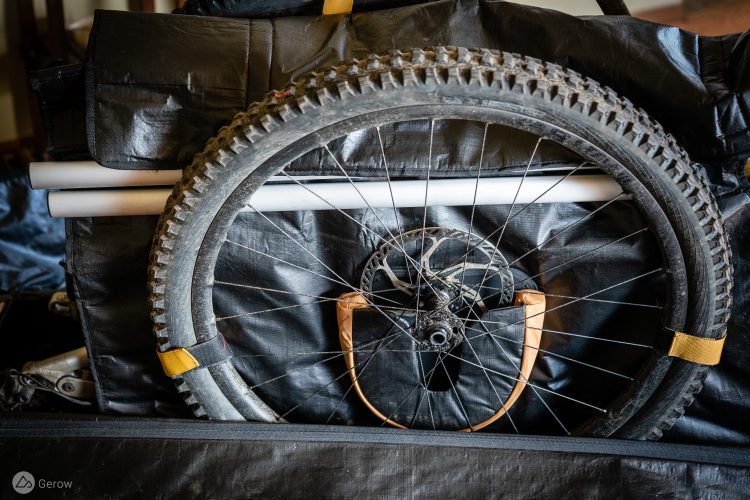
Most local bike shops will pack a bike for shipping for $75 or less. Then you need to either pay to ship it, or pay the airline a baggage fee to bring it, and either way, pay a shop on the other end to pack it for the return trip. You can pack it yourself, and ship it to where you are staying, but it’s still one more thing to have to deal with.

There are a handful of bike shops in Moab, all with decent rentals. A ‘regular’ rental will cost you $40 for the first day and $35 per day after, and a high end demo rental will run $65-$70 per day. I live in Colorado and drive to Moab, so I always take my own bike, but if I was flying, I would rent. It’s just easier and offers a chance to ride something new.

Speaking of Bike Shops

All of the bike shops in town are competent, friendly and knowledgeable about the local riding scene. Here are some specific observations:

Poison Spider: Great shop, excellent service, lots of merch, BUT they are the first shop you see when you come into town. This is reflected in their prices and how busy they are.

Uranium Cycles: Hole-in-the-wall shop, hardly any merch. Marshall, the owner, is friendly, extremely knowledgeable about the local trails, does fast and competent service and rents out Ibis Mojo’s and Niner RIP 9′s. They also have the best priced shuttle service in town.

Rim Cyclery: I’ve not had an opportunity to deal with them, but I hear they’re ok. They finally redid their website. Until recently it said “2006 season”

Moab Cyclery: Center of town, good service, fair amount of merch. Their rentals are reasonably priced and they offer a shuttle and guided tours.

Chili Pepper: This is my personal fave. Lots of merch, great service, supercool atmosphere in the shop, and next door to Moab Brewery so you can grab a pint while they tune up your ride. They have reasonably priced rentals and are actively involved in the Moab scene.

What About Food?

If your accommodations allow you to cook, there are two grocery stores in town: a City Market (King Soopers) and a smaller, independent store. Both are well stocked and the prices are about what you’d pay at home.

All of the fast food places are represented, if that’s your thing. For the more adventurous, here are some local restaurant recommendations.

Pizza:
ZAX pizza is good, but the buffet is a rip-off. Order a whole pie…it’s cheaper and tastes better.

Paradox Pizza has decent prices and awesome pizza; almost as good as back east! Next door to Chili Pepper Bike Shop, and they deliver.

Restaurants:
Pasta Jays has great Italian food, and is reasonably priced.

Moab Brewery has excellent food, micro brews on tap and home-made root beer, all at surprisingly affordable prices. (This is a favorite of mine, my wife and kids, and the guys I ride with)

Eddie McStiff’s, in my opinion, is overrated. I found the prices high, the service mediocre and the food so-so. Make a second trip to Moab Brewery instead.

Miguel’s Baja Grill is highly recommended by the locals, but I haven’t eaten there yet to confirm it.

There are a number of other restaurants around town, so if anyone has any personal favorites, please share them in the comments.

Can We Ride Yet?

For your first trip to Moab, Slickrock Trail and Porcupine Rim should both be on your list. Both are located in the Sand Flats Recreation Area and are subject to a $5 per vehicle day use fee, which is good for three days. Slickrock is a loop, so no shuttle is required. Porcupine requires at least a drop-off, but riding from the end of the trail back into town is not a big deal.

If you arrive early enough, it’s a great idea to hit something like Monitor/Merrimac or the Slickrock Practice loop to get a feel for Moab riding.

Three full days of riding could go something like this:

Travel Day: Slickrock Practice Loop or Monitor/Merrimac

Day 1: Slickrock Trail in the morning, and Amasa Back or Klondike Bluffs/Baby Steps in the afternoon.

Day 2: Gemini Bridges -> Gold Bar Rim -> Golden Spike ->Portal (shuttle required)

Day 3: Porcupine Rim (upper and/or lower, shuttle required) If you still have legs left, mess around at Bartlett Wash

Travel Day: Arches National Park sightseeing in the morning, time permitting. ($10 entry fee)

Of course there are many more trails than this in and around Moab, but the above hits the highlights and is realistic for any average rider capable of moderate physical exertion. You can make it as expensive or as frugal as you like, but even a modest tax return should be enough to cover everything you need for a great trip.

I’ll be there April 27 – May 1, and I’ll be looking for other Singletracks jerseys out on the trails!

Point-to-Point Mountain Bike Trip Logistics

Monday, September 20th, 2010

To me, the most stressful part of planning our recent Durango to Moab hut-to-hut trip was figuring out the transportation logistics. During the trip itself things would be simple – pedal our bikes from one hut to the next – and the San Juan Hut Systems had all the instructions we needed. Getting to the trailhead and returning home was another story and took a combination of planes, vans, cars, and cash to make the round trip a success.

Flying with a mountain bike

Jake and I both took commercial flights into Durango the day before our trip left but our bikes took slightly different journeys. Jake has “status” on United and so he was able to ship his bike out the day before for $85 (each way) which included pick-up at his apartment and drop-off at Durango Mountain Resort (our lodging for the night before we left).

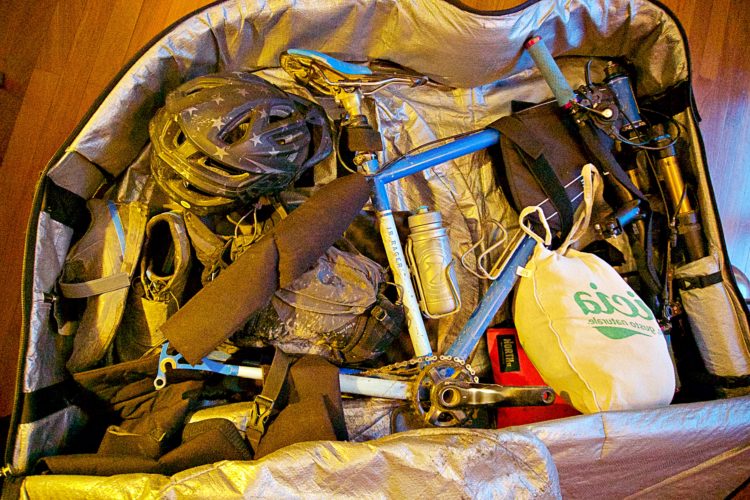
I opted to check my bike on Frontier which I was told would be risky since the airline could lose or delay my bike. The fee was surprisingly reasonable (just $50 each way) and I crammed my box full of clothes and gear for padding and to get around paying to check an additional bag. On Frontier bike boxes have to be under 109 linear inches (length + width + height) and must weigh under 100 pounds. Even my 29er plus gear was well under both size and weight.

Boxing your mountain bike

I didn’t have the original box my bike shipped in so I spent several days the week before trying to track down a suitable box in the Atlanta area. My local bike shop charged me $5 for a used cardboard box which didn’t end up fitting my bike anyway. Ultimately Performance Bike hooked me up with 2 free boxes (first one was too small) and even loaded me up with padding, zip ties, and other packing material. With the box I only had to remove my pedals, handlebar, and front wheel and everything fit easily. No damage from the airline in either direction!

Leaving a car at the end of the route

Matt and Nate took the Porcupine Shuttle to Durango after dropping their car at the end of the route in Moab. I don’t know the whole story but I believe they were allowed to leave the car at the hotel where they stayed the night before the night before the trip. Porcupine Shuttle dropped them right at Durango Mountain Resort which is about a mile from the start of the route.

Getting from airport to trailhead & gear storage

Durango Mountain Resort is actually about 25 miles north of town so the airport shuttle bill was a little high (over $100) for just two of us but we really had no alternative. Once at the resort we decided to opt for an alternate trailhead that was about 15-20 miles away which required yet another shuttle. This one cost 120 bones but split 4 ways it was comparatively reasonable.

Since Jake and I would be flying out of Durango we left our bike boxes and extra gear at Durango Mountain Resort. They had a dedicated storage area in the main building and even gave us claim tickets for our stuff. Jake left a laptop with his stuff and it was still there when we returned. Nice.

Returning to the start

Once in Moab, Matt and Nate were able to hop in their car and head back to San Francisco. Actually, they spent the night in Moab to rest up before the epic 15-hour drive. Good call because after Day 7 of riding we were all spent.

Jake and I caught the same Porcupine Shuttle from Moab back to Durango Mountain Resort. It would have been much more cost effective had we all shuttled from Moab to Durango at once but that’s part of the challenge when the group chooses different modes of travel – lesson learned. The trip from Moab to Durango takes at least 3.5 hours by van and the latest the Porcupine folks will leave Moab is 5pm since that means the driver won’t return to Moab until the wee hours of the morning.

Our hotel for the night after the trip was in the town of Durango so Joey, our driver, graciously drove us up to DMR to pick up our stuff then back down to our hotel in Durango. We got into the hotel after 9pm that night and could have easily made an early morning flight back home (though both of us goofed and bought airline tickets for Saturday instead of Friday). The hotel offered a free airport shuttle which was much appreciated.

Summary

I shudder to think about the cost and time involved in getting to Durango and back but in the end it was all worthwhile. However, when planning a point-to-point trip it’s important to consider both start and end points in terms of logistics. We considered a similar hut-to-hut trip from Telluride to Moab but getting to Telluride (and back) would have been even more difficult (and expensive) than Durango. The ideal logistical solution is to have a non-rider sag the route with you but of course this isn’t always possible. My advice? Figure out all the logistics before you even book your trip so you’ll have a better idea of the total trip cost and you won’t be stressed.

Mountain Biking Durango to Moab: Part II

Wednesday, September 8th, 2010

Here’s where we left off from Part I: two flat tires on the first day, 8 hours in the saddle, and a night above 11,400 feet.

Day 2: Bolam Pass to Black Mesa

durango_moab_day2_11

The next morning we woke up to dark, cloudy skies and a cold wind and none of us were in a hurry to get back on the bike. After making some scrambled eggs and grabbing handfuls of energy bars we eased onto the forest road and started a fast, bumpy descent toward Barlow Lake and highway 145. As I was picking up speed toward the bottom of the descent I felt my rear rim ping off a sharp rock – another pinch flat!

durango_moab_day2_21

By this time we had all recognized the cause of my flats (low pressure) and the all guys took turns pumping up the new tube. In the end I’m guessing we had 60 psi in that puppy which made me feel a lot better (though my ass would soon disagree). After crossing highway 145 we began a gradual climb with incredible views of the valley below.

durango_moab_day2_31

By the end of the day we had ridden 28 miles, descended 4,200 feet, and climbed about 3,000 with a big push coming at the end toward the Black Mesa Hut located at 10,600 feet. It stayed cloudy all day which is pretty rare for Colorado and we were stoked to get a fire going in the wood stove at the hut. After settling in at around 3pm we walked down to a small stream to wash clothes and quickly found ourselves running back to the hut in the rain.

durango_moab_day2_61

Day 3: Black Mesa to Dry Creek Basin

Despite getting some glimpses of the sun the previous evening, we awoke to another gray, windy day above 10,000 feet and we were pretty sure we’d be riding in the rain at some point during day 3. The good news was the route description said we’d be descending more than 5,000 feet and climbing only about two thousand. Downhill is good.

day3_1

Even though our route was completely on forest roads the scenery was great with views of large reservoirs down below and aspen and spruce trees all around us. Forest road 615 offered a surprisingly fun downhill complete with rocks, stream crossings, and gnarly rutted lines.

day3_2

day3_4

At around 7,700 feet we passed by Miramonte Reservoir and were stoked to take a dip – until we felt how cold the water was. I stripped down to my bike shorts and waded in but after just a few minutes my feet were completely numb. After a siesta on the dock we pushed over a short, 700-foot climb and zoomed down to the hut, ending the day at 35 miles.
day3_5

It was pretty amazing to see the changes in scenery from 10,600 feet to 7,200 feet and at this point there were cacti and scrub brush everywhere. The views from the hut were pretty incredible but unfortunately the lower elevations meant no more cold beer for the next few days. We spent the afternoon and evening watching the clouds roll over the distant peaks and nearby mesas and that night a big thunderstorm rolled through and soaked the arid soil. Only in Colorado.

day32_1

The Dry Creek Hut hidden among the Juniper trees.

day32_2

Part III is coming next: Wedding Bell and Paradox Valley.

MTB stage race in India

Thursday, January 22nd, 2009

If you’re seeking a little adventure on the cheap in 2009 consider the Khanchendzonga Mountain Bike Challenge March 18-30 in the Indian Himalayas. The race course will cover 267 miles and nearly 46,000 feet of climbing over nine days of racing. The best part (other than getting to spend nearly 2 weeks in India): the race costs just $500 which includes 3 nights in hotel, 9 nights in tents during the race, and breakfast & dinner. It’s all part of an effort by the Sikkim Tourism Development Corporation to increase travel and tourism in the region. Airfare to India is probably the biggest expense for most riders but once you’re there you’re all set except for the bike!

The race stages themselves are relatively short (between 23 and 44 miles per day) which gives riders the chance to experience the cultural richness at each stop. Tread ranges from singletrack to jeep tracks to village roads so there’s definitely plenty of opportunity to get some Indian dirt on your knobbies!

I had the opportunity to go to India a few years back and although I didn’t make it to the Himalaya it was definitely a trip of a lifetime. I just hope the air quality is better in the Himalaya than it is in some of the larger cities – might want to bring a dust mask just in case!


Site Map | Advertise | Partners | Contact Us | Terms | Privacy
Campground Reviews | Hiking Trails | Trail Running | Skiing / Snow Sports | Mountain Biking
Copyright 2012 Blue Spruce Ventures LLC | Atlanta, GA
singletracks.com is yet another slick Review App