singletracks is mountain biking
Sign In | Create Your Account | Site Map | Help  


WTB Nano Race 29er 2.1″ Tire Review

Friday, December 23rd, 2011

Specs

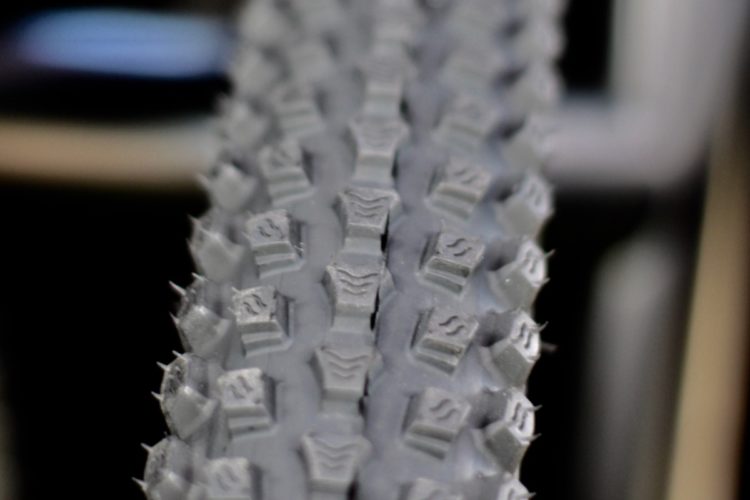
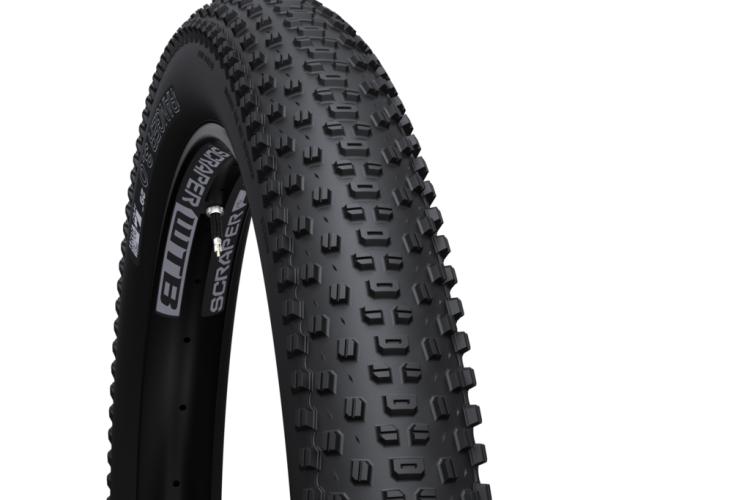
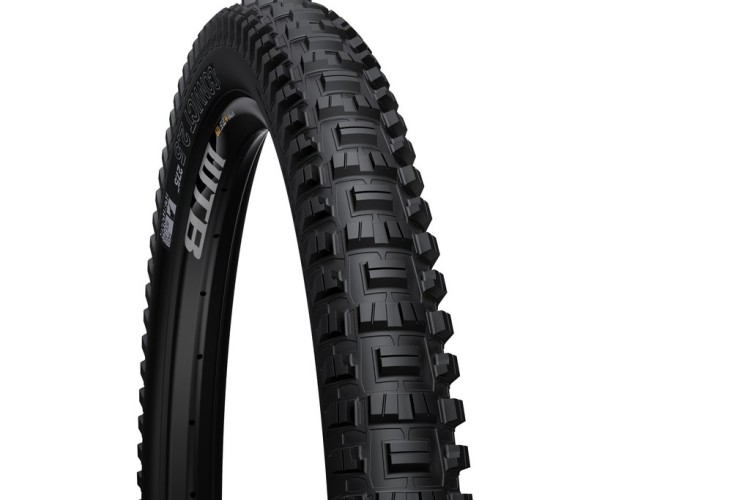
The WTB Nano Race 29er 2.1″ tire features an Aramid bead, DNA rubber, and a lightweight casing. The Aramid bead and lightweight casing definitely help drop weight, and at only 560 grams this tire is light and fast and definitely intended for use as an XC tire. According to WTB, the DNA rubber is a “fast-rolling 60a durometer rubber compound [...] specifically formulated for high-performance riding in a variety of conditions.” As for the Nano’s design itself, WTB claims:

“Its micro-knob design and large supportive casing conquer rough racecourses and roll with the punches on long trail rides. The elevated centerline tread rolls quickly on asphalt and hardpack, while the numerous working edges track predictably in ‘dust over crust’ conditions.”

Let’s see how accurate this description is, shall we?

Test

I’ve put close to 600 miles on the Nano as my rear tire on the Ibex Maroc. Over the course of my extensive test, I was very surprised to discover that despite being relatively narrow and so low-profile, the Nano provides excellent traction!

I think that the Nano’s traction in a variety of conditions can be attributed to the tacky DNA rubber. Despite having “micro” knobs, this tire seemed to stick to most stuff and provided plenty of power as I climbed up and ripped down the mountain, whether I was in Colorado or Georgia.

I’ve found that the description WTB gives above is pretty much spot-on. This tire is great in hardpack and “dust-over-crust” conditions, and I would add that it also handles well in rocky conditions (as long as the rocks are dry).

Negatives

As you might expect, this small-knobbed tire came up short in a few areas. Anytime the conditions were somewhat wet, the Nano started having difficulties. And it particularly hates wet roots. Trying to climb up a damp, root-infested slope that’s a little off-camber? Forget about it.

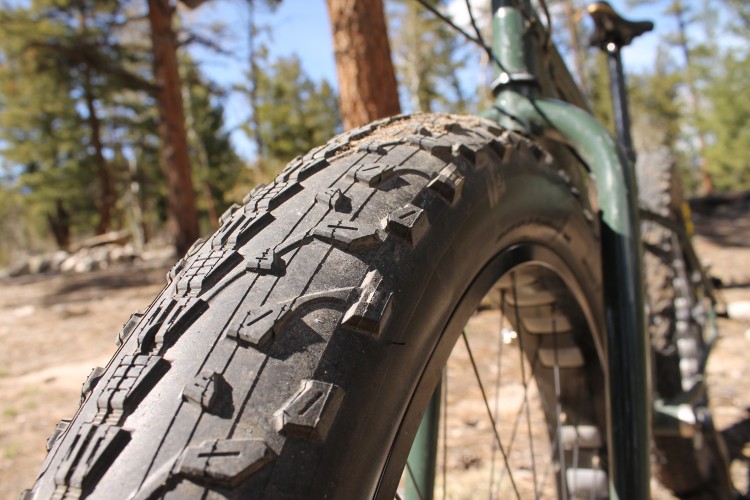
As I mentioned above, the Nano features a super-tacky rubber compound. While tacky rubber equals good traction, it doesn’t equal longevity. At about 400 miles, the Nano was already showing significant wear, and looked ready to be replaced. After 600 miles, I am in dire need of a new tire.

Before / After 400 miles.

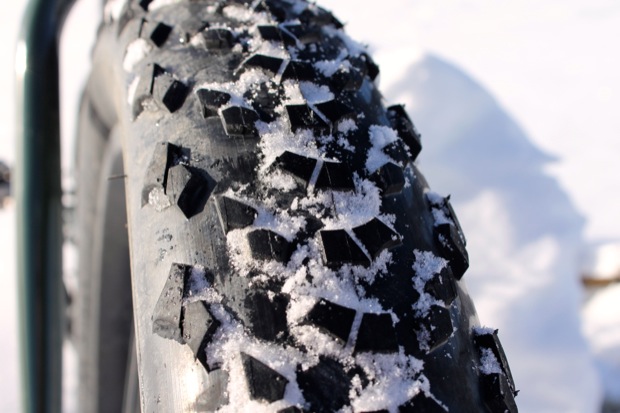
After 600 miles.

Final Verdict

Due to the low weight and the extremely low-profile knobs, the Nano is a fast rolling tire! As the “race” designation obviously indicates, this tire is meant to be raced. It’s not really designed to be an everyday, do-it-all tire for the average Joe but if you’re looking for speed on a dry course, be sure to give the Nano a try!

MSRP on the Nano Race is $65 per tire.

Specialized Renegade Control MTB Tire Review

Wednesday, May 11th, 2011

Spring is here!  After what seemed like a long winter, the trails are finally starting to dry out and firm up.  For me, that means it’s time to switch out my knobby, grippy winter tires for lighter and faster summer tires.  I used a Kenda Small Block 8 (SB8) the last few summers, but after seeing how easily Specialized 2Bliss tires set up tubeless I decided to try the Renegade.  As with The Captain I ran as a rear tire this winter, I opted for the “Control” version.  A lighter S-Works version is also available but has very thin sidewalls and is considered a race-day-only tire.  I moved my Captain tire to the front and put the Renegade on the rear.

Tech Specs

The Renegade is Specialized’s most race-oriented tire.  It is very light and has six rows of small square-ish knobs and a round profile.  The knobs are so small (only about 2mm in the center, 4mm on the shoulder) they are not ramped like similar tires from other companies, like SB8s and Geax AKAs.  The tread pattern is fairly open, with plenty of space between the knobs, and some braille-like texturing between the knobs for a little extra grip.  Here are the specs:

Size: 29″x1.95″ (also available in 26″x1.9″ and 26″x2.1″)
Bead: Folding, Aramid
Casing:  2Bliss
Weight: 510g (1.12lbs)
MSRP: $50-$55

Set Up

I’ve been running this tire on two different wheel sets: with tubes on the WTB LaserDisc Trail I have on test, and tubeless on my personal set with Stan’s Arch rims.  I needed a tire lever to get the Renegade onto both wheels which I think is typical of tubeless-ready tires.  Tubeless set up was easy, just as easy as with a tube.  Put the tire on the rim, add two scoops of sealant, pump it up, go ride.

The Ride

One word describes this tire: FAST!  The Renegade is a third of a pound lighter than the Captain I was running and the weight reduction was immediately noticeable.  The Renegade is much easier to accelerate and get up to speed.  And once you get it going, the supple casing and low profile knobs keep rolling resistance to a minimum – this thing rolls out!

The Renegade is really designed for dry hardpacked trails, but I found it actually works pretty well in the wet.  In fact, I used this tire at the 3rd Snake Creek Gap Time Trial this year, which was very wet.  It gripped the slick roots and rocks really well, but did struggle a bit in the sloppy stuff.  The open tread did a nice job of clearing mud though and never got packed up like my SB8′s did.

In the corners the Renegade held its line really well on hardpack, especially when set up tubeless.  With tubes it tended to bounce around a bit, but the lower pressure allowed by going tubeless cured that.  In loose/loamy soil you have to be careful though – the little knobs on the Renegade can’t penetrate deep enough to take a good hold, so it’ll slip and slide.  It doesn’t just wash out immediately however as the slippage is usually controlled and easy to catch. The good news is I haven’t crashed yet!  While Specialized’s pro racers use this tire front and rear, I don’t think I could handle it up front – it’s just not grippy enough for me.

I haven’t found the braking power on the Renegade to be as good as the knobbier Captain but I would say it’s on par with the SB8.  Where the Renegade struggled the most is climbing, especially in loose conditions.  It’s pretty easy to get it to slip in anything but pure hardpack when you’re out of the saddle really cranking on the pedals. The tire struggles the most in pinestraw.  Also, because the knobs are so short, it wont take much wear before the tire needs to be replaced.  I’m already seeing wear on mine after less than 300 miles; I doubt I’ll get more than one summer out of it.

The Verdict

All in all, I really like this tire and plan on using it all summer.  It is really, really, really fast!  The Control version seems to be plenty tough enough for everyday trail use, tubeless set up is a breeze, and did I mention it’s really fast?  Specialized already has their pro racers trying a new version of the Renegade, hopefully they can add some climbing traction without slowing it down any.

Specialized “The Captain” Control MTB Tire Review

Thursday, January 27th, 2011

I’ve been on the lookout for a new rear tire for my single speed for a while now. For the last 2+ years I’ve been running Kenda’s Small Block 8s (aka SB8) on both my older, full suspension 26″ bike and my newer, rigid SS 29er.  I love that tire, but I had worn the knobs almost down to nothing and I wanted to try something different this time around.  I was looking for a little more volume since the Kenda is labeled 2.1″ wide but the casing is actually only 1.9″.  I also wanted something with more grip in the wet, leafy conditions that besiege the southeast in the fall and winter.  Lastly, I needed a tire that would work well with my tubeless set-up, something the Kenda wasn’t stellar at.

Tech Specs

Enter the Specialized “The Captain” Control 2Bliss 29er tire.  One of Specialized’s most popular tires, it’s marketed as an all around XC/trail tire and I opted for the Control version instead of the lighter, more fragile, S-Works version.  Here’s a quick look at the stats for the version I chose:

Size: 29×2.0 (also available in 29×2.2 and 26×2.0/2.2 sizes)
Bead: Folding, Aramid
Casing: 2Bliss, 60tpi
Weight: 670g (1.48lbs)

Compared to my old Kendas, these are wider with a true 2.0″ casing and 90g heavier.  The Captain Controls also have a lower thread count casing (the SB8 is 120tpi).

All of Specialized’s high end mountain bike tires are available in what they call 2Bliss Ready.  These tires have a bead designed to be tight fitting and strong enough for tubeless use, but do not feature an air tight casing like UST Tubeless tires, so they do require sealant.  The big advantage of 2Bliss Ready tires over UST is weight – they are much lighter.  The 26″ Captain Control 2Bliss Ready tires are 160g lighter than their same-sized UST counterparts.  All 2Bliss ready tires can be used with a tube as well.

Set up

Mounting this tire was just crazy easy.  This was my first experience using a tubeless ready tire, and I don’t think I’ll ever go back to a ‘normal’ tire again.  It was a tight fit, but not too tight: I was able to get it on the rim (Stan’s Arch) without needing tire levers.  It took two pumps with the floor pump to get the tire’s bead seated and holding air.  Two pumps, that’s it.  With the Kenda I had to pump like crazy for a few minutes before it finally seated and started holding air, and I had to lubricate it with soapy water for that to even work.  The Captain took two pumps, no soapy water.  Easy-peasy.

The Ride

After riding these tires for a while I can certainly see why this The Captain Control is so popular.  It has a really good combination of grip and rolling resistance at a reasonable weight, though it is noticeably heavier than my old Kendas.  As a result, the Captain just doesn’t spin up to speed as quickly and it doesn’t roll quite as fast either.  Out on paved or gravel road connectors I could feel the additional rolling resistance, especially on the pavement.  Off road however, I couldn’t tell much difference in rolling resistance (though that may change once the leaf litter disappears).  The Captain certainly doesn’t roll horribly, but it isn’t as fast as the SB8 (to be fair, few tires can compare!).

Where The Captain shines over my old SB8s is in the grip department – pretty much in every direction I need it.  Traction, cornering, and braking, the Captain is far better than the SB8s, especially on loose or leaf covered trails. Even when climbing over wet, leaf covered roots, The Captain hasn’t spun out yet – it just pushes me forward into battle.  Cornering is amazing and even loose, off-camber corners are no problem – the tire just grips and goes.  Braking is better too; it’s much harder to lock the tire up than with the SB8s.

I couldn’t tell any difference in riding comfort, and that’s not a bad thing.  With the lower thread count casing I expected the Captain to be a bit harsher than my old tire, but that just wasn’t the case.

The Verdict

For a lot of people this could very well be the perfect everyday, all-around mountain bike tire.  It would even be a good choice for XC/endurance races if the course is loose or wet.  The Captain has good grip, rolls surprisingly well for such a grippy tire, and it’s not terribly heavy.  And the 2Bliss Ready casing works really well: it’s super easy to install, and doesn’t lose air nearly as quickly as a standard tire.

For me personally, I do miss the lower weight and rolling resistance of my old SB8s but this time of year The Captain is simply fantastic.  The extra grip in the leaves far outweighs the sluggishness, though once summer rolls around and I’m back to riding almost exclusively on hardpack trails, I’ll probably end up switching to something faster and lighter.  But don’t worry – The Captain will be waiting on the wall in my garage for the fall when I’ll put it back into service again!

Schwalbe Fat Albert MTB Tire Review

Friday, July 16th, 2010

albert1

Over the past few years Schwalbe has been gaining momentum, producing some great mountain bike tires like the Nobby Nic. I recently had a chance to test the 2010 Fat Albert 26 x 2.40 Evo Snakeskin Triple Nano (one of 7 Fat Albert flavors) and at $83.55 MSRP it’s not necessarily what I would consider a cheap tire. Do I think it’s worth the money? You gotta read on to find out…
albert2albert3

The Fat Albert is available in front and rear specific tires, each with 7 configurations depending on width and tire compound. I tested the Evo Snakeskins on my FR bike because this tire claims to combine great traction with relatively decent weight. Out of the box the Fat Alberts came very close to their advertised weight (750 grams) and installing them was a snap. I inflated the tires to 38psi (after a bit of debating) and I was off to Blue Mountain with my OPUS Nelson and gear in tow for some serious slope time.

After abusing the Fat Alberts thoroughly on the slopes I can honestly say these perform very well in most of the terrain I have around my area. Some of the trails I rode during my tests were heavily rooted and rocky while others were nearly flat and hardpacked with a fine layer of dust on top. I even pointed the Fat Alberts down a few steep and loamy slopes (think North Shore).

At 26 x 2.4 this tire is well suited for heavier riders (it’s rated for loads up to 330lb. per tire at max pressure). The large volume and low TPI casing allows for more squish before a rim strike. I’m 190lbs with equipment on and I didn’t suffer a single rim ding while racing down the rock gardens at Blue Mountain.

albert4

One thing I learned to love about running the Fat Albert front and rear is the level of traction I got on the trail. In certain off-camber turns the Fat Alberts kept the bike on track, holding lines that other tires I’ve tested simply couldn’t hold. I found I got even more traction out of these tires in moist terrain, usually under tree cover where the soil doesn’t dry out as much. It’s a good thing too – those parts of the trail are usually the most technical with switchbacks, roots, and zig zag turns.

Perhaps the best thing about the Fat Albert tire is its predictability and evenness. When you pitch some tires into corners they tend to change their traction characteristics which can make the rider feel a bit uneasy – but not the Fat Albert. These tires ride very much like another favorite tire of mine, the Maxxis Ardent. Pitching the bike kept the same traction level as I went from the center tread to the transition knobs and finally the U-shaped cornering knobs. Perfect, especially when you’re going fast and threading the bike through steep, technical corridors.

Braking was excellent with the Fat Albert tires thanks to the tremendous amount of grip they offer. Of course that grip comes with a bit of a trade-off  in terms of increased rolling resistance. That’s not to say this is a bad rolling tire but it’s certainly not the best I’ve seen. On flats you tend to feel the tire below you which to me means there’s a bit of energy loss.

If you’re looking for a tough, predictable tire that will corner great, brake great, and survive nearly anything you can toss at it then these are for you. Looking for a tubeless or more economical version of this tire? Check out the Schwalbe website for more Fat Albert configurations.

I would like to thanks the folks at Schwable for sending the tires for review.

Schwalbe Nobby Nic 29er Tire Review

Tuesday, July 6th, 2010

nobby_nic_profile

The 2010 Nobby Nic mountain bike tire from Schwalbe offers big performance gains over previous versions which is impressive given this tire’s venerable and award-winning history. Through several evolutionary changes, engineers were able to improve rolling resistance 15% while slashing 30g from the weight – and yet the thing still grips the trail like a jungle cat!

To understand some of the technology and design decisions that go into mountain bike tires, it’s important to start at the beginning: choosing a rubber compound. Tires start out as a melty, soupy mix of rubber (natural or synthetic) with additional ingredients like carbon, silica, waxes, and oils blended in to influence the performance characteristics of the final product. No matter what is added to the compound, engineers must balance the trade-off between high grip and low rolling resistance meaning it’s impossible to maximize both in a single compound.

Knowing this, many tire manufacturers have created “dual compound” tires that place two different rubber mixtures in certain areas of the tire. This works pretty well but Schwalbe decided to take things further with the Nobby Nic, creating a TRIPLE nano compound tire. With three compounds, each engineered at the molecular level, Schwalbe created a tire they describe as one of the first “allgrounders.” (If you really want to geek out on rubber and tire tech, check out this section of the Schwalbe website.)

nobby_nic_tread

Without going into a ton of detail, here’s an overview of the three compounds and how they’re used in the Nobby Nic. The first sub-layer is designed to offer low rolling resistance with essentially zero grip – which is legit since this portion of the tire rarely contacts the ground. The center tread sports a longer lasting, strong compound which translates into great traction and braking grip. The side tread compound takes grip to the max for cornering and wet conditions but the trade-off is quick wear and super high rolling resistance (fortunately these knobs get the least use on the trail).

Schwalbe offers the Nobby Nic in just about every configuration you can imagine from narrow to wide, tubed or tubeless, and 26-inch or 29-inch sizes. I’ve been testing the 29er, 2.25-inch version which officially weighs in at 640g. The uni-directional tire features a folding kevlar bead that’s lightweight and provides a tight fit on my XC One wheels.

nobby_nic_side

Deep down I’m really an XC rider and looking at this burly, knobby tire gave me a bit of heartburn. I decided to install the Nobby Nic as a rear tire on my hardtail 29er because, after all, I can always use more grip to get me up hills. My biggest concern was the tire would feel like an anchor holding me back on short stretches of pavement or fast hardpack but in reality that simply wasn’t the case. While I certainly wouldn’t call this a low-rolling resistance tire, the allgrounder title may not be much of a stretch after all.

One good test of a tire’s grip is what I call the ping test: ride a stretch of trail with gravel over hardpack and listen for the rock pings against your down tube. The Nobby Nic pings with the best of them and I had a hard time getting the tire to spin out on short, steep climbs. Through sandy stretches I found the tire performed equally well and didn’t squirm or float like other tires I’ve ridden. Of course at low speeds the Nobby Nic will get bogged down in sand like any other tire so always remember to keep up your momentum.

Cornering with the Nobby Nic felt secure and it wasn’t long before I was safely leaning further and further into turns. Matching the Nobby Nic front and rear should improve cornering even more and is a good idea if you plan to ride aggressively through wet or AM conditions. I found this tire worked equally well on the clay and roots in Georgia and the rocks and sand in Colorado.

The Nobby Nic ($87.45 MSRP as tested) is a high performance tire with a design that’s evolved as close to perfection as any other through the years. If you ride a variety of conditions and need the versatility of a three compound tire, look no further than the allgrounder Schwalbe Nobby Nic.

Thanks to the folks at Schwalbe for providing the Nobby Nic for testing and review.

Two Tires from WTB: Mutano 2.4 TCS and Weirwolf 2.3 TCS

Tuesday, June 1st, 2010

wtb1wtb3

At this point in the season you’ve probably hit the trails half a dozen of times and might be realizing that your rubber isn’t as good as you remembered it. Well, if you’re an AM or technical XC rider, I have two tires for you – one you may already know and another you may not (yet). The Mutano AM TCS ($60 MSRP) comes in two sizes (2.2 and 2.4 which I am reviewing) while the Weirwolf AM TCS ($60 MSRP) has been totally redesigned for 2010. Just like the Mutano, the Weirwolf also comes in two sizes – 2.1 and 2.3.

wtb5

Mutano 2.4 TCS

The ‘TCS’ in the Mutano 2.4 TCS stands for Tubeless Compatible System. WTB’s TCS tires feature a bead that is UST compatible along with a durable tire casing for All-Mountain use. With the Mutano you also get a good measure of security with WTB’s inner peace – a thin layer of nylon on the side walls that reduces tire flex and the chance of pinch flats. Perfect for those of us who race through the nastiest terrain!

The Mutanos also feature Dual DNA rubber, two different rubber compounds that give you the best of both worlds: a longer lasting compound in the center and a slightly softer compound on the side to improve traction and control. At about 700 grams, (bring a scale to the store and check them out as they do vary in weight) the Mutanos aren’t breaking records in terms of light weight but that’s not what these tires are about.

Taking the Mutanos on the trails was inspiring and they worked exactly as intended without any surprises (just the way I like it). These skins work equally well on everything from hardpack to loamy tread. As a larger volume tire you might think these would be sluggish and unresponsive but fortunately this isn’t the case. The Muntanos handle great in the corners when you lean into it with serious pitch. Even at the limit of traction in corners, these tires lose grip slowly rather than all at once.

Climbing with the Mutano tires on my Opus Maadh was great. I was able to stay in the saddle, spinning the tire without it wanting to let go. Getting out of the saddle and trying to do the same thing yielded less than stellar performance, with just a touch of side slip (not that much but it’s worth mentioning).

Pointing the bike down a slope and in high-speed sections of the trail the Mutanos felt very comfortable. I really like the way they grip the terrain with very little vibration thanks to the tread pattern’s center row of semi-solid strip. Stability is also derived from the slightly smaller, lower profile blocks.

In the soft stuff the Mutanos aren’t super hot. Once again these are not really designed for the mega soft stuff you find on some trails so keep that in mind if you ride in the soup.

Weirwolf 2.3 TCS

wtb4Sharing the same carcass as the Mutanos with a UST Aramid bead, Inner Peace, and the Dual DNA compound, the Weirwolf is a long lasting, pinch resistant tire. Although the Weirwolf  is called a 2.3, it’s actually a bit wider at the tread than the Mutanos by 2mm. The casing is smaller but the tread depth is a bit deeper and wider. WTB says the Weirwolf is designed for loose conditions like gravel and rocks all the way down to the wet stuff. At about 800 grams these are heavier than the Mutano tires. Don’t worry though, it’s just physics: more tread = more weight.

On the trail the Weirwolf has a completely different feeling. The Weirwolf was designed by WTB’s Mark Slate, Mark Weir (hence the funky spelling), and Jason Moeschler or, as i think of them, M²J. Intended for the XC – AM crowd, this tire behaves like a NASCAR in the corner with a bit of slip before it bites.

I took me some time to adjust to riding these tires – I wasn’t kidding about the slip before grip! Clearly the best application for these tires is the softer stuff where you need bite into the dirt. These tires aren’t so great on the hard pack because they’re not as efficient as the Mutanos or even the Vulpines.

Where the Weirwolfs perform best is technical, twisty trails where you need a high degree of traction. That being said, you have to be willing to pitch the bike a bit to allow the progressive side knobs to do their best at hooking you in your trajectory. For the brave who really like to pitch, these tires let you to lean into the corners. During testing I lost traction more than once attempting to pitch corners and in each case the terrain was close to hard pack. Each time I also noticed that the tires were tracking well then all of a sudden lost it woosh… down I went.  On the soft terrain it was totally different story – good traction until they lost it and progressively slipped, giving me a warning to dial things back.

In the climbs I found the Weirwolf tires offered nice traction; they felt a bit slower than some other tires but at least the climb was sure-footed. At high speed they felt comfortable without too much vibration (only a touch more than the Mutanos). Descending and braking is where the Weirwolf’s shined once again, allowing my powerful brakes to really stop the bike. I appreciated the assured feeling I got when stopping with these tires. I had more than one of those “oh crap” moments where I almost got tossed over the bars from clamping too hard on the chicken switches.

The Verdict

Overall these two tires from WTB, the Mutano and the Weirwolf, are good buys and will surely put a smile on your face. The Mutano works best on harder surfaces while the Weirwolf howls on softer surfaces. At the end of the ride you can’t really go wrong with either one – just make sure you select the right tire for your riding style and terrain.

A quick thanks to the folks at WTB for sending up these two tires for review.

Two DH Tires from ITS: The 909 & Intruder

Thursday, April 15th, 2010

its1

If you’re into running the slopes with your DH / FR bike or want a bullet proof tire for you AM bike, check out the 909 and the Intruder from Intense Tyre Systems. These are two tires with one purpose, each built for slightly different trail conditions. Both the 909 and the Intruder are available for around $49.99 MSRP each.

The 909 and Intruder feature foldable lightweight beads, which let’s face it, is a good thing when it comes to storing or keeping a few spares around. As with many true DH-specific tires, these babies are double ply which means they have 2 layers of fabric instead of one, increasing durability without increasing weight. Along the side of the tire, ITS adds something called a Pinch Flat Bumper which prevents the tire from folding over on itself and biting the tube. As an added benefit, the Pinch Flat Bumper allows you to run a few pounds lower pressure to increase traction even more. With 50a Durometer black stuff covering the carcass of the tire you have a rubber that will stick well to many surfaces. The downside is that these tires won’t last as long as some other tires on the market but if you’re looking for a tire that sticks then that’s the trade off you have to make.

its2its3

ITS 909 Mountain Bike Tire

First up on the course was the ITS 909 which weighs in at 1163 grams for the 26 x 2.35″ version. ITS says the 909 is good for loose, soft, and intermediate soils. With six rows of tread, the two center knobs are set so that you have twins side by side with alternating spacing, giving you a combination of good traction with lowish rolling resistance. Still, the spacing between the center knobs is enough to tackle softer terrain (though not mud).

The transition knobs that lead into the cornering knobs are a perfect balance of bite without the squirm. This makes the 909 a good choice for riders who want decent traction and aren’t afraid to pitch the bike into the berms. During my testing I found that the 909 easily allowed me to get nearly horizontal.

Over boulders and rock gardens I felt comfortable knowing that the Pinch Flat Bumper was there. I did notice however that the tire needed a break in period to relax the carcass of the tire. Over the first few runs the tire was a bit sluggish when turning and did slip ever so slightly compared to later when I had many more runs into it. After break-in I found the tire flexed underfoot and gripped wonderfully in the corners (inflated at 36psi). I also found the tire was at its best when the ground was soft enough that riding over the trails left a slight imprint in the ground (about a 1/16th of an inch).

909 Overall impressions

8 out of 10 for rolling and efficiency
7 out of 10 for loose conditions
8 out of 10 for intermediate conditions
7 out of 10 for hardpack conditions
7 out of 10 cornering (*8 when intermediate)

909 Specs

Usage: DH
Conditions: Loose – Soft – Intermediate
Size: 2.35
Compound Sticky Rubber LSG 50a compound
Weight: 1163 grams

its4its5

ITS Intruder Mountain Bike Tire

The second DH tire that I had a great time playing with is the new Intruder 26 x 2.35″. The Intruder weighs 1200g which is officially just a shade heavier than the 909 but my scales showed the two tires weighed nearly the same. Just looking at the tread pattern you can get an idea of what this tire is made to do. When the weather gets bad or the course you’re running gives you everything from hard to loose terrain, the Intruder has your back.

The Intruder loses a bit on rolling resistance due to the more open center block pattern but the good news is the tires resist caking and packing of loose soils after hitting soggy sections. The intermediate blocks on the Intruder sit a bit higher than the 909s and are spaced a little wider from the cornering blocks. On some tires this would cause the tires to squirm but in this case the strategically placed blocks track straight and offer good cornering performance. The upshot is this tire will inspire you to really pitch it, even in the loose stuff.

While the Intruder is a great tire, it’s not as well suited as the 909 for dry courses. Where the Intruder really shines is in damp situations, especially when cornering. Most of my FR buddies who tried this tire agree.

Intruder overall impressions

7  out of 10 for rolling and efficiency
9 out of 10 for muddy conditions
8 out of 10 for soft conditions
7 out of ten for intermediate conditions
8 out of 10 for cornering (9 for damp soft stuff)

Intruder Specs

Usage: DH
Conditions: Mud – Soft – Intermediate
Size: 2.35
Compound Sticky Rubber LSG 50a compound
Weight: 1200 grams

Thanks to the shredders at Intense Tyre Systems for providing these tires for testing.

Intense Tires MK2 Review

Monday, March 22nd, 2010

mk21

Intense Tires has gone and done it again, improving an already stellar design with the MK2 (previously known as the Micro Knobby). The MK2 sports all the great virtues of the Micro Knobby tire and cranks things up a notch.

For starters, the new MK2 is designed to outlast the Micro Knobby thanks to changes to the very center of the tire tread. The new pattern is reversed which makes it more like a slick that decreases rolling resistance even further than the original. The upshot: the MK2 has up to 3X the life expectancy of the original.

Not only did ITS change up the tire profile but they also changed up the rubber compound, which reduces the weight by 18%. Aside from the ultra lightweight rubber compound (called LSG), the MK2 also features a lightweight folding aramid bead for additional weight reduction. The MK2 is offered in two sizes: 26″ x 2.10″ and 26″ x 2.25″. The 2.25″ officially weighs 580 grams but my set came in lighter at about 550 grams ± (woot!).

mk22

Just like the original Micro Knobby tires, these rubbers are meant for street and dirt jumps exclusively. Unlike the Kenda Small Block Eight or similar tires, these are not trail-ready tires.

Mounting these babies on my OPUS Crate was a piece of cake with virtually no need for tire irons. I did my usual, adding some talcum powder to help reduce friction between tube and tire. I inflated these puppies up to a good 40 psi and was off and rolling (rather quickly I might add) to Joyride 150 for some sessions on the indoor pump tracks and progressive jump track.

Yours truly at Joyride 150 hitting the pump track and some of the jumps on MK2s

It was fun testing these tires after doing an in-depth review of the MK1s last year because it gave me a chance to compare the new with the old. The Micro Knobby tires were fast but right away I could tell the MK2s are even faster! Control is improved as well and hitting the pump track and skinnies the MK2 tires hook up like no one else’s business. In the video I have on my full face helmet so you couldn’t see it but I had a huge smile as I was moving along at a crazy speed.

For DJ or skate park riding, the MK2 is, in my opinion, the top tire. There are other tires out there that are more slick or wider but I have to say these offer a great mix of features. I’m loving the tread profile which allows me to easily pitch the tire and bike horizontally on a berm and come back without a hint of wobble or slip. Even when going slow in a bank I noticed virtually zero slip (I wonder if there’s any super glue in the tire compound).

Accelerating and braking with this tire is much like a race car: super fast acceleration, no noise whatsoever (noise indicates loss of energy), and Spiderman-ish grip. Stopping power is great for the front tire while the rear tends to lock up just a touch once it gets unloaded.

Overall I would highly recommend these tires to anyone who is planning on doing some dirt jumps or urban riding. These tires are definitely Intense – can you handle it?

Specifications

MSRP: $39.99
DJ / 4X / Urban
Folding bead
C3 XC Compound
LSG Compound (Low Specific Gravity)
Single ply
580 grams

Thanks to the folks at ITS (VSI) for providing these tires for review.

How to change your MTB tire

Saturday, January 17th, 2009

Whether you’re on the trail or in your driveway, it’s no big deal to fix a flat mountain bike tire. In the ideal situation, all you need is a pump, tire levers, and a new tube.

If your tire still has some air pressure left in it, release the air by pressing in on the tire valve. Depending on the type of valve your tire has, you may need to unscrew the pressure release or use your fingernail to press the release valve.

Next, pull the tire away from the rim. You may need to use your tire lever to get the tire started, once it’s out you can trace around the rim to quickly remove one side of the tire. Repeat the process for the other side of the tire wall. Don’t forget to remove the screw locking ring if your tubes have one.

Remove the tire and tube from the rim. Check the rim to make sure there isn’t anything ganky on the rim that could have caused your flat. Pay particular attention to the rim tape covering spoke connections inside the rim and replace as necessary. Run your hand through the tire itself to check for thorns or other sharp objects. If something causes you to bleed there’s a good chance that it’ll pierce your tire as well.

Now you’re ready to start putting things back together. Inflate your new tube with just enough air to give it some shape. This will help you place it in the tire easily. Place the tube completely inside the tire like a hot dog in a bun. Find the valve hole on your wheel and place the valve stem in the hole.

Start working one side of the tire onto the rim. You should be able to use your hands for most of it, once you’ve made your way around most of the tire you may need to use your levers to pop the tire wall bead inside the rim. Repeat for the other side (note: the second side may be more difficult than the first, especially for tight fitting tires).

Before you begin inflating your tire it’s important to make sure the tube isn’t pinched between the rim and the tire (called a pinch flat). Start at a known point on the tire (I usually start at the valve) and work your way around the tire looking for pinches. When you get back to your start point, flip the tire and check the other side all the way around.

Now you’re ready for the fun part: pumping. Inflate your tire to a reasonable pressure. My pump has a gauge that’s marked for different types of bike tires. It recommends 30-60 psi for mountain bike tires but it’s really up to you. If you like a squishy ride or you like to use your tires as a poor man’s suspension, keep the pressure low. If you’re riding hardpack you may want to go for a higher pressure which will help you go faster. I personally prefer staying at the high end of the range because I’ve found that I get fewer flats on the trail at higher pressures.


Site Map | Advertise | Partners | Contact Us | Terms | Privacy
Campground Reviews | Hiking Trails | Trail Running | Skiing / Snow Sports | Mountain Biking
Copyright 2012 Blue Spruce Ventures LLC | Atlanta, GA
singletracks.com is yet another slick Review App