singletracks is mountain biking
Sign In | Create Your Account | Site Map | Help  


Cinema Sunday: Downmall

Sunday, December 25th, 2011

We’ve all dreamed about riding our mountain bikes in places that we know would get us thrown in jail… through the middle of a crowded mall being one of those places.

At this annual race in Prague, though, a lucky group of riders get to legally do just that in front of hoards of screaming fans:

Your Turn: What other urban settings do you think would be great for mountain biking?

Cyclecross For Mountain Bikers: My First CX Race

Thursday, December 15th, 2011

Cyclo-cross is the fastest growing segment of competitive cycling in the country right now.  Chances are, if you don’t race cross (as it’s also called, or, CX for short) you know a few people who do.  So what’s it all about?  Why are so many people racing skinny-tired, road bike-esque bikes off road?  I recently set out to answer these questions myself, and when there was a local CX race, I showed up, pinned on a number, and tried it out.

It might just look like a bunch of roadies riding around someone’s front lawn, but cross is actually a ton of fun.

What is Cyclocross?

Cross is a multi-lap race around a short course that utilizes a variety of surfaces (pavement, gravel, grass, sand, dirt, etc) and usually contains some obstacles such as barriers and run ups (super steep climbs that are usually faster to run rather than ride).  They’re usually set up at a park, and rarely feature real singletrack.

A proper cross bike is sort of a mix between a mountain and road bike.  They look like road bikes, with skinny tires and drop bars but the geometry is a little different, the gearing is a little lower, there’s clearance for mud, and the tires are wider than true road tires and they have some tread on them.  The UCI (the governing body of professional cycling) has some restrictions on what sort of bikes and components can be used at the pro level, but you’re not racing in a pro class, so don’t worry about it – your mountain bike is fine, even if it’s full suspension.  Bar ends are not allowed however.

Augusta CX: The Course

The Augusta CX is part of the GA Cross Series and was held at the Lake Olmstead park in Augusta and hosted by the Augusta Cross Coalition.  Part of the course was on a baseball field (using both the infield and outfield), there was a little pavement across a parking lot and on a paved bike path, and part of the course was off road through a grassy area.  There were two barriers, and lots of tight switchbacks to test your cornering confidence.  There was one beast of a climb, not long, but really steep with some rocks and no momentum going into it.  A lot of people walked it, and some fell over trying to ride it.

There was a lot of grip on the infield, as long as you stayed out of the rutted loose spots.

The Bike

I raced my geared mountain bike, which has a lot of parts on it I’m either testing or have already reviewed.  I made very few changes.  I did have to get rid of my wonderful Ergon grips because they have bar ends built in so I put some cheap foam grips on for the race.  I put an extra few pounds of air in my tires (the Specialized Ground Control and Fast Trak) to speed up the paved sections and firmed up the Terralogic function on my fork by a few turns.  The course was pretty smooth, so I was perfectly happy to sacrifice some smoothness for efficiency.  I’m still getting used to the lighter weight Fulcrum wheels I recently installed, and that light weight was greatly appreciated at the ‘cross race where there are lots of tight switchbacks to accelerate out of.

The Race

At the start I lined up near the back of the group, figuring I’d wait a little while to see how things went before trying to move up.  There were 27 of us in my class, and one of my co-racers was my friend Drew, also doing his first CX race.  My goals were simple:  don’t get hurt, and don’t let Drew beat me by too much.

Off the pavement and back into the grass.  Photo: brianW

A countdown followed by a whistle got us started.  All of us took off as hard as we could on the narrow course, elbow to elbow, wheel to wheel.  Soon we got to a set of tight switchbacks; hard on the brakes, hard (but slow) right hander, one or two pedal strokes, brake, then a hard left.  Someone crashed right in front of me going into the first switchback and I got stopped just before I monster-trucked over his rear wheel.  Lucky him.

Trying to make a pass on the outside.  Photo: brianW

Once underway I started working my way forward, picking off a rider here and there.  When we hit the first paved section I put it in the big ring and hammered, and surprised myself when I passed a few people.  Shouldn’t they be faster on the pavement with their skinny little tires?  The paved section ended with another test of handling: hard diving left down the hill into an off camber right handed u-turn back up the hill, then, back into the grass, into the rougher section of the course.  My high volume mountain bike tires were an advantage on this section since I could more comfortably bomb the downs and carry more speed through the loose corners.

The Climb was really steep!  I rode it every lap, but it really sucked the life out of me.  Photo: Kim Jordan

When we reached The Climb I was behind a group of four, all of whom dismounted to run, but I rode the climb and passed them all.  Then I immediately fell over at the the top, on the first bit of level ground.  I’m not sure what happened exactly, but I think my front wheel lifted slightly while I was torquing on the bars and mashing a pedal, and when the tire lifted the bike just swung out from under me.  I bounced right up and got moving again; I think one person passed me back.

We did four laps (about 30 minutes total), and the pattern pretty much repeated itself.  I would close in on people in the tight corners, and did most of my passing on the paved sections and going up The Climb.  I rode The Climb each time, and managed to stay on my bike the rest of the race.

On the third lap I realized that I had closed in on Drew – he had gotten a better start than I did, but now there were only two people between us.  There was also someone right on my wheel that I couldn’t seem to shake, a local named Mr. Johnson.  You have to call him Mister because he is an older gentleman, about twice my age.  He’s also a monster and routinely rides the legs off us younger folk.  I met him at the Cohutta/Big Frog 65 a few years ago when he was using the race as training for the Leadville 100.  I bonked and had the worst ride of my life, Mr. Johnson beat me by several hours, taking 2nd in his class!

Mr. Johnson passed me, but I passed him back…and almost took us both out.  I have no idea why I’m trying to lift my bike over my head to get over an 18″ tall barrier. Photo: Kim Jordan

Back to the cross race… he passed me a little before the barriers, but I was able to run him down (literally) through the barriers and then I almost took us both out when I fumbled the re-mount and swerved into his path – sorry about that, dude.  Mr. Johnson was on me like white on rice for the entire 4th lap – I couldn’t get away!  He got up next to me once or twice, but didn’t go all the way around.  I managed to get past the riders between me and Drew but Mr. Johnson stayed on my wheel the whole time.

I had Drew in my sights, but Mr. Johnson was right on my heels. Photo: brianW

When we hit the base of The Climb for the last time, Mr. Johnson was right next to me, and Drew was just ahead of us.  Mr. Johnson dismounted and ran the climb, so I was able to (finally!) put some space between us for good, but I couldn’t catch Drew.  Between The Climb and the finish he pulled away.  I finished in 12th place out of 27.  I made it into the top half and I was super stoked with how the race went overall.

When Mr. Johnson opted to run The Climb I was finally able to but some distance between us.  Not sure I could have held him off if he had ridden The Climb.  Photo: brianW

Afterthoughts

The race was a blast.  It was short, and high intensity the whole time, riding wheel to wheel at high speeds through tight corners – a total rush!  You’re either pedaling as hard as possible or pushing your luck in a corner, trying to maintain as much speed as your tires will allow.  Luckily for me this particular course didn’t really favor a ‘cross bike over a mountain bike.  The ‘cross bikes were a little faster on the baseball field section, where the lower rolling resistance and quicker acceleration out of tight corners was an advantage.  But on the other half of the course my mountain bike seemed quicker.  It was rougher and there was less grip in the corners, so having bigger, knobbier tires helped.  The extra traction and lower gearing were an advantage on The Climb as well.  I thought I would be at a disadvantage on the pavement, but that didn’t seem to work out.  I think the fact that no one passed me on the pavement, yet I passed several people, speaks volumes to the rolling speed of the Specialized Ground Control and Fast Trak tires.

Cross courses are really compact, which makes them very spectator friendly since much of the action can be viewed from a single location.

The atmosphere at the race was great, everyone was having a good time, and no one was taking it too serious.  It was just good plain fun.  Cross races are really spectator friendly, so there was always someone there cheering you on, and when you’re not racing you can watch one of the other classes.  Besides being fun, it’s also a great way to work on your bike handling skills.  There was nothing technical, but being able to corner hard was a big advantage, and there were lots of opportunities to work on that skill.  Cross season is winding down, but you can probably still find a race nearby to try out if you’re interested.  And if you enjoy riding your bike, pushing yourself physically, and hanging with bike people, ‘cross is right up your alley, so give it a shot.  If you’re not so sure about racing, at least go and watch a race, it really is good fun.

A racer hangs his head in pain as he hits the pavement.

Have you ever done a ‘cross race?  Tell us about it in the comments section below.

Big thanks to Ross and the entire Augusta Cross Coalition for putting on a great race, and brianW and Kim for the photos.

Help Save 24 Hours of Moab

Wednesday, October 5th, 2011

Photo courtesy Granny Gear Productions, Inc.

Last fall I rode 24 Hours of Moab as my first mountain bike race ever. Seeing a tent city pop up in the middle of the desert, riding a fairly technical course at speeds I didn’t think I had in me, and doing it again in the dark while hanging around the start/finish area with my teammates eating food and watching the other racers was collectively the highlight of my mountain biking experience last year.

As a former participant, I am now on their mailing list and I just received a rather disturbing email from Lance Knight, the race director.

After 16 Years, This Year May Be The Last 24 Hours of Moab
In recent years there’s been a trend towards teams signing up later and later. Distressing as this has been, taxing our ability to anticipate and plan for the size of the event, we’ve been gratified to see late registrations consistently pour in, and “save the day.”

This year, going into the last two weeks before the race, our pre-registrations were only slightly down from previous years. That was a little un-nerving but not alarming, given the trend we’ve observed. In previous years we’ve seen 40-60 teams sign up two weeks before the event and fully 75-85 teams sign-up in the final week leading up to the race.

This last week we have seen only 10 additional teams sign up. Now that’s alarming. It does not bode well. While in recent years we have seen fields of well over 350 teams, at the rate things are going, even 300 teams would appear to be an optimistic expectation.

There is no doubt that the economy plays a huge part in how we spend our recreational dollars. For my part, I am purchasing a new bike and taking the family on a much needed vacation. With gas still over $3 a gallon, plus registration and camping fees, 24 Hours of Moab is just not feasible for me this year. “I’ll go next year,” I told myself, and apparently I am not alone. But unless something changes, next year may not happen.

24 Hours of Moab is a tradition among mountain bike endurance races and to see its demise would be tragic. With the race occurring this weekend, it is very short notice for teams to pull together an entry, but there are some things you can do if you’d like to help:

What can you do about it?
a) If at all possible, sign up and field a team in this year’s race.
b) If you can’t race this year, put a shoulder into making 2012 happen
c) If you’d like to make a contribution on behalf of your team, register a “phantom” team.
The Men’s or Women’s Solo Singlespeed class is the lowest entry fee ($162 total).
An inordinately large “turn-out” for the solo singlespeed class would certainly send a clear message about the support for the continuation of the event. (Even if you don’t show up, we’ll mail you this year’s T-shirt!)

Let’s see what we can do to save this iconic mountain bike race. If you’ve ridden it in the past and loved it, if you plan to do it “someday,” or if you just hate to see traditions die, please consider helping out.

You can read the race director’s complete message here.

And you can register for the race here.

USA Pro Cycling Challenge Coming to Colorado: A Mountain Biker’s Guide

Friday, August 5th, 2011

Next week I’m heading to Colorado to preview a couple stages of the USA Pro Cycling Challenge race happening August 22-28. Even though it’s a road race this will definitely be an event mountain bikers can get excited about. Here are four reasons to pack your bags:

  1. Amazing mountain backdrops. This is Colorado after all and with stages traveling between places like Crested Butte, Aspen, Vail, Steamboat Springs, Breckenridge, and Golden the scenery will not disappoint. Oh, and I’ve heard there are mountain bike trails in some of these places (more on that later).
  2. The field is stacked with 136 big name cyclists. I know some of us might not want to admit knowing these guys but c’mon – the top 3 finishers from this year’s Tour de France will be racing in Colorado this month (Cadel Evans, Andy Schleck, and Frank Schleck). Bonus: Cadel Evans actually started out as a mountain biker, winning two World Cup titles and finishing 7th in the 2000 Olympic MTB race.
  3. The race is expected to be one of the largest spectator sporting events to take place in the US. Ever. Organizers predict about a million people will watch the race during the week and spread over 518 miles, that’s almost 2,000 fans per mile. My suggestion: head to the Prologue time trial or the top of one of the high mountain passes to get the full crowd effect.
  4. Watching the race is a good excuse to ride a new mountain bike trail. Stage 1, for example, crosses over Monarch Pass which just happens to be the trailhead for the Monarch Crest trail maddslacker wrote about earlier this week. And if you’ve never been to a pro cycling race before, it’s basically just a big party at the side of the road – perfect for unwinding after an epic trail ride! Hopefully you’ve saved up a few “sick days” at work…

Because this race is such a big deal and we LOVE to talk about the mountain biking in Colorado, we’ll be posting a series of trail articles centered around each stage of the USA Pro Cycling Challenge. First stop: the Prologue in Colorado Springs!

Race Report: Gravel Metric 2011

Monday, June 20th, 2011

The video above got me curious about this whole gravel riding phenomenon out here in the middle west. Then I saw this and I was hooked:

A better name for this race: “A Dangerous and Exciting Thing to do on a Sunday.” The second annual Gravel Metric held by the North Central Cyclery of DeKalb, IL was on Memorial Day weekend. I’m new to the midwest, own a badass new cyclocross bike that has helped me stay in trail shape during the off season, and have a healthy disregard for personal safety and severe storm warnings. Additional bonus: I’ve been pumping iron with James Wilson’s Mountain Bike Dumbbell Combos and these days I’m feeling strong like bull.

The author post race, but imagine the entrance (in full motorcycle riding gear) and the impression made.

Photo credit: Audrey “Floozefactor?

At the start about 120 riders queued up to listen to the final instructions. A casual glance around told me there were some ringers in this crowd. Slick kit, high-end cross bikes built for nothing but speed on the unpaved. The most serious-looking of the contenders brought nothing unnecessary: two bottles, energy food of choice, themselves, and their machines. I felt positively portly carrying a third water bottle, a rain jacket and a steel cross bike with fenders. Ah well, I’m out to do well, ride my own pace and have fun. We’ll see how that goes.

More like lead grey skies but otherwise it started out looking sorta like this

As we rode group-style from downtown DeKalb to the end of pavement it became obvious there were some determined lads and lasses that came to hammer. I tried to maintain a front-of-the-middle position. There was some confusion as to whether we would regroup and have an official start out in the country. Turns out that was not the case, and once the road turned crunchy it was a balls-out sprint start. I turned up the heat and rolled with the second pack for a bit, but soon I realized I was going this one alone.

Falling into your pace is a great feeling; with the knowledge that you’ve got a 100K day ahead of you (about 63 miles in Americanese) you find that balance that’s fast enough to move the miles but tame enough to sustain for the next few hours. I can do this, as long as it doesn’t rain…

Photo credit: Audrey “Floozefactor?

Oh yeah, then came the rain. There was very little lead up to the heavy stuff, just fat raindrops that came faster and more profuse as we continued the grind. As the real steady rain set in we hit the first dirt section. Check that: it instantly became the mud section. That was about the time my bike ride turned into a hike with a very uncomfortable backpack. We slogged through mud and high weeds pushing, carrying and every once in a while trying to remount and spin. And to think I left my “getting dirty” shoes at home…

As some of my fellow bike masochists know once you’re wet it ain’t that bad. You give in to the fact that you’re out there, it’s 30 miles if you turn back or 30 miles if you soldier on. My phone and wallet are in a bag, I’ve got a Pearl Izumi rain jacket on keeping me warm enough, I took the bike with fenders (such a good call) – let’s knock it out. So that’s how it went for the next hour or two.

Photo credit: Gnat. Found on northcentralcyclery.com.

Did a little stream crossing, then climbed a long hill that someone referred to as “The Lollipop.” It was the out-and-back section around mile 40 that had the last checkpoint. It was a long, straight climb to the top of a hill in an intense rain and electrical storm. There were cookies at the checkpoint, and as I reached into the basket that one of the kind volunteers offered to me my jacket sleeve let out at least a pint of rainwater onto said cookies. Still, best cookies of my life. Iced oatmeal. Thus refueled I turned back and jammed down the hill as the lightning struck all around us. It was a real hammer of Odin type storm, and I was hooting and hollering with that manic energy that you only get when there’s real danger to your safety, there’s nowhere to hide, and you’ve accepted it and decided to go for it anyway.

They decided not to go for it. Probably wise

Photo credit: Audrey “Floozefactor?

After all that the ending was anticlimactic. I rode some more, got a glorious tailwind for a few miles and was able to cruise down the farm road at 25mph, and generally tried to keep my momentum. The last stretch of 8 miles was on road and surprisingly that was the toughest part. When we got back to North Central Cyclery the kind and generous proprietors had the doors open, the heaters on and the basement BMX room available as a changing room. Suitably dried and refreshed we decamped to a local bar for beer, raffling of schwag, and stories of increasing exaggeration. I had an amazing time, kept a 16mph average speed for 65 gravelly miles, met some new nutty bikers, and rode my motorcycle – what the hell more is there?

Sea Otter 2011: Mega Recap Post

Thursday, April 28th, 2011

I had an absolute blast at the Sea Otter Classic this year! I don’t think it’s possible to spend the week at Sea Otter and not have a good time! It’s over a week later and I still haven’t finished sifting through all of the information that I collected at the event and writing reviews of all of the products that I tested, so there is no way that I could recap the entire event in just one blog post. Instead, I’d just like to post a collection of photos of cool products that I saw along with a few of my general impressions from the event.

Sea Otter Classic Venue

View of the expo. Photo Credit: brightroom, seaotterclassic.com

Interesting MTB Products

Here are a few products that I thought were just plain awesome:

Dirty Dog DH Stem

Dirty Dog Stem

All photos with no other credit listed were taken by yours truly.

Stem

Dirty Dog is known for creating incredibly unique brake rotor designs. This new stem named the “Reaper” is designed to be unlike any other stem on the market. Due to its short length and heavy weight, this is definitely not intended for the XC crowd… but I would love to mount one of these on my DH rig!

Purely Custom Bash Guard

Purely Custom Bash Guard

Bash-Guard

This bash guard by Purely Custom is a truly innovative design. They have worked long and hard to integrate the rubber edge into the metal guard, and to identify the perfect balance between tackiness and durability in the compound. The result is a bash guard that is very environmentally friendly and doesn’t leave unseemly marks on rocks and other trail obstacles. In addition, it works like a third tire to provide extra traction and stability as you go over an obstacle. Instead of hitting a rock and sliding down it, this guard sticks and allows you to pedal right through!

Fox Suspension

Fox DH Fork

I always enjoy ogling the new suspension, and Fox’s new line looks as gorgeous as ever!

Wooden Bicycles

Renovo

Photo Credit: Arleigh Jenkins.

Wooden Bicycle

Photo Credit: Arleigh Jenkins.

I found out after returning from Sea Otter that I missed one of the coolest booths at the whole show: Renovo’s wooden bicycles. Since I didn’t personally get to see these 2-wheeled wooden works of art, be sure to read Arleigh Jenkins’ post about them at BikeShopGirl.com.

More Beautiful Bikes

Knuckle Box

One of the bikes I got a chance to test ride was the Diamondback Sortie. Oh how I envy joetutt and his new frame!

Belt Drive

I also did my first-ever legitimate mountain bike singlespeed ride… and it was on a steel-framed Spot hardtail with a belt drive! I loved the simplicity of this bike and I’ll probably be writing a more detailed post about it sometime soon…

Niner Carbon Air 9

I would love to have the chance to test out a Niner Carbon Air 9. Maybe someday…

Airborne Gobline

Of course, I’ve got to give a shout-out to my bros at Airborne bikes for the stellar rigs that they are introducing this spring. I got to put in some serious time on both the Goblin 29er and the Wingman DJ bike and I can’t believe the incredible value that Airborne is providing in these two bikes! I’ve already written a short review of the Wingman, and will soon be drafting an initial impressions review of the Goblin, along with a more detailed review after I’ve been able to ride it for a few months. Be sure to check out some GoPro footage of the Wingman on the pumptrack further down this post.

Nutritionals

It seemed that around every corner, there was another booth for some type of granola bar, organic energy drink, or some other type of food. Well one thing is clear: mountain bikers like to eat, and they (generally) like to eat healthy!

Peanut Butter!

I was in heaven while sampling all of these various flavors of peanut butter. I got the chance to sample everything from a raisin-laden peanut butter to dark chocolate and p.b. I’m seriously a peanut butter fanatic, and basically every single flavor that I sampled was the best I have ever had! This all-natural peanut butter perfection will cost you though: MSRP is $5-6 per bottle. ilovepeanutbutter.com

FRS

FRS was giving away delicious, natural energy drinks all weekend. Check out this blog post for more details on FRS.

In addition to the couple of products mentioned here, I saw booths for Hammer Nutrition, Luna Bar, Larabar, Nuun, a few different coffee sellers, Dannon yogurt, and of course Clif had a massive tent, as usual. More than once I passed on buying lunch and opted instead to just stroll the fair and eat samples!

MTB Racing

Traditionally, racing is what the Sea Otter Classic is renowned for, so naturally there were tons of races and practice runs going on every minute of the day.

Jerry Hazard

Photo Credit.

Jerry Hazard of the Airborne Flight Crew tearing it up during his DH race run!

Speed and Style

Manualing through the rollers during practice for the speed and style competition.

Dual Slalom

Photo Credit: Arleigh Jenkins

Dual Slalom

Photo Credit: Arleigh Jenkins

Dual Slalom race.

Riding

Mountain Biking

Rider: Tony Caruso. Photo: Greg Heil.

While there are races going on all the time during the event, many riders (such as myself) choose to ride at a more leisurely pace and explore the massive 80+ mile network of trails at Fort Ord.

The pumptrack was also a very popular feature this year. The footage below was taken on Thursday, the industry-only day, so I basically had the place all to myself. But once Saturday hit, the track was teeming with literally dozens of people all day long.

Pumptrack footage taken aboard the Airborne Wingman.

Big Air Bag

The big air bag was a big hit as well.

Conclusion

So maybe I did try to recap the entire event in just one article. :)  This has definitely been a mega-post, but it is just a small sampling of all the action that takes place at Sea Otter every year!

What are you doing next April?

My First Dirty Duathlon: Trail Running and Mountain Biking at Blankets Creek

Tuesday, April 12th, 2011

I was looking forward to the Blankets Creek Duathlon for months because I knew signing up for the race would force me to get out ride my bike more. I was only able to pre-ride parts of the course two days before the race and even though Blankets Creek is a local trail, the pre-ride was my first time riding the infamous Van Michael Trail. For those who aren’t familiar, the VMT goes up and down and up some more and is one of the most challenge trails at Blankets Creek. I was hoping for rewarding downhill but most of the descents were rocky or slowed down by switchbacks… or both.

Blankets Creek Van Michael TrailOn race day I had to push aside thoughts of wishing I had trained more and all the other shoulda/coulda/woulda’s that entered my mind. There were a lot of serious competitors among the 260+ racers, but the majority of mountain bikers I met were there to finish and have fun. All the chatting and meeting other racers, especially the women, before the race was a great way to calm my nerves.

Any remaining nervous energy got burned off during the initial trail run. The duathlon started with a 5-mile trail run on the Dwelling Loop, and being a runner and former marathoner, I definitely preferred running before biking. After the first mile and a half I realized my heart rate was way up after I nearly tripped on a root. I was passing folks on the singletrack and feeling the pressure of other runners behind me so I decided to settle in with a few other ladies that were going about the same pace I was. Soon after, over my left shoulder I heard, “C’mon, you’re not satisfied.” She was right – in the back of my mind I was saving my legs for the Van Michael Trail, but it takes more than 5 miles of running to wear me out. So I gladly let the woman by and stuck to her like glue the rest of the way.

The running pace was perfect, a little faster than I would have run if I were running alone. We even caught up to my new friend, Cathi, an experienced ultra-marathoner. At that moment I started thinking negative thoughts, “I need to slow down, I’m going way to fast, Cathi should be running circles around me!” But I decided to make my move. I felt a little guilty about trading places with Cathi but I wanted to run as if I was only there to run the 5 mile trail run; I’d worry about the biking part later. I was so glad to be reminded early on that racing is often more of a mental challenge than a physical one. I finished the run in 44:16 and was one of the first 5 women into the transition area.

I hurried through the transition, gulped down a Gu and a bottle of Accelerade, switched shoes, slapped on my helmet and hydration pack and bolted back onto the trail with my heart rate still approaching maximum velocity. I had 12 miles on the bike to look forward to so it helped to think about it in pieces. First up, ~4 miles on the Van Michael Trail.

It took a while to get into the groove of climbing and I became frustrated when riders in front would stop in the middle of the climbs, forcing me and others following to do the same. This happened a lot on the VMT and I suppose it’s partly my fault for following too closely.

At one point I tried to pass a group of bike-hikers on the left side when I found myself out of space and momentum. I tumbled about 15 feet down a cliff still clipped into my bike like a fly on flypaper. I picked up some scrapes on my shoulders and legs but the worst part of the fall was one of my calves cramped up. Fortunately a couple of nice gents fished me and my bike out of the brush. I think I was cursing out loud by now so I hope they didnt take offense – I really did appreciate the help!

I stretched my leg out and pushed my bike up the rest of the hill and for a few minutes thought, what a waste, I might as well take my sweet time riding now. I was sooooooo mad! Then I thought to use all that anger to my advantage, so I pedaled like a mad woman. I was having crazy thoughts now. I wanted to blast down that stretch with the ropes (pictured above), but fortunately there were some folks from the race crew there telling the riders to take it easy.

By the time I got onto the next section of trail, known as the Dwelling Loop, I was still mad. Dwelling looks a lot different on a bike than on foot. You don’t notice the little rocks as much so it’s actually a pretty fast ride, at least for the first mile. Everyone seemed to be spaced out better on Dwelling and whenever I found myself alone, I pedaled harder to catch the next rider and make up time. Before I knew it, I was back with some of the racers I had seen before my crash.

We turned onto South Loop and the pace slowed a bit. South Loop is not like any of the other Blankets Creek trails, and of course this is the section I left out of my pre-ride. There was a lot of narrow, twisty singletrack through pine trees. Not knowing what else was ahead, I just told myself there’s less than two miles left so it’s time to ride until I puke.

When I saw an opportunity to pass the female rider that I had been behind for the last several miles, I bolted past only to come around the corner to a slow granny gear climb. I fell again going up a short technical section because I was distracted by a rider sitting by the side of the trail. What was he doing there? Did he puke? Am I going to puke here? I was totally embarrassed as I was passed back just seconds after getting in front of the woman. I hung onto the woman as long as I could, wondering if I could out-sprint her when we made it back to the doubletrack.

Before I knew it I could hear the race crew and spectators through the pine trees and I knew we were coming out of South Loop. I was over-anxious and started frantically mashing the pedals and, doh! my handlebars clipped a tree. Down I went for a third time and in front of so many people!

I finished strong knowing I ran and rode my hardest. My final time was 2 hours 11 minutes, and I was shocked to win my age category (the woman I was chasing ended up being in a different age group) and I finish 5th overall in the women’s race!
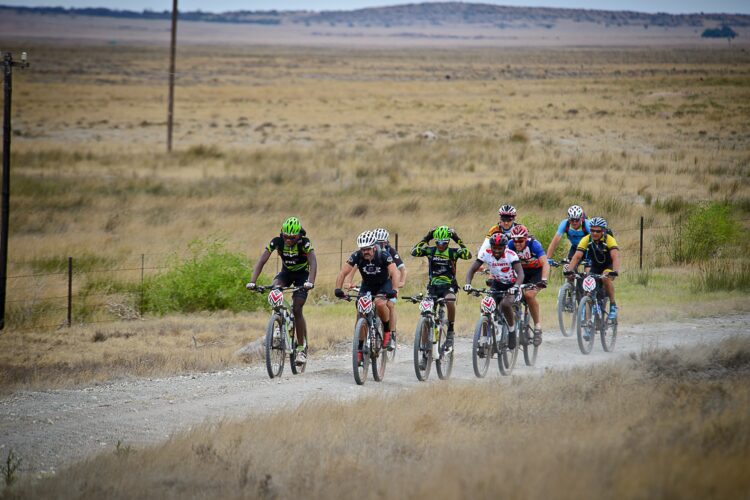
Blankets Creek Duathlon

It’s two days later and I’m still a little sore from the crash, but certain I’ll do another dirty duathlon. A big kudos to Lisa Randall and SORBA Woodstock for putting on an awesome event. See you at the Rope Mill Duathlon!

Epic MTB Race in the Murder Capital of the World: Q&A with Bicycling Magazine

Friday, February 25th, 2011

photo: Bicycling Magazine / Brian Vernor

In case you missed it, the March issue of Bicycling Magazine featured a great story by Articles Editor Lou Mazzante about the epic Chupacabras 100km mountain bike race in Jarez, Mexico. A border town just south of El Paso, TX, Jarez saw an average of almost 9 murders per day in 2010 as rival drug cartels continue to duke it out with government officials and with each other. As if mountain biking weren’t dangerous enough on its own!

I got a chance to ask Lou about his experience racing Chupacabras and to find out more about the MTB trails and the scene in Juarez. If you haven’t read the article yet, I highly recommend reading it online (or in the March issue of Bicycling) then checking out our Q&A below.

How technical is the (Chupacabras) course itself? Where did you see other riders getting hung up? How much of the course was singletrack vs. gravel road vs. pavement?

photo: Bicycling Magazine / Brian Vernor

For the most part, it’s not too technical, which is why you see so many locals out there on department-store bikes. The course requires more stamina than skill. It is roughly really divided into two sections, and looks like a cherry-stem loop. The stem in this case is roughly the first 25 miles, which take place on the flat, smooth top of a the levy running through the edge of the Rio Grande in Juarez. The whole time, you’re within 100 yards of the U.S. Mexico Border. The course then has about a 25 mile loop in the mountains. About half of that is jeep road, the other half singletrack. There are some very technical climbs in the mountains but the long line of racers means most dismount and walk them. One especially horrible hike-a-bike is known as King Kong steps and is the site of many, many cramping riders. It’s not the terrain or trails that are demanding, it’s the speed at which most riders attack the flat early sections, and the overall length; 60 miles is a long way to race, whether the terrain is technical or not. Cramping is the most significant hazard, followed by flats, heat exhaustion and dehydration. Though I did see quite a few crashes, too.

What kind of research did you do before the race in terms of security, logistics, etc.? Would you recommend it to other Americans looking for a challenge?

I researched it the same way I would any story. I talked to people who raced it, to organizers, to shop owners in El Paso, which is right across the border. I read Charles Bowden’s latest book, Murder City, which is the best account of what’s happening in Juarez that I came across. There’s a librarian at the New Mexico State University who runs an online news group, the Frontera List, which tracks the daily murders Juarez and links to relevant news stories. I set up Google alerts and searched through the online archives of most major news outlets. Sadly, most outlets only recently began devoting significant resources to covering this war—and it is a war, every bit as deadly and significant as Afghanistan and Iraq. And most reports are very thin. Reporters in Juarez risk their lives if they dig too deep, so there are too few people doing real investigative journalism down there.

Initially, photographer Brian Vernor and I planned to stay in Juarez, but at the last minute changed our minds and stayed in El Paso. It’s only a 10 minute ride across the border and many racers stay there, even those from Mexico. Riding into Mexico with a group of racers also gave us a unique angle to the story. But the main reason we stayed in El Paso was because it is safer. It would be difficult for me to recommend that anyone compete in this race. Simply traveling to Juarez involves so much risk, and the situation is worsening. It’s a decision everyone has to make for themselves. That said, I felt safe during the race, and as far as I know, no one has ever been a victim of a crime while racing. For what it’s worth, I’d go back. The people involved with the race—from the organizers to the competitors to the fans and volunteers—are some of the most genuine, dedicated people I’ve ever met on a bike. It’s truly a special event, unlike anything else I’ve ever experienced.

Outside of the Chupacabras race and the original organizers, is there much of a local mountain biking scene? Is it growing?

There is, but it’s very much linked to the Chupacabras. The race introduces so many people to the sport that it can’t help but grow it. The organizers also sponsor a youth team of local riders and during the race, they host mini-races that attract several hundred kids. The entire state of Chihuahua, the state where Juarez is located, has a strong mountain bike culture. It’s home to the world-class riding around Creel and the entire Copper Canyon region and several mountain bike series run throughout the year. Most Chupacabras competitors come from Chihuaha. While many are locals who only ride a few times a year, plenty of others are members of club teams and serious racers. Of course, fewer people are riding now, because it’s just not safe. Many make the quick trip across the border to ride in El Paso, which has it’s own thriving scene.

Over time, do you think a big mountain bike event like Chupacabras can make a difference in a place like Juarez?

As much as I’d like to say yes, I think what is going on in Juarez, and the rest of Mexico, is so complicated, and rooted in the country’s history, economy, politics, and culture—not to mention it’s relationship with the U.S—that no single event can change it. I’m oversimplifying here, but we’re talking about a multi-national $50 billion drug trade, fought over by cartels that have operated and thrived with little government interference for decades, and an insatiable appetite for drugs just a few feet away in the U.S. It’s a socio-economic crisis that I wish a bike race could solve , but I don’t’ see it happening any time soon. What the Chupacabras does do is give hope to thousands of people who desperately need it. It gives them an escape, a brief respite, and a challenge that so many look forward to. The Chupacabras may not make a dent in the war for Juarez, but it does make a difference for the tens of thousands racers, volunteers, organizers and fans who come out every year to support this incredible event.

Red Bull Rock Drop Descends Into Mine Pit

Friday, November 19th, 2010

photo courtesy redbull.co.nz.

On December 4, the Red Bull Rock Drop will challenge 80 DH mountain bikers to race to the bottom of a gold mine in New Zealand. The Martha Mine in Waihi is 250 meters (about 800 feet) deep and features slopes up to 70 degrees. Riders will go down in groups of 4 making this essentially a 4X event, though it’s tough to compare this to any race that’s been run before.

Looking at the photos it’s easy to underestimate the scale of the mine but according to the website, trail builders were attached to fixed ropes during construction due to the steepness of the slopes. The terrain ranges from super hard slabs of quartz to soft volcanic ash so there’s bound to be a variety of conditions from top to bottom.

With $10,000 in prize money on the line there should be some pretty aggressive riding on the way down. Red Bull promises “rock drops, gap jumps, mine trucks, free ride and speed lines” and the event is open to spectators. Video preview embedded below.

Extreme MTB Racin’ in North Georgia: Fools Gold 100

Thursday, August 26th, 2010

fools-gold-100

Brenda Simril (Motor Mile) and Sue Haywood caked in Georgia red clay and loving it.

This past weekend the annual Fool’s Gold 100 took place in the north Georgia mountains near Dahlonega with some of the most extreme weather conditions we’ve heard of in a mountain bike race. A dirty century mountain bike ride is tough on any day and the course through the Bull /Jake Mountain trail system is a killer with nearly 14,000 of feet of climbing (at least that’s what we heard). The Fool’s Gold 100 is part of the National Ultra Endurance (NUE) series so it attracts some of the country’s best XXC mountain bikers.

Overnight rains lingered into the morning and the race started off under a flood watch issued for the area. Jeff Schaulk was the fastest around the first 50 mile lap in 4:15:26 and reported his brake pads had been completely ground down from the gritty, wet conditions. Christian Tanguy finished just minutes behind Schaulk and both riders asked race director Eddie O’Dea to cancel the race (and the second 50 mile lap) for the safety of the other riders.

fools-gold-100-start

NUE series leader, Jeff Schalk (Trek Mtn Coop), in the lead pack

Singlespeed rider Harlan Price ran into similar brake problems during the race:

After Aid four, there was a straight, nasty, steep descent. I was fully into it before realizing that I had
NO BRAKES. I decided to try to ride it out, reaching speeds up to 30-40mph, scard sh**less, and jus’
holdin’ on! It was then that I realized I wouldn’t make the upcoming turns and had to dump it. The
bike was in the trees and I slid thirty feet downhill suffering bruised ribs and requiring eight stitches.

Tanguy asked if I was ok and then went on. In the process I lost the bead on my tire but quickly made
the repair and moved on. After crossing the finish line, I pretty much broke down upon learning about
the 50 mile cut. I was gonna do it but it wouldn’t have been good.

Out of 300 riders who started the day, only 180 finished. The last rider crossed the 50-mile finish line after 9 hours, 56 minutes on the bike. Talk about dedication!

If you’re looking for a challenge on the mountain bike (and a good time, I swear!) mark your calendar for next year’s Fools Gold 100 – this is a race that will not disappoint.

My Mountain Bike Time Trial @ Mt. Tabor Park

Tuesday, August 3rd, 2010

img_0723

Last Tuesday I drove out to Mt. Tabor Park near Dallas, GA west of Atlanta for the Six Pack mountain bike time trial. This is a super low key and old school event which is right up my alley. When I asked the guy sitting at the start table what time the race started he replied, “whenever you’re ready.” Awesome. The entry fee? A six pack of beer (or $6 for those who are underage).

The Six Pack Time Trial is actually a series of races held on Tuesday nights during the month of July. I had never ridden the relatively new trails at Mt. Tabor Park which gave me the perfect excuse to show up for the competition. After a leisurely pre-ride of the 3.5 mile long loop I was ready to race!

img_0706

The big loop at Mt. Tabor Park has a little bit of everything – from fast hardpack to rocky, rooty creekside stretches and from winding, switchback trails to flat, tight pine forests where the saplings practically reach out and grab the edges of your bars. The trail also features some sharp turns to help control riders’ speed and if you don’t know they’re coming they can suck the momentum right out from your wheels. Paulding SORBA has instituted alternating travel directions on the trails and on this particular evening we raced the loop clockwise.

Right out of the gate from the parking lot I got off to a fast start on the hardpack singletrack but less than a quarter mile in I dropped my chain (not unusual for me, I’ve been meaning to install a chain retention device). The rest of the hardpack section (part of which is called “Rocks of Doom”) went smoothly except for occasionally overshooting some of the tight reversals.

From my pre-ride I knew the rocky, rooty creek section would be a challenge so I concentrated on picking the most efficient lines and keeping my tires on the ground. Unfortunately I completely lost my rear wheel around one turn and had to jump off the bike for a second time, this time jogging with the bike a bit to regain my composure.

Climbing out the creek section was tiring and even more so considering I was only halfway through the loop. It’s amazing how much pressure the word “race” adds to a ride, even if there’s no one around you! I blasted up and down through the switchback sections to the pine forest trail section aptly named “Pine Pong.”

Pine Pong is one of those trails that takes intense concentration to ride quickly. There’s a ton of wheel and body movement and any slight miscalculation could easily knock you off the bike without a moment’s notice. Early on I dropped my chain and dismounted for the third time to get things back on track. Soon after I got a bit of a scare when I scraped my shoulder against a tree but it wasn’t quite enough to toss me off the bike.

I crossed the finish line with a time of 20 minutes something which seemed decent (the time keeper asked if I had done the long or short loop which is a good sign I suppose). Initially I was anxious to find out how my time compared to everyone else but after cooling down I realized it didn’t really matter. Time trails like this are really about racing against yourself and seeing how you stack up against the trail when you give it everything you’ve got. By that measure I have some room to improve for next time but I had a blast going all out!

NiteRider Pro 1200 LED Bike Light Review

Tuesday, July 27th, 2010

niterider-front

The NiteRider Pro 1200 LED is virtually alone in the upper echelon of lighting systems for adventure sports. Whether you’re mountain biking, motocrossing, or snowmobiling, this is a powerful light system that rivals the brightness of most automobile headlights. I got a chance to field test the Pro 1200 over the weekend at a 24-hour mountain bike race in upstate NY and I was very pleased with the results.

The Pro 1200 is an 850 gram unit about the size of a large kiwi and is split into two LED clusters, each pumping out 600 lumens into two different reflector patterns. The left reflector puts out a spot beam – an intense cone of light that shoots down the center of the trail, with a nice halo into the surrounding area so you can see where your wheel is going. The right reflector puts out a flood pattern, a wide dish of light that seemed to illuminate about a ninety-degree arc in front of my bike for about fifty yards, depending on where I aimed it.

niterider-top

The small red push button on the top turns the unit off and on, and switches through the various pre-loaded light modes (spot light, flood light, or both). But the real innovation in the NiteRider Pro series is the ability to use NiteRider’s own D.I.Y. software to design custom lighting programs. I didn’t get to use the software this weekend but I was able to talk with NiteRider rep Tommy B. about it for a while. Tommy told me the Pro series of lights can have up to four distinct programs, each with six different levels of lighting power that you can customize. I’ve played around with the software for a bit and it seems like you could spend a ton of time tweaking power levels, run times, lumen counts and strobe effects between both lights. This might not seem like a great advantage for the novice rider but for professionals it could make a huge difference in a long endurance race.

niterider-chart

My weekend with the Pro 1200 was wet, dirty, dark and foggy which was great for testing the worst possible conditions a light might endure on the trail. Fortunately the Pro 1200 cut through the night like a rock star. The trail was lit up clear as day. Everyone saw me coming from miles away and no one could look away from the supernova that I was proudly sporting on my handlebars.

This is a pic of the Pro 1200 handlebar mount. The offset mount is super versatile. Not only does it allow you to hook onto any handlebar, but it allows you to adjust the angle of the light from left to right and allows you to adjust the rotation of the light head itself.

niterider-bars

Here’s a pic of the NiteRider Pro series battery mount, which sticks to the bike and allows for easy hot swapping during the race.

niterider-battery-sleeve

The Pro 1200 bike light is not for the meek. It’s big, tough and bright like an army of a thousand suns. Of course all of this awesomeness does come at a cost: the Pro series lights are expensive and fairly heavy because they’re built like tanks. The heat sinks and rubber parts are solid and the flanges and bolts are not made cheaply like many of the discount lighting systems that you find on the internet. The price tag alone might dissuade some people from making the investment, but for pro-level lighting systems that will stand the test of time, NiteRider is the smart choice.

NiteRider lighting systems are simple, easy to mount, and rugged enough to withstand the worst Mother Nature can throw at you. Not only is the Pro 1200 bright and incredibly tough but the beam patterns are clear and even, making for a spectacular view of the trail in the middle of the night. If the Pro 1200 is this good, I can’t wait to see what additions have been made with the new Pro 1400 LED which is just coming into the market.

Many thanks to NiteRider and Tommy B. for the hookup with the lights, support, and advice during the race!


Site Map | Advertise | Partners | Contact Us | Terms | Privacy
Campground Reviews | Hiking Trails | Trail Running | Skiing / Snow Sports | Mountain Biking
Copyright 2012 Blue Spruce Ventures LLC | Atlanta, GA
singletracks.com is yet another slick Review App