Sign In | Create Your Account | Site Map  

Mountain Bike Fork Servicing (Manitou)

Wednesday, September 16th, 2009

picture-294

Believe it or not, this article can save you from visiting the dentist. Nope, this isn’t about brushing your teeth (though a toothbrush is involved) - it’s about servicing your mountain bike fork. Servicing your mountain bike fork is important yet it’s often overlooked until it’s too late. Your MTB fork owner’s manual should state the service intervals and it’s a good idea to follow the recommendations to get the maximum life and performance out of your fork. Some forks really work the fluids hard which will cause the them to break down slowly meaning won’t be able to tell the difference from one day to the next. But if we place two forks side by side and one was run for 75+ hours and the other was fresh, you will definitely feel a difference.

For this article I’ll be talking specifically about Manitou forks that utilize TPC and Absolute damping but many of these tips will be applicable no matter which fork you ride (just remember to check the owners guide that came with your fork for specifics).

Continuing to run a fork past its service interval will cause excessive wear which can cost more to repair. Lets face it: in today’s economy, no on can afford to spend needlessly. As a licensed technician in Canada, I always tell my students and former customers: You can pay a little now…. or a lot later. Servicing your MTB fork yourself will save you a bunch of cash in the long run. This is actually a pretty simple job and believe it or not there is only one special tool that you may need depending on your fork.

WARNING: Before attempting any work or opening the fork, make sure you release any pretension or air pressure.

CAUTION: When re-assembling your fork, follow all manufacturer-recommended torque procedures. If you don’t own a torque wrench, now may be the time to invest.

DO it right…FIX it right….DO not over tight!

Who should attempt this task? If you’re not afraid to change your tires or make minor repairs, this job really isn’t that much harder. All you have to remember is to take pictures of the deconstruction and follow your service guide. Changing the fork seals and fluid is actually easier than it sounds - just make sure you have a clean place to work and a solid work bench. Please remember to go over the list of necessary equipment before you start the job.

Tools and materials required

picture-295picture-29620mm and 11mm socket or wrench
8, 6, 5, 4, 2mm Allen wrench or socket
Soft face hammer
1/2 dowel
Graduated cylinder or fluid measuring cup
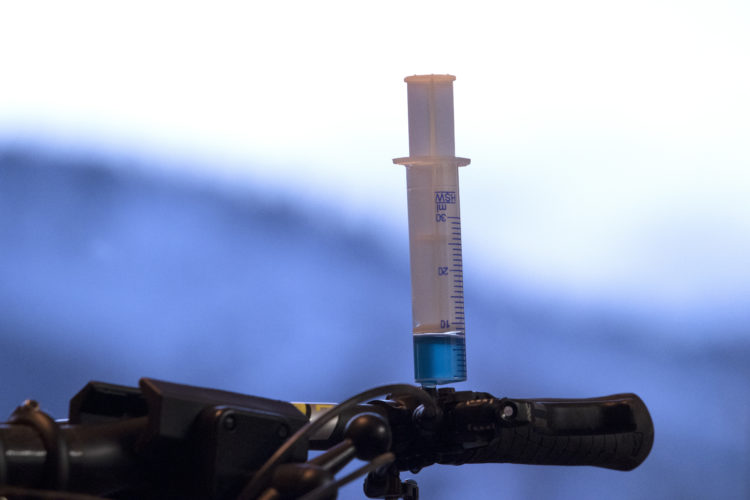
Graduated syringe
Pick tool or fine flat screwdriver
Small zip lock bag
O-ring kits (order for your year fork)
Dust wiper kit (the Manitou R7 uses a 30mm kit)
Fork oil (5 wt is standard for the oil bath)
Semi bath oil (5W40 synthetic)
Prep M grease (synthetic)

MTB Fork Removal

picture-297picture-298picture-299picture-300

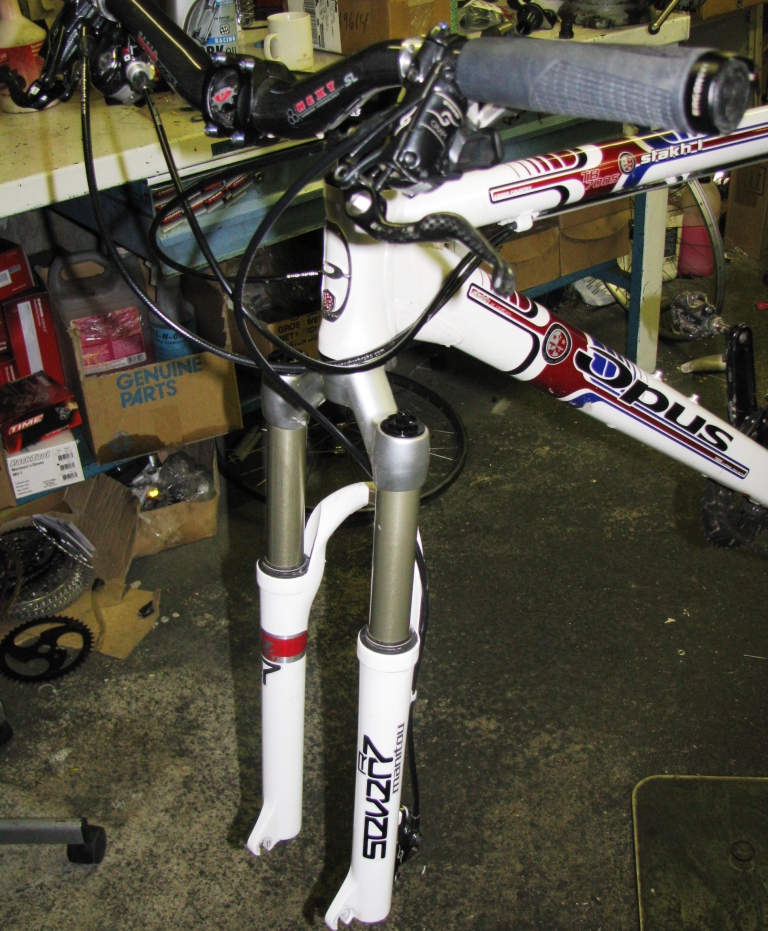
So you got all your parts together (seals, fluids, tools) and are ready to go. The first thing is to remove your front wheel and front brake from the fork. You will need a 6 or 5 mm Allen socket or wrench to remove the brake completely from your fork (you may also need to cut the tie wrap that holds the brake line.) Once the wheel and brake are removed you can concentrate on removing the top cap and stem. Once again, most bolts will require either a 4, 5, or 6mm socket or wrench.

picture-301picture-302picture-303picture-304

Be sure to hold the fork when you are ready to take the stem off your bike; otherwise, the fork may fall on the ground when the stem separates from the steering tube. Once the bar and stem are free, let the fork hang carefully. Now remove the fork and make sure to grab the lower bearing and seal and place them with the other bolts that you removed thus far. You should have a top cap and bolt, two bolts and washers which held the brake, spacers, and the lower bearing. Place all those components somewhere safe. To finish this segment off, place the fork in a stand (if you don’t have a stand you’ll have to hold it or have someone assist you at times).

MTB Fork Cleaning

You are now at the stage where it becomes very important not to contaminate the inside of your fork. Sand particles inside your fork will ruin things very quickly, so it’s time to thoroughly clean the outside of the fork. I use a bike specific cleaner (you can simply use dish soap and warm water solution if you like) to wash off all the sand and crud. Using an old toothbrush to agitate the dirt, I make sure that all the grim has been removed, especially around the seals. Once you have removed all the dirt and the fork is dry, it’s time to start taking things apart.

MTB Fork Disassembly

picture-305picture-306picture-307picture-308

Just in case you missed the warning. THE FIRST THING TO DO IS RELEASE THE AIR PRESSURE. The following instructions apply specifically to Manitou forks like the Minute, Drake, and R7. If you have a different fork, consult your owner’s manual.

Underneath the black Schrader cap on the LEFT fork leg (in the saddle looking at your fork) is the pressure release valve. You can use any thing to depress the valve; note that there may be a little bit of fluid that comes up which is normal. You will also notice that when all the air is released the fork will slightly compress which is also normal (this is the negative spring in the left leg).

Now, on the bottom of the RIGHT leg you have to first turn the rebound knob all the way in (clockwise), then remove the 2mm Allen bolt and adjuster knob. With an 8mm Allen key, turn in the damper shaft (same side) clockwise all the way until it is disengaged from the lower casting. Have a container ready to catch the little bit of oil that will come out of the lower legs. Moving back to the LEFT fork leg (still upside down), use an 11 mm wrench to remove the bolt that holds the compression rod in place. Turn the fork right side up (legs down) to catch all the fluid (approx. 2oml) and you’re ready to remove and clean the lower assembly.

picture-309picture-317picture-317apicture-318

Start by removing the seals with a large wrench. Be careful to grab only the seal, then pry it off gently. I usually replace seals after 100 hours of riding since they are cheap and offer great insurance against any crud getting inside. Once the seals are off you can remove the foam seals which are just under the wipers. Use a mild soap solution to clean out the oil residue inside. If you have a lint free rag, wipe out all the rest of the residue and let dry. Set the fork lowers aside for a moment while you work on the fork uppers.

On the LEFT fork leg you are now going to remove the air piston and the compression rod. To remove the compression rod and piston, use a 20 mm wrench and turn the black nut on the bottom counter-clockwise until the rod is free, then clean it up a bit and set it aside. Pay attention to the bottom-out bumper - if it looks squashed, it’s time to get a new one.

picture-321picture-319picture-320picture-324

On the top of the LEFT leg you can remove the black nut with Schrader cap using a 20mm wrench (counter-clockwise again). Once the cap is removed, take a look at the seal and make sure it is not ripped or dry. At this point you can see the air piston in the fork leg. To remove it, slide a dowel from underneath to push the piston all the way out. The piston has orientation with a blue square seal on top and a black round seal on bottom so keep that in mind when placing it back (remember what I said about taking photos?). Inspect both seals to make sure they are not scratched or cracking.  I like to apply a small amount of synthetic shock oil to the piston and place it in a bag until I am ready to reassemble the air spring side of the shock. Final step on the LEFT leg is to clean the bore out of the fork leg using a solution of warm soap and water followed by a rinse of Speed Clean. Towel dry the tube and that’s that for the LEFT leg.

picture-325picture-326picture-327picture-328

Moving on to the RIGHT leg, it’s time to grab a graduated cylinder that is totally clean. Use a 2 mm allen key to remove the top TPC / Absolute adjuster cap. BE CAREFUL when lifting up the cap underneath - there are 2 ball bearings and 2 springs inside. Carefully collect the pieces and place them somewhere safe like a plastic baggy. Once the springs and bearings are removed you’re ready to remove the damper using a 20mm socket or wrench.

With the damper loose, make sure the fork has its legs facing down and remove the damper. Once the damper is out you’ll need to measure the amount of oil inside and there are two ways to do it. I like to use a graduated cylinder to catch all the oil and record the amount of fluid. Alternatively you can use a measuring tool and look up table supplied in the owners service guide to find the correct oil level. I prefer the first method for the first time doing the service (factory fill is correct - see example chart below). Once the damper is out, turn the fork over and collect all the oil (the photo above shows about 100ml of oil that came out of my fork). Cycle the damper shaft a few times to remove the remaining oil. Clean the piston assembly with a lint free cloth and put it aside.

MTB Fork Reassembly

seals-picpicture-344picture-345picture-346

Starting with the lower assembly, install the foam seals and add some semi bath oil (5W40 synthetic P/N  85-0022) to get the foam seals good and wet (I use a heavier duty synthetic lube from Red Line called Shock Proof Heavy). Next, install the seals using a large socket that fits over the entire seal to seat squarely in place. Once the seals are in you can add a bit of Semi bath oil in each leg to lube the DU bushings.

Set the lower legs aside and start assembling the upper assembly, LEFT fork leg first. Lube up the compression spring with a bit of synthetic grease (prevents noise), then install it into the assembly, and add about 20 ml of semi bath oil. Torque the end cap to 80-100 in/lbs.

picture-324picture-330picture-320picture-321

Turn the fork so that the fork legs are facing down and install the piston into the LEFT fork leg (remember the direction of the piston **blue seal up**).  Now place the lubed piston squarely on top and add a bit of semi bath oil to help push it past the first few threads on the top of the fork. Once you get it past the threads you can push the piston in a bit more and add about 3 cc of semi bath fluid to the top of the piston (I use the heavier-duty Red Line product there as well). Replace the top cap using a 20mm socket wrench and torque to 60 - 80 in/lbs.

picture-347picture-348picture-349picture-350

Now it’s time to assemble the damper side RIGHT fork leg. First thing we have to do is set the fork legs facing down, then fill the fork leg 1/4 of the way up with damper fluid (P/N 85-0023) which is a 5wt oil (depending on your weight you may want to add a heavier oil). I weigh about 185 lbs plus another 6 lbs for gear I am at 191 lbs so I use a 10wt oil in my fork which allows me to really back off on the compression and rebound adjusters.

With the leg 1/4 of the way filled, cycle the damper rod slowly a few times (removes the air) then fill the leg to the correct level - in my case the Manitou R7 needs 105mm. Once the level is correct you can place the compression rod and torque it to 80 - 100 in/lbs.  Finish off the task by placing the small springs and bearings opposite each other under the adjuster knob and tighten with a 2mm Allen wrench. Torque to 4 - 6 in/lbs.

oil-heightspicture-317picture-307picture-308

Orient the fork so it’s tilted at a 45 degree angle and carefully slide the lower fork legs onto the upper assembly. Please be careful - the seals must not get folded or they will leak. Slide the lowers down until they just about touch the compression rod and rebound damper. Inject 16cc of Semi-bath fluid in each fork leg and slide the fork in further so you can tighten them in place. For the RIGHT leg you will need the 8mm Allen socket to tighten it in place (counterclockwise  30 - 40 in/lb); replace the rebound knob (blue knob 2mm Allen bolt 4 - 6 in/lbs). On the LEFT leg, use the 11mm socket wrench and tighten it to 45 - 55 in/lbs

Once the fork is all assembled you can simply install it on your bike and you’re good to go. All you have to remember is the orientation of the bearings and remember to make sure that the brake bolts are torqued in place and the brake disk is drag free. It feels good to avoid the dentist :)

MTB Repair Tools for the DIY Rider

Thursday, April 30th, 2009

picture-50

There usually comes a time when a mountain biker decides to repair some of his or her own equipment. In this day and age, doing the job yourself is not only cheaper but also prepares you for trailside repairs and prolongs the life of your gear. While I’m not suggesting putting your LBS service department out of business, home repairs can help you save some dough so you can buy more stuff (like new cycling shoes or hydraulic brakes). Changing a flat tire yourself saves $7 and doing a simple tune-up on your own can save you $25-60 - that’s money you can put right back into your rig!

In this article I will go over the function of major tools that you need to tune up your bike. I will also mention a few tools for those who are interested in doing more advanced work.

For most repairs you can assemble a simple set of tools.

* A good work stand to hold your bike when doing repairs. Pick a stand that can be collapsed and portable so you can take it with you. Three-leg (tripod) stands work best and offer the most stable platform at home or outdoors. Topeak, Ultimate, and Park have many bike work stands to choose from.

picture-52* Allen wrench 2, 3, 4, 5, 6, 8, 10mm used for removing most of your components; you can either use T-handle or standard L-shaped wrenches. T-handle wrenches tend to generate more torque with less stress on your hands. L-shaped Allen wrenches can generate a bit too much force when holding the long end if you’re not careful.

* Side cutters used for cutting brake and inner shifting cables. I recommend purchasing one at least 6 inches long.

* Cable housing cutter used to cut brake and shifting cable outer housing.  The Park Tools cable cutter works great.

* Cone wrenches 14, 15, 16, 17, 18, 19mm used for adjusting wheel bearings and hard to reach or slim areas. To save yourself some money get only the ones you need. For adjusting wheel bearings sometimes you need two sets of cone wrenches.

* Pedal wrench for removing pedals. A good quality pedal wrench is slightly offset to prevent your hands from striking the crank.

* Headset wrenches used for those who have older style threaded steering tubes 32, 36, 40mm.

* Bottom bracket wrench. You can purchase a bottom bracket wrench that matches your bottom bracket or purchase one in a socket drive form.

* Phillips #2 and #1 screwdrivers used for adjusting the derailleur stops on your derailleurs. You probably already have these laying around your house.

* Standard (flathead) screwdrivers with 7/16 and 3/8 wide blades for adjusting derailleurs.

* Crank and crankbolt extractor - be sure to get the one that matches your type of crank. For X-drive bottom brackets all you need is an 8 or 10mm Allen key.

* T25 torx drive used to remove disk brake bolts. Get the T-handle version since it gives you more torque to break free those stubborn bolts.

* Don’t forget the cleaning products which should include a good quality bike wash for breaking down dirt without attacking painted surfaces. A de-greaser to remove gunk off your chain. Chain lube (choose the one that closely matches your terrain: wet, dry, epic, etc.). Grease (Phil Wood, Permatex Ceramic lube or similar) used for re-packing bearings, headsets, for inside seat posts (** DO NOT apply grease in carbon frame sets**)

For wheel service and wheel building including freehub service (advanced)

picture-51

* Wheel truing stand. A simple one will work just fine but the more complex units have self centering features.

* Truing wrenches which come in four sizes and are color coded. Bring your wheel to the store to match up the sizes with your spokes.

* Tire Iron used to help remove the tire from the rim. Purchase a set of three (** Use caution on wheelsets that are tubeless as some levers may damage the rim strips**).

* Cone wrenches which are thinner than normal wrenches and allow you to fit them in the sides of the wheel to adjust your bearings.

* Freehub lock ring tools or freewheel removal tool. Bring in your rear wheel to match up  the tool if you’re not sure which to purchase. This tool is a must if you intend to replace broken spokes on the drive side of your rear wheel

* Chain whip used to hold the gears in place while releasing your lock ring or freewheel.

* Chain pin tool. Necessary if you’re planning to remove a chain which does not have a “power link.”

*Chain cleaning device (not shown) used to house a cleaning solution and a convenient way to degrease your chain.

* Toothbrush or similar bristle tool to clean freehub gears.

* Various lubes for wheel bearings and special lube for the freehub.

* Wheel building book or guide.

* Any tools specific to your wheels. Mavic, for example, makes a special spoke wrench and tools for servicing their wheels.

For finishing up your work and final assembly or specialty tools.

picture-53* Allen socket set 2, 3, 4, 5, 6, 8, 10mm for use with your torque wrench for final assembly and proper torque settings.

* 1/4″ Torque wrench used for setting low torque values on brakes, shifters, derailleurs, stems, seatposts, seatpost clamps, and everything else. Especially important if you use Carbon components.

* 3/8″ Torque wrench used for setting high values of torque (200 in/lbs+) mainly used for pedals and crank arms.

* Fine screwdrivers used for opening shifting pods and exchanging cables or for internal components in shocks.

* Shock pump. Only necessary if you have an air fork or rear shock.

* 6, 7, 8, and 10mm sockets may be needed for torque settings on various components.

* Threadlocking compound (permanent and low strength). Your need for this stuff will depend on the type of terrain you ride.

* Special sockets or tools for specific tasks such as bleeding brakes, fork internal repairs, suspension tools, sag setting devices, star nut tools, etc. Hang on to tools like small bottles or syringes, picks, swabs, old tooth brushes and the such.

Tool kit recommendations

Most DIY bike mechanics will want to gradually build up an arsenal of tools as repairs come up but for those looking to jump right in there are a few pre-assembled kits available. If you’re market for a basic set-up the Park Tools SK-1 Home Mechanic Starter Kit is a decent option. An even better value with more tools is the Sette Torx ST-37 Tool Kit (on sale at Pricepoint for $140) or the Filzer BFTB Tool Box II.

This list of tools may grow over time with your experience beyond what is presented here, but then again it may not which is fine. This list is only a guide to help those of you who are thinking about repairing your bike and are not sure which tools to get or why you need them.

One final very special tool - information. Get your hand on as many guides and manufacturer-specific installation instructions and have them at the ready when its time to fix your rig. Nothing beats first-hand info.

Cheers.

SRAM MTB Tech Channel on YouTube

Monday, April 6th, 2009

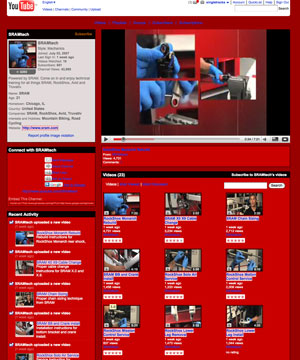
SRAM recently created a channel on YouTube with how-to videos showcasing SRAM, RockShox, Avid, and Truvativ service and installation. So far the most popular SRAM channel videos cover how to bleed Avid brakes, how to rebuild a RockShox Monarch shock, and how to change the SRAM X0/X9 chain. Most of the newer videos cover mountain bike components but there are a few road component videos in there as well.

There’s nothing like having an expert mountain bike mechanic walk you through an install for the first time and these videos are pretty much the next best thing. Now if SRAM could just come out with a robot to do the actual repairs to my bike :)

13 point MTB maintenance checklist

Thursday, January 22nd, 2009

One thing that can ruin a mountain bike ride very quickly is a mechanical breakdown on the trail. On your long and lonely walk back to the trailhead you’ll have plenty of time to consider this: a quick, regular bike maintenance check might have prevented your on-trail breakdown. Of course some breakdowns just aren’t avoidable so in a follow-up post I will talk about some things you should consider packing in your hydration pack just in case.

To make sure you don’t walk out on your next MTB adventure I recommend inspecting your rig weekly or bi-weekly. Most of the checks discussed below require a multi-tool and torque wrench at a minimum but you may want to consider a bike-specific tool kit as well.  For those of you who have more carbon fiber than an F1 team, pull out your torque wrench AND the torque tables that are usually included with your bike - cracked carbon tubes will make a grown man cry!

I like to start on one end (usually the front) and work to the back of the bike to make sure I don’t miss anything. Here’s the 13-part checklist I use in my weekly maintenance routine:

1. Check the bolts that hold the handlebar to the stem. If there are 4 of them tighten them in an alternating crisscross pattern and make sure that the gap between the bar and stem is uniform. Be sure to check the exact torque amount for your bar, particularly if you’re rockin’ carbon bars up front. For example this Race Face bar wants 55- 65 in/lbs.

2. Check the torque on your steering tube clamp bolts - for my tube clamp I use 65-70 in/lbs. Also check to see if your steering is straight.

3. Grab hold of your brake levers and shifter pods and see if they securely attached to your bars. Also make sure that the brake lever, when applied, does not touch the handle bar. Check each shifter pod for excessive dirt and correct operation. As always, check your brake lever and shifter manufacturer’s website for proper torque settings.

4. Take a look at your fork and fork seals and make sure the fork is clean and there are no leaks. Make sure the seals are in good condition and that they have not worked their way loose from the fork lowers. Jounce the fork a few times to make sure it is working properly and no funny noises are heard. Also check to see that the settings (air pressure, etc.) on your fork are correct for your body weight and riding style.

5. Moving down to what I consider the most important part on a mountain bike: the brakes. I don’t care how good a bike is, if the brakes don’t work well the whole bike won’t ride well. I had a few times when brakes failed me and well - let’s just say that was a hard way to learn my lesson. Make sure that the bolts that hold the caliper are torqued to the correct amount. Hayes wants them torqued to 110 in/lb for brakes that have a mounting bracket and for post mounts you torque them to 80-85 in/lbs. While you’re at it check the torque on bolts that hold the rotor in place. They are torqued at 55-80 in/lbs.

6. If you have a full suspension bike it’s time to check the pivots and bolts for correct torque. What most people don’t realize is that many of those bolts are alloy or other materials and can be permanently damaged when too much force is applied to them so be careful here and use a torque wrench.

7. Check the rear damper for correct sag and check for leaks as well.  Also check the bolts that hold the damper in place for correct torque. To check for sag first set the ‘O’ ring on the shock all the way to the top and then sit on the bike gently - do not bounce. Get off the bike and measure the distance from the ‘O’ ring to the air sleeve. If your bike has literature that tells you the distance then go by that; otherwise a rule of thumb would be 20 – 30% sag for all-mountain riding and 10 – 20% for XC riding. Use your high pressure pump to add air to the air chamber unit you reach the correct sag value. Always remember settings are a personal thing so set them to your liking for the terrain you’ll be riding.

8. Shift the front derailleur into the middle ring and then check the spacing between the cage and the top ring - it should be no more than 4mm and no less than 2mm. Also double check that the derailleur cage is parallel with the chain rings. Check that there is no crud like leaves or small twigs that could stop the front derailleur from functioning.

9. Ok, now we’re at the second most important part on the bike: the rear derailleur. Check to see that the rear derailleur and chain is cleaned and oiled in the pivot points and that the stops are correct and haven’t been moved. Run the bike through each gear to make sure each one shifts crisply. If your shifting isn’t smooth and you don’t know how to make adjustments you can use the image below as a guide. Check to make sure that the main pivot bolt is torqued, 55-65 in/lbs.

I am using 3rd from the high side as a model.  Basically look at the driveline from behind and make sure that the chainline is straight . If the upper pulley is a bit to the right wanting to up shift then you need to tighten the cable. If the upper pulley is to far to the left it will want to down shift you need to slacken the cable.

10. Check the chain for any bent links as well as stiff links. If the chain is bent it is usually best to get a new one. See this post for more on changing your a rear cassette and chain.

11. Check your cassette for bent teeth and wear. If the teeth begin to look like sharks teeth its time to get a new cassette. It may also be a good time for an upgrade. Pictured above is the Sram 990 cassette with 991 chain - good quality without breaking the bank.

12. Check the torque on the rear brake caliper bolts just like you did on the front wheel. The mounting bracket is torqued to the frame at  approximately 110 in/lbs and the caliper at about the same (doublecheck your manufacturer’s torque guide).

Check the amount of brake material that is left in the brakes pads as well. If it looks like you have less than 1mm, time to change them. Less than 1mm is considered unsafe.

13. Finally check the torque on the 6 bolts that hold attach your brake rotors to your wheels. If you have Shimano center lock you need to remove the wheel and use the special tool for that.  The 6 bolts are torqued at 55-80 in/lbs.

Well folks I hope this helps you enjoy more riding and less walking. Just like an automobile we need to keep up with our bikes and maintain them. Hope this guide helps keep you from walking out.


Site Map | Advertise | Partners | Contact Us | Terms | Privacy
Camping | Hiking | Trail Running | Mapping | Mountain Biking
Copyright 2010 Blue Spruce Ventures LLC | Atlanta, GA
singletracks.com is yet another slick Review App