singletracks is mountain biking
Sign In | Create Your Account | Site Map | Help  


THE F-1 Short and Sport Jersey Review

Thursday, May 12th, 2011

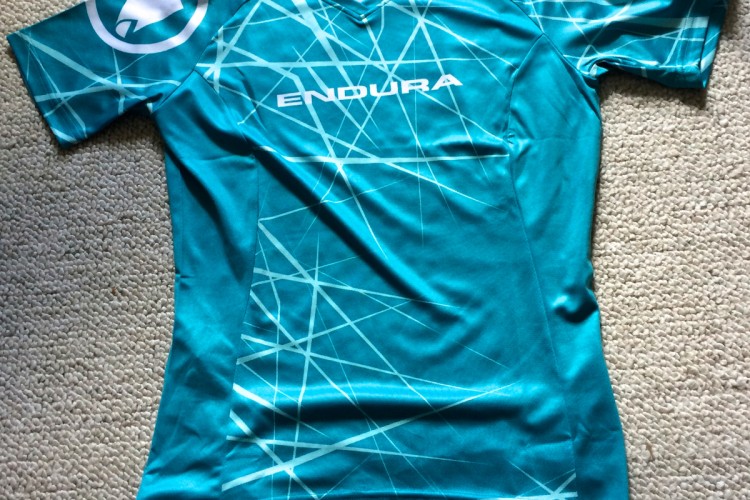
I’ve been wearing THE gear – helmets, armor, and soft goods – for a while and I’m a big fan. So I was stoked recently to get my hands on the F-1 short and Sport Jersey. One thing you can always count on with THE: there’s always more than what meets the eyes. The F-I short and Sport Jersey are certainly no exemption with simple looking graphics at a distance but as you get closer you see the subtle sublimated graphics like something out of a fine tattoo parlor.  Not only does the gear look great but it’s functional on the trail as well.

The Sport Jersey comes in sizes from X-small to XX-large to fit the majority of riders out there regardless of physical size or dimensions. With three colors to choose from (red, blue, and black) and a white background you can be sure to find something to match your bike and kit.

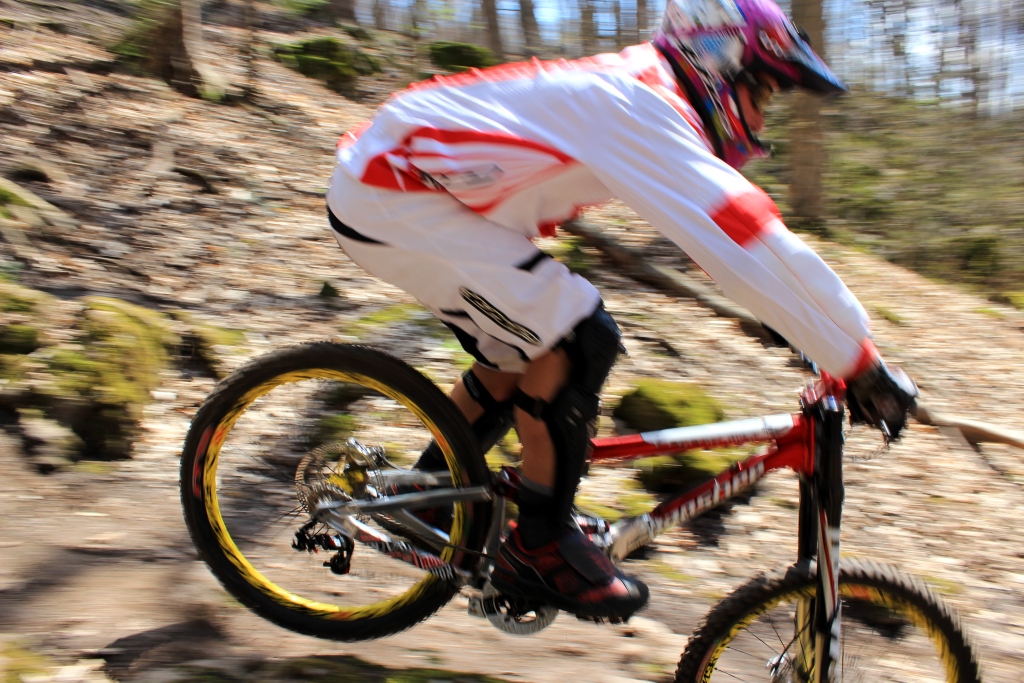
My favorite thing about the Sport Jersey is how much this thing breathes. With fully vented arms, lower back, and front, I found the jersey felt cool when riding without the heat build-up that some long sleeve jerseys can cause. The fit is roomy enough to wear your armor underneath while the added padding on the outside of the arm around the forearm is a nice touch for extra durability and minor thorn protection.

The Sport Jersey has a tapered and bent cut on the arms which feels great without feeling like it’s pulling when you’re steering. The built collar opening is adequately sized so that it won’t snag or tug on your neck with gear on, a big plus for sure.

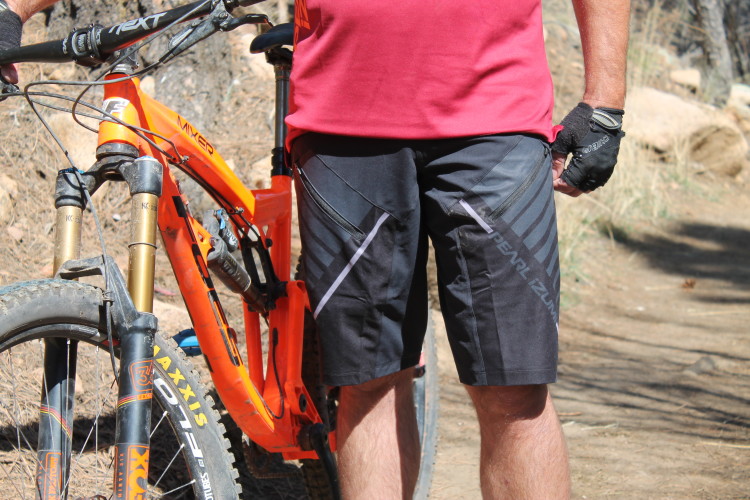
The F-1 bicycle-specific shorts are very similar in cut to the pants but in a short version. The short is cut just below the knee with a seamless crotch and a thin contoured pad. The super durable stretch nylon material in the F-1 shorts is great and there’s even a tailbone pad. For those who drive up to the slopes and park your vehicle, the two vented pockets are adjustable to hold your keys and whatnot. The F-1 shorts also have a bit of bling to them with detailed chrome and carbon logos.

Having worn THE gear for a while I am already familiar with the durability of their products so I didn’t expect anything less from the Sport Jersey and tech pants. Having cased it more than a few times and dragged my clothes through a few mud patches (unfortunate but it happens), the gear is showing little sign of wear. I was even impressed with how easily this stuff cleans up – just be sure to hang dry everything. After one particularly muddy day at the trails I did have to wash my shorts through two cycles but other than that everything is still bright.

Both jersey and pant are true to fit. A 34″ is a 34″ not a loose 33″ for example. So ordering up gear is pretty easy. I did find that the short is a bit stiff (due to its shear toughness) so they would not be my first choice if I was heading out for a long trail ride. These are, however, one of my top choices when I do hit the slopes or know I am hitting the park (durability trumps here). I found that I was reaching for the jersey particularly since it has such a great feel to it. It tends to run cool and kept me pretty dry.

So for $50 MSRP you can get the jersey and another $89 gets you the shorts. These are definitely mid-level prices for some premium features. If you have a chance, take a peek at THE’s gear and try them out for yourself.

Thanks to Toby Henderson and the folks at THE for sending up the gear for a review.

Stay off the Trainer and on the Singletrack: 7 Essential Pieces of Cycling Apparel for Winter MTBing

Wednesday, January 26th, 2011

It is a weird time of year to be a mountain biker. Depending on where you live, you could either be trying to get up the determination to brave the chill and ride, or putting away your bike and waxing up the downhill skis.

Here in the southeast, most of us tend to mountain bike year round since the cold weather isn’t that severe and we don’t get enough snow to ski on. I say “most of us” because the cold inevitably scares a number of riders off of their bikes and into the gym or onto the trainer. However, after growing up in central Wisconsin and living in Montana, I have learned that you can enjoy exercising outdoors in just about any conditions.

The trick is to dress for the weather.

Long-Sleeve Jersey

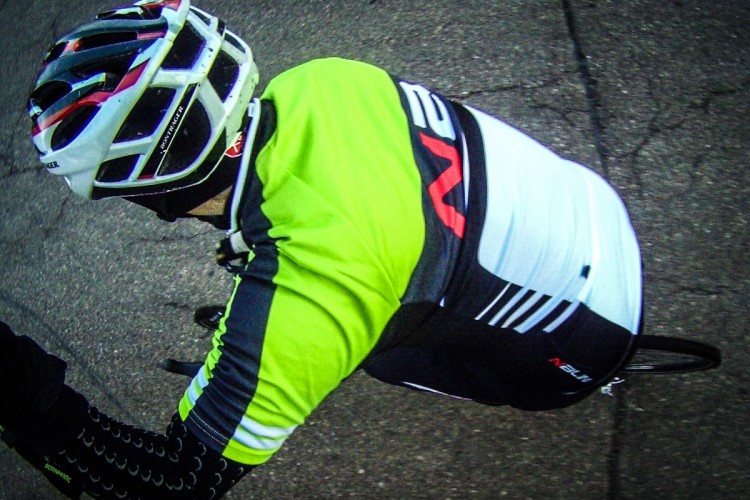
An insulated long-sleeve jersey is the first logical defense against the deepening chill of winter. My go-to jersey from Pearl Izumi isn’t very thick at all, but it does an excellent job of trapping my body heat. After I’ve been exerting myself on the bike for a couple of  minutes and my body heats up, the insulated jersey  captures that heat and holds it close, warding off the cold.. By having a jersey specially designed to do this, I can stay warm without the bulk of a big jacket.

Riding Tights

Personally, I’ll just ride with shorts until it gets down into the low 40s. But once the mercury drops to 39 degrees and below, it’s time for me to break out the tights. When I first started cold-weather riding, I would simply wear long underwear and other loose layers over my chamois (and under my outer shorts so I wouldn’t look like too much of a dweeb).

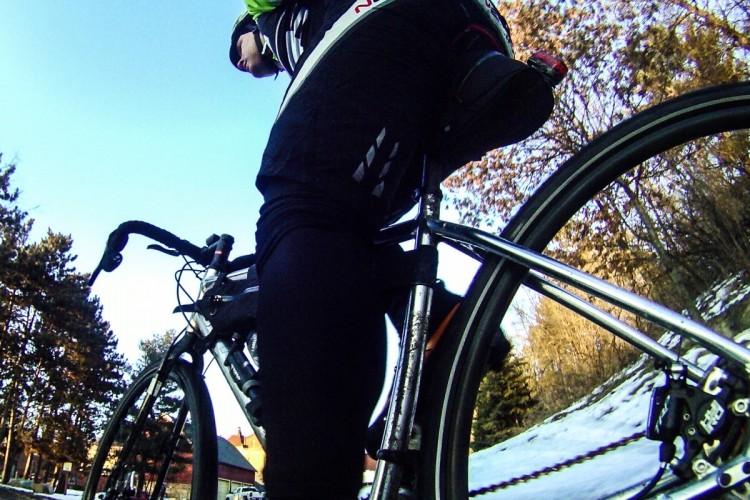
I didn’t understand the benefits of a set of cycling-specific thermal tights until I bought a pair at an REI scratch and dent sale. Cycling-specific cold-weather tights are designed to do the same thing as the thermal jersey I mentioned above: trap your body heat and keep you warm without excess bulk.

Honestly, they do an amazing job! To date, I have yet to go on a ride where my one pair of tights does not feel adequate. I have ridden with simply that one pair of tights in temperatures nearing the teens, and still that one layer has done an amazing job of conserving my own body heat that I have been comfortable throughout my whole ride. Sure, at that temperature you’ll feel the chill when you start out, but once you are generating some heat by pushing those cranks, you’ll feel toasty and be tearing it up on rock-solid singletrack.

Full-Finger gloves

The extremities are the hardest part of the body to keep warm when mountain biking. Add in the fact that you’re gripping the handlebars and need your thumbs to shift and your fingers to brake, and keeping your fingers toasty but not sweaty all while maintaining functionality can become an art form.

Many different factors come into play: air temperature, wind speed (how fast you’re riding), and moisture. Realistically, you may need several different pairs of gloves for different temperature ranges. I recently picked up the Fox gloves pictured above and they’re great for weather in about the 35ish-60ish degree range, due to the vents on the back. When temperatures dip below 30, I’ll go with a significantly heavier glove. Many bike companies make gloves for lower temperature ranges, but I find that some ski gloves work just as well.

Wool Socks

As I mentioned above, the extremities are the hardest part of the body to keep warm. Swap out your cycling socks for a heavier-weight wool sock. They may be a little bulkier, but a little discomfort is way better than frost bite!

Shoe Covers

One piece of essential gear that I have largely ignored until recently (much to the detriment of my frozen toes) are shoe covers.
The average mountain bike shoe is designed with large vents to channel air into the shoe to keep your feet from sweating excessively during the hot summer months and to drain water after deep creek crossings. But these features work against you once the weather turns cold.
While you may look funny wearing them, plastic covers solve the problem of shoes designed for the desert by keeping the cold air and snowy/slushy muck out and your body heat in.

Large Hydration Pack

While you might not need to carry as much water during the winter as you do during the blazing hot days of the summer, I always carry a large-capacity Camelback that features a large storage compartment. Since the weather outside and your internal temperature can fluctuate so much over the course of a ride, I find that a large pack is convenient for carrying extra layers in case I need them, or storing layers that I’ve chosen to take off.

Cycing Beanie: For When it Gets Really Cold

When the temperatures start getting seriously cold and your ears start freezing solid, try on a cycling-specific beanie to keep your noggin warm. The greatest loss of body heat occurs through your head (and specifically your ears), so buying a beanie will help you in extra-cold conditions. Personally, I don’t usually feel a need to put a hat on while riding until the temps are at least into the 20′s. Trek7k wrote an article about cold weather cycling clothes about 2 years ago, and he talked specifically about cycling beanies. There’s more great info there, so be sure to check it out!

If you live at a higher latitude and have to deal with subzero temperatures and significant amounts of snow, these same principles still apply. Just add thicker and more numerous layers!

Hopefully these clothing tips will help prepare you for a fun winter season filled with frozen singletrack instead of several mundane months spent on the trainer. Get out there and rip it up!

Your Turn: Do you have any cold weather mountain biking tips to share? If so, please add them in the comments section below!

From Rock to Gore-Tex: My Visit to Gore Part I

Tuesday, November 3rd, 2009

gore_logo

A few weeks back I got an invitation from W.L. Gore & Associates, makers of Gore-Tex, Gore Bike Wear, and Gore Ride-On Cables (among many, many other things), to come visit them in suburban Philadelphia and learn about their products. Although I’ve owned a few Gore products over the years, I didn’t know the whole story so I decided to take them up on their offer last week. If you’re a geek like me you’ll be fascinated to learn how Gore-Tex is made and why it works so well.

How Gore-Tex is made (skip this if you hated science class)

flourite

Fluorspar photo by Jonathan Zander (wikipedia)

The Gore-Tex membrane is actually created from something called Polytetrafluoroethylene or as it’s know in the biz, PTFE. PTFE is synthesized from fluorspar (a mineral) and other chemical ingredients to form a white powder which is then polymerized to form a plasticy material. The Gore company figured out that if you expand PTFE you basically get a membrane with advantageous properties like those of Gore-Tex. This expanded PTFE is known as ePTFE and in its basic form it’s very similar to the teflon tape used for sealing pipe threads.

Gore has found a way to use ePTFE in everything from cycling apparel to coatings on derailleur cables to even artificial human arteries. At its core Gore is a technology company and they’re always finding innovative ways to use this stuff. It also helps that many of the employees are outdoor nuts like us :)

What Gore-Tex does

Gore-Tex basically does two things that you’ll appreciate when riding in the rain: it’s waterproof and it’s breathable. The pores inside a Gore-Tex membrane are approximately 700 times smaller than a drop of water yet 20,000 times larger than a vapor molecule which keeps water out but allows body vapor caused by sweat to be released. If you’ve ever worn a cheap plastic poncho on a bike ride you know how quickly you get sweaty and drenched from the inside which sorta defeats the purpose of rain gear in the first place.

gore_tex_test

Gore-Tex glove demo showing how a wet hand will eventually dry out, even under water

Beyond the Gore-Tex membrane itself (which is laminated inside fabric so you can’t usually see it), the key to keeping you dry on a wet ride is a coating called DWR. DWR is applied to the outside of a garment to allow water to bead up when it hits. Through normal outdoor use DWR may degrade over time but it’s simple to “re-activate” it – just wash and toss it into a warm dryer! A Gore-Tex jacket with degraded DWR may feel wet (and cold) in the rain as the outer fabric gets wetted out but Gore guarantees you’ll stay dry inside.

The Gore Quality Process

One thing I didn’t realize is that Gore doesn’t just sell liners and labels to outdoor gear companies like the North Face, Sidi, and Pearl Izumi – they actually laminate and bond the fabrics in house and perform extensive testing before they’ll put their name on any product (more on the testing process in Part II of this article). In fact Gore guarantees every product with the Gore-Tex label and will replace or repair any defective item. It’s crazy to think that if your Pearl Izumi Barrier GTX MTB shoe springs a leak Gore will replace it (not Pearl Izumi) but that’s how confident Gore is in their technology.

Next week I’ll follow up with Part II of my visit to Gore where I’ll talk about the testing facilities (including the rain room and comfort chamber) and some of the newest Gore technology. In the meantime, check out these reviews of the Gore Countdown jacket, Gore Ride On cables, and the Gore Freeride Shorts & Alp X Jersey.

Gore Bike Wear Freeride Shorts and ALP-X Jersey Review

Thursday, June 11th, 2009

picture-23

Trying out new things is always fun, especially since sometimes you find stuff that’s way better than you even thought was possible. For me, I’ve always had a hard time finding MTB clothing that is comfortable right out of the box – until now. Gore Bike Wear’s new Freeride shorts and ALP-X Jersey are easily two of the most comfortably fitted pieces of MTB apparel I have worn.

picture-25

The Gore Freeride shorts are understated in design and graphics. They are not the flashiest shorts out there but perform exceedingly well, going beyond my expectations of how a short in this class should feel. One great thing about these shorts is that when you’re done with your ride and want to go for drinks or a bite, you can just keep them on – these shorts are a big step up the fashion ladder from spandex.

Beyond good looks, the Gore Freeride shorts breathe so well you won’t overheat or feel uncomfortable even with the hammer down. I especially appreciate the adjustable zippered vents in the front of the shorts; unlike other shorts I’ve worn, these slots are actually large enough to let a comfortable amount of cool air inside.

With an MSRP of $149, you may be wondering if these shorts are worth the investment but a quick check of the spec sheet shows you’re getting a lot for your money. Like all Gore products, these shorts are constructed with cutting-edge materials and the company has spent hundreds of hours on research and development to get the perfect fit and performance.

Although these are called “Freeride” shorts, don’t let the name fool you – these are not full-on Freeride shorts by any means. Instead I recommend these as a Enduro / Trail / XC shorts, a great all around choice for anyone who like to ride fast and long!

picture-24

A perfect compliment to the Gore Freeride shorts is the ALP-X jersey shown here in grey/green with black trim. This Jersey is a slim fit style so try one on before you purchase to get just the right fit. Based on the fit of my ALP-X I’d say this jersey is really a cross between a race jersey and a slightly baggier, casual jersey. One thing I really like about the ALP-X is the subdued logo just above the top left breast – nothing flashy here, just simple, understated, purpose-built stuff here. Like other pieces of outerwear Gore makes, the ALP-X jersey sports reflective piping instead of ugly, fat strips of reflective material.

The multi-paneling on this jesery enables a ton of freedom in the arms as well and there is little to no pinching when moving around. For a MSRP of $119 I think it’s a decent purchase, a bit more than you would normally pay but since it’s a Gore product you know you’re getting a superior product with leading edge moisture control materials.

picture-75

Going for a few rides around the local trails and hitting some of my favorite stunts and hills I have fallen in love with the Freeride shorts and ALP-X jersey, and I may have to say goodbye to an old favorite of mine (made by another well known brand). Buy the Gore Bike Wear Freeride shorts and ALP-X jersey – you just might find that you end up riding a whole lot more because of them!

Cheers…

Gore Countdown Jacket Review

Thursday, May 21st, 2009

picture-71

Psssst… For those of you who like to be prepared with extra clothing for the ride but don’t want the added bulk and weight have I got a sweet product for you: The Gore Countdown Jacket ($249.00 MSRP). Made from GORE-TEX Paclite, this jacket folds up to near nothingness – perfect to fit in the main compartment of your hydration pack – and is extremely lightweight. When the weather is not cooperating this jacket is perfect for keeping out the cold wind and even light rain.

On the trails or on the street this jacket works well at stopping the wind while at the same time feeling breathable and light. I don’t know about you but I’ve noticed many other waterproof  jackets don’t breath or stretch well but the Gore Countdown excels at both. Even when riding along at a slow pace and generating lots of body heat this jacket controls the humidity without trapping in body moisture.

What I really like about the jacket is its comfortable fit, both in the riding position and walking around. In the riding position the long back folds out and covers your back side so there’s no gap to where your shorts begin.  I’ve also been using my GORE Countdown while jogging (yuck, I know) where it works well even off the bike. GORE incorporates reflective piping instead of tape strips so you get 360 degrees of reflection without the geeky stripes that other jackets sport. Great for being seen at night, and at the same time a great looking jacket that can be worn around town.

From the Gore website here are the details:

  • GORE-TEX® Paclite® Shell
  • “GORE-TEX® stretch inserts on front, back and arms for maximum comfort”
  • Slim fit
  • Adjustable collar with easy-to-operate cord stopper for one-handed use
  • Velcro fastening for separate hood
  • Long back
  • Hem-width adjustable by easy-to-use covered cord stoppers and elastic draw-cord
  • Adjustable cuff
  • Zip tags for easy handling
  • Zip-underflap and zip-port
  • “Reflective piping on front, back and sleeves”
  • Reflective logo on front
  • Reflective logo on collar
  • Zip stow-away pocket in back

One thing that really makes the Countdown stand out is the quality of workmanship. Not one stitch was out of place on my jacket and not one stitch was not covered with the protective under tape that seals the jacket and adds to the weatherproofing. There are no front pockets on the Countdown which at first seemed odd but then I got it! In the riding position if you had a front pocket whatever is in there would dangle around plus there would be another zipper and a possible place for wind / water to enter.  The rear pocket is dead center in the middle which also seemed a bit weird at first but I realized this is so there is less chance your pocket items will shift to the side and distract you from your riding. Pretty smart.

Overall I think the Gore Countdown is a great purchase for anyone who rides in shifting weather conditions. The jacket is avaliable in 4 color choices – red/black, yellow/black, blue/black, and all black – with many sizes to fit most of us. The jacket shown above is an XL and I am 190lb, 5’9″ and it fits perfect. If you have the need for a jacket during those nasty days and want something compact that you can fit in your Camelbak, look no further than the Gore Countdown!


Site Map | Advertise | Partners | Contact Us | Terms | Privacy
Campground Reviews | Hiking Trails | Trail Running | Skiing / Snow Sports | Mountain Biking
Copyright 2012 Blue Spruce Ventures LLC | Atlanta, GA
singletracks.com is yet another slick Review App