

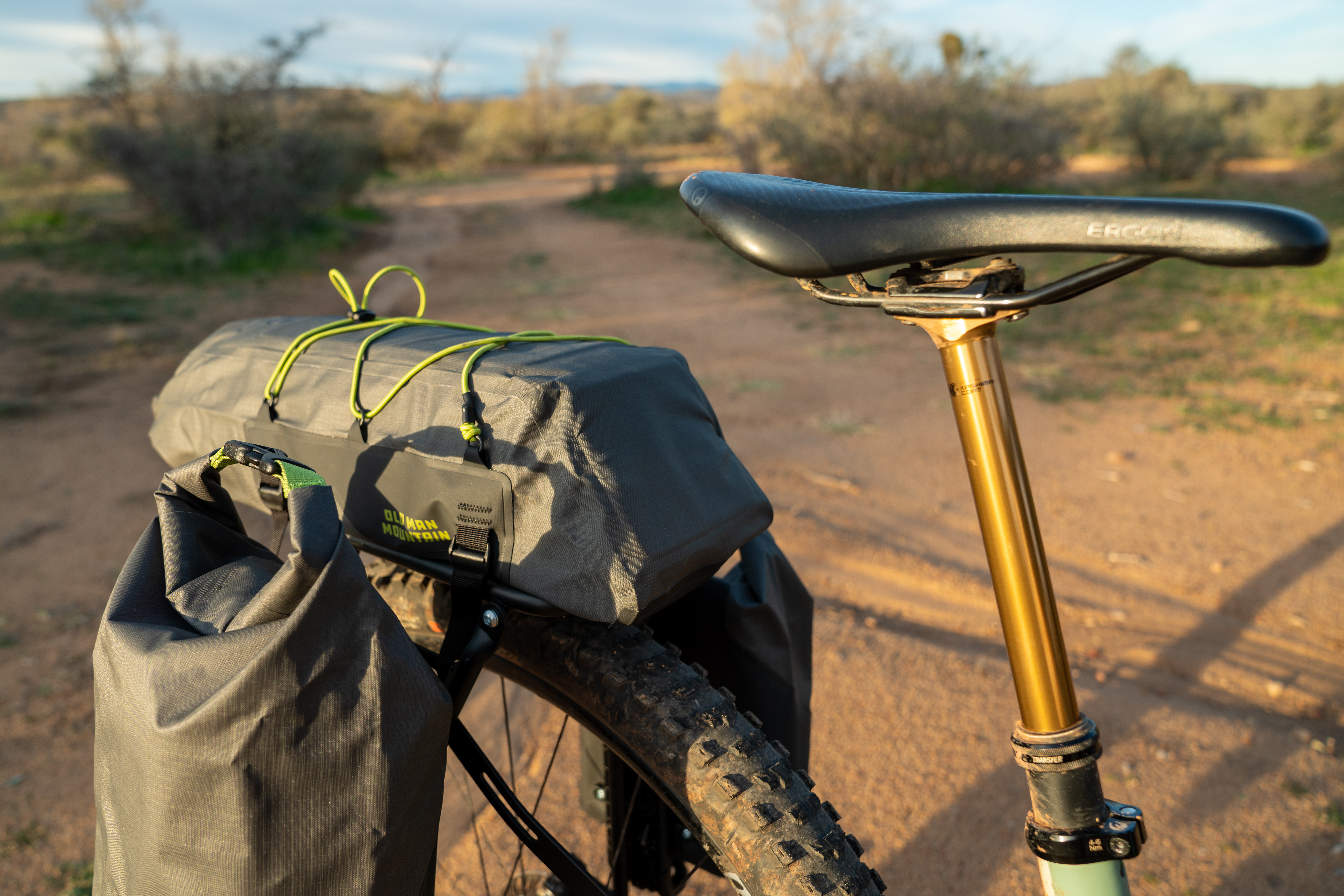
Old Man Mountain has emerged as a leader in bikepacking rack systems and gear hauling solutions. In addition to their racks, they sell numerous bags to attach to those various racks, with new and improved products dropping frequently
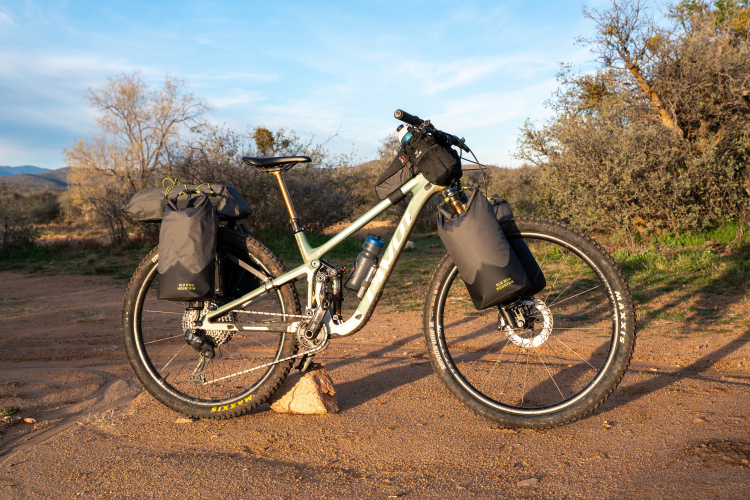
Over the course of three different bikepacking rides, I’ve tested Old Man Mountain’s (OMM) Atlas Rack Packs on an Elkhorn rear rack on my Pivot Trailcat SL. I’ve tested both the standard 9L bag as well as the new 12L bag, which just launched in January 2026.
The bags are quite similar, but in the review below, I’ll cover the key differences with the 12L bag. I’ll cover in detail what worked well and, perhaps most importantly, what didn’t.
Old Man Mountain Atlas Rack Pack key specs
- Sizes: 9L and 12L
- 100% waterproof TPU fabric
- Beveled front for dropper compatibility
- Attachment straps, roll-top closure, bungee storage on top
- Price: 9L: $95. 12L: $125
- Buy from Old Man Mountain
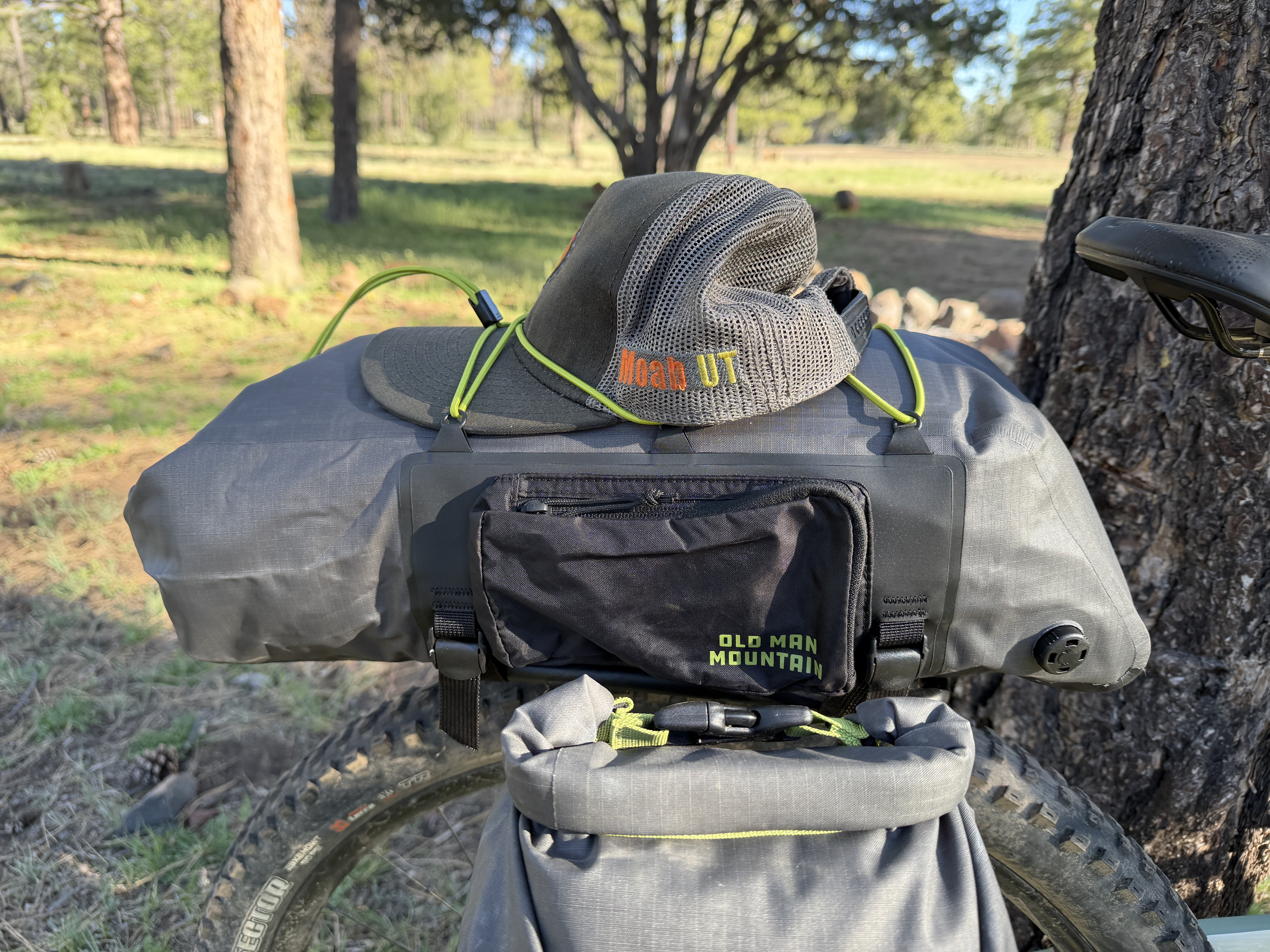
The Atlas Rack Packs are purpose-built for OMM racks, featuring four straps and buckles designed to attach easily to the rack. The angled front of the bag is specifically designed to provide dropper post clearance, which is critical for me as a 5′ 7″ rider with the system mounted on a size-medium full suspension trail bike.
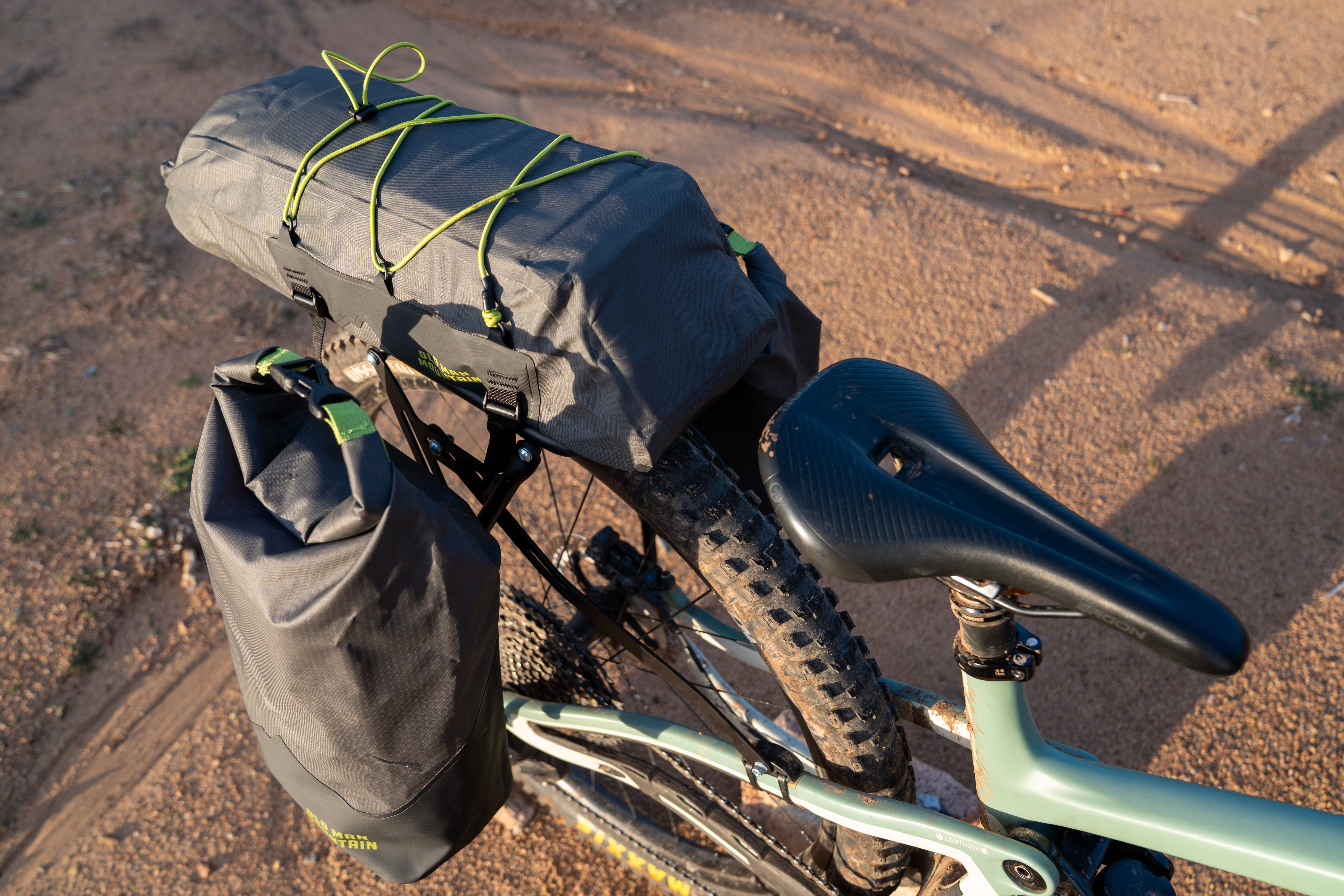
The top of the bag features a lightweight criss-cross bungee cord, which is great for quickly stashing lightweight gear. The back of the bag features a dry bag-style roll-top closure.
The construction is absolutely bomber. The 100% waterproof “TPU fabric with Hypalon reinforcements [and] fully welded seams” feels burly and impervious to the elements.
The new 12L bag is both longer and wider than the 9L. Despite the wider profile, it still works well on the Elkhorn rack. In fact, during testing, I appreciated the increased width more than the increased length. The 12L also adds two zippered side pockets for quick-access storage, which I found extremely convenient.
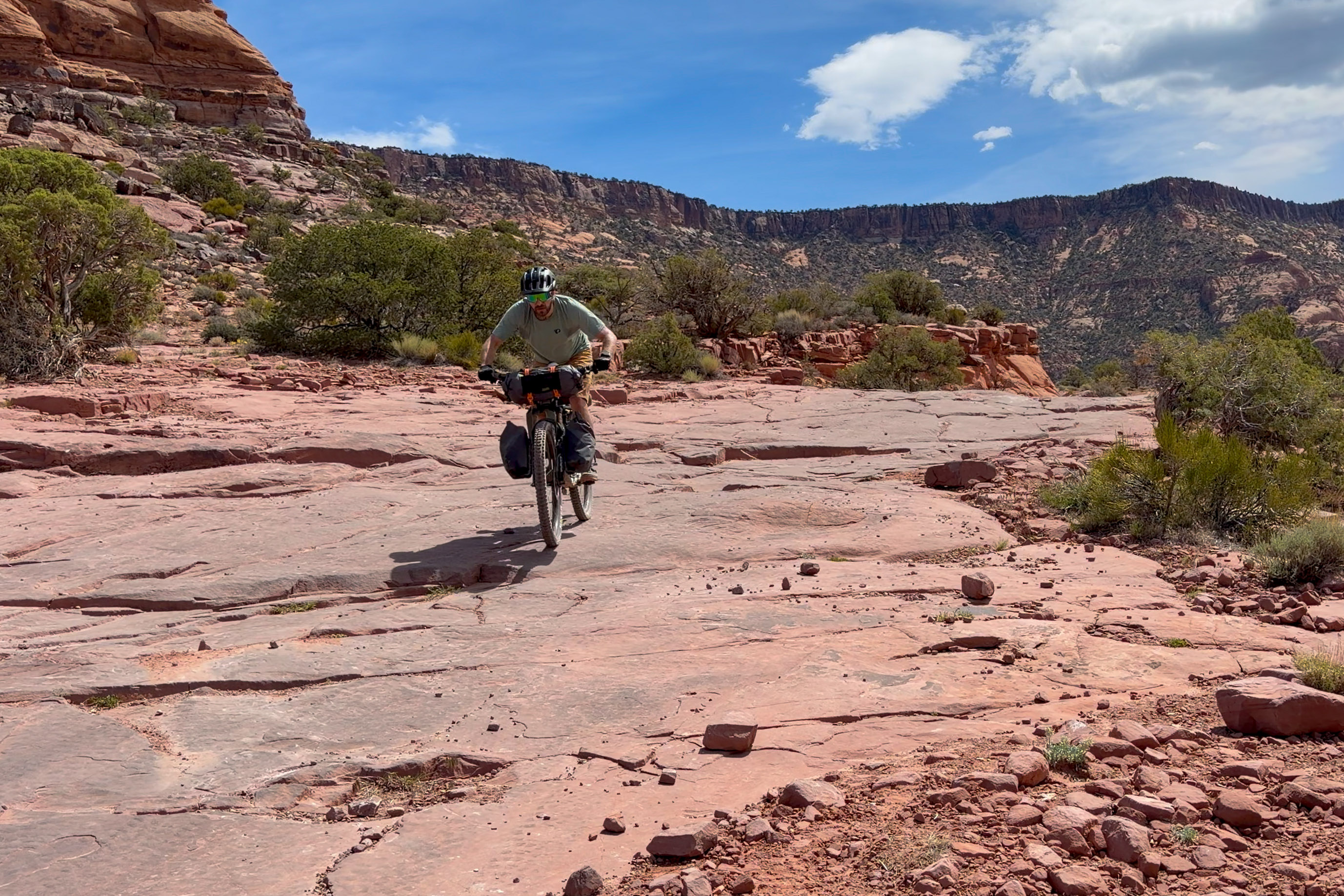
Putting the Atlas Rack Pack through the backcountry wringer
I tested both versions of the Atlas Rack Pack across three different bikepacking trips: the Black Canyon Trail, a segment of the Arizona Trail, and the Peaks and Plateaus Loop in Moab, Utah. While I wanted to love these bags, I found that both versions shared the same critical issues.
First, here’s what worked well: the beveled front of the bag is perfect for dropper post clearance, most notably when the suspension compresses and the seat is down. While the very tip of the bag would sometimes contact the seat, it didn’t affect performance or ride quality at all.
Share your Old Man Mountain Atlas Rack Packs review
The durable construction is impressive. Despite hundreds of miles of rattling down technical singletrack and rugged 4×4 roads, and weathering a thunderstorm with pounding hail, the bags show minimal wear. I have no doubt they’d last for many, many rides.
Unfortunately, two critical design problems make these bags almost unusable on rough mountain biking terrain.
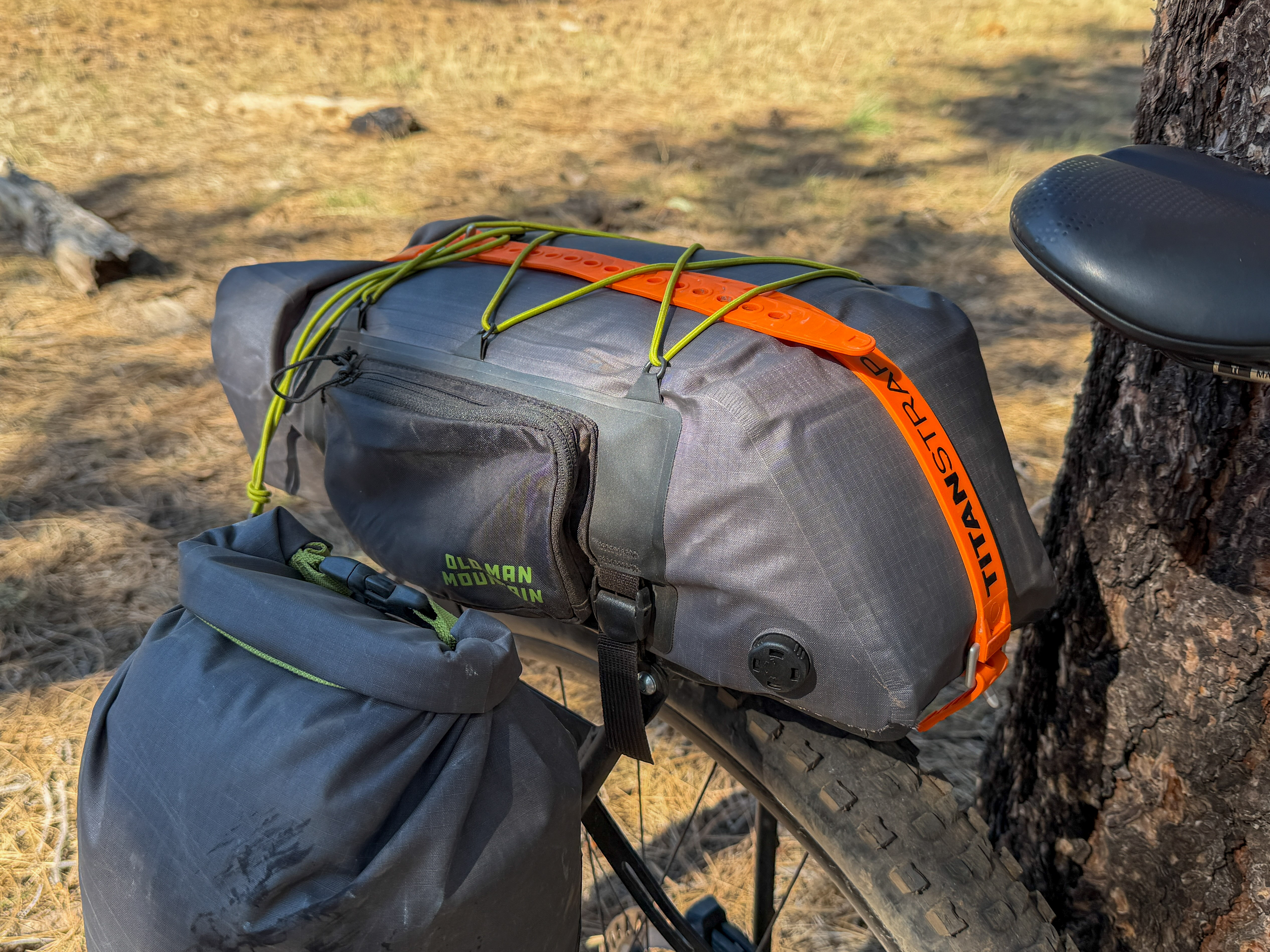
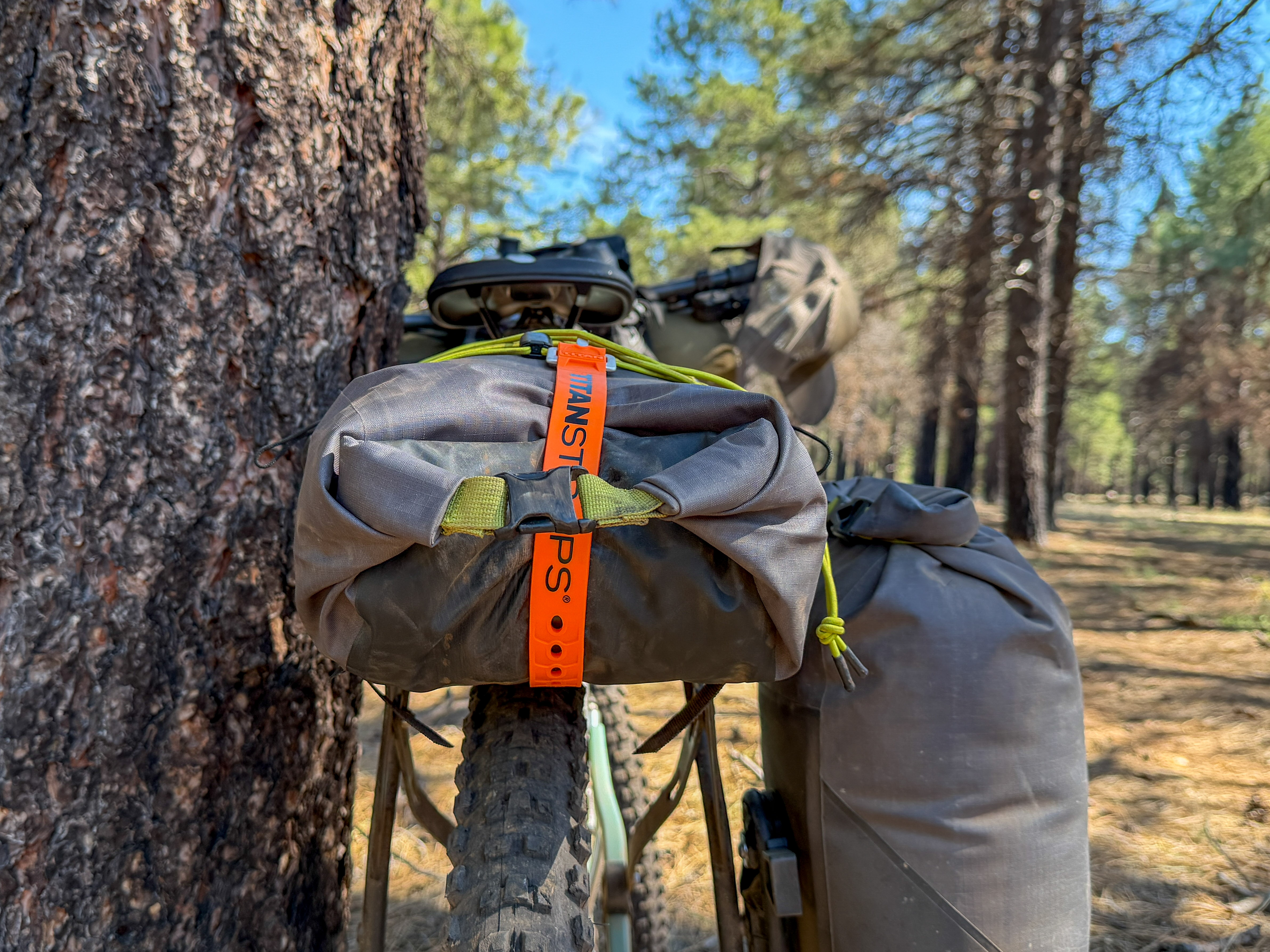
My emergency solution to the unrolling roll-top on the 12L bag.
An unrolling roll-top
First, I ran into serious issues with the dry bag-style roll top closure. While ripping downhill, the roll top has a tendency to unroll itself, regardless of how tightly I secured it. I found both sizes of bags have this issue, but it was most pronounced in the longer 12L bag. And the more weight that you’re carrying in the bag, the worse the problem is. Note that the Elkhorn bike rack boasts a 25lb carrying capacity, and on a ride with the 12L Atlas Rack Pack stuffed with four days’ worth of food, I only had 8.3lb of weight on the rack, well below its max capacity.
When the bag unrolls, it flops off the back of the rack, and then rubs on the rear wheel — exactly the problem I’m trying to avoid. The issue is most pronounced with the longer 12L bag, but I experienced it with the 9L as well. I addressed the problem by wrapping a pair of Voile-style straps lengthwise around the bag, but having to use straps kind of defeats the purpose of this purpose-built (and expensive, compared to a normal dry bag) rack bag.
There’s an easy solution to this problem: OMM could combine the roll top closure with straps that cinch toward the front of the bag, just like the vast majority of bikepacking saddle bags on the market. This is a problem that has already been solved, so I don’t know why this basic design isn’t used on the Atlas Rack Pack. It would be a simple fix for a critical problem.
Rack straps don’t hold up to mountain biking
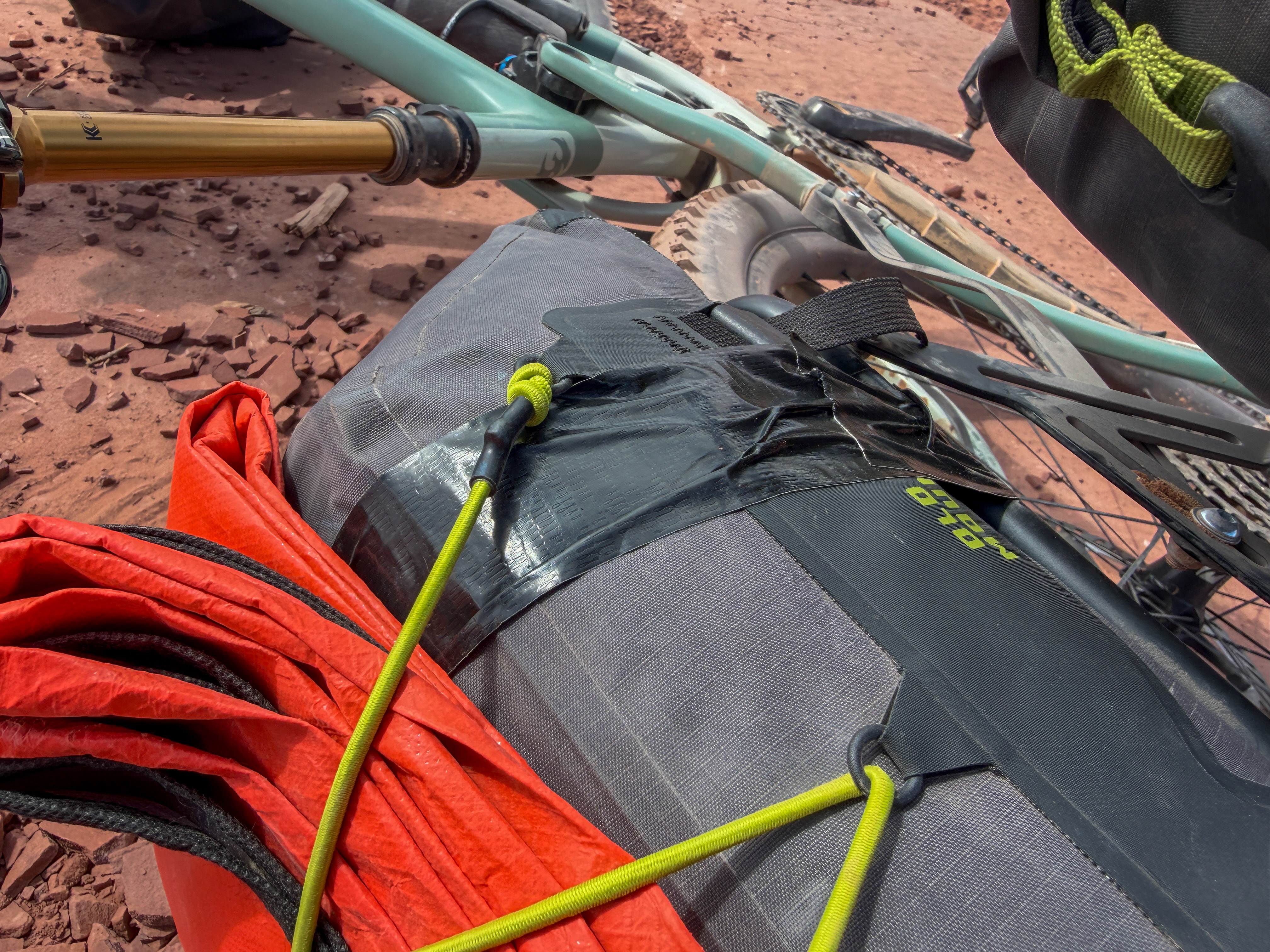
To make matters even worse, I found the locking buckles on the four webbing straps that attach the pack to the rack came loose while mountain biking. Though they work just fine for smooth gravel road grinding, when it’s time to descend rough 4×4 roads or singletrack, the straps pull right out of the locked buckles. This was evidenced when I caught the straps before they had completely pulled out and noted that the buckle was still locked, but there was now substantial slack in the system, causing the bag to bounce and slide around.
Riding the Steelbender 4×4 trail on the Peaks and Plateaus loop, I repeatedly wrenched down the straps, and within less than five minutes of downhill riding, I found three of the four straps to be completely disconnected. I couldn’t complete most of the downhills on Steelbender — which, frankly, aren’t that long — without stopping multiple times to retighten the bag.
Not good.
This might have been exacerbated by my choice on this day to fill the bag with my tent, which bounced as it hung off the back of the rack. However, the choice to move my food out of the rack bag and replace it with my tent was an attempt to remedy the aforementioned unrolling issue.
The ineffective rack straps can be remedied by, again, using Voile straps the other direction on the bag (side-to-side vs. long ways). After finishing Steelbender, I thankfully was set to roll right into Moab, and I picked up a couple of straps. But again, if you need to use Voile straps, what’s the point of paying extra for this purpose-built rack bag?
Pros and cons of Old Man Mountain Atlas Rack Pack
Pros
- Beveled front of bag provides seat/dropper post clearance
- Durable fabric and construction
Cons
- Roll-top closure unrolls and rubs tire
- Rack straps loosen up even in moderately technical MTB terrain. Unusable for true mountain biking
Bottom line
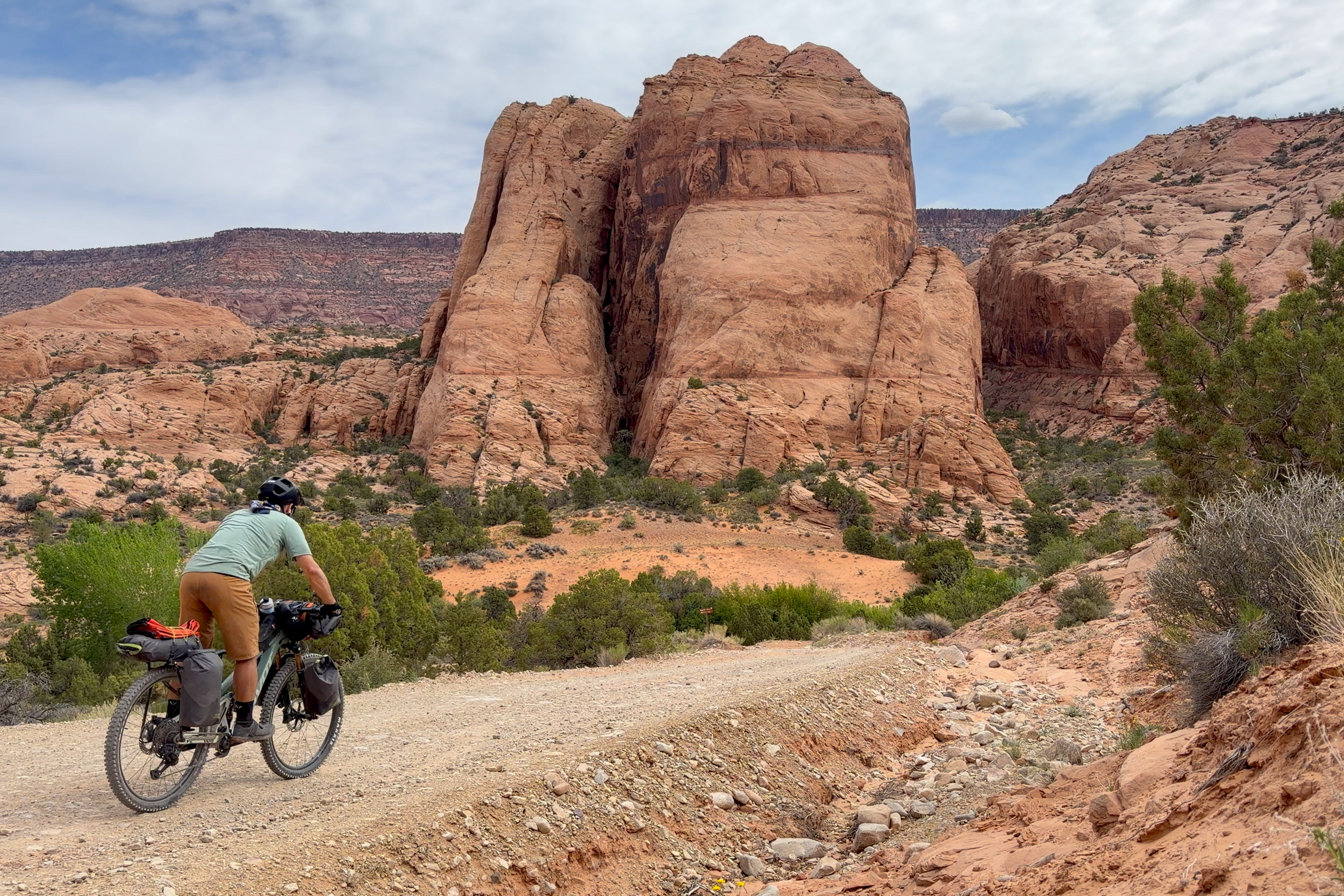
I wanted to love the Atlas Rack Packs. The beveled front for seat and dropper post clearance, durable construction, and easy storage features are all ingenious. Unfortunately, the unrolling closure and completely ineffective rack straps make the Rack Pack basically unusable for mountain bike applications.
My goal for these winter and spring bikepacking trips has been to test gear and shake down my setup for a planned thru-ride of the Colorado Trail this summer. It was a damn good idea to test this gear thoroughly, because there’s no way in hell the Atlas Rack Pack will work on the miles-long rock-filled descents on the Colorado Trail.
If you’re riding smooth gravel roads or pavement, you can probably get away with the Atlas Rack Pack. But for those who are venturing into the backcountry, this bag isn’t reliable enough for a true adventure.
Keep up with the latest mountain bike news by adding Singletracks as a preferred source on Google.




3 Comments
Apr 30, 2026
May 2, 2026
May 15, 2026