
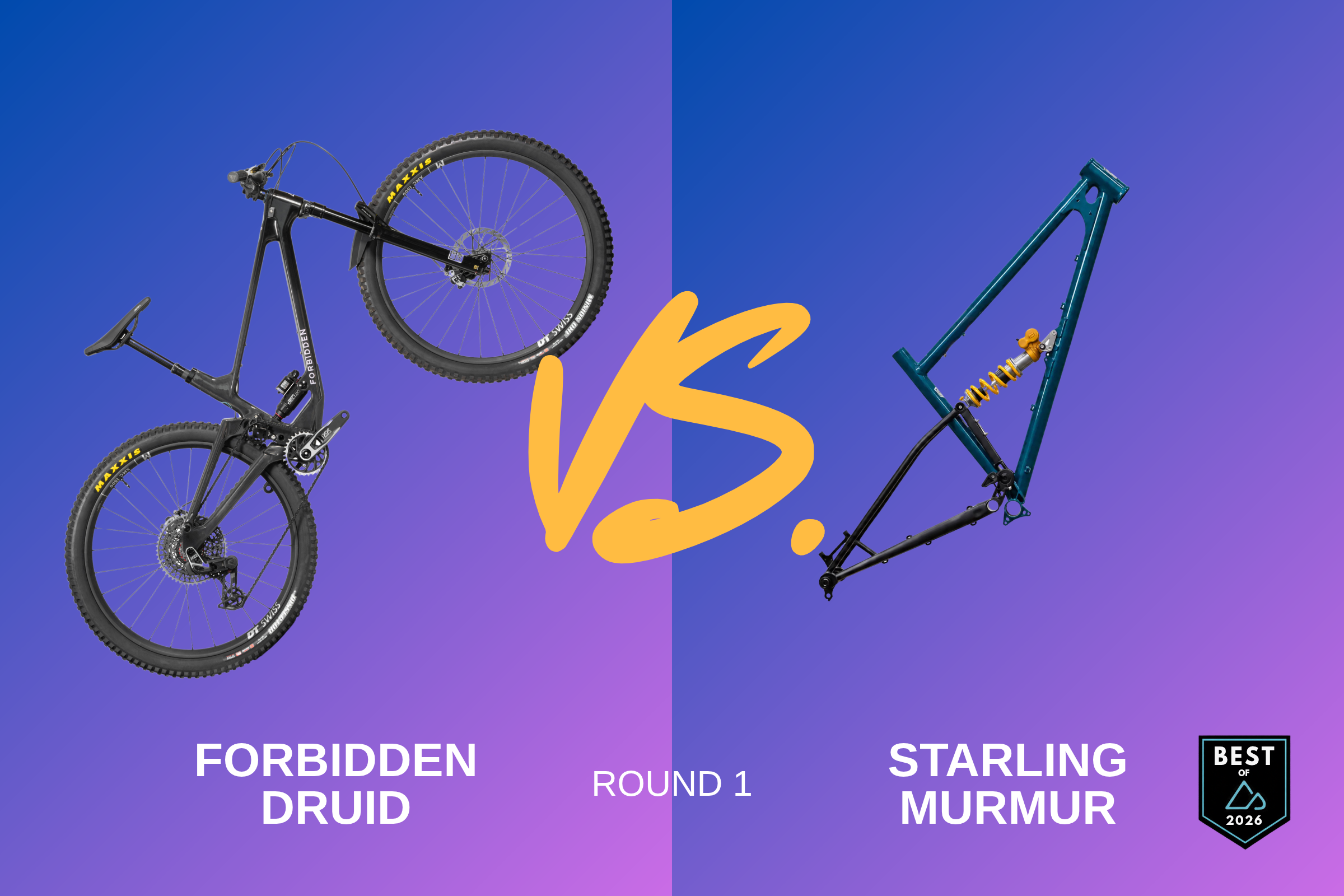
Line up the Forbidden Druid and Starling Murmur geometry tables, and you’d have a hard time telling them apart. In a size large, both bikes have a 65° head angle, their reach numbers are 5mm apart, and their wheelbases differ by just 1mm. Look at the frames themselves, though, and it’s hard to imagine two trail bikes with less in common.
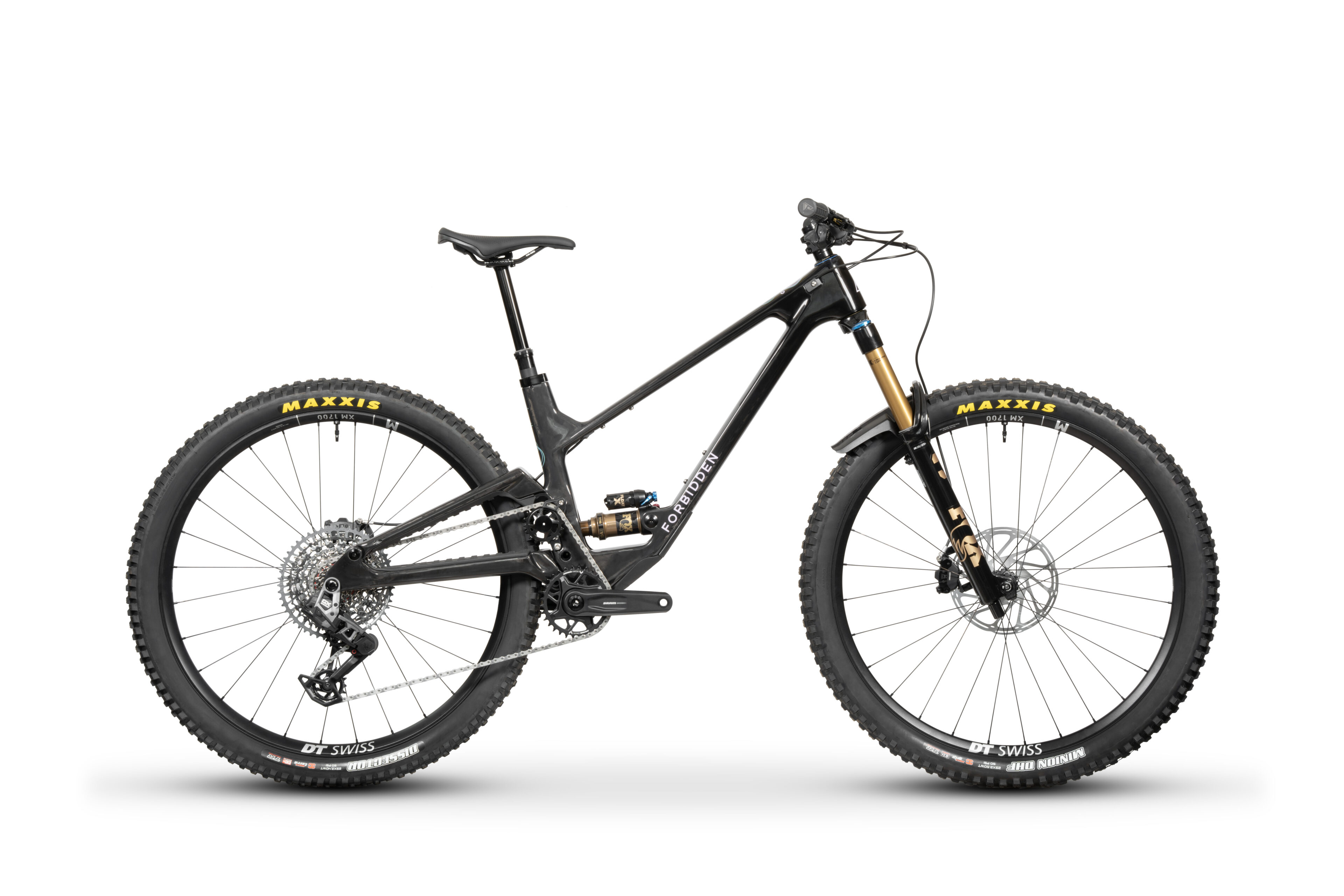
The Druid is a carbon high-pivot bike with an idler pulley and a four-bar linkage. The Murmur is a steel single pivot with, as Starling notes, “just two bearings to maintain.” Both are 29ers with a 150mm fork and around 130mm of rear travel, and both come from small brands that have built cult-like followings by doing things their own way.
Starling currently sells the Murmur as a frame only, so for this matchup we’re comparing it with the Druid framekit rather than a complete build. The Murmur can be set up with 120, 135, 150, or 165mm of rear travel, but we’re focusing on the 135mm configuration, which lines up most closely with the Druid.
| Forbidden Druid V2 framekit | Starling Murmur frame (135mm) | |
|---|---|---|
| Suspension travel (F/R) | 150/130mm | 150/135mm |
| Frame | Carbon | Steel (Reynolds 853 front triangle, chromoly rear) |
| Suspension design | High pivot, inverted four-bar | Single pivot |
| Shock | RockShox Super Deluxe Ultimate (included) | Not included |
| Wheel size | 29″ or mixed | 29″ (mixed with alternate swingarm) |
| Geometry* (size large frame) | HTA: 65° STA: 77° Reach: 480mm Chainstay: 452mm | HTA: 65° STA: 78° Reach: 485mm Chainstay: 455mm |
| Sizes | S1–S4 | S–XXL |
| Frame weight | 3.3kg (7.3lb), S2 without shock | 3.6kg+ (7.9lb) without shock |
| Price | $3,999 | €2,996 (about $3,367) with Fox Float shock |
Suspension: High pivot vs. single pivot
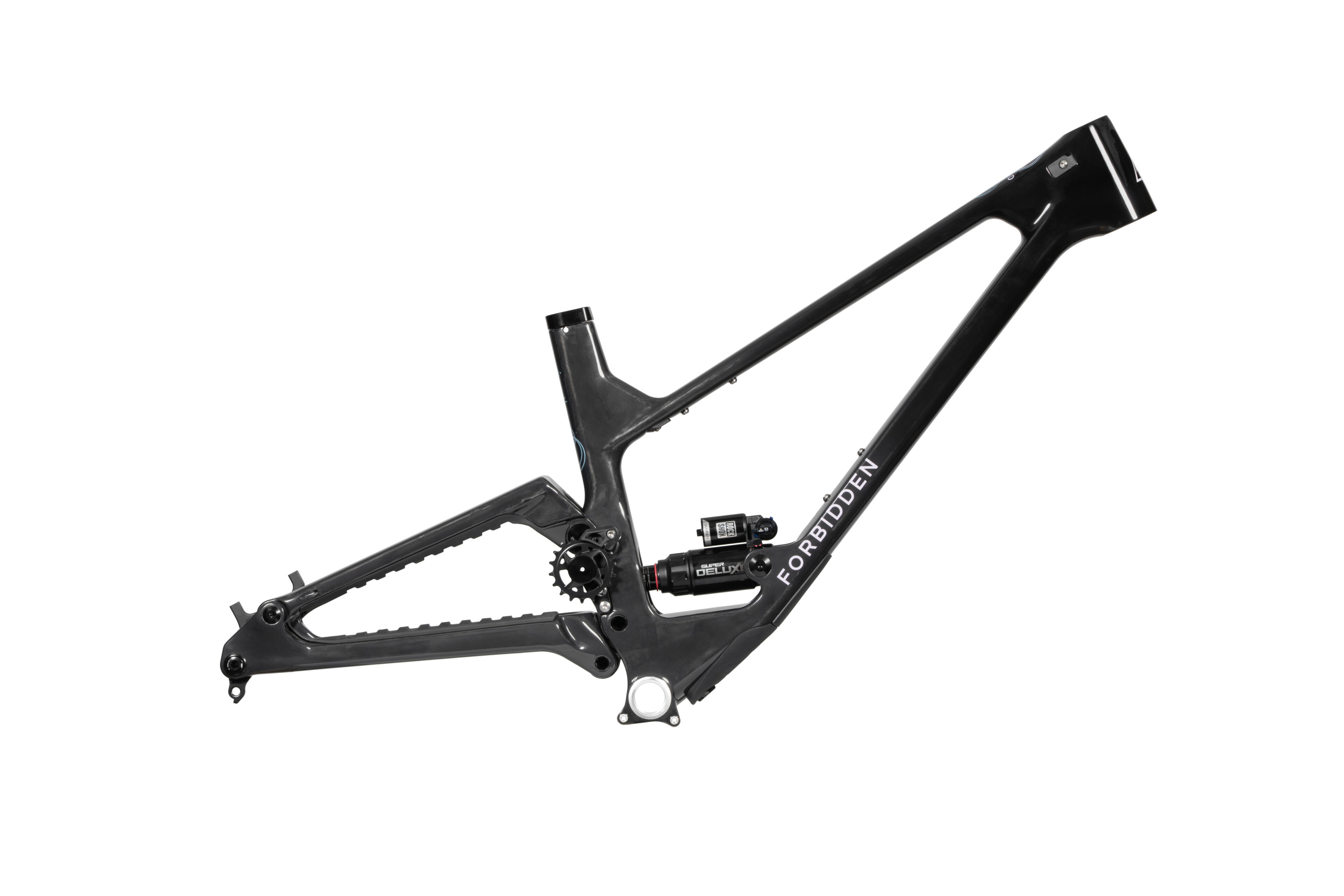
Forbidden’s Trifecta suspension uses a high main pivot and an idler pulley to give the rear wheel a rearward axle path. The original Druid was a single pivot like the Murmur, but the V2 moved to an inverted four-bar layout, and it now ships with an 18-tooth steel idler.
Idler drag is a trade-off with high-pivot bikes, and it was the main concern for Singletracks contributor Juan Francisco Garza Elenes when he tested the Druid V2 in 2023. Even so, he “was surprised to find a minimal noticeable resistance,” and said the rear end “tracked the ground really well, even under hard braking.”
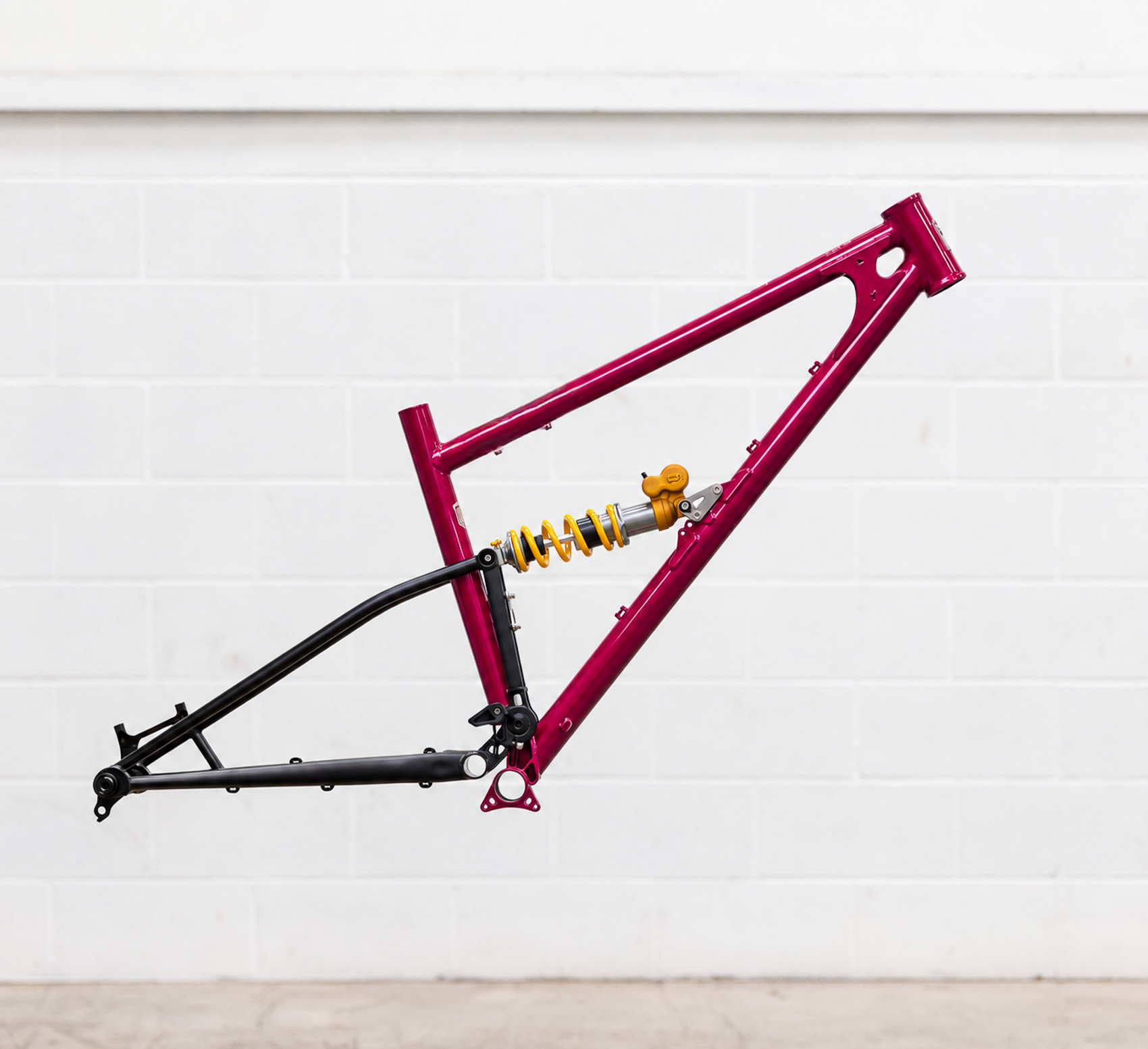
The Murmur takes the opposite approach. “Our single-pivot suspension design eliminates complexity,” Starling says. An adjustable shock mount lets riders choose between 120, 135, 150, and 165mm of rear travel, though each setting requires a different shock. In the 135mm configuration, the Murmur runs a 210x55mm shock.
When Gerow reviewed the Murmur for Singletracks in 2021, he noted that “like most single-pivot platforms, the rear suspension is highly dependent on and sensitive to the tune and setup of the shock.” Even so, he found that it “offers a similar amount of braking traction to some far more complex linkage systems.” That review covered an earlier version of the frame, set up with 140mm of rear travel, before Starling launched its current V3 design, which added UDH compatibility among other changes.
Nearly identical geometry, at least in size large
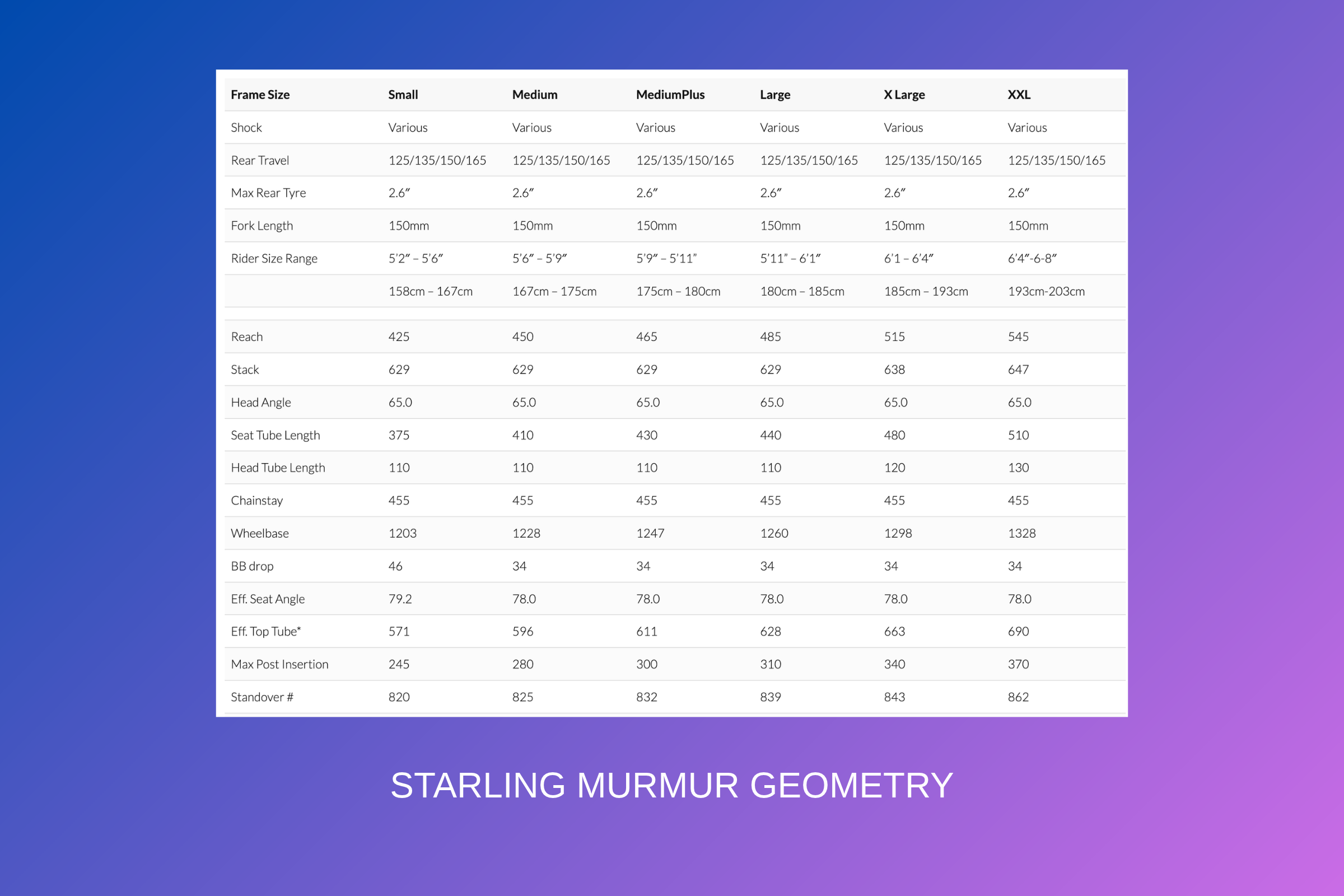
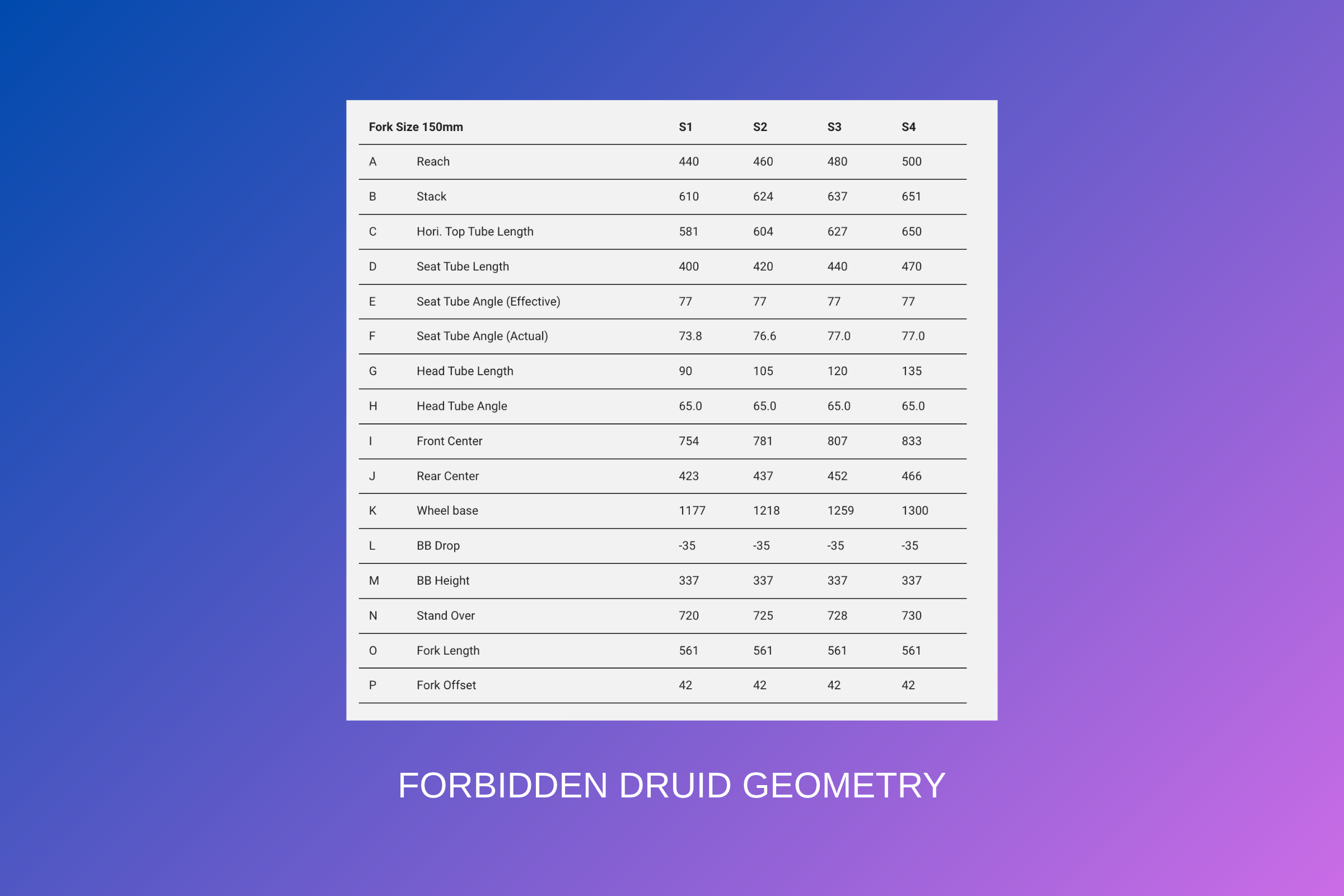
Looking at the geometry for size large frames, the two bikes are remarkably close. The Druid S3 has a 480mm reach, 637mm stack, and 1,259mm wheelbase. The Murmur L comes in at 485mm reach, 629mm stack, and 1,260mm wheelbase. Bottom bracket drop is 35mm on the Druid and 34mm on the Murmur, and the Murmur’s effective seat angle is a degree steeper at 78°.
However, differences show up across the size range. Forbidden scales the chainstay lengths with each frame size, from 423mm on the S1 to 466mm on the S4, and calls it “the industry’s only truly proportional geometry.” Starling went the other way recently, moving every Murmur to the same 455mm chainstay length, up from 445mm on earlier frames.
The Murmur is offered in six sizes, including a Medium Plus, covering riders from 5’2″ to over 6’6″. The Druid comes in four sizes for riders between 5’2″ and 6’6″.
Frame features
The Druid framekit includes a RockShox Super Deluxe Ultimate shock, and Forbidden lists the frame weight at 3.3kg (7.3lb) for a size S2 without the shock. Forbidden says even the smallest Druid fits a full-size 26oz water bottle, and the frame sticks to a threaded bottom bracket and is UDH-compatible. Riders can run it as a full 29er or mixed wheel.
The Murmur’s base price doesn’t include a shock. Starling offers a Fox Float DPS Performance (€330, about $370) or an Öhlins TTX22M.2 coil (€1,014, about $1,100) as add-ons for the 135mm setup. The frame uses a replaceable SRAM UDH and comes with an aluminum seatpost insert to prevent stuck posts. Swapping the swingarm and rear wheel turns it into a mullet.
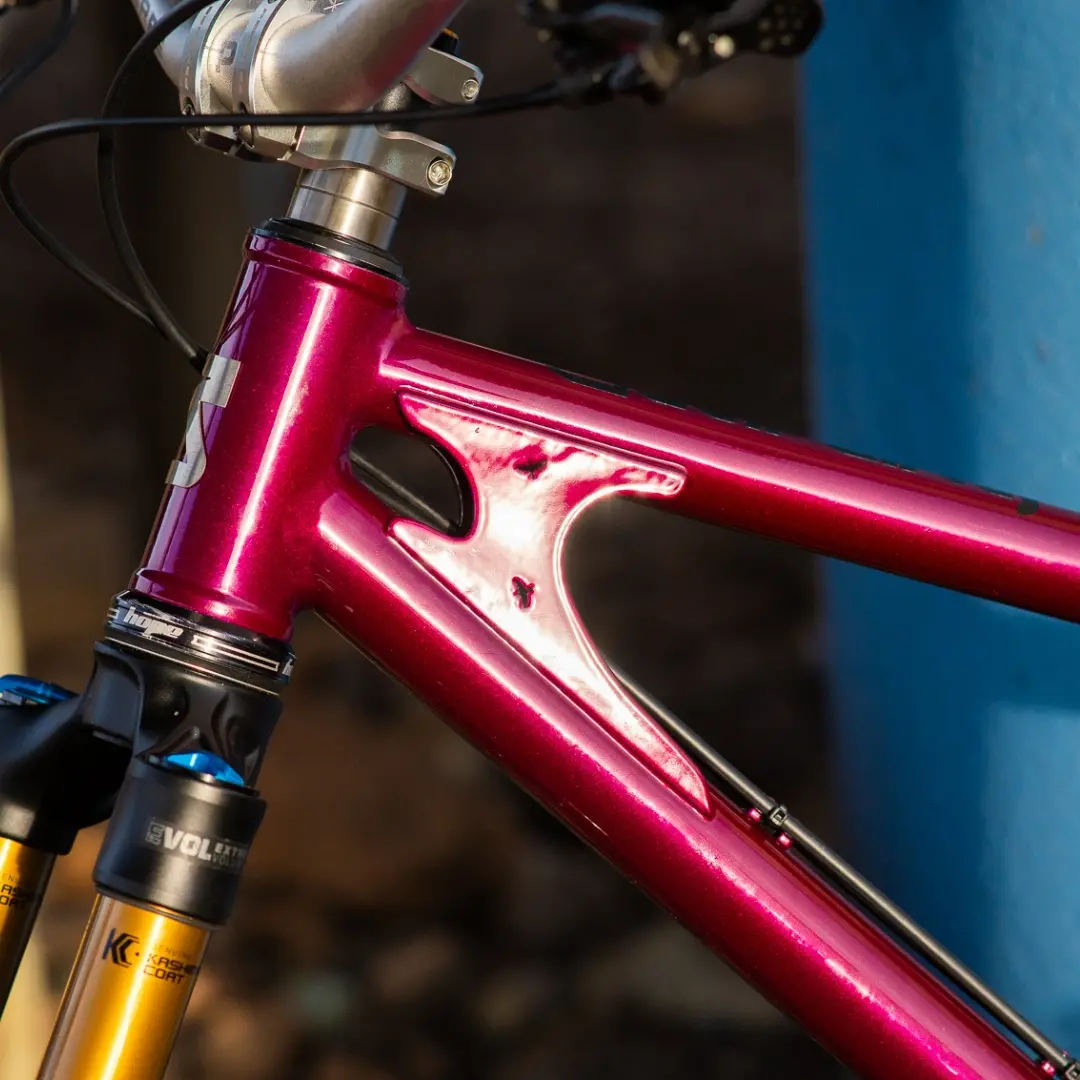
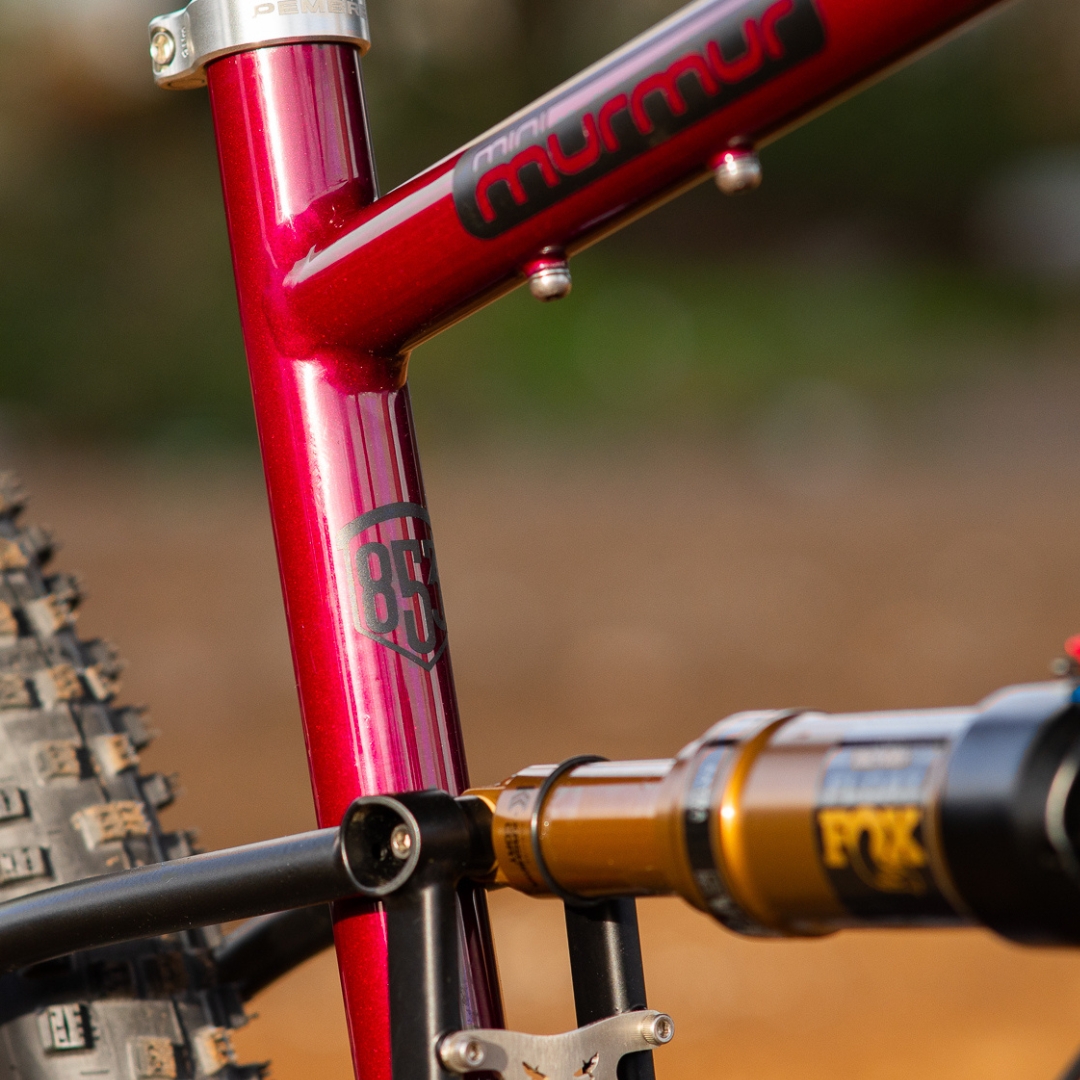
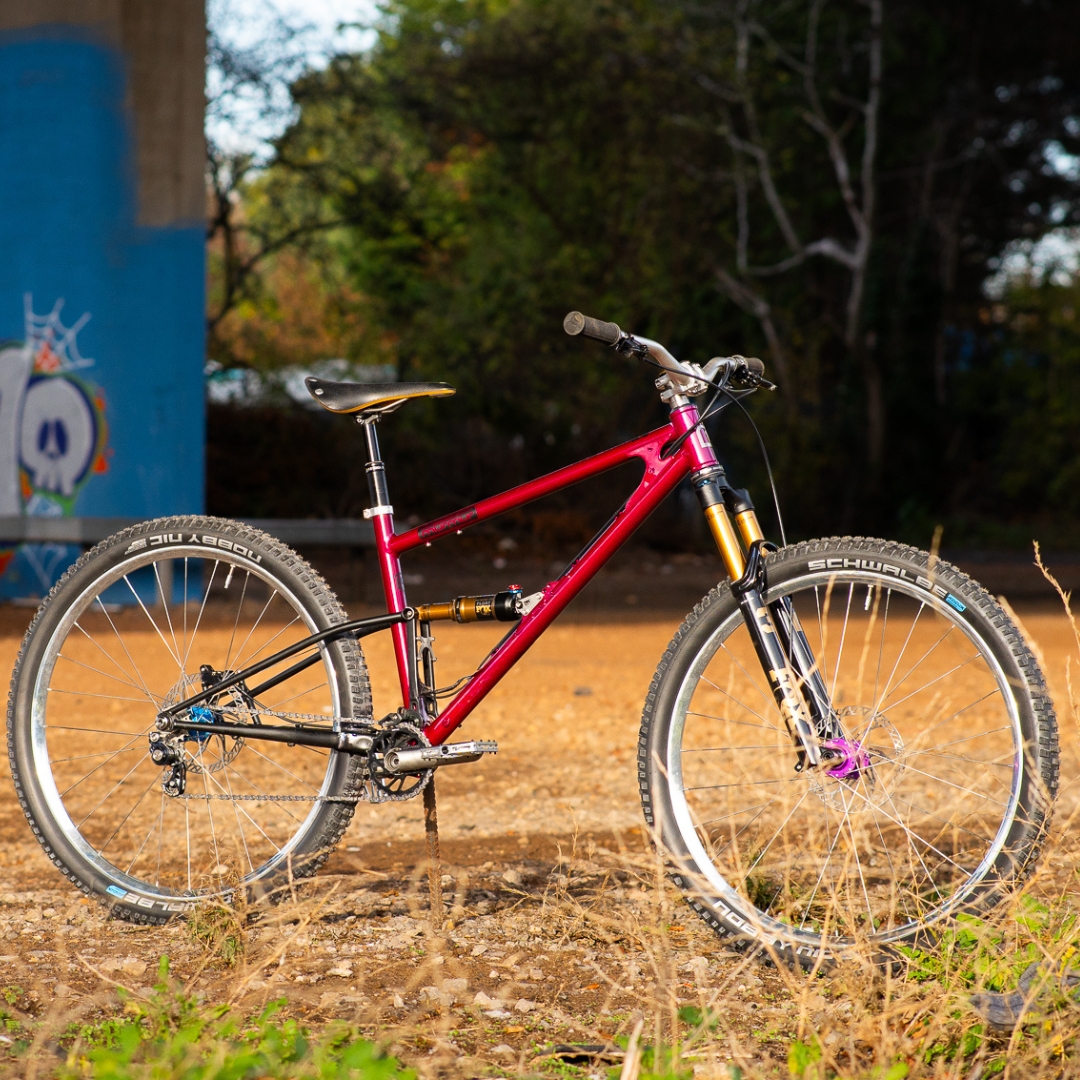
Murmur front triangles are made from Reynolds 853 steel in Europe while the rear triangles are made from Chromoly in Taiwan. A few Murmur sizes — small, medium-plus, and extra-extra large — are made in the UK. The Druid is available in four frame sizes from small to extra-large. Murmur frames include a “7-year warranty/crash replacement service,” while the Druid offers a lifetime warranty that covers “defects in workmanship and materials.”
The Murmur features fully external cable routing for ease of maintenance and installation. The Druid uses internal routing but keeps things pretty fairly simple with top-tube routing for the rear brake hose and derailleur cable. “You won’t find any questionable trends here,” Forbidden writes on their website, continuing, “looking at you headset cable routing.”
The bottom line
This matchup comes down to how you want a short-travel bike to get the job done. The Druid uses its high pivot and idler to ride bigger than its 130mm and offers a mixed-wheel option without the need for a new swingarm. The Murmur offers the feel of steel, a suspension system with only two bearings to worry about, and the option to change travel down the road.
The winner advances to round two on November 13 to face the winner of the Santa Cruz Tallboy vs. the Ari Cascade Peak.
Keep up with the latest mountain bike news by adding Singletracks as a preferred source on Google.




0 Comments