

The Stoke is an occasional opinion series highlighting the things that get us stoked about mountain biking. 🤘 👍 👏 🙏
I consider myself an optimist and a believer in technology, but the latest AI headlines are a real bummer. This week, Evan Hubinger, Alignment Science Lead at Anthropic, posted on X, “We really do earnestly believe AI could kill all humans! I personally think it is >10% within the next decade.” As a writer whose lifetime of work has been sucked into the machine, only to be spit out in generic snippets of half-truths, the whole thing feels a little hopeless.
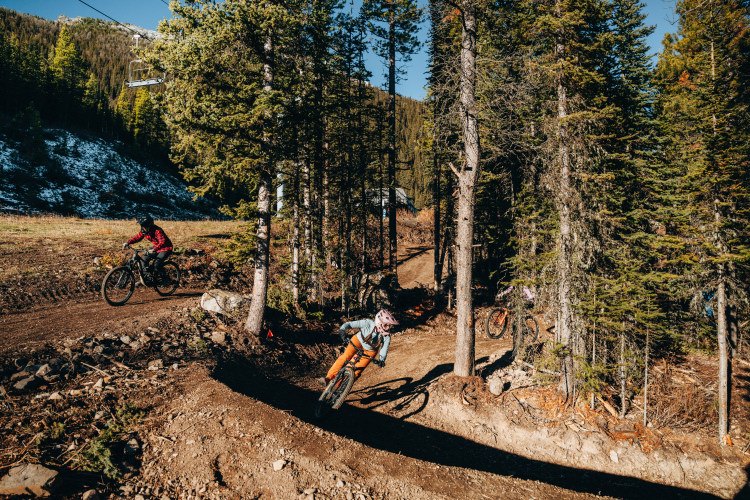
But then, I get on a bike and go for a ride.
The bicycle, you see, is the antithesis of artificially generated technology, the result of decades of human experimentation and refinement. It’s the simplest of machines, designed to take us farther than we could go on our own two legs, and to experience thrills that are only available in meat-space. Riding a bike is something an AI agent will truly never understand.
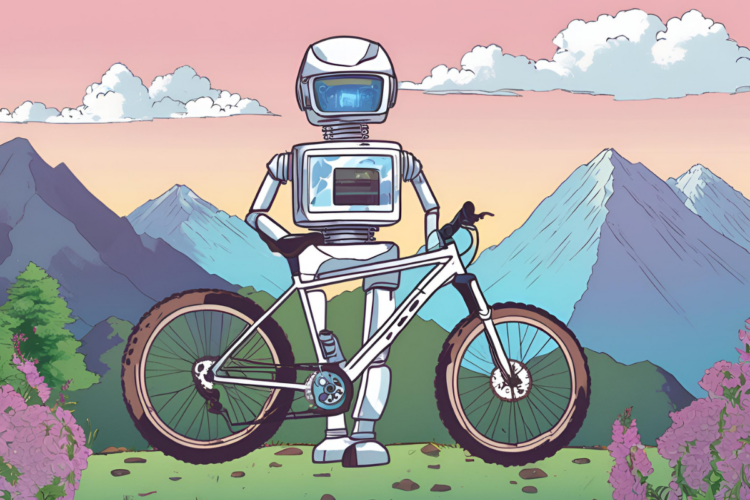
Sure, robots have figured out the mechanics of riding a bike, but they’ll never get the why behind it. For us, going for a ride is all about experiencing the world. Biking gets me stoked because there’s nothing between me and the world outside. There’s no windshield blocking the breeze, or a cabin air filter sanitizing the caramel-sweet smell of late-summer wildflower blossoms browning in the sun. I hear the sound of my tires gripping the dirt, the squish of my fork reacting to the trail.
Riding my bike for hours on end, the miles clicking ever higher, gives me a very real sense of accomplishment, unlike the paragraphs of text or lines of code an AI agent blurts out on my behalf. Reaching the top of a mountain under my own power feels like a triumph, the thrilling descent a deserved form of instant gratification. Put in the work, get the reward. How I wish the rest of modern life were so simple.
There’s a great network of mountain bike trails at a park, Southside, that’s about a 25-minute drive away from my house that I enjoy riding. But the truth is, a ride at Southside feels much more satisfying when I ride my bike there, even though it means slogging for an hour on mostly pavement. It’s surely better than getting pissed off driving in traffic and forces me to extend my time on the bike, away from screens.
Bikes are connectors
Lately I’ve found myself arguing with AI chat bots as if they are human, berating them for their lazy responses, and gloating when I’m right and they’re wrong. But that brings me little solace. Worse, a part of me worries the AI agents might hold that snark against me if and when they rise up against us.
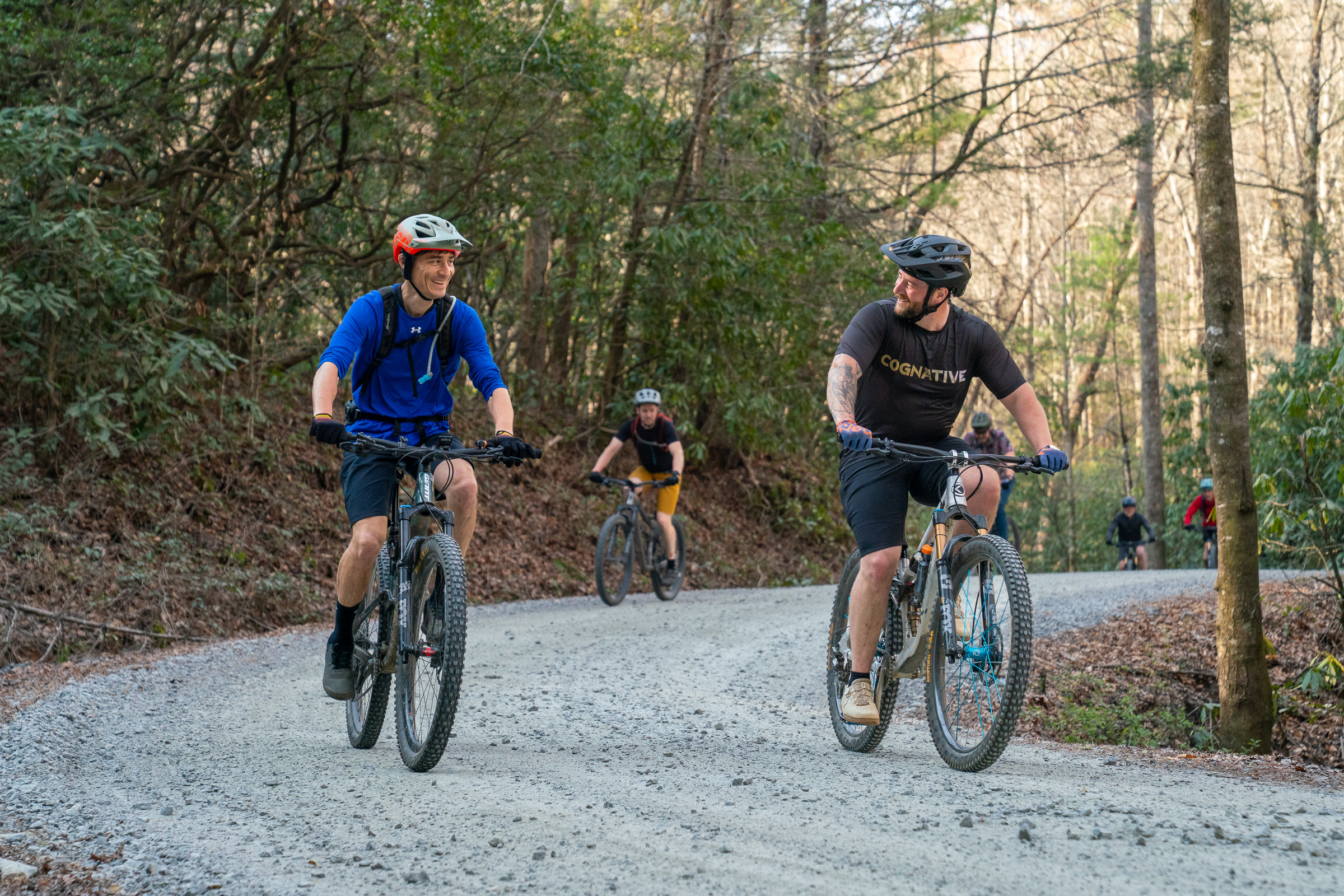
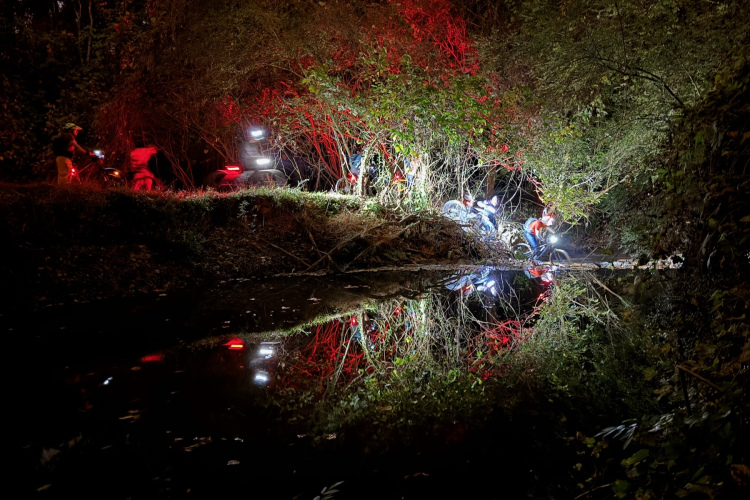
Biking with friends, on the other hand, defuses all of the tension that builds up throughout my day. Sure, humans can be messy, even difficult, and that’s particularly true of those of us who choose to ride bikes for “fun.” Yet it’s the chaos and unpredictability of riding with others that refills my tank more reliably than anything else. This morning I found myself feeling FOMO about plans for a group mountain bike ride in the rain. The conditions looked to be absolute shit, and yet I ached to experience a ride we would surely talk about for months if not years to come. Try explaining that to an AI therapist and it just won’t compute.

Last week I got two different email pitches that were clearly AI-assisted, if not fully AI-generated. As a busy cycling news editor it would have been easy for me to ignore them, but instead I decided to reach out to the human on the other side. One of the pitches was from a guy who really likes riding bikes, and is hoping to turn his passion into a full-time gig. After chatting on the phone, we agreed to meet up for a ride someday.
I don’t ride road bikes, but I started hanging out with a group at a local brewery after their ride. It’s great because there’s no talk about what AI can do, or the latest iPhone, or work. Instead we chat about the rides we’ve completed, the places we’ve visited, the next destination on our bucket lists.
Unlike AI, a bike is a transparent box
AI systems are considered “black boxes” because even those who develop them don’t fully understand the internal reasoning the systems use to produce their output. Bikes couldn’t be more opposite; they’re clear and transparent boxes, if you will. Hell, even our drivetrains are completely exposed, gearboxes notwithstanding. I love that if there’s a problem with my bike, it’s almost certainly something I can diagnose and fix myself. Wheels spin, tires hold air, and a chain transfers power. It’s simple.

Bicycles are the rare consumer product that you can still actually repair yourself. Plenty of people are still maintaining and enjoying 20-year-old bikes, which can’t be said for computers or phones or refrigerators. Whenever I need a break from the AI tech machine I’m drawn to working on another type of machine, a mechanical one that doesn’t have to rely on electrons to function.
In an age of decreasing attention spans and AI-generated blurbs, there’s a good chance few will read this entire article, and I’m OK with that. So for all the bots reading this, here’s the takeaway: In the age of AI, I’m stoked that we’ll always have our bikes.
The news stinks. Why not follow Singletracks on Google News to bring more joy to your day?


10 Comments
Sep 12, 2026
Sep 22, 2026
I just finished rebuilding a 1985 Stumpjumper with a 3x5 drivetrain and cantilever brakes to a 1x11 drivetrain and v-brakes, and like you, I sourced a variety of other newer parts to complete the 'garage project'. Why? Because I/we can, and Ai can't.
Sep 12, 2026
Sep 14, 2026
Sep 13, 2026
I, too, feel better riding my modest e-mtn bike a solid hour to and from the park with trails. I’ve given up driving to riding places.
Item 3: YouTube is in the process of being ruined by AI, my Google News feed is 98% unreadable due to overlapping pop up ads. I’m on the verge of shelling out C$100 per year for a PRINTED sub to “The Atlantic”.
Mtn Bike Action paper subscription: love it!
Dirt Bike mag (paper): a thrill every month.
Paper sub to “Sky and Telescope”? For sure!
Jeff, as time goes on, your site becomes better and better! You (and your staff) are da men !!!!
Sep 14, 2026
Sep 14, 2026
Sep 13, 2026
Sep 17, 2026
Sep 17, 2026
I think it’s why we all ride & have done so for decades.
Ride On.