
For decades, British Columbia has been the primary mountain biking destination in Western Canada. Now, its neighbor to the east will be getting in on the game thanks to a new bike park that is set to open in the summer of 2027 at Nakiska Ski Area.
To get the story on how Nakiska Ski Area was able to get the bike park built and what its opening will mean to the area, Singletracks spoke to Matt Hadley, an Outdoor Recreational Professional with McElhanney Ltd., and Neil Jackson, the Senior Vice President for the Resorts of the Canadian Rockies.
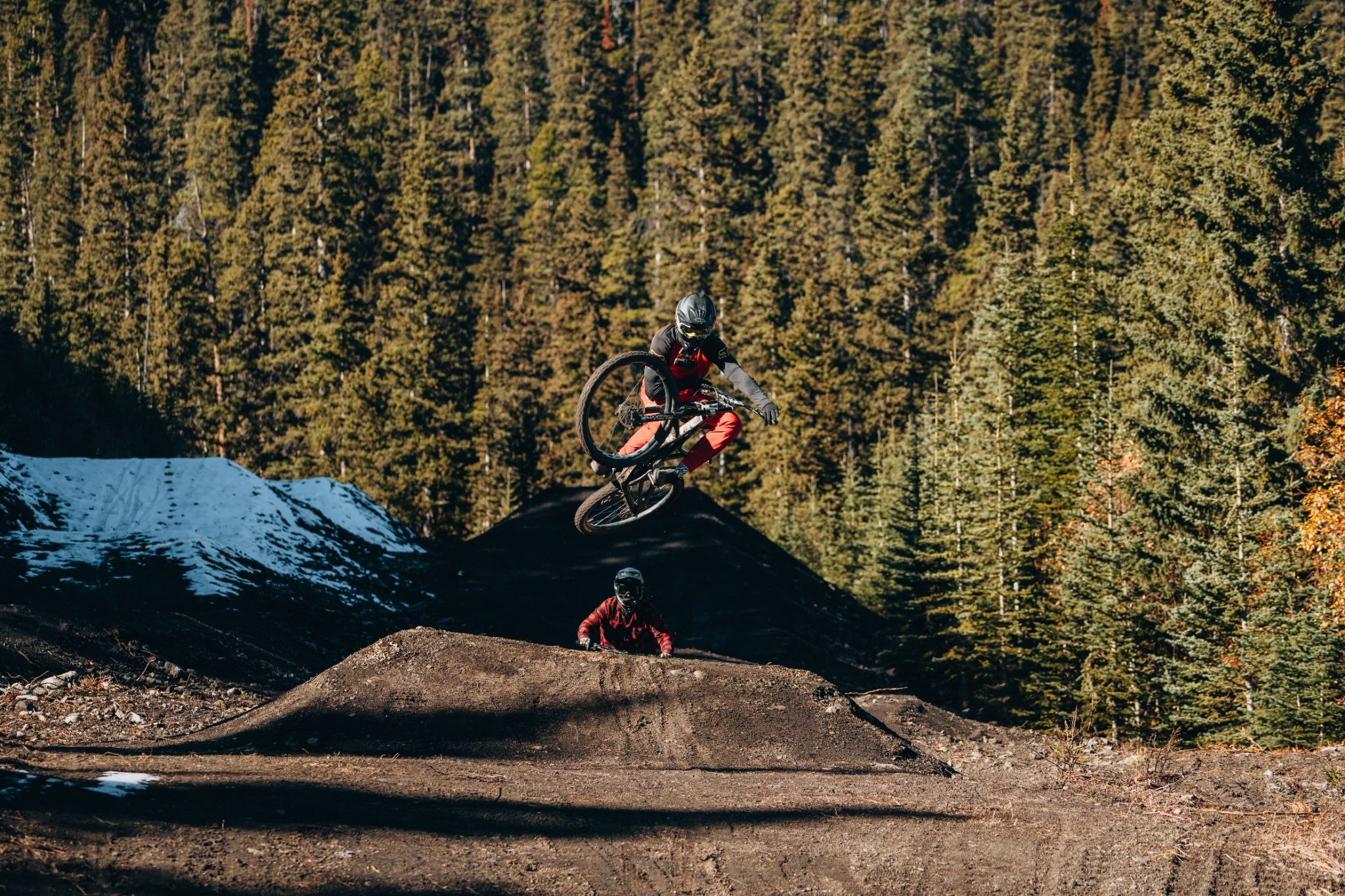
Nakiska was originally designed as a premier ski venue
Nakiska is located 52 miles from Calgary, just off the Trans-Canada Highway. Its name is the Cree word for “meeting place.” It is located on the traditional territory of the Treaty 7 Nations – the Siksika, Kainai, Piikani, Tsuut’ina, and the Stoney Nakoda (Bearspaw, Chiniki, and Goodstoney).
The ski area was created specifically to be the venue for the alpine events of the 1988 Winter Olympics. Further enhancements to the resort were made in the 2000s.
It has been a popular recreational destination for Albertans since its opening. However, because it is located on Crown Land, it was subject to restrictions that prevented the ski area from offering summer activities.
Specifically, the restrictions prevented resorts from providing overnight accommodations and recreational activities during the summer. Jackson told Singletracks that the restrictions contributed to the $1.7 billion deficit in tourism dollars Alberta had to British Columbia.
The passage of the All-season Resorts Act in 2024 gave Nakiska the opportunity to build a bike park
According to the government of Alberta, having all-season resorts is an important part of its strategy to double its tourism dollars to $25 billion by 2035. The passage of the All- season Resorts Act, which took effect on March 11, 2026, created the framework for resorts to have summer activities in the province.
The Act has three main parts. First, it allows the government of Alberta to decide which public lands can be considered for resort development by designating them as All-season Resort Areas. Second, once land has been designated as an All-season Resort Area, the government of Alberta can either solicit expressions of interest or engage with existing rights holders to enter into an application process that results in an All-season Resort Disposition (akin to a lease). Finally, once the disposition has been made, the government of Alberta monitors compliance with environmental, social, and economic commitments throughout the resort’s lifecycle.
The passage of the act benefited not only Nakiska, but also two other existing resorts in Alberta, Castle Mountain and Fortress Mountain. Jackson, who had looked closely at resorts in British Columbia and saw the popularity of mountain biking there, knew that it was a logical step to add biking as a summer activity for Nakiska once the act had passed and the resort had received its disposition.
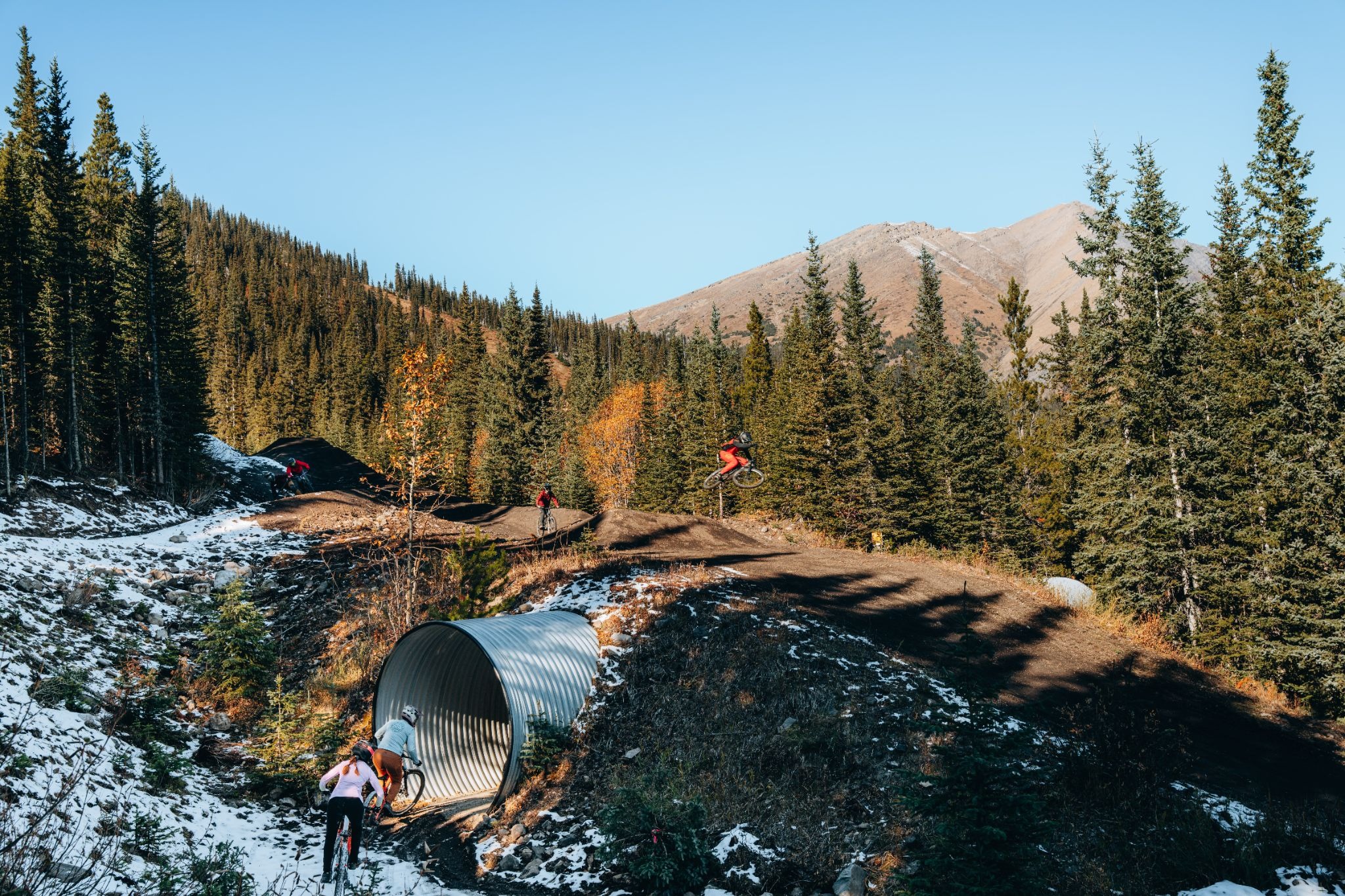
Nakiska brought in Hadley to design a bike park that catered to every level of rider
McElhanney Ltd., Hadley’s employer, has been a partner with Nakiska for several years, helping with various improvements to the resort. One of Jackson’s contacts at the company put him in touch with Hadley. “I knew about him before I met him,” said Jackson. “He brings a level of expertise and respect.”
Hadley, who grew up in New Brunswick and discovered mountain biking at an early age, started building trails as a teenager. He became an elite mountain biker and a gifted trail designer. His work is showcased in projects like the Sun Peaks Bike Park, Cypress Hills, High Rockies Trail, Ha Ling Peak, and Mount Yamnuska.

Jackson gave Hadley a fresh piece of canvas to work with. “I didn’t place any restrictions on the project.” Once the act was passed, Hadley got to work on a master plan for the bike park and broke it up into phases. He said that the goal for the project was to create trails that are progressive and fun.
Construction of Phase I of the bike park began this past June
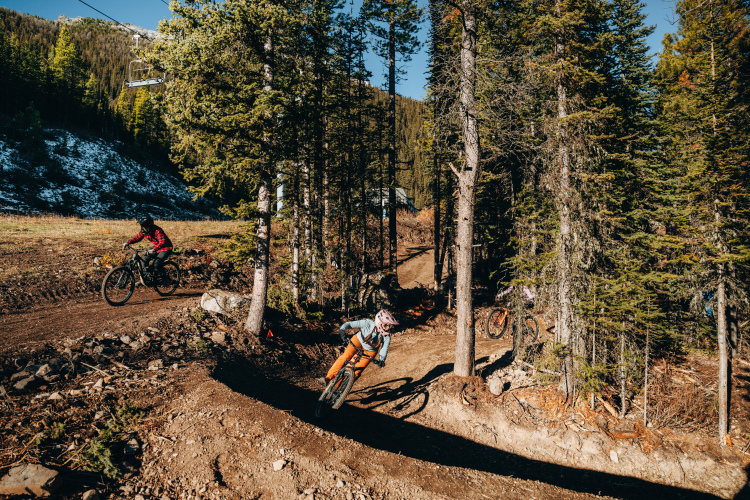
Hadley is part of a seven-person trails team at McElhanney, who, together with Lifetime Outdoor, Inc. and Starr Trail Solutions, designed and are building Phase I of the bike park. The phase will consist of a green flow trail with optional features that is adaptive-friendly, two blue flow trails, a blue tech trail, a black flow trail, and a black tech trail. In all, there will be approximately 26km (16.2mi) of trails when the first phase is completed.
According to Hadley, the soil at the resort is good for building flow trails, and the terrain is excellent for it with gullies and ridges. He also said that the builders are incorporating some interesting rock features into the tech trails, as well as creative wood technical trail features. “There will be some pretty neat gulley features on the black tech trail.”
Hadley told Singletracks that the area of the resort where the trails are being built has 410m (1,345ft) of elevation, which should make for some exciting downhill action. He and the team have designed the trails for riders of all abilities, from beginners to advanced. “They should keep everyone progressing and stoked.”
Though no date has been set, Jackson said that the plan is to open the bike park by the summer of 2027.
Jackson is optimistic that the bike park will be successful when it opens
Jackson, who has been wanting to build trails at the resort for over 20 years, is excited about the project coming to fruition. “Calgary has about 3 million residents, and about three percent of them are mountain bikers. Currently, they have to travel to British Columbia to ride.”
While the resort does have plans to build additional trails in 2028, Jackson said that the resort is waiting to see how successful the first phase is before going further. With the growth of mountain biking elsewhere in the country, Nakiska and Alberta are poised to become Canada’s next great mountain bike destination.
Keep up with the latest mountain bike news by adding Singletracks as a preferred source on Google.


0 Comments