Latest mountain bike news

A mounted display featuring a bicycle tire with a unique design, showcasing a combination of a traditional rubber tread and an inner structure for enhanced support. The display is set against a backdrop with text highlighting benefits such as improved traction, better cornering stability, and enhanced suspension.
min
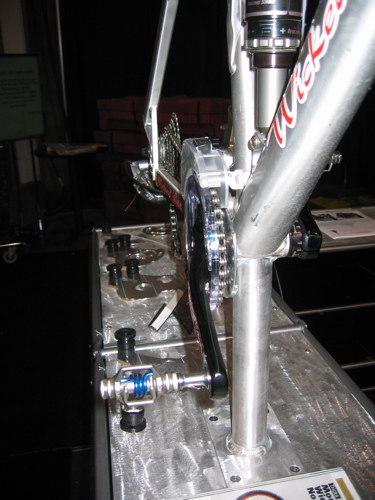
Close-up view of a metal bike frame with visible components such as the crankset, chain, and gears. The image shows the intricate details of the mechanical parts, highlighting the craftsmanship and design of the bicycle. The background is dark, and there are tools and information displays nearby.
min
Now this is something I couldn't have imagined: using inflatable balls to pump up a bike tire. Now apparently this has been done for some time with motorcycle and dirt bike tires but it's very new in the mountain bike world. Individual "<a href="http://www.tireballs.com/">Tire Balls</a>" are inflated using a needle inflator (like you'd use for a soccer ball) and placed in your tire (see photo). It takes around 26-28 balls to fill a typical bike tire and the kits are sold with 30 balls just to be safe.
<div style="text-align: center"><img alt="tireballs.jpg" id="image417" src="https://images.singletracks.com/blog/wp-content/uploads/2007/09/tireballs.jpg" /></div>
Anyway, the supposed advantage of the inflation balls is that they are lower maintenance (they only lose about 10% of their pressure over the course of a year) and they are mega redundant (meaning you can pop one and won't really notice). Of course they're a pain in the ass to adjust for pressure and I'd imagine they're MUCH heavier than a typical butyl tire tube. I felt one of these suckers and they're beefy, almost as thick as a camelbak bladder.

Tire Balls is looking for folks to beta test their system, though I think I'll pass until they hit prime time.
min
A silver mountain bike with visible dirt on the tires is positioned next to a table covered with a fall-themed tablecloth. On the bike's frame rests an orange Halloween pumpkin helmet. In the background, another bike and a red bicycle frame can be seen.
min
Now this is something I couldn't have imagined: using inflatable balls to pump up a bike tire. Now apparently this has been done for some time with motorcycle and dirt bike tires but it's very new in the mountain bike world. Individual "<a href="http://www.tireballs.com/">Tire Balls</a>" are inflated using a needle inflator (like you'd use for a soccer ball) and placed in your tire (see photo). It takes around 26-28 balls to fill a typical bike tire and the kits are sold with 30 balls just to be safe.
<div style="text-align: center"><img alt="tireballs.jpg" id="image417" src="https://images.singletracks.com/blog/wp-content/uploads/2007/09/tireballs.jpg" /></div>
Anyway, the supposed advantage of the inflation balls is that they are lower maintenance (they only lose about 10% of their pressure over the course of a year) and they are mega redundant (meaning you can pop one and won't really notice). Of course they're a pain in the ass to adjust for pressure and I'd imagine they're MUCH heavier than a typical butyl tire tube. I felt one of these suckers and they're beefy, almost as thick as a camelbak bladder.

Tire Balls is looking for folks to beta test their system, though I think I'll pass until they hit prime time.
min
Logo of Interbike, a trade show for the bicycle industry, featuring the word "interbike" in bold, white letters on a dark textured background.
min
Now this is something I couldn't have imagined: using inflatable balls to pump up a bike tire. Now apparently this has been done for some time with motorcycle and dirt bike tires but it's very new in the mountain bike world. Individual "<a href="http://www.tireballs.com/">Tire Balls</a>" are inflated using a needle inflator (like you'd use for a soccer ball) and placed in your tire (see photo). It takes around 26-28 balls to fill a typical bike tire and the kits are sold with 30 balls just to be safe.
<div style="text-align: center"><img alt="tireballs.jpg" id="image417" src="https://images.singletracks.com/blog/wp-content/uploads/2007/09/tireballs.jpg" /></div>
Anyway, the supposed advantage of the inflation balls is that they are lower maintenance (they only lose about 10% of their pressure over the course of a year) and they are mega redundant (meaning you can pop one and won't really notice). Of course they're a pain in the ass to adjust for pressure and I'd imagine they're MUCH heavier than a typical butyl tire tube. I felt one of these suckers and they're beefy, almost as thick as a camelbak bladder.

Tire Balls is looking for folks to beta test their system, though I think I'll pass until they hit prime time.
min
Now this is something I couldn't have imagined: using inflatable balls to pump up a bike tire. Now apparently this has been done for some time with motorcycle and dirt bike tires but it's very new in the mountain bike world. Individual "<a href="http://www.tireballs.com/">Tire Balls</a>" are inflated using a needle inflator (like you'd use for a soccer ball) and placed in your tire (see photo). It takes around 26-28 balls to fill a typical bike tire and the kits are sold with 30 balls just to be safe.
<div style="text-align: center"><img alt="tireballs.jpg" id="image417" src="https://images.singletracks.com/blog/wp-content/uploads/2007/09/tireballs.jpg" /></div>
Anyway, the supposed advantage of the inflation balls is that they are lower maintenance (they only lose about 10% of their pressure over the course of a year) and they are mega redundant (meaning you can pop one and won't really notice). Of course they're a pain in the ass to adjust for pressure and I'd imagine they're MUCH heavier than a typical butyl tire tube. I felt one of these suckers and they're beefy, almost as thick as a camelbak bladder.

Tire Balls is looking for folks to beta test their system, though I think I'll pass until they hit prime time.
min
Now this is something I couldn't have imagined: using inflatable balls to pump up a bike tire. Now apparently this has been done for some time with motorcycle and dirt bike tires but it's very new in the mountain bike world. Individual "<a href="http://www.tireballs.com/">Tire Balls</a>" are inflated using a needle inflator (like you'd use for a soccer ball) and placed in your tire (see photo). It takes around 26-28 balls to fill a typical bike tire and the kits are sold with 30 balls just to be safe.
<div style="text-align: center"><img alt="tireballs.jpg" id="image417" src="https://images.singletracks.com/blog/wp-content/uploads/2007/09/tireballs.jpg" /></div>
Anyway, the supposed advantage of the inflation balls is that they are lower maintenance (they only lose about 10% of their pressure over the course of a year) and they are mega redundant (meaning you can pop one and won't really notice). Of course they're a pain in the ass to adjust for pressure and I'd imagine they're MUCH heavier than a typical butyl tire tube. I felt one of these suckers and they're beefy, almost as thick as a camelbak bladder.

Tire Balls is looking for folks to beta test their system, though I think I'll pass until they hit prime time.
min
A Garmin Edge 305 bike computer displaying metrics such as time (02:16:46), speed (38.6 km/h), total distance (64.6 km), elevation (364 m), and heart rate (139 bpm) on a dark screen with a gray casing.
min
**Alt Text:** A chart outlining a trail difficulty rating system, including categories for trail width, tread surface, average trail grade, maximum trail grade, and natural obstacles. The system ranges from easiest (white circle) to extremely difficult (double black diamond), with specific criteria for each rating level.
min
Now this is something I couldn't have imagined: using inflatable balls to pump up a bike tire. Now apparently this has been done for some time with motorcycle and dirt bike tires but it's very new in the mountain bike world. Individual "<a href="http://www.tireballs.com/">Tire Balls</a>" are inflated using a needle inflator (like you'd use for a soccer ball) and placed in your tire (see photo). It takes around 26-28 balls to fill a typical bike tire and the kits are sold with 30 balls just to be safe.
<div style="text-align: center"><img alt="tireballs.jpg" id="image417" src="https://images.singletracks.com/blog/wp-content/uploads/2007/09/tireballs.jpg" /></div>
Anyway, the supposed advantage of the inflation balls is that they are lower maintenance (they only lose about 10% of their pressure over the course of a year) and they are mega redundant (meaning you can pop one and won't really notice). Of course they're a pain in the ass to adjust for pressure and I'd imagine they're MUCH heavier than a typical butyl tire tube. I felt one of these suckers and they're beefy, almost as thick as a camelbak bladder.

Tire Balls is looking for folks to beta test their system, though I think I'll pass until they hit prime time.
min
Now this is something I couldn't have imagined: using inflatable balls to pump up a bike tire. Now apparently this has been done for some time with motorcycle and dirt bike tires but it's very new in the mountain bike world. Individual "<a href="http://www.tireballs.com/">Tire Balls</a>" are inflated using a needle inflator (like you'd use for a soccer ball) and placed in your tire (see photo). It takes around 26-28 balls to fill a typical bike tire and the kits are sold with 30 balls just to be safe.
<div style="text-align: center"><img alt="tireballs.jpg" id="image417" src="https://images.singletracks.com/blog/wp-content/uploads/2007/09/tireballs.jpg" /></div>
Anyway, the supposed advantage of the inflation balls is that they are lower maintenance (they only lose about 10% of their pressure over the course of a year) and they are mega redundant (meaning you can pop one and won't really notice). Of course they're a pain in the ass to adjust for pressure and I'd imagine they're MUCH heavier than a typical butyl tire tube. I felt one of these suckers and they're beefy, almost as thick as a camelbak bladder.

Tire Balls is looking for folks to beta test their system, though I think I'll pass until they hit prime time.
min
Now this is something I couldn't have imagined: using inflatable balls to pump up a bike tire. Now apparently this has been done for some time with motorcycle and dirt bike tires but it's very new in the mountain bike world. Individual "<a href="http://www.tireballs.com/">Tire Balls</a>" are inflated using a needle inflator (like you'd use for a soccer ball) and placed in your tire (see photo). It takes around 26-28 balls to fill a typical bike tire and the kits are sold with 30 balls just to be safe.
<div style="text-align: center"><img alt="tireballs.jpg" id="image417" src="https://images.singletracks.com/blog/wp-content/uploads/2007/09/tireballs.jpg" /></div>
Anyway, the supposed advantage of the inflation balls is that they are lower maintenance (they only lose about 10% of their pressure over the course of a year) and they are mega redundant (meaning you can pop one and won't really notice). Of course they're a pain in the ass to adjust for pressure and I'd imagine they're MUCH heavier than a typical butyl tire tube. I felt one of these suckers and they're beefy, almost as thick as a camelbak bladder.

Tire Balls is looking for folks to beta test their system, though I think I'll pass until they hit prime time.
min
Now this is something I couldn't have imagined: using inflatable balls to pump up a bike tire. Now apparently this has been done for some time with motorcycle and dirt bike tires but it's very new in the mountain bike world. Individual "<a href="http://www.tireballs.com/">Tire Balls</a>" are inflated using a needle inflator (like you'd use for a soccer ball) and placed in your tire (see photo). It takes around 26-28 balls to fill a typical bike tire and the kits are sold with 30 balls just to be safe.
<div style="text-align: center"><img alt="tireballs.jpg" id="image417" src="https://images.singletracks.com/blog/wp-content/uploads/2007/09/tireballs.jpg" /></div>
Anyway, the supposed advantage of the inflation balls is that they are lower maintenance (they only lose about 10% of their pressure over the course of a year) and they are mega redundant (meaning you can pop one and won't really notice). Of course they're a pain in the ass to adjust for pressure and I'd imagine they're MUCH heavier than a typical butyl tire tube. I felt one of these suckers and they're beefy, almost as thick as a camelbak bladder.

Tire Balls is looking for folks to beta test their system, though I think I'll pass until they hit prime time.
min
Now this is something I couldn't have imagined: using inflatable balls to pump up a bike tire. Now apparently this has been done for some time with motorcycle and dirt bike tires but it's very new in the mountain bike world. Individual "<a href="http://www.tireballs.com/">Tire Balls</a>" are inflated using a needle inflator (like you'd use for a soccer ball) and placed in your tire (see photo). It takes around 26-28 balls to fill a typical bike tire and the kits are sold with 30 balls just to be safe.
<div style="text-align: center"><img alt="tireballs.jpg" id="image417" src="https://images.singletracks.com/blog/wp-content/uploads/2007/09/tireballs.jpg" /></div>
Anyway, the supposed advantage of the inflation balls is that they are lower maintenance (they only lose about 10% of their pressure over the course of a year) and they are mega redundant (meaning you can pop one and won't really notice). Of course they're a pain in the ass to adjust for pressure and I'd imagine they're MUCH heavier than a typical butyl tire tube. I felt one of these suckers and they're beefy, almost as thick as a camelbak bladder.

Tire Balls is looking for folks to beta test their system, though I think I'll pass until they hit prime time.
min
Now this is something I couldn't have imagined: using inflatable balls to pump up a bike tire. Now apparently this has been done for some time with motorcycle and dirt bike tires but it's very new in the mountain bike world. Individual "<a href="http://www.tireballs.com/">Tire Balls</a>" are inflated using a needle inflator (like you'd use for a soccer ball) and placed in your tire (see photo). It takes around 26-28 balls to fill a typical bike tire and the kits are sold with 30 balls just to be safe.
<div style="text-align: center"><img alt="tireballs.jpg" id="image417" src="https://images.singletracks.com/blog/wp-content/uploads/2007/09/tireballs.jpg" /></div>
Anyway, the supposed advantage of the inflation balls is that they are lower maintenance (they only lose about 10% of their pressure over the course of a year) and they are mega redundant (meaning you can pop one and won't really notice). Of course they're a pain in the ass to adjust for pressure and I'd imagine they're MUCH heavier than a typical butyl tire tube. I felt one of these suckers and they're beefy, almost as thick as a camelbak bladder.

Tire Balls is looking for folks to beta test their system, though I think I'll pass until they hit prime time.
min
A person wearing a cycling helmet and sunglasses sits on a mountain bike on a dirt trail surrounded by lush greenery. Another mountain bike is parked nearby, and a bike saddle hangs from a tree branch in the background.
min
Now this is something I couldn't have imagined: using inflatable balls to pump up a bike tire. Now apparently this has been done for some time with motorcycle and dirt bike tires but it's very new in the mountain bike world. Individual "<a href="http://www.tireballs.com/">Tire Balls</a>" are inflated using a needle inflator (like you'd use for a soccer ball) and placed in your tire (see photo). It takes around 26-28 balls to fill a typical bike tire and the kits are sold with 30 balls just to be safe.
<div style="text-align: center"><img alt="tireballs.jpg" id="image417" src="https://images.singletracks.com/blog/wp-content/uploads/2007/09/tireballs.jpg" /></div>
Anyway, the supposed advantage of the inflation balls is that they are lower maintenance (they only lose about 10% of their pressure over the course of a year) and they are mega redundant (meaning you can pop one and won't really notice). Of course they're a pain in the ass to adjust for pressure and I'd imagine they're MUCH heavier than a typical butyl tire tube. I felt one of these suckers and they're beefy, almost as thick as a camelbak bladder.

Tire Balls is looking for folks to beta test their system, though I think I'll pass until they hit prime time.
min
Now this is something I couldn't have imagined: using inflatable balls to pump up a bike tire. Now apparently this has been done for some time with motorcycle and dirt bike tires but it's very new in the mountain bike world. Individual "<a href="http://www.tireballs.com/">Tire Balls</a>" are inflated using a needle inflator (like you'd use for a soccer ball) and placed in your tire (see photo). It takes around 26-28 balls to fill a typical bike tire and the kits are sold with 30 balls just to be safe.
<div style="text-align: center"><img alt="tireballs.jpg" id="image417" src="https://images.singletracks.com/blog/wp-content/uploads/2007/09/tireballs.jpg" /></div>
Anyway, the supposed advantage of the inflation balls is that they are lower maintenance (they only lose about 10% of their pressure over the course of a year) and they are mega redundant (meaning you can pop one and won't really notice). Of course they're a pain in the ass to adjust for pressure and I'd imagine they're MUCH heavier than a typical butyl tire tube. I felt one of these suckers and they're beefy, almost as thick as a camelbak bladder.

Tire Balls is looking for folks to beta test their system, though I think I'll pass until they hit prime time.
min
min
Now this is something I couldn't have imagined: using inflatable balls to pump up a bike tire. Now apparently this has been done for some time with motorcycle and dirt bike tires but it's very new in the mountain bike world. Individual "<a href="http://www.tireballs.com/">Tire Balls</a>" are inflated using a needle inflator (like you'd use for a soccer ball) and placed in your tire (see photo). It takes around 26-28 balls to fill a typical bike tire and the kits are sold with 30 balls just to be safe.
<div style="text-align: center"><img alt="tireballs.jpg" id="image417" src="https://images.singletracks.com/blog/wp-content/uploads/2007/09/tireballs.jpg" /></div>
Anyway, the supposed advantage of the inflation balls is that they are lower maintenance (they only lose about 10% of their pressure over the course of a year) and they are mega redundant (meaning you can pop one and won't really notice). Of course they're a pain in the ass to adjust for pressure and I'd imagine they're MUCH heavier than a typical butyl tire tube. I felt one of these suckers and they're beefy, almost as thick as a camelbak bladder.

Tire Balls is looking for folks to beta test their system, though I think I'll pass until they hit prime time.
min
A rocky landscape featuring a smooth granite surface with patches of green vegetation around the edges. In the foreground, a large log is positioned on the rock, and a faint path winds across the terrain leading into the background, where lush trees are visible. Overcast skies create a soft, muted light in the scene.
min
Now this is something I couldn't have imagined: using inflatable balls to pump up a bike tire. Now apparently this has been done for some time with motorcycle and dirt bike tires but it's very new in the mountain bike world. Individual "<a href="http://www.tireballs.com/">Tire Balls</a>" are inflated using a needle inflator (like you'd use for a soccer ball) and placed in your tire (see photo). It takes around 26-28 balls to fill a typical bike tire and the kits are sold with 30 balls just to be safe.
<div style="text-align: center"><img alt="tireballs.jpg" id="image417" src="https://images.singletracks.com/blog/wp-content/uploads/2007/09/tireballs.jpg" /></div>
Anyway, the supposed advantage of the inflation balls is that they are lower maintenance (they only lose about 10% of their pressure over the course of a year) and they are mega redundant (meaning you can pop one and won't really notice). Of course they're a pain in the ass to adjust for pressure and I'd imagine they're MUCH heavier than a typical butyl tire tube. I felt one of these suckers and they're beefy, almost as thick as a camelbak bladder.

Tire Balls is looking for folks to beta test their system, though I think I'll pass until they hit prime time.
min
Now this is something I couldn't have imagined: using inflatable balls to pump up a bike tire. Now apparently this has been done for some time with motorcycle and dirt bike tires but it's very new in the mountain bike world. Individual "<a href="http://www.tireballs.com/">Tire Balls</a>" are inflated using a needle inflator (like you'd use for a soccer ball) and placed in your tire (see photo). It takes around 26-28 balls to fill a typical bike tire and the kits are sold with 30 balls just to be safe.
<div style="text-align: center"><img alt="tireballs.jpg" id="image417" src="https://images.singletracks.com/blog/wp-content/uploads/2007/09/tireballs.jpg" /></div>
Anyway, the supposed advantage of the inflation balls is that they are lower maintenance (they only lose about 10% of their pressure over the course of a year) and they are mega redundant (meaning you can pop one and won't really notice). Of course they're a pain in the ass to adjust for pressure and I'd imagine they're MUCH heavier than a typical butyl tire tube. I felt one of these suckers and they're beefy, almost as thick as a camelbak bladder.

Tire Balls is looking for folks to beta test their system, though I think I'll pass until they hit prime time.
min
Now this is something I couldn't have imagined: using inflatable balls to pump up a bike tire. Now apparently this has been done for some time with motorcycle and dirt bike tires but it's very new in the mountain bike world. Individual "<a href="http://www.tireballs.com/">Tire Balls</a>" are inflated using a needle inflator (like you'd use for a soccer ball) and placed in your tire (see photo). It takes around 26-28 balls to fill a typical bike tire and the kits are sold with 30 balls just to be safe.
<div style="text-align: center"><img alt="tireballs.jpg" id="image417" src="https://images.singletracks.com/blog/wp-content/uploads/2007/09/tireballs.jpg" /></div>
Anyway, the supposed advantage of the inflation balls is that they are lower maintenance (they only lose about 10% of their pressure over the course of a year) and they are mega redundant (meaning you can pop one and won't really notice). Of course they're a pain in the ass to adjust for pressure and I'd imagine they're MUCH heavier than a typical butyl tire tube. I felt one of these suckers and they're beefy, almost as thick as a camelbak bladder.

Tire Balls is looking for folks to beta test their system, though I think I'll pass until they hit prime time.
min
Now this is something I couldn't have imagined: using inflatable balls to pump up a bike tire. Now apparently this has been done for some time with motorcycle and dirt bike tires but it's very new in the mountain bike world. Individual "<a href="http://www.tireballs.com/">Tire Balls</a>" are inflated using a needle inflator (like you'd use for a soccer ball) and placed in your tire (see photo). It takes around 26-28 balls to fill a typical bike tire and the kits are sold with 30 balls just to be safe.
<div style="text-align: center"><img alt="tireballs.jpg" id="image417" src="https://images.singletracks.com/blog/wp-content/uploads/2007/09/tireballs.jpg" /></div>
Anyway, the supposed advantage of the inflation balls is that they are lower maintenance (they only lose about 10% of their pressure over the course of a year) and they are mega redundant (meaning you can pop one and won't really notice). Of course they're a pain in the ass to adjust for pressure and I'd imagine they're MUCH heavier than a typical butyl tire tube. I felt one of these suckers and they're beefy, almost as thick as a camelbak bladder.

Tire Balls is looking for folks to beta test their system, though I think I'll pass until they hit prime time.
  3
Now this is something I couldn't have imagined: using inflatable balls to pump up a bike tire. Now apparently this has been done for some time with motorcycle and dirt bike tires but it's very new in the mountain bike world. Individual "<a href="http://www.tireballs.com/">Tire Balls</a>" are inflated using a needle inflator (like you'd use for a soccer ball) and placed in your tire (see photo). It takes around 26-28 balls to fill a typical bike tire and the kits are sold with 30 balls just to be safe.
<div style="text-align: center"><img alt="tireballs.jpg" id="image417" src="https://images.singletracks.com/blog/wp-content/uploads/2007/09/tireballs.jpg" /></div>
Anyway, the supposed advantage of the inflation balls is that they are lower maintenance (they only lose about 10% of their pressure over the course of a year) and they are mega redundant (meaning you can pop one and won't really notice). Of course they're a pain in the ass to adjust for pressure and I'd imagine they're MUCH heavier than a typical butyl tire tube. I felt one of these suckers and they're beefy, almost as thick as a camelbak bladder.

Tire Balls is looking for folks to beta test their system, though I think I'll pass until they hit prime time.
min
Now this is something I couldn't have imagined: using inflatable balls to pump up a bike tire. Now apparently this has been done for some time with motorcycle and dirt bike tires but it's very new in the mountain bike world. Individual "<a href="http://www.tireballs.com/">Tire Balls</a>" are inflated using a needle inflator (like you'd use for a soccer ball) and placed in your tire (see photo). It takes around 26-28 balls to fill a typical bike tire and the kits are sold with 30 balls just to be safe.
<div style="text-align: center"><img alt="tireballs.jpg" id="image417" src="https://images.singletracks.com/blog/wp-content/uploads/2007/09/tireballs.jpg" /></div>
Anyway, the supposed advantage of the inflation balls is that they are lower maintenance (they only lose about 10% of their pressure over the course of a year) and they are mega redundant (meaning you can pop one and won't really notice). Of course they're a pain in the ass to adjust for pressure and I'd imagine they're MUCH heavier than a typical butyl tire tube. I felt one of these suckers and they're beefy, almost as thick as a camelbak bladder.

Tire Balls is looking for folks to beta test their system, though I think I'll pass until they hit prime time.
min
Now this is something I couldn't have imagined: using inflatable balls to pump up a bike tire. Now apparently this has been done for some time with motorcycle and dirt bike tires but it's very new in the mountain bike world. Individual "<a href="http://www.tireballs.com/">Tire Balls</a>" are inflated using a needle inflator (like you'd use for a soccer ball) and placed in your tire (see photo). It takes around 26-28 balls to fill a typical bike tire and the kits are sold with 30 balls just to be safe.
<div style="text-align: center"><img alt="tireballs.jpg" id="image417" src="https://images.singletracks.com/blog/wp-content/uploads/2007/09/tireballs.jpg" /></div>
Anyway, the supposed advantage of the inflation balls is that they are lower maintenance (they only lose about 10% of their pressure over the course of a year) and they are mega redundant (meaning you can pop one and won't really notice). Of course they're a pain in the ass to adjust for pressure and I'd imagine they're MUCH heavier than a typical butyl tire tube. I felt one of these suckers and they're beefy, almost as thick as a camelbak bladder.

Tire Balls is looking for folks to beta test their system, though I think I'll pass until they hit prime time.
min
Now this is something I couldn't have imagined: using inflatable balls to pump up a bike tire. Now apparently this has been done for some time with motorcycle and dirt bike tires but it's very new in the mountain bike world. Individual "<a href="http://www.tireballs.com/">Tire Balls</a>" are inflated using a needle inflator (like you'd use for a soccer ball) and placed in your tire (see photo). It takes around 26-28 balls to fill a typical bike tire and the kits are sold with 30 balls just to be safe.
<div style="text-align: center"><img alt="tireballs.jpg" id="image417" src="https://images.singletracks.com/blog/wp-content/uploads/2007/09/tireballs.jpg" /></div>
Anyway, the supposed advantage of the inflation balls is that they are lower maintenance (they only lose about 10% of their pressure over the course of a year) and they are mega redundant (meaning you can pop one and won't really notice). Of course they're a pain in the ass to adjust for pressure and I'd imagine they're MUCH heavier than a typical butyl tire tube. I felt one of these suckers and they're beefy, almost as thick as a camelbak bladder.

Tire Balls is looking for folks to beta test their system, though I think I'll pass until they hit prime time.
min
Now this is something I couldn't have imagined: using inflatable balls to pump up a bike tire. Now apparently this has been done for some time with motorcycle and dirt bike tires but it's very new in the mountain bike world. Individual "<a href="http://www.tireballs.com/">Tire Balls</a>" are inflated using a needle inflator (like you'd use for a soccer ball) and placed in your tire (see photo). It takes around 26-28 balls to fill a typical bike tire and the kits are sold with 30 balls just to be safe.
<div style="text-align: center"><img alt="tireballs.jpg" id="image417" src="https://images.singletracks.com/blog/wp-content/uploads/2007/09/tireballs.jpg" /></div>
Anyway, the supposed advantage of the inflation balls is that they are lower maintenance (they only lose about 10% of their pressure over the course of a year) and they are mega redundant (meaning you can pop one and won't really notice). Of course they're a pain in the ass to adjust for pressure and I'd imagine they're MUCH heavier than a typical butyl tire tube. I felt one of these suckers and they're beefy, almost as thick as a camelbak bladder.

Tire Balls is looking for folks to beta test their system, though I think I'll pass until they hit prime time.
min
Now this is something I couldn't have imagined: using inflatable balls to pump up a bike tire. Now apparently this has been done for some time with motorcycle and dirt bike tires but it's very new in the mountain bike world. Individual "<a href="http://www.tireballs.com/">Tire Balls</a>" are inflated using a needle inflator (like you'd use for a soccer ball) and placed in your tire (see photo). It takes around 26-28 balls to fill a typical bike tire and the kits are sold with 30 balls just to be safe.
<div style="text-align: center"><img alt="tireballs.jpg" id="image417" src="https://images.singletracks.com/blog/wp-content/uploads/2007/09/tireballs.jpg" /></div>
Anyway, the supposed advantage of the inflation balls is that they are lower maintenance (they only lose about 10% of their pressure over the course of a year) and they are mega redundant (meaning you can pop one and won't really notice). Of course they're a pain in the ass to adjust for pressure and I'd imagine they're MUCH heavier than a typical butyl tire tube. I felt one of these suckers and they're beefy, almost as thick as a camelbak bladder.

Tire Balls is looking for folks to beta test their system, though I think I'll pass until they hit prime time.
min
A black and blue CamelBak backpack designed for outdoor activities, featuring a hydration reservoir and a drinking tube, padded shoulder straps, and multiple compartments for gear storage.
min
Now this is something I couldn't have imagined: using inflatable balls to pump up a bike tire. Now apparently this has been done for some time with motorcycle and dirt bike tires but it's very new in the mountain bike world. Individual "<a href="http://www.tireballs.com/">Tire Balls</a>" are inflated using a needle inflator (like you'd use for a soccer ball) and placed in your tire (see photo). It takes around 26-28 balls to fill a typical bike tire and the kits are sold with 30 balls just to be safe.
<div style="text-align: center"><img alt="tireballs.jpg" id="image417" src="https://images.singletracks.com/blog/wp-content/uploads/2007/09/tireballs.jpg" /></div>
Anyway, the supposed advantage of the inflation balls is that they are lower maintenance (they only lose about 10% of their pressure over the course of a year) and they are mega redundant (meaning you can pop one and won't really notice). Of course they're a pain in the ass to adjust for pressure and I'd imagine they're MUCH heavier than a typical butyl tire tube. I felt one of these suckers and they're beefy, almost as thick as a camelbak bladder.

Tire Balls is looking for folks to beta test their system, though I think I'll pass until they hit prime time.
min
Now this is something I couldn't have imagined: using inflatable balls to pump up a bike tire. Now apparently this has been done for some time with motorcycle and dirt bike tires but it's very new in the mountain bike world. Individual "<a href="http://www.tireballs.com/">Tire Balls</a>" are inflated using a needle inflator (like you'd use for a soccer ball) and placed in your tire (see photo). It takes around 26-28 balls to fill a typical bike tire and the kits are sold with 30 balls just to be safe.
<div style="text-align: center"><img alt="tireballs.jpg" id="image417" src="https://images.singletracks.com/blog/wp-content/uploads/2007/09/tireballs.jpg" /></div>
Anyway, the supposed advantage of the inflation balls is that they are lower maintenance (they only lose about 10% of their pressure over the course of a year) and they are mega redundant (meaning you can pop one and won't really notice). Of course they're a pain in the ass to adjust for pressure and I'd imagine they're MUCH heavier than a typical butyl tire tube. I felt one of these suckers and they're beefy, almost as thick as a camelbak bladder.

Tire Balls is looking for folks to beta test their system, though I think I'll pass until they hit prime time.
  4
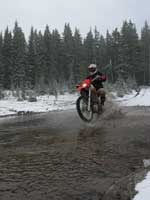
A motorcyclist performing a jump over a muddy water puddle in a snowy forest setting, surrounded by tall pine trees.
min
A smiling man wearing a colorful floral shirt and a blue bucket hat stands with his arms crossed on a dirt path. He is surrounded by a scenic landscape with rolling hills and clear blue skies in the background.
min
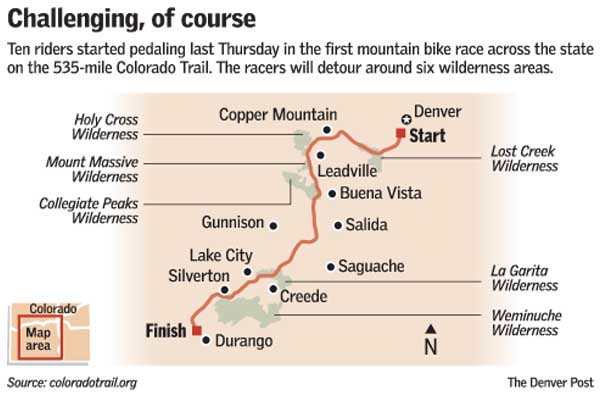
Map of the Colorado Trail highlighting the route of the first mountain bike race, starting in Denver and finishing in Durango. The map indicates several wilderness areas along the 535-mile route, including the Holy Cross, Mount Massive, Collegiate Peaks, Lost Creek, La Garita, and Weminuche Wilderness.
min
Now this is something I couldn't have imagined: using inflatable balls to pump up a bike tire. Now apparently this has been done for some time with motorcycle and dirt bike tires but it's very new in the mountain bike world. Individual "<a href="http://www.tireballs.com/">Tire Balls</a>" are inflated using a needle inflator (like you'd use for a soccer ball) and placed in your tire (see photo). It takes around 26-28 balls to fill a typical bike tire and the kits are sold with 30 balls just to be safe.
<div style="text-align: center"><img alt="tireballs.jpg" id="image417" src="https://images.singletracks.com/blog/wp-content/uploads/2007/09/tireballs.jpg" /></div>
Anyway, the supposed advantage of the inflation balls is that they are lower maintenance (they only lose about 10% of their pressure over the course of a year) and they are mega redundant (meaning you can pop one and won't really notice). Of course they're a pain in the ass to adjust for pressure and I'd imagine they're MUCH heavier than a typical butyl tire tube. I felt one of these suckers and they're beefy, almost as thick as a camelbak bladder.

Tire Balls is looking for folks to beta test their system, though I think I'll pass until they hit prime time.
min
Now this is something I couldn't have imagined: using inflatable balls to pump up a bike tire. Now apparently this has been done for some time with motorcycle and dirt bike tires but it's very new in the mountain bike world. Individual "<a href="http://www.tireballs.com/">Tire Balls</a>" are inflated using a needle inflator (like you'd use for a soccer ball) and placed in your tire (see photo). It takes around 26-28 balls to fill a typical bike tire and the kits are sold with 30 balls just to be safe.
<div style="text-align: center"><img alt="tireballs.jpg" id="image417" src="https://images.singletracks.com/blog/wp-content/uploads/2007/09/tireballs.jpg" /></div>
Anyway, the supposed advantage of the inflation balls is that they are lower maintenance (they only lose about 10% of their pressure over the course of a year) and they are mega redundant (meaning you can pop one and won't really notice). Of course they're a pain in the ass to adjust for pressure and I'd imagine they're MUCH heavier than a typical butyl tire tube. I felt one of these suckers and they're beefy, almost as thick as a camelbak bladder.

Tire Balls is looking for folks to beta test their system, though I think I'll pass until they hit prime time.
min
A group of cyclists racing along a roadside, with onlookers in the background taking photos. The cyclists are wearing colorful racing jerseys and helmets, and there are cars parked alongside the road. The backdrop features a rocky hillside and trees.
min
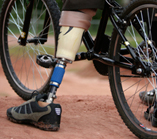
A close-up view of a bicycle with a focus on the leg of a cyclist wearing a prosthetic limb, highlighting the adaptive equipment and footwear. The background features a dirt path, indicating an outdoor cycling environment.
min
Now this is something I couldn't have imagined: using inflatable balls to pump up a bike tire. Now apparently this has been done for some time with motorcycle and dirt bike tires but it's very new in the mountain bike world. Individual "<a href="http://www.tireballs.com/">Tire Balls</a>" are inflated using a needle inflator (like you'd use for a soccer ball) and placed in your tire (see photo). It takes around 26-28 balls to fill a typical bike tire and the kits are sold with 30 balls just to be safe.
<div style="text-align: center"><img alt="tireballs.jpg" id="image417" src="https://images.singletracks.com/blog/wp-content/uploads/2007/09/tireballs.jpg" /></div>
Anyway, the supposed advantage of the inflation balls is that they are lower maintenance (they only lose about 10% of their pressure over the course of a year) and they are mega redundant (meaning you can pop one and won't really notice). Of course they're a pain in the ass to adjust for pressure and I'd imagine they're MUCH heavier than a typical butyl tire tube. I felt one of these suckers and they're beefy, almost as thick as a camelbak bladder.

Tire Balls is looking for folks to beta test their system, though I think I'll pass until they hit prime time.
min
Now this is something I couldn't have imagined: using inflatable balls to pump up a bike tire. Now apparently this has been done for some time with motorcycle and dirt bike tires but it's very new in the mountain bike world. Individual "<a href="http://www.tireballs.com/">Tire Balls</a>" are inflated using a needle inflator (like you'd use for a soccer ball) and placed in your tire (see photo). It takes around 26-28 balls to fill a typical bike tire and the kits are sold with 30 balls just to be safe.
<div style="text-align: center"><img alt="tireballs.jpg" id="image417" src="https://images.singletracks.com/blog/wp-content/uploads/2007/09/tireballs.jpg" /></div>
Anyway, the supposed advantage of the inflation balls is that they are lower maintenance (they only lose about 10% of their pressure over the course of a year) and they are mega redundant (meaning you can pop one and won't really notice). Of course they're a pain in the ass to adjust for pressure and I'd imagine they're MUCH heavier than a typical butyl tire tube. I felt one of these suckers and they're beefy, almost as thick as a camelbak bladder.

Tire Balls is looking for folks to beta test their system, though I think I'll pass until they hit prime time.
min
Now this is something I couldn't have imagined: using inflatable balls to pump up a bike tire. Now apparently this has been done for some time with motorcycle and dirt bike tires but it's very new in the mountain bike world. Individual "<a href="http://www.tireballs.com/">Tire Balls</a>" are inflated using a needle inflator (like you'd use for a soccer ball) and placed in your tire (see photo). It takes around 26-28 balls to fill a typical bike tire and the kits are sold with 30 balls just to be safe.
<div style="text-align: center"><img alt="tireballs.jpg" id="image417" src="https://images.singletracks.com/blog/wp-content/uploads/2007/09/tireballs.jpg" /></div>
Anyway, the supposed advantage of the inflation balls is that they are lower maintenance (they only lose about 10% of their pressure over the course of a year) and they are mega redundant (meaning you can pop one and won't really notice). Of course they're a pain in the ass to adjust for pressure and I'd imagine they're MUCH heavier than a typical butyl tire tube. I felt one of these suckers and they're beefy, almost as thick as a camelbak bladder.

Tire Balls is looking for folks to beta test their system, though I think I'll pass until they hit prime time.
min
Now this is something I couldn't have imagined: using inflatable balls to pump up a bike tire. Now apparently this has been done for some time with motorcycle and dirt bike tires but it's very new in the mountain bike world. Individual "<a href="http://www.tireballs.com/">Tire Balls</a>" are inflated using a needle inflator (like you'd use for a soccer ball) and placed in your tire (see photo). It takes around 26-28 balls to fill a typical bike tire and the kits are sold with 30 balls just to be safe.
<div style="text-align: center"><img alt="tireballs.jpg" id="image417" src="https://images.singletracks.com/blog/wp-content/uploads/2007/09/tireballs.jpg" /></div>
Anyway, the supposed advantage of the inflation balls is that they are lower maintenance (they only lose about 10% of their pressure over the course of a year) and they are mega redundant (meaning you can pop one and won't really notice). Of course they're a pain in the ass to adjust for pressure and I'd imagine they're MUCH heavier than a typical butyl tire tube. I felt one of these suckers and they're beefy, almost as thick as a camelbak bladder.

Tire Balls is looking for folks to beta test their system, though I think I'll pass until they hit prime time.
min
A green mountain bike with yellow suspension forks leaning against a white wooden wall, surrounded by fallen leaves and green ivy.
min