










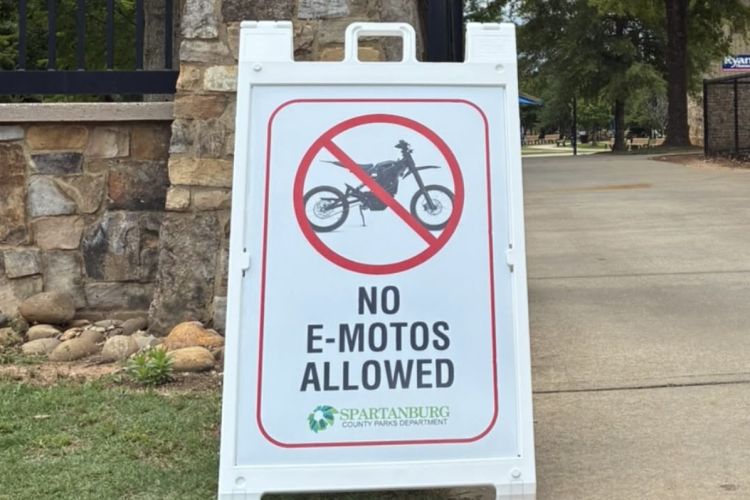
Hawaii Governor Josh Green has just signed a bill into law that severely restricts the use and sale of electric motorcycles. The law seeks to clarify the differences between e-bikes and e-motos, and introduces some new restrictions on e-bike use.
E-bikes, redefined
Though e-bike classifications have been in place at the federal level for almost 25 years, states like Hawaii are seeking to clarify the difference between e-bikes and e-motos through legislation. Hawaii’s latest law reiterates the three-class e-bike classification system, though, like the federal legislation, it leaves open to interpretation how peak power is measured.
“‘Electric bicycle’ means a bicycle equipped with fully operable pedals and an electric motor of no more than seven hundred fifty watts,” according to the law. As Singletracks has noted in previous reporting, some manufacturers have argued that the 750W limit refers to continuous power output, while others say it refers to peak power output.
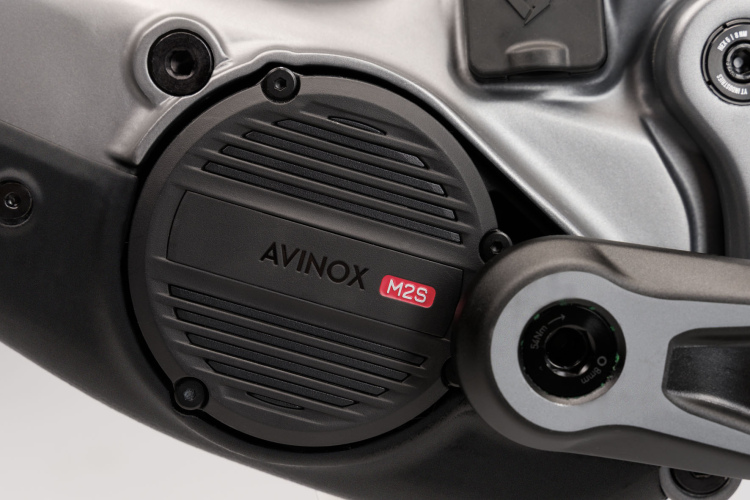
In practice, however, this distinction may not be important. The Hawaii law goes on to define a high-speed electric device as “any device with a motor exceeding seven hundred fifty watts and capable of speeds over twenty-eight miles per hour.” So e-bikes with the latest Avinox motors, capable of delivering up to 1,500 watts of power, are likely not considered high-speed electric devices since they are limited to a maximum speed of 28mph. On the other hand, products like the Surron Electric Bee, with a maximum power of 8,000W and capable of speeds over 45mph, clearly fall into the high-speed electric device category.
E-bike riders aren’t allowed to wheelie on public roads, and riders must be 16 or older to ride some e-bikes
The Hawaii law prohibits “operating an electric bicycle in an unsafe manner or engaging in exhibition riding, such as wheelies or stunts, on any public street, alley, or other public right-of-way.” It’s unclear whether “public right-of-way” includes trails open to e-bikes and/or trailhead parking lots; in many jurisdictions, trails are not classified as public rights-of-way. Note the wheelie ban applies to electric bicycles only; wheelies on traditional bikes are unaffected.
The law also stipulates that Class 2 and 3 e-bikes shall not be ridden by minors under 16 years old without direct parental supervision. This leaves open the possibility for younger riders to continue operating Class 1 e-bikes on their own. However, strict labeling requirements could kick some bikes — like the Specialized Turbo Levo, which offers both Class 1 and Class 3 riding modes — into the higher, more restrictive class. In addition, the law raises the mandatory helmet age from 16 to 18 years old for all bicycle riders.
Residents were already required to register electric bikes in Hawaii for a one-time fee of $30, and the new law reaffirms this policy. Insurance will not be required to operate an e-bike.
High-speed electric devices are banned from public places
With a clear definition of high-speed electric devices, the Hawaii law states that “No person shall operate a high-speed electric device on a public roadway, a bicycle lane, a travel path, a bicycle facility, or other public area, such as a street, highway, or sidewalk.” It goes on to say violations are subject to a traffic infraction, and parents can be liable for children under 18 years old.
New Jersey, Washington, and California have recently passed e-bike and e-moto laws in response to public safety concerns. Florida attempted to pass its own law recently, though that law was vetoed by the governor in part because it contained language limiting e-bike speeds to 10mph in the presence of pedestrians.
Keep up with the latest mountain bike news by adding Singletracks as a preferred source on Google.





0 Comments