
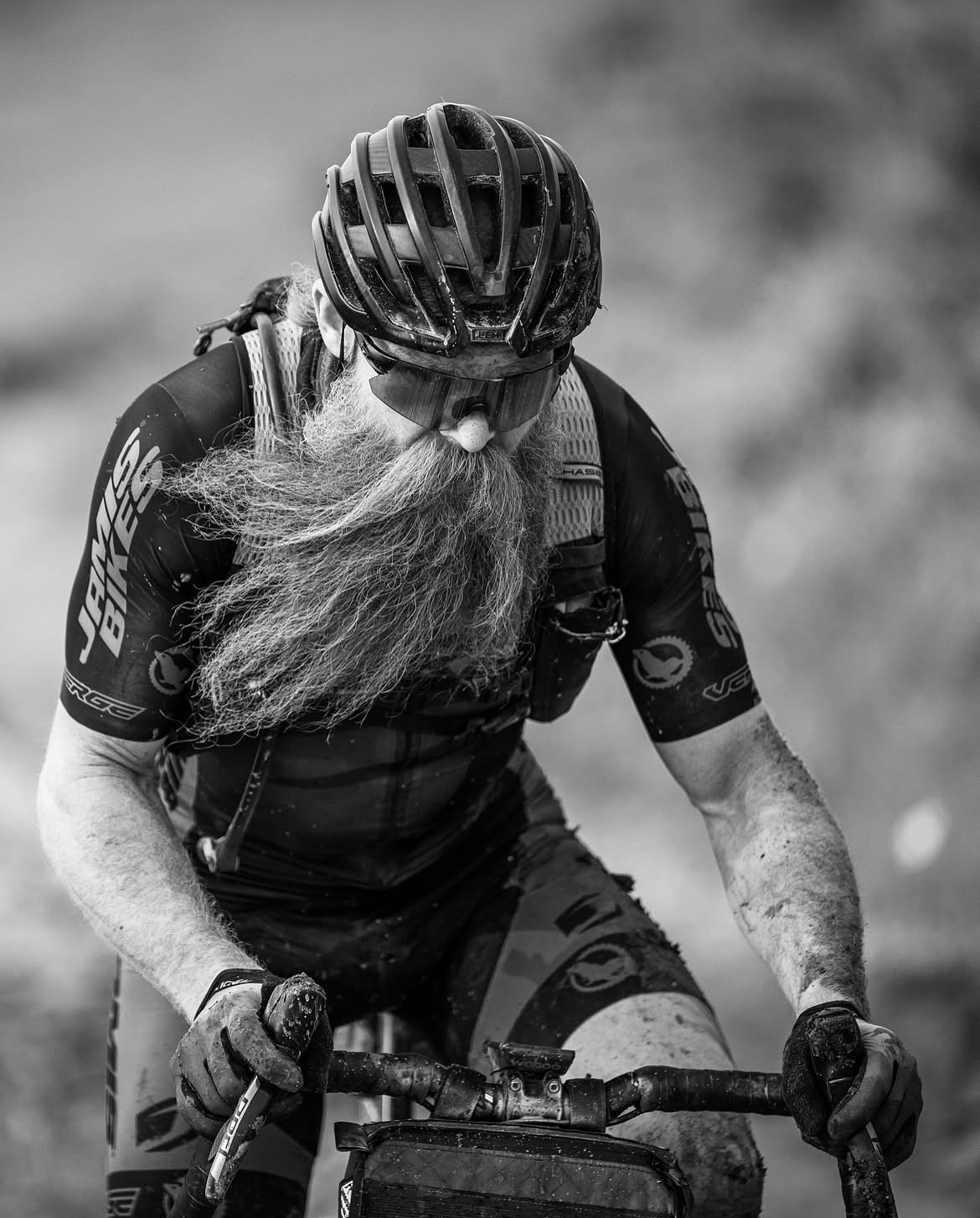
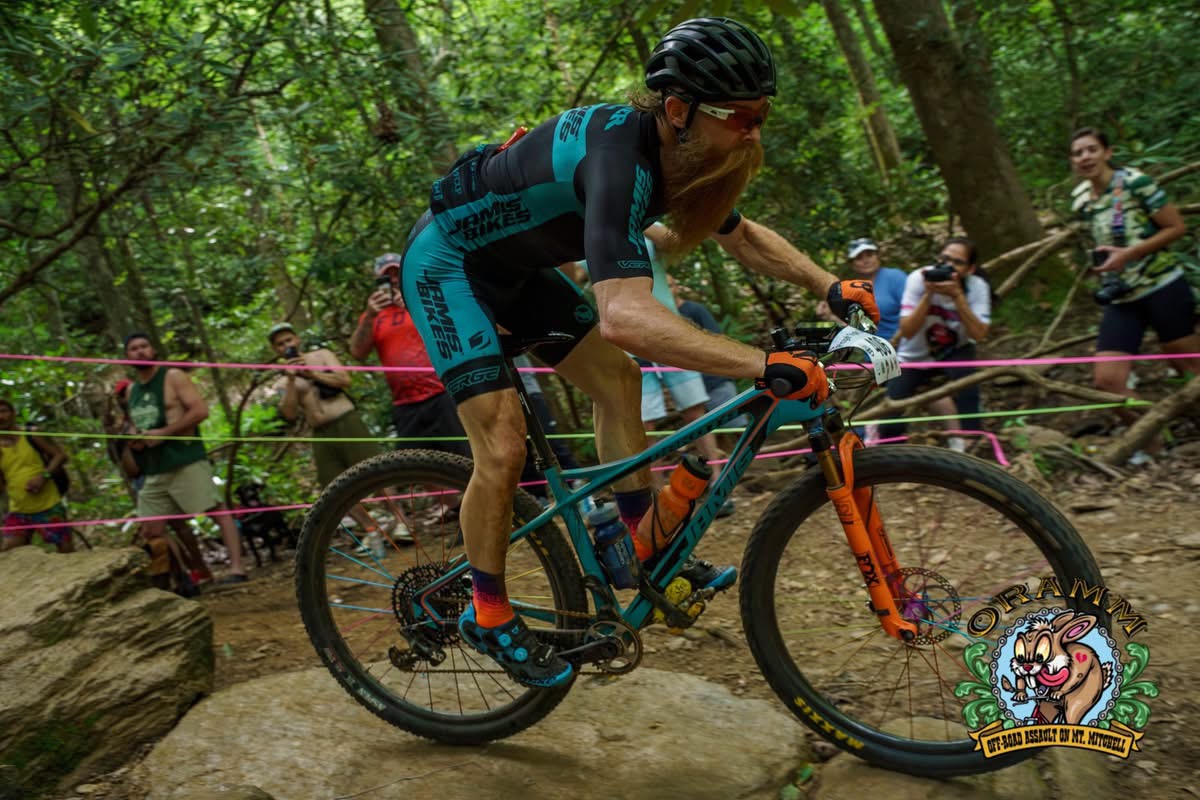
Thomas Turner is a professional mountain bike racer who’s been competing at the top level of gravel and mountain bike racing for nearly two decades. He’s been sponsored by Jamis since 2010, was the 2012 Cyclocross Masters World Champion, and has notched multiple National Ultra Endurance Mountain Bike Race Series podium finishes along the way. He just got back from racing El Reto del Quetzal in Guatemala, and he’s here to talk about stage racing, training, and what it’s like to rides bikes around the world.
- How did you first get into mountain biking and racing?
- You’ve been with Jamis since 2010 — what’s been the key to making that relationship last so long?
- You’ve raced BC Bike Race, La Ruta, Pisgah Stage Race, even gravel events like Unbound and The Crusher — what is it about adventure races, and stage races in particular, that keeps drawing you back?
- What does it take to be competitive in a stage race?
- How do you choose which races to enter each year?
- You just raced El Reto del Quetzal in Guatemala — what was that event like?
- What does your training look like when you’re preparing for a multi-day stage race?
- How do you handle recovery during and after a stage race?
- What’s your bike setup for a race like El Reto del Quetzal?
- Do you have a favorite place to ride in the world?
- What’s a fun and accessible stage race you’d recommend for someone trying their first one?
Follow along with Thomas Turner’s adventures on Instagram @thomasturnermtb.
Never Miss an Episode
- Listen on Spotify
- Listen on Apple Podcasts
- Listen on Google Podcasts
- Listen on Stitcher
- Listen on Overcast
- Get the RSS Feed
- View all Podcast Episodes
Support this Podcast
- Review the Singletracks podcast on Apple Podcasts or drop your feedback in the comments below!
- Make a donation to help sustain future episodes.
- Become a Singletracks Pro Supporter.
Automated transcript
Jeff Barber 0:00
Hey everybody, welcome to the Singletracks podcast. My name is Jeff, and today my guest is Thomas Turner. Thomas is a professional mountain bike racer who’s been competing at the top level of gravel and mountain bike racing for nearly two decades. He’s been sponsored by Jamis since 2010 he was the 2012 Cyclocross Masters World Champion, and he’s notched multiple national ultra endurance mountain bike race series podium top finishes along the way. He also just got back from racing el Reto del Quetzal in Guatemala, and he’s here to talk about stage racing, training, and what it’s like to ride bikes around the world. Thomas, welcome to the show.
Thomas Turner
Hey, how’s it going?
Jeff Barber
Good. So tell us. How did you first get into mountain biking and racing?
Thomas Turner 0:54
So my parents, they, they introduced me into it. I’ve always been in the cycling itself, and they got me into it. There was a local mountain bike race series, and one summer, we went and tried that, and I was kind of opposed to it, because I wasn’t really sure what it was going to be like. I enjoyed mountain biking just around the farm.
Jeff Barber 1:18
Were your parents, they were riders, I guess?
Thomas Turner 1:22
They were a little bit more just recreational, like we would go do, like rails and trails kind of stuff.
Jeff Barber 1:32
Okay, cool. So you’ve been with Jamis since 2010 which is a long time to be with the same sponsor, especially in the bike industry. So what’s, what’s the key to making that kind of relationship last so long?
Thomas Turner 1:50
That’s really good company. I think that’s probably part of it. They’re real family-oriented, so I’ve just been with them, and, you know, we’ve had great success together. And I think, I think it’s just worked out well,
Jeff Barber 2:11
How’d you first get connected with them?
Thomas Turner 2:17
Margo was their sales rep at the time, and she was doing the Southeast, and they came out of shop, and we just got to talking, because at the time, I’d raised from canno, from 98 to oh seven and kind of in between sponsors at the time. And talked to her, I guess this was 2009 and got on board with those guys, with their program in 2010 so just been racing with them since,
Jeff Barber 2:49
Yeah, that’s great. And so what like? What does that relationship look like? Like they’re a frame sponsor, I, I imagine. So, you’re riding their bikes. They help with race entry and that sort of thing as well?
Thomas Turner 3:08
Yeah, they help out cover something like cost. They provide bikes and equipment. So I usually wind up running a few different bikes throughout the year for gravel and mountain. So yeah, cyclocross, originally, and then later on, gravel bikes, the Renegade was introduced in like 2015.
Jeff Barber 3:30
And there’s a lot of different versions of the Renegade, right? Which, which one are you running?
Thomas Turner 3:37
Currently, I’ve got a steel Renegade, but I also have the carbon bikes. So the steel one is more like, I’ll use that for commuting or just some long weekend rides. It’s a more comfortable bike. Yeah, and the carbon ones are definitely faster, so they’re, they’re definitely racier on the bikes.
Jeff Barber 3:59
Yeah, you don’t race the steel one, do you?
Thomas Turner 4:02
No, not generally,
Jeff Barber 4:05
So you’ve raced the BC bike race, La Ruta, Pisgah stage race, gravel events like Unbound and the Crusher. What is it about adventure races and stage races in particular, that keeps drawing you back?
Thomas Turner 4:24
You know, they’re there, a lot of fun. They’re always challenging. The dynamics are constantly changing, especially with the multi-day events.
It’s fun because you’ve got a lot of opportunities to excel. And you have to challenge yourself overcome, you know, you may have bike issues one day or crash one day or, you know, so you kind of have to be ready to change and adjust.
Jeff Barber 4:57
And you enjoy that? Like, is that stressful at all?
Thomas Turner 5:02
A little bit, but, you know, it’s just kind of, you know, the multi day events, they’re fun. It’s not like one long slug, like a 24 hour event or something like that. So you get, you get a break. So generally, you know, race for anywhere from two to five hours, six hours, depending on the event. The day could be kind of long, but gonna have some time to recover between the next stage. So the day, the ability to just traveling also is pretty neat.
Jeff Barber 5:36
Well I’m curious about that. Like, how you manage that the race, in between the stages. So what are you doing, like, as soon as you’re done with the race, like, what’s Do you have, like, a routine that you do to try to, like, recover and get ready for the next day?
Thomas Turner 5:54
Yeah, so after a stage race, generally, you finish up, you probably grab something to eat real quick and try and take the bite back to the hotel, get the bike cleaned up, kind of prep it, just to have it where it’s all situated for the next day. And then put my feet up and rest trying to, you know, get somewhere cool. If it’s a hot day, I’m trying to try and relax, you know, because you’re you’re wanting your body to recover from that stage, trying to get a good night’s sleep, if possible. But a lot of races, it’s hard because sometimes you’re tent camping, so may not get the best nights.
Jeff Barber 6:41
Yeah, yeah. When you have a choice, do you do a hotel?
Thomas Turner 6:47
Oh, yeah. I mean, if the options available, yeah, you try and do a hotel. For sure.
Yeah, some of the races I’ve done, you know, we did Glacier 360, I’ve done a bunch over India, and there’s really not a hotel option available. Everyone’s tent camping. So yeah, and raced K2 in and Africa, and there was, you were tent camping, but it was nice. I mean, you had, there were facilities, you could shower and whatever, but you were tent camping. And then other races like La Ruta or BC bike race, we stayed in hotels, so it’s a little bit nicer accommodations there.
Jeff Barber 7:32
Yeah, I imagine you have to be a pretty good bike mechanic. Or do you have support at these races?
Thomas Turner 7:43
I’ll do all my own mechanic work. So, you know, I feel like I can keep it tuned up pretty good, and then, like my previous life, I was a bicycle mechanic, so that definitely helps.
Jeff Barber 7:56
Oh, okay.
Thomas Turner 7:59
Being able to identify things while it’s wrong, or fix something on the fly. You know, you always you build it up and you hope everything’s gonna be tight and dialed in. You know, you do like a shakedown ride before the race. But even I just got done doing this stage race el reto down in Guatemala. And on the first stage, like halfway through towards the end, my bars were rotating on me, and I had built the bike up gone for a shakedown ride, and I think I’d put carbon paste between the face plate and the stem and the bar, and I must have gotten it like torqued down tight, I’d probably rushed through, built it all, everything adjusted proper, but didn’t go back and like, tighten them. And it held. But then I noticed through the stage, I would hit a bump or something, and the bar would start to drop down a little bit. But I was able to reach down. I got my multi tool out and was able to tighten it up on the go. I didn’t really lose, lose much time because the climbs are so long, you’re just sitting there and climbing forever. So I was able to take that opportunity to re-tighten the face plate.
Jeff Barber 9:13
You tightened it while you were riding?!
Thomas Turner 9:17
Yeah. Yeah, it was pretty I mean, it wasn’t that hard, but, yeah, the hardest part was just around the number plate.
Jeff Barber 9:25
Yeah, wow. Well, have you ever had like, a repair or something that was, like, super involved, or, like, you needed to replace a part? Like, I can imagine that stuff happening.
Thomas Turner 9:37
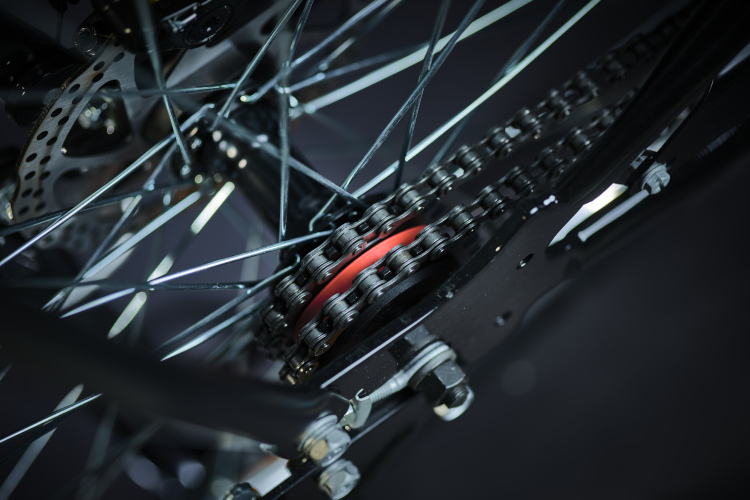
And, yeah, Pisgah, you know, Pisgah stage race couple years I did it super wet and muddy. And so you’re going through brake pads. And so you get back, wash the bike, you know, you put new pads on, probably put a new bottom bracket in. You might even change out chain rings based on the course. And seeing, like, what? How hard one day was going to be. So yeah, that’s definitely brake pads are definitely the most common thing. Always take extra pads, extra chains, different quick lengths, so you got to be able to fix even in Guatemala, I broke a chain on one of the stages of your super fast double track descent, and the course made an abrupt 90 degree turn up, a little rise. And I just, I was having too much fun, and I was coming down the Travel section. It was just a dusty dirt road. I wanted to make this left, and kind of gave it the beans coming through the corner, accelerating out, I think I cross chained. And just immediately the chain was off. And I thought, oh man. I was really, really hoping somehow I just kicked it off the front ring, like going from real fast to slowing. I was hoping the free hub might have popped the chain off over the front ring, right? But I didn’t think that was really the case. That was wishful thinking. But I looked down the chains just hanging there. I was like, take comments. I want to carry Quick Links and a multi tool. So I you know of every mechanical to happen, broken change pretty fast. You know, you’re down for right for two, because you can take out the bad link, put in a quick link, and you’re back going. So right, yeah. I mean, you never know. You never know what’s gonna while racing.
Jeff Barber 11:27
Well, you know, for a lot of people, stage races are kind of like a fun thing. I don’t know. I It depends on the race, I’m sure. But it seems like at some races, half the people are there just because they want to, you know, ride a bunch of trails in a new location. But then there’s folks like you who are competitive. You’re at the front of the pack. What does it actually take to be competitive in a stage race? Like, what is it? Is it those like, is it the recovery that that is important? Is it just your strategy during the race? Like, what? What is it that makes what you’re doing different from what people who are there for fun are doing?
Thomas Turner 12:06
Yeah. It probably comes down to recovery, nutrition, just a little bit of a different mindset. You know, I was more focused on the event. So it didn’t do a whole lot of sightseeing after stages, you know. And, yeah, you know, on the day before the last stage I did, I wound up going out to Antigua and doing a little bit of sightseeing. So I feel like the last stage in Guatemala, I didn’t really have much pep in my step, but that was, that was, yeah, most people are probably gonna try and take in the whole experience. And if you’re racing it, you’re probably a little more focused on the event itself. You kind of know how you ride, and you’re not gonna win the stage race on the first day. You know the race definitely builds and every day before it takes its toll on you. So yeah, you just kind of get into your rhythm. You know, I’d be like, I can’t climb with these guys, but, you know, 50 kilometers later, I’ll probably gonna catch back up to them. So you can kind of Yeah, in the back your mind and know that, you know it’s gonna be a long day. There’s gonna be another day, so you better pace yourself, ride a pace that you know, that you can continue to do. So that’s probably a big thing. Yeah, you kind of have to recognize when you can go hard, when you can recover, and take advantage of those little points you know, because anything you can do to conserve energy and recover, it’s gonna make a big difference at the end of the day.
Jeff Barber 13:46
When are you going the hardest? Are you planning for that last day to be kind of your, your hardest effort, since you don’t have to recover after that?
Thomas Turner 13:59
A lot of stage races, they’ll have like, they’ll call it the Queen day, which is the longest for us in Guatemala, that was the second day. And so those days you kind of have to prepare yourself, America, this case, gonna be twice as long as the days before, you know. And prepare for that. When you come to the final day, you kind of get to breathe a little bit, side of relief knowing that, okay, this is, this is the final day. It’s all done. You can leave it all out there if you need to, because you’re not gonna have to really worry too much about the following day, right? Generally, last day and stage race is a little bit easier, because everybody’s beaten up and broken down. Yeah, but man, I’ll tell you the light though, this last one in Guatemala, the last day was it was the grunt straight up and straight down. It was a shorter stage. But. Very, very difficult man.
Jeff Barber 15:03
So because stage races, like you’re racing the same people, you know, day after day. I imagine you see them around, like after the race, and you know…
Thomas Turner 15:16
You see them at dinner. You can talk to them.
Jeff Barber 15:20
So what’s that like? Is it trash talk? Is everybody cool?
Thomas Turner 15:23
Like, most people are probably pretty cool. I don’t know, like, many folks trash talking one another, but and then you kind of discover, like, group dynamics, and you you wind up having, like, race friends, you know, people that you’re like, Okay, this these, these guys I’ll be riding with, or I don’t need to bother trying to hang with somebody. And you discover their strengths and weaknesses, and then maybe, you know, you can work together. You know, somebody’s a better climber and you’re a better descender, but you always run around each other. You know, maybe it’s to your advantage to have them pace you on a climb and you lead a descent, and vice versa. So the first day is always kept it because you don’t know what to anticipate. You don’t know what the competition is going to be like and what their strengths and weaknesses are, and you don’t know how you’re really going to stack up in the event itself. But after, after the first day, you kind of know, like, okay, these guys are going to be towards the front. So then you start to have an idea of who to look for.
Jeff Barber 16:31
Is it pretty common for these races, because you race all over the world, and I imagine, like, there’s a good number of, like, local racers, maybe who you haven’t raced against before. Is there an advantage to being a local in a stage race?
Thomas Turner 16:49
Oh, yeah for sure. Yeah, yeah. I mean, especially on a course that’s really technical or kind of definitely has favors, like local knowledge, or if the course markings aren’t ideal, you know, Pisgah stage race was a good example. It’s really technical. So you kind of, if you can, kind of know the idea, I hadn’t done a whole lot of writing in Pisgah up to that point. I’ve done some on I’ve done, you know, considerably a lot since then, but just at this point…
Jeff Barber 17:25
You’ve done a lot.
Thomas Turner 17:28
Yeah, so when you’re coming into some of those sections, yeah, the locals definitely know the right lines. And you know you you may want to try and identify that and follow those guys, because they’re going to take the quickest line or get through a certain section they know, like, I don’t, don’t blow yourself up here. You can pace yourself, and you’re going to make up a lot more time throughout the next section. So, yeah, I would say definitely local knowledge makes a huge difference doing BC bike race. You know the locals up there, super familiar with the trail. So it’s just like, you know, you can hang on to their wheel and, you know, follow them through the technical sections, yeah. But some of the other races that I’ve been to, I feel like everybody’s new to it, so done a couple races in India and Malaysian or even Mongolia at the time. Those are all pretty early on events, and so nobody really knew what to anticipate so but like Guatemala at el reto and laruda in Costa Rica. I think the locals definitely have a better idea. Man, I’ve written the exact course that the event is going to be on, but they’ve ridden very similar terrain. So it makes difference.
Like La Ruta when I’ve done it, it was a four day event, and the first stage was just terrible and muddy. So if you knew coming into it like as soon as you get to mud, just pick up your bike and start running, because it’s easier to carry a 25 pound bump bike than a 45 pound bike. Yeah, little things like that, right?
Jeff Barber 19:21
Well, so you know, you’ve ridden all kinds of races all over the world. Sounds like on pretty much most continents at this point. So how do you how do you choose which races to enter each year? Are you doing it based on where you want to ride?
Thomas Turner 19:41
Sometimes, I’ll reach out to promoters, develop a relationship with those guys, and then get, you know, get to get invited out to their event. Otherwise, just trying to pick a cool destination and be able. Event. We never raced in Africa. What would it be like to go race in Africa and find something out there and then reach out to the promoter and try and work out something? Lot of times, it’s fun if you do, like a first year event or something that’s trying to grow and develop itself, because you can, you can work with the promoter and you can give them some tips and pointers. So it’s mutually beneficial to everybody, yeah, but yeah, just looking for different events, things that kind of piqued your interest, you know, something that’s, you know, what would be a cool adventure to do we, my buddy Gordon and I, we did a race called four islands in Croatia, and that was a really cool event. Your you transfer, we stayed on the boats, and you transfer each day between these four different islands, and do a different stage every day. And I mean, that was super cool, very unique, really technical, rocky ride. And it was a lot of fun being olive orchards one minute and Rocky, technical dispense in another.
Jeff Barber 21:08
So wow, yeah, that’s awesome. So what does your training look like when you’re preparing for a multi day stage race? Obviously, that’s a lot of riding. And so how do you how do you get ready for that?
Thomas Turner 21:25
So for me, I’m able to get most my training in. I’ll commute into work, so I just, I’ll get a ride into work, a ride back is about 20 miles each way. So, you know, I’m used to doing that, and then I do some big rides on the weekends. You know, you just it’s kind of a mindset or a lifestyle. I’ve been doing it for so long now that I’ve gotten used to it. Definitely coming in, leading up to a big stage race, you’d be trying to get some decent, big rides back to back, just so your body knows, like, what to anticipate. Yeah, yeah, that’d probably be the or, if you know something similar, what the course is going to be like, you know, whether it’s flat or fast power course, or if it’s going to be real steep, punchy climbs, you know, you might probably want to find something similar to train to and do something like that.
Jeff Barber 22:24
I mean, bike commuting seems like it is underrated. I mean, that’s, that’s a huge thing because it’s, it’s part of most people’s day anyway, you know, getting to and from work or wherever they’re going, and 20 miles each way sounds like a great commute to keep you fit and in shape. I’m wondering about, like, do you take an off season too, or because a lot of these races you’re doing are like, southern hemisphere, so yeah, winter and you’re racing.
Thomas Turner 22:53
So I do have an off season. Generally in the winter, I used to do a whole lot of cyclocross, and then it’s been a while since I’ve done any cross events, just because I felt like it was just racing year round was tough. So I enjoy the offseason. I try and do a lot of hunting. I like go hunting, so I do that in the winters. Okay? And that’s, that’s kind of my other extracurricular activity, something different. When you come back at the next season, you’re kind of, like fresh and motivated to do it again, yeah. But generally, race seasons, kind of from January to November, something like that.
Jeff Barber 23:46
That’s the most of the year, December. You take December.
Thomas Turner 23:50
A couple months you get off, yeah. Maybe through October, kind of starts tapering down, so you get October, November and December off.
Jeff Barber 24:01
How do you like, I’m thinking about your race in Guatemala that you just did too. Like, how, how does your body adapt to that? Because I imagine, you know, you’re, you’re here in Georgia, like me, and you know it wasn’t a cold winter, but we had winter, and then all of a sudden you’re, like, in hot, I imagine it was hot and humid in Guatemala. Like, how do you how do you prepare for that aspect, like, acclimate your body to the the heat like that?
Thomas Turner 24:27
Yeah, I don’t do anything silly to try and acclimate. I’ve heard of folks trying to train on staunas and things like that. I’ve never gotten that extreme. I’m just gonna suck it up and not, you know, I’ve raced in enough hot events. I know what it’s gonna be like. You’re just gonna just focus on staying hydrated. But you know, the there, the there were some days that the elevation was kind of high. Okay, but I felt like I did fine with that. That wasn’t much of an issue. And then it was hot, but it was a dry heat down there right now, it’s the dry season, okay, just about to be the wet season, but it was super dusty. So, you know, this race I kind of did for the moment. I didn’t do any kind of training or any real prep for it leading into it.
But yeah, I might have done some different routes with a lot more punchy, long climbs in them, because that’s what, that’s really what this way race was, was everything was straight up and straight down. The technical aspect of it, it wasn’t super technical. There were some days the descents were really blown out and rutted. So you really had to stay kind of fluid on the bike and let it float around under you. It’s hard to force, you know, the bike to go in certain places if you’re just caught in a rut, right? But the climb, so the to me, were the, probably the toughest part out there, how long and how steep they were.
Jeff Barber 26:14
Well, what was your bike set up for the race?
Thomas Turner 26:19
I took my hardtail. I’ve taken that one. There are a lot of different stage races. It’s just nice simple. It’s lightweight. When I did BC bike race, we took dualies to that one. Is more technical stage race to dually too. But having a hard tail was just simple. I had SRAM Eagle drive train. So it was a believe I was running a 34 chain ring in the front, 10-52, in the back. So that was good. I did take another chain ring in case I wanted to bail down to a 32.
Jeff Barber 27:04
Was it electronic? Your drivetrain?
Thomas Turner 27:07
No, this is mechanical.
Jeff Barber 27:09
You’re mechanical. Okay.
Thomas Turner 27:12
My gravel bikes got AXS on it, so it’s electronic, but the mountain bike just simple, especially if you’re traveling somewhere like that, easier to work on.
Jeff Barber 27:26
What kind of tires are you running for the race?
Thomas Turner 27:29
Maxis Ikons. No, no, I’m sorry. Maxis Aspens.
Jeff Barber 27:36
Real fast.
Thomas Turner 27:39
Yeah, very fast. Just a great all around lightweight tire. I kind of done the race a couple times. I did in 2015 and 16, so I had an idea of what to anticipate. And I knew, you know, it’s gonna be doing a lot of climbing, a lot of double track dirt roads. And I’m comfortable in those tires, also on rough terrain. So for me there, I’ve got plenty of grip, yeah, and I just wanted something that was gonna be light and fast rolling, especially for back to back days like that makes a big difference, right?
Jeff Barber 28:22
What do you think your bike weighed overall, like, race weight? What are we looking at?
Thomas Turner 28:30
Well, I mean, what if you don’t have bottles on it and you didn’t have, you know, I’ll put on so I’ll carry a couple, like, your tubes. I’ll put, like, a tube on the back with a little can of sealant, and I’ll run a couple of CO twos and another tube on down tube, just to have because it’s like two is one and one is none. You know, if you only take a one tube on a long day like that. You don’t know what you’re going to get yourself into and easily, flat and be done. Ideally, I carry a little plugs. So ideally, you could just plug it and keep trucking. But you know, I I’d rather be prepared and carry an extra 100 grams of inner tube around with me than we caught a situation where I needed a tube and I wound up having to pull out a stage or something, yeah. So the bike’s probably without anything, probably like 21 pounds.
Jeff Barber 29:38
Oh, wow, that’s, that’s super light. I mean, that’s, obviously, that’s another one of those things that it takes to be competitive in a race like that. I think a lot of people are showing up to have fun on a stage race. They’re, you know, they’re for one they’re probably on a full suspension bike. But even. And it’s not, it’s not pared down like yours is, you know.
Thomas Turner 30:04
I’ve got my [Jamis] Portal trail bike, and it’s phenomenal, and I’ve raced it at snake Creek, and I’ll race at a bunch of Pisgah events, and it’s an absolute blast, super comfortable, just all day mountain biking, epic rides. Love it. Traveling abroad like this, when it’s going to be, you know, lots of hard accelerations, long days, lot of climbing. Generally go with the hardtail or something like that. Something’s faster, you know, just the portals Right now it’s set up with 150 fork in the front, 130 travel on the back. So it’s a little overkill for an event.
Jeff Barber 30:46
Yeah, well, we talked about sort of recovery in between stages during a race. What’s the recovery look like after a race? You know, you’ve been back, I think, for a couple weeks now, from Guatemala like how quickly before you’re back to your normal riding and sort of looking toward the next race?
Thomas Turner 31:09
So for me, as soon as I got back, I got back Sunday late. I had another mountain bike event on the following weekend, on the following Saturday, Whoa, that was Snake Creek Gap time trial. And it’s a two race series. First one’s in February, next one’s in March.
And so I was like, Oh man, see how I feel for this one, I may have burned a lot of matches. Yeah, may have built some fitness, you know, for a couple weeks from now, but immediate, I was worried I’d burn some matches, so I took, took a couple days off of riding, did shorter rides, and I wouldn’t have normally done I would drive in, ride home, ride in, drive home. It’s kind of half days during the week, and then just kind of keep my fingers crossed for the weekend. And you know, the they worked out, I had a good ride at the snake. It wasn’t as fast as some years, but it was faster than others. But it’s that race. It’s like completely different than el reto, although it was pretty warm this, this march in Georgia. So, you know that part, I was acclimated to heat. But you know, for the snake, it’s real technical, lots of rots and roots. You’re not really having to deal with a lot of that in Guatemala. But sitting the last stage there, but the climbs didn’t feel nearly as long as, you know, in Guatemala, we’re on 12 kilometer climbs all the time.
Jeff Barber 32:50
To be fair, Snake Creek is, I mean, well, most people, they would say that’s, that’s a lot of climbing.
Thomas Turner 32:59
Yeah, it’s not a cake walk. There’s, you know, you’re, you’ve got probably three substantial climbs in that event, plus a bunch of row punchy stuff all throughout the whole thing. So, yes, it’s definitely a very technical ride and but, you know, I was used to those climbs, and I’ve done that event a bunch as well, so I knew what to anticipate, and I was just hoping I’d be recovered enough. And early on, I kind of felt like I might not be. Couldn’t really get my heart rate as high as I thought it should be. But as the race built and went on. I was getting more into my rhythm. And thought, Okay, well, I think I’m going to be back in my groove. I knew kind of where I wanted to be time wise, at different points in the course. So, yeah, I wound up having a great ride there and felt good. And yeah, didn’t, didn’t crack or blow up or anything like that. So that was nice. Yeah, hopefully I’m recovered by now. Yeah, definitely say it probably takes a couple weeks to get recovered from, from doing a stage race just with all the air to the travel involved, the racing involved the travel on the back end, you know, it really kind of wears you down. So it probably takes a couple weeks to get back where you’re like, Okay, now I feel proper. Got proper pep in my step.
Jeff Barber 34:32
Yeah, yeah. Well, you know, you’ve ridden all over the world, obviously. So I’m curious, though, like, what? What are your favorite places to ride? Like, what are the places you you keep going back to or want to get back to,
Thomas Turner 34:50
Race wise, or just riding recreational?
Jeff Barber 34:54
Both. But I’m thinking more recreational, you know, just when I want to go out and have fun, like, what’s what’s the best ride that you would want to do?
Thomas Turner 35:03
So for me, I love getting out, finding some good mountain biking. I do. I like to go up and ride The Snake. That’s a fantastic trail, just because it’s so much singletrack and it’s technical, it’s a great you can park at the halfway point. You can do it as an out and back. You can take the road all the way around and do the 50 miles. Or, you know, it’s about 50 miles, just do the main single track and take the road around is either a warm up or cool down. So a lot of good ways to do it and do if you do it as an out and back, it’s great because the there’s 17 real technical miles they they ride totally different, the other direction.
Jeff Barber 35:45
So, yeah, I’ve only ridden them one direction, the race direction. And I’ve also never, I’ve never done it outside the race. Like, it’s it’s tough. I can’t even imagine what it’s like in the summer. Like, do you ride it in the summer as well?
Thomas Turner 35:58
The summer gets really miserable because it’s so hot and humid. You know, you can having water. You can, if you park at halfway point, you can do little tricks to come back to the car, resupply all water, and then go back out, and you kind of do like a figure eight or something. You could take a filter. But, yeah, water, it’s a little trickier. It gets a little bit overgrown with poison ivy and some of the species up on the ridges.
Jeff Barber 36:29
You’re making it sound awesome.
Thomas Turner 36:33
Yeah, it can get really hot.
Jeff Barber 36:37
But that’s what you enjoy. You enjoy the challenge of that. And yeah, it sounds like that’s kind of your local ride too. You know it really well.
Thomas Turner 36:44
Yeah, that that’s a good one anywhere up in north Georgia, up around Tibbs, Windy Gap, Fort Mountain, that’s another favorite place to ride. There’s a lot of good stuff up by Dahlonega, by the Ranger base up there.
Jeff Barber 37:02
Yeah, so, and all the stuff you’re mentioning, though, is not, this is not, like the stuff that most people ride, which I find interesting. I mean, these are, these are like, challenging rides. They’re out there. Like, I imagine, you don’t see many people.
Thomas Turner 37:16
No, a lot of of stuff is off the map, trails too. So it’s just kind of, you might, yeah, you’re probably gonna see any cyclists out there. We’ll see motorcycles, but generally, I don’t see any any mountain bikes out there, really. But you know, other favorite places, riding up in Pisgah. You know, that’s always fun, but it’s a little bit more of a haul. But yeah, that stuff up in north Georgia, the blast. Yeah, you don’t, you don’t see a lot of folks up there, but to me, it’s kind of that getting away sense of adventure, kind of sense of accomplishment. Those are the trails that I like to ride. So I get done, I was like, oh, man, that was awesome. You don’t see the same thing twice. You don’t see the same thing.
Jeff Barber 38:16
So do you have, as far as racing goes, do you have a favorite race or favorite place to race?
Thomas Turner 38:25
I guess the favorite place might be up around Pisgah. I mean, The Snake’s probably one of my favorite races of all time, just because it’s the the weather is great, the singletrack’s phenomenal. The promoter does a great job with it. They maintain it really well. So everything for that race culminates to being a, just a fantastic event. I just love it. My next favorite probably be anything up in Pisgah, a whole lot of Blue Ridge production, or piston productions and Blue Ridge adventures, they both put on different events. So I always end up doing the king of Pisgah or, like, go do o RAM, or some of their their other events. So all of that stuff’s a lot of fun because it’s kind of the same as the snake. It’s really technical, challenging. More raw, backcountry kind of trail riding. It’s not like I used to did a bunch of Cirque races and Georgia races on more like dosset or, yeah, you know, you just had lap courses, and they’re fun. It’s just a totally different kind of writing. It’s a very consistent, predictable ride. You go, you make, you probably do three or four laps, that’s the event. So the first lap, you kind of get an idea of what to. Anticipate, and then you you have an idea of what’s coming every time, you know, pace yourself a little better, strengths and weaknesses so on those forces. That’s great, you know. And I’ve done a lot of different cross country style events, when pioneers the international Horse Park when they had the Olympics, and they had a World Cup there. And I raced that, and they I watched that trail change tremendously over the years. And it was a really cool race because it was so different the dynamics of racing on one side, you crossed over onto the granite side, a couple road crossings, and it was a lot of fun. So those events, they’re, they’re, they’re a blast from like a pin it kind of standpoint. It’s totally different than you know, if you’re doing the Pisgah 111 it’s more self sufficient. Okay, I’m going to be out here for six, almost seven hours. You’re going to carry a lot more food, a lot more supplies than you would in a lap event. In a lap event, you’re probably carrying like, maybe a tube and a CO two cartridge and a couple gels and then a bottle, and then you’re going to restock every lap. But these other events, you know, 10 bar, which is the pizzica Mountain Bike Adventure race, you’re probably carrying water filter of some sort. Maybe you can’t carry iodine tablets or something, yeah, a lot of lot of nutrition with you, and because you don’t know what you’re going to encounter, which you’re definitely gonna have to filter water at some point. You know,
Jeff Barber 41:44
That kind of racing, I think, is pretty foreign to most folks, but it sounds like you really thrive in that environment, which is awesome. And because you’ve been racing for so long, you’ve done these events all over the place, like at this point you’re pretty recognizable, like, people see you and they’re like, there’s Thomas Turner, he’s he’s here, he’s at the race. Has anyone ever asked you for a photo during a race? Like, does that ever, does that ever happen?
Thomas Turner 42:15
Yeah, occasionally. I mean, it was, it was really cool getting to go back to Guatemala this time, because a lot of people knew me from back when I had done it in 2015, and 16. Oh, wow, that was a lot of fun having people cheer me on out on the course. Yeah, yeah. So you do, you still, you run into some of the same people at all the different events. So it’s always, it’s neat, you know you have, you wind up having friends all around.
Jeff Barber 42:45
Yeah, that’s, that’s an awesome aspect of it. So what, what is like a fun and accessible and maybe you, maybe you don’t know, because this is not your, your focus, but what’s a fun and accessible stage race you’d recommend for someone who wants to try their first one. Maybe, maybe they’re not going to be competitive necessarily. They just want to go do one and have fun and see some cool trails.
Thomas Turner 43:10
So for something local, I would definitely just have to recommend the Pisgah Stage Race. The days are not terribly long. I feel like you’re racing probably two and a half, three and a half hours on the fast side. So, you know, it’s probably taken mid pack guys, probably at five hours, something like that. So it’s not, it’s not terribly long each day, there’s always great accommodations that, generally, they have food afterwards. You can have plenty of time to kick back and relax, put your feet up. It’s not that far away, either. It’s a it’s very accessible. It’s easy to pack up the car and drive. You’re not having to fly. Yeah, that, right, yeah. Logistically, it’s great, because you can throw in extra stuff. You’re like, Hey, I’m going to take a bike, or maybe I want to take extra wheels with extra tires. Or why not just take a whole nother bike? Because I got a bike, you know? So from that standpoint, I would really recommend it. It’s, it’s a great one to get into in the riding is fantastic. So you can go out there. And the thing you could even do it, if you’re not familiar with the with Pisgah in general, it’s a great one, because you can use the race almost as a way to see the Pisgah. You know, the mapped out and the turns are map so you kind of have an idea. You’ll get course profiles, and of course, you can follow on your GPS. So it’s it’s a great way to go out there and ride with people who are familiar with it. Ride great singletrack.
And, yeah, if you were looking to do a first time stage race that’s pretty cool and accessible. That’s a really good one. You know, you’re not going to contend with elevation. It’s not like you’re going out west and doing something that’s right, super high elevation. That’s another factor to take into consideration. This is everything sea level, you know, or not sea level, but you’re you’re not getting over 6000 feet.
Jeff Barber 45:23
Yeah, yeah, that’s that’s a great recommendation. So what are your plans for this year? What other races do you have on the calendar?
Thomas Turner 45:32
So I’ll probably end up doing the Pisgah productions, their king of Pisgah series. There’s always a few different races sprinkled in there. ORAMM is always a fun. One little lake later in the season is always a fun. One handful of different gravel events throughout the year get thrown in. I don’t know what if I’ve got anything big on the schedule.
Jeff Barber 45:59
No more international trips this year?
Thomas Turner 46:02
Nothing planned, but neither was Guatemala. If you’d asked me at Christmas or New Year’s starting year, I always put it on my calendar because I always wanted to go back and do it, and then I just it worked out really well, because I had friends going that we had done it before with. So it was like, almost like, you know, family reunion going back there with the same guy. So that was awesome, always plotting and planning and seeing what events come up.
Jeff Barber 46:36
So, yeah, awesome. Well, what’s, what’s the best way that listeners can keep up with you and follow you and see see where you’re at in the world.
Thomas Turner 46:46
Probably just Facebook, Instagram. Thomas Turner on Facebook, and I think Instagram handles probably Thomas Turner, MTB, five best ways to follow me there. On YouTube. There’s a bunch of different videos that probably be linked under, I don’t know if it’s under myself or under Jamis bikes, and we did. We’ve done different events, from Crusher in the Tushar and Unbound to a race over in India, some kind of cool documentaries, right? Yeah, those out get an idea of what, what racing stage races overseas would look like. So those are cool.
Jeff Barber 47:25
Yeah, definitely fun to keep up with you and see all the places you’re riding. So yeah, thanks so much for joining us on the podcast today. This was a lot of fun.
Thomas Turner 47:35
Absolutely my pleasure,
Jeff Barber 47:37
And thanks to our listeners. If you want to check out more from the Singletracks podcast. Go to Singletracks, DotCom, slash podcast. Thanks for listening, and we’ll talk to you next time.
The news stinks. Why not follow Singletracks on Google News to bring more joy to your day?



0 Comments