singletracks is mountain biking
Sign In | Create Your Account | Site Map | Help  


Mavic Alpine XL Mountain Bike Shoe Review

Thursday, August 25th, 2011

Not too long ago I reviewed the Mavic Razor MTB shoe which is perfect for those who are into XC riding and want a durable, race-ready shoe without spending a lot of coin. For those who are looking for something a bit more rugged yet comfortable, the new Alpine XL is just the ticket.

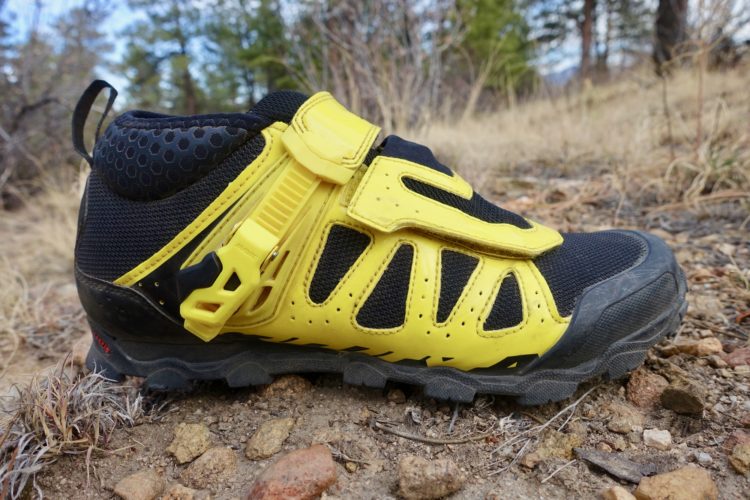
The Alpine XL fills the space between shoes that can be worn all day and those that work well for clipless or flat pedal biking. These shoes offer a host of cool features including a neoprene ankle guard (perfect for that added protection from nasty elements that will be encountered on the trail) and a flap that covers the very effective lace-pull system.

The EVA tongue is meshed for breathe-ability and maximum comfort while providing a measure of support and protection. To keep your foot in place and to increase lace tension, an extra strap up top keeps you foot firmly in the heel cup during the ride. The uppers are constructed from synthetic leather for longer life with added mesh for flexibility at strategic points along the shoes for just enough give. The heel sports integrated reflective material for safety at night and the foot bed uses Mavic’s Ergo fit pre-shaped insole which is vented and treated with Agion (a silver based antimicrobial treatment) to help control moisture and odor.

The sole of the Alpine XL is all business with a full rubber pattern from front to back, which works well in all conditions. The space for the SPD-compatible cleat is near perfect with no issues fitting Shimano or Crank Brother (Time) cleats. The sole, unlike some race oriented shoes, has decent give for when you need to hike a bike or just walk into a store to grab that Monster energy drink. My two shoes plus cleats came in at 993 grams (Time cleats) which is pretty good considering I wear a size 46.

The fit on the Mavics is a bit on the tight side at first so I recommend trying before buying on this one. I don’t recommend ordering these shoes online unless you have tried a set first. The toe box is roomy enough for my fat toes and on the trails and slopes (I mostly used the Alpine XL on my bigger bikes) I really loved how these felt. With no hot spots on my feet due to uneven pressure, the shoes were comfortable on the bike. The mid height arch worked well for my slightly flat feet – the added support there was nice. I also liked the feel of the heel cup and toe box.

Riding on harsh trails and slopes I had more than one occasion to bash a rock or two with my feet. The added protection on the toe box was welcomed and did a good job at keeping my toes in tact. The sole on the Alpine XL shoe has no spikes (fine by me) so walking is not an issue with them and the 5mm of tread works well on most surfaces (mud, not so much). The neoprene does a fine job at keeping most debris out of the shoe and also means you have to pull on it a bit to get your foot in there in the first place.

If you’re looking for an everyday mountain biking shoe in the $120 – $160 range the Mavic Alpine XL is a good pair to to consider.

I would like to thank the folks at Mavic for sending these down for a review.

Mavic DeeMax Ultimate DH Wheelset Review

Wednesday, May 18th, 2011

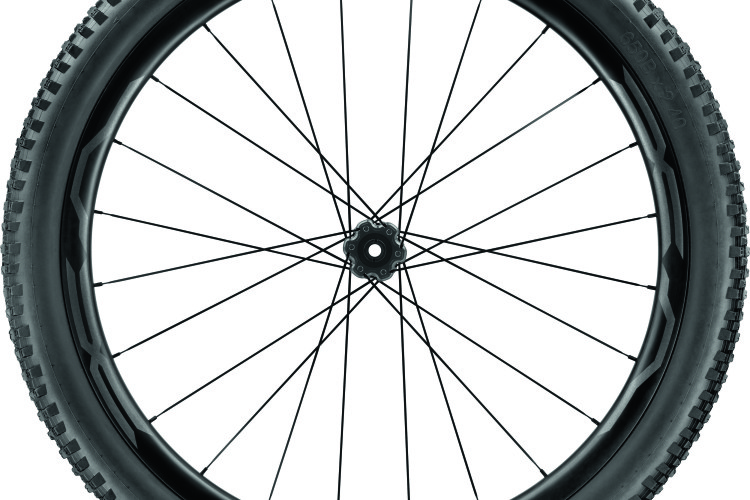
The Mavic DeeMax Ultimate is one of the lightest DH specific wheelsets on the planet! Already an icon in the DH world, many of the top DH mountain bikers run these wheels and it’s easy to understand why.

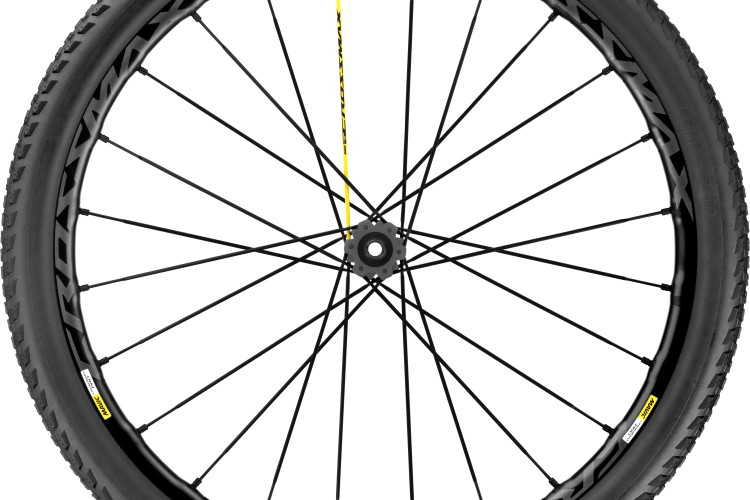
Mavic has been producing high quality gravity-oriented products for some time now and still manages to improve its products. The DeeMax Ultimate wheels weigh in at 1,965 grams (AFAIK, the only ones below 2,000) while the next lightest competitor’s wheels weigh 2,050 grams. Now that weight is all in, valves included. The Ultimates feature a UST rim meaning there’s no need for rim strips and the UST valves are provided.

Speaking of the rims, Mavic ‘drills’ only one wall of the 21mm internal width rim (good for tires from 2.3″ to 3.0″). This is what Mavic calls their Fore drilling process; essentially the process uses a ton of friction to displace a quantity of material to the side of the hole just before the drill pokes through the wall of the rim. The displaced material is then threaded and becomes the holes for the Mavic-specific spoke nipples. Seeing that the inner wall is not affected there is no need for rim tape and a seal can be formed.

Mavic’s SUP process also helps ensure a stronger, lighter rim. Essentially after bending the rim, the rim gets welded together and its surface is milled smooth. This jointing process really improves the overall strength of the rim. The rim itself is made from an aluminum alloy called Maxtal. Now this isn’t a 6061 material like others use, though I can’t say exactly which type of alloy Mavic is using. It could very well be a similar 6000-series aluminum with a specific treatment process kept secret by the company.

Mavic uses an “Interspoke milling process” to remove non-structural material from the rim’s surface, leaving only what’s needed for strength. Looking at the rim you can see a slight build-up of material around the spoke holes as well as a spine of material along the center of the rim.

On other Mavic wheels I’ve reviewed, the company used Zircal spokes which are not found on the Deemax Ultimates. Mavic decided to go with bladed and double-butted stainless steel spokes here to add to the durability of these wheels. Mavic also specially designed the hub using their SRS system to arrange the spokes and keep them in place, preventing the spokes from popping out of position. This is a great feature since the Ultimates do have a bit of flex built into the rim (which allows the wheels to absorb some stresses without cracking). I spoke with Sean Sullivan from Mavic and he mentioned that the ability for the rims to flex was an important trait that some of the top level DH riders wanted in a wheelset. Because of the small amounts of flex that may happen on the gnarliest of courses in the rocks, they had to make sure spokes didn’t pop out.

The DeeMax Ultimate hubs are only offered in a 20mm through-axle front and 12x150mm rear configuration. If you have a bike with a 12x135mm rear, go with the DeeMax wheels (slightly less expensive) and 23mm inside spacing on the rim.

The freewheel hub features Mavic’s ITS4 cassette body which uses two pairs of cam pawls for fast engagement. This works great for the rider who wants to just kick the cranks a bit rather than try to stroke the pedals while floating over rocks and roots. It takes very little crank rotation (about 5 degrees) to engage the wheel compared to other hubs I’ve used that need double that or more (though to be fair Mavic isn’t the only company offering quick-engaging hubs).

Servicing the hubs and replacing parts is a cinch thanks to an intelligent design. I really like the way the cam pawls are arranged and how they engage the hub. The cams have been designed with as large of a diameter as possible to engage right under the drive spokes which produces a more direct path of power. With two bearings supporting the cassette body along with the other two bearings supporting the hub itself, this makes for a hub that performs solidly. Up front you get two over-sized bearings sitting within the hub and the stout axle shaft. Freeplay from the bearings cans be finely adjusted using the bearing tool (supplied with the rear wheel).

Seeing that these wheels are UST I decided to run my wheels tubeless for the duration of my review. I used Stan’s as sealant (4 oz. with 2.5″ tires was needed to seal things up) and soapy water and away I went. The lack of a tube increases the response of the wheels for sure. There is less resistance to the whole set-up as these wheels are all go when you’re on the pedals.

How do these feel on the slopes? In a word: Awesome! The Deemax Ultimates can really send it. The minimized rotating mass makes these wheels feel like someone hid an electric motor on the bike to propel me down the hill. These wheels really do accelerate quickly. When I am off the pedals and descending, I don’t slow down and I got super quick changes of direction and responsiveness all day long. Compared to some wheels that take a bit more effort to get you moving, these just go.

A while back I reviewed the Crossmax SX wheels and loved them. Now, picture the Deemax Ultimates as the bigger, tougher brother. Many of the technologies are shared between the two, just scaled up for World Cup level abuse. At first I was a bit worried that these lightweights wouldn’t hold up to rockgardens and serious gnar. But after hitting the step downs and rock gardens at a few familiar trails, I quickly realized these can take more than I am willing to give them, even with the tires on dangerously low pressure (oops!). At such low tire pressures the Ultimates stood up great – not a single ding and they held my limp tires firmly in place despite the fact that the tires should have peeled right off the bike.

Mavic offers a program called MP3 which, when purchased at the same time as your wheels, will cover your wheels for two years no questions asked. So if you do trash a rim, you’re covered. All you have to do is send them back (at your cost) and they rebuild the wheels and send them back to you. Not a bad insurance policy for those who like to shred!

If you’re an aspiring DH rider and really want to step up your game, grab a set of Deemax Ultimates. For ultimate speed and agility these wheels are right up there with an MSRP to match ($1190). Hey, no one ever said high performance would come cheap. If you’re planing on going big (I mean really big) you may want to consider the slightly heavier and less expensive DeeMax wheels ($899 MSRP).  Whichever way you go, Mavic will get your rolling.

I would like to thank Mavic for sending up the Ultimates for review. Another quick thanks to the folks at SRAM, Rockshox, Banshee, Loaded and THE.

The DH Machine – It’s Alive!

Monday, February 28th, 2011

This is pretty much it. My little red rocket. The Dream Machine. The Monster. Here is the Banshee Legend II that I finally have all built up and ready to rip. It took me a while to get it (nearly) complete – I’m actually still waiting on two items that should be arriving shortly. But other than that, it’s done. I can’t wait until the slopes open for the season.

I first managed to get the bike together and out on the trail late in the season last year where I tested out some great products from Rockshox, Avid, and SRAM. Since then I added the final touches of bling from Loaded as well as Deemax Ultimate wheels from Mavic. Those early test rides on the Easton wheelset and Answer products really whetted my appetite for the main course.

The frame is a Banshee Legend II in medium:

Head angle: (63.8°) Seat angle: (70.5°)
Wheelbase: 1171mm / 46.1″
Bottom bracket height: 348mm /13.7″

If you don’t understand those angles and measurements, let me break it down for you: this frame is a purpose-built DH racer, designed for speed and fast cornering. The ultra-low BB keeps the center of gravity down low while the long wheelbase is great for stability.

The suspension arrangement is what Banshee calls their VF4B (Virtual Floating Four Bar) suspension. Now you might say it looks like someone else’s design but let’s face it: unless you have a single pivot, multi-link, suspension configs almost all look alike. However, there are actually small differences in pivot placement that make a big difference in performance. The virtual center region where the Legend II pivots is also different from other bikes. The short lower link, positioning of the links, and lengths of the links make for an ideal axle path. This path starts arcing up and to the rear (perfect for absorbing square edged bumps) in the first bit of travel; from the middle to the end of its path, the axle goes up and forward (reduces chain growth and pedal feedback).

Up front I’m running the Manitou Dorado Pro. I did have the BoXXer WC on there, but for now I’m running the Dorado Pro. I just received the Loaded AmX Rizer bar, a beast of a bar at 31″ wide and 328 grams. The AmX Rizer features 8° back sweep and 4° up sweep which is just right for me. Connecting the bar to the Dorado I have the Loaded AmX direct mount stem set at 45mm length (adjustable to 50mm as well).

Completing the controls, I’m rocking Formula’s ONE brakes (I also run the 2011 Avid Codes) and I love the levers because they take up virtually zero room on my bars and have a great feel (never mind the power and excellent modulation). The shifter is  a SRAM 10spd X0 (presently my favorite) with 1×10 gearing.

Now let’s talk about the high performance drivetrain. The Descendant cranks are from Truvativ and I’ve added the e*thirteen SRS+ chain retention device to keep the SRAM PC 1091 chain in line. For now the pedals are Xpedo XMX12ACs which have a great feel and provide a wide foot plate. I’m also looking forward to trying Spank’s new Spike pedals soon. Although I don’t plan on doing much sitting on this bike, the saddle is a WTB Valcon mounted on a Loaded X-Lite seatpost.

On the back I have the SRAM X0 short cage 10spd derailleur on an OG1090 11-25 rear cassette. Talk about great shifting. Despite the fact that the rear cassette is the road version, it works great with the X0 rear derailleur. Wheels are the iconic Mavic Deemax Ultimates (12x150mm rear) which are super light for DH (under 2,000 grams) and oh so smooth.

Now all this is tied together by two other important things: the rear shock and tires. I’m running the Rockshox Vivid Air which provides an excellent feel while controlling the wheel nicely. For tires I went with the ITS Invader 2.5″. At about 1100 grams each, they offer a decent mix between weight and durability. The Invader is also what is considered an all conditions tire, perfect for the Ontario landscape where I do most my riding. Lately I’ve noticed North Shore type features popping up around here so I’m excited to see how these tires perform in a variety of conditions.

In its current state the bike weighs in under 40lbs. – 37 lbs. to be exact – and it’s still bulletproof. Weight savings come from several areas, starting with the innovative Interspoke milling on the Mavic rims. Banshee carefully selects tubing thicknesses and machined shapes while including titanium pivot hardware. The Vivid Air and the Sram OG-1090 rear cassette shed massive amounts of weight over competing products, accounting for a whole pound of savings together. The final little bits of weight fell off by replacing stock hardware bolts with titanium and alloy parts.

In case you’re interested here are the build details:

Frame: Banshee Legend II
Fork: Manitou Dorado Pro  / Rockshox BoXXer WC
Rear shock: Rockshox Vivid Air (240mm x 76mm) (9.5″x3.0″)
Seatpost: Loaded X-Lite
Saddle: WTB Valcon (Silverado Syndicate on order)
Cane Creek XX II headset
Stem: Loaded AmX direct mount / Answer -ONE (not shown at this time)
Bar: Loaded AmX riser bar (790mm / 31″) / Answer ProTAPER 780 DH
Bar Grips: ODI Ruffian
Brakes: Formula ONE 208mm rotors F/R / Avid Code (not shown)
Shifters: SRAM XO 1×10
Wheels: Mavic Deemax Ultimate
Tires: ITS 26 x 2.5″ Invader tires
Cranks: Truvativ Descendant / GXP BB 83mm 165mm lengths
Cassette: SRAM OG 1090
Chain: SRAM PC1091
Pedals: Xpedo XMX12AC
Extras: Alloy rotor bolts from Ashima, Titanium hardware for brakes, Titanium hardware for rear shock.

Based on a few early test rides I’ve found this bike loves all the lightweight components; in particular the lighter Deemax wheels actually showed increased precision and tracking. I love pitching the bike in corners and the feeling of control I get with the bike in the air. In the hands of a pro rider I can imagine some spectacular whips coming outta this bike!

One interesting thing I noticed so far is that for my body type (5’9″, 190lbs with 31″ inseam and regular arm length), a 50mm or 45mm stem works well with a riser bar; otherwise, running a 55mm stem with a flatter bar works equally well. A 30-31 inch bar seems to offer a good mix between control while limiting over-steering.

Speaking of control, I found with a properly tuned suspension I didn’t get a lot of the diving I normally expect from a long-legged trail machine. Keeping my weight centered or further back and nailing the brakes coming into sharp corners, the bike remains civil without that pitch feeling I’ve had on other machines. The front and rear suspension work well together to keep this ride stable (time spent setting up the shocks is key!). And when things do get rough, I absolutely understand why so much time was involved in the development of this bike. The Legend II feels pretty forgiving – hitting rocks didn’t seem to be much of an issue. The bike tracked nicely over that kind of stuff.

Once I get more seat time in and experiment a little with settings and parts, I’ll post further updates. Stayed tuned for more!

2011 Mavic Razor MTB Shoe Review

Thursday, February 3rd, 2011

The Mavic Razor mountain bike shoe is one of those rare products that works great, fits comfortably, and doesn’t cost a lot of coin.  The shoe is basically a toned down version of the Mavic Fury, leaving off only a few of the costliest bells and whistles found on the Fury. The Razor keeps the basic two strap and one ratchet system that should work great for almost every rider.

The Razor’s construction is based on a glass reinforced nylon sole, giving it the right amount of flex in those hike-a-bike situations, while retaining plenty of stiffness for those off-the-saddle pedaling efforts. Speaking of hike-a-bike: unlike some full-on race shoes I’ve worn in the past, the Razors actually have tonnes of grip on the bottom. The aggressive tread pattern, built up from Mavic’s Contagrip material, has good grip on stuff like wood and rocks. The pattern also keeps you firmly planted on the ground even when things get a little soggy. When the terrain is really bad and the need to unclip becomes necessary, the sole has a “micro” pattern between the heel and toe box for improved pedal grip.

The Razor is offered in two color schemes: the one displayed here (Charcoal/Grey) or a race-inspired White/Red version. Either way, these are pretty good looking shoes without making too much of a statement. The uppers are made from a mix of synthetic leather and mesh for breathable yet solid construction. To increase the life of the shoe, as well as to add a measure of safety, the reinforced toe cup adds extra material to the shoe that should keep the front of the shoe together over the long haul. The low cut design and deep ankle cup lends a ton of support for the foot once you’re all strapped up, keeping the foot stable and secure.

Inside the Razor you’ll find Mavic’s Ergo Fit 2D which is a reshaped, dual density composite insole. The high density heel cup both supports and cradles your foot, while the other layer, enhanced with Mavic’s Agion™ anti-bacterial treatment, allows moisture to escape through the perforated structure.

On My Feet and On the Trail

Based on my experience with the Razor MTB shoe, Mavic seems to have done a great job on the construction and fit. I have sensitive heels and often have a hard time with new shoes digging into my heels and rubbing them raw (a painful illustration, I know). Well I am happy to report that this was not the case with the Razor.

The Razor has a great toe box design with just the right amount of space that kept my foot firmly in place without squishing it (great for me because I have a wide foot.) Once buckled in, I never got that uncomfortable hotspot feeling from the straps digging into the top of my feet thanks to the pre-shaped EVA tongue and generous strap spacing.

I did have a small issue when trying to loosen the buckle while wearing gloves. The release lever on the top strap is pretty small and was difficult to grip at times. Tightening the buckle, however, wasn’t an issue at all, with or without gloves.

Installing both Time and Shimano cleats on the shoes with one shim (provided with the shoes) I found that I had no issues clipping in or releasing from the pedals (XTR’s and Z-Controls) on my Opus Crate trail bike. The soles sport adequate space for a variety of pedals even when the shoe got a bit mucky (within reason). A fully clogged shoe on a soft wet day will certainly pose some issues but then again, all the shoes out there will do just about the same thing.  Mavic supplies two different toe cleats – a long and short version. I basically stuck with the short cleats up front because they didn’t get in the way when I was in those hike-a-bike situations. The long cleats impeded my ability to walk on rocky surfaces so I’ll store those for all but the softest courses.

For about $130 MSRP, the Mavic Razor is a good quality shoe that is similar to  higher priced mountain bike shoes but at a mid-level price. Check out Mavic’s website for these and other great quality products for 2011!

I would like to thank the folks at Mavic for providing the Razor MTB shoes for product review.

What did you do over the Holiday? Indoor MTB and Hot New Gear for Me!

Sunday, January 2nd, 2011

Hi folks, I hope you enjoyed the Holiday Season. I also hope Santa was good to you as well. So… what did you do over the break? Anything interesting show up under the tree for ya? I ended spending some time over the break at Joyride 150, an indoor bike park up in Toronto, Canada much like the two Ray’s down in the States. I gotta say, indoor bike parks are a good idea for the whole family because there’s something for everyone.

I ended up riding indoors 4 times in 2 weeks, taking my XC, trail and DJ bikes out for spins. I rode just about everything they had to offer from the two pump tracks on my DJ bike to the challenging skinnies on my trail bike to the XC track with my XC bike. Joyride also has progressive jumps and a vert park for those who dare to enjoy air. Believe it or not, indoor riding is a great way to stay in shape and sharpen up your riding skills during the “off season.” I spent a ton of time learning a sweet new tail whip move on the progressive jumps, something I always wanted to do on the slopes but was a bit too shy to try. The idea of sucking dirt and rocks just doesn’t appeal to me so a controlled environment like the one at Joyride (high skill, low consequence) is perfect for building skills.

During some of my visits to Joyride 150 there up to 280 riders, not to mention families hanging around and watching everything from a few folks honing their trials skills to others nailing 360-degree backflips and tail whips into the foam pit. The great thing about many indoor parks is that they’re usually close enough to a hotel and other attractions that can add to the experience of your mini vacation if you have to travel. Fortunately I live very close by so I get to ride pretty much whenever I like!

Mark Summers, one of the owners at Joyride 150, explained how he got the idea to open the place after taking his own mini vacation a few years back with his family. He said he loved the idea so much they had to do it here (Toronto) and it was just a matter of finding a location big enough to do it (Joyride is 80,000 sq ft). These days Joyride is well established and has partnered with local hotels for deals and family packages. This, in turn, has lured more and more out of state visitors.

Well needless to say I continue to have a great time at Joyride and find that I use the facilities often when testing new products as well. I can always count on some of the key features to be there so I can evaluate products without second guessing if it’s the product or the terrain that is making a difference.

New MTB Gear

The photos below show a sneak peak of some hotly anticipated skid lids I just received. The new T2 from THE is for the gravity park folks and the new XAR is for all of you who want a lightweight XC / AM lid with superior protection and fit.

Speaking of products and parts and stuff – Santa (and his manufacturing reps) recently sent out some of the new 2011 items for product review. Look for product tests from Giro, POC, THE, Mavic, Fox and more to help you gear up for the upcoming riding season!

Looking further into 2011, we also have more cool contests on tap as well. Thanks to your word of mouth, singletracks has been growing and with growth comes notoriety (which helps us get great prizes for giveaways). Just above is my Opus Nelson FR bike which this year is sporting the all new Fox 36 Talas 180 FIT RC2 and a SRAM XO 9spd drivetrain in red.

My DH project bike, the Banshee Legend II, has been coming along nicely as well. Here is a glory shot of the bike just waiting to hit the slopes! The build now comes in at just a hair over 36lbs. with dual ply rubbers from ITS. The new Mavic Deemax Ultimate wheels, in case you’re wondering, are under 2,000 grams (1,965).

We’re stoked for mountain biking in 2011 and hope you are too! Stay tuned and stay well everyone.

Happy New Year.

Mavic Hoops, Computes, and Boots at Interbike

Thursday, October 14th, 2010

Mavic is one name that doesn’t need an introduction. The yellow Deemax rims sport an iconic look that, unless you’re totally new to the sport, you know right away is a Mavic. The company has actually been in business since 1889 and the name Mavic is actually an acronym – Manufacture d’Articles Vélocipédiques Idoux et Chanel (translation: manufacturers of articles for bicycles from Idoux and Chanel).

For 2011 Mavic is keeping most of the MTB wheelsets the same but did improve the mid-level Crosstrail Disk wheels, making them lighter and stiffer and adding a host of features. Mavic is also bringing back the Crossride UB/Disc wheelset which is a good replacement wheelset for those who are ready to swap out their OEM hoops. The Crossrides are compatible with either disk or v-brakes and perform well at a budget-friendly price.

Beyond wheels, Mavic is serious about electronics and showed off a revamped Wintech Wireless USB cycling computer that can be hooked up to your PC for serious data crunching. The large display makes it easy to see key stats at a glance plus, with the power to customize the data fields, you can view various sensor outputs (power, heart rate, etc.) on a single screen.

I also got the chance to preview Mavic’s expanded shoe and clothing lineup at Interbike. With the help of parent company Solomon (also a huge name in Alpine skiing / sports wear), Mavic has put considerable resources into creating high quality footwear for 2011 and beyond.  Both trek7k and I were impressed with the quality and weight of the various shoes in the line up. With high-end racing XC shoes in the upper $300-range (the yellow Fury above) down to shoes in the $120-range (more my speed), Mavic has a ton of options to choose from (plus three colors of each model). I was really impressed with their new AM shoes (the white ones pictured above) – great ankle support, hidden laces to prevent brush snags, and a decent tread design for hike-a-bike.  Definitely explore the Mavic website yourself and see what else they have for 2011!

Interbike Eye Candy That I Almost Forgot

Monday, October 19th, 2009

picture-1

So this may be a bit on the late side but seeing that most of this stuff still hasn’t hit the stores yet I thought I’d share these pics. What I have here is a compilation of my favorite photos from the show with some brief commentary so sit back and enjoy!

By far the coolest frame set I saw (next to the Banshee Legend) is the Intense 951 pictured above. I found myself just staring at this bike for far to long and almost missed my next appointment. Up close to this frame set you can see the quality work that went in to making this one of the most desirable DH frames around. With 150mm G3 rear axle spacing, one point five head tube, and over 8 inches of travel provided by an ohhh so nice Cane Creek double barrel rear shock this bike looked delicious.

picture-3

Above, the same Intense 951 in red. Still nice, and this one was built up with Shimano Saint components and an Industry 9 wheel set with a Fox 40 RC2 up front and a DHX RC4 in rear. Can you say Sweet?!

picture-2

Here is something that I personally want and not just for the red and orange anodized finish. The Ellsworth Rogue is a freeride bike with attitude. Not only does it look great but I had a chance to test ride one like this at Bootleg and it was super fun (the only down side – the run was too short). With 8 inches of rear travel and the Fox 40 RC2, this bike is a kick-butt machine.

picture-4

It was hard to stop looking at Intense with all their models so close yet oh so far away. Here we have a pair of Uzzi frames. The Uzzi in blue has a Fox DHX Air 5 and the Red has the standard DHX 4 coil. You can also get this bike with the Cane Creek double barrel, at a cost of course.  For those who plan on taking big hits and hitting the park all day long you may not need look any further than the Uzzi.

picture-5

This Ibis above boasts builds in the 25 pound range with 5.5 inches of DW link rear travel for those who want a quicker, snappier ride on a bike that won’t punish you too much after riding all day long. The Ibis can be ordered in various trim levels from Sram XX or X-9 group parts to Shimano XTR, XT or SLX.

picture-6picture-7

I love cut-aways of bike stuff and there were plenty at Interbike to ogle. Here you can see a cut-away of the Fox RP23 with boost valve technology on your left, the new improved DHX AIR RC4 in the middle, and a 32mm F series front fork with Fit technology (borrowed from the 36 and 40mm forks) on the right. The Fit damper now allows the engineers to further save weight on the 32mm line-up by reducing the amount of fluid needed in that damper housing. Get close to a new 32mm fork and you will also notice that the engineers changed up the way the fork works as well by placing the rebound adjuster on the bottom (previous models placed the lock-out on the bottom). Check out FoxRacingShox.com for further information.

picture-8 picture-9

Walking around Interbike you couldn’t help but notice the Mavic display. Looking at the line up for next year they have really improved the wheels, especially for the trail and enduro riders out there. The new Crossmax ST wheels are even lighter than before, now at just 1615 grams. Mavic also changed up the graphics on the rims.

The new Deemax Ultimate at 1915 grams a set is absolutely crazy light for a full-on DH wheel set. These wheels come with all the bells as whistles to make them both strong enough and light enough for the demands of the DH circuit. The Deemax wheels also sport my favorite ITS4 cassette body and ISM (inter spoke milling with central spine) which reduces mass on the rim without loosing strength.  Check out Mavic.com for more info on these and the rest of the line up.

picture-10

Here is just a random photo of the new carbon Ellsworth Enlightenment. What caught my eye here is the fine machine work on a part that just holds the brake and rear wheel. This attention to detail is second to none.

picture-11

This bike was another one of those that you had to stop and drool over for a while. The Banshee Rune pictured here was shown in flat black and bright orange components. The Crankbrothers Iodine AM wheels along with Race Face AM cranks and bars (not shown) really made this bike and the components just added to the already awesome construction of this frame. You have to check out the Banshee website for more information on this bike as well as the rest of their line-up.

picture-15

Hubba hubba… umm sorry. But just in case you have no clue what this is, this is the new aluminum version of the Dorado DH fork from Manitou. I am dying to do a review on this unit. This fork has everything a racer would want: high and low speed compression, rebound, and top-out and bottom-out control. To top it all off, these forks are assembled right here in the States. With 36mm stanchions and an inverted design this fork will take a kicking and keep on bouncing.

picture-14picture-13

Answer is back with all new products this year. New thin and stout pedals, super wide 780mm DH bars, and 720mm AM bars are also available. The bars will come in two versions: a one-inch and two-inch rise for the AM Bar and half-inch and one-inch rise for the DH bar. A direct mount stem for the Dorado allows you to change the reach from 45, 50, 55mm while providing a strong grip to the bar with its wide face plate.

picture-17

Sun-Ringle has totally revamped the line-up with new hubs, rims and colors that promise to impress everyone. The hub shot above gives just a taste of what you can expect to see in 2010. Straight pull spokes, anodized hubs and aluminum cassette bodies.

picture-18

What’s not to like about the new Hayes Stroker Ace look for this year? Now in jet black with bronze-ish piston covers, this is one great looking, high performance brake set. Along with the Stroker Ace the entire line up now boasts new graphics and now the Stroker Grams come in all white.

Well that does it for my list of favorites from Interbike – hope you enjoyed the pics!

2009 Mavic Crossmax SX Review

Wednesday, August 12th, 2009

picture-257

A little while back I wrote a review on Mavic’s Crossline wheel set which was and still is a great set of wheels. But I recently got a chance to ride with the Crossline’s big brother, the Mavic Crossmax SX, and the experience left me impressed. Now don’t think the big brother is larger or heavier than its sibling; in fact the Crossmax SX set weighs 300 grams less!

The 2009 Crossmax SX wheel set has a completely redesigned rear hub that drops 165 grams of weight and makes use of the same ITS-4 (instant transfer system 4) pawl cassette engagement found in the Crossline set. This means that 2 pawls are in engagement at all times and each pawl is separately sprung. The hubs’ look has also been updated and sport a white finish which fits nicely with the awesome white graphics on the rims.

Mavic has always been known for great looking, high performance wheels and this year they’re keeping the pedal to the metal. The 2009 Crossmax SX wheels sport a new gray anodized finish and fresh white graphics – but don’t think these rims are all style without any substance. After the rim is shot peened it is put through a chemical anodization process which adds a very tough micro hardness exterior layer to increase the life and durability of the wheel. While forming and shaping the rim, Mavic welds and machines everything flat in a process called SUP for extra precision. Mavic is also able to save weight through their inter spoke milling process using a CNC machine to remove excess material between each spoke.

The Crossmax SX wheels roll with 24 straight pull Zicral spokes (aluminum) compared to 28 steel spokes on the Crosslines. The front axle is available in a 20mm configuration only while the rear can either be a 12×135 through axle  or 9×135 QR. The Mavic Crossmax SX wheels seem to fit best on bikes with 140 – 160mm travel and tires that are 2.3 – 2.5″ wide.

picture-258

Mavic Crossmax SX wheels are UST meaning they can used with tubeless tires. Looking at the inside of the rim there are no protruding spoke holes and therefore nowhere for air to leak. The rim also has a drop center that provides a small channel for air to inflate a UST tire and force the tire over safety ridges to hold the air-tight beads in place. Mavic even created a special manufacturing process called FORE to fit the special Mavic M7 spoke nipple which makes the wheel much stiffer and more fatigue resistant.

picture-259

It took me very little time to get the Mavic Crossmax SX wheels up and running. Seeing that these are tubeless I grabbed a set of  tires that I happened to have around and got to work. Installing a UST tire is pretty much the same as a tubed tire, just use soapy water and wet the sidewalls of the tire before inflating (it really helps popping the tire is place with less pressure).

picture-267

On the trails I really felt the difference the wheels made right away, especially when comparing the Crossmax SX running UST tires vs. Crossline wheels with tubes. Right off the bat I lost a total of  630grams (or  1.38 pounds) of rotational mass after making the switch. The coolest part: there is zero strength lost and the Crossmax SX wheels feel super stiff. That stiffness gives the rider greater freedom to change lines more quickly and with less effort while tracking oh so well in tight berms. I had an awesome time on the trails smashing my way down slopes with a much greater degree of control and freedom than I had before.

These wheels are also incredibly efficient in acceleration. Remember these are not DH wheels and they’re not meant for very big hits or fast descents through rock gardens. But after a good thrashing I must say these wheels held up great, though I did have to use the M7 truing key (supplied with the wheels) to take out a small wow on the rim after encountering a rather large log. Speaking of tools, Mavic supplies you with everything you need to service these wheels including an M7 truing key, 12 and 9mm frame supports, rear QR, and a bearing adjustment tool. They even toss in the UST valves if that’s the way you want to go.

At $899.00 USD ($1340.00 CDN) these are not cheap wheels but if look carefully you may find them for a lower price. Ultimately these wheels are worth a few extra bucks because they hold up to abuse and won’t hassle you with any worries or problems on the trail.

Cheers.

A quick thanks to the folks at OGC for the Mavic wheels and of course Opus for a stable and reliable bike to do my testing with.

New Mavic Crossline wheels

Thursday, May 7th, 2009

picture-213

The Mavic Crossline wheelset ($399.00 MSRP) is new for 2009. Mavic released these wheels for those of us who are on a budget but want a true Enduro wheelset. You can buy the wheels as a set or individually but your choice of colors is limited to black, black, or black (though they do have some cool new rim graphics). The wheels come with almost everything you need – a quick release skewer for the rear, rim tape for both wheels, and even a special tool for adjusting the rear hub bearings. Unfortunately the Crossline wheelset doesn’t come with a front quick release so you’ll need to pick up an adapter that sells for about $12 to convert to a 9mm configuration.

Some highlights of the Crossline wheels:

Tough 21mm internal wide rim
28 straight pull, steel spokes
Oversized hubs with large cartridge bearings
A new ITS-4 freewheel. Mavic uses an entirely new transmission with 4 pawls and 4 bearings  to reduce the rotation of the wheel before it engages from 17 degrees down to 7.
Weight: 2045 grams per pair – front wheel: 965 grams, rear wheel: 1080 grams
Disc brake specific profile: no braking surface on the rims
Pinned rim joints
6106 Aluminum
8.5 mm valve hole diameter
QRM+ bearings
Aluminum front and rear axle
Oversized aluminum front and rear bodies
20x92mm front axle (adapters needed)
12x135mm rear axle

I was stoked to try these puppies out on the trails at Kelso Conservation area (one of the stops on the O-Cup DH circuit) and I tried to find some really rough stuff just to see how rugged these wheels really are. Compared to the regular wheel set that I usually ride these were a blast. The first thing I noticed with the Mavic Crosslines is the different sound the freehub makes compared to older versions of Mavic’s product line-up. I was also pleased when pedaling from a stop – there is virtually instant engagement of the gears with little movement of the crank before the cassette grabs the wheel (which is great for very slow speeds when you need to hammer over a log, ride a skinny or slam through a rock garden). I felt very little flex when cornering, even while nailing birms and switchbacks. These wheels track very well and inspire confidence, felling solid beneath the bike.

picture-90

Although Mavic advertises these as Freeride wheels I would have to call them “light” Freeride/Enduro wheels.  After a few drops (5′ to 7′), table tops, step ups, and rock gardens on an extreme singletrack run I felt pretty confident about the wheels. Despite the thrashing the Crosslines held true with no signs of problems, other than a sight ding (my bad for under-inflating my tires).

The steel spokes on the Mavic Crosslines (and Freeride/Enduro/All-Mountain wheels in general) are a great choice because steel spokes have a higher tolerance for abrasion and will hold up to branches, rocks, and an occasional dropped chain (I don’t use a chain retention device). On this test I even caught a large branch in my rear wheel which ripped the derailleur off without damaging a single spoke – talk about tough!

Overall these wheels are well worth the coin, and I would recommend these to anyone, even to those of us who are on the heavy side. In a time when everyone is watching their well earned dollar these wheels won’t break the bank and are cheap enough that if you do break them you won’t have to give up an arm or a leg to replace them (you probably broke an arm or leg when you broke your wheel anyway so you won’t want to give up another!).

Cheers… Now get outside and hit the trails!


Site Map | Advertise | Partners | Contact Us | Terms | Privacy
Campground Reviews | Hiking Trails | Trail Running | Skiing / Snow Sports | Mountain Biking
Copyright 2012 Blue Spruce Ventures LLC | Atlanta, GA
singletracks.com is yet another slick Review App