

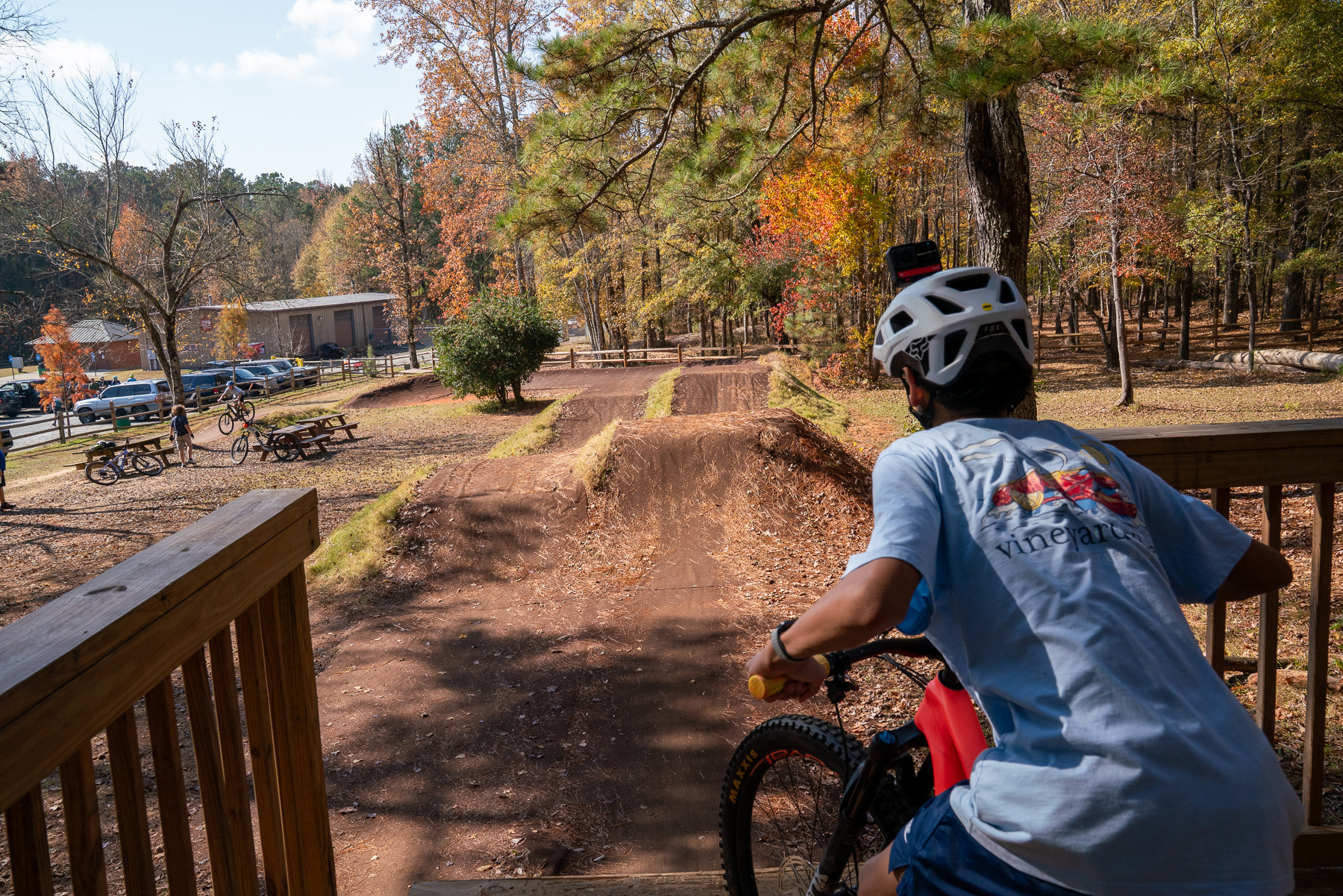
Building bike trails is expensive, and over time, maintaining them costs even more. Jarrod Harris was spending $25,000 every three to four months to revamp a single trail at his bike park in northwest Georgia, and he needed to find a way to cut costs.
“I started to see how expensive it was to maintain the trails that [we] built,” he told Singletracks in a recent podcast interview.
During his BMX trail building days in the 1990s, Harris and friends would use scraps of carpet to cover jump lips and landings to help hold the dirt in place. Could carpet, he wondered, reduce the need for trail maintenance at Jarrod’s Place bike park?
For two years, Harris and his crew experimented with different carpet-like materials at the park to develop their own solution, which they called Trail Armor.
“It’s literally saved the park,” he says. “We wouldn’t be in business right now” without it.
What is Trail Armor?
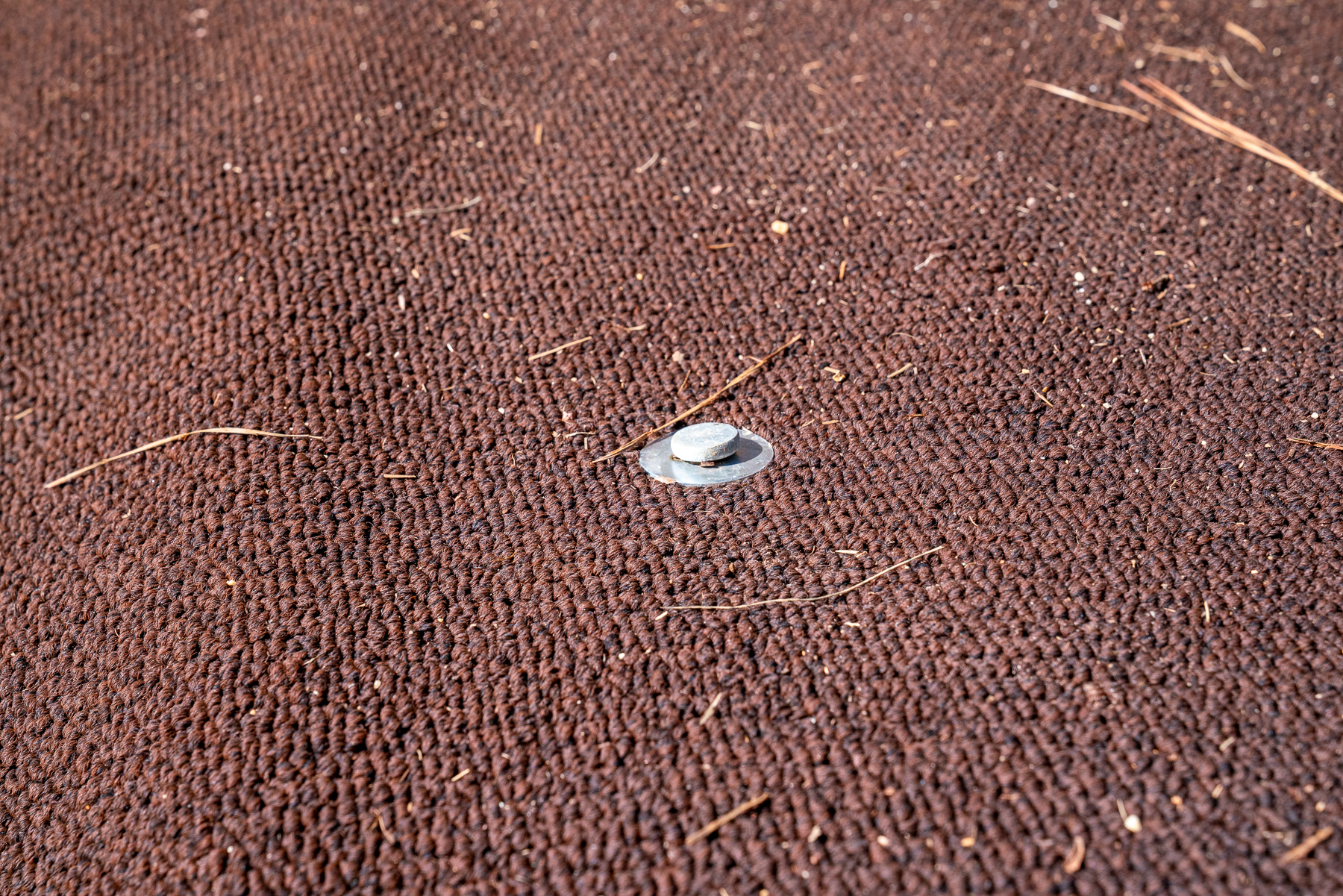
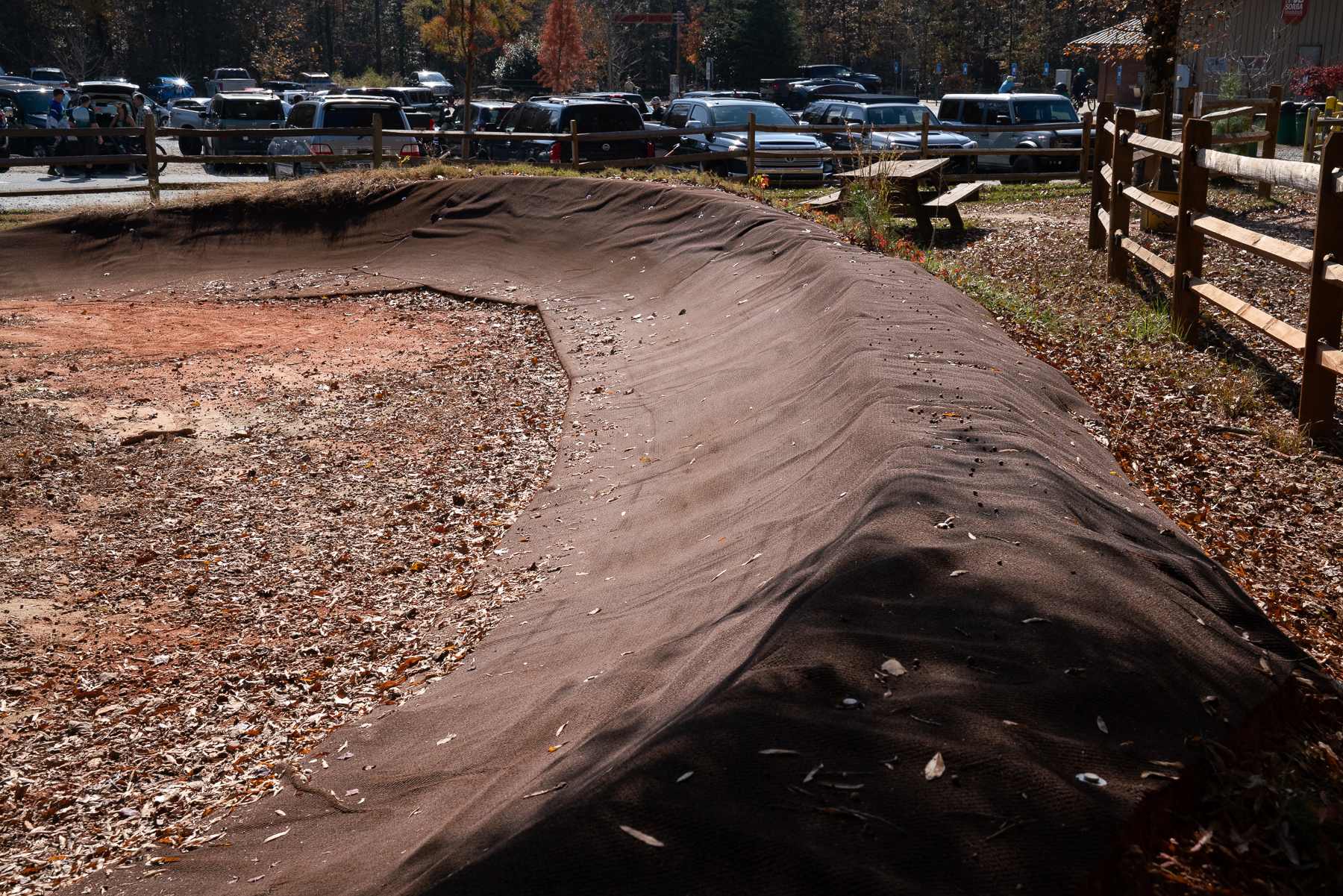
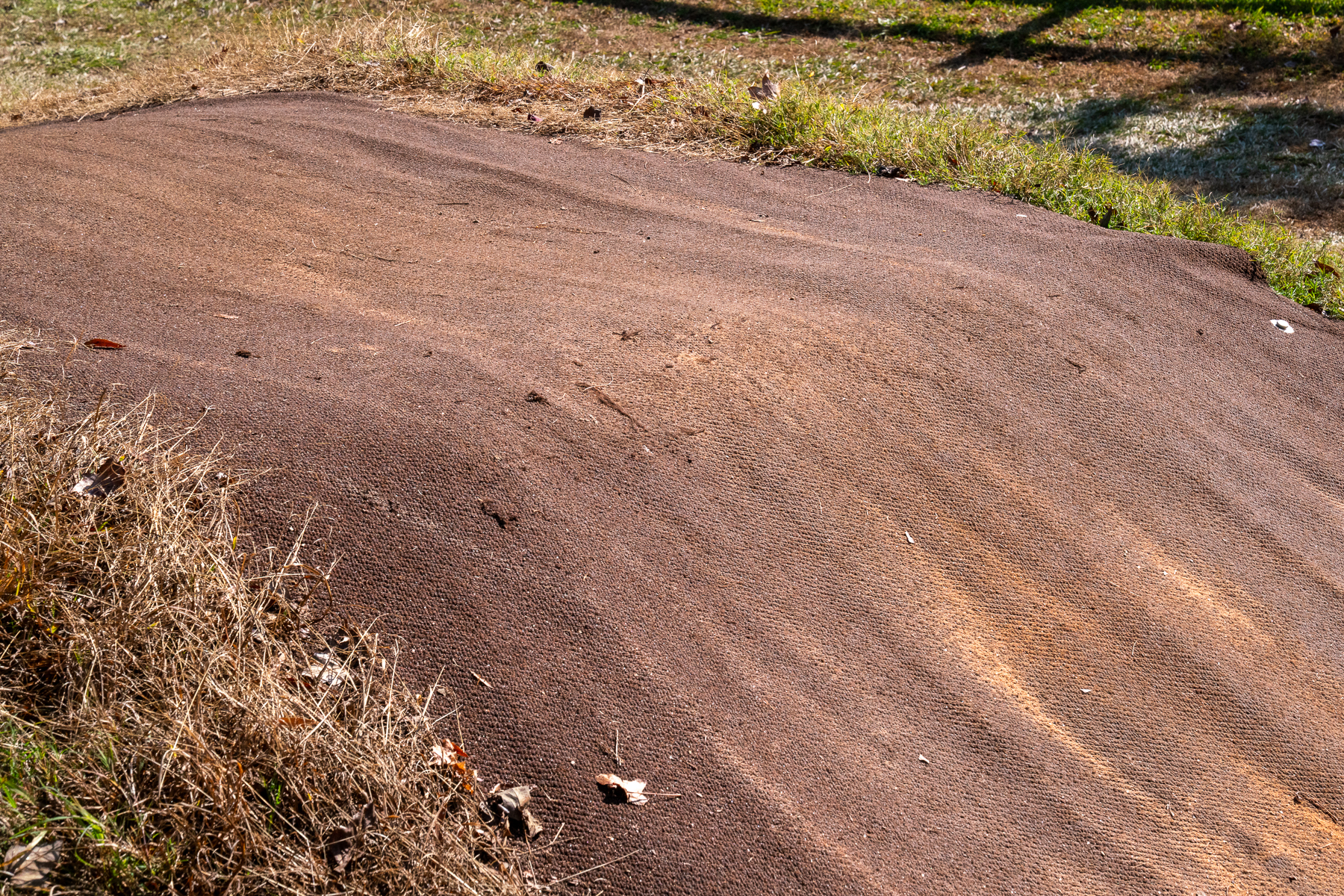
From a distance, Trail Armor could be mistaken for exceptionally smooth, uniform dirt. But look closer, and it’s clear it’s a woven material with a level-loop pile construction, not too far off from the Berber carpet you might find in your grandmother’s house, with a 70s brown tint to match. Harris says Trail Armor is nothing like the indoor carpet scraps he was using to line trails in the 90s; he notes the only thing that’s remotely close to Trail Armor is marine-grade carpet, which is more expensive and isn’t designed specifically for trails.
Pricing for Trail Armor ranges from $1.10 to $1.50 per square foot. There are multiple sizes and versions of the material available, including an eco-friendly Trail Armor version that is said to be 100% recyclable. Harris worked with a local Georgia manufacturer to develop Trail Armor, and his company has exclusive access to the material.
Trail Armor is permeable, so water soaks right through it, allowing riders to hit the trail right after a rainstorm without fear of causing major damage. And, Harris notes, it’s great for minimizing dust when it hasn’t rained in a while. One of the trail builders I spoke with likes that Trail Armor acts as a weed barrier, keeping the trail surface free of unwanted vegetation.
At this point, Trail Armor has been used in 30-40 projects around the country, according to Harris.
Harris told me he recently pulled a section of Trail Armor off a landing that had been built two years ago, and “it looked just as fresh as the day it was finished.”
Rolling out the brown carpet
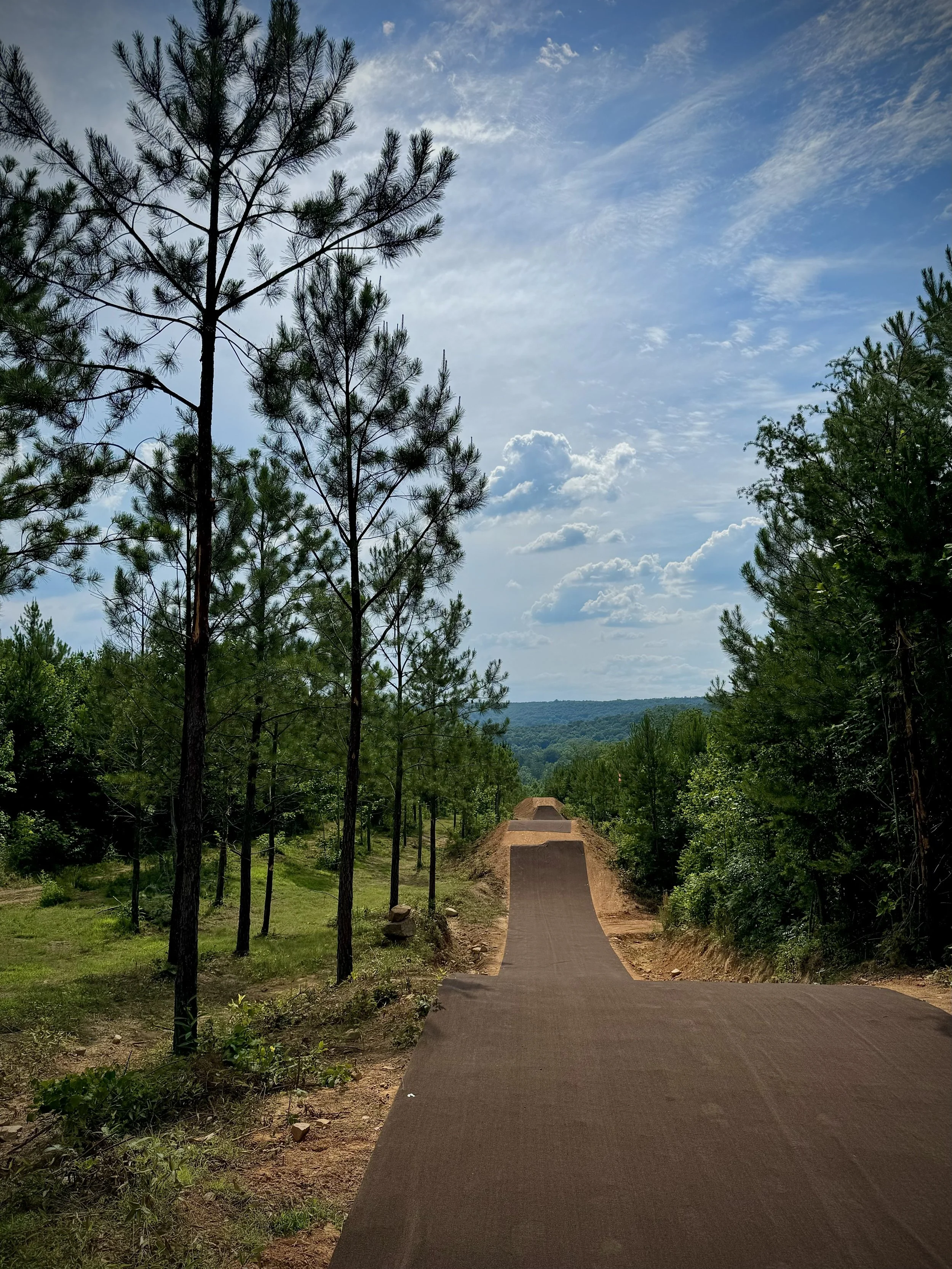
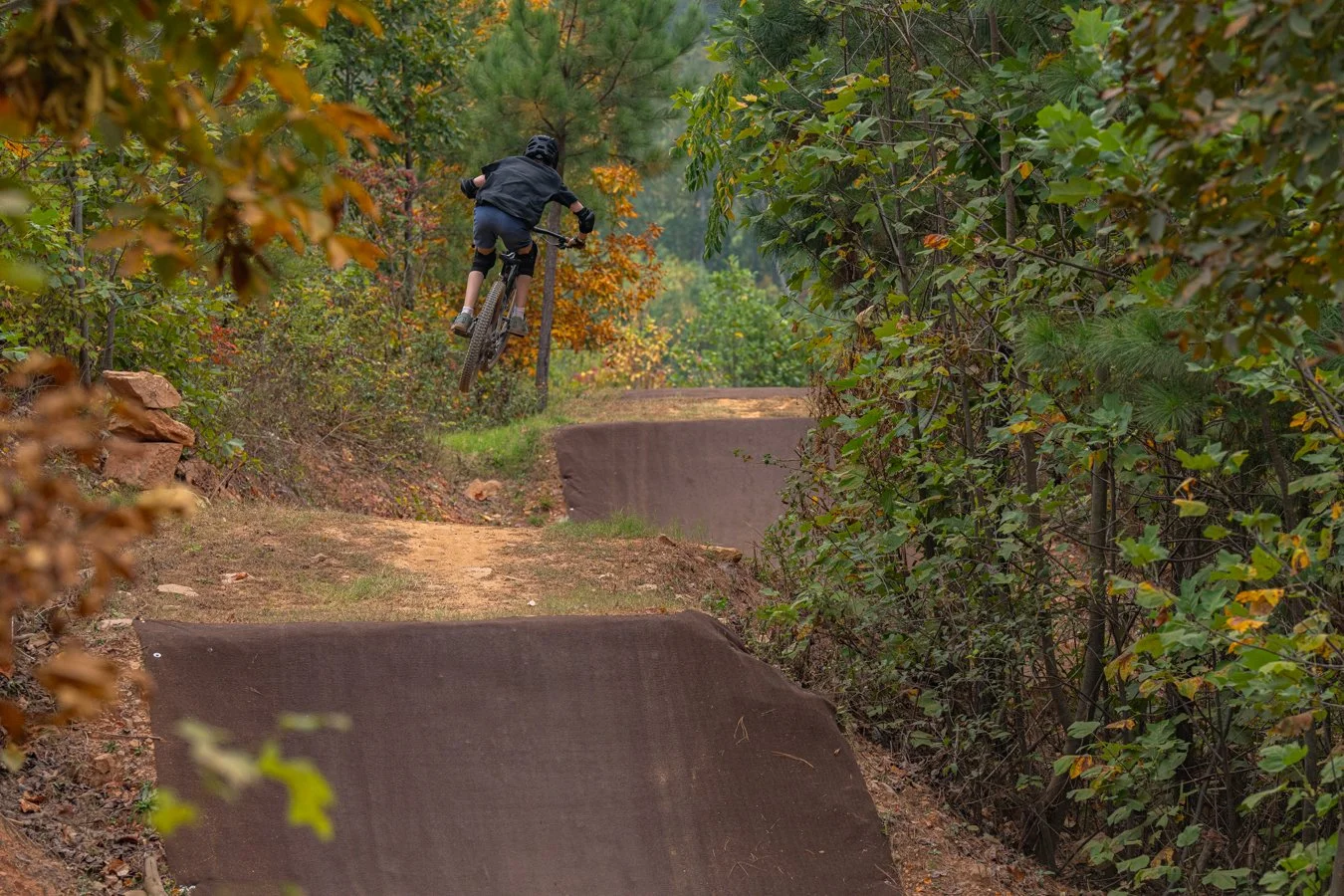
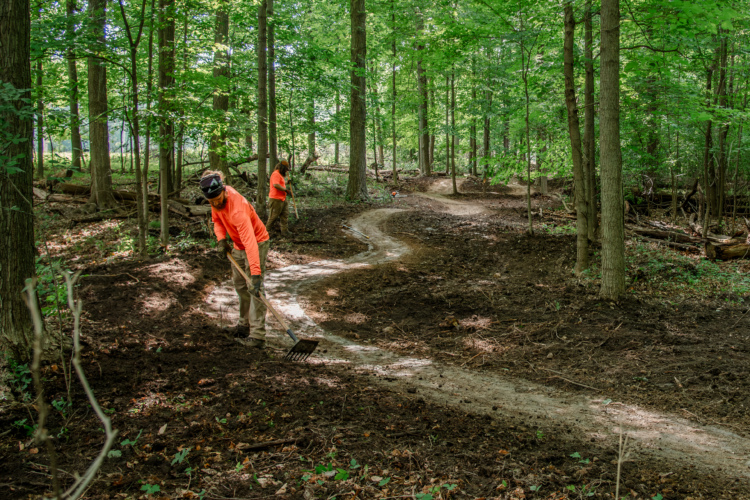
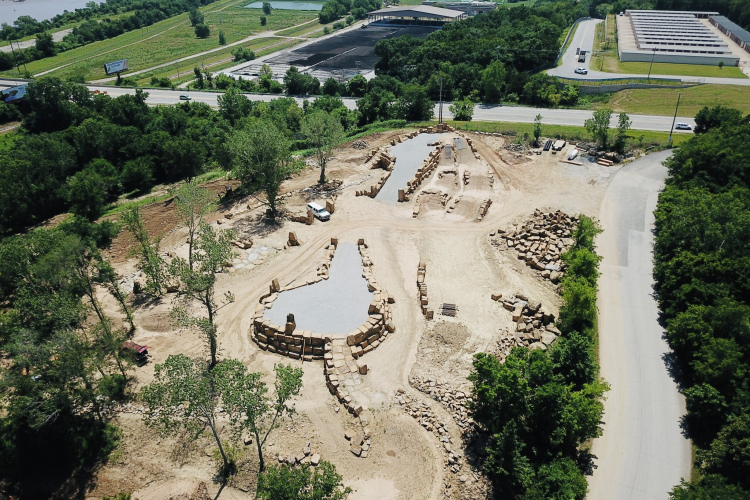
Trail Armor is designed to be installed after a trail or feature has been finished. Progressive Trail Design settled on Trail Armor for a bike park build in Oklahoma this year because their client wanted to minimize future maintenance.
“This is our beta test of it,” Jason Stouder of Progressive Trail Design told me. Though this was the crew’s first time working with Trail Armor, he says the installation went smoothly.
For lining straight runs and rollers, “it’s pretty straightforward,” he said. “It’s literally roll it out, stake it down, get it taught.” But for more complicated features, like berms, shark fins, and hip jumps, there’s an art to getting everything smooth. Stouder jokes that he needs a roofer to install Trail Armor on berms where an overlapping, shingle-like pattern is necessary.
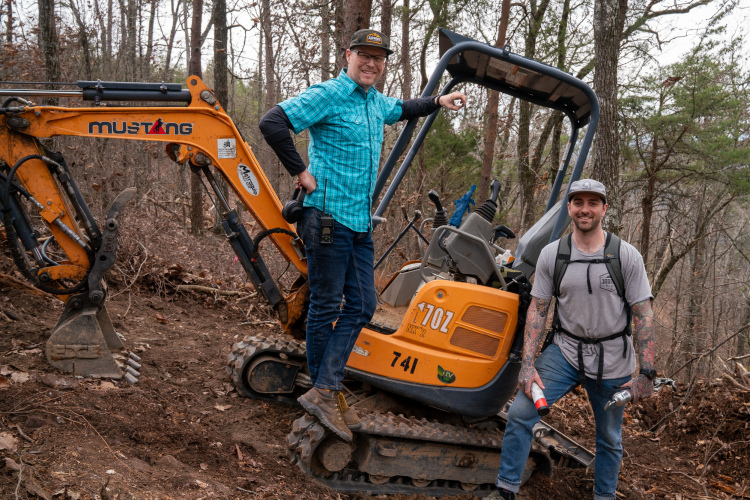
Hayden Kettwich of Dialed Dirt worked on the same bike park in Tulsa, Oklahoma (the Rock Yard), and has also used Trail Armor on several other projects for his clients. When I asked him if installation was time-consuming or if it was a pain, he answered, with a chuckle, “It is time-consuming. It is a pain. It is heavy. It isn’t cheap.”
Kettwich uses a custom rig for his trailer to roll the heavy carpet out on the trail. Once in place, the material is staked down using 12-inch galvanized stakes and washers, or with landscape pins if the soil beneath is soft enough.
Because Trail Armor is a backed and woven material, it’s susceptible to fraying, ripping, and tearing just like any other fabric.
“People wreck, and then the pedal will do a little tear,” Harris says. “So the cool thing is you could just cut a little square out and patch it. […] There’s glue that you can use, and you just patch it, or you just replace the whole thing. […] You just replace the strip.”
You’ve got to spend money to save money
With labor, the cost of the material, and hardware — which Kettwich estimates adds about $1,000 per thousand feet of trail — Trail Armor is an investment. Harris says he’s spent about $200,000 on the stuff at his park alone, and with an annual maintenance budget of roughly the same amount, he’s confident Trail Armor saves the park significantly more time and money than that in the long run. Though Trail Armor is still a relatively new product, Kettwich is hopeful that the material lasts 5-10 years with normal use. If he’s right, that could result in significant savings on maintenance.
Stouder of Progressive Trail Design notes that for government organizations and non-profits, raising funds to build a new trail is often easier than securing money for maintenance down the road. “If you can raise another 50 or 100 grand up front to get and install Trail Armor […] it’s probably worth it,” he says.
For clubs that rely on volunteer labor, it’s time, rather than money, that Trail Armor has the potential to save. Stuart Thiel, Vice President of the Roswell Area Mountain Bike Organization (RAMBO), says the group got approval to install Trail Armor in an area of a local trail system that required constant maintenance. After that went smoothly, RAMBO went on to install Trail Armor in other areas, including a pump track and jump skills area.
“There will be a need for repairs over time, but the product handles the traffic very well,” he says. “Going into our first winter will be the real test, especially at the pump tracks.”
“Faster rolling speed than the dirt itself”
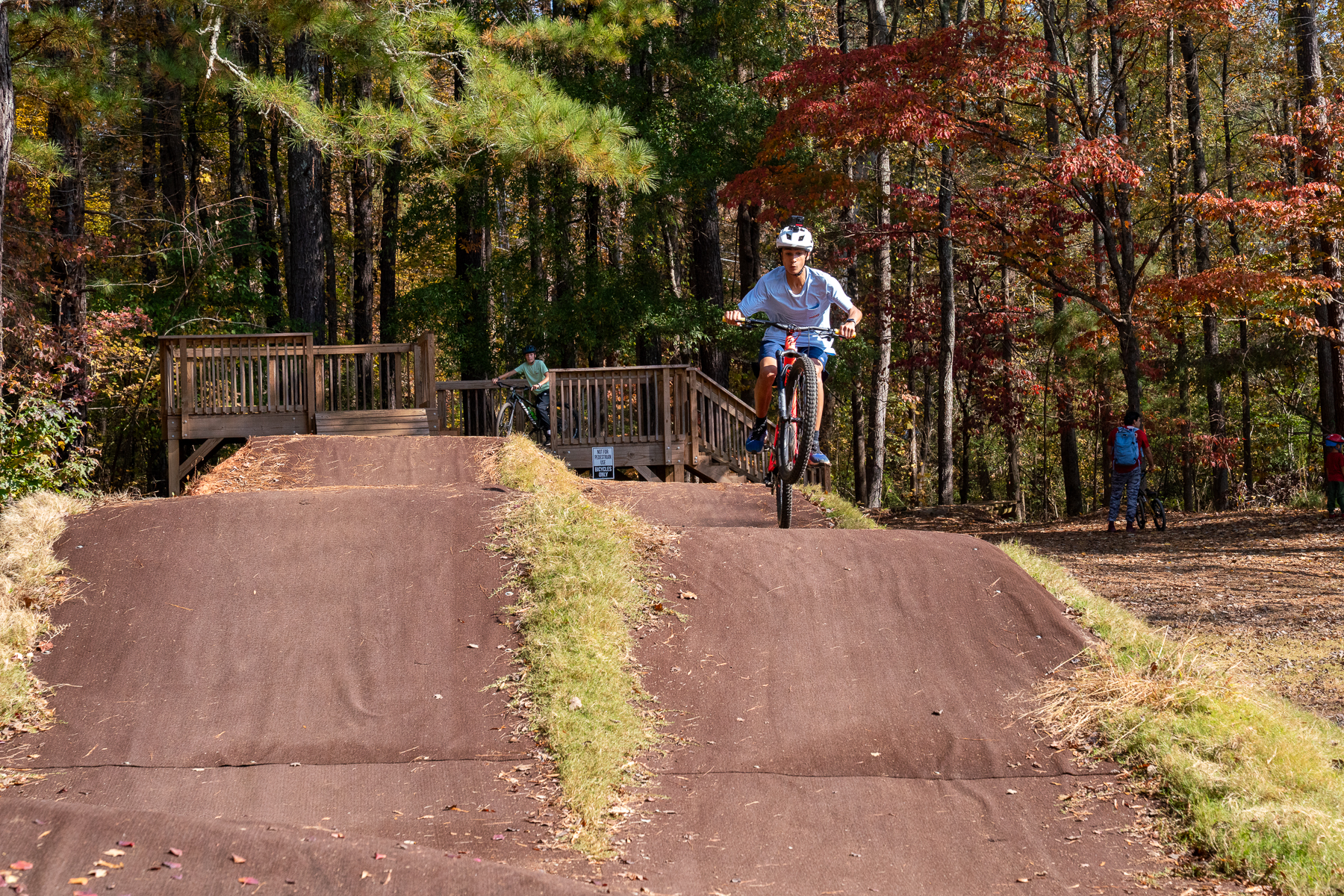
After seeing photos of Trail Armor and hearing from Harris, I had to try riding on it myself. Fortunately, one of my local trail systems, Blankets Creek, installed Trail Armor on a short jump line adjacent to the parking lot.
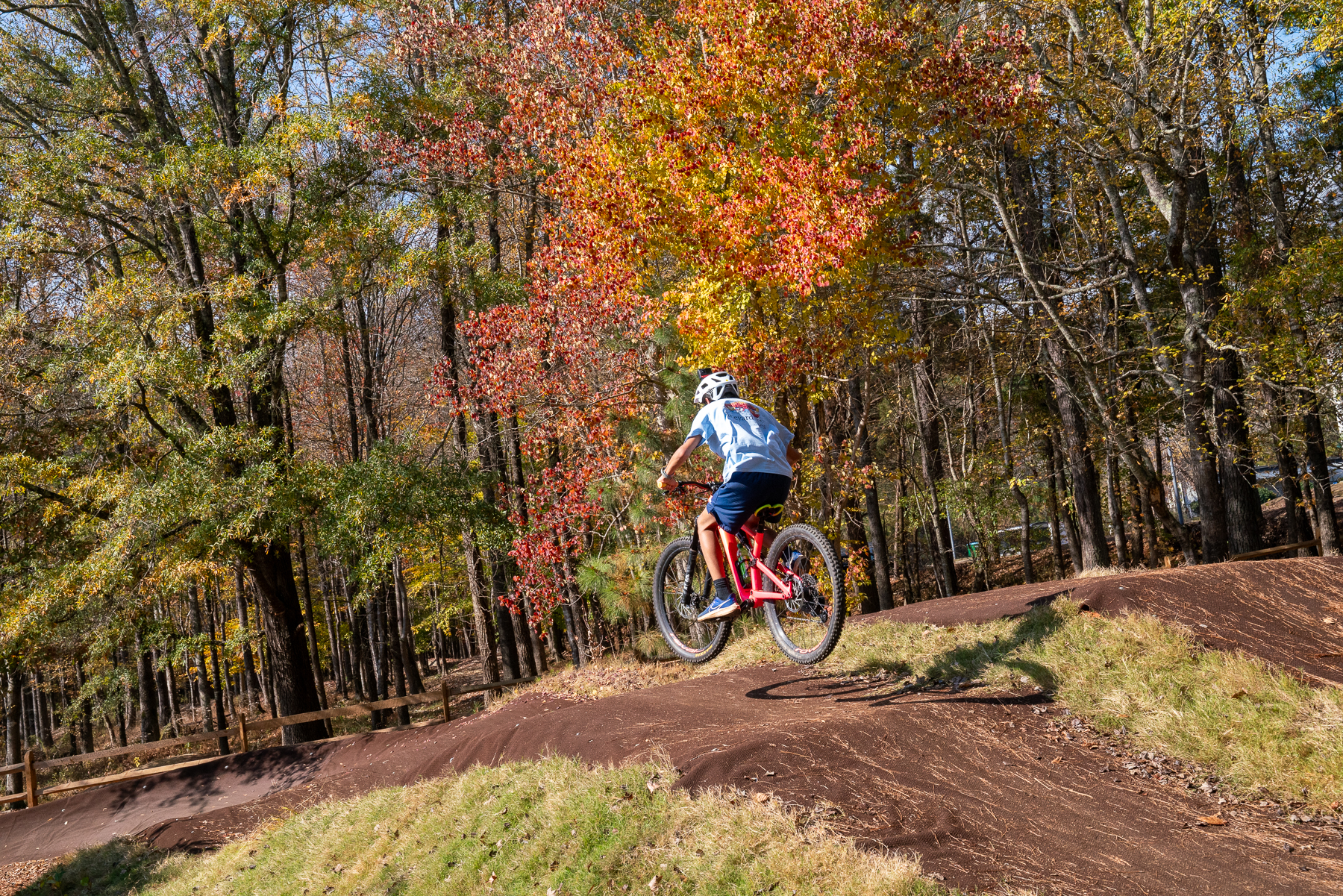
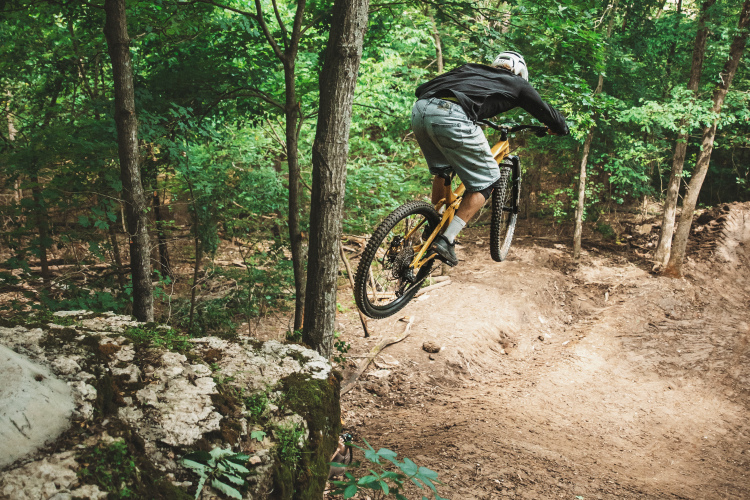
Rolling on Trail Armor mostly feels like riding on dirt, though it sounds much quieter. Traction and grip, especially in berms, are notably more consistent compared to raw dirt that moves and shifts beneath the tires. With a grippy, uniform surface, riders can be more confident leaning into turns.
Among those who have ridden Trail Armor trails, there’s some disagreement about whether the material is ultimately slower or faster than raw dirt. In the end, it seems to depend on what you’re comparing it to.
Kettwich used Trail Armor on a set of dirt jumps for a client in Ohio, and the riders there were initially skeptical. “They weren’t sure about the lips,” he says. However, “we ended up doing it on everything, and it had surprisingly faster rolling speed than the dirt itself, because the dirt was a little bit soft.”
“It rolls pretty similar to a fresh… maybe a little bit slower than a fresh flow trail,” Kettwich says. “But if you ride a clapped-out flow trail, there’s no doubt that [Trail Armor] is faster.” That’s because trail speeds change over time; they’re slow at the beginning when the dirt isn’t fully compacted, get faster as the dirt packs in, and then get slower again as braking bumps form and roots start to poke above the surface.
“It’s probably going to slow you down a little bit more than what dirt does, just because there’s got to be a higher friction coefficient,” Stouder says. “But you’re also able to grip really hard into the berm, so you don’t have to slow down in it. You can really just rail through the berms, right? So I think there might be a little bit of a trade-off.”
Harris says customers at his bike park were also skeptical about Trail Armor initially, worried that the material would change the ride quality of the trails and features they had come to love. But he says the feedback has generally been that the armored trails roll just as fast as before, and are grippy in all conditions.
Trail Armor isn’t dirt, but it’s better than asphalt
I’ll be honest: the first time I saw photos of Trail Armor being used at Jarrod’s Place, I thought it looked ugly. Maybe “ugly” is too harsh a word; at the very least, it appeared unnatural. The dark brown color will never be a perfect match for the surrounding dirt, though over time, as vegetation returns and leaves and dirt get scattered along the edge, Trail Armor starts to blend in.
For trail projects where maintenance and durability are a priority, some trail builders have used asphalt and chip seal construction. Compared to those materials, Trail Armor is less permanent and won’t hurt as much if you fall onto it.
“We’re dirt guys, right?” Stouder says. “We’re dirtbags. We’re not asphalt bags.”
Everyone I spoke with noted that each trail build is unique, and Trail Armor isn’t a one-size-fits-all solution. While there are examples of entire trails being lined with it, in most cases, Trail Armor is being used on key trail sections and features like jumps and berms.
More places to ride
Running a bike park is expensive, and with their own money on the line, Harris and his business partner had to come up with a solution to minimize their maintenance costs. The same goes for other bike park owners and public agencies, who are considering not just the up-front cost of their builds but also future maintenance costs. Harris is convinced he’s found the solution.
“Because of Trail Armor — and this is a bold statement, but just going to say it — you’re going to start seeing more places to ride.”


8 Comments
Dec 24, 2025
Dec 28, 2025
Dec 27, 2025
Dec 28, 2025
Dec 24, 2025
Dec 26, 2025
taut /tôt/
adjective
- Pulled or drawn tight; not slack. synonym: tight.
“It’s literally roll it out, stake it down, get it taught.”
Dec 24, 2025
Dec 28, 2025
I worked on a town rec committee that designed and installed a pump track in 2012. I last a season until someone broke their leg and the state ordered it leveled due to insurance fund pool .