

This was a short bikepacking trip. Just over 57 miles total, with an overnight stop in the middle. And we didn’t even camp. Doesn’t sound like much of an adventure, does it? But it was. So much of one that trying to fit it into one article feels…redundant.
Here’s the basics: Me and four friends got to ride our bikes across the Sonoran Desert outside of Tucson, AZ, to the basecamp of the Fred Lawrence Whipple Observatory one day in June. We were the first cyclists they’d ever let onto their land, the first cyclists ever allowed to climb the mountain road to the giant telescope at the top, and the first non-academic overnight visitors they’d ever had. It was one of the most awesome things I’ve ever done on a bike.
Here’s why.
Nick brought popsicles
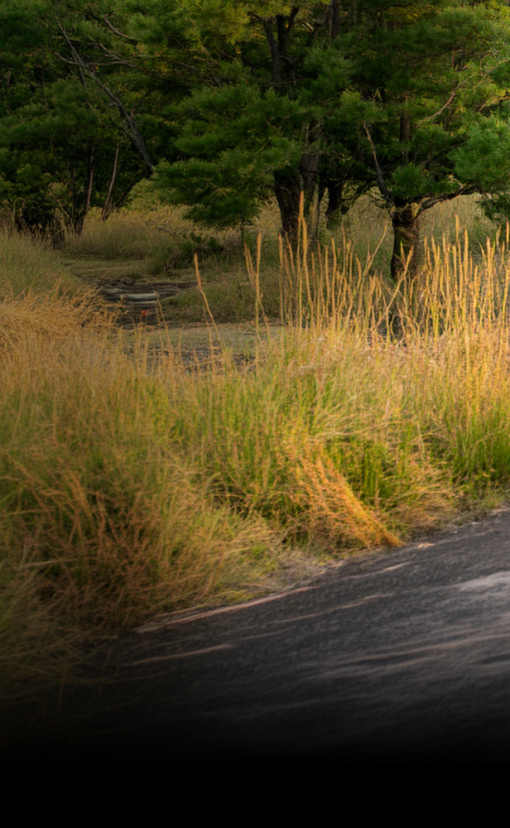
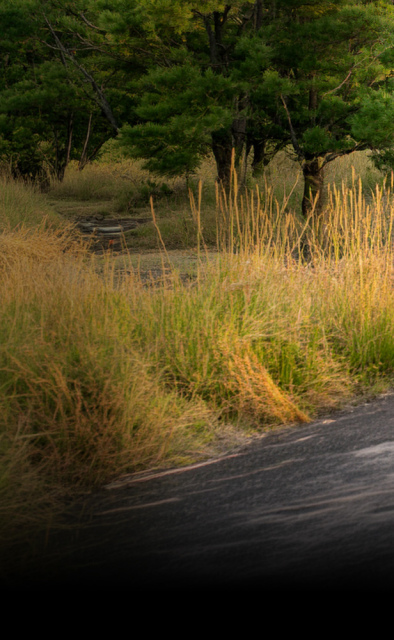
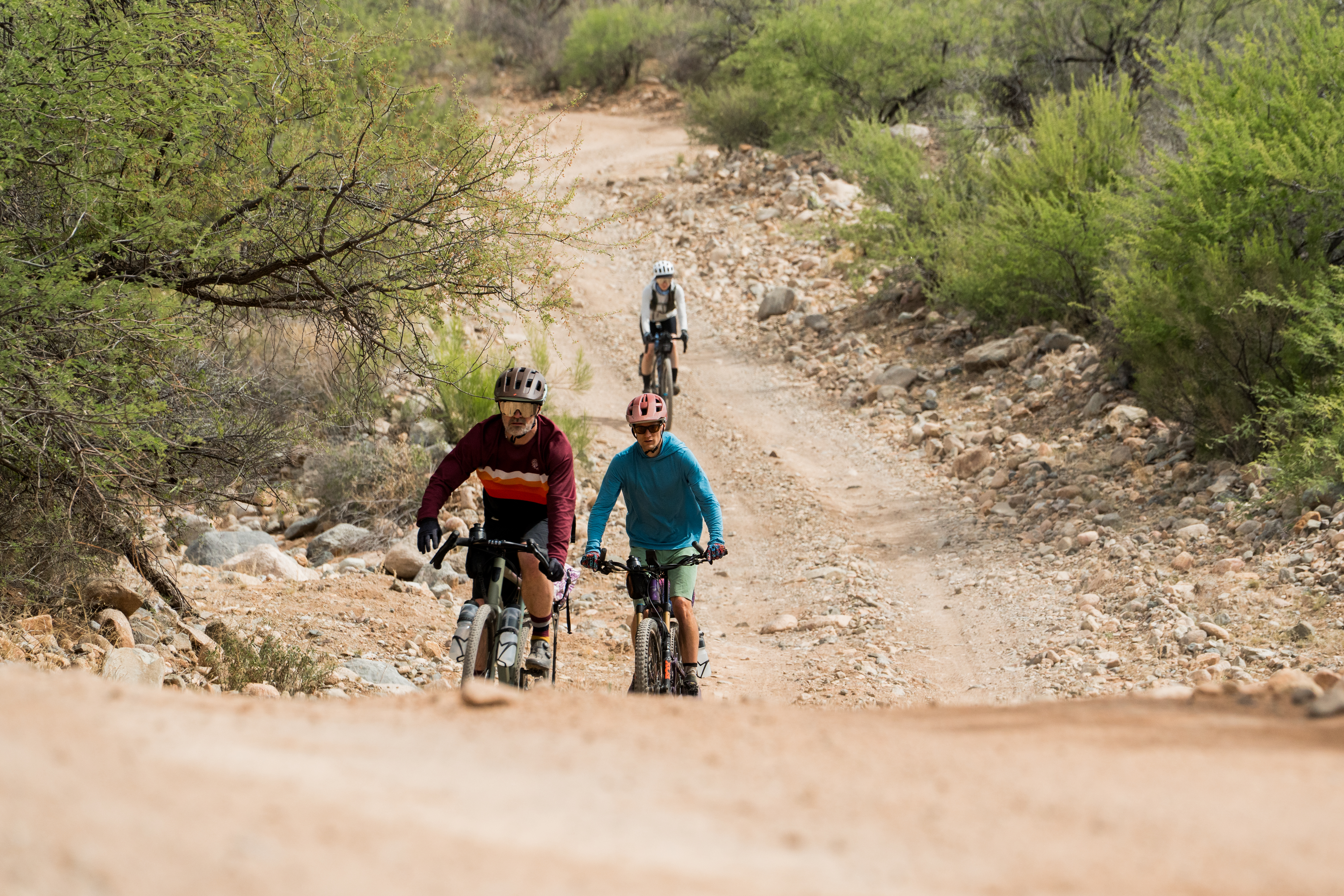
After several wrong turns, some pass-agg disputes over route choice and about a thousand patches of wheel-sucking sand, the Observatory building atop the distant Mt. Hopkins seems no closer. The sun is fading, and group morale along with it. Our fearless leader Nick Smolinske (MD of Rogue Panda) snatches victory from the jaws of defeat with a miraculous stash of ice-cold popsicles, somehow protected from the 100-degree heat in his handmade saddlebag. It’s not only an act of supreme kindness, but the shot in the arm we need to cover the last few miles of janky forest service roads without getting all butt-hurt and yelling at each other.
The staff at Whipple laid on a support car
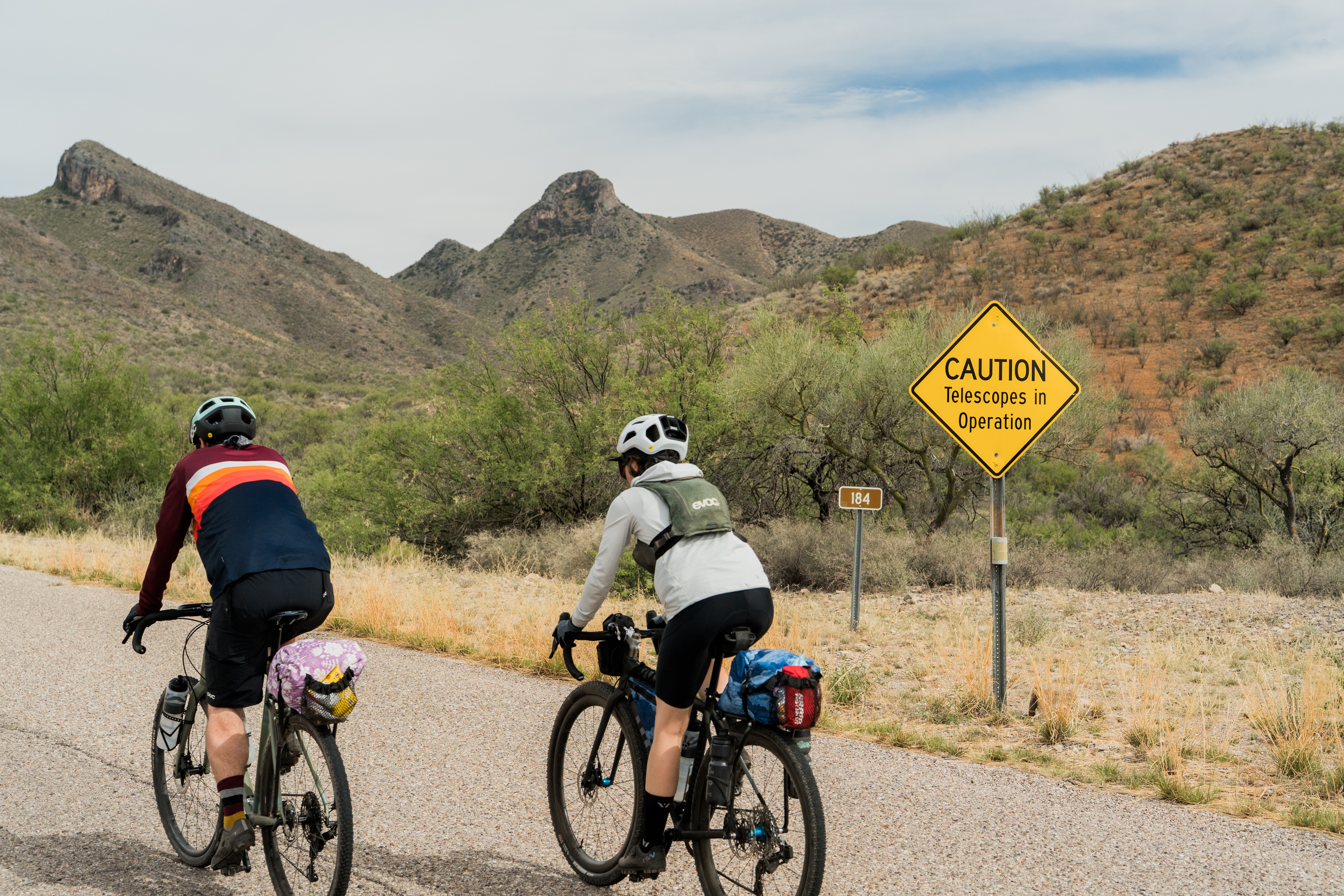
Out of understandable concern, the staff at the Fred Lawrence Whipple observatory are keen to take precautions with our safety. The climb from their admin building at the base of the mountain to the telescope up top is 4500ft, over 20km, on a rough dirt road. So Facilities Manager Tom, who presumably has many other more pressing things to do, patiently follows us up the mountain at 5mph in his Ford Explorer, packed with cold water, snacks, and first aid equipment. We are grateful.
You can see Mexico from up there
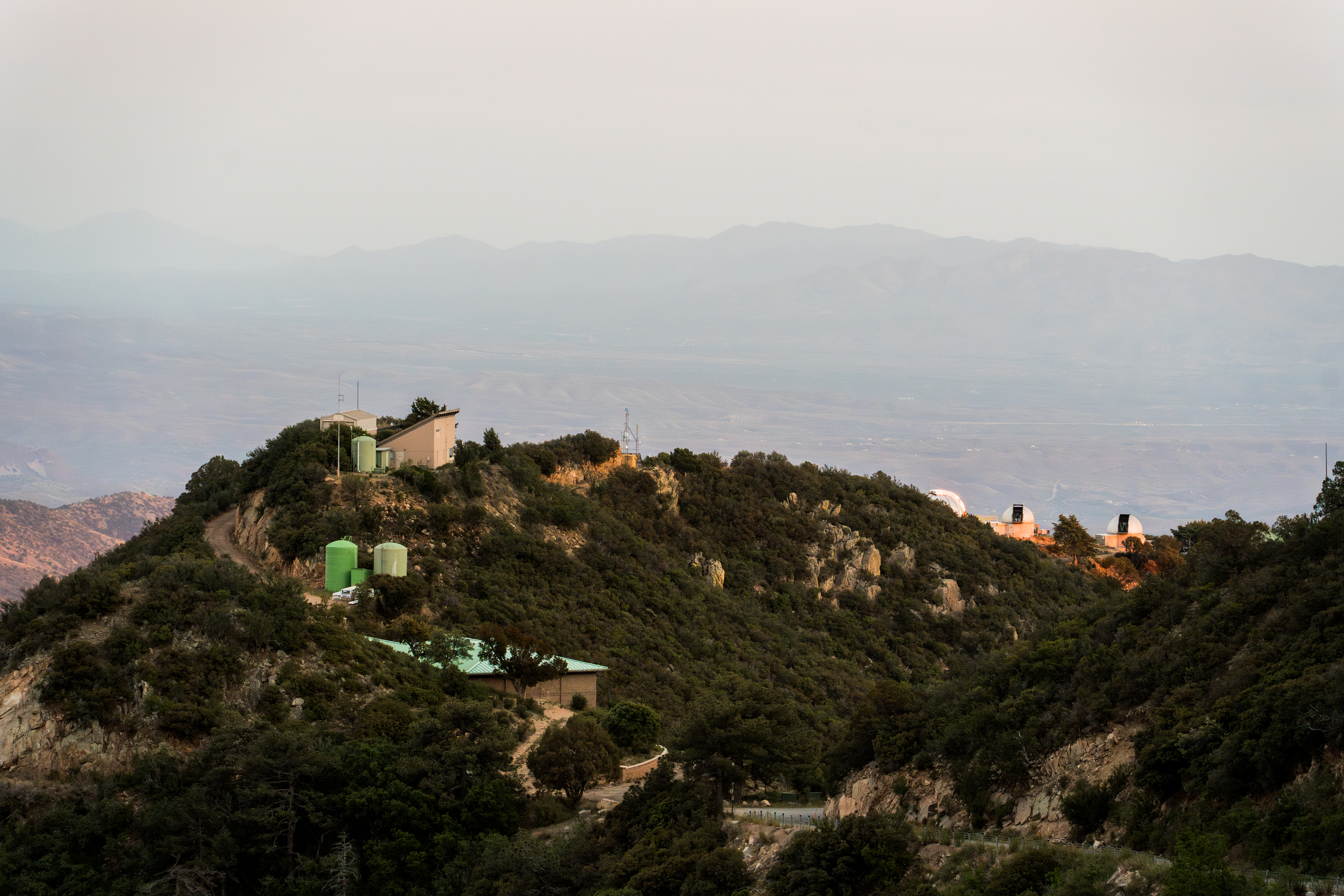
At the penultimate turn in the road, just below the peak of the climb, the setting sun casts streaks of pink and purple across the sky, the water pool from the nearby mine gleams like a blob of mercury down below, and the lights of Nogales begin twinkling in the far distance. We’re nearly 8000ft up, facing due south, with the Sonoran Desert floor spread out beneath us like a prickly green blanket. As it turns out, the mammoth degree of fuss necessary to strap five liters of water to all our bikes and fiddle with straps and buckles like pedantic BDMS practitioners worked out just fine, and we couldn’t have timed this better.
Astronomers are lovely people
After we’ve showered and changed (there’s a dormitory up here, and we all get a room with a bed and clean towels and Wifi and everything), eaten some Asian food (the observatory sent us a menu a few days prior, ordered in advance and heated it up for us in the communal kitchen), and turned our phones off, we’re taken to meet Professor Daniel Eisenstein, an expert in cosmology and extragalactic astronomy from Harvard, along with some of his grad students. They’ve set up a telescope for us, and one by one, we all get to see the surface of the moon closely enough to make out the shadow cast by the edge of a crater. These astronomers politely pretend not to notice this reporter crying a little bit, because it’s so very beautiful.
Sci-fi laser weapons aren’t a thing
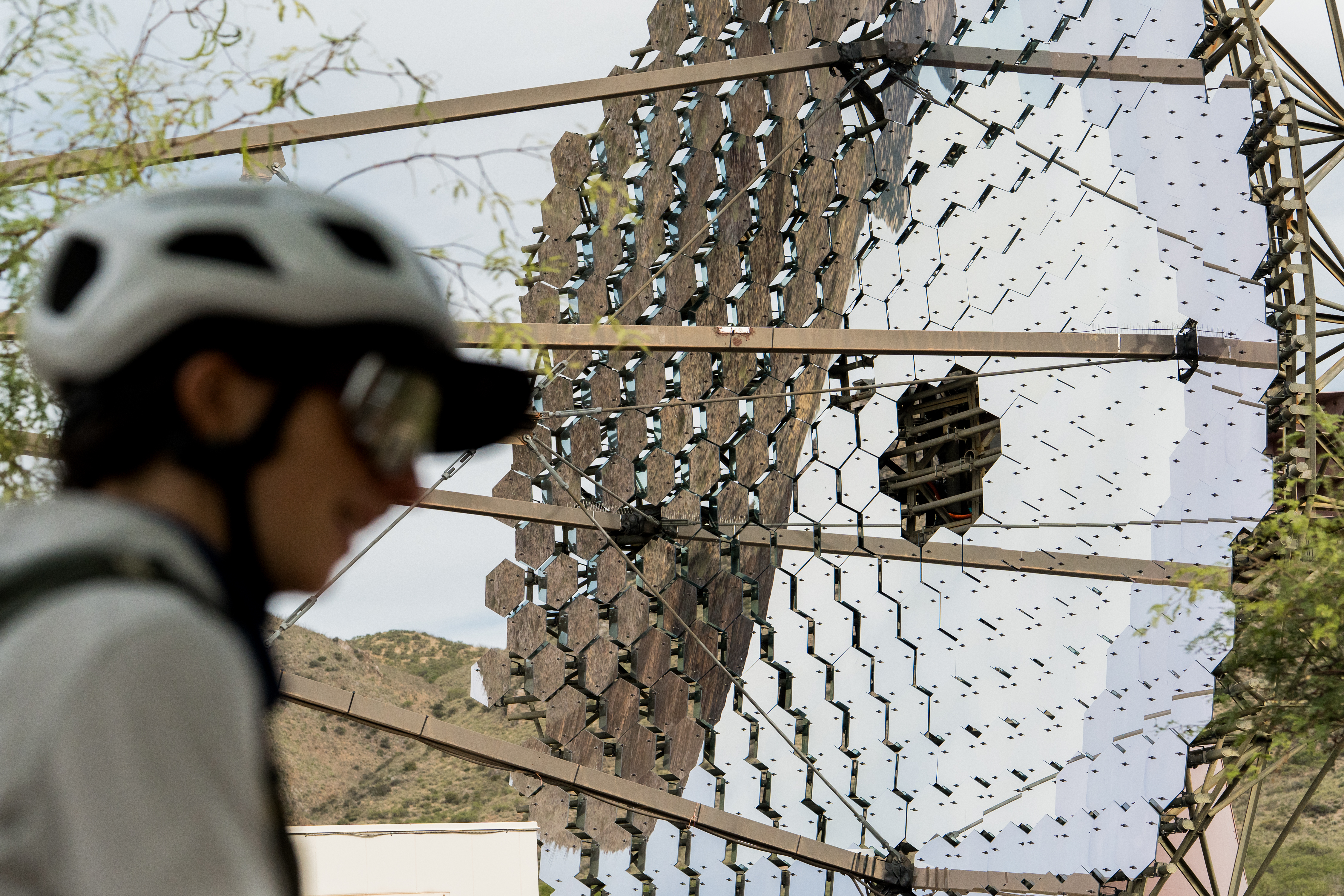
The biggest telescope at the Whipple is the MMT telescope on the mountain’s peak, which has a single lens made from glass that weighs over 22,000lb and took over a week to make, in a special furnace. When we’re invited to stand in the bay doors of the giant rotating building that houses it, those doors crank open like something out of a Connery-era Bond movie, and the huge lens swings into position. We all really want it to shoot out a laser beam that destroys a rogue satellite, but it doesn’t. This is a serious place, and we all need to grow up a little. We do, however, get a crystal-clear view of the Scorpio star system, hanging right in front of us, as if we could reach out and touch it.
And they do make the entire building we’re standing in rotate 360 degrees for us, just for fun. Which is cool.
Space is, like, really big
We ask Mike, the truly exceptional human being operating two smaller telescopes just down the hill, about his greatest moment of discovery in the 20 years he’s been working. (Side note – 20 years of night shifts is a long time. He’s seen so many films. Maybe all the films.)
He casually mentions that in 2003, one telescope detected light from a new star that was burning so brightly that it backlit three galaxies that were previously so distant that astronomers knew they were there, but had never seen them before.
It’s nearly 2am at this point, so we nod, as if to suggest we understand the magnitude of such a thing, and accept some of Mike’s fruit snacks.
Photographing the Milky Way takes exceptional timing
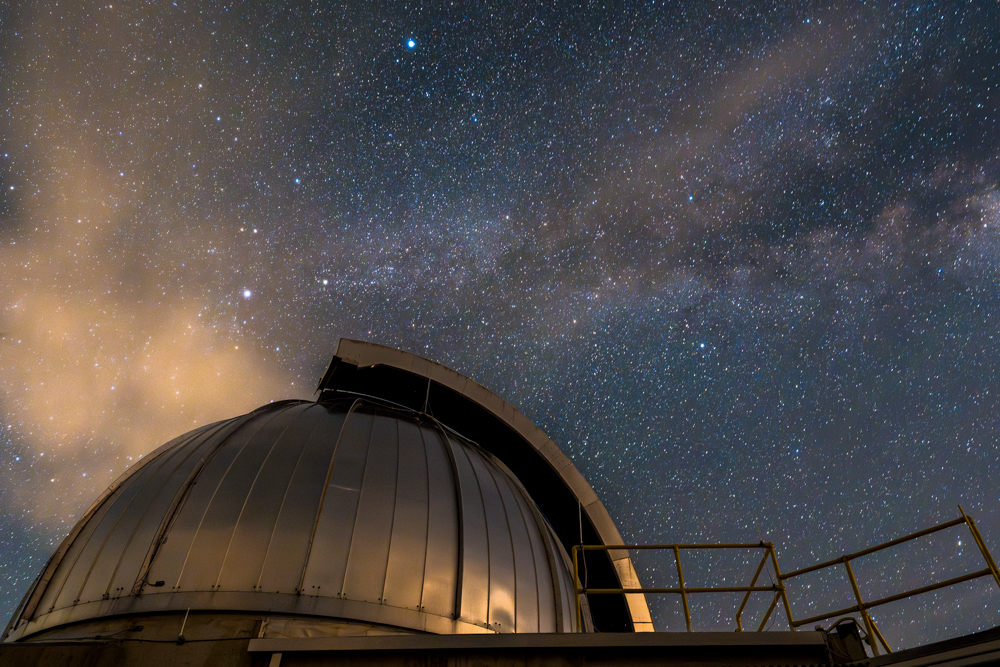
The stunning Milky Way image you can see in this article, which photographer Eric Arce stayed up very late indeed to get, is the result of a single exposure that lasted 25 seconds. That’s the maximum amount of time you can allow light to pour into the lens before the image starts to distort, due to the rotation of the earth. He had every right to be firmly tucked up in bed, after an 8am start, hours of riding through the desert with camera equipment, and an endless stream of Dad jokes from me. But he stayed up. Thanks, Eric.
You’re not allowed to ride up here…yet
The Fred Lawrence Whipple Observatory is on federal land, and owned by The Smithsonian and Harvard University. It also houses some very serious scientific equipment that’s of value to the entire world. That hasn’t stopped the odd Strava thrillseeker from sneaking up here and riding it anyway, but the hardworking staff here would like you all to know they’d really rather you didn’t do that, not least because there’s mountain lions roaming around.
But, as Nick points out over a goodbye coffee the next morning, this is an absolutely perfect venue for a hill-climb race, even if it wasn’t home to some extremely cool space technology, which it is. Despite our ragged appearance, lack of sleep and baffling enthusiasm for getting back on our bikes and riding into the midday sun again, the staff at Whipple don’t hate this idea. So you never know – there’s a chance you could get to scale this epic mountain and get a little closer to space yourself one day.
Going home can be fun
We don’t want to ride back from the Whipple to our truck the way we came. It’s too hot, and we want lunch and stuff. So we opt for the highway, and right out of the Observatory gate is a two-lane blacktop that descends over 1200 ft over eight miles. So we get to cruise, without pedaling, hands off the bars, with no pedaling for over half an hour. We don’t spot a single human, car, motorcycle or building the whole time.
Other stargazing rides are available
The Fred Lawrence Whipple Observatory might be on private land, but the Sonoran Desert surrounding Tucson is dotted with multiple observatories. Some, like Kitt’s Peak, allow visitors to stay or camp on their land, while others have all kinds of campgrounds and dark-sky viewing spots nearby. Which is why local bikepackers have been combining long, epic days of desert gravel riding with overnight stops to gaze at the stars for several years now. There are two main Sky Islands Loops (East and West), both taking multiple days to complete, but the self-motivated bikepacker could stay in Tucson, ask around, and put together all kinds of astronomical rides, right from the city itself. So get yourself down there, saddle up, and reach for the stars.
Thanks to Ford trucks, Visit Tucson, and the staff at Fred Lawrence Whipple Observatory for their help with this article.
The news stinks. Why not follow Singletracks on Google News to bring more joy to your day?


2 Comments
Jul 29, 2026
Jul 17, 2026