

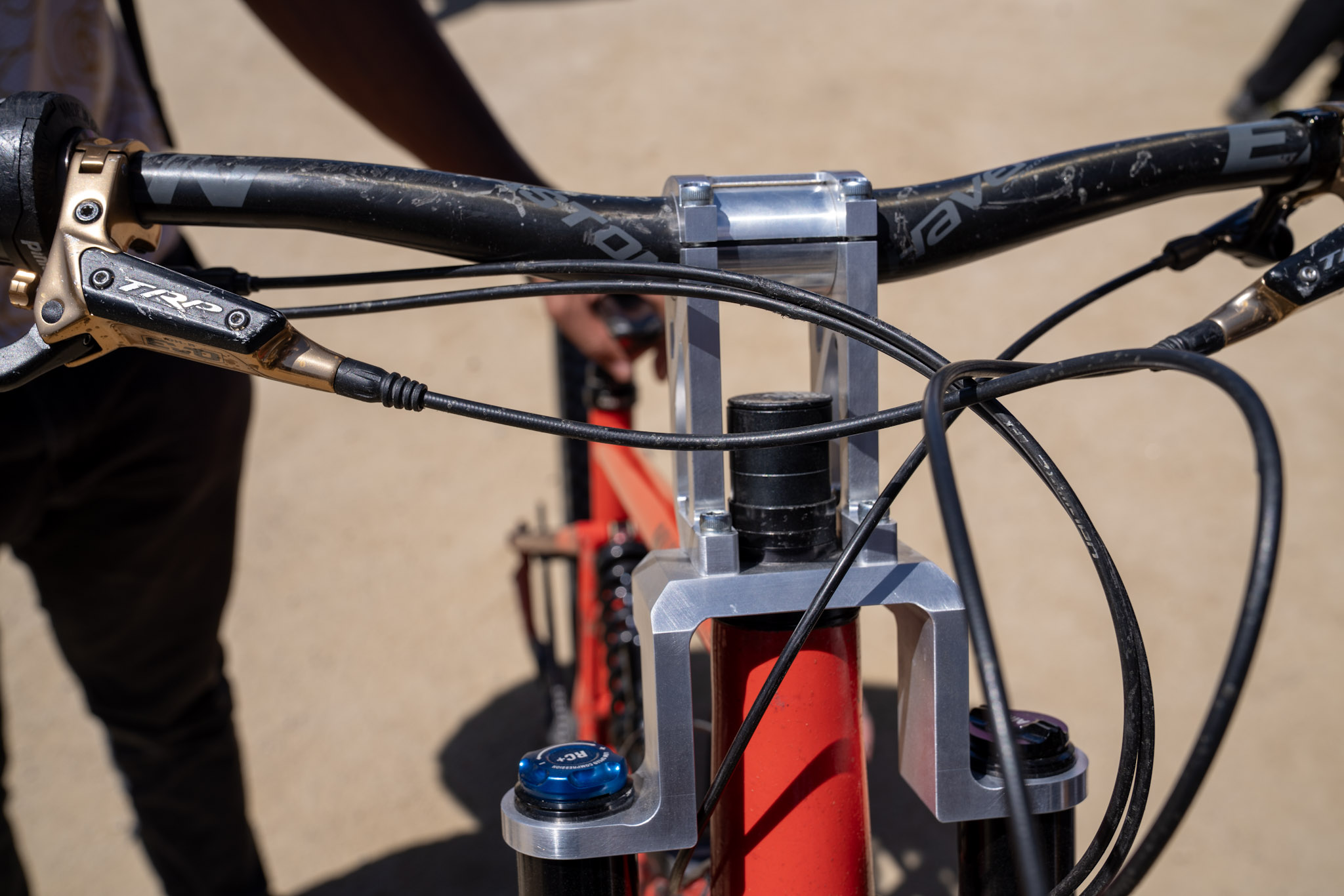
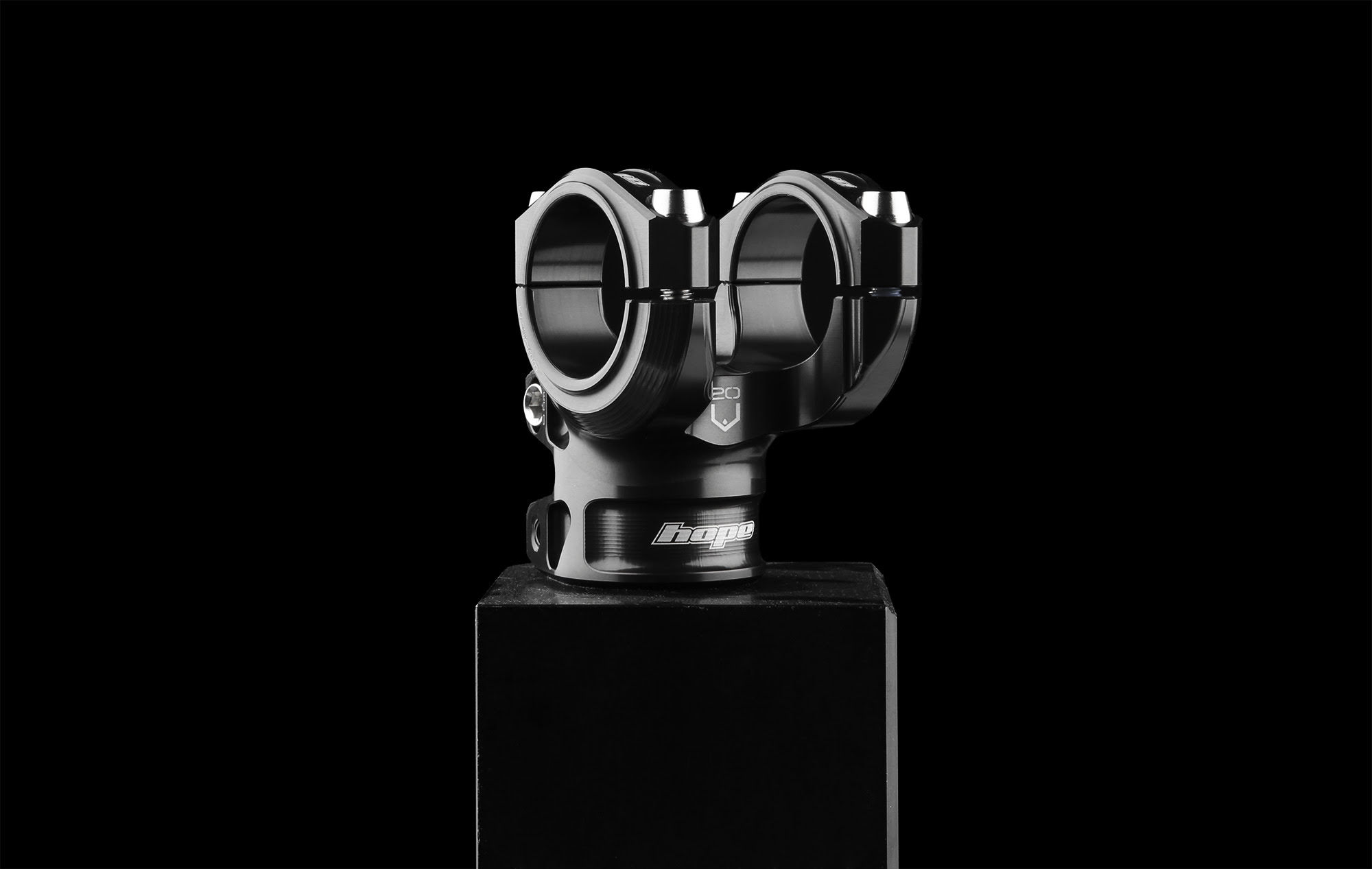
Once an afterthought, mountain bike stems are having a moment right now. Late last week Hope announced an all-new “super short 20mm Gravity Stem” designed for downhill and enduro. This follows a crop of negative-rise stems teased earlier this year, which raises the question: Why are mountain bike stems getting so weird?
Mountain bike reach numbers are pulling back
In a release for the new Hope 20mm Gravity Stem ($159 from Hope dealers), the brand explains they designed the short stem to improve riders’ position on the bike. “This gives riders a more upright riding position, distributing weight more evenly towards the center of the bike.”
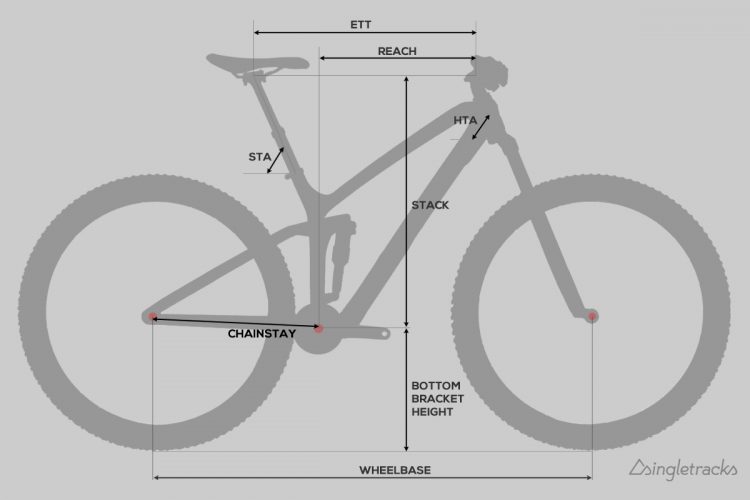
This essentially provides the same effect as reducing a bike’s reach. With a shorter reach, the rider is less horizontally stretched, allowing the rider to sit farther up and back. Already this year, we’ve seen a few new releases — like the Canyon Lux Trail and Norco Fluid — reduce their reach numbers following many years of steady growth. A 2024 Singletracks survey found that 46% of readers thought mountain bike reaches were getting too long.
In a 2023 interview with Retul bike fitter Jason Williams, Williams suggested that riders can effectively trade a shorter stem for a longer reach, and vice versa, to achieve the right fit. And clearly buying a new stem is less expensive than purchasing a whole new frame. With some modern, long-reach bikes already built up with 35mm stems, going even shorter poses a design challenge, resulting in some unusual-looking retrofit stems.
To be fair, Hope argues their short stem isn’t just about reducing effective reach; they say there are performance advantages as well.
“The result is a more stable, neutral riding position, with less weight through your arms to help reduce arm pump and fatigue. The super-short length, combined with the alignment of your grips with the steering axis, also helps keep your lines tight on the trail.”
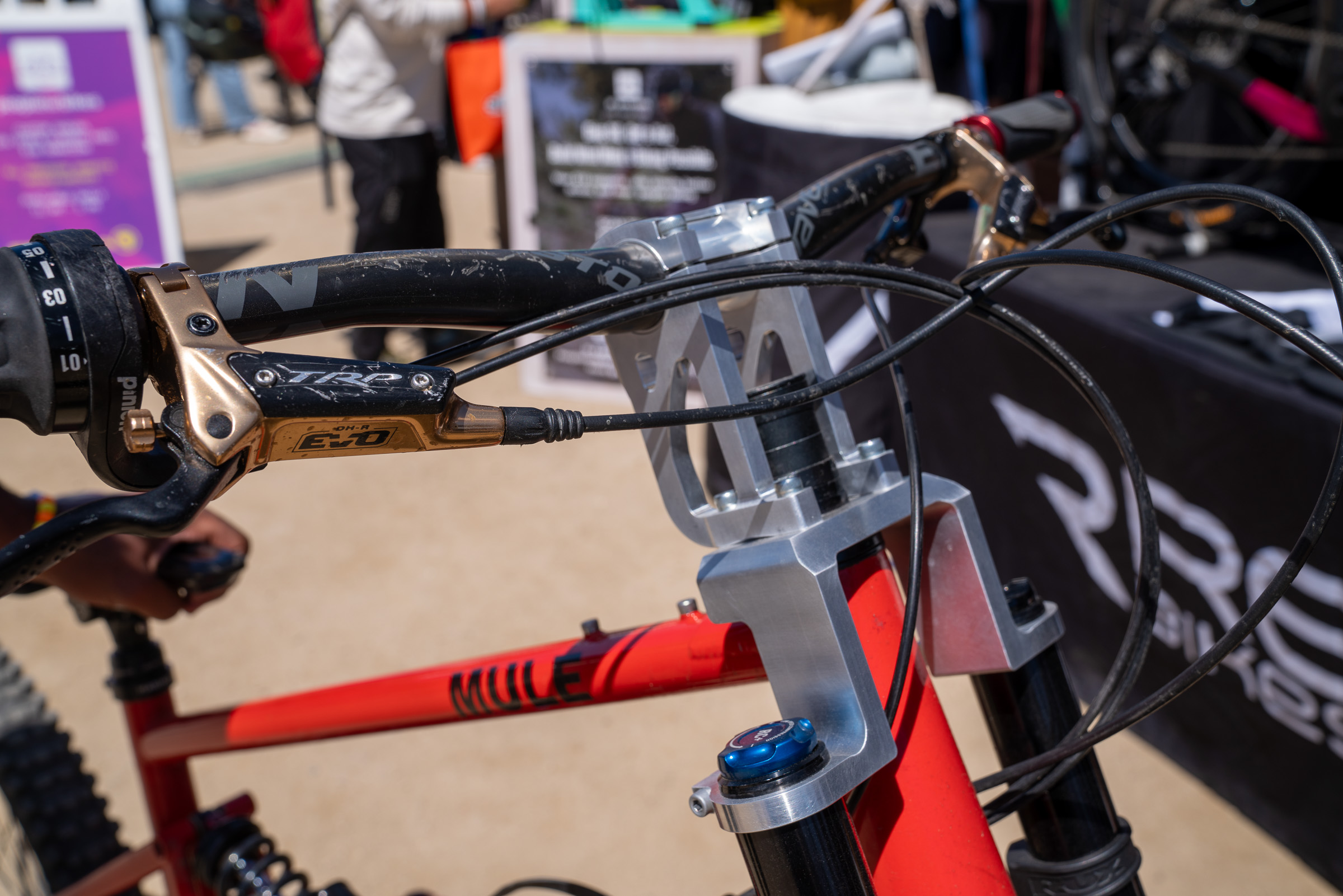
Notably, pro mountain biker Reece Wilson has been running a Raised Reverse stem from Be More Bikes (BMB) this season and took second place at the World Cup DH final in Andorra last month with it. BMB Raised Reverse stems give riders the option of a short 25mm effective stem length or a really, really short negative 15mm effective length like the one shown above, depending on orientation.
At the same time, many riders are finding benefits to a raised handlebar position too
The unusual Hope and BMB stem designs also raise the handlebar mounting position by 35mm and up to 100mm, respectively. This is partly out of necessity to avoid the steerer tube, though for many riders, the rise is welcome on its own.
Downhill riders can benefit from a higher hand position, and typically achieve this with riser bars. However, many everyday riders, and tall riders in particular, are finding that a taller handlebar position — achieved via riser bars or a riser stem — provides a more stable and comfortable fit.
Just as a shorter stem can make up for a too-long reach, taller stems, such as the Hope and BMB offerings, can compensate for a frame stack height that is too low.
Bigger wheels mean taller stack heights — and strange-looking stems
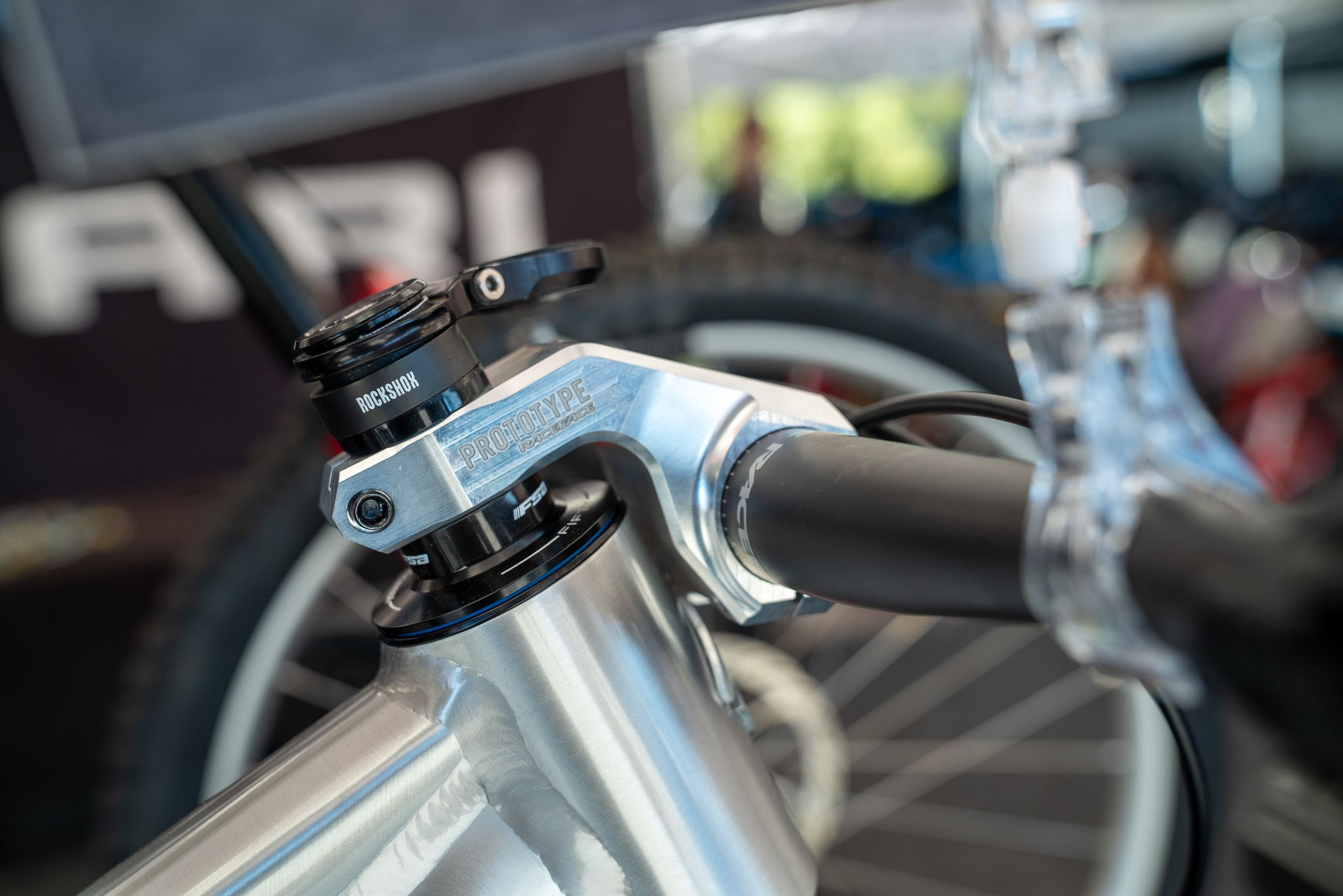
Not everyone needs a taller stack height, and that’s especially true for 32er bikes. With a tall 32-inch wheel up front, many riders find their handlebars are too high for comfort. The solution? A negative-rise stem.
At Sea Otter this year, we saw plenty of 32er bikes fitted with negative-rise stems. To be clear, this isn’t a new concept — cross-country racers have been using them for years. Still, the stems have an unusual look that stands out from more traditional stem designs. Because today’s riders prefer shorter stems, designs like the prototype shown above need to utilize abrupt angles to make everything work.
It’s all about bike fit, not looks
These unusual stem designs solve real fit problems, though that may not bode well for their overall adoption. Williams, the bike fitter, told me that some tall riders could likely benefit from running a longer stem — 70mm or even 90mm long — but for most of them, the idea is a non-starter.
“As a fitter, I might say, ‘Boy, you’d really be better if you had a 70 mil stem on there.’ But boy, a 70 mil stem on a current trail bike would look a little odd,” he said. Instead, he pushes the client toward a bike with a longer reach so they can stick with a more standard-length stem.
According to our own survey in 2020, a 50mm stem length was by far the most popular among readers, followed by 40mm. At that time, only 2% said their stem was 20mm or shorter.
But times change, and perhaps the timing is finally right for Hope to market their super short stem.
What do you think: Would you run a 20mm stem on your trail bike to “fix” a reach that’s too long?
Keep up with the latest mountain bike news by adding Singletracks as a preferred source on Google.




8 Comments
Aug 4, 2026
Aug 5, 2026
1. My Gen 3 Turbo Levo size S6 (XL+) came out of the crate with the steerer tube cut. The stem could only be 20-30mm above the headset. Much of my 6’2” is in my back. And I’m 68 years with long arms. S6 reach — 532 mm — is great for me.
2. Surly Sunrise bars gave me a good fit (83mm rise, 14.7° backsweep).
3. Stems with 5mm threads on the steerer tube pinch bolts cannot grip the fork’s steerer tube as well as a stem with 6mm pinch bolts. (Thread diameter, not wrench size.). I’m asking for a friend here; his stem slipped when the wheel deflected on a wedge-shaped rock, the fork and wheel turned 45° in milliseconds, OTB, injury.
4. Enter the Race Face Atlas stem: 6mm thread φ on the steerer tube pinch bolts. These can be torqued substantially more than 5mm φ bolts. An Atlas stem is one strong item.
5. “My friend’s” Atlas stem is 65mm long. That compensates for the 15° backsweep of the Sunrise bar.
6. Dorky steel bar, too-long (unfashionable) H-D stem…. Nirvana on the trail.
7. Great website!
8. There’s more to a stem than angle and length.
Aug 5, 2026
Aug 5, 2026
Aug 5, 2026
Some additional considerations not covered directly in the article: creating a more upright fit will move the system weight of the rider and bike further rearward toward the rear axle. Raising and shortening the stem length compound the issue together. That could lead to more front wheel washouts. Longer chainstays are picking up traction as a means of alleviating that issue. But longer chainstays can feel unwieldy on steep and technical terrain. MTB fit and geo is a complex ecosystem where a small change in one place can have ramifications throughout the system. Take time to experiment and find solutions that work for your body and riding style.
Aug 5, 2026
Aug 6, 2026
Aug 11, 2026