

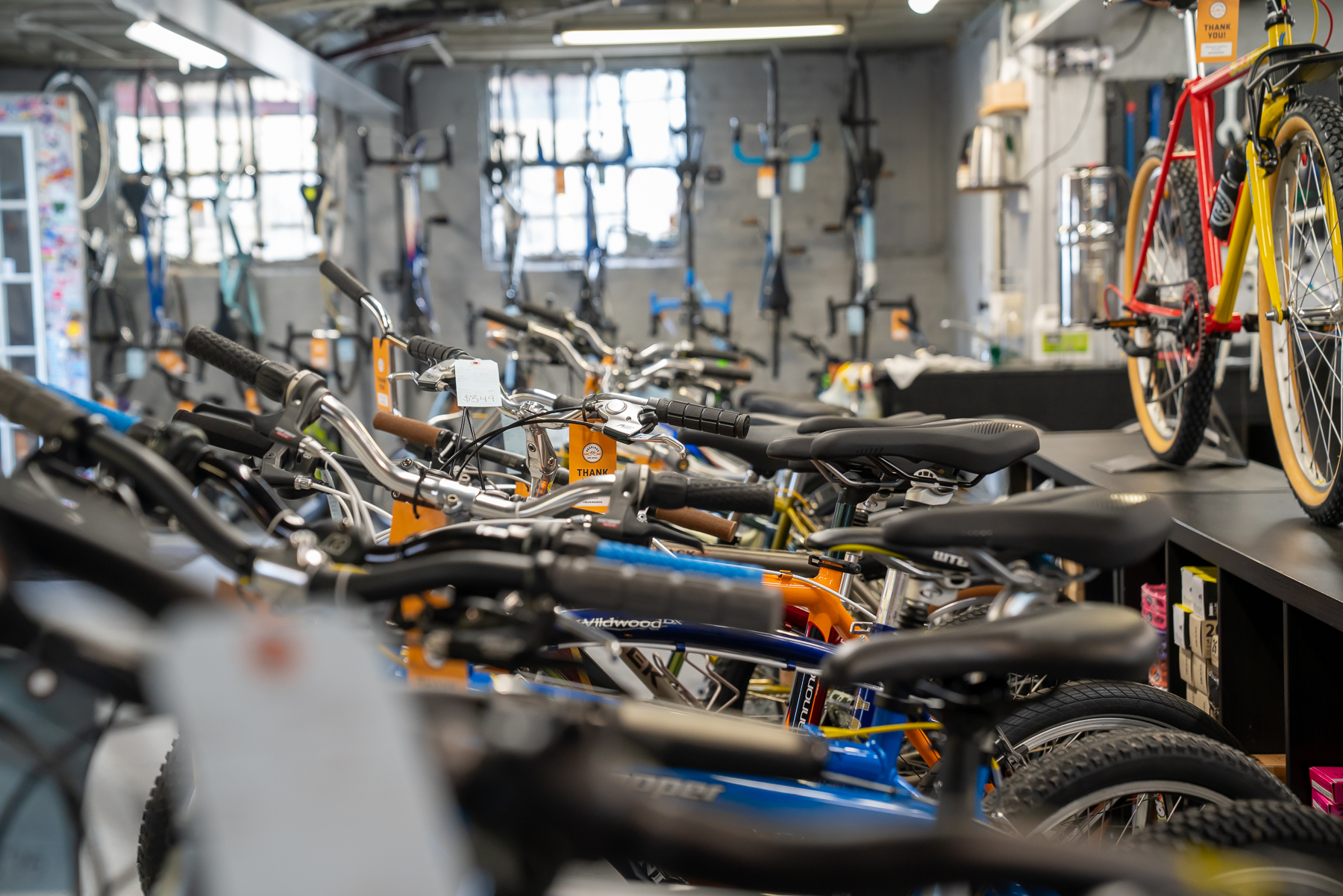
All of us can agree: mountain bikes are expensive. Hell, even my non-biking friends know this. Whenever a friend or neighbor asks me how much they should expect to spend on an entry-level mountain bike, I lie and say about a thousand dollars, knowing that the truth (twenty-five hundred) will truly devastate them. Most are shocked to hear $1,000 and decide to spend their time and money elsewhere.
Even those of us who ride regularly and have invested in the sport shake our heads at today’s mountain bike prices. With top-shelf cross-country race bikes like the Specialized Epic S-Works retailing for $15,000, it’s easy to conclude that prices are simply out of control.
After seeing mountain bike prices bounce up and down since the Covid years, I was curious: Are today’s mountain bike prices higher or lower than they were in the past? In 2017, I asked a similar question and found that, adjusted for inflation, bike prices in 2017 hadn’t increased much since 2009. If anything, prices had come down a bit. But surely, I thought, prices today are higher than they were in 2017. Just look at the chart below. The price for every bike I checked, with the exception of the Giant Trance, is higher today than it was nine years ago, in some cases by a lot.
In terms of inflation-adjusted dollars, MTB prices are down to flat
For the 2017 analysis, I gathered historical pricing data for popular mountain bike models from three of the biggest brands — Giant, Trek, and Specialized — going back to 2009. I chose these models because the build designations (though admittedly not the component spec) remained consistent from 2009 on.
- Giant Trance Advanced 0
- Giant Anthem Advanced 2
- Trek Fuel EX 9.8
- Specialized Enduro Pro
- Specialized Epic S-Works
- Specialized Stumpjumper S-Works
- Specialized Stumpjumper Pro
- Specialized Stumpjumper Expert
- Specialized Stumpjumper Comp Carbon
- Specialized Stumpjumper Comp Aluminum
On average, these bikes were priced at $6,137.40 in 2017. Today, those same bikes cost $7,759.99, more than $1,600 than they did nine years ago. However, adjusted for US inflation (roughly 32% since 2017), the 2017 average price was about $8,075.53 in today’s dollars, which is more than $300 higher that today’s average price. Put another way, today’s bike prices are actually lower than they were in 2017 by a few hundred bucks.
Of the ten bikes here, seven cost less today than they did in 2017, adjusted for inflation; three cost more. Today’s Stumpjumper Comp aluminum bike costs about $40 more than it did in 2017, while the Giant Anthem Advanced 2 saw its price go up about 3%. The biggest gainer — the Specialized Epic S-Works — saw its price grow by $900 in 2017 dollars, almost 9%.
Among the majority of these that saw their inflation-adjusted prices decline, the Giant Trance Advanced 0 saw the biggest decrease. Though the nominal price barely changed — the MSRP was $8,000 in 2017 and $8,050 in 2026 — today’s price is roughly equivalent to “just” $6,080 in 2017, nearly $2,000 less than the bike was actually priced then!
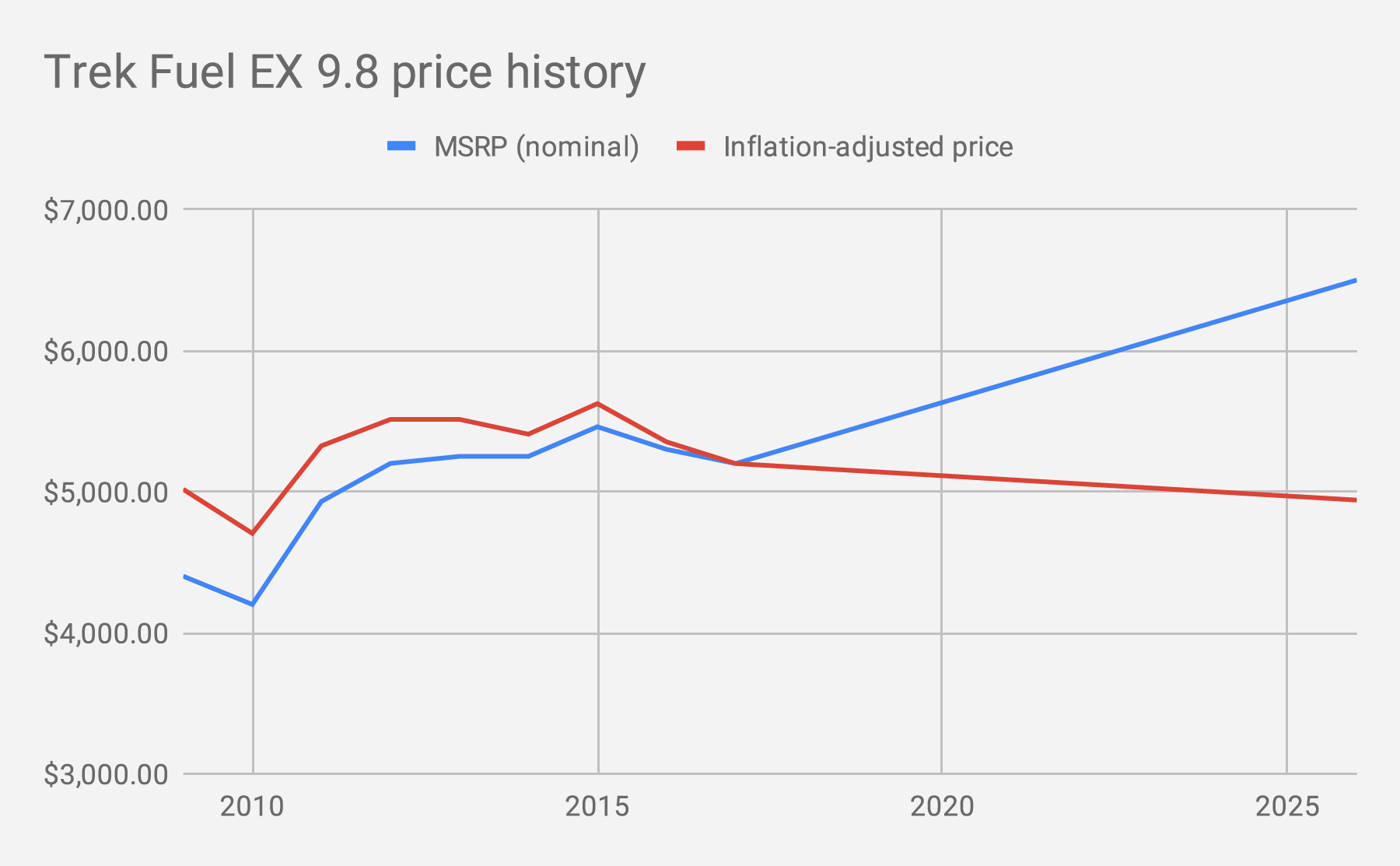
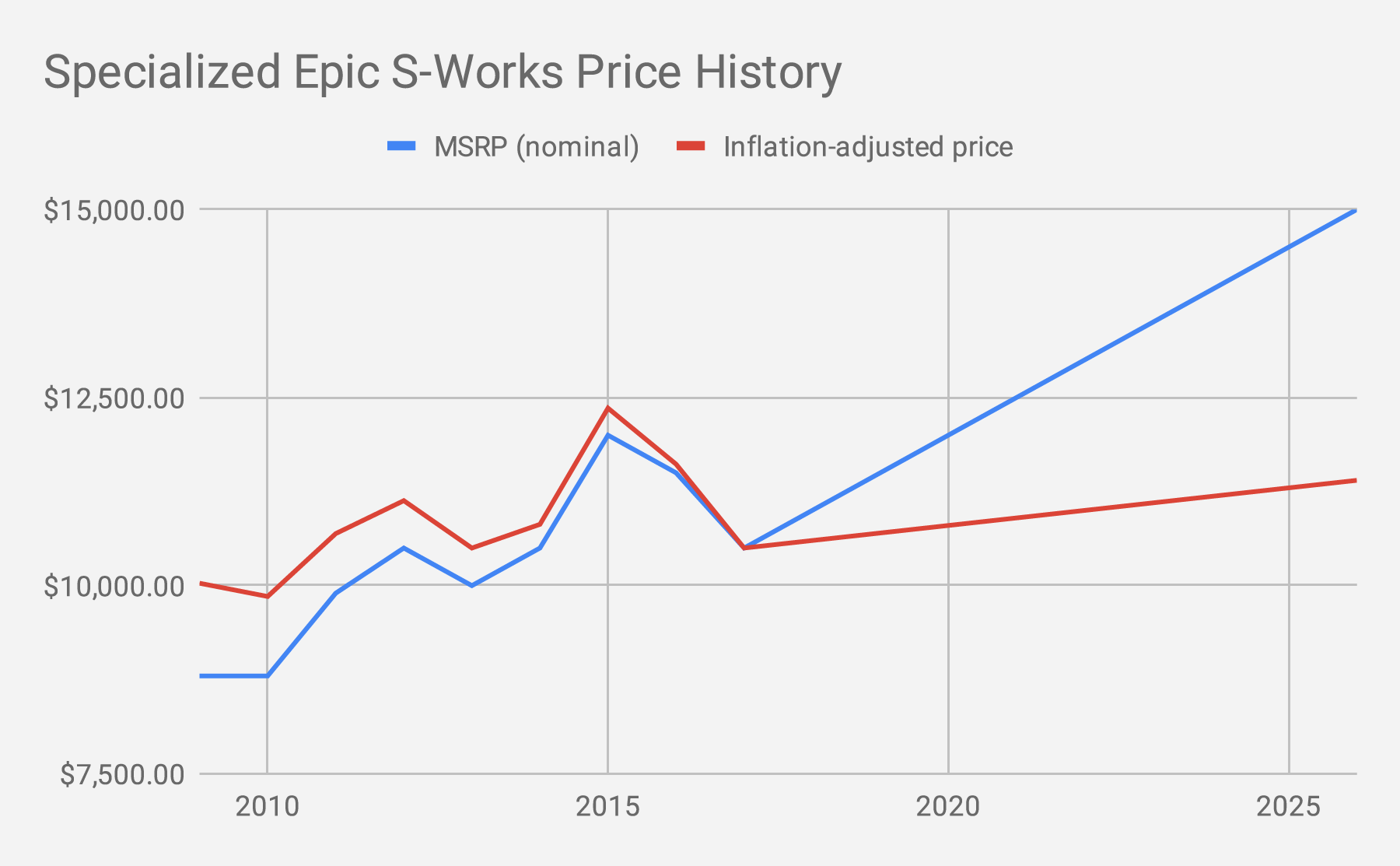
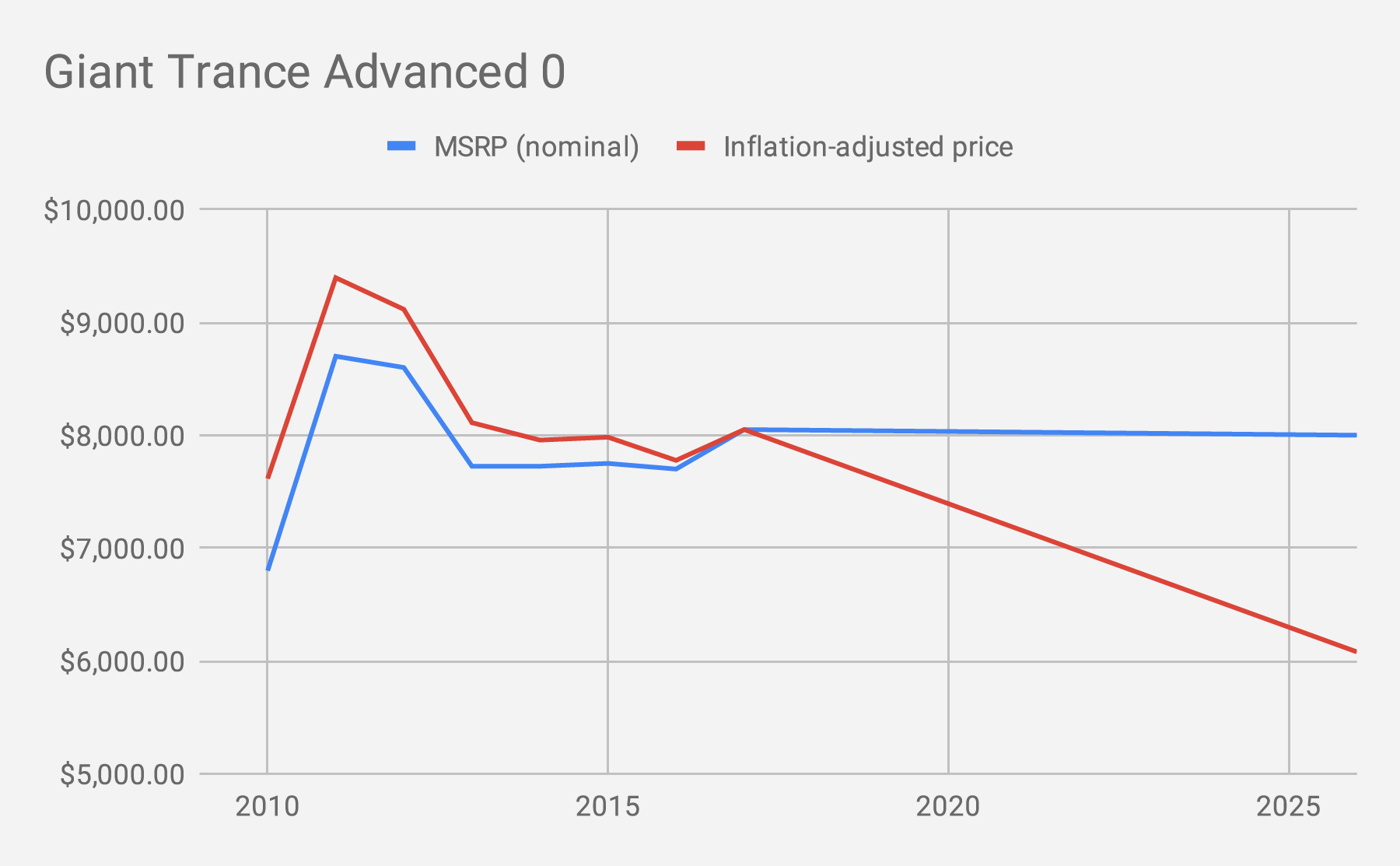
Note that the 2026 prices used in this analysis are suggested retail prices. Many of these bikes are currently on sale for less or were recently discounted, making them even cheaper than in 2017.
Not that this makes bike buyers feel any better. I know I don’t. A mountain bike is still a major purchase, and the highest-spec models remain out of reach for many of us. The good news is that it’s not just the prices that have changed over the past nine years.
When it comes to performance, today’s bikes are an even better value
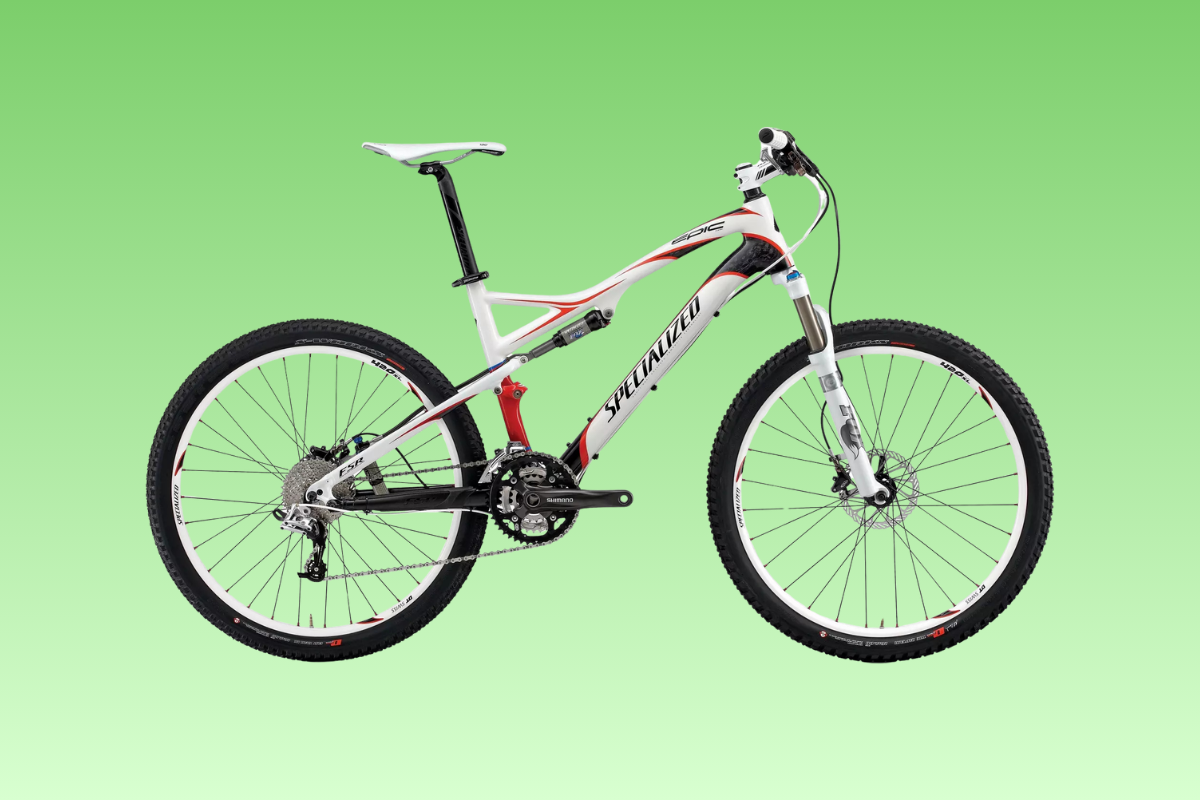
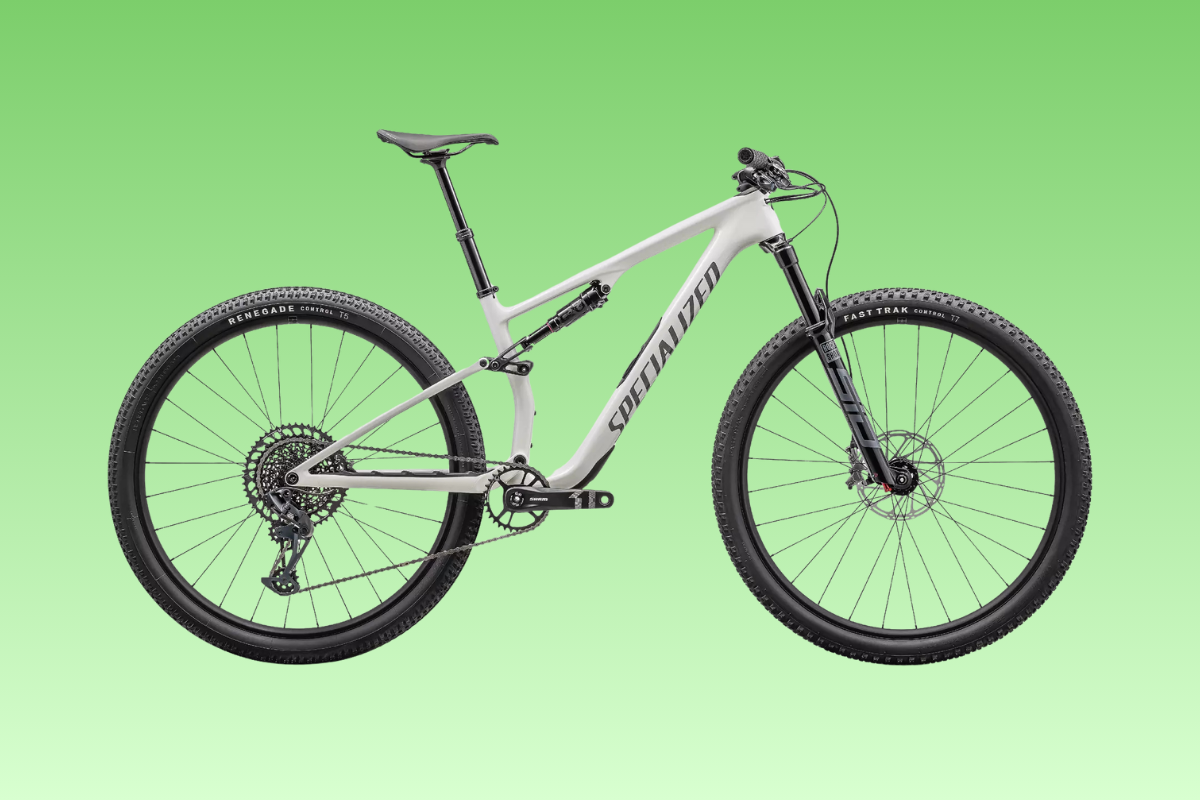
Comparing a 2017 mountain bike like the Specialized Epic Comp pictured above to the same model today is like comparing a banana to an iPhone. It goes without saying that today’s suspension, drivetrains, brakes, tires, and wheels are so much better than they were nine years ago. Plus, modern bikes have upgrades like dropper posts and wireless electronics that weren’t very common in 2017.
Unfortunately, we don’t have a lot of data comparing aluminum bike prices from 2017 to today because many of the aluminum options disappeared over time. For example, there used to be an aluminum version of the Specialized Epic Comp (full suspension) that no longer exists. The shift toward more carbon frames and fewer aluminum ones has certainly raised the average price for mountain bikes overall, though this isn’t necessarily captured in the pricing data above.
Note that of the three bikes that saw their prices go up, one of them — the Stumpjumper — is aluminum. This could suggest that carbon frame production has become more efficient while aluminum frame production has not, though it’s hard to say given just a single data point.
Riders were initially drawn to carbon bike frames for their potential weight savings, which can be significant. And yet, since 2017, mountain bikes have almost certainly gotten heavier overall due to the addition of dropper posts, bigger wheels and tires, and the like. In fact, some buyers might argue that today’s heavier bikes, though objectively less expensive in real terms than they were in 2017, aren’t as good as they were when they weighed less.
Still, given all the changes — better components, fewer aluminum frame options, and heavier bikes — I still think most riders will agree that 2026 buyers get more for their money than they did nine years ago.
What do you think: Why does it seem like mountain bikes are getting more expensive?



8 Comments
Jan 15, 2026
Jan 15, 2026
It is quite insane that my 2011 Ducati Multistrada was about 25k CDN, and my 2023 Yeti LRT2 was 14.5k CDN MSRP (got it for 9.5k as they were blowing out AXS equipped ones when T-Type hit). On the other hand, I regret neither purchase!
Jan 16, 2026
Jan 16, 2026
Jan 16, 2026
Jan 16, 2026
Jan 18, 2026
Jan 15, 2026