

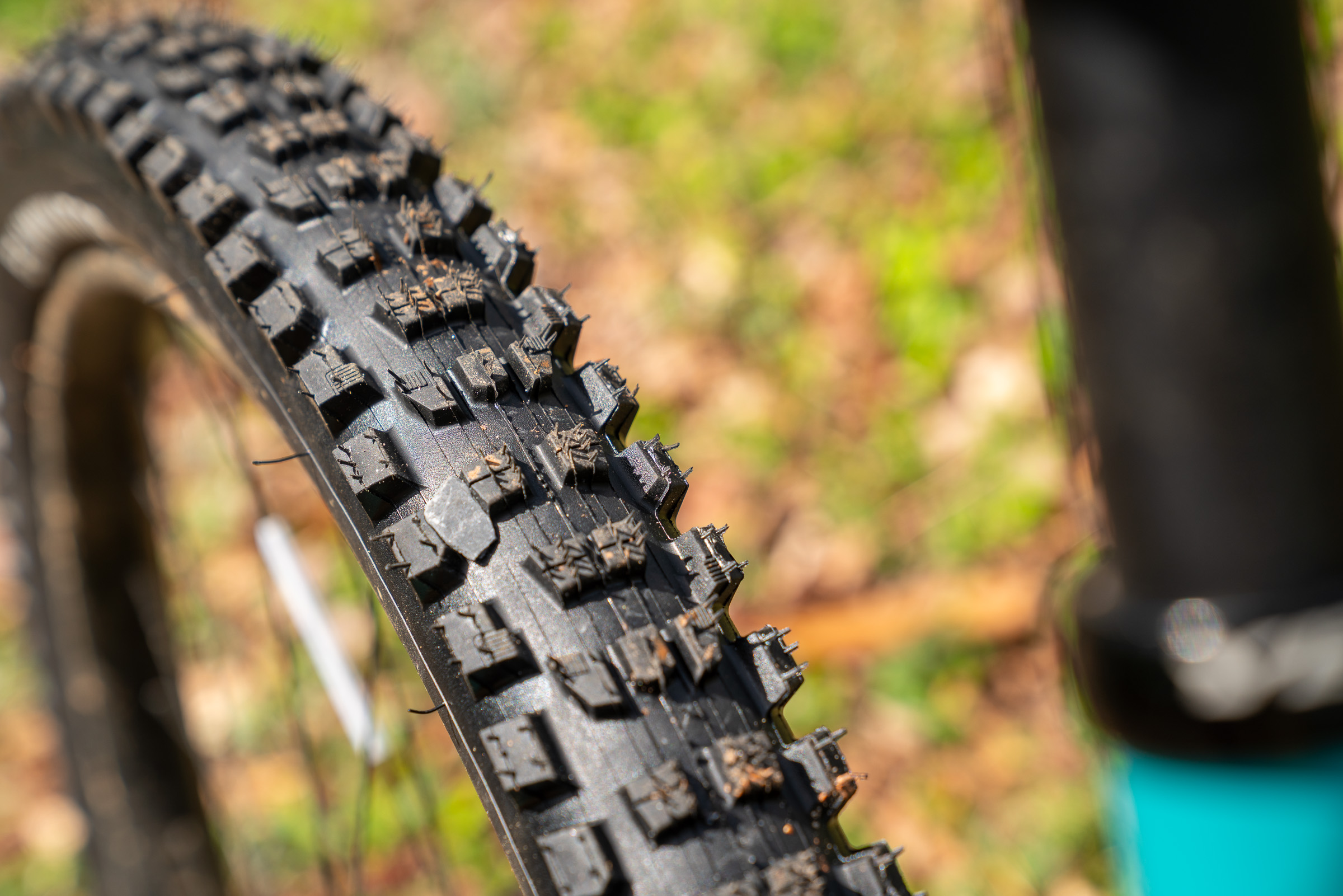
Specialized is rolling out radial versions of their popular Butcher and Eliminator mountain bike tires with a design that promises a major increase in grip thanks to a 30% larger contact patch than tires with a standard casing. I’ve been testing the new tires on a couple of different trail bikes over the past several weeks, and here’s what I’ve learned.
Radial bike tires aren’t truly radial, but they are different from traditional MTB tires
Mountain bikers have been raving about radial mountain bike tires ever since Schwalbe rolled out their first tires with the design back in 2024. Singletracks product tester Gerow said the “tires win the 2024 MTB Innovation of the Year Award for me,” while Schwalbe’s mountain bike tire product manager went so far as to say the radial design is “single-handedly the biggest innovation we’ve been able to implement on mountain bike tires basically since we started developing them.”
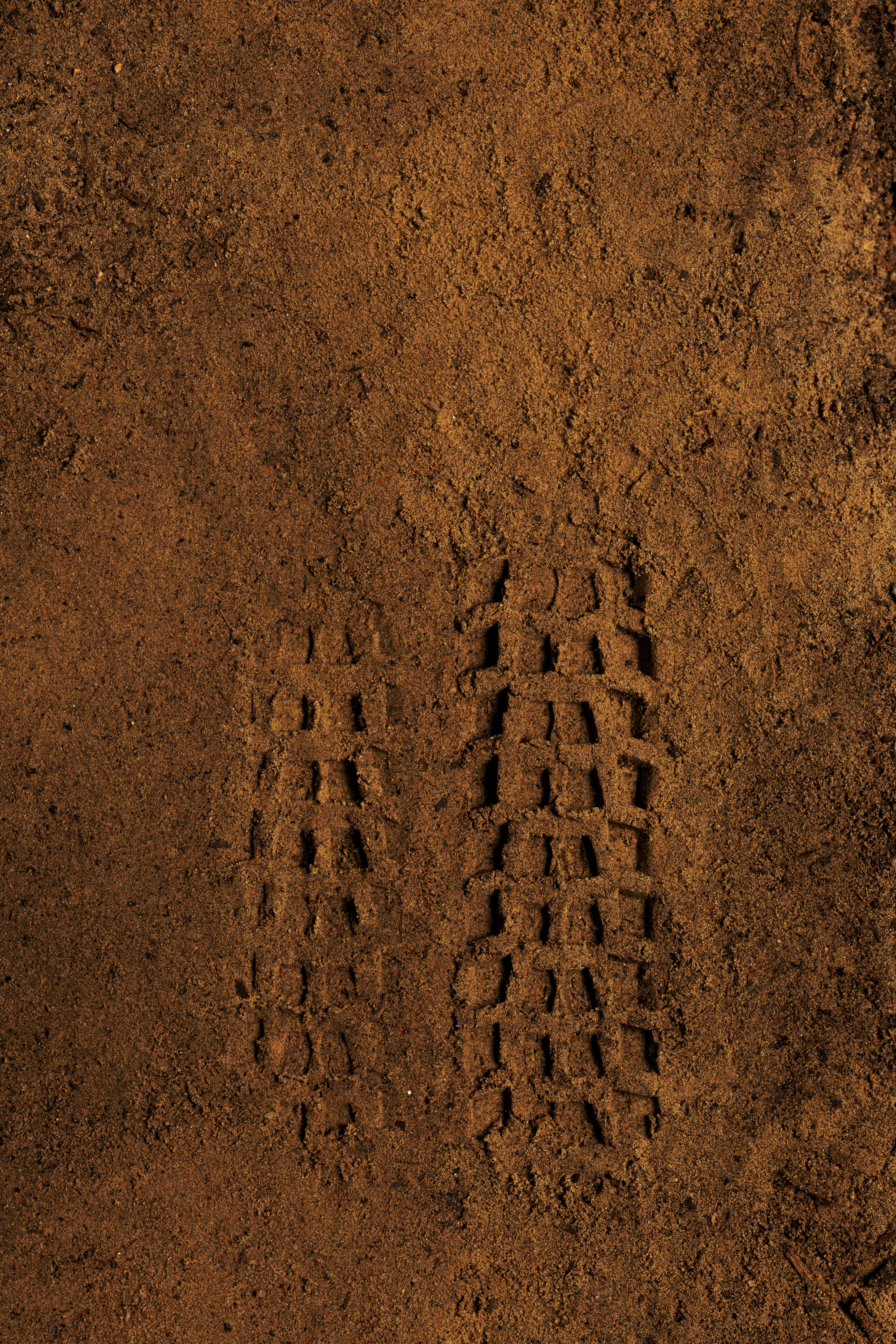
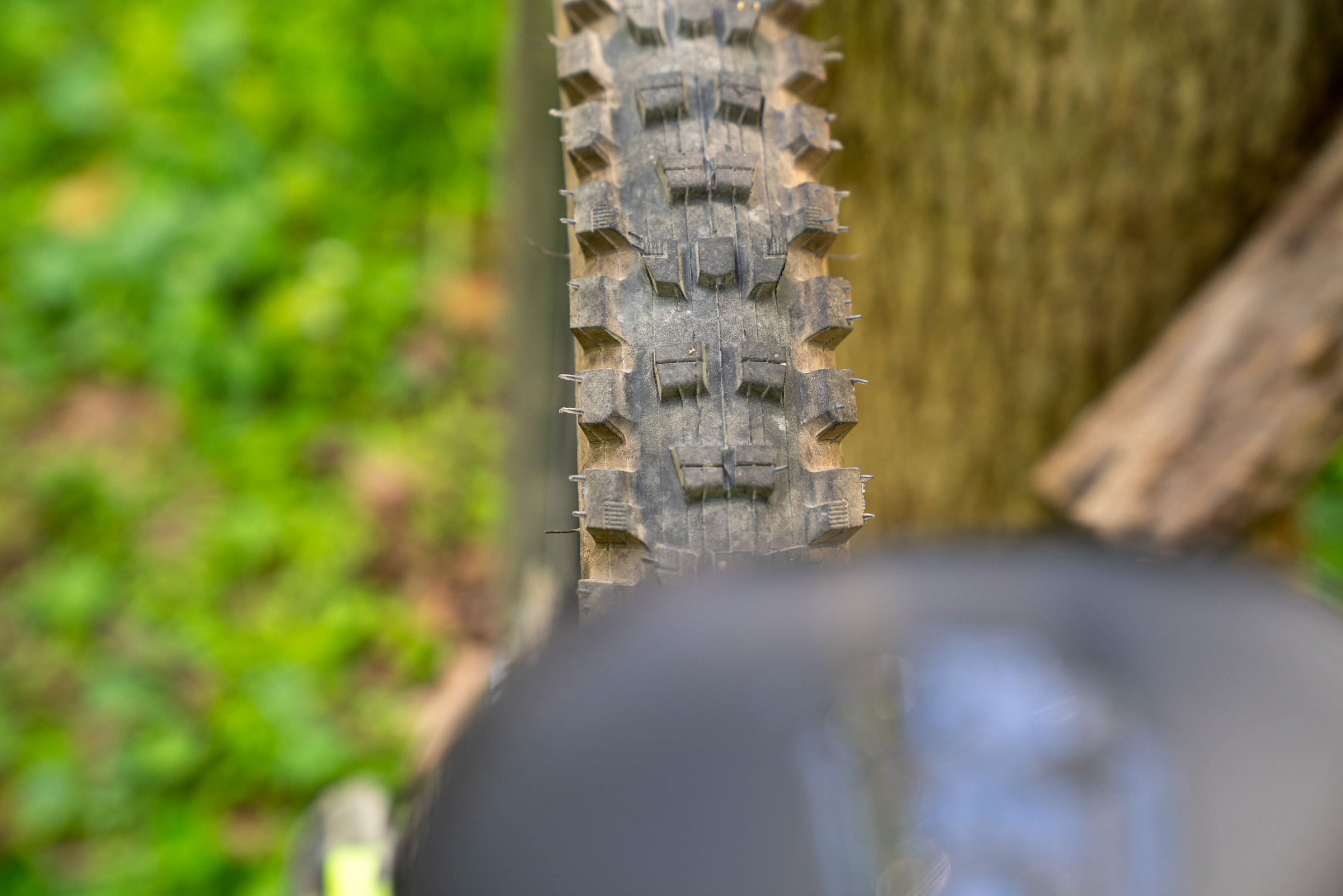
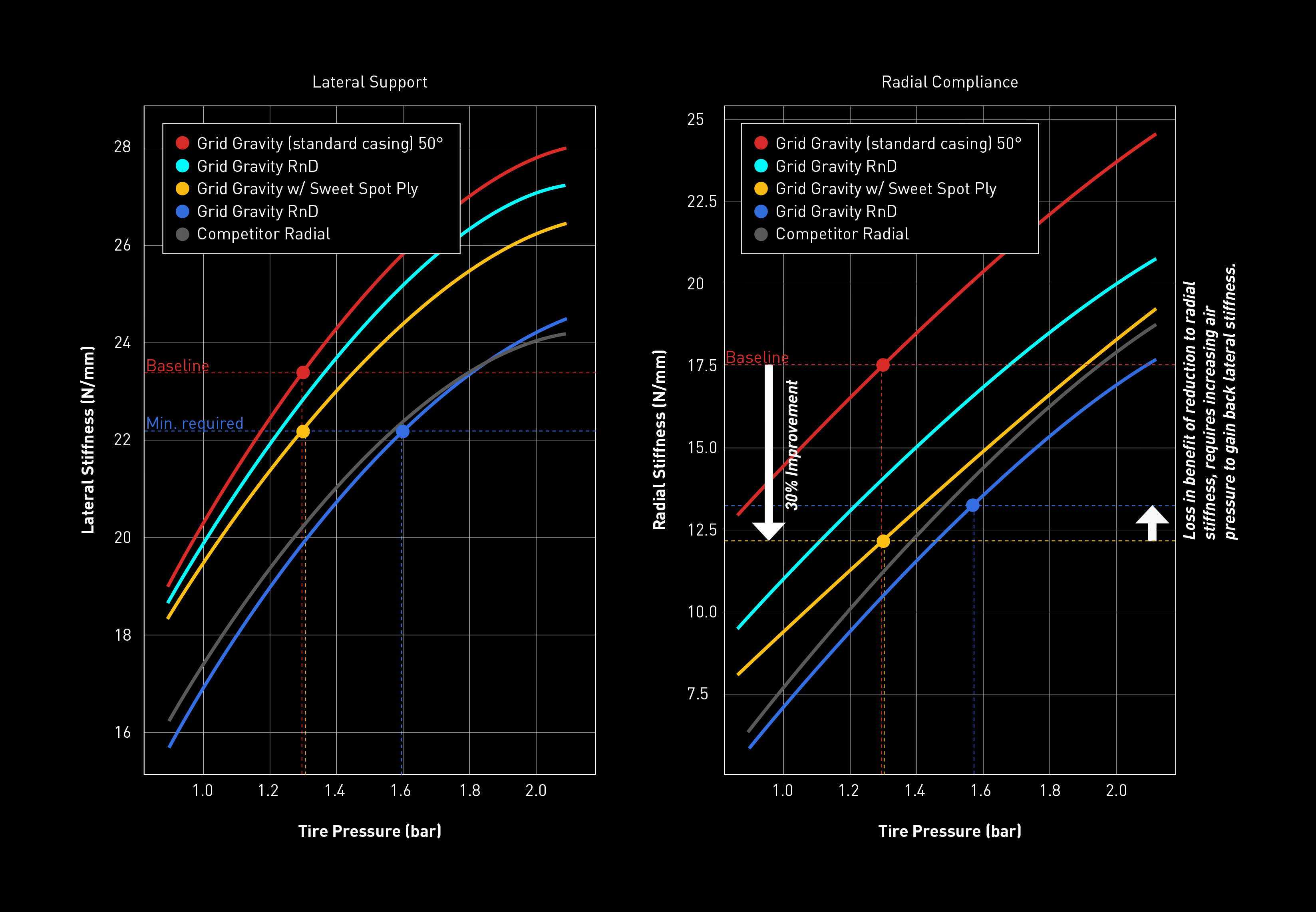
Radial tires increase the angle that a tire casing’s threads make with the centerline of the tire. This makes the tire less radially stiff, which increases the tire’s contact patch with the ground and allows it to conform to the terrain better. However, the tradeoff is that lateral stiffness (i.e., at the sidewall) is decreased. Specialized says their radial tire design decreases radial stiffness by 30% while decreasing lateral stiffness by less, just 7%.
What’s the angle here?
Like Schwalbe’s radial designs, the new Specialized radial tires orient casing threads (cords) at a “specific” angle that’s “beyond the typical 45–50°” angle of the centerline tread. The Specialized-provided chart above shows how various casing angles they tested affect both lateral and radial stiffness. The casing angle they ultimately settled on provides what they say is the best balance between lateral and radial stiffness.
Technically, a true radial tire has threads oriented perpendicular to the centerline (90°), making these mountain bike tires radial-ish. Or more radial, if you will. Vehicle tires with a radial construction make use of belts to shape the tire and improve strength. Radial bike tires, on the other hand, do not generally need belts since the radial angle is significantly lower than what is found on a car tire.
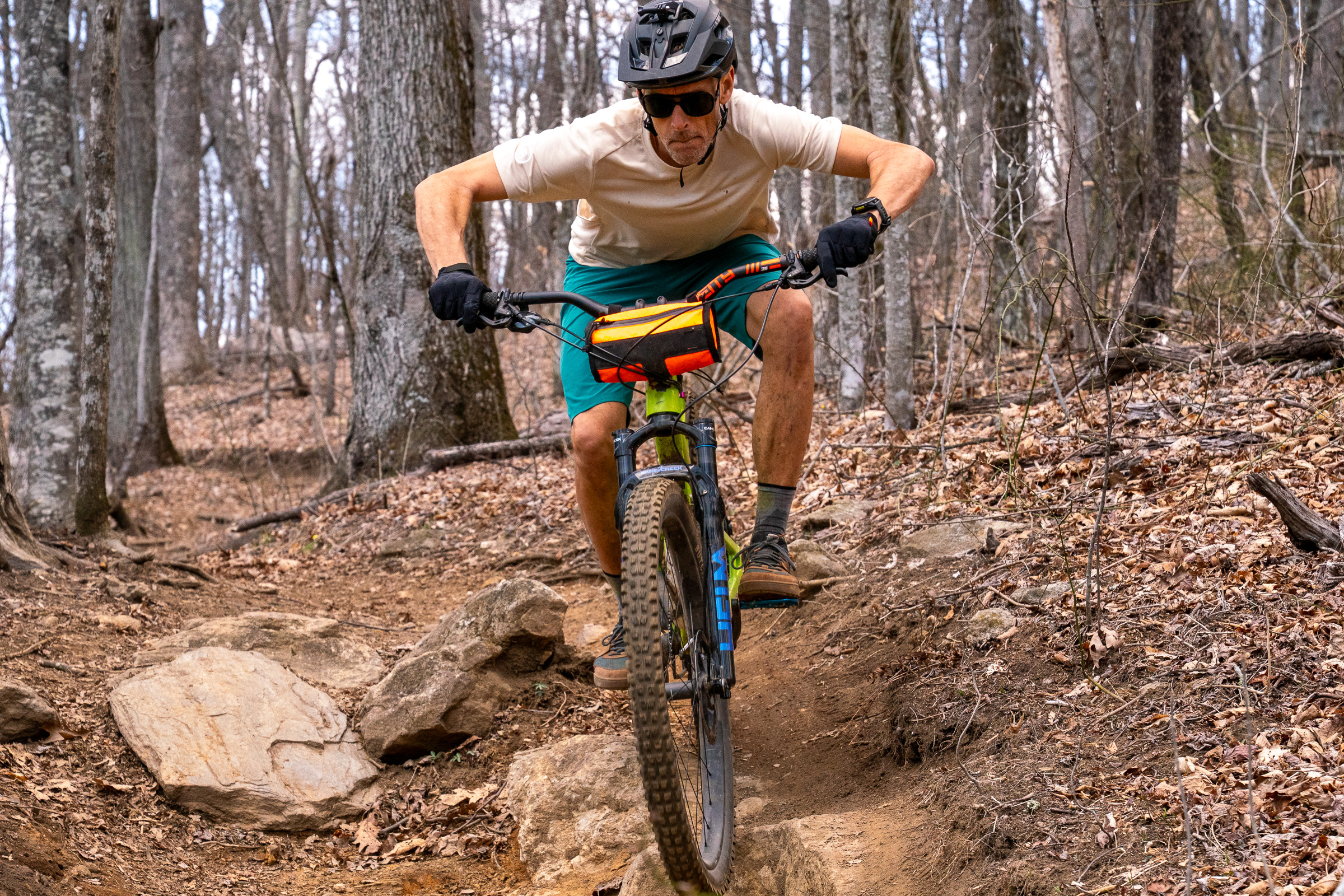
On the trail
I tested the Specialized Butcher T9 Radial tire on the front and an Eliminator T7/T9 on the rear of a Yeti SB140, as well as a Canfield Tilt. Both tires are 29×2.4″. I inflated them to my preferred pressure, generally 17-20psi, depending on the ride.
The first thing I noticed is how quiet the tires are compared to pretty much any tire I’ve ever tested (and I’ve tested a lot of tires). Noisy tires suggest lost energy, plus a quiet ride is a better ride IMO. The increased contact patch likely plays a role here.
The Butcher, with its softer T9 compound, is incredibly sticky out of the box, picking up and flinging off every stray bit of gravel and sand on the trail. If you’re running a T9 tire up front, you’ll want to throw a fender on if you don’t have one already!
It can take some time to get a feel for how a tire’s tread pattern affects grip, but the move from standard to a radial design is obvious from the jump. The tire feels more planted going downhill and through the turns. Braking performance is improved. Even greasy climbs become more manageable.
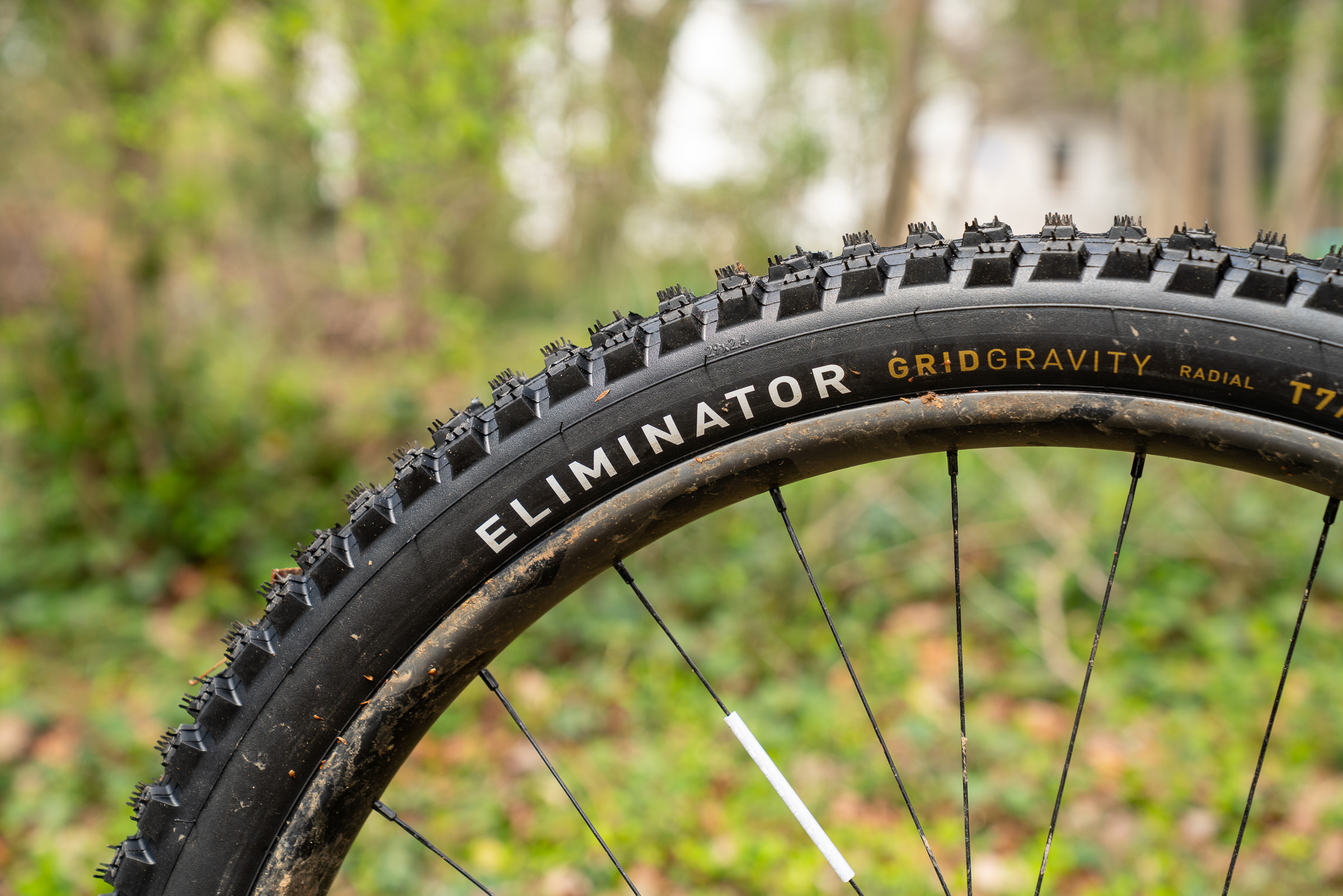
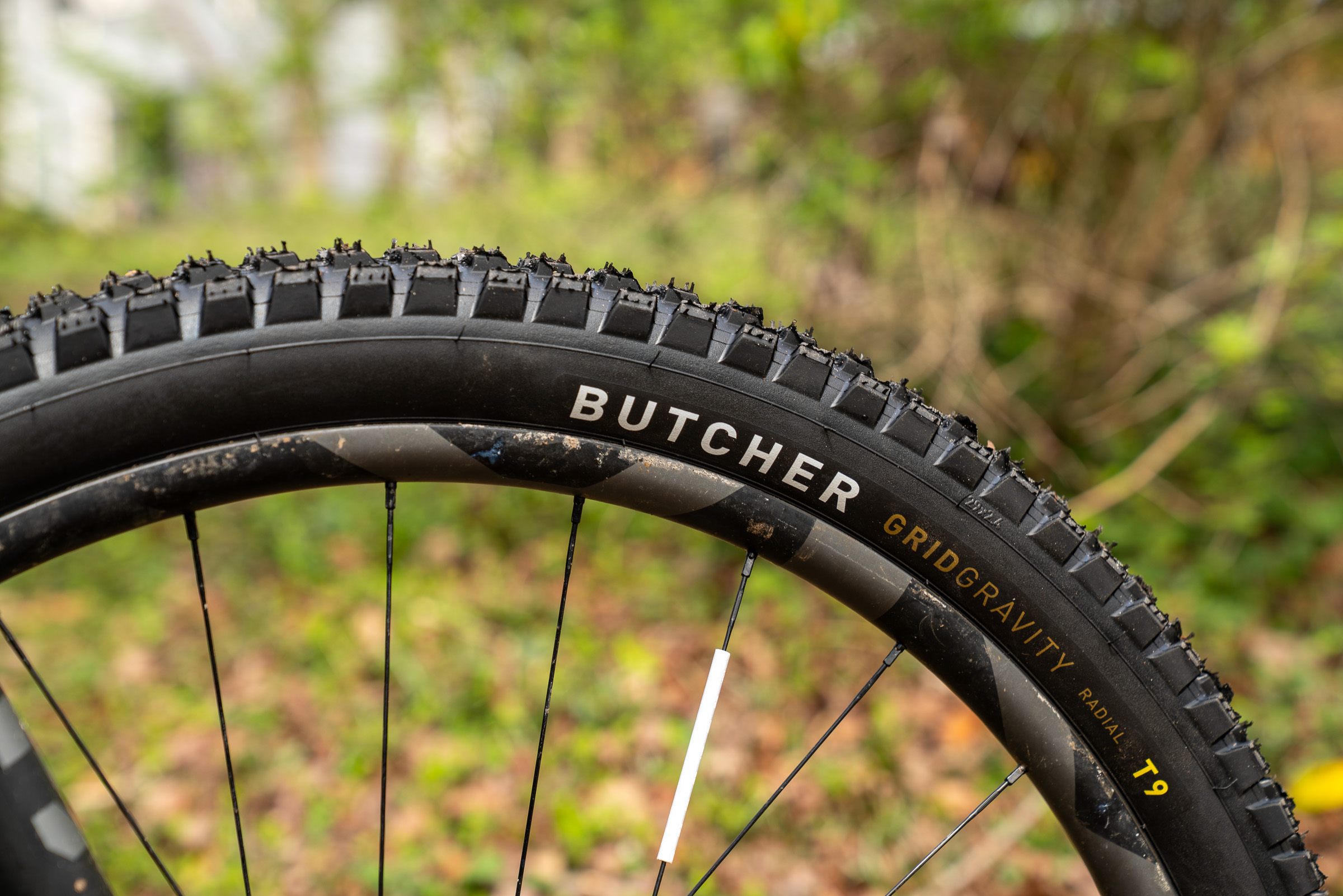
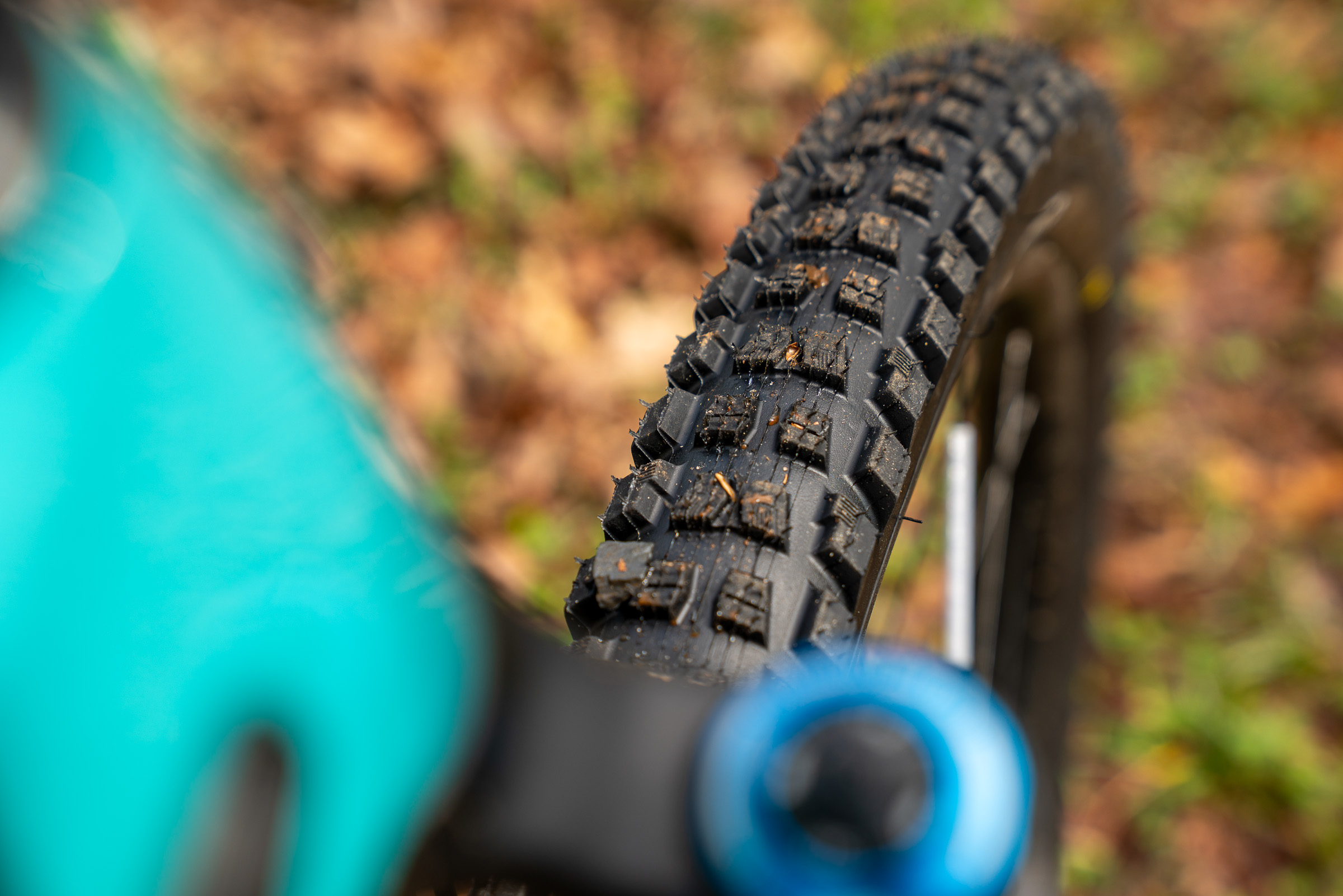
Of course, mountain bikers can unlock similar advantages from their tires by simply lowering the air pressure. The problem with that, as we all know, is that we’re more likely to get flats. Another solution is to choose a tire with a more supple casing. But again: flats, specifically pinch flats.
The trick is to keep the tires as laterally stiff as possible so they’re not floppy and prone to pinch-flatting while unlocking improved grip thanks to a more flexible radial zone. I’d say Specialized has found a nice balance here.
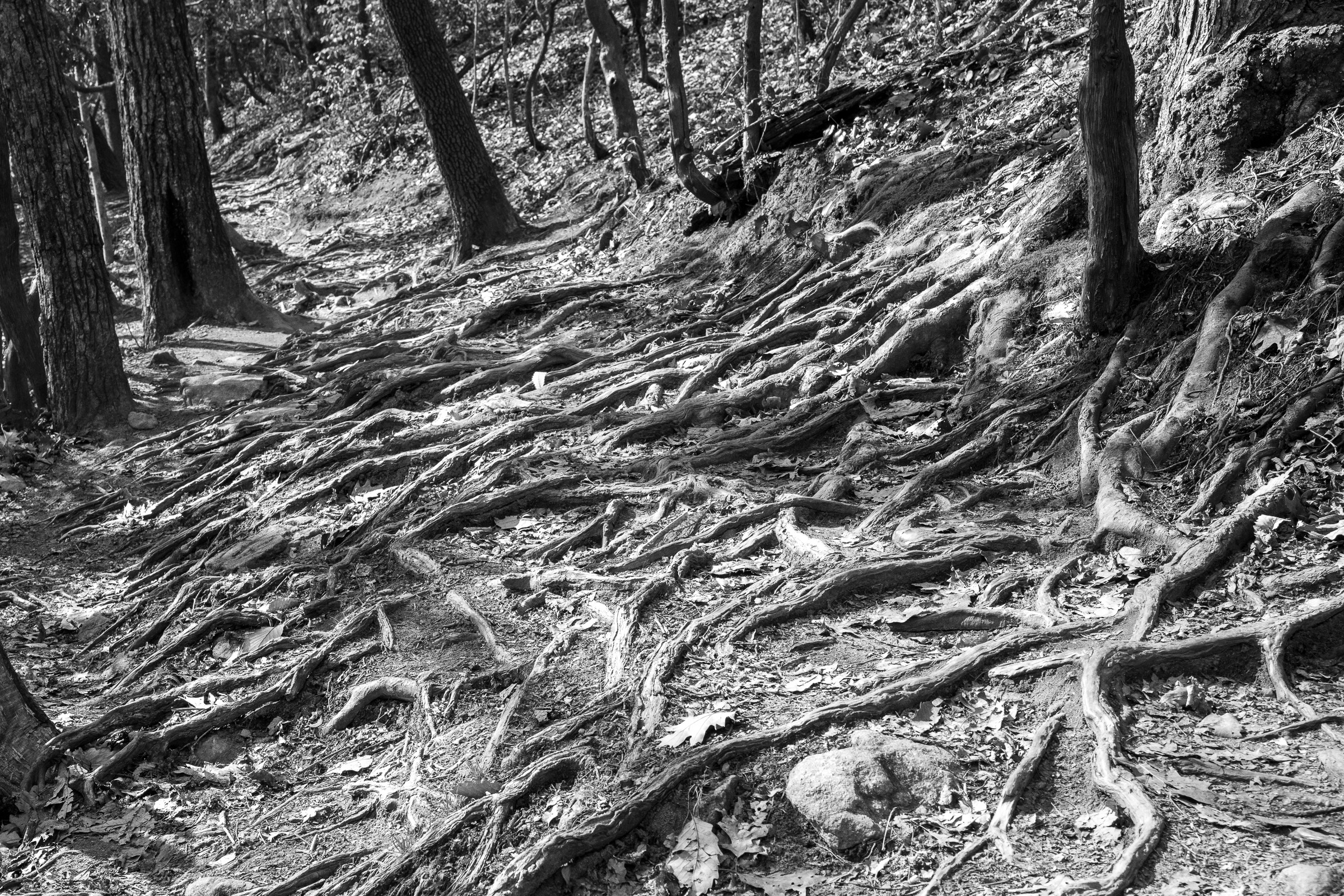
In Pisgah, the radial Butcher and Eliminator tires proved adept at conforming to and traversing the trickiest sidehill root webs. While riding leaf-filled chutes with square-edged rocks lurking below the surface, the Eliminator in the rear never bottomed out and held firm with no squirm. In short, the Specialized radial tires provide a nice balance.
When I last tested the Specialized Eliminator, back in 2023, I chose the Grid Trail version, rather than the Gravity Version tested here. Personally, I like the feel and control that a more supple tire provides (and the weight savings are nice, too). Though the Eliminator tread pattern has changed, I’d say the burlier Grid Gravity Radial casing provides a similarly grippy and flexible ride feel to the more supple Grid Trail, but with the added confidence of a more durable sidewall.
For riders who need the absolute toughest casing, Specialized radial tires may not be up to the task. After all, they are 7% less stiff in the lateral direction. With that in mind, Specialized recommends that park and DH riders continue to choose Grid Gravity tires with the standard casing instead of the new radial versions.
I’ve experimented with increasing my tire pressure a bit compared to what I run with standard (non-radial) tires. At higher pressures, the Butcher and Eliminator feel just as responsive as those standard tires while allowing me to hit square-edged rocks harder and zoom across tarmac faster. Ultimately, though, I think I’ll mostly stick to my usual tire pressure.
It’s hard to make a direct comparison between these Specialized radial tires and the other radial tire I recently tested, the Schwalbe Albert. For starters, the Alberts I tested were wider, and on a different bike. What I can say is that both the Schwalbe and Specialized tires conform to the terrain better than the average tire, and both have sidewalls that feel plenty stiff to me.
Perhaps the only difference is that the Schwalbe rubber felt like it absorbed the energy of quick hits better than the Specialized tires, which feel somewhat bouncier. I assumed maybe the Schwalbe was a thicker/heavier tire, but looking at the specs, the Specialized tires actually weigh about 150g more (each) than the Alberts.
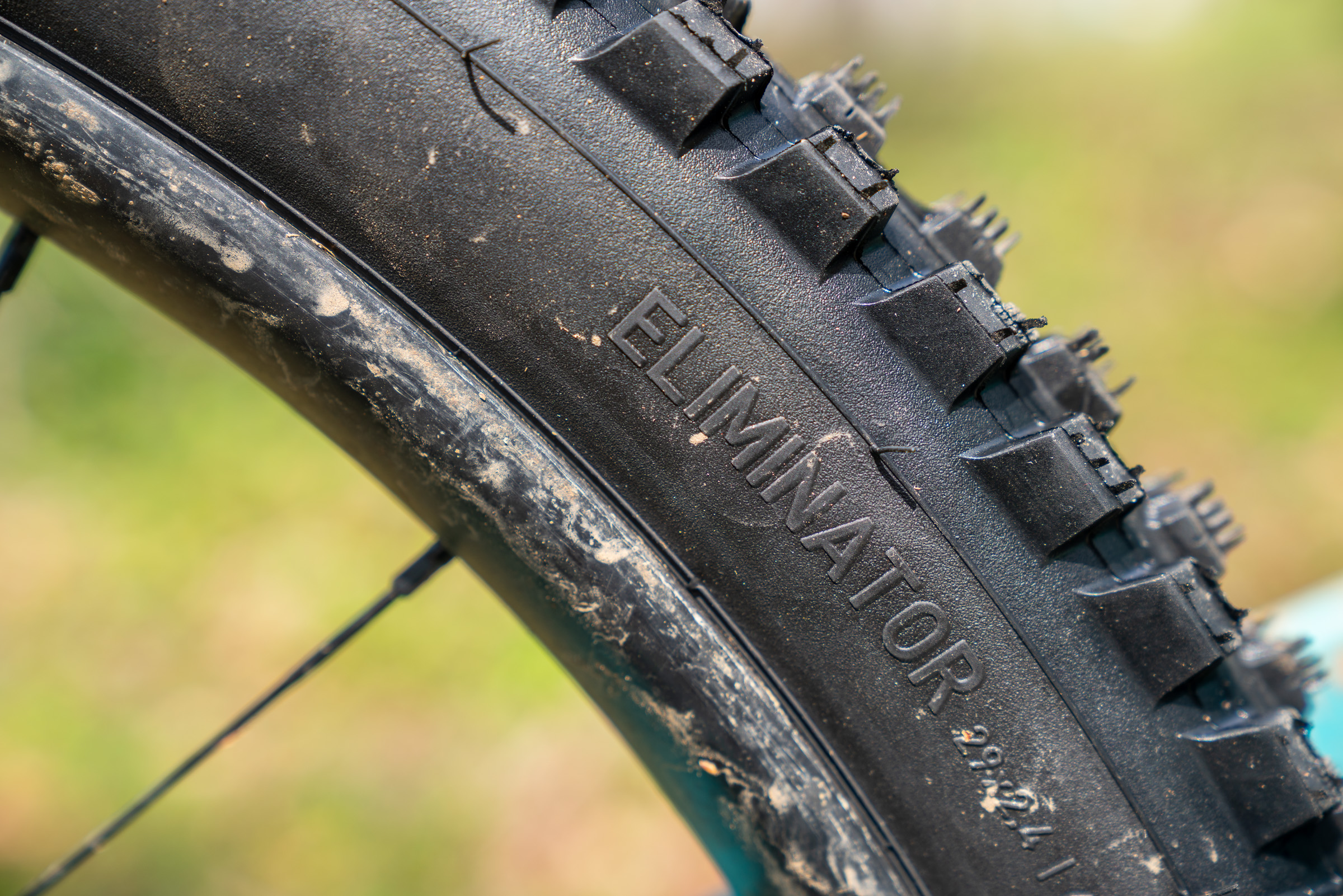
How do radial tires compare to tires with standard casings?
Because radial tires simply change the orientation of the casing threads inside the tire, they look identical to standard tires. I found that installing the radial Specialized Butcher and Eliminator tires didn’t require any extra effort, which is a relief.
There also isn’t much, if any, weight penalty. Again, this isn’t a surprise given that radial tires are constructed in the same way as tires with a standard casing orientation. My radial test tires both weigh 1335g, which is in line with the published weights of the non-radial versions of the Butcher and Eliminator. Both standard and radial Grid tires make use of a 60TPI casing with bead-to-bead protection
This first crop of Specialized radial mountain bike tires is priced at $90, about $5 more than standard versions as of press time.
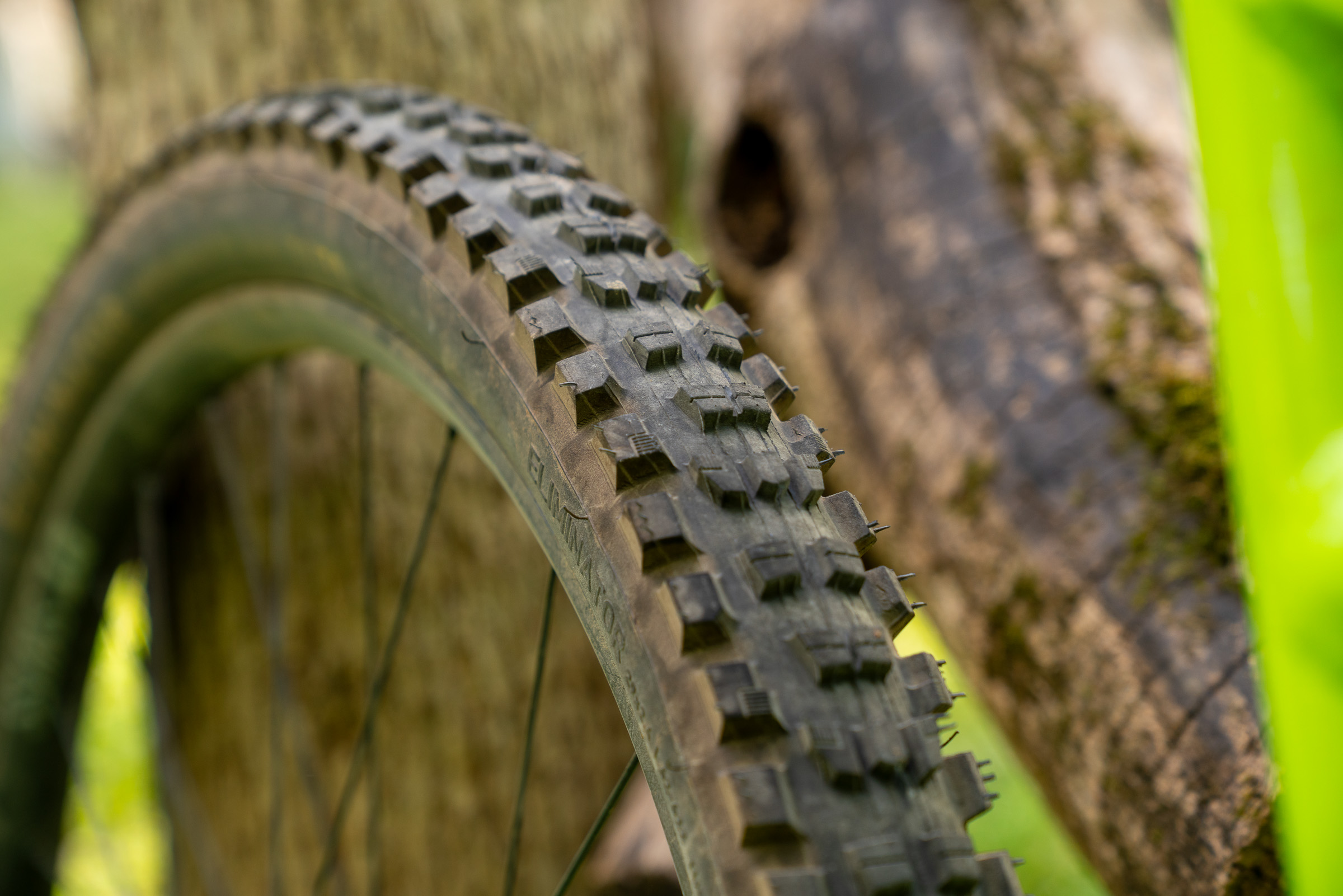
Radial tires are an easy choice for trail riding
The new Specialized radial mountain bike tires deliver a noticeable increase in traction without much downside in terms of lateral stiffness. For all but the hardest hitters, radial mountain bike tires are an easy choice.
The news stinks. Why not follow Singletracks on Google News to bring more joy to your day?




2 Comments
Apr 17, 2026
Sounds like the sidewalls are even weaker now -- going to have to pass. Maybe I'll try to find some of the new Schwalbe "radials".
Apr 15, 2026