


Following a major revamp of the XC-race-winning Scott RC mountain bike back in June, the Swiss brand has a new Spark that should appeal to an even wider audience. The Scott Spark DC is billed as a downcountry bike that picks up where the RC leaves off, with a lot more travel and relaxed geometry for all-day rides.

The Spark DC pushes the limits of the downcountry category
The Scott Spark DC proudly takes on the downcountry label, though with nearly 140mm of rear suspension travel, most riders would place this bike solidly in trail-bike territory. However, at a presentation for the Scott Spark DC in April, a representative for the brand said, “This is not a trail bike. It’s still downcountry, so it’s not going to be as capable as, you know, a 170mm bike [or a] 160mm bike. That’s not what it’s trying to be. But it’s for people who used to race cross-country [and] want to ride all day, but want something fun.”
Mountain bike buyers will certainly need convincing that the Spark DC isn’t a trail bike. Back in May we asked Singletracks readers how much rear travel their trail bike has, and by far the most common answer was 140mm (23%). The next most popular response: even less, 130mm.
Up front, the Spark DC is specced with a 140mm fork, though the brand says the bike can accept forks with up to 150mm of travel.
Singletracks has been tracking the downcountry category for several seasons now, and among the brands using the downcountry label for their bikes, we’ve seen a hard cut-off at 120mm for rear suspension travel. On paper, with 150/138mm of front/rear suspension travel, the Scott Spark DC is a long-travel for a downcountry bike.
But was downcountry as an idea ever about a certain amount of travel? Not really. At its root, it was the idea of a lightweight and efficient climber that could descend as well as a heavier, more DH-oriented bike.

A flex-stay suspension design cuts weight
Scott claims their Spark DC Factory build weighs a scant 25.35lb, which is incredibly lightweight for a 138mm bike. Earlier this year, Allied announced the 140mm Fitz, which they say weighs as little as 26lb for the top-of-the-line build. The Spark DC beats that handily. (For their part, Allied makes it clear the Fitz is a lightweight trail bike, not a downcountry bike.)
The Spark DC is a descendant of the RC cross-country race bike, which gave designers an incredibly lightweight, efficient platform to build upon. Specialized tends to do the same thing, releasing their longer-travel Epic EVO shortly after introducing a new Epic. For Canyon, the Lux Trail tends to follow the Lux World Cup.

The new Spark RC moved to a flex-stay design, which is becoming common for short-travel cross-country mountain bikes. However, it’s unusual to see a longer-travel bike like the Spark DC utilizing a flex-stay design. The lightweight Allied Fitz, with 140mm of travel, uses a four-bar design. Even Specialized switched away from flex stays on the Stumpjumper once the rear travel jumped from 130mm to 145mm for the Stumpjumper 15.
Of course, climbing performance isn’t just about cutting weight. Scott notes they’ve “optimized anti-squat for traction and drive under power,” which suggests they are still prioritizing climbing over raw descending capability.


A low-slung shock improves handling
Like other mountain bikes in the Scott line, the Spark DC hides the shock and associated hardware at the bottom of the downtube. From a distance, the bike looks like a hardtail or a lightweight e-bike, giving it a distinct profile. A magnetic cover lets you access the shock and in-frame storage. I got a chance to fiddle with the cover at Sea Otter in April and can confirm it’s easy to remove, yet also feels incredibly solid.
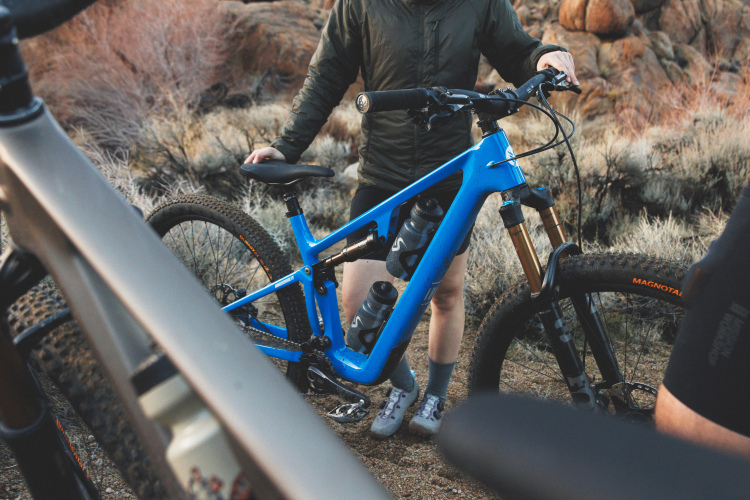
Besides the clean look, the low-slung shock moves frame weight much closer to the bottom bracket for improved handling. We’re seeing a similar advantage with gearbox bikes, which move weight off the rear wheel and onto the bottom bracket. Another advantage is the Spark DC fits not one but two water bottles inside the front triangle.

Scott says aftermarket shocks will fit the Spark DC, though some, like the RockShox SIDLuxe with Flight Attendant, make use of a replacement cover as shown above right.


An integrated steer-stopper prevents the bars from over-rotating in the event of a crash, protecting the frame and controls from damage. Large and extra-large frames are said to fit 225mm-travel dropper posts.
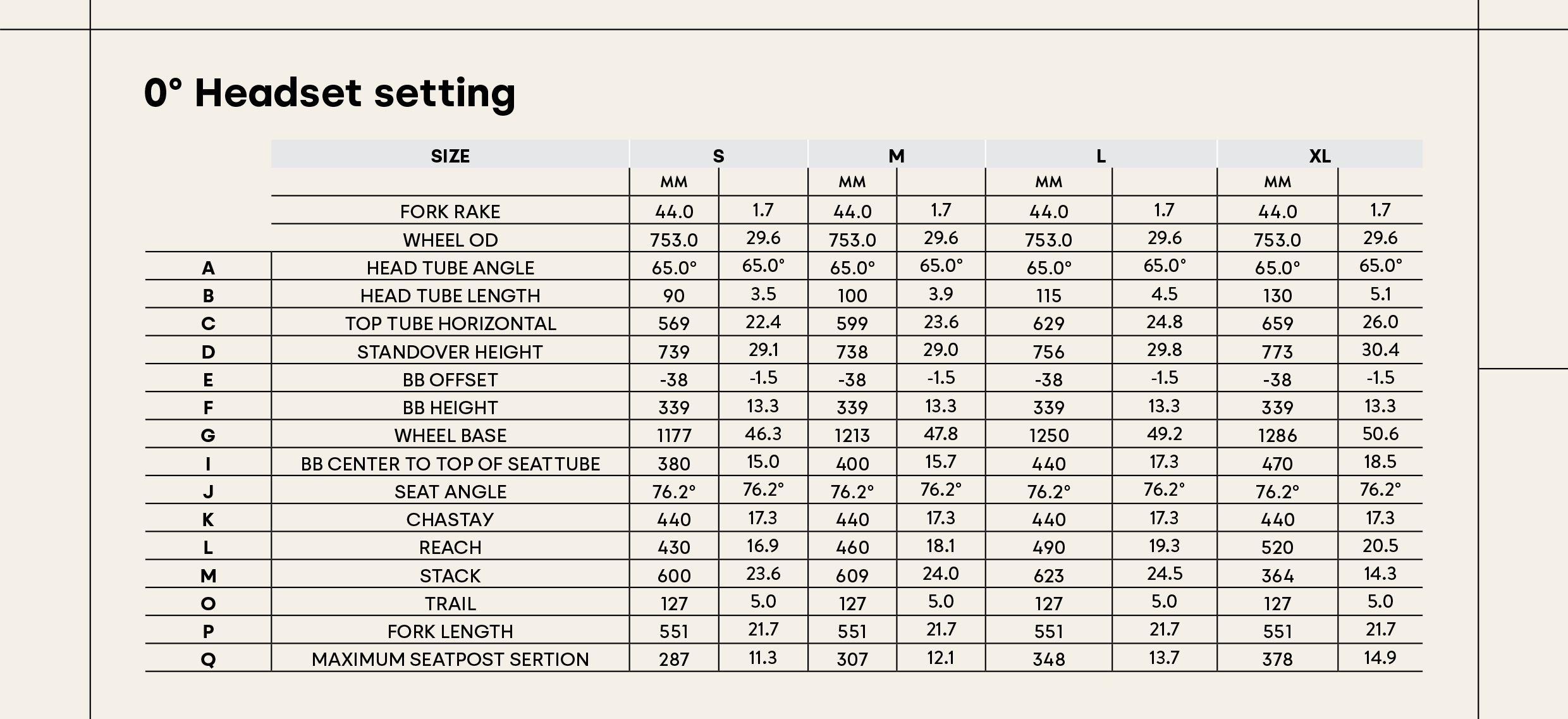
The Spark DC is longer and slacker than the RC… and the average trail bike too
It’s no surprise that the Scott Spark DC features a slacker head tube angle than the XC-race-oriented RC. Thanks to an angle-adjust headset, the DC can be set up with a head tube angle between 64.5° and 65.5°. In a January analysis, we found that mountain bikes with 140mm of rear suspension travel averaged a 65.3° head tube angle, which puts the Spark DC on the slacker side of average.

With the headset in the middle position, reaches are on the long side for trail bikes, stretching 490mm on a size large and a full 520mm on size extra large frames. The average reach for a size large trail bike in 2026 sits right around 484mm, and many of the latest trail bike updates are pulling back on long reaches.
The Spark DC’s bottom bracket height is a smidge lower than the average trail bike, promising added stability and improved handling. The 76.2° seat tube angle is not as steep as the average trail bike, which may compromise its climbing comfort somewhat.
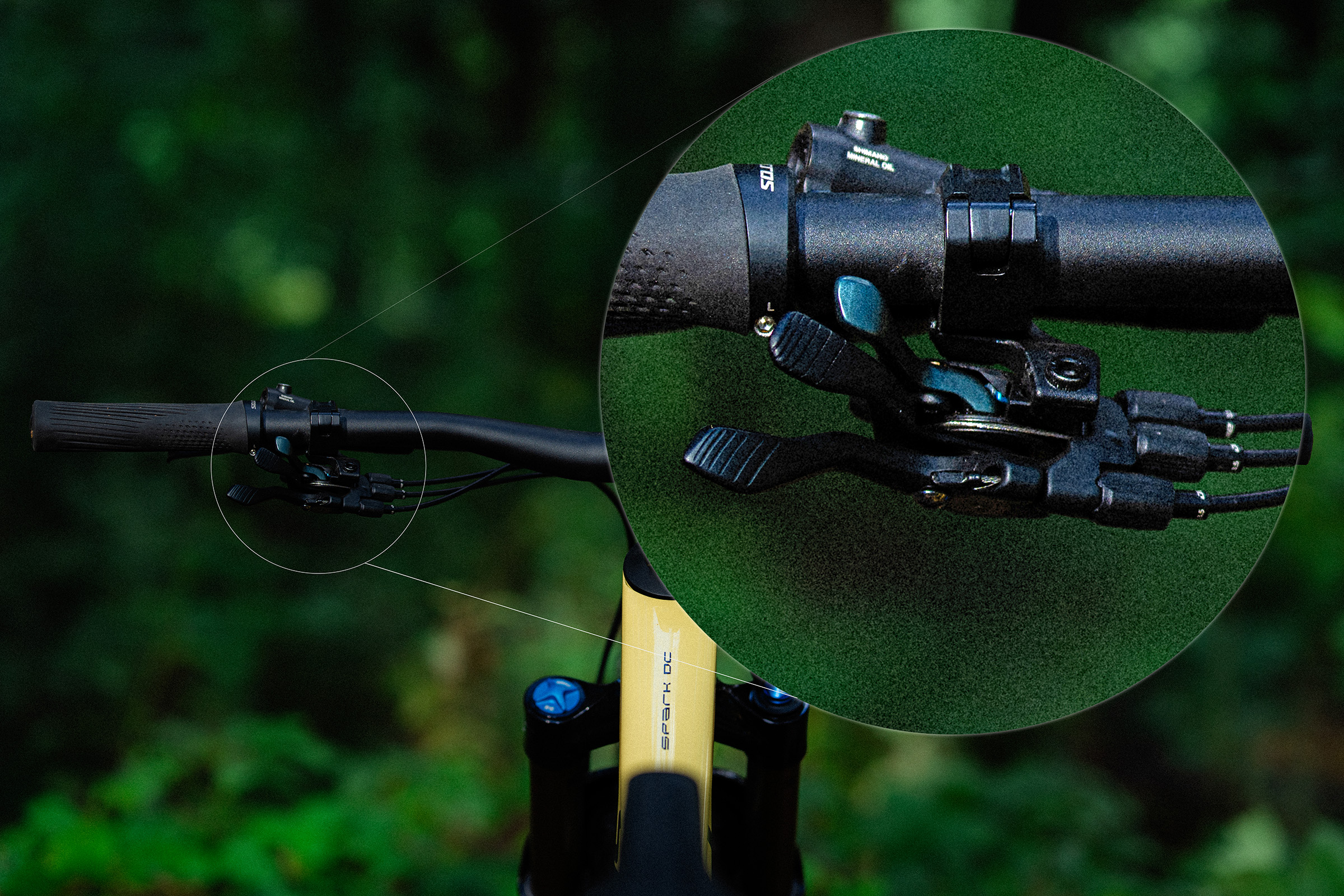
Lightweight builds and racy suspension controls
The lightest Scott Spark DC build pulls out most, though not all, the stops when it comes to saving weight. Yes, the rims are carbon and the saddle rails are too. The drivetrain on the Factory build is wireless SRAM XX Eagle Transmission, even though a high-end mechanical system likely weighs less. (Yes, unlike some new modern frames, the Spark DC is compatible with mechanical drivetrains.) And the tires — 2.4″ Maxxis Rekon and Forekasters — are real tires, even if they are the EXO versions. Likewise, Scott didn’t drop in-frame storage to save weight, as Specialized did with the new Epic 9. Buyers also get four-piston SRAM Motive Ultimate brakes.
Scott specs their TwinLoc suspension control system on the less expensive DC 20, 30, and 40 builds. This allows the rider to lock and unlock the fork and shock on the fly. It’s a great feature for race situations, though personally I don’t think everyday riders will find this useful. Canyon specs a similar suspension control system on their Lux Trail downcountry bike, which suggests maybe some non-racers do find it useful. However, it does add weight and gives the cockpit a jumbled look; if anything, it makes the case for electronic suspension controls like RockShox Flight Attendant and Fox Live Valve.
Pricing for the Scott Spark DC was not available as of press time. See the Scott website for more details.
Keep up with the latest mountain bike news by adding Singletracks as a preferred source on Google.




4 Comments
Sep 10, 2026
Sep 10, 2026
Sep 10, 2026
Good on them for making it fit off-the-shelf shocks, though. Looks clean from a design perspective. But also looks like an absolute PITA for maintenance.
Sep 10, 2026