









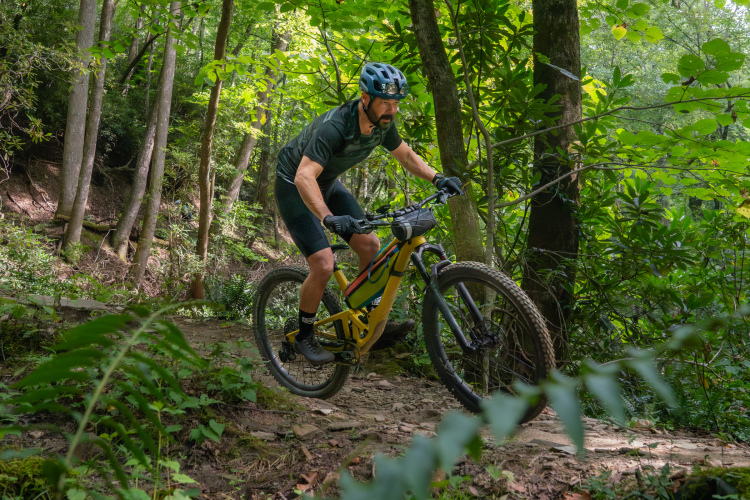
The new Garmin Edge 1060 is here, but don’t let all the road-bike photos and screenshots fool you. While it’s not a mountain-bike-specific GPS unit like the Edge MTB, the Edge 1060 might be an even better — albeit more expensive — choice for singletrack riders. With a new hands-free voice-control feature, additional physical buttons, and MTB-specific functions like trail navigation and jump-distance and hangtime metrics, it’s a compelling option for trail use.
Improved controls on the bike
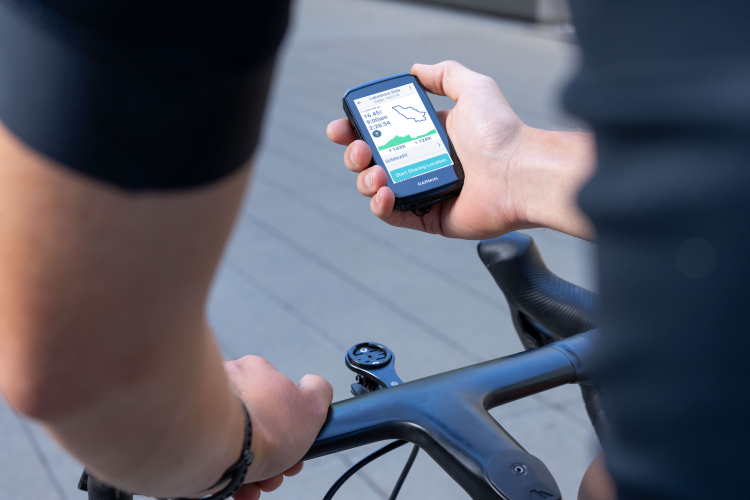
The new Edge 1060 packs a built-in microphone and speaker, so you can pull up stats, request a route, report a hazard, or send a voice message without letting go of the grips. Riders wake the voice assistant with “Okay, Garmin,” then give commands like “What is my heart rate?” or “zoom out the map.” That second command is particularly welcome as panning and zooming the map on a Garmin Edge device with a touchscreen has been notoriously bad, especially with sweaty gloves.
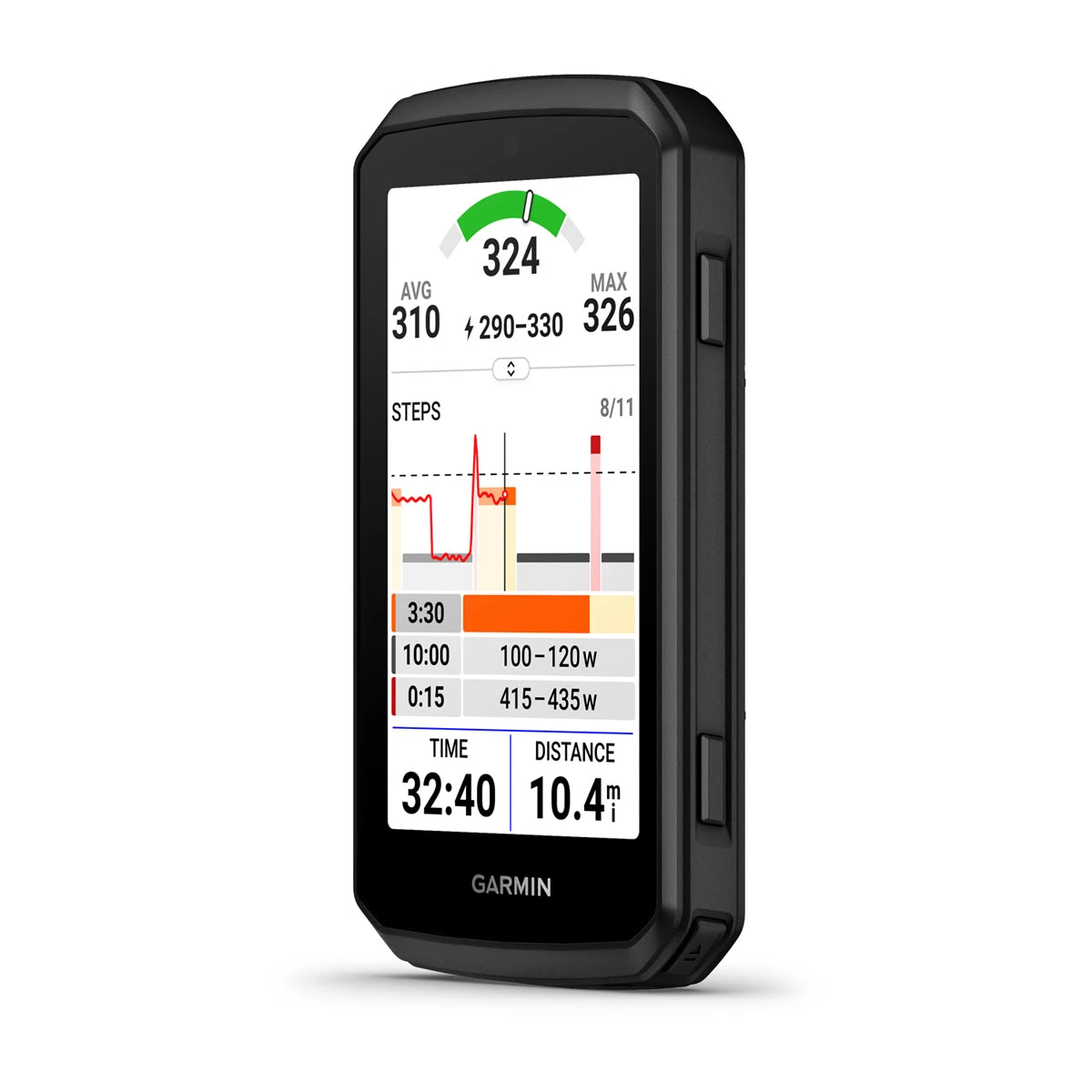
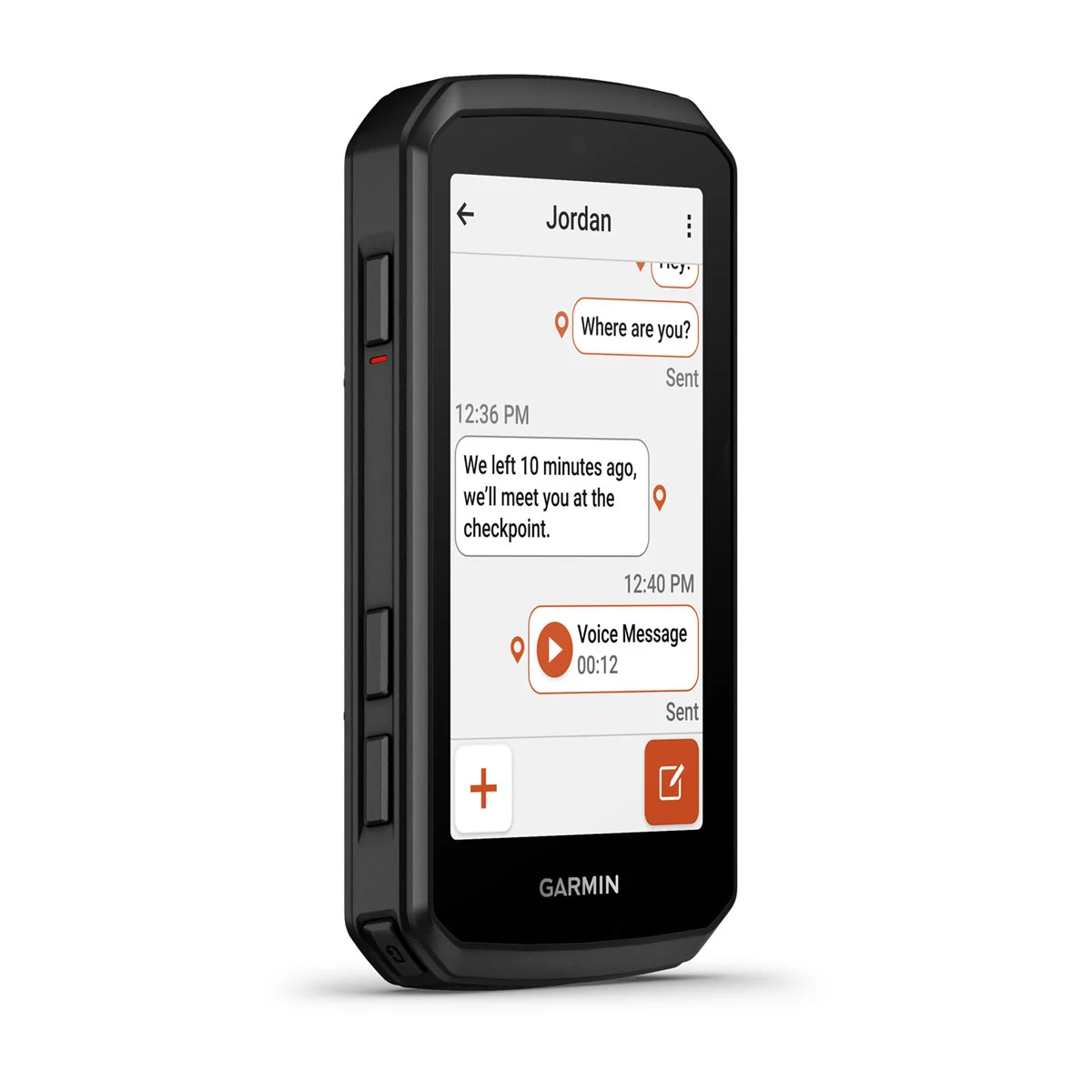
In a related move, Garmin added more physical buttons to the Edge 1060, going from just one side button on the left to three on the left and two on the right, just like the Edge MTB. Though many Garmin devices, like the Edge 1060, feature a touchscreen, I always turn this feature off because it’s so damn buggy. Sweat and raindrops get mistaken for taps, and using the touchscreen with gloves is a challenge. Physical buttons as a backup to the touchscreen and voice control — whose speed and accuracy are TBD — are a welcome addition.
With a connected smartphone, you can send voice memos and hear incoming messages on the Garmin 1060’s built-in speaker. The speaker also offers audible navigation cues and doubles as a digital bike bell. Unlike select Garmin Forerunner smartwatches that let you download music, the 1060 doesn’t appear to have this feature, so you won’t be blasting your chill reggae jams out of the 1060 speaker just yet.
Garmin’s fine print notes that voice command performance may vary based on riding conditions. How well the microphone hears a rider over wind noise, heavy breathing, and a rattling rock garden is something we’ll be curious to test.
All the important mountain bike features of the Edge MTB, except one
Like the Edge MTB and Edge 1050 before it, Garmin’s spec sheet for the 1060 lists integrated Trailforks trail data, MTB Dynamics (like hangtime and jump distance metrics), and gravity ride profiles for downhill, enduro, and e-enduro. It also has the Forksight feature, which makes navigating trail intersections easier.

Timing gates are here as well. Garmin introduced this feature on the Edge MTB, which we tested last year. Riders mark a series of virtual gates by walking or riding a course, and the GPS starts the timer at the start line and splits at each gate. On every run, you can see whether you’re ahead of or behind your best time on each segment, which makes it a fun tool for dialing in a downhill or enduro line.
Timing gates take advantage of fine-grained 5 Hz GPS recording, which the 1050 and Edge MTB also offer. This makes timing fast downhill runs more accurate and also smooths trail mapping for twisting singletrack.
The Edge 1060 features incident detection that’s tuned to off-road riding. And e-bike riders get Garmin’s eBike Smart range routing, and the unit integrates with SRAM AXS and Shimano Di2.

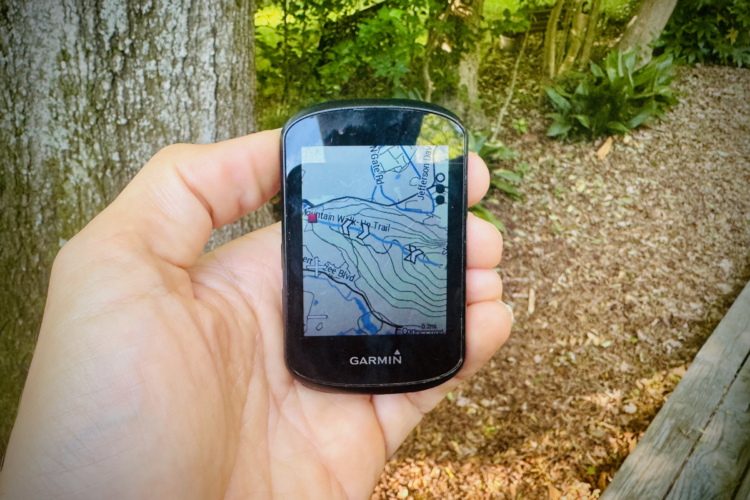
My only real complaint about the Edge MTB was its size — the screen is just too small to see map details, especially while bombing down a trail, and the buttons are too close together for my hand. The Edge 1060 has a massive 480 x 800 display compared to the Edge MTB which is just 240 x 320. Of course, that size comes at a cost: the Edge 1060 weighs a whopping 142g compared to just 57g for the Edge MTB, plus it costs twice as much at $799.99 compared to $399.99.
The only MTB-specific feature the Edge 1060 is missing is a Gorilla Glass screen cover. As far as I know, the Edge MTB is the only Garmin unit with Gorilla Glass, since singletrack riders are more prone to brushes with nature and all-out crashes.
Garmin Edge 1060 vs. the Edge 1050
The Edge 1050 — still listed on the Garmin website for $699.99, $100 less than the Edge 1060 — already had a built-in speaker for the bike bell and audio prompts, so the big hardware change here is the addition of a microphone and more physical buttons. Claimed battery life is unchanged, but the 1060 is slightly lighter and more compact than the 1050.
On the navigation side, the 1060 gets Route Options to compare paths by ride time, elevation, and bike type; Route Previews that show distance, estimated ride time, traffic, and reported hazards before you head out; and Free Flow Routing to find routes with fewer stops.
Other additions include automatic GroupRide detection, an interactive workout screen, a customizable home screen, automatic TrainingPeaks workout syncing, and recovery stats from a compatible Garmin smartwatch or the CIRQA Smart Band. The 1060 can also reverse charge a Varia light, a phone, or another device over USB-C, though Garmin notes it isn’t intended to charge while riding.
Also new: Edge Explore 3 and Explore 3 Plus
Today Garmin also announced the Edge Explore 3 ($399.99) and Edge Explore 3 Plus ($499.99). The simpler, less expensive units connect to compatible e-bike systems, including Bosch smart systems and Shimano E-Bike systems, and the Plus model gets a built-in microphone and speaker for voice control.
In a press release, Garmin said the Edge 1060 is available now, though the Garmin website says the GPS will be available to order beginning October 23.
Keep up with the latest mountain bike news by adding Singletracks as a preferred source on Google.



0 Comments