

Well, it was bound to happen to me eventually. My AXS battery died during a mountain bike ride, and I didn’t have a spare with me. With my derailleur stuck in second gear and a flat, ten-mile bike path ride home, I was stuck.
If only I could switch gears one more time, from second gear to something more reasonable, like ninth or tenth, I would make it home at a reasonable pace. Paul didn’t have a battery on his bike, and neither did Chris, who we happened to run into on the road just outside the trails. I only needed to borrow an AXS battery for a minute!
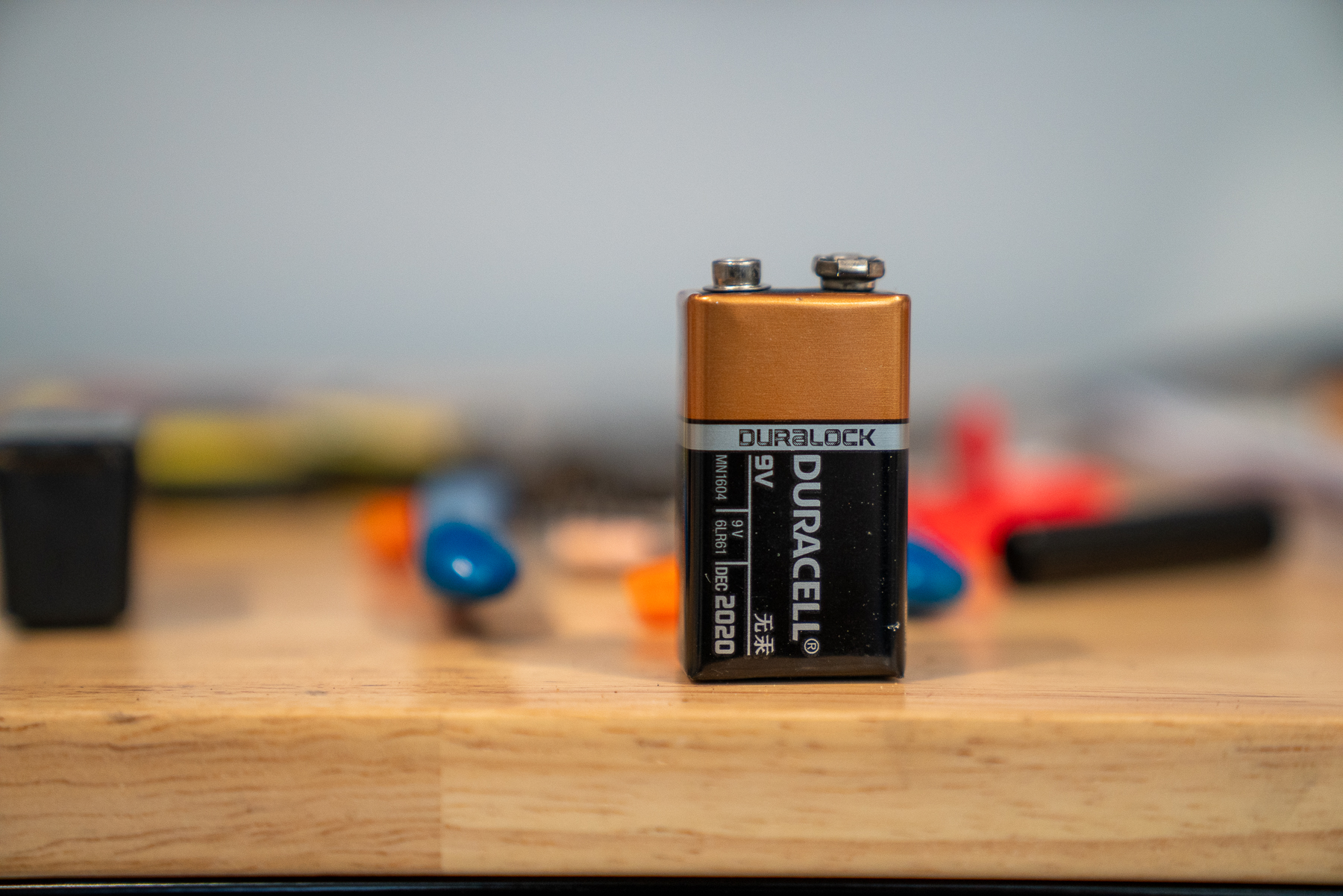
Chris mentioned that it would be nice if you could use a 9V battery in a pinch, and it got me thinking: what if that actually worked?! Growing up, I was really into the TV show MacGyver, where the show’s titular character got himself out of every jam using whatever simple items he found around him. This was my chance to be just like MacGyver.
Bench testing
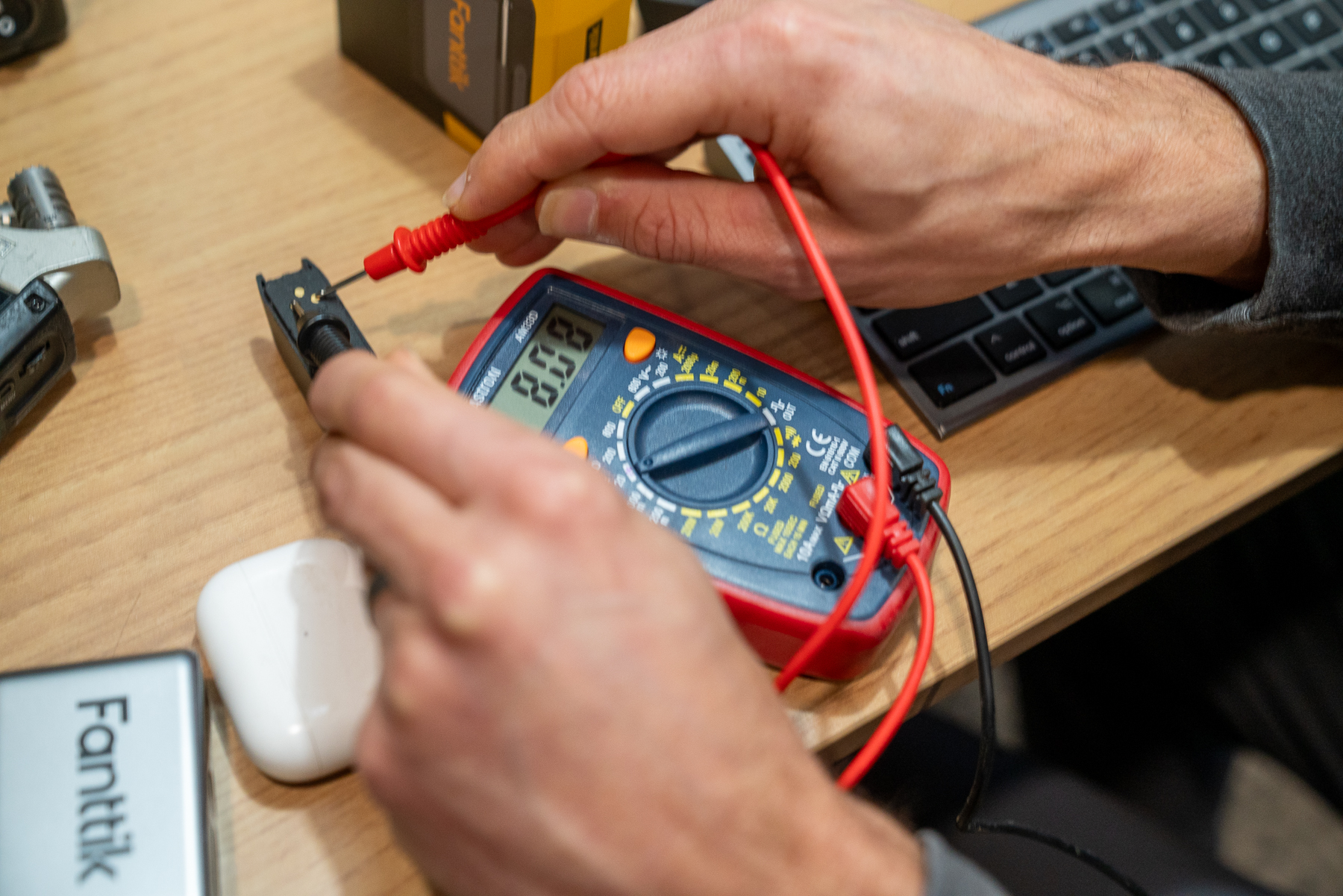
Back at home, I fired up my multimeter to see how much voltage an AXS battery delivers, and found a fully charged SRAM battery gives a touch over eight volts. I know nothing about electronics, but that seemed promising. I checked another AXS battery in my collection, a third-party battery from “Mazzmasy,” and the voltage, 7.4V, was helpfully printed on the case.
Aside: I don’t recommend the Mazzmasy battery because it doesn’t actually fit a GX Transmission derailleur. Also, do not try any of these experiments at home or on the trail unless you’re willing to void your SRAM warranty and/or destroy your derailleur.
I was worried that a 9V battery might have too much juice and fry the derailleur, given that a SRAM battery is only 8V. So for my first test, I taped together five 1.5V AA batteries in series to give me 7.5V.
This proved to be incredibly wonky without something like a spring to hold the batteries together. If I pressed my makeshift battery barrel together, the multimeter showed roughly 7.5V, so the next step was to find a way to deliver that power to the derailleur.
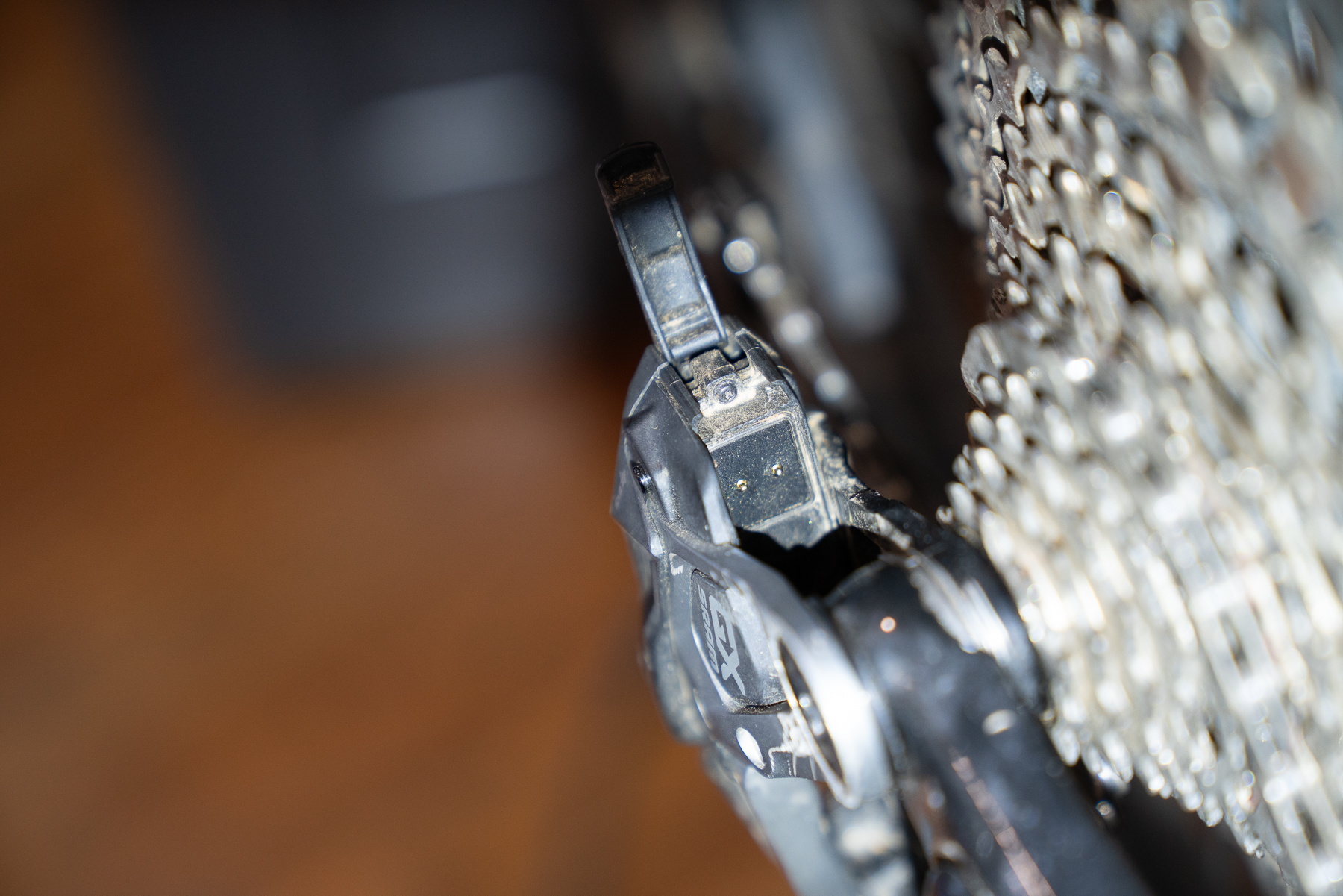
The spring-loaded electrical pins inside a SRAM AXS derailleur are incredibly tiny and stick above the surface of the battery holder by about a millimeter at best. Not only that, but the battery compartment is narrow and difficult to access. After several attempts, I managed to get a pair of alligator clamps attached to the pins and touched them to the AA battery log. Success: the green AXS light illuminated!
Of course, a 9V battery would be much more convenient, so for my next test, I attached a 9V battery to the derailleur, making sure to connect the positive side of the battery to the right terminal on the derailleur and the negative side to the terminal on the left. Once again, the AXS light turned green!
How could this knowledge possibly help in the real world?
Here’s how this MacGyver episode unfolds. MacGyver is three-quarters of the way through a bikepacking trip through a remote area, devoid of civilization except for the odd hardware store. Our hero has a 25-mile stretch of flat road until the next town with a bike shop, and is in his easiest gear for the last bit of the climb to the hardware store when — disaster strikes! A dead AXS battery, and not a spare battery or AXS charger to be found.
MacGyver calmly walks into the hardware store and buys a smoke detector and a 9V battery, careful not to purchase the new style of smoke detector that’s meant to be wired into a home, or already has a built-in battery. He rips the 9V wiring harness out of the unit, and strips the wires with his bare teeth. Asking a passer-by for a hand, he has them hold the bike so the rear wheel is off the ground and asks them to spin the pedals while activating the shifter. MacGyver connects the battery to the harness, then touches the red lead to the right pin, and the black lead to the left. “Shift!” he shouts to the person holding the bike. “Shift!” again and again, until he’s in the proper gear for the 25-mile ride to the bike shop. He drops the battery to the ground and hops back on the bike.
Into the sunset he pedals, a smile on his face and his feathered mullet waving in the breeze.
There’s actually a second trick that might work
Though it wasn’t particularly cold on my New Year’s Day ride, batteries are known to see voltages drop at low temperatures. In a case where you need just one more shift to finish a cold ride, it’s worth trying to warm the battery in your hand or under an armpit. This could boost the voltage just enough to get another shift or two, though I haven’t tried this, so I don’t know for sure if it will work. It’s worth a try!
The best solution? Check your battery level before the ride, remove the battery from the derailleur if you’re driving to the trailhead so it doesn’t drain itself unnecessarily on the way, and carry a spare (fresh) battery with you on the trail. This is the only way. Officially, anyway.
If you’re running a RockShox Reverb AXS dropper post, then you already have a backup AXS battery on your bike, which you could borrow to shift the bike into a proper gear. Or vice versa, if the dropper battery runs out and your post is stuck in the wrong position. I didn’t test the 9V trick on an AXS dropper post, but I imagine it would work too.
More testing
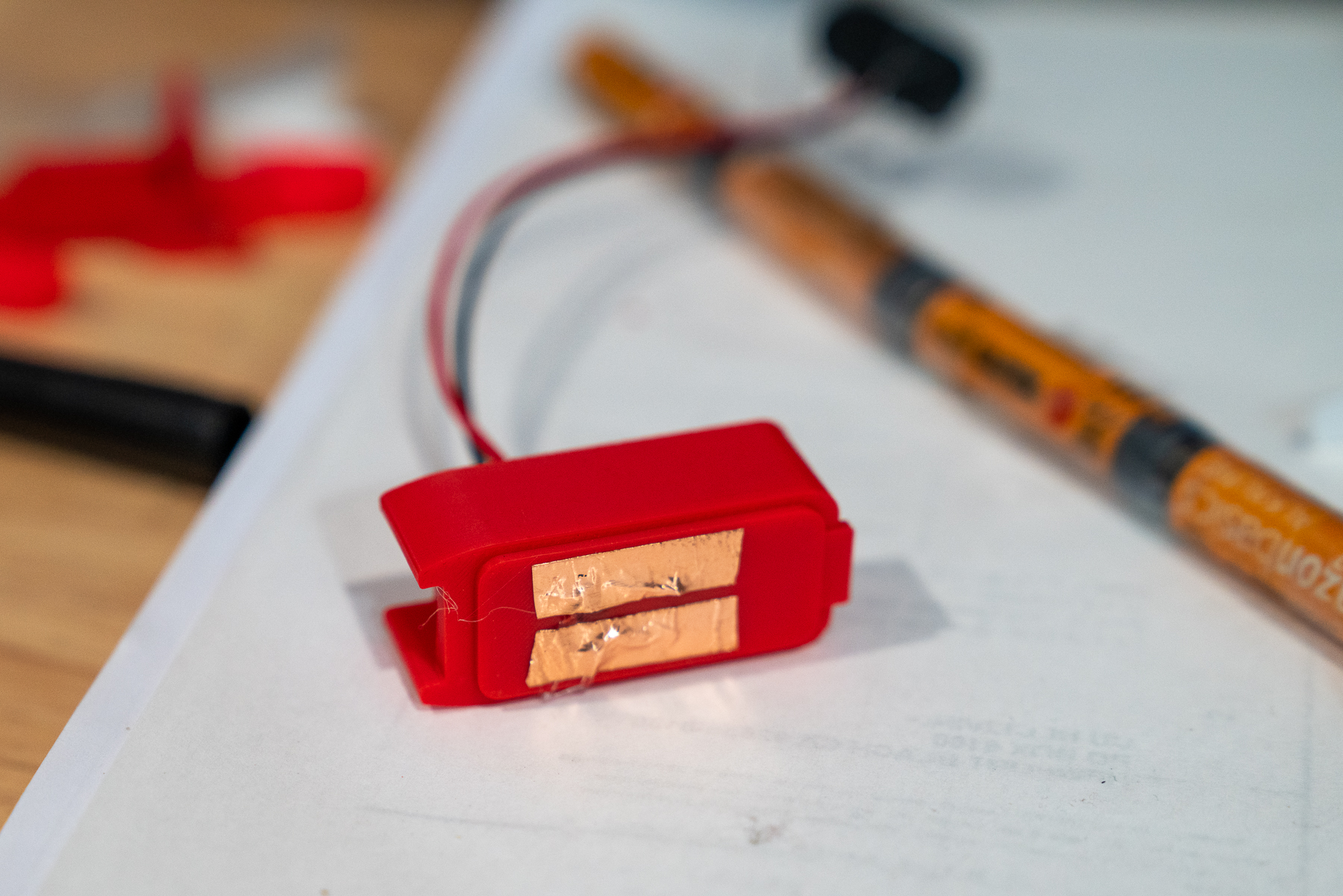
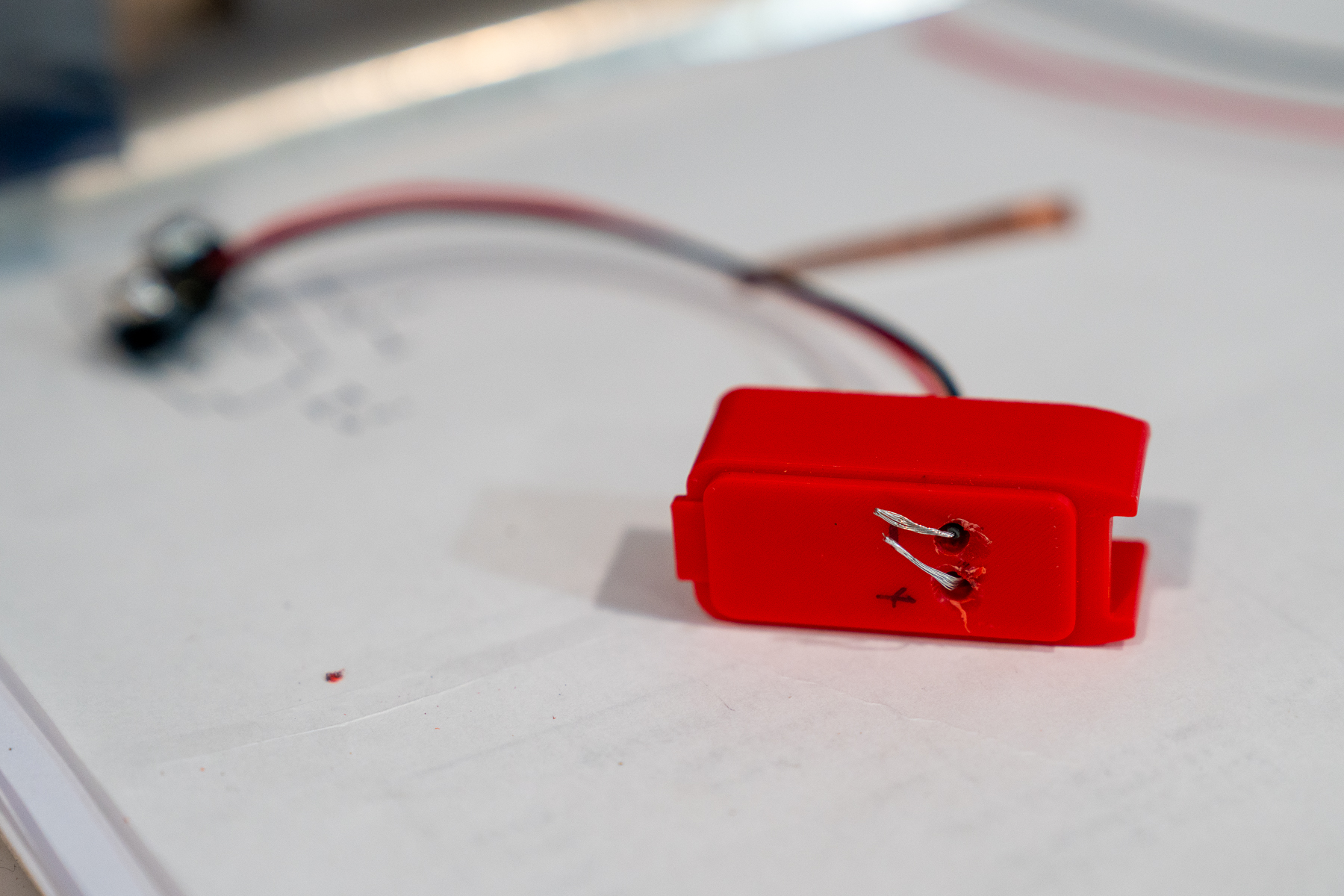
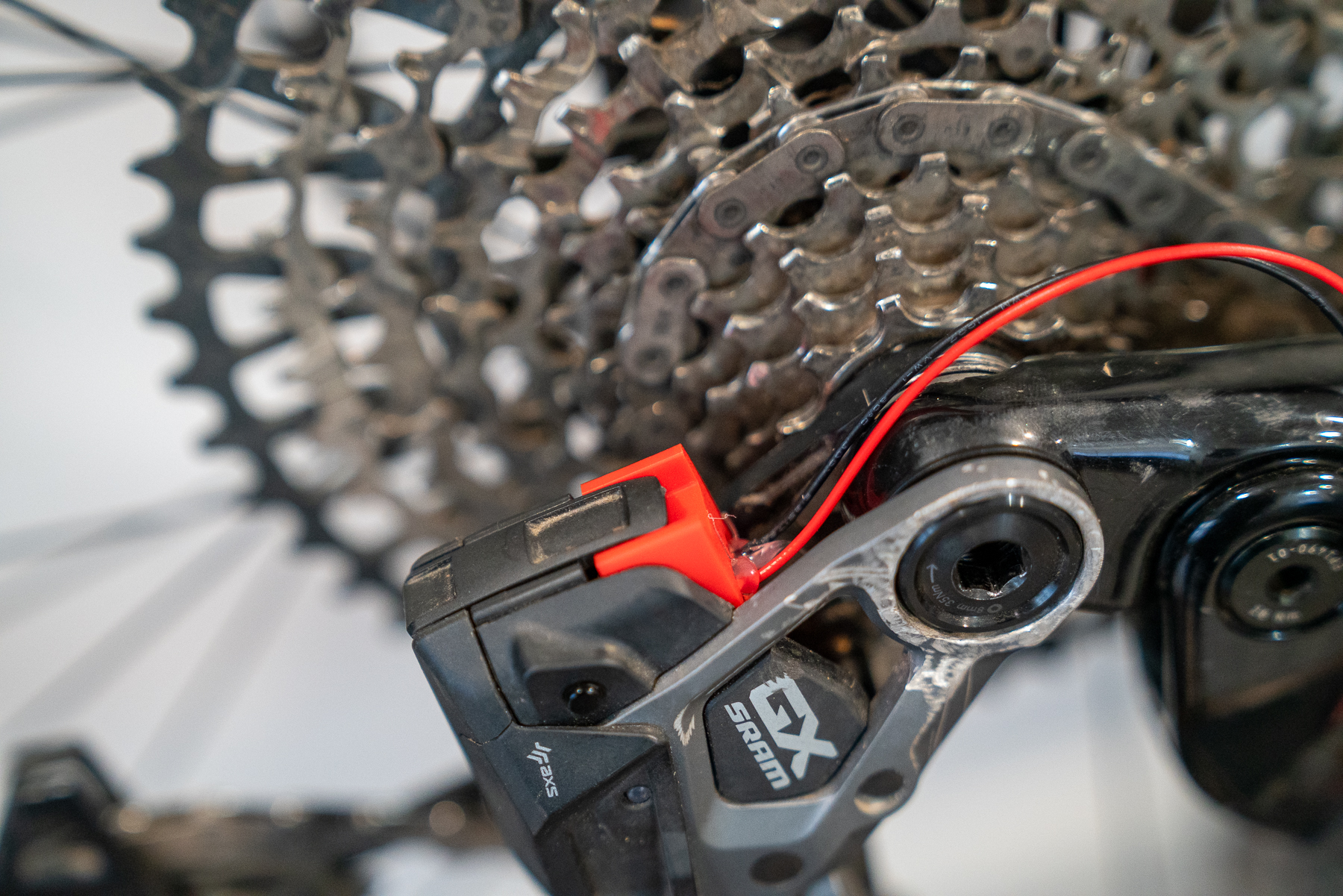
Even though I had proven it’s possible to power a SRAM AXS derailleur with a 9V battery, I wanted a more elegant solution. Well, more elegant than just holding the battery leads with my fingers. So I had my friend Borja 3D print a dummy SRAM battery, and I ran some wires through the top. I then added some conductive tape to contact the pins on the derailleur. The 3D print wasn’t perfect, and didn’t give a very tight fit, so I needed to add some more thickness to the conductive surface so it actually reached the pins.
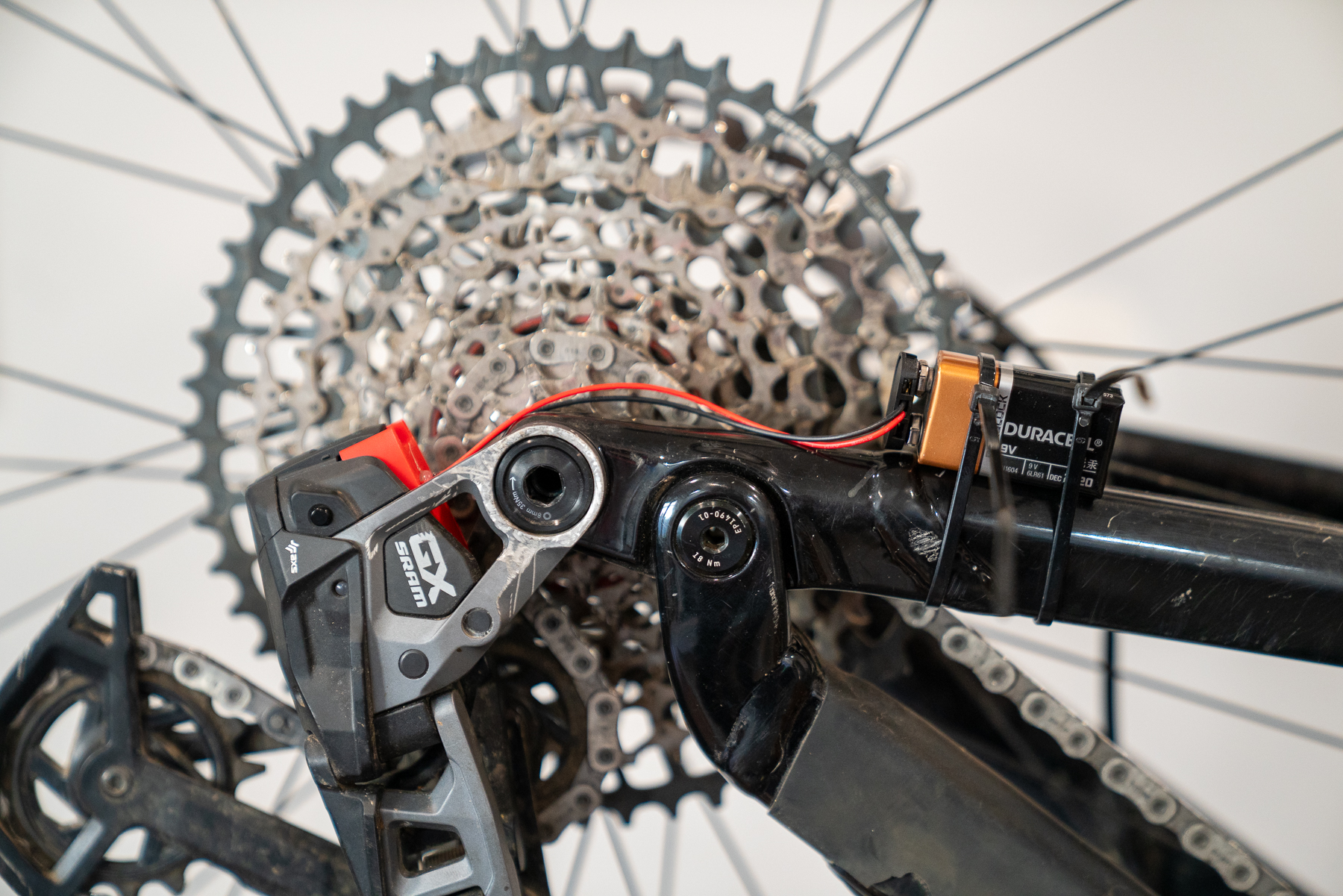
Finally, I zip-tied a 9V battery to my chainstay, connected it, and shifted as usual. I’m not confident that this quick-and-dirty setup would work for very long on the trail, but with some refinement, it could be decent. How long the 9V battery would last, and whether this could do long-term damage to the derailleur, is another open question. Again, I don’t recommend trying this at home or on the trail.
Could this dongle be a helpful thing to carry on the trail in case of an emergency? Absolutely not! You’d be much better off simply carrying an extra AXS battery.
Would this work for a Shimano Di2 derailleur?
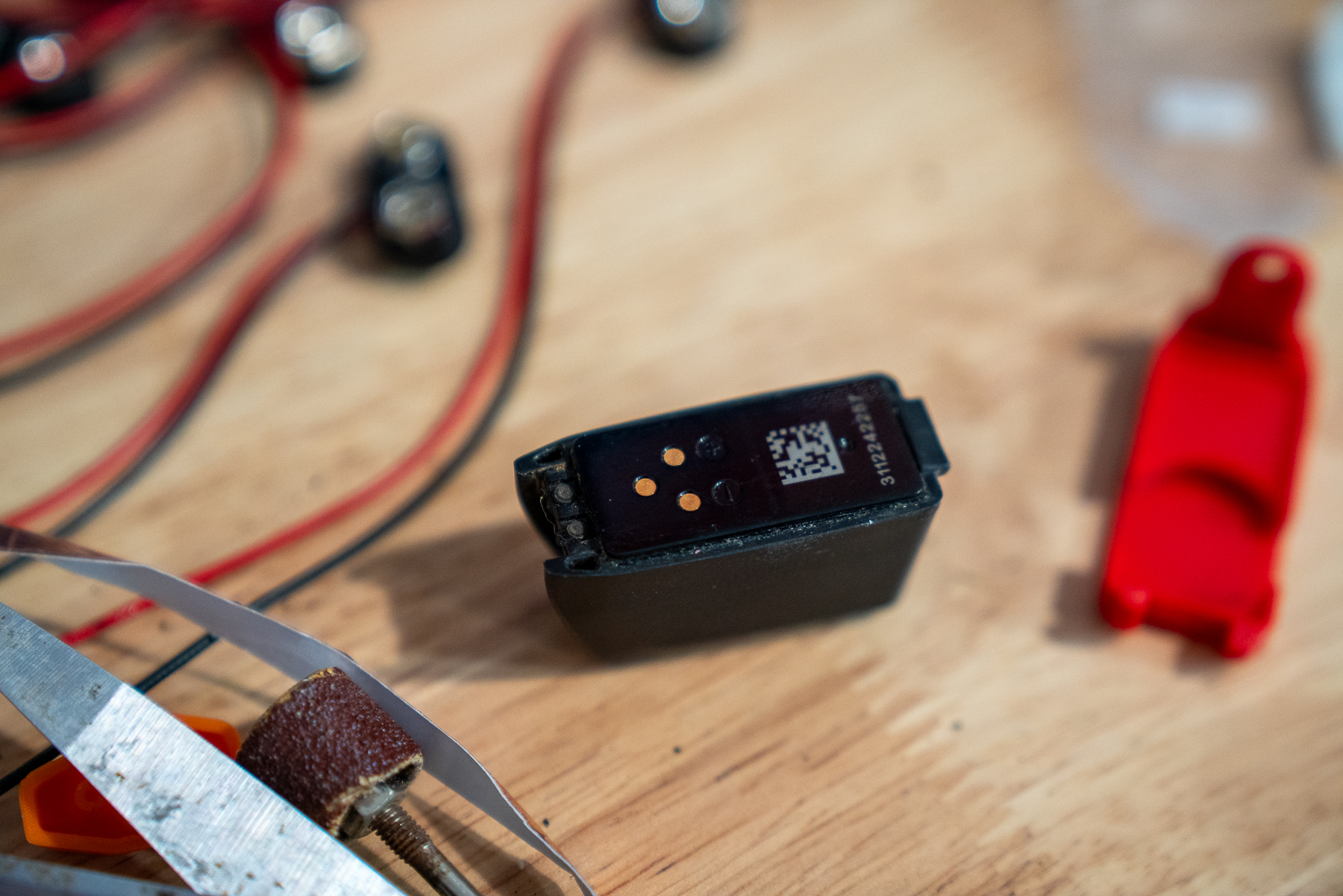
I considered trying this hack with a Shimano derailleur as well, but the Shimano system poses additional challenges. For starters, the pins on the wireless Di2 derailleurs are more difficult to access. And though the Shimano batteries are marked 7.6V, my tests showed between just four and five volts, depending on which terminals I tested. (The Shimano battery has four terminals compared to three on the SRAM batteries.)
Overkill? Tell me if you’ve found another way to MacGyver one more shift on a dead AXS battery in the comments below!







9 Comments
Jan 27, 2026
Jan 31, 2026
Jan 30, 2026
Jan 29, 2026
Jan 31, 2026
Jan 27, 2026
Jan 28, 2026
I have ot say I am not a fan of my SRAM AXS mech with its itty-bitty batt. Give me the old, wired Shimano Di2 with the big honkin' battery in the downtube. I would charge it once in April and again in August, and that was it for the season.
Jan 31, 2026
Jan 30, 2026