
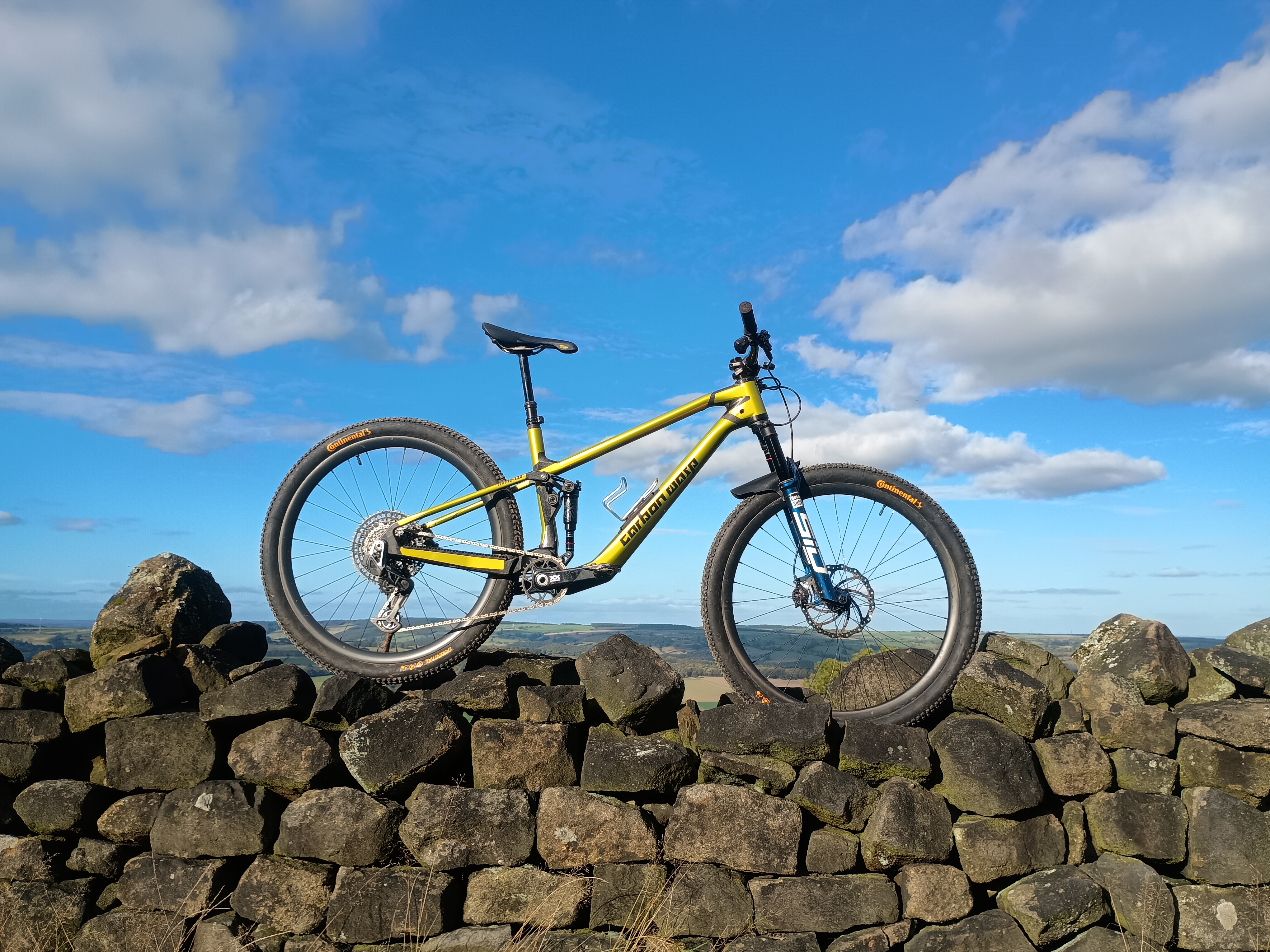
Carbon fiber doesn’t have a great environmental reputation. Notable bike brands like Commencal and Cotic actively avoid using it largely for that reason. Though it’s possible to recycle carbon fiber once a bike or wheelset has reached its end of life, the fibers are generally downcycled into something less structurally important, like a tire lever. Which is what makes Carbon Wasp’s new frame formulation notable.
The UK-based brand says about 10% of the carbon in the new Truffle-120 cross-country mountain bike frame is recycled, using fibers from manufacturing scraps rather than old bikes. Still, this is one of the first mountain bike frames we’ve seen that’s actually made with recycled carbon fiber — albeit in a small dose — as opposed to frames that are pitched as recyclable at some point in the future.
The Truffle-120 is a 120mm-travel 29er XC/trail frame that’s handmade in Yorkshire, England, and the update also brings new aluminum linkage plates.
How Carbon Wasp is using recycled carbon
Recycled carbon fiber isn’t new, but it has traditionally had a big drawback. According to information provided by Carbon Wasp, fibers are reclaimed by dissolving or burning off the resin, then chopped up and formed into a mat. Those short fibers usually end up randomly oriented, which Carbon Wasp says vastly reduces their strength and stiffness. That’s a problem for bike frames, where engineers rely on precisely placing and orienting fibers to put strength and stiffness exactly where it’s needed.
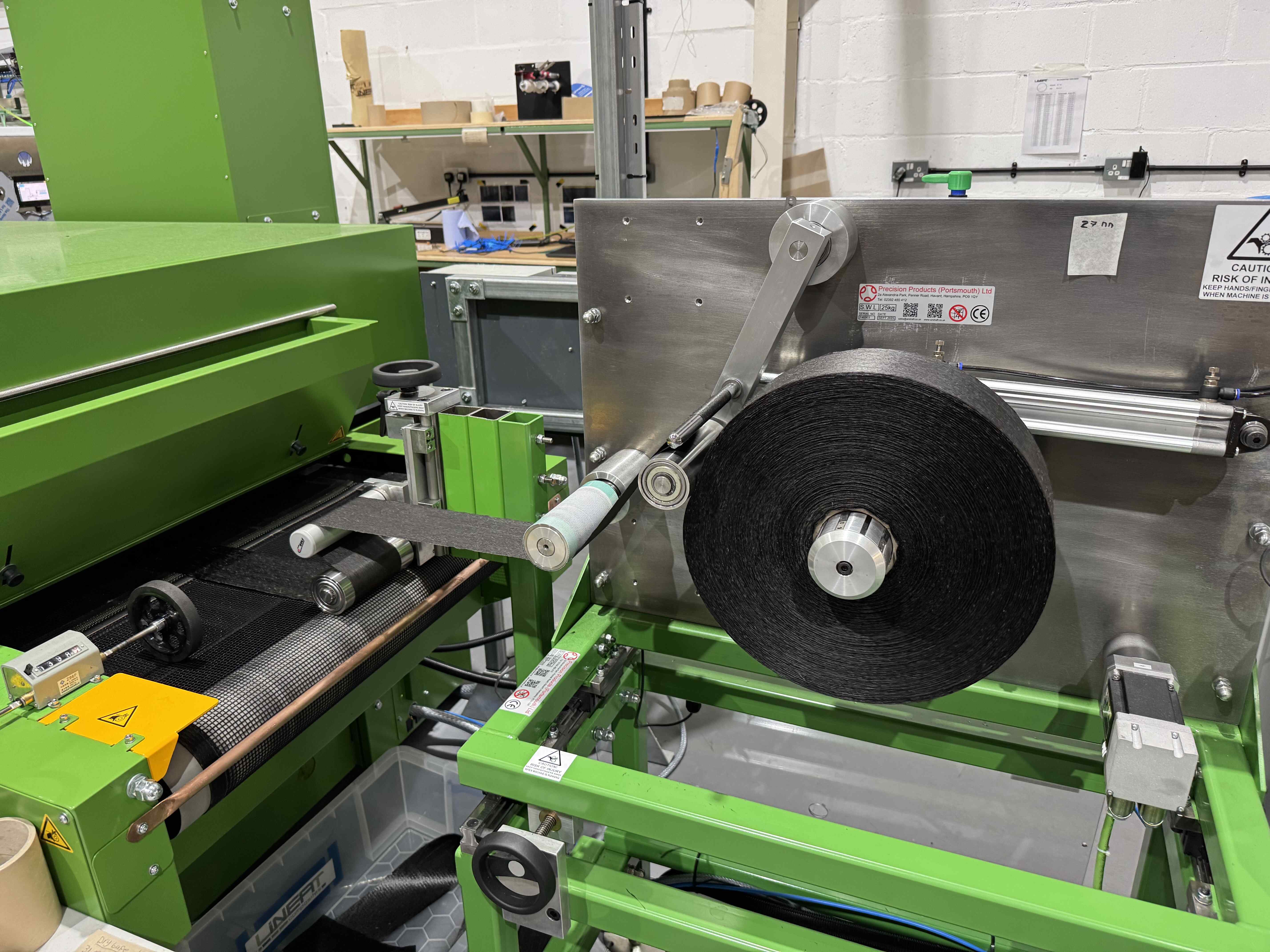
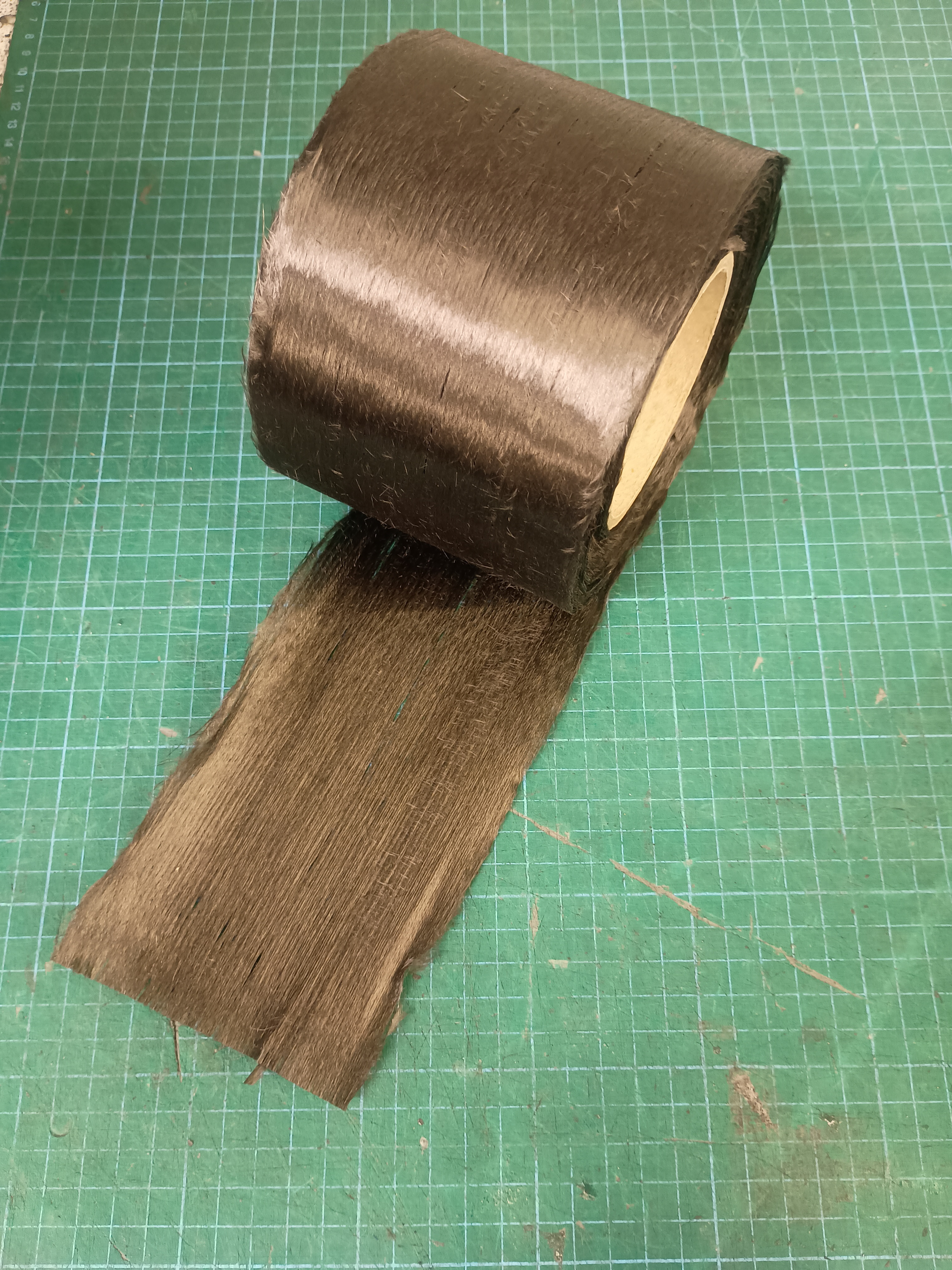
Carbon Wasp is sourcing its recycled carbon from Lineat Composites, a spinout from the University of Bristol’s Bristol Composites Institute. Lineat uses a patented process to take short, chopped carbon fibers and realign them into a unidirectional tape. Carbon Wasp says the resulting material retains about 80% of the properties of continuous fiber, and that it can be reused at less than half the carbon footprint of virgin carbon fiber.
According to Carbon Wasp, every carbon part it makes now includes Lineat recycled fiber alongside conventional virgin fiber. In the Truffle-120 frame, around 10% of the layup is recycled fiber, used across the whole frame. They reworked the layup so the frame weighs the same as before, with the same strength and stiffness in key areas.
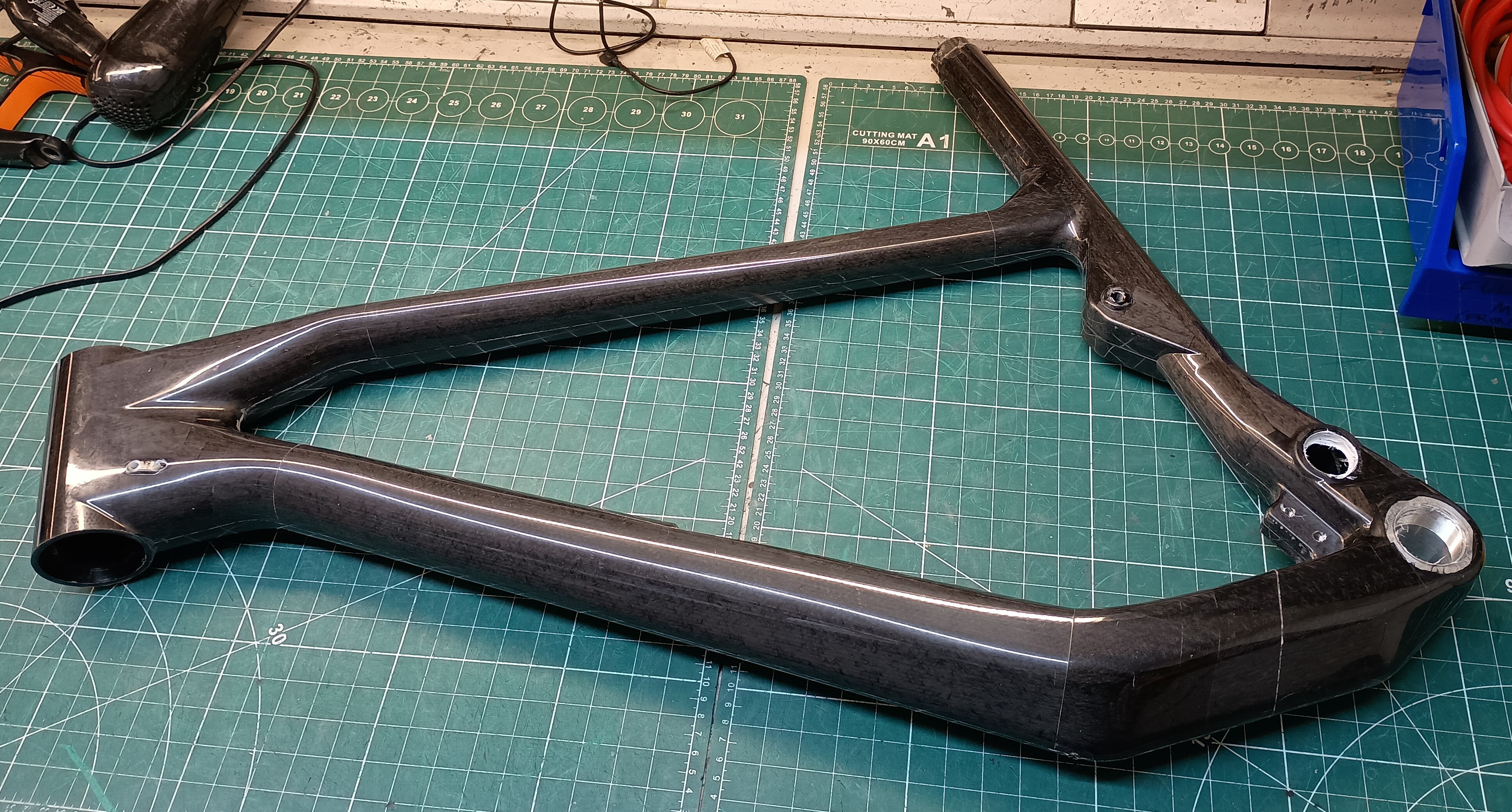
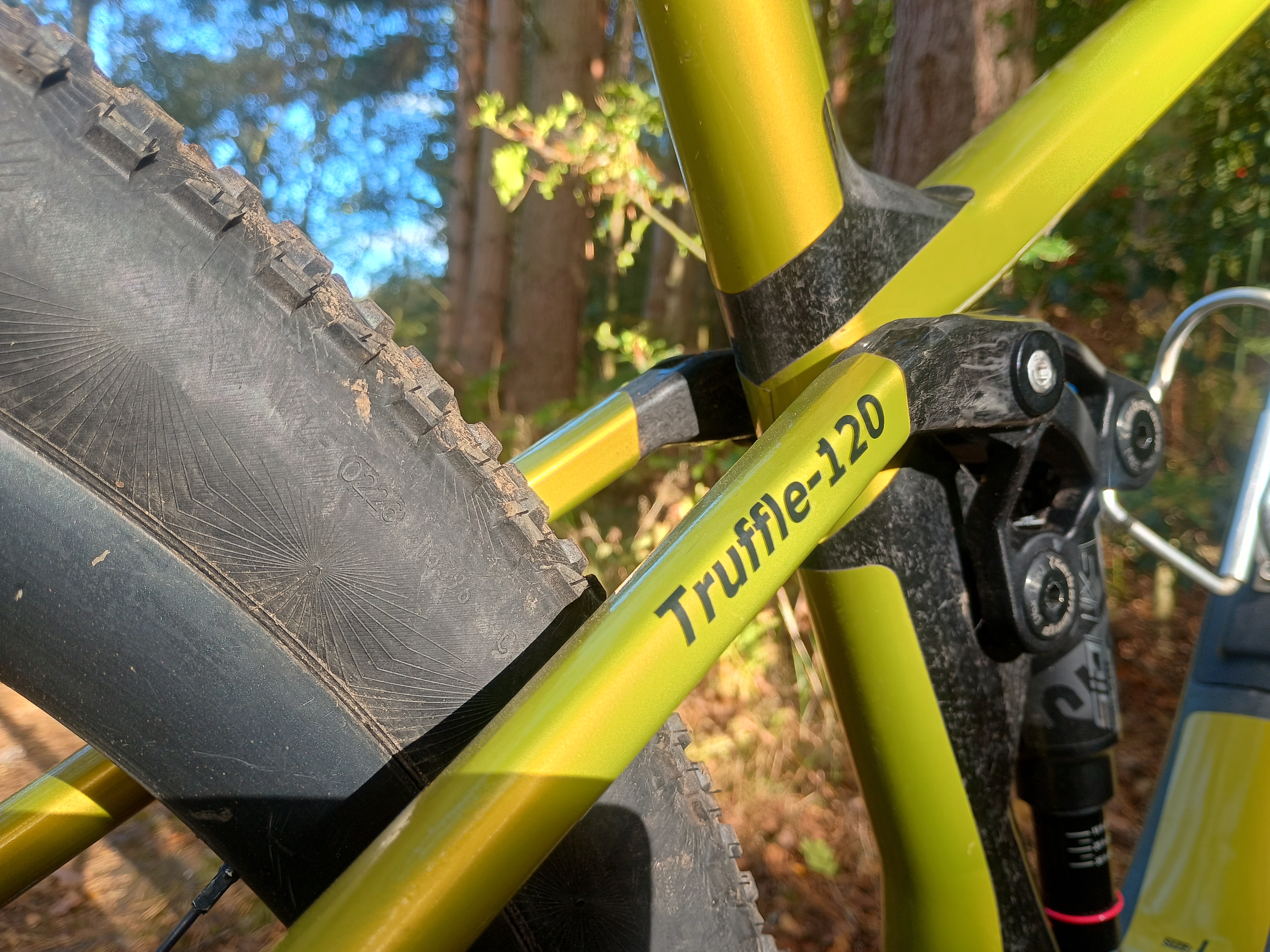
The recycled material forms the visible surface layer of the frame. “Some people might prefer the classic looking woven finish, but we think it’s important to highlight the change we made and show what we’re working with,” the company wrote in a blog post.
For now, the fibers come from industrial waste because there’s a lot of it and it’s both easy to process and inexpensive. Carbon Wasp says it’s also working with other UK companies that can reclaim fibers from end-of-life parts, including old bike frames, and send them to Lineat to be turned into aligned pre-preg tape. “We’re not there yet but that’s the end goal,” the brand said.
Carbon Wasp makes it clear that this is a first step. The company says it aims to increase the proportion of recycled fibers in its frames over time, and it’s working with suppliers on bio resins, “but that’s something for the future.” Part of the goal, the brand says, is simply to prove there’s demand for recycled carbon so the materials can improve and prices can come down.
Background: carbon’s recycling problem
Most carbon bike frames are made with thermoset epoxy resin, which can’t simply be melted down like aluminum or steel. To recover the fibers, the resin has to be stripped away, a process that’s difficult and time-consuming, as we reported back in 2020. Trek and Specialized both launched carbon recycling programs more than a decade ago, but recovered fiber has mostly ended up in lower-value products rather than new frames.
The approach we’ve covered most in the bike industry is designing carbon that’s easier to recycle at the end of its life. In 2019, Guerrilla Gravity switched its full-suspension line to Revved carbon, which used a different resin and curing process and which the brand said could be recycled in the US if a frame broke. Guerrilla Gravity later shut down, and Revved Industries’ manufacturing equipment was auctioned off.
A year later, Revel Bikes launched wheels made from CSS Composites’ Fusion Fiber, a thermoplastic carbon material Revel noted was 100% recyclable. Revel said broken rims could be sent back, chipped into roughly one-inch pieces, and melted down to make something else. The brand later turned its rim scraps into tire levers. Recycled carbon has also shown up in less structural places, like Silca’s Ultimate Tubeless Sealant, which the brand said uses recycled bits of carbon fiber to help plug punctures.
Those are all useful steps, but recyclable isn’t the same as recycled. A tire lever made from old rims is a nice use for the material, but it’s still downcycling. What Carbon Wasp and Lineat are attempting is closer to closing the loop: taking waste carbon and turning it back into structural material good enough to build a mountain bike frame.

Last year Giant announced a carbon-fiber balance bike, the Pre rCarbon, with a frame made from “eco-friendly recycled carbon fiber, thermoplastics, nylon and ocean waste.” But clearly a kids’ balance bike is a much lower-stakes product than a full-size mountain bike frame.
The rest of the Truffle-120 update
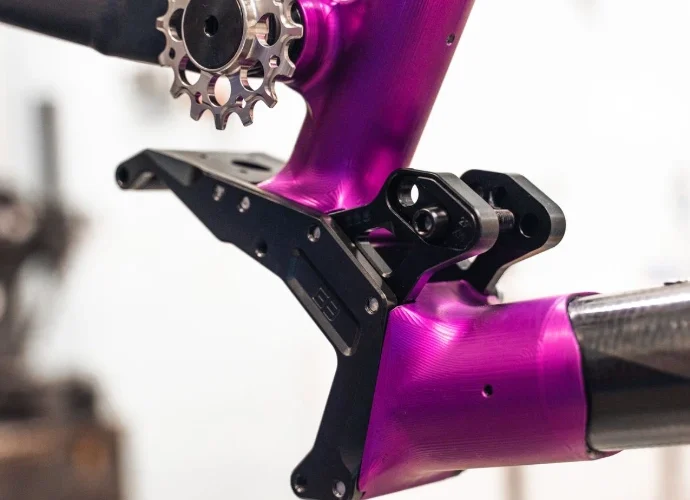
The other notable change to the Truffle-120 is the linkage. The previous version used a carbon linkage, and the updated construction swaps that for aluminum plates at either end of the shock. Carbon Wasp says the change was simply about ease of manufacturing: machining the linkages on a CNC is more straightforward than molding carbon parts and bonding in aluminum bearing housings, especially as the brand ramps up production. The company says the new aluminum linkages weigh the same as the old carbon versions.
Otherwise, the frame stays the same. Carbon Wasp positions the Truffle-120 as an XC/trail bike that can be built up as a lightweight XC or marathon race bike or as a more robust trail bike. The brand says it’s not meant for bike park laps, “but it will cope with that if you need it to.”
The suspension design is a single pivot with flex stays. The Truffle-120 is offered in four sizes, with a 480mm reach on the size large and a 65.5° head angle. Carbon Wasp also offers six rear stay options with chainstay lengths ranging from 435mm to 460mm in 5mm increments, and any size front triangle can be paired with any stay length. The stays are fixed rather than adjustable, so riders pick a length when ordering.
Carbon Wasp doesn’t paint its frames. Instead, each frame gets a full-color wrap, with one custom color included and more elaborate patterns or designs available for an extra charge.
Price and availability
The updated Carbon Wasp Truffle-120 is available now for £2,700 (about $3,600 USD) frame-only, or £3,050 (about $4,100 USD) with a Cane Creek DB IL shock. Carbon Wasp doesn’t offer complete builds as standard, but the brand says it can put together a partial or full custom build on request.
More info: carbonwasp.com
Keep up with the latest mountain bike news by adding Singletracks as a preferred source on Google.



0 Comments