
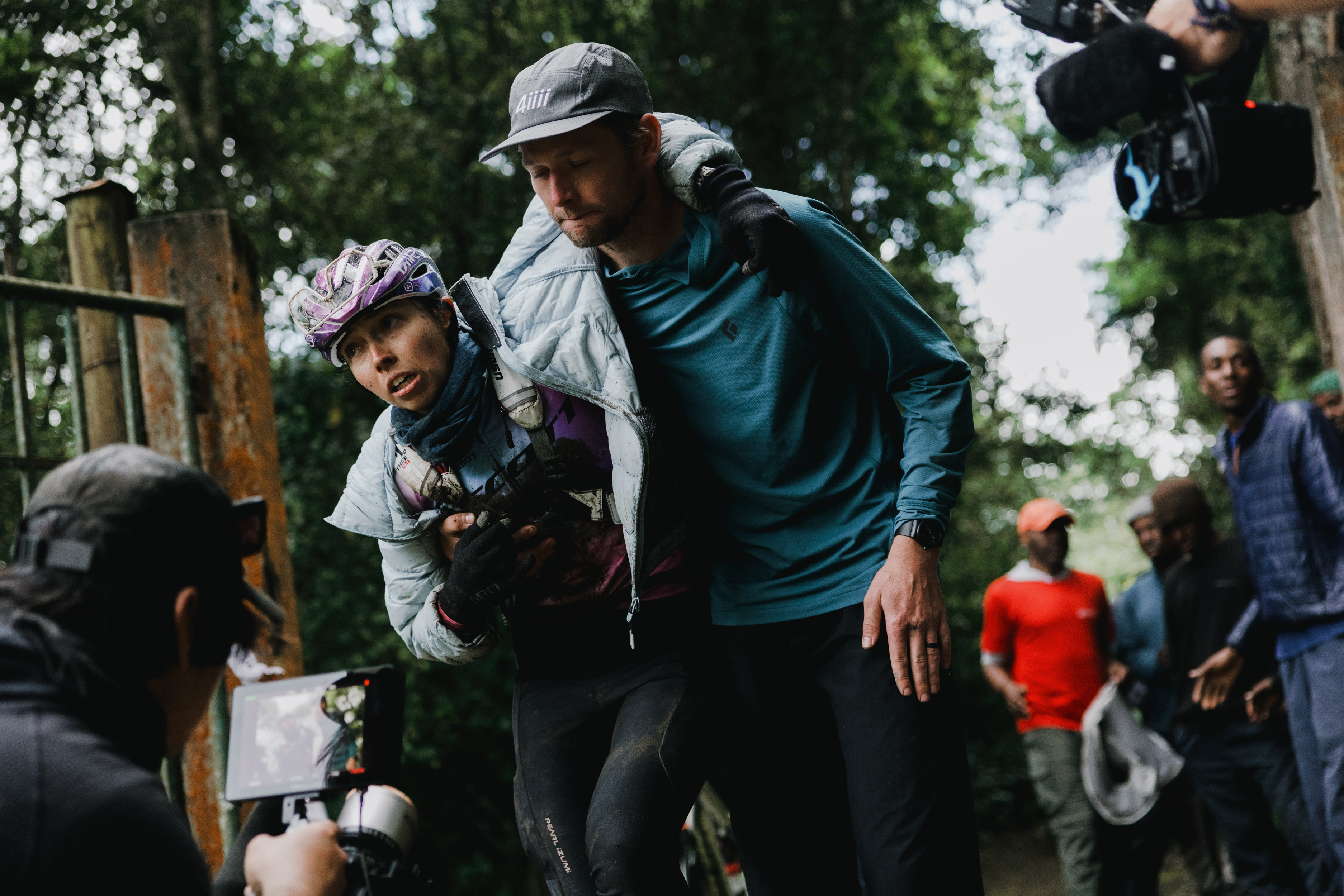
Two weeks ago, Hannah Otto made history once again, establishing the “first known single-day bicycle ascent of Mount Kilimanjaro by a woman.” And, in true Hannah Otto fashion, the numbers are wild: 12,000 feet of climbing, roughly 18 miles, and all in 10 hours, 18 minutes, and 51 seconds.
What makes the experience even more wild is that Otto rode the final two miles on a broken leg, which resulted in blood clots and eventual surgery. But also in true Hannah Otto fashion, her spirits are high as she looks forward to the 2027 race season.
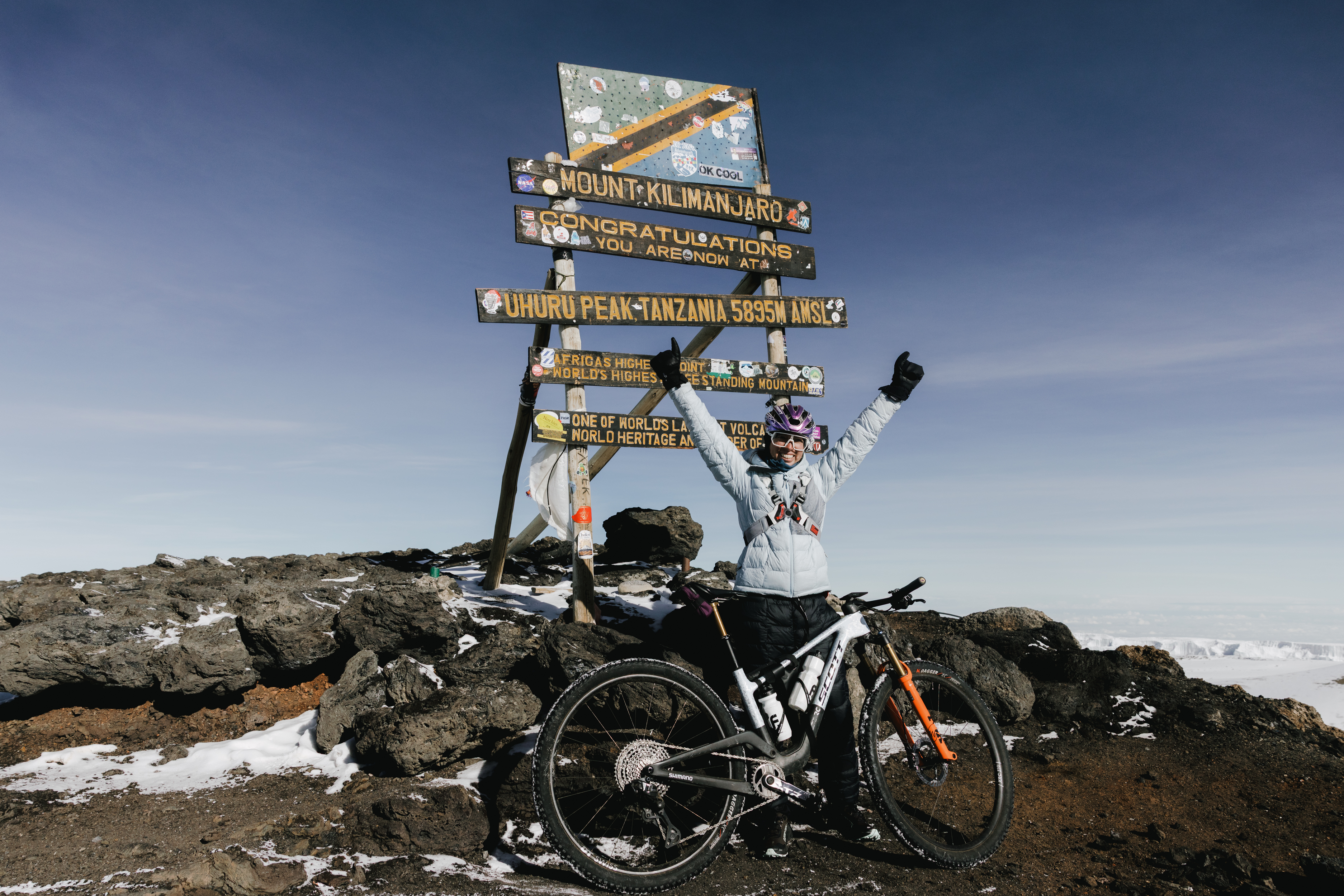
A fastest known time (FKT) on Kilimanjaro
“It’s certainly been a whirlwind since getting off the mountain!” Otto told Singletracks in an email. “The Kilimanjaro expedition was an incredible experience, and while the broken leg and surgery weren’t exactly how I envisioned things ending, they’ve become an unexpected part of the story.”
Most people don’t think of Tanzania, Africa, when they consider a mountain biking destination. And, honestly, most don’t think of “tall mountains” when they think of Africa. Yes, we know Kilimanjaro, but it’s only 10,000 feet, right? Okay, maybe 11- or 12,000, but certainly not higher than anything in the Rocky, Sierra Nevada, or Cascade mountain ranges.
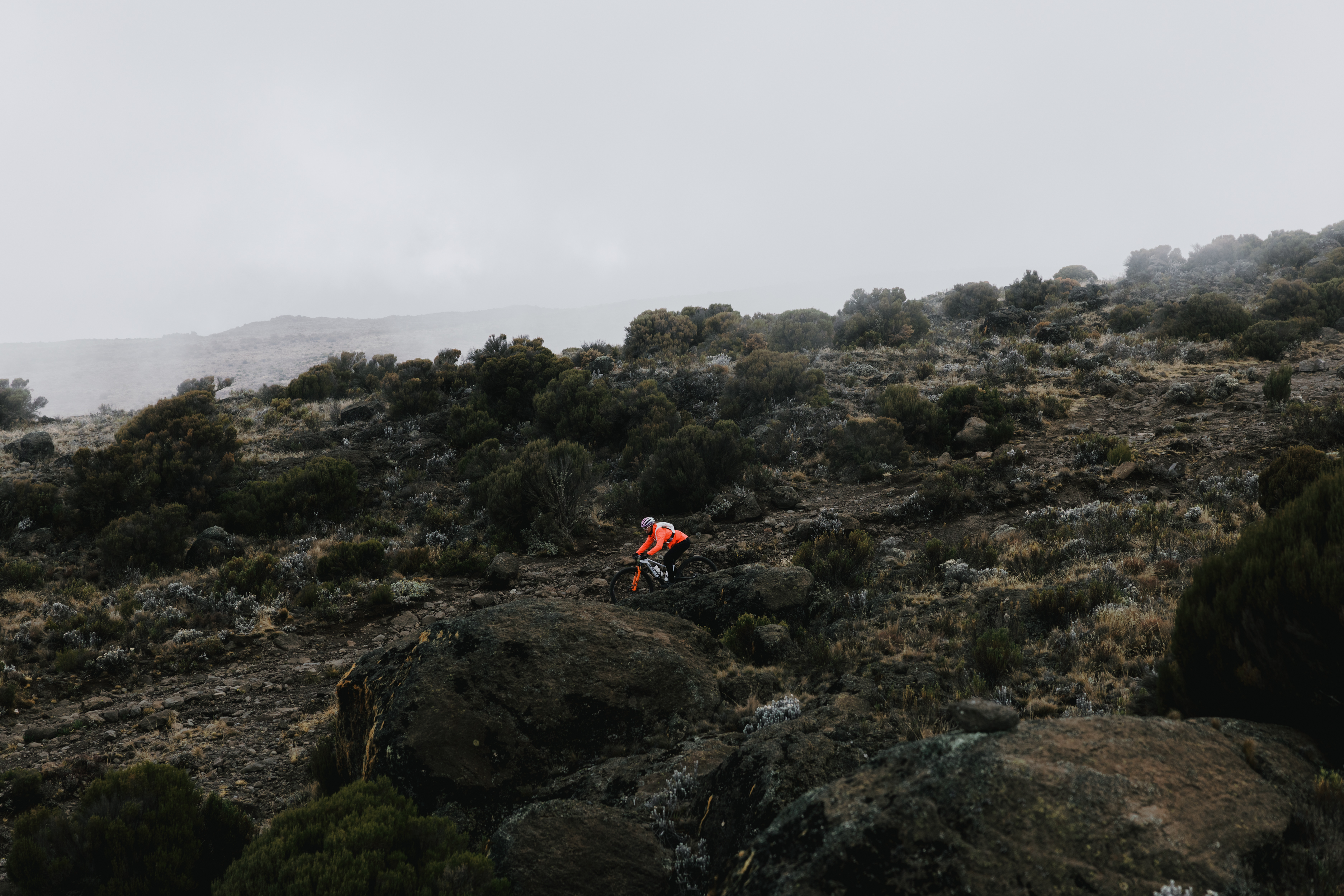
Wrong. Kilimanjaro is damn high. At 19,341 feet above sea level, the snow-covered summit doesn’t look like anything we would “expect” when thinking of Africa. Otto told us that she started at around 7,000 feet, with a little over 12,000 feet of elevation ahead of her.
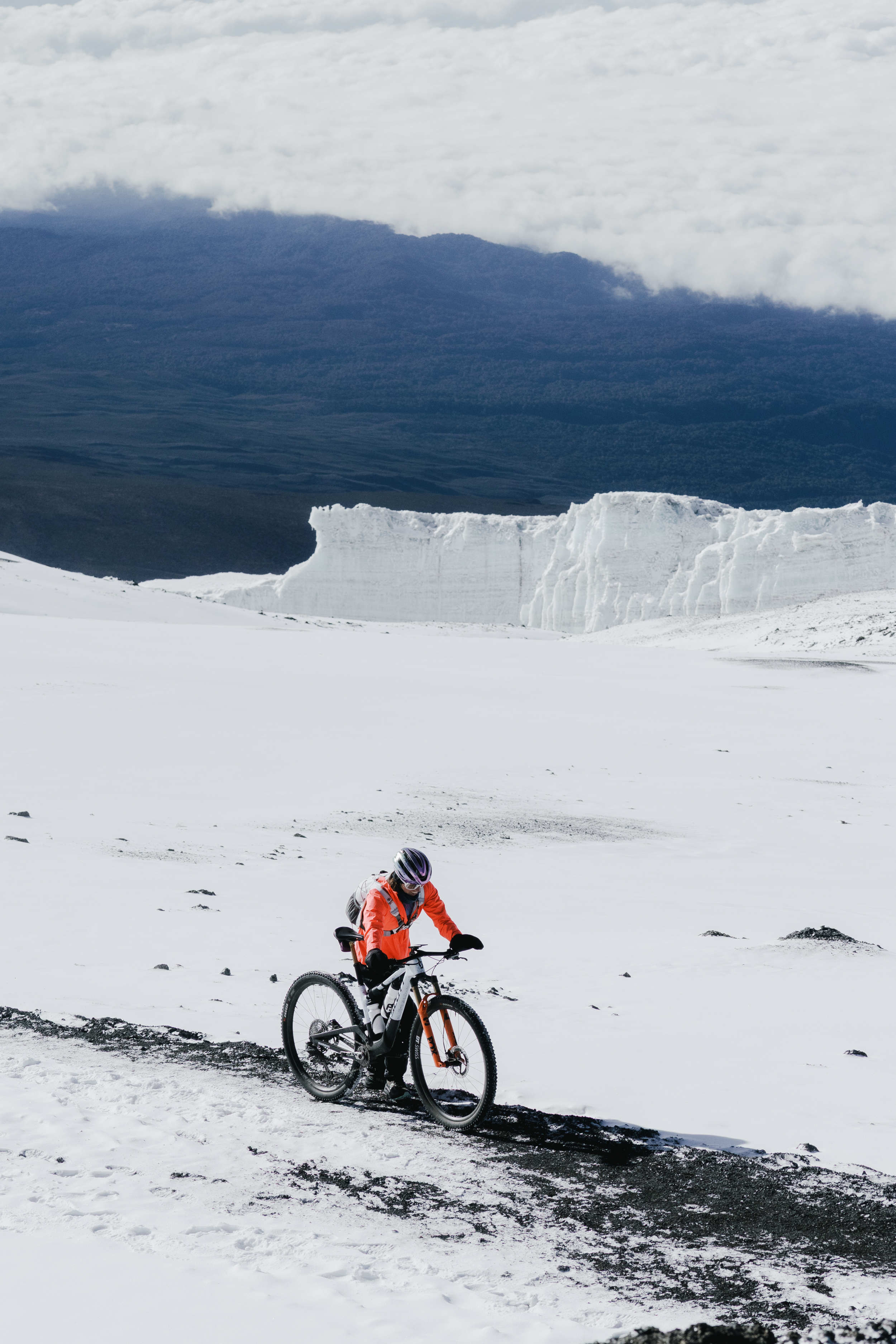
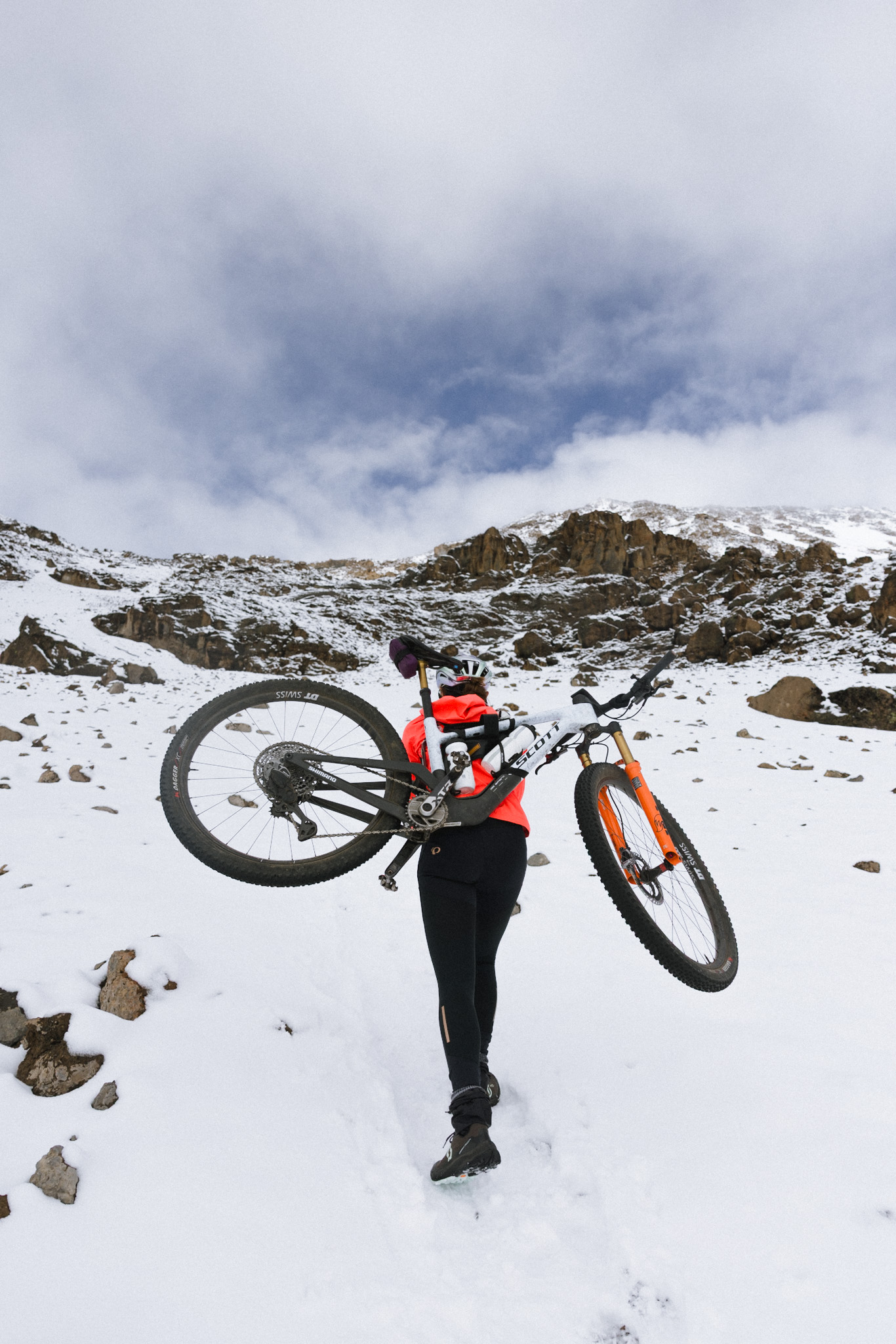
“The altitude and increasingly steep terrain made it an incredibly demanding effort, and the final several thousand feet were spent carrying my bike and hiking to the summit,” she said. “At about 17,500 feet, rocks jetted out from the snow-covered ground, requiring me to scramble using my hands to pull myself up and over the boulders, and every effort came at a massive energy cost.”
Otto said that during her 10-hour ride, the temperature dropped dramatically. At roughly 7,000 feet, where her team was stationed, it was a comfortable, balmy 70°. At the summit, temps were around 10°.
“Summiting the mountain felt like a nearly out-of-body experience.”
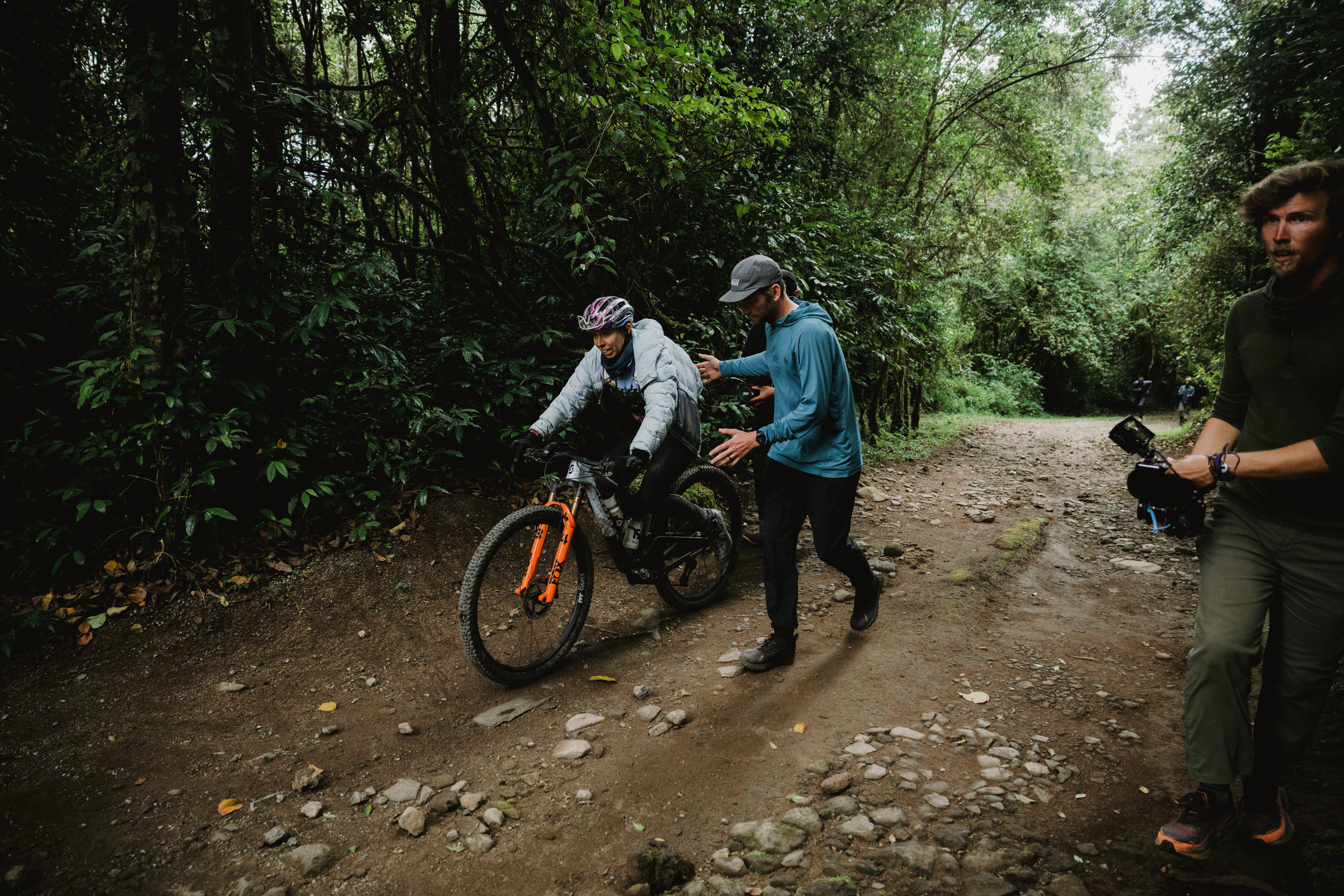
Descending on a broken leg
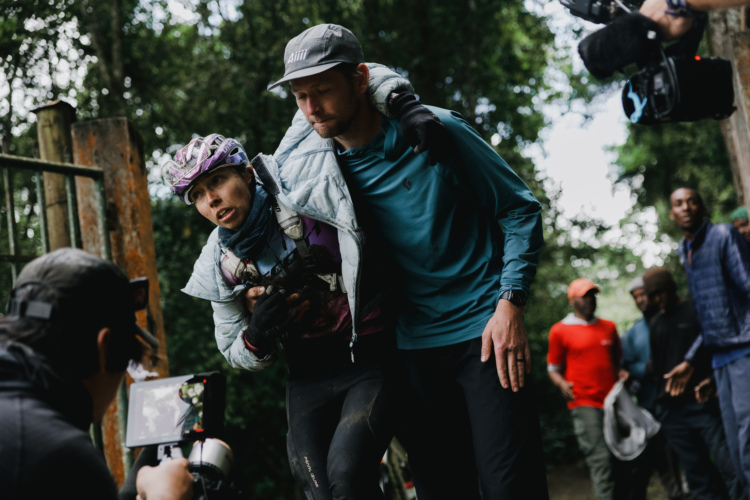
No doubt, summiting Kilimanjaro is wild, which is exactly what we’ve come to expect from Otto. But even this had us, and most, saying: “Damn.” And perhaps more incredible than reaching the 19,000+ foot summit on a bike was Otto’s descent. With two miles left, Otto crashed and broke her leg.
“After the climb, I turned to descend the mountain and rode through all of the steep, loose, and rough terrain without issue. The final five miles transition into rainforest and a mellow fire road down to the finish. I was virtually home free, but a sweeping corner transitioned from dry dirt road to wet mud, and when I hit it, it was like ice. I went over the bars, slid through the mud, and felt my bone snap.”
Otto said that she immediately knew that her leg was broken. She said the first few times she tried to stand, she “watched my femur and tibia move in opposite directions.” (Cue me feeling lightheaded and my legs feeling weak when I read that in our back-and-forth email exchange.)
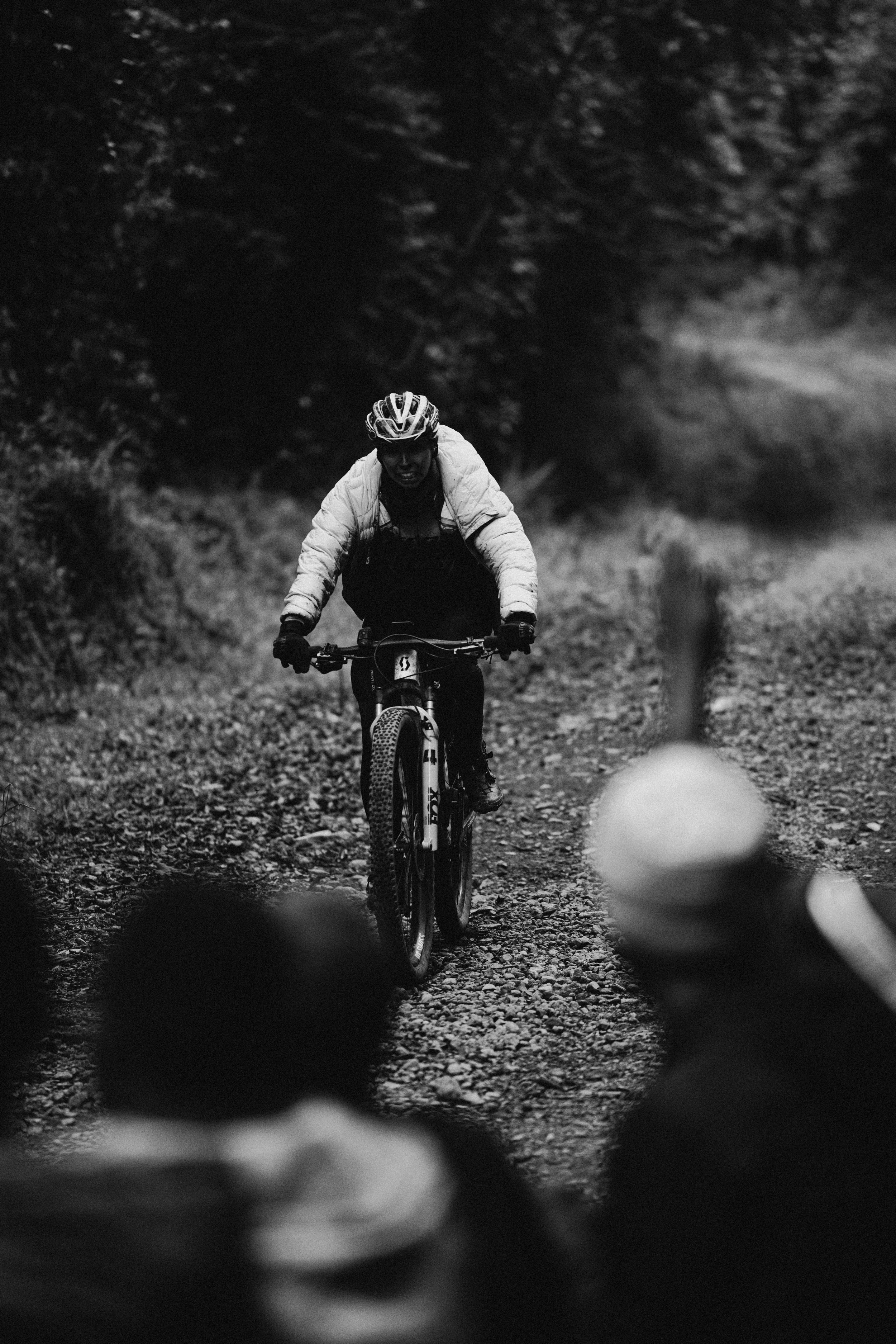
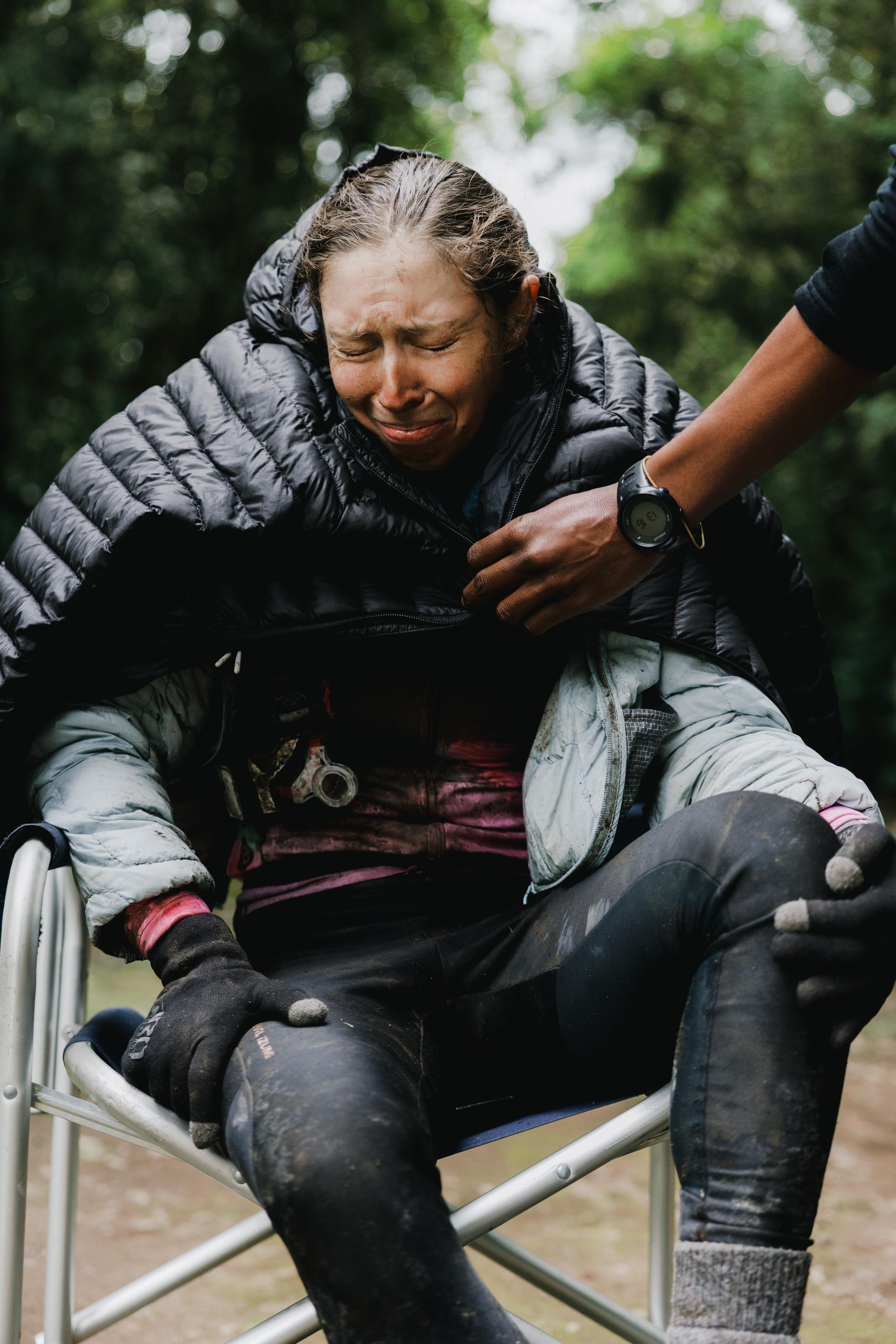
With a few miles left, she lay in the mud thinking her FKT attempt was all over. Her leg was broken; she was done.
“I imagined what it would feel like 20 years from now to claim that I almost did it, and I felt sick inside. That was when I decided that the pain of losing out on a dream is far worse than whatever pain my leg was going to give me in the final two miles.”
Otto used her bike as a crutch, got up, and pedaled one-legged to base camp.
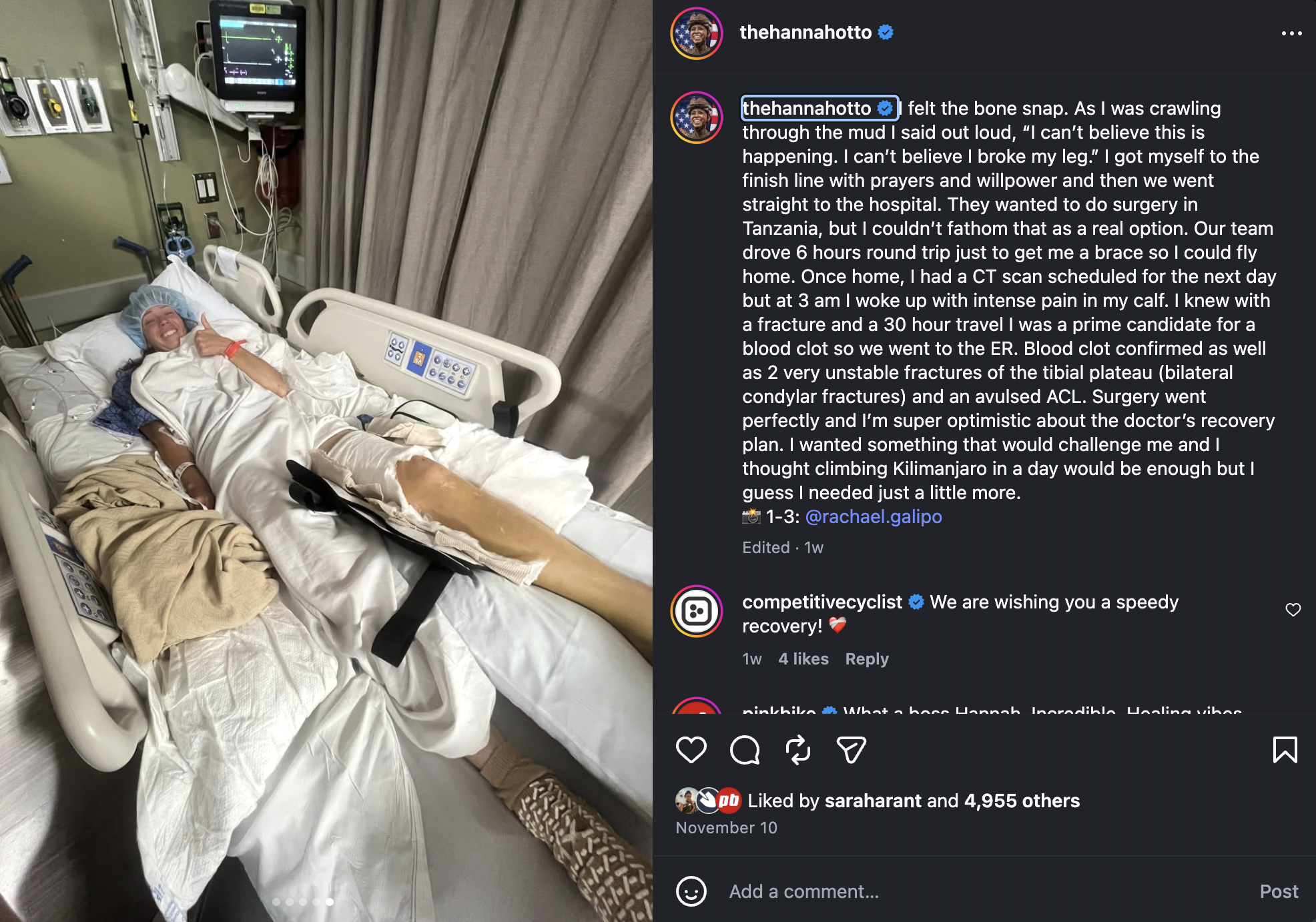
Surgery and a blood clot
After she finished her Kilimanjaro FKT, Otto went straight to the hospital, where X-rays confirmed a broken tibia and the need for surgery. Doctors in Tanzania cleared Otto to fly back to the States — a 30-hour journey. She arrived home on Saturday, November 7, with a surgeon’s appointment scheduled for a few days later.
“On Sunday, at 3 AM, I woke up with severe pain in my calf and knew it was a clot,” she told us. “We went straight to the ER where they confirmed the clot and began treatment for that.” With the severity of her injury, Otto knew the risk of blood clots was a possibility, especially with a 30-hour flight.
“That ER trip allowed me to be evaluated sooner,” Otto continued. “They determined that I needed surgery on Monday morning — not for the clot, but to stabilize the bones in my leg.”
Otto remained in the hospital for 24 hours post-surgery to recover and allow doctors to treat the blood clot. She told us that she was released from the hospital on November 10th.
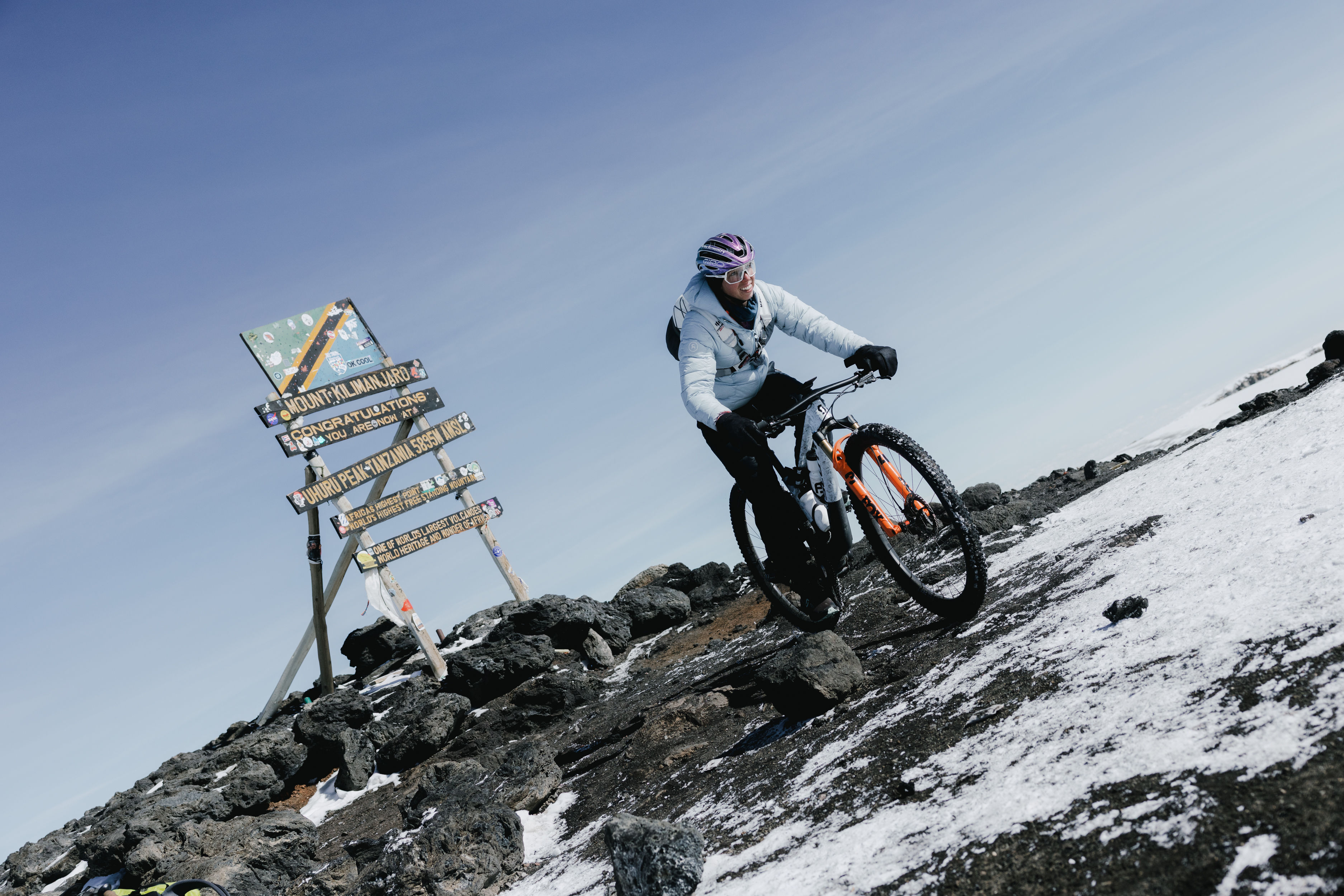
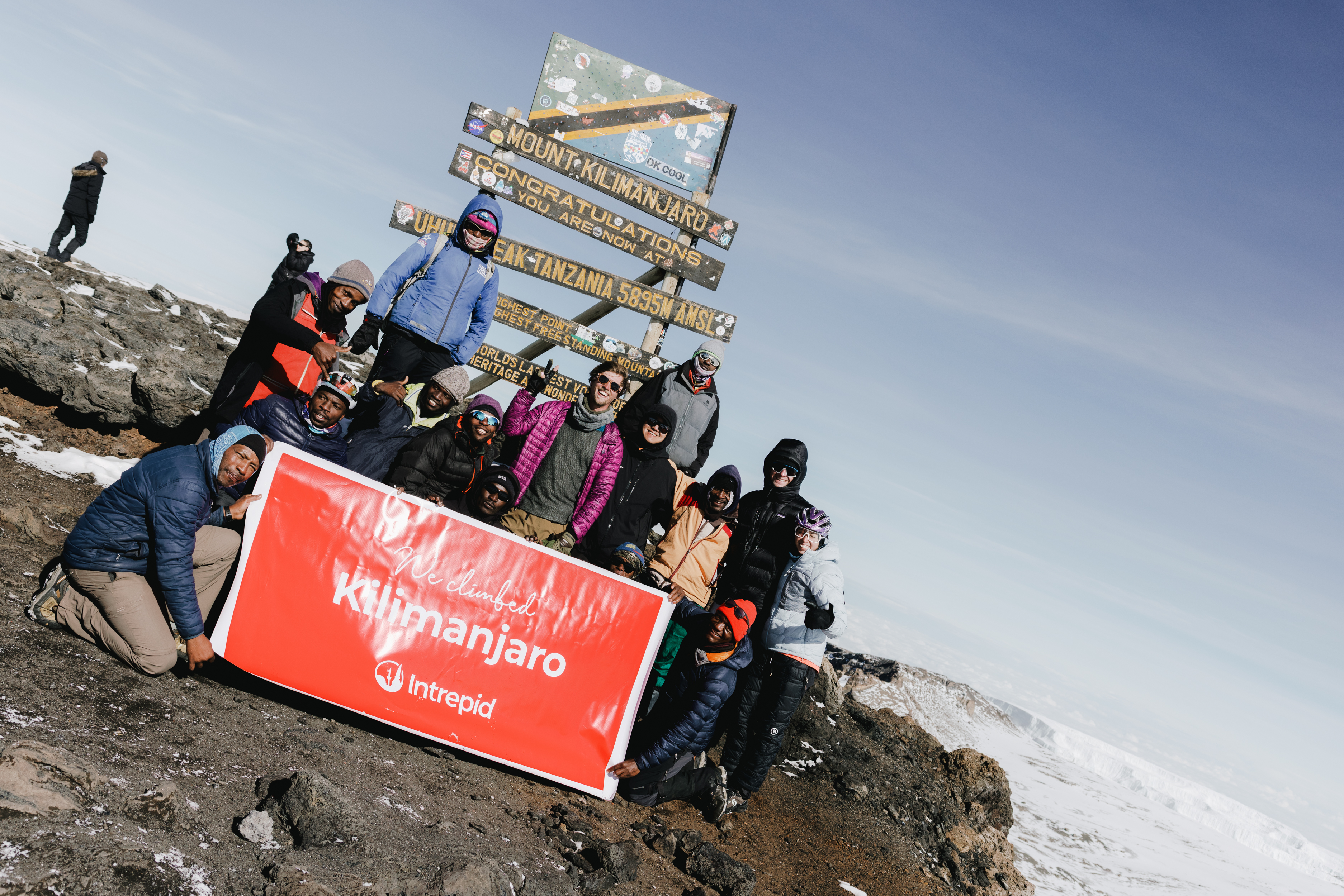
For Otto, the trip up Kilimanjaro was much more than setting an FKT. “We partnered with The Intrepid Foundation to raise money for World Bicycle Relief to donate Buffalo Bicycles to people in rural East African communities who need them for access to education, healthcare, and economic opportunity,” she said. Otto also mentioned that having that purpose behind her made the effort that much more meaningful.
In 2016, Rebecca Rusch and Patrick Sweeney summited Kilimanjaro by bike over multiple days, also raising funds for World Bicycle Relief.
With the injury, surgery, and recovery that followed, we wondered whether Otto would miss part of the 2027 season. Hell no.
“I have 2 plates and 14 screws in my leg. That said, the surgery went perfectly; we expect a full recovery, and I should even have a full 2027 race season.”
The news stinks. Why not follow Singletracks on Google News to bring more joy to your day?







0 Comments