

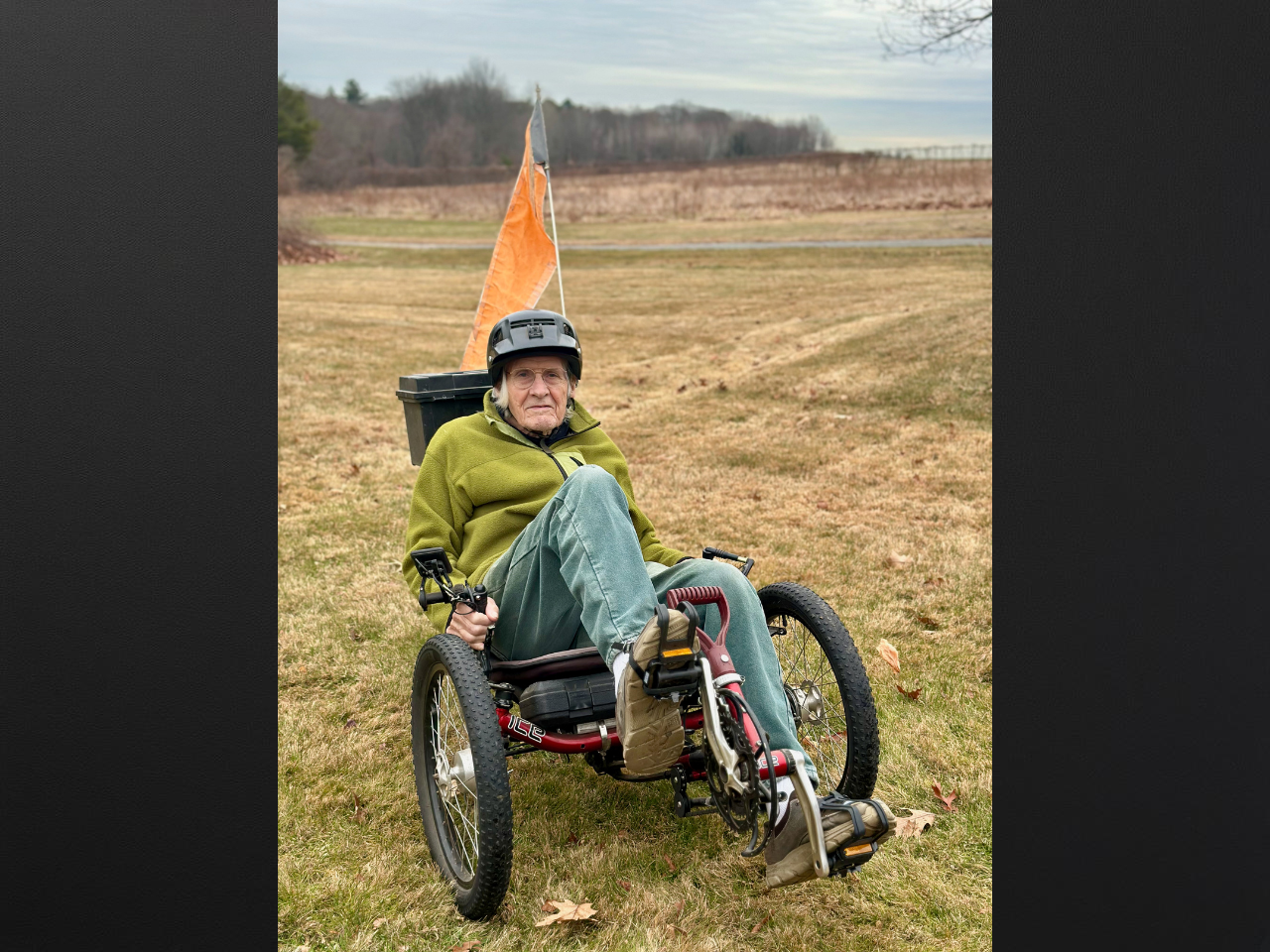
If you’ve ever pedaled through New England woods without hearing “No bikes allowed,” you might just have Bob Hicks to thank. Long before mountain bikers had a seat at the trail advocacy table, he was pulling up a chair, asking smart questions, and figuring out how to keep people riding without getting kicked off the land.
Hicks got involved with the New England Mountain Bike Association (NEMBA) in the early 1990s. Founded in 1987, NEMBA is now one of the largest and most influential mountain bike advocacy organizations in the country. With more than 10,000 members across six states—and 25,798 mountain biking trails, forming one of the densest trail networks anywhere—it supports trail access, sustainable trail building, rider education, and advocacy through a robust network of local chapters and volunteers.
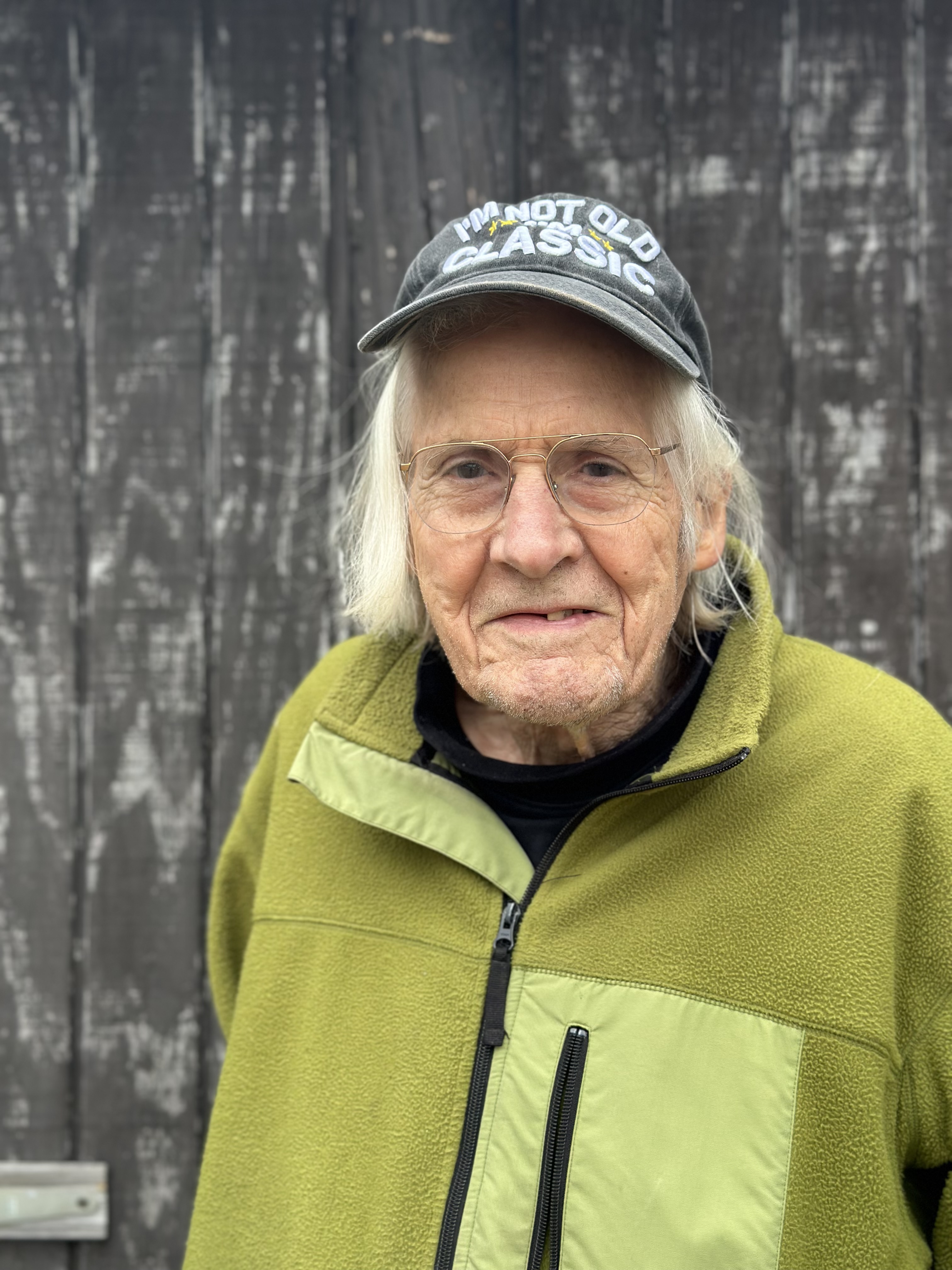
Now Hicks is 96 years old—and he shows no sign of slowing.
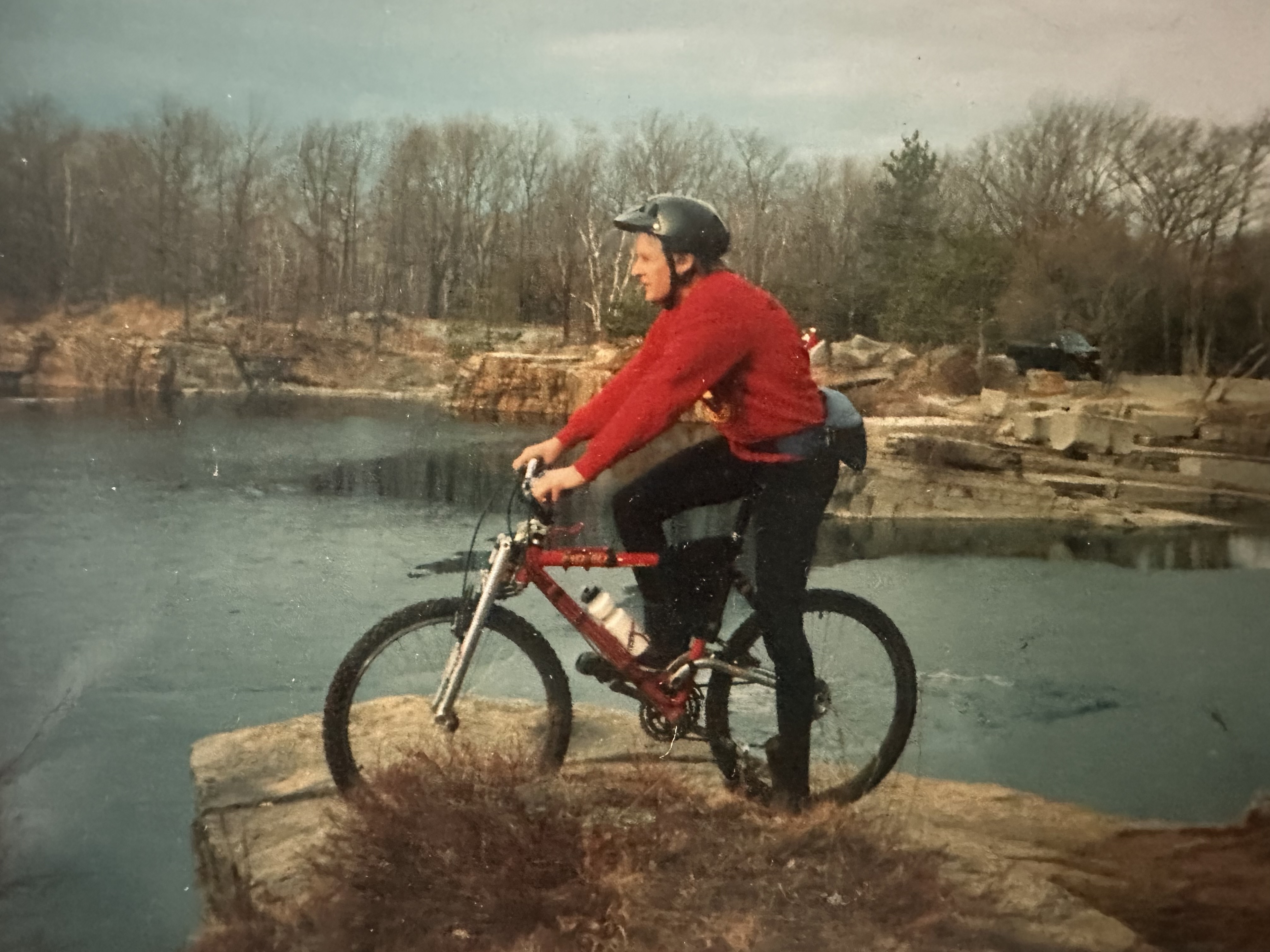
From motorbikes to mountain bikes
Hicks was deeply embedded in the New England off-road scene well before mountain biking was something people debated at town meetings. For decades, he lived in the world of off-road motorcycling. He raced, organized events, and founded the Trail Rider and Cycle Sport magazines (the former is still going strong today). He studied topographical maps like sacred texts, scouting trails and carrying the maps in a tube while riding.
When he crossed paths with landowners, Hicks led with courtesy, not entitlement. His approach was simple—and quietly effective. He introduced himself, asked permission, and simply turned around when the answer was “no.” Every so often, the conversation ended with an invitation instead of a refusal. At age 59, Hicks decided to switch gears—literally. He sold his motorcycle and bought his first mountain bike for $300. It was a fully rigid bike—no front or rear suspension.
“I was used to motorcycle suspension,” he laughs. “Equipment matters. I asked my family for front forks for Christmas.”
Hicks started exploring trails close to home on the North Shore of Massachusetts, leading friends through routes he knew from his motorcycle days. Soon, he headed farther afield to the Berkshires and southwestern New Hampshire for all-day rides.
What felt like a later-in-life pivot turned out to be a warm-up lap.
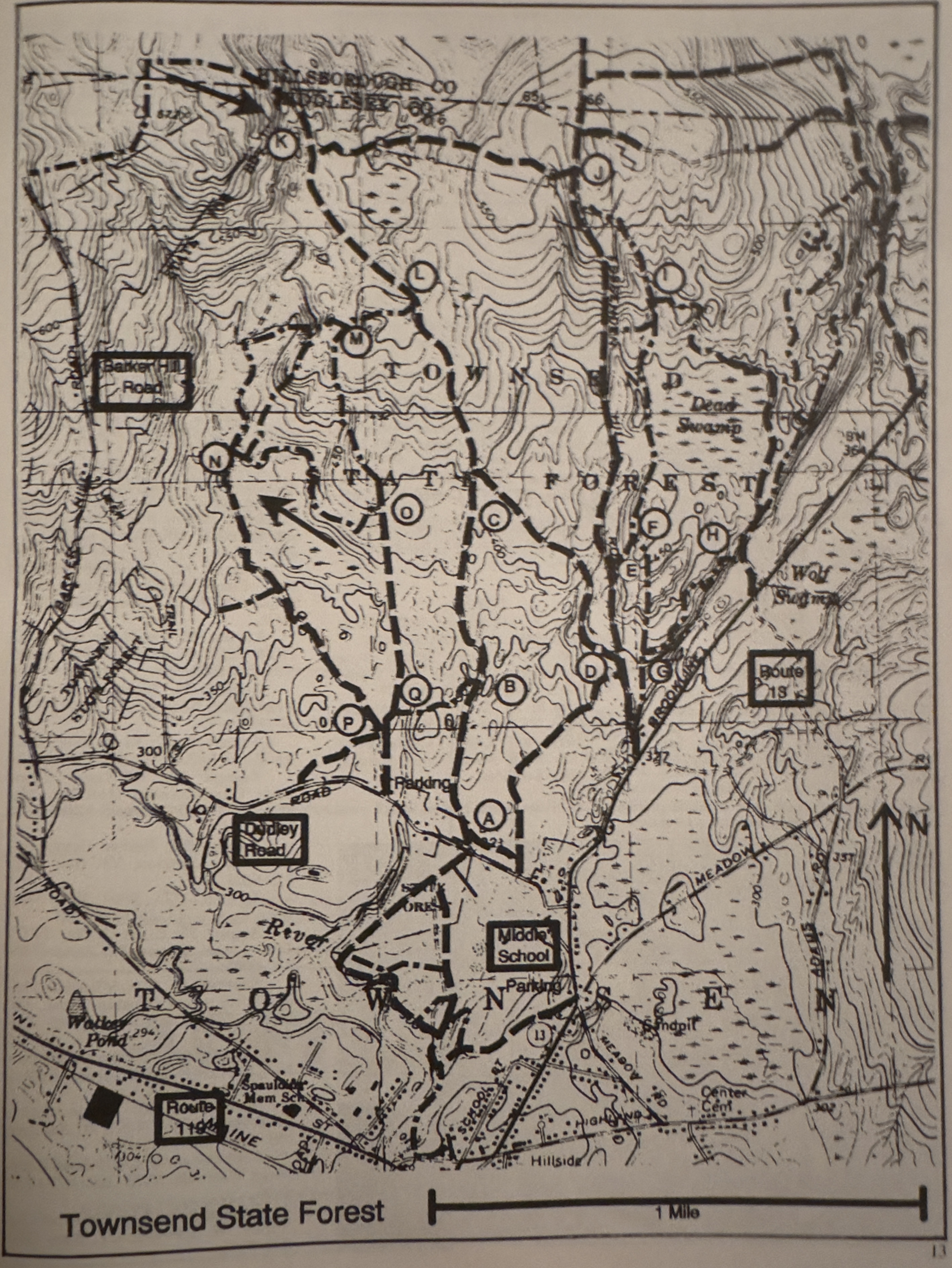
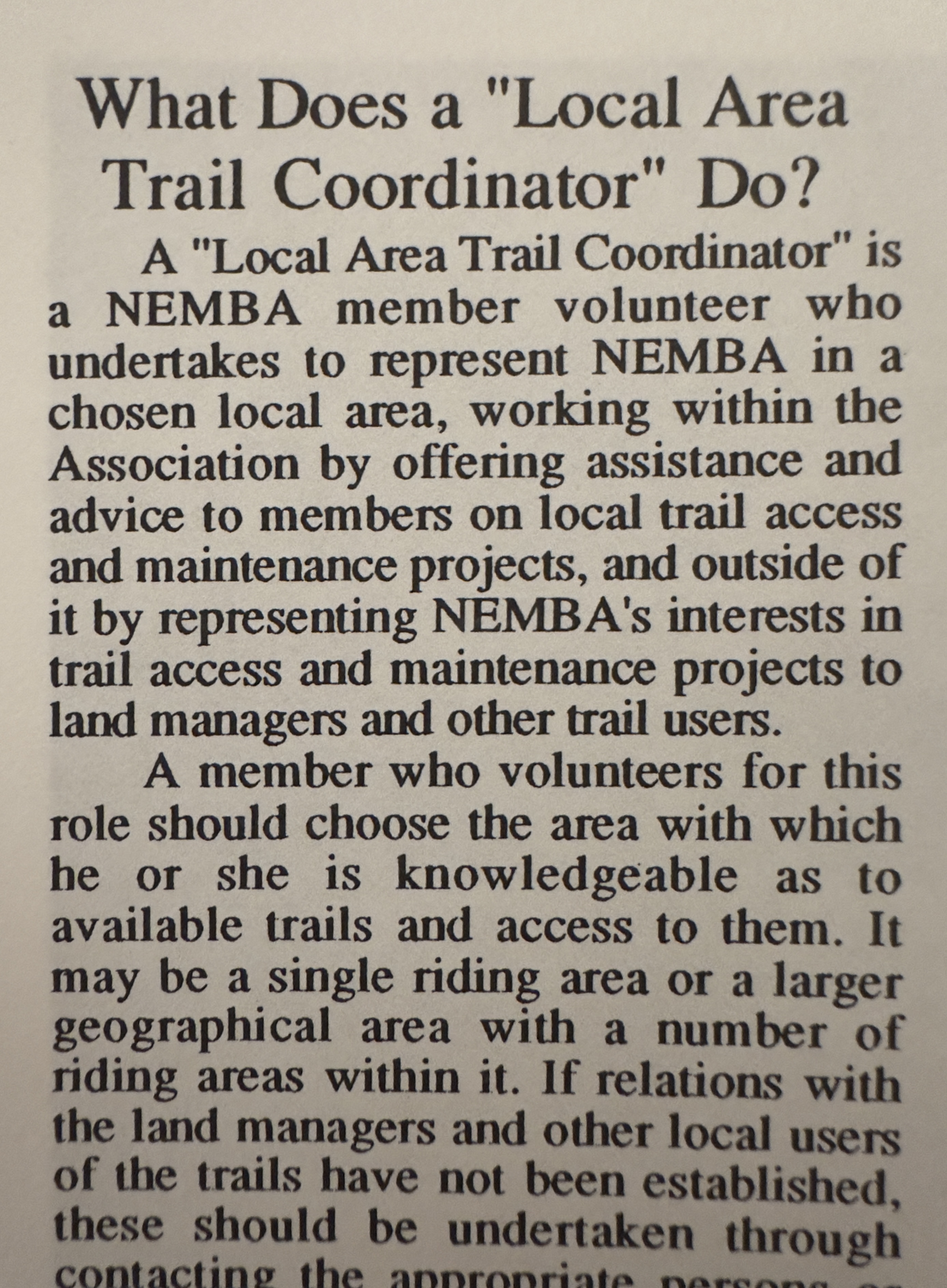
Left: A riding trail map Bob created for the June 1995 NEMBA newsletter. Right: Bob’s NEMBA News article recruiting trail coordinators.
Hicks steps into NEMBA leadership
All in on mountain biking, Hicks started asking around for riding companions. That’s when he discovered NEMBA. A notice in an early newsletter welcomed members to the Board of Directors meetings. So, Hicks attended one in 1992.
“I was impressed with the dedication and enthusiasm of the Board members,” he recalls, “and accepted their invitation to join.”
At the time, NEMBA was expanding beyond Boston and needed structure, leadership, and local trail knowledge. Hicks stepped in as North Shore Area Trail Coordinator, drawing on his deep familiarity with Essex County trails and his connections across other trail-use communities.
The next year, Hicks laid out one of seven rides for NEMBA’s National Trails Day events—an effort that earned a National Trails Day Award. The following year, he helped organize and run the event in Douglas, Massachusetts.
By 1994, Hicks was serving as Vice President of NEMBA, helping guide the organization through a critical growth phase—one where mountain biking’s future depended on credibility, coordination, and trust with land managers.
His proudest achievement?
Expanding NEMBA from a Boston-centered organization into a region-wide network of local chapters (now numbering 37!). That shift cemented mountain biking’s legitimacy across New England and laid the groundwork for the trail density riders enjoy today.
The power of community (and a good magazine)
In 1995, Hicks became Editor/Publisher of NEMBA News. Over the next three years, membership grew to 900 riders, and the NEMBA website logged 12,000 hits per week—a big deal in dial-up days.
In NEMBA’s early years, one of the most urgent needs was simple but critical: letting people know where they could ride. Hicks’s newsletter—and his painstaking work mapping trail systems and riding areas—did exactly that. For riders scattered across New England, those newsletter maps weren’t just information; they were an invitation.
Publishing, for Hicks, was never just about ink and paper. It was about turning riders into a constituency, about giving them a shared reference point and a collective voice. He’d done it before with motorcyclists, and it worked just as well for mountain bikers. “If you want things to happen,” Hicks says, “you need to get organized—and earn respect.”
Hicks also understood that community grows naturally through riding. “Go out and ride,” he says. “You’ll meet people and maybe even make friends.”
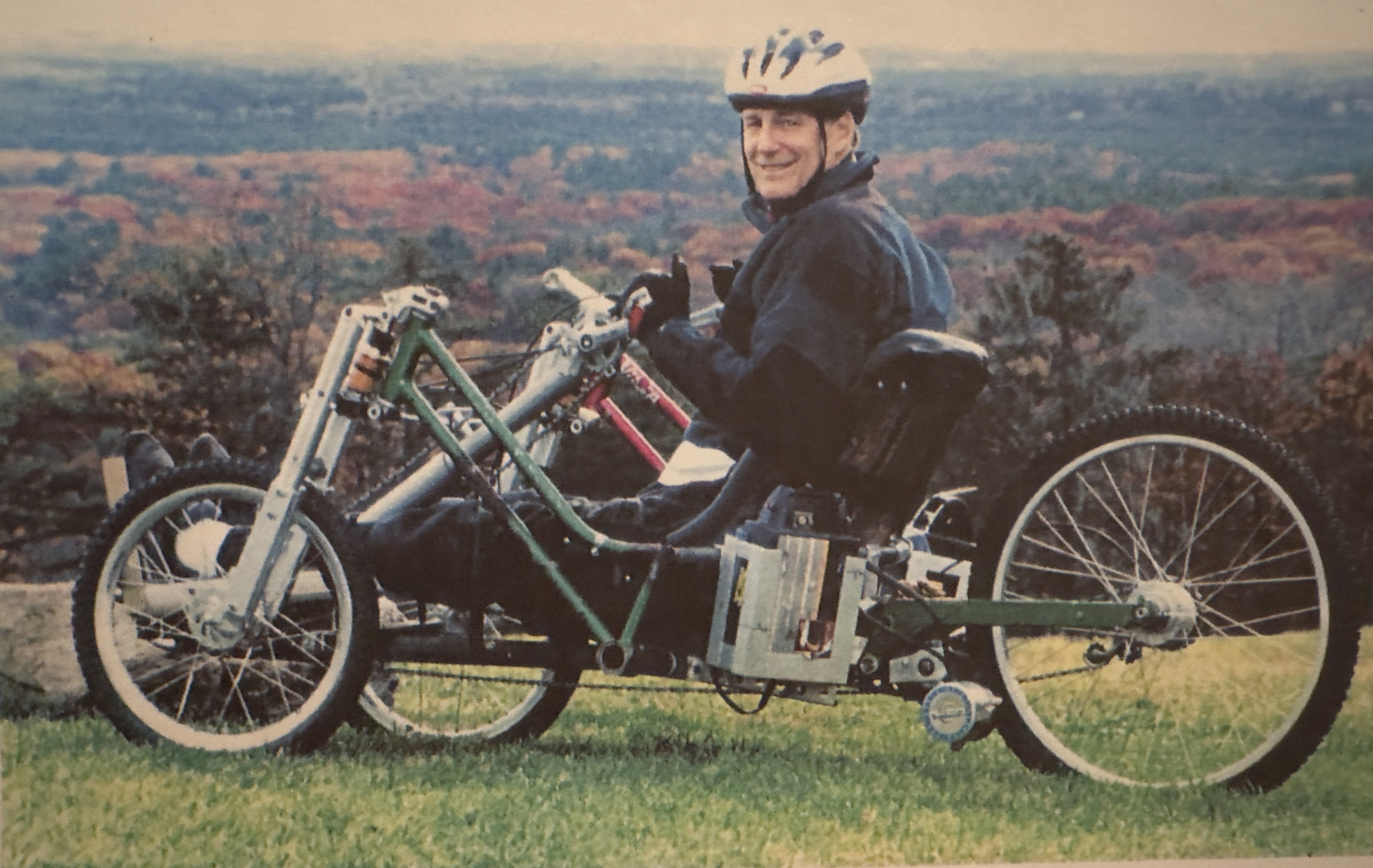
That’s exactly how he met one of the friends he still rides with today. Charlie had been paralyzed from the waist down in a trampoline accident in 1971, at age 20. When Hicks met him in 1996, Charlie was using a handcycle—capable on roads, but limited in the woods. Hicks helped him design and build a motorized trike so he could get back on the trails.
Problem-solving, Hicks-style. More than equipment, the e-trike was a bridge back to motion, nature, and time with others.
Still rolling
Today, Hicks rides two e-trikes, one of which he motorized himself.
He mostly sets off solo from his home on the North Shore, heading to the rail trail and looping through Topsfield, Bald Hill, and Boxford State Forest. He favors two-track trails and rediscovering routes from his off-road motorcycle days.
Slower (and lower)? Yes.
Less satisfying? Not even close.
“With the right equipment,” Hicks says, “you can keep riding far longer than most people think.”
Hicks’ rock-solid advice for riders
Those aren’t Hicks’s only words of wisdom. His guidance is as practical as it is timeless:
- Take initiative. “Get organized and do the things you’d like to see get done. Once you start something, people will join in.”
- Use the tools that keep you riding. “Riding an e-bike is not cheating; you still need to pedal. It just makes some riding possible—and enjoyable—that wouldn’t be otherwise.”
- Talk to landowners. “Stop, introduce yourself, and make a human connection. You might be surprised how often a conversation opens a gate.”
Final words from the trail
From motorcycles to mountain bikes to e-trikes, Bob Hicks has spent a lifetime on the trails: learning and respecting them, and helping others enjoy them responsibly.
At 96, he’s still riding and still proving that, while speed may fade, passion doesn’t. The next time you’re out on a New England trail, take a moment to appreciate the quiet legends like Bob Hicks who helped make the ride possible.



4 Comments
Jan 9, 2026
Jan 9, 2026
Jan 10, 2026
Jan 10, 2026