
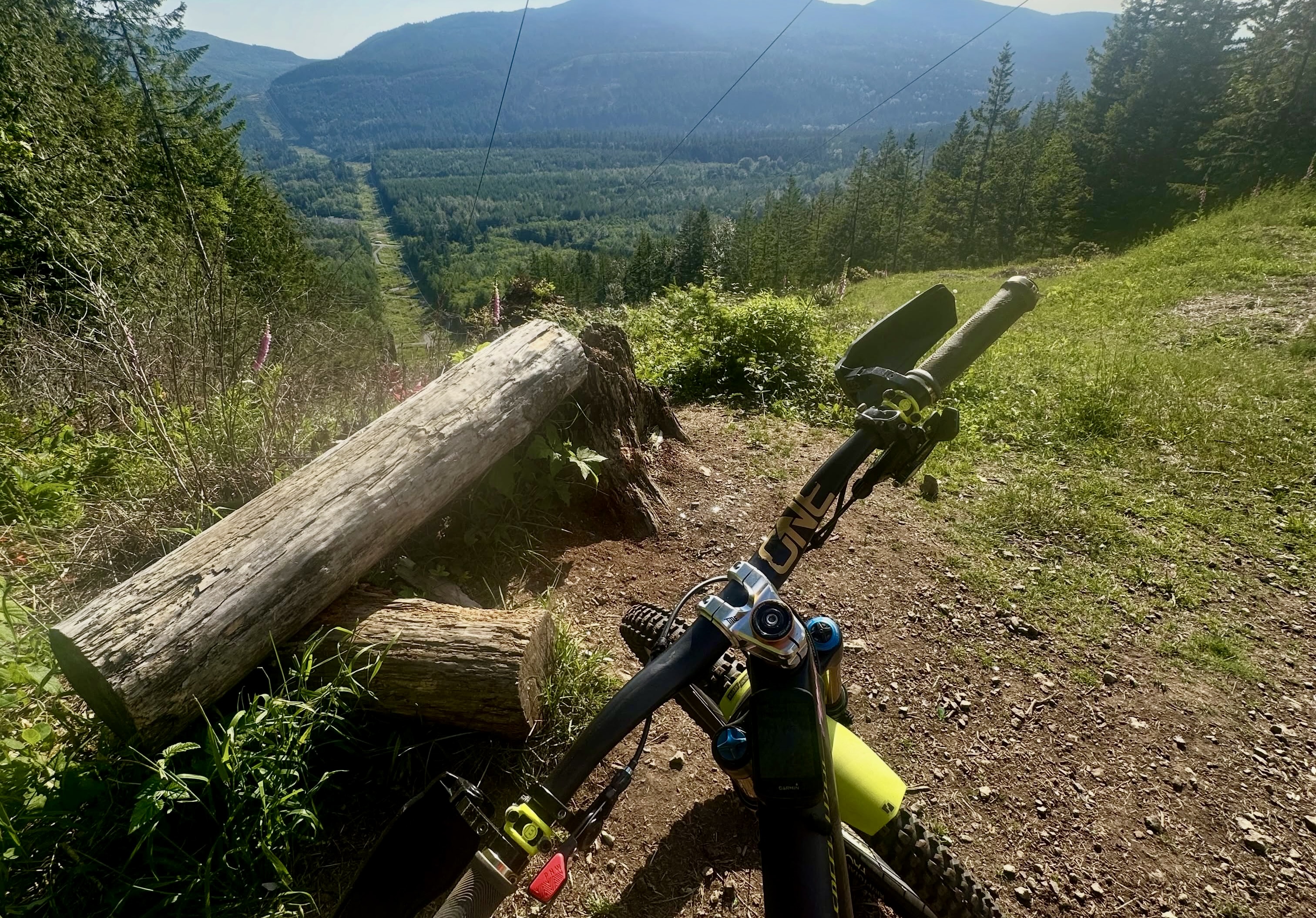
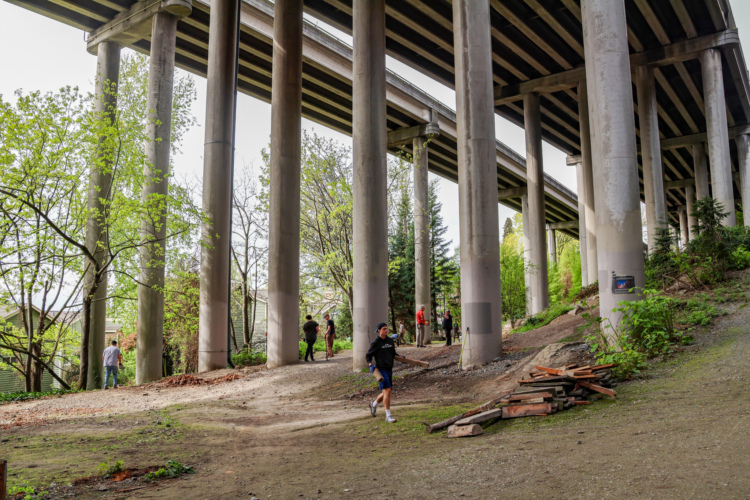
The “Exit 27” trails have been a go-to riding destination for the greater Seattle mountain biking community for 30 years. When shovels first hit the dirt at Exit 27 in the mid-90s, mountain biking opportunities weren’t what they are today, and iconic systems like Tiger Mountain, Raging River, and Duthie Hill were either just starting to build their first singletrack, or were still yet to come.
But now that the popular Raging River Trail System is complete, the Washington State Department of Natural Resources (DNR) has shifted its focus to decommissioning a handful of the Exit 27 trails located on DNR land. Advocates of the system are asking them to pause, and a petition they started gathered nearly 6,000 signatures in just a few weeks.
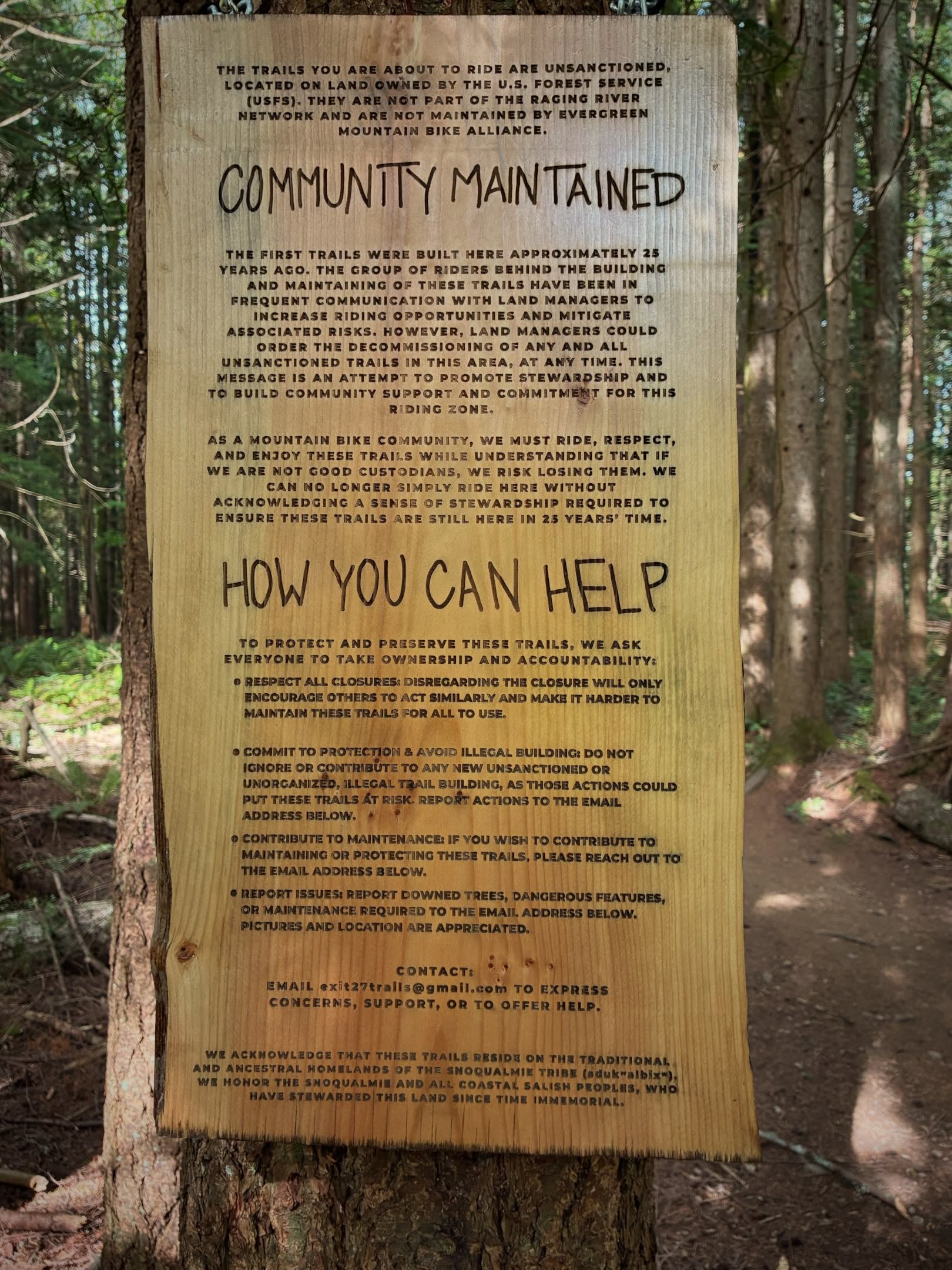
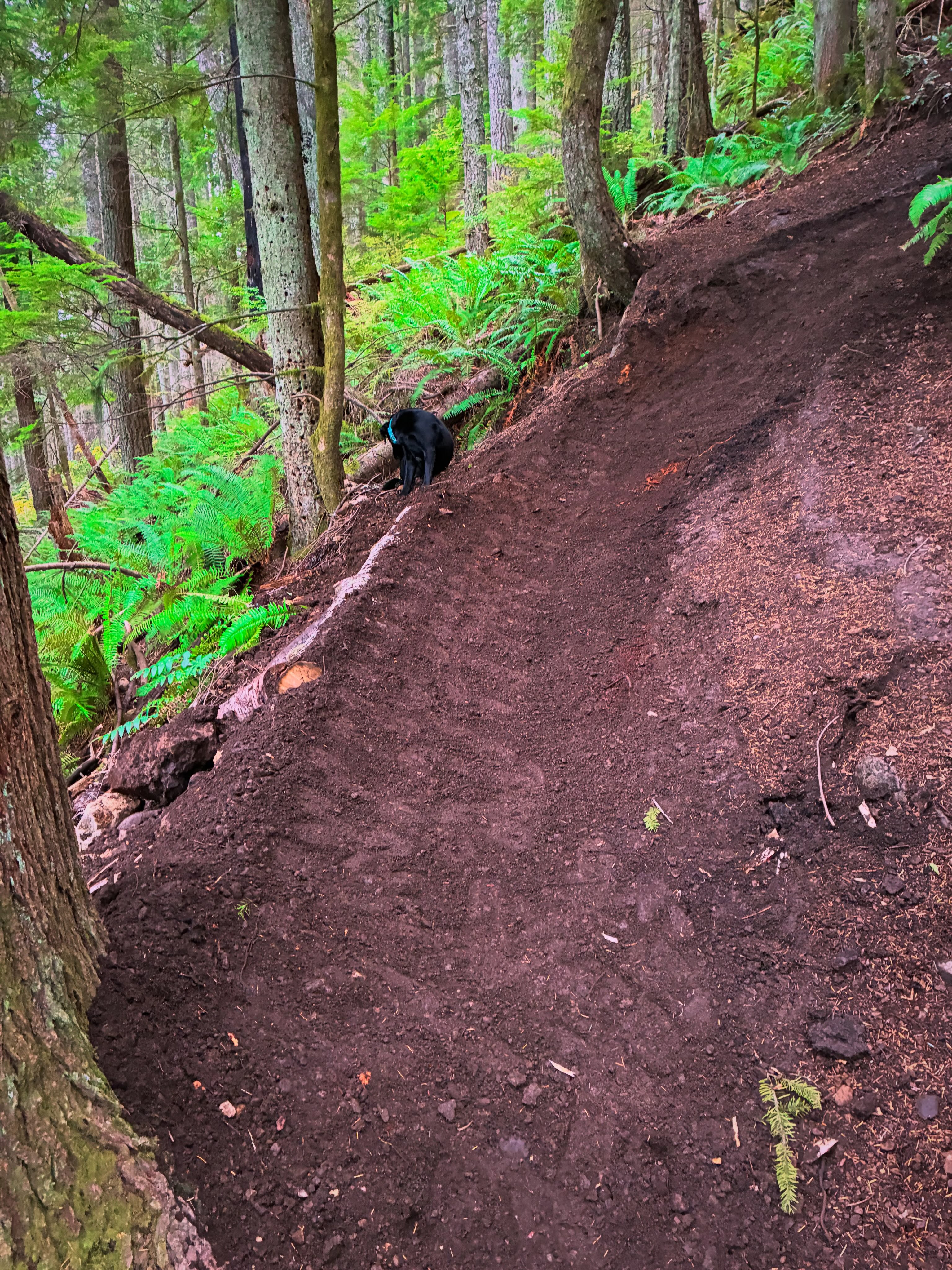
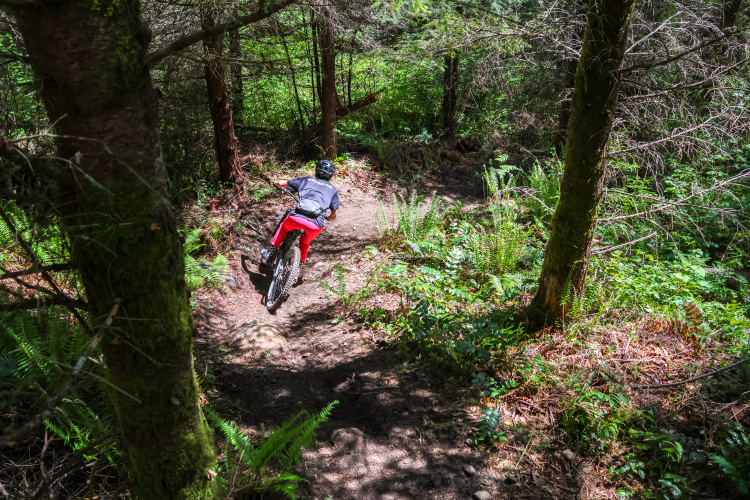
Definitely more than some secret loamers in the woods
“[Exit 27] is why I moved here,” Sydney Bewernick told us. “I came out to visit and told my boyfriend at the time, ‘I’m going to live right by trails,’ and he introduced me to 27. It’s really been a place where I’ve been able to develop such a great core community, with people in North Bend and people in the Seattle area.”
Bewernick is part of the Exit 27 group advocating that the DNR pause the decommissioning of the trails.
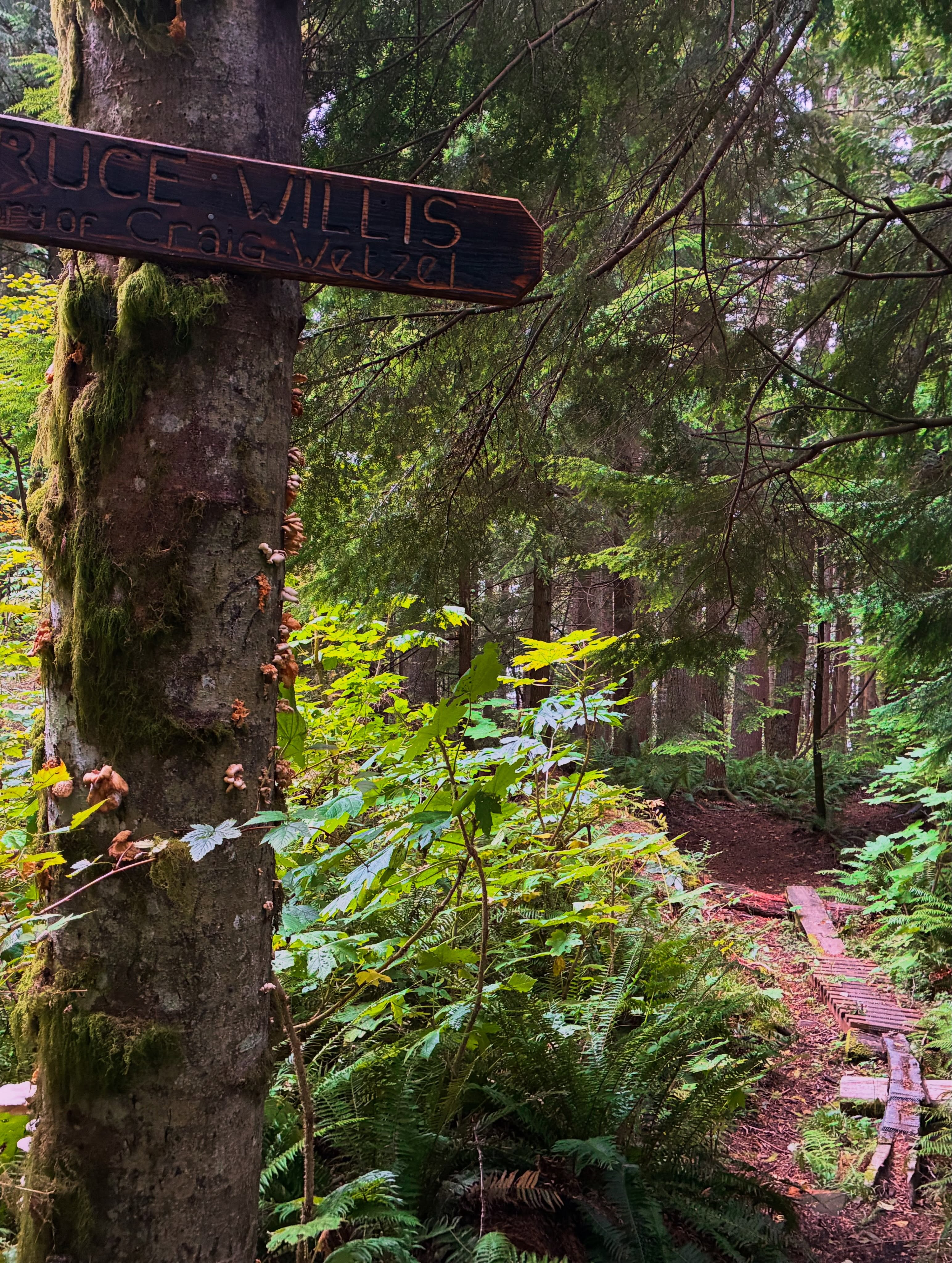
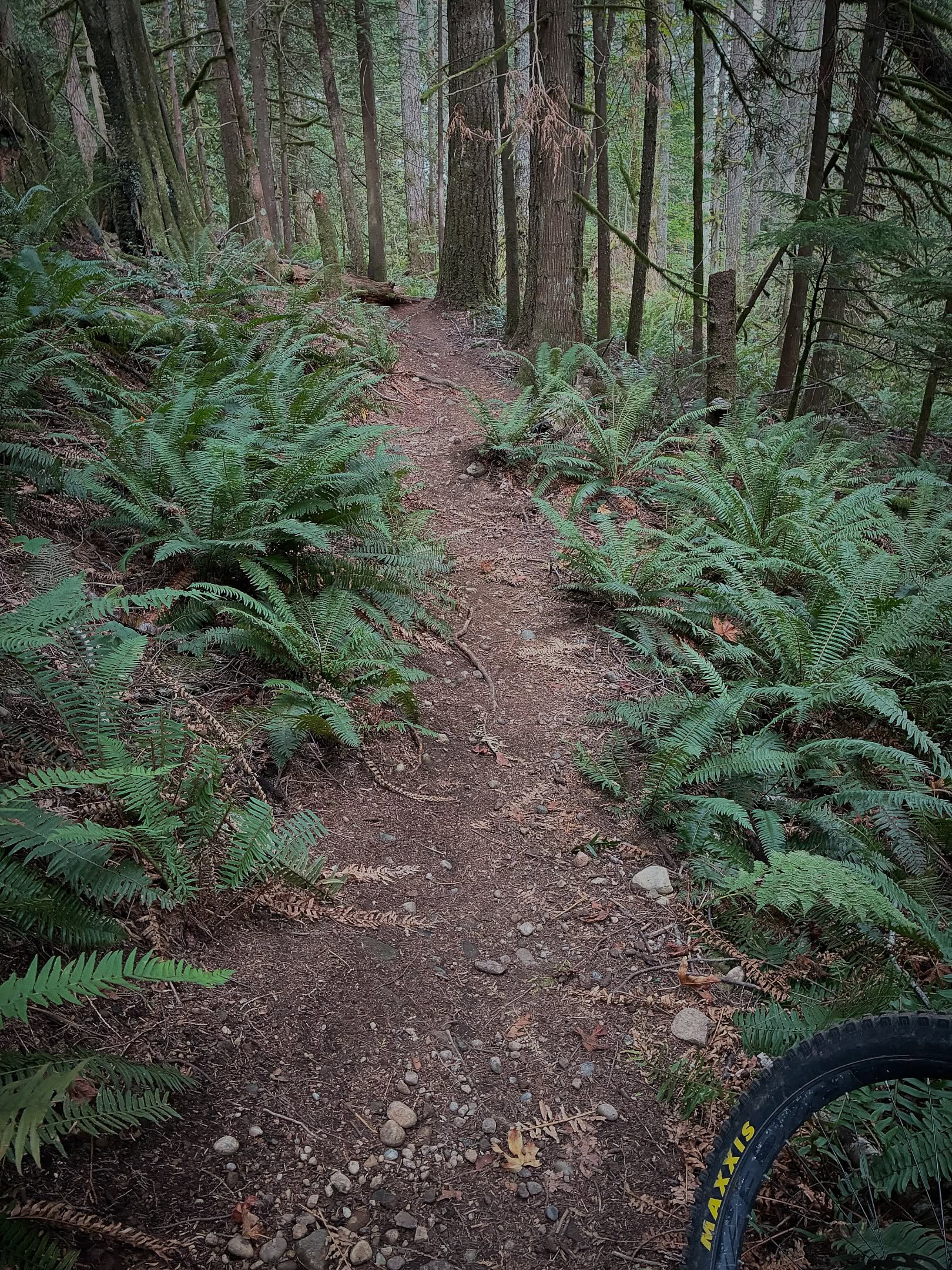
To be clear, Exit 27 is an unsanctioned trail system that falls partially on DNR and Forest Service land. However, “unsanctioned” can be a tricky term here. These aren’t necessarily the “illegal loamers” that can be conjured up in our minds when we hear the word “unsanctioned.”
And they aren’t very secret. While the Exit 27 trails may not show up on some popular trail maps, a Google search will pull up plenty of YouTube videos showing what the system’s singletrack offers.
Exit 27 began in 1996, when riding opportunities were limited, and over the decades, it has become a part of the area’s mountain biking culture. The trail system has a dedicated group of core riders (we were told nearly 300) who regularly maintain the trails. Some of those riders have also been in contact with DNR officials for years. Jesse Grissom, one of the original builders of Exit 27, told Singletracks that he has “worked with four different generations of land managers at the DNR” over the years.
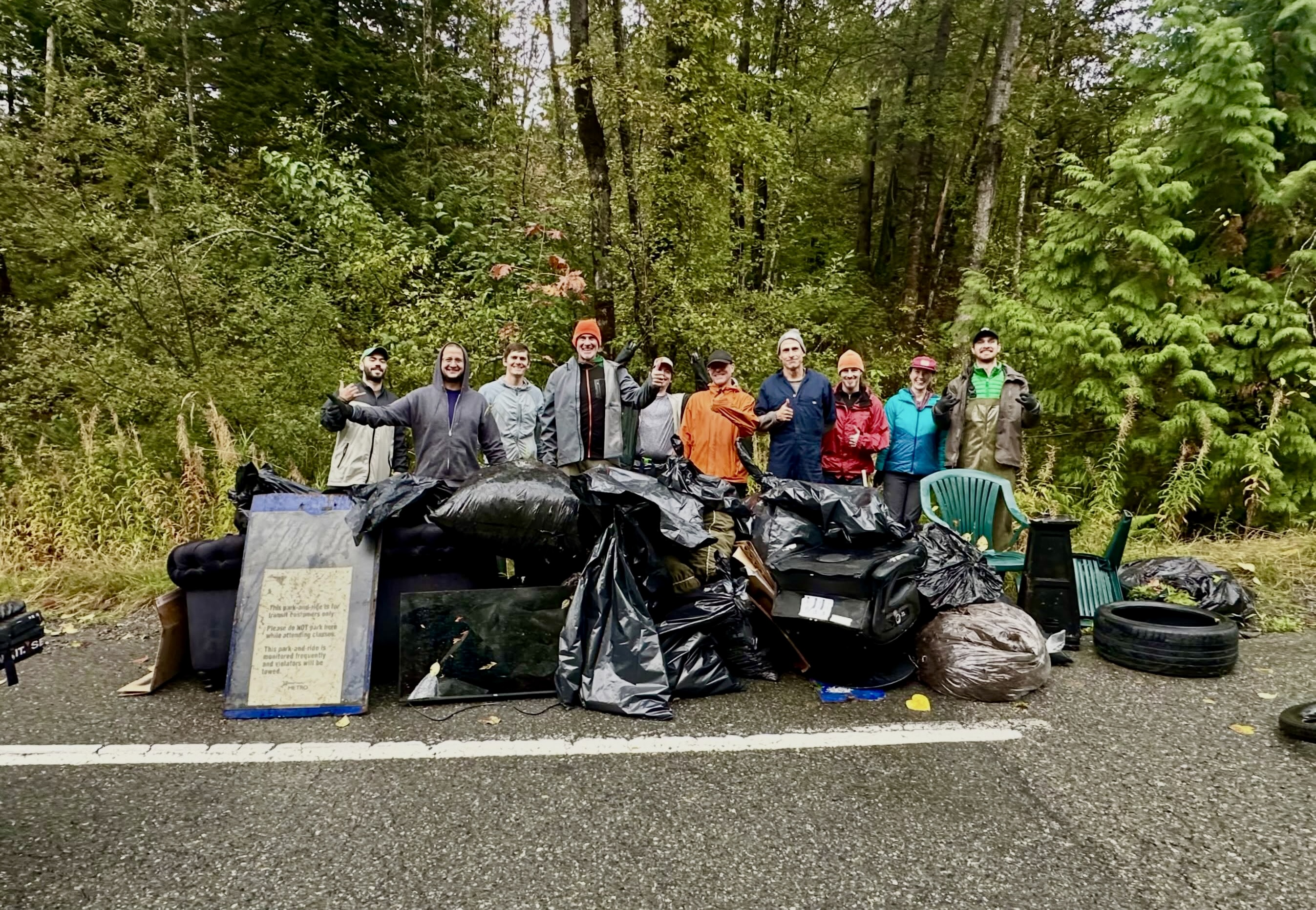
“We’ve even decommissioned some trails at the DNR’s request,” Grissom said. Along with Bewernick, Grissom is a part of the group advocating to keep the Exit 27 trails. Grissom and Bewernick said some form of an advocacy group has led efforts at Exit 27 for 15 years, with 1,000 volunteer-hours logged in 2026.
A petition with nearly 6,000 signatures
With Grissom and others having contact with the DNR in the past, the move to begin decommissioning caught many in the group off guard. In part, their petition reads:
Today, October 12, the DNR commenced decommissioning certain community trails on Rattlesnake Mountain. This follows completion of the final two trails in the Raging River State Forest mountain bike recreation plan, as DNR shifts from construction to enforcement. It’s a shift that, applied broadly, would remove community trails across DNR-managed land throughout the I-90 corridor.
Community representatives met with DNR earlier this summer to seek a middle ground; DNR elected to proceed as planned.
To be clear, not all the trails in the Exit 27 system are facing decommissioning — just the ones that happen to be on DNR land. Both the petition and Bewernick and Grissom mentioned that these trails are slightly more advanced than even the black and double-black offerings at nearby Raging River and Tiger Mountain. These more advanced options give riders another step to progress, with some even reaching the highest levels of professional competition.
As of writing this article, the petition has 5,735 signatures, with most coming from nearby zip codes. The petition makes it clear that the group doesn’t expect land managers to just look the other way. Instead, they hope for more involvement, even if that involvement leads to what may be deemed necessary reroutes and closures.
“Pause decommissioning at Exit 27 and evaluate these trails for adoption into the sanctioned system before removing them.
[…] We ask DNR to hold off on decommissioning, open a defined public comment period, and assess these specific trails for inclusion in the Raging River system — with reroutes or closures where a genuine resource concern is documented.”
From the perspective of Washington DNR
Despite nearly 6,000 signatures, the Exit 27 trail advocates face an uphill battle. The fact is, Exit 27 is an unsanctioned trail system.
What makes keeping the Exit 27 trails even harder is that it’s an unsanctioned trail system right next to two large, popular sanctioned trail systems — Tiger Mountain and Raging River.
“DNR is proud to offer a wide variety of designated mountain biking opportunities across the Snoqualmie corridor, including over 40 miles in Raging River,” a DNR representative told Singletracks in an email correspondence regarding the decommissioning.
They also made it clear that there was no “policy” or “focus” shift in the department. “Following completion of that trail system, DNR had capacity to address the unsanctioned trails and environmental impacts in the area.” They explained that after a 2023 State Environmental Policy Act (SEPA) study, a handful of “non-designated trails in the area were identified to be decommissioned.”
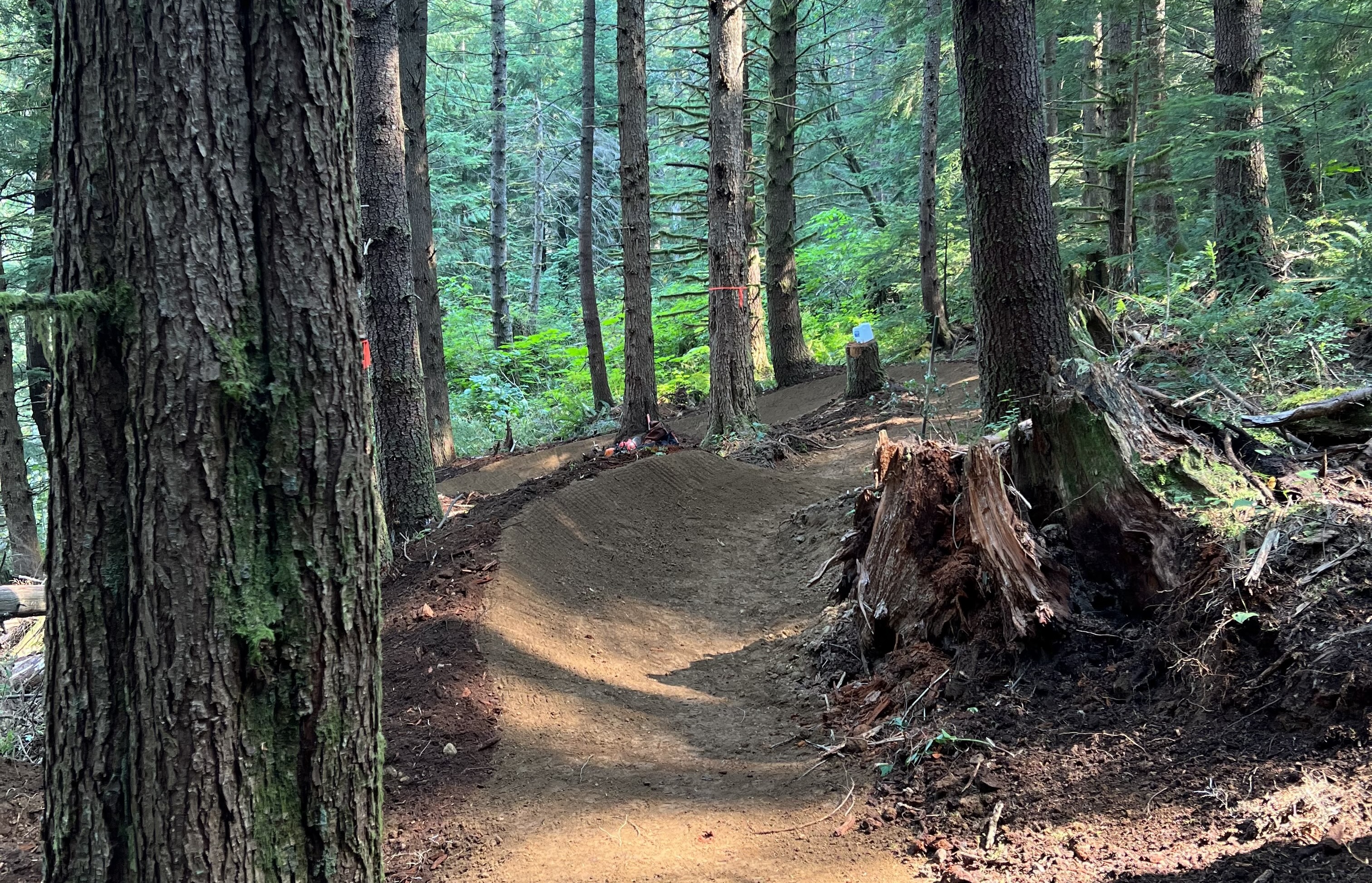
They also noted that more trails have been built since 2023. The representative told us that four Exit 27 trails have been identified for decommissioning and that other trails “identified in the 2023 SEPA or constructed in recent years” will get the axe in the future.
Ultimately, Washington DNR’s stance is pretty simple: “Unsanctioned trail building is not permitted on DNR-managed lands.” If illegal trails are built, they reserve the right to decommission them accordingly.
The DNR is aware of the petition and the signatures gathered. However, they say the process is moving forward. “DNR met with representatives from the Exit 27 user groups throughout Summer 2026 to inform users of the upcoming decommissioning. We will continue to engage with the community and monitor the process moving forward.”
As for the actual “decommissioning,” the DNR told us the process started on October 12, beginning with “several lower-use unsanctioned trails” — presumably, the four trails mentioned above. The process starts with signage, which, for now, is all that Grissom and Bewernick hope will happen.
“Mainly what we’re seeing from the rider community are pictures of signs in the woods,” Grissom said. “But we don’t know the extent to which the decommissioning work took place. We’ve heard whispers, but nothing official, that the decommissioning work has ceased. Those are not confirmed, but that’s where we’re at today.”
Keep up with the latest mountain bike news by adding Singletracks as a preferred source on Google.





0 Comments