
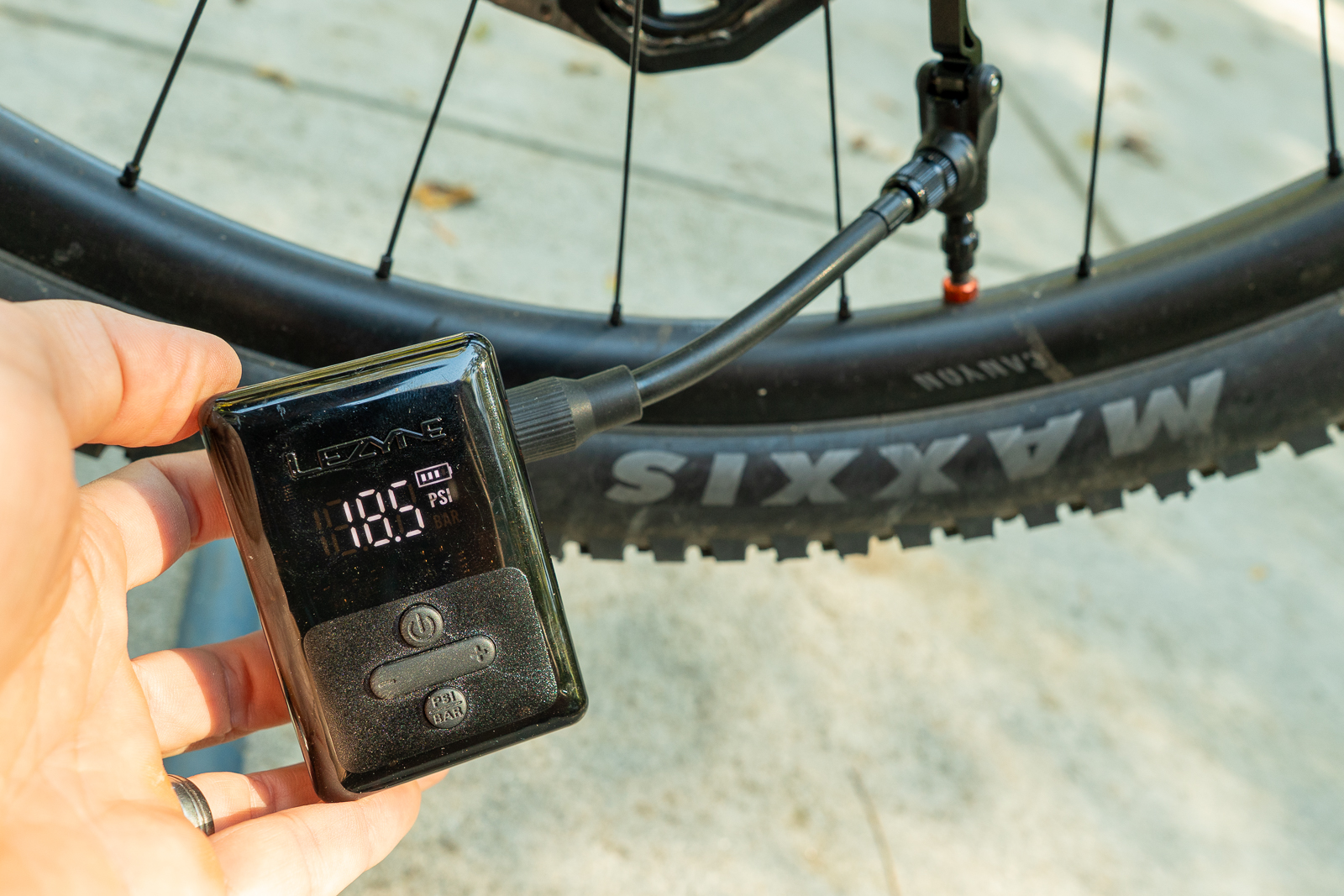
Most mini electric bike pumps share the same fatal flaw: once the battery wears out, the whole thing is destined for the junk drawer. Lezyne’s new E-Drive is the first inflator I’ve tested with a battery you can swap yourself, and it’s also the fastest pump I’ve ever put on the clock.
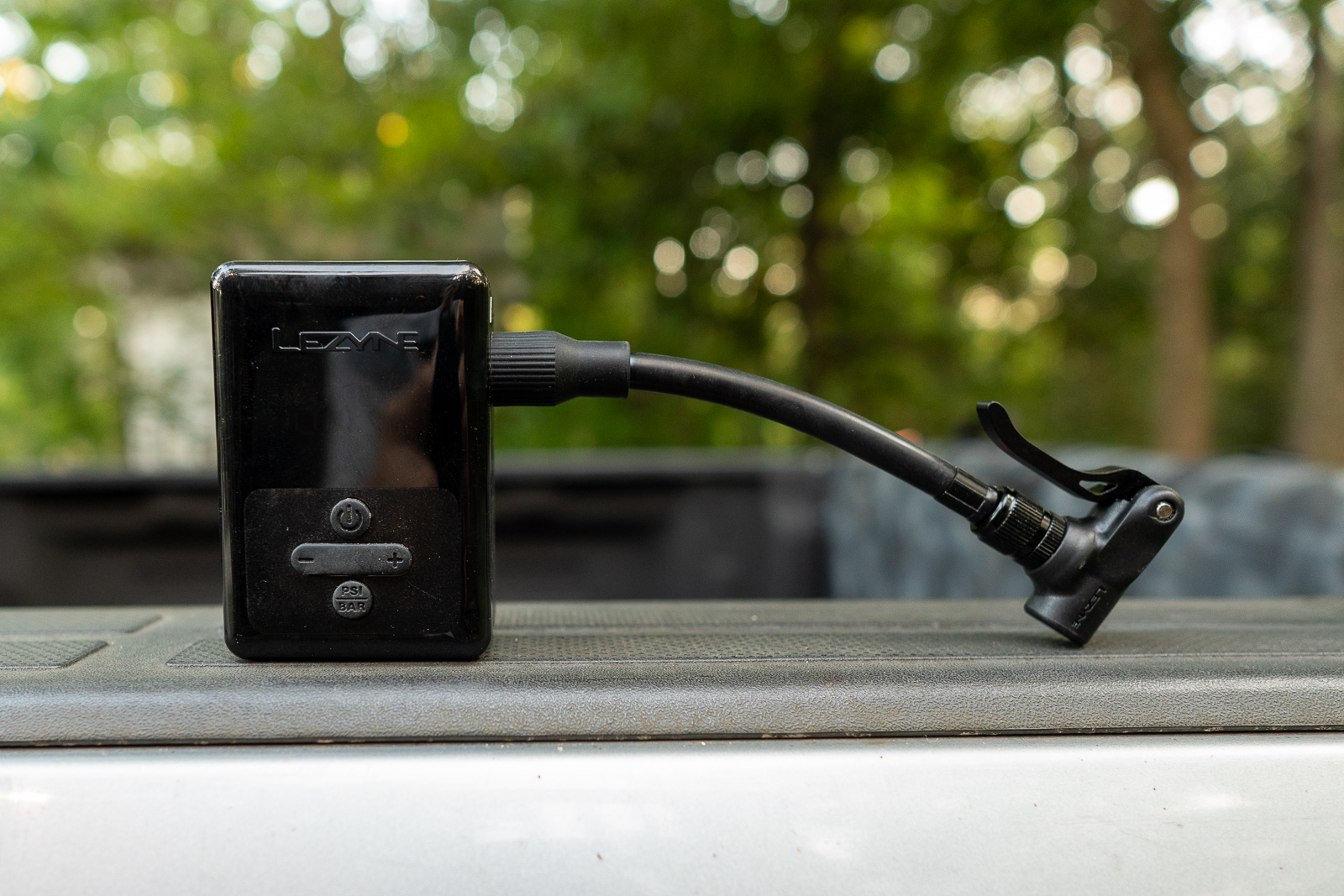
It isn’t perfect. At 239.8g with its required extension hose, the E-Drive is heavier than every trail-size pump in my electric bike pump test, and you can’t plug it directly onto a valve like most of the others. But for riders who want a pump that inflates quickly, runs a long time between charges, and hits a target pressure down to the half-psi, the E-Drive offers features that many others don’t.
Lezyne E-Drive key specs
- Weight: 240g, including extension
- Price: $149.99
- Buy from Lezyne
Lezyne E-Drive test results: Fast and long-lasting
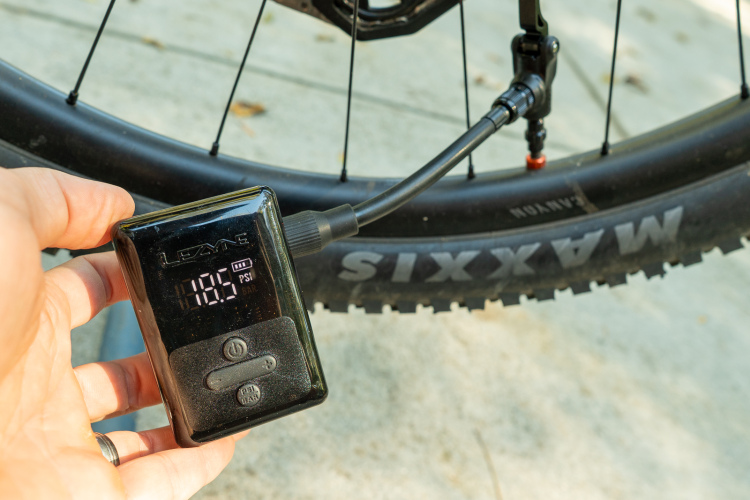
I ran the E-Drive through the same test I used for the other pumps in our electric bike pump roundup, timing how long it takes to inflate a 29×2.4″ Maxxis Assegai tire from 0psi to 20psi, then repeating until the battery gave out.
The E-Drive averaged 51 seconds from zero to 20psi. That’s eight seconds quicker than the Topeak E-Booster Digital, which was the fastest pump in the original test at 59 seconds*.

Battery life is just as impressive. The E-Drive completed 8.7 inflations on a single charge, more than any of the trail-size pumps I’ve tested*. The Flextail Mini, the previous leader among the portable pumps, managed 7.5. Only the Fanttik X9, which weighs almost a pound, lasted longer with 15 inflations. Lezyne rates the E-Drive at six full tires or 15 to 20 pre-ride top-ups per charge, though that depends on the tire size and maximum inflation. Their estimate for inflating a 29×2.4″ tire to 40psi, for example, is about two inflations per charge.
Lezyne says the E-Drive uses a compressor-style fan for active heat dissipation, along with aluminum internals and a composite shell.
Can it seat a tubeless tire?
As one of the fastest inflators I’ve tested, I was curious to know if it was fast enough to seat a tubeless tire. The first tire I tried, an Ozark Trail Terraxis TR (stay tuned for that review!) with a Stan’s Exo-Core valve, wouldn’t seat. But the next tire I tried, a Maxxis Dissector with a Muc-Off Big Bore valve, snapped right into place.
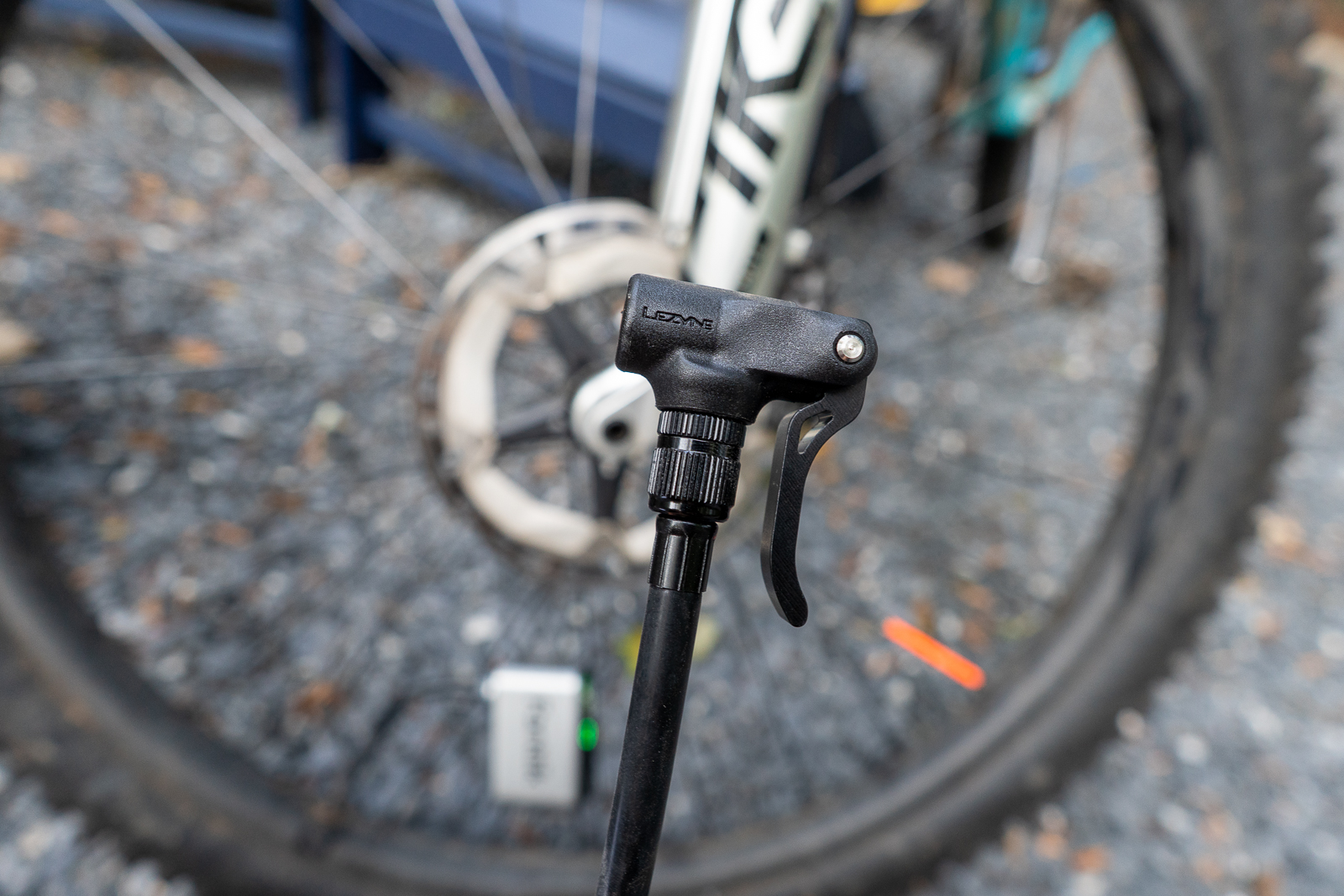
The Presta head is secure and the Schrader connection can be used to top off your fork
Unlike most of the mini pumps I’ve tested, the E-Drive doesn’t offer a direct-connect option. To inflate a tire, you thread the included flex hose onto the pump body, then lock the multi-chuck head onto the valve with a lever.
The upside is that the lever-actuated head forms a very secure connection to a Presta valve. And since mini electric pumps run hot enough to damage TPU tubes and valves, riders running or carrying TPU tubes will want to use a hose anyway.
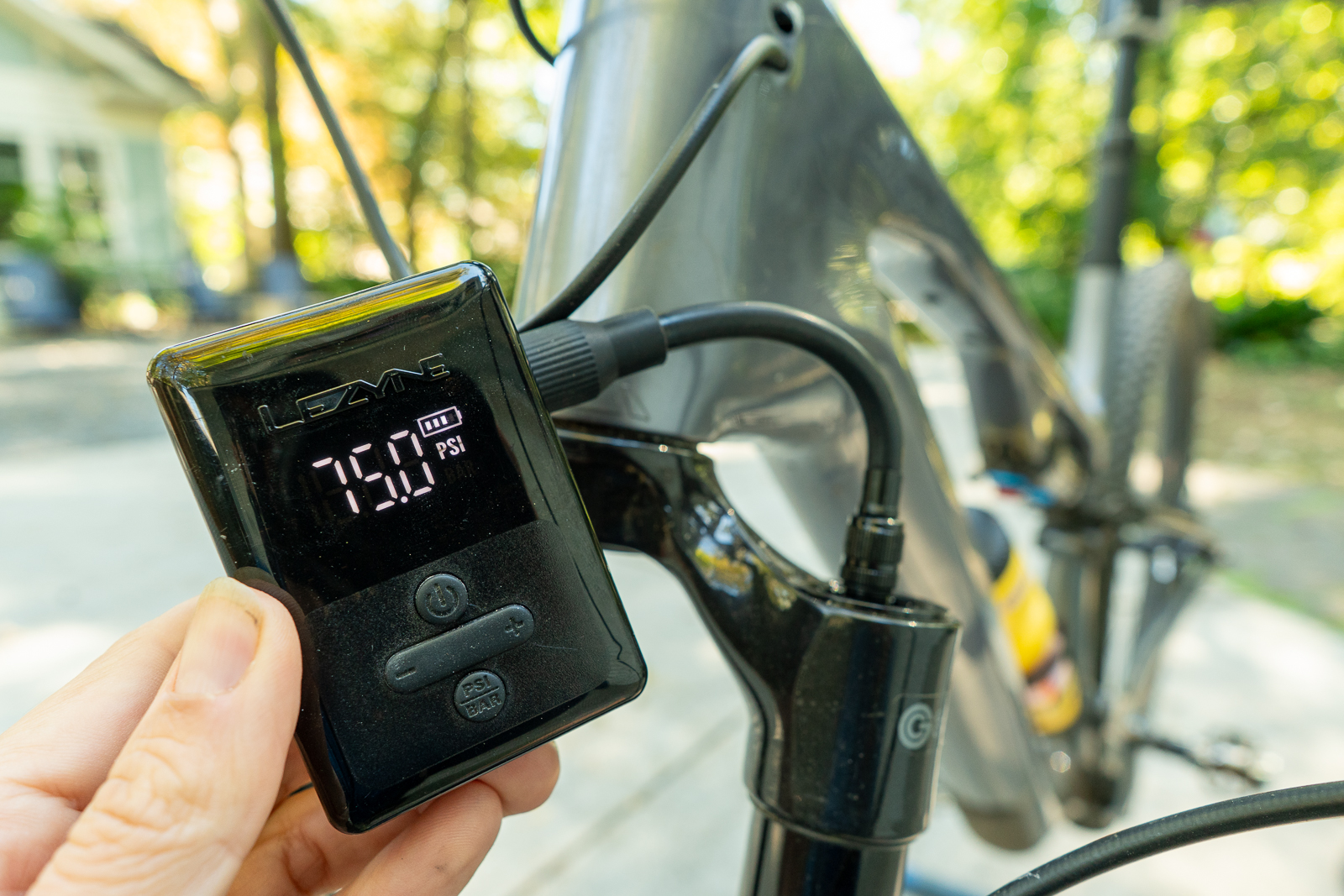
The E-Drive is also Schrader-compatible and delivers up to 120psi of pressure, which means you can even use it to top off your fork. I pumped my Fox 34 to 75psi in under 10 seconds.
If you’re running Clik valves on your bike, a Clik chuck is sold separately.
Picky about tire pressure? The Lezyne E-Drive has half-psi precision
Like almost all the other pumps I’ve tested, the E-Drive lets you set a target pressure, and it shuts off automatically once the tire gets there. What sets the E-Drive apart is that each press of the +/- button moves the target by 0.5psi (or 0.05 bar), making it more precise than any other inflator I’ve tested, except the Topeak E-Booster Digital, which reads pressure to the nearest tenth of a psi (0.1). Pressure can be set anywhere from 3psi to 120psi, and Lezyne’s “Set and Forget” memory function remembers your target pressure between uses.
All that power makes it hefty and also a little loud
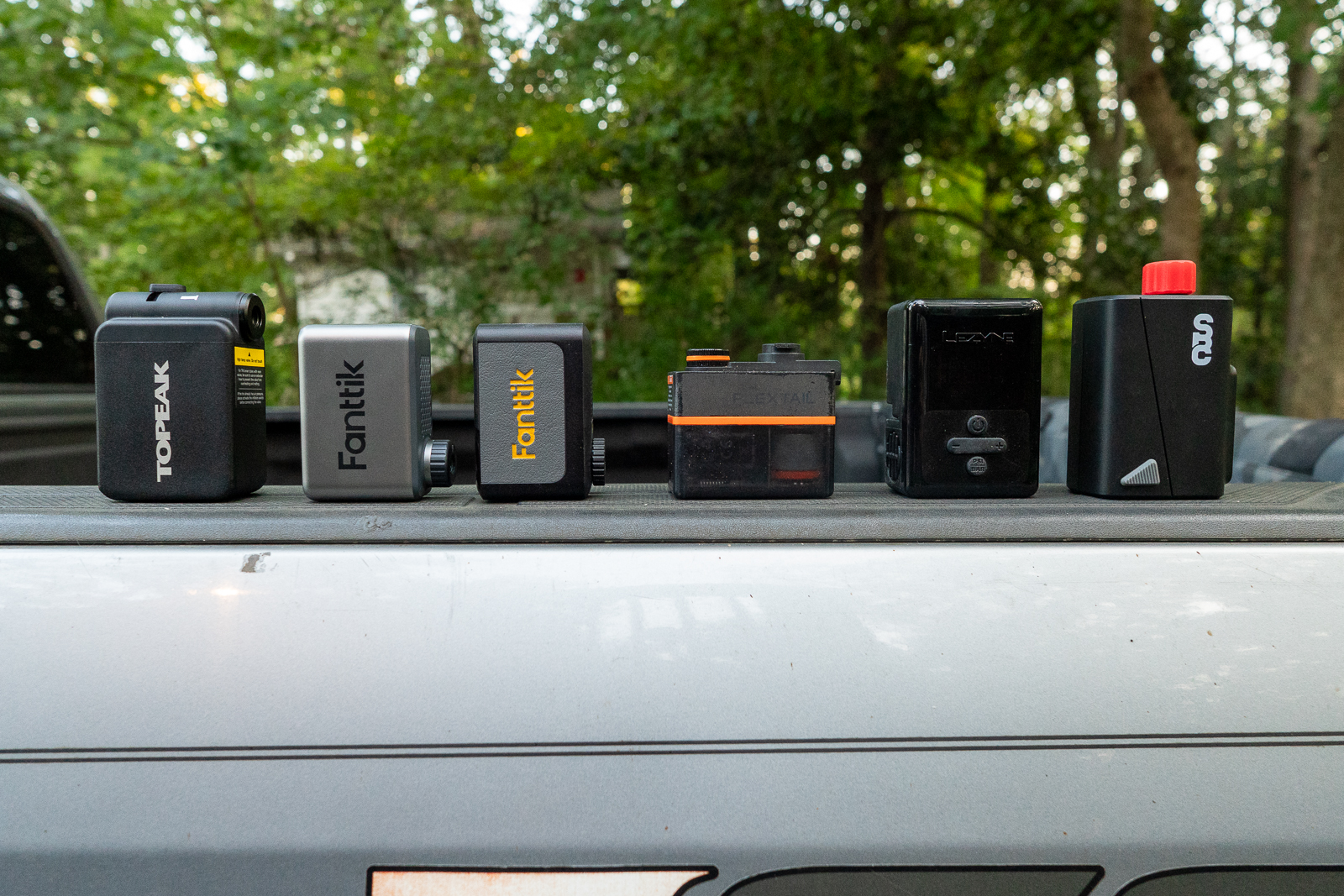
My E-Drive weighs 239.8g with the extension hose, close to Lezyne’s claimed 241g. That makes it heavier than every trail-size pump I’ve tested, including the Topeak E-Booster Digital (163g). Only the Fanttik X9, which isn’t really designed to be portable, weighs more.
At 84dB, the E-Drive lands in the middle of the pack for noise. It’s louder than the Flextail, Topeak, and Fanttik pumps, but quieter than the State (87dB) and Asmax (90dB). Since anything above 85dB can damage hearing over time, I wouldn’t call any of these pumps quiet.
About that replaceable battery
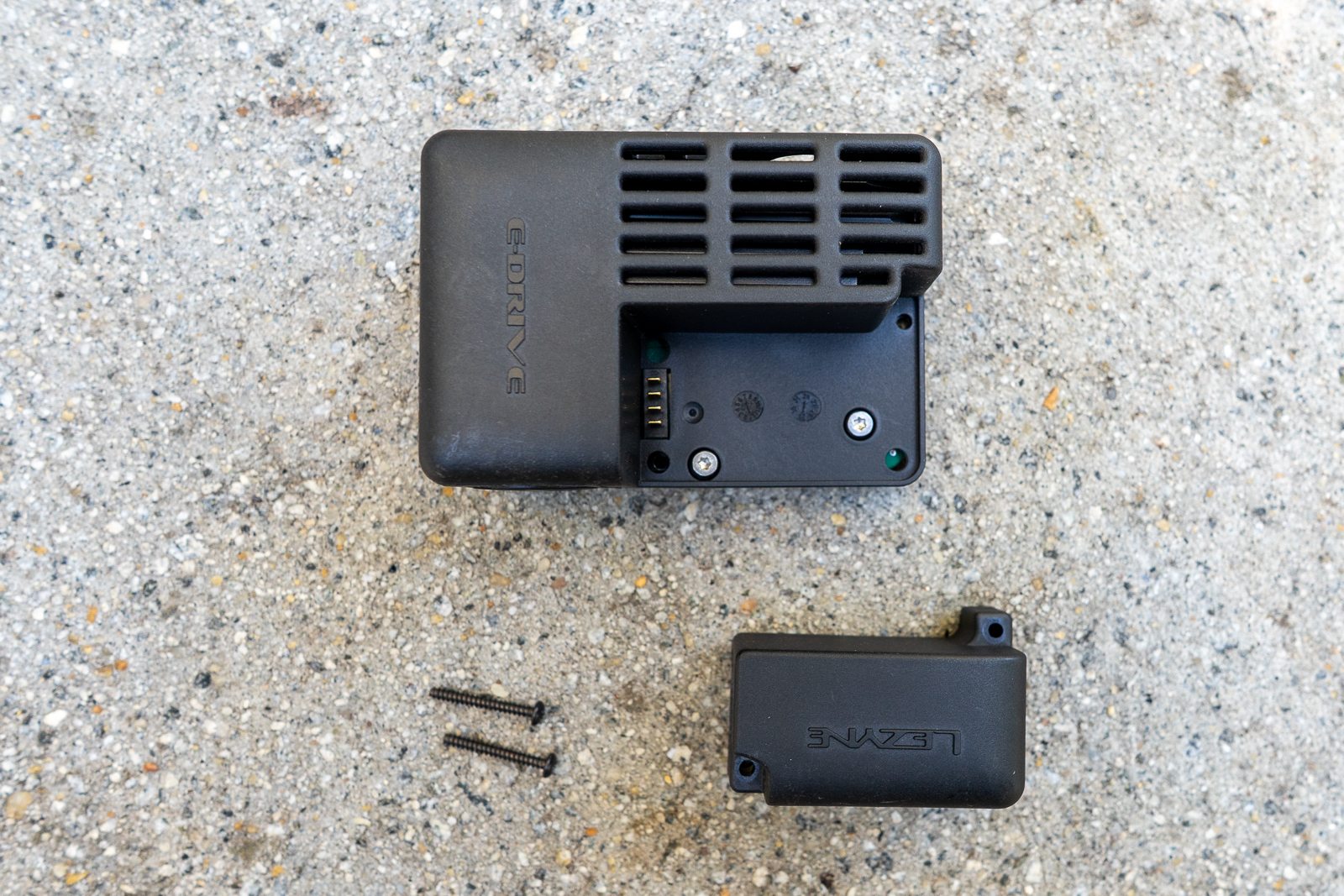
The E-Drive’s 750mAh battery is held in place with torx screws, and riders can replace it rather than tossing the whole pump when the battery fades. The pump itself carries a two-year warranty in the US, while the battery is covered for six months. Replacement batteries will be available beginning in December for $19.99.
The pump charges via USB-C. Lezyne’s product page says it takes three hours to charge from empty. Like all battery-powered inflators, the E-Drive should be kept dry, and Lezyne warns that extended exposure to humidity can even cause problems. The pump comes with a mini-dry bag — the Caddy Sack — for protection.
Lezyne lists an operating temperature range of 14°F to 113°F and says the battery shouldn’t be charged when temperatures are below freezing. The pump shuts off automatically after three minutes of continuous inflation, and Lezyne recommends letting it cool for 10 to 15 minutes after use, though I found in my tests it ran just fine with just a few minutes in between inflations.
Share your Lezyne E-Drive review
At $149.99, the E-Drive is pricier than some of the inflators I’ve tested, like the Asmax T30 and Flextail Mini, and right in line with premium options like the Topeak E-Booster Digital and Muc-Off AirMach Pro.
Pros and cons of Lezyne E-Drive
Pros
- Fastest 0 to 20psi time of any pump I’ve tested
- Most inflations per charge among trail-size pumps tested
- User-replaceable battery
- Half-psi pressure increments
- Secure lever-lock pump head; can be used to top off a fork up to 120psi
Cons
- Heaviest trail-size pump I’ve tested
- No direct-connect option; hose required
- Clik chuck sold separately
- Priced at the high end of the category
Bottom line
If you can live with the extra grams and the required hose, the E-Drive is the electric pump I’d pick for inflation speed and longevity.
* In the first round of the electric bike pump roundup test, a slightly larger 29×2.5″ tire was used.
Keep up with the latest mountain bike news by adding Singletracks as a preferred source on Google.



0 Comments