


A lot of mountain bikers are gearbox-curious these days. Gearbox bikes are winning at the highest levels of downhill and enduro racing, and the promise of a lower-maintenance drivetrain is hard to ignore. But buying a bike that can only run a gearbox is a big bet on unfamiliar tech, especially if it turns out you don’t like how it rides. The new Kavenz VHP X takes some of that risk out of the equation and allows riders to experiment.
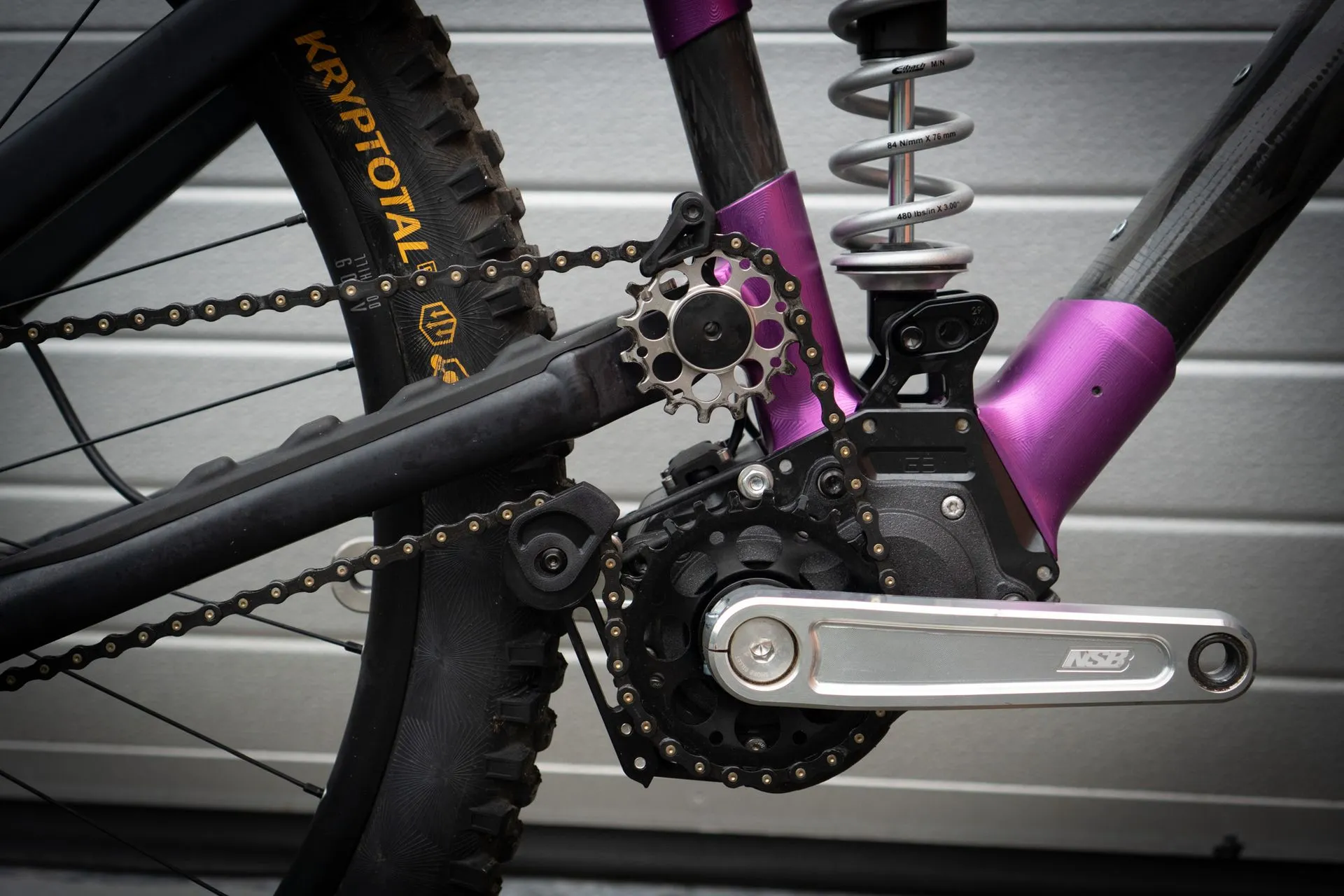
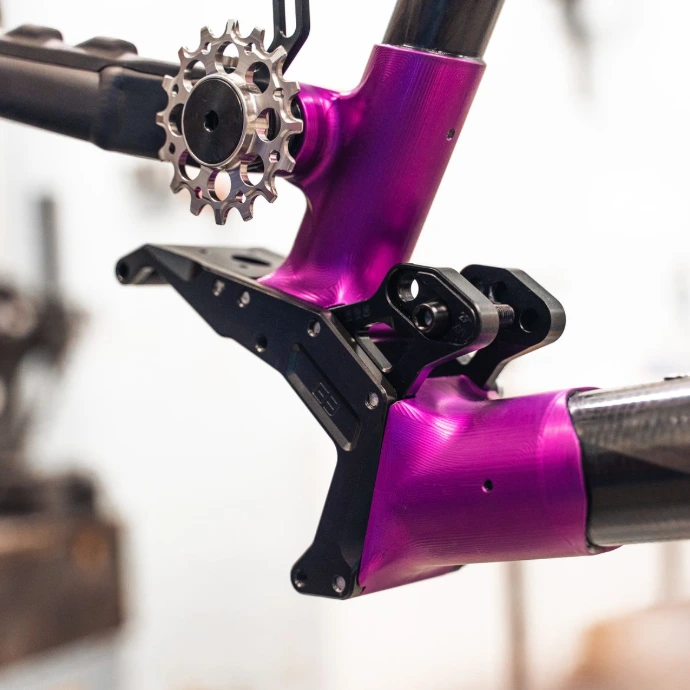
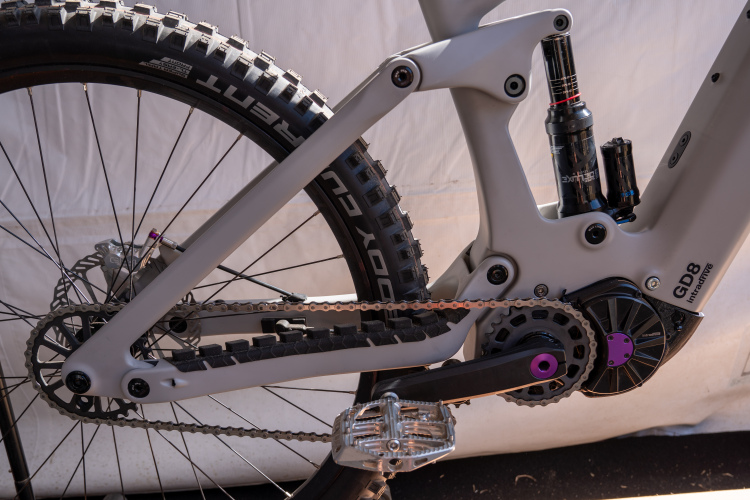
The VHP X frame can be built around either a Pinion Smart.Shift gearbox or a standard threaded bottom bracket with a crankset and rear derailleur. Kavenz says the conversion hardware is sold separately, so owners can switch drivetrains later without buying a new frame.
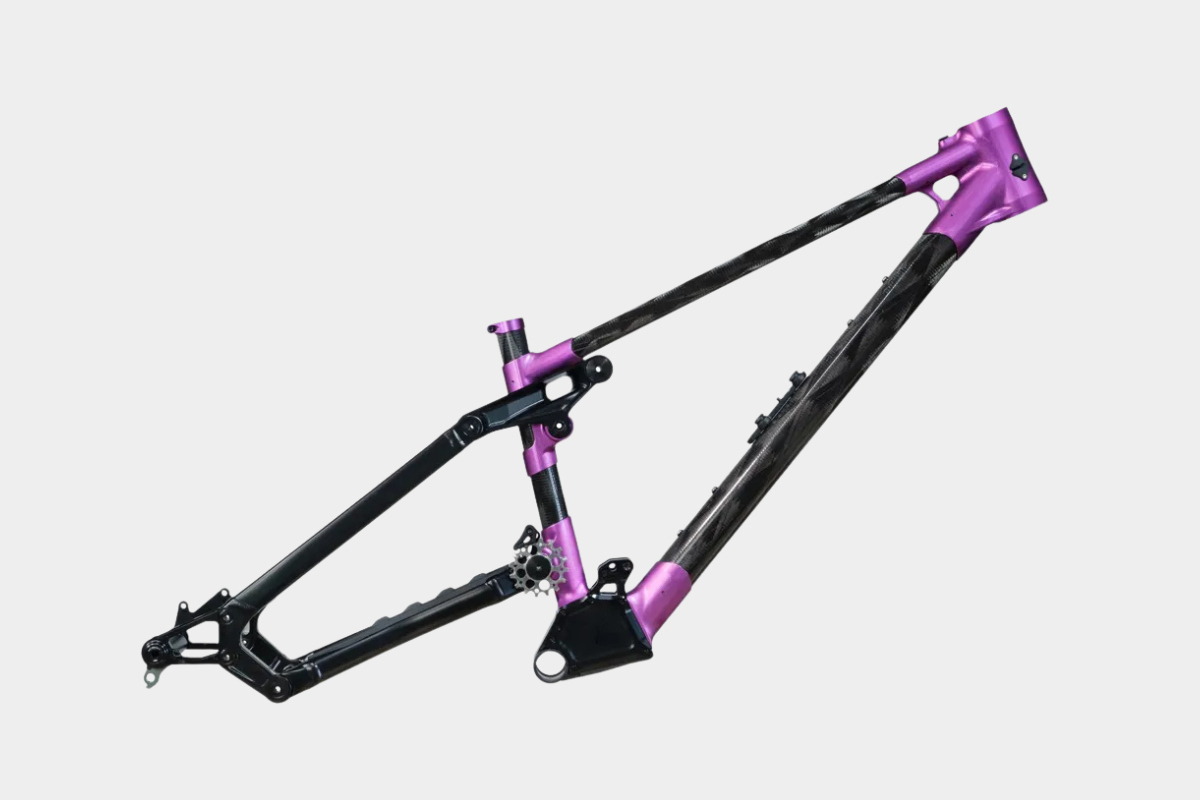
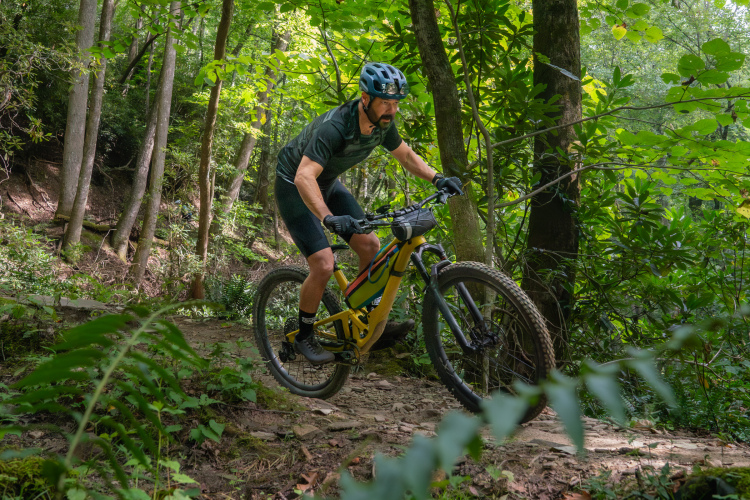
The VHP X is a high-pivot, idler-equipped platform with a lugged carbon front triangle and an aluminum rear end. Kavenz says the same frame can be set up with between 154mm to 200mm of rear travel depending on which shock is installed, and it runs either 29-inch wheels or a mixed-wheel setup.
Gearbox or derailleur, one frame
According to Giacomo Grossehagenbrock of Kavenz, the design idea grew out of a lineup consolidation. The brand was phasing out two models at the time, the G2 gearbox bike and the V7, which was built around a traditional drivetrain.
“We also realized that while a lot of riders are interested in gearboxes, many aren’t quite ready to commit to a gearbox-only frame,” Grossehagenbrock told me via email. “So we figured, why not offer both options in one platform?”
In addition to offering two different drivetrain options, the Kavenz VHP X can be set up as a trail, enduro, or downhill bike depending on the shock length. Riders can choose to configure the VHP X with 155, 177, or 200mm of rear suspension travel.
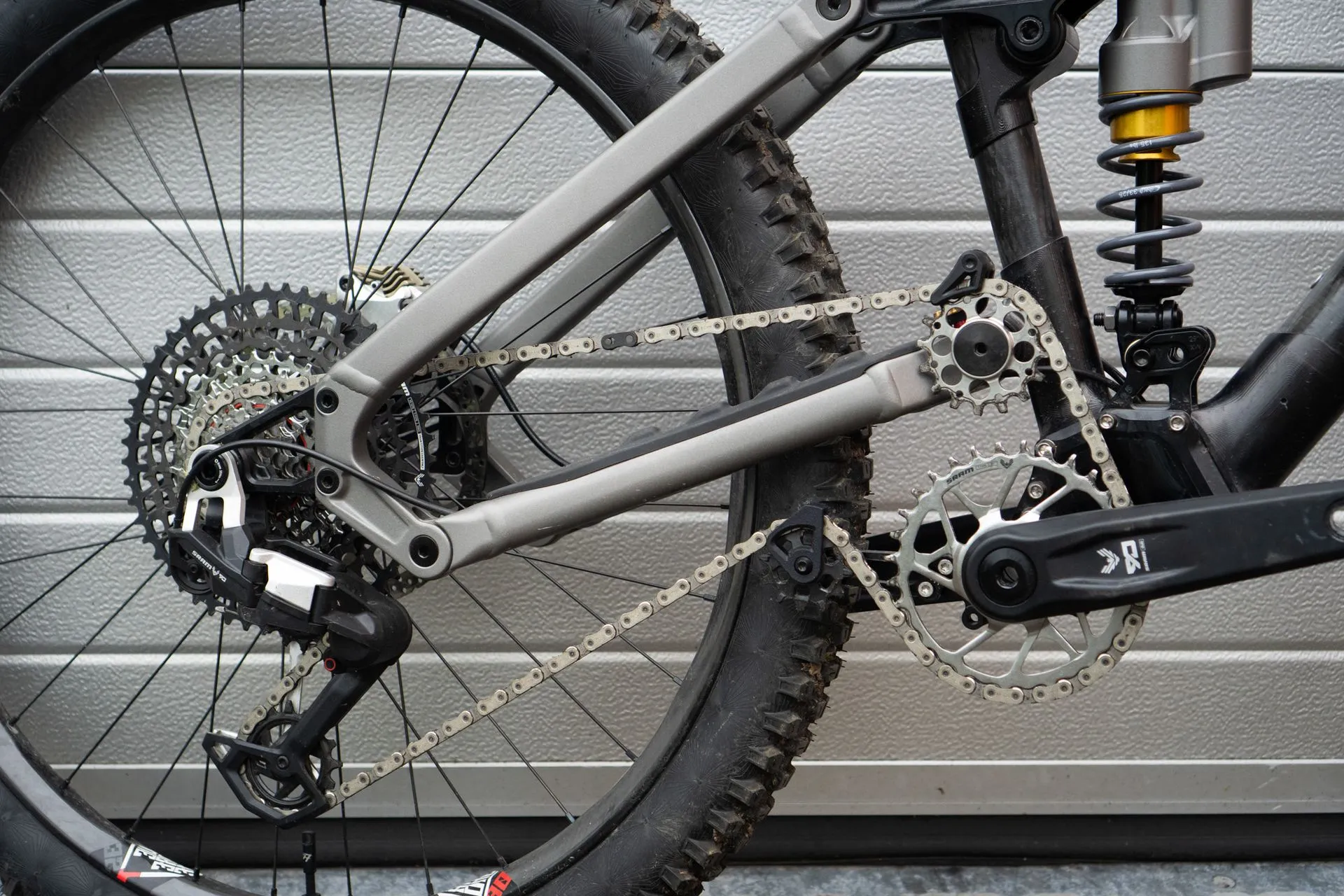
With either drivetrain, the VHP X has the same geometry and kinematics
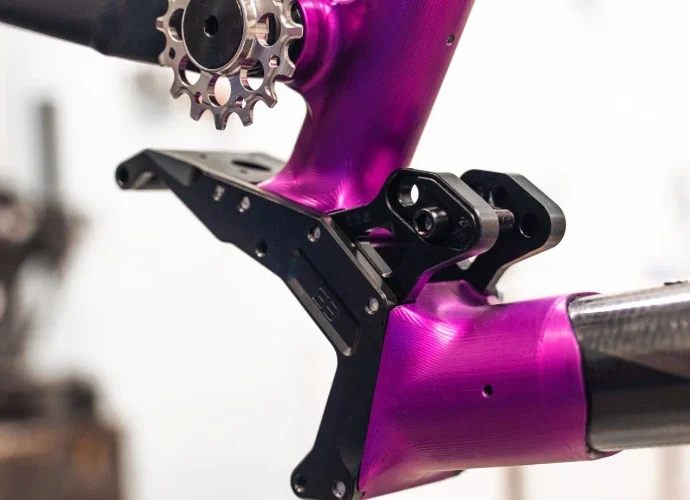
The VHP X’s bottom bracket area is built to accept either a 73mm threaded BSA bottom bracket or a Pinion gearbox mount. Swapping between the two doesn’t change how the bike fits or how the suspension moves.
“The geometry and suspension linkage kinematics are identical in both configurations, including the leverage ratio and axle path,” Grossehagenbrock said.
Anti-squat is where things get a little more complicated. Because anti-squat depends partly on chain forces, a gearbox’s internal ratios change the relationship between pedaling input and chain tension across the gear range. Still, Grossehagenbrock says both configurations “achieve very similar anti-squat characteristics and suspension behavior in practice.”
As for weight, Kavenz lists the VHP X frame at 3.4kg (7.5lb) for a size medium in the BSA configuration, without a shock. Grossehagenbrock says the gearbox version of the frame is actually slightly lighter when comparing bare frames, though he didn’t have the exact difference on hand. Of course, the complete gearbox drivetrain is a different story. Kavenz’s own gearbox vs. derailleur explainer acknowledges that a gearbox system typically weighs more than a comparable derailleur setup.
The VHP X frame sells for €3,000 (about $3,450 USD) without a shock. The standard frame is set up for a threaded bottom bracket and derailleur, and adding the Pinion interface costs an extra €159.66 (about $185). Though Grossehagenbrock didn’t provide pricing for the conversion hardware if purchased separately, it’s likely similar to the upcharge.
About 40% of Kavenz VHP X buyers are choosing the gearbox
So given recent interest in gearbox bikes, and the limited number of compatible bikes on the market, which way are buyers leaning? “So far, around 40% of customers are going for the gearbox version,” Grossehagenbrock said. “It’s still early days, but that’s a pretty interesting split!”
That’s a notable number considering how niche gearbox trail bikes are at the moment. It also suggests the convertibility pitch is resonating. Grossehagenbrock says the ability to switch later is “one of the main ideas behind the concept,” so a rider who starts with a derailleur can move to a Pinion down the road, or vice versa.

Why go gearbox?
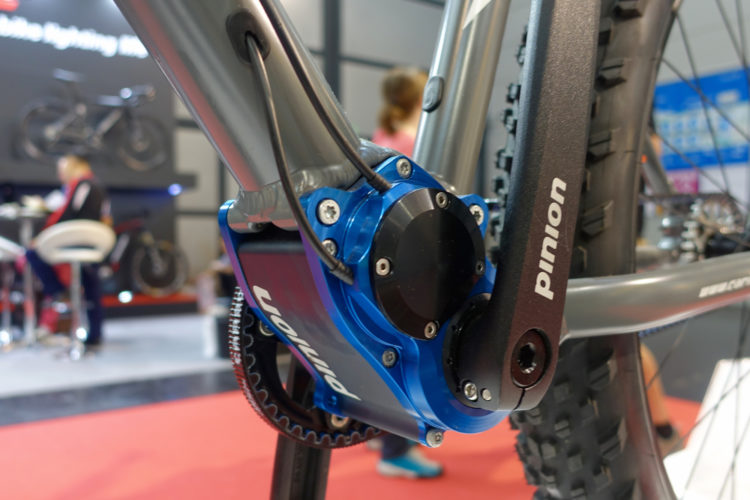
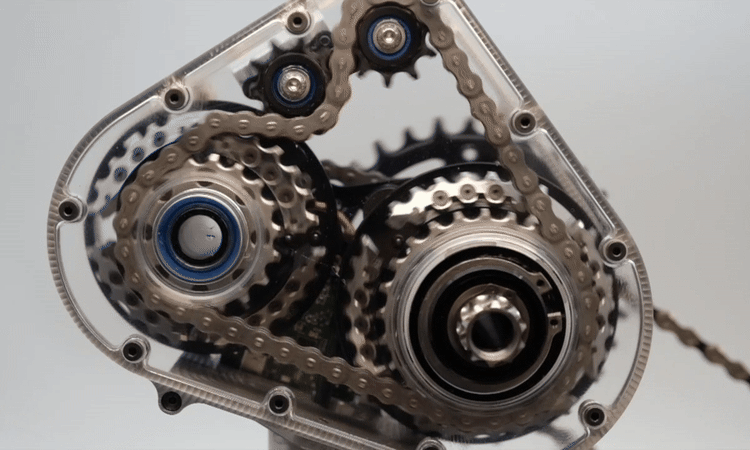
Gearboxes use a sealed housing at the bottom bracket that eliminates the derailleur and cassette found in a typical drivetrain. That shift brings a handful of real advantages, along with some trade-offs that have kept gearboxes on the fringe of the trail bike market.
On the plus side, gearboxes are well protected from mud, water, and rock strikes, so they require far less maintenance. Pinion recommends an oil change every 6,000 miles, and repairs are few and far between since there’s no derailleur hanging below the axle waiting to get smashed. Moving that mass to the middle of the bike lowers the center of gravity and reduces unsprung weight at the rear wheel, letting the suspension react more freely.
“Shifting weight from the rear wheel to the bike’s center enhances handling, giving riders better control,” Chris Sugai of Gates Corp. told Singletracks last year.
The biggest knock on gearboxes — aside from price — is weight. Pinion’s C1.9 weighs 2,000g and up, compared to 932g for a SRAM GX Transmission derailleur and cassette, a difference of nearly 2.5lb. Gearboxes also give up a little efficiency. David Roumeas of Effigear told us back in 2020 that the added drag is around 2-4%, though a dirty, poorly adjusted derailleur drivetrain narrows that gap. Add in the higher upfront cost and less widespread parts support, and it’s easy to see why most riders stick with a traditional derailleur-based drivetrain.

Kavenz doesn’t shy away from these trade-offs. Its own gearbox vs. derailleur explainer says derailleurs “generally offer slightly higher drivetrain efficiency” and lower system weight, while gearboxes win on maintenance, durability, and unsprung mass.
Gearboxes are having a moment
Gearbox bikes have been around for well over a decade, but racing is giving them new credibility. Heading into the 2025 season, several DH World Cup teams, including Intense Factory Racing and Atherton Racing, swapped derailleurs for Pinion gearboxes paired with Gates belts. Gates had offered €100,000 to any elite racer who could win a DH World Cup on a belt-driven bike, and Hattie Harnden claimed that prize this year.
Then, the action moved to enduro. Lief Rodgers finished second overall in the 2026 Enduro World Cup aboard a gearbox-equipped Priority Vanth, after placing sixth overall the year before on a derailleur bike. That’s notable because enduro racers, unlike DH riders, still have to pedal themselves to every stage.
Trail bikes are a tougher nut to crack. When we asked Transition about gearboxes last year, product director Sam Burkhardt explained that fitting one requires reworking the kinematics and layout around the bottom bracket, essentially requiring a new front triangle design. Those upfront costs are hard to justify for what is still a niche market.
A modular design could lead to wider gearbox adoption
Last year I commented on Travis’s article about gearboxes for trail bikes, “It would be cool to see a standard, modular bottom bracket setup that could fit a gearbox, motor, or standard BB so buyers have more choices and frame builders don’t have to come up with a bunch of different designs.” The Kavenz design could be that solution.
Whether more brands follow is another question. Kavenz is a small company, and a 40% gearbox selection rate among early customers may not translate to the broader market. But given the buzz around gearboxes, similar developments are likely to follow.
Keep up with the latest mountain bike news by adding Singletracks as a preferred source on Google.


0 Comments