

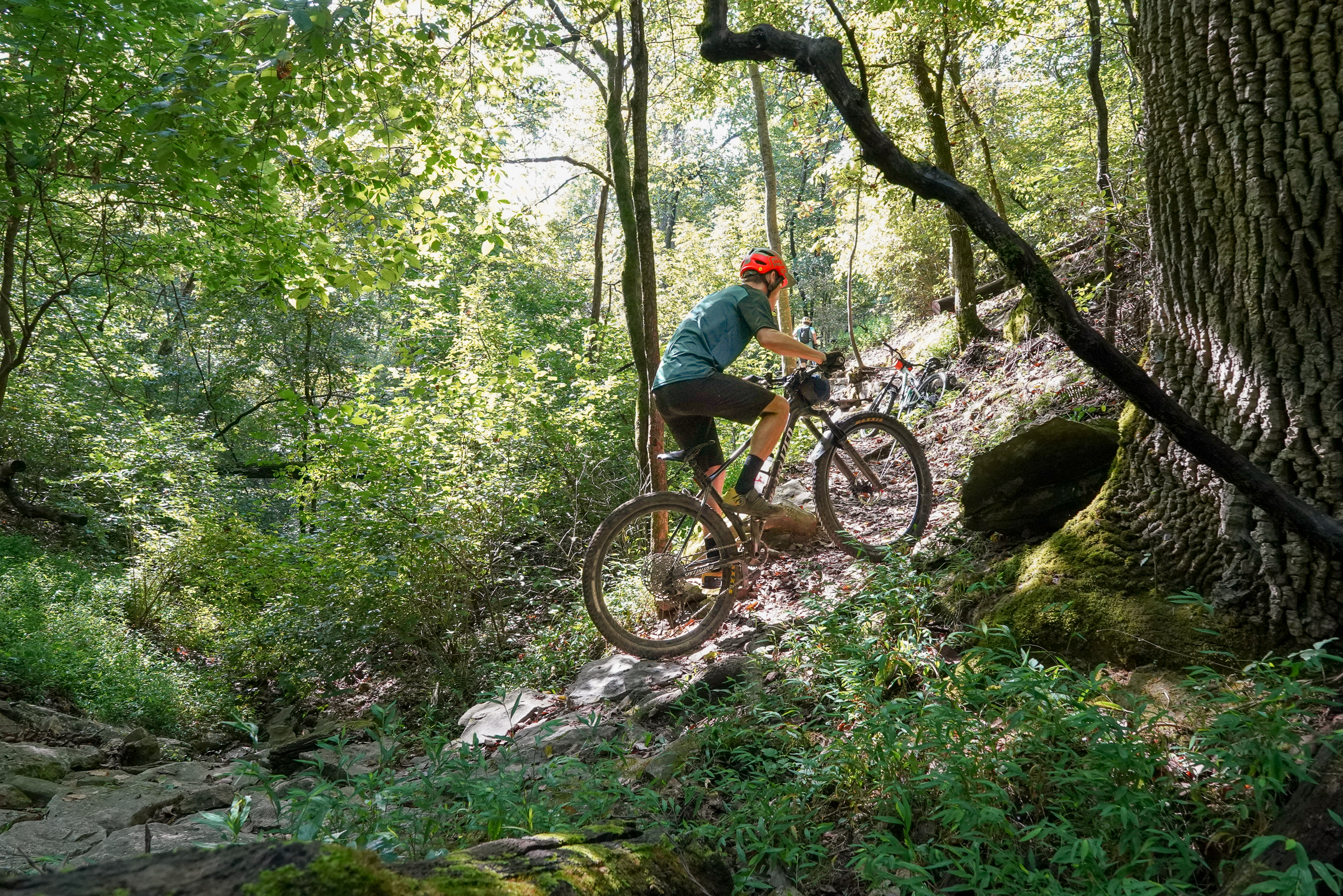
Several years ago, I was on a bike that I just didn’t get along with. While it pedaled decently on easy grades, it became difficult to manage once the climb steepened and/or became technical. If I stayed in a neutral position, it was a challenge to keep the front wheel down. I’d scoot up, and the rear wheel would spin.
As I’ve had the chance to ride other bikes, I’ve found those struggles haven’t completely disappeared. Now, I imagine my skills have improved, so perhaps blaming the bike is unfair. However, I’ve yet to ride a bike where rear wheel slip is eliminated. So, clearly this is a skills issue.
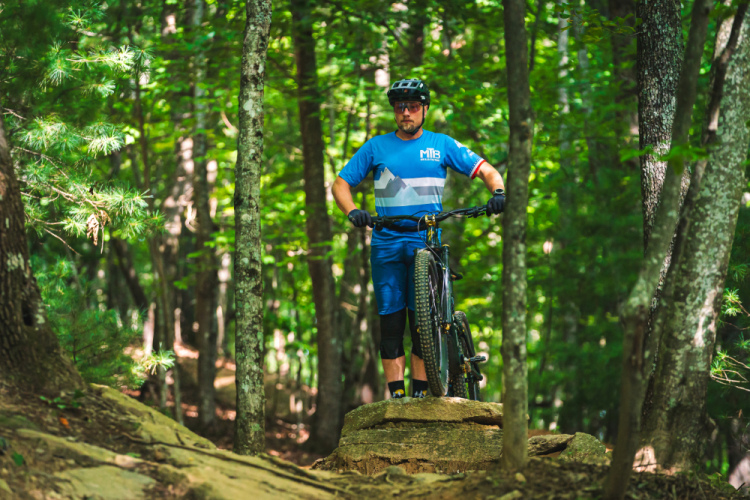
Fortunately, coaches like Josh Whitmore of the MTB Skills Factory have practical pointers for folks like me, and maybe you, too.
Big picture: Body position
“I like this topic because I feel like technical climbing is sort of a lost art in a lot of ways,” Whitmore said. “[So many] people want to focus on downhill stuff, less about wanting to actually pedal their bikes uphill.”
That said, Whitmore is happy to help his clients learn any skill they want. I recently connected with him about descending in loose conditions and getting up on the front wheel.
Similar to both of those descending-focused skills, climbing with less rear wheel slip often starts with body position. The plain and simple truth, according to Whitmore, is that body positioning has the greatest influence on rear wheel traction.
Whitmore pointed out the dilemma I struggled with, mentioned above. When our weight is too far forward, the rear wheel becomes lighter, loses traction, and slips. If our weight is too far back, the front wheel loses traction, becomes floppy, or comes up altogether.
First, and foremost, we need to consider body position and remember to remain dynamic. We’re not passive passengers. Rather, we should be active on the bike to engage, and hopefully conquer, difficult portions of the trail. Appropriate body movement and body position help keep the weight where you need it, reducing the risk of things like rear-wheel slip.
Fortunately, Whitmore has three practical skills he teaches his clients to help maintain sufficient traction on the rear wheel. These three climbing skills range from the smallest to the largest obstacles encountered on a challenging climb.
1. The pecking chicken
“When you’re sitting on the saddle pedaling, you have the ability to hinge at the waist and get your chest closer or farther away from the bars,” Whitmore said. “This is a little drill that I call the pecking chicken.”
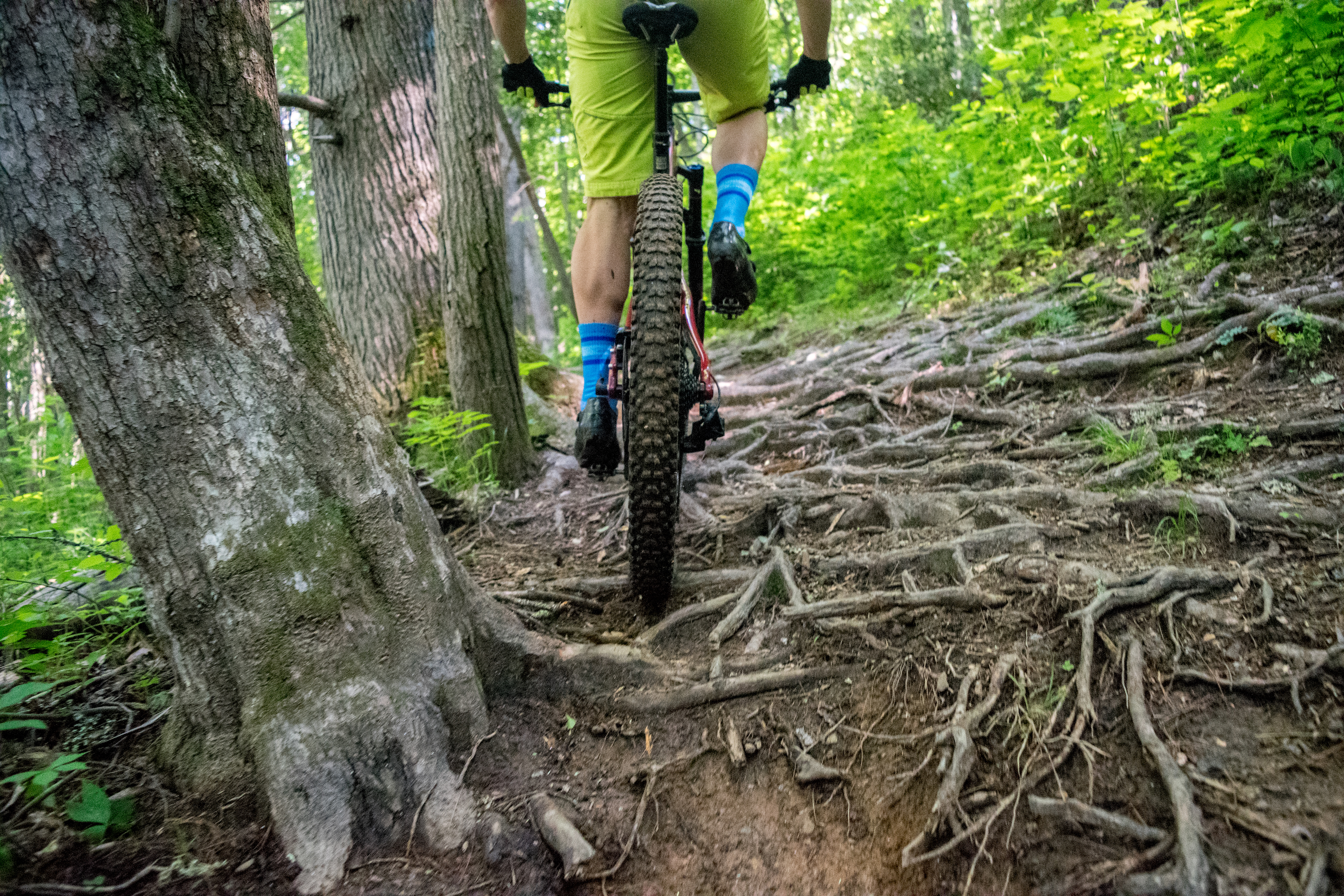
Whitmore said the pecking chicken (love that name) is for smaller features or obstacles you encounter. Think of roots or rocks that are smaller in height than a sidewalk curb. This is an obstacle that you shouldn’t need a wheel lift for because, ultimately, lifting a wheel means a total loss of traction, even if just for a split second.
As you approach the obstacle, keep your shoulders slightly farther back than your neutral position. This will allow the front wheel to easily roll up and over the obstacle while providing good traction for the rear wheel. As the rear wheel approaches the obstacle, lower your shoulders and chest slightly, closer to the bars (this is the “peck”). Doing so unweights the rear a bit to pop the obstacle, while still maintaining good contact between the rear wheel and the trail.
2. Fore/aft bike movements
It is probably no secret that momentum is your friend while climbing, and it certainly comes into play here. Skills like the pecking chicken help maintain momentum, especially when encountering numerous consecutive steps or ledges on a trail. Practicing and becoming confident in the skill prepares you for the next one.
As the obstacles get larger, maintaining momentum becomes more difficult. While a more aggressive pecking chicken may still work, you might start getting into territory where you’ll need to start lifting your wheels a bit.
Well, the front wheel, at least. Using a fore-aft movement, you are more likely to get the rear wheel over larger obstacles, ultimately maintaining traction and momentum.
“One thing we can do as the rear wheel gets to the obstacle is we can accelerate it up over the obstacle a little bit by shoving the bike forward,” he explained.
“Shoving the bike forward” consists of two simultaneous motions. First, Whitmore explained that you can push forward on the handlebars. While doing this, you can also roll your hips forward, “almost like a hip thrust,” to help accelerate the bike.
The fore-aft movement lets you rely on momentum to speed the rear tire up and over an obstacle, rather than trying to pedal or ratchet while the tire is on it. Once the obstacle is cleared, you can put power into the pedals again, preparing for the next one.
Whitmore said this skill works while standing, too.
3. Wheel lifts
For the largest, gnarliest obstacles, you’ll likely want to consider skipping them entirely. Well, with the rear wheel, that is.
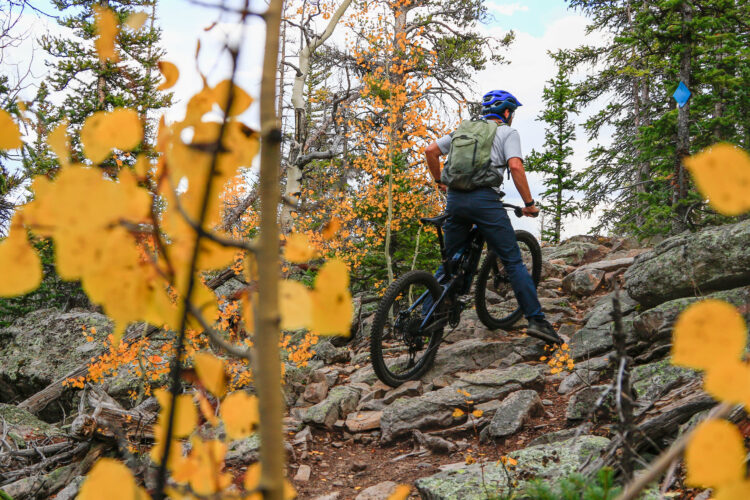
Think of a nasty clump of wet, diagonal roots with about 12 inches of vertical to clear. They’re too tall to try the pecking chicken, and, even with good momentum from a fore-aft move, there is a good chance your rear tire will slip off them. Here, Whitmore recommends a wheel lift.
Again, this is a move you need to be confident doing, as it requires carrying a bit of momentum. After lifting and clearing the roots with your front wheel, get your body mass forward over the bars and scoop back with your feet to lift the rear wheel.
The idea here is to completely clear those wet roots with your rear wheel, then pedal again once you have a solid tread. In fact, Whitmore compared climbing without rear wheel slip to the “lily pad” illustration he referenced when discussing descending in loose terrain. Whether we are going up or down, pedaling or braking, we’re looking for the sections of trail that provide the most traction.

But don’t I need a new bike?
Whitmore says no. In all his years of coaching, he’s never had a client who was just truly held back by an old/outdated bike. That said, obviously, some bikes climb better than others, but improving your skills almost always outweighs things like outdated geometry.
(New bikes are just a bonus!)
Tires can make a difference as well. More than anything, though, Whitmore feels you need to choose the right tire for your terrain and riding style. Even so, he sees more clients with worn-out tires rather than the “wrong” tire.
While we might like to blame poor performance on old geometry or the wrong tires, fitness also plays a pretty big role. It is a bit easier to isolate that one difficult section on the climb, maybe even that one particular move. But those are often just a small part of what is usually a long climb. Without proper fitness, you might have nothing left in the tank when it comes time to lift your rear wheel over those nasty, wet, and diagonal roots.
The news stinks. Why not follow Singletracks on Google News to bring more joy to your day?

2 Comments
May 29, 2026
Jun 4, 2026
although everybody is different. Gearing is the most important!! I set the gear up one from where Im sitting. In other words get off the seat pull with you arms and set the gear position for a good pump up the hill. It gets you off the seat. And creates balance. The stride becomes much longer and the gain rewarding. Body position means nothing if your spinning your wheels and not gaining time and distance that only kicks your own ass. This creating a better kick momentum for the next hill. I find since I've been doing this the rides and the consistently them have improved greatly. Ride on.