



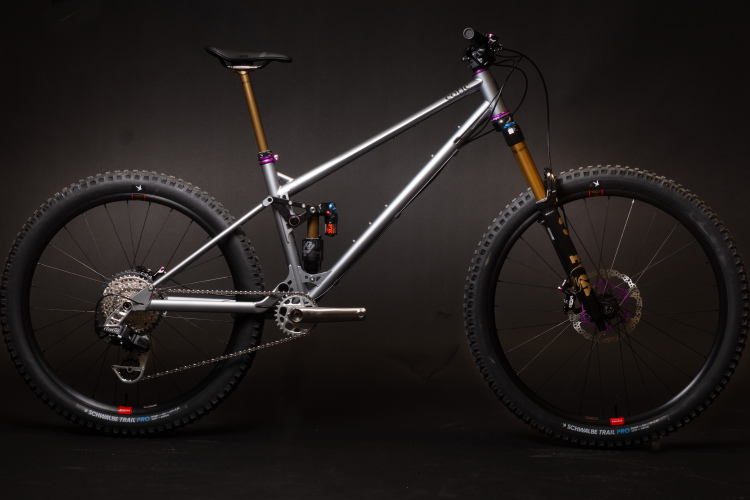
Cy Turner is the founder and owner of UK-based Cotic Cycles. The Cotic brand got its start in 2003 and is known for high-quality, handcrafted steel bikes, ranging from hardtails to full-suspension bikes to gravel bikes.
- What were you looking for in a hardtail in 2001 that you couldn’t find back then?
- Where does the Cotic name come from?
- Why build mountain bikes from steel? Why did you stop using titanium?
- Why does it seem like so many British bikes made from steel? Are most of your buyers located in the UK, or do you see a decent amount of demand internationally?
- Why move away from matched 29″ wheels for the recently updated Cotic Jeht trail bike?
- Do you see mountain bike geometry continuing to evolve, or is it pretty well optimized at this point?
- Have you ridden a bike with 32-inch wheels? What’s your perspective on the bigger wheel size?
- The Cotic Rocket is one of the few high-end electric bikes with a steel frame. What made you want to design an e-bike?
- What’s next for Cotic?
Learn more about Cotic at cotic.co.uk.
This episode is sponsored by Greater Sandpoint Chamber of Commerce.
If you’re looking for your next mountain bike destination that offers just about everything, put Sandpoint, Idaho at the top of your list! The Lower Basin trail system serves up world-class riding through towering timber and across massive granite rock slabs, with trails for every rider — from technical black-diamond descents to fast, flowy cross-country loops.
For excellent park-style riding, head up to Schweitzer Mountain Resort with dedicated downhill trails and e-bike access to more than two dozen trails. Or pedal from town to the Pine Street Woods trail system, where the trails range from flowy to technical.
When you’re ready to take a break from the trails, Lake Pend Oreille is right there for camping, boating, swimming, or even standup paddleboarding. And after a big day outdoors, head into the town of Sandpoint, where you’ll find a great selection of bars and restaurants to relax and refuel.
Get all the details to plan your perfect getaway at visitsandpoint.com. The trails and the good times are waiting for you when you Visit Idaho!
Never Miss an Episode
- Listen on Spotify
- Listen on Apple Podcasts
- Listen on Google Podcasts
- Listen on Stitcher
- Listen on Overcast
- Get the RSS Feed
- View all Podcast Episodes
Automated transcript
Jeff Barber 0:01
Hey everybody, welcome to the Singletracks podcast. My name is Jeff, and today my guest is Cy Turner, the founder and owner of UK-based Cotic Cycles. The Cotic brand got its start in 2003 and is known for high-quality, handcrafted steel bikes ranging from hardtails to full suspension bikes to gravel bikes. Thanks for joining me, Cy.
Cy Turner 0:23
Pleasure. Thanks for having me.
Jeff Barber 0:25
So, I believe actually in 2001 you designed your first bike, which you described as a modern steel trail hardtail, and that bike eventually became the Cotic Soul. So, what were you looking for in a hardtail back then that you couldn’t find kind of on the market at that time?
Cy Turner 0:46
Okay, so what it was, although that wasn’t exactly the first bike I designed, it was the first bike I designed I got made. I’d been doodling and designing bikes and designing parts for bikes since I was about, since I was about 15. So I was always super into it, and yeah, I actually designed a front hub, you know, in the middle of the anodized aluminum boom in the, wow, in the mid 90s, and my dad had it made for my 17th birthday.
Jeff Barber 1:22
So you designed it, though, like, was it, was it like a unique shape, or like, what, what were you doing with that?
Cy Turner 1:28
No, I took out, you know, I was, this was before my engineering training, so I was just taking elements that I was reading from the magazines, which I used to read voraciously, and thinking about things, so it was, it kind of looked a little bit, a little bit wrinkle, but then it had these oversized end caps, like the bullseye hubs had to kind of, because that was supposedly make your fork stiffer, even though we had like rigid forks.
Jeff Barber 1:57
Okay.
Cy Turner 1:58
So yeah, so that was that was that was that, but yeah, so the Cotic I designed a hardtail because even though I started in cross country, I got my first mountain bike in like 1987 and I used to race cross country a little bit because that was all there was to do in the 90s, I did get into downhilling for a little bit, and so, like, late 90s, early noughties, I did, did some downhilling until I got too scared, but coming out of downhilling, even back then, you know, we, we were on pretty, you know, 150 mil, 160 mil suspension. We were using pretty sticky big tires, we were using disc brakes, we had fairly short stems and riser bars, you know. It was, and I sort of got back on my old Kona hardtail and and I’d like a 98 Caldera, and it was, it was just all wrong, like, you know.
Jeff Barber 3:12
Compared to a downhill bike for sure.
Cy Turner 3:14
You know, the suspension didn’t work, it had rim brakes, I think, at the maximum tire I could fit in with like a 2.1. And it didn’t have, you know, had these really narrow handlebars and like 110 mil stem and all of this kind of stuff, so, so, so I modified that, so I put like a shortest, I put like a 90 mil stem and some two inch riser bars on it and some 100 mil forks, and it was front disc brake, and it was kind of a bit better, but it clearly wasn’t good.
So what I did was basically say, well, I want all of these elements, I want the riser bars, and I want the shorter stem, but I actually want to be able to fit the bike with when I’ve got the shorter stem, and I want these 100 mil forks, and I want some 2.4 inch tires, and all of these kind of things. So I basically measured the Kona, and then rejigged the geometry back to what it should be, with the 100 millimeter, you know, basically suspension corrected the bike, then stretched it, because you know, for the shorter stem added some elements that I’ve always liked about various steel bikes. I had, I bought Greg Fuquay with my, with my university holiday job money in 1996 which was, which, bless you, Greg, it was a terrible handling bike, but it was absolutely beautiful, like you know, had loads of really beautiful steel features. I’ve always loved Keith Bontrager, is a massive hero of mine, I always loved his bike. Six, so I added these elements to it, and I knew about Reynolds 853 because I actually had, I actually had a rally downhill bike made out of Reynolds 853
So I had, like, you know, it’s kind of, kind of, kind of funny when, when we came out with the Rocket in, you know, in 2012 and everyone’s going, you know, like a six inch travel full suspension steel mountain bike. What the hell? What are you smoking? And I was like, I was riding one of these 15 years ago. This isn’t new to me, you know. So, so, yeah, so, so, yeah. So, I decided to, because I always thought, you know, really bring British, bring, you know, growing up in sort of shops in the likes of 80s, 90s, you sort of know about rentals, you know about steel, and 853 was the best steel, so I thought, well, I can make out of this stuff, and it’s super strong, so I can make it a little bit thinner, and all of this, and so it was all of that kind of stuff, and it was also for me about getting a beautiful steel bike, modern steel bike, that modern steel hardtail thing was exactly it, because the only new steel bikes on the market at that point were still very retro. There weren’t very many of them left, and they were all still designed in 1996 because like anything progressive, like the Cove Stiffy, or some of those other things like that, they were all aluminum.
So I tried aluminum, I tried aluminum hardtails, particularly, and I just didn’t, but they were super stiff, and I just didn’t mind them. I’ve always loved the feel of softer riding bikes. I just want something that rides like a steel bike that is a steel bike, but I want to bolt all of these modern things and have all these modern features on. Fortunately for me, in terms of starting a business, hardly anyone else had thought of doing that at that point so we were pretty unusual. I wouldn’t say we were completely unique in the market, but we were very early.
Jeff Barber 7:12
Other people were thinking kind of along the same lines. Back then, people weren’t talking about like hardcore hardtails, that wasn’t a thing, right?
Cy Turner 7:24
Well, it kind of was in the UK, that’s the thing. It was like it was a very distinctly UK thing. It was like there was the guy who helped me get into business was a guy called Brad Richards, who was already doing on one at the time, and they were already doing things in and around this kind of idea, and then not long after, there was a couple of other sort of small brands doing sort of small batch Taiwan stuff as that began to open up.
But they were all, they were all quite quintessentially British, like, because at the time the thing about Britain is it’s a little bit like the Pacific Northwest or BC in a lot of ways, yeah, in that the weather is temperate enough that we don’t get snow in the winter, so we can still ride through the winter, but the weather’s really wet and awful, so, and at the time, up at certainly up until maybe 10 years ago, the amount of kit you would just wear out riding through a winter, you know, like drive trains, brake pads, you know, frame bearings, you know, the one of the reasons why hardcore hardtails became a thing in the UK is because basically, if you had a full suspension, you know, if you had an early naughty full suspension bike and rode it through the winter, it literally dissolved, you know, just thought it would just, you know, your frame could just be a pile of expensive trash by March, so we wanted something that had good handling, like those bikes, but and also we don’t tend, we tend certainly in the North of England, we tend to have short, steep-sided valleys, so we didn’t, don’t have these long, flat out long descents, where, where you get, you know, where you just get beat up for minutes at a time, you get quite steep, short technical kind of downhills, and again, like a hard tail is less of a performance impediment to those kind of things. Yeah, and then if you can build a nice steel one, where you just take in a little bit of the edge off some of those bumps, and like got a bit of give and go. Then again, it just sort of helps that kind of play into the advantages of that kind of thing.
Jeff Barber 9:49
So, tell me, where does the Cotic name come from? How’d you come up with that?
Cy Turner 9:54
It’s a silly nickname at university.
Jeff Barber 9:56
Oh, it’s your nickname?
Cy Turner 10:02
I got it, so it was ironic, because I am, because, because, because I was mostly the sensible one in our group in university, but my last name is Turner, that was already gone, you know, CT — GT is too close — Gary Turner. Paul Turner founded RockShox, there’s Turner’s everywhere,
So we had to come up with something, and even though it’s on balance, a branding person probably would have said, well, people can say it wrong and spell it wrong, and all of those kind of things, because we get a lot of Cotic and, like, you know, but particularly in the UK, because of various regional accents, is Cotic.
Jeff Barber 10:51
Okay, that makes sense, though. Psychotic, I love that.
Cy Turner 10:54
So, so, yeah, but also because it’s kind of, it’s almost symmetrical, and it’s almost palindromic, so we could do like some interesting things graphically with it, because certainly, which we did for a while, so yeah, so yeah, so that was where it came from.
Jeff Barber 11:10
Awesome, so you kind of touched on this in your previous answer, but I’m I’m curious, why build mountain bikes from steel, and I’ve also heard, and this is kind of my next question, maybe you can kind of answer it all at once. I’ve heard various reasons for why a lot of British brands, in particular, use steel to build bikes, so you mentioned, you know, it is more, it just has a better ride feel than aluminum, but I’m wondering if there are other reasons as well.
Cy Turner 11:42
I mean, initially it was all about the ride feel and the look, because that was what I was searching for in that steel hardtail.
Jeff Barber 11:50
Because you can have thinner tubes, or you know, smaller diameter tubes.
Cy Turner 11:56
Yeah. So basically the thing with it is that ride feel the ride feel in the stiffness of a frame is a combination of the intrinsic stiffness of the material, which is called the Young’s modulus, and the sectional properties of the tube. How physical that, and that’s to do with how big it is and how thick it is.
Jeff Barber 12:17
Okay,
Cy Turner 12:17
Now aluminum is actually the intrinsic stiffness of aluminum is actually a third of what of what steel is, because it’s, but because it’s, it’s so, it’s so light, but also so relatively weak compared to steel, you have to use it in these quite big sections with quite thick walls, so the section property comes to dominate the feel, so it’s these great big stiff tubes multiplied by relatively small intrinsic stiffness, whereas steel’s the complete opposite, it’s wildly stiff as a material and really, really strong, so you can use them in these tiny thin sections and small tubes, so this, so the actual tube, the actual physical stiffness of the tube, rather of the tube, is a lot lower, and the steel is intrinsically strong and stiff enough in itself to let, let that happen, and that gives that’s what gives you the deflection and the ability to breathe with the trail, like they like steel, good steel bikes do.
So, I don’t know why British, but I don’t know. I think it’s, it’s possibly a nostalgic thing, because I mean, aluminum came along quite late, and it was seen, and it was very much pushed by the by the mountain bike kind of side of things, and it seemed as quite cool and space aged, and things like this, but you know, we grew up riding these thin tubed steel bikes made by brands like Rally, when they made them, when they made everything in Nottingham, and that was just our Mar and Pa bike shop, you know, we used to get, though they were the bikes we got for Christmas when we were kids, kind of, you know, like we grew up with. And then when, you know, and when you and if you did go road racing or doing something like that, the guys were all on hand built steel bikes, right? You know, high, you know, the high-performance road brand thing wasn’t a thing back then. If you were really into road racing, you, there were all of these local bike shops that would make things out of Reynolds 653 or 753 and they, they’d custom make you a frame, and that was how performance, yeah. So, so we just, I guess, we just had a tradition of like high-performance steel frames, so there’s that, always been that affinity with that,
Jeff Barber 14:51
And Reynolds is a, is a British company, right? And the tubing actually comes from Britain, so I’ve heard. I’ve heard people speculate that maybe it’s a cost thing too, like it’s cheaper because you’re not importing materials.
Cy Turner 15:08
It’s not really that, because it’s Reynolds, Reynolds 853 is Reynolds 853 is wildly expensive as materials.
Jeff Barber 15:18
I wonder if it’s cheaper for you than say, like an American builder to get it?
Cy Turner 15:23
Well, I mean, it’s certainly cheaper for builders like that, but then, for you know, for a lot of the, for a lot of the history of Cotic, I was getting Reynolds 853 tubes made in Birmingham and shipped to Taiwan and built into frames and then shipped back again. So it’s like, you know, so I don’t think there’s a lot in that. I think it’s there’s definitely an affinity to the brand for UK builders, and 853 is demonstrably stronger, and therefore you know the ability to build lighter or better riding frames, or more durable frames, compared to a heat-treated chromoly, or certainly compared to a regular chromoly, is so there’s there’s a performance advantage.
But yeah, I don’t really know why, why steel is such a thing with UK brands. I just know that I just, I really love, I’ve, you know, I guess I grew up with them, I always loved how they felt, and then when I tried something different, I really didn’t like that, and I was just fortunate. Well, maybe it is the shed builder kind, or the like, the custom builder thing that is the reason for it, because actually I, I accidentally own a bike brand, I designed, I designed the soul, and I was quite a long way down the road of getting a guy called Dave Yates, who was a really famous frame builder in the UK, to make it for me.
So there was this whole culture of like, if you had an idea and it was going to be made out of steel, you could relatively affordably just get us, get a guy to make it for them, right? Yeah, it was only a chance meeting with Brand that introduced me to the idea of actually doing it as a commercial enterprise.
Jeff Barber 17:09
Yeah, interesting.
Cy Turner 17:11
So, I think there’s.. I think there’s an element of culture there, potentially. So, yeah, I don’t know why, but certainly for me it’s all about it, was all about the ride feel, and I, you know, and I definitely have a preference for the look of it, and the, the, you know, the clean lines, and all of that kind of thing. Yeah, and then as time’s gone on, and I’ve learned more about the world, and learnt more about everything, really, the durability and the ability to make something that lasts is really important, and ultimately, when we did our sustainability assessment a few years ago, it became clear that it was by far the lowest impact material to build a bike frame out of, so it all just made sense.
Jeff Barber 18:04
I was gonna ask about that, because there was a time when you were doing, I think, a few frames in titanium, is that right? And yeah, and a lot of people see titanium as like an upgrade over steel, I mean, it’s it’s got some similar characteristics,
Cy Turner 18:20
Yeah.
Jeff Barber 18:20
Talk about why you decided against doing titanium.
Cy Turner 18:26
So, there was a couple of.. well, ultimately, it was the sustainability thing, like when we did the sustainability assessment, we found out that although titanium has the potential to last longer than steel in as an intrinsic item, it’s actually nearly as you know, generates nearly as much carbon dioxide as carbon fiber.
Jeff Barber 18:52
In terms of like mining and processing?
Cy Turner 18:55
Yeah, yeah, because it’s incredibly hard to make in the first place. Titanium, is the fourth most abundant element in the earth’s crust. It’s everywhere it’s in white paint. Titanium dioxide is the dye in white paint everywhere. But it doesn’t like being broken away from that oxygen in titanium dioxide, and you have to use a huge amount of electricity to do that.
And as a result of it being so reactive, it’s also almost impossible to recycle. That’s the big, that’s the kicker, that’s the thing that really puts it in the same category as, as carbon fiber, very, very hard to recycle.
Jeff Barber 19:34
Really?
Cy Turner 19:35
Yeah, because the moment you heat it up, it just reacts with the air and turns into it, turns into white dye, which is pretty much worthless.
Jeff Barber 19:42
Huh, wow, yeah. I had no idea. I mean, you just assume that’s a metal, like aluminum or steel, where, yeah, you just heat it up, melt it down, and turn it back into another tube.
Cy Turner 19:54
Not at all, not at all.
Jeff Barber 19:56
Interesting.
Cy Turner 19:57
So, so we found that. So that was a so that that was the driving force behind the final decision, because and we went public with that, because we had a, we had a history of doing titanium versions of our high-end 853 mountain bike and gravel bike frames, you know, through the years we did a, we did a product called the Soda, which was the, which was the titanium version of the Soul, and then the Solaris, which are our mountain bike hardtails. And we did the Tonic, which was our, which was a titanium version of the Escapade gravel bike.
And when we introduced the Cascade, which is our kind of drop bar adventure bike in 2022 it was quite unusual in the market at the time, and it was selling really, really well, but we were beginning to get quite regular. When are you going to do a titanium version? And any, and it was like, well, we’re not, and I thought, we, you know, I thought, you know, if we’ve had 10 people ask us about this, there’s going to be 100 people out there wondering, or 50 people out there sitting waiting for us to do a limited run of Thai ones, because so I, so I put it out there, and it just in the typical way of the internet, because it was slightly contentious, and it got people mashing the comments buttons, that’s my second most viewed reel on Instagram.
Jeff Barber 21:24
Oh, wow.
Cy Turner 21:26
Yeah, 70,000 views, something like that. Wow, so yeah, but the other thing is, is that over the years we’ve done titanium with four different vendors and they are some of, and all of them have had trouble with quality at some point. Titanium is not an easy thing to get in good quality, and it is not an easy thing to make consistently, and like, so you know, and you can’t tell until the customer’s got it, and they’ve got this beautiful thing, and you’ve got 95% of the customers of that that batch who’ve probably still got that frame. And then you’ve got five of the 5% of them where they got a crack within 18 months, And it’s just, and that is just that is that is the reality of working with titanium. It doesn’t matter who you do it with, unless you are using aerospace certified material, which nobody wants to pay for, and unless you are x-raying every frame, which nobody wants to pay for.
You cannot guarantee it, so you just get this wastage, which is just so well, it’s wasteful, and it’s horrendous, and it’s emotionally difficult for us and the customer. So it’s just, it was, it was too, it was, it was not, it was just getting too hard, and also it just now was beginning to run against our, you know, general philosophy of running the business,
Jeff Barber 23:03
Yeah, interesting. Well, let’s talk about another controversial decision that you made. You just updated the Cotic Jeht Trail bike, and this third generation is dedicated mixed wheel. So I’m curious, why did you move away from matched 29 inch wheels for that bike?
Cy Turner 23:24
I couldn’t make it handle as well. That is the simple answer. I’m six foot three, and I have been 29 a full 20 niner for life. You know, I was very early on 29 inch wheels, and I was very early on long geometry 29 inch wheels, and I tried the mullet set up on a modified version of one of the drop link bikes a few years ago, and I kind of couldn’t see the point.
But the way we evolved, but we went when we developed the Rocket e-bike, the thing that mixed wheel size does is it makes the bike want to turn. It makes turn initiation incredibly easy. The moment you even, you get the bike even vaguely off axis, it just wants to change direction, and that was really important with the e bike, because during the e bike project we started full 29 and quite a bit, and and they were quite a bit heavier than the Rockets ended up, and you just come barreling into a corner and try and change direction, and the mass just wanted to take you straight on, and you were just trying to wrestle it into the corner, whereas as soon as we tried even the heavy bikes, as soon as we tried them with the mixed wheel setup, that meant that you didn’t have to work as hard to get it to change direction, and then once it was actually moving in that direction, the weight would then drop the bike into the corner. Corner and it would rip round,
So, what we then had to do, but then what we found was, is that with the, with this sort of classic enduro geometry that we were using at the time, which had a head angle in the 60 threes and quite a unlike a more rearward weight bias, what happened then was, is that with the weight, and then the mullet setup with that head angle, and that kind of weight distribution, is that you’ve got a lot of flop and jackknifing, so if you’re in a slower, techier situation, if you got slightly away from the away from upright, the bike would just, just sort of kind of flop over.
And also, again, because the weight was quite, was a little bit way away from the front wheel, it was quite hard to even with the mullet to get the bike to turn in, and so it’s a bit still a bit too stable, so we’re kind of looking to dial agility back into the bike and move the weight forward.
So we grew the back end to push the weight forward, which is better for technical climbing, which is good when you’ve got a motor as well.
And then we steepen the head angle to get a little bit more weight on the front wheel, and a little, and move away from that kind of floppy, jackknify feel, because that, you know, that that that kind of dial some agility back in, and then all of that combined, and then some other things, you know, we dropped the BB, because you can use tiny cranks on a on an e bike, and you can grow the grow the reach, which grows the which grows the stack, so you stand a bit taller in the middle as well, and all of these little evolutions of the long shot geometry just turned the Rocket into this bike that I just loved riding it for, how it handled.
The fact that it was an e-bike was sort of like a secondary, you know, the fact that I could, like, you know, just power back up the hill was great, but it was actually, I just loved how it handled. So the next to the, so that you know, there’s logical extension at the end of that project was, well, we need to build a conventional version of this, and see if that’s still there.
It wasn’t even thinking, is this going to be the next Jeht or the thing? It was just like the next bit of research we need to do is that does this work on an unpowered bike?
Jeff Barber 27:16
Yeah, and does the Rocket have, like, is it similarly a trail bike, like similar amount of travel?
Cy Turner 27:21
Yeah, it’s exactly the same. 150 rear, 150 They share the, they shared the rear end. The rear end is completely shared. Okay, they have different pivot points for the to tweak the kinematic, but the actual hardware is identical.
So you build, so we build a front end. Yeah, the magic is still there. It’s just there’s just charisma about the bike, for want of a better word, which is really, and I had a play around with the with a modified version of the current Jeht, to you know, to try and get, you know, just to, you know, give basically give me broadly the same layout, but with 29 inch wheels. Yeah, and ultimately it just wasn’t as much fun to ride.
Jeff Barber 28:11
Had you ridden mullet bikes before?
Cy Turner 28:15
Not for any extended period of time. I rode a mullet version of my Rocket Max 5 or 6 years ago.
When we first started offering the mullet option on the drop link bikes, which was using an angle set, just to, just to sort of tweak the geometry back the right way, if you put a, put a rear wheel in it. So, yeah, I rode it like that, but for me that didn’t, you know, that didn’t give me any, that that bite didn’t, the turn in the extra turn in didn’t give me any advantages compared to rolling on the 29 inch wheels, there was something about, but with the extra tweaks to the geometry that we’ve done here, I just, I just couldn’t see past how…
Jeff Barber 29:10
You hit the magic combination, it sounds like,
Cy Turner 29:13
You know we played around with the bottom bracket, you know, I’ve got these like adjustable bottom brackets, and like, you know, and we had, you know, little bit, you know, we’re talking millimeters here and there. We were just tweaking this until we got this, you know, until and genuinely, the when I got the layout that became the production bike, you know, it was close and it was good, and it was like it’s not quite as good as the Rocket, but it’s nice, maybe it’s the, maybe it’s because it doesn’t have the weight and things, and I just made a couple more tweaks, and I, I made a turn in the car park, and just went, this is, this is going to be it, you could just bingo, it’s so wild, how you can just feel, and it does, it just make it, it. It makes me feel like a hero every time I ride it. It just like I love writing it so much.
Jeff Barber 30:05
Yeah, that’s awesome. Well, let’s wait a little farther into the controversy here around wheel sizes. Yeah, and I’m curious, I’m same height as you, we’re taller than average. What do you think about 3229 mullet, like, would it, would it give you those that same feel, especially for a taller rider? Or do you think it’s like some magic combo of 27 five and 29?
Cy Turner 30:34
I don’t know, because I haven’t tried.
Jeff Barber 30:35
Okay, is that something you want to try? Are you curious about it?
Cy Turner 30:38
Yeah, definitely. I mean, in theory, that it should have the exaggerated, it should have the exaggerated turning, because that’s to do with the geometry of the two different, the tilted steering axle axis, rather than anything to do with an intrinsically 275 rear wheel, yeah, so you should get some of that. I mean, obviously, there will be other elements to it, in terms of the weight and gyroscopes of the bigger wheels being a little bit more resistant to changing direction. That’s probably minor. I don’t know. I’m hand-waving here. I don’t know. I think a mullet, a mullet version would be interesting to try.
Jeff Barber 31:28
But it would be hard to fit a lot of riders, I’m guessing. The geometry that works for a small or even a medium would probably be a challenge.
Cy Turner 31:37
Yeah, absolutely, because I mean, and it’s not an actually with, with relative, you know, I’ve done a little bit of work on like layouts and things, haven’t built anything yet, but we have done a little bit of work on this, and actually, in terms of things like toe overlap and things like that on a mountain bike with modern geometry, you could, you, you know, you don’t really run into any issues there. The main issue is bar height for smaller riders, and as much as bar height is going up for a lot of riders, this whole stand tall thing that we’re, that we’ve done with the Jeht, you stand up in the middle of the bike instead of moving your ass backwards, because that keeps your weight a bit more centered, you’re really going to be pushing the bars quite high with once you get suspension forks involved of any level of travel, on medium-sized bikes, let alone small ones.
So you know, I don’t know, I don’t know, we’re gonna, we’ve like, I say, we’re gonna, we’re gonna watch it and do a little bit of wait and see on this, yeah, because I know a lot of people move very quickly.
Jeff Barber 33:00
Yeah, a lot of people have moved quickly, but in general, like mountain bikers are not, they’re not convinced, and they’re very skeptical.
Cy Turner 33:09
Yeah, and rightly so, yeah, rightly so. I mean, it’s, and you know, it’s not, it’s not like, you know, and certainly from the point of view of a functional trail bike, you know, less so in the gravel bike packing space, where you can, you know, where you, where a rigid fork is more appropriate, but you know what you’re talking about, like a proper trail bike, where you want, you know, 120, 130 mil, 140 millimeters of travel. Nobody’s making forks for that. No, no, no, it’s not like Rock Shox or Fox have got. You know, all those bikes came out of sea otter, none of them had a Pike on them.
Jeff Barber 33:52
Oh man, if there was a Pike…
Cy Turner 33:55
So none of the, none of the volume suspension people have pushed their chips into the middle of the table yet, and that to me probably says as much as anything else.
Jeff Barber 34:13
Yeah, no shade on the people who do make forks currently for that wheel size, but you know, yeah, a lot of us are waiting for more. How can you make a good bike if you’re not able to put like the best fork on it and suspension stuff, you know?
Cy Turner 34:29
Yeah, absolutely, absolutely. I mean, I can, I can understand why there’s a lot of bikes out there with the Intend forks on them, because they’re brilliant and they’re adaptable to 32 inch, but they’re also 1800 euros.
Jeff Barber 34:43
Cost is definitely a factor.
Cy Turner 34:46
You know, Cornelius has offered me a really nice price on a pair, and even I’m just going, you know, they’re really beautiful, but yeah, it’s, you know, that’s that, that’s a serious consideration when you’re talking about needing a frame and wheels and tires, and…
Jeff Barber 35:12
A new bike rack for your car…
Cy Turner 35:16
Yeah, I don’t know, it’s, I’m like, I say, I’m a little bit wait and see at the moment. I immediately threw it on our Cascade, which is our like drop bar mountain bike, so it’s so it’s, you know, it already uses 29 proper 29 mountain bike wheels boost spacing, and I immediately threw 32 inch wheels at that, and sort of saw, like, on the CAD, just to see what that looked like, but again, without doing a lot of research into geometry, you’re into saying, well, I could build something I am 95% sure will work in terms of handling and geometry and all of that kind of stuff, but anyone under six foot tall will get toe overlap. So I can’t sell that bike to people.
So you’re looking at suddenly been building large and XLs in one particular model, unless you, unless I, unless I’ve managed to work out how to make drop bars work successfully with a 66 degree head angle, and you know, and a bunch more, you know, and a bunch more, and who knows, maybe it’s just part of the evolution of the sport, and maybe it will work just like in the same way that we were skeptical about, you know, 500 mil reaches and 63 degree head angles 10 years ago, and you know what they ride like a bike.
Jeff Barber 36:47
Well, speaking of geometry, and you know, 32 inch wheels notwithstanding, do you think that mountain bike geometry is is pretty well optimized at this point? I mean, it seems like it’s evolved a lot, but are you seeing it slow down? Like, it sounds like with your Jeht, you’re at a place where you’re like, this is this is great. Like, can you improve it more, though?
Cy Turner 37:10
I mean, the Jeht layout is an evolution of the geometry that we were using up until this year on the other trail bikes, they have slightly longer rear ends, they have slight, they’re now slightly shorter at the front, you know, slightly not shorter reach, but slightly steeper head angle, slightly taller front center, lower BB, but we’re talking like, you know, half to one degrees, we’re talking millimeters, you know, a few millimeters here and there, and the it’s with the Jeht, it has added up to more than the sum of its parts, but I think, yeah, I think realistically the big jump came, you know, four or five years ago for a lot of the industry, and a bit long, a bit more before for people like us, who were on it quite early, I mean, that I think one of the, one of the things can, one of the reasons why 32 people are grasping 32 and one of the things that is a background effect on the mountain bike industry that that’s been kind of overshadowed by all the overstock and all of the other difficulties that we’ve had to deal with, is that if you’ve got a relatively durable frame, which had good geometry from five years ago, you’re not getting like a massive step in performance if you’re looking to buy the same genre of bike, regardless of which brand, whether you stay on the same brand or, you know, you’re not getting like you’re maybe getting 5%.
You’re getting better fit, maybe proportional sizing, maybe some like, you know, better water bottle little features, but it’s not like you know they’re little things, and that, that, that is one, that’s another thing causing a downward pressure on mountain bike sales.
Whereas we, you know, because we were quite early on Long Shot, what we call Long Shot geometry, back in sort of 2017 2018 back in 2016 those trail bikes were the best trail bikes we knew how to make, absolutely, genuinely the best trail bikes we knew how to make.
If you came and rode a 2019 Cotic, having bought a 2016 one, it was like a flipping spaceship compared to the 2016 bike. I mean, it was a quantum leap of performance, and you know, rider confidence and safety, and all of those things, but that that big steps been made, I just don’t think there’s probably, I don’t think there’s another one coming, I think I think it’s just maturing as a product. That is a thing that we’re all dealing with in the industry as well.
Jeff Barber 40:03
Yeah, yeah, interesting. Well, you, you talked a bit about the Cotic Rocket, which is your steel e-bike, and there aren’t a lot of those, especially high-end electric bikes that have a steel frame.
Cy Turner 40:19
No.
Jeff Barber 40:22
What made you want to design an e-bike, and what’s been the reception to it? It seems like the people who like e bikes, or excuse me, the people who like steel bikes, you know, they they’re in for that like simplicity, that like handmade kind of feel, whereas an e bike is like the opposite of that, right? it’s electric, it’s high tech, and so, yeah, talk about like, what? How do you, how do you combine those two things?
Cy Turner 40:48
This is the well, that there’s a lot to unpack here. So we started on the e-bike project back in 2019 and the first prototypes were basically looked like our drop link bikes, but with an aluminum front end and a massive down tube. Like they were basically a vendor’s tube set with our geometry and our rear suspension. And they were fine, but they were really heavy, and they were, and they had all of the downsides of having a battery on the inside, and that they were really stiff, which even on an e bike is one of the things that is surprisingly noticeable is how dead most e-bikes ride, it’s not just the weight, it is the enormous stiffness of the down tubes?
Jeff Barber 41:42
Well, I understand too that part of that is like safety, you know. Correct me if I’m wrong, but like, if it, if your tubes flex too much, it can damage the battery.
Cy Turner 41:53
There’s an element of that, but also the other thing is, is that if the, if your, if your down tube is not a tube, which a lot of them aren’t. They are a gutter section with a hatch on them to let the battery out.
Jeff Barber 42:07
Gutter section!
Cy Turner 42:11
That’s not very efficient structurally, so they have to be really thick and really, and therefore really stiff and really heavy in order to actually carry the loads, so, so, yeah, so they were fine. We learned a lot. They were the ones that we played around with the different wheels, mixed wheel sizes, and we learned a lot about geometry, and this. Now we’re into code, and the reason why we looked at it was because we saw electrification coming, and we thought we probably need to be on this, because that’s always been something about Cotic, is that even though we use what most people consider to be a traditional material, it’s always been a forward-looking brand, you know, the sole was a modern steel hardtail, and we made full suspension steel, full suspension bikes, because A, we wanted full suspension bikes, but B, we saw that as people understood suspension better and designing them better, and they weren’t dissolving in the winters, like I said, that was becoming the bike of choice, so we needed to do that, you know, so again, so it was always about this, but doing an e-bike initially seemed like the least cottic thing we’ve ever done, which was also like made us nervous.
Then we went through Covid, and we couldn’t get – you couldn’t even get production products out of Taiwan, let alone prototypes, so, so I did a from all of my learning on the aluminum bikes, I did an I did a steel mule made in the UK with our vendor, who makes our UK made frames with within with a Shimano external battery slung under the bottom of the down tube, which is absolutely not allowed for a production bike, but it was just how it made it work.
And it was really interesting because it wasn’t right by any stretch of the imagination, but it was a lot more right than the aluminum bikes, and actually every time I showed photos of it, people didn’t hate it. Okay, there’s something going on here, but you know, we kept going down the idea of, and then lightweight e-bikes became a thing, smaller bat, you know, sort of three or four years ago, smaller batteries, lighter weight, and we were like, well, actually, the weight is one of the big things about this that we don’t like.
So we got through, we got, we got through some aluminum information about a down tube that would fit a 400 watt hour battery to feed a Shimano drive system. Okay, so it was all third party battery, third party down tube. Lived into the Shimano system, so we were taking a lot of technical risk as a small brand, like coordinating vendors, dealing with warranty.
You know, this was like a big swing, but I got all this information, and I dropped this so-called lightweight aluminum down tube for this lightweight battery. I’m doing quote marks here, and dropped into the CAD, and just did the property straight away, and it was, it was like eight or 5900 grams, something like that, it was like, it was like it was not light, because functionally, even a small battery is quite big.
So I double-checked again, because I’ve seen they go, well, this thing’s like a third heavier than the down tube I’ve just built Neko’s downhill bike out of. So this is a back ref to the Frameworks I did some steel frames for Neko Mulally’s Frameworks racing projects. Right, yeah, he’s a friend of mine. Yes, so I’m sitting here going, well, I’ve just watched a down tube that’s raced a World Cup course, like that’s like a third, that’s you know, that’s two thirds the weight of this, and obviously I knew all the Shimano back external battery, you know, sort of equipment, and then I looked back at the Shimano catalog, and they did this 500 watt hour battery, which is the one that’s the most popular one with the bike, which, even though it was like, you know, the casings, like an eight year old design, and the battery text, like, you know, been around for like three years, just been lurking in their catalog the whole way through their process. Yeah, it’s completely compatible with all of their modern systems, it’s all the modern voltages and battery management and all of that, and it’s only two and a half kilos.
So that’s barely any heavier than the, the 400 watt hour, you know, again, air quotes, super light battery that I’d have to buy a container load of, yeah, and suddenly I’m going, well, I can buy everything from Shimano, so that’s the EMC, the warranty, I don’t have to buy pallets full of it, because we’ve got a great relationship with Shimano, I can make the thing in the UK, we can make it out of steel.
I just started throwing together, so doing the rocker link suspension became the thing, because I had to put the battery inside the front triangle.
So I just did a real, like, I spent about two or three days just on a really rough concept based on my experience of doing all of these other little threads of things, and the weight was coming out, like the bike weight was coming out at, like, you know, sort of best guess 21 kilos, and I was going, hang on a minute, I can make a, I can make a bike that I don’t have to commit container loads to that. I can definitely make in the UK, because you know we’re still having supplier problems in Taiwan. This is like a couple of years ago. Yeah, I can buy handfuls of things from Shimano. It’s a full power bike, and it’s like a kilo heavier than my mate’s Kniev OSL. You know, seriously, we had to have like a four hour meeting at work, where I was just going, just everyone check the math, everyone check this, because this just, why is no one done, why has no one figured this out?
So yeah, that was so it was, it was one of those things, it was a little bit circumstance, a little bit, a little bit circumstance, a little bit thinking outside the box, a little bit of experience from the prototyping, a little bit needs must in terms of sourcing in the UK in small numbers rather than committing to big numbers from overseas, and then suddenly we’re into a thing where not only is the e-bike project doable, it’s the most cottick thing imaginable, and, and it’s, you know, so brand aligned. And it’s actually becoming relatively low financial risk as well, because of the way we can make it. So it was just all of these dominoes sort of fell in that direction.
In terms of how it’s been received, I mean, we’ve not sold loads of them, I’ll be honest with you, I suspect that’s more to do with the price, because it’s a UK-made frame, as, as much as anything, because it is at the higher end of the price spectrum, I mean, it’s competitive with your Santa Cruz is in your, you know, in your Orbeez and your Yetis and things like that, but it’s, you know, but it is, it is a slightly different thing, but I think ultimately the e-bike market we found is a. Um, which I think a lot of brands are finding, actually, the e-bike market is one of the parts of the market where the motor is the overriding concern of the person buying the bike. So it’s one of the bits of the market where you, as a brand, can do almost nothing to persuade your, your potential customer to buy yours.
And what we’re tending to find, and this was my experience borne out with friends of mine who I know who buy e-bikes as well, is people have a budget and they have a motor system that they want to buy and they have an amount of travel that they want the bike to have, and what’s written on the down tube is fourth or fifth on the list.
Jeff Barber 50:48
Yeah, interesting. Yeah, for sure. People are really focused on those specs of the motor, right? How much power, how much torque.
Cy Turner 50:58
And potentially the warranty backup of the motor, or you know, the reputation of the motor, but, but, yeah, it seems to be I have $6,000 to spend on a Bosch powered e-bike with 150 millimeters of travel. And what’s written on the downtube, they do not care what’s written on the downtube, as long as there’s a warranty attached.
And that’s that, yes, with we’re fighting a little bit the Shimano drive system, because it’s not the most fashionable drive system, even though, given the power wards in ebike, I find it bizarre that my, my Shimano system with 85 Newtons and 600 watts of power that I barely ever use in boost because it’s borderline unusable. It just seems bizarre to me.
Jeff Barber 51:47
Yeah, but you would surely sell a ton more if you had the new Avinox.
Cy Turner 51:52
Oh yeah, yeah, we absolutely would. We’d sell, we’d sell, we would. Well, you say we’d sell a ton more, but would we? Because Amflow bikes are always going to be way cheaper than anything I can build. And particularly with this new motor, because they held over the embargo for the motor, what was it? 27 Avinox bikes launched on that day.
Jeff Barber 52:24
Yeah, everybody has to wait on it.
Cy Turner 52:26
And there’s another like 30 coming. So, would I have sold? Would I really?
Jeff Barber 52:33
You’d be one of many companies selling that same motor.
Cy Turner 52:38
Yeah, exactly. So, maybe I’d have sold some more, but would I have sold, like, you know, 500 instead of, you know, the probably, you know, 50 we’re going to sell this year.
Jeff Barber 52:49
Yeah, probably not.
Cy Turner 52:51
I don’t think so. I think the Avinox thing is a really potentially dangerous thing for the I don’t envy big bike brands selling e-bikes right now, put it that way.
Jeff Barber 53:03
Yeah, yeah. Well, and I think the Shimano system, again, I think it’s fitting with your bike and with your brand, and with steel in particular, because Shimano is just, it’s known for being that like reliable, and it’s proven, and it’s, you know, it’s old school, I guess, a little compared to, you know, Avinox, and some of these newer players. It kind of, it kind of fits, if you ask me.
Cy Turner 53:28
It does, it does, because there’s things like the practicality of the out that of the external battery, just being able to charge your battery off your bike, being able to swap it halfway through the day in like three seconds flat,
You know, when I did a press ride with Pinkbike, he steps the same height as me, so he borrowed my prototype, and he lent me a bike with a built-in battery, and we’d hose the batteries by lunchtime, and I managed to find a dealer who would plug it in for me as a favor, and I eat like 20% of battery into the Cannondale. I swapped, we went back to the van, I swapped a battery for Seb in 10 seconds flat, and he was, he rode until it got dark, and I went to the cafe.
Jeff Barber 54:15
Right, it’s it’s practical, it’s reliable, yes, all those things.
Cy Turner 54:21
Shimano are their own worst enemy in terms of marketing, because, like, you know, Amflow and SRAM, and a lot of these other brands have made all this noise recently about, like, their integrations and the free shifting and the auto shift that’s been a part of the Shimano drive system with Shimano gears plugged in, yeah, for five years. But nobody knows that.
You know, I have a DI2 kit plugged into my motor, and I can shift, I can set it to auto shift if I want, but I don’t often, I can shed it, I can. Said it to shift while I’m freewheeling, where the motor powers the, the, you know, the cog, yeah, it’s been doing, they’ve been doing it for years, and nobody knows.
So you’re a little bit like, you know, sort of, it’s a little bit frustrating, but you know, but then it, but it, like you say, it’s good kit, and I really like it, and the people who are buying it and liking it, and like you say, the warranty backup, you know, it’s a complete Shimano system, so there’s no he said she said about the battery plug or anything like that. If it’s got a third-party battery, it’s just all Shimano things, you can take it to a Shimano dealer and get it plugged in and probably get it fixed. It’s just like it’s just that, and that for a small distance selling brand is super important.
Jeff Barber 55:49
Yeah, yeah. Well, you mentioned the bike that you worked on for Neko Mulally, the World Cup downhill bike, and you know we started the conversation talking about your, your first production bike, how it, you know, was kind of inspired from downhill, and it was a hard tail. Yeah, curious, like, what are your thoughts about the fella who recently attempted to qualify for the World Cup downhill on a hardtail? Are hardtails fast? Like, is this impossible? Is this something where it’s like, oh, nobody should race a hardtail?
Cy Turner 56:25
That was dangerous, and he should never have been let near the hill.
Jeff Barber 56:27
Yeah, okay.
Cy Turner 56:28
No, absolutely not. That was like, I mean, Neko even said on down on the downtime post-race suit show, you know, Asa, and nearly hit him, yeah, on his quality run, and then went over to him and said, like, afterwards, and went over to him when he got down and went, “Oh, hey, man, thanks for getting out the way. And Neko was just like, “How are you so chill? I would have typed to the guy.
Jeff Barber
What if you could separate, you know, the people on hardtails and the people on full suspension? Is this like, is would this be a thing? Do you think it would be fun? Would it be entertaining?
Cy Turner 57:10
There are hardtail categories in UK grassroots downhill racing.
One of our, one of our very, very good multiple Cotic owner, a guy I know called Stu, who’s he’s raced his BFeMAX regularly in enduros and on many downhills. So yeah, there are subcategories for it, and there’s often a hardtail category in the enduros in the UK.
Jeff Barber 57:34
Oh, cool. I don’t know if we have that in the US, maybe some races, but yeah, I mean, are the time gaps, I’m assuming they’re, they’re pretty significant between the hardtails and the full suspension bikes?
Cy Turner 57:45
They on downhills they probably are, but on enduros, you know, certainly in UK enduros, you know, which, you know, we’ve got smaller hills, shorter stages, and more peddly sections, that those, the fast hardtail guys are not the slowest people on the hill at all.
So, yeah, it’s yeah, I think the way they do it in, in a lot of the endurocast, you enter your age group, but then there’s like, there’s like a subcate, you can take the hardtail subcategory, and that just, that’s not age groups at all. It’s just like, if you want to get counted in that,
Jeff Barber 58:27
Right, it’s like single speed in a cross-country race.
Cy Turner 58:30
So yeah, it is a thing over here, but, yeah, not, it has no…
Jeff Barber 58:39
You shouldn’t mix the two.
Cy Turner 58:40
It makes no sense, no, not at that level, no, absolutely not.
Jeff Barber 58:45
Right. So, tell us, what’s what’s next for Cotic? What are you working on? What do you, what are you getting excited about this year?
Cy Turner 58:54
Having a bit of a rest, like we’ve just launched, like, yeah, the Jeht and the Escapade, like two big launches that we’ve just done, so yeah, so it’s so yeah, we’ve got a lot of work to do to get those out there on demo, get them out there to media, you know, get get the word out about the, you know, those new new bikes, so that’s the, that’s the work for the next few months, and just trying to, like, we’re, you know, there’s still a little bit of, you know, we’re still dealing with a little bit of the hangover of COVID in terms of our supply chain stability.
You know, some of the availability of some of our products hasn’t been as good as it should be for the last couple of years, so we’re just in the process of getting to the bottom of that, so what I’m really hoping is for like a nice stable boring end to the year, that would be nice, I would like, but you know, I. That would be that would be really good, but yeah, like I say, we’re gonna keep a little bit of an eye on 32 but we’re not, we, you know, we’re not like super like charging towards that, and yeah, so it’s so really we’re just, yeah, like, say, these, these were the, these two bikes were the culmination of a lot of work over a lot of months, and we’re only a little brand, so there’s still a lot of work.
Jeff Barber 1:00:30
I’m sure. Like you said, the marketing and the getting them out the door, and all of that, building up.
Cy Turner 1:00:36
Yeah, because we’re still ramping up product, because they both UK made that we’re still ramping up production on them, so that it’s going to be, you know, so whilst we’re taking orders, and you know, we’re very grateful for the people who are being patient with that at the moment, you know, we’re still, we’re still sort of six or eight weeks away from having a few of them on the shelf to be able to say, you know, yes, you can have it next week, kind of thing.
Jeff Barber
Okay, gotcha. Cool. Well, so what’s the best way for our listeners to keep up with the latest from Cotic?
Cy Turner
If you, if you really want to keep up with the latest from Cotic, then head to the contact page on the Cotic website, so Cotic.co.uk/contact and sign up to our newsletter. It’s always from me, it’s not, you know, it’s not an AI bot spamathon, it’s always from me, and it’s always about events or things I’m thinking about, or, you know, rides we’re doing, like I say, I literally sent, sent one out this morning, because we’re doing a gravel ride in London in July, so, so, yeah, so that’s that, that’s proper Kochic stuff. Otherwise, Instagram at Cotic Bikes, Facebook Cotic, TikTok at Cotic Bikes. So, yeah, all the YouTube, yeah, all the social medias, although it’s generally the same content across all the platforms, you’re not missing out if you don’t miss, or if you don’t miss one of them.
Jeff Barber 1:02:02
Well, Cy, thanks so much for taking the time to chat with us. I learned a ton about steel and titanium and all of that stuff, and yeah, this is a lot of fun to chat.
Cy Turner 1:02:13
I really appreciate the opportunity. Thank you, Jeff.
Jeff Barber 1:02:16
Well, you can keep up with the latest from the Singletracks podcast at singletracks.com/podcast So we’ve got this week. We’ll talk to you again next week.
Keep up with the latest mountain bike news by adding Singletracks as a preferred source on Google.



0 Comments