

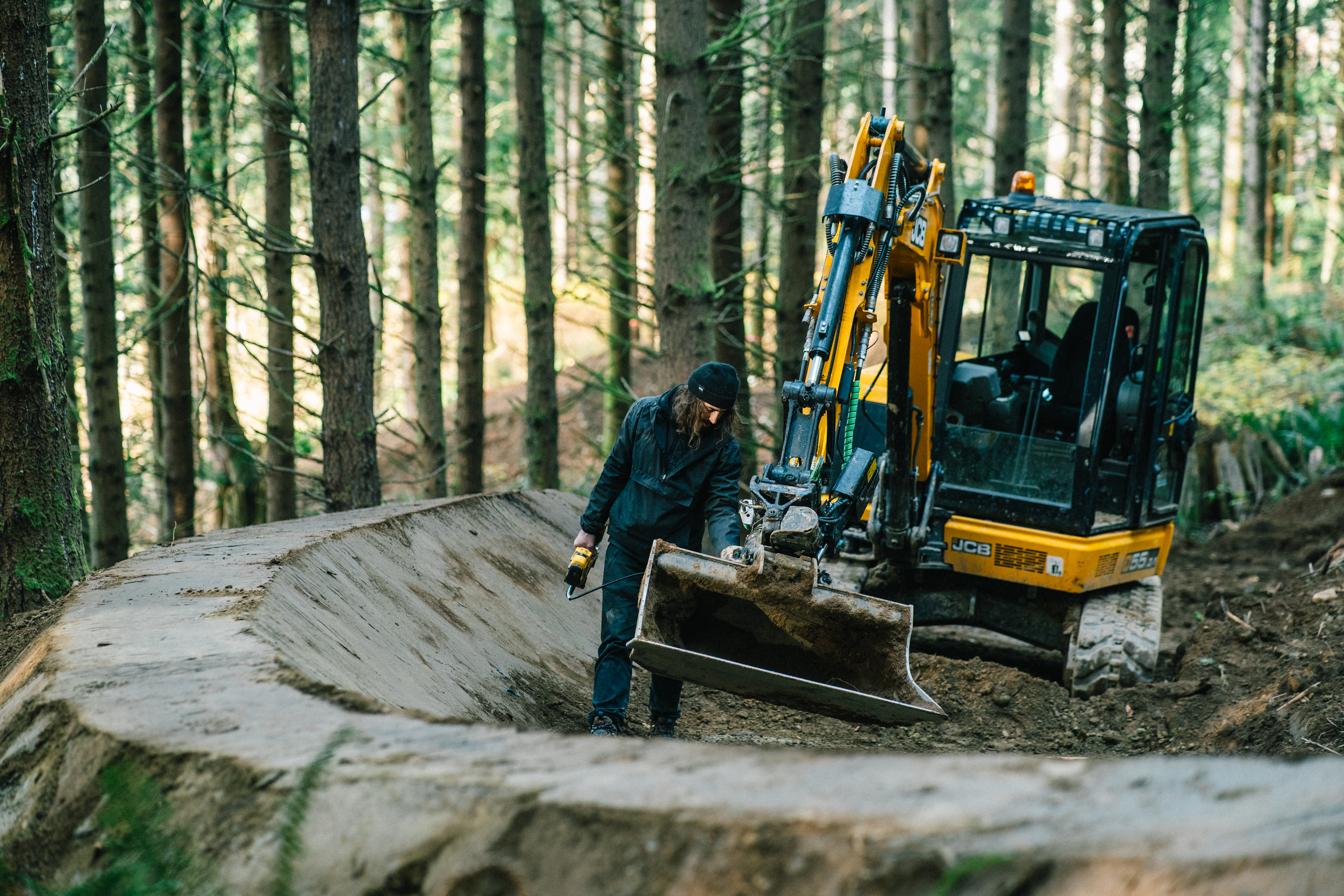
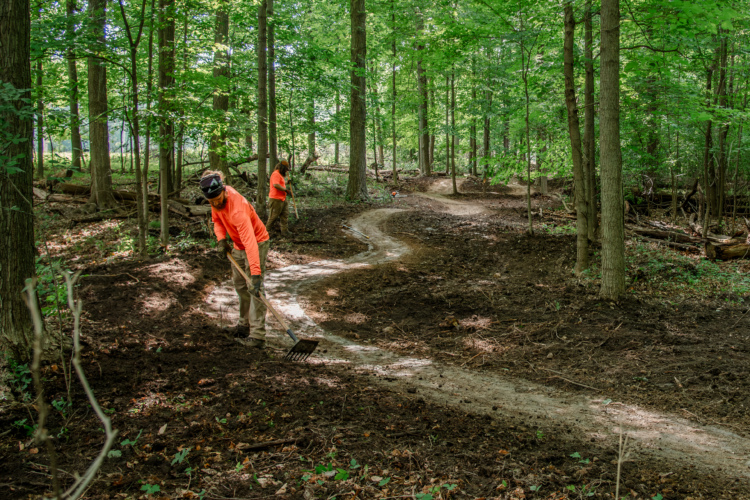
In the last 20 years, professionally-built mountain bike trails have gone from being a relative rarity to the norm. Today, pro-built trails are proliferating across North America and around the world thanks to a veritable army of trail builders running mini excavators and swinging McLeods.
But when you head out for a ride on one of these brand-spanking-new mountain bike trails filled with berms, jumps, gnarly rock gardens (that don’t fall apart), and riveting flow throughout, you might find yourself wondering: “Just how much did it cost to build this new masterpiece?”
The answer? “It depends.”
A tricky question to answer
“It depends” is a refrain I heard numerous times while reporting this feature, but I tried my hardest to drill down for better numbers. To do so, I combed through dozens of interviews I’ve conducted with trail builders over the past two years and interviewed another three professionals fresh on the topic, including the good folks at one of the industry-leading trail building companies, IMBA Trail Solutions.
With this much input, we’re able to get a better sense of how much it costs to build a trail in 2026. And while digging around for the answer, we also learned why trails cost what they do, and how much additional funding should be budgeted for future maintenance.
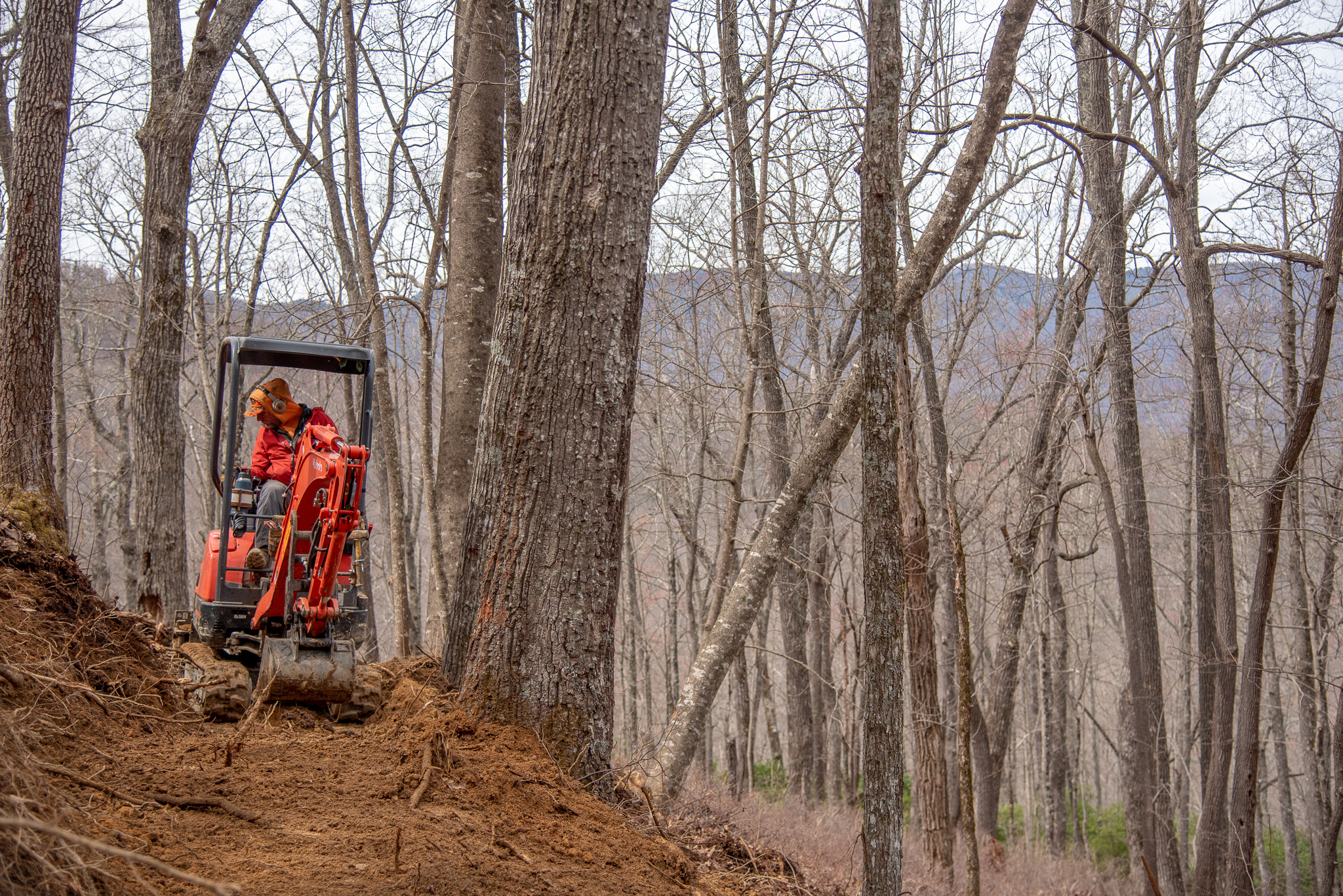
$60,000-$80,000 per mile for a professionally-built trail in 2026. But it could be much, much more.
If you search Google for information on how much it costs to build a mountain bike trail, you’ll find several old articles — including a few that I wrote about 10 years ago — that reference $3 to $5 per foot. Clearly, that’s outdated. But just how outdated are we talking?
“If you [want] just one generic blanket across the board, you’re probably looking more like $60 to $80,000 at this point,” said Josh Olson, IMBA Trail Solutions Director of Construction. “So it’s crept up a bit,” he said, referencing a 2021 article that quoted Mike Repyak, formerly of IMBA Trail Solutions, at $50,000 to $70,000 per mile. These updated numbers equate to a cost of $11 to $15 per foot — a far cry from the $3-$5 of yesteryear.
At the upper end, the sky is the limit, with at least one of the trail projects we covered ringing in at nearly ten times that amount — $650,000 or about $123 per foot — for just one mile of trail. More on that later.
“But like I said, everything really depends on the type of trail that you’re building and the type of environment that you’re building through, and then permitting and environmental approvals and assessments definitely factor into all of this,” Olson added.
While most builders work on a cost-per-foot basis, I also spoke with Steve Wentz, Owner of Momentum Trail Concepts. Wentz prefers to work on a daily rate rather than a per-foot basis, arguing that it changes the builder’s mindset. “I’m being paid to be here today and do my best work today,” instead of just cranking out as many feet as fast as possible. Wentz charges $1,500 per day.
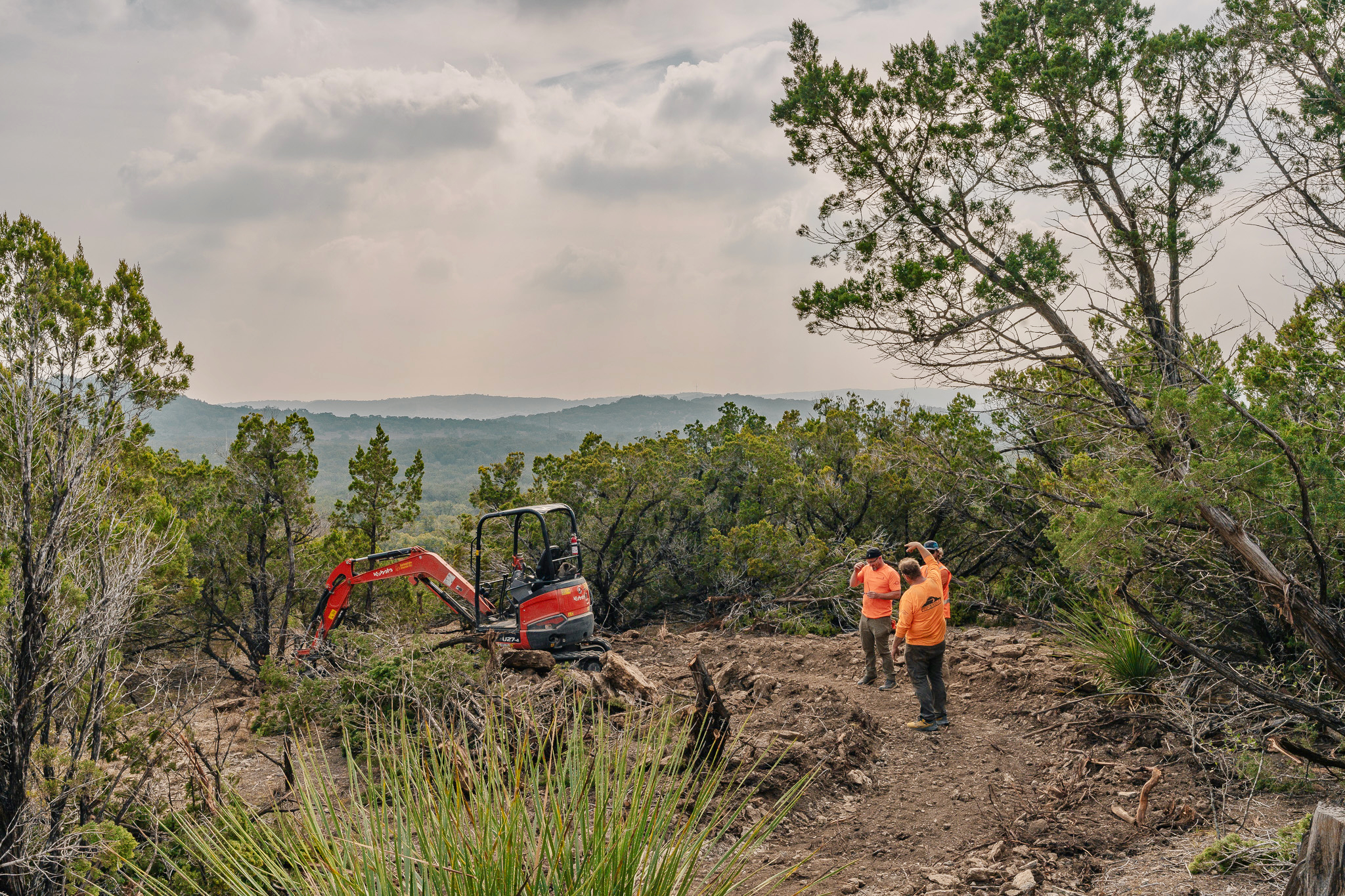
Why do trails cost so much more than they did 10 years ago?
While of course, inflation and the cost of doing business have gone up in the past 10 years, there’s a bigger factor that’s led to the increase in trail building costs: the progression of the sport.
“As the sport innovates, the types of trail innovate, and therefore it’s like features and things get bigger, then prices also go up, right?” said Ama Koenigshof, IMBA Trail Solutions Director of Planning & Design.
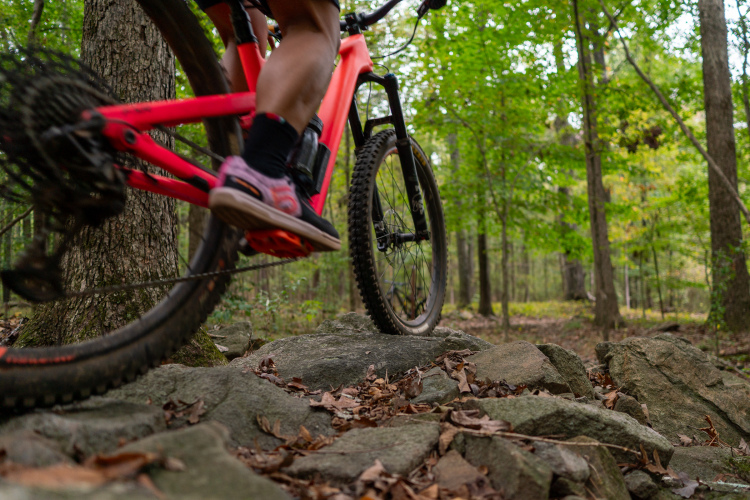
Olson elaborated, saying, “Not a huge amount has changed in our very basic, traditional bi-directional trail.” Instead, mountain bikers now expect trails with advanced, bike-specific features like berms, jumps, drops, rock gardens, woodwork, and more, and land managers are now generally more accepting of mountain bike-optimized trails. These are the types of trails that riders want built, and builders are more than willing to do the work.
It just comes at a cost.
Each massive feature, whether it’s a berm, jump, or roller, takes dramatically more time and materials to build than a standard multi-use two-way trail. Builders have also developed advanced trail building techniques like “borrow pitting” to create an elevated trail tread. These advanced techniques create a better end product, but they take more time and cost more money.
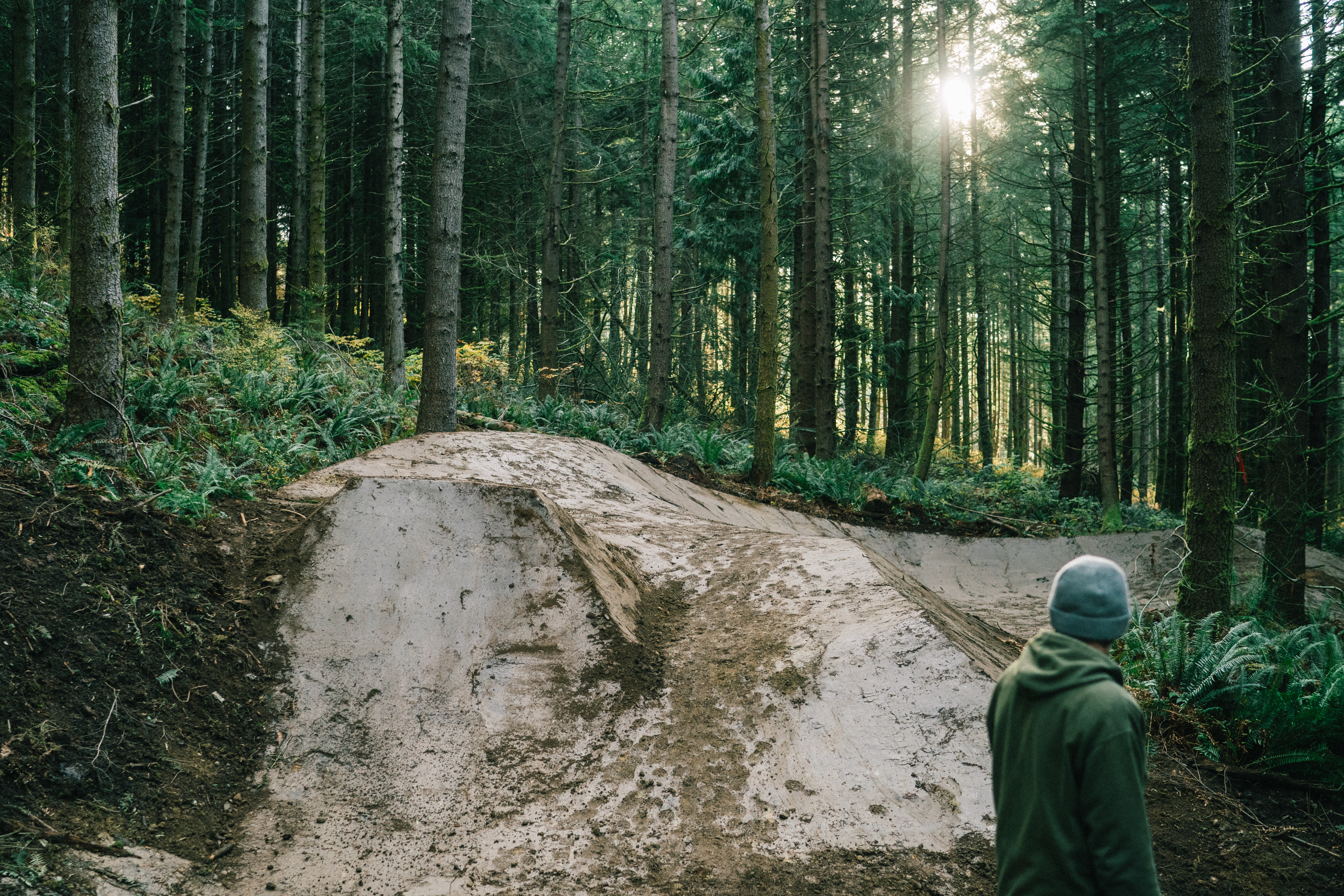
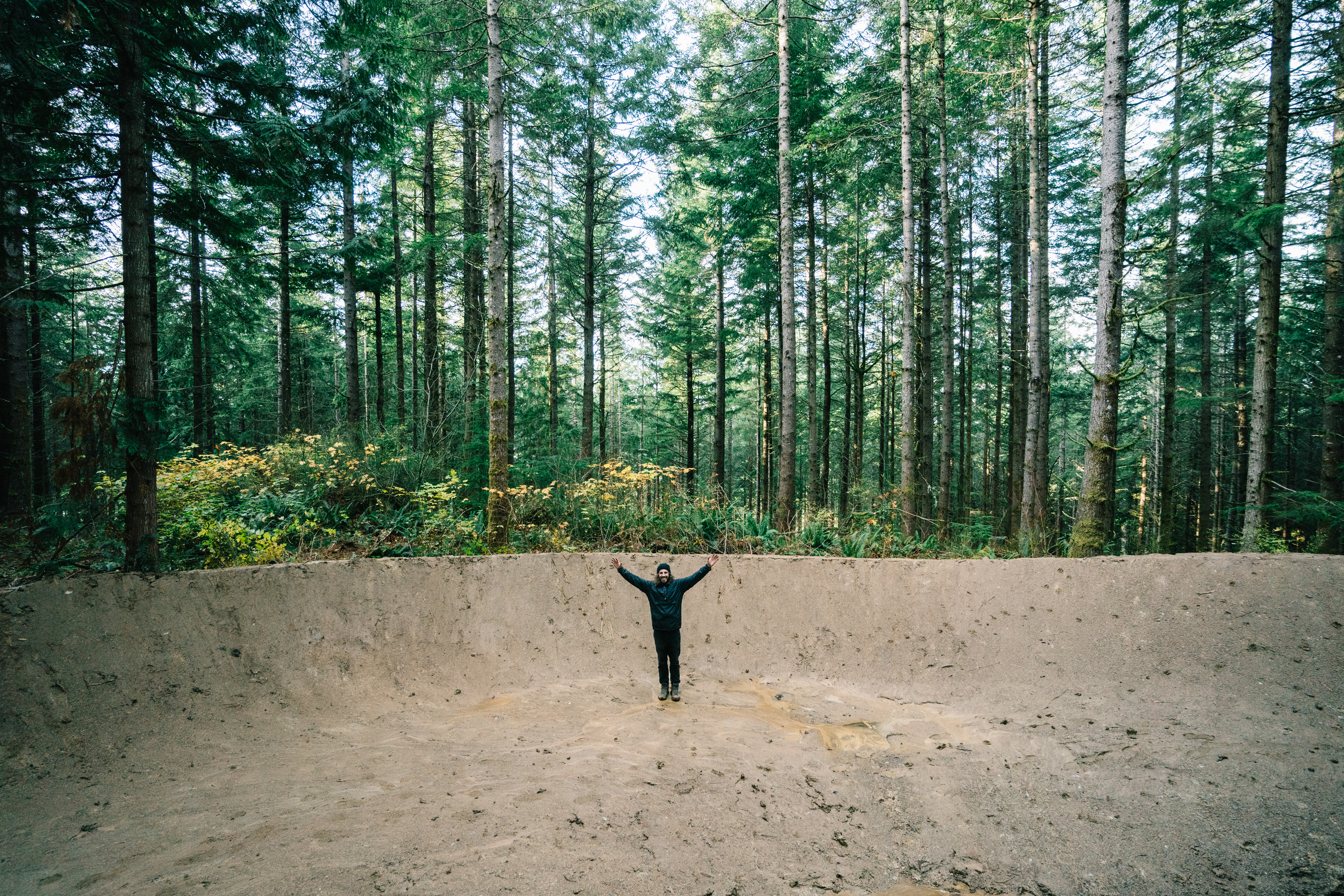
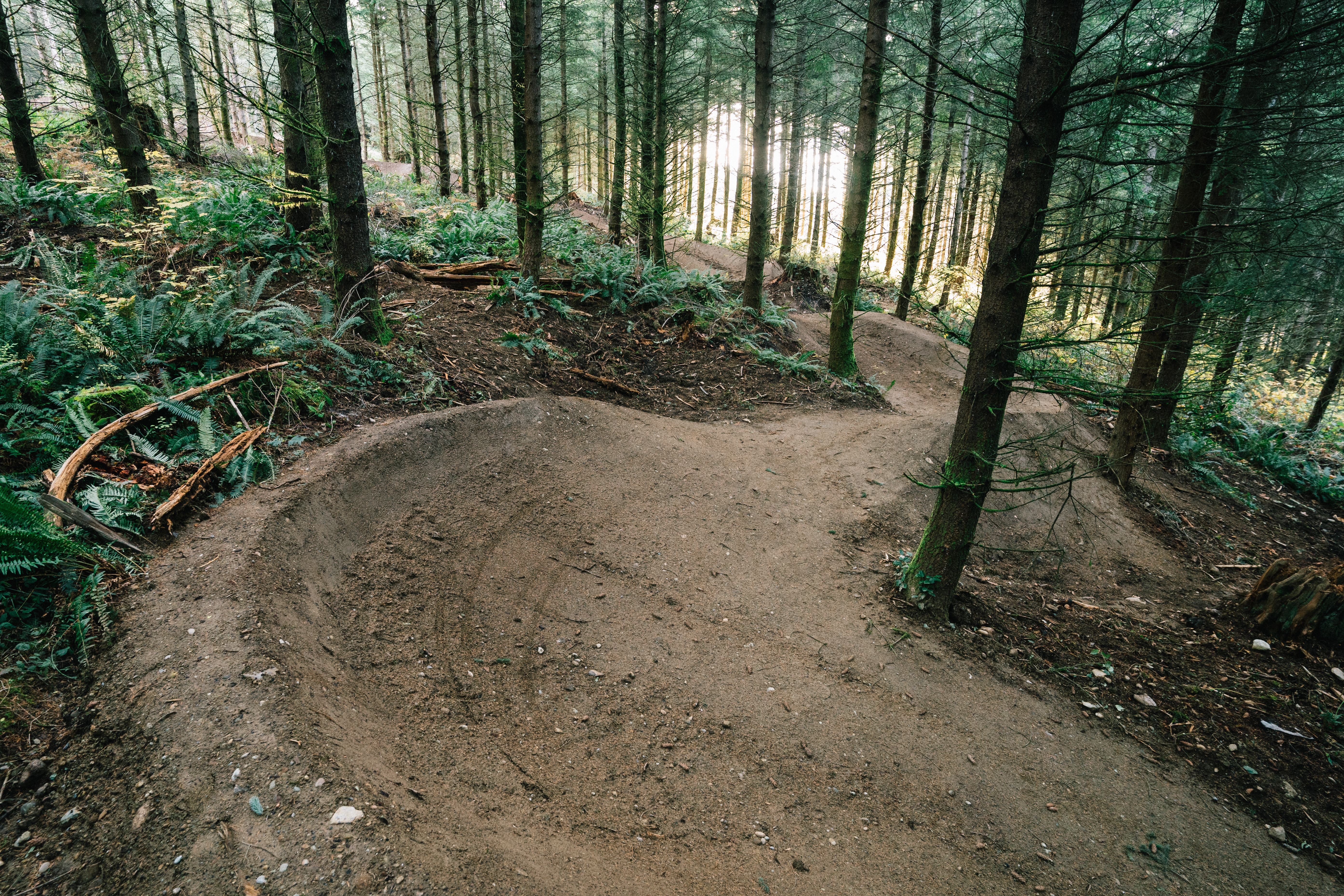
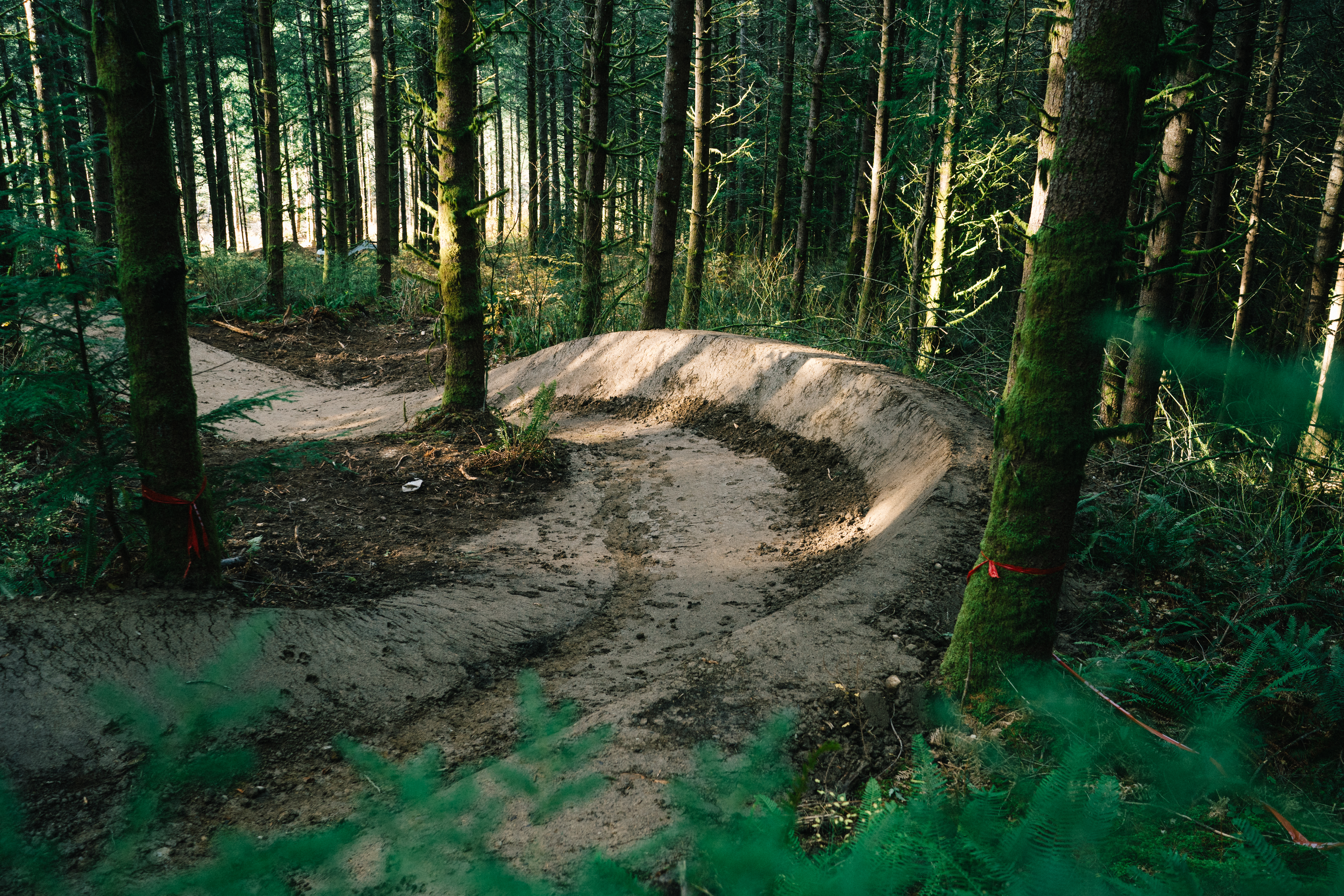
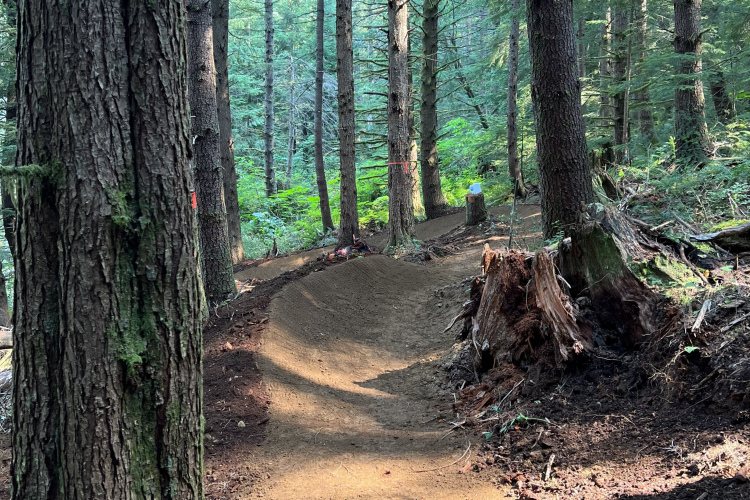
Blue Ribbon Trail, Bellingham, WA. Photos courtesy Transition Bikes
The cost of bike-specific trail features
The $60,000 to $80,000 ball park rolls everything on the trail up into one lump number. But in actual practice, the bid process is much more granular. Typically, every single berm, roller, and jump is planned out and has a specific dollar amount attached to it. The amount per jump or berm also depends on how big each of those features is and how difficult or easy the digging is in that region.
This type of bid is known as a “billable units” contract and is the most commonly used by clients. Whenever a trail builder responds to a Request for Proposals (RFP), they have to respond in the format requested by the client. The billable units contract is the most common format used because it provides a high level of detail and accountability for the contractor.
When responding to a billable units contract RFP, “you’re trying to quantify your time of how long it would take you to construct each one of those elements in the trail tread,” said Olson. “So you can have a linear foot cost per traditional tread. You can put the cost associated with rock armoring. You can put a cost associated with a berm or jump. And then you can even quantify a green roller versus a blue tabletop versus a black diamond step up; they could all have different price points. And so the more features that you have, the higher the cost of that trail would be.”
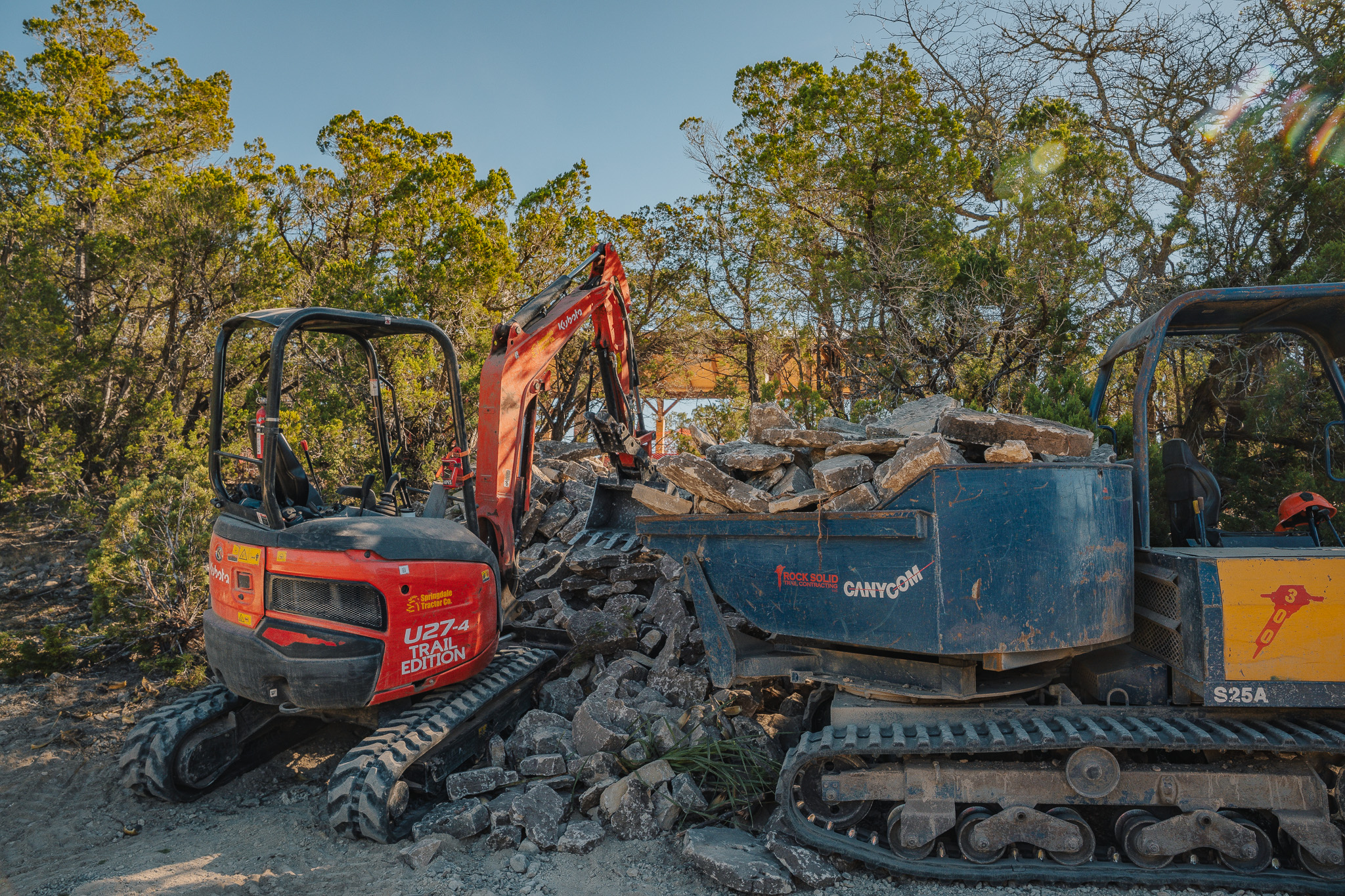
Sometimes, the difficulty of harvesting material to build the feature can increase the cost. “There’s certain landscapes where we avoid doing borrow pitting, especially out West, [because] it’s a lot more impactful to the soil. It takes a lot longer for it to re-naturalize,” said Olson. “So we won’t use a borrow pitting method [there], and then at that point, we’re trying to harvest a majority of the dirt for the features just in the bench cut, and that can also add time.”
In some places, it can be impossible to harvest enough material locally, and the builders may choose to import outside material to build features or harden the trail surface. This practice is commonly used in the mountain bike mecca of Bentonville.
Wentz argues that billing per feature can create misaligned incentives, saying that some builders are “incentivized to put more rollers in place, because if they put five more rollers here or a tabletop, they can squeeze more money out of that project.” Wentz, on the other hand, argues that the trail builder should only build the features the trail can sustain. However, when charging a daily rate (also known as a “time and materials” contract), it still takes Wentz much longer to build each feature that he adds, which essentially increases the cost of the trail build a commensurate amount.
At the end of the day, these are two different approaches that achieve the same thing: building a great trail. And they both face the same challenge: more features make the trail more expensive to build. But in order to charge based on a time and materials contract, that “really requires a lot of trust between the contractor and the land manager,” said Olson. “The client would have to really trust that you’re working hard that day and putting in a full effort.” For his part, Wentz has created that kind of rapport with local clubs and land managers, and many organizations, like the Biggest Little Trail Stewardship in Reno, often request him specifically.
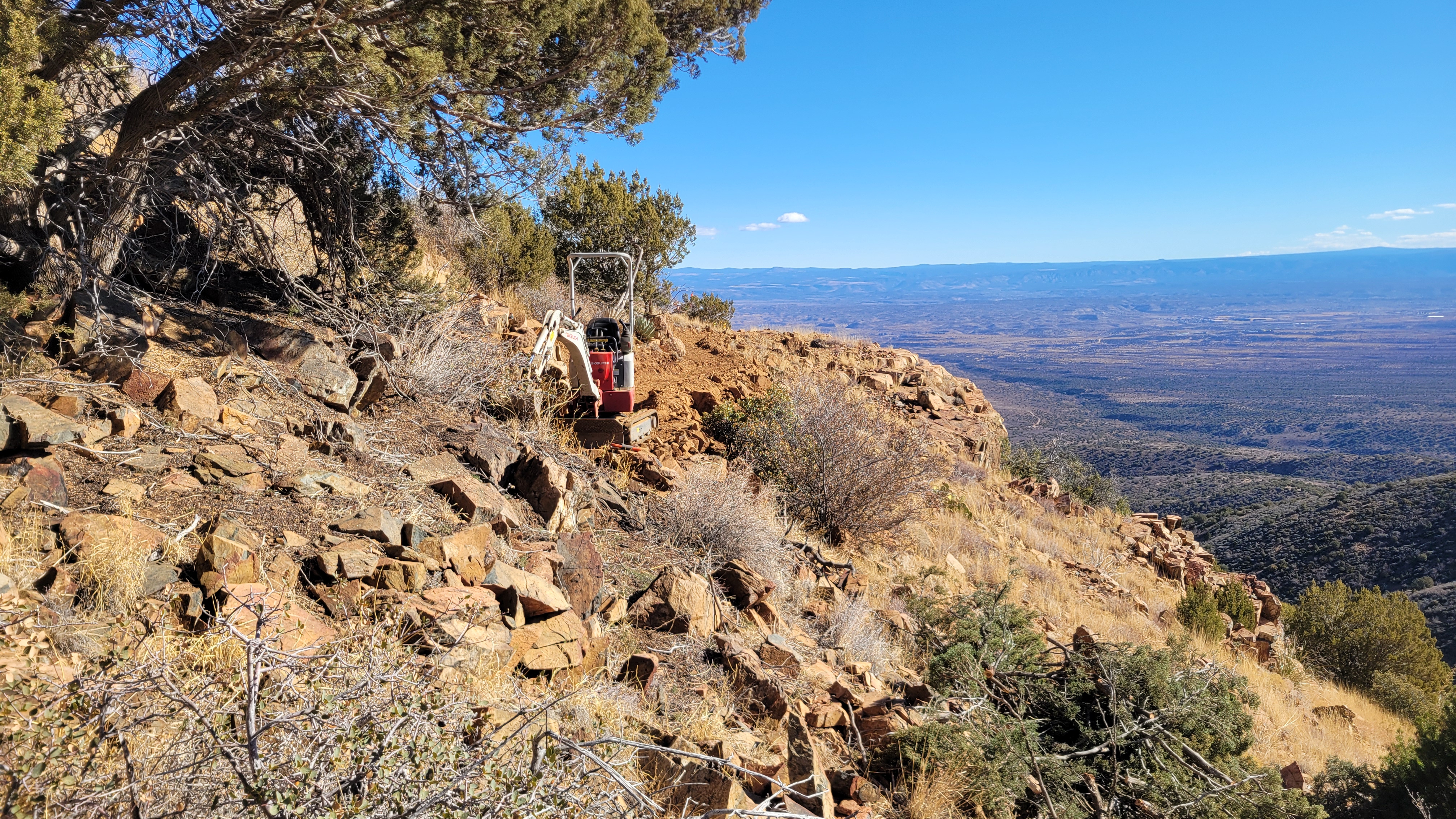
Mobilization and environmental factors can have a major impact on trail building costs
Another major factor that impacts trail building costs is the environment the builder is working in and the obstacles they encounter along the way. Building trail in a desert is dramatically different from building beneath a thick tree canopy on the East Coast, and it’s tough to compare the two.
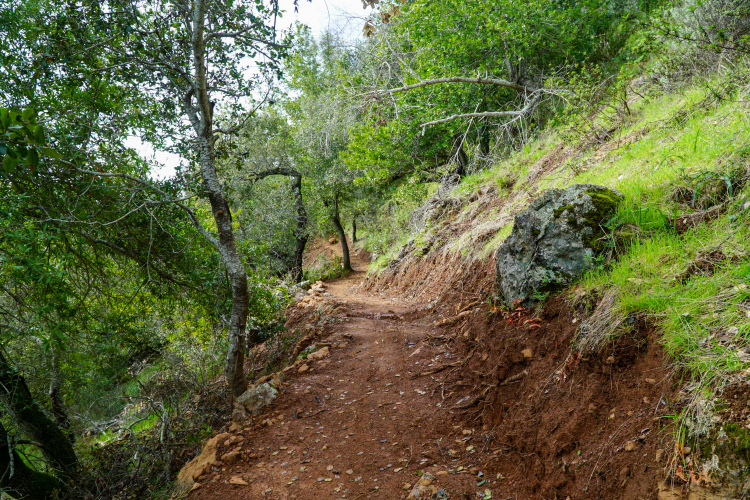
But just because you’re building in a desert landscape with few trees to contend with doesn’t mean the build will be cheap. “Bedrock definitely is a factor that slows things down quite a bit, depending if you need to use a breaker bar or small charges to get through it, or if you’re doing crib wall around certain bedrock areas,” said Olson.
One environment that is almost always more expensive to build in is the high alpine. “Mobilization to your work site on a daily basis is one thing,” said Olson. “If you have a mechanical and you’re way up on the hillside and you got to come down and the nearest NAPA or auto store is an hour and a half away, that can shut you down for an entire day, as opposed to having a 10-minute mobilization and the NAPA is 10 minutes away.”
However, some companies specialize in working in remote backcountry environments. For example, Matthew Roberts, Owner and Founder of Flagline Trails, has specialized in building MTB trails in remote areas. He and his crews routinely camp in the backcountry for either four-day or eight-day hitches. By camping, they reduce the time required to mobilize, dramatically cutting expenses compared to crews that choose to lodge in an RV or a rental house. Flagline also owns specific equipment, like a side-by-side, that makes accessing remote areas via extremely rough roads much more manageable.
This is precisely why most trail builders have a very regional influence — think Lepesquer and Daughters in Vermont, Dirt Tek Trails in the Four Corners region, Evergreen Mountain Bike Alliance in Washington. These local companies can bid projects more cheaply than a nationwide outfit like IMBA Trail Solutions or Rock Solid Trail Contracting, which may have to transport workers and machines from the other side of the country. It’s one reason we often report that IMBA Trail Solutions has designed a certain project, but the construction bid was awarded to a local builder, like this recent project in Decorah, Iowa.
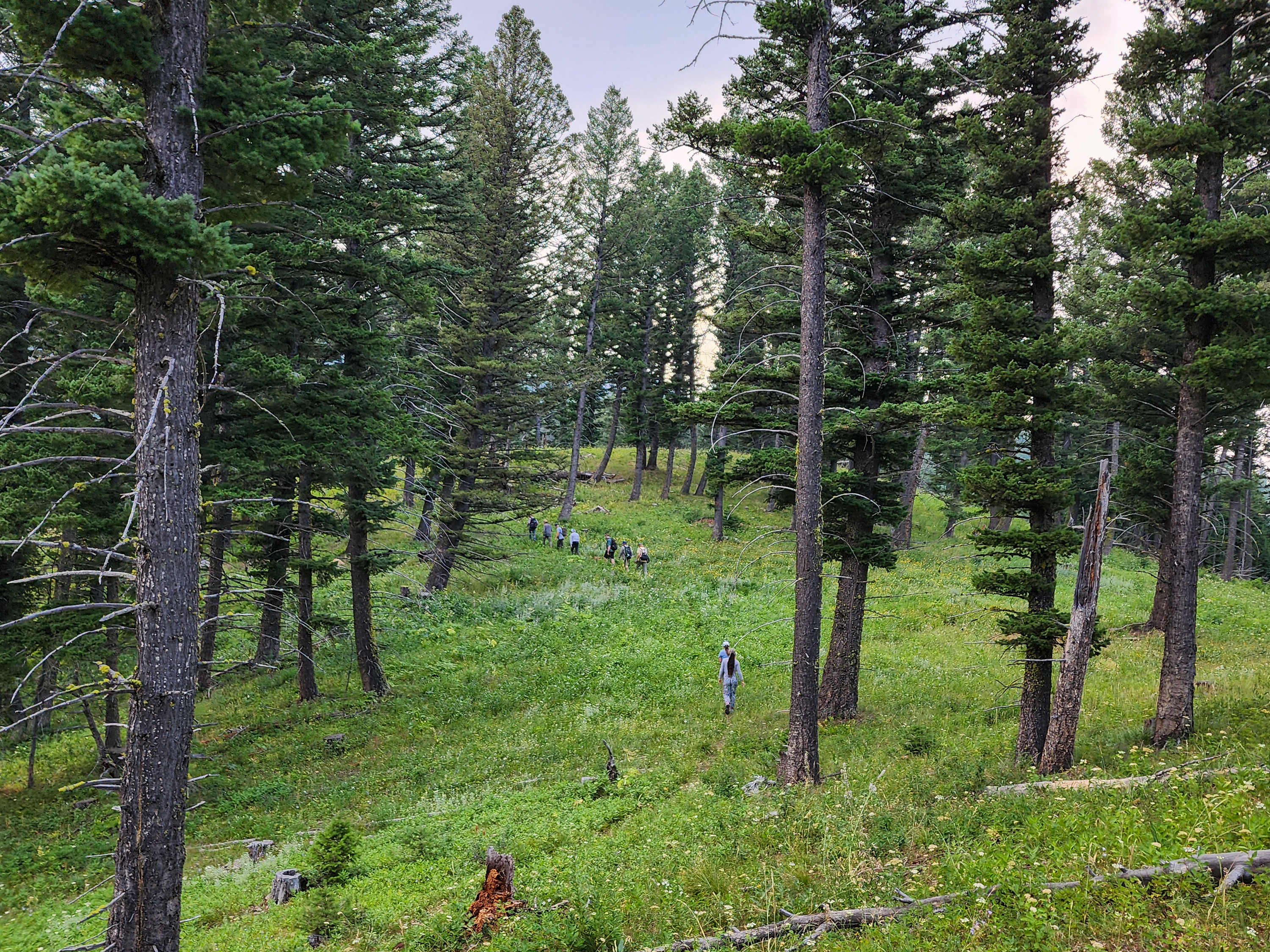
Trail design and environmental approvals can balloon the project cost before the build even begins
You might think that $60,000 to $80,000 per mile is a lot of money, but this doesn’t even factor in additional costs that might surround the trail project, but aren’t technically part of the trail build itself. First is the design cost, which generally runs about 7-9% of the total project cost. Project design can easily run $60,000 (or more), as indicated by IMBA’s recent Trail Accelerator Grant documents.
Next, NEPA studies must be conducted for most trail construction on public federal lands. The catch? Ongoing budget cuts to the US Forest Service and Bureau of Land Management are making it almost impossible to get these studies approved and executed. And we’re seeing the same trends on a state level, most notably in California.
To get their projects pushed through, local MTB clubs are now often funding the environmental studies in addition to the trail build. This is not an isolated incident: we’ve talked to clubs from Arizona, California, Nevada, Oregon, Colorado, Michigan, and beyond who’ve been forced to take this approach.
Costs for environmental studies vary widely depending on the complexity, but at times they can be exorbitant. Vernon Huffman, Executive Director of the Marin Trail Stewards, told us that they had to hire an environmental firm to help them navigate the California Environmental Quality Act (CEQA) process for a recent trail build. That contributed substantially to the ballooning cost of the new one-mile Caballo Rojo flow trail, which took 10 years to complete at a price of $650,000.
While $650,000 for one mile of trail is undoubtedly exorbitant, it’s not unusual to spend hundreds of thousands on the planning and approval process. For example, the West Michigan Mountain Bike Alliance raised (and spent) $300,000 just for the planning, design, and environmental studies required to build The Dragon.
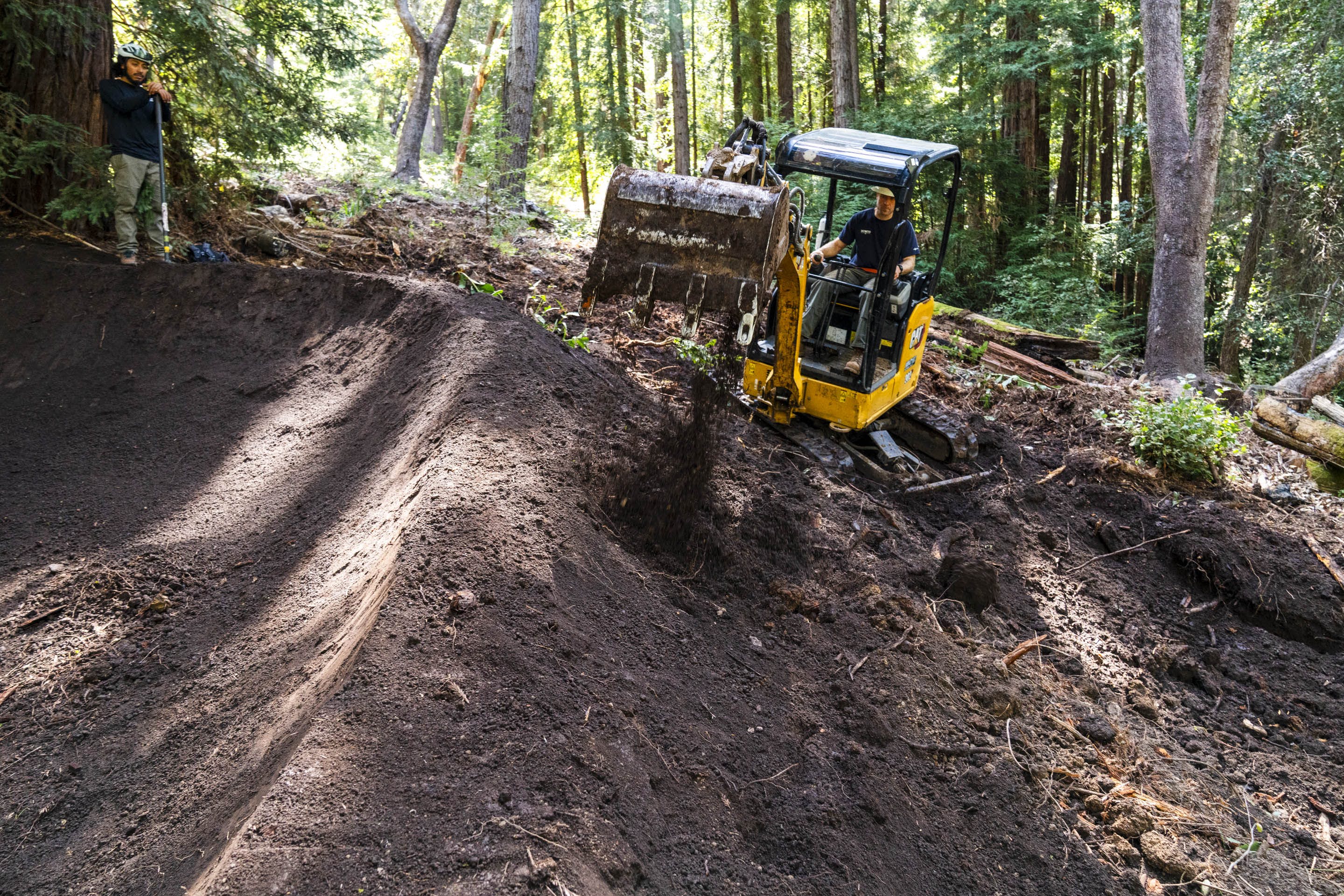
Once the trail is built, you still aren’t done paying
Finally, it’s no secret that once a trail is built, ongoing trail maintenance is expensive. Shane Wilson, Principal for Trailhaus (formerly of IMBA Trail Solutions) told us that clubs and land managers should budget 5% per year of the total installed cost of a trail just for maintenance. And that percentage increases for aggressive and feature-rich trails.
If you take the example of an $80,000 per mile build, Wilson’s rule of thumb indicates that the local club or land manager should expect to spend at least $4,000 per year per mile of trail. For a 10-mile trail system, that would be $40,000 per year in maintenance. So when you read about world-class destinations that offer 100, 200, or 500 miles of trail, you can roughly calculate the funding required to adequately maintain that singletrack. (Newsflash: many trails aren’t adequately maintained.)
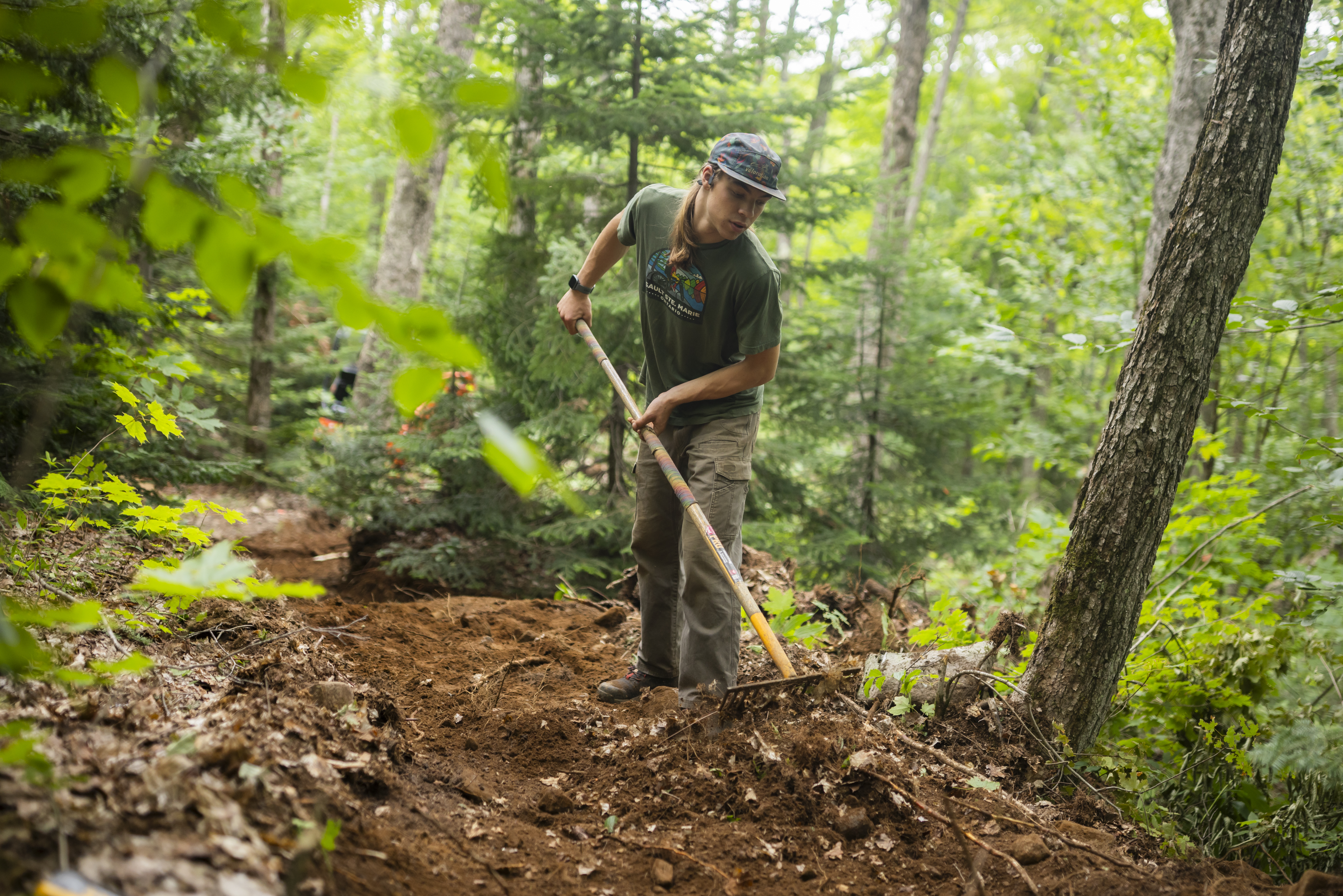
It really depends
The number of ways a trail build can get more expensive is legion. Natural obstacles like bedrock and trees. The number of bike-specific features desired. The availability of high-quality soil to build features. Mobilization time and logistical difficulty. Trail design and master plans. Environmental studies. Trail maintenance. The list goes on.
There’s no such thing as free lunch, and despite what some commenters on the internet might say, this truism applies equally to mountain bike trail building. The amount of planning, time, and professional effort invested in a trail build pays real dividends in both ride quality and sustainability over time.
This brings to mind another truism: “You get what you pay for.” And anyone who’s ridden a modern singletrack masterpiece knows this to be true.
The news stinks. Why not follow Singletracks on Google News to bring more joy to your day?



21 Comments
Apr 16, 2026
At the urban boundary, I think this type of trail has its place, but taking excavators deep into the woods is kinda gross. Especially when the new, tractor built trails are built over old, user created trails
My favorite trails are moto trails, bootleg though they may be, they sure don’t cost $80k per mile to build. They are raw as hell, thin as a ribbon, and require skill beyond just “sending it”. Rocks are loose, Karen isn’t whining on facebook about a tire rut in the mud, and a person could get hurt just assuming they will be able to ride a feature before looking.
Though huge sums have been spent on new style trails, it sure shouldn’t be necessary, and the returns on that money is certainly diminishing
Apr 21, 2026
Apr 16, 2026
Apr 16, 2026
Jun 30, 2026
Apr 16, 2026
Apr 16, 2026
Colorado Springs hired some trail company to ruin all the high speed trails by adding 50 turns where it used to be a straight shot. They built a new trail above Gold Camp but it's terrible because they used machines to build it. I'd rather just ride the road. Making trails wide means less skilled riders clog them up like ebikers that aren't even allowed on trails in Colorado Springs. But that doesn't matter because they think they're special.
Why do we need to keep building trails? Just maintain the damn trails we already have! But no, people like me have to maintain the trails because cities spend all their money on building new trails an destroying old trails. And I have to deal with angry boomers when I do trail maintenance. But hey, keep building more trails people will forget about in 2 years. That's what really grows the sport.
Jun 30, 2026
Apr 20, 2026
Apr 16, 2026
Jun 30, 2026
Apr 16, 2026
Apr 16, 2026
Jun 30, 2026
Apr 20, 2026
Apr 15, 2026
Apr 20, 2026
Apr 16, 2026
Apr 20, 2026
There is one son who discovered mountain biking and dedicated himself to building a World Class facility in Bentonville, spending an ungodly amount to show-off.
Every cyclist I worked with, wearing the blue vest, is aware of this, and is more than a little disgruntled that Sam’s kid could have shared, with no lessening of his fortune, those monies.
Apr 20, 2026
Apr 20, 2026