

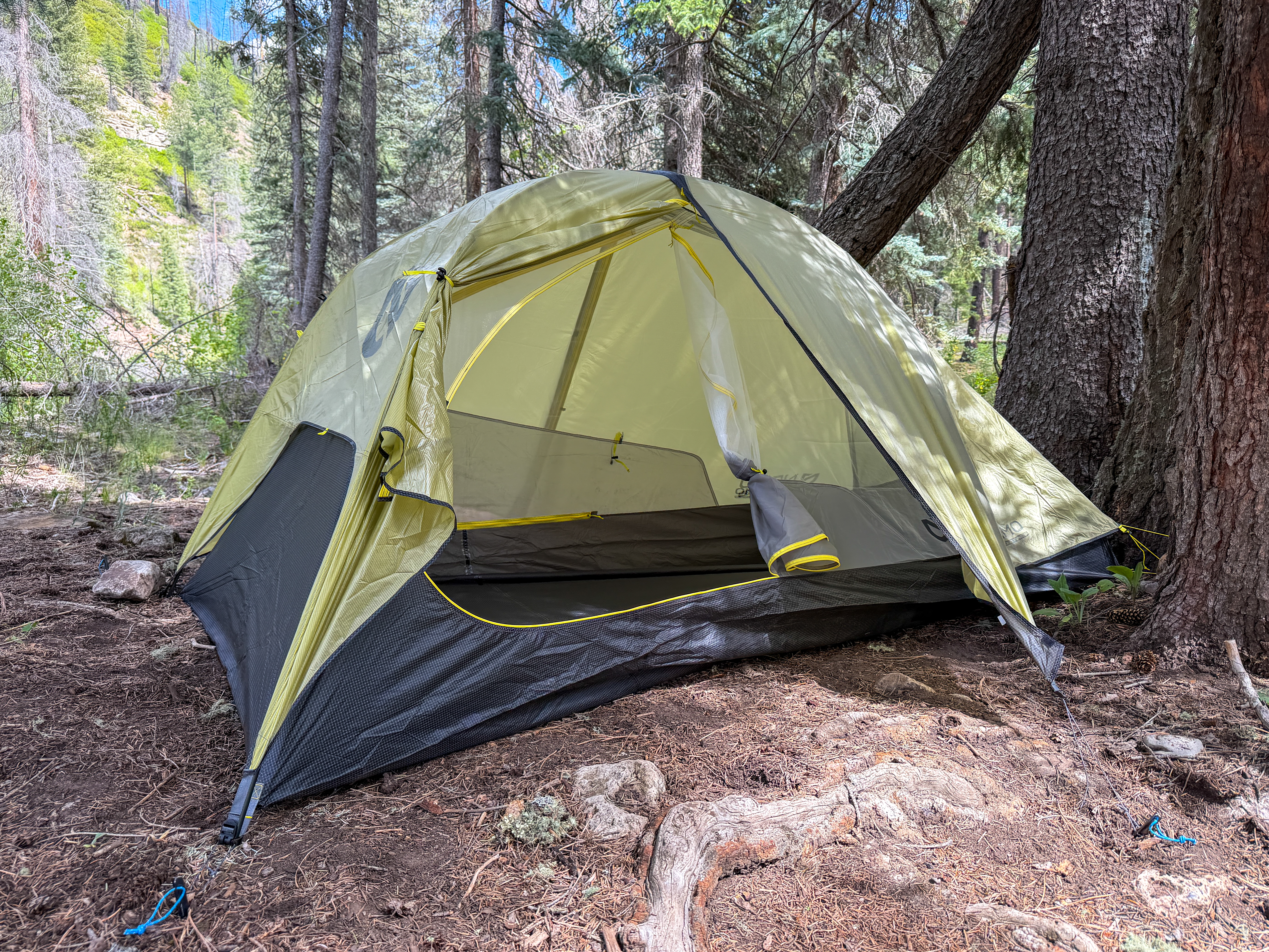
If you thought buying a mountain bike was tough, just wait until you take the leap into bikepacking. As I prepare to thru-ride the Colorado Trail this summer, I’ve realized that bikepacking is probably one of the most gear-intensive human-powered sports in existence.
And there’s no end of gear to choose from. For sleep systems alone, you must choose between a bivy, a tarp, a tent (freestanding or not?), a hammock, or something else entirely that I probably don’t even know about. Once narrowed down to a tent, the options between freestanding or not, and the durability and robustness of said tent, still feel overwhelming.
As I slowly narrowed down my desired durability vs. weight tradeoff, I reached out to NEMO to test the “Hornet Osmo Ultralight Backpacking Tent,” which seemed like the perfect combination of low weight, packability, and robustness for camping in an alpine environment.
NEMO Hornet Osmo tent key specs
- 2P tent tested. Available in 1P and 3P as well
- OSMO fabric, which has “3x less wet stretch”
- Semi-freestanding with three-pole design
- Dedicated rainfly, two entrances
- Weight: 1159g (2.55lb) (measured)
- Packed size: 12.5×7.5×3.5in / 32x19x8.5cm (claimed)
- Price: $479.95
- Buy from Nemo
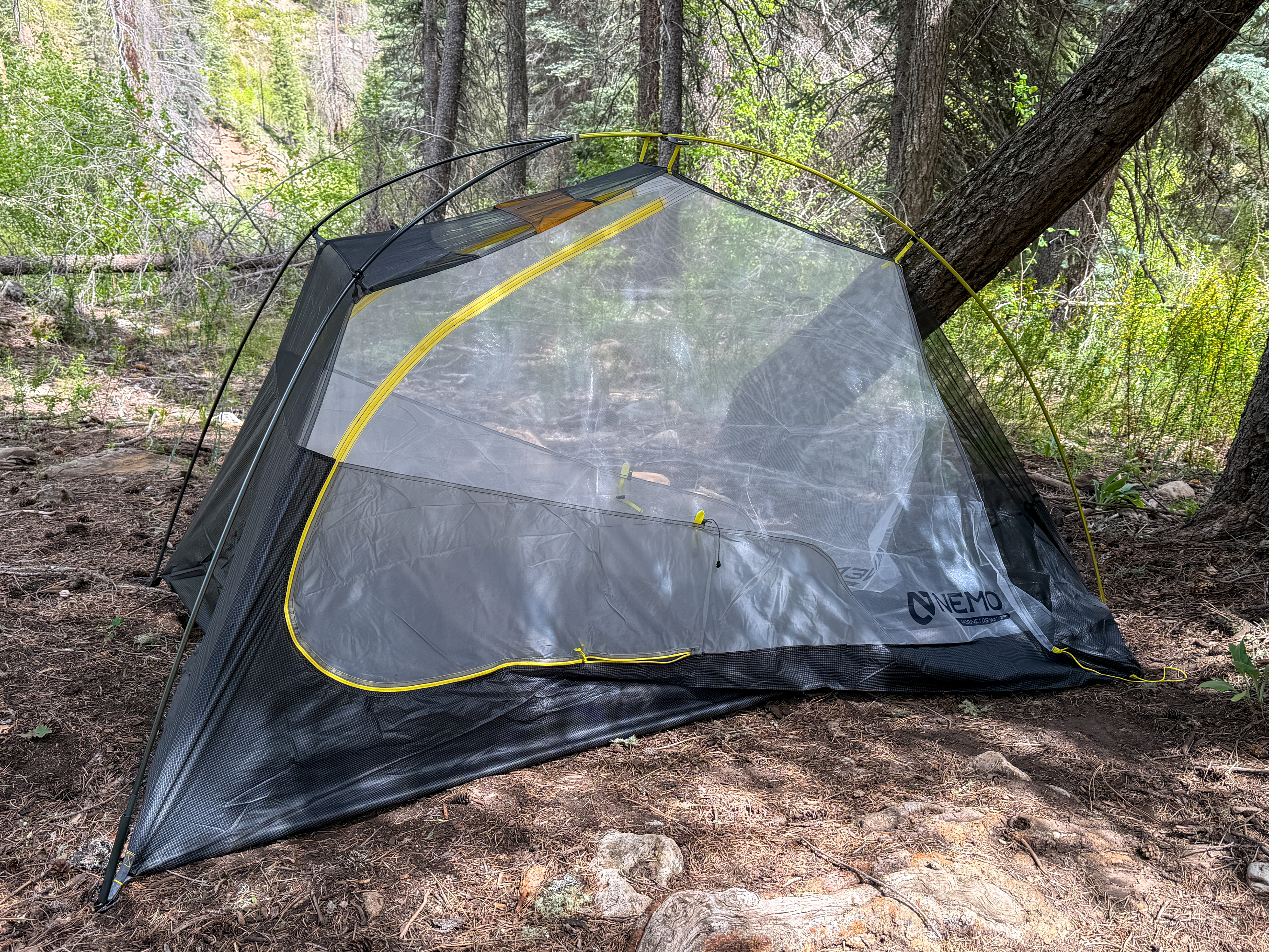
A freestanding tent is a tent that doesn’t need stakes to stand on its own, thanks to poles that support the entire structure. If a tent isn’t freestanding, it requires stakes to hold the sides up. The Hornet Osmo (“Hornet” for short) splits the difference with a semi-freestanding design. Here’s how that plays out in practice.
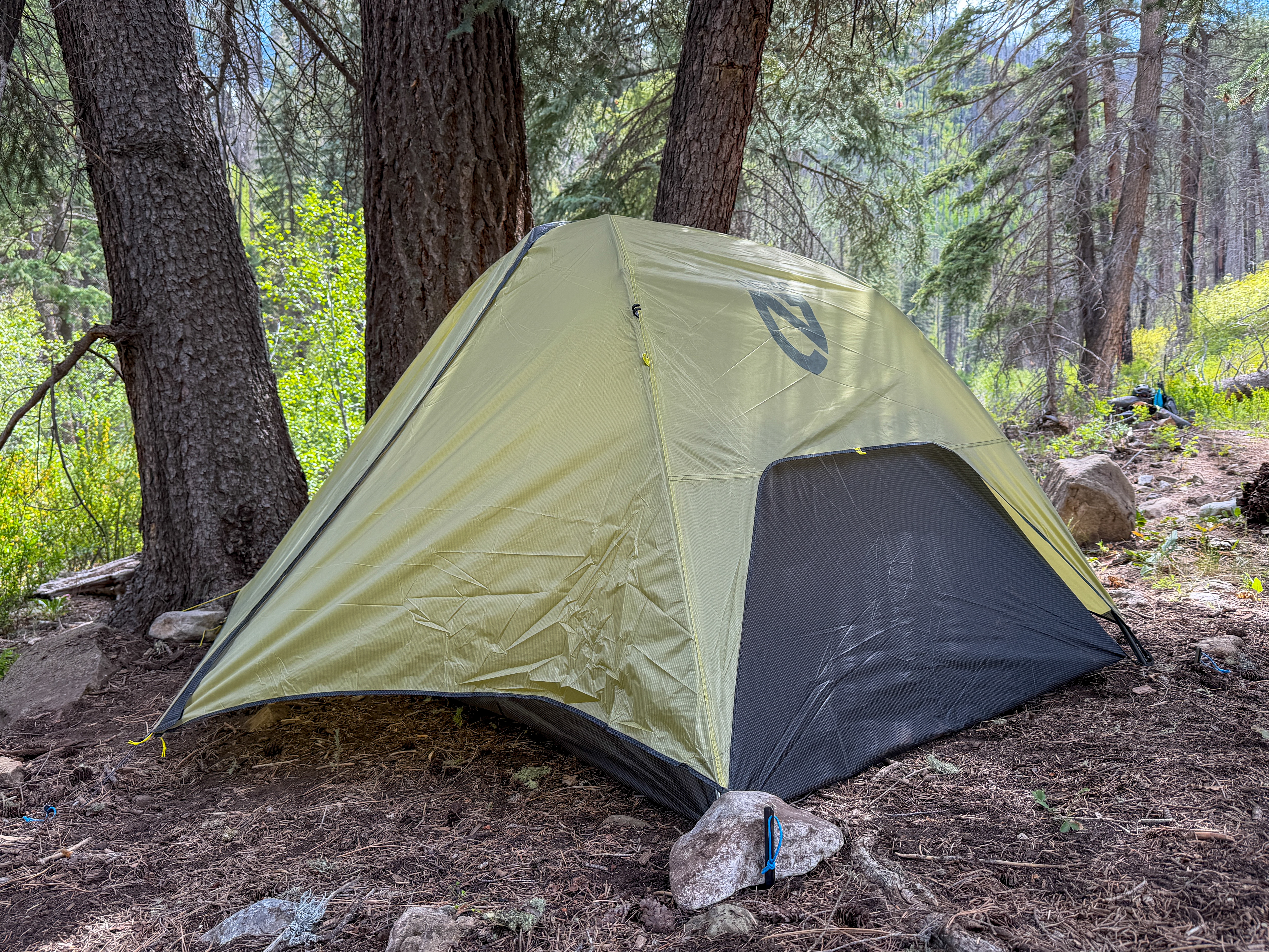
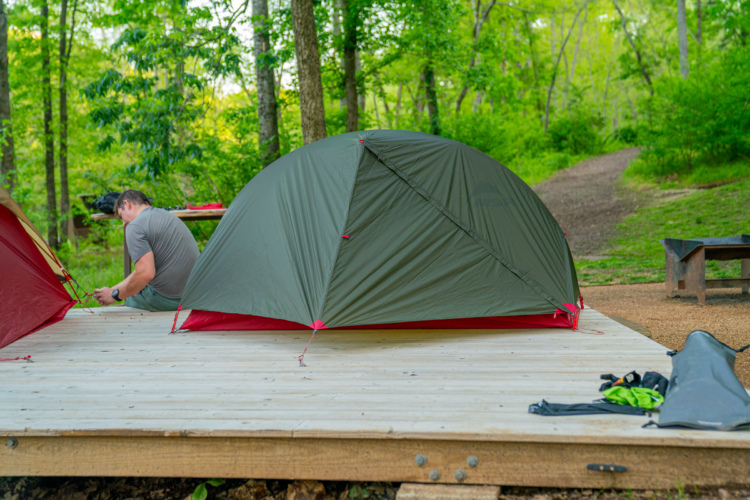
The tent uses a triangular three-pole design, whereby two of the poles anchor to the two corners at the head of the tent, and the third, longest pole anchors to the middle of the foot of the tent. Once the poles are installed, the tent clips onto the poles, after which it’s mostly standing up on its own. However, the two foot corners need to be staked out (or looped around rocks), and the two corners at the head of the tent can also be staked for additional security. Once the rainfly is installed, both of the doors on the sides of the tent also need to be staked out to create the tent’s final form.
Share your NEMO Hornet Osmo tent review
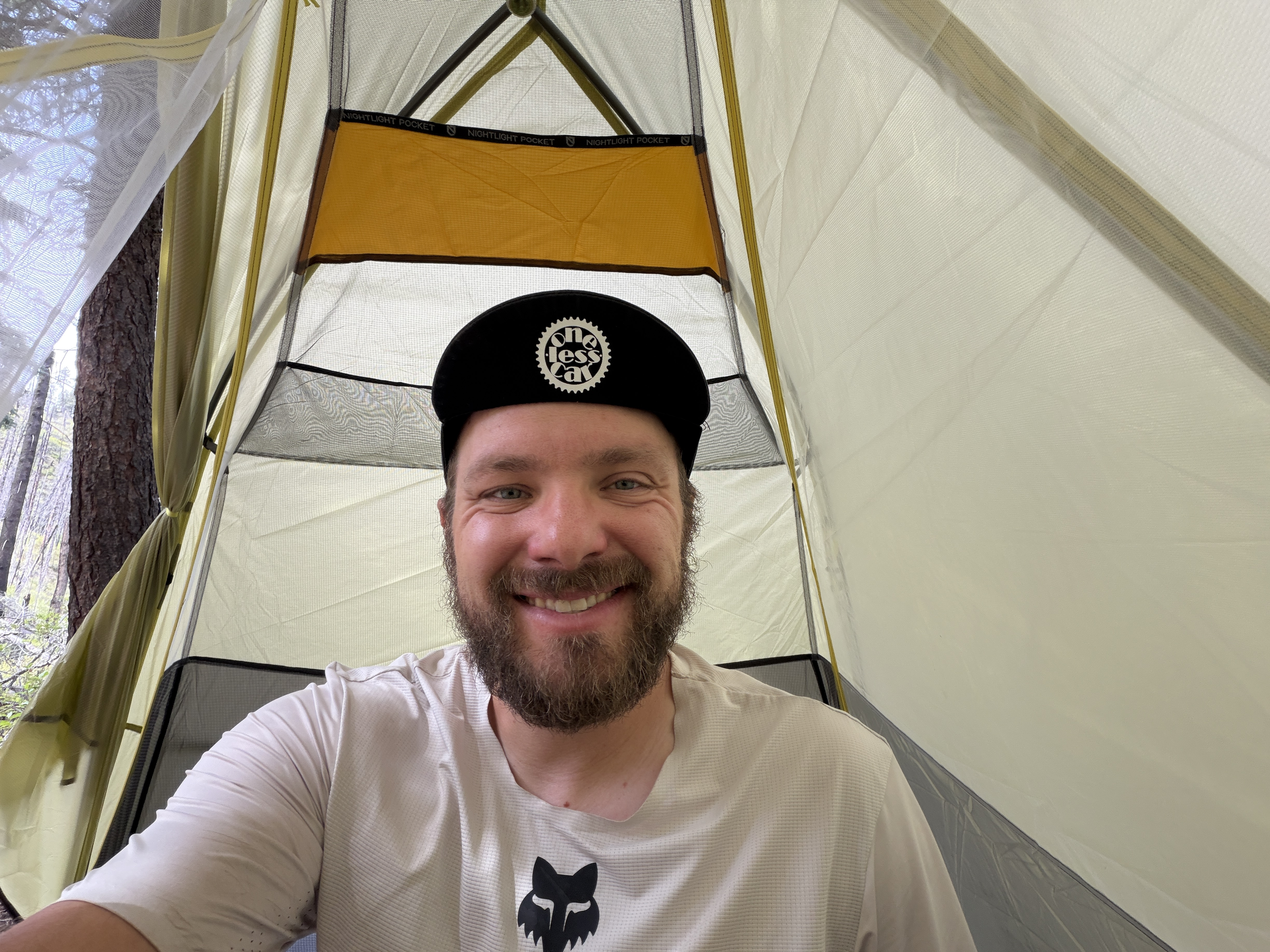
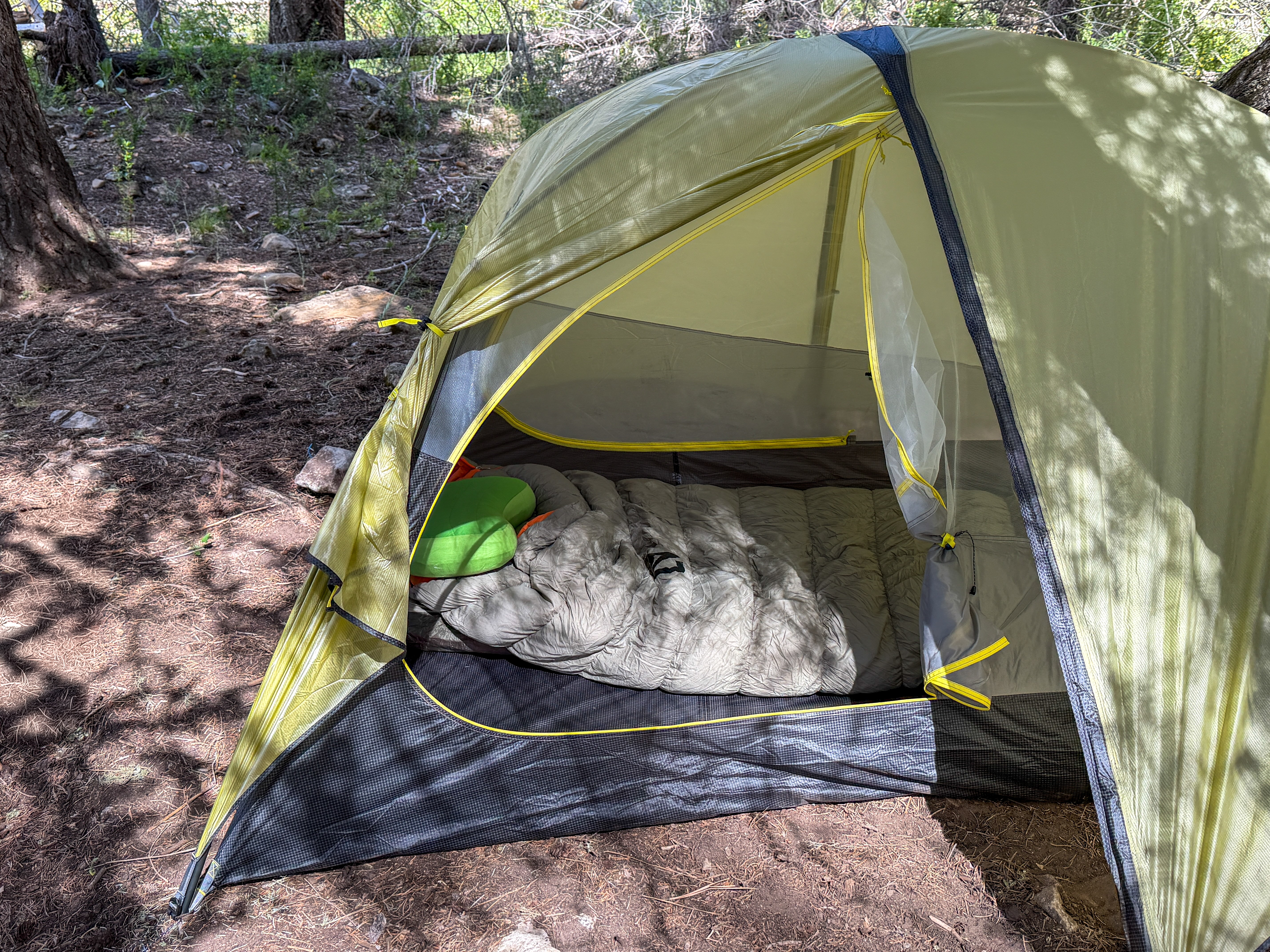
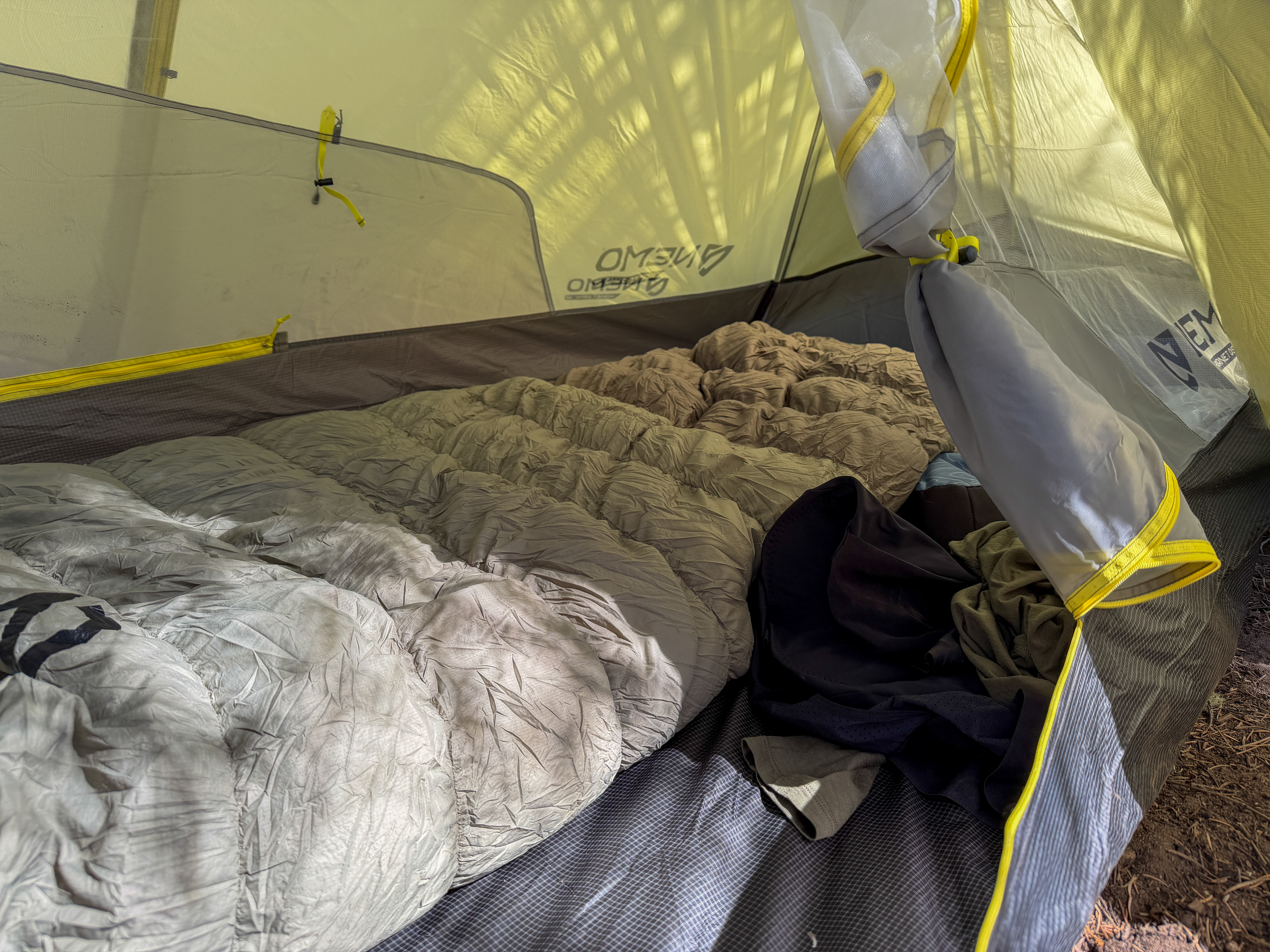
This design makes for a pain-free setup, and the poles should add extra stability and durability in moderately windy and rainy conditions. The poles also create a tall peak of 39in (98cm), tall enough that I can easily sit up inside on my sleeping bag and mat.
The OSMO fabric is a defining feature of this version of the Hornet tent. The tent uses “the ultralight variation of our OSMO™ suite of fabrics, arming it with 3x less wet stretch and a level of water repellency that starts drier and stays drier than the rest,” according to NEMO. They also claim it offers “4x better water repellency,” but in all these claims, they never specify what competitor fabric they’re comparing OSMO to. Despite a serious level of water repellency, NEMO has eliminated forever chemicals and carbon emissions in the production of this proprietary fabric.
The tent also offers a host of handy features:
- Shorter poles for easy packing
- Included pole splint
- Nightlight pocket turns a headlamp into a lantern, eliminating blue light
- Easy-to-use ties for folding back rainfly
- Unique plastic ball-and-socket connection for two tent poles, plus plastic clip for rainfly
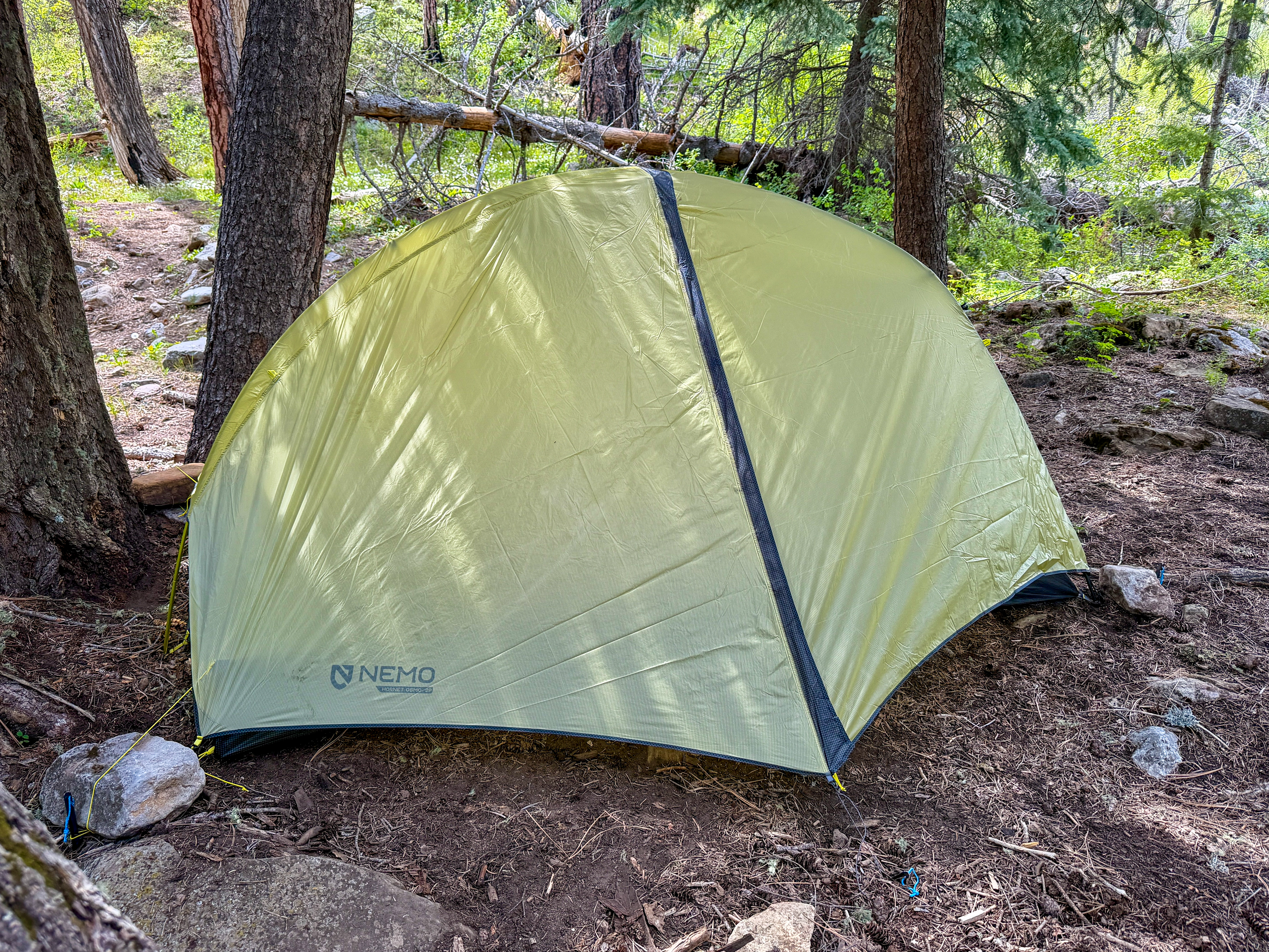
Out on the trail with the NEMO Hornet Osmo tent
I decided to roll the dice on my first test of the Hornet tent. Normally, I set up tents before I head into the backcountry, but with the Hornet, I was running low on time, so I checked to make sure stakes were included (they were), loaded the bike, pedaled out of town, and headed into the wilderness.
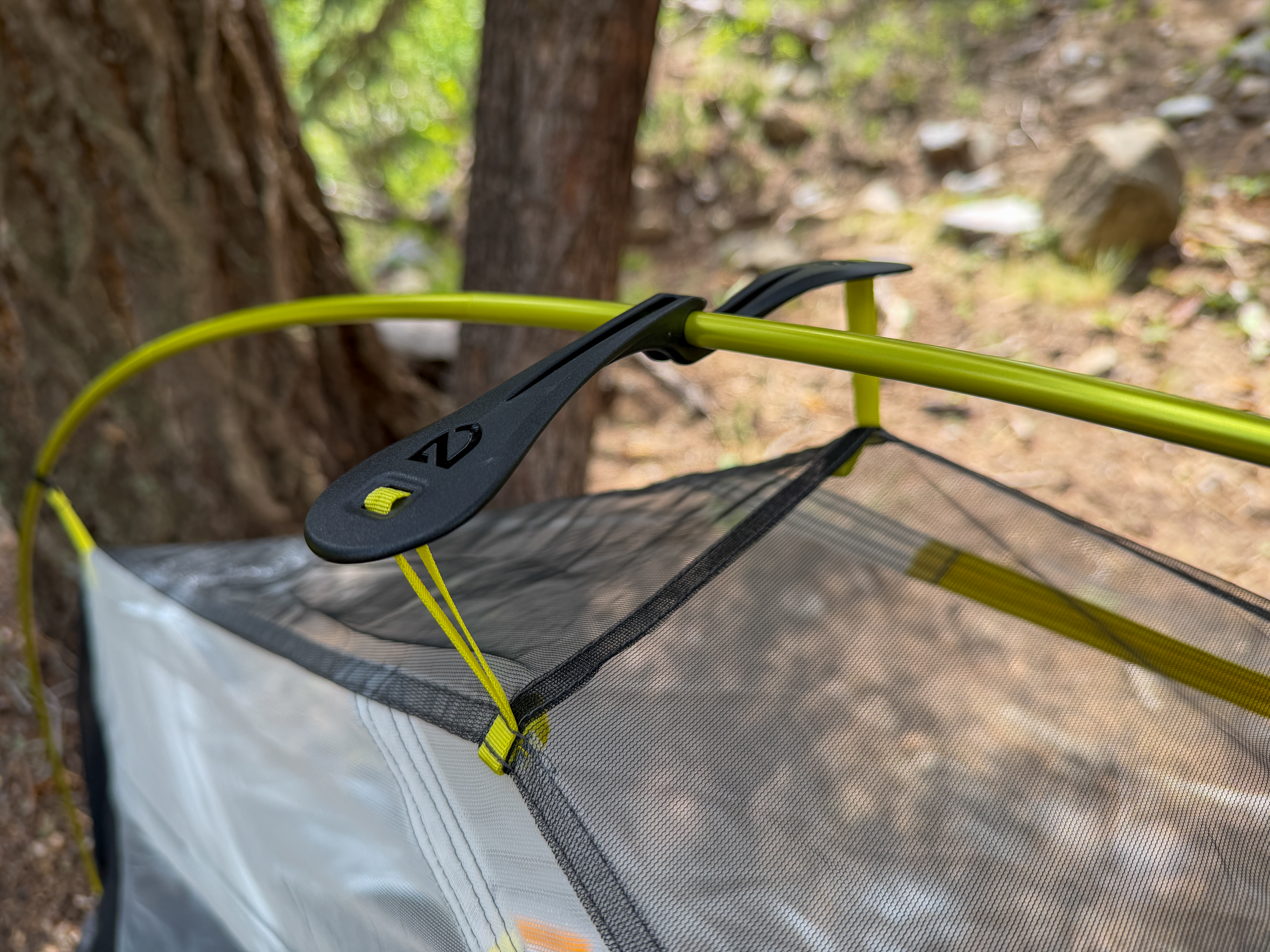
As I rolled out the Hornet, I realized that the three-pole design is very similar to other tents I’ve used from other brands. But the Hornet had a few proprietary features that aided in quick setup. Instead of requiring that a small pole be installed at the top of the tent to spread the fabric out, the Hornet has an integrated plastic pole/clip that’s permanently connected to the tent body and easy to clip into place. In addition, the unique ball-and-socket joint for two of the tent pole ends is pretty slick, along with plastic hinge clips for the rainfly.
However, I am nervous about the plastic construction of this ball-and-socket. This seems like it could be a failure point in the future, but only a long-term test could determine this.
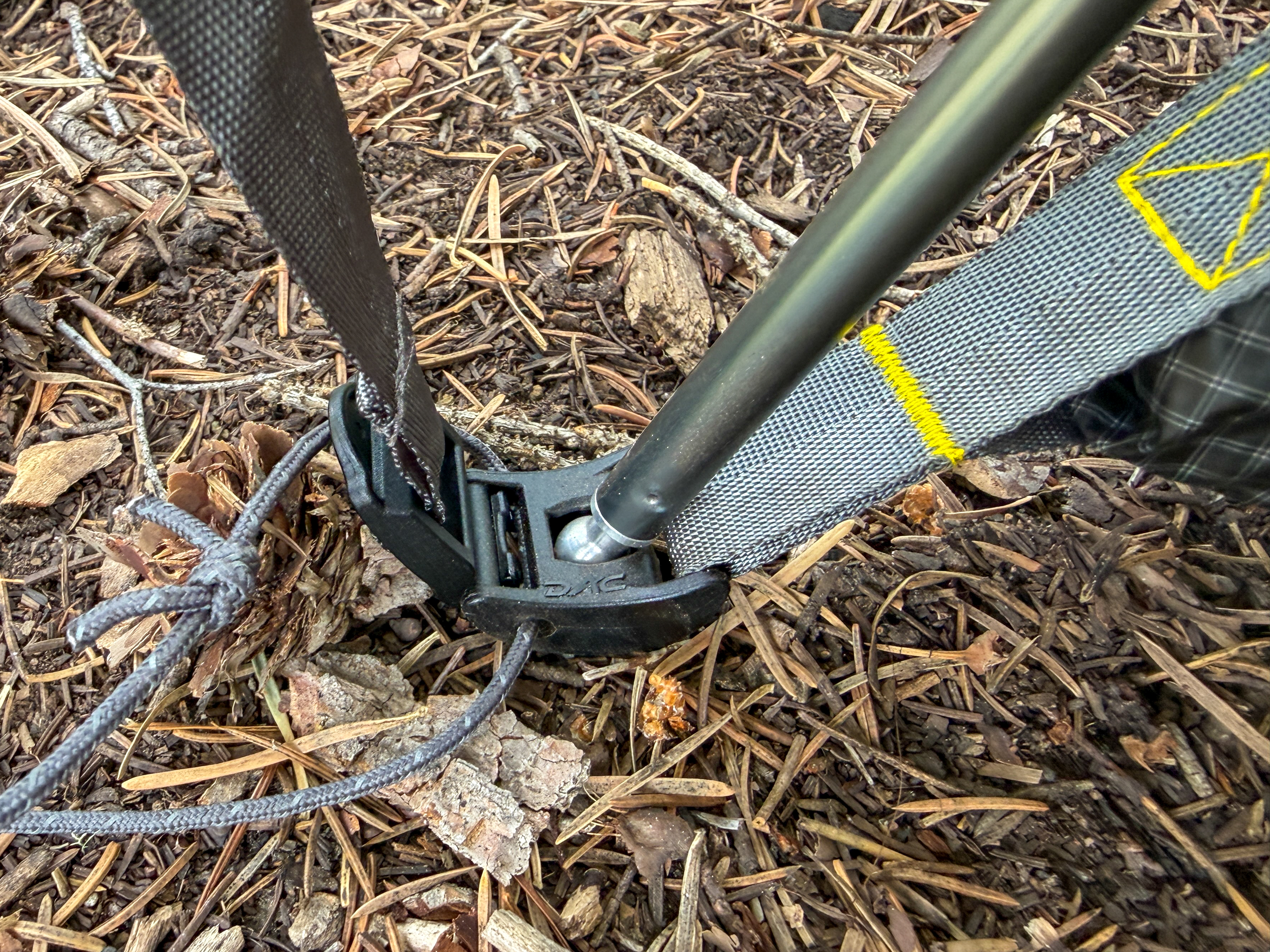
The rainfly went on easily, and the corners all staked out quickly. I appreciate the two loops on the feet of the tent, which can easily loop around rocks if the ground is hard.
While I haven’t yet had the chance to test the Hornet in inclement weather, the three-pole design and dedicated rainfly, with optional guy lines for high-wind conditions, are confidence-inspiring.
Size and packability
I opted for a two-person tent, as I want to store most of my bags in my tent with me when I sleep, to protect them from rodents. Compared to other two-person tents I’ve tested, the floor space of the Hornet is noticeably smaller. NEMO claims the Hornet has a floor space of 27.7 sq ft / 2.6 sq m. It’s plenty large for my use case, but if you’re actually planning to have two people sleeping side-by-side, I’d upgrade to a three-person tent in NEMO’s line.
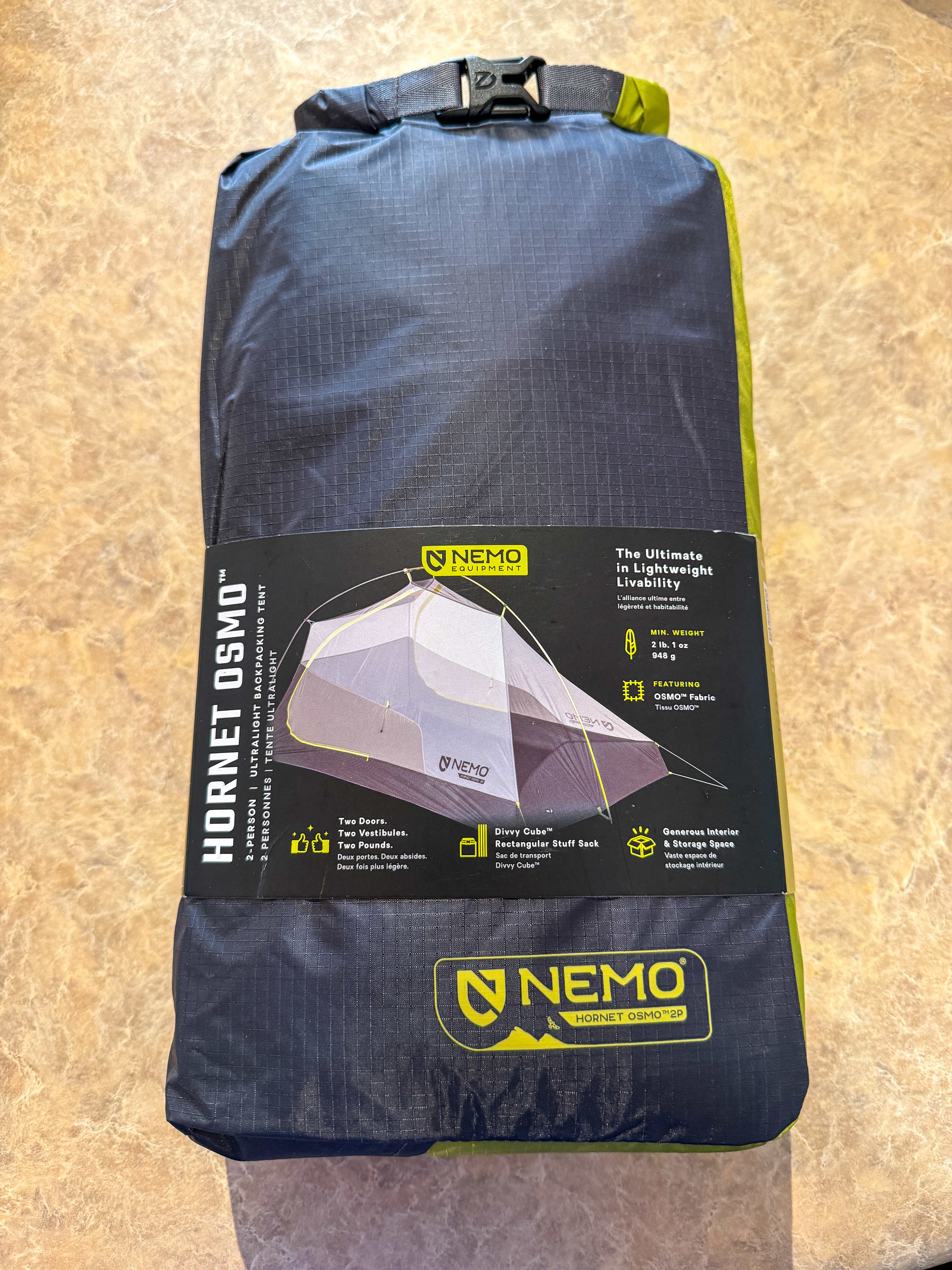
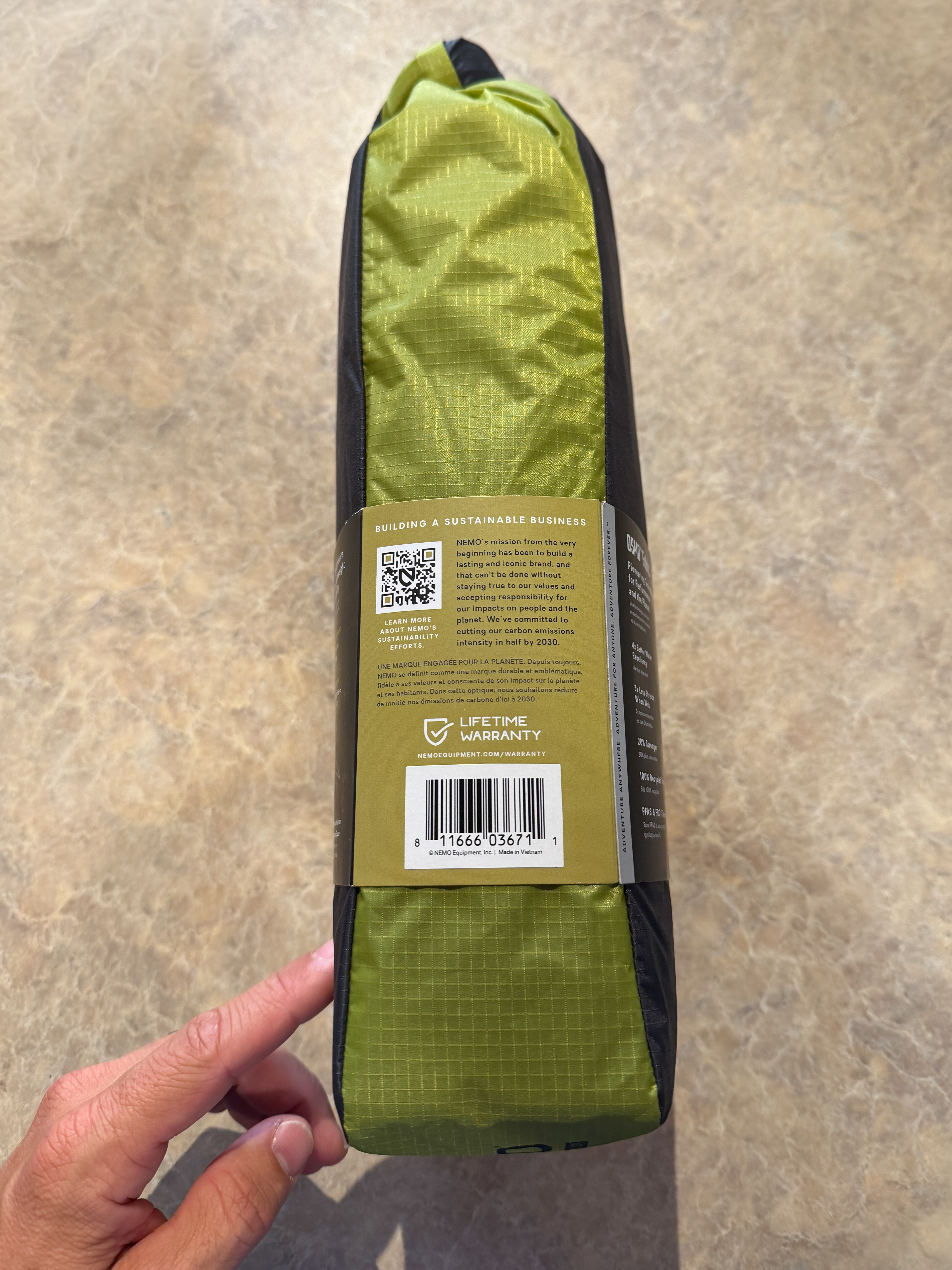
That said, the reduced floor space may contribute to one of my favorite features: just how packable this tent is. The Hornet rolls down tightly and stuffs into the Divvy Cube stuff sack, which can be used to further compress the tent. Compared to another tent with a similar design, the Hornet is dramatically more compact, despite only weighing a couple of ounces less. While weight is important, with limited space to load gear, packability is arguably even more critical. Thanks to this fantastic packability, the Hornet has earned its place as my tent of choice for my upcoming Colorado Trail thru-ride.
Pros and cons of NEMO Hornet Osmo tent
Pros
- Semi-freestanding design is low weight, but robust in inclement weather
- Easy to set up
- Extremely packable
Cons
- Plastic socket and clip could be a future failure point
- 2P tent is too small for two people. Upgrade to 3P if needed
Bottom line
The NEMO Hornet Osmo tent might have been originally designed for backpacking, but it makes for a great shelter for mountain bikers on multi-day trips. I like the semi-freestanding design for its ease of setup and robustness, while also not weighing a ton. The Hornet’s packability puts this tent over the top as my choice for the Colorado Trail this summer.
The news stinks. Why not follow Singletracks on Google News to bring more joy to your day?



7 Comments
May 29, 2026
Jun 1, 2026
May 30, 2026
Jun 4, 2026
May 31, 2026
Jun 1, 2026
Jun 1, 2026