

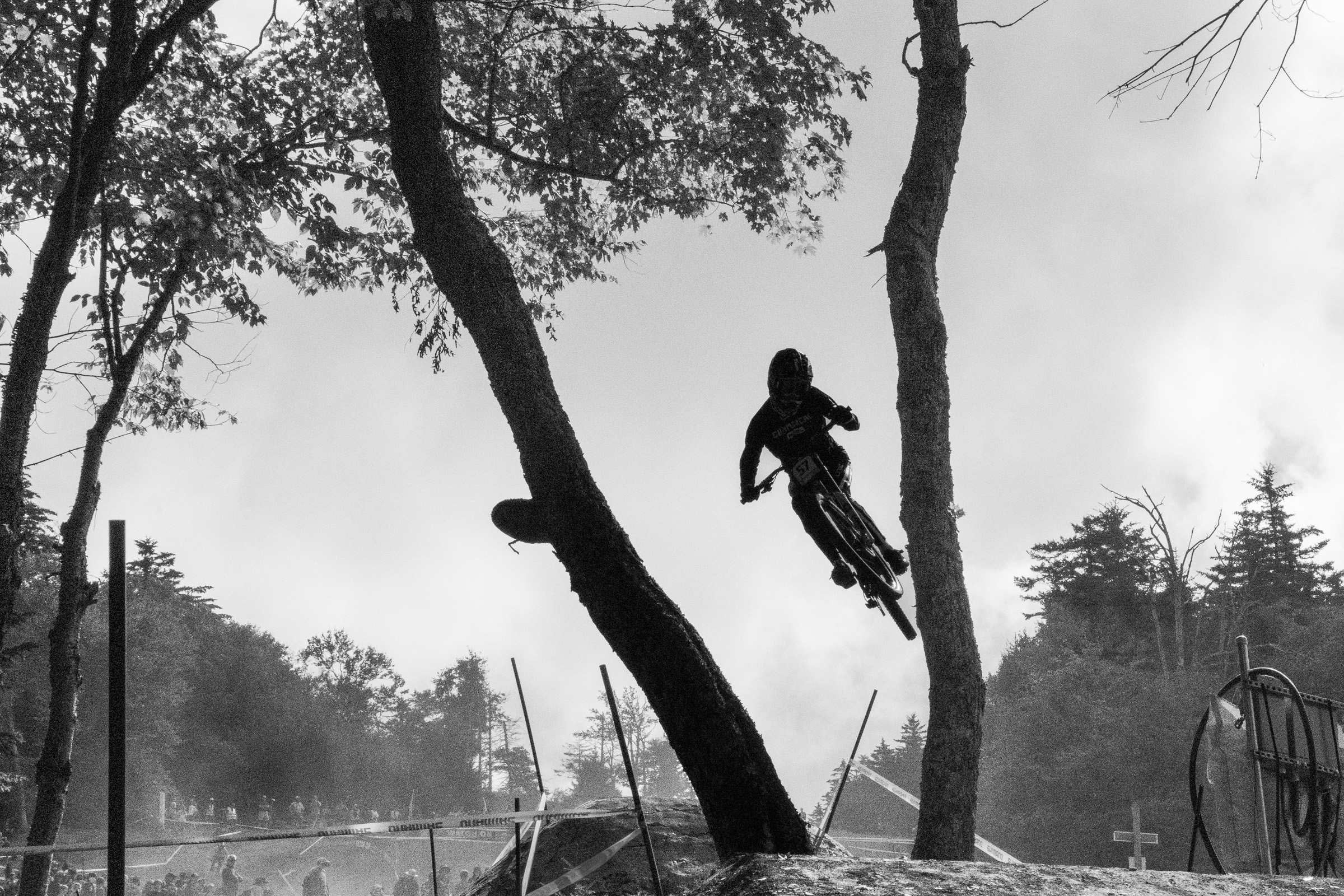
At the 2025 Redbull Rampage, professional freeride athlete Adolf Silva attempted to double backflip a massive drop. Silva came up short, resulting in a horrific crash that would leave the 28-year-old paralyzed.
In fact, several major crashes plagued the event. And, surprisingly, despite the biggest brands in the industry sponsoring these athletes, few, if any, receive medical coverage from their sponsors.
We don’t talk about insurance
Wait. If mountain biking is their job, surely they get some sort of insurance through their sponsors, right?
Well, no. As I began reaching out to and speaking with professional athletes in the mountain bike industry, a few things became clear. First, these athletes are technically independent contractors. The brands that they work with and represent have no obligation to provide insurance. Secondly, this was not a conversation they wanted to have; well, on record, at least.
Now, the athletes weren’t necessarily worried about discussing the fact that their sponsors don’t provide medical insurance. They understand that they are contractors and have no expectation that their sponsors would do so.
In fact, one athlete preferred not to be insured by their sponsors. “I’m typically signing one-, maybe two-year contracts. I don’t want to do all the insurance paperwork every year because my sponsor changes.”
Rather, the reason every athlete I spoke with was hesitant to speak about insurance, and why they all asked to remain anonymous, comes down to the insurance companies themselves. Again and again, I heard the same thing from athletes: In their line of work, it is hard to get coverage. And, when they do get it, it is pretty damn expensive.
Getting medical coverage
To be clear, no athlete I spoke with rolls through life without medical coverage. In fact, most Americans have some sort of coverage. According to 2024 Census Bureau data, 92% of Americans had health coverage that year. And, for some pro athletes, this insurance struggle didn’t even apply to them.
One athlete was insured through their “real-world job.” In talking with a few athletes, a second job seemed like a pretty common way to attain health insurance. Now, finding “real jobs” that allow them to take time away to race or attend events to fulfill their mountain bike contractual obligations can be tricky, but athletes find them.
Working in bike shops, ski shops, and other similar environments are common “real-world jobs,” if you want to call them that. Teachers and coaches also made the short list. It may not be the athlete themselves who told me they held one of these jobs, but rather a friend/teammate of theirs.
Another way many pro athletes get insurance is through their parents. In the US, athletes who are under the age of 26 can remain on their parents’ health insurance. “There are a lot of younger racers who do this for a living,” another athlete told me. “I imagine that they are on their parents’ insurance. I was.”
Currently, of the top 100 World Cup DH racers by points (both male and female categories), 62 are under 26. In other cases, a spouse’s “real” job was a way for a professional athlete to get medical coverage.
Once they are too old, or perhaps if they don’t fit any of those categories, athletes who want coverage have to purchase it on the open market. This is where the conversation went a bit sideways, and where pro athletes decided to share their experiences with me, but only if their identities were protected.
Like firefighters, pilots, and construction workers, these athletes’ jobs are inherently more “risky” than, say, an accountant. Now, technically, someone’s job description shouldn’t affect medical coverage, and they shouldn’t pay more or be denied based on their occupation. Purchasing workers’ compensation coverage, on the other hand, is affected by one’s job title.
Some of the athletes I spoke with say they’ve experienced dropped coverage or price increases on other plans too many times to discuss insurance openly.
Simply put, insurance is a touchy subject.
Why insurance is touchy
“They flew a drone over my house,” one pro mountain biker told me.
Roughly a year ago, the athlete’s homeowners’ insurance company flew a drone over their house, spotting jumps and drops on the property. Shortly thereafter, the athlete received a notice that the company would no longer insure them.
“It sucked trying to find new homeowners’ insurance,” that athlete explained. “After that, I just decided not to discuss any insurance.”
Health insurance, specifically, usually isn’t the main issue. Often, it was poor experiences with homeowner’s insurance or workers’ compensation. While there were very black-and-white examples, like the dropping of the above-mentioned homeowner’s coverage, there were also instances that were quite a bit more grey.
“Last year, I got hurt at work,” another athlete I chatted with told me. This was one of the athletes with a “real-world” job. They went on to briefly explain what happened–a torn achilles–but, for anonymity’s sake, I’ll leave out the “how.”
“Worker’s comp covered everything,” they continued. “If it had happened on the trail, I would have had to pay my deductible, which was $3,500, then 20% coinsurance for surgery, thereby meeting my out-of-pocket max of $6,600. That’s after a premium of $900 per month.”
Now, here is where it gets sort of tricky. This athlete believed their insurance would cover an accident that happened “on the trail,” with some out-of-pocket expense. But there is a difference between an “on the trail” crash that we’ve all likely experienced and what “on the trail” could mean to a pro athlete.
In the US, workers’ compensation insurance generally covers medical care, rehabilitation, and lost wages due to injuries sustained while at work.
If a crash occurs at a race the athlete was contractually obligated to compete in, “on the trail” could sound more like “at work.” So, it would be a workers’ comp claim, right? Well, no, not if that isn’t the job that a workers’ comp policy is covering. The athlete was hurt while working, but just not working the right job. This is where medical coverage gets tricky.
“Yeah, if I crash at a race, I just make sure to leave out the ‘race’ part,” a third athlete mentioned. “Just another normal day riding when I get to the hospital.”
And, for now, the athletes seem fine riding in the grey. This even applies to job titles. The handful of athletes I spoke with mentioned steering clear of “Professional Athlete” or “Racer” on insurance forms.
Instead, they choose a title like “Brand Ambassador.”
* File photo for visual illustration only. The athletes in this photo were interviewed or referenced in this article.
Keep up with the latest mountain bike news by adding Singletracks as a preferred source on Google.




2 Comments
May 26, 2026
Next winter I was cat skiing near Revelstoke (I live a hard life), and on the ride back to town I overheard one of the guides talking on the phone with his wife about a boarder at RMR that had gone off a 20-30 foot cliff blind and landed on a cat track, destroying both of his legs in the process. Turned out to be the same dude.
After he was through the first few surgeries he posted a Go-Fund Me, as his bills in BC and Washington once he got home ended up being well over 100k. I did not contribute, because dude made his choices.
May 27, 2026