singletracks is mountain biking
Sign In | Create Your Account | Site Map | Help  


Twenty6 Gear for 2012: Pedals, Stems, and More

Wednesday, November 2nd, 2011

Who is Twenty6? I met with owner Tyler Jarosz at Interbike and, judging by our conversation, he is highly passionate about riding and his products definitely reflect that. The company is based in Bozeman, Montana, surrounded by some of the best biking in the country which clearly influences Twenty6 designs.

From pedals to brake levers, everything from Twenty6 has design appeal as well as function. After picking up my pimped-out package of the new Predator pedals, F1 stem, and Dualie levers, I was stoked to get back home and install these parts. Looking at the gear from Tyler, you can truly see the level of his CNC skills.

Predator Pedals

The Predator pedals have seen significant changes over the previous model (the Prerunner). For one thing, the body has been increased in size, with a bit more meat towards the outboard of the pedal. Not only did the body size get larger, but the pedal’s profile has actually changed with a more pronounced concave shape that provides better pin placement and traction. Speaking of the pins, Tyler explained to me the importance of his pins: these are not run-of-the-mill hex pins… they are engineered to have a break-away point to prevent damage or pull through.

The axle features an Enduro bearing near the axle root and a turcite bushing at the other end. Making sure everything stays mostly clean and running smooth, a Quad O-ring is designed to keep the crap out and provides a measure of pedal resistance (i.e. you can control the spin of the pedal). To keep the weight down, you have the option of either a titanium axle or a chromoly one. At a weight of 320 grams (ti axle) or 390 grams (chromoly), both options are very light for their size.

F1 Stem

The F1 Stem has been revised for this year with a one-piece mount to the upper crown while still keeping the same front cap. The added support stiffens the stem, preventing possible bending when you do case it, and it gives the rider more feedback. The stem is offered in two lengths with a choice of 40/45mm or 50/55mm and weighs ±150 grams, slightly heavier than the previous model as a result of the stiffer design. The F1 has a clamp diameter of 31.8 only, so installing your older 25.4 bar won’t work here. It mounts easily to any 4 bolt direct mount fork.

Dualie Levers

Small parts like a brake lever can easily be missed and taken for granted, but Tyler went to the trouble of coming up with some great levers for many a brake, including the Avid Codes that I reviewed earlier this year. The Dualie levers are machined from billet 6061 T6 aluminum and weigh about 50 grams (depending on the model). The attention to detail that went into the two finger design is impressive, with the machining both reducing weight and enhancing grip.

Installation

I had an easy time installing the new gear on my bike. The most work went into installing the levers on the Codes because you have to make sure that you engage the spring and carefully swap out the reach adjuster. A tip here would be to apply a bit of grease to the small hole where the spring and detent ball is installed then carefully slide the adjuster nut sideways, ensuring the detent ball stays put (use a toothpick or a slender tool to hold in the ball). The pedals and stem installations were no-brainers. The stem is a plug and play affair with a very straightforward install – just remember to torque everything down evenly (6Nm).

Predator Test

I used both the Predators and F1 stem on my Opus Nelson and the Dualie levers on my Banshee Legend, and they work great! The pedals had excellent grip, with no issues. My foot felt firm and balanced on the pedal and the large platform worked well even when it got really messy. The pin pattern on the Predator worked great at holding the shoe yet allowing me to rotate my foot without too much resistance when I needed to use some body English. You would think that the large pedal would strike every rock in sight (and I thought that too), but that was not the case. I make it a point to keep my feet at the 3 and 9 o’clock position when traveling through rock gardens and rock drops (places that will destroy most pedals if you’re not paying attention). Even so, I still thought that these would strike. They didn’t though… as long as I was upright. Even in the berms I was paying attention to see if I was close to striking, but I had no issues. The very thin profile of the pedal keeps it away from most everything, though I did strike a few times on an exceptionally large boulder section aptly named “The Coffin” at Blue Mountain.

To keep the pedals fresh, Tyler has an extensive choice of replacement pins, and he even has a repair kit available.

F1 Stem Test

The F1 stem worked well, holding the bar firmly in place without even a hint of creaking. Even after going down hard on a few occasions, I was impressed to see that the bar and stem remained perfectly aligned without a hint of movement or bending.

Dualie Test

I instantly loved how the Dualie levers felt over the stock Code levers. They provide a definite improvement in feel without any hint of slipping: I never had to use a second finger to stop the bike. Speaking of feel, the machining on the levers grab the finger nicely, even with wet gloves on. All this equates to a better, more confident braking experience with the Dualie levers. If you are looking for a major upgrade on your levers, look no further.

Bottom Line

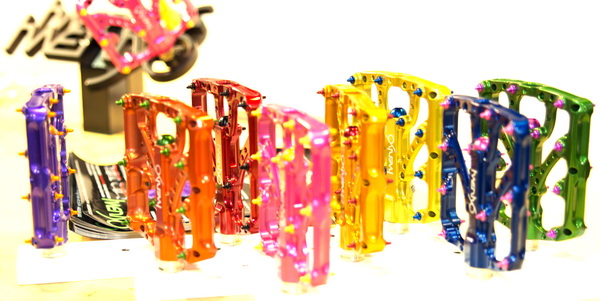
All in all, Tyler’s Twenty6 products are definitely worth checking out. They easily offer the most color choices around! So what will all these cost? For the Predator Ti pedal you’re looking at $269 – $289 (white). The F1 stem comes in at $129 – $139 (white) and the levers are priced at $74 – $79 (white). Some of these parts may be a bit on the pricy side of things, but these are not your run-of-the-mill components!

I would like to thank Twenty6 for sending the gear down for review.

Spank Spike Pedals: Reviewed

Wednesday, October 26th, 2011

I did a bit of an introduction to Spank’s Spike pedal a while back and since then I’ve been rocking the Spike pedal on my Banshee DH bike. Today I’m finally ready to share my analysis of these pedals.

Technical Specs

The Spike pedal, unlike many other pedals on the market, is made of cold-forged aluminum, which offers increased strength and durability. This special construction also allows these pedals to be über-thin at just 12 mm (not including the pins). Within this thin profile you get an IGUS outboard bushing and an over-sized full-complement inboard bearing. The IGUS bushing is made from reinforced fibers and solid lubricants. This technique makes for a bushing with predictable characteristics such as high compressive strength and good corrosion resistance and can be run lubrication-free. The steel axle is hollowed out and is alloyed with scandium for increased strength.

The elongated hexagon-shaped pedal is made with chamfered edges (a wedge design, as compared to square edges) to increase pedal clearances. This is important for cornering – the pedal can glance off things if there is a pedal strike, thus reducing the impact force on the bike. The elongated design is also meant to prevent pedal flip. The 90+ cm² area and 20-pin design makes for a very sure-footed feel.  Pins are inserted from the opposite side of the pedal with a hex key and locked in place as if they were cap screws, unlike hex pins that rely on the use of thread lock to stop them from spinning. Finally, the seals serve dual duty, providing both protection from the elements while also acting as an anti-spin control.

Installation

Installation of the pedals requires a 10mm hex key – there are no pedal wrench options here due to the proximity of the inboard bearing. The use of thread lube is important to prevent seizure of the axle to the crank arm. If you have a crank that requires washers, don’t forget to install them. With this pedal design, the inboard pedal body runs very close to the crank arm (± 1mm) so the lack of a washer could cause it to rub.

Real-World Testing

I took my trusty DH rig to the slopes to see if these pedals really worked as advertised. Bottom line: they definitely do!

Surprisingly enough, the Spike pedals offered excellent traction. It took a while to get used to the tight proximity of the platform to the crank arms, but after a bit of fumbling around, things were good. I had no real need to play with the pins–the 10 pins per side were adequate and well-placed, giving my feet great traction while still allowing them to roll when necessary. The pins are not the most aggressive on the market, but they can still take a chunk out of your legs if you’re not careful. Wearing shin protection would be a good idea, just in case you lose a foot while getting bucked off your bike.

What I loved most about the Spike pedal was the very solid feel underfoot. The large platform allowed me to move my feet fore and aft just a touch when desired.  I really found these pedals advantageous in the corners and tight spots too. We have a run called the Coffin Drop at Blue Mountain which is pretty tricky. If you hit it wrong, it will smash up your pedals and possibly toss you off the trail into the rhubarb. The low profile and chamfered edges shine here, keeping both feet and the pedals away from the rocks.

After two weeks of riding, I did have to adjust the pedal a bit, adding a bit more anti-spin, but that was the only thing that needed adjustment. Running my DH bike through Ontario’s bad weather at Blue (cold, rainy, muddy), the pedals didn’t clog up or exhibit degraded performance in any way. They still feel as smooth as the day they were installed.

A bit of a side note: the funny thing about the Spike pedals is how very quickly you will learn how many people are checking out the gear on your bike. While waiting in line for the lift, I had many people comment on the Spikes.

The Spank Spike pedals come in five colors: orange, blue, black, ti-grey, and red (tested), which will compliment a wide range of colors on your bike. At $125 MSRP, these are available at a good price point. They aren’t crazy expensive, and they offer decent value for the money. These rank in the top three in my favorite pedals book, primarily for their excellent performance-oriented design!

Many thanks to Spank for sending the Spike pedals over for review.

Giro Xar MTB Helmet Review

Thursday, June 9th, 2011

Behold the Xar! I bet right now you’re imagining some big burly guy with tons of power and wealth overseeing his Slavic minions. Actually that would be a Czar. Even so, when you strap on Giro’s Xar I guarantee you’ll feel like an Emperor.

A while back I wrote about the release of Giro’s new Roc Loc 5 fit system which is featured in the Xar helmet. After testing the Roc Loc5 on my own noggin I’m ready to give you my thoughts on how I think the Xar fits and feels.

The Xar is the next generation premium all-mountain (AM) helmet from Giro. Taking some of the styling cues from the hugely popular Xen helmet, Giro set off to take this helmet in a slightly different direction. Sporting a bit more of an angular shape, Giro applied all their technical know-how to build the Xar for the more aggressive rider. A lot of time went into making this helmet comfortable, and comfortable it is.

The Roc Loc 5 system as I mentioned in previous articles takes up less space (making more room for eye-wear) while firmly holding the helmet in place. To me, a secure fit is the most important factor in making a helmet feel comfortable. The micro dial adjuster operates easily with one hand and is great for making sure the two rear pads position themselves evenly on the back side of your head just below the occipital lobe (back side of the brain just where the skull rounds itself towards the spine).

The pads are also adjustable up and down to ensure maximum comfort and fit (something that many lower-end models do not have and are not required by the CPSC ). The last thing mountain bikers want is a helmet that bobbles around while sailing over roots and rocks. What you don’t see in this helmet is the Dupont Nylon reinforcements molded right into the EPS (Expanded Polystyrene) liner for added protection without added bulk. So basically you won’t look like the Toad character from Mario Bro’s video games, unlike some other economy helmets out there. With the Xar you get a low-lined helmet that adds a measure of protection to the sides and lower half of your cranium. At a cost of $130 MSRP, the Xar is the top lid in the AM price range because you’re paying for the fit, finish, and technology in it.

Fitting the Xar took just a few minutes, dialing the Roc Loc 5 system and chin strap to the way I like it. Once adjusted it was a very nice fit. The sides of the Xar helmet are set in a bit so that the space is more ovalized than round (for those of you who have a very round head, try before you buy) but this suits me just fine.

Riding on the trails I found it an enjoyable experience knowing the helmet is there but not feeling uncomfortable or overly hot. I guess the time spent making sure that this helmet keeps you cool paid off. For an added measure I noticed the full width brow pad absorbed any excess sweat and moved it to the sides.

When you have a chance take a look at Giro and check out the Xar and the other helmets in the line up. They have something for everyone!

I’d like to thank the folks at Giro for providing the Xar for review.

WTB Bronson 2.3″ AM Tire Review

Friday, April 29th, 2011

The WTB Bronson 2.3″ AM tires are ready for action in a variety of terrain.  Weighing in at 810 grams, these tires feature a large number of relatively small, low-profile knobs along the center of the tire with prominent knobs along the edges for aggressive cornering. The Bronsons are also UST compatible for an easy tubeless setup if that’s your thing.

WTB Bronson

Photos taken shortly after installation.

Installation

My wheels aren’t set up for tubeless tires so I needed to run these as regular tires with tubes in them. As a result, I can’t speak on the ease or difficulty of tubeless installation. However, for a regular rim, these tires were pretty difficult to get on as they are UST tires. UST tires generally feature a heavier, tighter bead than your standard tire, making them more difficult to install on a regular rim.  Changing a flat with these is really a pain, but I suppose if I was running tubeless I wouldn’t have that problem! With a little perseverance and a couple of tire wrenches, though, you’ll do just fine.

My Experience With the Bronsons

Product reviews can certainly give you a better understanding of bike products and they can also aid in your decision making before a purchase. I read bike and product reviews online and in magazines all the time and in my experience reviews are more helpful for some product categories than for others.

In particular, bike tire reviews can be influenced by personal preference and are often fairly subjective compared to other bike part reviews. Part of the reason is that it’s difficult to separate raw tire performance from one of many other variables including trail conditions, bike set-up, and rider skills. Despite the subjective nature of MTB tire reviews there are definitely a few larger-scale topics that can be addressed so I’ll attempt to hit all of the prominent points.

Bronson

Where the Rubber Meets the Trail

For my riding style, 2.3″ tires are where it’s at. I’m not a big racer, so I don’t really care if I make it up the climbs a few seconds faster. I would rather sacrifice the climbing speed gained from a narrower tire and trade it for turn-gripping traction and additional control at speed through the rough. If you are of this same persuasion, the 2.3″ AM rendition of the Bronsons is a good choice.

When reading up on these tires I got the impression that they weren’t designed for any specific function, but rather to be an excellent all-around tire in almost every condition. Based on my experiences that’s actually pretty accurate. The Bronsons perform well on just about everything including hardpack, loam, leaves, roots, rocks, and even in wet conditions.

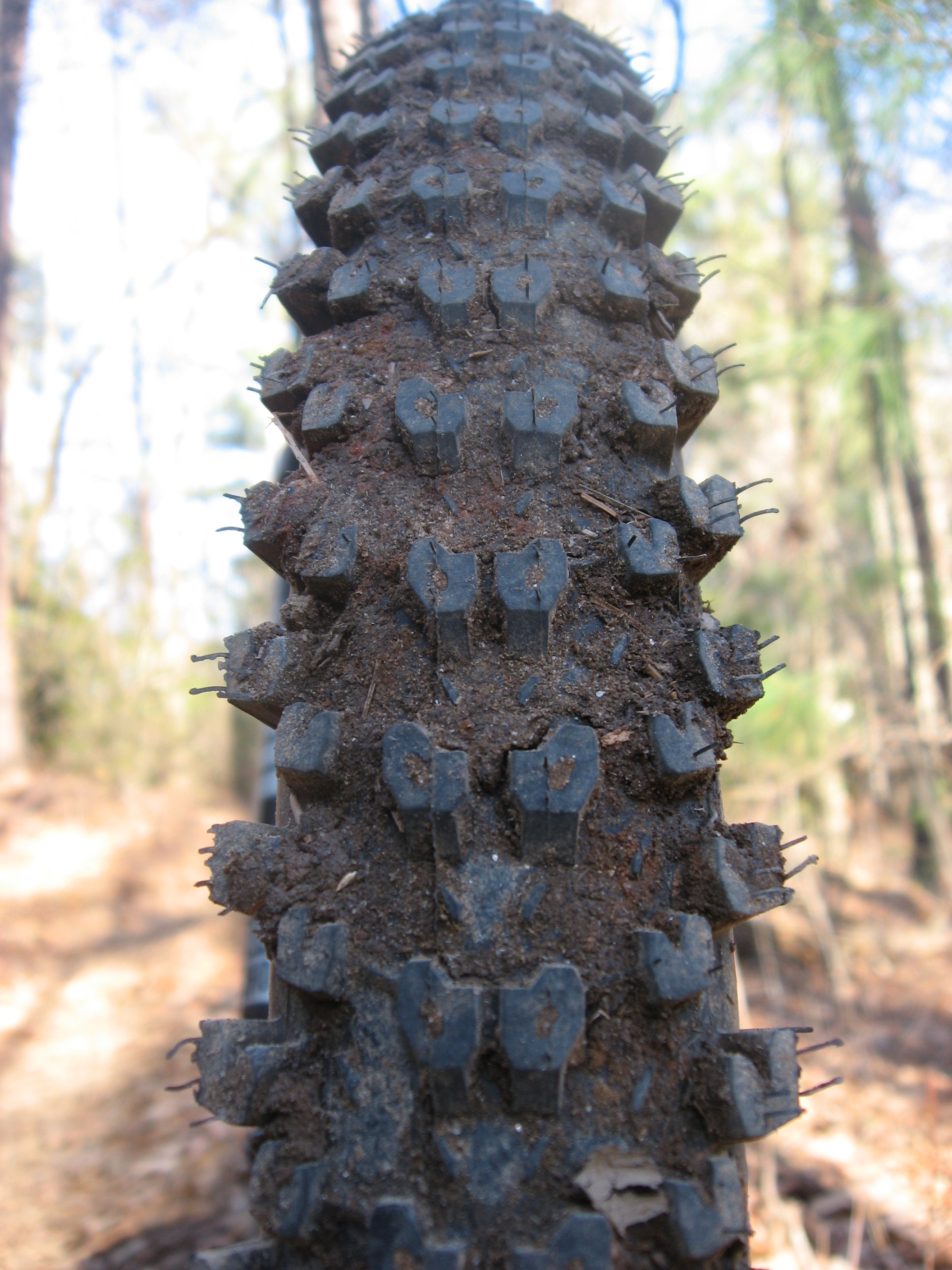
Due to the high number of knobs I thought that wet conditions would be the Bronsons’ downfall and that they would pack up with wet clay after just a few revolutions. While any tire will get coated in sticky red Georgia clay, I was very surprised to find that the Bronsons shed muck quickly and maintain traction well in the nast. I believe these mud-shedding properties are a result of the sloping sides and angled design of all the knobs; you won’t find a square-shaped knob anywhere on these tires. The sloped edges keep the tires running clean and tracking well.

Tires

The relatively low-profile knobs on the Bronsons allow them to feel very fast-rolling and yet they still provide excellent traction. The tires hooked up well in the corners and generally railed singletrack like a champ! As I mentioned above, they shone in almost all conditions including wet ones, but I personally thought they excelled the most on hardpack.

The only place I really thought the Bronsons didn’t shine was in really loose, rocky conditions. Despite the 2.3″ width they don’t have the same gnar-gobbling goodness provided by a larger-knobbed tire.  But as an all-rounder, the Bronsons ($65 MSRP) are definitely a worthy candidate for your next tire purchase!

Thanks to WTB for providing these tires for review.

Formula The ONE MTB Brake Follow-up Review

Wednesday, May 26th, 2010

f1

Now that I’ve had plenty of time on these stoppers I’m ready to give you all the late breaking (pun intended) news on these brakes.  A little while back I introduced The ONE and talked about the specs and the type of riding they’re designed for so now it’s time to talk performance.

At just 309 grams these DH brakes are really impressive and stop like a son of a you-know-what. The ONEs also feature excellent modulation which allows the rider to come to a controlled stop every time. This makes The ONE perfect for trail and AM riders who run on super technical trails as well. These brakes develop a ton of stopping force that does not fade away which is great for those shuttle runs that go on forever before you gotta shut it down in a hurry and toss the bike sideways.

I got a chance to install these brakes on nearly all my bikes to see how they work on long-travel FR rigs, shorter AM bikes, and even DJ bikes. In every case, the brakes rocked. Make sure you use only the recommended T15 Torx bit to tighten the brake lever in place and follow all the precautions for these high performance brakes. As always, torque all the bolts using the instructions provided and give yourself a good 30 to 50 stops at medium force to burnish and bed the pads in as well. Overall install time should be about 30 minutes.

f2

Using The ONEs on my FR bike with 203mm F&R rotors, I really got some eye popping performance that other manufacturers will have a hard time matching for while. For starters, these brakes run ultra-quiet, even when they’re wet. The ONEs also develop a serious amount of torque to really slow you down, allowing you to execute multiple high speed stops without any fade or pump up (where the fluid expands and causes your lever to engage earlier).

Looking at these brakes you might guess they’re fragile based on the small size of the lever and cylinder. Well, don’t judge a book by its cover – I can personally attest to the strength of these brakes. Even after casing a drop down badly (see the Epic Stealth Cam Review for the crash footage), not a single bolt or lever was bent or tweaked (to my relief).

Perhaps the best thing about these brakes is the outstanding modulation. The rider has total control over speed without the jerky feeling that may be experienced with other systems. The bite is exactly proportional to the amount of force placed on the lever, which is actually pretty rare on hydraulic MTB brake systems.

I put together a quick chart characterizing performance of The ONE below.

theone1

Looking at the chart you can see that you really can’t go wrong with these brakes. The “worst” item on this chart (an 8 out of 10) is noise and even then am I being very critical. You can see that a premium brake (at a premium cost) is worth the extra dollars that you worked hard to earn.

If anyone asked me on the trail if I would go out and get another set of these, I wouldn’t hesitate to say yes. For now these are in my top three favorite brakes (that is until something else comes along) and I could say to anyone who wants powerful brakes, that these are some of the most reliable and powerful ones out there.

Specs from Formula

MASTER CYLINDER

  • Forged radial master cylinder (M/C)
  • Patent-pending high capacity, integrated reservoir
  • Removable handlebar clamp
  • Flip-flop master cylinder assembly
  • Dual M/C bleed ports for easy-on-the-bike-bleeds
  • Forged aluminum lever blade (optional carbon)
  • Laser etched logos
  • MiXmaster available

CALIPER

  • Patent-pending forged one-piece post mount caliper
  • Huge 24 mm caliper pistons for amazing power
  • Top vented caliper allows for wheel on pad changes and eliminates overheating effects
  • Bottom vented caliper pistons provide additional cooling
  • Laser etched logos
  • Top loading pads simplify pad changes

Thanks again to the folks at Formula for providing The ONEs for review.

Answer ProTaper Bars and DJ Stem Review

Tuesday, April 27th, 2010

answer

After clocking dozens of miles over the past few months with Answer products on all my bikes, I’ve finally come to grips with my love (pun #1) for the ProTAPER 780 DH ($65 MSRP + $10 for white) and the ProTAPER 720AM bars ($60 MSRP). I’m also smitten with this gem of stem, the Answer DJ stem ($72 MSRP). The all new 2010 line up from Answer really fills the needs of the modern DH / FR / DJ and AM rider and responds to the wider bar with shorter stem trend that more and more riders are discovering. Having spent a lot of time with both the longer/narrower set-ups and the shorter/wider combos, I have to say I’m sold on short and wide.

answer-8

ProTaper Bars

The ProTaper AM and DH bars share a few vital characteristics. First up, both the AM and DH bars are designed with the same 4° up sweep and 8° back sweep. When paired with a slightly shorter stem, this gives the rider a great comfortable wrist feel without over-flexing the forearm. The DH bars are offered in a 25.4mm rise configuration or a shallower 12.5mm rise for those DH riders who like to keep their weight a little lower up front. The AM bar is also offered with 25.4mm rise or a deeper 50.8mm. I decided to roll with the same 25.4mm rise on both the AM and DH bars.

Both ProTaper bars are made from 7050 aluminum which is very strong with just enough flex to take the edge out of those hard square-edged rocks and drops. At 335 grams and 315 grams respectively for the 780 DH and 720 AM, these are not massive weight savers nor are they overweight lead pipes.

answer9

With a choice of black, red, gold (DH only), gray (AM only), and white, Answer offers a decent selection of colors  to choose from.

answer10

DJ Stem

With all this talk about handlebars stemming from Answer (pun #2) I really have to talk about a jewel of a component that looks amazing. I dare you to pick up a DJ stem from Answer and try to find a flaw. This stem looks as if it was cut and shaped by a professional diamond cutter. Thanks to precise machining practices, you won’t see any tooling marks on this stem.

Another thing that really caught my attention was the detail that went into the finishing of the DJ stem – every consideration to both safety and weight was clearly considered. The underside of the top cap was even machined a bit to remove unnecessary weight. The use of tapered head bolts instead of regular rounded ones adds to the effect that Tom Porter and the wizards at Answer wanted to give us. Answer also opted to go with a 61mm wide face plate and attachment area that spreads the loads across the bar, securing the bar to the stem like a starving anaconda on fat cow.

The DJ stem weighs in at 210 grams for the 35mm reach and 250 grams for the 50mm reach version and both stems are designed for 31.8mm bar diameters (24.5mm is not offered). The DJ stem is made from stiff, durable 7075 aluminum, the same stuff used to make aircraft landing gear. A cool thing about the DJ stem is that it also comes in four top cap color options (black, white, red, and gold) to coordinate with your bar. With the DJ stem, Answer also includes a 10mm stainless bolt which allows you to run a line through it for a clean, tangle-free brake connection. Perfect for those who intend to to bar spins or styling on those progressive jumps.

answer11

Performance

I tested the bars on all three of my bikes (AM, FR, and DJ) and the DJ stem on my jumper. Bottom line: these bars really rocked. Once I got the feel for the wider bars I found it very difficult to consider going narrower; in fact, I won’t consider riding a bar less than 700mm anymore. For a guy like me with wide shoulders and a medium build at about 5’9″, these bars are perfect. I got back a whole bunch more control plus more power to steer and control the bike over the nastiest of terrain. Speaking of nasty, when going over rocky and rooted trails, the ProTaper bars took a significant edge off the vibration as well as the shock (thanks in part to the patented technology on board). These bars keep the weight where it should be and are the perfect wall thickness under the palms of your hands.

Try the ProTaper bars and the DJ stem for yourself – you won’t be disappointed.

I would like to thank the folks at Answer for providing the ProTaper bars and DJ stem for review.

THE Flow Saddle Review

Tuesday, March 2nd, 2010

Introducing the 2010 THE Flow, a lightweight all-mountain/freeride saddle comfortable and tough enough for daily duty.

007

The Flow saddle retails for around $60 which is about average for a chromoly-railed seatpost. At 227 grams this saddle is as light as many titanium railed saddles, but much cheaper. The embossed graphics ensure the saddle still looks good after extended use while the kevlar side and back panels keep the leather from tearing. The Flow measures 257mm in length and 127mm in width, pretty standard dimensions for an all-mountain saddle.

The Ride

Overall I’m quite satisfied with THE’s Flow saddle. Although THE uses less padding than most companies, the shape and flex of the Flow make it comfortable. The chromoly rails are still straight after numerous days at Joyride150, my local bike park, and the graphics haven’t worn off or faded at all. This saddle is also narrow enough that it doesn’t snag your leg as you maneuver the bike yet it doesn’t feel like riding a broomstick.

As an added bonus, installing a lightweight saddle like the THE Flow is an easy, inexpensive way to make your bike lighter. My bike lost over ½ lb after I installed this saddle. Plus the Flow has a unique design that will add individuality and style to your bike.

The Verdict

If you’re an all-mountain or freerider looking for a lightweight, good looking, comfortable saddle that won’t easily bend, break or fade, THE’s Flow saddle is a good choice.

006

Thanks to THE Industries for providing the Flow saddle for testing.

Here Comes the Sun (Ringle)

Wednesday, February 24th, 2010

sun1

The Sun Ringle name always makes me think of a rising sun – a new day, a new adventure. Well for 2010, Sun Ringle has done it again with exciting new XC and AM wheels fit for any epic adventure. And looking forward to 2011, Sun Ringlé is working on fresh wheels for the FR / DH / DJ crowd.

I recently got a chance to talk with Scott Boyd, Product Manager from Sun Ringlé, about the history of the company and about some exciting new products that will be released this year. I also managed to squeak in a few questions about what we can look forward to in 2011.

History

Sun Metal Products dates back to 1946 when Ken-Jen Metal Products started producing tricycle seats. In 1948, Ken-Jen became Sun Metal Products and started a wire-spoke wheel line. In the 70s, Sun began production of alloy rims for high performance, off-road motorcycle racing and the technology eventually made its way into high-end bicycle rims in the 1980s. In the 1990s, Sun expanded production facilities in Indiana for high-end alloy rims and built manufacturing plants in China to provide products for the growing Asian bicycle manufacturing industry. Sun Products purchased Ringlé Racing Components and in 2005, Hayes acquired the merged company.

Scott, like many of us who are passionate about MTB, started off early enjoying mountain bikes. Like me, Scott worked at a bike shop in high school and college which landed him a position at Hayes starting in 1998. In the early days he provided technical support at NORBA and World Cup events and after a few corporate acquisitions he moved into the role of Product Manager at Sun Ringlé, where he’s been for the last two years.

After speaking with Scott for just a few minutes you get the sense that he’s an extremely focused individual which in this line of business is a good thing. At the same time he’s very personable and digs talking about bike products as much as you and I dig riding them.

sun2

New stuff

So what can we expect from Sun Ringlé this year?

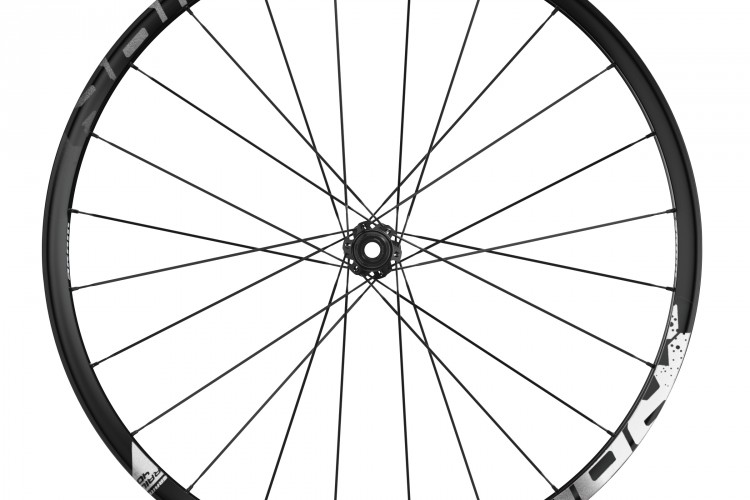
We have an exciting new tubeless compatible wheel platform and we’ve partnered with Stan’s No Tubes to license their patented BST (Bead Socket Technology). The line consists of the Black Flag Pro and Expert (XC) and Charger Pro and Expert (AM) models. Each are available in 26” and 29er.

(Our) focus (this year) is on the Pro series: The Black Flag Pro is a sub-1600g cross country wheel set using a 24mm wide rim and the Charger Pro is a sub-1700g all mountain wheel set using a 28mm wide rim. The 26” versions (feature) a 24-hole direct pull lacing pattern and the 29er versions (feature) a 28-hole direct pull lacing pattern. Both wheel sets have two color options to choose from. Additionally, the wheels are available and compatible with today’s axle standards. For the front: standard quick release, 15mm, and 20mm. For the rear: standard quick release, 135×12, and the new X12 or 142×12 axle.

The other hot item we are working on is our SRD Carbon wheel. It’s a 26mm wide, 1550g wheel set. It utilizes the same hubs as our Black Flag Pro, allowing for the flexibility of all today’s axle standards.

p1000819

Are you aligning the way you name parts like Manitou (Pro, Expert, Comp, Sport)?

Yes. It is a system that is universally understood by cyclists and helps identify the level of the product.

What can we expect to see come April from Sun?

During April, we will be attending the Sea Otter Classic, and the new Black Flag Pro and Charger Pro wheels will be the highlights.

Are there any restrictions as far as (rider) weight is concerned with the SRD Carbon wheels?

The SRD Carbon wheels are still in the development phase. I can say the wheel set has a stout 26mm outer width carbon rim. The wheel isn’t meant to be the lightest race day wheel, but (it’s) a 1550g wheel set that is light enough for XC racing and durable enough for everyday AM use.

When I was at the show I noticed many different colored wheels like blue, yellow, black, white, and red. Which ones are you going with?

The wheels at Interbike (actually) showed just a few color options. The Black Flag Series and the SRD Carbon will use a touch of gold (anodized finish). The Charger will use red (anodized) hubs.

I also noticed Sun Ringlé offers many 29er wheel models. How many model options are there?

We currently have 5 wheel set offerings and 6 rim offerings. One of our newest 29er offerings is the DH MTX33 model. This is currently being tested by a top World Cup team. Time will tell if they give up the 26” DH bikes for 29ers.

I see you’re offering direct pull wheels, are you using Wheelsmith spokes on those as well?

Yes, the direct pull spokes are Wheelsmith spokes made in our Milwaukee facility.

p1000830p1000837

Tell me a bit more about the Stan’s technology that you plan on using on the wheels for this year.

SunRingle is the first in the industry to license the Bead Socket Technology from NoTubes.com for both the Black Flag and Charger series.

The rims are wider inside than other designs with similar outside dimensions, meaning a wider base for the tire and improved ride quality. The design also incorporates shorter sidewalls, reducing pinch flats and the risk of denting the rim when using low pressures. In addition, the design allows for the use of NoTubes yellow sealing tape and valve stems for a tubeless application using standard tube-type or tubeless tires and NoTubes tire sealant.

NoTubes yellow sealing tape will be pre-installed on the wheels making the wheels tubeless-ready. The valves and sealant will also be included in the box (with our) aftermarket wheel sets.

I’d like to thank Scott and the folks at Sun Ringlé for giving us a glimpse on what’s to come for 2010 and 2011. Goodbye winter – here comes the Sun!

CamelBak: The Don Hydration Pack with Flow Meter

Thursday, January 14th, 2010

camel11

Camelbak is a name that needs no introduction. It’s a name that’s synonymous with hydration and hydration packs for cycling both on and off road, adventure racing, hunting, and military applications. Where there are thirsty people, Camelbak always seems to be around with a solution. In 2010 Camelbak is at it again with fresh styles and new, bold colors to address the wants and needs of mountain bikers everywhere. This spring I’ll be rockin’ The Don ($120 MSRP) with Flow Meter (sold separately, $30 MSRP) and no I was not arrested (just in case you were wondering about the pic).

The Don is a full-featured hydration pack designed especially for AM and FR mountain bikers. This pack sports a lightweight but strong rip-stop material which will stand up to the abrasive nature of all-mountain biking. Another great feature The Don includes is the air director back panel which allows your body to breathe and release heat when you’re pumping the pedals. Along with this intelligent yet simple heat release solution, you also get a wider strapping system (38mm) which will both hold the pack firmly in place and distribute pressure evenly across your body, even when hucking gnarly trails. The wide straps are made of the same mesh material as the vented back panels to encourage moisture wicking.

camel2

The Don can carry 3L (100oz) of water and 17.5L (1070 cu in) of cargo split into one main compartment and a few extra elastic pockets to separate your nutrition bars and gels from your tools and any other items for your ride.  Splitting up the space into several compartments allows the Don to hold goggles and electronics without fear of scratching them up or bouncing them around too much. I personally love that feature as it allows me to carry camera equipment as well as food and tools without fear of cutting into my sandwich or trashing my camera.

camel9camel7

What really makes this a FR / park pack is that it has a convenient means for holding your helmets (full face as well as your open face) by a clever strap and flap combination. There’s even a clear flap on the side of the pack to hold your park pass! The straps that hold the flap for your helmet also double as the straps to tighten up the pack when it’s not full.

camel3camel4camel8

Taking the Don on (go figure) the Don Valley trails ups here in Ontario was just like strapping on any familiar piece of equipment. You just put the pack on, adjust the waist strap, and go. Just about the only thing I needed to learn was how to use the flow meter that I added to the Don.

camel6

The flow meter is actually a simple device: it uses a small magnetic sensor built into an impeller that rotates as you draw in water through a standard Camelbak hose. As the impeller rotates, it registers in the flow meter’s circuit board and display. Now the hard part is setting up the flow meter and using its advanced functions – I felt like I needed a PhD or something.

The simplest and most effective mode I found on the Flow Meter is called Amount remaining /  Total volume mode. Using  AR/TV mode for most all my riding I found that it worked great, giving me all I needed to know about my hydration situation. Clearly the most useful thing about the Flow Meter is it gives you an idea about how much water is left in your pack, something that was previously difficult if not impossible to do without removing the bladder from your pack. In terms of the advanced functions, I admit I fumbled around with the buttons a bit but never really found anything nearly as useful as the AR/TV mode.

Using the Don with the Flow Meter was great, though admittedly the color combo I received (Methyl Blue / Racing Red) was a bit loud for my personal tastes (there are 3 other color combos to choose from). Other than that, the Don is a comfortable and very functional hydration pack. On slope-side rides of 3 hours or more, this was more than adequate for my needs and I wouldn’t hesitate to recommend this pack to anyone.

Thanks to the folks at Camelbak for providing the Don and Flow Meter for evaluation.

Introducing Joyride 150 Indoor Bike Park: Opening Dec 14, 2009

Monday, November 30th, 2009

51

Last week I got a sneak peek at Canada’s first indoor bike park, Joyride 150. When Bob_the_Builder found out I was going to Joyride 150 ahead of the official opening Dec 14th, he just had to come along. I dunno who was more stoked Bob or myself. On the drive up there I was trying to imagine exactly how big a 90,000 sq ft building is; needless to say, it’s large – very very large.

Walking into the facility you get a sense of the scope of the place. With the sounds of the finishing touches going on in the background, I was greeted by Leslie, one of the owners. A very nice person with a warm smile, Leslie was quick to excuse the bits of saw dust. After a little small talk about the place, we met up with two instrumental partners, Mike and Scott, both looking a bit tired, and for good reason. Both men, along with a few volunteers, were putting in 100 hour work weeks for the last 3 months to get Joyride ready for the grand opening.

Leslie took us on a tour from the entrance to the spinning classroom which is still under construction. The room is a nice size with 20 ft ceilings and room for about 30 riders. The height and shape of the room should provide good acoustics once the music is pumped in. After a quick visit of the spinning room, we really got a good look of the rest of the facility. Heading back into the front entrance we then started our main tour. The complex is divided into four main areas.

341

The first area, right across from the main counter, is the beginner section where you can practice your skills on various styles of skinnies and features that you will encounter at the park. The photo above on the left shows the practice rollers and skinnies. The photo above and right is the practice pump track which in itself is great. I have to say the quality of the build is absolutely top-notch. No expense was spared in making these ramps and skinnies smooth and flawless. Even up close you can’t feel the gaps in the wood.

61711

After admiring the beautiful wood work and moving along, we passed the still unfinished advanced skinny area which promises to be something else with many elevated features. Across from that there are lockers and an area where folks can rest, eat, and talk shop. There’s also an advanced pump track with a massive corner. Leslie was mentioning that it would be perfect for two cross (hmmmm perhaps competitions could be just around the corner). Of course at this point BTB  had to ride the course and judging by his big smile I could safely say he loved it.

51

The cross country track (yes they have one of those too) is elevated and travels around the entire complex. From here we got a great view of the main progressive jump and trick area. I have to admit doing laps on the XC circuit will be fun because you get to see everything: the foam pit, the stunts, all of it. Can you imagine riding around and taking a look at everyone having fun, jumping, and ohh yeah, taking a tumble? Heck, even BTB got into flying into the foam pit and the jump area.

291

All kidding aside, Leslie was mentioning the thousands of possible lines that riders can take to make a flowing line. A few days prior to my visit there were some circuit riders visiting and commenting on the set up, all of them making the same comment of how flowy and complex Joyride can be. One even mentioned how it would take a very long time to master the Joyrides Vert park set up.

111121

As we were walking around the XC course and having a wonderful chat with Leslie, saws busily cutting in the background, Leslie talked to us what folks should expect to pay for a visit. It will cost about $20-$30 per visit and they are also planning on setting up season passes (price is TBD). Once things start to move more smoothly they will be concentrating on discount packages with nearby hotels and a rental fleet of bikes for those who don’t want to bring in their own rig.

Joyride 150 is located just north of Toronto in Markham ON, and their closest intersection is McCowan and Highway 7. The location is pretty close to many hotels and shopping malls, for those who don’t know the area and are wondering what else is around.

Well folks, I have to say you need to add this place to your ride wishlist. Unfortunately for me, when I went with BTB I was still nursing my broken clavicle so I couldn’t ride – otherwise I think I would still be there. Expect Joyride 150 to be up and running Dec 14th and make your way over. If you build it, they will come – they built it, so get over there!

More info on the joyride150 website.

More details:

  • beginner/sport/expert sections with skinnies, lines & features to test your skills and help you progress
  • a foam pit (beginner & expert ramps) with a matching resi jump and box jump
  • rhythms & jump lines (beg-exp)
  • a BMX-style street park with quarter pipes (MASSIVE!), spines, rails, drop-ins, bowls etc.
  • pump tracks (pump & dual race-style)
  • cross-country loop with elevation (climbs), log-overs, features etc…sure to get your heart pumping and your legs burning!

Other park features:

  • cozy lounge with fireplaces & free Wi-Fi hotspot
  • concessions (snacks, drinks etc.)
  • bike rentals (various bike types)
  • bike storage
  • private party room available for rent (corporate events, birthday parties, etc.)

Coming soon to the park:

  • coaching services
  • spin studio
  • programs (skills workshops, day camps)
  • races/competitions
  • demo days/PK sessions

Pack your bags and get your tickets. This is a place to be when the snow is piling high!

Mountain Bike Disciplines

Wednesday, October 7th, 2009

bike_type_graphic

When I started riding back in the early 1990s, there was basically just one flavor of mountain biking but today MTB categories can get a little confusing. I found this helpful chart over on the Turner website and I think it does a good job illustrating some of the divisions you’ll find in mountain biking find today. The arrows and text below the chart were added for the purposes of this post.

Right off the bat you can see the spectrum of riding from XC to Downhill and everything in between. Notice how the plot gets higher and more jagged as you move to the right, representing technical difficulty (not necessarily climbing or aerobic difficulty). It’s also cool to think of this as a progression chart – beginners can move from XC to AM and beyond as skills improve.

I really like how this chart can be used to show ranges rather than discreet points along the spectrum. In this particular chart, the shaded green area represents recommend usage for the Turner 5.Spot. Notice how it isn’t just a Trail or All Mountain bike. Based on the geometry and travel (5.5″ rear) this bike works well for XC, Trail, and AM riding.

The spectrum approach is also helpful for classifying riders. Most of us enjoy a variety of terrain and saying someone is strictly a Freerider or Downhiller usually doesn’t tell the whole story.

But wait, this chart has one more trick up its sleeve! Most mountain bike trails themselves can’t be readily classified into one type or another. A mellow XC trail may have 5 foot drops in places or even a freeride area that’s 5 miles into the trail. Other trails may have short bursts of All-Mountain style terrain with XC-type fireroads connecting sections. In fact I imagine some trails could cover the entire spectrum from XC to Downhill while others fit more neatly into a single category.

Some generalities about mountain bikes can be made from this chart and I’ve added arrows describing just a few trends you can expect to see when purchasing a new mountain bike. As you move from left to right, travel (front and rear) should increase while weight will follow roughly the same trend. Price, on the other hand, isn’t so easy to classify. For example, remember this $7,000 XC hardtail from Interbike? Finding a DH bike that costs half that amount wouldn’t be too hard (nor would finding a DH bike costing 50% more).

Now, if it were possible to create a mountain bike that could cover the entire chart from XC to DH that would be the holy grail. Maybe the Cannondale Simon will deliver on that dream one day :)


Site Map | Advertise | Partners | Contact Us | Terms | Privacy
Campground Reviews | Hiking Trails | Trail Running | Skiing / Snow Sports | Mountain Biking
Copyright 2012 Blue Spruce Ventures LLC | Atlanta, GA
singletracks.com is yet another slick Review App