

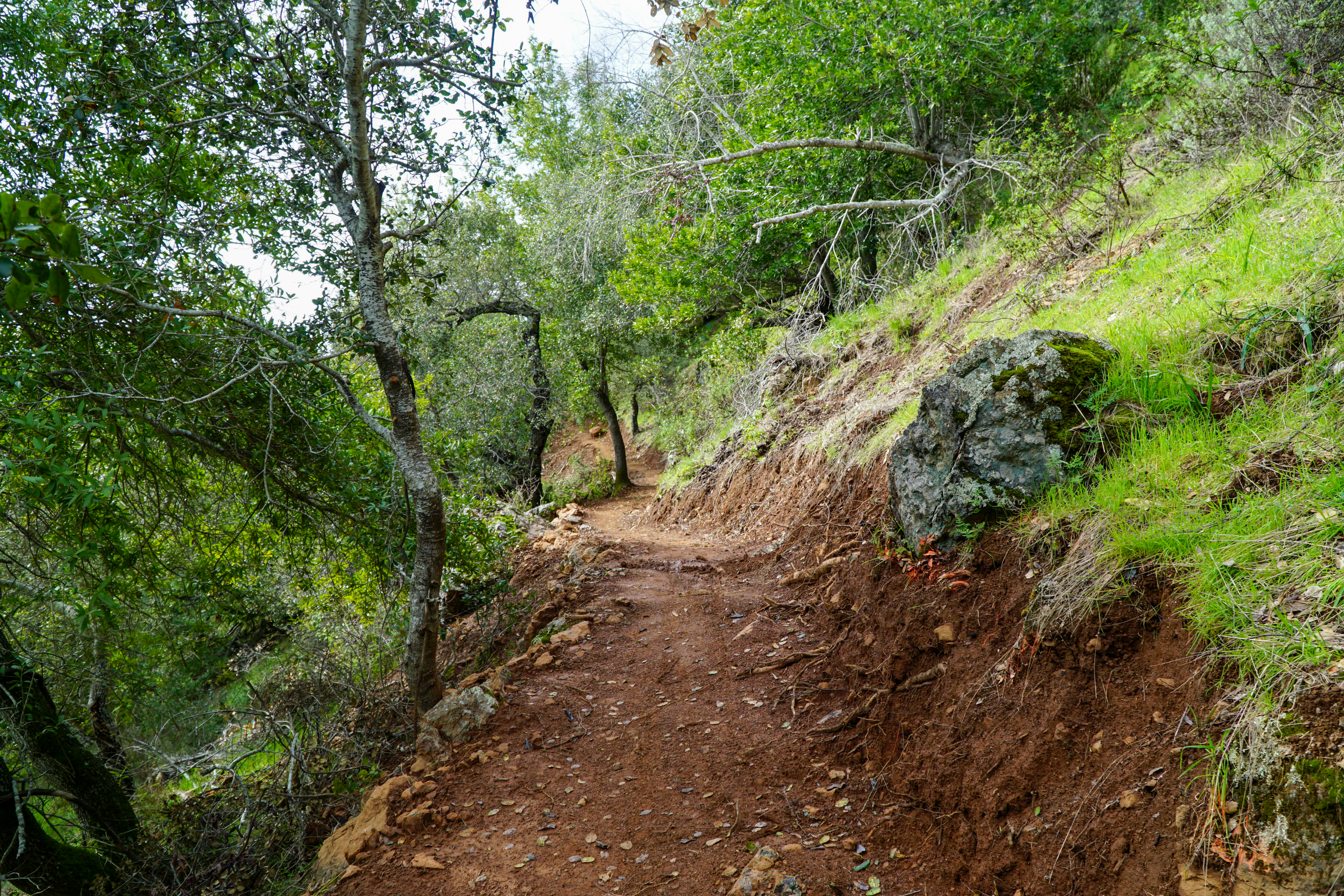
Marin County claims the title of mountain biking’s birthplace, yet getting new trails built here is notoriously difficult. The irony isn’t lost on local riders: the very place where the sport was born now struggles to develop the infrastructure that mountain bikers need.
Fortunately, organizations like the Marin Trail Stewards (MTS) are spearheading trail-building efforts in the area. And, as we found with the new Caballo Rojo trail, MTS is willing to go to great lengths and costs to provide riding opportunities.
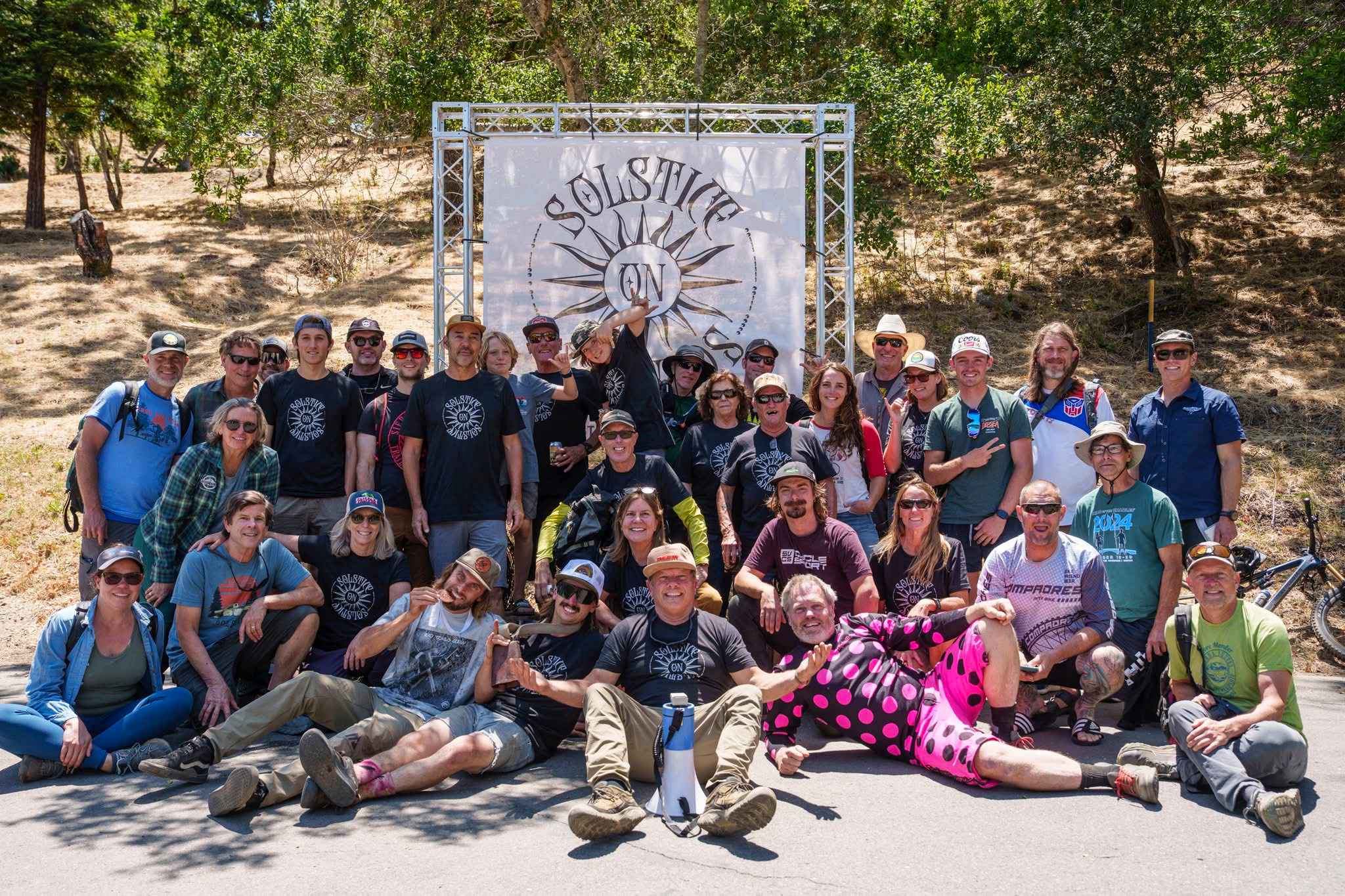
‘Marin Trail Stewards’ is a new name for a legacy organization
If “Marin Trail Stewards” sounds like a completely new trail organization, you’re right. But also wrong.
“In November of 2025, we did a rebrand,” Vernon Huffman, Executive Director of MTS, told us. Before the name switch, MTS was known as Access4Bikes, a fitting name for an organization located in Marin County.
Access4Bikes was founded in 1999, with Huffman taking over as president in the mid-2000s. During that time period, he explained that the organization’s focus was more on its namesake—getting bike access in areas where it was prohibited. Over time, the focus shifted a bit, and while they still focused on trail advocacy, they were also taking on more projects to build and maintain trails.
As the organization found itself taking on more of a trail steward’s role, they felt a name change was in order. Not only did they change their name to MTS last year, but they would also take on their most significant trail build project to date.
Caballo Rojo isn’t just their most extensive project; it’s likely the most expensive endeavor in the organization’s history.
“So it became, unfortunately, one of the most expensive miles of trail you’ve ever encountered.”
Vernon Huffman, Executive Director of MTS
Caballo Rojo took 10 years and $650,000 to complete
MTS is responsible for all trail maintenance at Camp Tamarancho, just outside of Fairfax. Here, riders from all over come to ride the Tamarancho Loop, one of the more popular MTB rides in California.
The loop consists of multiple trails linked together: the Serpentine Trail, Wagon Wheel Trail, B-17 Trail, Broken Dam Trail, and the Goldman Trail. Each leg runs about one mile, except for the Broken Dam Trail, which stretches nearly two miles.
With the addition of the enter/exit Alchemist Trail, or another entry point, the Tamarancho Loop is roughly nine miles, give or take. All the trails in the loop are intermediate, with just under 400ft of elevation gain and loss on the more elevation-prominent sections. With a good mix of flow and California chunk, open grass fields, and wooded areas, the Tamarancho Loop provides a well-rounded riding experience.
Now, it also offers Caballo Rojo, a roughly one-mile, descending-only blue trail. And while it only took MTS a handful of months to build, Caballo Rojo has been 10 years in the making.
Under different leadership, trail planning for Caballo Rojo began in 2015. During initial construction, the trail builders were “red tagged” for regulatory issues around permitting. This resulted in the group (Access4Bikes at the time) having to hire an environmental firm and navigate the state’s CEQA process. That’s the “California Environmental Quality Act,” which essentially requires organizations to identify and analyze the environmental impacts of projects.
Huffman shared that the CEQA process can be required for building houses just as easily as building trails. Going through the process meant more permits, more specialists, more time, and more money. At this point, the project was put on hold.
But in 2024, MTS (then Access4Bikes) acknowledged completing Caballo Rojo was a priority, and set out to do so.
“So it became, unfortunately, one of the most expensive miles of trail you’ve ever encountered,” Huffman said. This one-mile trail cost a grand total of $650,000 over the past decade, according to the MTS website.
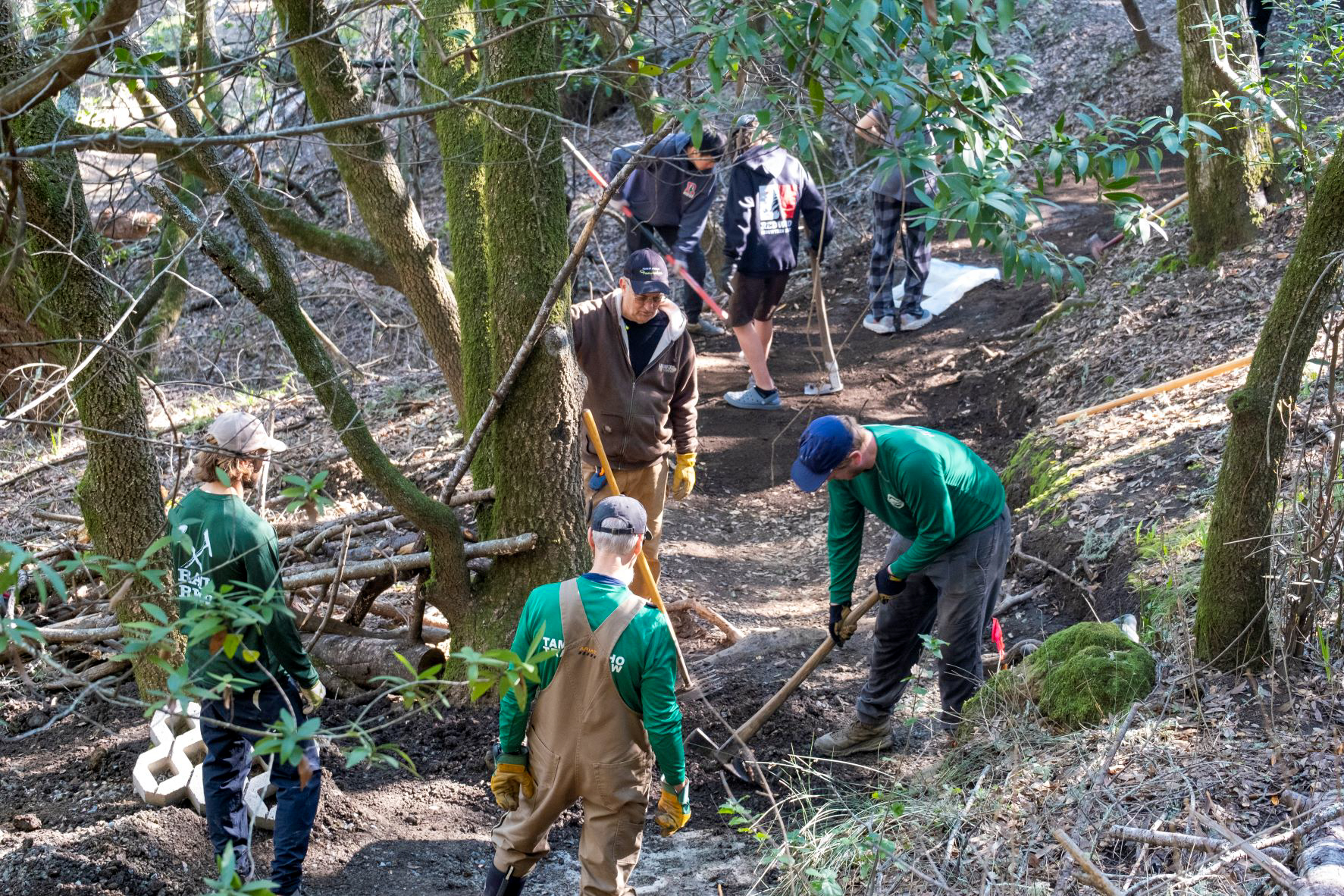
Huffman explained MTS jumped through the hoops—permitting, financial, inspections, legal, etc.—required to complete Caballo Rojo. Construction began in August 2025, with the major lifting wrapping up in mid-October.
Caballo Rojo was officially opened at the beginning of January, becoming MTS’s first finished project. And while it took significant financial resources, Huffman says it really happened because of the community. While MTS has a paid trail crew of three builders, Huffman shared that up to eight volunteers would accompany those workers every day.
“And then we have volunteer trail days every Saturday,” Huffman said. Those volunteer days can get 25, 30, even 40 people. “Those are really successful and really, really valuable, getting a lot of dirt moved.”
The new trail adds a mile-long blue descent to Tamarancho
MTS focused its attention back on Caballo Rojo for a couple of reasons. First was the fun factor.
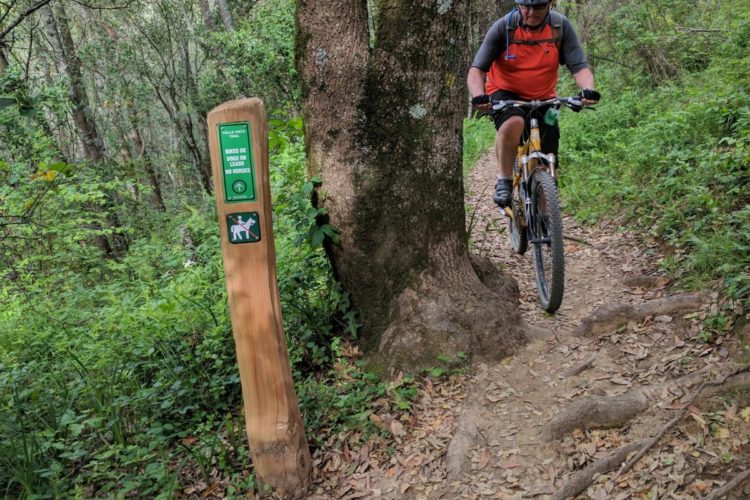
Caballo Rojo is a roughly one-mile-long blue descent, dropping over 300 vertical feet. It is purpose-built for mountain bikes, allows only mountain bikes, and is for descending only. Huffman shared that it has typical flow trail features such as berms, grade reversals, and rollers. Tamarancho Camp has another dedicated descending flow trail, Endor, on the opposite side of the loop. Caballo Rojo provides another DH trail, and a longer one at that.
The other purpose for Caballo Rojo was to provide an alternative exit to the Tamarancho Loop, getting people off a busy access road. It also reduces traffic on the Alchemist Trail, a common entry and exit point to the loop. Now, many riders are climbing the Alchemist Trail, riding the loop, and descending Caballo Rojo.
Getting more purpose-built trails in Marin County
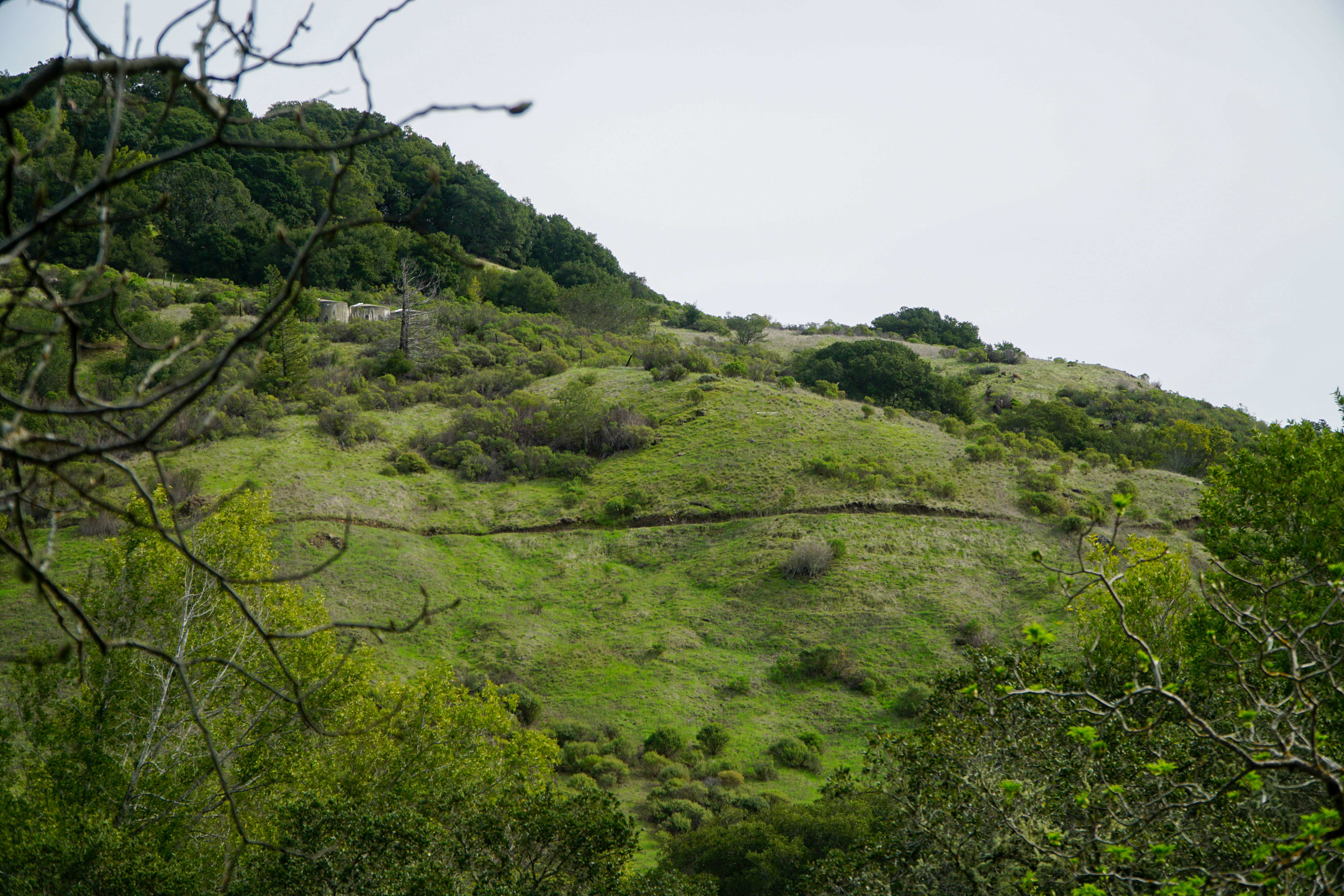
Caballo Rojo wasn’t the only trail MTS was responsible for in 2025. In total, they pushed through roughly five miles of trails. This may not sound like a lot to some, but in Marin County, it is massive.
Huffman believes they can continue to get mountain bike trails approved in Marin County by using a multifaceted approach. Or, as he put it, reaching into their “toolkit.”
One option is to look for opportunities on private land, where the bureaucratic hoops are significantly fewer. But they aren’t shying away from public land. While Marin County has many trails, very few are open to bikes. In fact, according to MTS’s website, bikes have access to only 27% of singletrack in the area. The group hopes to remedy this through advocating for use change at trail systems.
“Change of use is the most straightforward, quickest, and cheapest avenue to get bike access,” Huffman said.
In the same vein as use change, MTS also believes in adopting social trails. Huffman said that with an open-minded land manager, social trail adoption can be fairly successful and relatively easy. And MTS is ready to make the necessary changes to make existing trails sustainable.
They are also focusing on road-to-trail conversions and, lastly, new trail construction. But regardless of the option from the “toolkit,” MTS sees the common thread through all of this is the community. It’s the land managers seeing hundreds of volunteers show up during a build project and hearing about NICA teams that are overflowing and need places to ride. It’s about trail organizations that will pick up where they left off, regardless of the cost.
MTS is already proving this commitment by wrapping up another road-to-trail conversion on the Tamarancho Loop. The Saddle Cut Trail will replace a section of deteriorated road with about a mile of purpose-built, hand-dug singletrack connecting the Wagon Wheel Trail to B-17. MTS expects to complete the project by mid-February.
Know about a new trail project we should cover? Whether you’re breaking ground on the next must-ride destination or putting the finishing touches on a neighborhood flow trail, we want to hear about it. Drop us a line at [email protected] with high-quality photos of your build, plus details like trail mileage, location, difficulty, and what makes it special. We’re always on the hunt for the next great trail story, and there’s a good chance your project could be featured in an upcoming article.



5 Comments
Jan 26, 2026
Keep highlighting the grift and eventually it will have to improve.
Jan 29, 2026
Jan 29, 2026
Feb 1, 2026
Jan 26, 2026