

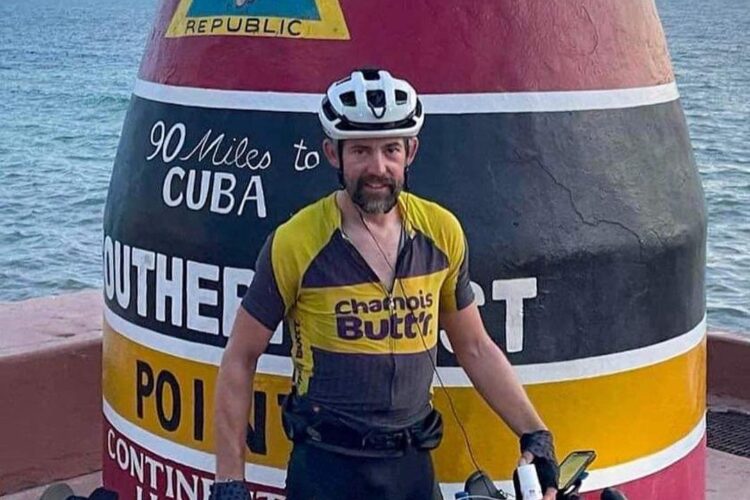
Kurt Refsnider is a cycling coach and the founder of Bikepacking Roots, an organization that advocates for bikepacking and the environment. He’s the only person to have won all three events in the Triple Crown of Bikepacking, and he recently became one of only a few people to have biked the entire Continental Divide Trail (CDT), a 3,300-mile route stretching from Canada to Mexico.
- Are you glad to be off the trail after three months of riding?
- How is the Continental Divide Route different than the 2700-mile Great Divide Route that runs from Banff, Alberta to Antelope Wells, New Mexico?
- How is the CDT currently managed and administered? Are there groups working to connect the dots?
- What does it mean to be a responsible bikepacker?
- How did you approach sections of the route that go through Wilderness areas where bikes aren’t allowed?
- Are there communities along the route that benefit from the CDT running through town? Is there much overlap with towns along the Great Divide Route?
- Which sections would you want to revisit to ride without all the gear on your bike?
- How will the Biking on Long Distance Trails (BOLT) Act help trails like the CDT? What is the latest status of the legislation?
- Were you surprised that it took three months to complete the trail? Why isn’t the CDT more popular with mountain bikers?
- What does a trail assessment look like? What are you hoping to do with the info you collected on your CDT ride?
- How was your bike setup different for this ride compared to what you might use on the Great Divide route? Was going full suspension the right call for such a long ride?
- What’s your next adventure?
Connect with Kurt and learn more at ultramtb.net and bikepackingroots.org. Photos provided by Kurt Refsnider.
An automated transcript of this conversation is provided below.
Support this Podcast
- Review the Singletracks podcast on Apple Podcasts or drop your feedback in the comments below!
- Make a donation to help sustain future episodes.
- Become a Singletracks Pro Supporter.
Never Miss an Episode
- Listen on Spotify
- Listen on Apple Podcasts
- Listen on Google Podcasts
- Listen on Stitcher
- Listen on Overcast
- Get the RSS Feed
- View all Podcast Episodes
Automated transcript
Jeff Barber 0:00
Hey everybody, welcome to the Singletracks podcast.
My name is Jeff, and today my guest is Kurt refsnyder. Kurt is a cycling coach and the founder of bike packing roots, an organization that advocates for bike packing and the environment. He’s the only person to have won all three events in the Triple Crown of bike packing, and he recently became one of only a few people to have biked the entire Continental Divide Trail. It’s a 3300-mile route that stretches from Canada to Mexico. Thanks for joining me Kurt.
Kurt Refsnider 0:32
I’m happy to be here. Jeff, thanks for the invitation.
Jeff Barber 0:35
Well, congratulations on your finish. Are you glad glad to be off the trail after three months of riding?
Kurt Refsnider 0:43
Yeah, it was such a relief to get you know most of the way through New Mexico and be like, I’m actually going to pull this off. This is actually going to work out. And I wasn’t tired of riding my bike at the end of the adventure, but my body was just worn down, and so it felt really good to just not have to be moving every day and be on hard trail every day.
Jeff Barber 1:04
Yeah, yeah. I mean, I’m sure there’s a lot of, like, excitement and anticipation, and maybe even it’s like a lot of fun at the beginning of the ride. But yeah, I mean, does it kind of grind on you after a while and you start thinking, Man, I want to just, like, sit on a couch.
Kurt Refsnider 1:19
It went back and forth like there were. There were quite a few highs and lows that were very much dictated by, or driven by, just how demanding and how hard sections of the trail were. And, you know, four or five days of some of the hardest bike packing I’ve ever done in a row, which is completely wear me down. And then if I’d have a few days to recover on some easier terrain, or, like, I took a week off in Teton Valley a month in and then my head was so super excited to get back out there for more. And it was kind of the same same through Colorado. There were ups and downs, and some of the time I was really excited for more, and would actually opt to, like, add little sections in that I hadn’t planned on riding, just because I was feeling good and having a good time with it. But then by New Mexico, was like, okay, the weather’s not cooperating anymore. Either it was rainy or it was super hot. I had a little case of Giardia that kind of sacked my energy for a bit, and my body no and my body was just wearing down. And so by then, it was like, Okay, I am looking forward to getting this done. I like being out here, but it’s been a long, long trip,
Jeff Barber 2:27
yeah, for sure. So most people are familiar with the 2700-mile Great Divide route that goes from Banff, Alberta to Antelope wells, New Mexico. So how is the Continental Divide route that you rode different from that route?
Kurt Refsnider 2:43
Well, the source of all the confusion in the world, it seems, I ran into so many hikers out there who are like, Oh, you’re riding the Great Divide mountain bike route, and we’re up on some, you know, super technical ridgeline singletrack. Like, no, that’s that’s down in the valley below. So the Great Divide adventure cycling’s kind of iconic bike packing route. I think it’s probably, without a doubt, the most influential and impactful bike packing route in the world. And it’s basically a dirt road route. It’s got some some rough sections on it, but it’s mostly dirt roads and gravel roads from southern Canada to Mexico. And it’s the, more or less what the tour divide race follows. And so so many folks are familiar with that. And the Continental Divide Trail is it’s an older route, slightly older than the Great Divide mountain bike route, that is more along the lines of what listeners, I’m sure are familiar with, Appalachian Trail and the Pacific Crest Trail, these cross country hiking trails and the there’s three of them, and the condo divide being the third of those three. And the Appalachian Trail and the Pacific Crest Trail are both entirely closed bikes. There’s not a single mile that that is technically open to bikes on those and the Continental Divide Trail, on the other hand, is about two thirds open to bikes. There’s the other third is closed, whether it’s wilderness areas or recommended wilderness or wilderness study areas, or a few other odd sections here and there that don’t allow bikes on the trail, but the majority of it is open to bikes. It’s just ridiculously difficult because it’s not actually a bike trail, it’s a backcountry hiking trail for the most part. And so there’s there’s sections here and there that are super popular with mountain bikers, maybe not super popular in places, but like in Montana and Idaho, there’s some sections that get ridden quite a bit as day rides. Usually, there’s some some races like the Butte 100 uses a section of the the CDT up in Montana and then in Colorado. The Colorado Trail and the CDT share quite a few miles through the the middle and southern part of the state, where the trails are more or less contiguous with one another. The CDT sometimes leaves and does some stuff higher up, and then comes back to the Colorado trail again. Okay, so,
Jeff Barber 4:44
yeah, so way more single track. I mean, I think a lot of people are probably surprised to know that the Great Divide route has very little. A friend of mine wrote it a couple of years ago, and he said zero miles. There was, like absolutely no single track. Or maybe he said there was like one. Mile or something, is that? Is that accurate?
Kurt Refsnider 5:02
Yeah, I think even, even in tour divide that incorporates some more single track in it, there’s, I don’t think there’s anything more than 15 or 20 miles of singletrack in 2700 so you could, you could do the Great Divide mountain bike route on a gravel bike. It’s just so long and washboarded that it’s kind of abusive to do that. So most people opt for for mountain bikes on that route.
Jeff Barber 5:21
Yeah. Well, you mentioned that the Continental Divide Trail has been around for a while, and it’s actually a, it’s a federally designated National Scenic Trail that was started in the 70s, I believe.
Kurt Refsnider 5:34
Yeah, yeah. The project, the vision for it is dates back to the, I think, the early 70s, and then in 1978 it was congressionally designated as a National Scenic Trail. And at that time, mountain biking wasn’t really a huge thing, and so the language in the act that designated the trail as a National Scenic Trail mentions that it’s for equestrians and hikers. So that’s one of the the ongoing challenges with mountain bike access on it is that because of that Enabling Act saying it’s for hikers and equestrians, that’s the the way that it’s managed, and that a lot of the decisions are built around, how does any particular decision by land managers impact hikers and equestrians? First and foremost?
Jeff Barber 6:18
Yeah, yeah. I’m curious about sort of how the trail is currently managed and administered. And, you know, and despite being around for so long, it looks like there’s still even some pretty big gaps around New Mexico. So like, Yeah, is this like a federal thing where, like, people in the government are are working on this, and every year, like doing things to improve the trail, or,
Kurt Refsnider 6:41
yeah, it’s very much an ongoing project. There are some big gaps in it that the trail, well, trail, quote, unquote, follows dirt roads or even some short paved sections, because it’s oftentimes in those areas, it’s crossing long stretches of private land, and so there’s no real easy way to put actual singletrack in to get it off those roads without land manager approval. And there’s a few examples of places where the BLM has put together agreements with private landowners for the trail to cross land. But there’s, I’m only aware of a handful of those, but the trail itself is administered. It’s on public lands. So the BLM, and mostly the US Forest Service, are the the agencies behind the trail, and then there’s a nonprofit called the Continental Divide Trail Coalition, which kind of grew out of the demise of the Continental Divide Trail Alliance, which was the former nonprofit that supported the trail. And so they’re, they’re the ones that really are pushing forward on the vision for the trail, okay, and working with land managers and doing grant writing to come up with funding. The Forest Service also puts in funds from their own budget to work on sections. Every year they do their trail crews do a lot of the the clearing of deadfall along the trail, which is so important on sections. I mean, I, even with all the work for that, I probably carried my bike over 3000 plus downed trees along the way, like there’s there’s sections with so much beetle kill that it’s just miles at a time of trees and piles of trees across the trail. And so sections get cleared every year, but there’s not the time or resources to clear all of it every year, and so much comes down every winter. So yeah, it really. Land managers are the ones that are doing a lot of the on the ground work. There’s volunteers in places that do some of the upkeep. The only volunteers I ran into on the trail that were doing any maintenance were mountain bikers that were carrying chainsaws to clear sections, and so they’re an important piece of it, even though the trail isn’t technically for mountain bikers, based on that congressional language? Yeah, we’re an important part of the the maintenance, especially in Montana, of of this trail every year.
Jeff Barber 8:47
Cool, well, yeah, I mean, so the fact that the trail wasn’t originally conceived of as like a mountain bike route, like we weren’t even a group back then. So the language kind of talks about hikers and equestrians. What’s like the nonprofits kind of view of bikers at this point? Like, are they just interested in getting anybody to ride the trail and to, like, experience the trail and use it? Or are they indifferent or, like, what’s kind of their current thinking on it?
Kurt Refsnider 9:16
Yeah, so, so their first and foremost goal, as I mentioned earlier, is hikers and equestrians. And because the trail isn’t finished, they can’t justify putting any time or money into anything related to mountain bikes on the trail, because they’re, you know, they have to serve the hiker and equestrian. They just want to finish it. Yeah, yeah. And so the so many miles of the trail were kind of sections linked together on existing, you know, older, older trails. And so a lot of those are open to non motorized use, and that includes mountain bikes. And so it’s a lot of inherited use, or kind of inherited access that mountain bikers enjoy on the trail. And the the cdtc, the organization behind the trail, they’re. Are very reserved about whether or not mountain bikes should be sharing the trail in places, because they’re very concerned about the impacts of mountain bikes on the hiking experience and the equestrian experience, which is understandable when when the trail is specifically stated to be for those user groups and not for for mountain bikers. And so when I was kind of starting to share LA I think it was like last fall that I was planning on riding the trail. Shared that on social media, I got a message from someone that works at the cdtc, wondering if it might be helpful to put together some resources for bike packers, for like, what are some of the best sections to ride? Because the reality is, very few people are ever going to set out to try to ride the whole thing, or the bike legal version of the whole CDT. It’s just it’s so demanding and so time consuming. And I mean, in the history, I think I’m the fourth person to have done ridden the whole thing. So that’s that kind of with how popular bike packing has become, that that’s an impressive number to emphasize just how how tough the trail is, and how it’s not something that is just drawing bike packers toward it, but pretty quickly in the conversations around putting together some kind of best of sections, it turned out that the cdtc was really concerned with making sure that there weren’t going to be ways that that an increase, potential increase in bike use was going to negatively impact hikers, and so I ended up doing a bunch of data collection on the trail, working in consultation with the cdtc, to look at things like, what are sight lines on any section of the trail? What are speeds of bikes on the trail? What’s the like if you think about the trail itself, the tread, How sustainable is it? Is it going to hold up to bike use, which is actually kind of if it holds up to horse use, it should hold up to should hold up to bike use and vice versa. But collecting a bunch of data on those sorts of things so that there’s actually data that can be used in the decision making around like, well, is this a section that is acceptable for for bike use? And there are sections out there that, you know, the trail isn’t going to stand up to a whole bunch of bike use, or sections that have really poor sight lines and are fast, like buff trail that riders can carry a lot of speed on. Interestingly, the worst of those were mostly in the Breckenridge, Colorado area, on sections that are super popular with mountain bikers, yeah, and are very poorly maintained in terms of brushing the trail and helping with sight lines. So that’s interesting that I think a lot of the decisions are the organizations based in Colorado. And so a lot of the decisions made are based on the sections of trail that they’re intimately familiar with. And some of those in Colorado were, I think, the least safe for shared use. And yeah, those are the sections that see the most shared use of any of it. So I was, I was surprised to see that sections in Montana that are like back in the middle of nowhere, that see very little use other than through hikers on them, those sections of trail. I mean, some of those had sight like, brushed to a six foot corridor, fantastic sight lines, low speeds, because it’s so technical that, you know, a lot of the time I was moving it, you know, five miles an hour, which is like the speed of a trail runner, right? So not a high speed it’s not a high speed trail in general. Interesting.
Jeff Barber 13:01
Well, yeah, I mean, this kind of ties back to conversation we had is back in 2020 actually, on the podcast here, and you mentioned the need for bike packers to be prepared and also to be responsible riders. And and then just a couple years ago, or I guess it was a year and a half ago, 2022 the tour divide, about a dozen riders had to be rescued during the race due to snow. Yeah. So I’m curious, like, what does it mean to be a responsible bike packer, especially when, yeah, we know that there are these other groups that maybe, like, they see us as responsible or not responsible. Like, what should we be doing?
Kurt Refsnider 13:41
Yeah, I mean, I think the biggest thing is, it all comes around decision making. And, you know, knowing what you’re getting into in terms of whether it’s the difficulty of a trail, how that fits in with your own abilities, what the weather is going to be like, I mean, and that was, that was what happened in that issue of tour divide, was it was super early on in the race, like day, I think it was like starting day three or something like that. Like, the weather forecast had called, yeah, had called for a major winter storm, like, very late season, winter storm coming through with snow and wind and cold, and that was the kind of thing. If you pay attention to the weather forecast, you know it’s coming. Like, you can plan accordingly, especially if it’s at the beginning of the race, you can even carry more clothing, like one year I race tour divide. That was what the forecast called for. And I remember shopping around in Banff, in the outdoor stores, trying to find some, you know, down jacket on clearance that I could afford, and take that along and then mail it home a week into the race, when I didn’t need it anymore, right? But there was a lot of, I think, in that edition, poor decision making with people in race mode and like race mindset being like, I need to keep going. I need, you know, it’s a race I can’t stop and wait this out for a day, right? And they know I think, I think racing brings out the worst in decision making. In folks a lot of times,
Jeff Barber 15:01
yeah, right. You justify a lot of behavior because, yeah, you’re like, I’m this is a competition, so I got to do whatever it takes. Yeah?
Kurt Refsnider 15:08
And I think in the the real world, the non race world, when people are out, it’s so much easier to look at a weather forecast or listen to somebody that’s like, yeah, there’s eight miles of dead fall up head. Like, that’s going to take a while if you’re going to drag your bike through it. Bike through it and make safer decisions around that. And so I think, yeah, there’s the preparedness part, which I think most bike packers do pretty well with making sure that they have what they need in terms of gear, food, shelter, that sort of thing. When you’re in race mode, it’s much easier to skimp on a lot of that. And you know, people that were in that race that had bivs That was, that was a bad situation in heavy snow, and folks that thought that their rain gear was waterproof when it actually wasn’t waterproof because it was no, like, ultra, ultra light, you know, kind of trail runner, ultra runner type rain gear that isn’t actually waterproof. So things like that,
Jeff Barber 15:58
yeah, yeah. That’s, that’s good advice. And, you know, the other part that I’m curious about is like, how did you approach sections of the trail that go through wilderness areas where bikes aren’t allowed? Yeah, you mentioned that about two thirds I think of the route is bike legal, yeah. And so what do you do about the sections that aren’t bike legal?
Kurt Refsnider 16:18
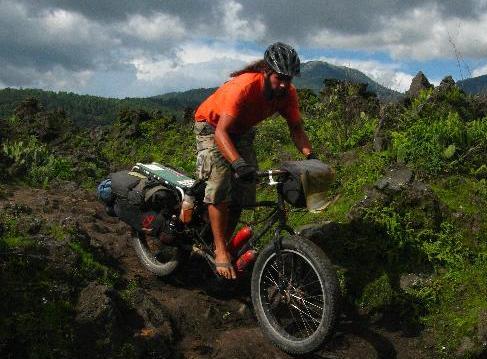
Yeah? So, so when Scott Morris and Eszter Horanyi were the first ones to ride the CDT, and this was 10 years ago now, nine years ago, back in 2014 and they blogged about it along the way and shared photos. And I followed along, because I’d already wanted to ride the trail at that point, even though I didn’t know exactly what it entailed. And Well, Scott Nestor showed exactly what it entails and how hard it is and how challenging it is to figure out even what sections are open and closed to bikes. Like there’s no resource you can go to and be like, Oh, this section is open, this section is closed. Here’s where you need to get off the trail. And so, so Scott and Nestor really struggled through that at times on the trail, like they just get to a place and there was a no bike sign. It’s like, well, what’s, what’s the deal here? And then they’d have to backtrack and find a way around. And so even with all the homework they did, they they struggled with that a bit. And so they they mostly defaulted to the Great Divide mountain bike route for detours around the wilderness that usually the two routes are like, they crisscross each other. So they’re they’re usually not that far apart, and you can usually find a way to get down onto the dirt roads of the Great Divide route and hop around. There’s a few really long stretches, like the Bob Marshall wilderness in northern Montana, which is one of the largest wilderness areas in the lower 48 there’s one in southern Colorado, in the San Juan’s South San Juan area, that is a pretty long stretch, that’s just a very large wilderness area. And then some what is, I guess, the Yellowstone National Park section, which is also entirely closed to bikes, that’s another big one. And so they defaulted to basically hopping on roads and taking those and for better or worse, when I was planning the route out my trip out, I was like, I want to try to take as much trail as possible around these wilderness areas. What that meant was a lot of the time I ended up on these back country trails that turned out to see way less use than even the CDT. So very faint trails, very rugged, very seldom, I don’t want to say poorly maintained. They’re just rarely maintained. Yeah, and so even, like, right at the start of the the ride you have to take, take roads around Glacier Park, and then I hopped on CDT for like, 10 miles. And it was glorious. And I was on, you know, the start of my trip on CDT miles, and then immediately had to hop off again after 10 miles to get around the Bob Marshall. And it was, I think it was only like, 200 miles or something, but it took five and a half days for me to follow my detour around the east side of the Bob Marshall and they were, it’s absolutely amazing terrain over there, like it’s where the the Rockies hit the Great Plains. And it’s that whole section of the Rocky Mountain Front are just these enormous limestone Palisades, like a stair step series of cliffs with big canyons carved back into them. Wow. And it’s, I mean, the landscape is beautiful, and there’s all these north, south trails through the drainages just west of the plains, and you can’t quite connect all the way through. There’s little bits of wilderness and private property that block kind of through access there, but you can link it together with some dirt road out in the plains. But some of those trails were so faint, and I mean, like grizzly bears were the primary trail user, which is not, not an ideal situation. And there’s one section where, on paper, there’s there’s trail, there’s like a dotted line that shows an official Forest Service trail. And I got there and it goes literally up a cliff, and there’s no sign of any trail whatsoever. Whoa. And so that was one where I was kind of committed to getting through that section, and I knew there was good trail just a couple miles ahead that a friend of mine was like, just a couple one of the best descents. I did it as an out and back. I don’t know if the trail cuts through, and the trail did not continue through. And so that was like, take my bike apart and make three trips scrambling up this cliff with like, bangs and a wheel, and then my frame and then another wheel, and then continue on. And it was a ridiculous way to start the trip. Yeah, and I think at the end of that like five day stretch, I remember very vividly, like a dusk coming in to an intersection where I hit the actual official CDT, and I was on this faint trail. I’d carried my bike on my back up through this burn area, up a steep slope, and then bounced along on this ridge line on a really rocky trail, and hit this, like, buff ribbon of singletrack covered in hiker footprints. It’s like, this is going to be easy now that I’m actually on the official CDT, and that was a that was a big relief to get on to that. And it, I mean, it was still quite demanding and quite hard trail, but it was like, actually a trail, yeah, instead of a faint, you know, little looking, looking for the indentation and the brush where you’re pushing through, yeah, trying to follow this, this old backcountry route.
Jeff Barber 20:46
Oh, man, yeah. I mean, it sounds like you’re, you’re someone who doesn’t like to backtrack. Is that? Is that fair to say? Like, are you like, you’re just commit and you’re like, I’m going through here, however I can get through it.
Kurt Refsnider 20:58
Yeah, I tend to be strangely committed to a route once I put it together. And this, this that one in particular I had mapped that connection out, like three years ago as part of a loop I wanted to ride around the Bob Marshall wilderness. That trip fell through, and then I was going to try it again, and got shut down by weather a second time last year. And so this was one that I just stared out of maps for years. I was like, this has to go. It’s got to be a good connection. And then there’s also a part of me that’s just always thinking about, like, the future of bike packing routes, and if that actually, like, if 90% of that route, or 95% of that section linking through the east side of the bomb Marshall was really good, and there’s just, like, one terrible section that didn’t actually have trail anymore. Well, if that’s going to have promise in the long term, that might be something that resources could actually be put toward, like reconstructing and restoring that Old Trail. And turns out that I don’t think that would be worth the effort in that case, but now I know that, and I don’t have to wonder about it for the next, however many years. Yeah, so I do get strangely committed to the choices I make.
Jeff Barber 22:02
Yeah, that’s, that’s interesting. So how are the resupply points along the Continental Divide Trail compared to the Great Divide route? Like, are there communities that are kind of, like, set up to handle the through hikers and people that go through there? Like, for the Great Divide route?
Kurt Refsnider 22:19
Yeah. So that’s, a great question, the great divide. Like, you can ride the Great Divide mountain bike route, probably almost never carrying more than two days worth of food. Like, there’s resupply options quite frequently along the way, and more popping up due to the popularity of that route, which is amazing to see. Like, it’s really cool how folks and communities are both embracing the route and seeing opportunity for economic development related to that, and businesses springing up that are there to serve the bike packers that are coming through. The CDT also has some of that. You know, there’s the hiker traffic is much less like, I think last last year, there were something like 400 through hikers that completed the whole thing. So it’s, a fairly small number. It’s pretty quiet out on the trail overall. Yeah, but that being said, the communities that The trail passes through are more often the communities that are closest to the trail, since the trail is often like, up on the divide proper, there aren’t really many communities up there, and so most hikers end up hitchhiking off to towns that are, you know, five or 10 miles away to resupply. And there aren’t really businesses in those places in general that have sprung up to support the trail, but there are oftentimes stores that very much listen to what the through hikers need. Like, oh, we can stock fuel canisters for you. You all cool it, freeze dried meals. Yeah, we can get those. And so there a lot of stores have, like, a little kind of hiker section, which is really cool to see. Yeah, and so there those communities are definitely starting to see, see the ways to support the hiking community. And the one I think, really nice element of having the all the wilderness bypasses and detours that I had to take along the way is usually those ended up at some point going through towns, and so I didn’t actually head off, like, truly off Route more than a handful of times to resupply. Most of the time, it was on those, those bypasses that I would go through a town and be able to to get food. And I had, I think I’d say, on average, I was probably leaving those towns with, like, three and a half days worth of food. And there were a few stretches, probably four or five, that were like five plus days of food, which is a lot to carry on a Yeah, like summer bike packing setup on a full suspension bike. Yeah, and I was eating, what, like 4500 to 5000 calories a day. So that’s like 20 or, I don’t know what, 18 pounds of food or something like that, probably, when you leave, maybe 16 pounds, something like that, it’s, yeah, it’s a lot to cram in, and a lot of weight for that first, I don’t know, two days after, after grabbing that much,
Jeff Barber 24:53
yeah, for sure. Well, what’s like one section of the ride that you wish you could go back and do? Without all the heavy gear and and everything on your bike.
Kurt Refsnider 25:04
That’s a that’s a really good question. The first that comes to mind immediately is also one of the hardest sections of the trail. But it was just stunning terrain. It was up in it’s along the Idaho, Montana border in the southwestern part of this of Montana. I mean, salmon, Idaho is like the closest town. So this is up to the just above salmon to the east, and it’s the the beaver head mountains. It’s a stretch. That’s a it was five days to traverse that whole bit. Most of it’s up on ridge line, or just like traversing peaks below, below the summits, a little ways, really beautiful riding. But with five days of food to start that that was so much work, is that, I mean, on that stretch I was doing probably 40 miles a day, is what I was able to average moving all day, and that was with 8000 feet of climbing or so a day in that so ton of vertical, ton of really hard trail. But like the kind of hard trail that’s actually, if you have energy, it’s mostly rideable, other than the steep climb, interesting. So I was having a great time, but I was just worked from how demanding that section was with a loaded bike, and the section before that, that had just tired me out. And then also, the bugs were horrendous on that stretch, like the biggest swarms of mosquitoes I’ve seen in the lower 48 like they were really bad. So I would love to go back and ride that in the fall, when the bugs are gone on an unloaded bike. That part would be so fun. And I think every state had a section that was, was like that. That was just a highlight. That without the weight, would be so good. With the weight, it’s good, but just work. Like in Colorado, there was a stretch that I had never been on before that’s like, just outside of Salida, and like the monarch Crest Trail, super famous one. Well, there’s also a stretch that I guess on trail forks. People call it the monarch crest north. It’s just literally on the other side of Monarch pass from where everybody starts riding. And there’s a long hike a bike, like a bike on the back hike a bike to get up to the ridge crest there, but sup through this gorgeous Cirque, like talus covered Cirque with these little ponds, and then you get up on the ridge line, and you’re just up on the ridge crest, above tree line, meandering around for like six miles or so, so headed down toward monarch pass and that stretch and the stuff that came before it was really, really good, just again, quite demanding on a loaded bike. So that and that part you can do as a day ride, like you literally could loop it or shuttle it from, like, ending at Monarch pass as a kind of a demanding, but reason, semi reasonable day ride.
Jeff Barber 27:34
Yeah, yeah, that sounds like a good one to check out, because, like you said, a lot of people are familiar with the traditional monarch crest route. And a lot of people are will go up. There have been many times, and so, yeah, be cool to check out the other side. Yep, of the trail, yep. So one of the things that’s kind of in the news has been in the news the last year or so is the biking on long distance trails act or bolts, yeah. How is this? Will this help the Continental Divide Trail and what’s like, kind of the latest status of the legislation?
Kurt Refsnider 28:06
Yeah, so, so the bolt act is one that I guess, in really quick summary, the purpose of the act is to help encourage and compel land managers, the BLM and the Forest Service to put a focus on long distance trails for cycling, okay? And bike packing routes was very involved with the kind of the crafting of the language, and it’s interesting the bolt act itself. I don’t even know how long ago it was written, but it was literally pulled out of a file cabinet from, like a paper version, and pulled out of pulled out of a file cabinet, from what I was told, like, two years ago. And it, you know, it already existed, and folks were looking at options for supporting outdoor recreation on public lands that came back out. It was like, Oh, this was a cool idea. Let’s, let’s look into this again. Who started it, and I don’t remember who was involved in the early crafting of it. But lately it’s been bike packing routes. Imba people for bikes and adventure cycling have all been working together on trying to move it forward. And the bike packing routes submitted a bunch of suggestions for modifying the language, because it was very loose originally, it could have been like rail trails, like paved rail trails would have been covered. Gravel roads actually could have been incorporated in that also, and we were really trying to hone it toward being focused more on single track. Okay, yeah, because like those, you can put together great, long distance gravel routes without land manager involvement. And you can put together great like backcountry jeep road and four by four road bike packing routes and long distance trails without land manager involvement. But you can’t do that with singletrack like you need land managers to be on board and need to be working with them. So it kind of worked to shift it in that direction, to get the most benefit out of out of what was being proposed. Mm. And the Act says, or the language in it, is basically half being put toward existing long distance trails and trying to either resurrect them or complete them, like whatever the situation might be with those. And then the other half, which I think the number is another 10, would be new long distance trails. Okay, so that I’m not sure exactly where it stands at the moment, it had made it through committee last year in the Senate, and then things fell apart. This year, it’s been working through House committee, and it’s been incorporated in another bigger public lands package, and there’s, there’s been no voiced opposition to the bold act. Every time it comes up for a vote, it goes through or it doesn’t even get to a vote, just goes through on voice voice approval and the bigger public lands package also hasn’t been very controversial. It’s just there’s been so much more going on in Congress that has kind of distracted
Jeff Barber 30:56
from that. It’s not a priority for them, even though it should be.
Kurt Refsnider 30:59
Yeah, and so imba has a policy person in Washington that’s been the one really working hard to just keep that at the forefront of people’s attention and keep trying to get folks to move it forward. And so I’m confident it will will pass at some point. There’s just so much else that is distracting Congress from things like that. And so there’s, there’s a number of different trails that we’ve outlined that could really existing trails could really benefit from some of that work. One, like the paradox trail in western Colorado, is a fantastic candidate for that that’s been around for a while. Needs some love. Could be phenomenal. The Mata hay trail in North Dakota is another fantastic long distance route that’s got just some a little wilderness issue on the northern end. Yeah, that’s, sure, yeah, oh, it’s, it’s like 150 miles of, think 149 or 150 miles a single track. It’s got to be the longest continuous stretch of single track in the country, as far as I’m aware, that’s open to bikes. Yeah. There’s just one little section on the north end that is closed to bikes. And the Save the MATA hay organization is working hard to try to find solutions for for that little bits that you don’t have to bypass on on dirt roads. Yeah, and the CDT is a complicated one, because there are sections like Northern New Mexico, it’s become a fairly popular section to bike pack. There’s like a three day bit, like, I think it’s like 90 miles or so, that very quiet trail, very few trail users, and very rideable overall, for for mountain bikers. And so it’s a really reasonable section, but because the congressional language for the trail is specific, specifying that it’s for hikers and equestrians. Anything congressional being done to, you know, emphasize it as a bike or bike travel on that trail is going to be a bit controversial, and so I don’t think the bolt act is going to be something that directly pertains to bike access or bike use or maintenance on the CDT, which is unfortunate, because the CDT could use basically all the support that it could find for for maintenance and, yeah, continuing to just keep the trail in good shape and address some of those, those sections that are gaps still,
Jeff Barber 33:13
yeah, is the bolt act? I mean, is there like, funding associated with this, or is it all just like, let’s just clear kind of the red tape and make it easier to designate,
Kurt Refsnider 33:22
yeah, there’s no funding for it, which, because there’s no it’s not scored by the Congressional or the budget office for that kind of implication. That’s why it’s not controversial. Nobody’s saying yeah, exactly yeah. And so what it will ultimately end up doing is when it passes, it will open up the opportunity for organizations like imba, like bike packing routes, like ACA, to work with land managers. And likely it’s going to be the nonprofits that are doing a lot of the heavy lifting, initially, to come up with prioritizing what these different trails are, what their needs are, and identifying some of the potential candidates for new trail development in the long term. And so that’s going to be a huge opportunity for both kind of national organizations like ours, and then more regional or local organizations to start to work together and look at like, what, what is there out there for opportunities to link up things. And I think the, I think the threshold that that’s included in in the language is, like 70 miles is kind of beyond that is considered long distance. So we’re not talking necessarily cross country, yeah, like across the country trail that could, like the orogenesis route, which is a bike packing Roots project, and there’s, it’s going to have its own nonprofit behind it to support it, ultimately, but it’s basically a mountain bike specific route that parallels the Pacific Crest Trail, so all the way down the West Coast. And that, you know, that’s a fantastic candidate for this, and that’s got so many sections in the middle that are also a very good candidate. Center of themselves for, like, let’s finish this trail. Let’s connect these two trail networks together with a section there. So there’s even ways on these, like, big cross country visions to scale them down into, you know, small projects that would be very easy to kind of fit into what the goals of the volt Act are.
Jeff Barber 35:17
Yeah, yeah. That’s awesome to think about the potential for that, and yeah, hopefully, hopefully it passes soon. Yes, agreed. So. Getting back to the your Continental Divide Trail Ride. Were you surprised that it took you three months to do this? Or, like, no, was that what you had budgeted? You figured, You figured it would take that long, when I was
Kurt Refsnider 35:37
trying to estimate how long it would take, and like, I had Scott nesters ride to look at from from years ago, and I think it took them about four months total, but they took some time off along the way to work. And they had to take, I think they took, like, two weeks off in southern Colorado just wait for snow to melt before they continued farther north. So there’s was a little less continuous. And then Aaron weinsheimer wrote it two years after Scott Nester did, and he he took like, two days off, I think the entire trip, like, he rode incredibly steadily, and I think he did it in a little over three months, like, maybe three months in a week, or something like that. And so his hit, I knew I was going to stop and, like, take more days off than he did, and that I probably would maybe cover a little bit more miles on average than he did his I think when I was emailing back and forth with him, he was like, Yeah, I don’t ride fast. I don’t move fast at all. I just moved from like an hour before sunrise to dark or something like that every day. Yeah. So he was the, you know, very steady, steady, slow approach. And amazingly, he just finished hiking the CDT, I think, last week. Oh, wow. And I saw him a couple times out on the trail this summer, which was fantastic. But he’s now the only person to have ridden and hiked the trail, which took longer. It took him, I think, four and a half months or so to hike,
Unknown Speaker 36:57
to hike it. Yeah,
Kurt Refsnider 37:00
yeah. The fkT for on foot self support on the trail is something like two and a half months. So somebody this summer hiked it in two weeks less than it took me to ride the whole thing. So that’s very impressive. But yeah, when I was planning it out, I had those to go off, and then I was just trying to estimate, like, daily mileage. What can I expect for how far to cover? And I think initially I was thinking, well, maybe 45 to 50 miles. Five to 50 miles a day. I’ll settle on 50 and build my itinerary on that. And then I was talking to my teammate, Kate, who has written lots of sections of the CDT also, and we’ve done a lot of trips together in the past. And she’s like, I think you should plan on more like 40 miles a day. And she’s oftentimes like a voice of reason for me in that sort of thing. So it’s like, Okay, let me I’ll redo my itinerary on 40 miles a day, which in my head is like, man, 40 miles a day, riding all day, is it really going to be that slow? And it was really that slow, like, if I think I probably averaged 45 miles a day in okay, I haven’t done the math to see what it comes out to, like, riding days versus total mileage. And there were days where it was, you know, faster terrain, or more two track or something, that I was able to do 60 and a couple of the dirt road detour sections, I think one I had one day that was 80 miles. That was my biggest day, and I had some that were all single track, and 35 was an all day effort that left me completely spent at the end. Yeah, so planning around 40 miles a day actually worked out pretty perfectly. Yeah.
Jeff Barber 38:24
Well, like you said, too. I mean, obviously, one, this wasn’t a race. And two, part of what you were doing is you were doing this trail assessment. So you kind of mentioned some of the things you were looking for. Like, what, what are you going to do with the data you collected? And like, how are you presenting this back and like, making, making that information
Kurt Refsnider 38:44
helpful for folks? Yeah, so, so that turned into a project that bike packing routes was supporting. And the at this point, we have all the raw data and haven’t gotten to doing any of the analysis, but there’s some, some really fun stuff I’m excited to do with looking at speeds. Just like, what is the average speed for different sections of the trail. Because, you know, if we’re talking about trails being the concern, being around high speed bike use or traffic on the trail, like it’s not a high speed trail. If I’m doing 40 miles a day and seeing the same hikers multiple times in a day, I’m not moving very close.
Jeff Barber 39:20
Oh, yeah, you’re like, leap frogging them, I guess. Yeah, wow,
Kurt Refsnider 39:23
Yep, yeah. I you know that there’s the common scenario of coming up behind hikers and, you know, just on on day ride anywhere, and having to slow down and let them know that you’re there. And so often, just your voice startles them. I had my first example of a hiker coming up behind me on the trail and startling
Jeff Barber 39:42
me, like on your right, you’re like, Yeah, where did you come from?
Kurt Refsnider 39:46
I looked back a bit ago and there was no one there. How are you moving that much faster than I am? Wow, but yeah, so, so just going, culling through all the data and trying to come to some some general conclusions from it, and then it’s. Figuring out how to present it in a way. And the the there’s a Forest Service Coordinator for the trail that’s like the official public lands contact and and coordinator for the the CDT, and he’s really interested in seeing the results from from what he shared on a phone call I had with him a while back, and then talk to some of the the different trail organizations on sections of the trail that are really fascinated to see, see what it looks like. So I think just planning on trying to share the data in a sort of a public way to show like, Hey, here’s an example of a very, very back country trail, and this is what bike use looks like on it. This is how many hikers that you know, hikers and equestrians I encountered along the way in different sections of it. How many bikers we saw out there? And like, the numbers are so low, I think on the whole trail, I probably saw maybe 80 or 90 CDT through hikers, probably another like 50 Colorado trail through hikers. Okay, and a couple dozen day hikers. Saw two equestrians on the entire trail, and probably 50 mountain bikers, something like that, which, if you add up the and motorized users on sections also like probably 4040, Moto riders and bunch of side by sides in eight quads in places, and not counting any to like dirt roads that have just vehicle traffic, regular vehicle traffic on them, but from the standpoint of a 3000 mile long trip, those numbers were so small. I mean, like I saw like three hikers in New Mexico, for example. So so I think sharing some of that to so folks just have a better idea, and land managers just have a better idea of just what does use on this trail look. This trail look like, because there’s so, I think, so, little awareness of just who’s out there and how many people are out there and that sort of thing. And then also sections of trail that have maintenance needs, deadfall, like there’s a few mountain bike type or mountain bikers that are very excited to support deadfall clearing on the trail. And like Corey Biggers is a guy that wants to use those chainsaws. Oh my gosh, yeah. So Corey is a guy up in Montana that spent a couple decades as a very active trail advocate. Went to Washington to advocate for access and continued access on backcountry trails, and that wore him out, and now he just uses his chainsaw and clears. He coordinates clearing of sections of the CDT up in Montana that I mean, one, one section alone. He coordinates 1000 volunteer hours of deadfall clearing every year on that and that time that they put in was a critical factor in a forest service decision like two years ago, when that part of the route was considered, being considered for a recommended wilderness area, and it’s very small, kind of contained spot, it would have been a very small recommended wilderness area, but the Forest Service supervisor in that area looked at just what the maintenance history was on that section of trail and how Much time the mountain bike community has put into it, and that was a key factor in her decision to decide that it shouldn’t be recommended wilderness, and gave it a different special designation of, I think it’s an official Forest Service back country area. So different regulations allows continue to use mountain bikes on it, allows mountain bikers to continue to maintain the trail with chainsaws, that sort of thing. Yeah? So yeah. Sharing more about all of that and sections that that need, need maintenance is another goal.
Jeff Barber 43:29
Yeah, yeah. Well, it sounds like, you know, a lot of the trail is, is not very heavily trafficked by bikers, especially, but even by hikers and other user groups. But I still wonder, like, is there outside concern from folks about, like, you talking about this trip and publicizing it and making it sound fun and cool, like, are they worried that, like, it’s gonna get overrun with with bikers? Has anybody said that to you?
Kurt Refsnider 43:57
Not really. No, I don’t. I mean, the hikers I ran into along the trail, I was shocked at how excited so many were to see me. I think just
Jeff Barber 44:05
to see anybody, they were like, someone out there. See
Kurt Refsnider 44:07
someone on a bike, they’re like, Wait, you’re riding what I’m hiking. Wow, that’s awesome. And I think I ran into a about a dozen through hikers that were also bike packers, and another probably dozen that were cyclists, just out on on foot all summer, doing something different from cycling. And so from that group, like those folks, were very welcoming to me as a bike packer and mountain biker out on the trail. So that was really good to see, because I had been a little concerned about what that kind of acceptance might be. And I had one person that maybe was unhappy with me, or maybe they were just having a rough afternoon, like I really couldn’t tell they just mostly seemed like they didn’t want to talk, which is, I had afternoons like that that I wouldn’t have wanted to talk if I ran into someone. So yeah, so I think, and I’m trying to be very, very clear about how challenging and demanding sections are. And. That it’s not for most folks, like most mountain bikers, wouldn’t enjoy a lot of sections of the trail. That’s just the reality of it. It’s never going to
Jeff Barber 45:07
be but you saying that they won’t enjoy it is making a lot of people go, hmm, yeah, but I would, I’m tough. Like, I love, I love a good technical trail.
Kurt Refsnider 45:16
It’s possible. And I think that there are concerns that have been voiced that, like, Oh, if there’s more bikes on the trail, it’s going to become the monarch crest everywhere, which is just kind of a ridiculous assertion, because, like, yes, that’s that trail has very considerable user conflict, or has a history of user conflict and unhappy folks on it. But so much of that is because in the past, they’re just like hikers. Expectations were different, that they didn’t know that it was a super busy stretch with motos and with mountain bikers. And so if you get to a place and suddenly you’re there on, like, a Saturday afternoon and being passed by hundreds of mountain bikers. Like, yeah, I’d be unhappy with that, yeah, but if I knew that was coming, that puts you in a very different mindset. Like, it still might not be enjoyable, but at least you’re not being shocked by it. And there have been conflicts in the past with motos and mountain bikers on that trail. And like, it’s just, it’s a super popular trail that’s Colorado, has so many people that want to all be out on the trails that it’s a big, big issue. And then that one has commercial shuttle companies that have permits to take people up to the top and send them back down. So that one like, that’s a pretty exceptional case. And one of the things I was looking at on the trail was like, what other options? What other section of trail could be shuttled in, like a gravity oriented ride like that?
Jeff Barber 46:33
And there are so few. There’s several descents off of there.
Kurt Refsnider 46:36
Yeah, there’s, there’s a few options for sections of CDT that could be shuttled in that way, but most of them are so far from any population centers that, like, it’s just it’s never going to be popular, like in Beaver heads in Montana, like it’s not going to be a destination for shuttle rides. So I think, yeah, I think on lots of sections of the trail, there is room for an increase in trail users of all types. And I think a lot of sections of the trail would benefit from increases in use just because the trail is so faint, so rough, so poorly maintained, that it like it just needs tires, it needs footprints, needs people on horses, like all of those will actually help the trail.
Jeff Barber 47:19
Yeah, yeah, that makes sense. So I want to talk briefly about your bike setup for this and I imagine it’s different from what you would use for the Great Divide route. And very you, you wrote a full suspension bike for the trip. Was that? Was that a good call? Like, would you if you did it again?
Kurt Refsnider 47:37
Oh my gosh, yes. Oh yeah, yeah. So I wrote a pivot Shadowcat, which is a 140 mil travel in the rear end bike. And I have mine set up as a mullet style. So 140 front, 140 rear, and 29 inch front, 27 five rear wheel. And it’s, this is the only mullet bike I’ve ever had. And for this kind of backcountry riding. It is so good that it’s really maneuverable at very low speeds, which is not what, what folks necessarily are often thinking about looking for, yeah, like you want something that if you’re bumping along on Super rocky trail at four miles an hour, that you can maneuver it quite precisely. And at the same time, have something that on really steep descents or higher, like, which aren’t necessarily high speed, like super techie descents that, especially in the back country, when you’re far from anything like, you’re not taking high risk at all. So speeds are generally pretty low for that reason as well. But on super steep stuff, you want something that’s confident and able to deal with really rocky, you know, back country hiking trail, not bike trails, and then also at high speed, you know, if you are on flowy trails, it’s nice to have a bike that also feels really stable and comfortable at those and this bike in that setup checked all those boxes, and it’s, you know, the bike I race on, or do do bike packing Ultras on is a pivot mock for SL doesn’t have those same capabilities, like, it’s phenomenal
Jeff Barber 49:07
for but still a full suspension bike. I mean, I think that’s that’s pretty rare for bike packing thing. Most people don’t do that. I mean, partly, I guess, because of the bags.
Kurt Refsnider 49:15
But, yeah, I think that’s a big factor. So and I get so many questions like, Why do you always bike pack on a full suspension bike. It’s like, well, I almost always ride on rough trails, and full suspension bikes are just so much more fun and so much more forgiving and so much safer, like you have have room for error, and the bike saves you with that suspension sometimes. So all of those are big factors for it. But I mean, if I had to do it again, I would take the exact same, same setup I did, like, it was fantastic for that.
Jeff Barber 49:45
Yeah, and I imagine you’re running higher pressures in the suspension than you would otherwise because of the bags. What about sag, though? Like, are you, are you getting the same amount of sag, or are you doing a little less the
Kurt Refsnider 49:57
front fork? I actually set up a little bit. Differently, both pressure and I usually run. So I have a fox 30 what is it? 34 on that bike. And so I run that with one one token, normally for my regular riding, and then for bike packing, I take that token out and run higher pressure. But that setup just makes it feel a little bit more compliant, and you’re not riding quite as aggressively, and like, I’m not jumping off stuff, and so I don’t have the big hits that I might on an unloaded bike. And so taking that token out lets me use the full travel more more easily, without the, you know, the aggressive riding. So I think that rear, the rear, I leave the spacer, same volume space you’re inside, and just run slightly higher pressure and about the same amount of sag that I normally would. So about 30 interesting, 30 to 35%
Jeff Barber 50:48
Yeah, yeah. What about brakes? Same brakes? Or, like, do you do you go bigger rotors a
Kurt Refsnider 50:53
little more on this trip, I use the same I’ve done some, some bike packing in the Alps, where you have, like, huge, like, 6000 foot descents. And those, I’ve usually gone to a big like the biggest rotor I can put in the front, but I just ran regular 180s which is my normal, normal setup for for this. And I think that I would actually contemplate running a bigger rotor if I did this again. There were, were some descents that were steep enough and long enough that I did end up with, with things overheating a bit and, yeah, but it’s not, not the end of the world. You have to stop and let things cool and just stop and eat a snack.
Jeff Barber 51:30
Yeah, it’s good way to look at it. So when we chatted the last time, you said that the that a camera is actually your most important piece of like packing gear. So I’m curious. Well, I mean, one, yeah, did you take a lot of photos? And two, what kind of camera setup do you bring for such a long ride?
Kurt Refsnider 51:48
Yeah, so I did take a lot of photos on this trip. And you know, that’s part with I do some freelance writing, sharing photography with sponsors is a big, big part of my job. And so just, and I also have a lot of fun taking photos along the way. It’s, I think it’s a fun distraction from always needing to be moving forward, or always feeling like I need to be moving forward, and just like a different way of thinking about things when I look around where I’m riding. And so I had a, what is it? It’s a Sony, a 6300 so kind of, it’s not, not a full size DSLR, but a smaller, kind of midsize camera body, and Tamron 20. What is it? A 28 to 200 lens, so fairly sounds like a big lens. Yeah, it is fairly sizable. It’s the same I rode the Iditarod trail across Alaska in March, and I took that exact same setup for that, and loved it there. And so I was really debating, like, Should I bring the bigger lens on this one, or should I bring something smaller? And in the end, I was like, I loved it there. I’m just going to take this again. And on the trail, every time I, you know, I talked to most of the hikers I ran into, and sometimes I’d ask if I could take a picture of them, and I’d pull my camera out, and every single hiker was like, Whoa. You brought a real camera. Yeah, wow. And yeah, it was definitely heavy. I didn’t weigh it until I got home. I hadn’t ever weighed it, and it’s solid two pounds for that.
Jeff Barber 53:09
I thought it’d be like a five pounder, Nope,
Kurt Refsnider 53:11
it’s not that bad. But two, still, it’s, yeah, it take, took up some precious space, and was felt heavy at times to have, but I was glad to have it the whole time.
Jeff Barber 53:20
Where do you put it? Like I’m worried for that kind of stuff, that the lens is gonna get just bounced around too much. And yeah,
Kurt Refsnider 53:26
so I’ll on trail. I pretty much always have it in my backpack, unless it’s a long climb, okay? And two pounds, I can actually it’s pretty obvious if it’s in your backpack or if you take it out. And so I had a little handlebar, like a pocket on the front of my handlebar roll. The handlebar roll has, like my sleep kit and everything, and then a little pocket out front that, if I was on singletrack, usually had something like potato chips in there, like some pretty lightweight but bulky. And then if I was on jeep road or dirt road or just a long climb, I’d usually put the camera in that. And you definitely feel that with the handling of the bike with the weight out front like that. But on climbs, it was nice to just not have that weight on my back and my butt. So it kind of the camera migrated back and forth between those. And I think it’s also much safer, like, if it’s on your back, it’s insulated from so much of the vibration that I think would normally be really hard on lenses. Yeah, and that being said, I do usually destroy, like, my lenses stop working after like, a year or year and a half, which is probably because of what I do with them.
Jeff Barber 54:27
Yeah, wow, yeah. Well, that’s great. I just picked up a pro tip. I’m writing that down to, like, move your stuff around depending what you’re doing exactly, you know, when I’ve bike packed, it’s like, you know, the food goes in this bag, and the water goes here, and that’s just where it goes the whole time. But yeah, it makes sense. If you’re climbing, you you might want to shift your gear around or descending. And, yeah, that’s great stuff.
Kurt Refsnider 54:50
Yep, definitely. I do that fairly often. And I think the other, the other thing to keep in mind for listeners is they’re beyond the the notion that, like, oh, bike packing, you should probably. A hardtail. The other thing I hear from so many folks is that they’re surprised that I carry a backpack and 20 what it’s like, I think a 21 liter Patagonia backpack, and I have that for I mean, pretty much anytime I go bike packing on a full suspension bike, I have a backpack. And, you know, part of it is the volume, like you can’t have as much sort of stuff on a full suspension bike, because the frame space is smaller for a frame bag, if you have a dropper post and rear travel, like, you can’t have a big seat bag on there, necessarily. And but also for on singletrack, like, I just find that the bike handles better if some of the weight is on your back and on backcountry trails, especially when you’re off and pushing your bike, like, put weight in your backpack. Like, you don’t need to be pushing all that uphill with your arms, right? And so I, you know, I love having a backpack for for longer trips on
Jeff Barber 55:50
singletrack. Yeah, you must have strong shoulders, stronger than me.
Kurt Refsnider 55:53
They’ve, they’ve carried a backpack a lot, and that definitely has strengthened them. I also on my back. I think I have some like, asymmetrically developed muscles, which I’m pretty sure is from all the Hika bike I do, and having the bike on my right side for all of that, pretty much. So, yeah, interesting. My body has adapted to strange demands.
Jeff Barber 56:13
Awesome. Well, so what’s your next big adventure? What else you got?
Kurt Refsnider 56:17
Oh, man, I don’t, I don’t know, actually, which probably isn’t the most enticing answer this year, was my goal was a couple big adventures that I had been intimidated by for years, which was running across Alaska in the winter and then the CDT in the summer. And so that meant, I mean, those were two all consuming adventures, pretty much. And there’s a stretch, I mean, from like, late April until like, or early May, until I got back from the CDT that I was gone for five months and home for two, two and a half days in there. So I’m kind of looking forward to just being home for a little while and catching up on life and next year, kind of planning out next year. I think next year I’ve got more shorter, adventures, back to more of those sorts of things, hopefully a little bit more bike packing in the Alps, since it’s such a phenomenal place to go, go adventuring in a really different setting from what I’m used to. And then also I realized this when I was in New Mexico on the CDT, that this year I’ve done tons of long trips, like in big mountains and in the winter and in kind of like southern Wyoming these high, high grassy plains, and I’ve spent so much time bike packing on the Colorado Plateau in like, sandstone Canyon Country, and I’ve done none of that this year, and actually find myself kind of longing for that. So it’s just kind of doing some of the shorter things in places that that I’ve been missing, that I’m excited for,
Jeff Barber 57:41
Yeah, that’s awesome. Well, yeah, whatever you end up doing, we’ll be excited to follow along and cheer you on. And, yeah, always interested to hear what you’re working on.
Well, you can get more information about some of the things we talked about here at bikepackingroots.org and also on Kurt’s website, ultraMTB.net. That’s all we’ve got this week. We’ll talk to you again next week.



0 Comments