
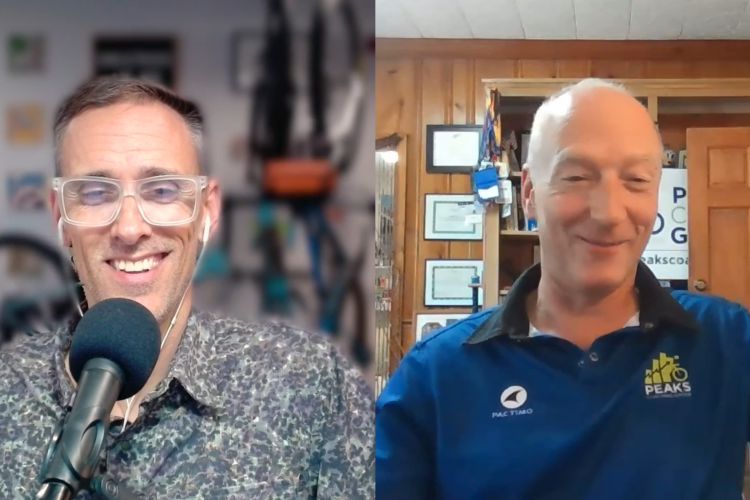
Hunter Allen has been coaching cyclists since the mid-1990s and went on to co-found TrainingPeaks in 2004. He was an early proponent of using power data to inform training, and today his company, Peaks Coaching Group, helps athletes around the world.
- When you retired from pro cycling in the mid-90s and decided to become a coach, why did you start with mountain bikers specifically?
- When you first looked at power meter data from cyclists, was it obvious that this data could be useful for training? How did you analyze it?
- What are mountain bikers missing with an informal approach to getting faster/stronger/fitter?
- How does the way you coach a mountain biker in their 40s differ from how you’d coach the same rider at 25?
- How do we know if a fitness metric — like heart rate, power, or HRV — is useful or not?
- How do you know how much recovery you need after any given effort?
- What does measuring blood glucose levels tell you about an athlete?
- If someone’s listening right now and wants to become more intentional about improving their fitness for mountain biking, where would you tell them to start?
- What is your most popular training plan for mountain bikers?
- What’s got you most excited right now in the world of fitness and coaching?
Learn more and connect with Hunter Allen at peakscoachinggroup.com.
Never Miss an Episode
- Listen on Spotify
- Listen on Apple Podcasts
- Listen on Google Podcasts
- Listen on Stitcher
- Listen on Overcast
- Get the RSS Feed
- View all Podcast Episodes
Support this Podcast
- Review the Singletracks podcast on Apple Podcasts or drop your feedback in the comments below!
- Make a donation to help sustain future episodes.
- Become a Singletracks Pro Supporter.
Automated transcript
Jeff Barber 0:01
Hey everybody! Welcome to the Singletracks podcast. My name is Jeff, and today my guest is Hunter Allen. Hunter has been coaching cyclists since the mid 1990s, and went on to co-found Training Peaks in 2004. He was an early proponent of using power data to inform training, and today his company, Peaks Coaching Group works with athletes around the world. Thanks for joining me, Hunter.
Hunter Allen 0:26
Oh, Jeff, it’s great to be here. I’m super psyched and glad glad to to talk to all your listeners. This is going to be super fun.
Jeff Barber 0:34
Yeah, awesome. So I read that you retired from pro cycling in the mid ’90s, and then you started training mountain bikers. Why mountain bikers specifically?
Speaker 1 0:45
Right, that’s crazy. And then because I was a road cyclist, I mean, I was a pro on the road. And but you know, locally, a local guy came to me, and he was a mountain biker, wanted to be a pro mountain biker, and so I started coaching him, and he did really, really well. And next thing you know, I had word of mouth got out, and I started coaching all these mountain bikers, which was so fun because you know that’s like near and dear to my heart. I have a BMX background. I raced BMX from the time I was 11 to 18, and then went to mountain biking, and then raced mountain bikes, and then found road racing. So it was really fun to like connect back to the mountain biking piece.
Jeff Barber 1:30
Yeah, yeah. And in the mid ’90s, I mean, that was sort of peak mountain biking at that time. I mean, it was super competitive at that time, I imagine.
Hunter Allen 1:40
Oh yeah, I mean John Tomac and and Ned Overend, you know, and Tinker Juarez. I mean, you know Dave Wiens. I mean all the all the big names, and yeah, it was it was wow, what an incredible time, right? Because yeah, really started and and just took off like wildfire all over the country.
Jeff Barber 2:01
Were people seeking you out because mountain biking was sort of — it wasn’t brand new, but it was — certainly different from road cycling. So was that niche helpful for you? And what were people looking for from you that maybe they couldn’t get from another coach?
Hunter Allen 2:22
Well, during that time, I mean, there were very few coaches at all. I mean, this was 1996, 1997, and that was one of the reasons I became a coach was because I didn’t have a coach. Nobody to coach in the early late 80s and 90s. There was no such thing as a cycling coach that you could hire, right? And so I wanted to become a coach when I start when I retire from cycling, just to give back, right? Because I realized, wow, all this hard-won information, knowledge, and I just I can help people and shortcut, you know, two years. I felt like I lost two years in my own career of just like hit and miss, you know, all kinds of mistakes and trying to figure it out. And then it was like, oh, you know, finally I got in a place where it was like a, you know, oh, I can I know and understand this. So, a lot of them came to me because of my road background, and there, I guess there maybe had been an article or two. I can’t remember. Maybe even Joe Freil wrote it because I just can’t remember. But it was an article about how you know mountain bikers should train on the road, and they could get the some of the best training they could do was on the road, and so that’s why they came to me as like, hey, you know, I realize that I can I can improve in mountain biking, but I have to go to start training on the road and training these different energy systems, so to speak. And so that was really cool because then they, you know, we got road bikes, right? And we during that time there was no power meters, so we just trained with heart rate, which you know is is was fine at the time, certainly. And yeah, I just trained them on the road, and and you know, then at that point, right, we hadn’t even invented functional threshold power. So what I was doing was improving their FTP on the road, and then you know, gosh, if your FTP is 50 watts higher on the road, it’s going to be 50 watts higher on the mountain bike. Yeah, they went faster.
Jeff Barber 4:34
Yeah, that’s something I’ve heard. I’m sure most of our listeners have heard as well that if you want to get faster at mountain biking, training on the road is one of the best ways to do that. Is that still true? I mean, is that now that we do have all these different metrics and things, road riding is still more effective in a lot of ways?
Hunter Allen 4:58
You know, it’s it’s interesting, and I’m going to go down a little rabbit hole here, but this I think will be really interesting for the the listeners on this. ISo there’s always going to be the technical aspect of mountain biking,
Jeff Barber 5:10
Right.
Hunter Allen 5:10
There always is going to be that. So you have to stay in touch with the technical aspect of mountain biking. You can’t lose that feel. That rhythm, the skills that you need, all those things you’ve got to have that, you know, from a cardiovascular side, right? Being able to improve your cardiovascular system, road riding and training on the road is absolutely superior, right? Because you can do very hard, sustained intervals that you know aren’t being broken up by the terrain or downhills, or you know trees and rocks and roots and things like that, where you can just focus on the actual effort itself. So, from a a perspective of of just cardiovascular side, that’s still absolutely I would say superior than than most mountain biking, unless of course you may live in a place where you could ride up a long gravel road or something. You’ve got that now. Let’s take that a step back though. When I first started, one of the pers one of the the first pros, maybe second or third. Well, actually probably not that. Maybe fifth or sixth pro that I coached was Jeremiah Bishop, and you know Jeremiah and I hit it off great. I love Jeremiah; he’s still a good friend of mine. And you know we got a power meter for him, and it was he was like one of the first ever mountain bikers to get a power meter, and we got an SRM on his bike, and we started, you know, getting him to race in mountain bike race with his SRM, train with his SRM. We got him a power tap hub for his road bike, and the first thing that I started doing, we started analyzing his data, and this was 2004, maybe 2005, 2006, in that similar range, we started analyzing his data. Was realizing that you the way you produce power in a mountain bike race is different than the way you produce power in on the road bike. So you could still be doing you know 250 watts on the mountain bike and 250 watts on the road bike, or 300 watts on the mountain bike and 300 watts on the road bike. The watts are the same, but the way you created those was fundamentally different. So, you know, think about right. How do you create watts? Number one, you push harder on the pedals, right? So torque, how hard you push on the pedals, multiplied by how fast you’re pedaling, right? So you know you can produce 1000 watts by being in a really small gear and pedaling really fast.
Jeff Barber 7:55
Right.
Hunter Allen 7:56
Or you can produce 1000 watts by being in a massive gear and pushing really hard on the pedals. Same 1000 watts, but you created them differently. So, in mountain biking, and and Dr. Coggin, the co-author of our of my book or our book, Training Racing with a Power Meter, came up with this great graph called quadrant analysis, and it and it basically was this plot and put things in four quadrants? You have to visualize this if you’re listening in four quadrants. And then what it was was on the x-axis was cadence, right? So, and then on the y-axis was torque, how hard you pedaled and how fast you pedaled. So mountain bikers produce power by pedaling actually slower, but with higher force. Right. So, so what’s slower? Right. Well, we put kind of a line in the sand and said, okay, 90 RPM and above is faster pedaling. 90 R, 89 RPM and below is slower pedaling.
So come back to Jeremiah Bishop. You know he went to all these races with his power meter, and he was winning these huge nationals and things, doing incredibly well, dominating, and the power he was producing was all coming from 6070, RPM, 80 RPM, really high force, so a lot of torque.
Then when I compared that to the training we were doing on the road, well, he got on the road, he’s pedaling at 95 RPM, and he’s not putting a lot of force out. Right, he’s he was pedaling fast, getting the same watts. I think at the time his threshold power was like 420 or something, you know. And he’s still doing 420 watts, but now he was doing it at 95, 100 RPM, which wasn’t the same way you produced it in the races.
So while we were getting the cardiovascular benefit, he wasn’t getting the muscular benefit.
Jeff Barber 10:06
I see.
Hunter Allen 10:07
So the training of the muscles was completely different. So coming out of the rabbit hole here, you know, that’s the key thing that you have to remember as a mountain biker, is like okay. I have times when I go and train on the road, and I do very specific intervals, and I get this incredible benefit. But then I also need to remind myself and remember that, like, well, if you know, I get on the road and I’m going up a really long climb, and I need to be at my FTP to do this, you know, let’s say 20 minute climb or whatever. Instead of pedaling at 90 RPM, maybe I should. Maybe you should mimic the way you produce power in the race.
Jeff Barber 10:54
Okay. Yeah.
Hunter Allen 10:55
So it’s like instead of going 90 RPM, do it at 70 RPM. You know, pedal harder with, but slower with more force. That all of a sudden now, you know, mimics the demands of the events.
Jeff Barber 11:09
Yeah, yeah. And so that would be your advice for the mountain biker, whereas the road biker, he could be on that same hill and he would be good at that 90 cadence. That’s the right training for him?
Hunter Allen 11:21
Exactly. Because okay, then that would be the you know that then that’s like oh wow this is what you do in a race you know in a criterium or a road race or whatever on the road you’re now producing power just like you would in a race.
Jeff Barber 11:33
Yeah, interesting. Well, so I think it was the late ’90s, early 2000s that you and Kevin Williams started messing around with power meters, and yeah, you kind of touched on that. That heart rate had been sort of the standard before that. So was it obvious that power data could be useful for training, or was it just a problem of they weren’t available? Like what made you interested in that?
Hunter Allen 12:01
Yeah, well, you know, Kevin came to me in ’99, I believe, and said, “Hey, you know, I bought this new power meter, newfangled thing, and would you train me with it? I was like, “I guess so. I don’t know. I’ll try. Right? Yeah. We didn’t have these things when I was a pro or anything, so I don’t know. And you know, he would send me these spreadsheets with his data in it, and it would be 300 watts, and 200 watts, and 1000 watts. I’m like, God, is this good? Is this bad? I have no idea what this means. I have no relationship with the data. So really quickly, I realized, okay, if I’m going to coach with this, then I need a relationship with the data. So I went and bought a power meter, a power tap hub at the time, and started training again. Like I just need to go out and train again and do intervals and go to bike races and you know I’m I might have sandbagged in some Cat Three races, but you know, and and but it was really good because it gave me this understanding of oh, what does 300 watts mean to me, and then, what does it mean to Kevin? And so when then we went to the very first ever power seminar that was put on by USA Cycling up in Philadelphia, right before the the big race there, and the pro race in Philadelphia, and Dr. Coggin was one of the presenters. Alan Lim, Dr. Alan Lim was one of the presenters, the owner of Scratch Labs, founder of Scratch Labs, and then Dean Golitch, who has been an amazing coach for Carmichael Training Systems forever. He was the they were all the three presenters, and they presented, and oh, this is the way of the future. This is going to be the future. This is the future for cycling. But the software sucks. The software sucks.
We can’t analyze this data. And so Kevin looked at me and said, “Hey, man, I’m a programmer. I can build the software. I’m like, “Really? Yeah, I can build the software. I’m like, dude, let’s do it. So we then started building at the time what was called Cycling Peaks software to analyze this data to figure out you know if an athlete was really improving or not, because you could easily like okay grab you know a single file and look at the number of intervals and see how many watts they averaged and stuff like that, but you couldn’t see it over time. Like you know you know Jeff’s FTP gone from you know 250 watts to 260 watts to 270 to 280 to 290 over the year over two years. There was no aggregated way, so originally that was like we just needed to understand: Is the training working? Are people in the right training zones? And that was when we brought Dr. Coggin in, Andy Coggin. It’s like let’s we need scientific help. He brought in all the scientific help to validate a lot of the things that we were seeing because. This was 2003. We were seeing stuff in the data that nobody had seen, and we were seeing trends, patterns that nobody knew anything about. And you know, I’m not an exercise physiologist, and so I was like, Andy, no, I’m seeing all these things. Is there a basis in exercise physiology? Is this real? And so he came in and then validated all those things and said, “Oh yeah, cool. So that’s really how the story of how I got started and and you know going down that path.
Jeff Barber 15:38
Yeah, yeah. Well, you make a good point too about how the data is not easily analyzed, kind of on the surface. I know I’ve I’ve messed around with power meters before, and you know you’ll get a little chart or a graph, and you would think just visually looking at it you could kind of understand some things, but it it seems like it’s more complicated than that, especially for mountain biking, where you really see these spikes that happen throughout. You know, whether you’re going over a rock or you know different different things like that that are more like technical related. Is it harder to analyze data from a mountain bike ride? Is that part of why maybe road terrain is better because the data isn’t quite as noisy?
Hunter Allen 16:23
Definitely, definitely so. No, that that’s. I mean, absolutely. Like there is tremendous amount of bursts. I call it the bursty nature of mountain biking. There’s tremendous amount of these little micro bursts that occur in mountain bikes, just just like you mentioned, right? You got to get over a rock. You got to get over a route. You got to go down a little depression and pop out of it. You know, all these things, you know, contribute to these big, huge power spikes. But they’re short, right? They’re a second or two seconds, and then they, you know, maybe then you have a sustained effort that’s half of that wattage. So I think that’s where it it was very difficult in the beginning, right? Well, we we just didn’t know how to analyze the data in the beginning because it was just so so you know seemingly random.
Jeff Barber 17:23
Yeah, that’s what it looks like from my data that I’ve, you know, just looked at on the graph, and it’s like I can’t tell what’s going on here.
Hunter Allen 17:31
Exactly. So, you know, we and that forced us to develop some some pretty cool tools, right? That that forced us to develop anticoag and came up with normalized power. That basically is the power you would produce if you pedaled smoothly. What your body felt like. So it’s like, oh, average power. It’s just the averages, right? It’s there’s included zeros. So oh man, you did 1000 watts, but then you didn’t pedal for two seconds. Yeah, then you do it 1000 watts again. Well, if you take it over four seconds, you know that averages to 500 watts. It’s like not exactly what you really did, right? Right, right. Body felt like so. Normalized power came into play. That took a big role. That you know, training stress score, how many points you get per ride was huge. And then, like I mentioned before, the quadrant analysis chart. How do you actually create that power? So, and then then we would even quantify how many microbursts you would do. Like I remember, you know, before we had the tools, I would sit down with Jeremiah’s power file and I would go through it and like look at all the spikes and write them all down. Okay, this spike lasted three seconds. This, you know, give me all the spikes from zero to five seconds. Give me all the spikes from six seconds to eight seconds, from eight nine seconds to 12 seconds. And I would write them all down and plot them all out and say, okay, gosh, this is the demands of the event, Jeremiah. You have to do you know 27 bursts in training from one to five seconds, and they got to be 800 watts. Yeah, you got to do 13 bursts from six to eight seconds, and they got to be you know 420 watts. You know, and so we define the demands of the event, but it did make it really challenging to begin with.
Jeff Barber 19:28
Wow, yeah, yeah, that’s amazing how specific you can get then in terms of the training once you see that power data from a race. So, a lot of mountain bikers, myself included, and I’m I’m not a racer, but I enjoy biking and I like to be fit and you know go on longer rides and and not be so tired at the top of the hill. A lot of us, like me, we don’t follow a formal training plan, and a lot of times just figure if we ride more, we get more fit. So. What what are we missing out when we’re kind of taking that approach to just just ride more and and you’ll eventually get fit?
Hunter Allen 20:07
Great, really good question, really good question. So a couple of things. So you know, first off, just riding more is wonderful, right? Because it’s something we enjoy.
Jeff Barber 20:20
We love to do it.
Hunter Allen 20:21
I think don’t ever lose that, right? I think that’s an important part of it. So, so don’t ever lose that. Secondly, by just riding, you’re never creating training stress. We we improve as humans, our our bodies improve through stress, right? And that means, like, wow, okay, I need to get my heart rate up, and I need to keep it up there for a certain period of time. It may be, you know, I and and if we’re trying to improve what’s called your again your functional threshold power, we need a minimum of 10 consecutive minutes at your threshold power in your zone there in order for your body to create enough stress so that it’s going to adapt and get better from it.
If you just did three minutes and you breathed hard for three minutes, it’s probably not long enough to really make a difference and make you improve. Now, if you went three minutes all out and did what’s called a VO two max interval, then that would be enough to get you to improve and create enough training stress. So the the the by just riding, you’re missing out on this ability to make a real improvement, and that comes in in multiple ways, right? Your your your cardiovascular system becomes more efficient. Okay, so when I talk about efficiency, right, and in the cycling world, we’re always, you know, there’s always this confusion. What’s economy and what’s efficiency? What’s the difference between the two? Like cycling, we have to think of it as like, okay, everything outside of the body is economy.
So your position on the bike, your aerodynamics, right? That’s economy, right? The way you pedal-that’s economy. Everybody loves saying pedaling efficiency. It’s really a pedaling economy.
Efficiency is everything internal to your body. So that means that when I train hard and I push myself, I my body increases the number of capillaries into the muscles. It increases the number of mitochondria or the powerhouses in the cells, so that it can take in more oxygen and create more energy. The stroke volume of the heart, right? The heart’s a muscle, but it can’t get any bigger, right? It’s constrained, but the walls get a little thinner, so the internal diameter, the stroke volume, increases. You can pump more blood. The exchange of oxygen between the lungs and the blood in the heart becomes more efficient. Right, I can exchange more and more oxygen in these cells. So by creating training stress, you are improving the efficiency of your body to optimize oxygen, push yourself, etc. You know it’s not something, Jeff, that has to be done all the time. You know, but at the same time, I would say you know every week you should strive to do to create some kind of training stress every week right and again like you know I would start with you know do two times 10 minutes at your functional threshold power let’s just do a little bit of work on your on your threshold let’s do two times five minutes at your VO two max, and like push yourself there, right? Let’s breathe really, really hard because you know I’m I’m 57 now. You know you don’t start thinking about this stuff until you get to be in your 50s, but you’re like, man, you know I really like life. I’d like more of it.
And I’d like more of it, and I’d like to kick ass when I’m in the ’80s and not have somebody wiping my ass, right? Yeah. So it’s like, how do I make sure that now for me, right? I want to be super fit and stay fit, but I also want to be as fit as possible in my 80s, and so therefore I’ve got to continue to create hard training stress so that my VO two max stays really high, and so because you know as we age it’s going to come down, but we can slow that. So long winded answer, but. Hopefully it helps.
Jeff Barber 25:01
Yeah. So it sounds like ideally, if you are doing something for training purposes to get stronger to improve your fitness, it sounds somewhat formal where there’s like a timed thing and you’re you’re measuring like either your heart rate or your power. Functionally, could you would it be as simple as like you’ve got a loop that you ride every week, and let’s say it’s got two hills, and so you just focus on like those two hills, climbing them a little bit faster than you did the week before. Like, does something like that work, or does it need to be more specific where it is timed and it’s you know you’re collecting more more data and more metrics?
Hunter Allen 25:44
No, absolutely that would work. Absolutely that would work. I mean that’s that’s as simple as it can be, right? Is like I’m just going to go harder every single week up these hills, and I’m going to you know push myself, and in that way I’m there. Now the only issue with that is that you you get to what we call training stagnation, and training stagnation is when you’re completely adapted to the current training load.
Let’s say okay every every three days a week you ride the same loop right, and you always ride the same loop, and you always do those two hills, and you always jam up those two hills. After six to eight weeks, your body is going to be adapted to that training load.
Maybe, maybe, maybe 16 weeks, but just depends on how fast you improve. So now you go and do that, you’re not going to get any better because you aren’t creating additional training stress for the body to compensate from. So now you need to do two loops, right?
Or you need to do a loop and you need to do two repeats of the first hill and two repeats of the second hill, and then you do that, and then you do three repeats of the hills, right?
So you’re creating that additional training stress because you’re adapting, getting stronger. Oh, I need more training stress. Adapting, getting stronger. I need more training stress. I mean, there’s only really four variables that we can manipulate in training, and that’s really all we can do, right? We can we can manipulate your volume, so like how much total time you’re riding every week, right? I can ride 10 hours a week. I can ride 15 hours a week. I can ride five hours a week. You can also manipulate your frequency. Okay, well, I can ride three days a week. I can ride five days a week. I can ride twice a day, right? I can manipulate my frequency. Then you can manipulate your intensity.
I can go harder. I can go easier. Right. And then the last thing you can manipulate is your rest. Right. I can rest more. I can rest less. And those are really the only variables we have to play with in the whole training world.
Jeff Barber 28:05
Yeah. And and part of this, it sounds like one of the things that I think I’ve seen that you’ve written about is the idea of “junk miles.” So is that that sort of this where where you’re just going out and you you don’t necessarily have sort of like a training metric or training goal in mind is that is that kind of the idea?
Hunter Allen 28:26
Yeah, for sure. And again, back to my my first statement, right? Don’t don’t lose sight of the fun, right? Just go ride your bike sometimes, right? I mean, I went out yesterday for two hours and I just went and rode my bike. You know, it was lovely. It was a beautiful day. The sun was shining. The leaves are turning. It was leather was perfect. I’m like, I’m just gonna go for a ride, enjoy life, right? So don’t lose sight of that. So at the same time, you know, if it’s like, well, gosh, I want to improve, then you need to incorporate some kind of training stress in there. One of the biggest problems that I see with a lot of masters athletes, riders over 40, 5060, is they’ve they’ve gotten sucked into this zone two training, right? They’re like, oh yeah, you know, you got to train more zone two.
Jeff Barber 29:16
You know, my watch tells me that every time. You know, when I go to do a workout on my Garmin, it’s like you know, do a do a zone two, and it’s like I mean, I guess I’m not getting enough of it, but yeah, it does feel like that’s that’s what we’re told.
Hunter Allen 29:28
Yeah, you know, and and it’s like you know, zone two makes a lot of difference if you’re 20 to 28 years old and you’re riding your bike 25 to 30 hours a week, and you’re a pro in Europe, because it’s like, well, gosh, yeah, okay. If I’m riding 30 hours a week, 80% of 30 hours, right? I mean that. Is 24 hours? You can’t do 24 hours of intervals right in a week, right? Yeah, be destroyed, right? So just doing six hours of intervals in a 30 hour week is massive, right? Massive training stress. So of course they’re going to ride 24 hours at zone two at endurance pace. Right, they’re doing five hour rides, six hour rides, four hour rides. Right, but for for most of us, right, we’re working. This I got a job. I got a family. I’ve got all these other time constraints I’m dealing with. Right, ever. I’ve got eight to 10 to 12 hours maximum week I can train. So if I got 10 hours a week and I spent 80% of the time eight hours running at zone two and only two hours doing intervals, I’m just going to get out of shape. Yeah, I’m just not creating enough training stress in the limited time that I have to improve.
And I think that’s something that too many folks have gotten sucked into because it’s the latest greatest thing that all the pros do. So therefore, it must be good for me. It just doesn’t make sense for the folks who are like myself. I’ve got 10 to 12 hours a week to train, and that’s it. So I was like, man, I need to go out and I do what’s called, you know, sweet spot intervals, intervals just below my threshold.
Do two times 20, you know, and then after that, then I’ll do a day where I do a couple of VO two max intervals, three to five minute kind of intervals where I’m just breathing like crazy, panting. Right? They hurt. They suck. I hate them.
Jeff Barber 31:47
I was gonna ask you: Do you enjoy doing these workouts? Because they don’t sound fun.
Hunter Allen 31:52
The VO2s, I don’t. I don’t mind doing sweet spot. That’s just a good fun workout, right? I like sweating, pushing myself, kind of getting my yayas out. I do a few hill sprints, you know, jam up some hills, maybe do some sprints in the flats too, or maybe on the local mountain bike circuit. You know, I’m going to do a time trial lap, you know, and it’s a 20 minute full out time trial. I’m going to go as hard as I can for 20 minutes on my local mountain bike circuit. So, so I think you know, being able to create that training stress is is really important.
Jeff Barber 32:26
Okay, yeah, yeah. Well, you mentioned sort of the difference between training someone who’s in their 40s or 50s and how that’s different from someone in their 20s. What are there other ways, especially thinking about mountain biking specifically, that maybe the training is going to look a little bit different for someone based on their age?
Hunter Allen 32:46
Yeah, for sure. I mean, you know, as we get older, we need more rest. There is just no denying that. You know, I, you know, when we’re 25, when I was 25, when my I’ve got I’ve got a couple of 25 year old, 22 year olds that I’m coaching now, and we’re pros, and it’s like, you know, these guys can train, you know, six days a week, and they don’t need a rest. You know, they need one rest day, and they’re ready to go the next day. And it’s like, boom! Like, it’s insane, right? They recover so fast. Whereas I’ve got you know a 60 year old, a guy my age around 55. I’ve got a 45 year old. I’ve got a 72 year old that I coach, and you know like the 72 year old, he can go hard twice a week, and that’s it. Like he can do a workout on Tuesdays, and he can do a workout on Saturday, and that’s it. Like if I add trying to add a third day in, it’s mediocre and it messes up the other workout. That’s what we expect when you get to be 72, right? Right. There’s nothing, but he’s still doing intervals, right? Don’t get me wrong, right? He’s still out there killing it. He’s trying to be world champion. He’s gonna be world champion. The guy’s super talented. He’s going for it. You know, at age 55 or so, it’s like probably need a day rest. You know, it’s like okay, I can train hard Tuesday. Definitely can’t train hard on Wednesday. I can train hard Thursday, and then I can do a good Saturday. I can do three days in a row, and probably have an endurance day on Sunday, you know, and not overdo it.
But you’ve got to have those rest periods, and for most masters, not everybody, most masters, rest days need to be off the bike. Just don’t even ride those days, right? Because you know you go out and you ride, and it’s like it’s an hour of riding really easy. And if you enjoy riding, I’ve got one client that just you know refuses to take get off the bike and rest because they really just want to spin their leg for an hour, and they get on their indoor trainer and they do it, and it’s great. And they feel great afterwards. They feel good the next day, that’s fine. But for most of us, it’s like you know, you actually recover even faster if you just don’t even ride, and that that gets that becomes even more and more apparent as you get to your 60s, and then in your 70s, it’s like I just need time off. Yeah,
Jeff Barber 35:20
So one of the things I think I read that you said is that recovery is a superpower that people tend to skip. And so, what does that look like in practice? And and I guess more importantly, how do you know how much recovery you need based on an effort?
Hunter Allen 35:40
Yeah. Oof. That’s the million-dollar questions, Jeff.
Jeff Barber 35:47
We’re hearing things like HRV, right? Like that’s a metric that people look at. But is it that easy?
Hunter Allen 35:54
No, it’s not that easy. But they make a big difference, right? I think all the wearables make a really huge difference, you know. Whether you’re wearing an Aura ring or a Whoop strap or a Garmin watch or some other kind of a tech wearable, that makes a huge difference because you can see what’s happening with your sleep. You can see what’s happening with your heart rate variability, your resting heart rate, all these things. I think that that that those are great leading indicators and help you make a decision on the day, you know, and and they’re really good. I think that that that makes a big difference. So using that as a tool is helpful, you know. From a how do I know when I should rest period, you need to have kind of a a workout where you say, okay, this is my test, and I’m going to do an interval to test to see if I’m prepared and ready to do good work, and it really is actually two intervals because you you start out and you do one interval and it kind of sucks, right? You’re not necessarily warmed up. You feel a little blocked, maybe the legs get a little fat, you know. And then you’re like, oh, if you just made a decision and judged something on that, then probably would make the wrong decision. But you do a second one, you know, and and and this could be like, gosh, I’m gonna go and do a three minute interval, just barely my VO two max range, not gonna suffer too much, but I want to do a little bit, and then I’m gonna do another one. And if the second one you don’t get into a groove or you struggle to hit your heart rate or your wattage numbers, then it’s like you know what, I’m really struggling today. I feel tired. My numbers are saying I’m tired. Then it’s like yeah, I’m just gonna turn around and head home, or I’m just gonna do an easy ride. I think that’s one of the best ways to assess if you’re ready to do another workout.
Jeff Barber 38:00
And that’s something too. I’m guessing over time you can kind of figure that out. You know, if I do a certain workout or a certain type of workout, I’m going to need X hours or X days to recover from that.
Hunter Allen 38:13
Yep, exactly, exactly. I I think that the the you know the Garmin right is is their little algorithm is not very accurate. I mean, you know, come back from a four hour ride, it’s like it’s gonna take you 12 weeks to recover from this. It’s like, no, it’s not. It’s like it’s gonna be you know, it just isn’t right. For some reason, they haven’t fixed that algorithm. I wish they would they would work on that, but I think that that you have to remember also too, and this is a really important point for all the listeners. So so pay attention. There’s a difference between being tired and soreness, right? So being fatigued, tired, and soreness. You can be sore, right? Your muscles can be sore, but you can still do meaningful work.
When you’re fatigued, when you’re tired, you can’t do meaningful work, right? It’s like, oh man, I went out and I tried to do these intervals and I couldn’t do them. Right, I just I flailed on all of them. I didn’t hit the numbers. I didn’t hit the wattage. I felt bad. I couldn’t do them. A lot of people get this confused. A lot of people will wake up in the morning and they’ll feel their legs, and that’s a great test. Right, just grab your quadricep and feel it, right? How deep down is the soreness in there, right? And then be like, “Oh man, I’m really sore. I probably shouldn’t train today. No, I would, I would challenge you, the listener, to say, you know, actually, you know what? That soreness, and there’s difference between that and. Real fatigue. Go out and try and do a workout that day that you’re sore, and a lot of times, maybe even nine times out of 10, you will nail the workout, even though you’re sore. Don’t don’t you know separate those two different things, and I think that’s a really important principle and thing to to consider.
Jeff Barber 40:27
Yeah, yeah, that’s really interesting. I never thought of that, and I’ve but I’ve certainly experienced it myself. Where you know I’m on a I’m on a trip, say, and you know I’m biking every single day, and after that first day, you wake up the next morning, you’re like, man, I’m sore. I I don’t know, know if I’m gonna be able to do the ride today. And of course, you do it because you’re on the trip, and you know you’ve already you’ve already committed to it. And then yeah, it ends up being fine, and you were faster than the day before. So yeah, not always a good gauge.
Hunter Allen 40:55
Exactly, exactly. And the same thing too, right? You go on this trip, and you’re doing six seven days with whatever, and you know your your device is telling you red zone, red zone, don’t train today. You are like I’ve got to do it anyway, man. So it’s like, yeah, and I think that’s a great that’s a great it’s a great lesson, right? It’s a really great lesson because then it it lets you realize, like, oh yeah, you know what? I am tired and I’m fatigued and I’m sore, and you still can do it again. Yeah, and you know when people have got six or eight cycling camps that I do every year all over the country and here in Virginia where I’m based, and you know I the last day of camp is usually day six or seven, depending on which camp I have. But I call it the breakthrough day because the day before we always go big, right? It’s like a seven-hour monster ride over a bunch of mountain passes, whether we’re doing gravel or road or mountain biking or whatever. You know, it’s always a huge day. Then the next day is always longer than everybody wants it to be, and you know. And I, I have a big talk with everybody and say, hey, look, you know, this is an opportunity for you to go out. Yes, you’re tired. Yes, you’re sore. But it’s an opportunity for you to go out and push yourself. And you’re gonna, it’s gonna suck the first hour because your legs are gonna be tired, they’re gonna be sore, they’re gonna be struggling to turn over.
But then the the second hour, you’re gonna start to feel better, and then the third hour, like all of a sudden, every single camp I’ve done, I’ve done camps now 29 years. The last hour, people are racing, they’re racing each other, you know, and they finish on this high, and they’re like, “Oh my God, that was amazing! You were so right. Like, I can’t believe that we went so hard today. After we went so hard the day before, and the day before that, the day before that, day before that, I’m like, yes, right? You break through the glass ceiling, and so I think that’s that’s why I call it the breakthrough day. But you know, just just challenge yourself to to to kind of consider those things.
Jeff Barber 43:04
Yeah. Well, yeah. One of the questions I had was about these wearables and this fitness data. I mean, we have access to more metrics than ever before, but it does seem like sometimes that that can be a bad thing depending on how we use them, and it sounds like what you’re saying is that you know while the devices and the software can be helpful at like giving you sort of an analysis or a recommendation, it also sounds like one you need to listen to your body, and two maybe this is where having a coach comes in, where a coach can look at that data and interpret it maybe in a different way than your watch or your app is going to interpret it.
Hunter Allen 43:44
Yeah, for sure. And I think I mean I’m all about the tech wearables. I love them. I think they’re great. I mean I’ve got my Garmin watch on right now. I’ve got my my continuous glucose monitor on my arm. Yeah, I want to talk about that. You know, and and so I think these are really great tools, and they make a difference. And at the same time, right? If you are somebody who is absolutely OCD and everything in your world has to be perfect, and if it’s not exactly perfect, then your world collapses. Probably a power meter and all this stuff is not for you, right? So you have to have you know a bit of leniency and also non judgment when you wake up in the morning and your watch tells you you have non restorative sleep and you’re like what I slept awesome and it says you need to have a rest, and you’re like, no way! I feel like a million bucks. You jump out of bed, and you’re like, my God, I got to go ride, right?
You got to, like you said, listen to your body, listen to yourself too. So use these as tools, you know, to help make some informed decisions, but then also listen. This piece, and then if you’ve got a coach, right, then you get the true objective, you know, read on things. It’s like, hey, you know, wow, you know, Jeff, I’m I’m seeing your metrics right now. Looks like your heart rate variability has been diving down now for the last three four days. It hasn’t gone down this low in the last eight months, you know. I think you know, and you’ve done a lot of hard training, you know, in the last eight months. And right now, you’re actually not on a big hard training cycle, but your HRV is going down. Like something’s up, right? How are you feeling today? And you’re like, oh man, I’m feeling, I’m kind of feeling blah. I’m not feeling great, you know. My kid came home with a stuffy nose the other day, you know. And you’re like, yeah, you know what? I think it’s probably a good day to just chill today, or maybe not even ride today. So I think that that objective thing from a coach, you know, is is invaluable.
Jeff Barber 45:59
Yeah. Yeah. Awesome. Well, so your new book is about continuous glucose monitors, CGMs for athletes, and so I’m curious: like, are we in a power meter moment with these devices? Like, what what does this really tell us as athletes, and like, how how important or powerful can that data be?

Hunter Allen 46:21
Yeah, great, great question. I would say, you know, the potential to be a power meter moment is absolutely there. Will it be a power meter moment? Hard to say. It took three years, four years, five years after my Dr. Coggan and my first book came out, Training and Race with a Power Meter, before like it kind of became like people started using it and playing with it and looking at it. So I remember the publishers of Vello Press, you know, the first two years like, oh man, we made a mistake publishing this book, you know.
Jeff Barber 46:57
Too early.
Hunter Allen 46:59
And then all of a sudden it just went, you know, went crazy, right? So we’ll see. I’m really hopeful because the fact that number one, it can really make a difference in your fueling, and so much of our fueling drives how we feel in a ride, in a race, in an event, in whatever, in training, and so many of us, we all have this amazing relationship with food, right? We all eat food three times a day, if not more, right? So we’re all experts in food, right? But at the same time, it’s like, well, you’re not. You can’t necessarily feel your glucose levels. You know whether they’re high, whether they’re low. Where are you on that continuum? And then a lot of times they’re not. They they you know they don’t realize that you’re actually creating the problem or problems with the way that you fuel and the timing that you fuel.
So a CGM can really come in and make a difference. So let’s give an easy example. One of the examples that I write about in my book is what’s called a reactive hypoglycemic crash.
So first off, what happens is okay. I’m riding along, and let’s say so, and let me give the listeners some some parameters so they understand. So, glucose is measured in milligrams per deciliter, and a normal morning glucose level for most people would be underneath 100 milligrams per deciliter. So that’s a very normal waking up. Some people might be as low as 70. Some people could be 80s, 90s. But you want to be below 100, right? People who wake up in the morning and their glucose is 125, 135. They typically have type two diabetes. Okay, so there’s a narrow window. Your body is constantly trying to hold your glucose in a very narrow window in homeostasis. Body is amazing. Anyway, the so when you go and exercise, you may have a training zone just like you would in training with power meter or heart rates, right? Where you need to keep your glucose between 120 and 160 milligrams per deciliter, and you keep it in that range, and you feel great. You got plenty of energy. You feel awesome. So, you’re riding along. You’re you’re you look down at your your phone, whatever your watch. You see your glucose level. It’s 150. Perfect. I’m right here. I’m in the right place. I need to be. I don’t need to eat anything right now. I don’t need a bar. I’m good. And then you know you look down 20 minutes later, 30 minutes later. It’s 145. And then you see go to 140. And then you see go to 135. And you see go to 130. And then you see this what I call a slow slide of glucose. Glucose just keeps sliding. And then all of a sudden you look down and it’s 110 and you’re like, I need food, right? You’re starting to get a little bonky, you know. You’re starting to shake a little bit. You’re feeling that weird feeling, right? Like, oh man, my glucose is low. I need food. Then what you do because you you didn’t notice the slow slide. You let it go from 150 down to 110. You overcompensate, and so now what you do is you open up a bag of of cliff blocks or whatever, and you stuff all eight of them in your mouth, you know, and you just eat all this food, and you’re you know you eat two bars and then two gels, right? Or whatever it is. You you eat too much and too many high glycemic carbs too quickly. Now your glucose goes from 110, it goes up to 200, it skyrockets to 200.
And what happens then is your pancreas says, “Oh my God, there’s too much glucose in here. It releases a ton of insulin. The insulin comes and basically sucks that glucose into your cells. You use some glucose, and so now your glucose goes up to 200, and then it comes crashing down. That’s the reactive hypoglycemic crash. It comes down, and now it drops down to 80. So remember, you are sliding down from 100 to 110, and then you went to 200, and now it’s down even lower than it was when you ate all that food. So, you know the normal athlete who doesn’t really understand this, they’d be like, “Oh man, I just didn’t eat enough, right? And they do it again, right? And then they create another reactive hypoglycemic crash. So you know that’s a perfect example of what to do. Is like, okay, gosh, first off, recognize you’re in the slow slide. It went from 150 down to 140, 140, 130. All of a sudden, it’s like, oh man, I’m at 125. I need to eat now. Okay, don’t let it get down any lower. And then what do you do? You don’t stuff eight of these things in your mouth and chew them all. You take two of them, you stick them in your cheeks like a little squirrel, and then you take two more and you chew the two, and then you suck on the other two for another five minutes or maybe 10 minutes or so, and then you eat those two.
Or you take a gel, right? Or you have half of a bar. And then 10 minutes later, you’re looking at your glucose, and it goes, “Oh, it went from 120 back to 130. Cool, it went to 130. Okay, then it dropped back down to 125. Okay, I need a little more. Right? You have the other half of the bar, or you maybe now 10 or so minutes, maybe 15 minutes later, you have another gel, or maybe now you have another four blocks. You do the same. I’m going to eat two, and I’m going to stick two in my cheeks for just to suck on for 10 minutes.
Jeff Barber 53:10
Sounds like you’re kind of using it to train yourself because I imagine everybody is different in terms of how much they need at any given point, and so it’s not telling you. You know, you’re not looking at it, and it says like eat exactly, you know, two gummies now. You kind of got to figure that out by sort of trial and error. Is that right?
Hunter Allen 53:29
Yes, and that’s that’s the challenge, right? And so I’ve got put a bunch of testing protocols in my book of how to test, you know, whether you’re a fast responder to glucose, you’re a medium responder to glucose, or actually, you may be a slow responder. Your your digestion track may just slowly respond, and so there’s some tests that you need to do to kind of recognize this, and then this drives the kinds of foods you want on the bike, and then also the timing, right, of how you eat, so you know, and and you’re exactly right. I mean, you nailed it. It’s a great behavior modification tool. And that’s what a CGM is really good at, like changing my behavior so that I’m eating correctly to make sure I have an optimal performance,
Jeff Barber 54:23
And it sounds like this is more of a training tool, not necessarily a race day thing, where it’s like, okay, I got my thing on, and it’s going to tell me what to do during the race. I mean, is it even legal in some races? They’re not legal in UCI races?
Hunter Allen 54:39
Not legal in the UCI, which is absolutely ridiculous. I mean, I have no idea why they’ve done this because it doesn’t make any sense.
Jeff Barber 54:47
Yeah, because everybody’s using it in training, but not for the race.
Hunter Allen 54:50
Yeah, it doesn’t make any sense, and I hope that cooler heads prevail there at the UCI, and they recognize that this is not a some kind of a cheater tool or anything. You know, and it’s a it’s a great, really great tool for all of us to use, and it helps in it helps in races because you do occasionally look at it and you’re like, okay, yeah, I need to make sure I’m on top of my fuel. You know, one one thing that is is really interesting, and and again for the listeners, this is a great one. Just listen to this one. This is a really great nugget too. Like any time you’re in an event, or any time you’re on a group ride, or any time you’re out there training hard, and all of a sudden you start getting negative thoughts, right? Like I can’t do this, or man, this is really hard, or I’m tired, or God, I want to stop doing this, or whatever. Your glucose is low. You need to eat as soon as that negative, that first negative thought comes in. You have to eat right then. Don’t dismiss it. Right? You know, you’re like, oh, I just have negative thoughts throughout the day. Yeah, of course you do, just like all of us do, right? That’s life.
But when you’re doing an event and you’re pushing yourself and you have some kind of these negative thoughts come in, and it can be, it doesn’t have to be about the event itself. It could be like, oh, my relationship’s not going well, or man, my boss pissed me off, or whatever, right? That is the first indicator that your glucose is going low and you need to eat right then and there.
Jeff Barber 56:27
I like it. That’s a poor man’s glucose monitor. Sounds like, but no, you’re right. And I’ve heard this advice from folks who do a lot of the like ultra endurance, like bike packing stuff. And you know, I I guess I didn’t associate it with necessarily like the chemical component. It was more just the like, oh, you know, having a donut that’s a pick me up for for people. But it, I think you’re right that it is. It’s tied together. It’s not just in your mind. It’s it’s physiological.
Hunter Allen 57:00
Absolutely, absolutely.
Jeff Barber 57:02
Well, so for folks who are listening right now and and want to become more intentional about improving their fitness for mountain biking, where would you tell them to start?
Hunter Allen 57:14
Well, come to my website, hire a coach.
Jeff Barber 57:19
Yeah, lots of good stuff on there for sure.
Hunter Allen 57:21
Yep, peakscoachinggroup.com. You know, and I think, but at the same time, right? If you’ve decided, hey, I want to improve, I want to make a difference, then you know, having a structured training plan is going to make a difference. You know, I think that that that is a critical piece to it, and again, it doesn’t have to be crazy, right? Don’t lose sight of the fun. You got to have fun. It’s cycling’s fun. We do it because it’s fun. At the same time, you know, you need to you need to say, “Wow, I want to improve. Then I need to add some structure into my plan. You know, I think that’s a great place. You know, my book, Dr. Coggan, in my book, training racing the power meter. I’ve got tons of workouts in there. You know, the back of that book is a really great resource as well. Of course, there’s a bajillion things on the internet you can research and look for. But anybody who wants to improve, right? Just getting some structure into their plan into their their rides, riding with intention makes makes a huge difference. That’s that’s the key.
Jeff Barber 58:30
Yeah, yeah. Well, I believe too on your website there are a number of training plans and programs for mountain bikers. Which one or ones tend to be sort of the more popular ones?
Hunter Allen 58:40
Yes, absolutely. Yeah. So the one that is the most popular right now is the threshold improvement plan. So improving your functional threshold, right? That is, I mean, to me, that’s always we come back to this place to start with. Like, okay, gosh, if if you want to go faster, and your functional threshold power is 200 watts, and we push it to 230. You’re going to go faster. If it’s 300 watts and you go to 320, you’re going to go faster. If it’s 400 watts and you go to 420, you’re going to ride faster. So that’s the foundation. Like, let’s just improve your cardiovascular fitness, your functional threshold power. That’s a really good one. Now, I also want you to think about this winter, right? Because you know this off season is a critical point for the season.
Well, the homework, your homework is done now, right? The home not now, not necessarily now, but like starting November, right? That’s where your homework is really done, right? You start the off season, you do your homework. You know that doesn’t mean you peak in January. I don’t want you to have a be a January star. Y
Jeff Barber 59:51
Yeah, don’t be an overachiever with your homework getting it done early.
Hunter Allen 59:54
Right. It’s like, man, I you know every January, like I don’t know, I get a dozen emails. From people, man, I raced in Zwift every day since November, and now I’m running like crap, and I’m like
Jeff Barber 1:00:12
Peaking too soon.
Hunter Allen 1:00:14
Yeah, it’s like, yeah, well, you race every day over December. Yeah, of course. So you know, don’t fall into that trap, right? You know, but do enough work in the off season that you’re focused so that you have a slow improvement, right? It’s like it’s a moving up the scale, and it’s a progressive way that you’re moving up. And so when you come out of the season, okay, gosh, I test myself, you know, on October one or whatever 15th, october 15 or November one, and you got to do some testing at the end of the season to see where you are, right? And then you’re like, okay, how much improvement am I going to get? Well, my FTP is 250 watts, and then at the end of January when I come out of the winter, or the end of February, I come out of the winter. My FTP is 260 watts or 265, right? Yeah, it’s not 280. Right, because again, you don’t want to be a January star. But it’s like, oh wow, I’ve gotten a little bit of good improvement. I’ve let myself have a nice foundation of fitness, and now I can layer on top of that, the additional training that I need to go for the season.
Jeff Barber 1:01:25
Okay, yeah, that’s great advice. So, in addition to CGMs, what else has got you excited right now in the world of fitness and coaching?
Hunter Allen 1:01:35
Well, you know, you can’t have a conversation with anybody in the world anymore without mentioning AI, right?
Jeff Barber 1:01:43
Yeah, yeah. I’m sure that’s that’s kind of a that’s a tough topic right now.
Hunter Allen 1:01:48
Yeah, it’s a challenging topic. You know, it’s going to be really interesting, right? I think that the the there we’re going to see a lot of coming AI tools that are going to help us as coaches. That are going to help us as athletes. Are they going to replace coaches? Nah, no way. People want connection, right? They want communication. They want to be able to talk to somebody. They want to be able to text somebody. They they need real answers from real people. Will there be a segment of the market that just uses AI and already has a good understanding of what they need to do, and AI can help them? Absolutely, you know. So I think that that’s that that. But those folks aren’t going to be; they’re not really candidates for coaching anyway, to be honest, from my perspective. So that’s not really a big deal, but I think what it’s going to do is it’s going to help us to do better analysis of the data. It’s going to allow us to answer some questions that we’ve had for quite a long time. I’ve got probably a list of 10 questions that I’ve had now for 20 years that the software still can’t answer, right?
Jeff Barber 1:03:04
But now it’s solving all these math problems. So yeah, maybe maybe finally get an answer to some of those.
Hunter Allen 1:03:09
All of a sudden, now we can start to see some real answers to some of these things. I think that’s really exciting, you know, and we’re going to see more and more tools out there, more and more software apps that are going to work on this. And you know, everybody and their brother with you know an extra 10 hours of of time on their hands per week is writing a freaking app in Claude right now. So we’re going to see this mass, complete, unbelievable explosion of these apps that are going to be all over because people wrote them in Claude, and they’re trying to figure out how to make a living with this. That have never written a line of code in their entire life. I mean, which is amazing to me. It’s amazing. It’s so cool. So I think that that’s going to be really exciting to just watch this unfold, and then also be a part of it. You know, you know, I’ve had four different companies now come to me and say, “Hey, we want you to be our official training advisor. Come and join our company. You know, and it’s like, okay, well, this is pretty exciting, you know. And at the same time, it’s also like, okay, well, so where is this going to go? What’s what’s going to happen? So, should be fun.
Jeff Barber 1:04:29
Yep. Yeah, and at the end of the day, people are still going to have to put in the work to get faster. Even if you’ve got a great plan, there’s still a lot of work to be done.
Hunter Allen 1:04:38
Yes, absolutely. No substitute for that. No substitute for that.
Jeff Barber 1:04:43
Awesome. Well, the website is peakscoachinggroup.com. Hunter, thanks so much for joining us today. I learned a lot.
Hunter Allen 1:04:51
Awesome, Jeff. Well, I’m super psyched to be here. Thank you so much, and man, I enjoy. As you can tell, I love talking about this stuff. It’s so much fun.
Jeff Barber 1:05:00
Thank you. Well, that’s all we’ve got this time. Be sure to visit Singletracks.com and subscribe to our podcast to keep up with the latest mountain bike news.
Keep up with the latest mountain bike news by adding Singletracks as a preferred source on Google.



0 Comments