









Trek made some significant changes to the seventh generation of Fuel trail bikes. The once “do-it-all” trail bike can now, well, do it all, with a flip-chip for shock progressivity, the ability to run mixed wheels or a full 29er, and trail-to-enduro travel numbers. In the EX version, Trek built the Fuel around 29-inch wheels and 150/145mm (F/R) of travel, but different linkages (and suspension) let the bike go up to 170/160mm of travel. It is a trail bike, enduro bike, and everything in between (quite literally) in one. But the question is, does the modular design make sense?
Trek Fuel key specs
- Fuel EX: 150mm fork/145mm shock/29-inch wheels
- Fuel MX: 160mm fork/150mm shock/MX wheels
- Fuel LX: 170mm fork/160mm shock/29-inch wheels
- Suspension: Trek Active Pivot Braking (APB)
- Price: $6,499.00 as tested (9.8 XT Di2)
- Buy from Trek
Modular bike: the Fuel has many different options
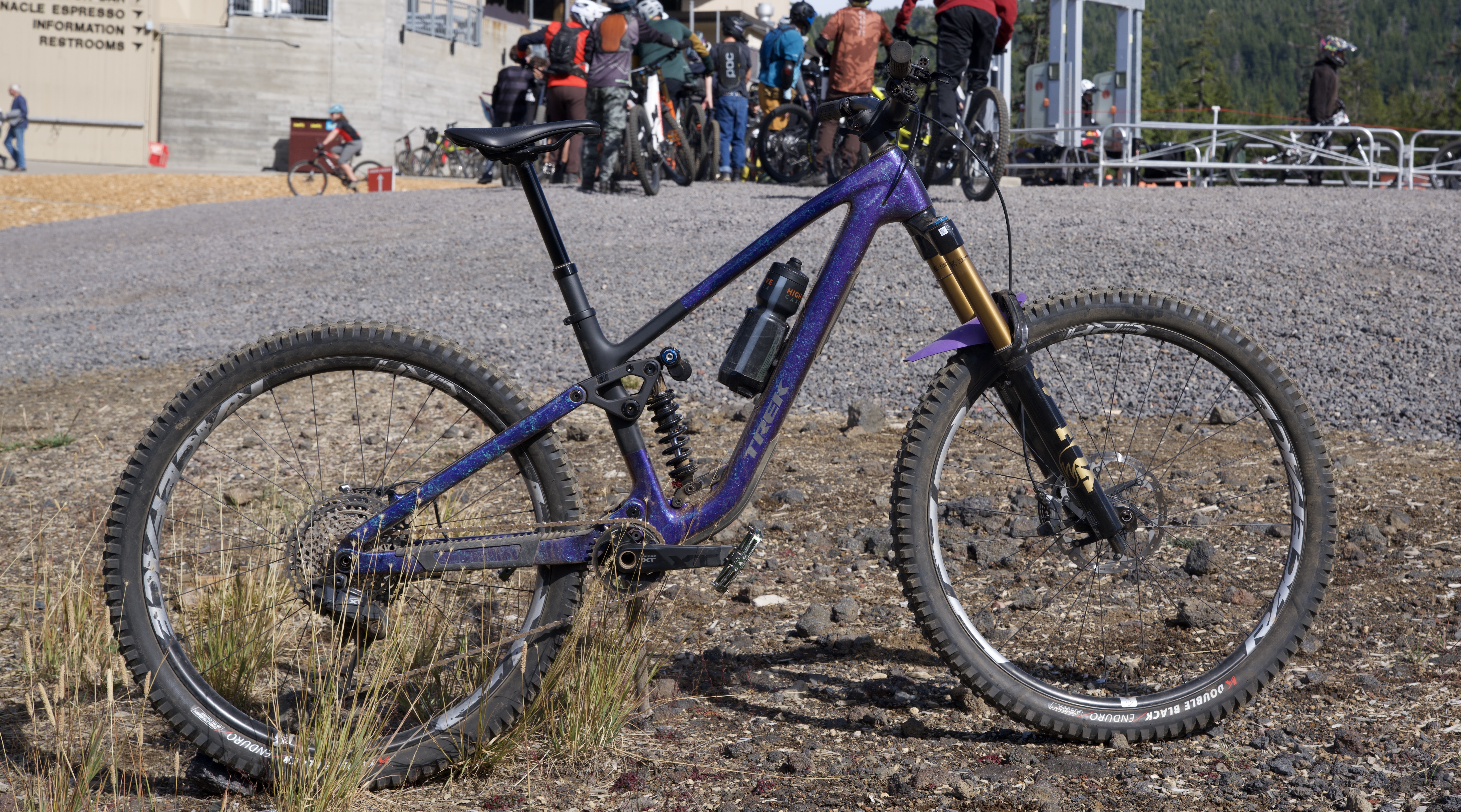
Trek sells and boasts three different versions of the same bike. The Fuel EX is a solid, mid-travel trail bike, while the Fuel MX is the slightly more playful (mixed wheels) and more capable (slightly more travel) “all-mountain” offering. And finally, for a long-travel enduro bike, the LX is very capable and confident.
That said, there is also everything in between. Both the EX and LX can have the smaller 27.5-inch rear wheel. The 160/150mm-travel “MX” can run 29-inch wheels on both ends. Any version can have more or less shock progressivity, and you can adjust the head tube angle with geo-adjust headset cups.
Basically, the Fuel can be the bike you want it to be, with relatively minor changes and only a few extra parts to buy. That said, I spent the lion’s share of my time on the Fuel at the spectrum’s extremes—the mid-travel EX trail bike and the long-travel LX enduro setup.
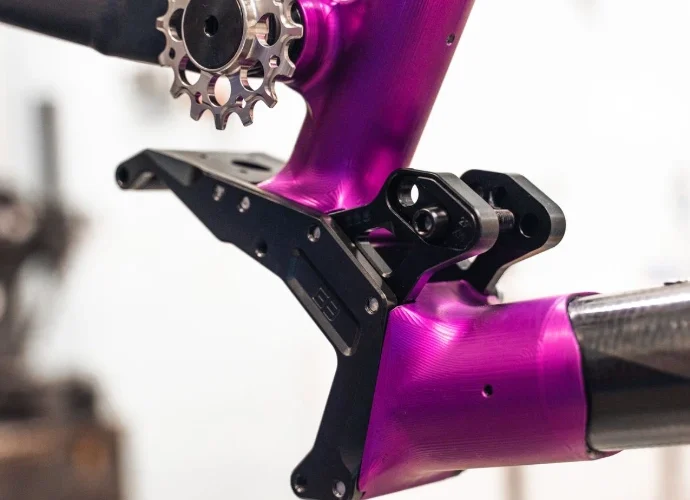
Switching between the different iterations of the Fuel is relatively easy thanks to swappable upper links (EX, MX, and LX) and a lower link for the smaller rear wheel. Progressivity can be adjusted using the flip-chip, also located at the lower link. Trek sells each iteration of the bike, so plan accordingly if you want to try a different variation. Depending on the Fuel you start with, you might need a different rear wheel, a longer fork, shock, or all of the above.
I did throw a smaller rear wheel and the MX link on the bike to try that. Ultimately, I don’t have much to say about the “Fuel MX” because I generally don’t like mixed-wheeled trail bikes. My terrain in Bend, Oregon, is too flat and pedally for the smaller rear wheel to be anything but a noticeable hindrance.
How does the Trek Fuel ride?
As you might have guessed, it depends on the Fuel version, which, for me, was either the mid-travel EX or the long-travel LX. Despite their similarities, the two bikes ride quite differently.
Both the EX and LX climb well. With the EX, Trek sent an air shock and recommended the “less progressive” shock setting, which, despite the “linear” setting, provided plenty of pedaling support and overall pep. That said, I am pleasantly surprised by how well the longer-travel — and heavier — LX pedals. Here, I swapped the flip-chip to the more progressive setting for the coil shock and found no need to reach for the climbing switch.
Especially with lighter, faster-rolling tires, the Fuel EX rides like a bike with 10mm less travel. The EX is an efficient pedaler and an easy choice for bigger backcountry missions, but still provides a plenty-capable platform for when the trail gets rough. I’m a fan of Trek’s APB suspension platform, which stays active under braking. That said, the Fuel EX encourages good line choice rather than point-and-plow-style riding, since its 145mm travel limit is relatively easy to find.
Descending with the Fuel in LX mode leans more toward point-and-plow. Having 20mm of extra travel on both ends (okay, 15mm in back) provides additional confidence, and the slacker front end keeps weight more neutral on the steeps.
And while the LX is more capable than the EX, it isn’t Trek’s ultimate descending enduro bike — without a doubt, that honor goes to the Slash. While I would absolutely enter the occasional enduro race on the Fuel LX, if I were an enduro racer, I’d choose the Slash.
3-in-1 is nice, but there’s a catch
Obviously, it isn’t just as easy as getting “three bikes in one” or, more appropriately in my case, “two bikes in one.” First off, to go from the EX to the LX, you’ll need a new fork and shock — well, if you have Fox suspension, that is.
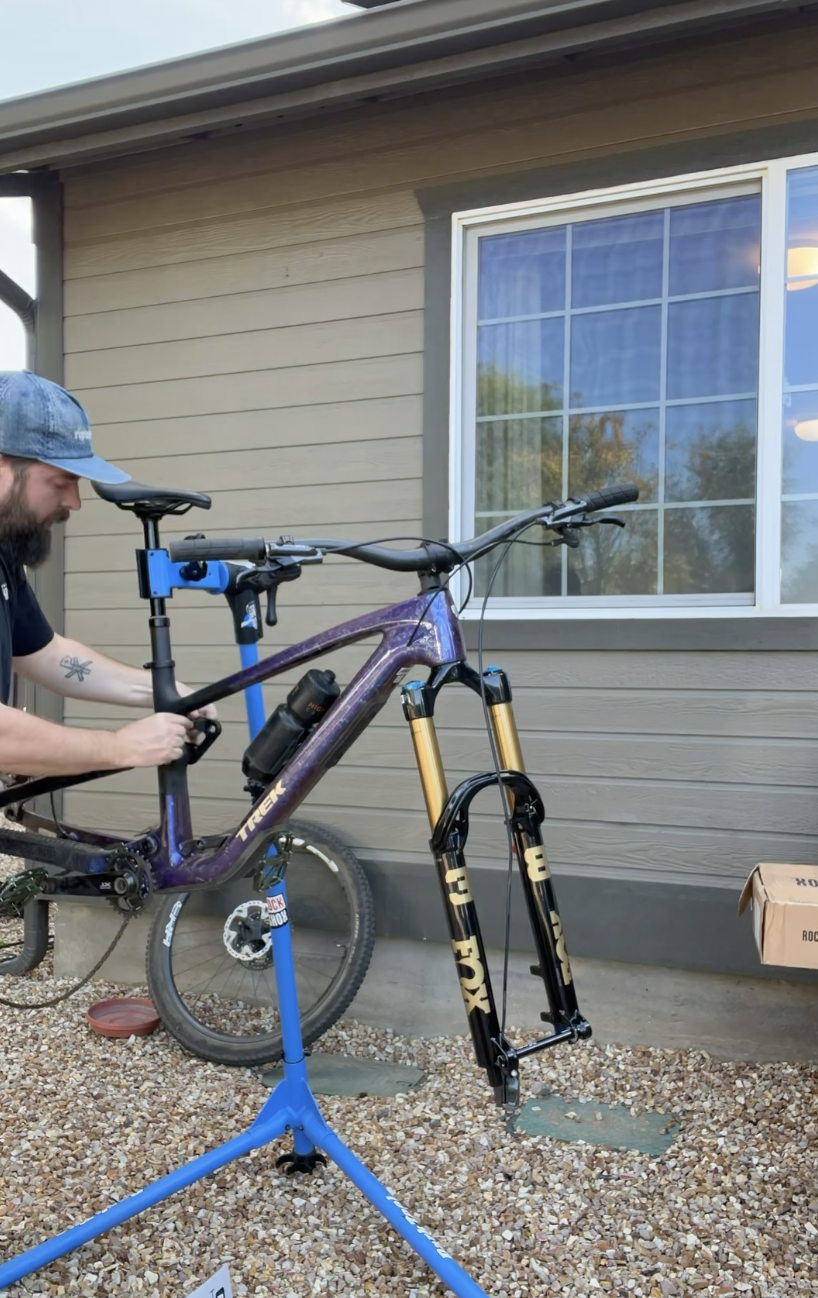
The new Fox 36 that came on the Fuel EX I tested has two travel settings: 150mm and 160mm. The Lyrik offers 170mm and would be the least expensive way to get that much travel up front — least expensive, but most time-consuming. So, if you have the know-how to swap an air shaft, you might consider the RockShox build. You’ll still need a new shock, though — or you could buy an LX RockShox build and reduce both the Zeb and the Vivid.
But that is a lot of fussing with suspension, and I don’t want to do that. If this modular Trek Fuel idea was going to make sense, I need to be able to swap between EX and LX on a Friday night, in an hour, with a beer in my hand (or close by). The allure of a modular bike is the ability to switch modes easily — if I have to fuss with air shafts and stroke length each time, I simply won’t do it.
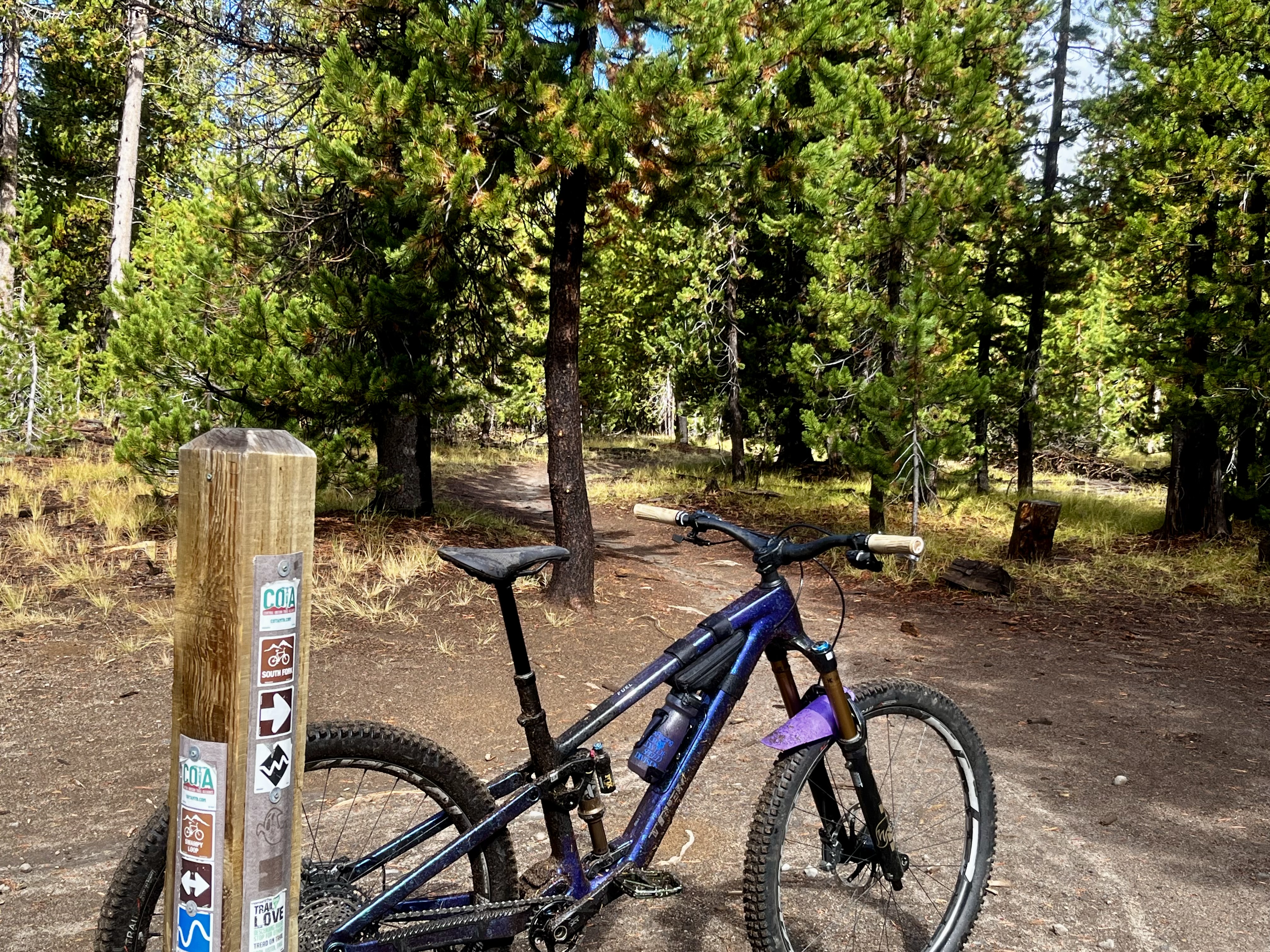
Fortunately for me, Trek sent a Fox 38 (170mm) and a DHX 2 coil (160mm) for me to use when it came time to swap to the Fuel LX. That said, during my entire time testing the Trek Fuel, I’ve looked at the used market and consistently found a fork and shock for around $800. Add enduro or DH-casing tires for another $100, and I essentially had two bikes for another $1,000 (Trek sent me each link, but they sell them separately for $100).
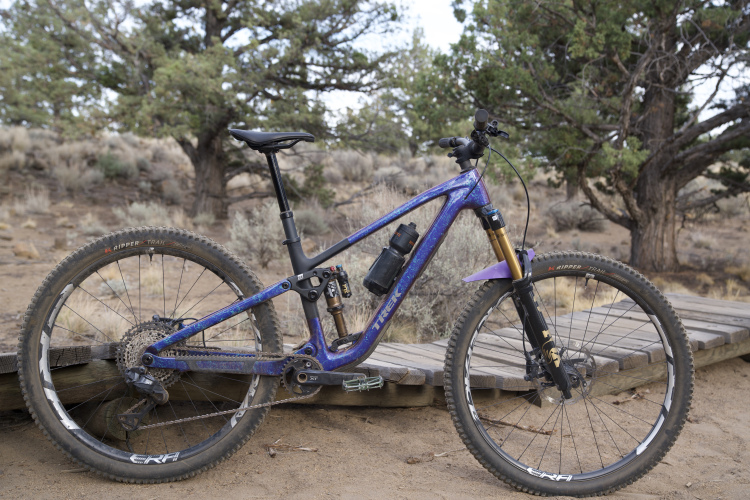
A thousand dollars isn’t chump change, but it’s certainly less than the cost of a second bike. And swapping to the larger bike only added roughly 4lb. The EX (with Race Face carbon wheels and Kenda Ripper tires) weighed just over 31lb. With the same wheels and Kenda Black Diamond tires, the LX sits at 35.5lbs — not bad for an enduro rig.
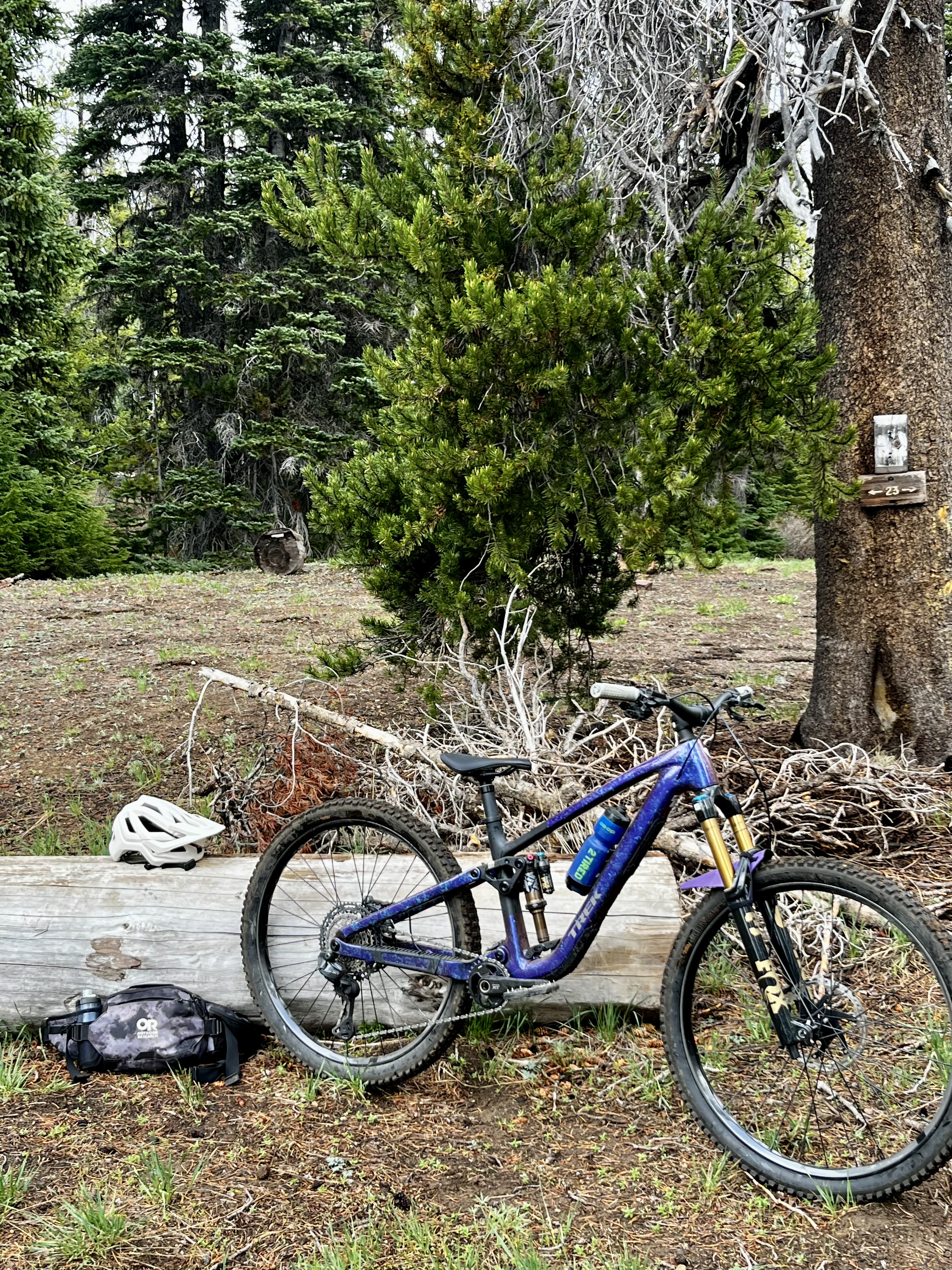
There are geometry compromises, and the LX still isn’t a Slash
Every bike has compromises, so a bike that is essentially 3-in-1 has 3x the compromises, right? Not necessarily. But swapping from the Fuel EX to the LX significantly changes the bike, and not always for the better.
First, the geometry changes significantly. The medium Fuel EX has my ideal trail-bike geometry: a 460mm reach, 64.5° head tube angle, 78° seat tube, and 437mm chainstays. My only complaint is that I wish the 624mm stack was a touch taller. Swapping to the LX shortens the reach by 12mm — a noticeable difference — and also slackens the head tube to 63.4°, bordering on too slack.

While the 448mm reach and 63.4° head tube don’t add climbing points, I eventually got used to them and now really like those numbers when the bike is pointed downhill. I also liked the added stack height, which now sits at 633mm. Though I wish the chainstays grew as well, 437mm is manageable and keeps the LX maneuverable with dual 29-inch wheels.
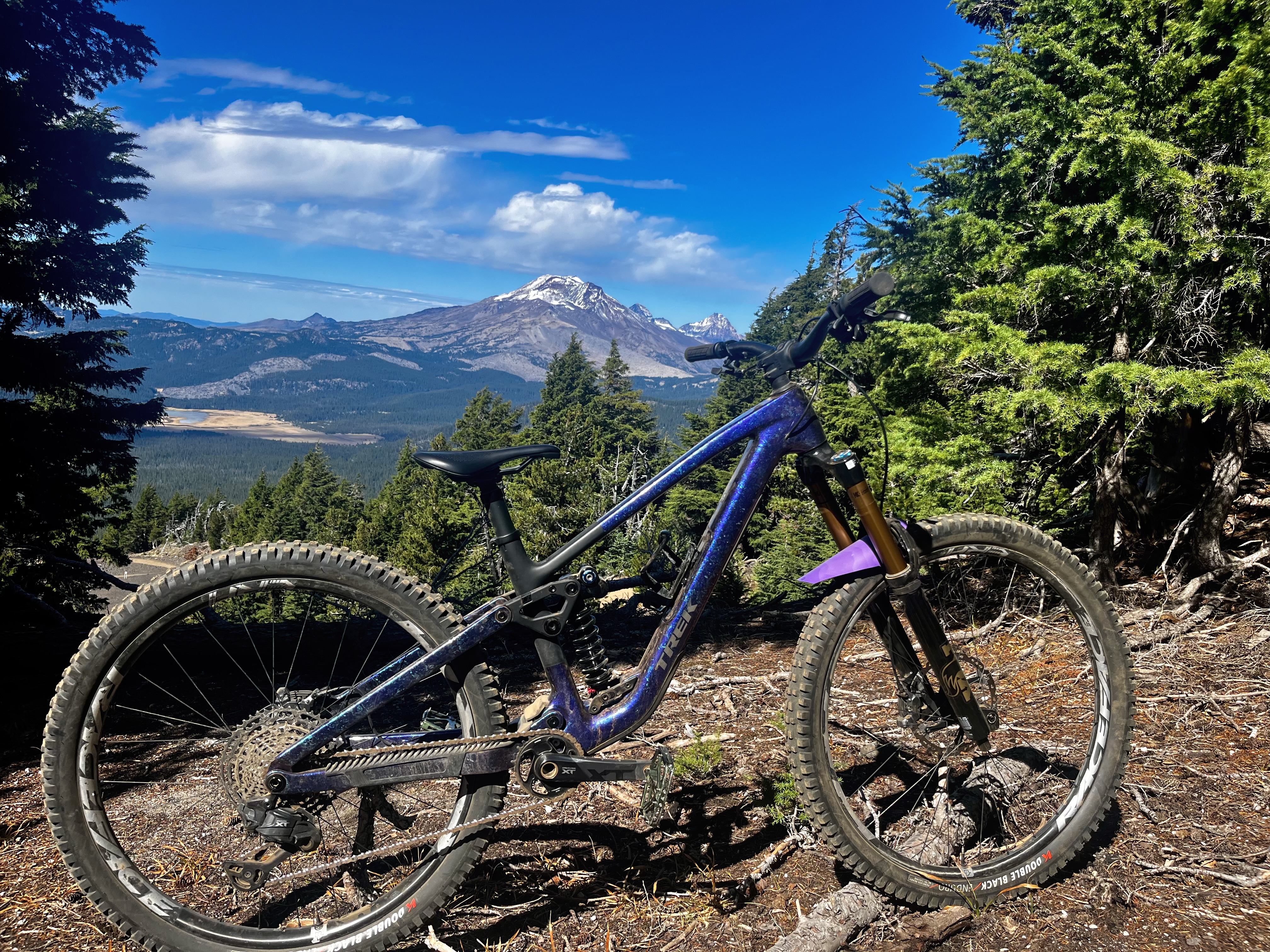
I feel the most significant compromise to the platform is the LX itself. While the LX is plenty capable, it has very tough competition in the Slash. Modular bikes are built around the platform they’re meant for. Yes, they can be other bikes, but they usually have an intended purpose — for the Fuel, that is the EX. The EX is fun, playful, poppy (yes, the cliché “P” words), and efficient. It is what I look for in a trail bike.
It really depends on….
Why get the Fuel platform if the EX is the standout? To be fair, there are plenty of trail bike standouts, like the Top Fuel or trail bikes from other brands. So why does modular make sense?
In my opinion, where you live and the trails you ride matter most. If I lived somewhere I was mostly grinding up fire roads and descending steep, gnarly trails, I wouldn’t be interested in the Fuel platform. Rather, I’d look at the Slash.
Share your Do modular bikes make sense? The Trek Fuel is many bikes in one review
But I am in Bend, Oregon. Here, the Trek Fuel EX is a great bike for more than 90% of the trails I ride — pedal-flow that isn’t overly steep or crazy technical. But we also have trail systems like Cline Butte that are steep and gnarly, and we have a bike park. The EX gets overwhelmed at these places, and the ability to swap to the LX is a nice feature.
I imagine this might be the case in many places in the West — at least in other parts of Oregon, Idaho, and Washington where I traveled and rode this summer. So, does modular make sense for you? It does for me here in Bend, Oregon.
Pros and cons of the Trek Fuel
Pros
- Modular
- APB suspension performance
- Solid as EX or LX
- $1,000 turns it into a “second” bike
- Relatively easy (and quick) to swap between modes
Cons
- Geo compromises
- Need to purchase additional components to get full benefit of the modular platform
- Not everyone needs three bikes in one
Bottom line
I like the idea of modular bikes, but only if the terrain calls for them. The Trek Fuel (EX and LX) makes a lot of sense for a place like Bend, where I can be riding my local trails on a Friday and then up at the bike park on a Saturday.
Keep up with the latest mountain bike news by adding Singletracks as a preferred source on Google.




0 Comments