
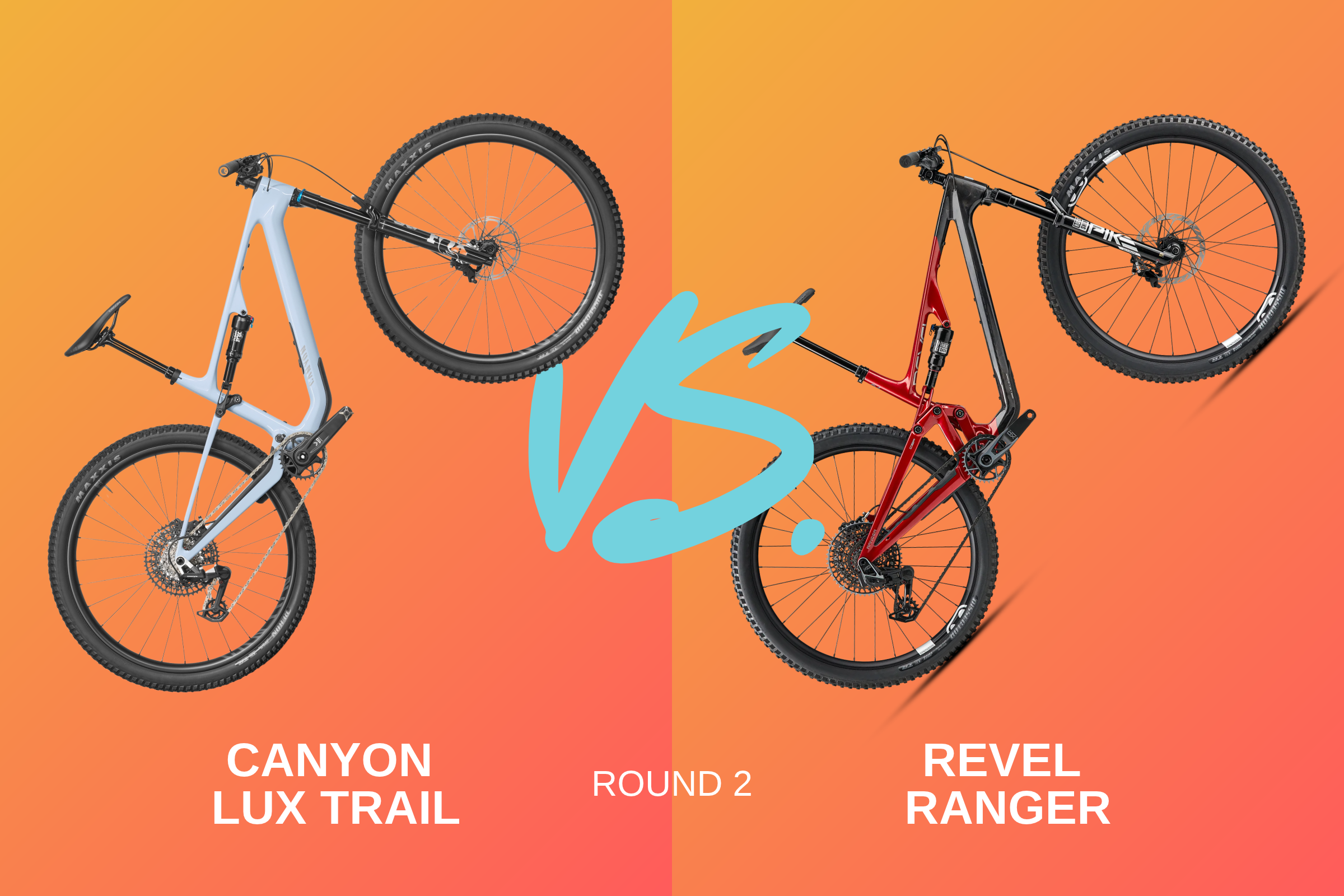
The first round of the 2026 Singletracks Trail Bike Tournament wrapped up last week, leaving a strong crop of semi-finalists. This year’s bracket featured surprisingly similar bikes, especially in terms of geometry. Perhaps we are finally reaching peak geometry. Then again, maybe not.
In the first of two semi-final matchups between short-travel trail bikes, we have the Canyon Lux Trail and Revel Ranger. I’m paying particularly close attention to this one because I’m currently doing a long-term test on the Lux Trail and plan to do the same with the Ranger in the next couple of months. This is going to be a good one!
But before we get into it, let’s take a look at how these bikes arrived in the semi-finals.
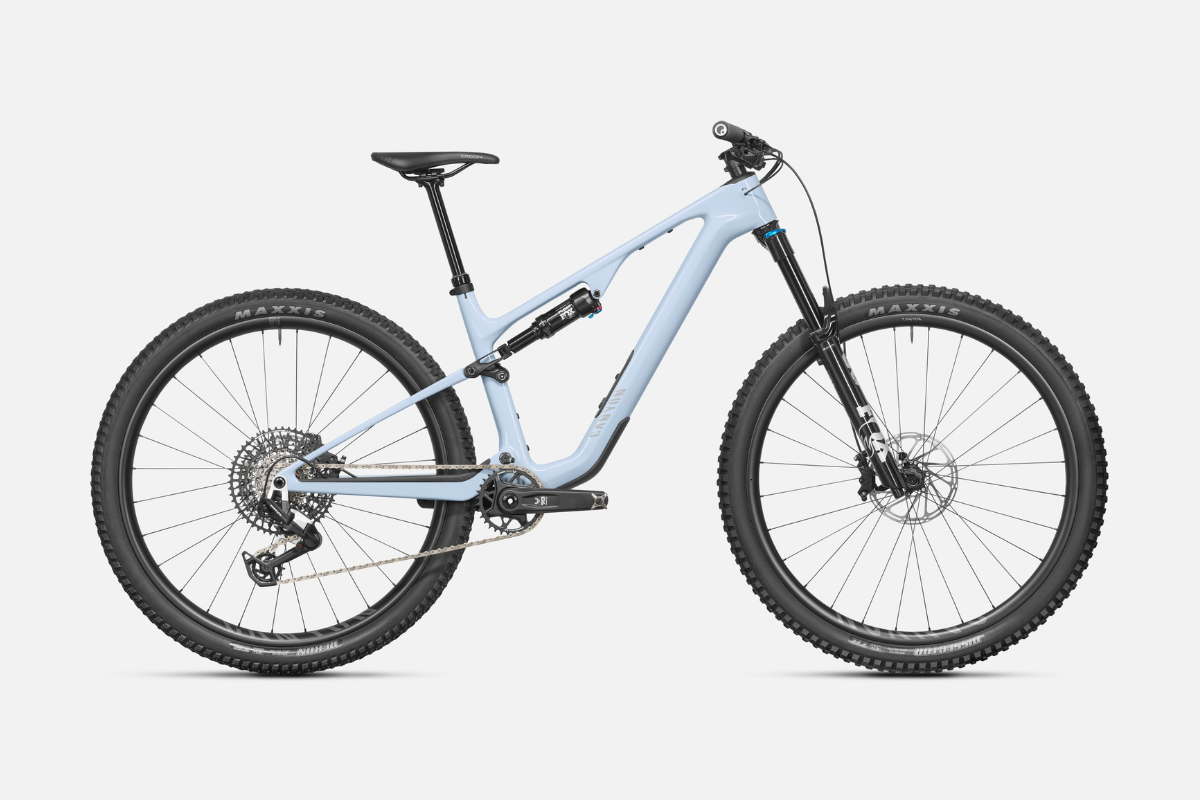
The Canyon Lux Trail prevailed with a longer fork, lighter weight
The Canyon Lux Trail garnered 55% of Singletracks readers’ votes in the matchup with the Intense Spider, which wasn’t a blowout by any means. Looking at the topline numbers, the Lux Trail pairs 125mm of rear suspension travel with a 140mm fork, while the Spider matches travel at 130mm front and rear. Among 92 nominations considered, only eight bikes match front and rear travel. Right or wrong, riders have come to expect a bit more travel up front than in the rear, which could have led some to question the Spider.
With a build weight that’s roughly two pounds lighter, the Canyon Lux Trail has a clear advantage over the Intense Spider. Of course, plenty of riders say weight doesn’t matter, but for those who do want a lighter bike, the Lux Trail delivers with a 28lb+ weight.
The Spider has what’s considered the more progressive geometry of the two bikes, though in this case that might’ve hurt the bike’s chances. Today, many riders are saying reach numbers have gone too far, which gives the Lux Trail’s slightly shorter reach an advantage. The Lux Trail also has longer chainstays. A few years ago, it seemed everyone was trying to make stays as short and as”playful” as possible; now the pendulum has swung in the opposite direction toward longer, more stable chainstay lengths.
I don’t know how much to read into the differences between the build kits on these two bikes. Both offer premium touches for similar prices, with the Spider sporting top-level suspension while the Lux Trail delivers carbon wheels. In the end, the Lux Trail, with its carbon hoops, won the day. It would appear that many of you agree with Travis that quality wheels make all the difference.
Finally, the Canyon Lux Trail may have persuaded some readers based on the ease of purchase compared to the Intense Spider. Yes, the Spider allows buyers to customize their build online, but the flipside is that can be overwhelming. And the ability to buy a Canyon online vs. working with a shop on an Intense simplifies the process.
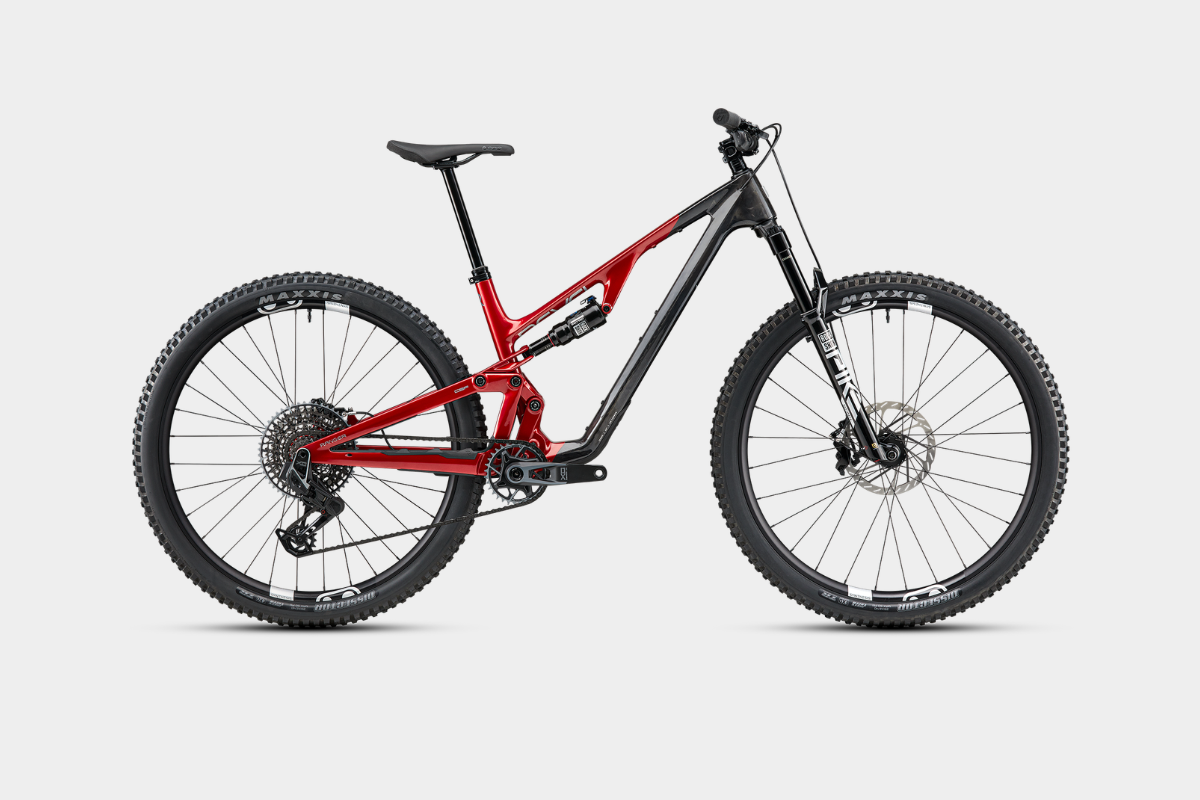
The Revel Ranger came out on top based on price, suspension
The Transition Spur and Revel Ranger are very evenly matched when it comes to travel and geometry numbers, almost down to the millimeter. But the Eagle 90 builds we compared were separated by $700, giving the Revel a real edge with buyers.
Here, it seems readers may have been persuaded by the top-level suspension on the Ranger vs. the Spur. I won’t go so far as to speculate if RockShox vs. Fox made a difference, though feel free to talk trash in the comments if you like.
The Spur and Ranger take very different approaches to suspension, with the Spur relying on a simple flex stay design while the Ranger uses CBF. Riders and product testers, myself included, have found CBF performs really well and is worth the addition of a few extra pivot bearings. Clearly, this comes with a weight penalty, though, with the Ranger weighing 1-2 pounds more than the Spur.
Interestingly, the Ranger lacks features like a flip chip and internal frame storage that the Spur includes. Either readers don’t value these features much, or other, more important Ranger specs won out.
In the end, I suspect pricing and CBF suspension played a big role in reader votes and made up for any complaints about weight or missing frame features.
The Canyon Lux Trail vs. the Revel Ranger
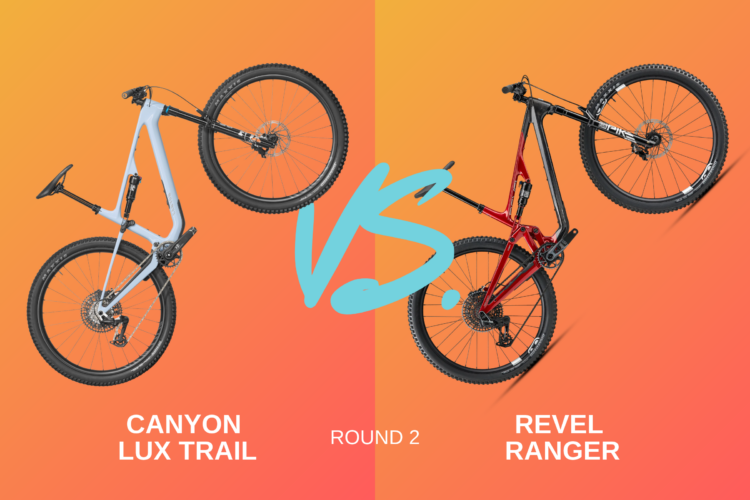
Now, onto the main event. The Canyon Lux is going head-to-head with the Revel Ranger. The Canyon brand, based in Germany, has become a global force over the years by expanding its reach as a direct-to-consumer bike company. Revel, based in Colorado, is much smaller and has navigated a rocky past few years. Why does this matter? Buyers may not always admit it, but brand stories matter. Pricing does too.
| Canyon Lux Trail CF 7 | Revel Ranger SRAM Eagle 90 | |
|---|---|---|
| Suspension travel front/rear | 140/125mm | 130/120mm |
| Drivetrain | SRAM Eagle 90 | SRAM Eagle 90 |
| Suspension | Fox 36 SL Performance fork, Fox Float Performance shock | RockShox Pike Ultimate fork, RockShox Deluxe Ultimate shock |
| Wheels | Canyon XC 30 CF carbon | Zipp HiTop 1ZERO Carbon |
| Geometry* | HTA: 64.8° STA: 76.1° Reach: 470mm Chainstays: 440mm | HTA: 65.7° STA: 77° Reach: 485mm Chainstay: 437mm |
| Weight | 28.22lb (medium) | 29.1lb** |
| Price | $4,999 | $6,699** |
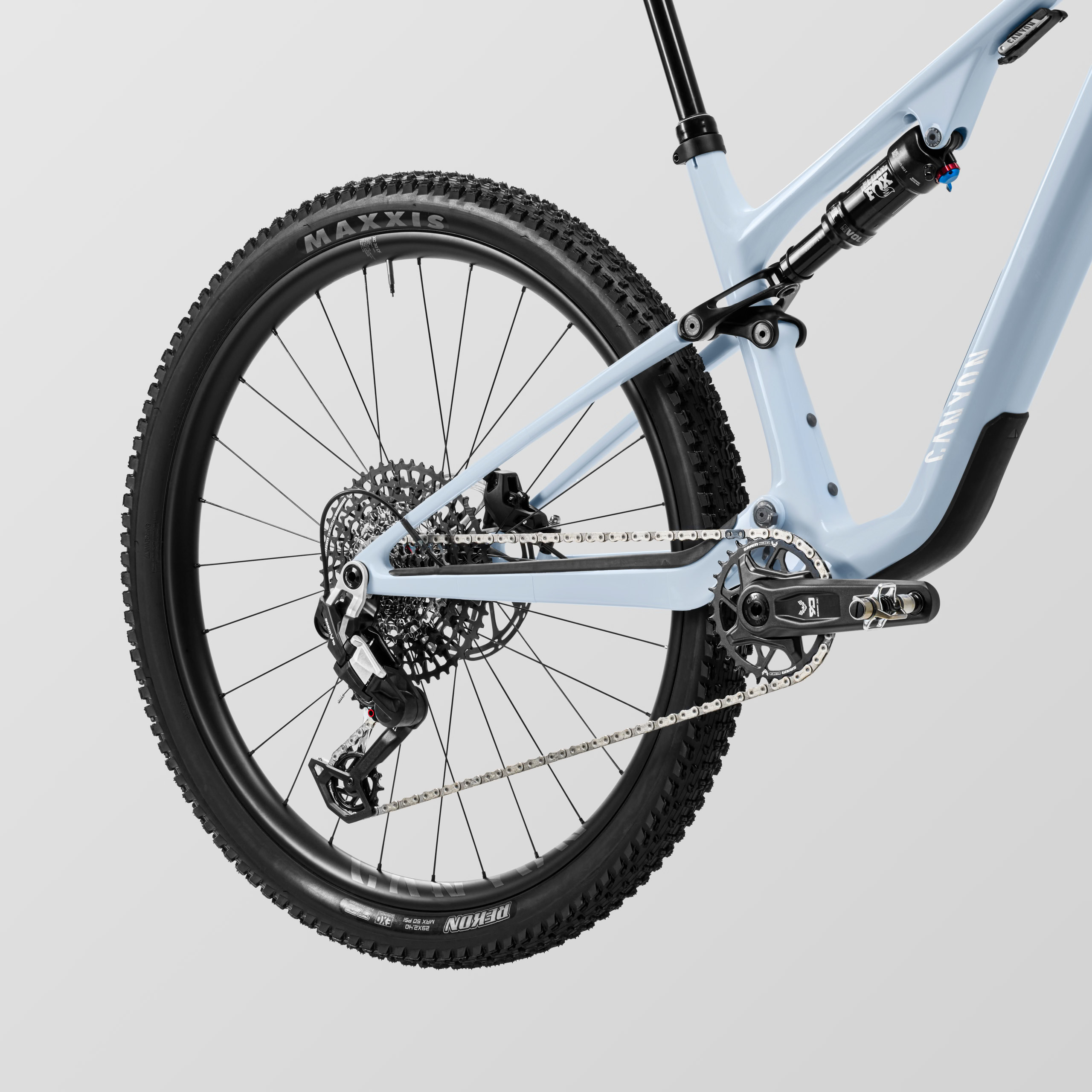
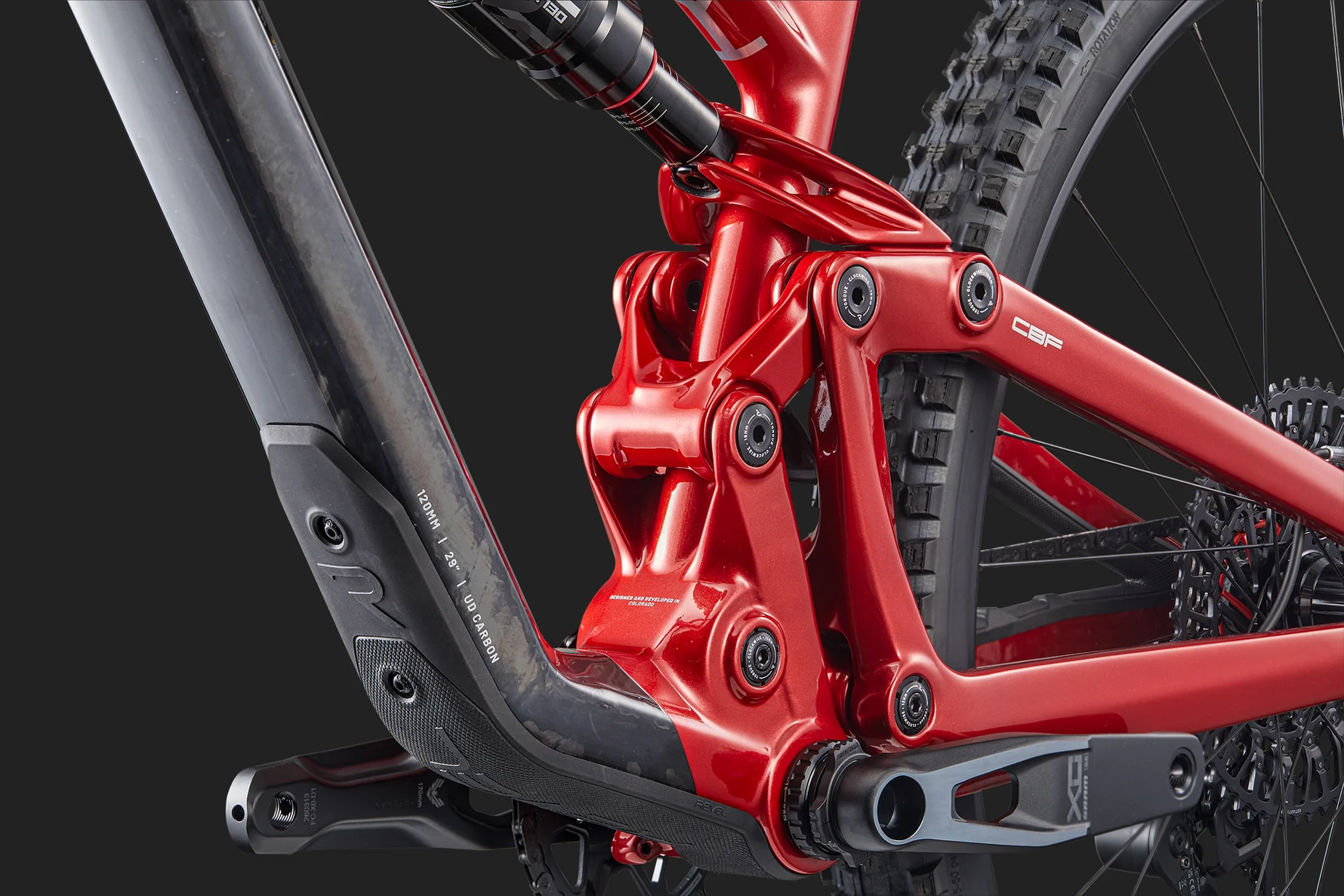
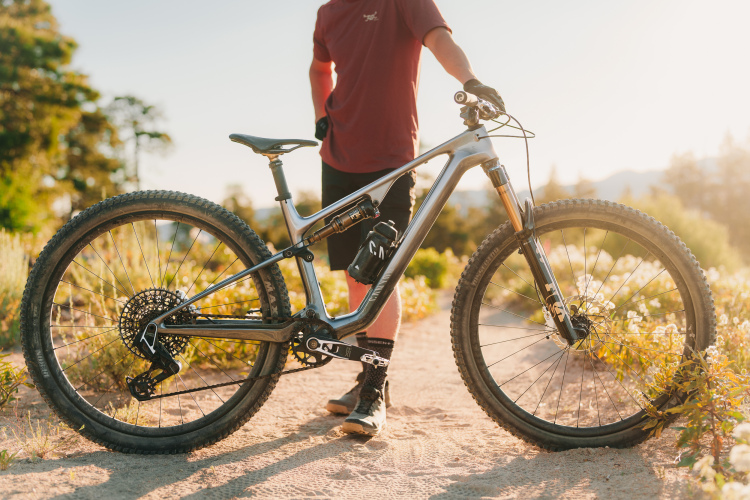
The Lux Trail, like the Spur that Revel beat in the last round, uses a flex-stay suspension design. It’s got a bit more travel (125mm) than the Ranger (120mm) and a longer fork too. The Ranger build in our comparison boasts top-end RockShox Ultimate suspension compared to Fox Performance-level suspension on the Lux Trail.
For this matchup, we upgraded the Ranger’s wheels to Zipp carbon hoops to match the wheels on the Lux Trail. That also allows us to make a closer weight comparison between the two bikes. The Revel weighs almost a pound more than the Lux Trail, likely due in part to its more complex suspension design.
The Canyon has internal frame storage, which the Revel does not. Both bikes boast two sets of bottle mounts inside the front triangle.
The geometry shows slightly different priorities
I’m going to go out on a limb and say that most of us won’t be able to tell the difference between the head tube and seat tube angles when riding these bikes. They’re within less than a degree of each other, after all. Where riders will certainly feel the difference between the Lux Trail and the Ranger, at least in terms of fit, is the reach. A size large Lux Trail has a 470mm reach while the Ranger is much longer at 485mm.
And yet, the Lux Trail has a significantly longer wheelbase: 1231mm vs. 1194mm. How is this possible? The answer: longer chainstays combined with a slacker front end. Taken together, the geo suggests the Lux Trail is slightly more aggressive and stable for descending, which the travel numbers back up as well.
The Ranger, on the other hand, appears to prioritize climbing more than the Lux Trail with a steeper head tube angle and steeper effective seat tube angle. The X-factor here is the CBF suspension, which promises to be highly progressive when the bike turns downhill.
The Revel Ranger is offered in four sizes while the Canyon Lux Trail is available in five, including an extra small with a reach that’s just 410mm.
There’s a significant price gap
Both the Ranger and Lux Trail feature a SRAM Eagle 90 mechanical drivetrain. And in this comparison, both sport carbon wheels.
However, the Ranger build with the Eagle 90 drivetrain splashes out with top-of-the-line RockShox suspension, while the Lux Trail gets Fox Performance-level suspension. And the Ranger one-ups the Lux Trail’s Bronze Motive brakes with Silver.
But where Canyon seems to save the most money over the Ranger is with house-brand parts like the handlebar and dropper post. For these parts, Revel specs OneUp components. And while both bikes do come with carbon wheels, Canyon’s are in-house, and Revel uses Zipp.
Bottom line
The Revel Ranger and Canyon Lux Trail are both excellent short-travel trail bikes that take very different approaches to the category. The Lux Trail is the simpler of the two, getting the job done with a tried-and-true single-pivot design and low-frills parts spec and price to match. The Ranger, on the other hand, brings a unique flair with CBF suspension and higher-end parts.
Now it’s your turn: tell us which one is the better short-travel trail bike.
We’ll reveal the winner next week in the Singletracks Trail Bike of the Year short-travel finals.
Keep up with the latest mountain bike news by adding Singletracks as a preferred source on Google.




0 Comments