

Any opinions expressed in this article belong to the author alone and do not necessarily represent the opinions of Singletracks.com.
Yes, I know: terms like “quiver killer” have been drastically overused. Now when the words are uttered, most of us roll our eyes and mentally prepare ourselves for another quick marketing quip or slogan.
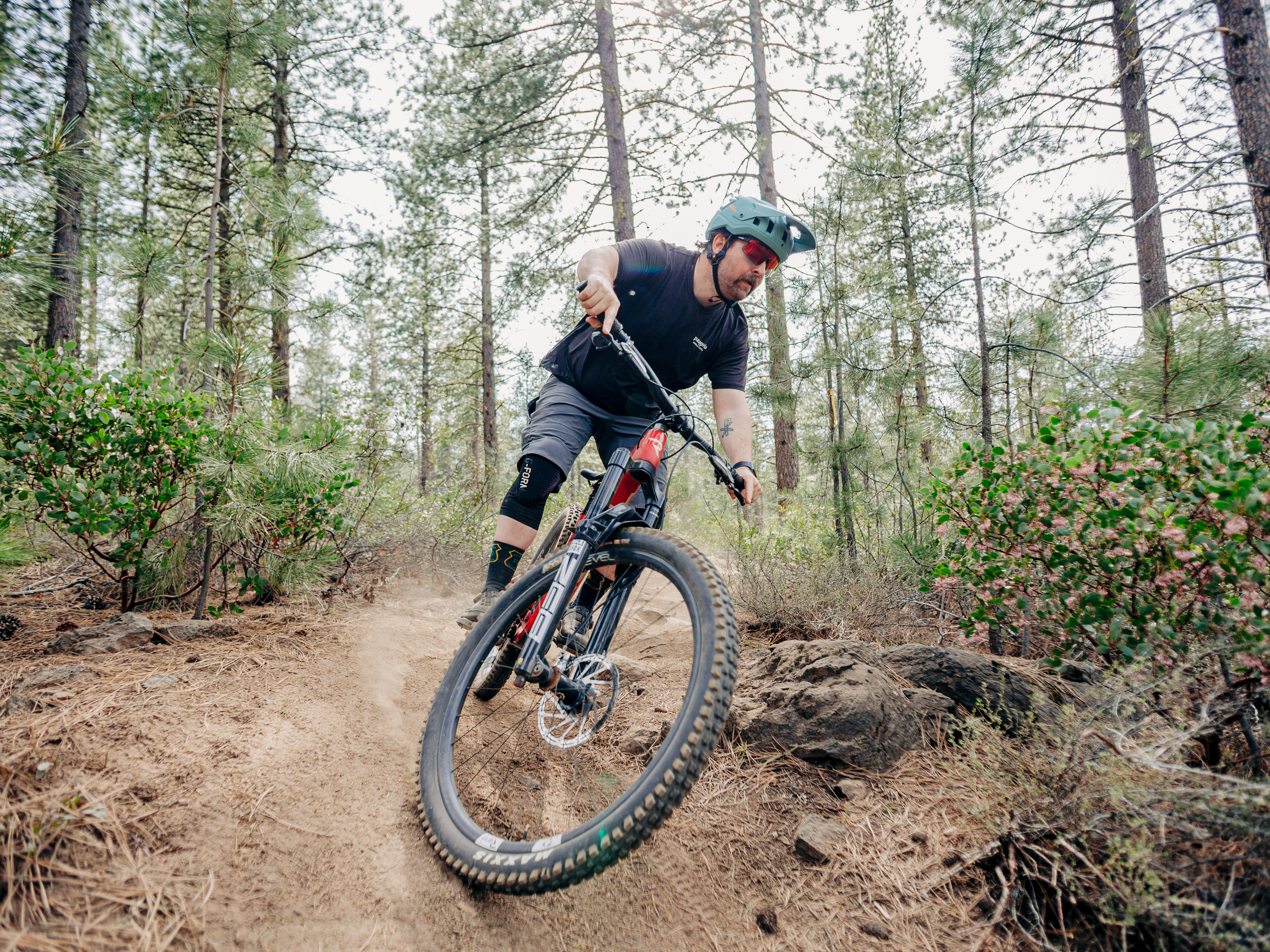
I understand; I do it too. But, hear me out: I do think the “do-it-all” bike exists. In fact, it is the one I ride now — a 150mm, pedal-friendly, descending-oriented, modern trail bike. It is these long-travel trail bikes that, I believe, can be your one and only.
The modern trail bike
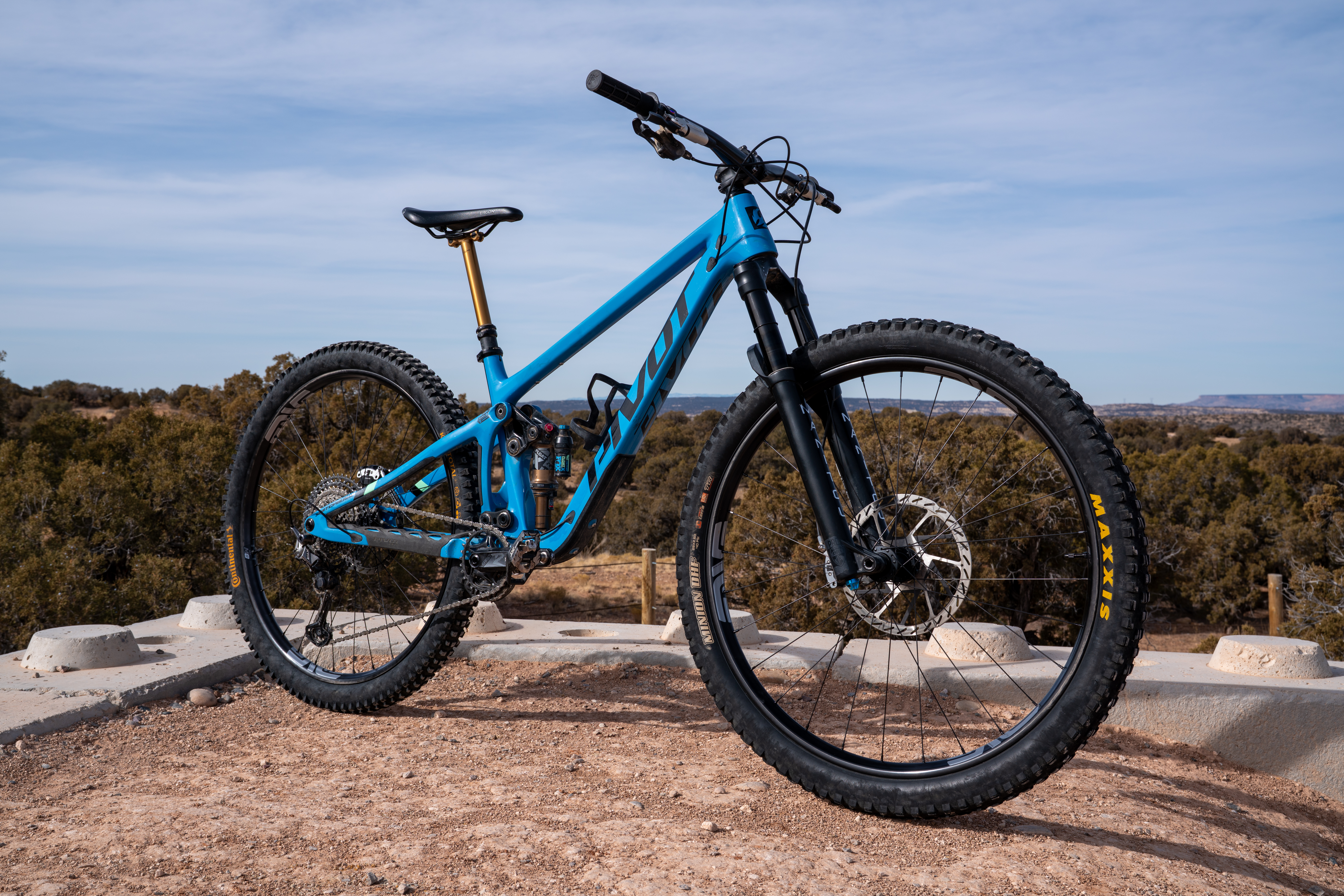
So, what exactly is the “modern trail bike”? Trail bikes, like many things, fall on a spectrum. For the most part, we recognize this “trail bike spectrum” by its travel numbers. To be more specific, trail bike travel numbers (typically) fall between 130 and 150mm of rear wheel travel.
As Jeff pointed out in his recent Trail Bike of the Year battle, 20mm is a significant difference. While we used to have words that further described bikes in this category, it seems we hear “downcountry” or “all-mountain” less and less.
Instead, we just say “trail bike.” And I’m okay with that.
The “modern trail bike” has also settled at a relatively specific geometry range. Head tube angles (HTA) are typically between 64° and 65°, and seat tube angles (STA) between 76° and 78°. For the most part, reach lengths are around 480mm (size large), and stack heights are between 630mm and 640mm. Chainstays also vary, often landing between 435mm and 445mm for a size large.
Obviously, there will be some geo differences, especially when you go up or down in size, but the differences remain consistent. Landing at these geo numbers really helped establish the long-travel trail bike as the quiver killer.
Geo changes have helped
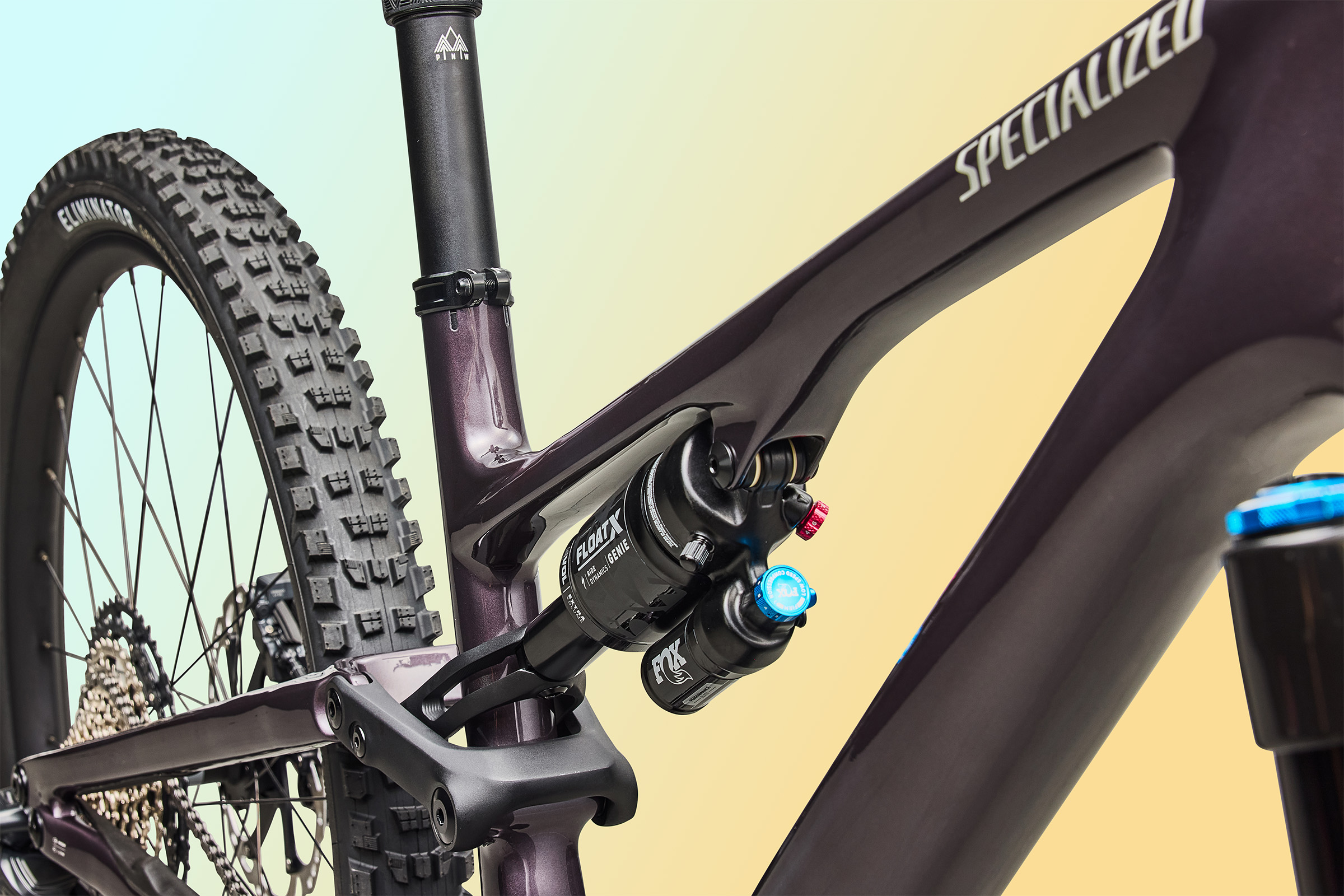
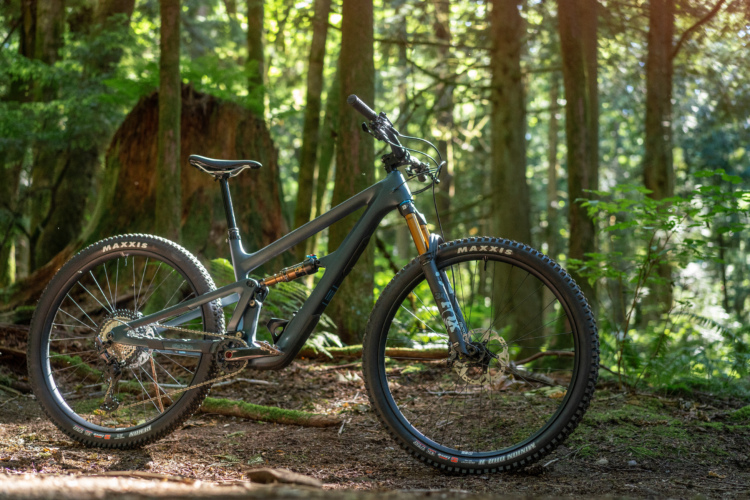
For reference, my daily driver is a 2023 Canyon Spectral CF8. It rolls on dual 29-inch wheels and has 150mm of rear travel paired with a 160mm fork. My size medium Spectral has a 456mm reach, 437mm chainstays, 64° HTA, and a 76° STA.
I absolutely love this bike. It is bikes like this one — the Bronsons, Sentinels, Hightowers, Ripmos, Switchblades, etc. — that have cracked the code of balancing longer travel numbers with efficient climbing. I’d argue that trail bike geometry evolution is the key to unlocking this balance.
Nearly a decade ago, Singletracks began tracking trail bike geometry. As you would expect, quite a bit has changed in that time. For example, in 2016, a Santa Cruz Hightower had a 67° HTA, 74.3° STA, 450mm reach (size large), and 613mm stack (size large).
In 2025, a size large Hightower now has a 64.2° HTA, 78.2° STA, 480mm reach, and a 641mm stack. Plus, travel increased from 135/140mm in 2016 to 150/160mm today. Yes, many of these changes benefit descending, but I don’t think they necessarily harm climbing. For the average rider, I would argue that the Hightower today pedals and climbs just as well, if not better, than a 2016 Hightower.
A steeper STA, combined with a taller stack and a slacker HTA, puts you in an upright, comfortable pedaling position. Yes, the reach is longer, but these factors also compensate for what would otherwise be an uncomfortable, stretched-out pedaling position.
There’s no doubt that updated suspension kinematics and technological advancements, such as longer (and better) dropper posts, play a part in improving pedaling efficiency. But the geometry changes certainly help make a “long-travel” bike so comfortable to pedal.
The ups and downs of a long-travel trail bike
With all this talk about how well these bikes pedal, you might be wondering: Does a modern 150mm trail bike actually climb better than a modern 130mm trail bike? Not quite. But in my experience, the difference is so negligible that it doesn’t bother me to be a touch slower with longer travel.
I’ve spent a good amount of time on the shorter travel end of the trail bike spectrum. These are phenomenal bikes, and I appreciate their efficiency. However, when I jump back on my Canyon Spectral, I don’t feel as if that bike is now sluggish. In fact, rather than feeling like the Canyon isn’t as efficient as its shorter-travel counterparts, I’m impressed by how efficient it is for a 150/160mm bike.
But descending is a different story. Those 130mm trail bikes that are fun and efficient climbers quickly find their limits when descending rowdier trails. While they might be fun on intermediate chunk and flowy descents, they are often outgunned on rowdy, black diamond downhills.
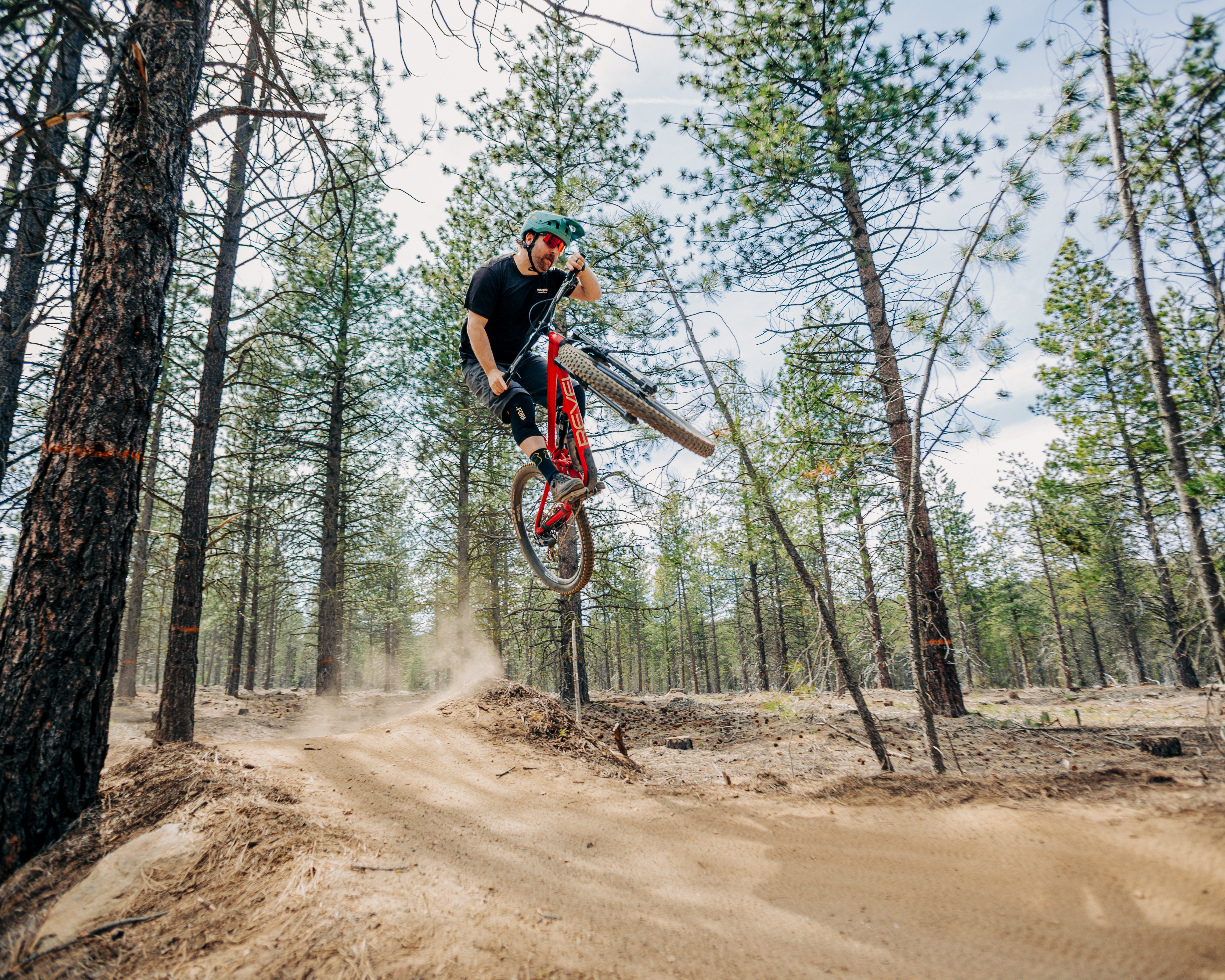
Conversely, long-travel trail bikes climb well and also don’t feel like “too much bike” on mellower trails. But, as the trail points down and gets more technical, 20mm of extra travel comes in big. Plus, a slightly slacker HTA and perhaps a little extra reach and chainstay length provide quite a bit of stability and confidence.
Isn’t there a weight penalty?
A heavier bike is a chore to pedal, and long-travel trail bikes are typically heavier than their shorter-travel counterparts. However, after looking at both long-and short-travel modern trail bikes, it appears that the weight gap isn’t as significant as we might think.
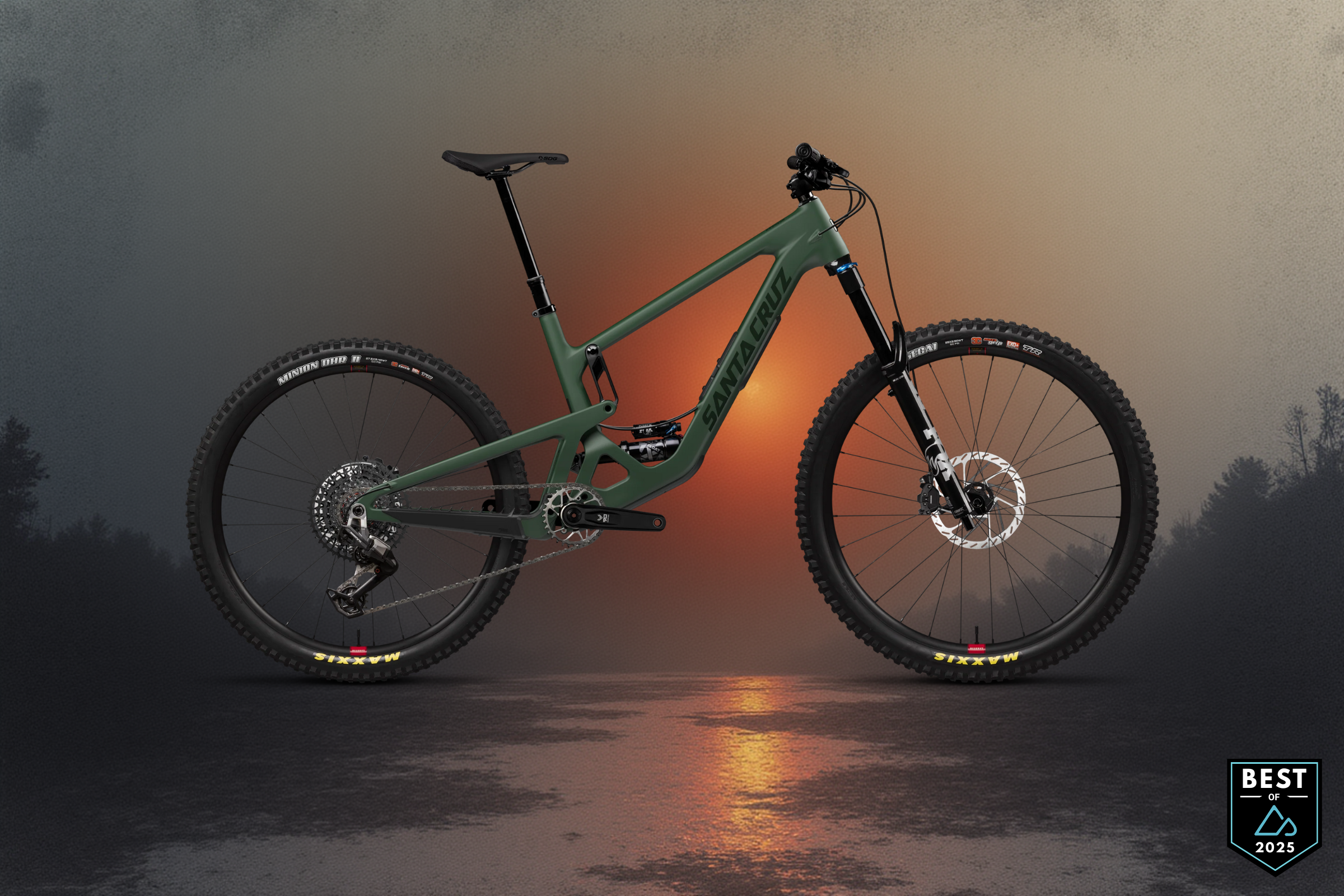
I’ll use two mulleted trail offerings from Santa Cruz as examples, both with the same XO AXS RSV build. The longer-travel 150mm Bronson has a claimed weight of 32.41 pounds, while the 130mm 5010 weighs in at 30.58 pounds.
Compared to the 5010, the Bronson has a weight penalty due to beefier components, such as suspension, wheels, and tires. Yet this penalty isn’t even two pounds, which few riders would actually notice on the trail. In fact, lower weights and a more efficient pedaling experience could be achieved by running a less aggressive tire combo than the Assegai/DHR stocked on the Bronson.
Again, I doubt a tire swap would be needed, as we would all likely be very impressed with the Bronson XO AXS RSV’s pedaling prowess. The Bronson’s two extra pounds will not negatively impact your overall riding experience and hold you back on the climbs. However, I believe the 20mm of extra travel makes the Bronson a much more capable descender than the 5010.
I’ll take an extra 20mm of travel for less than two pounds every time, especially when the overall weight is just 32 pounds.
Versatility for the win
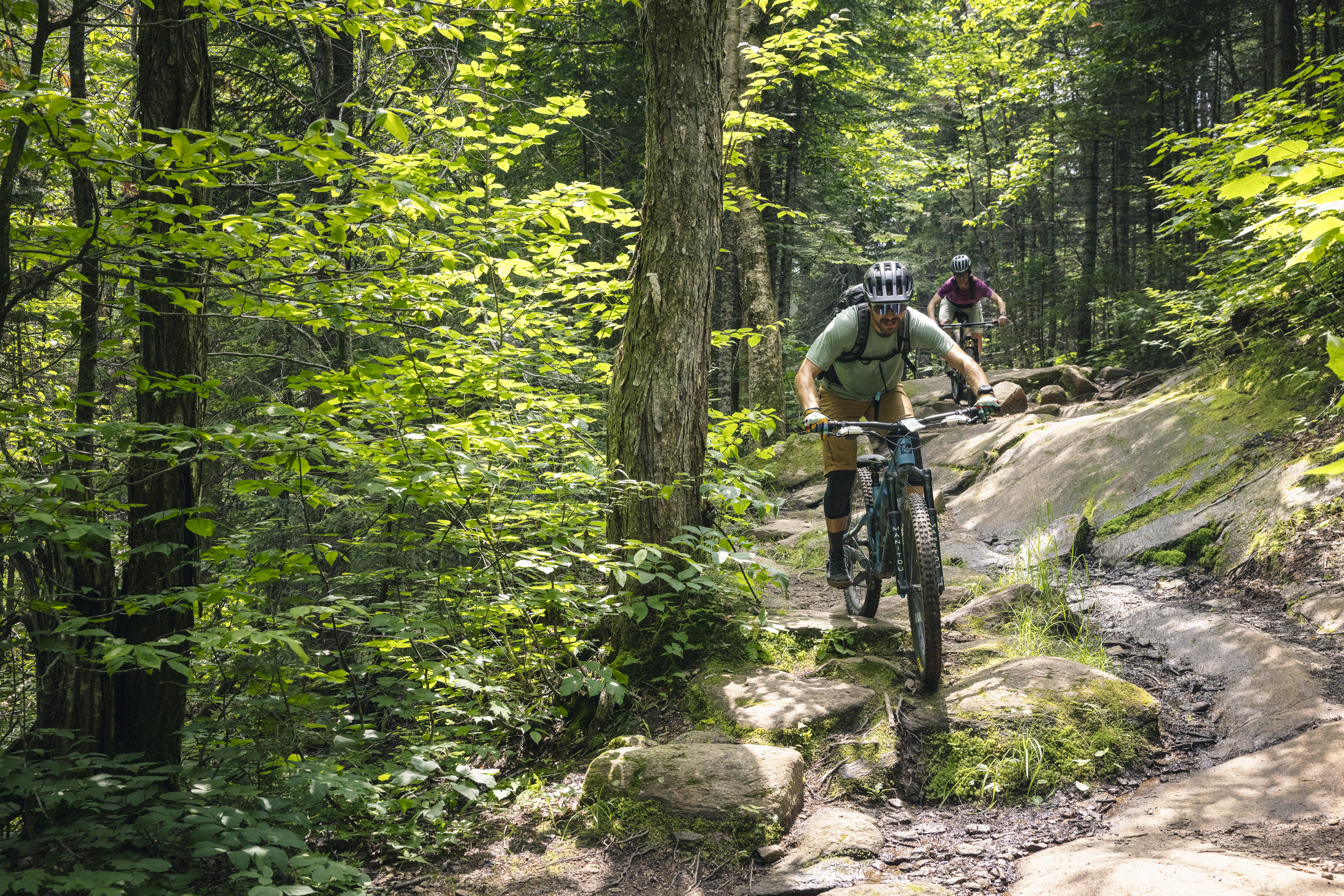
Ultimately, it is the versatility of these long-travel trail bikes that makes them the “quiver killer.” They remain efficient climbers and pedalers while punching above their weight class on the descents. I’ve taken my Spectral on a 30-mile trail ride one weekend and ripped downhill laps at the bike park the next.
Obviously, the trail bike you need will greatly depend on where you live. If you don’t live in a place with much elevation or rough, rowdy descents, maybe 130mm is all you need. Perhaps you live in an area where big, rough, and rowdy descending is all there is (I envy you), and 150mm isn’t enough. Your bike should match your terrain.
I live in Bend, Oregon, where there’s a good mix of terrain. For many of our trails, a 130mm trail bike is all that is needed. Aside from the bike park, this is especially true during the summer. Our trails are flowy and fast, and are mostly intermediate-level.
However, once winter hits, many of those trails are snowed in for the season. This is when we head east, where we encounter much different terrain. Our winter riding is technical and steep. For example, we may descend 1,000 feet in roughly one mile on our winter trails, compared to 1,000 feet over four miles in the summer.
Whether it’s summer or winter, flowy or technical, I can tackle it all on my long-travel trail bike.
If you can only have one bike in your “quiver,” make it a long-travel trail bike.



25 Comments
Dec 31, 2025
Jan 1, 2026
Dec 31, 2025
Dec 31, 2025
I live in Chattanooga, TN and travel regularly to Pisgah, BC, Colorado, and the northeast US to ride so my V2S Ripmo (160F/147R) does it all without having to maintain more bikes.
I agree that I might be a bit slower on the ups but heck I could probably stand to lose a couple of pounds anyway. :-)
Jan 1, 2026
Clearly it depends on what you ride most. I also have a Pibot Trail 429 “enduro build” 120/140 and if I sold one and kept one, I’d keep the switchblade hands down.
Dec 31, 2025
Jan 2, 2026
Jan 1, 2026
Jan 1, 2026
Jan 2, 2026
Dec 31, 2025
Jan 1, 2026
Jan 1, 2026
Dec 31, 2025
Dec 31, 2025
Jan 7, 2026
Dec 31, 2025
Jan 2, 2026
Jan 1, 2026
Dec 31, 2025
Jan 1, 2026
Dec 31, 2025
Dec 31, 2025
Jan 1, 2026
Dec 31, 2025