

Updated on 6/29/26 to add automated transcript text.
On this Episode
Chris Sugai is the co-founder and President of Niner Bikes, a brand which was an early adopter of the now ubiquitous mountain bike wheel size. Over the years Chris and Niner have worked with incredible athletes, produced countless innovations, and generously supported the International Mountain Bike Association.
We get the inside scoop on how Niner got its start and talk about the current state of the mountain bike wheel size debate. Chris talks about building a culture and a brand, and what’s changed now that Niner is part of a larger parent company. We ask about gravel bikes and also what’s next for the bike industry.
Support this Podcast
- Review the Singletracks podcast on Apple Podcasts or drop your feedback in the comments below!
- Make a donation to help sustain future episodes.
- Become a Singletracks Pro Supporter.
Never Miss an Episode
- Listen on Spotify
- Listen on Apple Podcasts
- Listen on Google Podcasts
- Listen on Stitcher
- Listen on Overcast
- Get the RSS Feed
- View all Podcast Episodes
Automated transcript
Jeff Barber 0:39
Hey everybody, welcome to the Singletracks podcast. My name is Jeff, and today my guest is Chris Sugai. Chris is the co-founder and president of Niner Bikes, a brand which was an early adopter of the now ubiquitous mountain bike wheel size. Over the years, Chris and Niner have worked with incredible athletes, produced countless innovations, and their supporters of the International Mountain Bike Association. Thanks for joining us, Chris.
Chris Sugai 1:06
Jeff, thanks. I’m happy to be on your podcast.
Jeff Barber 1:09
So, you started Niner in 2004 What were you doing before that, before you were sort of in the bike industry?
Chris Sugai 1:16
Sure, we officially started 2005 but, but yeah, before I got into the bike industry. I took the standard path of, you know, I owned a window tinting company.
Jeff Barber 1:25
Pretty standard.
Chris Sugai 1:27
Yes, yeah. No, I started that company when I was 19, and I was still going to college, and ran that company for, you know, over 25 years.
Jeff Barber 1:36
How do you start a window tinting company? Like, were you doing it yourself initially, like installing stuff, or how did that even work?
Chris Sugai 1:43
Yeah, you know, when I was in the high school, I was really into cars and met a guy that was a window tinter, and I learned from him, and then started tinting cars, and and just opened up a small garage and started attending cars, and then we grew that to be one of the, you know, one of the largest in Los Angeles.
Jeff Barber 2:04
Wow.
Chris Sugai 2:04
And then moved into homes and commercial buildings after about 10 years of doing it that way, and then was able to grow the business to about the fifth largest in the United States.
Jeff Barber 2:13
Oh, wow, incredible. Well, I mean, it sounds like you had a lot of success with that business, but tell us, like, what was the light bulb moment for you, where you said, you know, what, I should start a bike company.
Chris Sugai 2:25
So, after about 20, it was right about 25 year mark. I was like, well, I’ve been doing this for 25 years, and I love reading business books, and just studying business, and I read a passage, do something you love, never work a day in your life, and I started really germinating on that idea, and I told my wife, you know, I’m gonna look at trying to find another business, and it was quote unquote going to be a side business to my window tinny business, because I wasn’t working full time at that point, and so, you know, the three things you don’t have to pay me to do on a Saturday is watch Formula One, play poker, or ride my mountain bike, so I literally spent, you know, a year, all of 2004 looking for business to get into in one of those three passions, and I, at the time, I was heavily into, into single speed riding, and I was, you know, you ride with a group of people in sort of a pecking order of, you know, Dan’s the first one up, and you know, Ryan’s the first guy down, and, and you sort of have a pecking order with a group. We have grouped up 25 of 25 people we rode with on a regular basis for almost 15 years. Anyways, got a 20 niner, and I just started whooping everybody uphill, downhill, and I was on a rigid, you know, with V brakes back then, that was when everybody else had, you know, kind of enduro bikes at the time, yeah. And this is back in 2004 so you know it’s pretty laughable technology when you look at it now, but you know, but I was like, wow, this is this thing’s got this thing’s got this is amazing bike, and and then fortuitously, a friend of mine had just been laid off from in, he was a frame designer, so I thought, “Oh, hey, would you be interested in, you know, helping me design some 29 or frames? And that’s how Niner got started, you know, took some money that I had and started the company, and sort of ran down the side of my other company, and it just started growing organically from there.
Jeff Barber 4:15
Yeah, that’s really cool. Well, did you find sort of what you expected? I mean, I imagine even though it is you’re running mountain bike company, and that’s cool, and that’s fun, like there’s got to be challenges to that as well. Like, was it a big difference for you, like running this type of business versus running a window tinting business?
Chris Sugai 4:35
Yeah, the window tinting business was more sort of like the construction field, which is different from the bike industry, so it was, you know, definitely a quick lesson in learning and drinking from a fire hose, and, and you know, making a lot of some mistakes along the way. You know, I think in business, just in general, there’s a lot of overlap when it comes to cash flow management and branding and advertising, and so forth, admin kind of stuff that carries over. So you know, those mistakes, thank goodness, I’d already made in my other 20 years of running the winter tending company, so I didn’t make as many of those mistakes going forward, but you know, learning the bike industry was with a steep learning curve, and one thing I really enjoyed about the bike industry is just the people, it just, you know, I think people that get into the outside industry have a passion for the outdoors, where people that are in the construction industry don’t necessarily find it as something they want to do on the weekends. It’s just something they fall into, or they like building, like I like doing things with my hands. But I did find it a much more passion-oriented business, and just everybody I met was just all about cycling, climbing, kayaking. So that was really enjoyable, because I, you know, I’m an outdoor person, I really enjoy the outdoors.
Jeff Barber 5:42
Yeah, that’s cool. Cool to see blending those passions together. Well, you mentioned that you started out with a single speed or rigid 20 niner, and it seems like at the time, around 2004 2005 that’s that was pretty much like the main application for the big wheels. Why at that time, was that seen as such a natural application for big wheels? Like, were people thinking about this as something for full suspension bikes or different types of bikes?
Chris Sugai 6:10
No. When I first started, you know, 29 or single speeds were the hot thing, and we didn’t have forks well, because no one wanted to make a fork, right? Marzuki was the only fork at the time, and it was okay, fork, but it, you know, had some issues, but you know, Fox, and at that time, Rockshock, you know, weren’t interested in building a fork. I remember begging, and I won’t say which one, but, you know, please make a fork, and they were just like, we don’t see a market for that, and I almost went ahead and built my own suspension fork, only because we couldn’t get a proper fork out into the market, but at that time, you know, I think single speeding it worked for us. It got us started. We started selling bikes to a real core group of riders, and we had a really fun team that just rode single speed, and for a while you would hear sort of this grumbling among the industry of like, well, you know, 20 niners are just for single speeds, and that’s all they’re good for, but not real for geared bikes or real mountain bikes. But then, you know, a few years later, we developed our own suspension system, CVA, which is the first 29 or only suspension system patented, and you know, we changed some minds with that bike.
Jeff Barber 7:16
Yeah, for sure. Did you have a sense then that there was a bigger sort of market, I mean, like the really early days, where pretty much everything was single speed, and you’re having a hard time getting a fork, you know. Did it seem like 29 or single speed, like those two things go together?
Chris Sugai 7:31
You know, I just have a love for single speeding. It’s a pure form of riding, and that really is like the year old BMX days, and I grew up. I started racing BMX when I was like seven till I was about 16 years old, and and it just makes you feel like a kid on a bike, and there’s something pure about the experience, and that it’s just you and the bike, not shifting, you’re not thinking, and if you’ve never tried single speeding, it, you would think it’s not a big deal, but just just not having to think about shifting is is is a change of experience when you’re riding, but anyways, but it allows you to really feel the bike, you really feel about momentum, is a big deal, keeping your momentum up and carving and all that kind of stuff, and you can really tell just minute changes in the bike handling. I was a super wise, was a super bike geek, I’m still a super bike geek, but I had, I literally had like 10 bikes, you know, in my garage at any given time that I was cycling through, trying out different designs, and I was heavily into steel and aluminum, and carbon fiber was fairly new back then.
Jeff Barber 8:34
So I guess this kind of answers my next question, you know. It seems like nowadays everybody has a 20 niner downhill bike, which seemed crazy, if not impossible, even just like four or five years ago. So it sounds like maybe you know Niner, and in you have stayed away from that end of the spectrum, because that’s not necessarily like the type of riding that that you’re interested in, or what’s kind of kept Niner out of that end of 29ers?
Chris Sugai 9:04
you know, was more, you know, as far as the racing aspect of 29 of racing downhill and and promoting a team, it’s just it’s a very expensive sport to participate in, and yeah, and it was one, you know, I think maybe because I, I’m more of your writer’s rider, average rider guy, I’m kind of focused on that, so trail riding and, and like park riding, are more things that I enjoy doing. I deep respect for the guys that ride downhill, but at the time that wasn’t our focus, and we were, we were struggling, trust me, we were struggling enough just to sell across country 29 or let alone a downhill bike. So, but you know, in 2013 we actually, you know, debuted a concept downhill 29 or bike at Inner Bike, which got zero press and zero play, and now what I was trying to do was attract a fork maker to make a fork for for this bike that we actually had in design, but we couldn’t get a manufacturer that would be willing to to take a risk on that.
Jeff Barber 9:59
No. Hmm, yeah, interesting. Well, Niner also released a 29 plus bike, the ROS, back in 2014 So, what, if anything, did you learn about the market, or rather, I guess, the limits of mountain bike wheel sizing? I mean, it seems like 29 is, you know, is bigger than what was available at the time, and seems like maybe that’s kind of the limit, right? Like, people aren’t looking for bigger wheels than that, or what? What did you kind of take away from that?
Chris Sugai 10:27
You know, the 29 plus experiment with the Ross nine plus was a good one. You know, Arizona is a very popular riding area destination for that type of bike. You know, I think when something new comes out and people tend to splinter and try to find all different niches to explore with something new, and in 29 plus is just one of those niches, you know. Is it for everybody? No, but for a group of segment of people it is a good, there’s some validity there. I don’t think you could build a bike company around it, but
Jeff Barber 10:55
right, yeah. So in the beginning there was a lot of debate over wheel sizes, and you know we’ve seen a lot of new options like 27 five hit the mainstream since Niner began 15 years ago. So, what’s your take now? Like, how important is wheel size to bike design overall?
Chris Sugai 11:15
You know, I think wheel size just comes into play when you’re trying to talk about, like, what are you going to ride, like, like when we’re designing a bike, that we come up with the sheet, and to say, like, who are we designing this bike for, one, right? So, is it going to be for bike packing, is it going to be for enduro riding, is it going to be for cross-country racing? And then, then you kind of look at the wheel size, and in geometry, and should have front suspension, rear suspension, how much reach, and all those type of things, so wheel size is just part of the conversation. I liken a bike to baking a cake, you know, it’s flour, sugar, eggs, milk, and it’s a, but it’s a combination of those ingredients that makes or breaks a recipe, and you know, with a bicycle, you know, the wheel size is just one ingredient, it’s not the, it’s not the sole ingredient, and it doesn’t really have to be the most important ingredient. It depends on what you’re doing, obviously. You know, racing on a six inch wheel bike and cross-country racing is going to put you at a huge disadvantage, but you know, maybe there’s an application there. But at the end of the day, I think what’s important when you’re designing a bike is to take the wheel size into account and then build the bike around that wheel size, and we found trying to build a bike that accommodates two different wheel sizes, there’s too many adjustments, you end up just getting a pretty, a lot of you into making too many compromises in your design.
Jeff Barber 12:29
When you first started out, though, was was wheel size more important in your mind then? Like, have you kind of evolved on that in terms of like how important that is to the bike?
Chris Sugai 12:39
You know, I think the 27 and a half movement definitely, you know, had to eat some crow on that during that period of time, and, and you know, we have a 27 half inch bike, and I rode one for a year solid, and it’s a very playful bike, changes directions really fast, and so I totally get the fun aspect, and and then there’s other areas where, you know, super tricky areas, sometimes the 29 it would be a lot more comfortable or more reassuring to ride that ride through that and then when you’re, if you’re racing, you know, and you’re racing stopwatch, you know, 20 niners almost always going to be faster.
Jeff Barber 13:10
Well, I was just gonna say I don’t necessarily think that that niner would need to eat any crow. I mean, it’s like you guys were right, you know, like 27 five kind of came and burst on the scene, but like we’re seeing a shift back the other way, and it seems like, like that was really in the beginning to base a whole company, or at least your brand identity around this like wheel size. I think was it was a bold move to say the least.
Chris Sugai 13:37
Yeah, it definitely was in the beginning, and a lot of people were skeptical that that was a concept that would make sense in the long term, so, but you know, when it comes to wheel size now with NIDRR, you were very agnostic about wheel sizes, and, and I think at the end of the day, we’re committed to doing bikes for dirt, and we want to make bikes that people love to ride that are fun, and you know, bring something new to the table?
Jeff Barber 14:01
Yeah, well, as a company, Niner has evolved a whole lot over the years that you’ve been around. So, today, though, the brand is owned by a larger parent company. So, how has that changed things, if at all?
Chris Sugai 14:14
Overall, it’s been a very positive experience. You know, our new parent company, you know, has made a large investment into Niner itself, we’ve doubled our R and D staff since two years ago. We’ve opened a new warehouse in the EU, and we have a sales staff and management and marketing going on over there, and that’s a new important market for us to bridge. And you know, here in the United States, we’re very focused on the IBD market and domestic market, specifically, and being part of a large cycling group, the our parent company owns a number of cycling companies, we, you know, but being a large company, we just have a lot of internal resources, like, you know, we never had an in-house attorney or an IT team or operations logistics kind of people we can lean on to get. Best practices from, so all those things I think are making Niner a better company going forward.
Jeff Barber 15:05
Yeah, is it? Does it ever, though, feel like constraining to you? I mean, obviously you’re very entrepreneurial, you, you’re used to like running the show. Is there like a downside to it at all?
Chris Sugai 15:16
You know, a sole proprietor and small business owner, you know, pretty much my entire life, since I was, you know, 19, my job before I had, before I started with any company, I worked at McDonald’s, so, you know, so it’s been, you know, it’s been a learning experience having a parent company, but, you know, I had investors in Niner that I had the answer to, and banks, and so forth, so, you know, I saw this fiduciary duty to deliver certain deliverables to the parent company, and do my job. So, with that being said, you know, I don’t, I don’t really feel that the change has been that great, and it’s been, it’s been a transition that I’ve been able to bridge.
Jeff Barber 15:50
Yeah, cool. So I’m interested to know what it takes to build a really successful culture and a following, specifically for a mountain bike brand. I imagine it’s very different from a window tinting business. I mean, I imagine part of the window tinting business is there’s like a cool factor to it, but, but not like bikes, right, where it’s like this is something people do for fun and for recreation and like to say something about themselves. So, how did you approach that, and how have you been able to be so successful at it.
Chris Sugai 16:21
Well, thank you. First, you know, at the end of the day, it is easier to build a culture around a passion type of industry like mountain biking. In that, you know, one thing we do is, you know, we’re very sticklers about how we hire people, like we want to hire cyclists. Now, you don’t have to be crazy, you know, adventure cyclists, you just have to have a look for bicycles, whatever it may be. But in the end of the day, I think when you’re trying to build a culture and a brand, it’s being authentic, and I know people use that word all the time, but you know what really means when you say being authentic is you got to be focused on your core beliefs, and for Niner, it’s, you know, make cool bikes at work, have a great customer service, and give back, and those are our three tenets that we’ve always stood by since we started, and I think as long as you keep marching to those core tenants, you’ll build a strong culture over time. It just takes time.
Jeff Barber 17:09
Yeah, I mean, you make it sound really simple, and a lot of ways, I guess it is, right? I mean, you start with the right people who are passionate, and they’re going to produce things that they cool that they think are cool, or things that they would enjoy, and, and the market can, can kind of understand that.
Chris Sugai 17:26
Yeah, and you know, I think it’s also about nurturing your people. You have to build a culture. It’s a company is is nothing but its people, and so unless you bring in good people and then you help them flourish, your culture is going to die.
Jeff Barber 17:40
Yeah, yeah, one of the cool things I remember hearing about when I visited Niner a few years ago was, I guess, there was some kind of like regular bike ride that employees would do, where they would like ride out to the river or something, and like make coffee, and like drink coffee before work, and then like ride back into the office, and yeah, just saw, like, man, that’s, that’s so cool, like, there’s not a lot of people do stuff like that, and it just shows that, you know, people, a, they want to hang out with each other, like, outside of work, and b, yeah, they’re authentic, they’re they’re living their passions,
Chris Sugai 18:15
yeah, it’s doing, it’s doing some fun stuff, you know, a couple weeks ago was Chinese New Year, so we set up a teeter totter and some skinnies out in the parking lot, and got beer and pizza, and had everybody rides and new bikes that we’re working on, and get everybody immersed in the new product, and yeah, I think it’s just taking some time out and not taking yourself too seriously, and you know, at the end of the day, we are selling fun, you know what I mean, we’re making stuff for people, and really enjoy, that’s our, that’s why we do what we do,
Jeff Barber 18:41
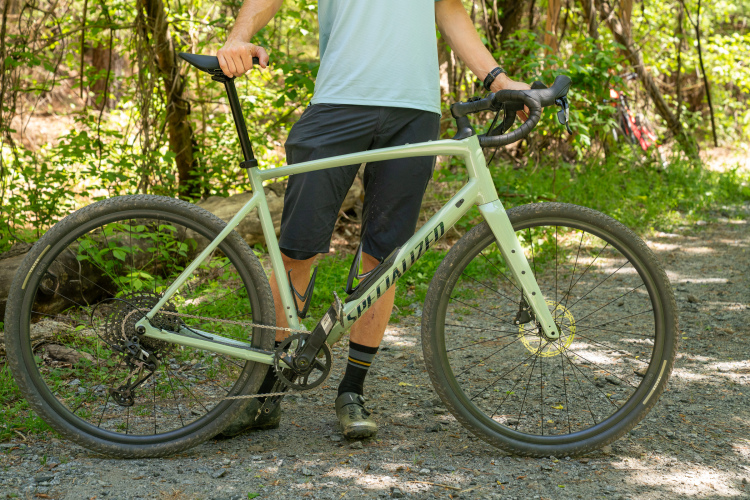
yeah, yeah, that’s great. So, Niner has also been really innovative in the gravel space lately, which seems to be like a really hot thing right now. So, what’s your vision for where gravel riding and gravel bikes fit into the cycling landscape?
Chris Sugai 18:58
You know, I see the same pattern that, as we talked about earlier, like when 29 or wheel size first came out, you know, people were, it seemed like every, I mean, literally like every three months a new wheel size was being introduced with or something, and you know, I see the same pattern falling, falling again on the gravel scene, that you know you’re going to see a lot of niche segments for a while, and certain brands focusing on certain niches, which is, which is fine, and that seems to be the trend, but you know, at the end of the day, you know, I think we get a lot of flack of, like, you know, you don’t need a gravel bike to ride gravel, that’s very true, but I do feel that, you know, cyclists as a group, and are very, very passionate breed of people, and for those of us who call ourselves cyclists and identify as a cyclist, you know, we don’t take this as a casual hobby, and so our equipment, we just don’t take, like, oh, I’ll just use that bike, and it’s good, they want, you know, they’re spending a lot of time and a lot of energy devoting themselves to this lifestyle, and they want. Or they want their equipment to resonate with that, so I understand why people want that type of optimal equipment for whatever they may do, whether it be racing, bike packing, or just, you know, out enjoying terrain.
Jeff Barber 20:13
That almost sounds like an argument somebody who’s like not into cycling at all would make, right? But you, you’re right, we hear that from people who are already mountain bikers that are already road cyclists, and they look at gravel and say, like, why would I need a special bike for that, but, but, yeah, if your neighbor said the same thing to you about your, your mountain bike, you’d probably say, well, duh,
Chris Sugai 20:35
yeah, and it’s one of those things I think once you start going out and actually riding on gravel and realizing the different needs, and once you ride a proper gravel bike, and you get off your cyclocross bike, whatever else you were riding, you’ll know, okay, I’m gonna see if I can get one of those,
Jeff Barber 20:50
yeah, and Niner has really been pushing the envelope with the MCR, which is, is it the first, and the still maybe the only full suspension gravel bike,
Chris Sugai 21:01
I mean, the only, yeah, we are the first, and you know, only there’s another one out there that has sort of a flexible pivot, and we’re kind of seeing, you know, we decided a long ago, you know, we got into the gravel scene really early, back in 2013 and you know, so we’ve watched this segment grow, and quite a few of us in the office, myself included, really enjoy riding gravel and see where it can go, and you end up pushing the limits, and like we talked about finding niches, and you know, there’s a lot of great singletrack out there that a lot of, you know, riding it on a on a gravel bike is all of a sudden a whole new experience, because it’s a little more challenging than it was on your, you know, 100 mil, 120 mil travel trail bike, so, but we’re seeing the same thing I saw with 20 niners, you know, everybody’s like, “Oh, it’s too big, and, and so they want this tweener size, and I got a lot of flack for calling it a tweener size, but whatever, but you know, you can call
Jeff Barber 21:56
it whatever you want,
Chris Sugai 21:56
see it happen all the time in technology when something new that’s really out there, everybody wants to kind of find this halfway point, because it’s just a little bit more, it’s a stepping stone to get there, but you know, again, we just decided we’re not gonna, we’re not gonna take this bridge one step at a time, we’re just gonna go for it, and you know, full suspension gravel bike, you know, really has a place for certain types of riding, we’re not advocating for everybody, but if you, if you, I lived in an area where it was really chunky gravel, and you know, you would get vibrated to death, and so having a Gavin suspension there is really nice, and, and also for maybe for riders that are coming off the road onto the gravel, you know, they’re not used to having their bike, their wheels skid around and not having good traction, and it’s a little unnerving for a new rider, and you know the gravel bike gives you this really sure-footed feel, because the wheel is actually tracking the ground properly, and you’re, and you are, you do have better traction going along, and it’s tunable, so you ride a weight, you know, you can get it right to where you want, and you know, we’re seeing other brands come out with flexible handlebars and stems and flexible seat posts, which you know we had back in the 90s. Anybody that’s been in industry for a long period of time, and you know those, you know, there’s still there, there’s there’s a place for those things, but I do feel for performance type of gravel riding, I still feel that, you know, for full suspension is the way to go, for if you want suspension for your bike. If you don’t, we have, you know, there’s other gravel bikes out there that are rigid, and if you really need it, we have there’s these things called mountain bikes,
Jeff Barber 23:27
right. Well, I mean, that’s sort of been my experience. I’ve done a little bit of gravel riding, and you know, being more used to riding a mountain bike, you know, whenever I get on one, I really enjoy it. I mean, it’s it’s fun, and it’s different, but then you know, after a while, I’m like, “Oh, you know, it’d be great, we’ll be like a dropper post on this, and so, yeah, you do think about those things, and about, like, well, like, what could I add without, you know, taking away some of the advantages, because a gravel bike has advantages in terms of, like, the gearing, and you know, you’re not going to have as much rolling resistance with the wheels and the tires, and you know it’s a lighter bike, and so you can, you know, go farther and not get as tired. So, yeah, it’s.. it’s an interesting place where we are right now, where we’re trying to figure out, like, what are the features that we want, what are the ones that we don’t want, and seems like, yeah, again, you know, Niners kind of at the forefront, like trying to figure that out, which is cool to see.
Chris Sugai 24:24
Thank you.
Jeff Barber 24:25
So, you, yeah, you also mentioned, too, you know, this desire to build a gravel bike, you know, kind of germinating in 2013 How much of that would you say is based on, like, where Niner is located? I mean, in Fort Collins seems like you know that played a role in it, because there are these like gravel roads out on sort of the east side of town where you can go out and just ride and ride, versus like you know if you, your company was based somewhere else. Do you think that gravel would have been like the obvious thing to do for you?
Chris Sugai 25:00
Well, Fort Collins, we’re blessed in that, you know, we’re 15 minutes from the Rocky Mountains, so there’s plenty of mountain bike trails to ride. And then we also put a little plug for the town of Fort Collins. I mean, we just have this amazing single track and bike network throughout the entire city, and so there’s a lot of places where you can ride on designated paved trails to get to your work from home, and there, and there’s all these little single track offshoots that people have sort of built over time, and so you know, having a gravel bike, you can take four or five different routes on your way to work, it’s, it’s pretty cool.
Jeff Barber 25:33
Yeah, so it’s multi surface, and again, yeah, that before that term was was being used, I mean, people thought, like, okay, if you can ride on the road, you need a road bike. If you’re riding on trails, you want a mountain bike, but yeah, what happens when you want to, you want to do both in the same ride?
Chris Sugai 25:49
Yeah, and you want to cut it a little bit seaweed track where you’re at it. So, but you know, we were fortunate that Fort Collins just sort of have a nice mix of cycling culture here, and so we have again gravel roads, we have there’s pumptracks not too far away, we have, and then we have, you know, mountain bike trails, so and then well, we saw all ski lifts during the summertime,
Jeff Barber 26:10
yeah, yeah, that’s that’s a really great mix. Well, these days consumers assume they can purchase pretty much anything online, I mean, all of us, I’m sure, get multiple deliveries a week from amazon.com and places like that. So, what are your thoughts about online and direct bike sales? Do you think that’s that’s a viable thing, or is the dealer model like important to selling especially high-quality bikes? I
Chris Sugai 26:37
still really believe that the local bike shop isn’t going anywhere, and there’s a place for, you know, direct, direct to consumer bike brands are out there, but you know, you can look at the landscape of retail products, and let’s take, like, Warby Parker, which makes eyeglasses, and you know, they were the thing, and everybody was talking about it for a long time, and then their sales slowed down, and where they’re doing their open ups, you know, they’re in every mall, so you know they’re backtracking, and you look at Casper beds, and you know there’s.. you can go on and on about brands that all germinated online and are all trying to find a presence in real time, because I think at the end of the day, you know, people still want to try before they buy, and I think that that local bike shop still plays a critical role in that. Now, you know, over time, does the local bike shop have to be on an expensive main street location? I think they can probably move back to, you know, less expensive digs and still serve their purpose. I think that might be something, a trend you see going forward, but I don’t think local bike shops are going to go away, because I think people need to have their bikes repaired. They want to talk to an expert about upgrading their bikes. They want to talk about someone who’s knowledgeable for them, make such a large purchase, and they want a chance to try these bikes out before they actually buy them. And a local bike shop is really the best way to do that.
Jeff Barber 27:54
Yeah, it’s interesting. You mentioned those sort of online brands that are creating these offline opportunities and experiences, I mean, I wonder how much of that is like kind of the cool factor, or like, you know, the just putting their brand out there where people can see it and like gives it more legitimacy, I guess is what I’m trying to say.
Chris Sugai 28:16
I don’t have the exact answer for that, but seeing that they’re popping up in retail locations that were these were online brand only tells me that they wouldn’t be doing unless, unless they had to,
Jeff Barber 28:26
yeah, yeah, and with bikes, like you said, there are a lot of reasons, it’s not just so that people can learn about the brand, it’s so they can get the items serviced, and they can, you know, test it out, and there’s all those things that, especially with bikes, where you know people are going to want to do those things. So, what’s been the biggest challenge for you to running a successful bike company?
Chris Sugai 28:49
I think the most challenging thing is the, you know, at the end of the day, there’s lead times for us. You know, I think I think the general public thinks that we, we decide to make a bike, and you know, three months later it’s out on the showroom floor, but you know there really is this process of 18 to 24 months from the time you know you think about making a bike till it actually can reach a showroom floor of a dealer, so you know, so with that, you know, we have to have the ability to basically determine what the bike tastes are going to be like two or three years from now, so we’re not really designing bikes. The bikes we have on design table now are bikes that we aren’t going to launch until 2021 2022 So we’re thinking that far out in trying to decide, you know, where is the market moving, and that’s that’s not always easy to do. Sometimes you get it right, sometimes you get it wrong.
Jeff Barber 29:40
Yeah, that’s, that’s a really interesting, and it seems like, too, with, you know, these days a lot of people work in, like, the knowledge economy, where they’re, you know, creating software, or, like, for us, you know, we’re writing stories online, and, you know, there it’s a lot different when you’re making a physical item, and it’s not just. Uh, you know, let’s just throw it together, and you know, we’ll tweak it if we need to later. I mean, you have to make decisions that you know are not, are not easy to, like, undo, or, like, you know, if you put something in the wrong place and on a bike, then that’s, that could be a big problem, right?
Chris Sugai 30:16
Yeah, no, it’s, and trends change, and you know, these are not small investments we’re making, and when you come up with a new type of bike, or a new bike line, or new suspension system, you know, there’s a lot of money that goes into that development timeline and resources of just people’s times, you know, we value our engineers’ times very, very carefully.
Jeff Barber 30:35
Yeah, well, has anything surprised you, you know, in the years of running Niner, or, or even recently are there recent trends that are kind of surprising to you?
Chris Sugai 30:45
I’m quietly championing, you know, linkage forks. I’ve been a big fan of linkage forks. My, I wrote a Gervin linkage fork way back in the day, and and I thought there were a lot of great attributes about it that would transfer over nicely to to bicycling, and it’s nice to see some of those forks, and you know, I understand people, the esthetics, they have a challenge with, they have a challenge getting used to something new, but 20 niners were esthetic challenge when they first started, and, but that nice to see that, that’s actually seeing some, some light of day, appreciate, good to see that,
Jeff Barber 31:20
yeah, so Niner has always been a huge supporter of the International Mountain Bike Association. Why is that support such a big priority for the brand?
Chris Sugai 31:30
You know, as a, we went back to sort of, you know, the three pillars about Niner, and it just give back, and I just, it’s just been a philosophy I’ve had my whole life, of, you know, you can’t just take, you have to give, you can’t just take from this world, and you, if you have to give back, and we contribute, you know, fruits of your labor, and, and I was a supporter of Imba, you know, before I started Niner, I remember, you know, going to BLM meetings when I was in college, and, and it would be 15 equestrians, and us two mountain bikers, you know, trying to get this trail stay open, and and they’ve come a long way, and I really applaud the efforts that Imba has made, and, and I know you know there’s some people don’t always agree with in the strategy, but I think at the end of the day, when you measure what they’ve done over time, it has been nothing but success, and you know, I think it’s important for people to, to, if you’re, if you’re out there enjoying trails, if you work for a bicycle company that you know is off-road focused, you know you need to support some type of advocacy group, because other groups want, still don’t want us out there, and and it’s just like you listen to NPR, or you listen to podcasts, you know, there’s, there’s, you got to support Pit, you know, Patreon, and in those other groups, you can’t just listen for free,
Jeff Barber 32:48
right? Yeah, that’s a good point, right? I mean, like, you, you said, there, over the years, there have been people who disagree with what Emba does, and you know, my responses usually will like, Who are you supporting? Then I mean, you know, it’s not enough to just say, like, I don’t like what this one group is doing, so I’m not going to support anybody. Yeah, and they seem to be the best ones that are out there.
Chris Sugai 33:14
They have been our champion for decades, and I just think it’s important for people not to focus on one or two things that they may disagree with, is you’ve got to look at what their organization does in its totality and the amount of time and work people have put in without really getting a pat on the back for what they deserve.
Jeff Barber 33:31
Yeah, well, where do you see opportunities for growth and innovation in the mountain bike industry over the next five to 10 years?
Chris Sugai 33:39
Yeah, that’s an interesting question. You know, I think I think the, you know, park riding is still going to continue to grow, because I can’t imagine that ski resorts are having their mountains fallow during the summertime when they could have a fool with mountain bikers if they were, they were, if they’re careful about it and do it carefully. Obviously, I think, you know, e-bikes are coming to, coming to the United States, you see the growth in Europe, and you see that brings new riders into the scene and allows for larger exploration. So, I think all those things are great for the industry, and for recycling in general, and, and I also think, you know, material advancements are, are you know, they’re always, they’re always out there, and there’s, there’s always new things are going to be coming out, making things lighter, stronger.
Jeff Barber 34:22
Yeah, I was going to ask you about that. I mean, your parent company also has a material for creating bike frames. Is that something that Niner is looking at using, or is that going to be sort of separate?
Chris Sugai 34:36
So, yeah, the company is called All Light, and they have IP around new magnesium types of technology, and magnesium has been around for a while, and it’s had its fits and starts in the cycling industry. I think realizing that, you know, almost all your front fork lowers are made of magnesium, so you’ve got magnesium on your bike, you just don’t really, didn’t realize, but this new type of magnesium has some really interesting properties, and so. Yes, they are. All light is going to be coming out with its own brand of bicycles called Vast, and they launched, actually, formally at Eurobike last year. The first bikes are starting to trickle out into the public now as we speak. We’ll see some of that technology trickle into Niner as well over time.
Jeff Barber 35:18
Well, Chris, thanks so much for taking the time to talk with us and to fill us in on Niner, but also the industry as a whole, and some of the trends that you’re seeing out there, and that will, you know, one day will affect all of us. So, thank you.
Chris Sugai 35:32
You’re welcome, Jeff. It’s a pleasure talking to you and getting to speak to your audience.
Jeff Barber 35:35
Well, you can find out more about Niner, ninerbikes.com and also be sure to follow Singletracks, where we’ll post the latest news from the company, as well. That’s all I’ve got this week. We’ll talk to you again next week.
The news stinks. Why not follow Singletracks on Google News to bring more joy to your day?



0 Comments